Telling (Hi)stories. Vintage as an Architectural Principle.
Vintage can be much more than a trend or mere decoration. We present a selection of holiday homes in which vintage plays a significant architectural role, each telling stories of its own – from Portugal to Switzerland.
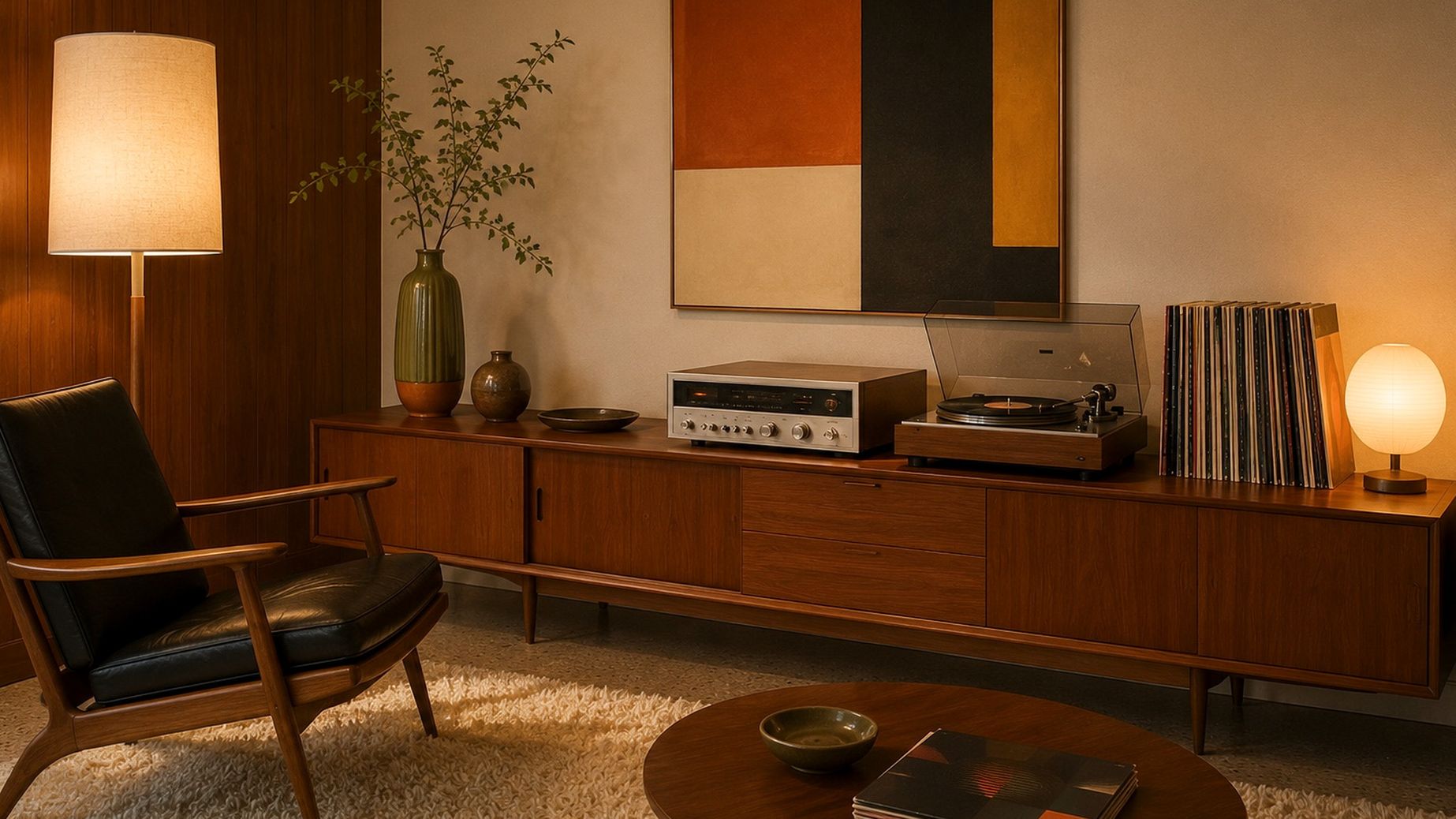
When is architecture ever truly finished? Does such a moment even exist? Or does a building only become a home when its occupants bring it to life and make it their own – with objects that evoke memories, tell stories and give a space its identity? And is it really the new things that make a space feel homely, or rather the things that already have a history of their own?
Vintage is often seen as a trend, not just in architecture and interior design. Yet it can be so much more: an integral part of the spatial experience, a piece of furniture or a light fitting that lends a room character. Sometimes vintage is considered from the outset – as part of a holistic design approach in which architecture, furnishings and objects are carefully coordinated, very much in the spirit of the Gesamtkunstwerk, or total work of art, a concept that played an important role in Art Nouveau. But this sense of unity can also emerge later on: when carefully selected pieces enter into a dialogue with a building’s history or create a deliberate contrast with contemporary architecture.
Telling (hi)stories, drawing on the past, creating contrasts: used with sensitivity, vintage is far more than decoration. These objects give spaces a soul – while gaining new relevance through their interplay with the architecture.
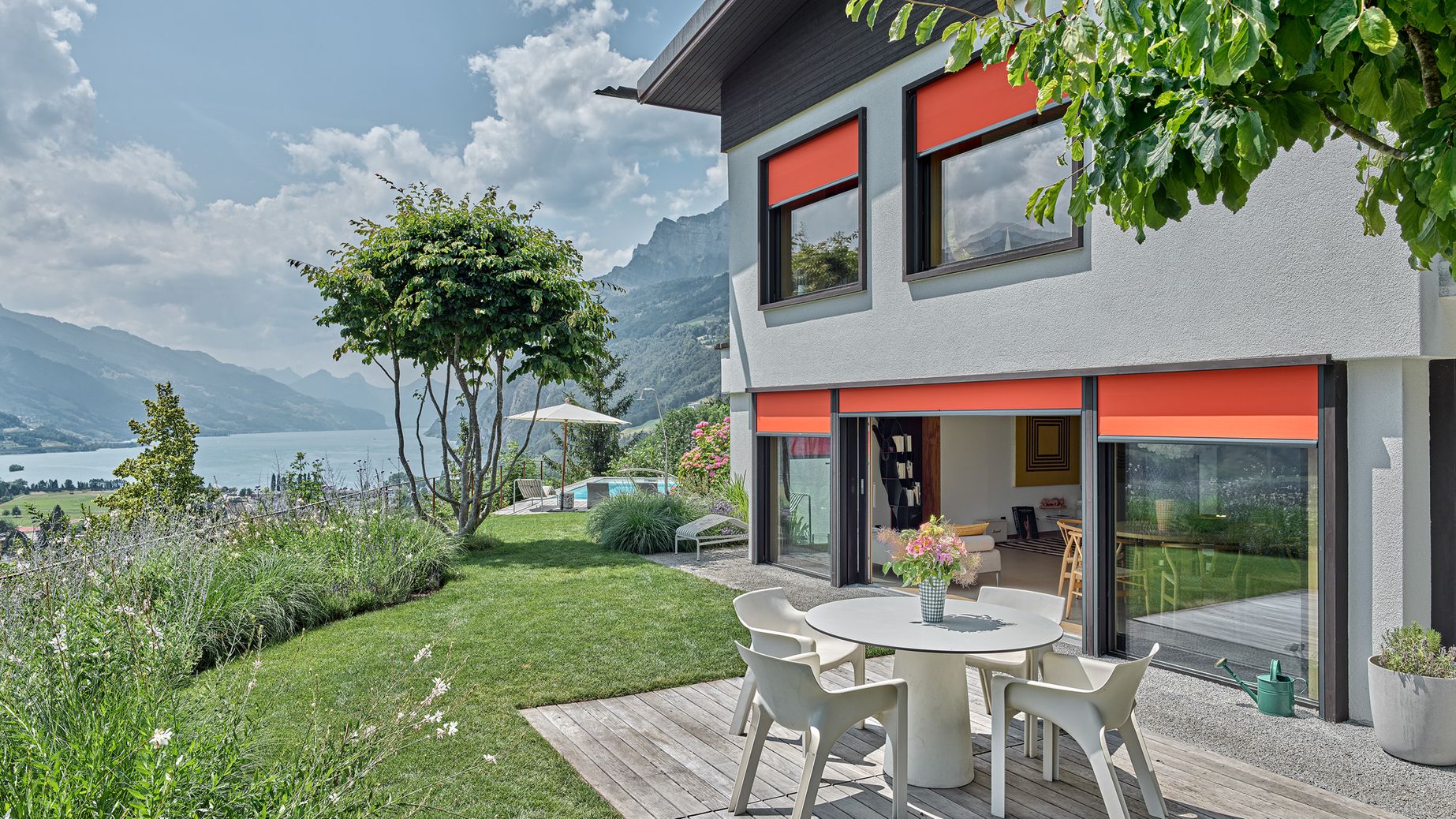
Mid-century charm above Lake Walen
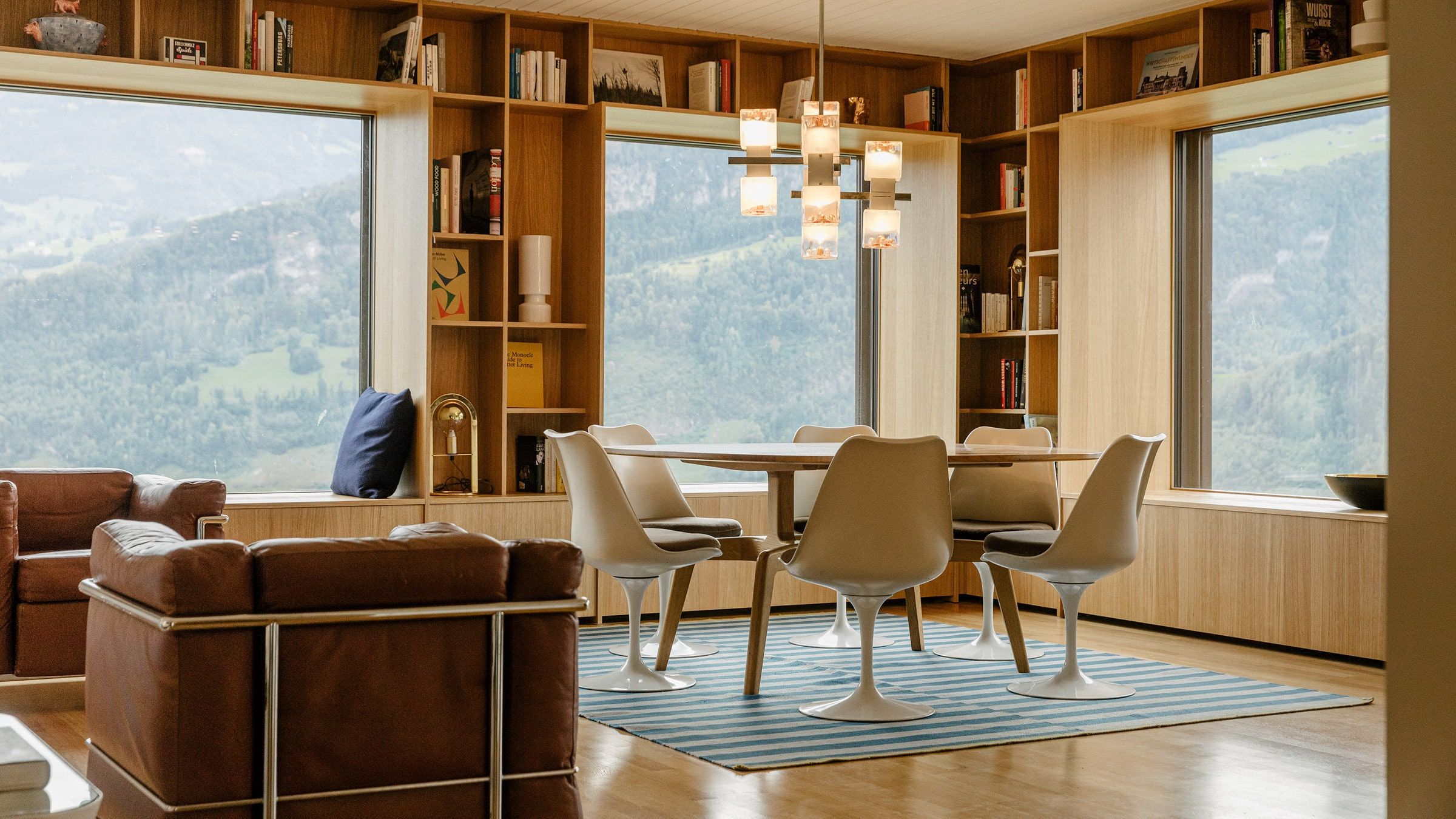
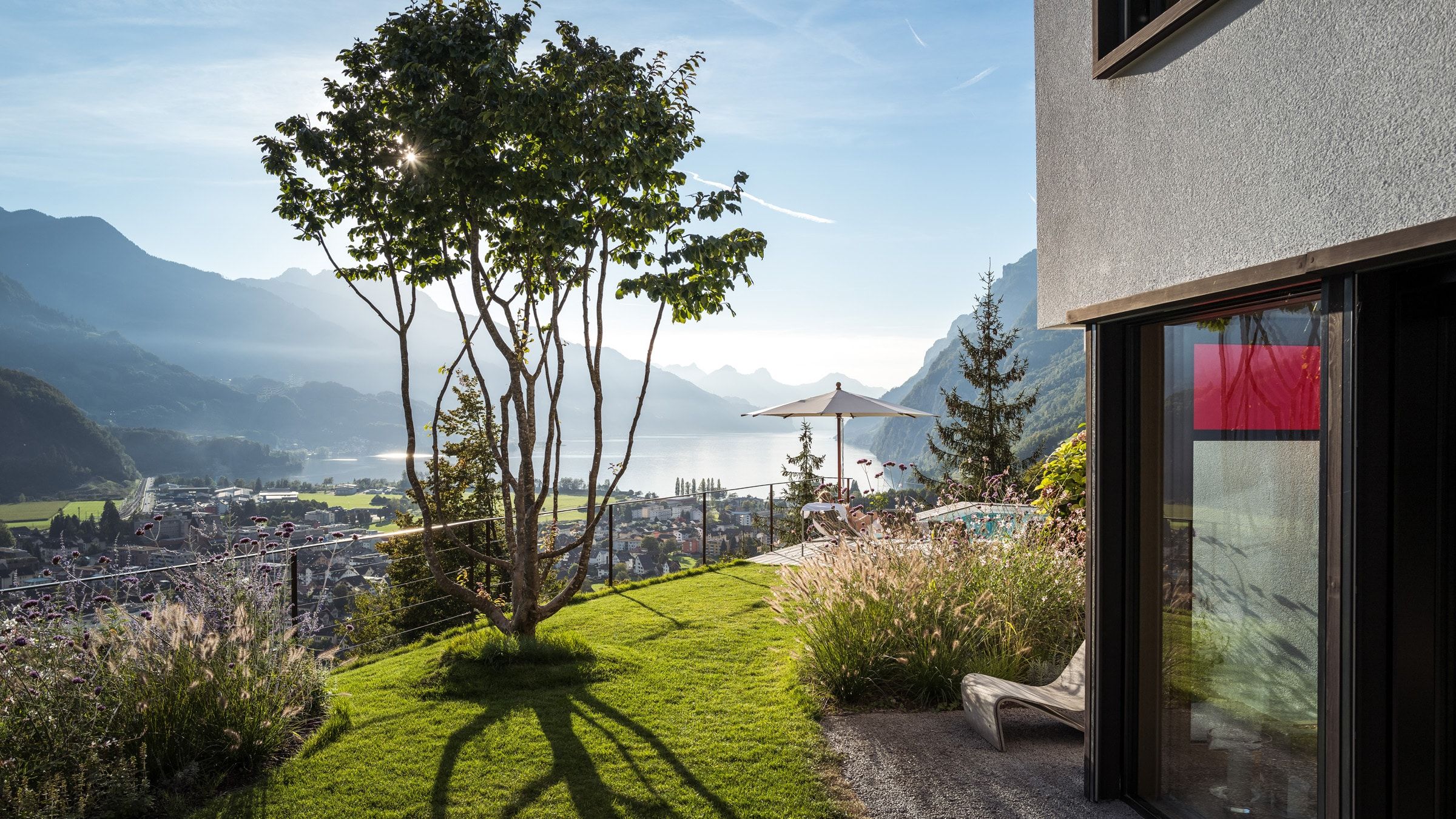
Perched high above Lake Walen, the Hasenberg Lodge is an architect-designed house dating from 1971, which its owners converted into two holiday apartments in 2020. The chalet typology has been preserved, with large windows opening up views of the lake and mountains. Inside, the architect couple, both avid collectors, have curated an eclectic mix of mid-century design, art and vintage finds: Utrecht armchairs, Wishbone Chairs and a Zanotta daybed create inviting spots to settle into. Luminaires and artworks from different eras add distinctive accents to each room. Here, vintage is an integral part of an interior that is both deeply personal and timeless.
Patina in the old hayloft
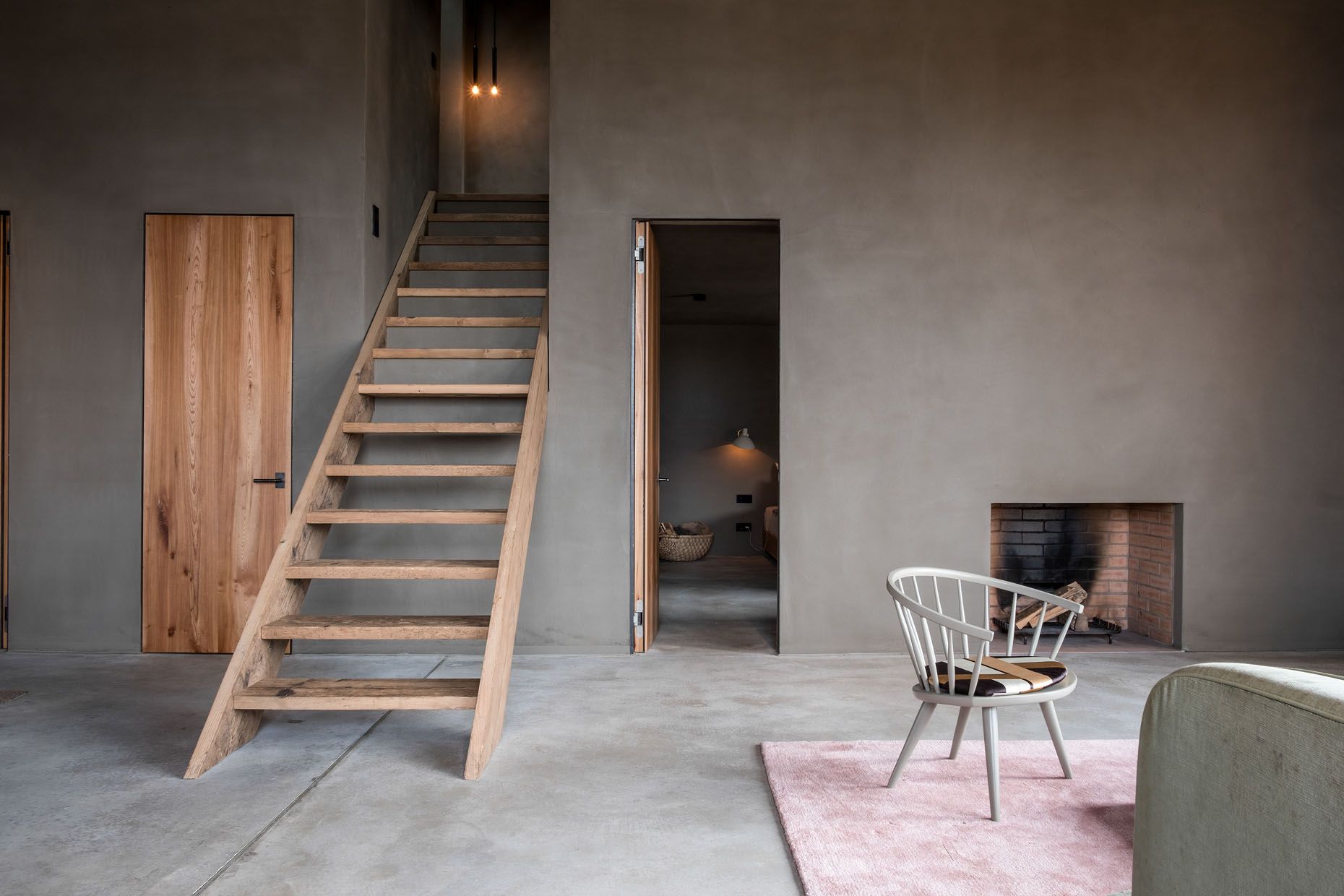
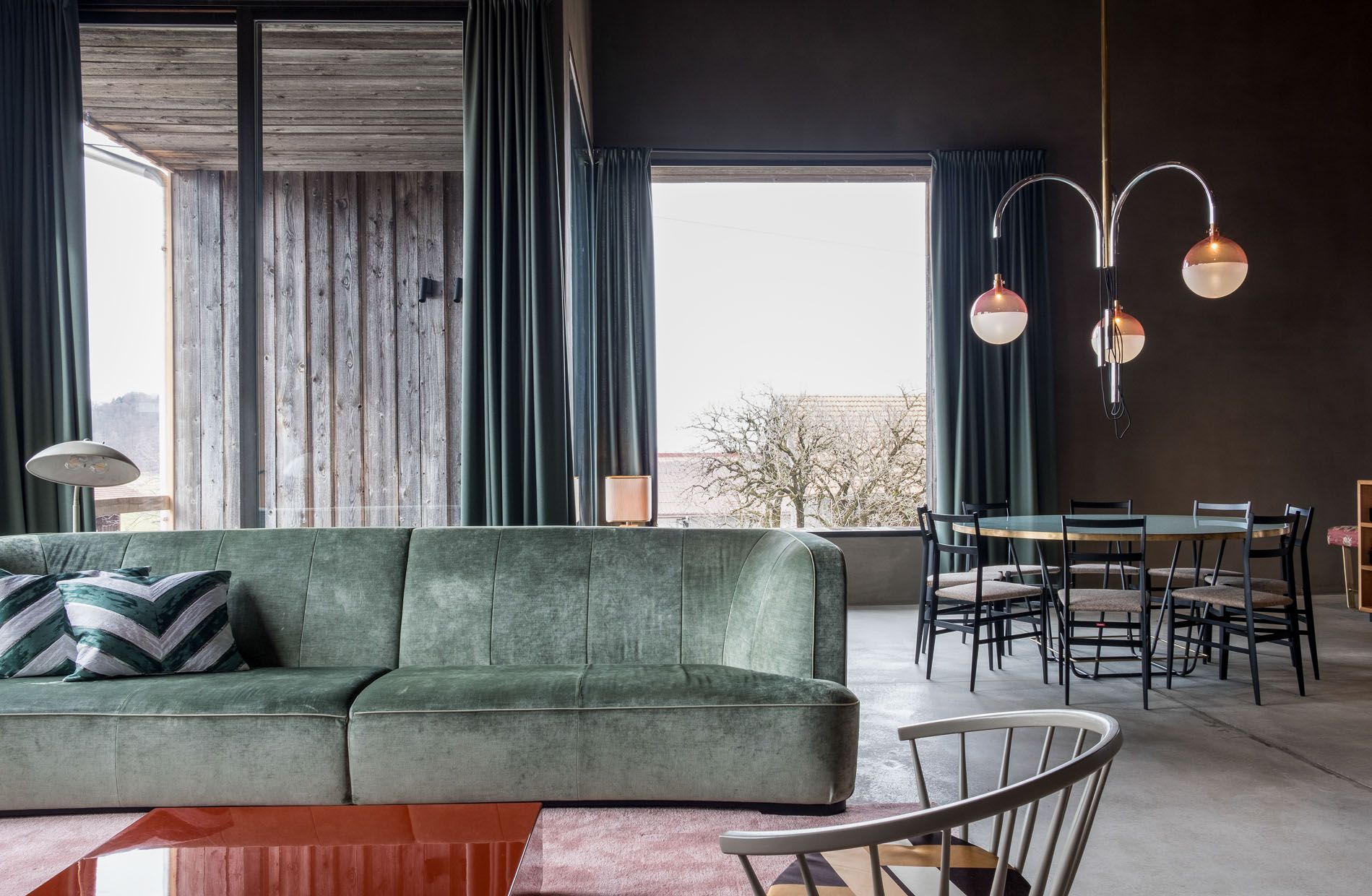
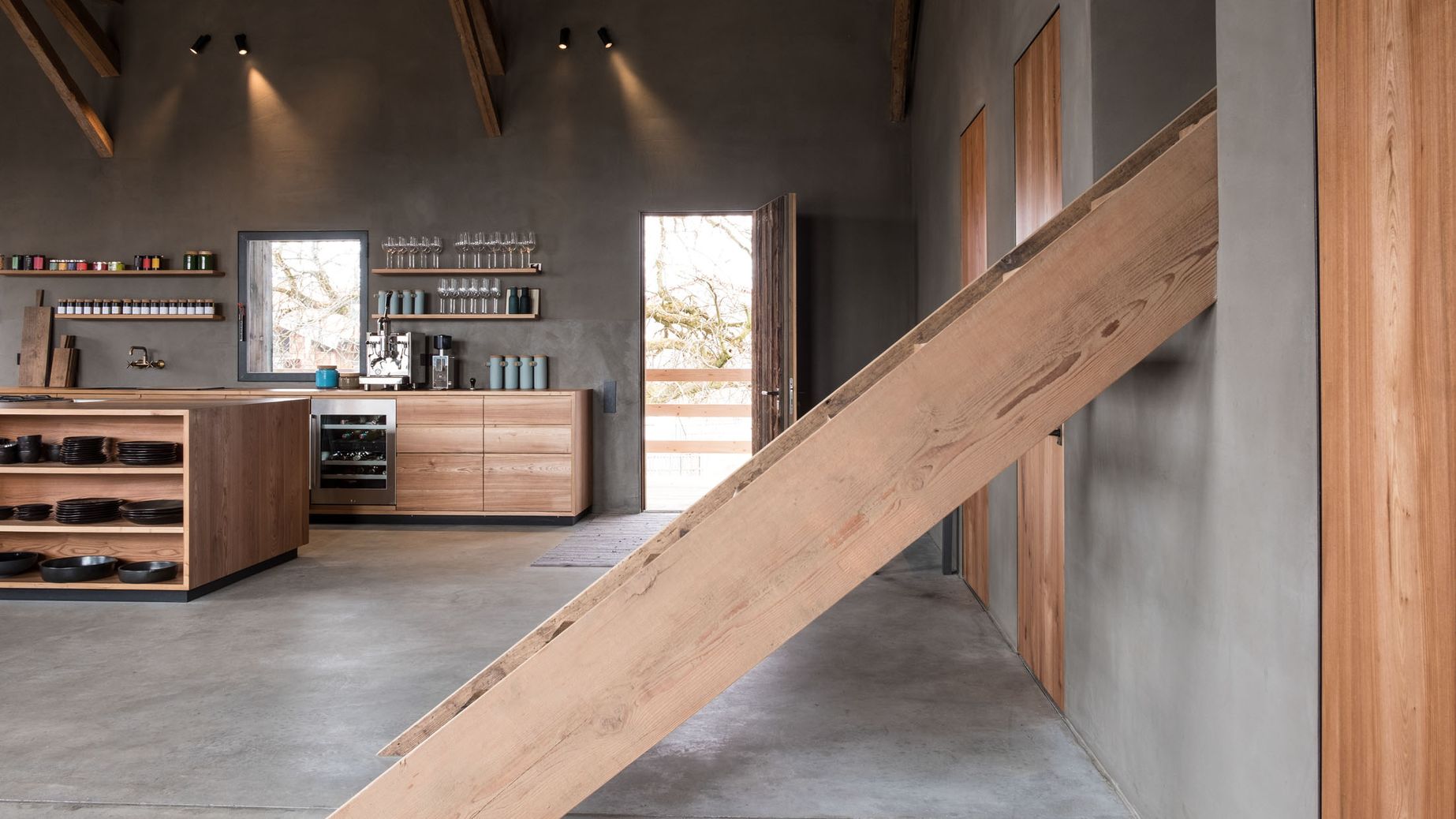
Just a few kilometres from Lake Chiemsee, architect and interior designer Stephanie Thatenhorst has transformed a hayloft on her parents’ farm into a holiday home. Out of respect for the region’s building traditions, the timber façade was preserved, with only a few windows on the west side enlarged. The seven-metre-high living space is characterised by grey-pigmented clay plaster, a staircase made from reclaimed wood and a screed floor deliberately left imperfect. New beams of locally sourced spruce were treated with vinegar stain to give them a patina that matches the historic fabric. The designer’s own furniture creations and vintage pieces, playing with colours, patterns and different materials, come together in the eclectic mix that has become her signature style.
Behind the old façade
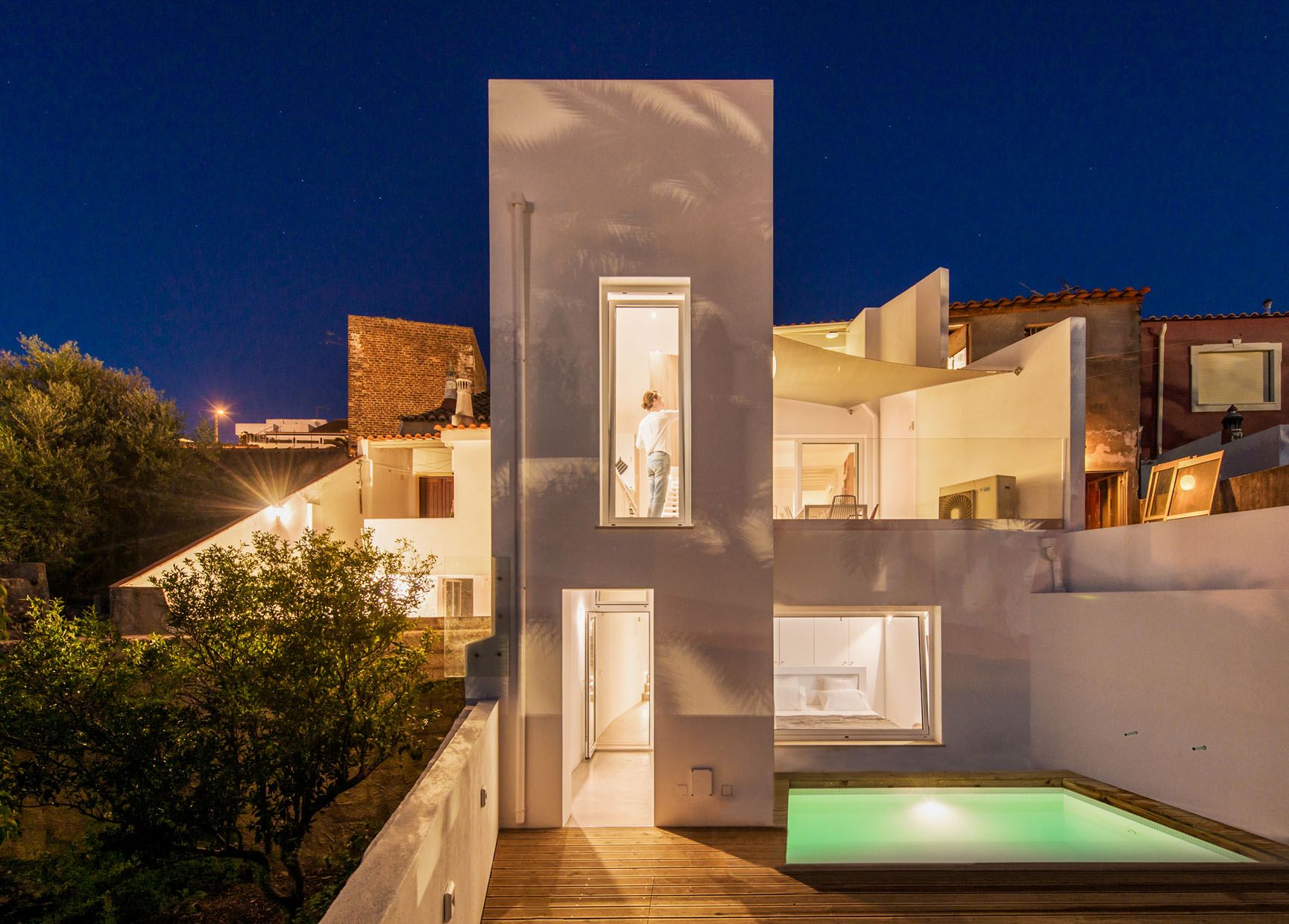
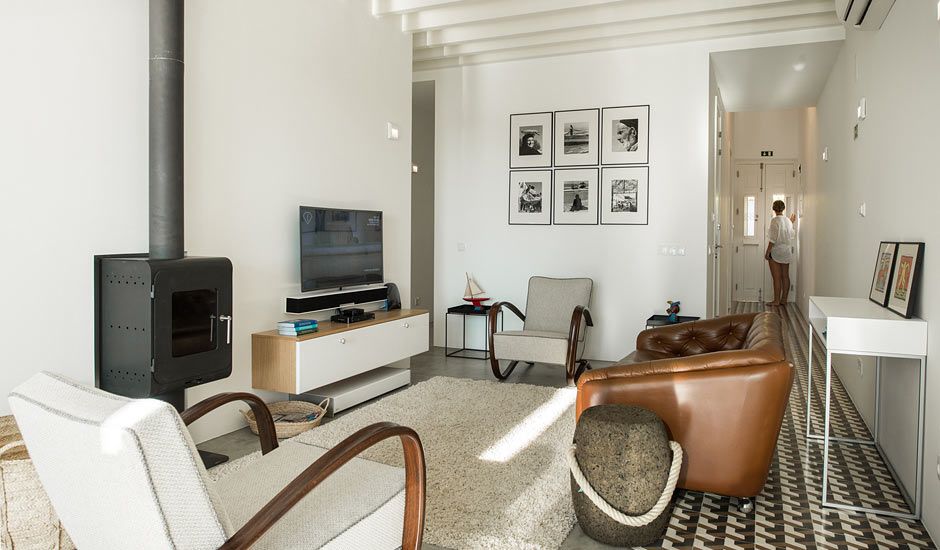
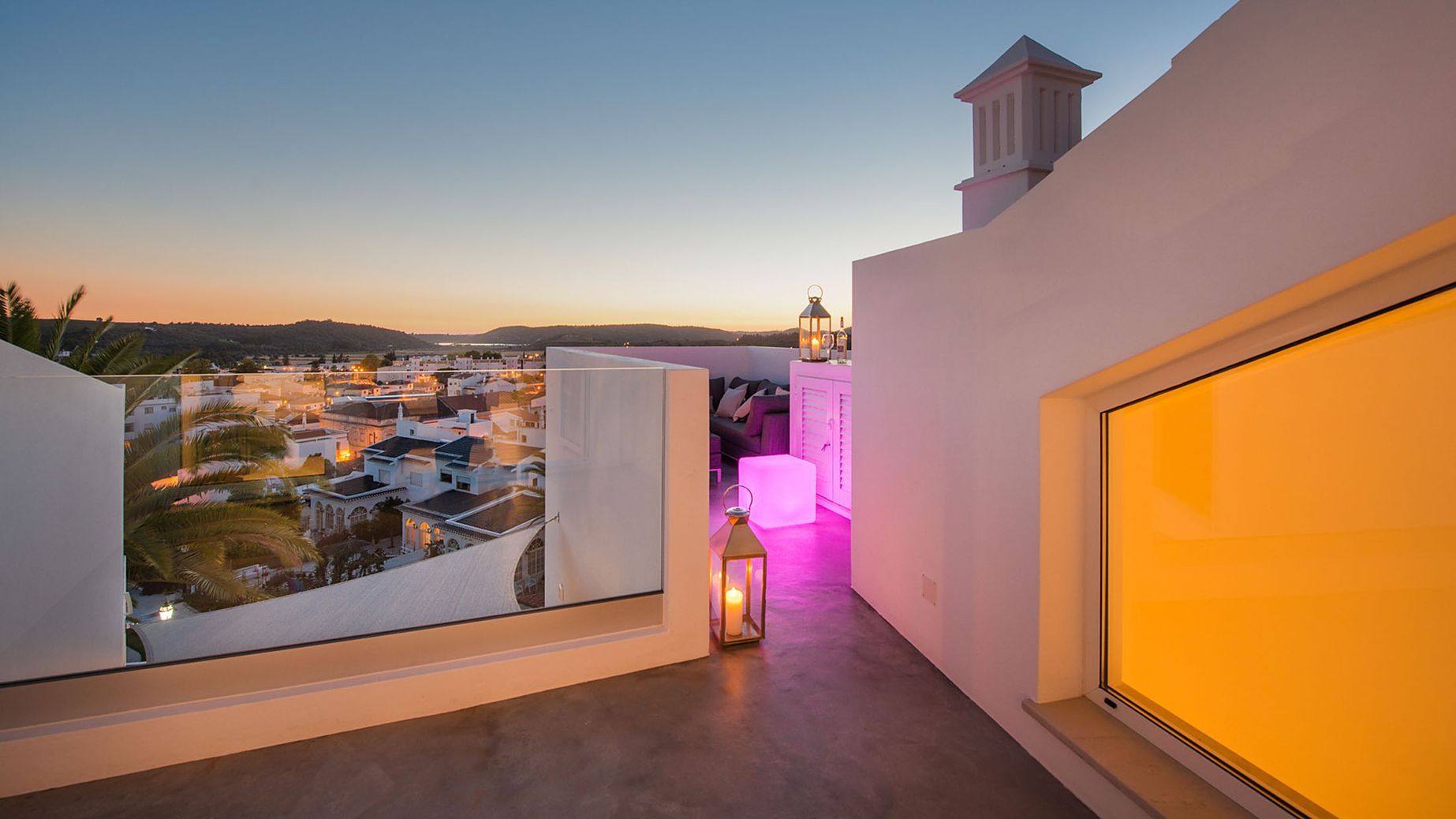
From the outside, Casa da Lila in the historic centre of Silves looks like an unassuming Portuguese townhouse from the 1950s. Behind its traditional façade, however, lies a newly built house that opens up across three levels towards the garden and surrounding hills. Handmade Portuguese tiles are paired with carefully selected vintage furniture from the Netherlands, the Czech Republic and Italy. Each piece was chosen individually, rather than as part of a ready-made ensemble. The result is an intriguing contrast between contemporary architecture and objects with a history of their own. Nothing looks brand new – and that is precisely what gives the house its personal atmosphere.
New life for the Borgo
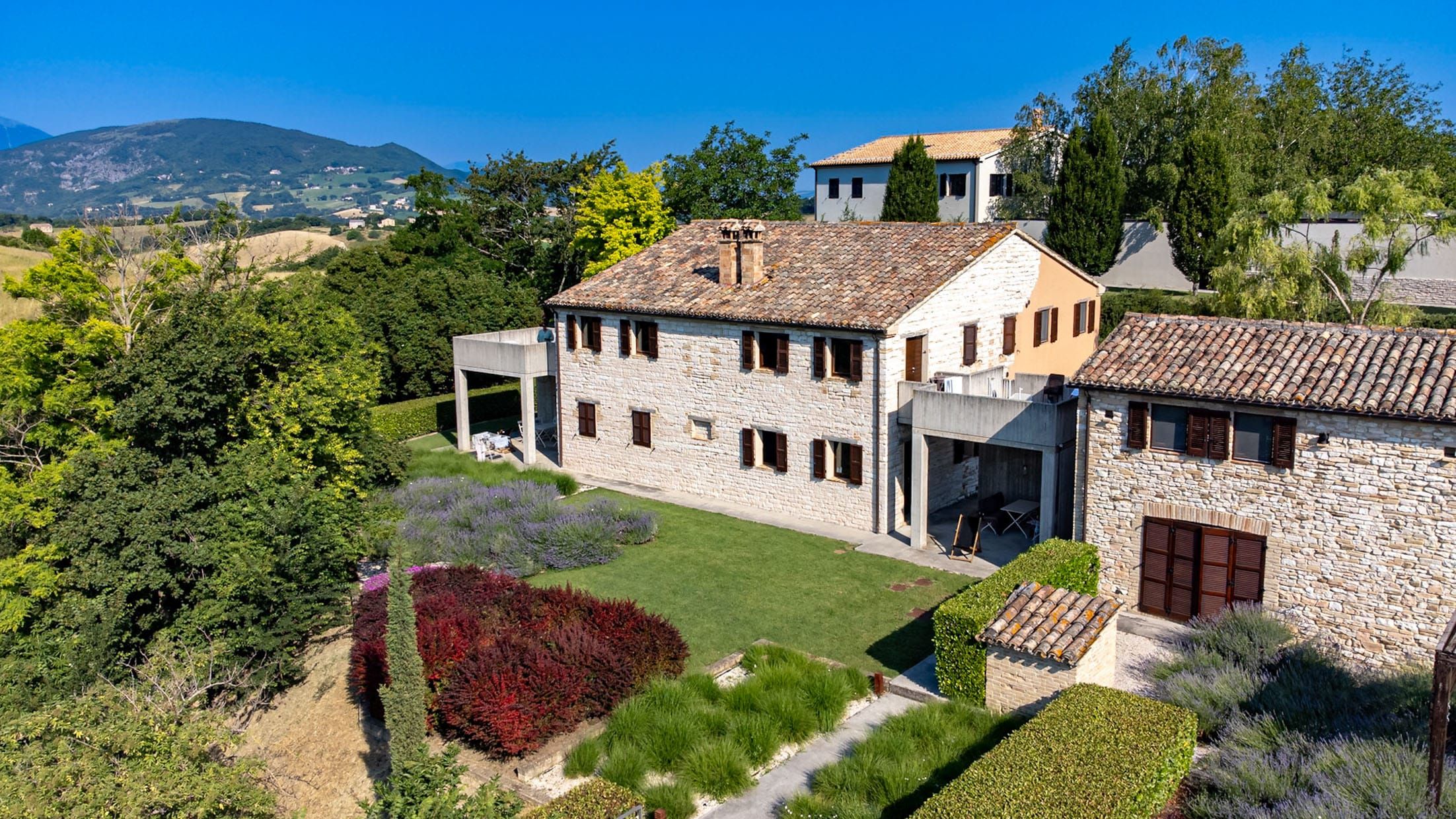
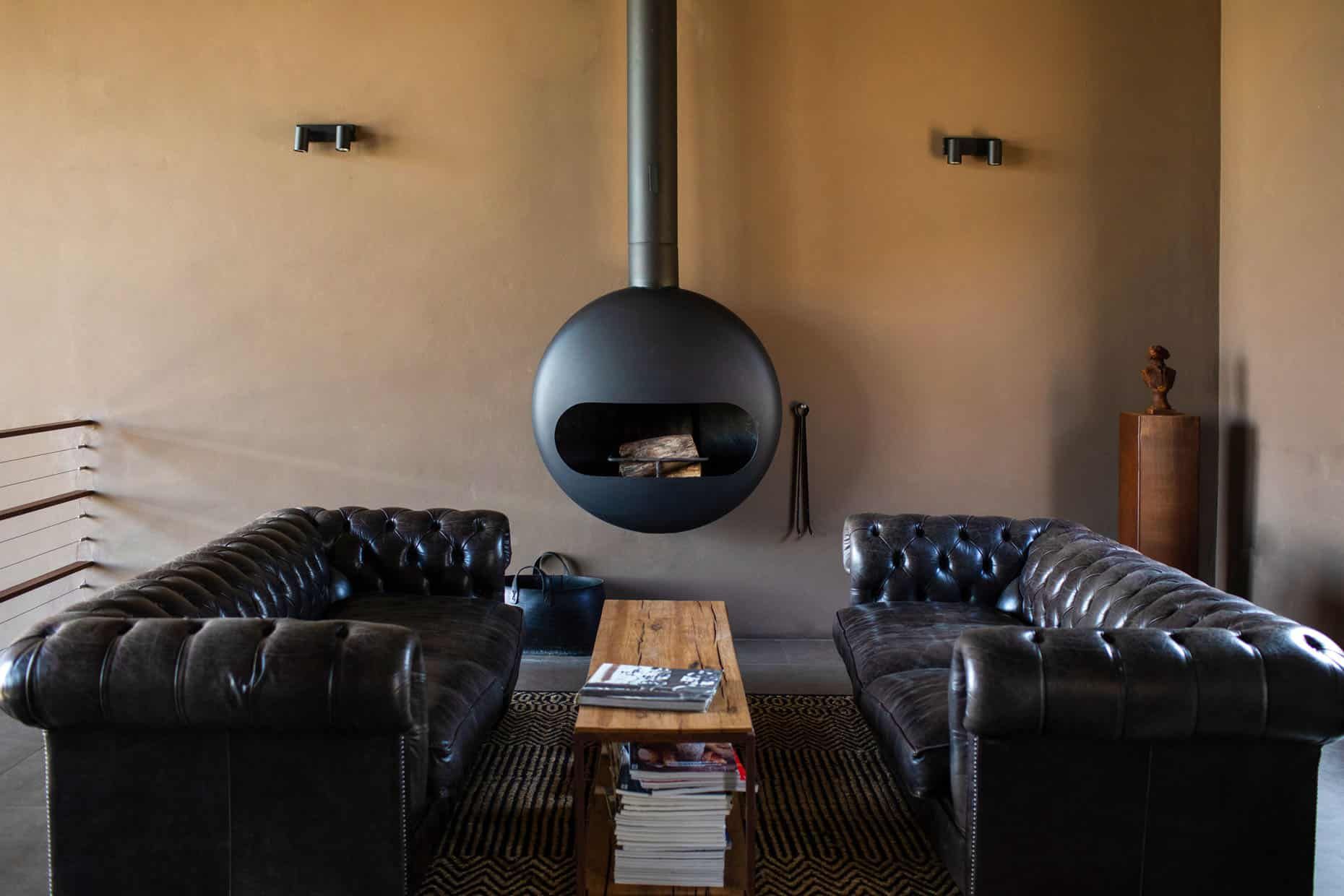
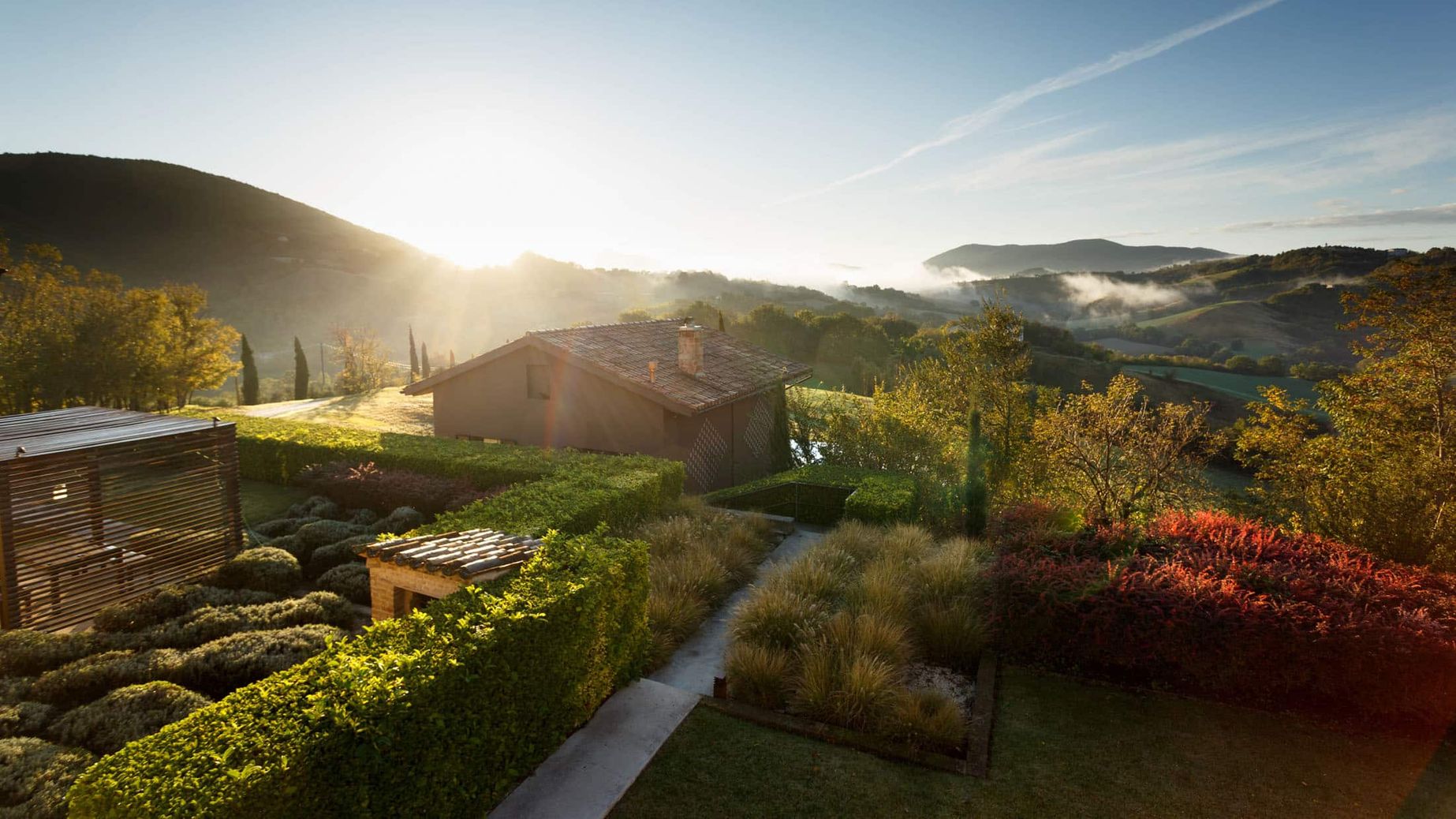
In the hills of Italy’s Marche region, British designer Frank Andrew and his wife Ariane have transformed several derelict buildings into a contemporary holiday retreat with a historic feel. The original masonry preserves the traditional character of Borgo Tranquillo, while the interiors of the villa and four apartments are modern and spacious. Exposed timber beams, high ceilings and inviting terraces are complemented by kitchens in marble or travertine, carefully curated design, large-scale artworks and unusual finds. A communal clubhouse with a lounge, library, bar and wellness area completes the property – here, too, thoughtfully combined vintage objects lend the rooms their own distinctive character.
At home in Baixa House
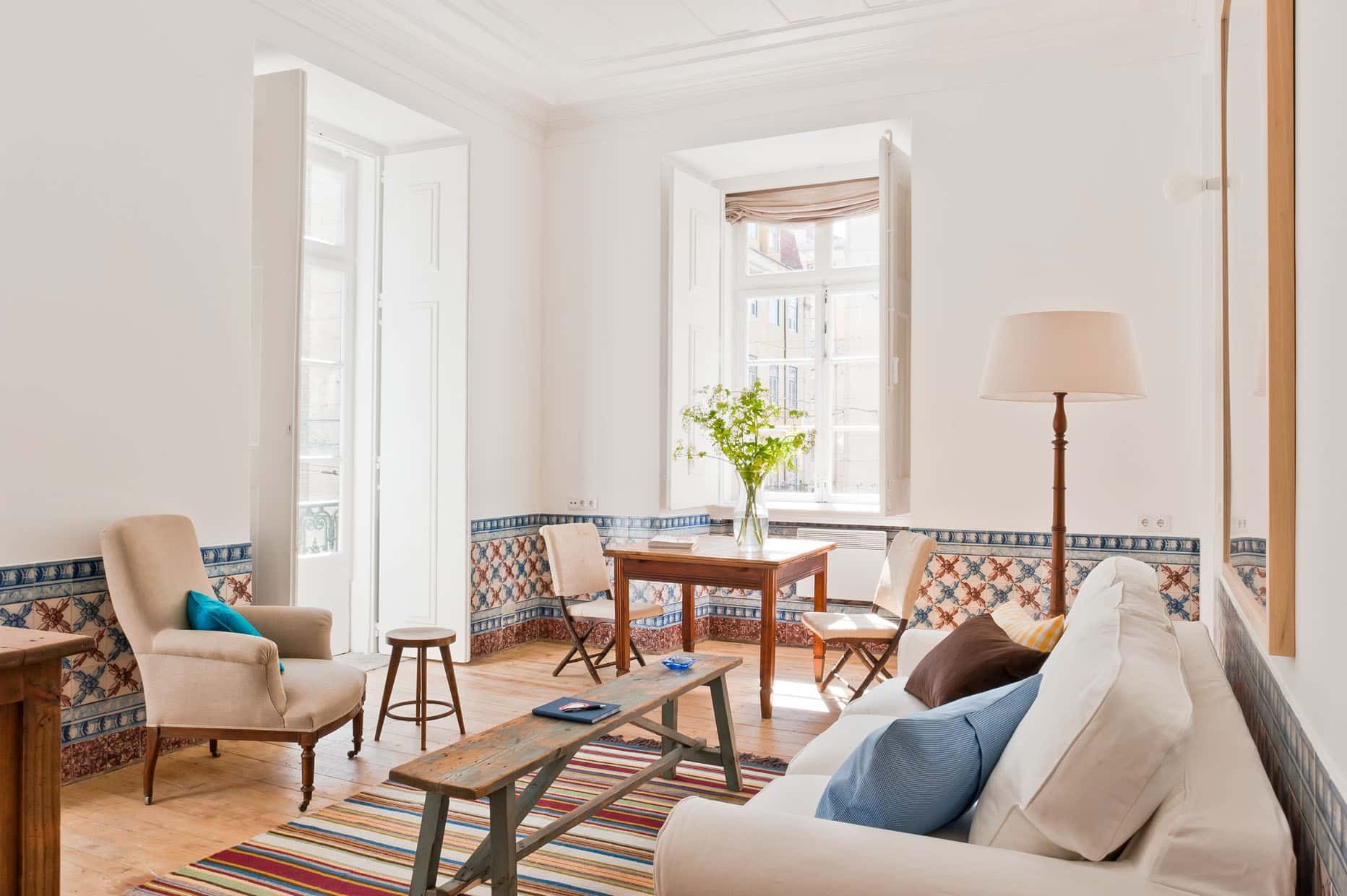
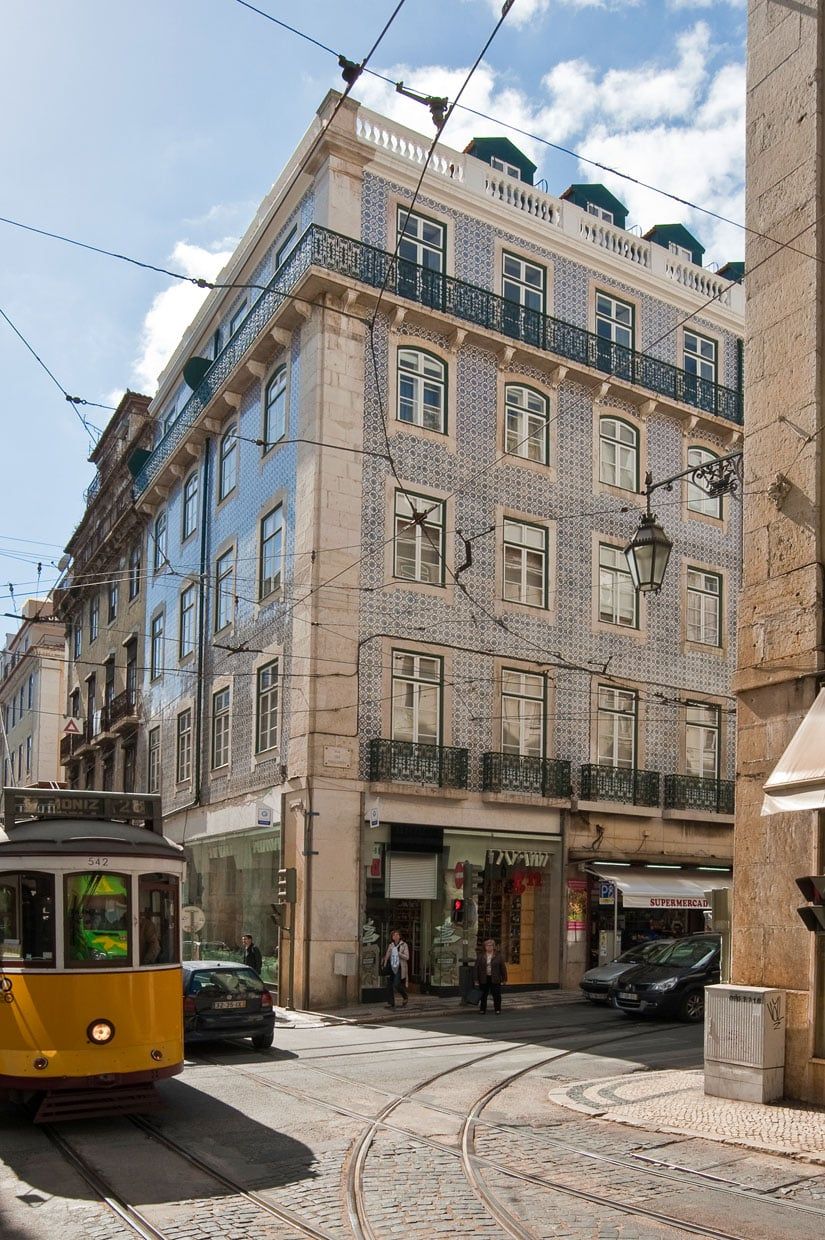
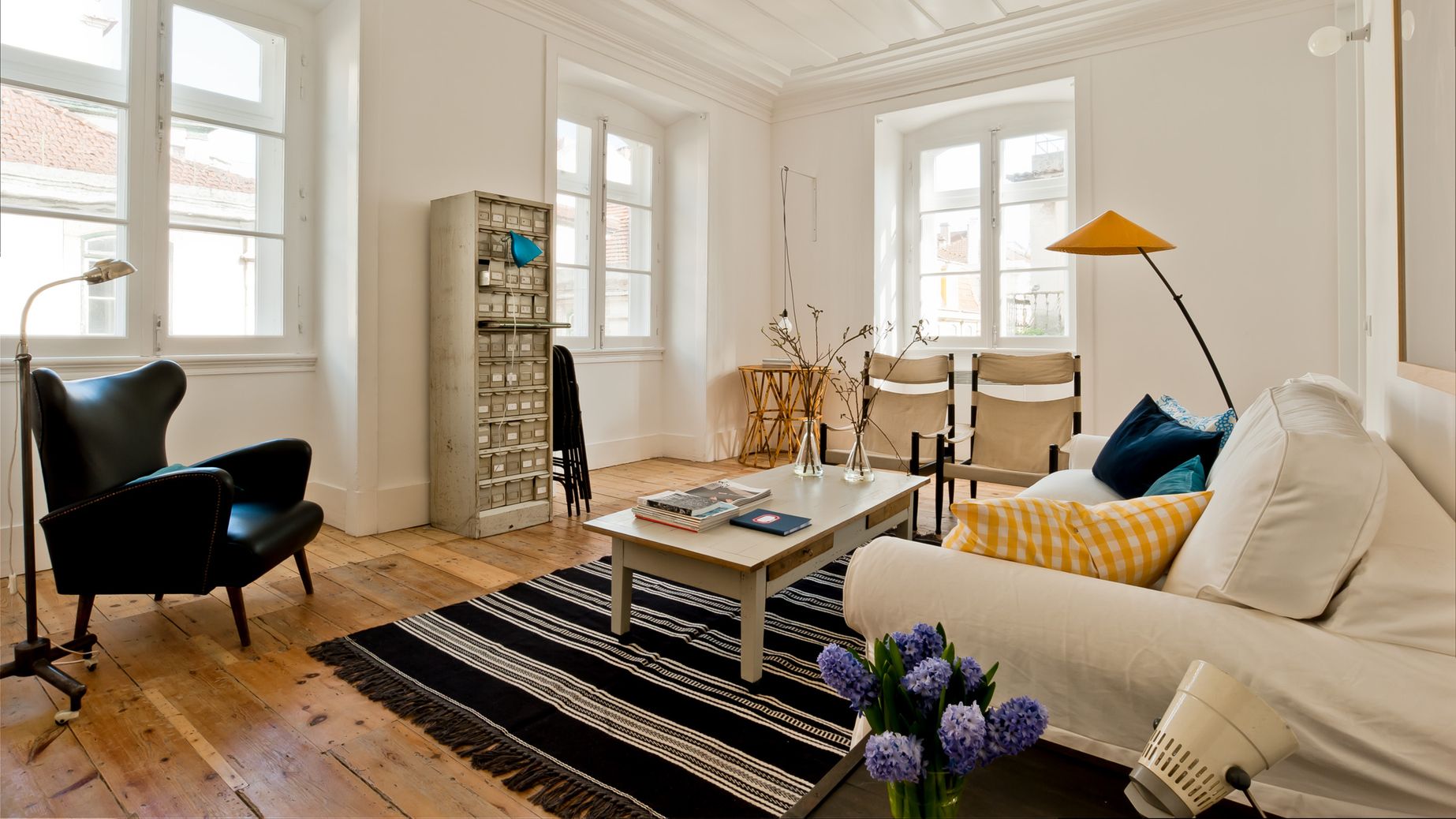
With its 13 apartments, Baixa House is situated on a lively street in the heart of Lisbon. During the renovation of the 18th-century building, numerous original features were preserved, including wooden floors, tiles, window frames, doors and ceiling beams. Named after Lisbon’s parks, the apartments carry the garden theme throughout their interiors – with floral wallpapers, paintings, photographs and vintage outdoor furniture. Restored furniture, Portuguese craftsmanship and distinctive finds complement the historic architecture, creating a charming atmosphere so inviting that you almost feel at home.
From stable to loft
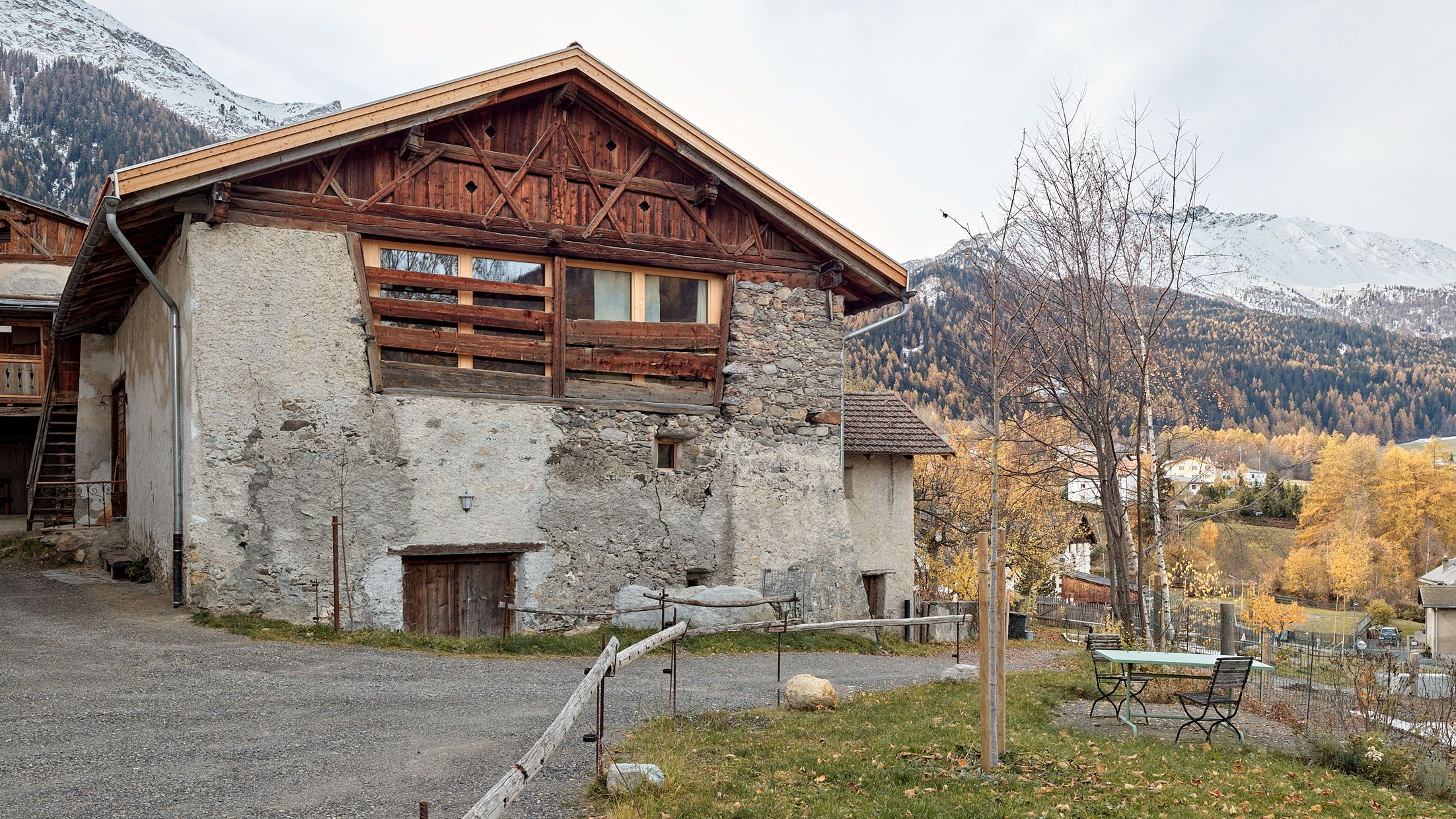
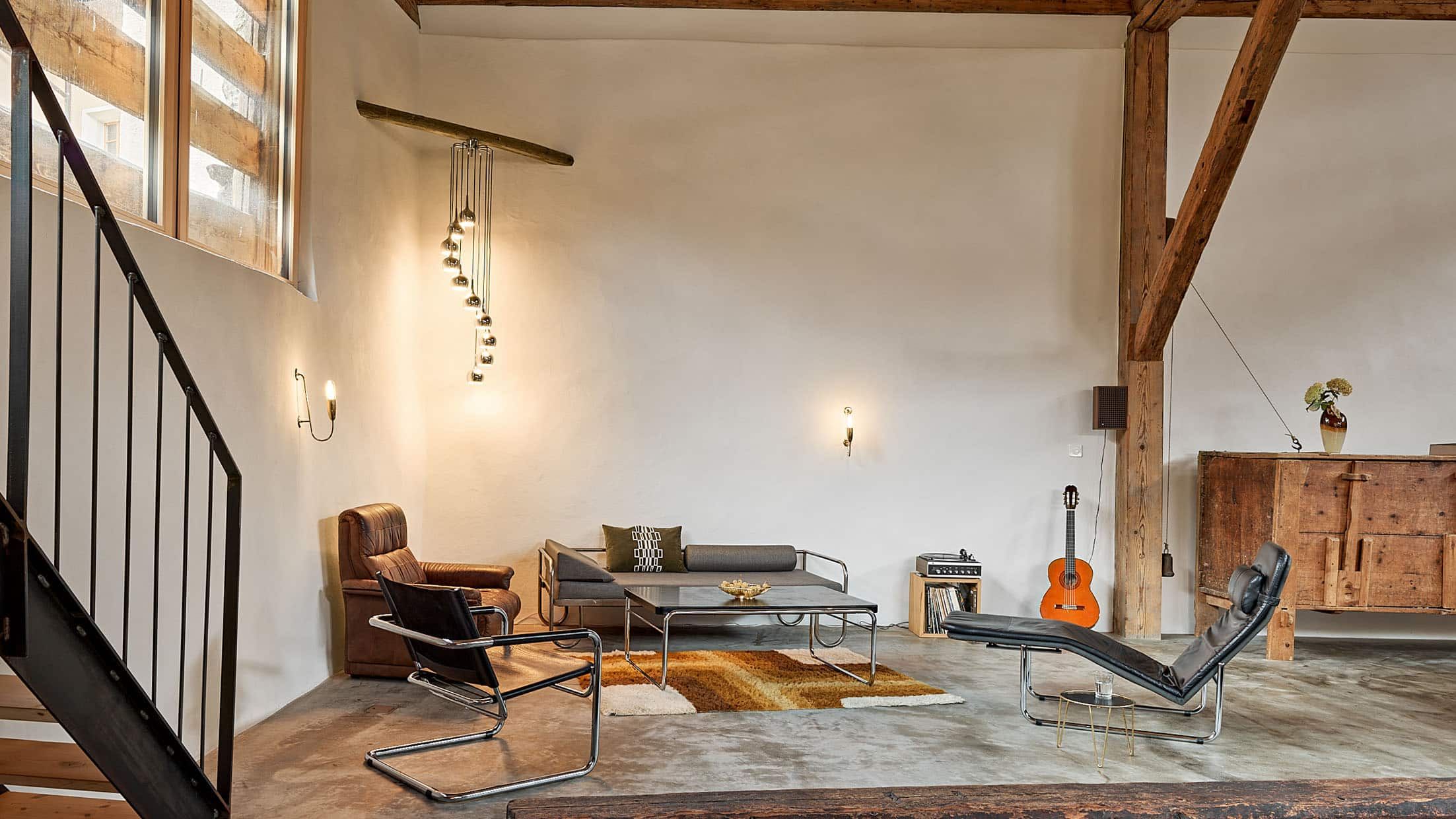
Working closely with the Grisons heritage conservation authorities, the owners of Stalla d’Immez have transformed a roughly 300-year-old stone and timber stable in Val Müstair into a spacious loft, preserving the atmosphere of the former home to cattle, horses and chickens. The stable’s two floors have been combined into a single open space, where the kitchen, dining area and lounge flow seamlessly into one another. The historical roof structure and old hayrack are juxtaposed with unfinished screed flooring, slender steel elements and white plastered walls. Furniture dating from the time the stable was built contrasts with designer pieces from different eras and vintage classics – all coming together to form a harmonious whole.
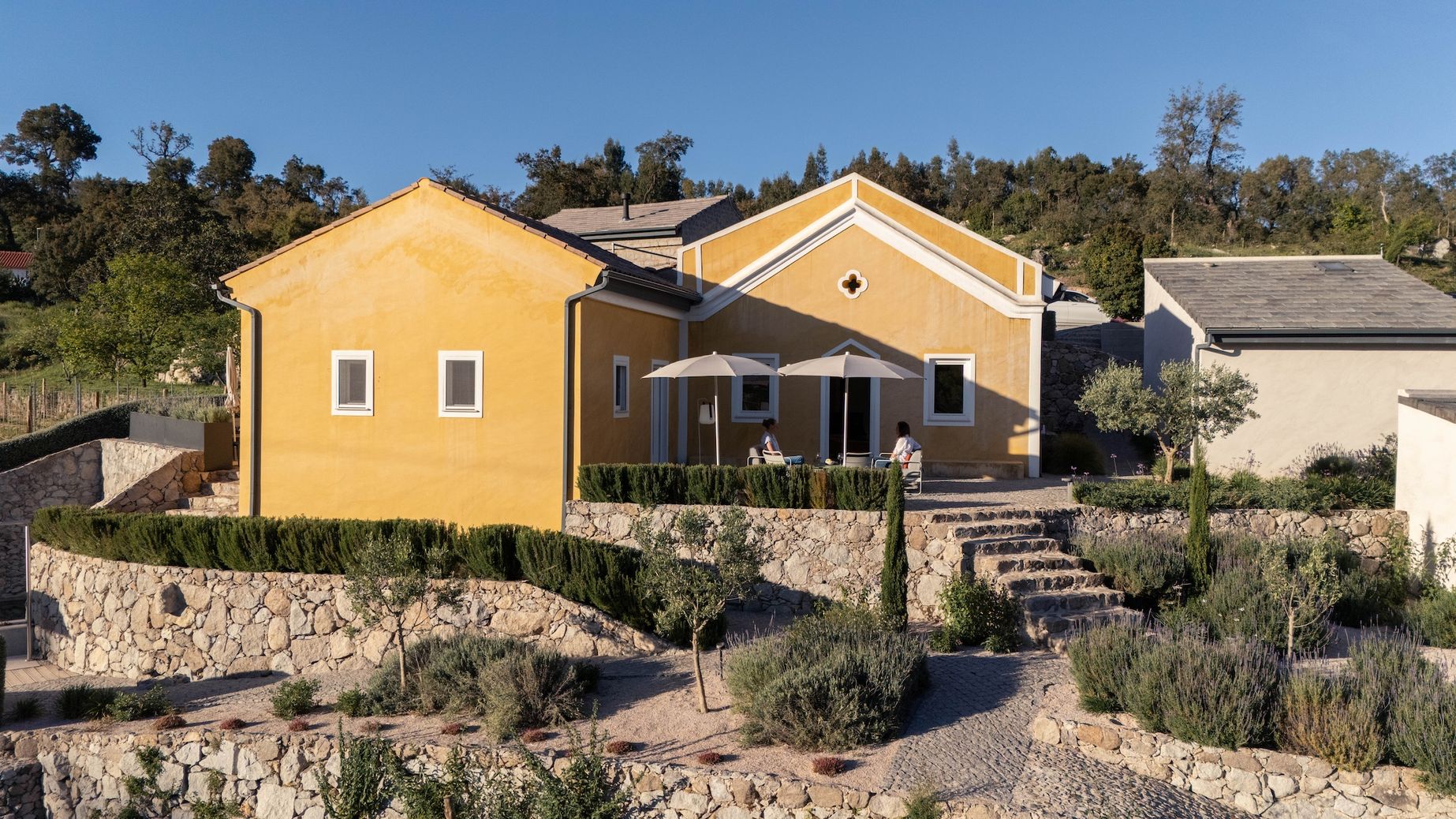
Three houses with stories to tell
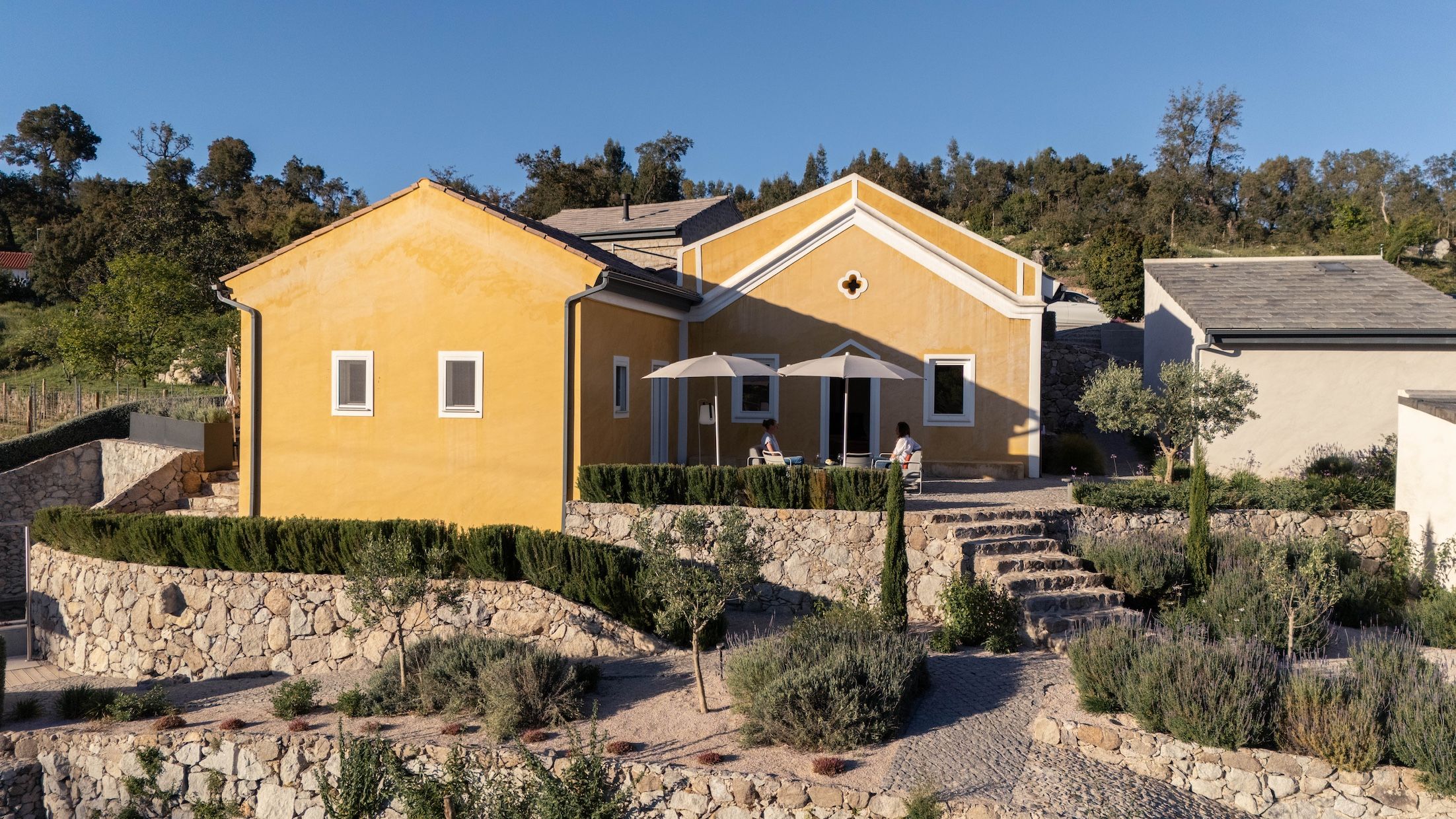
Set in the green hills of the Serra de Monchique, a 150-year-old property has been brought back to life after standing empty for many years. The original layouts of Quinta da Lila’s three houses have been largely preserved: in the Baker’s Cottage, the Granite House and the Yellow House, historical architecture meets modern comfort. Lime plaster and cork insulation are as much a part of the concept as hand-picked vintage furniture, art and design classics from Italy, the Netherlands and Scandinavia, giving each house its own personality. Surrounded by vines, citrus, olive and apple trees, a distinctive ensemble has emerged that harmoniously blends the past and the present.
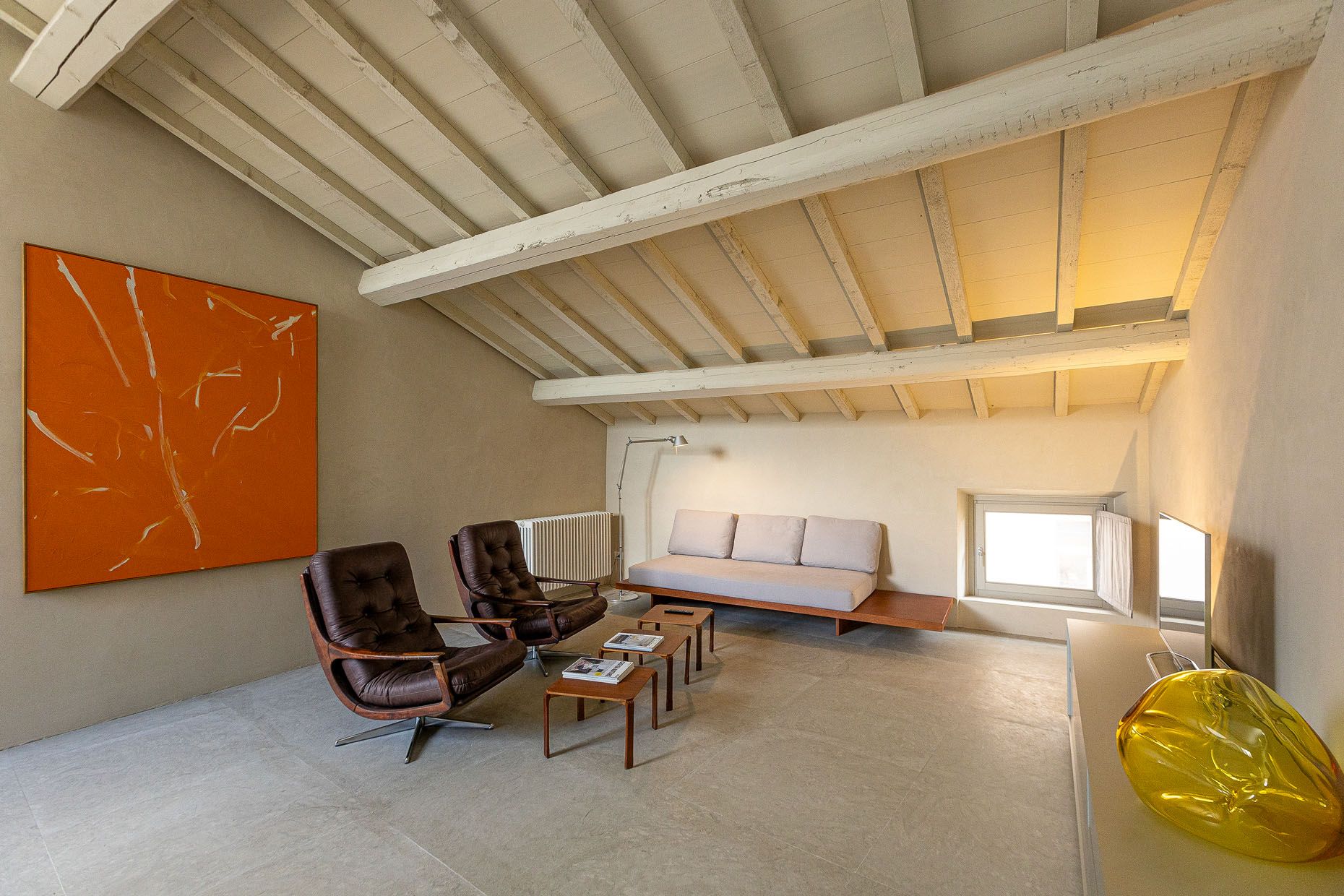
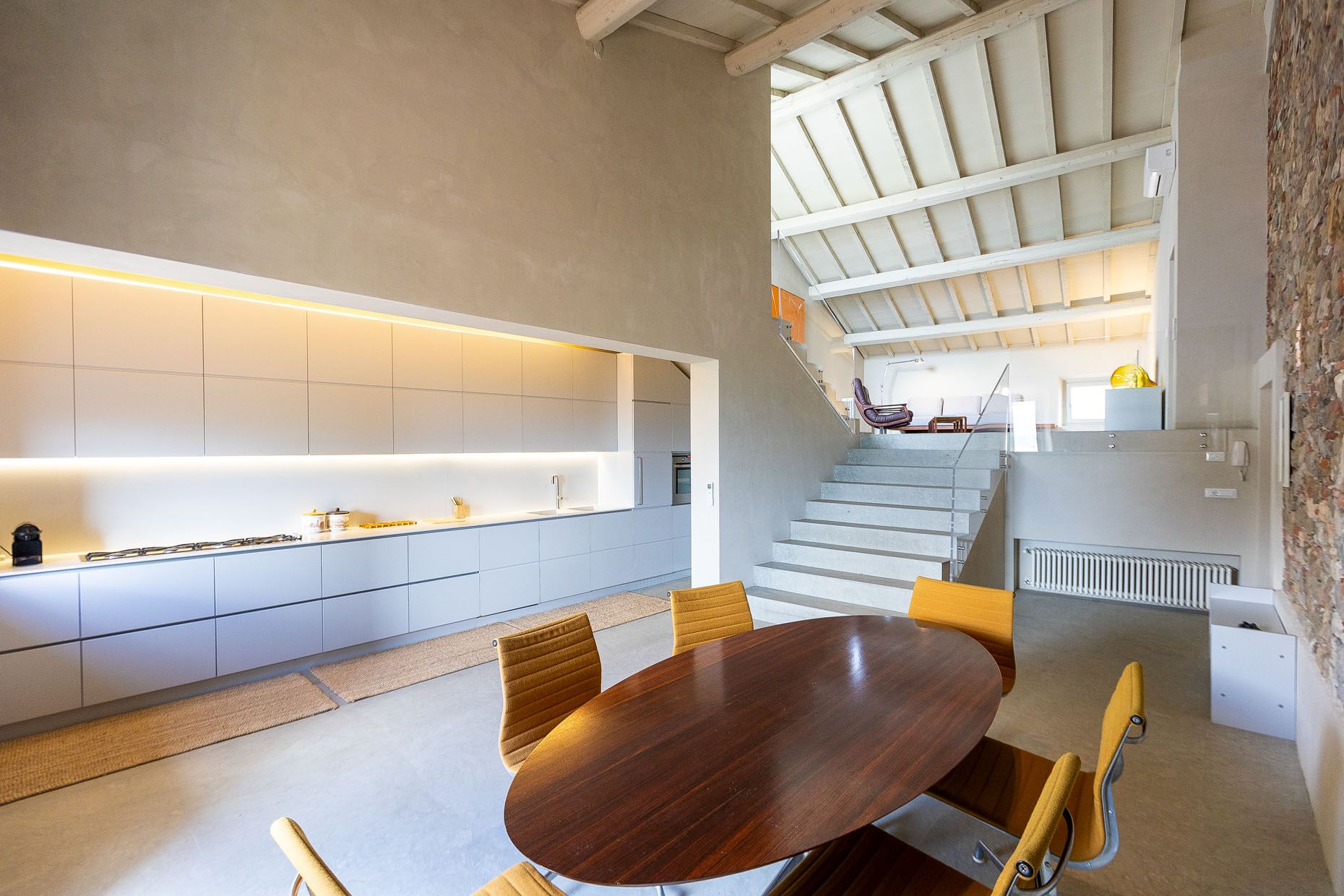
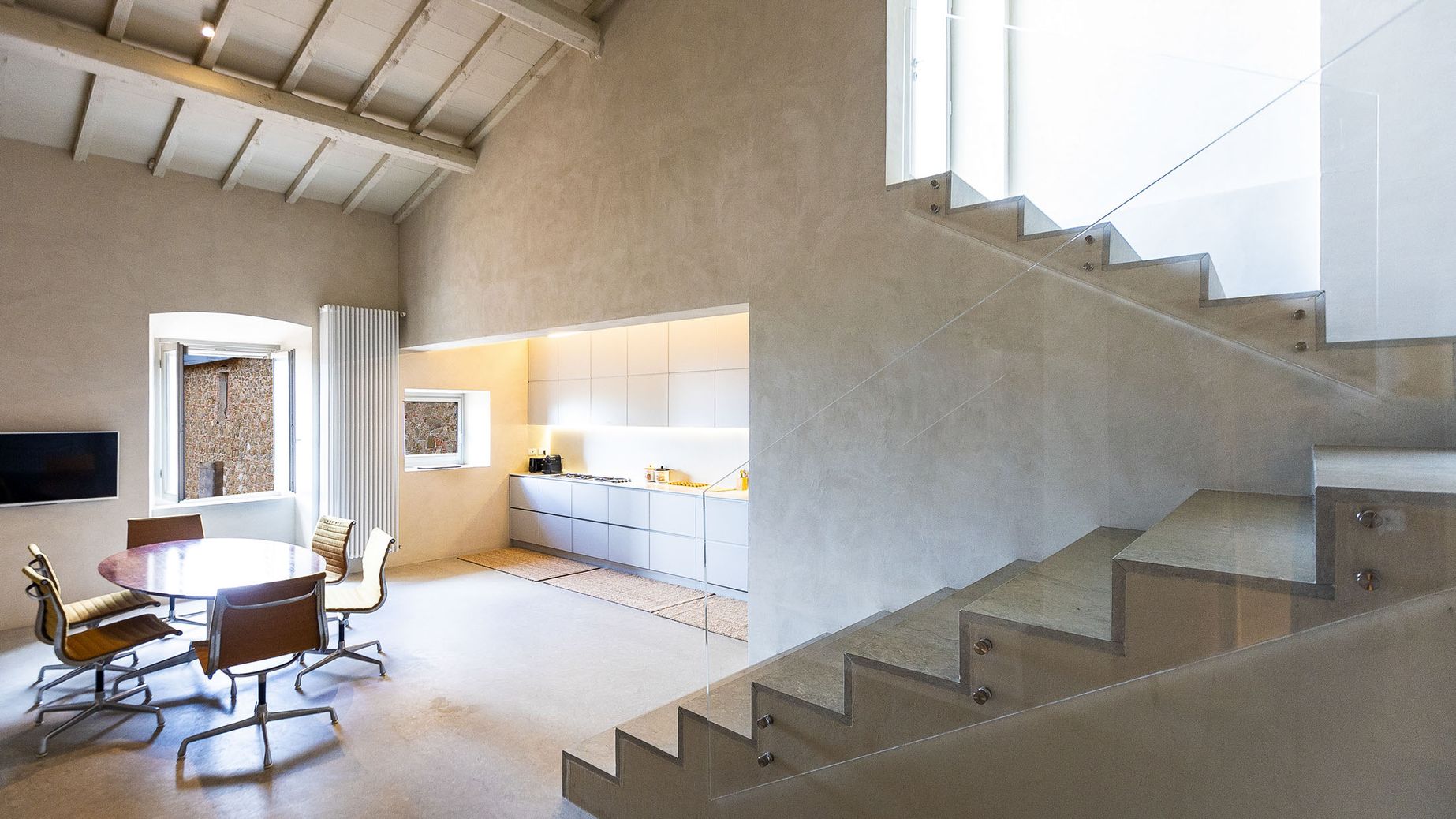
Loft feeling in medieval Montemerano
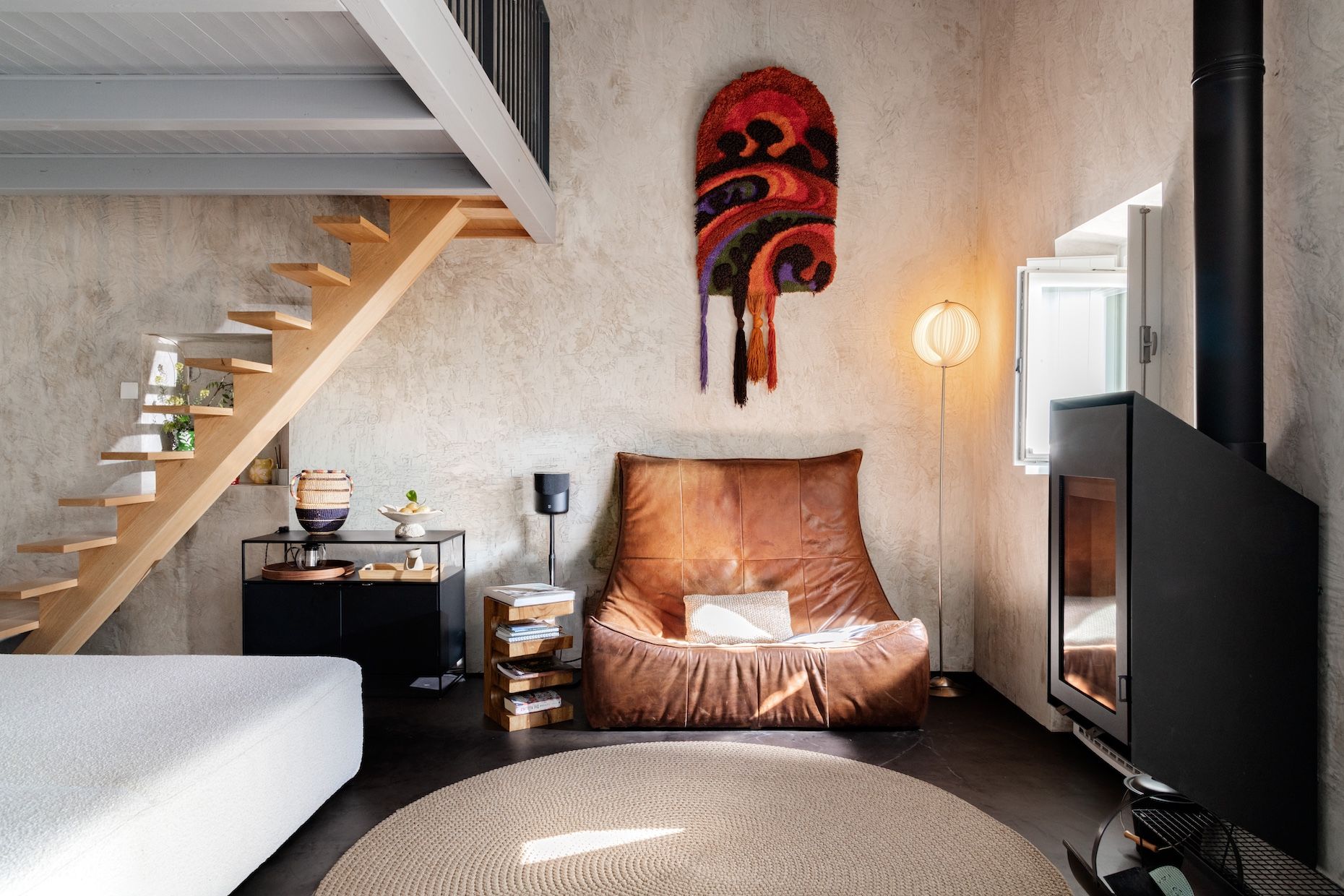
In the medieval village of Montemerano in Tuscany’s Maremma region, architect Massimo Ghisi and his wife Vanna Bernardelli have transformed a typical local house into a contemporary living space. Natural stone walls and timber and terracotta ceilings recall the original architecture, while large windows and a clean-lined staircase lend a new sense of openness to what was once a dark space full of nooks and crannies. Inside, design classics and vintage pieces sit alongside bespoke furniture and contemporary art from the couple’s own gallery in Mantua. The loft thus combines rustic charm with an urban atmosphere – while retaining the character of its setting.
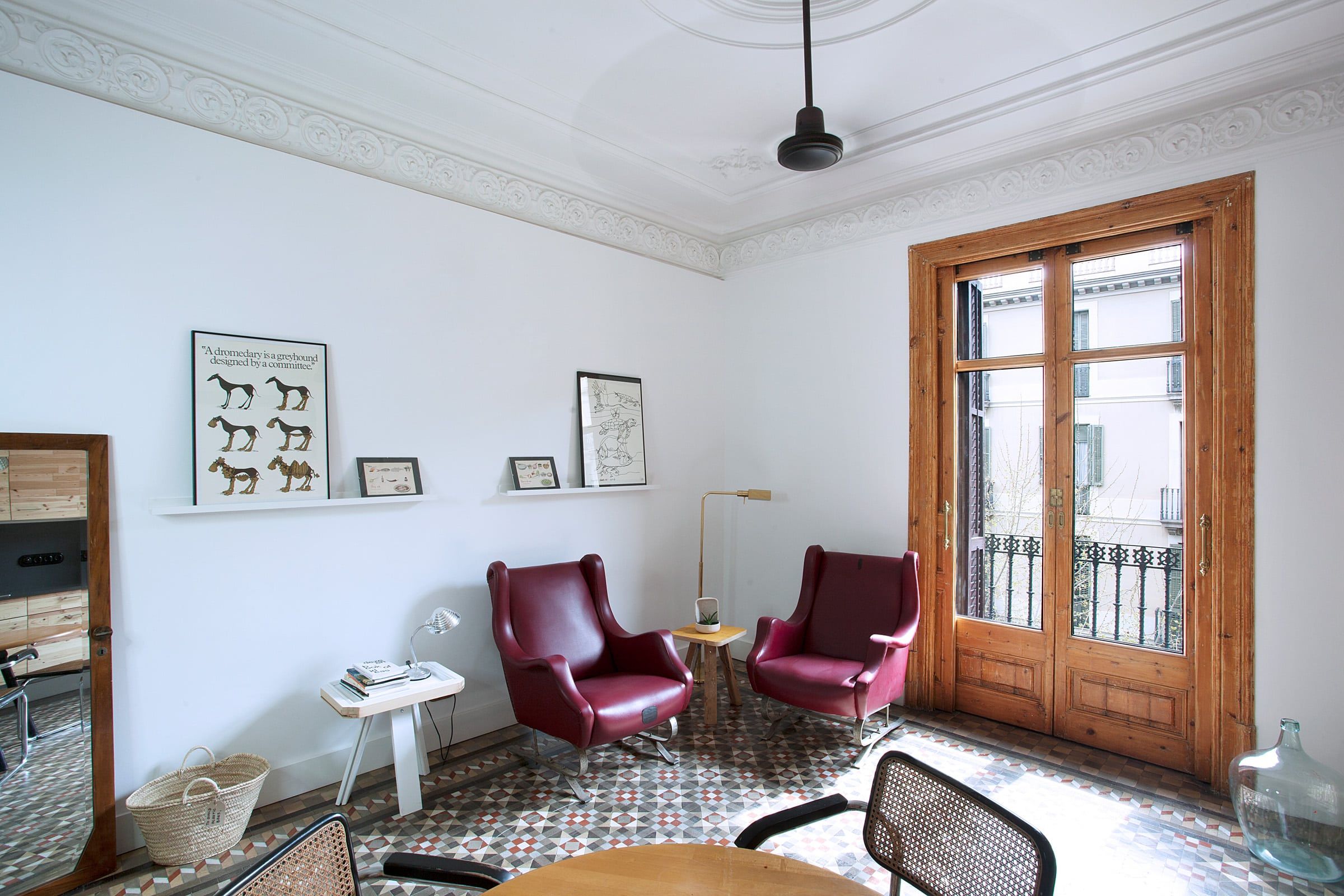
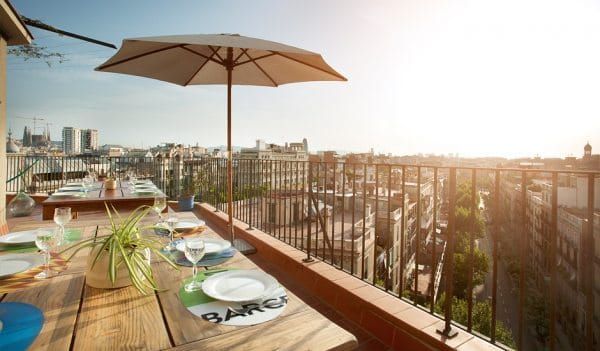
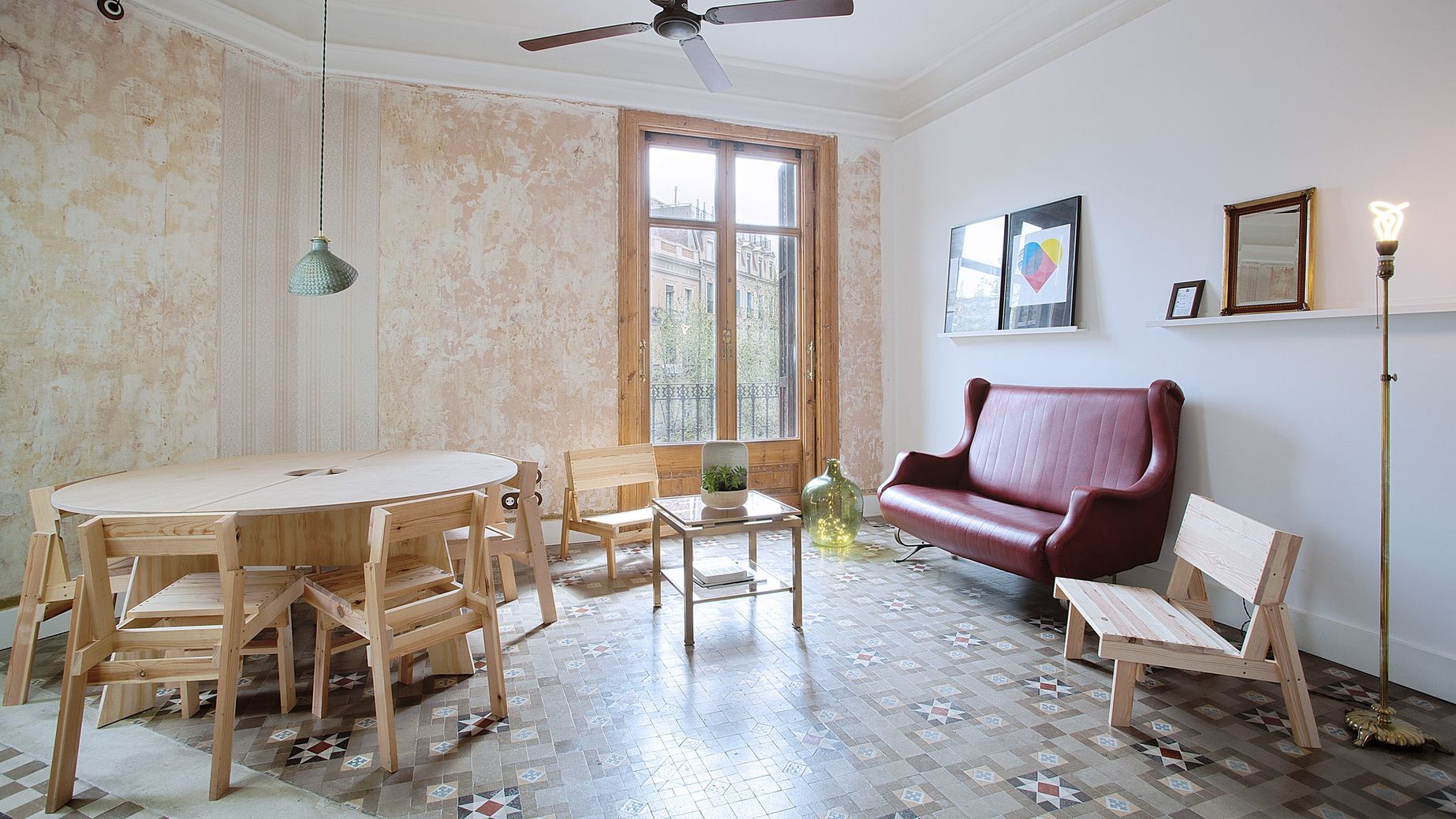
Rethinking Barcelona
At yök Casa + Cultura in Barcelona, historical architecture, vintage and design come together. The holiday apartments in a 19th-century residential building have been renovated with sustainability and the future in mind, preserving the high stucco ceilings, patterned floor tiles and original wooden windows typical of Catalan Modernisme. The interiors feature an unconventional mix of vintage furniture and locally produced eco-design. In the kitchens, for example, recycled materials such as old pallets have been used wherever possible, alongside reclaimed mirrors and washbasins. The owner has created an unconventional home away from home where existing materials and second-hand furniture are given a new lease of life.
In search of special vintage finds
Discovering vintage furniture and unique pieces has never been easier than it is today. Flea markets, of course, have their own charm, but specialised online platforms make it much easier to search for specific eras, materials or designers. The following platforms each have their own particular focus.
VNTG and Selency
These two online marketplaces offer vintage furniture and home accessories from across Europe. Depending on the platform, selections can be filtered by criteria such as period, material or country of origin.
vntg.com and selency.fr
HK Vintage Finds
A curated selection of distinctive vintage pieces from Scandinavia, put together by Herman Koppe, the host behind Casa da Lila and Quinta da Lila. The focus is on lighting. The platform is aimed at those who enjoy gradually adding individual, one-of-a-kind pieces to their homes.
1stDibs and Pamono
These design-focused platforms are particularly useful for searching for specific designers, styles or periods. Their offerings range from iconic design classics to extraordinary one-off pieces.
1stdibs.com and panomo.de
Vinterior
This platform specialises in vintage furniture and home accessories, with a focus on the British and European markets.
Author: Tina Barankay
Photos: AesteticPix via pixabay (Cover image),Bruno Augsburger & Nicolas Kyramarios (Hasenberg Lodge), Kerstin Weidemeyer (Die Scheune), Luis da Cruz (Casa da Lila), Roger Conti & Vanessa Ili (Borgo Tranquillo), Ana Paula Carvalho (Baixa House), Roland Bernath (Stalla d’Immez), Pedro Correia (Quinta da Lila), Leonardo Manini (Loft Montemerano), Carlos Barruz (yök Casa + Cultura)
0 Comments