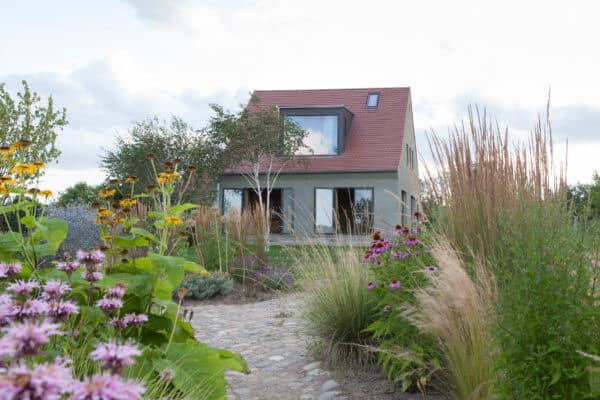
Architecture of the elements
The architecture of the Faroe Islands is characterised by tradition, weather conditions and Nordic building culture. And the architecture itself influences the building culture of the North, often in international co-operation.
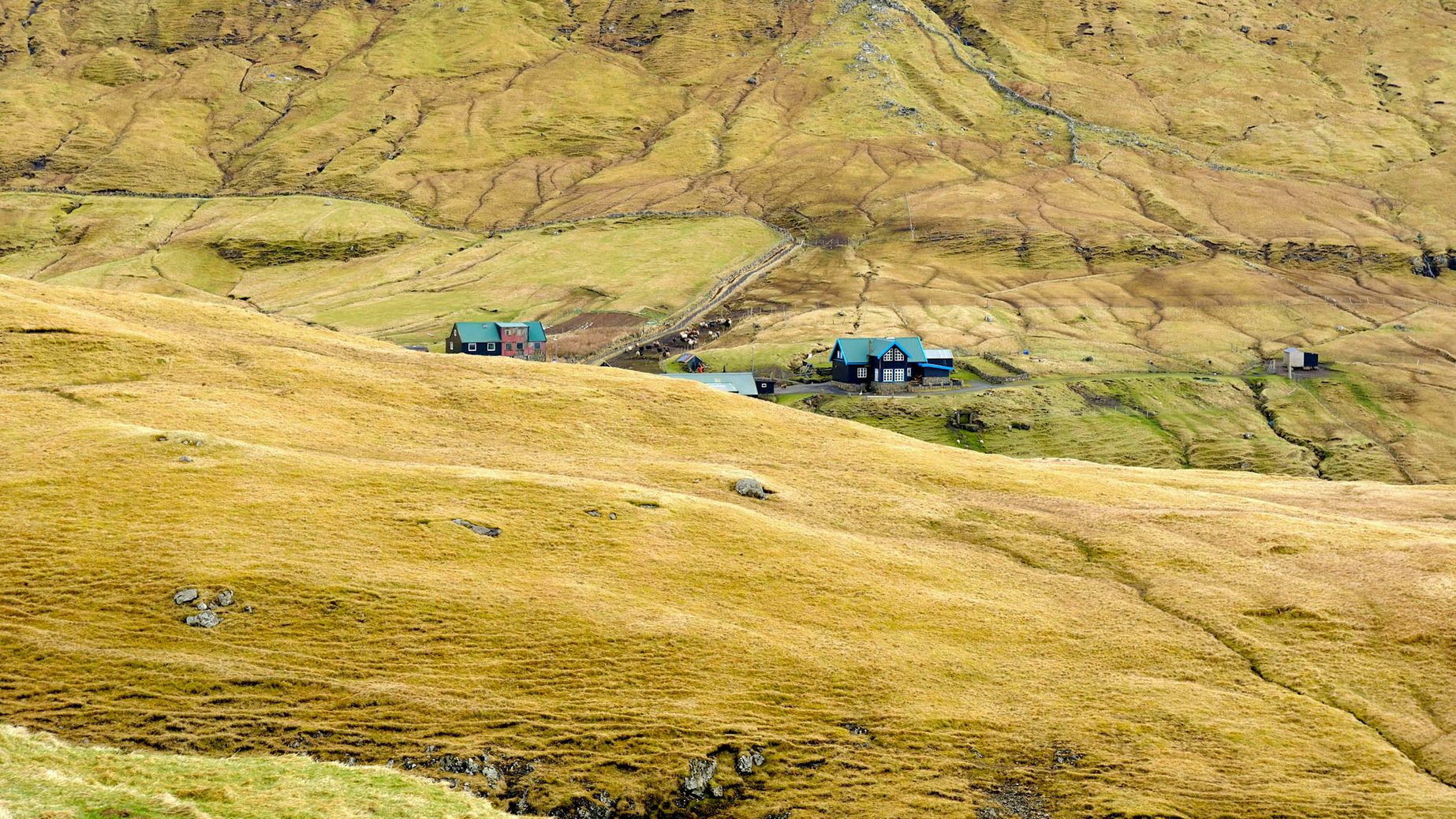
The translation of the name of the Faroe Islands sounds like fleece and peace: ‘Sheep Islands’. The fact that the 18 islands can be anything but cosy and mild becomes apparent when the elements celebrate the Faroese interplay. Light, fog and winds blur the contours and make them almost otherworldly. The mountains and slopes seem impenetrable, mystical, sublime. The man-made shrinks beyond recognition. As if life on the archipelago in the far North Atlantic between Scotland and Iceland consisted exclusively of hard, violent gusts, lashing sea rain and treeless barrenness against a gigantic, rough backdrop.
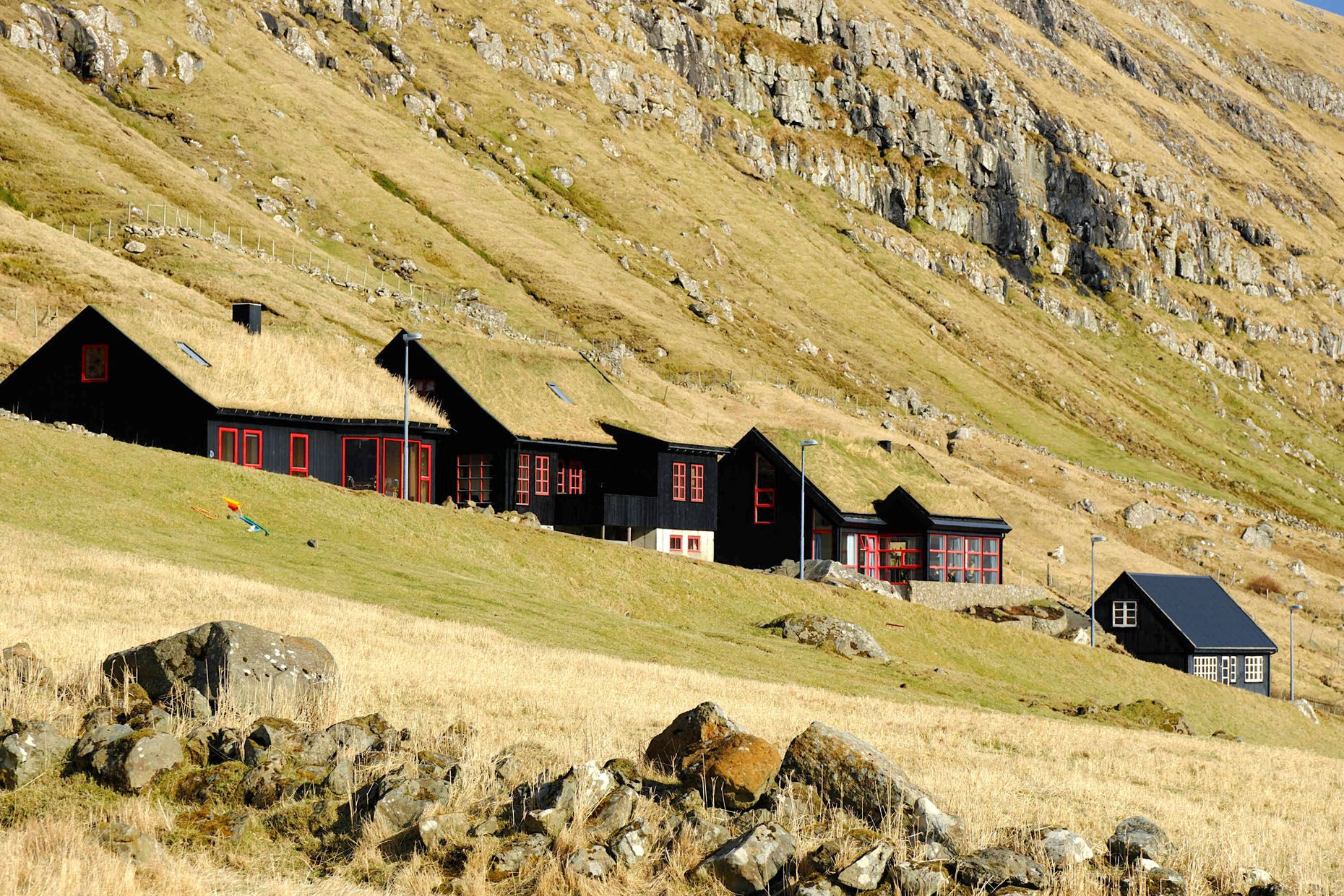
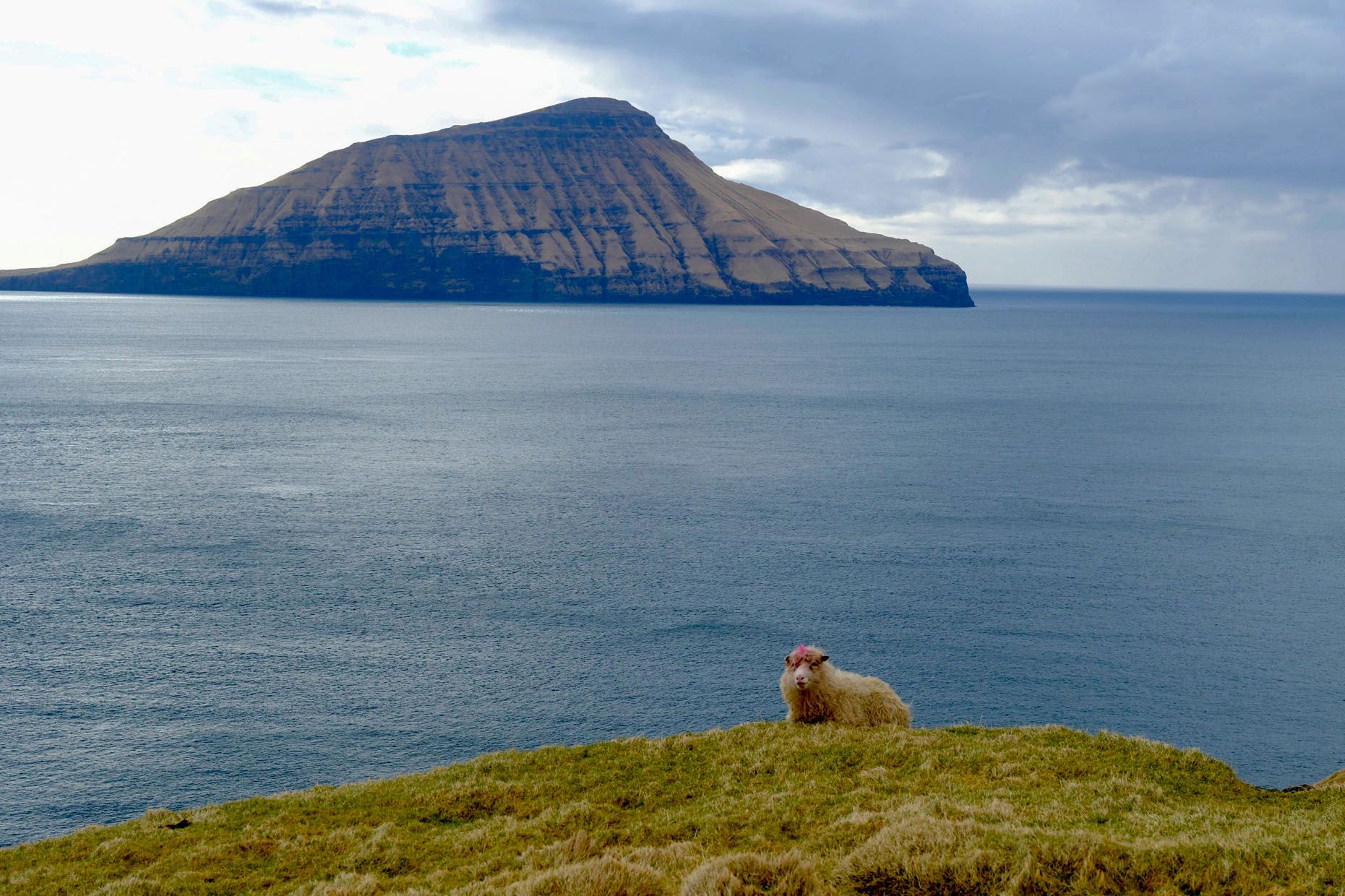
Human constructions can only survive here if they are built with and not against the landscape – flat, dug in, modest. Anyone travelling to the archipelago for the first time immediately realises how comprehensively nature influences life. The building culture of the 18 islands, which are slightly larger in area than the German islands of Rügen and Usedom put together, is therefore closely linked to local life with nature.
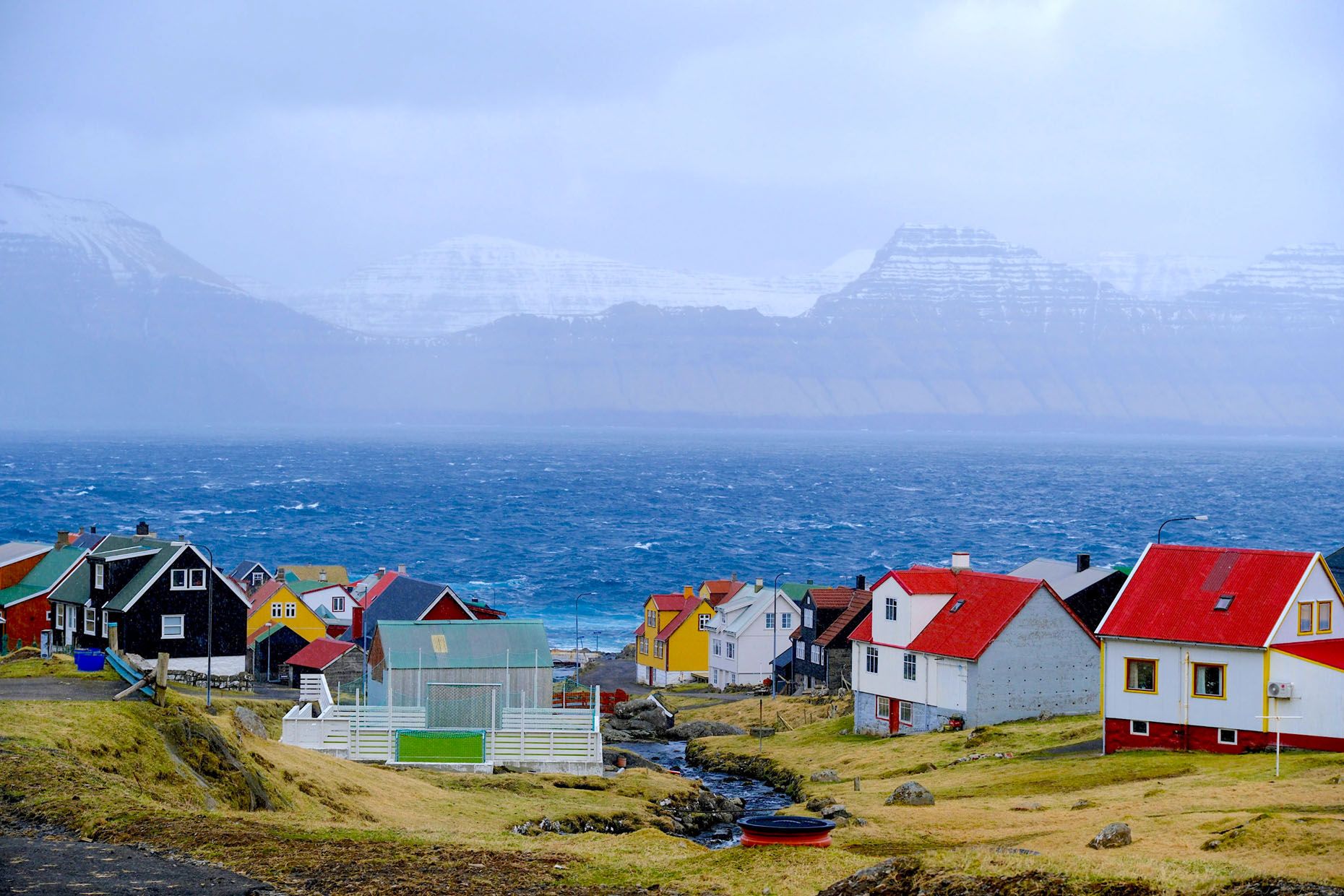
The first traces of human habitation date back to the Viking era. Their longhouses were low and made of stone and grass. They offered protection from the raging elements. Villages developed from these farmsteads, especially as fishing became more important. The new settlements gave rise to a new type of house, the fishermen’s houses. These had a stone base, grass roofs and were clad in wood. In their robust, spartan form, they epitomise the traditional Faroese building style. The houses grew with prosperity and soon larger buildings with ornate details replaced the classic fishermen’s houses – a reflection of the change from an island society characterised by agriculture to one characterised by fishing industry.
The churches represent a special typology on the islands. Especially in the first half of the 19th century, wooden sacred buildings were erected, which still dominate the villages and settlements. The foundations are whitewashed, the walls are tarred and the roofs are made of grass. Inside, the woodwork is ornate and richly detailed. The simple yet elegant wooden churches therefore symbolise traditional Faroese craftsmanship and deeply rooted faith.
Today, the Faroe Islands are a parliamentary monarchy with self-government. The head of state is the Royal House of Denmark. Since 2005, the archipelago has been an equal nation in the Kingdom of Denmark with influence over foreign and security policy. The same applies to Greenland, the largest island in the world and also part of the union with Denmark. The centre of the Faroe Islands is the capital Tórshavn, which has developed into an engine of growth. Of the more than 50,000 islanders, almost 22,000 live in Tórshavn. Important buildings have been constructed in the last few decades, which have characterised the local architecture, but also the self-image of the Faroe Islands.
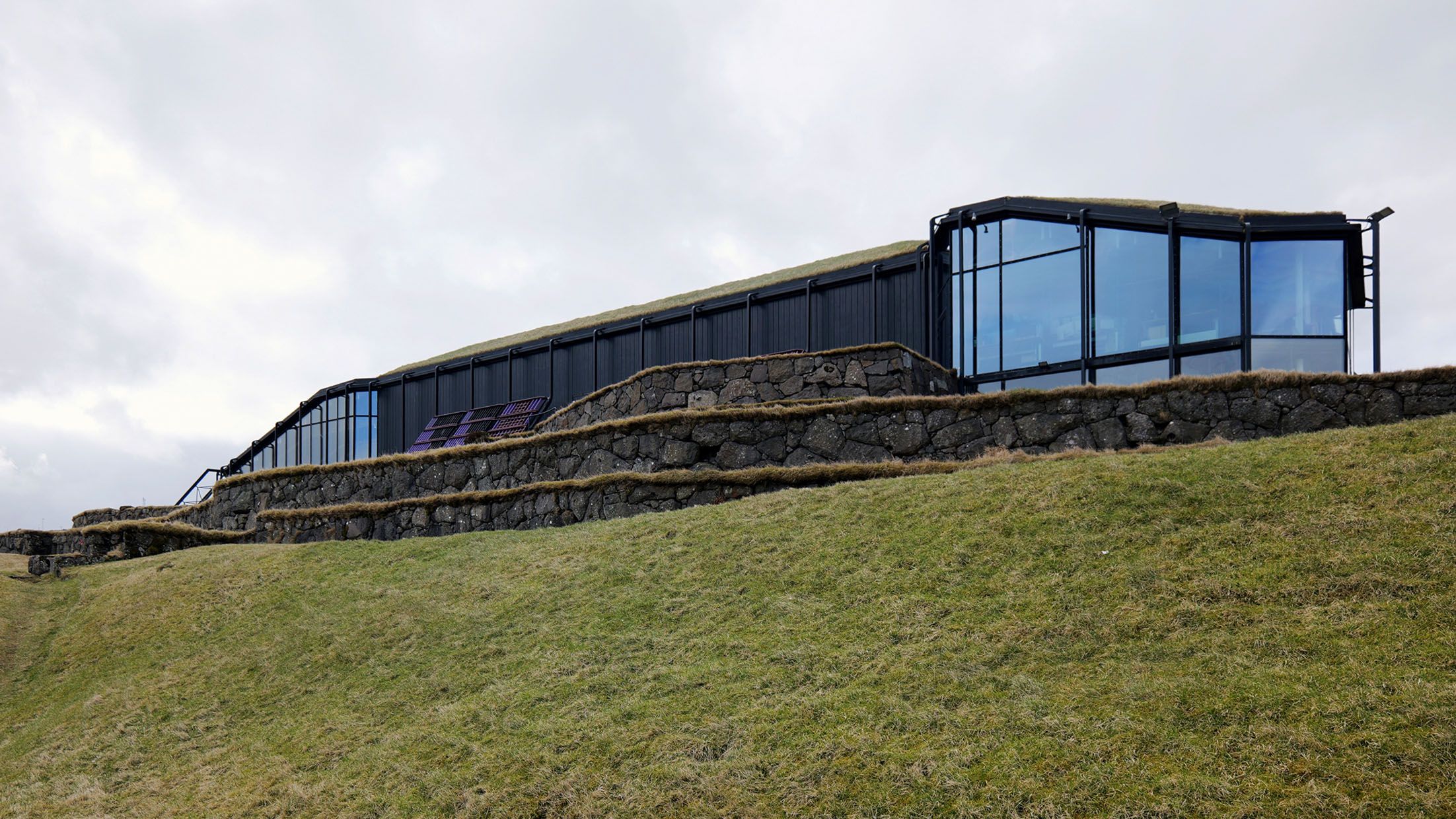
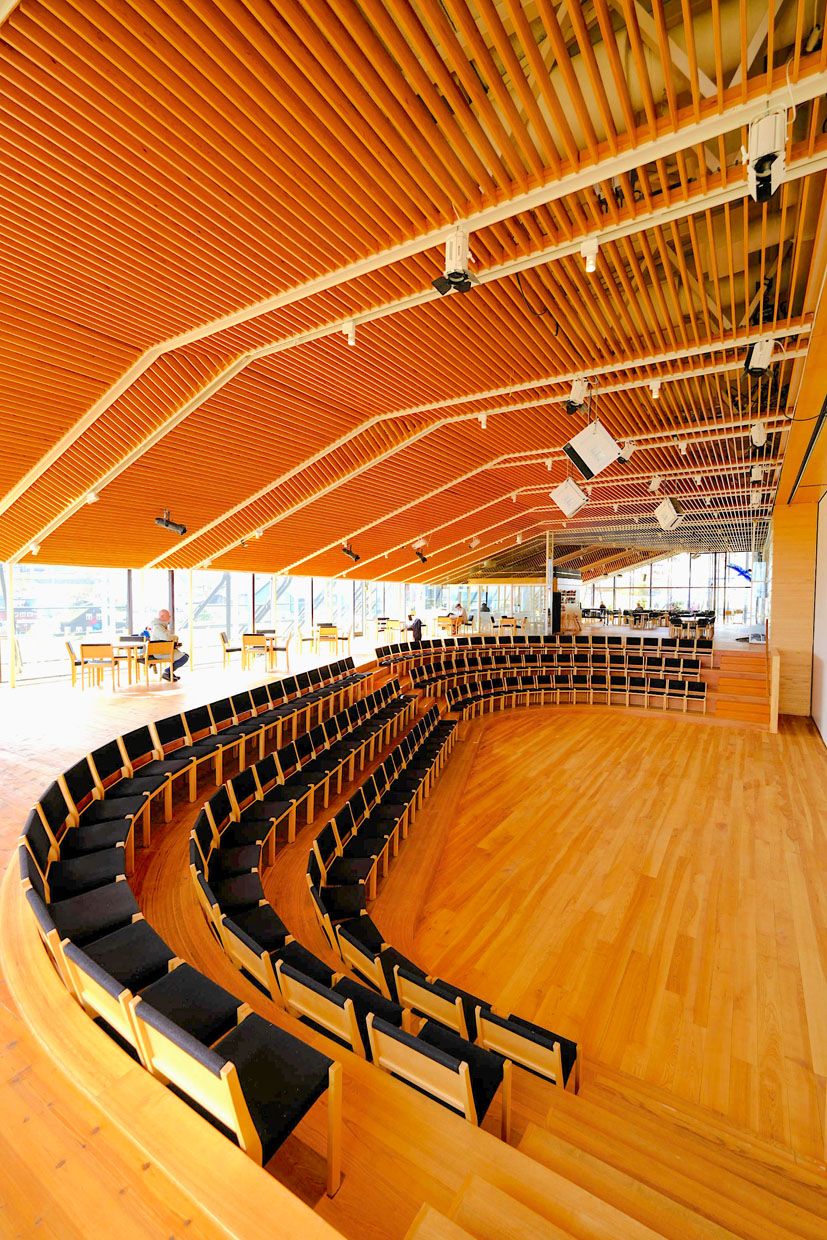
One of the most important new buildings of recent decades is the ‘House of the North’. It is the country’s most important cultural and congress centre and was opened in 1983. It is a symbol of Nordic architecture and co-operation. Ola Steen from Norway and Kollbrún Ragnarsdóttir from Iceland designed a two-storey building with a grass roof, a floor of Norwegian granite, an interior design from Finland (by Alvar Aalto) and a steel girder structure from Denmark.
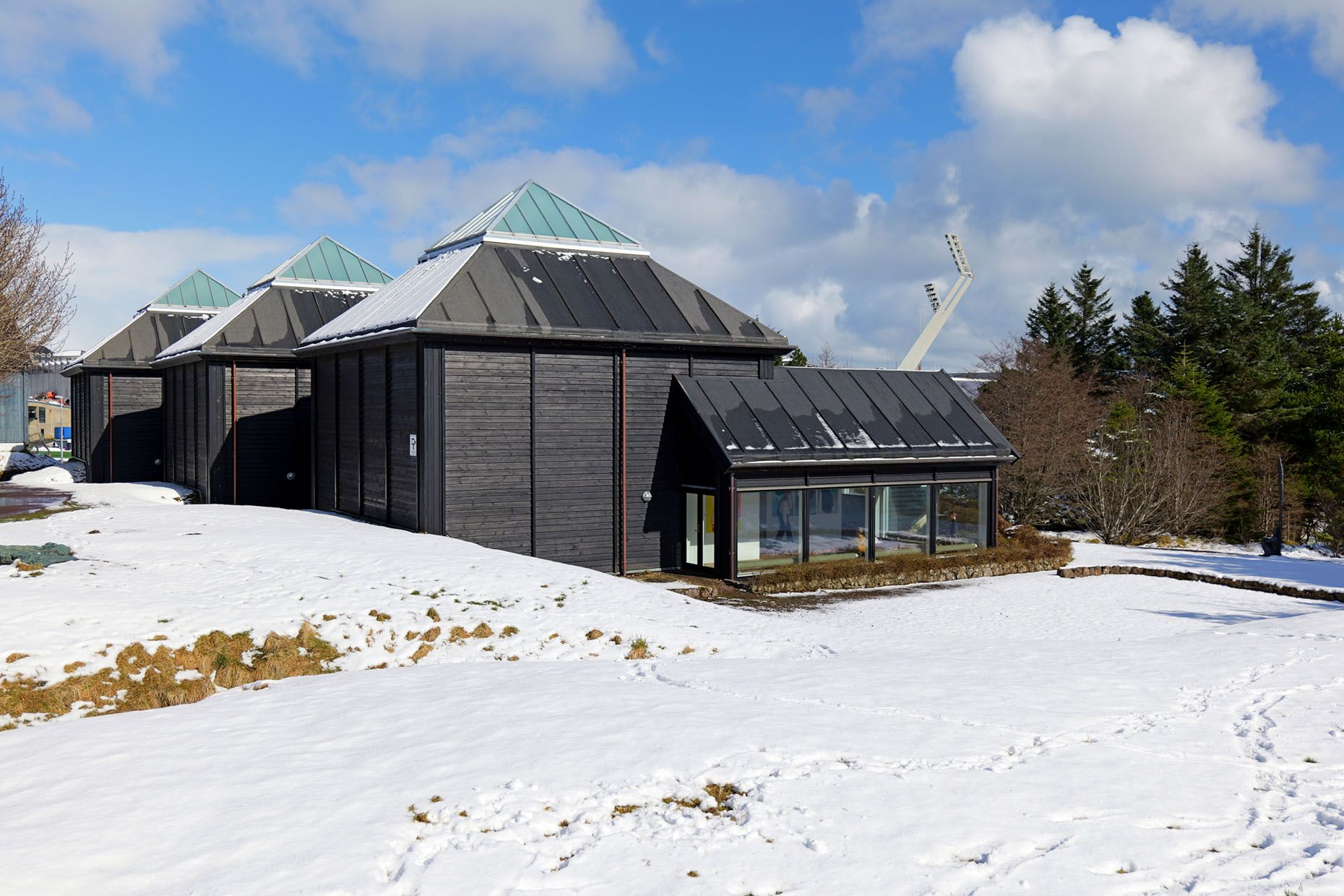
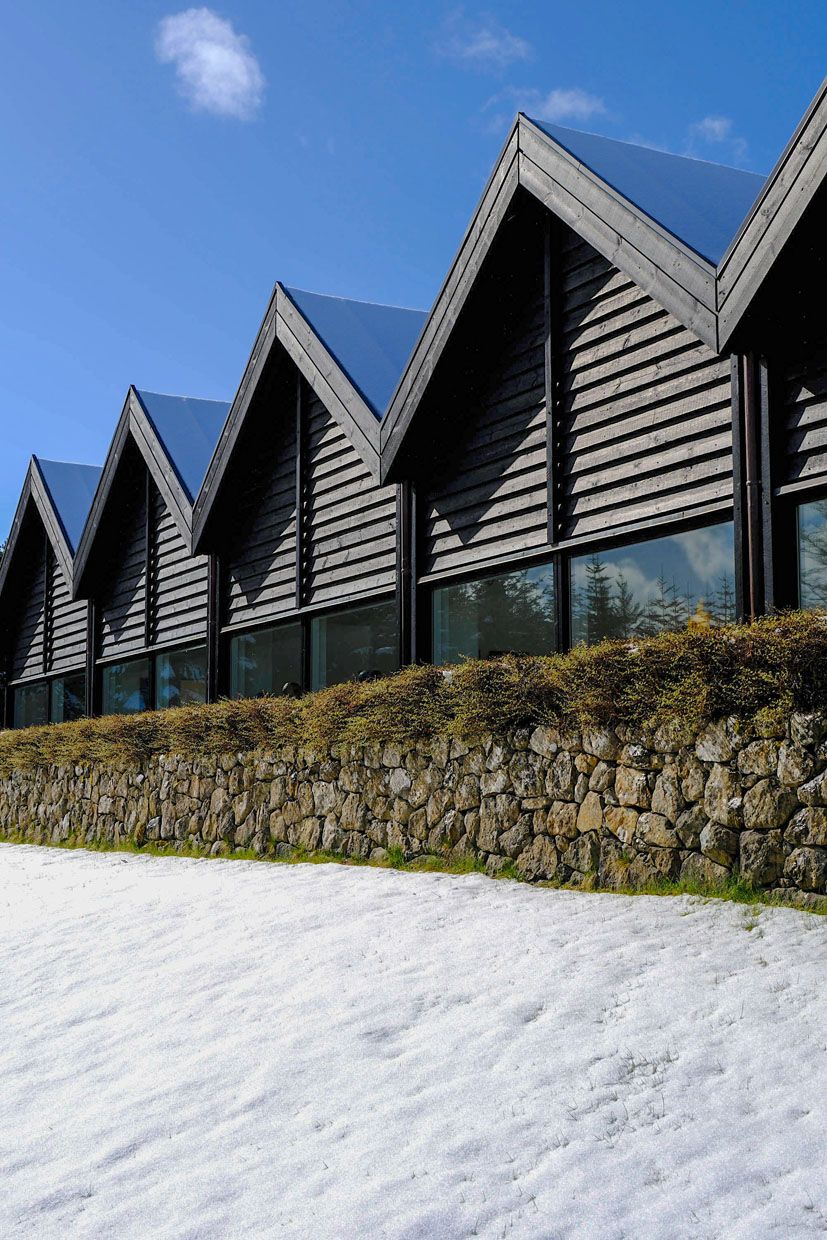
‘Listasavn Føroya’ is just a few minutes’ walk from the House of the North. The National Gallery is a flat museum complex with gabled and pyramid roofs and consists of two sections. The oldest part was designed by the renowned Faroese architect Jákup Paula Gregoriussen in 1970, while the second part of the museum is an extension by Niels F. Truelsen in collaboration with Gregoriussen (completed in 1993).
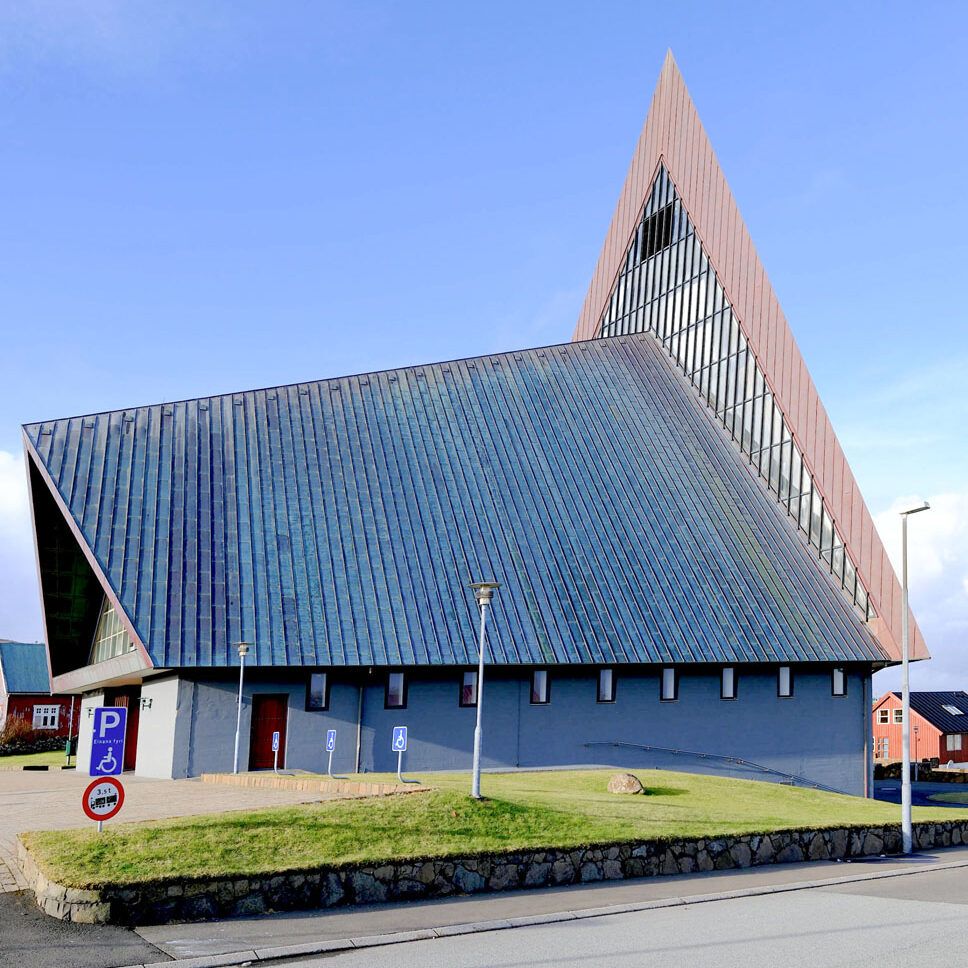
Outside the city centre, two buildings are emblematic of the Faroese penchant for symbolism and sculpture. The Vesturkirkan [West Church] is a church building of the Faroese Lutheran Church and, at 41 metres high, is the tallest building in the country. Inaugurated in 1975, the West Church resembles a stylised sail. It was designed by Holm & Grut, a large architectural firm based in Copenhagen that has been active since 1941.
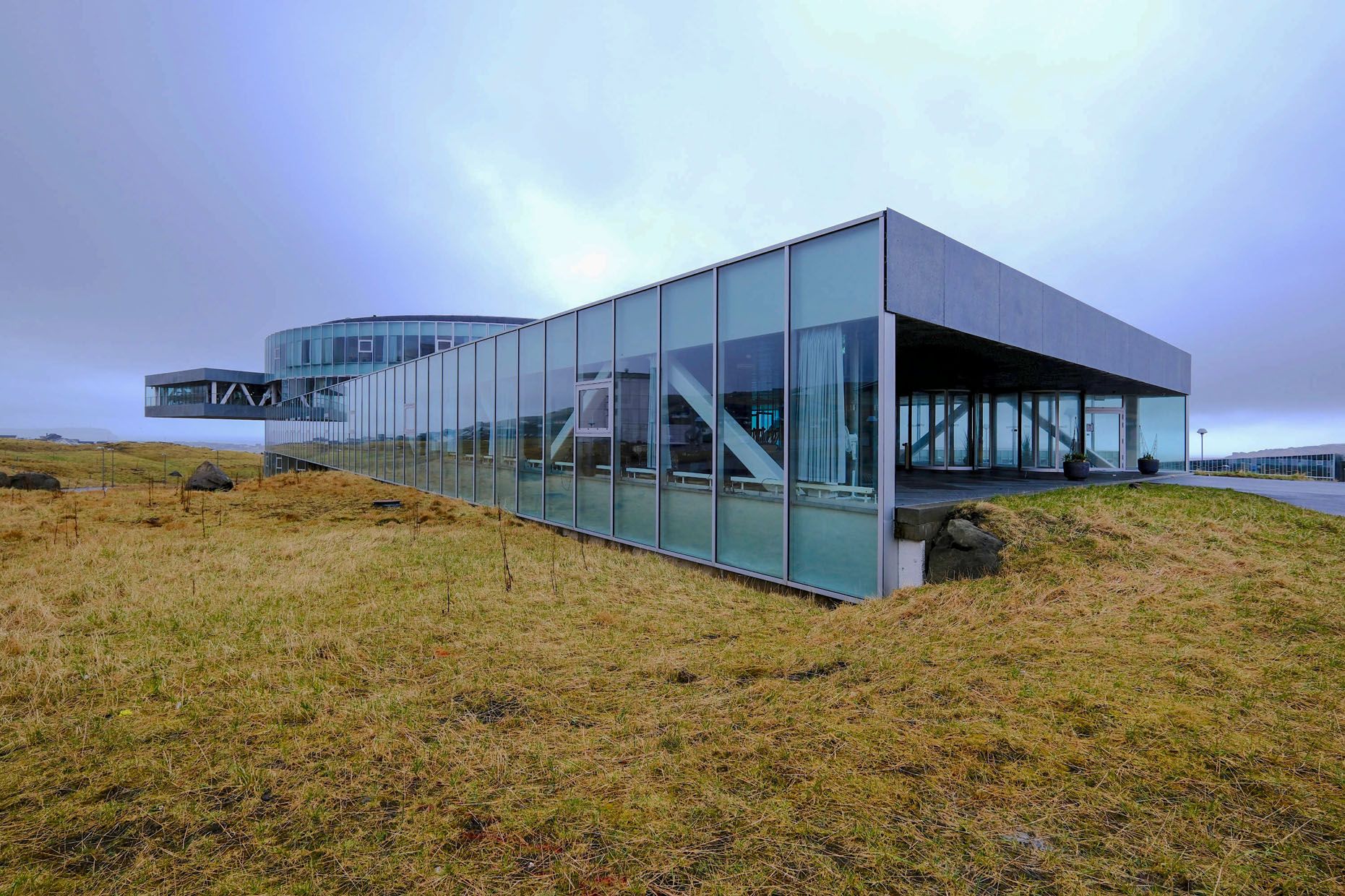
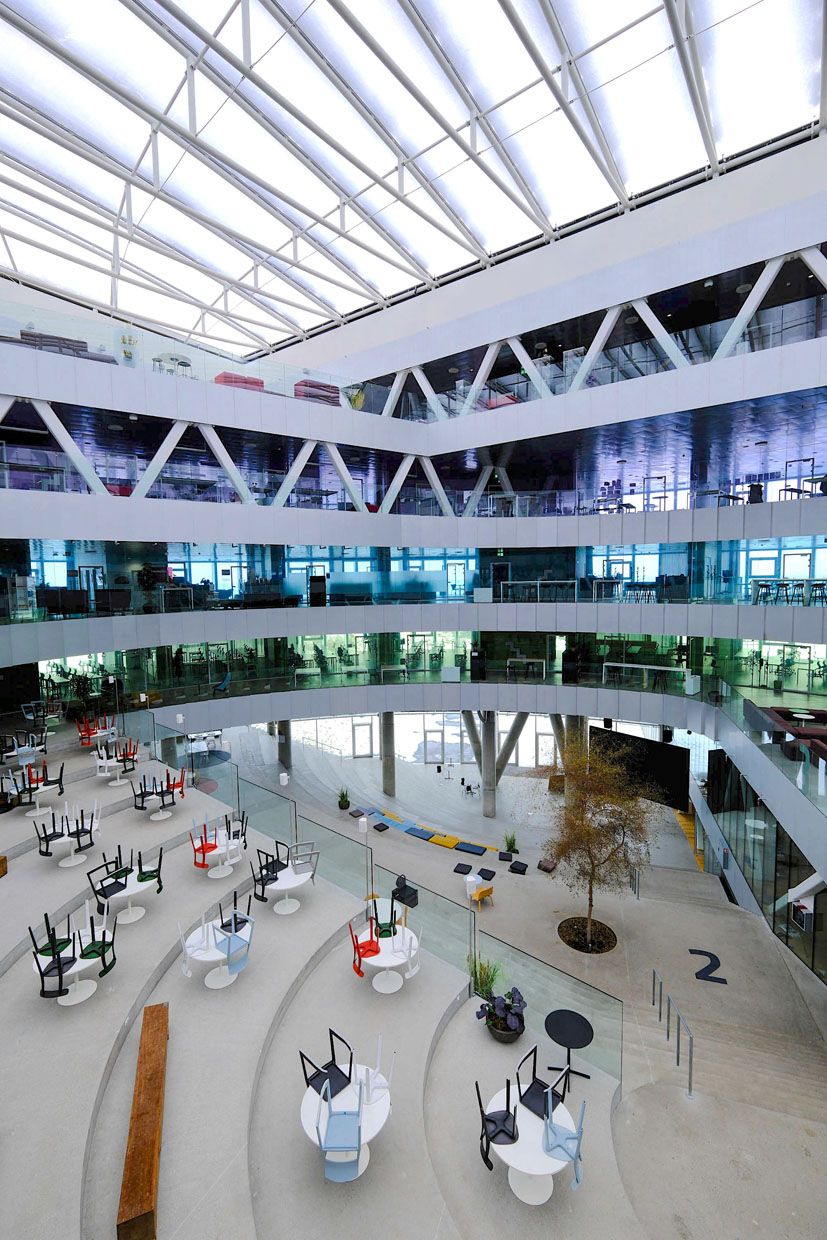
The most spectacular new building of recent years was also designed by a Danish firm. The Glasir, built by BIG (the Bjarke Ingels’ Group), is an educational centre of superlatives. It houses the Technical University, the Business College and other facilities for almost 2,000 teachers, students and employees. Bjarke Ingels’ team designed a stack of five individual levels that wrap around a central courtyard. This vortex-like structure ends with the uppermost levels, which radiate up to 30 metres into the mountainous landscape of Tórshavn.
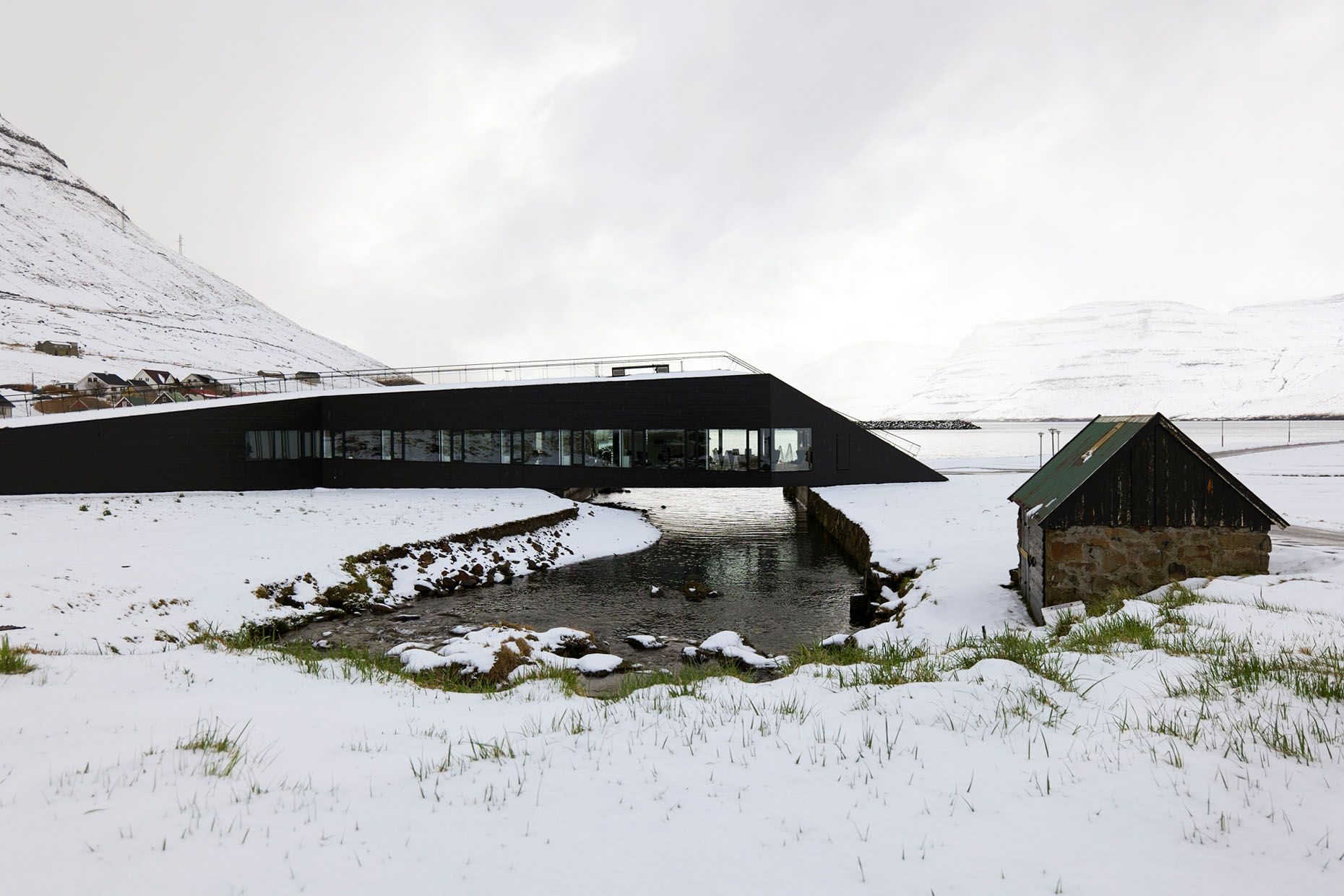
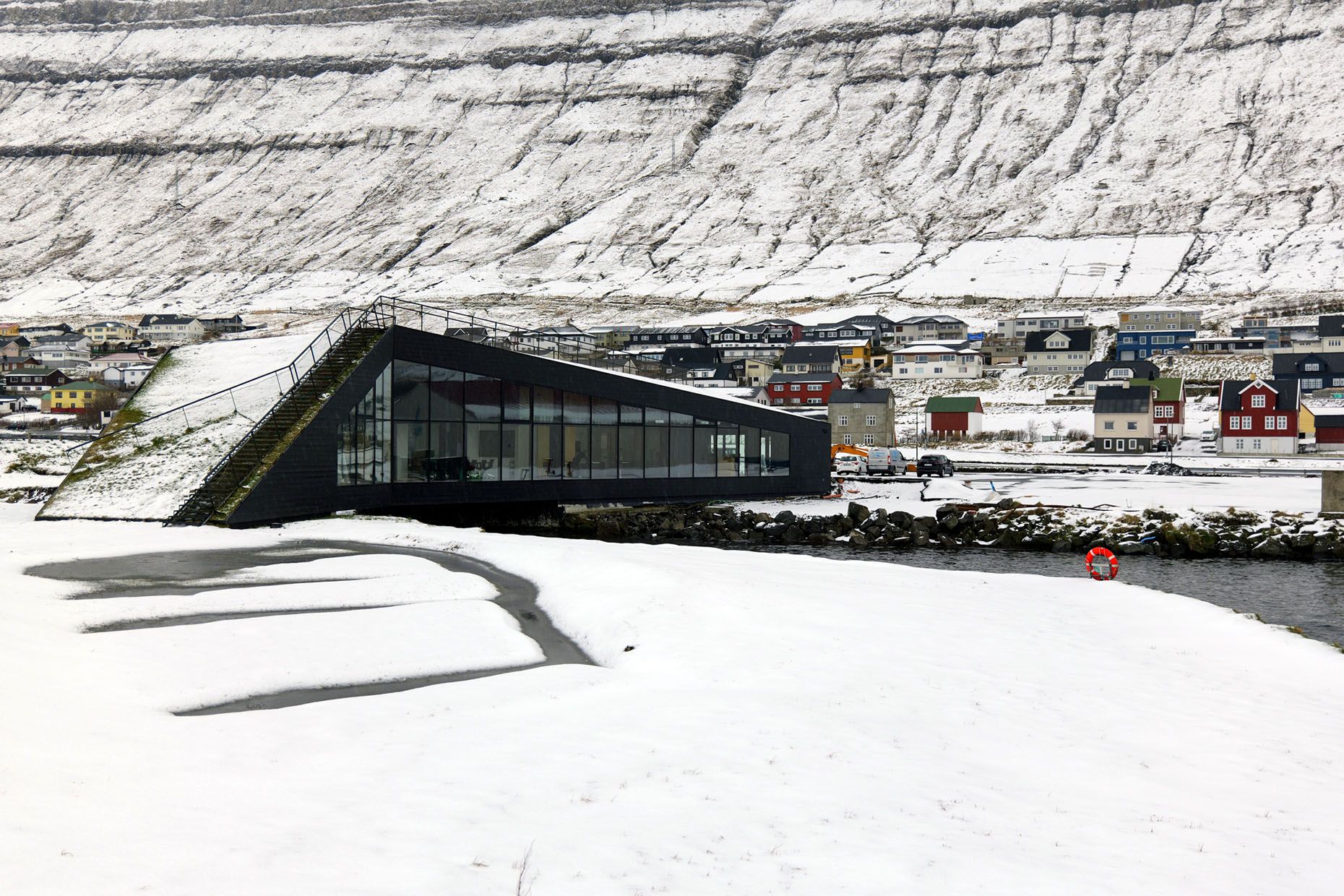
The municipality of Eysturkommuna with its new town hall in Norðragøta shows that exciting building projects are also being created outside the capital. It was designed by Henning Larsen (HL, Copenhagen), with Faroese architect Ósbjørn Jacobsen in charge. HL’s office partner and his team designed an elongated, multi-angled building directly on Norðragøta harbour. Part of the building leads over a small river. This turns the accessible green roof into a bridge. This bridge is intended to create a connection to the Eystur neighbourhood, so it is only logical that the council chamber is located directly above the river. On the Faroe Islands, the concepts of dividing and uniting belong together. The town hall was built with the landscape, not against it, and symbolises the new successful island architecture: self-confident, stylish and with the ambition to further develop Faroese building culture.
Text: Jan Dimog
Photos: Hendrik Bohle & Jan Dimog, thelink.berlin
Author info:
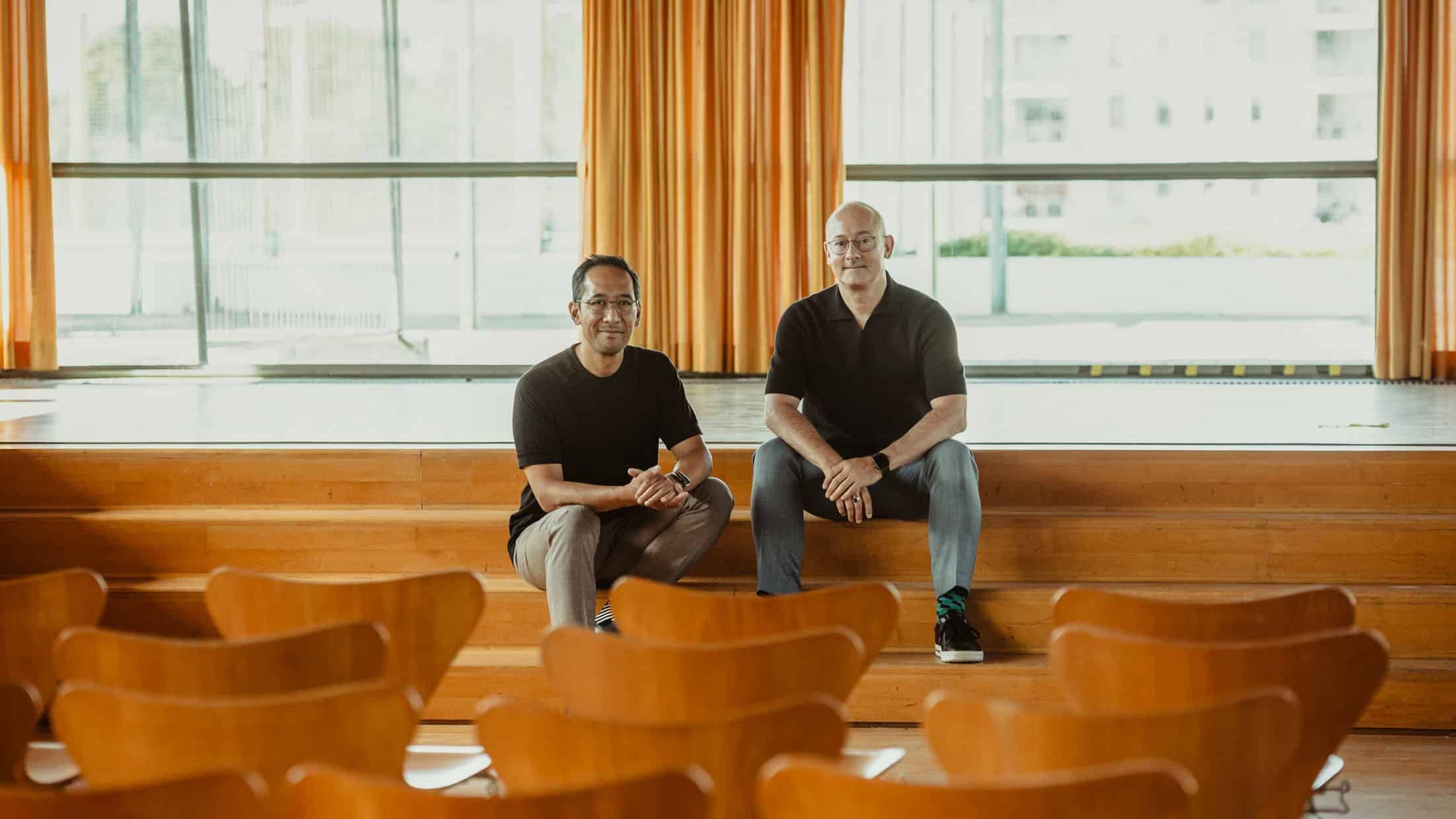
Journalist Jan Dimog runs a digital magazine on building culture together with architect Hendrik Bohle. On thelink.berlin they have been telling about their discoveries in Europe for years, especially about the connections between people and architecture.
When they are not on the road, they curate high-profile exhibitions, such as the travelling exhibition on Arne Jacobsen’s architecture.
One Comment
Infos über Land und Leute Architekturbilder absolut wie es beschrieben wird ein Highlight. Gerne lese und schaue ich so „Urlaubsarchitektur“ an war auch schon so unterwegs. Danke