This is an article from our archive. It was published in August 2022, so some details may no longer be up to date.
The various blogs and magazines are full of reports about Tiny Houses, living in small spaces and micro apartments. There is talk of flexible spatial concepts, spatial unity, optimal use of space and clever fixtures. Mostly it’s about newly gained living space on a few square metres – but sometimes you wonder about the kind of palaces that pass for “Tiny Houses”.
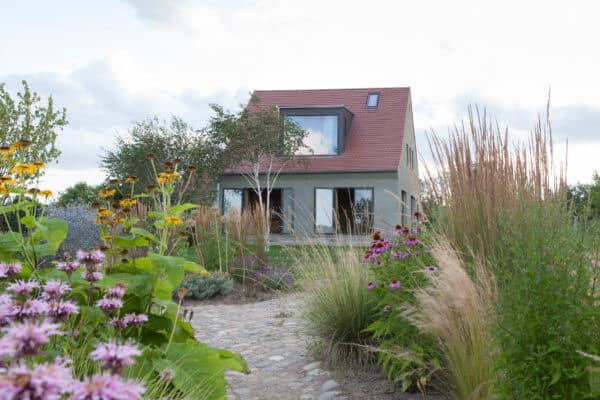
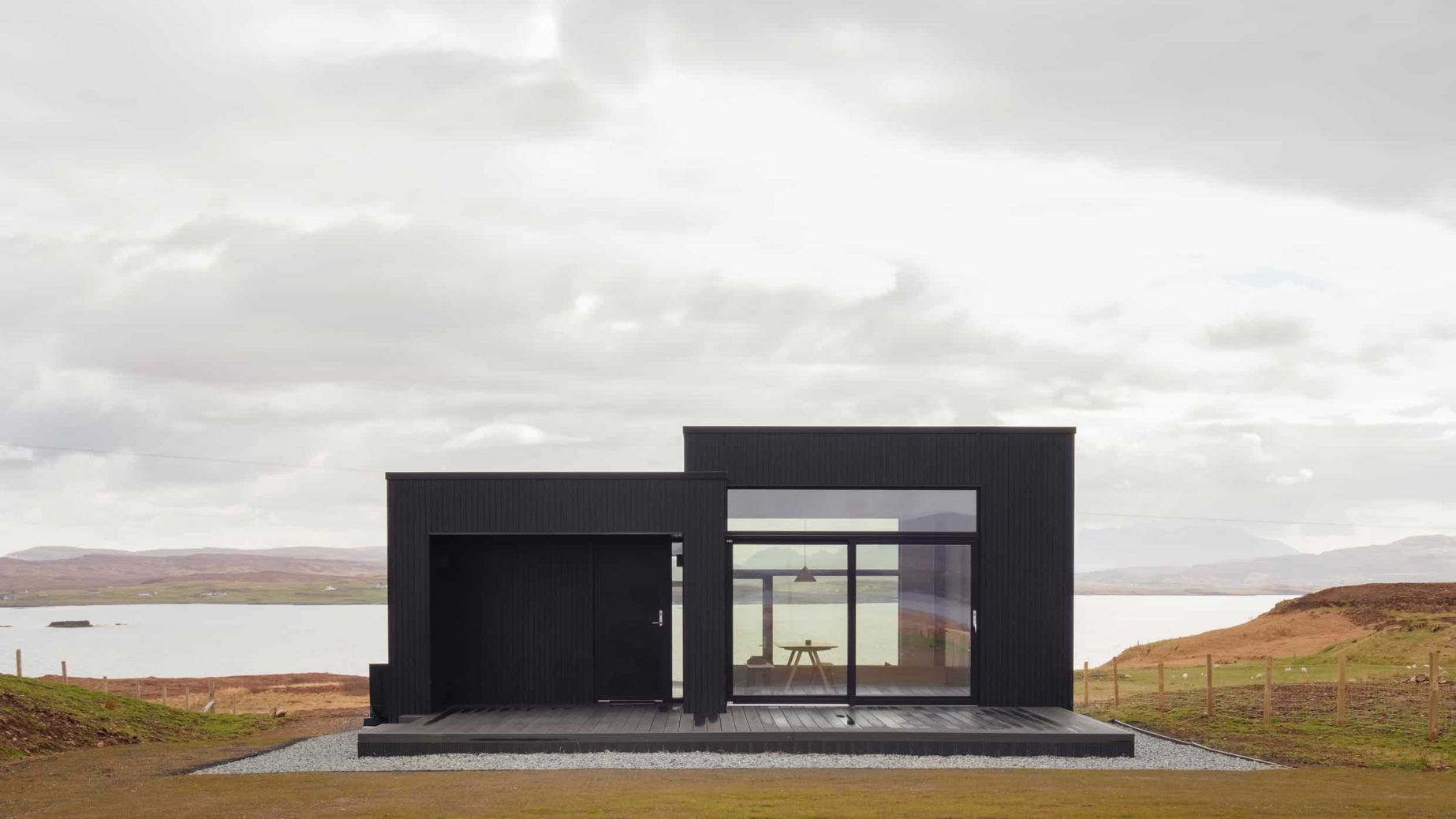
The range is enormous: They come in all varieties and shapes, with flat roofs or round window openings, in cottage or Scandinavian style, made of wood or concrete, with wheels or without, self-built or professionally planned. In cooperation with a carpenter’s workshop, Tchibo already had fully equipped mini houses in its range, and some manufacturers cooperate with renowned architectural firms. In any case, the large number of impressive houses shows that sophisticated architecture can also realised in a minimal space. For many architects, the small dwellings seem to offer a kind of playground where they can test their skills. It all sounds wonderful: little space required, everything well thought out and usually built sustainably, extraordinary design – what more could you want. But can you really live in these mini houses, permanently or at least for a holiday?
The Tiny House movement originated in the USA – as a social movement for living in the smallest of living spaces. At the end of the nineties, the architect Sarah Susanka with her book “The Not So Big House” and shortly afterwards the Californian designer Jay Shafer with his mobile miniature house made a statement against the oversized US houses – and with these showed that it is possible to live a carefree life in the truest sense of the word even in little living space. In Germany, Peter Lustig from the children’s programme Löwenzahn (Dandelion) is seen – quite non-politically – as the pioneer of this trend with his converted construction trailer. In the meantime, the movement has become international: In cities like Tokyo or even London, where land is incredibly expensive, architects are constantly looking for and finding structural gaps that they can fill with micro houses. Without having defined an exact size, one usually assumes around 45 square metres of living space for Tiny Houses – although that is already a lot if one thinks of the ten-square-metre house with which the architect Van Bo Le-Mentzel in Berlin offers inspiration for a deliberately reduced life. Or not much when you consider the multi-storey “Tiny Houses” presented in the architectural scene – which, no question, are very unusual and also designed to save space, but are in fact not “tiny”.
Today, however, the term “Tiny House” is increasingly associated with a consciously chosen lifestyle (or attitude to life). The focus is on the reflection of the essential, which should lead to more self-satisfaction. This trend, also known as “postmodern minimalism”, includes consciously giving up consumption, as well as mindful interaction with the environment. When finishing the houses, great importance is attached to the use of high-quality and natural materials, and the perfectly thought-out interior should offer as much living comfort as possible. In a small space, many do not want to (and cannot) save on furnishings, which, after all, cannot be constantly replaced due to the space–saving fixtures. This in turn entails a greater awareness of the value of things, according to the motto: small but of high quality.
As with every trend, there are of course critical voices about the topic of Tiny Houses. These range from the objection that today’s lifestyle movement ignores the social grievances from which it originally arose, to the accusation that the mini houses are not a measure to combat these grievances, but rather a kind of surrender to them. Moreover, a “reduction to the essential” in the sense of a more contented attitude to life is of course only possible if one previously owned a lot, i.e., had more at one’s disposal anyway than the minimum that has to suffice for many people.
Regardless of this criticism, a “normal” everyday life is certainly possible in the small houses for a single person or perhaps even two – apart from space, there is nothing lacking. This is certainly indicated by all the reports in lifestyle magazines of families who have chosen such a life for themselves – mostly with (still) small children. So, it seems to work, even as a family. And of course, there are not only the extremes – rather, the trend towards reduced and sustainable living can also be lived on different scales: It can also be understood as an encouragement to live not quite so “big”, not quite so much consumption and more awareness in dealing with the things that surround you.
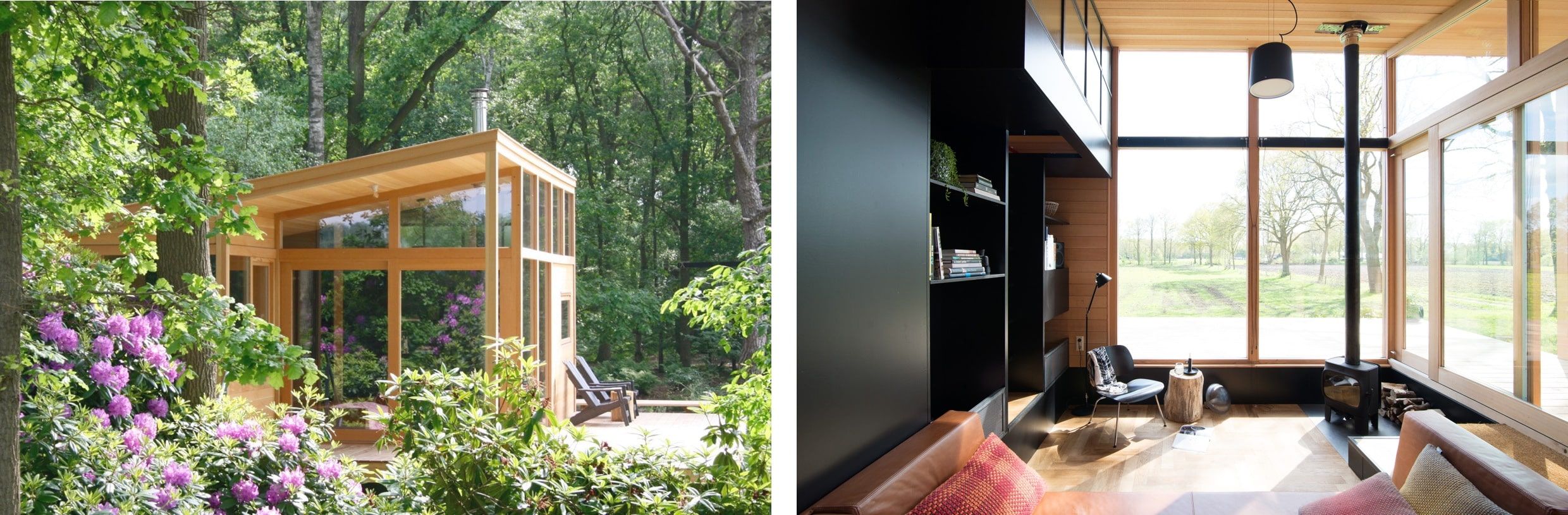
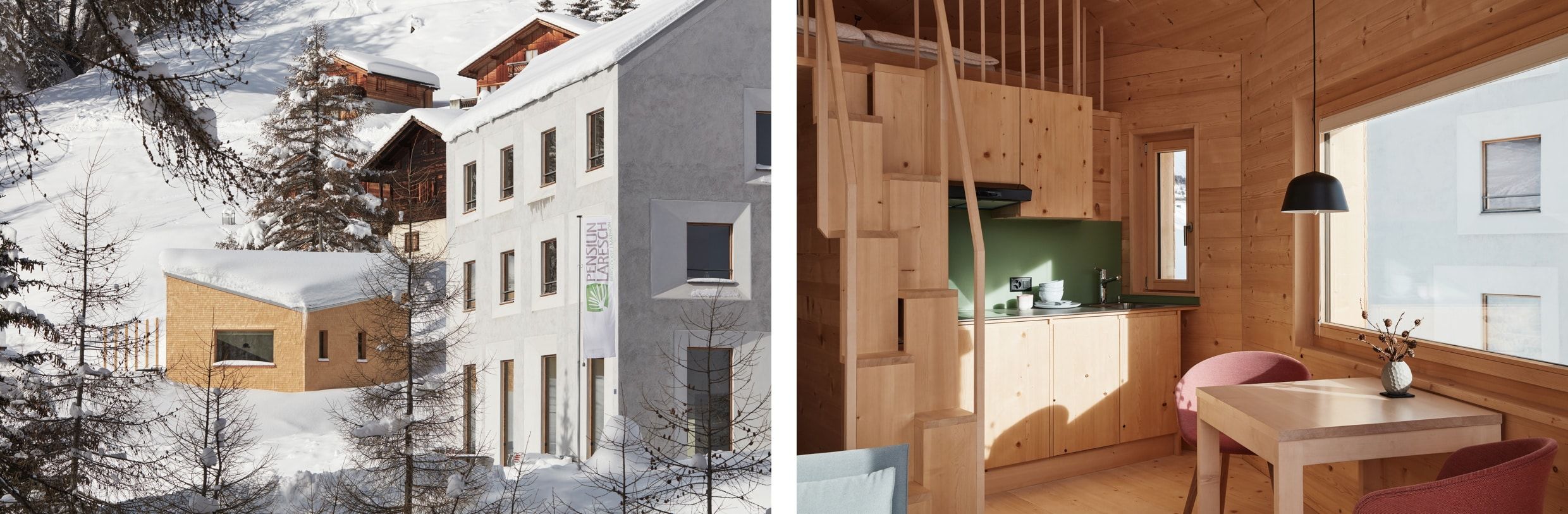
Holidays offer a good opportunity to downsize, at least temporarily, or to try out other forms of living. Apart from camping (or: glamping), this also includes staying in a Tiny House. Often the little houses are situated in beautiful nature – “off-grid”, another trend that many are looking for as a contrast to their bustling everyday lives. Many of the tiny holiday homes offer maximum comfort and impressive design in the smallest of spaces.
Even if living permanently on a very small scale is not everyone’s cup of tea: An occasional rethink of one’s own way of life is certainly never wrong. Perhaps some aspects of the Tiny House trend can be implemented – for example, by getting rid of superfluous items and thus gaining a certain lightness, or by carefully considering whether each new purchase has a long-term value. If sustainable living is combined with good design and appealing architecture, I think that’s all the better. By the way, “small living” can also be practised through the use of flexible pieces of furniture, for example, because you increasingly work in a home office and would like to simply “fold away” your workplace in the evening. That seems to be happening these days.
Text: Tina Barankay, September 2021
About the author: Tina Barankay has been combining her passion for aesthetics and design with her professional activities for many years, among others as an editor for the architecture magazine DETAIL. As a freelance journalist and consultant, she publishes articles, produces publications and designs communication concepts in the fields of architecture, interior design and design.
0 Comments