
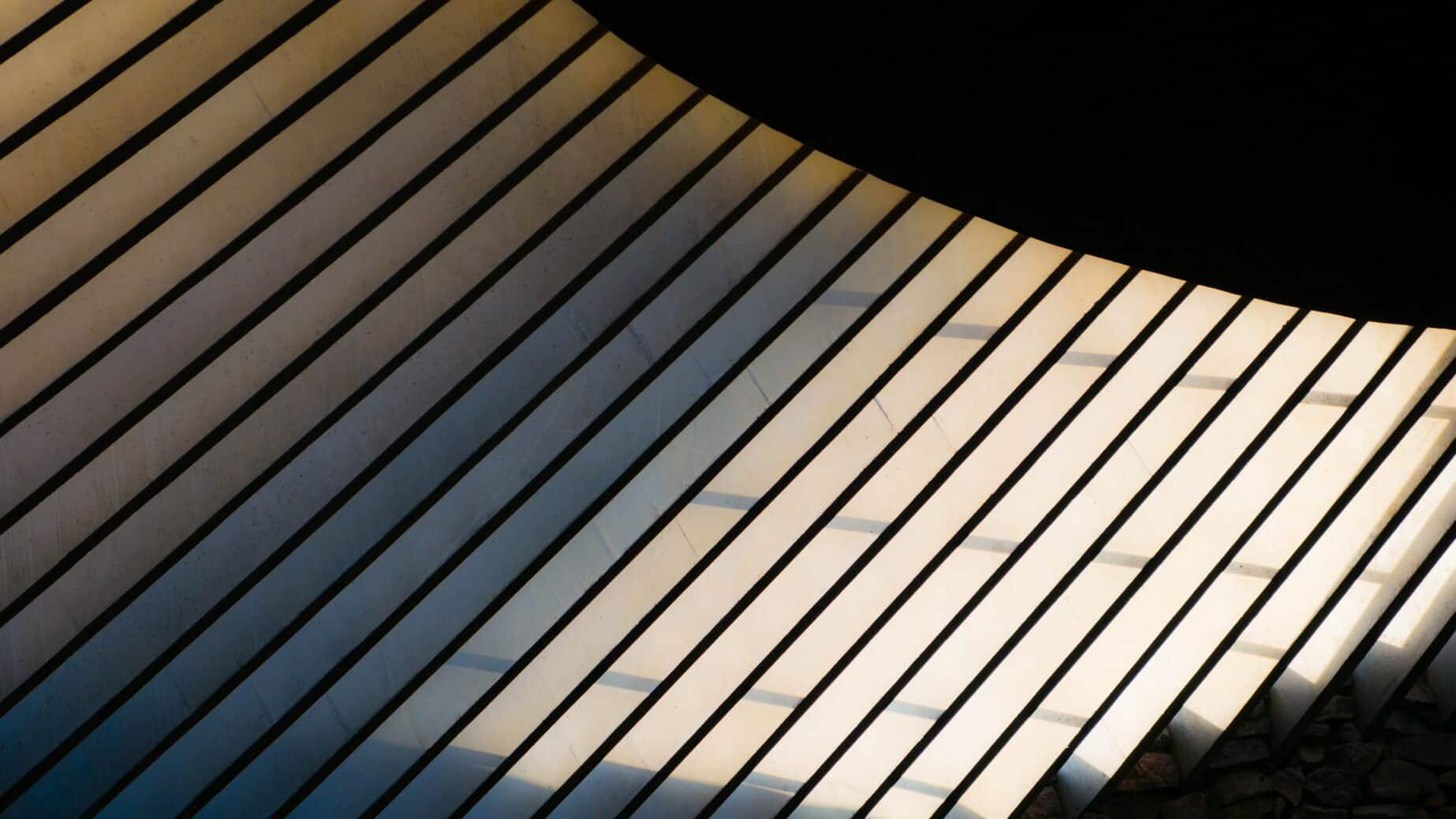
In this article, we use design and architecture to show two countries that, at first glance, seem to have little in common: Finland and Japan.
Silence. Quite simply, silence. In the middle of one of Helsinki’s busiest squares, you find what you wouldn’t expect in a place like this, a place of calm and elegant simplicity. The simple wooden walls in the interior of the Kamppi Chapel, which trace the oval shape of the extraordinary building, minimalistic – because there is hardly any – furnishings, and above all this tranquillity creates an almost meditative atmosphere, which you cannot resist – and which feels almost Far Eastern.
When people think of “Scandinavian design”, they usually think of Copenhagen, Aarhus or Stockholm – and tend to overlook Finland, to which the term also refers. But it is different from its neighbouring countries, somehow more restrained. Perhaps because it is smaller. Perhaps because it is even more pristine and rough. In fact, in hardly any other country is design experienced as naturally as in Finland, even more so than in nearby Denmark: Design is part of everyday life in Finland and there for everyone – not only for a design-savvy elite in chic Helsinki. Even in isolated houses in the Arctic Circle you are bound to find Iittala glasses, an Artek chair or Marimekko bed linen.
“True architecture exists only where man stands at the center” wrote the architect and furniture designer Alvar Aalto and contrasted the objective geometry of the Bauhaus with forms characterised by organic contours, which, like the use of natural materials, were supposed to have a positive effect on the human psyche. As one of the most important representatives of organic building, he also drew inspiration from nature in the creation of his design objects. The curved shape of the famous Savoy vase always leads to speculation: Is it modelled on a female form, does it symbolise waves, or is it rather the outline of one of the numerous Finnish lakes that inspired Aalto?
The pared-down visual language, the reduction to the simple and functional, also plays a formative role in Finland’s young design scene – very much in the tradition of Alvar Aalto and Eero Saarinen, which is also continued in the flowing transitions between architecture and design. Many elements of Finnish architecture are reminiscent of the simplicity of Japanese Teahouse architecture, the use of natural materials, the clear and simple forms, but above all the closeness to nature that is visible in the architecture and design of both cultures: The vastness of the landscape, the forests and the climate leave clear traces, the love of nature is deeply rooted in the souls of the people and is reflected in the design of the environment.
Even though there are several thousand kilometres between Finland and Japan, there is an unmistakable bond between the two countries: People are considered introverted, polite and hardworking here as well as there. The appreciation of handicrafts and folklore is rooted in the cultures of both peoples, and in addition to the pronounced closeness to nature, there is a recognisable affinity for modern technology – and for quirky film making with a touch of melancholy. This closeness is probably also the basis for trends like Japandi (or: Japanordic), in which crossovers in the aesthetics of design disciplines are expressed. For the FIN/JPN Friendship Collection, which the Finnish design company Artek presented at the Salone del Mobile 2019 in Milan on the occasion of the hundred years of diplomatic relations between Finland and Japan, designers, architects and craftsmen from both countries worked together – the collection combines traditional craftsmanship with contemporary and classic design elements from both cultures. Increasingly, designers are collaborating in similar ways: Finnish designers Harri Koskinen and Ville Kokkonen, for example, design ceramics and wooden furniture for the Japanese brand Iwatemo, which are made in the Japanese province of Iwate using traditional techniques.
The Kamppi Chapel of Silence in Helsinki is a place that reflects the characteristic features of Finnish culture: tranquillity, spirituality, closeness to nature, reduction to the essential. But I will certainly find this sense of purpose and perhaps the self-evident nature of design in Japan as well. Be it in the old temple buildings, the tea houses or the exposed concrete buildings by Tadao Ando. And perhaps there I’ll actually feel a bit like I’m in Finland, too.
Text: Tina Barankay, May 2022
Photo: Temppeliaukion Church, Helsinki. © Beau Swierstra / Unsplash
About the author: Tina Barankay has been combining her passion for aesthetics and design with her professional activities for many years, among others as an editor for the architecture magazine DETAIL. As a freelance journalist and consultant, she publishes articles, produces publications and designs communication concepts in the fields of architecture, interior design and design.

One Comment
In der Tat ein ganz besonderer Ort im Gewusel einer Stadt. Meines Erachtens ist das Besondere neben der tollen Architektur, ein Ort der Besinnung unabhängig von jeglicher Religion oder Überzeugung. Ein echter Kraftort für alle !