
Multi-Mediterranean Modernism
Provence, once known for its ochre-coloured buildings, is now showcasing a new design language. Particularly in Toulon, Aix-en-Provence and Marseille, contemporary architecture has developed into an interplay of history and innovation.
The new modernism in Provence is characterised by glass and steel and it is both spectacular and ambitious. From Toulon to Marseille, via Aix-en-Provence, it is shaping new districts away from the old towns, which are full of museums.
Our tour begins in Marseille, France’s oldest city and which was named the European Capital of Culture over ten years ago. This marked the culmination of a transformation that began with the Euroméditerranée urban renewal project.
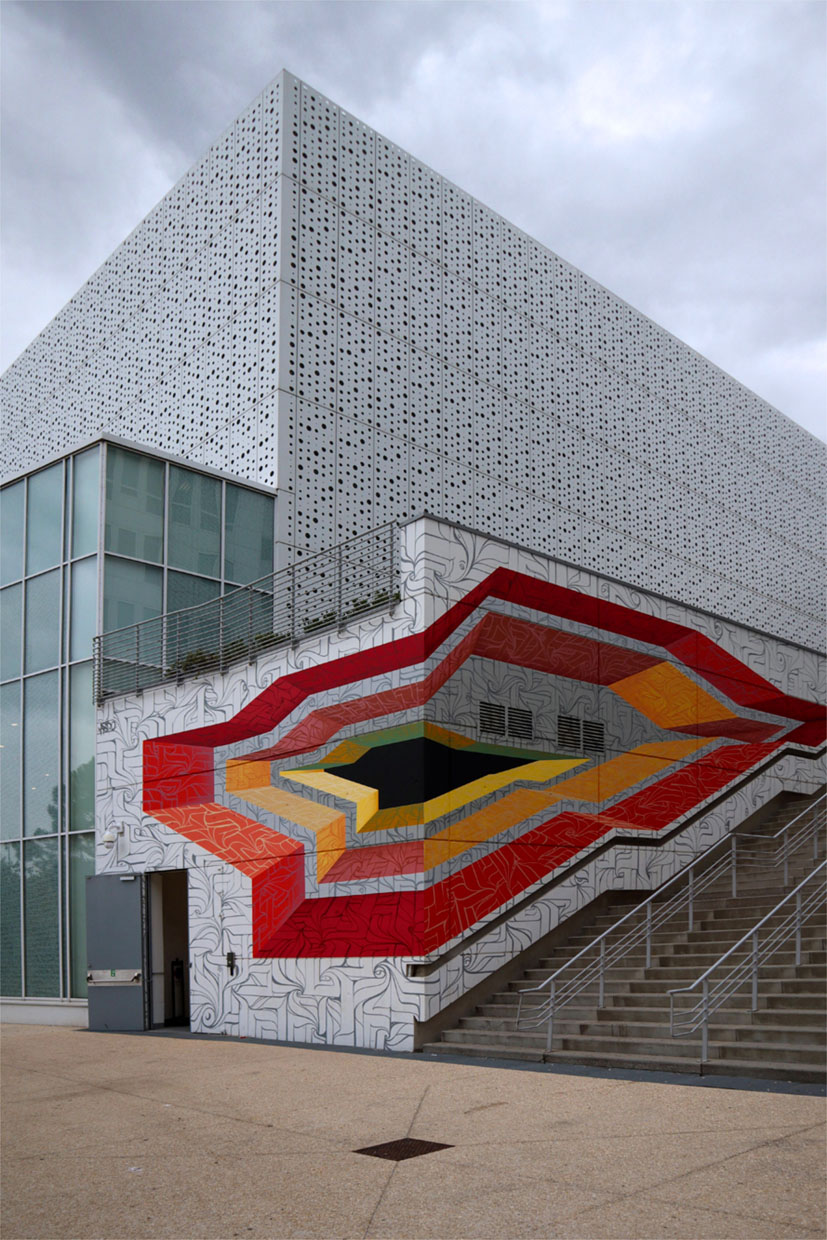
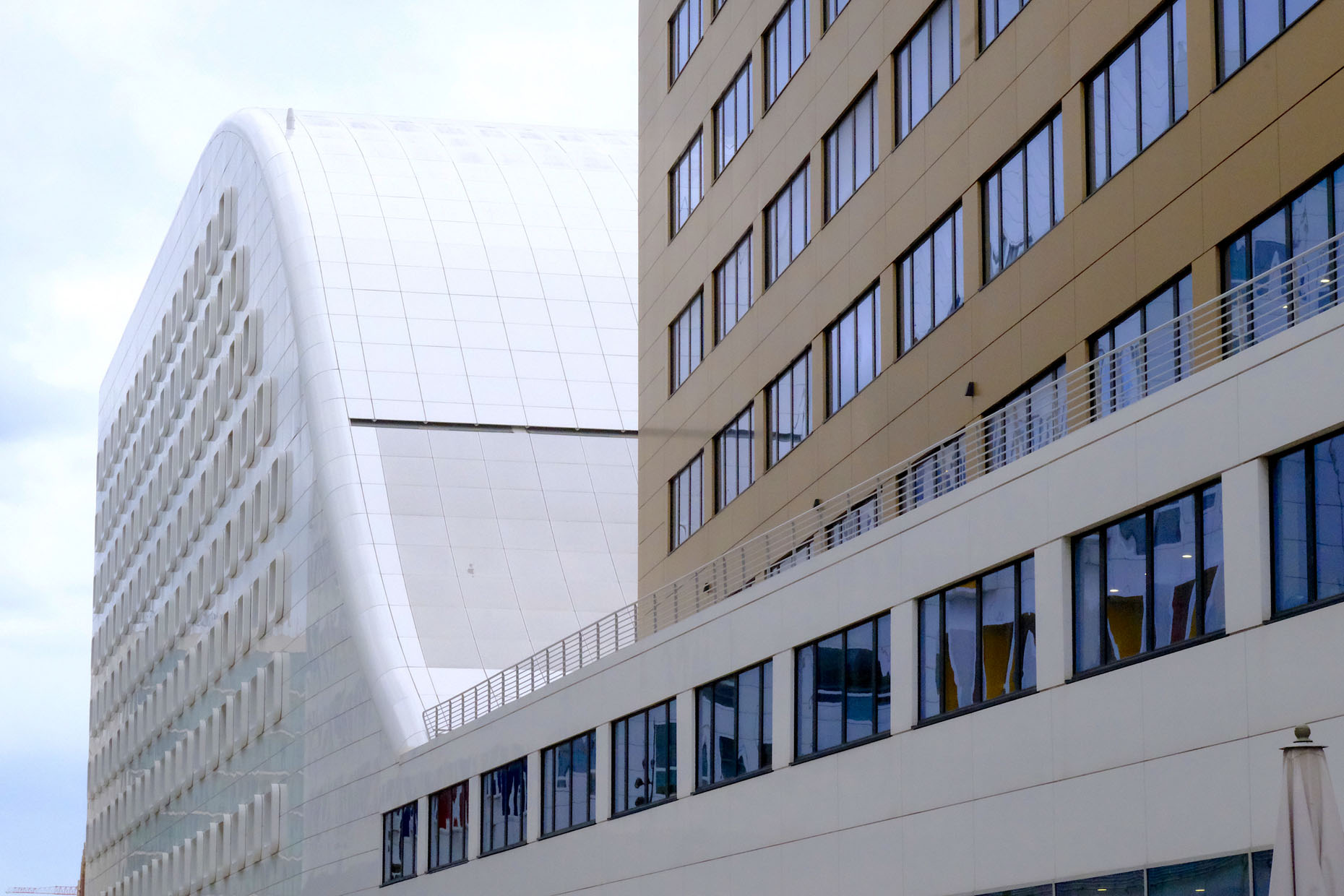
Since the 1990s, billions have been invested in the reconstruction of the port. Old industrial sites are being converted into office and cultural buildings and shops, similar to the Confluence district in Lyon.
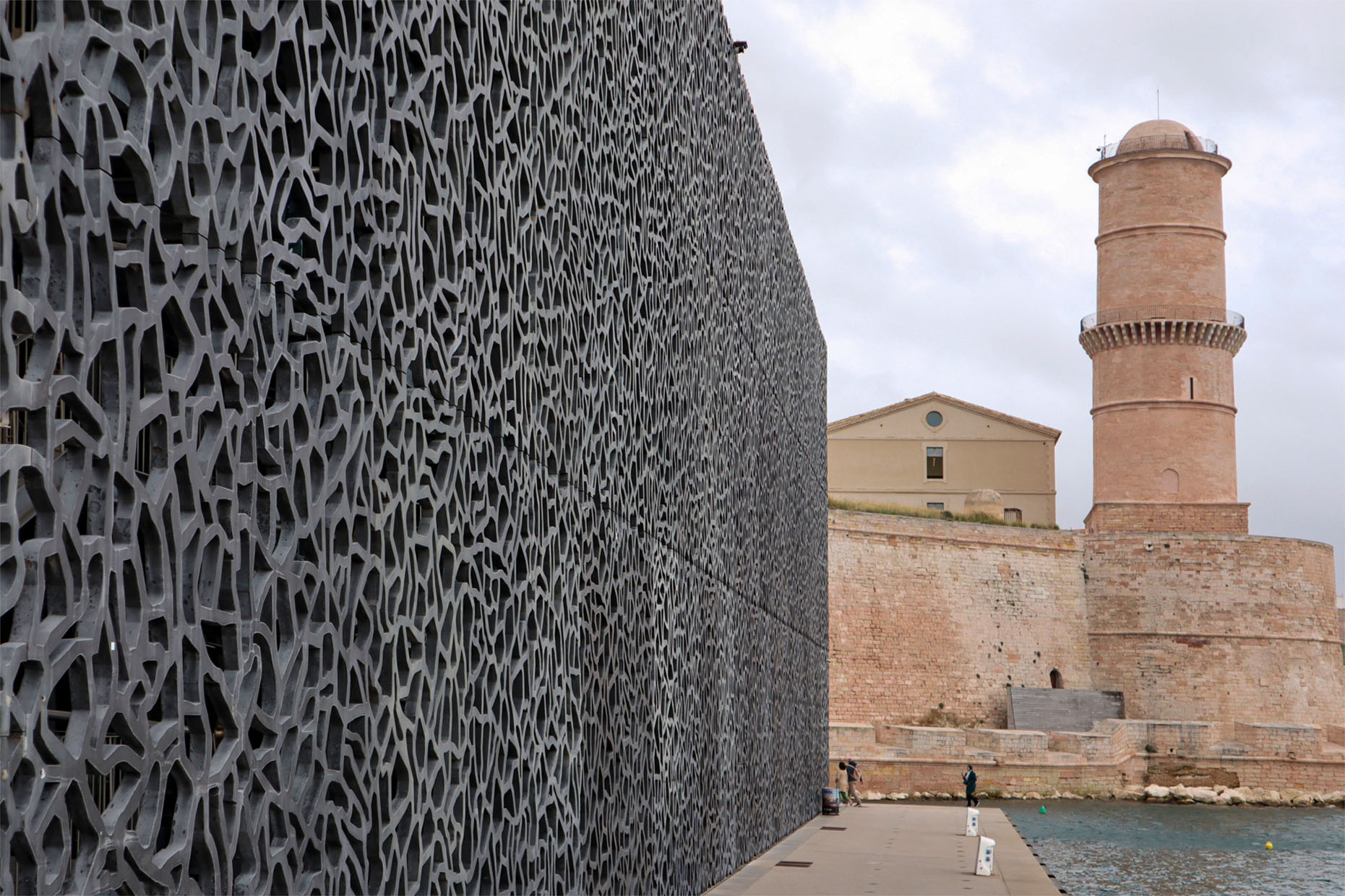
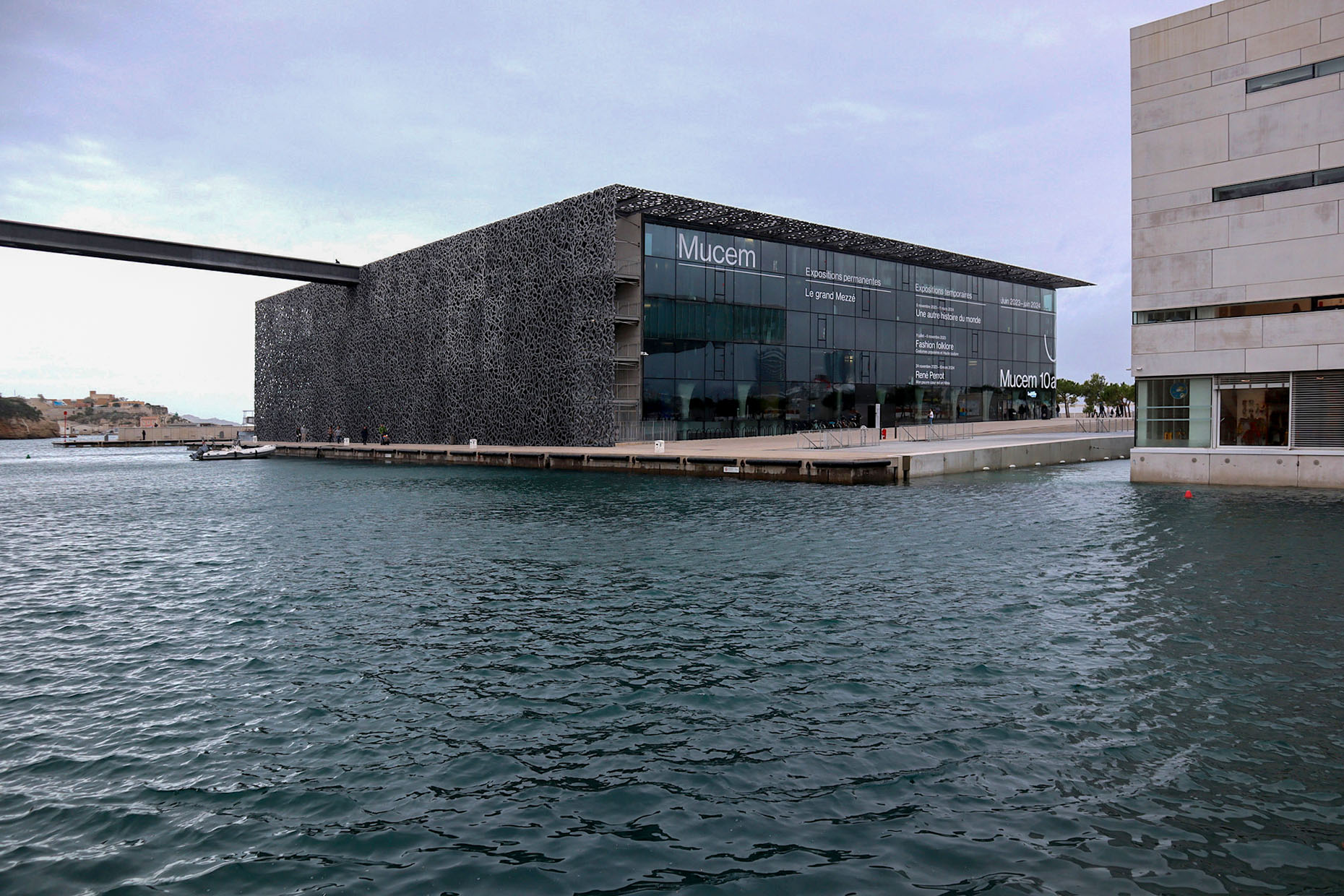
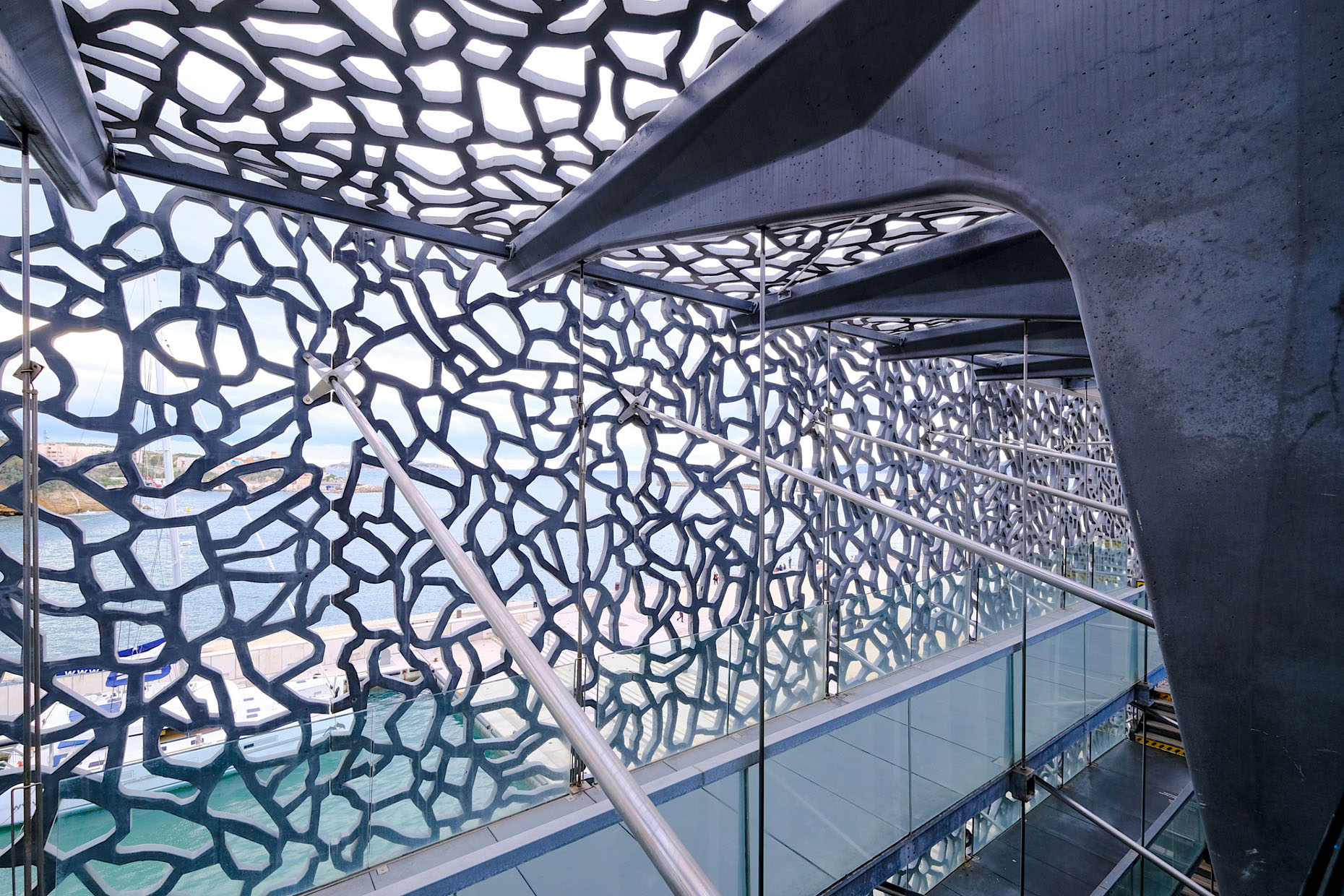
La Joliette is at the centre of this development. The Musée des Civilisations de l’Europe et de la Méditerranée (Le Mucem), which is connected to Fort Saint-Jean by a bridge, is particularly impressive. The Mucem, which stands on an artificial peninsula and features a net-like concrete structure, was designed by French architect Rudy Ricciotti. The accessible levels between the shell and the building are particularly exciting and seem like platforms in an intermediate world of light and shadow, sea and wind. The Mucem was opened in 2013 on the occasion of Marseille being named European Capital of Culture.

Opposite the dark, cubic Ricciotti building stands the white concrete façade of the Villa Méditerranée. Both buildings measure exactly 72 x 72 metres, but could not be more different. The Villa Méditerranée is home to the Cosquer Méditerranée, designed by Italian architect Stefano Boeri. The villa was closed for repairs after its completion in 2013 and reopened as a museum in 2022. Today, it displays a detailed replica of the Cosquer Cave in the Calanques National Park, with cave paintings over 30,000 years old.
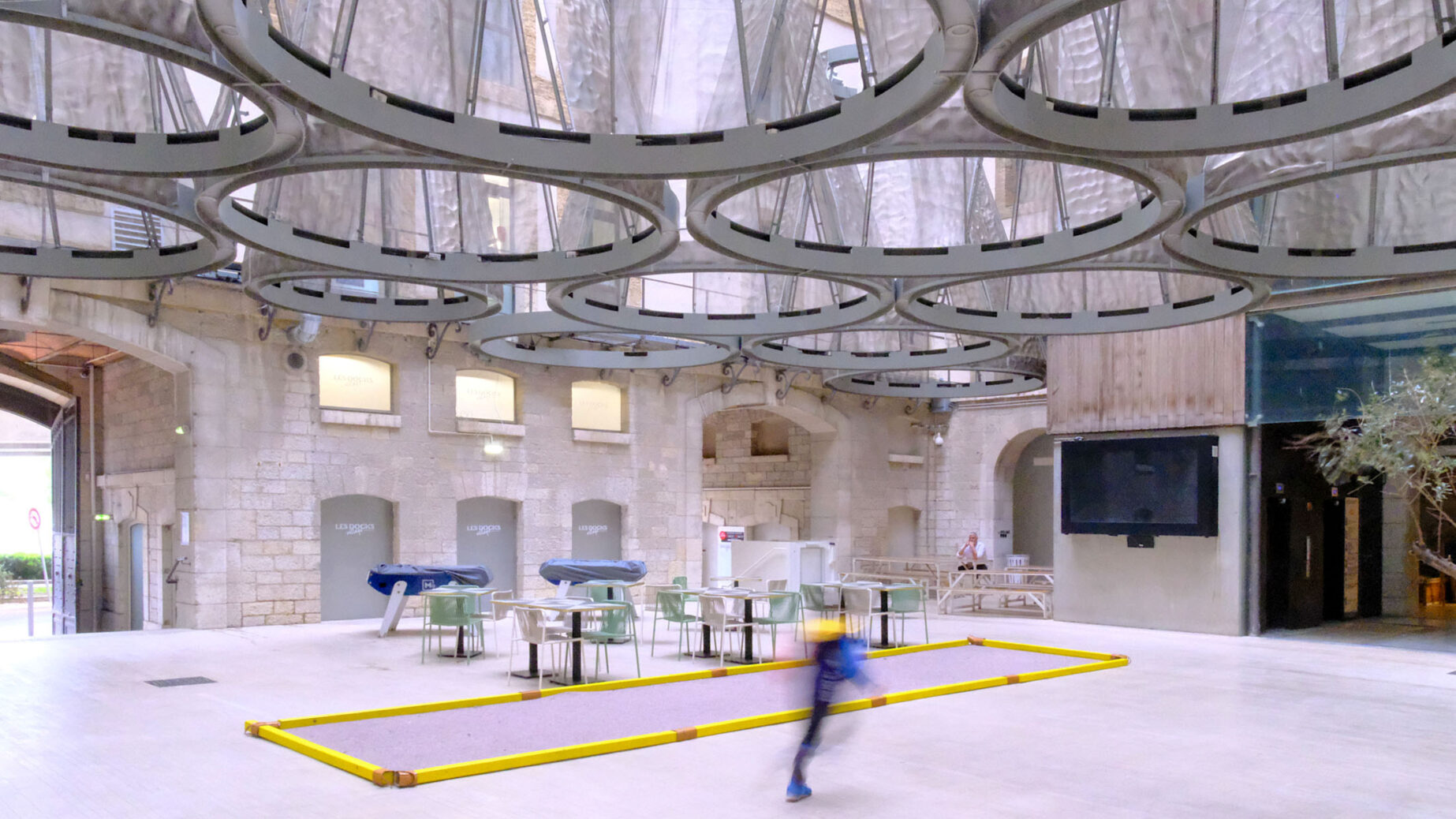
Euroméditerranée is a showcase of contemporary architecture. At the heart of La Joliette is the FRAC – Fonds Régional d’Art Contemporain, designed by Kengo Kuma. Its shimmering façade is made of 1,700 enamelled glass panels. Other well-known architects, such as Jean Nouvel and Massimiliano Fuksas, have also left their mark on the new image of the district. One example of the successful conversion is the Les Docks complex, a former warehouse that is now used as a business and office building. As in the new ports of Lyon and Hamburg, the boldly austere lines and shapes and successful repurposing projects such as ‘Les Docks’ also dominate in Joliette. At the same time, the connection to the northern districts remains a challenge.
Aix-en-Provence
The historical centre of Aix-en-Provence, one of the favourite cities of La Grande Nation, is appropriately magnificent. Contemporary architecture has been created on the edge of the old town. A kind of showroom of modern Aix has been created on ‘Avenue Wolfgang Amadeus Mozart’ with the ‘Grand Théâtre de Provence’, the Pavillon Noir and the music conservatory.
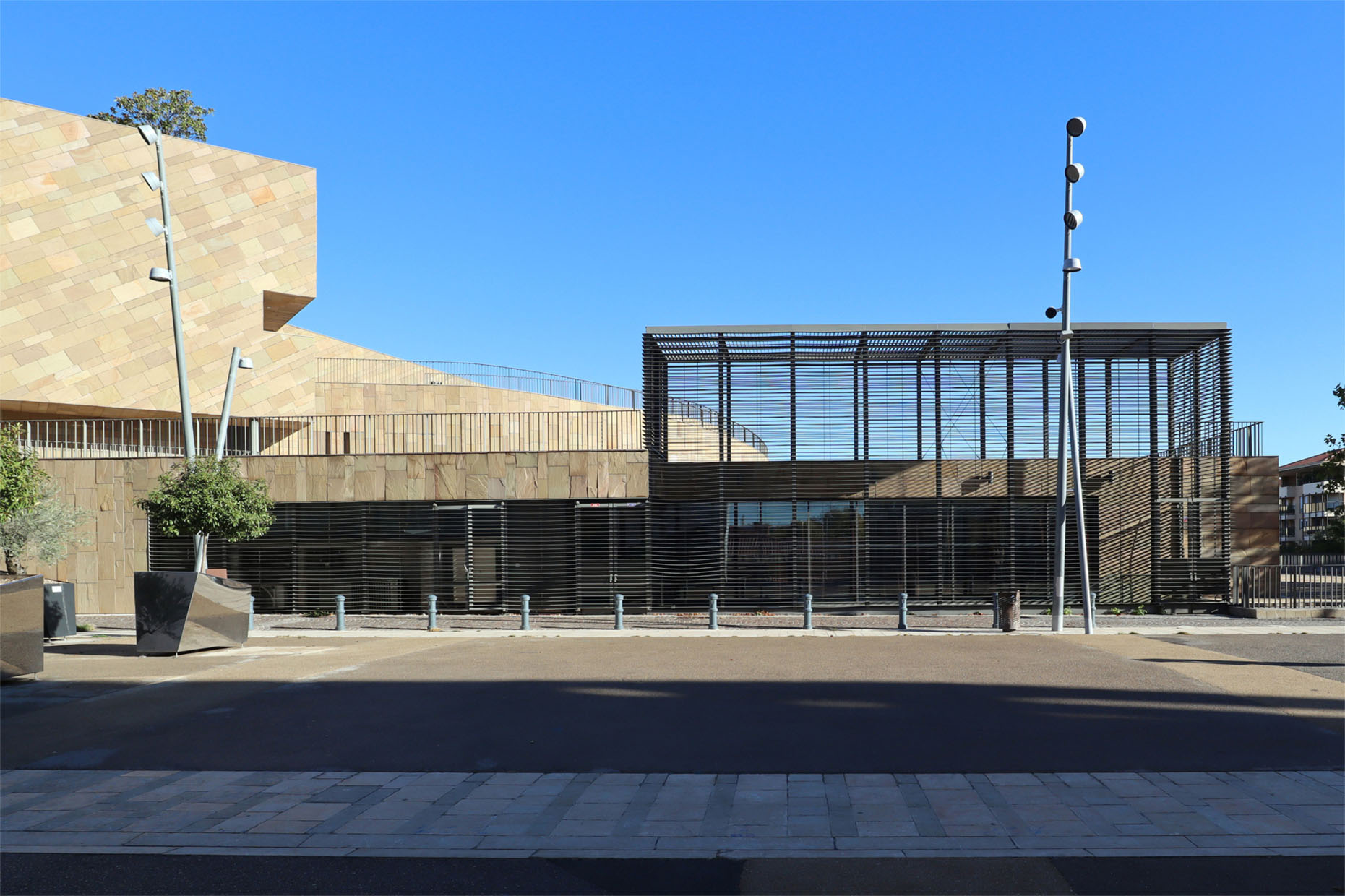
The Grand Théâtre by Vittorio Gregotti and Paolo Colao is a monumental opera and concert hall. With its ramps, paths, atrium, circular and semi-circular spaces, it is reminiscent of the postmodern splendour of the Staatsgalerie [State Gallery] in Stuttgart. The façade, with its variety of stonework from the Montagne Sainte-Victoire, is reminiscent of the ancient Roman theatres of Provence.
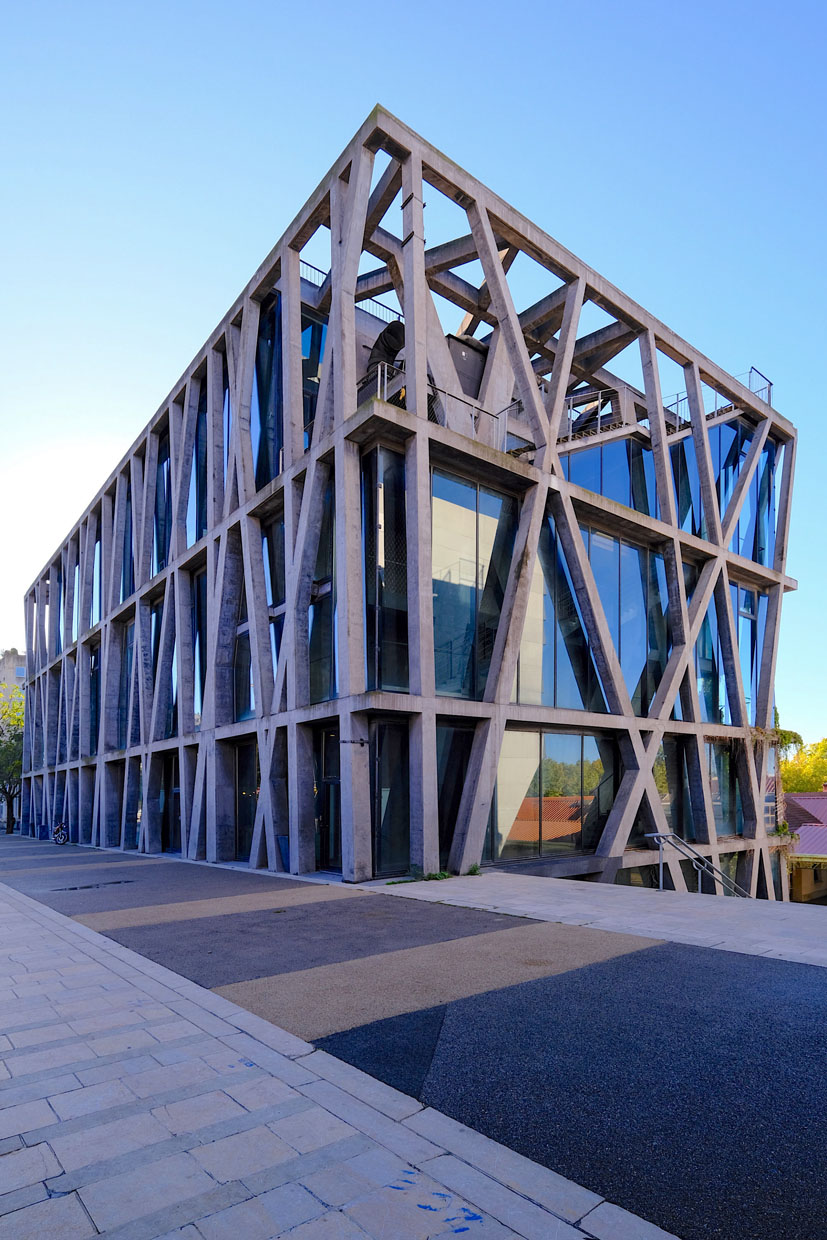
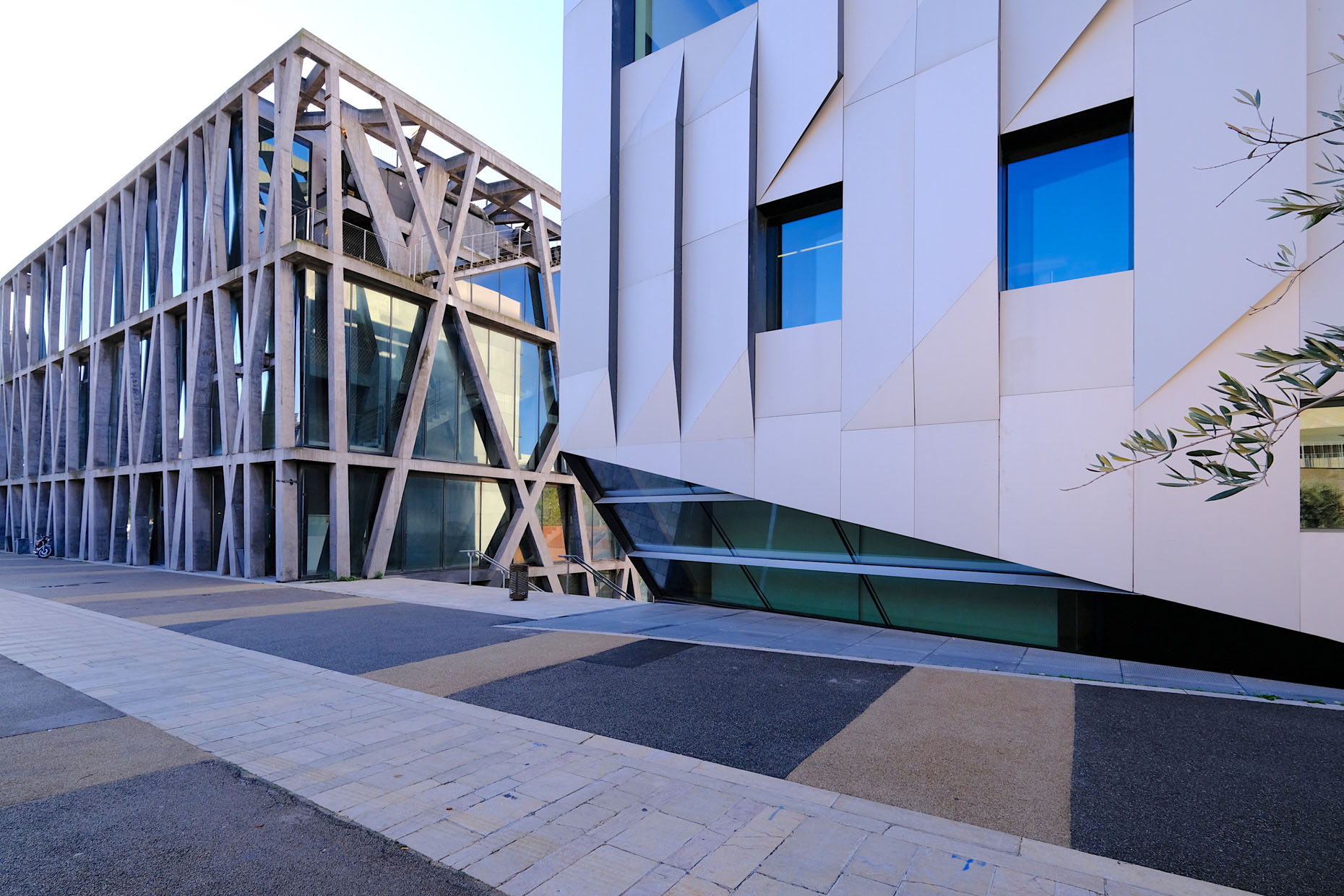
By contrast, Rudy Ricciotti’s Pavillon Noir, with its angular austerity, seems strictly ‘anti-antique’. The ‘Centre Chorégraphique National’ is dedicated to the French dancer and choreographer Angelin Preljocaj. While the shell of Riccioti’s Mucem in Marseille appears surprisingly light, his Pavillon Noir, with its supports and slants, appears taut and rigid. However, they are not decorative but support the entire structure of the building.
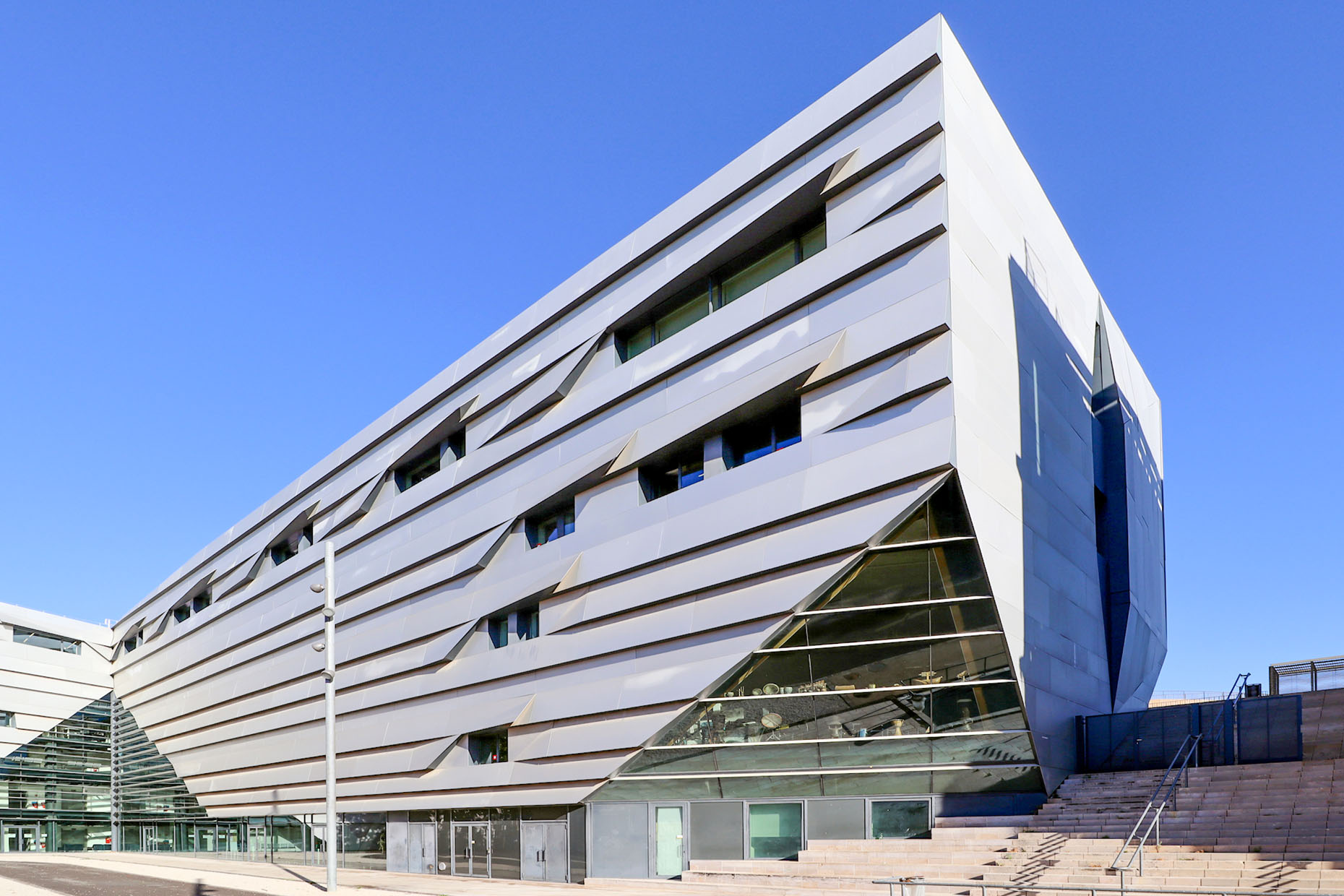
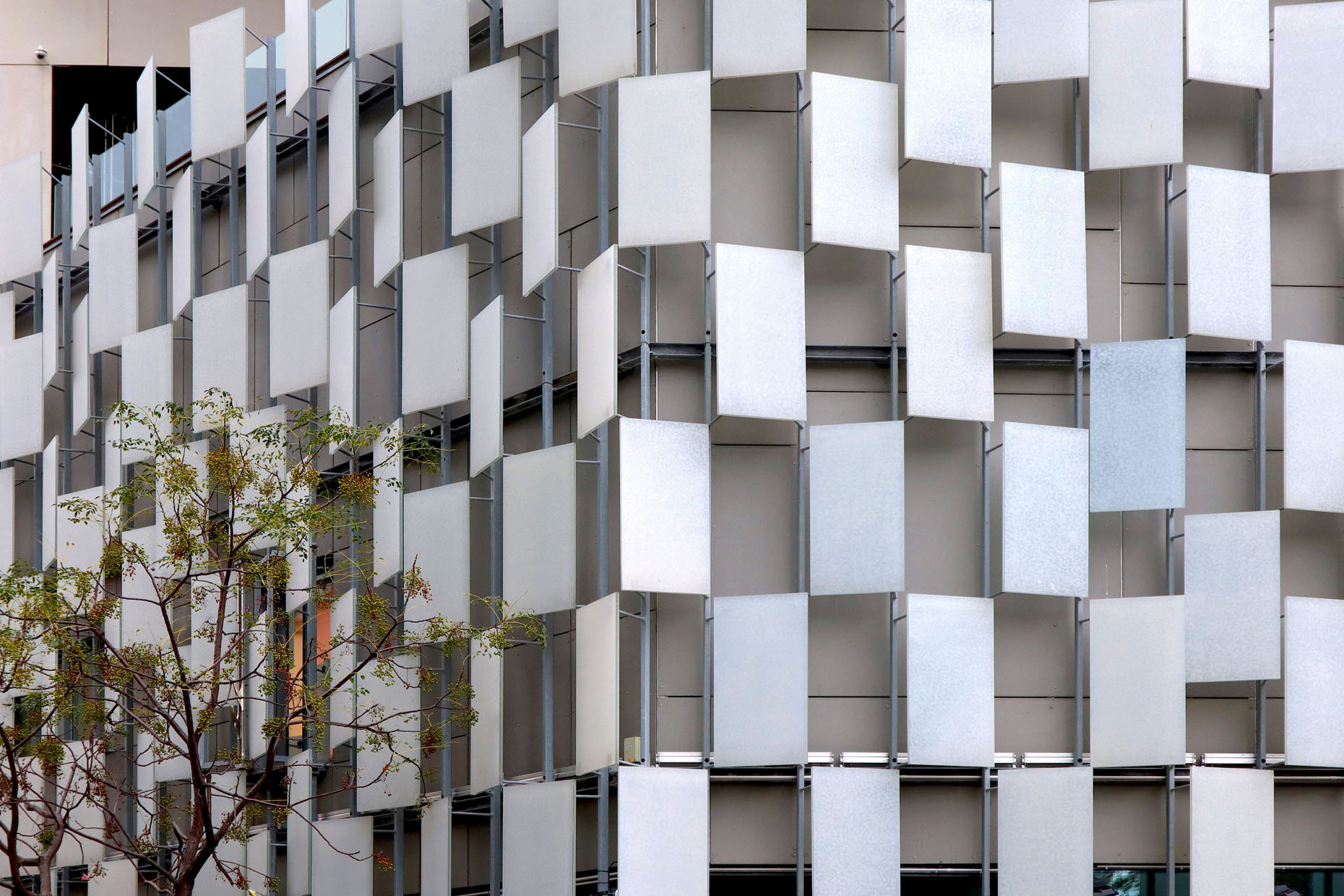
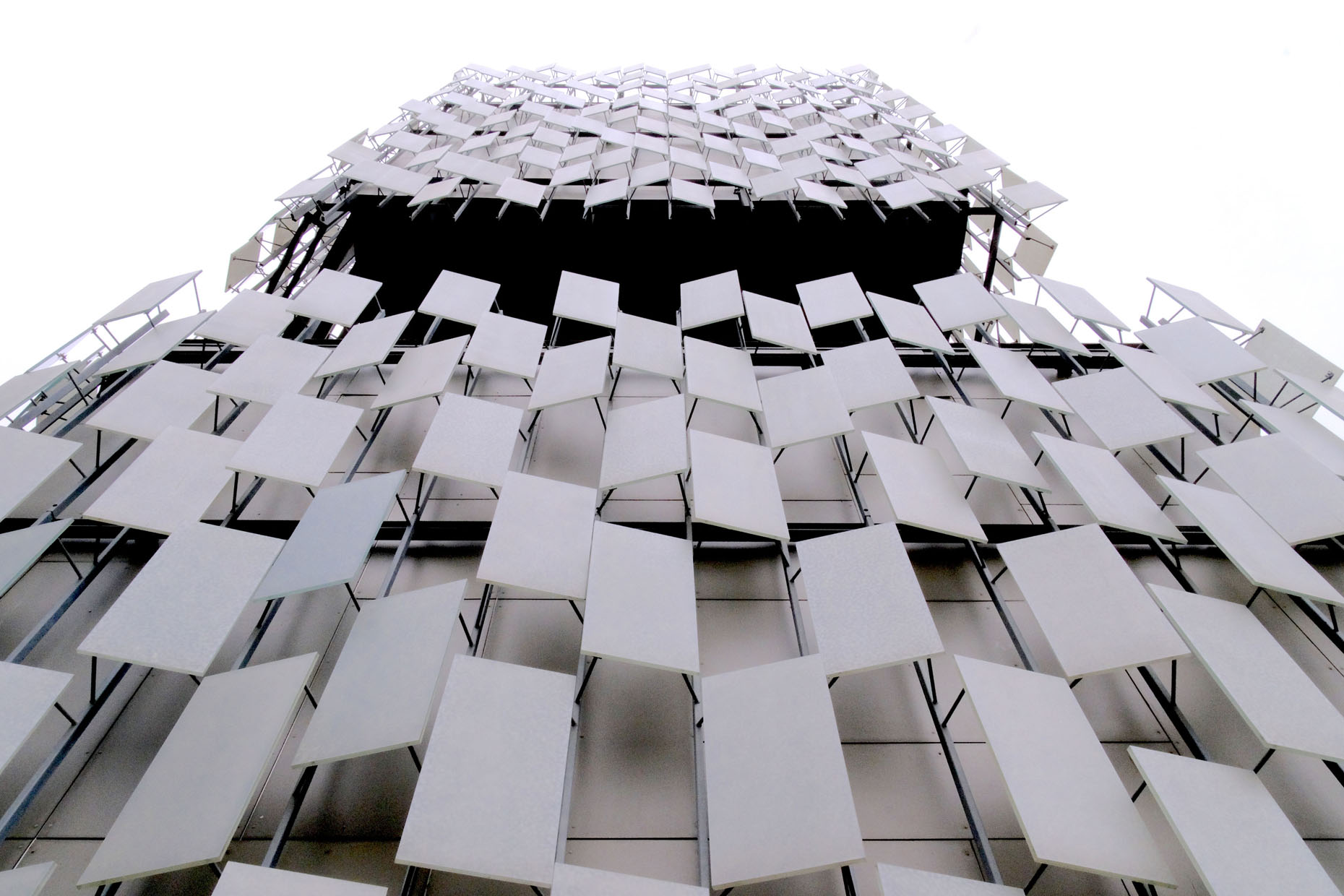
The ‘Conservatoire Darius Milhaud’ by Kengo Kuma was built in honour of the French composer Darius Milhaud. Kuma’s building consists of two wings with cut-off corners that are completely glazed. The façade, with its aluminium panels, is eye-catching. The way they are arranged brings movement and rhythm to the building’s skin. This structure is not an end in itself: it provides both sun protection and a reference to a score by the opera, symphony and chamber music composer Milhaud. The aluminium panels thus create a connection between architecture and music.
Toulon
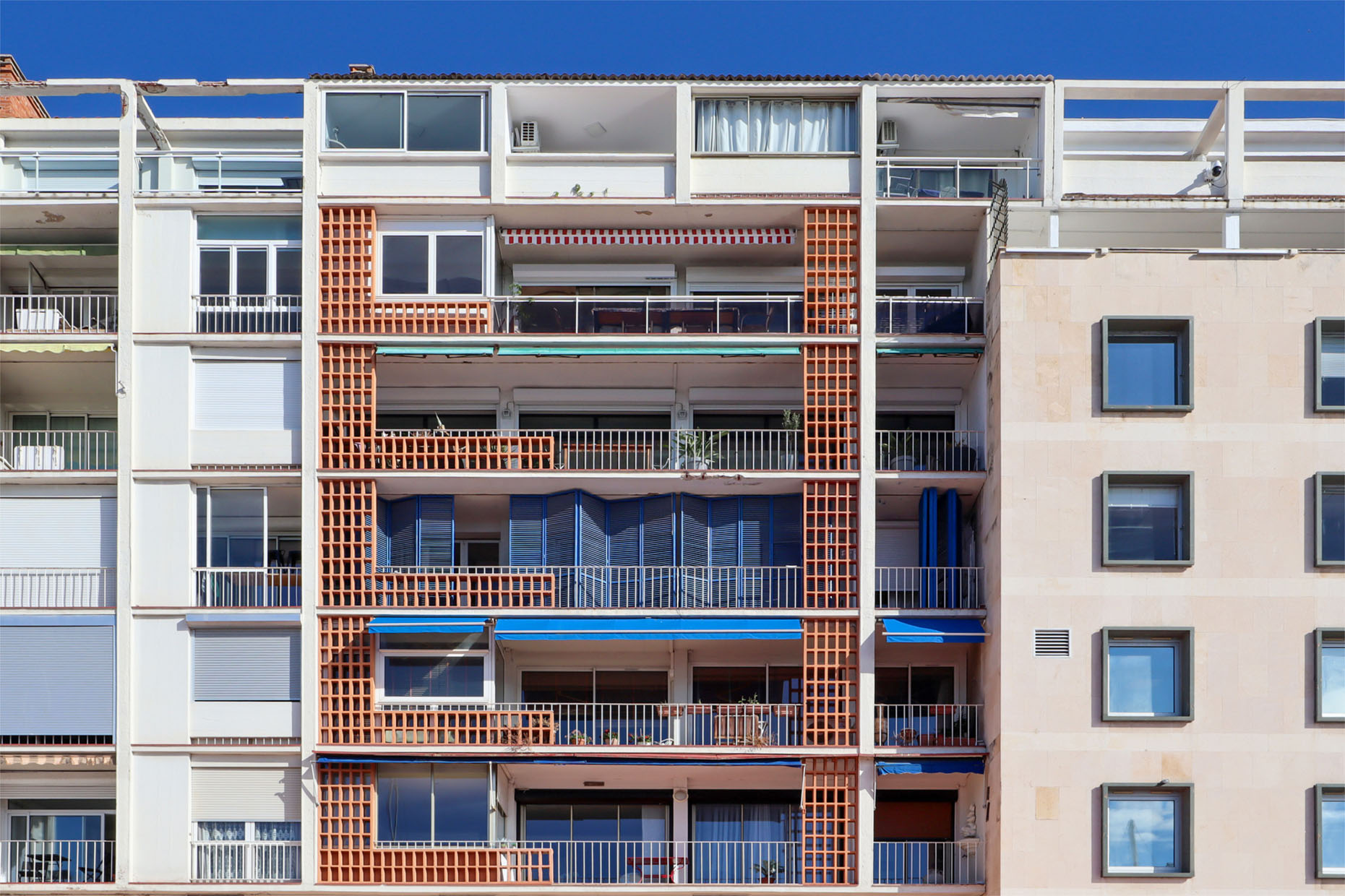
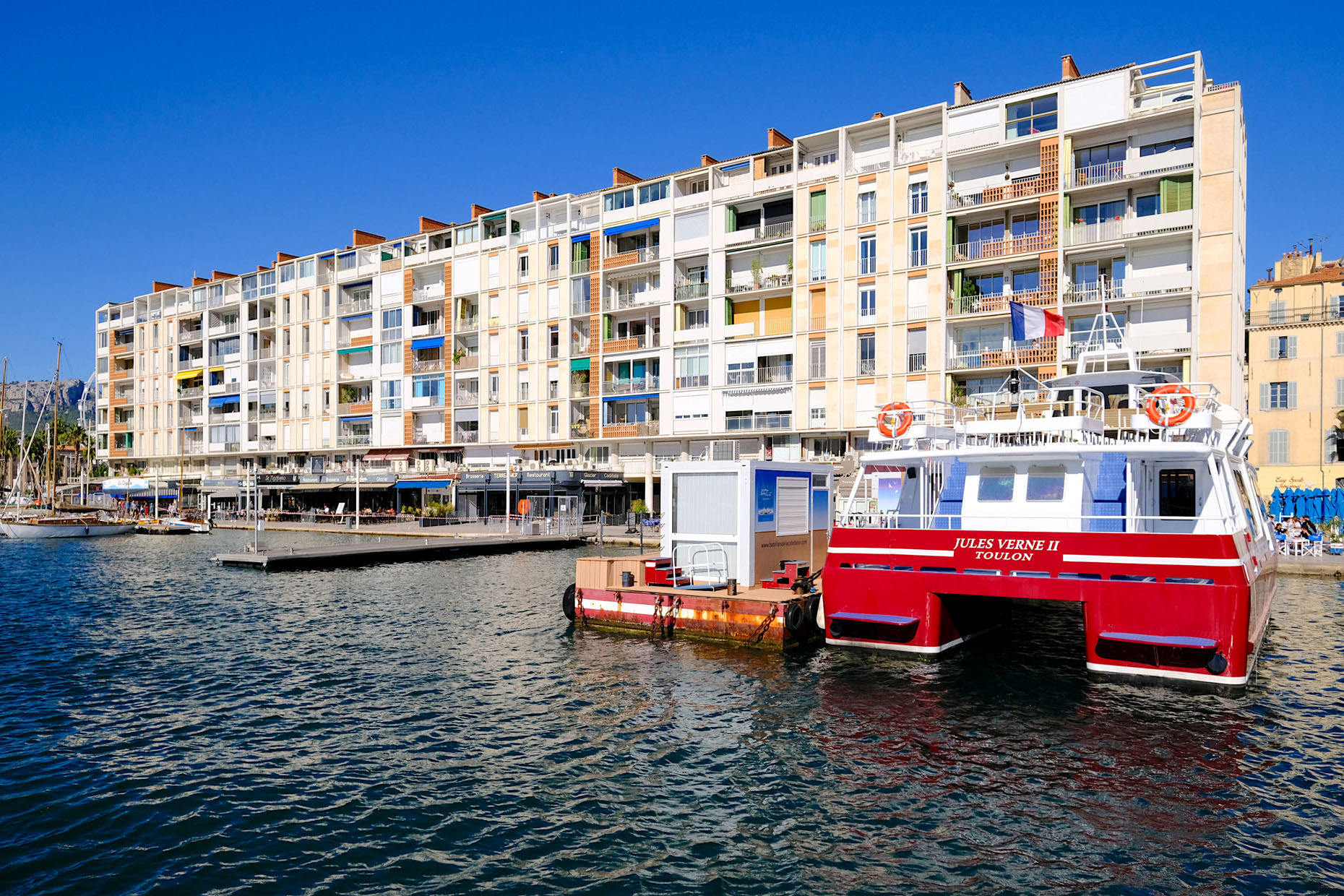
After Marseille, Toulon is the most important port in the region. Toulon suffered particularly from the effects of the Second World War, with widespread destruction. The most important building of post-war modernism is ‘La Frontale’ by architect and city planner Jean de Mailly. Contemporary architecture can be seen at the train station, in the old town and in La Seyne-sur-mer.
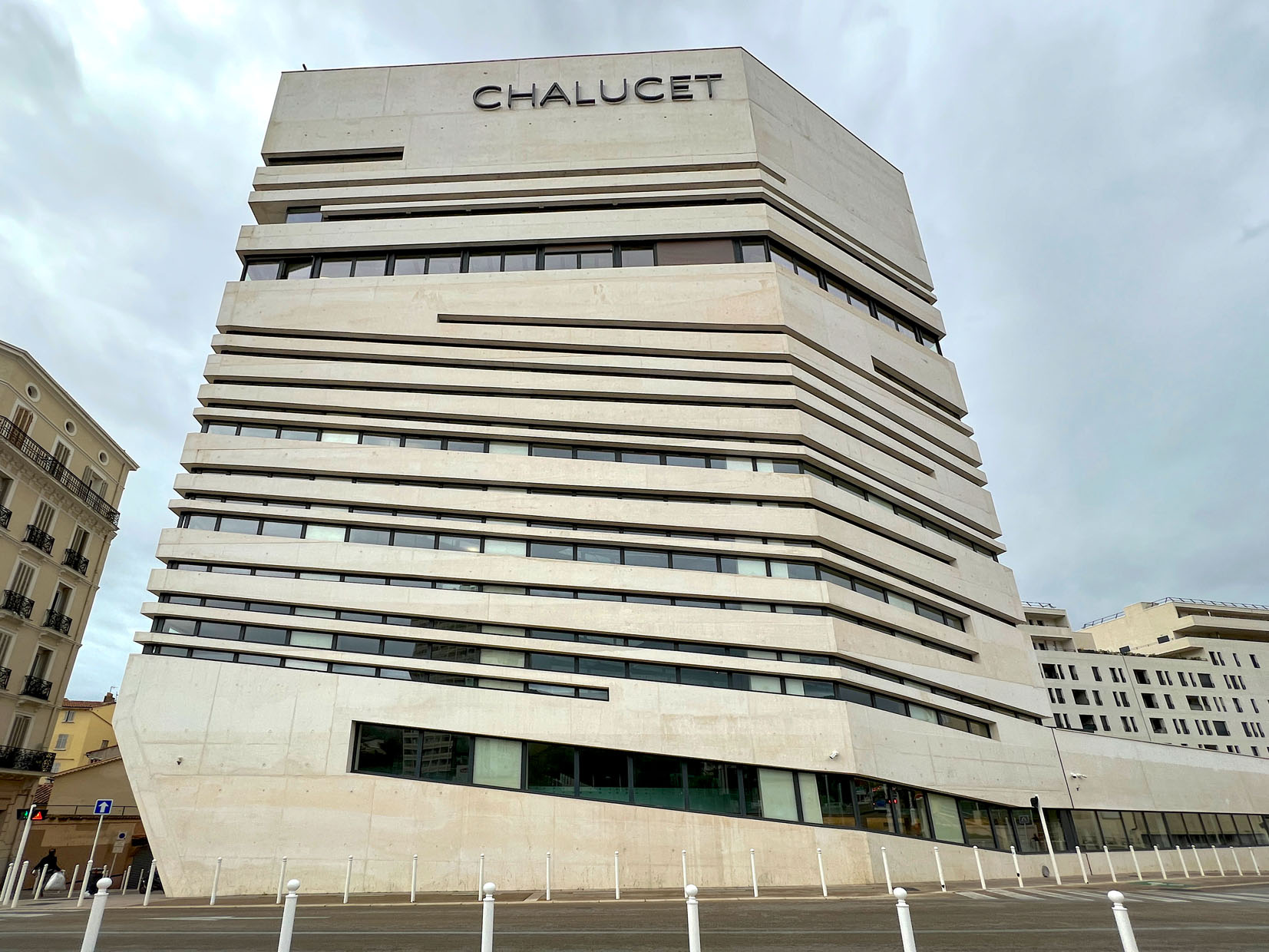
The Chalucet district opposite the station was designed by Corinne Vezzoni from Arles. The campus is home to the University of Art and Design, research facilities, offices and institutes, among other things. The most striking building is the high-rise (completed in 2021) with its façade of white concrete panels with horizontal incisions.
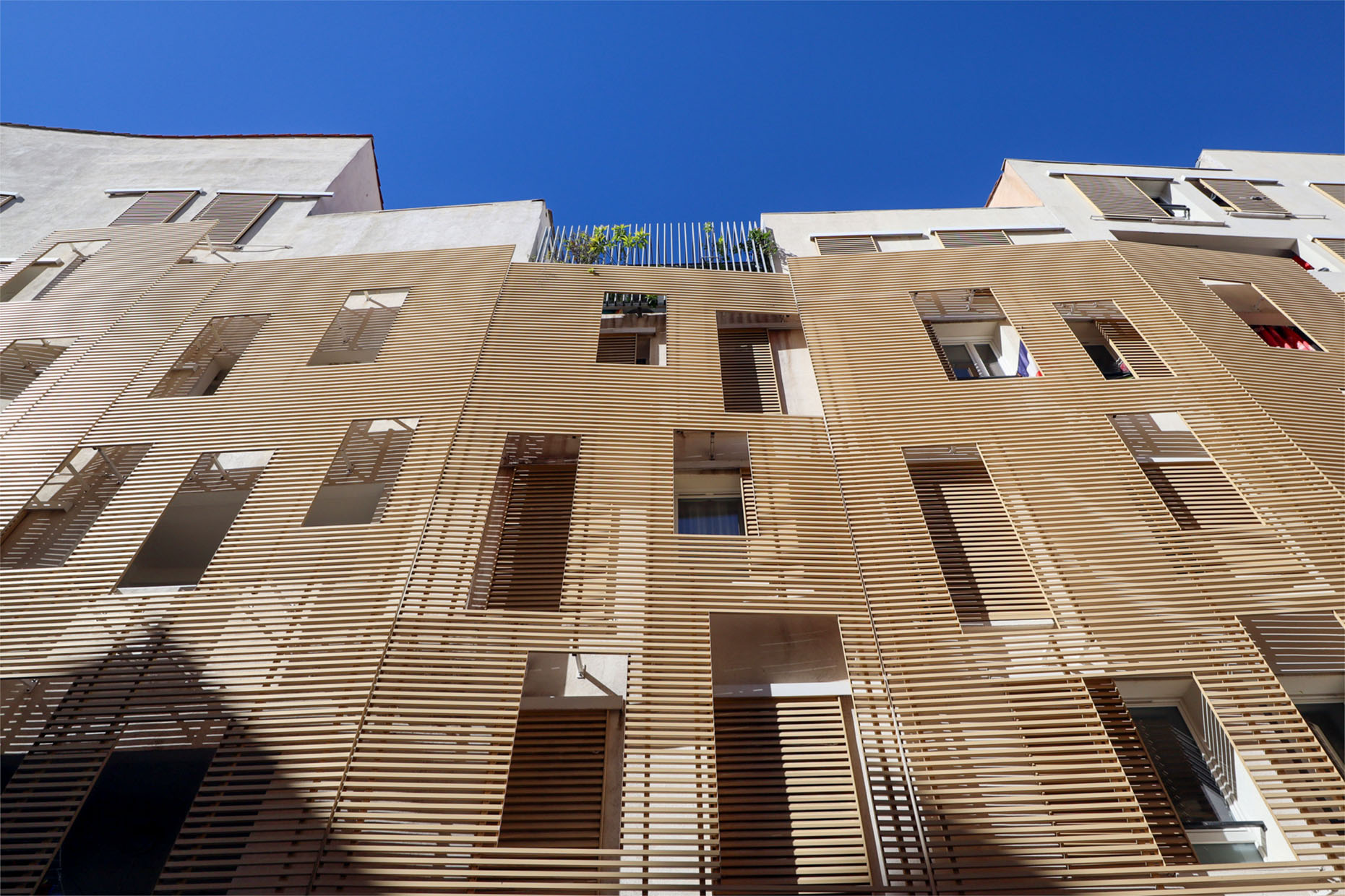
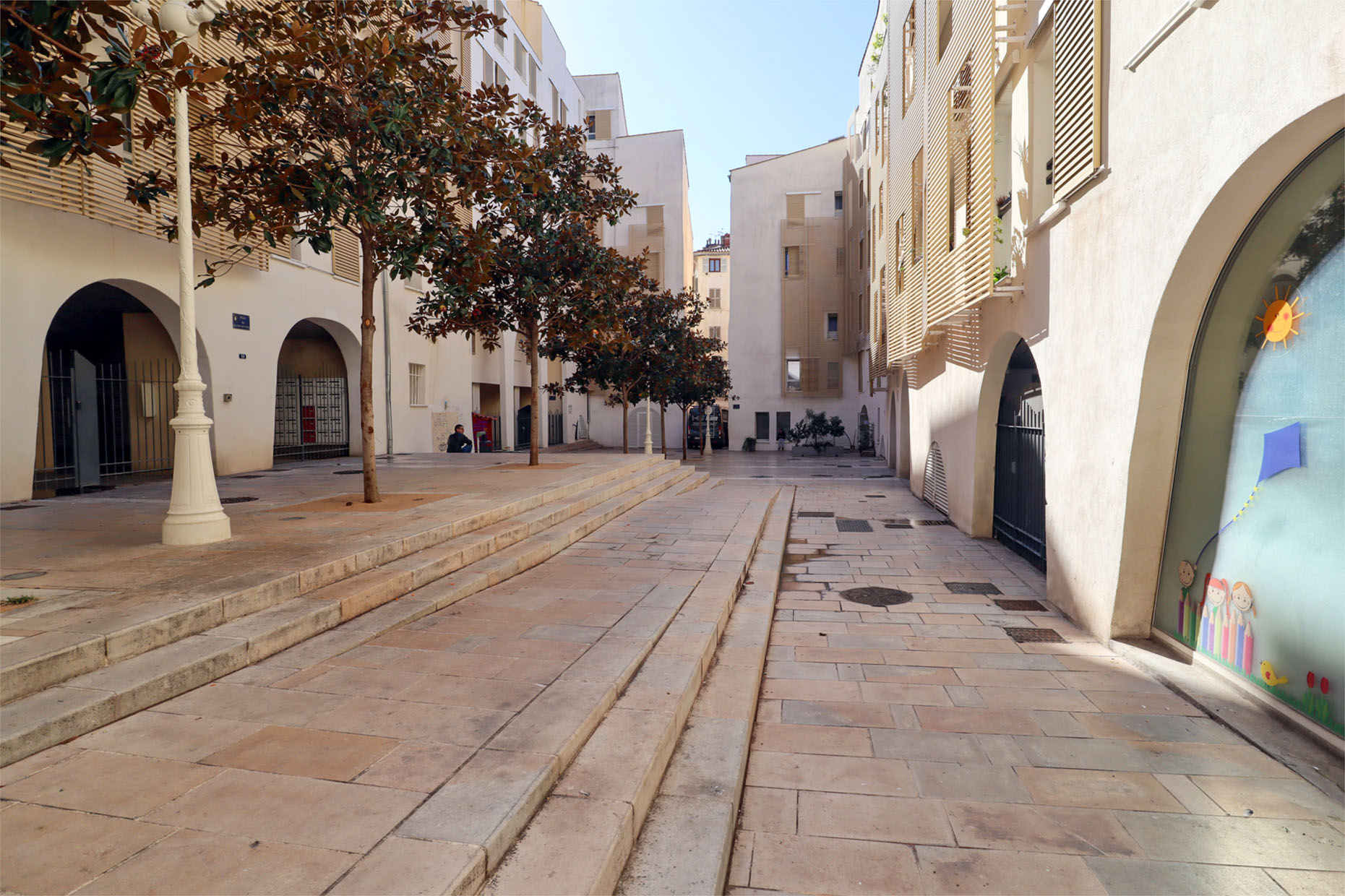
The fact that the Baudin project (2016) could be realised in the middle of the old town of Toulon is also a success for the Toulon office of HA Architectes. They proceeded according to the principle of ‘deconstruction, restoration and reconstruction’ around the Place du Grand Couvent, which features the oldest residential buildings in the city. The 27 buildings, which include apartment blocks, a student residence and commercial space, have been carefully modernised and restored in line with the requirements of heritage protection orders. At the same time, the complex has been opened up to the city without losing any of its intimacy. During our visit, the Baudin project seemed like a contemporary interpretation of an old town oasis.
La Seyne-sur-mer
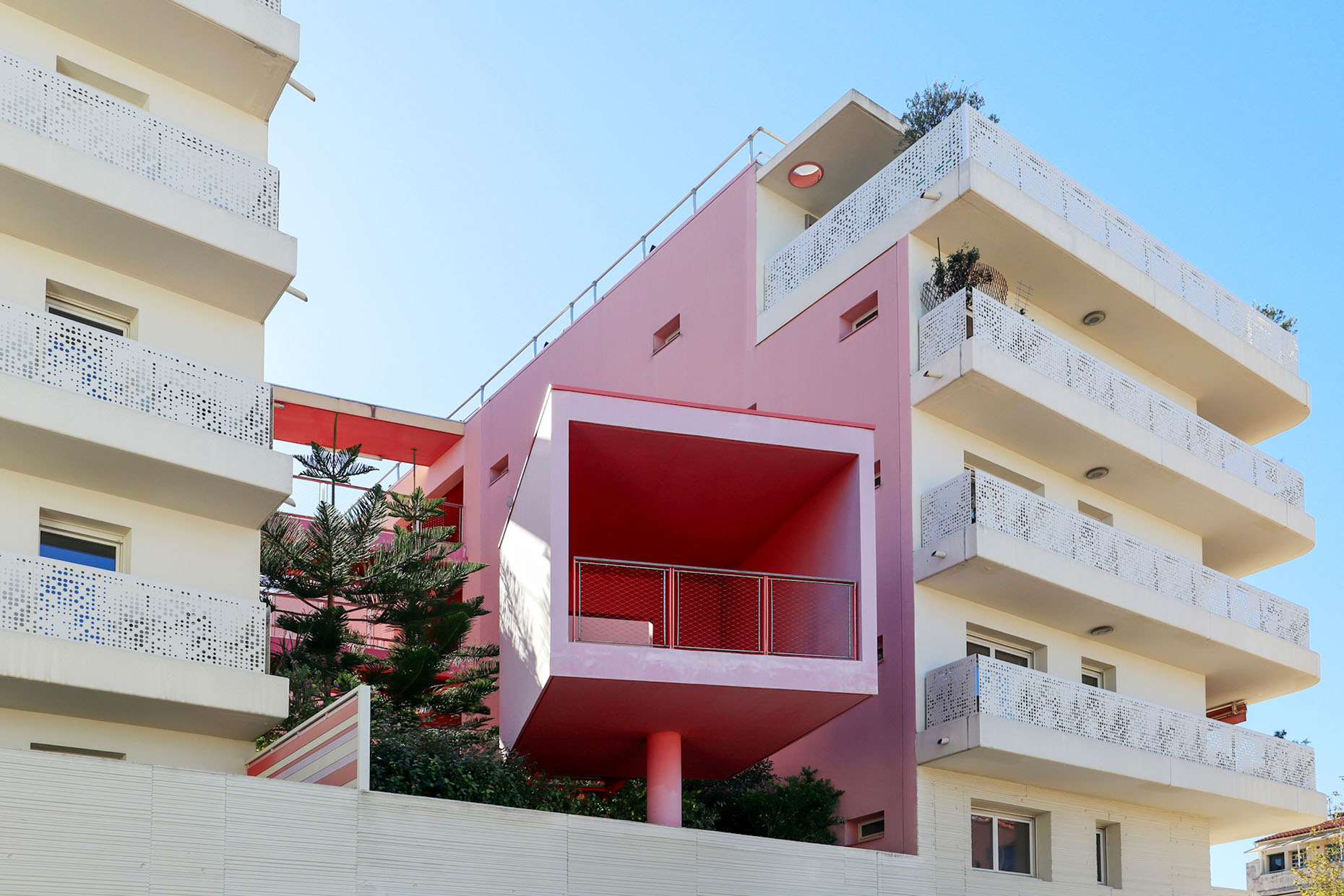
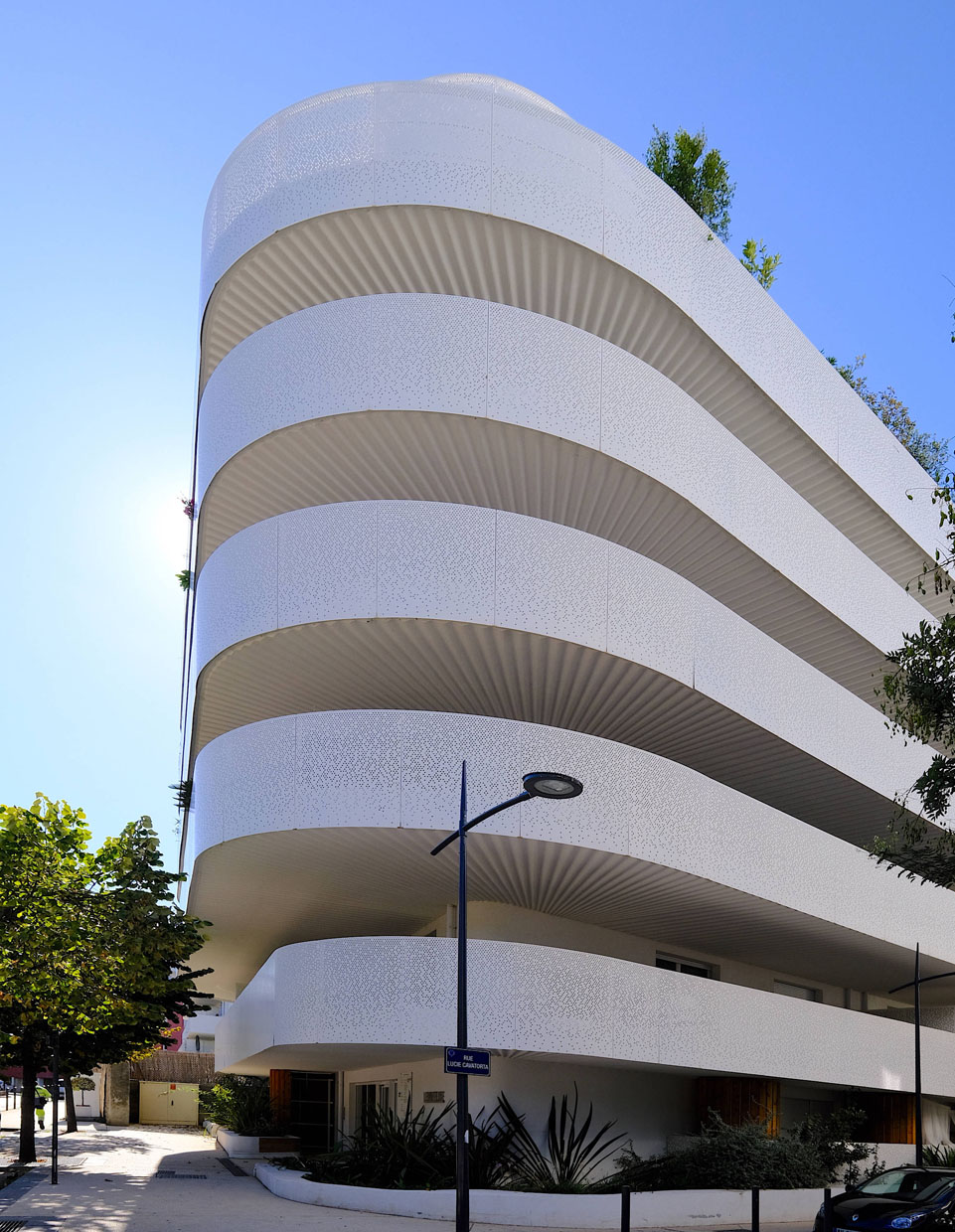
La Seyne-sur-mer still belongs to the catchment area of Toulon. It was once intended to be developed as a competitor to Nice and Cannes. Today, there seem to be several La Seynes. One is a faded old town in need of renovation, the other is a tidy and sterile area around the Parc de la Navale. Starting with the linear Casino Joa and continuing to the striking new residential buildings along the Maurice Blanc avenue.
The large-scale architecture of the Mucem in Marseille and the Pavillon Noir in Aix are miles apart. Nevertheless, the new apartment buildings and sculptural high-rises tell us a great deal about the rather lesser-known places and cities away from the famous names. Here, too, transformation and further development are taking place that complete the picture of rural Provence.
Text: Jan Dimog
Photos: Les Docks, Marseille (Titelbild), Euromediteranée, Marseille (1, 2), MUCEM, Marseille (3–5), Cosquer Méditerranée, Marseille (6), FRAC – Fonds Régional d’Art Contemporain (7, 8), Grand Théâtre de Provence, Aix-en-Provence (9), Pavillon Noir , Aix-en-Provence (10, 11), Conservatoire Darius Milhaud, , Aix-en-Provence (12), La Frontale, Toulon (13, 14), Chalucet, Toulon (15), Baudin-Projekt, Toulon (16, 17), La Seyne-sur-Mer (18, 19)
Picture credits: © Hendrik Bohle & Jan Dimog / thelink.berlin
Author info:
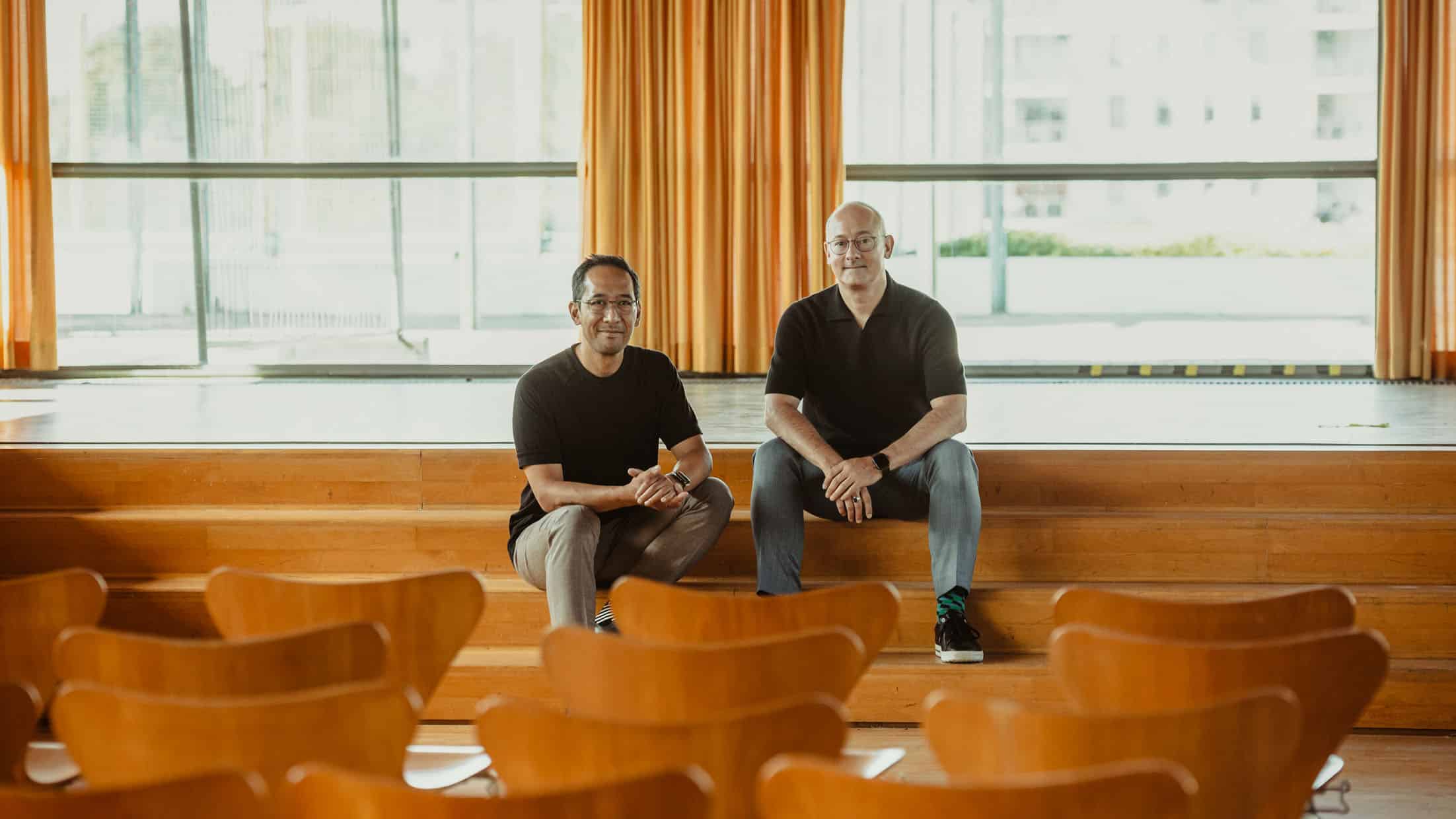
Journalist Jan Dimog runs a digital magazine on building culture together with architect Hendrik Bohle. On thelink.berlin they have been telling about their discoveries in Europe for years, especially about the connections between people and architecture.
When they are not on the road, they curate high-profile exhibitions, such as the travelling exhibition on Arne Jacobsen’s architecture.
0 Comments