News from Aschau: Nils Holger Moormann
The legendary “berge” in Chiemgau has reopened. In an interview, the designer told us what else is on his mind and how he views the design industry and his career in retrospect.
It’s been a while since we last spoke – great to see that the guesthouse berge is getting a fresh lease of life!
Yes, through a series of fortunate coincidences, we’ve now found Nicole Martinsohn as the new tenant and operator. Since then, we’ve been working together with great determination to further strengthen the quality and standards of berge. Four or five years ago, we sold our furniture company Moormann, and since then we’ve no longer been running berge ourselves.
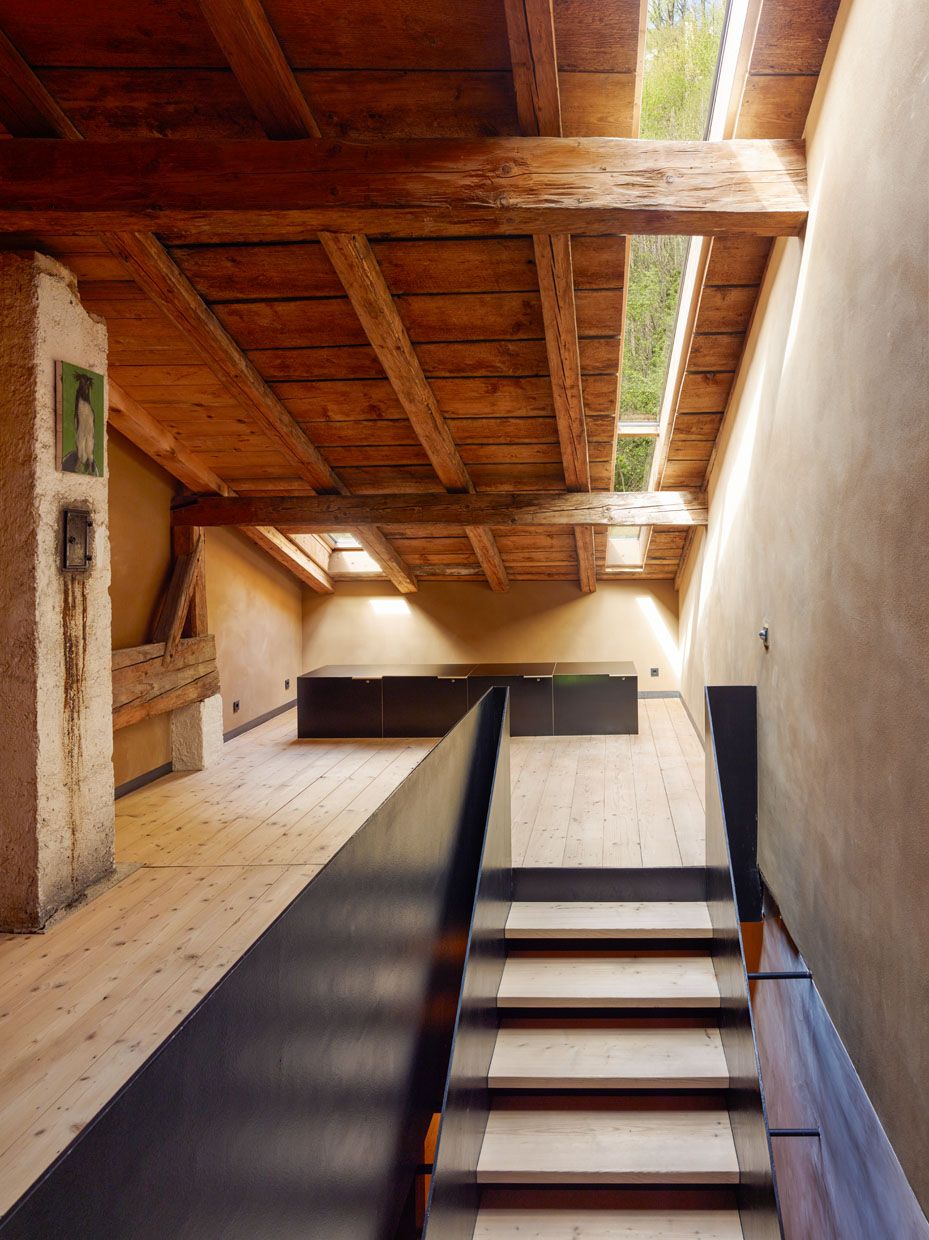
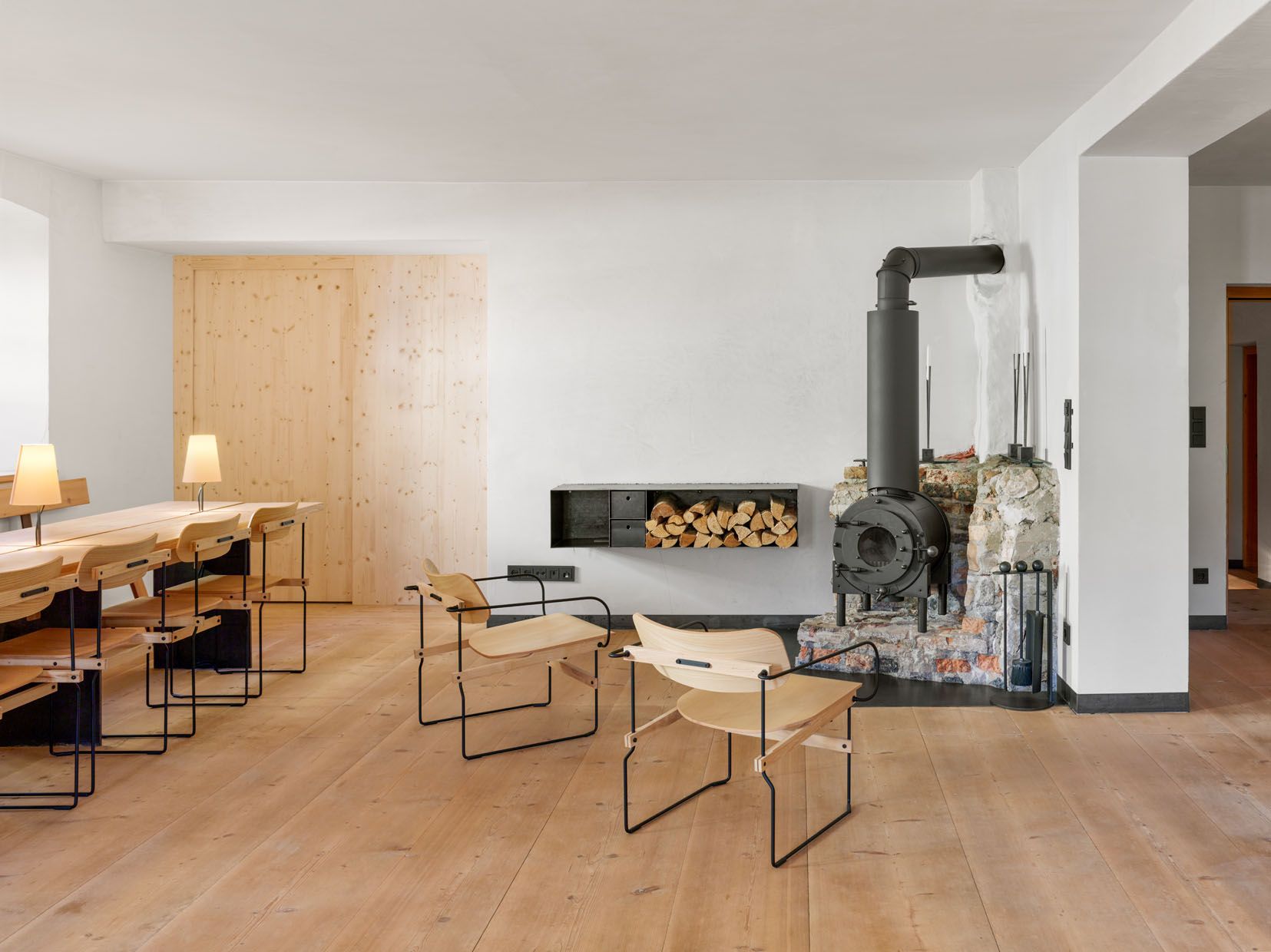
In what way are you and your wife involved with berge again – more in terms of consulting and design, or also operationally?
As the tenant and operator, Nicole Martinsohn is free to do whatever she wants. But because we value her highly, we’re doing what design has always needed most: giving it our wholehearted affection and full energy. If you only delegate, you eventually lose the authentic feel and personal signature. So at the moment, we’re supporting her in getting everything refined again. You know how it is: something only works when every aspect is honed to a fine point. That has always been the strength of berge as well – the sum of its details.
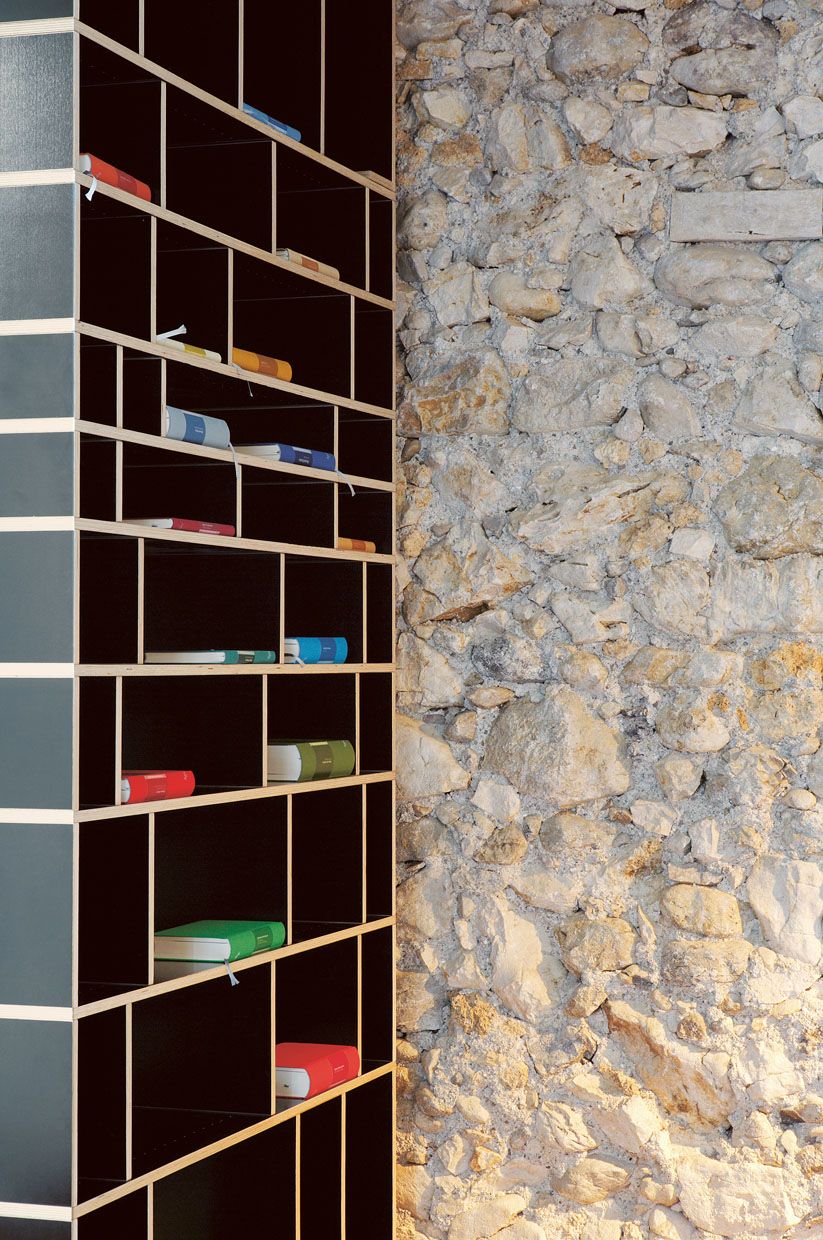
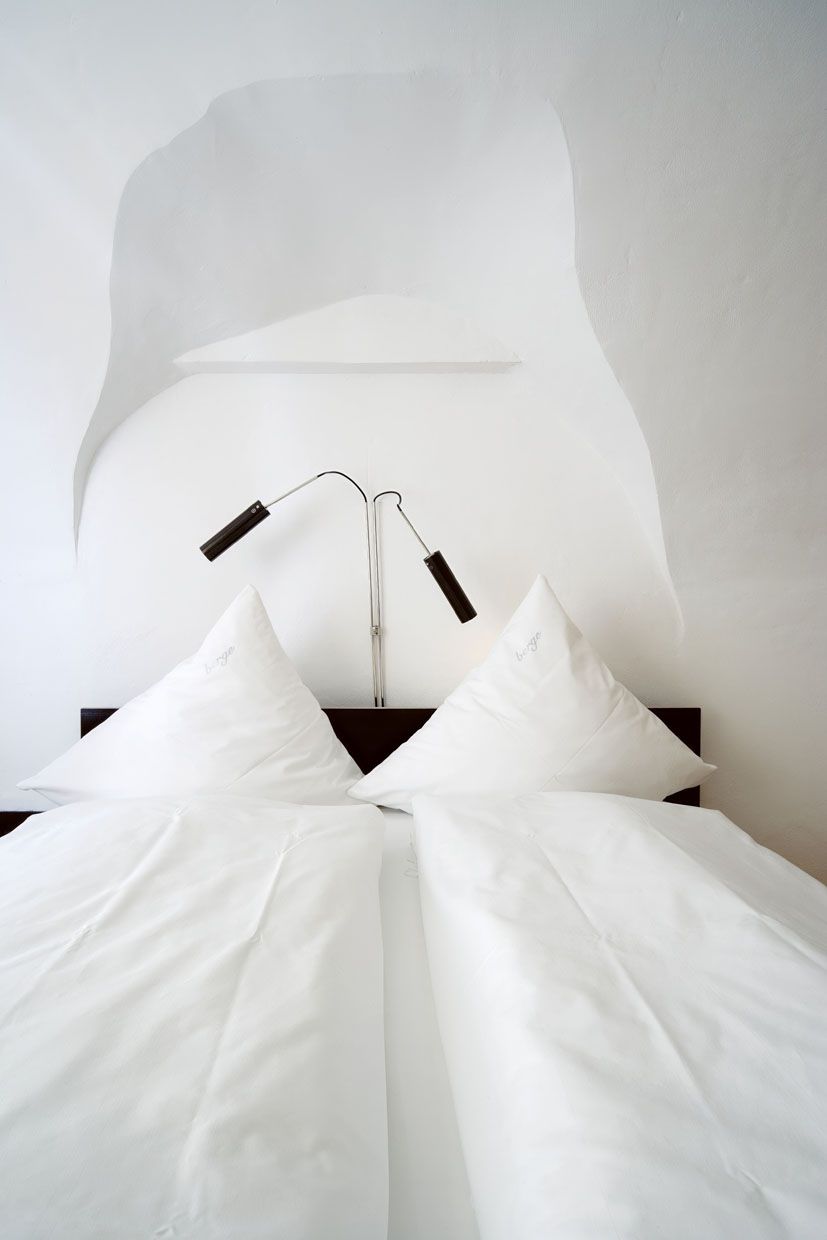
We’re keeping our fingers crossed and are delighted that the house is once again a partner of HOLIDAYARCHITECTURE!
For those of our readers who may not know the full backstory, could you briefly tell us how you came to design and to berge?
The story of how I got into design in the 1980s is something you can ultimately read almost anywhere: through hitchhiking – and, amusingly enough, through a landscape architect. He told me that a friend of his was making designer furniture out of steel. As a complete autodidact and having abandoned my law studies, I became incredibly curious. That’s how it all began – with a great deal of curiosity, naivety and enthusiasm for the whole thing. Of course, it was difficult to become self-employed without any formal training, without a budget and without a proper business plan. For a long time, I did this as a part-time job, but in the end it worked out well. At some point, someone came along and said: you’ve got a fantastic collection. I hadn’t really realised it myself – because I was always wandering through the world in a state of amazement, completely naïve. True to my favourite saying: “Too much knowledge isn’t always wise either.” In other words: just do it, give it a try.
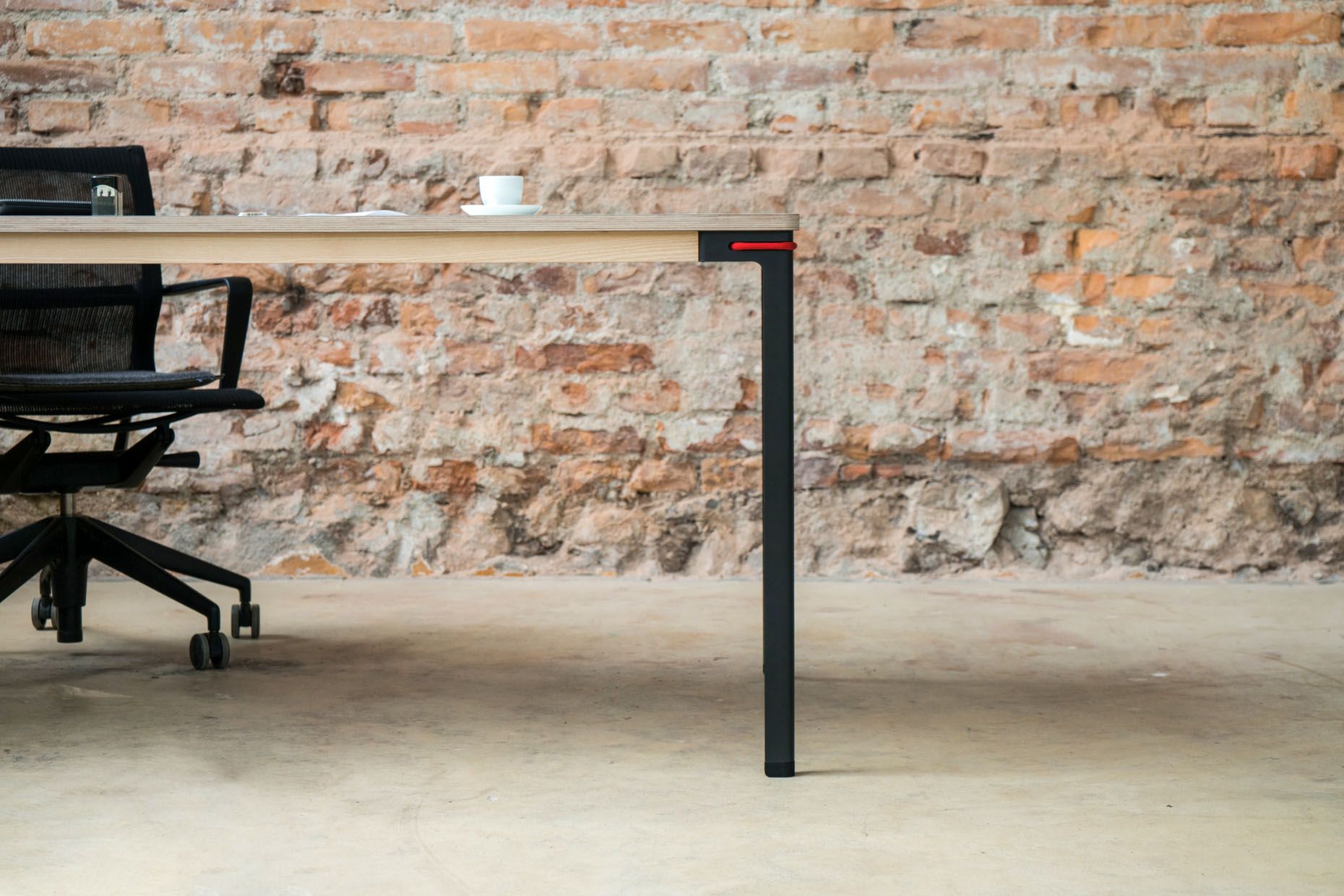
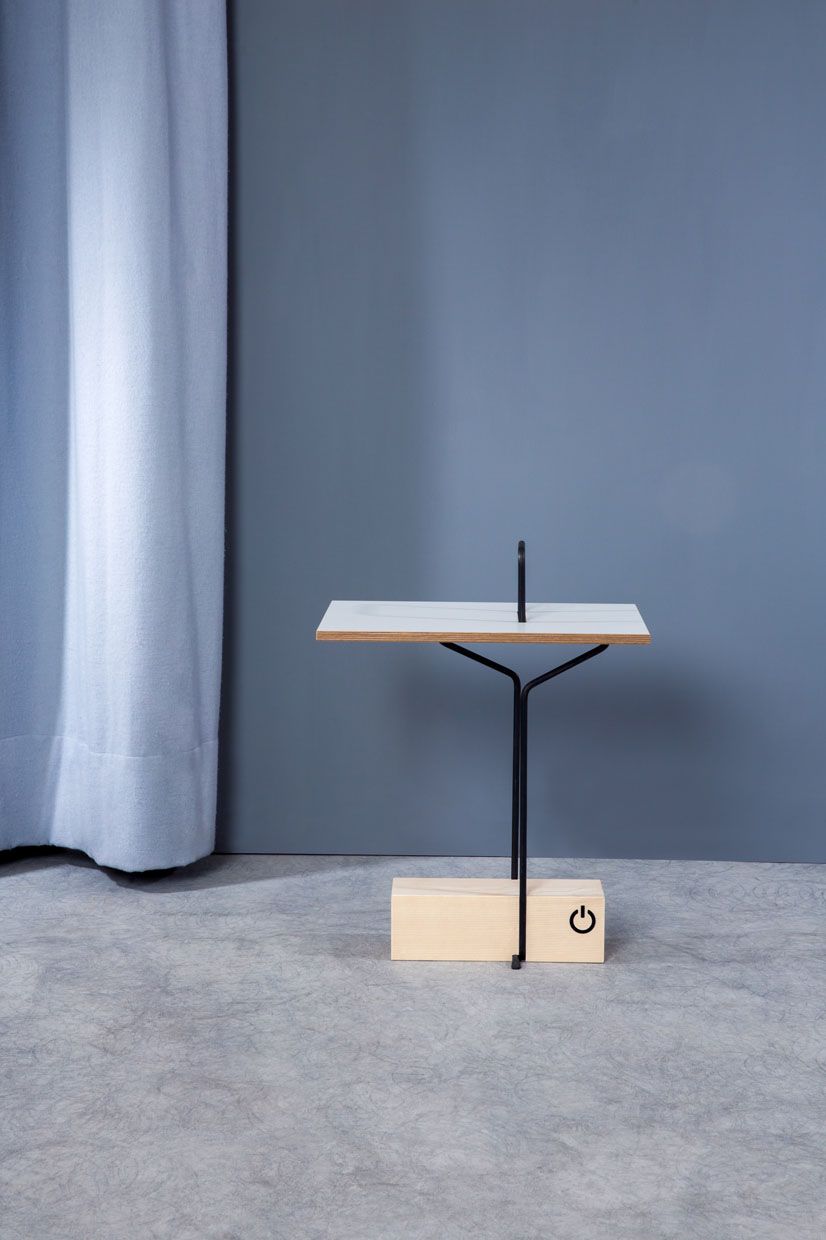
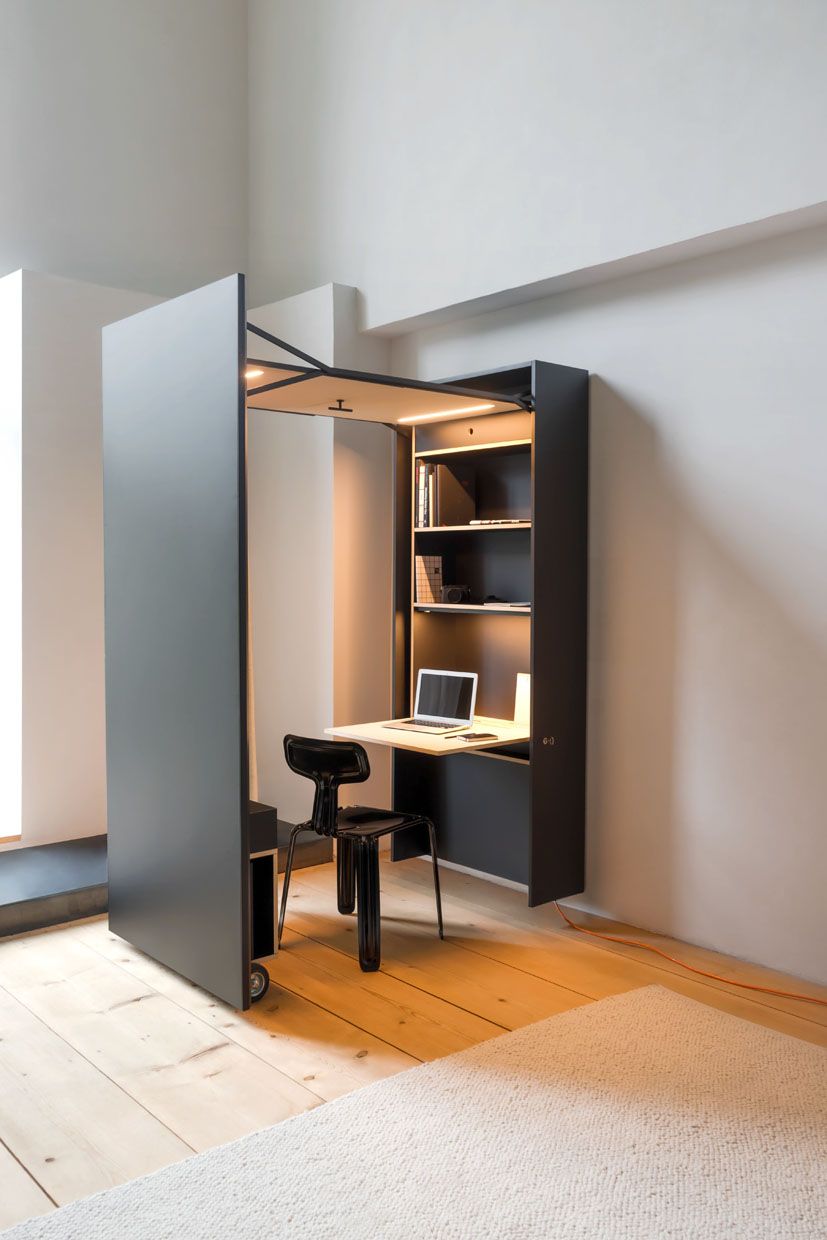
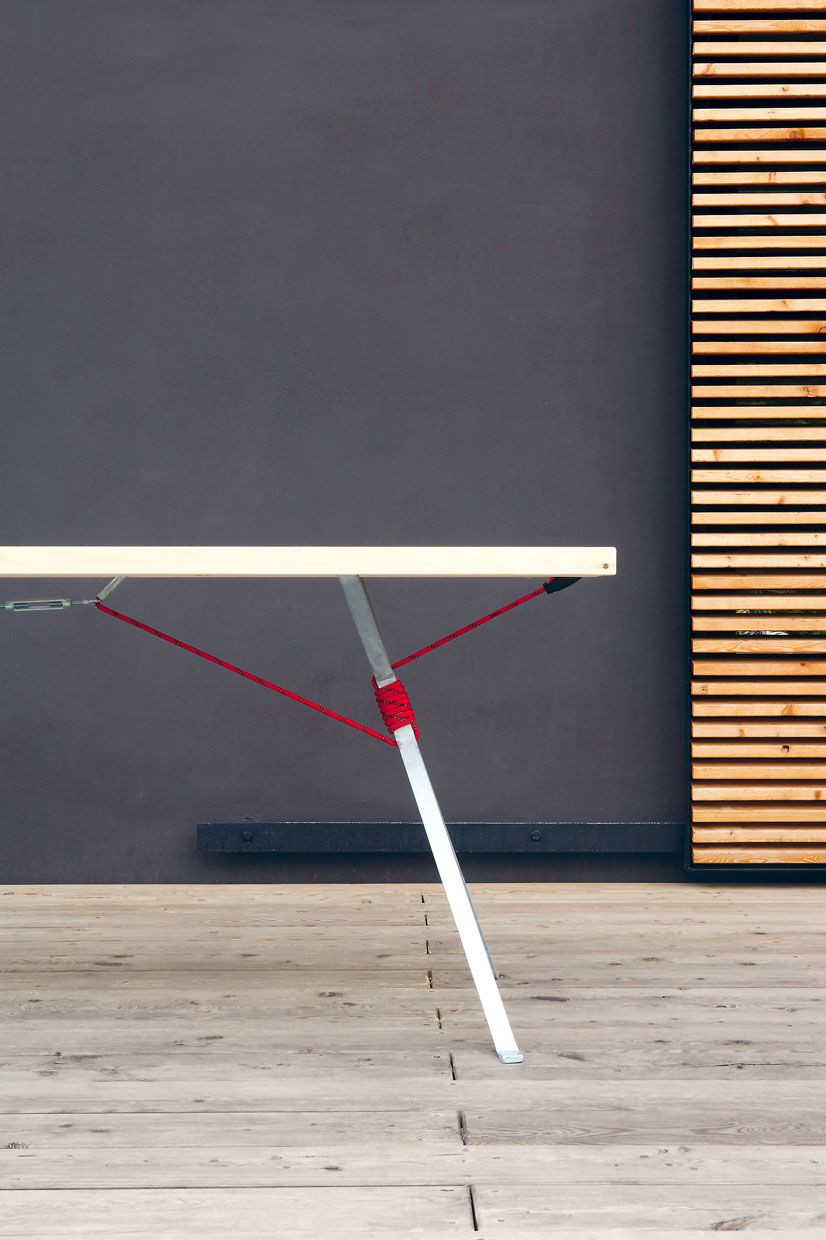
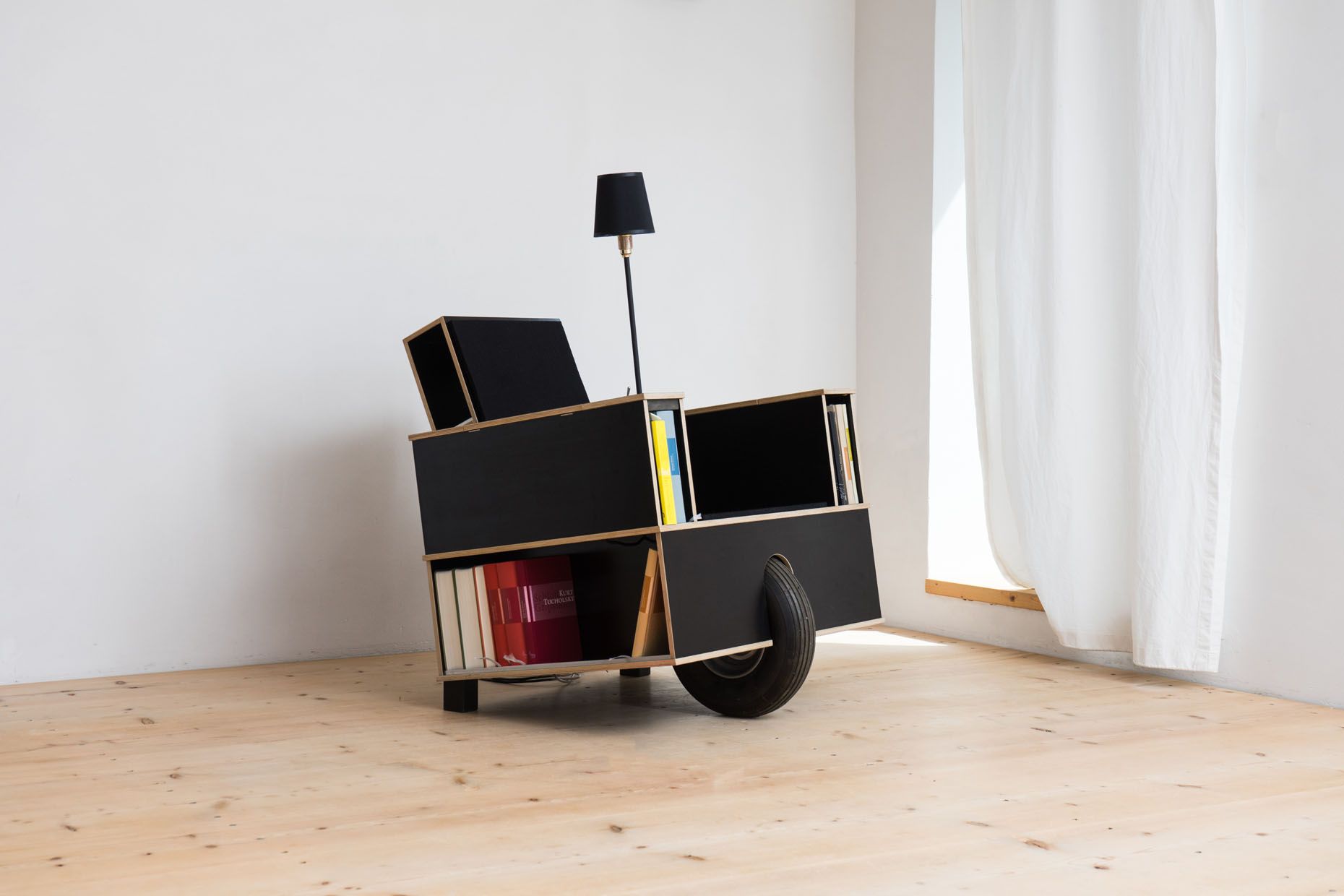
From all this, a company emerged that, remarkably enough, held its ground in the market, weathered many rough patches and continued to fill me with joy and immense curiosity right to the end. One major issue for us, however, was that the company just kept on growing steadily. I’ve always loved small-scale structures and never wanted levels of hierarchy. But this couldn’t be avoided entirely, because I never really managed to kill off that eternal law of growth either. As space became increasingly limited, the whole issue of building and expanding eventually arose and grew ever more pressing.
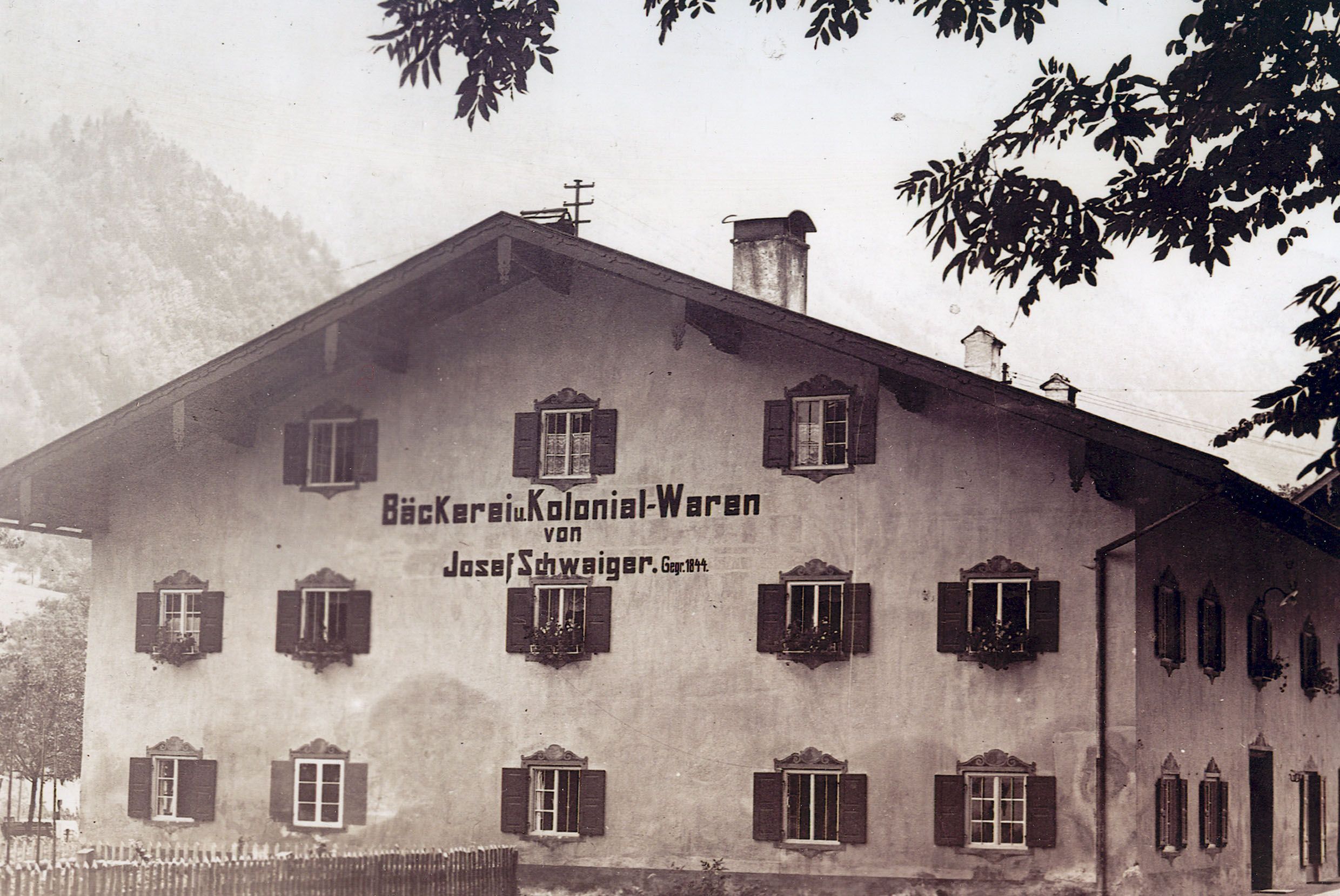
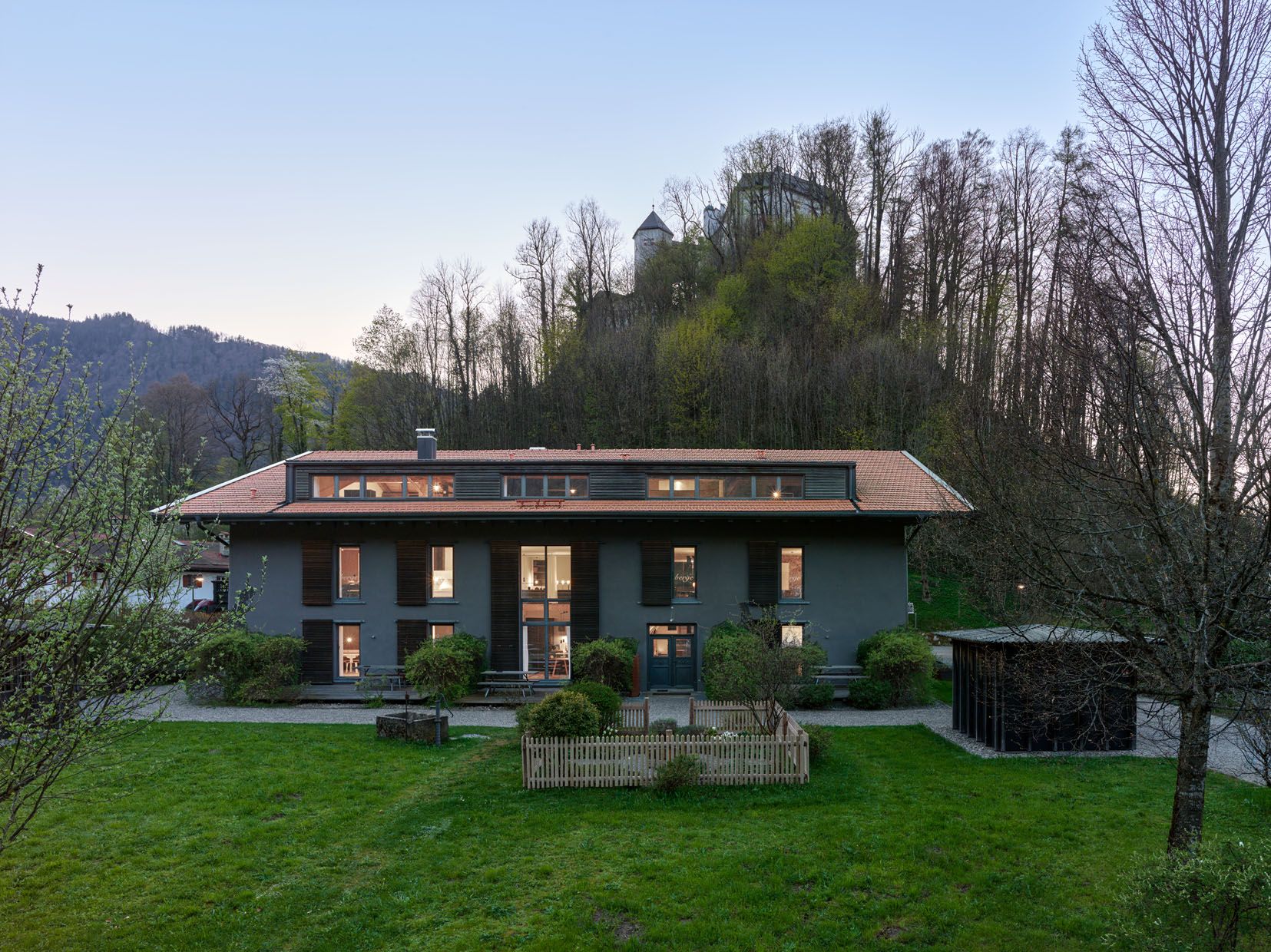
One day, the old house opposite the company building – what is now berge – came up for sale. That was interesting because it stood on a fairly large plot of land. Our idea was to build a commercial warehouse there and upgrade the house just enough to store catalogues or smaller items. And then the idea occurred: “Hang on, we have guests here all the time, and it’s often not that easy to accommodate them. Why don’t we put in one or two guest rooms?” Back then, the project was internally called Grand Hotel Aussichtslos (translator’s note: the German word “aussichtslos” means both “hopeless” and, playfully in the context of a hotel, “without a view”).
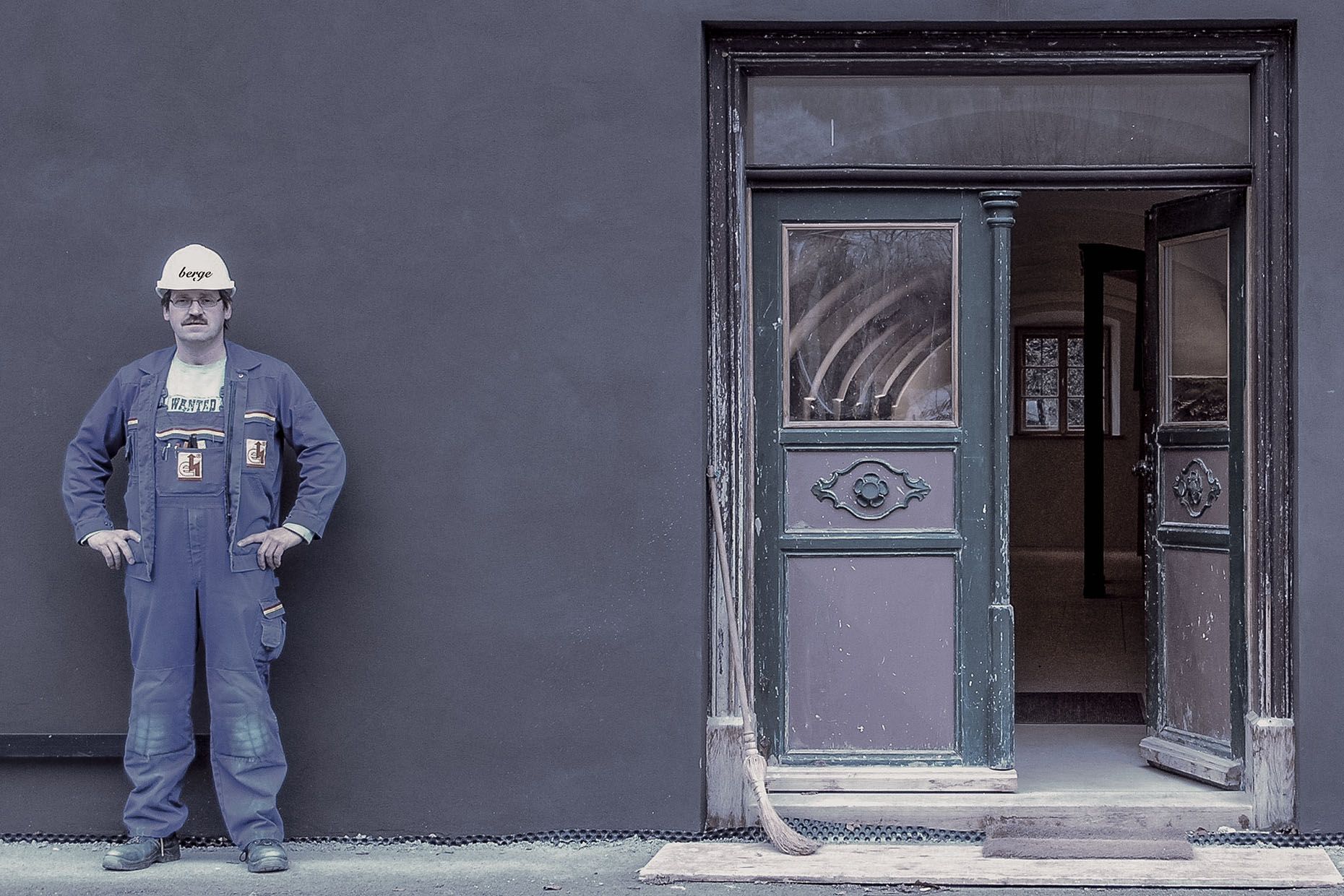
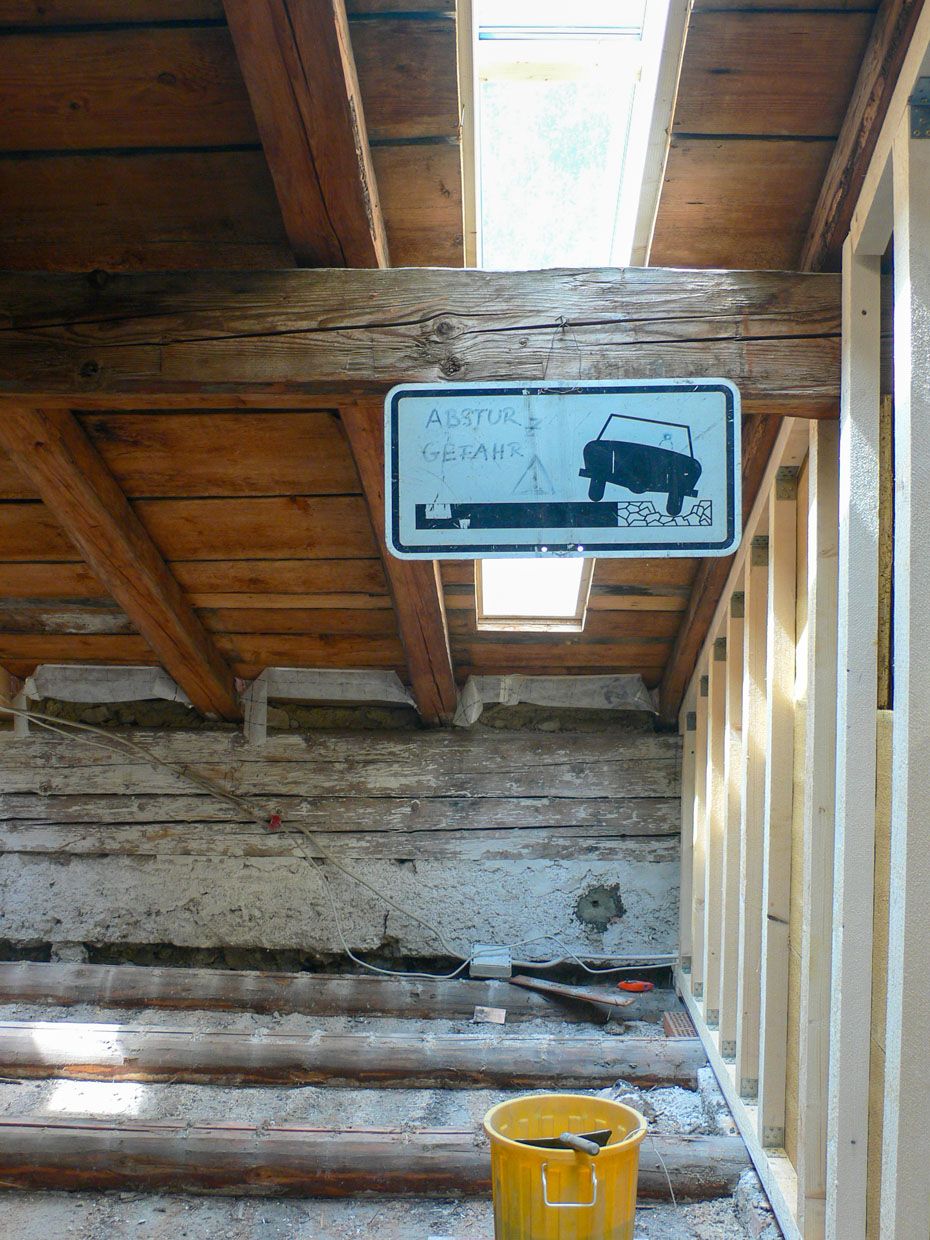
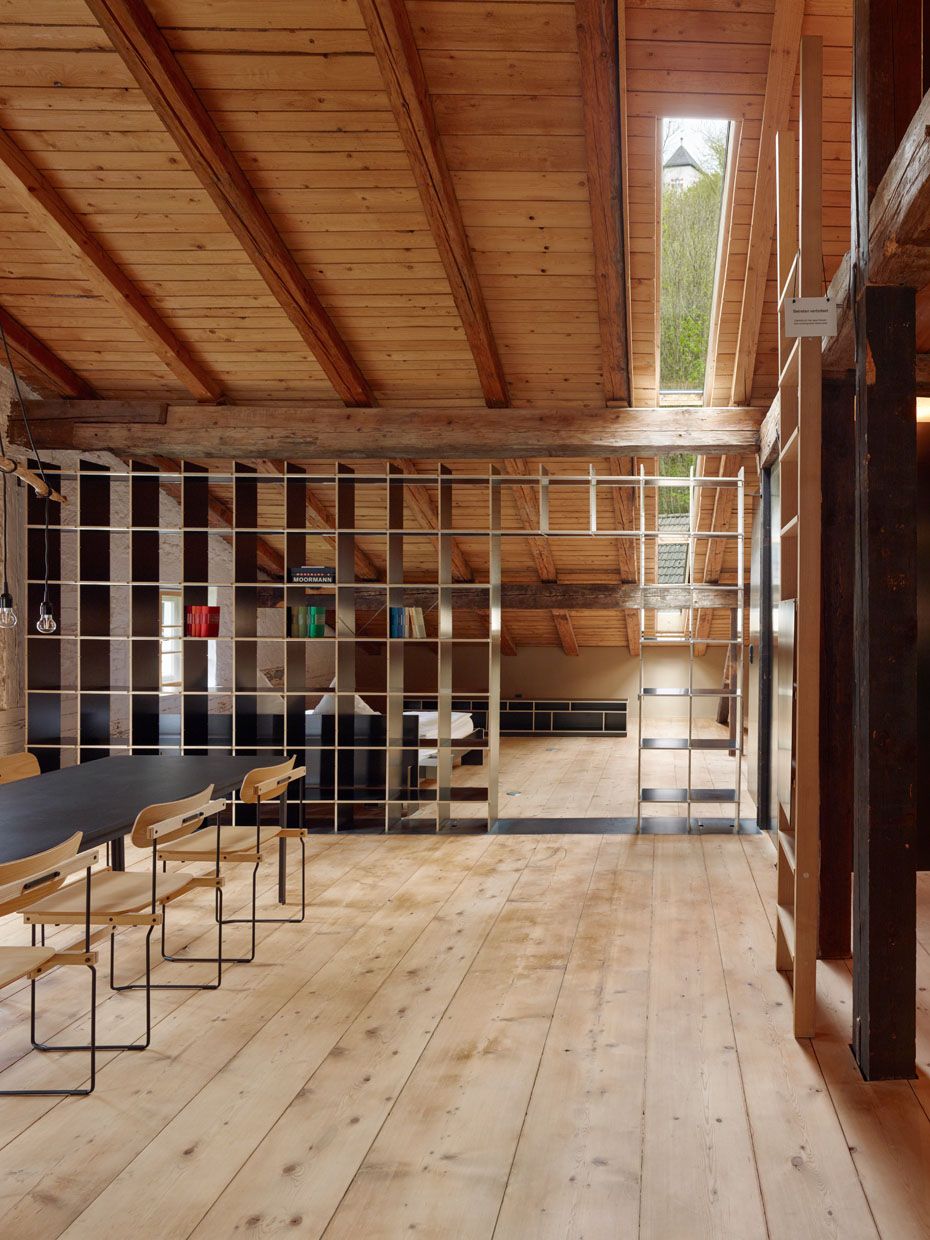
Incidentally, people were able to stay with us at a very early stage – for 10 euros… admittedly, there were no ceilings installed yet, we handed out hard hats, and in the morning the pneumatic drill would start up. But nobody complained. I enjoyed that: an early-guest discount, so to speak (laughs).
At some point, however, it became clear that even the newly planned warehouse would already have been too small for our requirements. And that – I really should have finished that law degree after all! – a section of the plot, what is now the accommodation’s garden, was subject to a building ban.
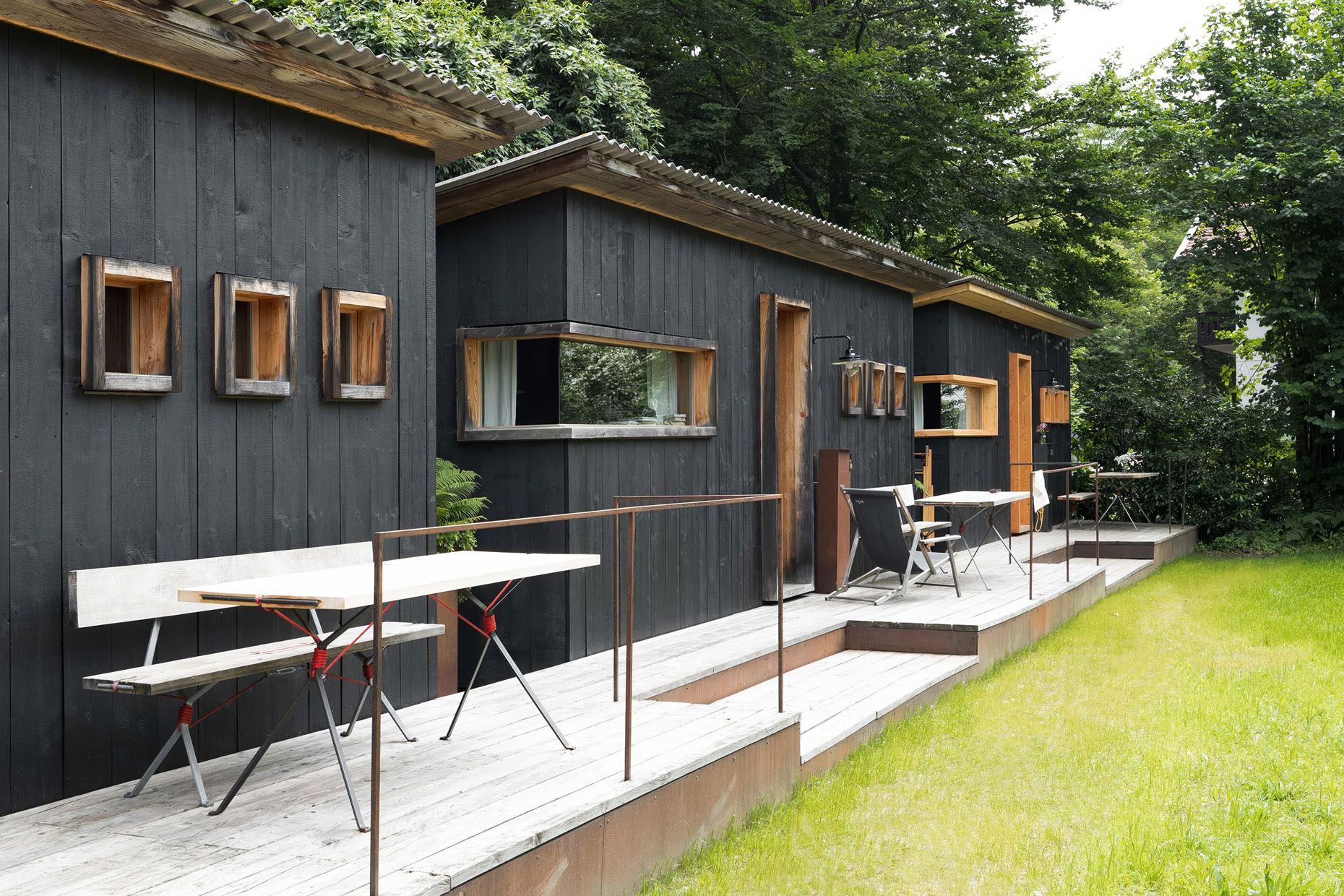
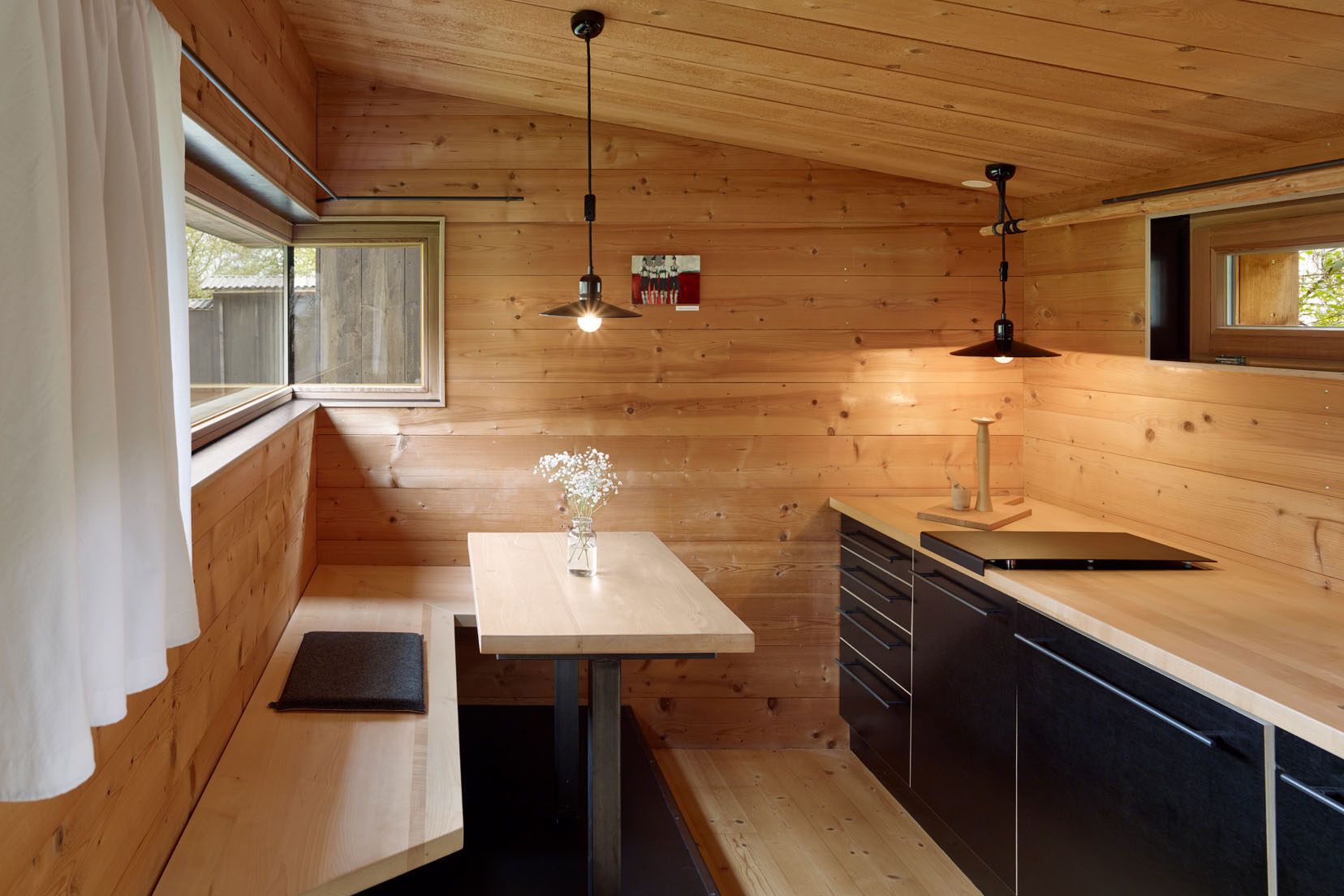
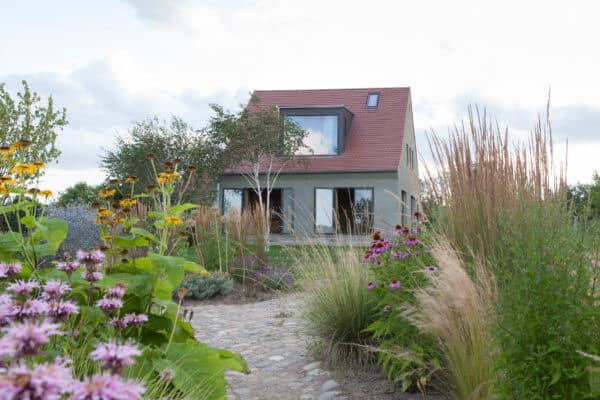
But the tiny houses are now standing in the garden of berge, aren’t they?
Exactly. If you’re creative, you don’t let yourself be stopped – they’re all movable houses, some of them are even mounted on rails.
So today’s guesthouse is essentially the result of a bad purchase and a fortunate coincidence?
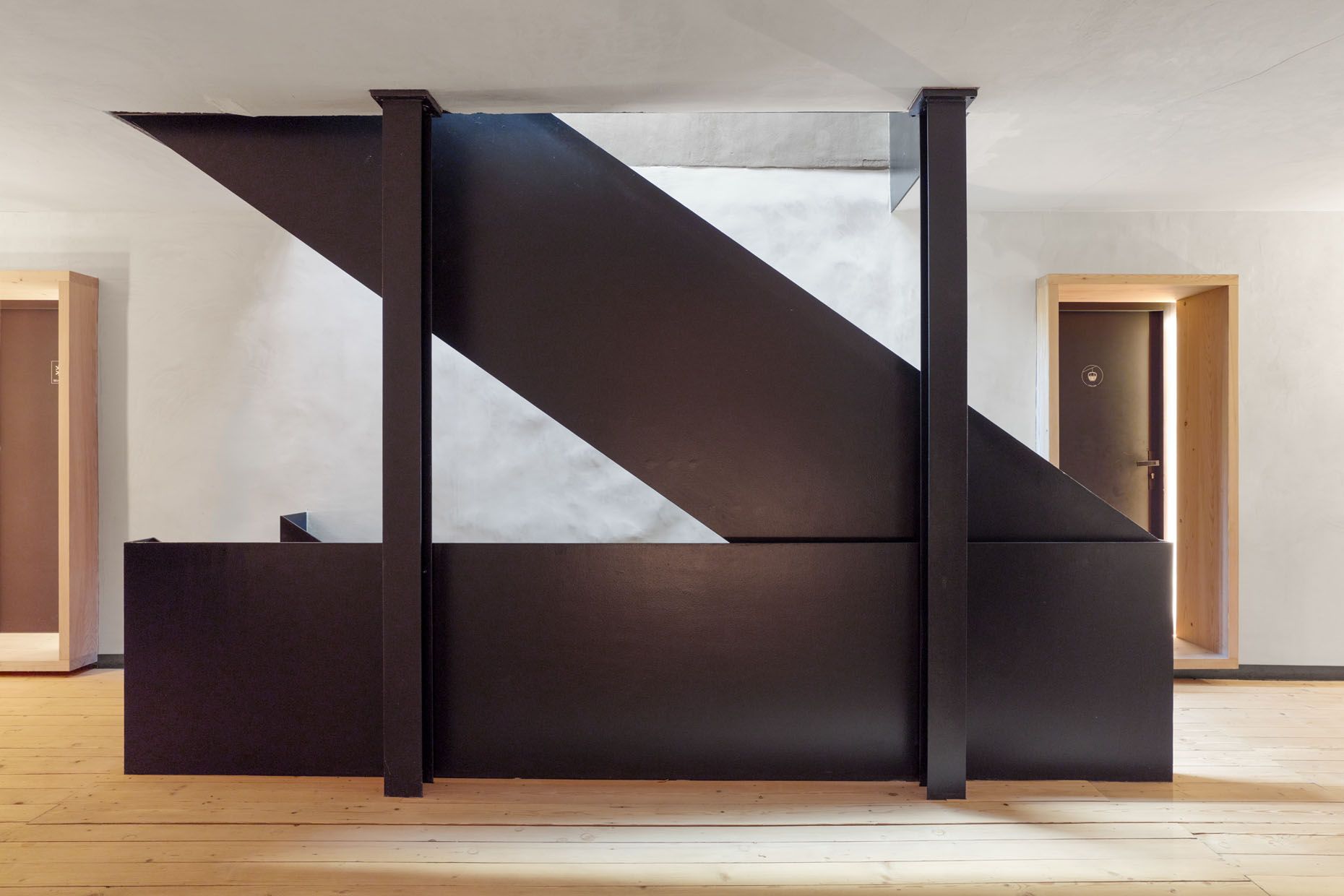
Yes. At some point, out of the whole mess, the idea of a larger guesthouse emerged simply because the building was there. I was always incredibly lucky to have wonderful people in the company who could professionally translate my cryptic ideas into reality. We began gutting the house, which had been completely remodelled and ruined over the years. It took me more than a year just to understand the building at all. Whenever I was away on business trips, I’d doodle ideas on beer mats… “Maybe the staircase could go here, although actually that wouldn’t work either…” and so on, until things slowly began to take shape.
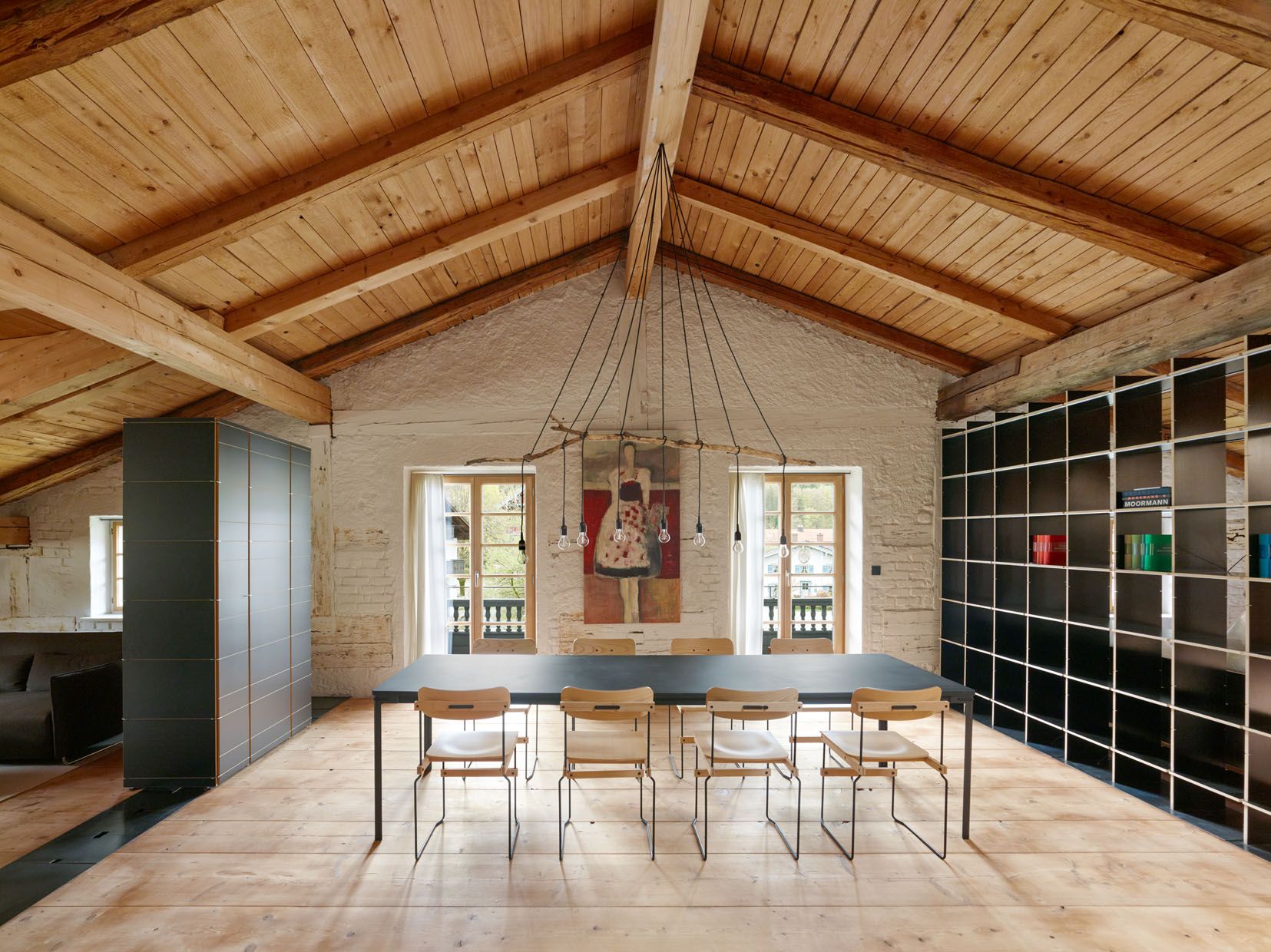
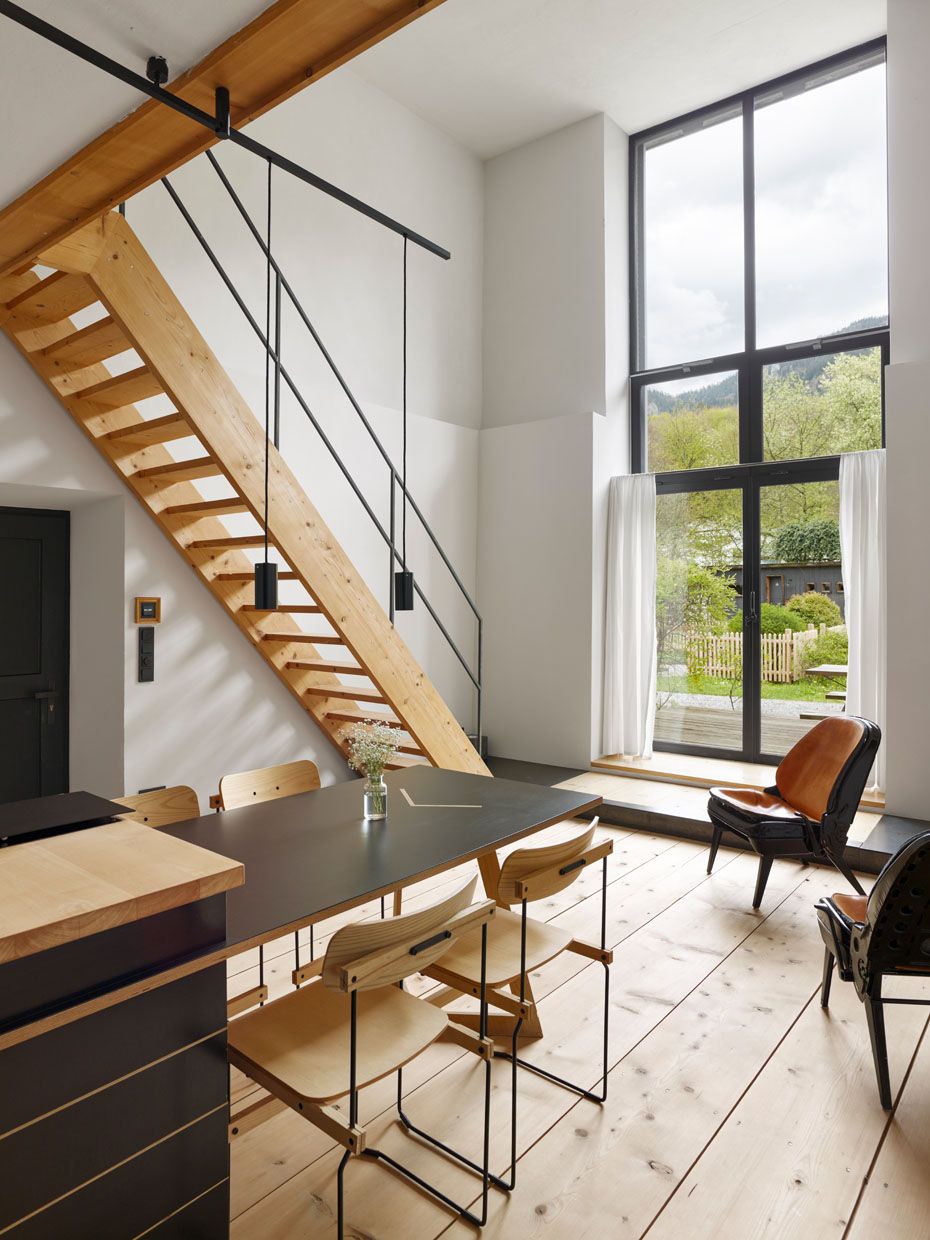
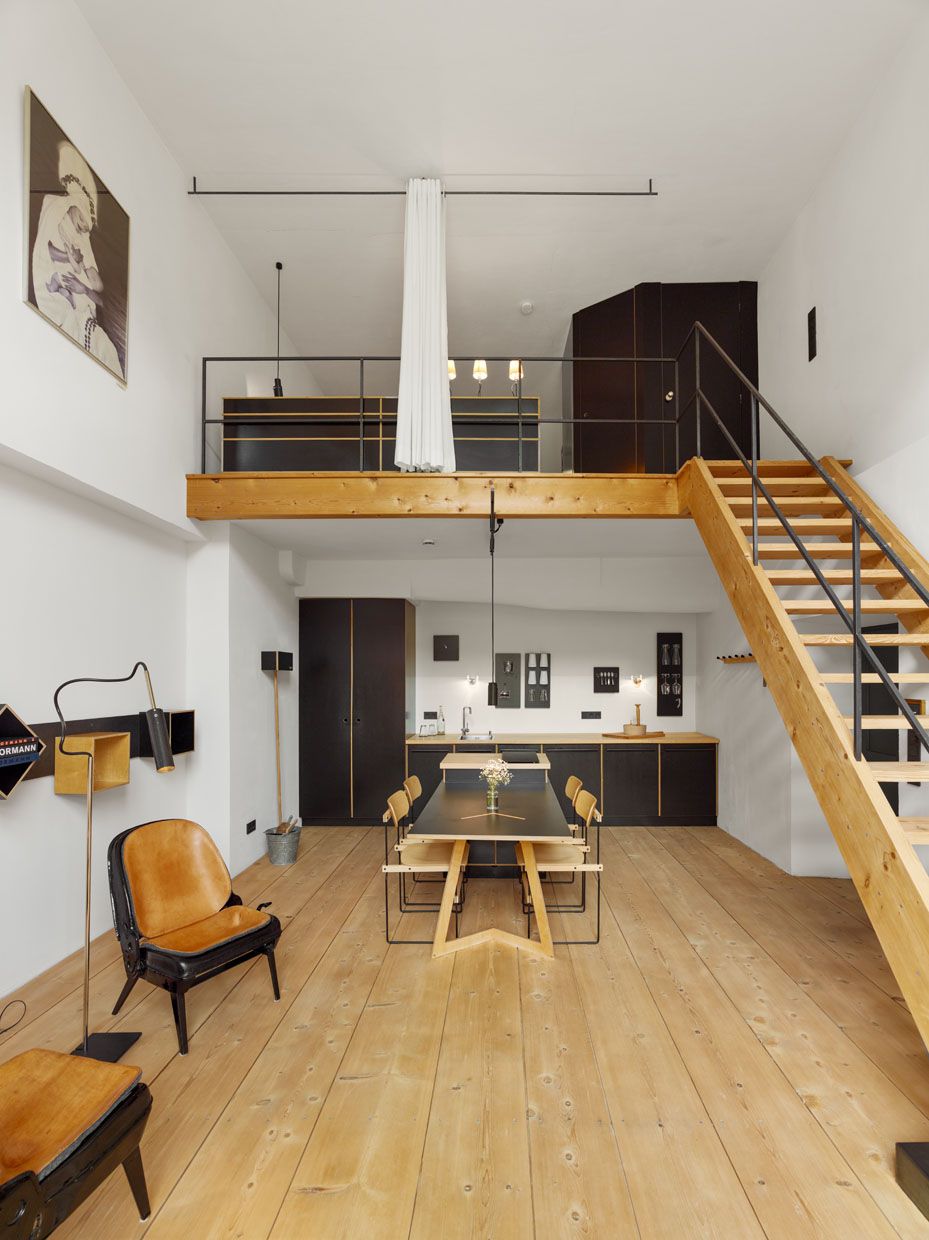
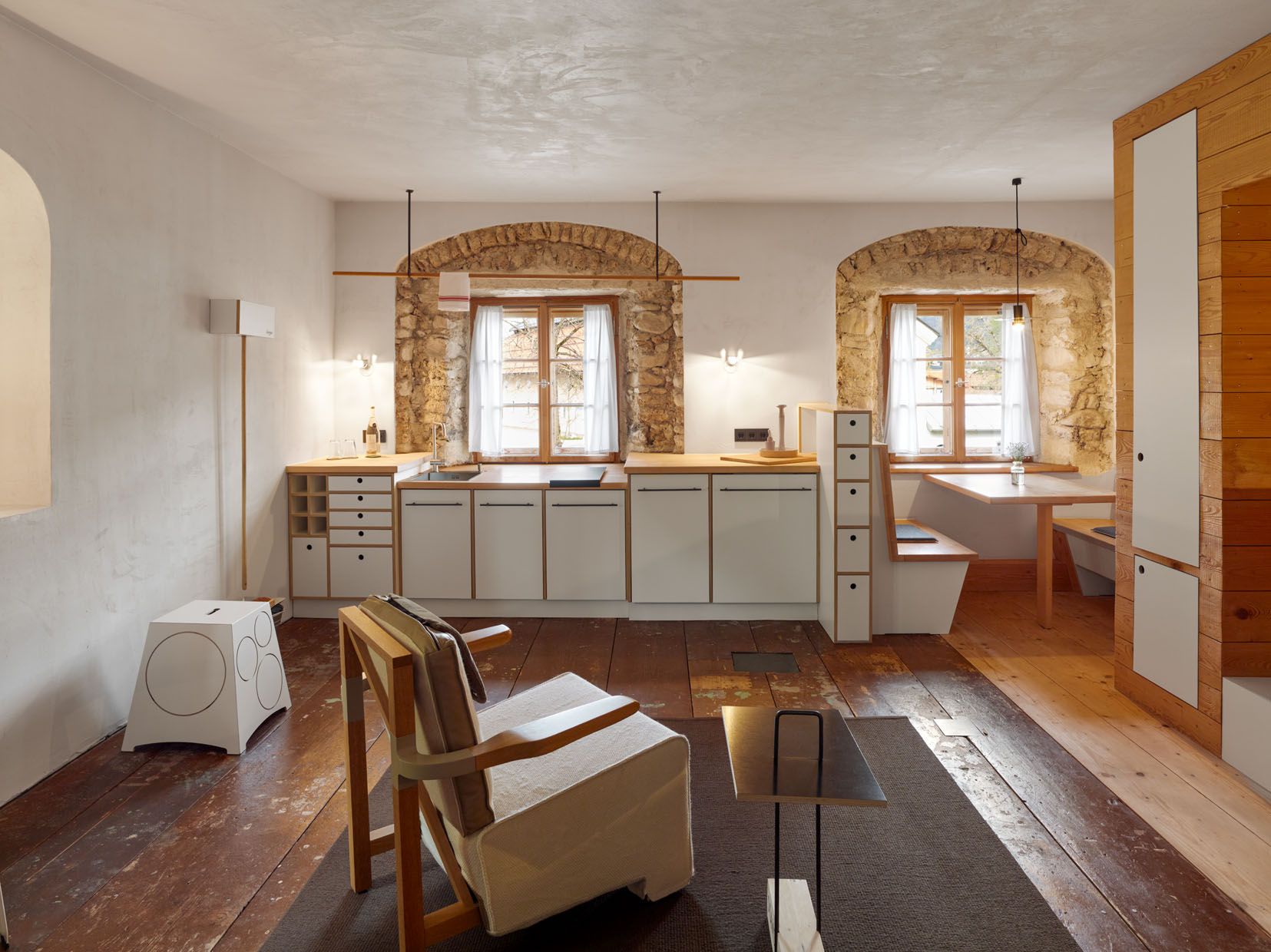
As a layperson, I gave our design department the task of essentially building a dolls’ house. So they recreated berge as a cardboard model, and that was fantastic. Step by step, we gradually worked our way towards a solution, and it also slowly became clear that while the idea of a design hotel or art hotel sounded appealing, it ultimately wasn’t really our thing.
It’s always a bad sign when you have to add a description to a hotel to explain what it is supposed to be.
True. Looking back, all the complications during the course of the project were actually very positive. Because of all the challenges, we had the time to question many things. And in the end, such a process leads to a solution that is both pragmatic and very clean. My good fortune was that my small design department was simply fantastic and incredibly versatile. The architect looks at the volume, the form and the functional aspects of the building; the interior designer already starts considering how the staircase might run and how the handrail should be executed; and the designer starts questioning every single baluster. As furniture manufacturers, we also had a great deal of expertise, as well as the right suppliers and craftspeople.
We can only say: a fantastic result. Once you’re there in person, you can really see the precision.
Yes. Although it has to be said: now you can see it again. For quite a while, we hadn’t really been taking care of it ourselves, and a house like this doesn’t forgive being neglected. Since the new tenant took over, there’s been a new sense of energy.
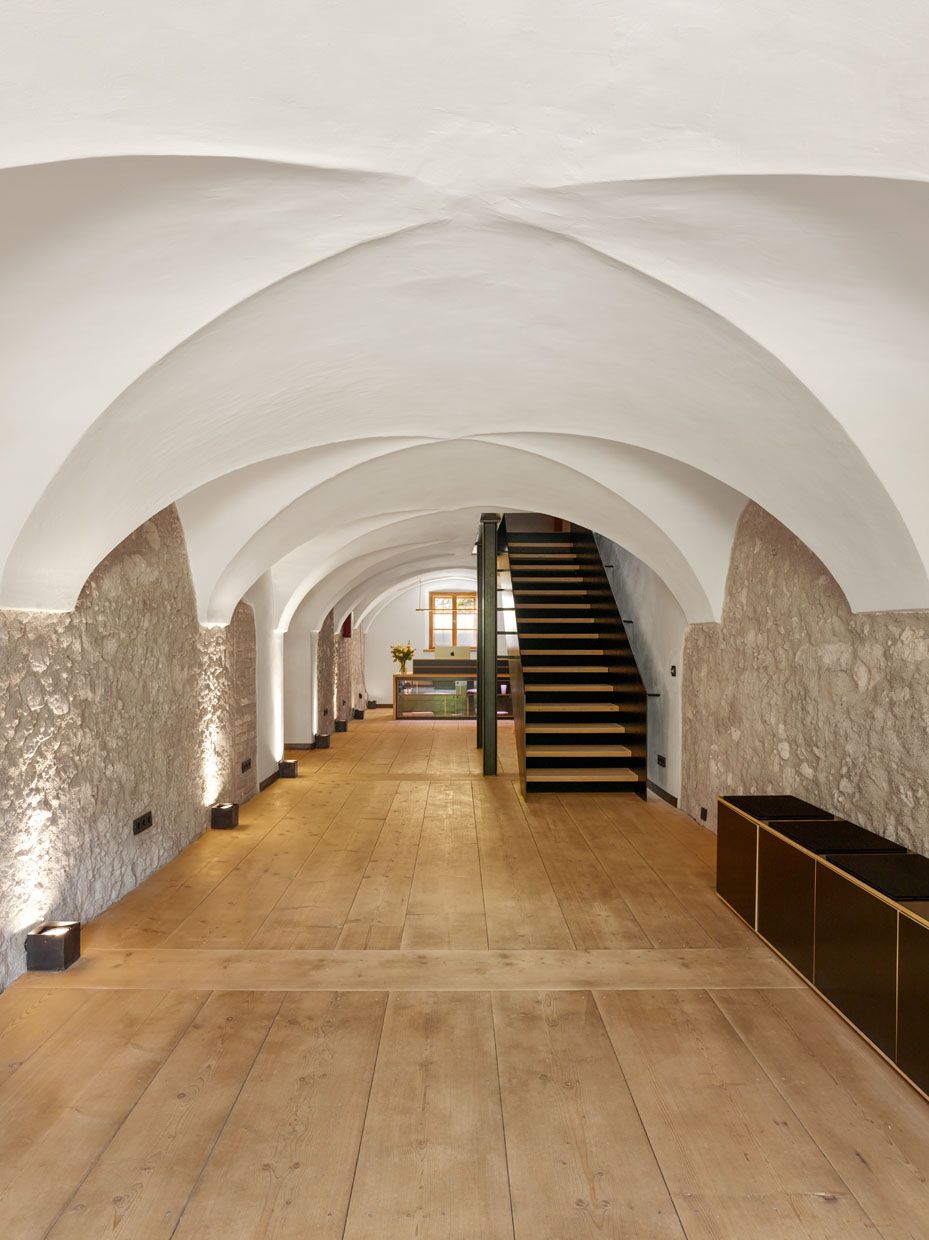
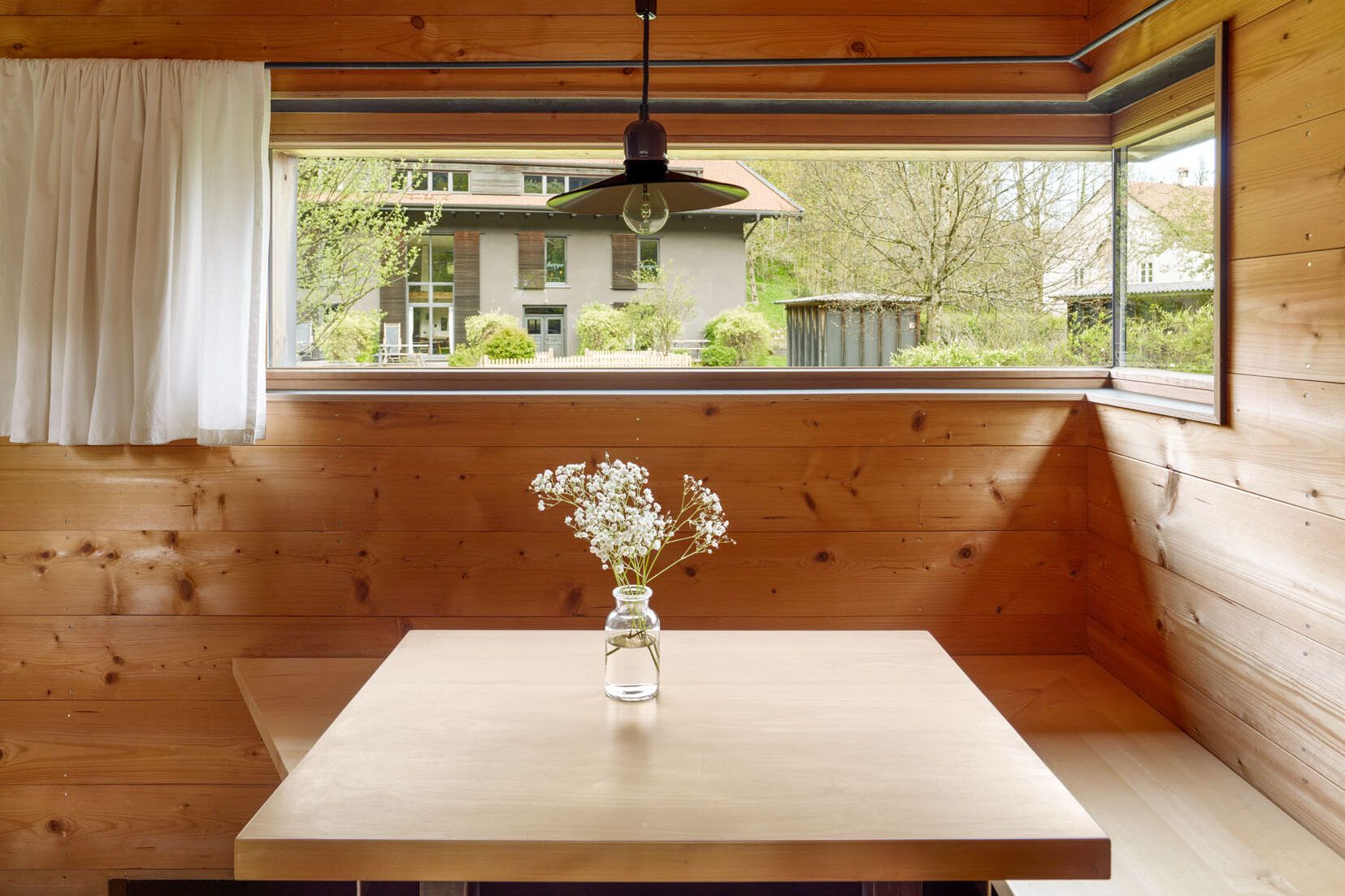
And the wonderful thing – one that genuinely makes me proud – is when a place achieves the highest possible degree of timelessness. You can see that, for example, in the untreated surfaces. Our floors made from alpine spruce, with its very tight growth rings, have become more beautiful over the years. The whole house is like that. It has a strong sense of – although I don’t particularly like the word – fundamental honesty. It doesn’t pretend to be more than it is, and all the materials are simple. A lovely side effect is that the indoor climate in the rooms with clay plaster feels noticeably different from, for instance, the large parlour, where conventional plasterboard had to be installed for fire safety reasons.
The house is now 20 years old, and it seems to be smiling at me from every corner. I wouldn’t change a thing – quite the opposite: just keep it consistently well maintained and don’t add anything. Back then, we consciously reduced the house entirely to the basics, and even today I still believe that was absolutely the right and important thing to do.
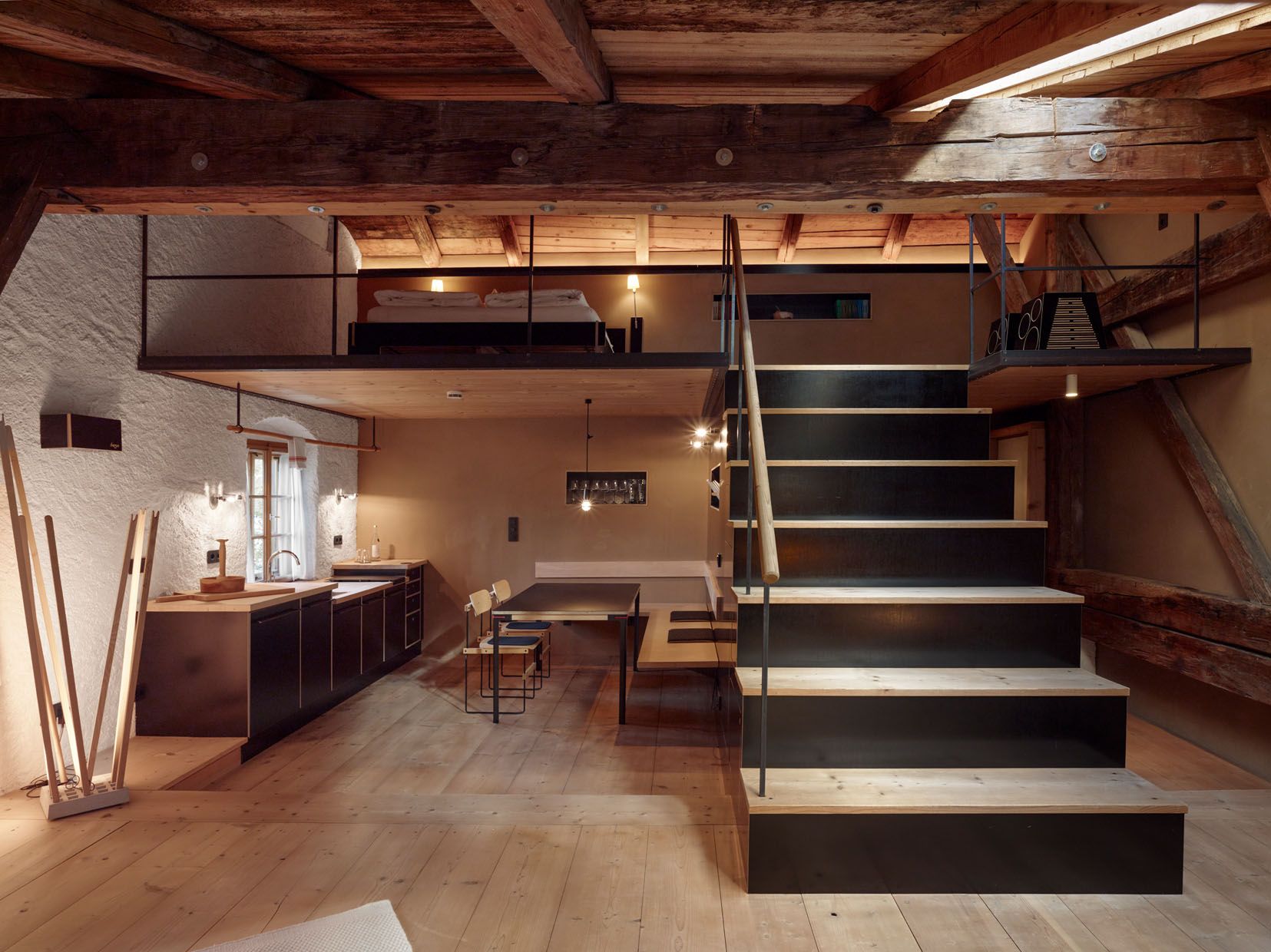
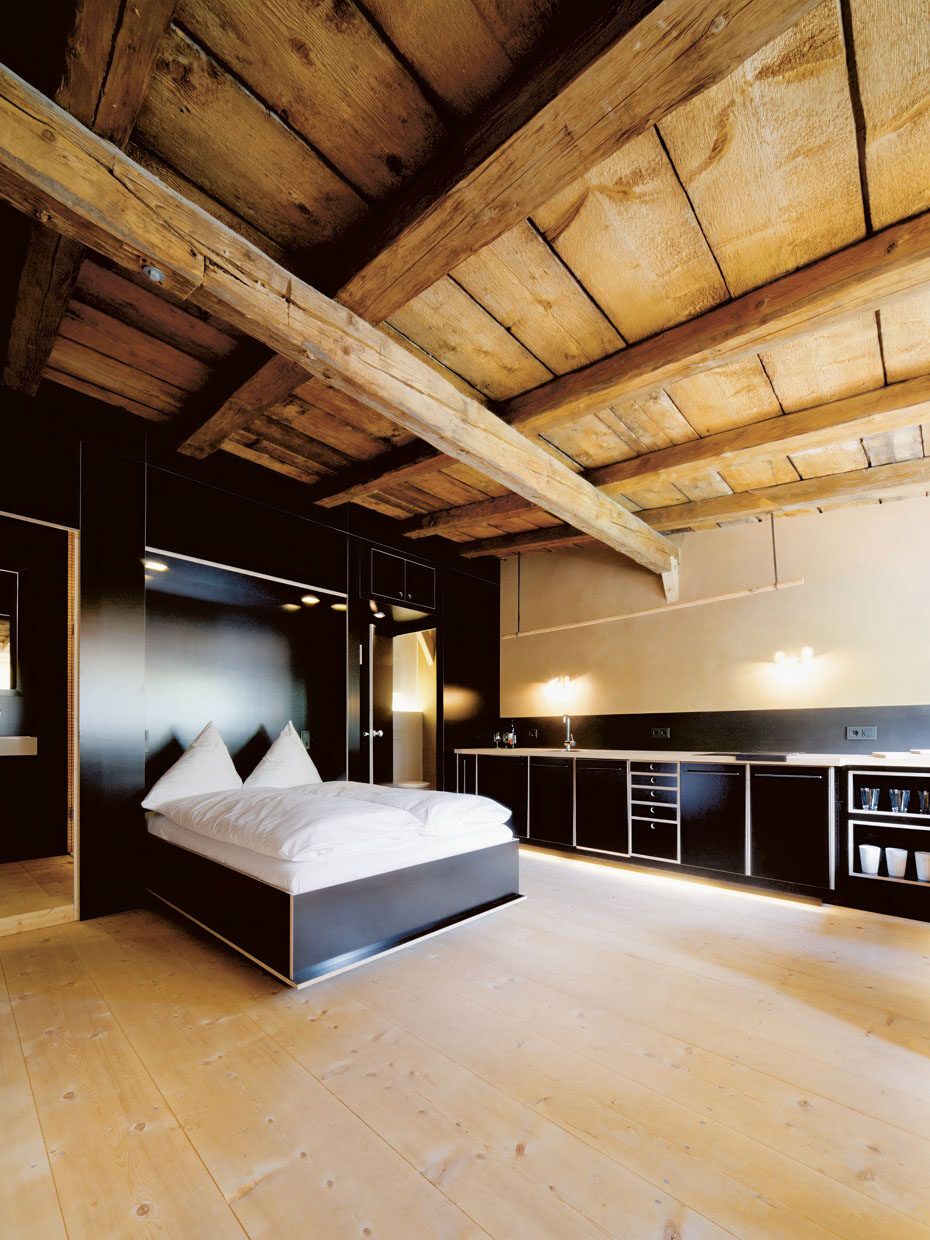
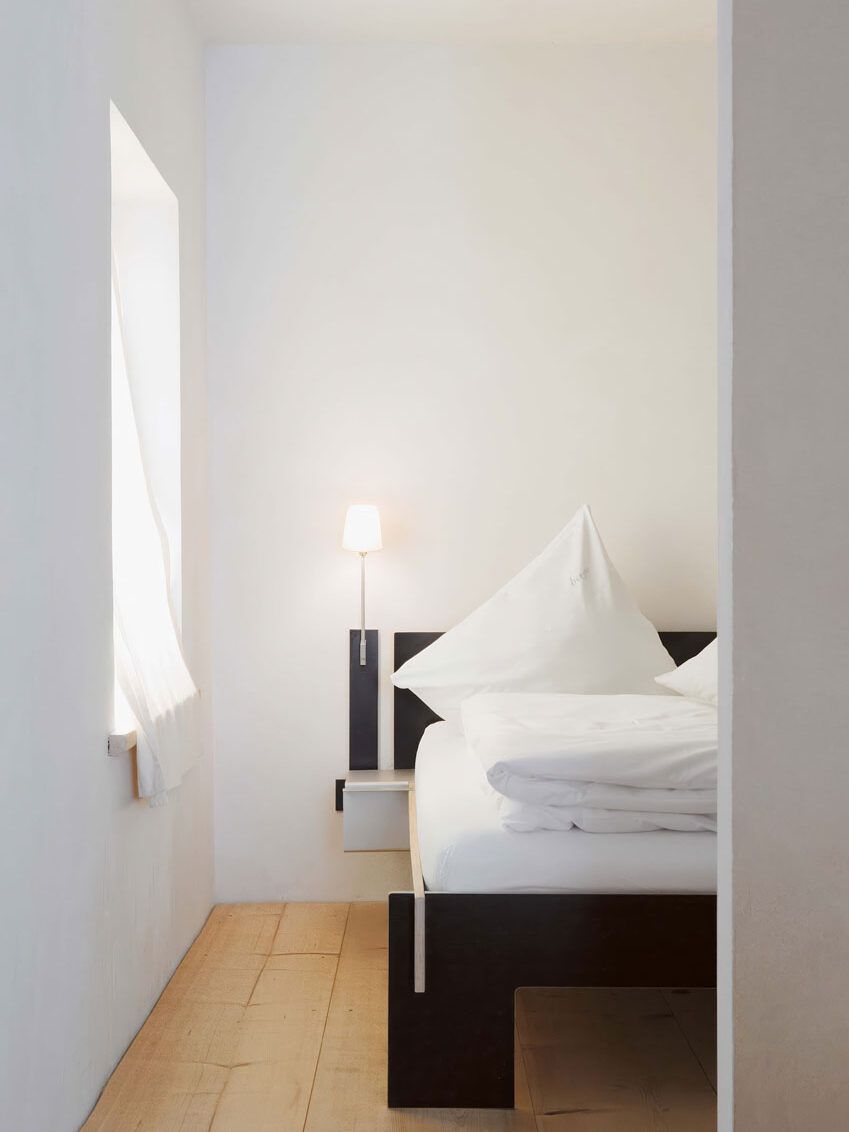
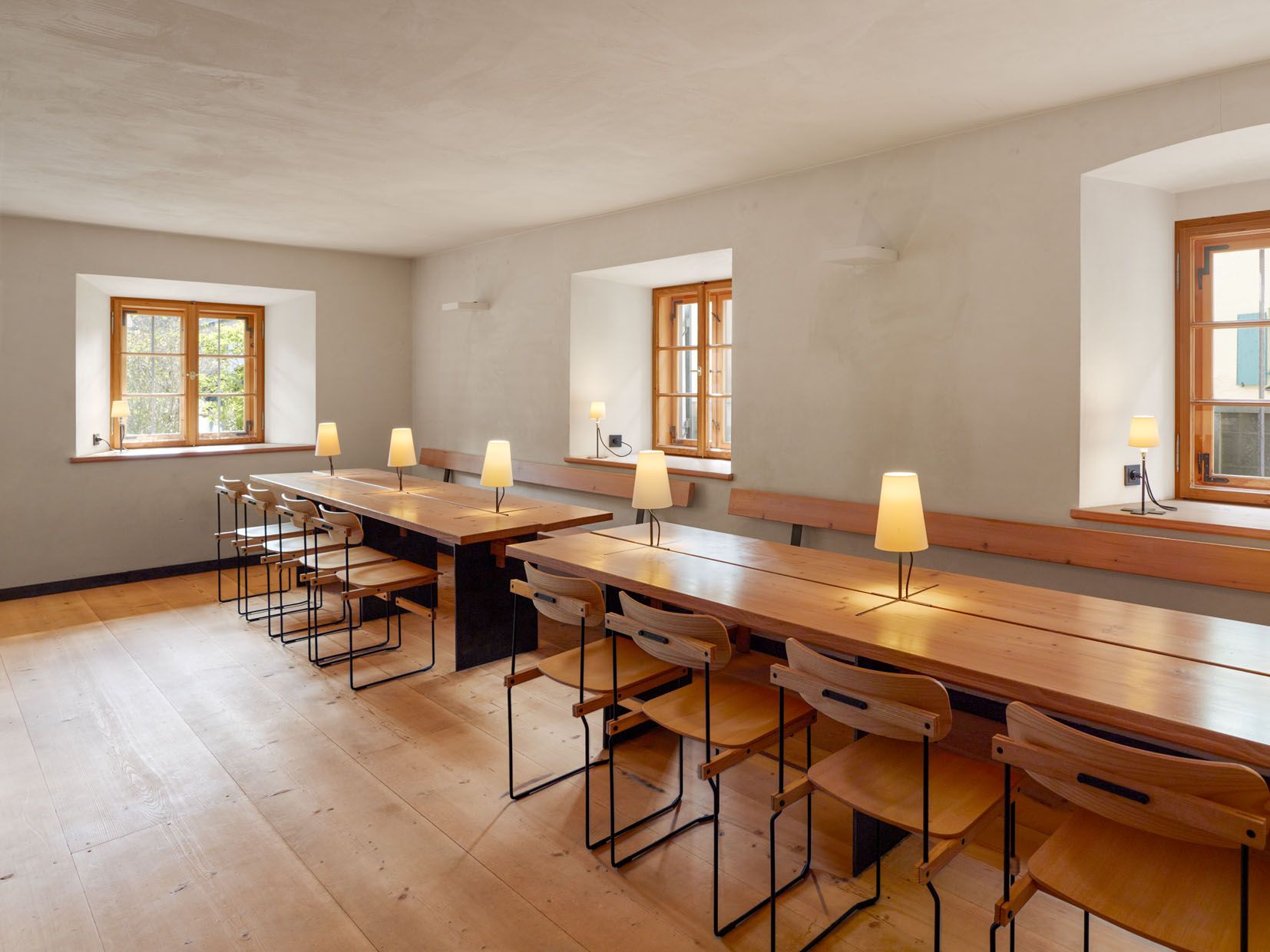
We think berge is an ideal house for groups. On the one hand, because it simply works well that way. And on the other, because you then inevitably get to see and understand all the rooms with their different interpretations.
Yes, absolutely. The large parlour downstairs is perfect for sitting together, cooking or working as a group. Remarkably, we have a lot of guests from Switzerland – they love this house. And many guests come from the greater Munich area. Strangely enough, they really do come out to the countryside for a few days, despite the relatively short distance.
Far enough away to create that holiday feeling, yet still easy to reach. Another question: how did you approach the whole subject of hospitality? Did you already have any experience in that field?
Well, let’s put it this way: as someone who is a great believer in consistency, it was important to me that the house should be genuinely challenging and, in a way, resist the conventional idea of a hotel. Personally, I’m usually touched by things that have rough edges and imperfections, because they force me into a kind of confrontation with them. When I converted berge, I knew absolutely nothing about the hotel industry – which is probably connected to the fact that I only stay in hotels when I can’t avoid it. I’m simply a die-hard camper. That has nothing to do with frugality – I just don’t like staying in hotels. I’m an extreme individualist and I need my freedom.
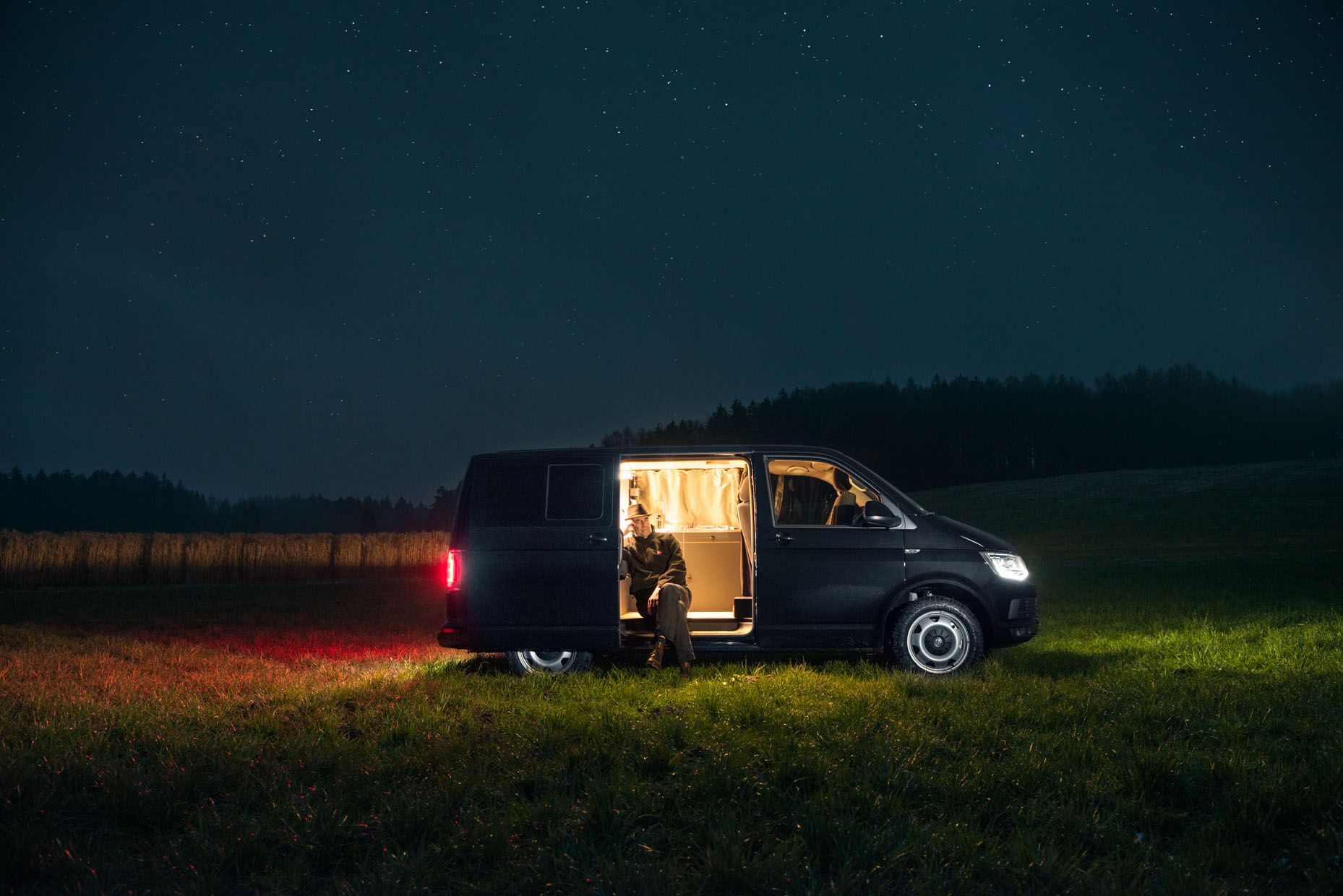
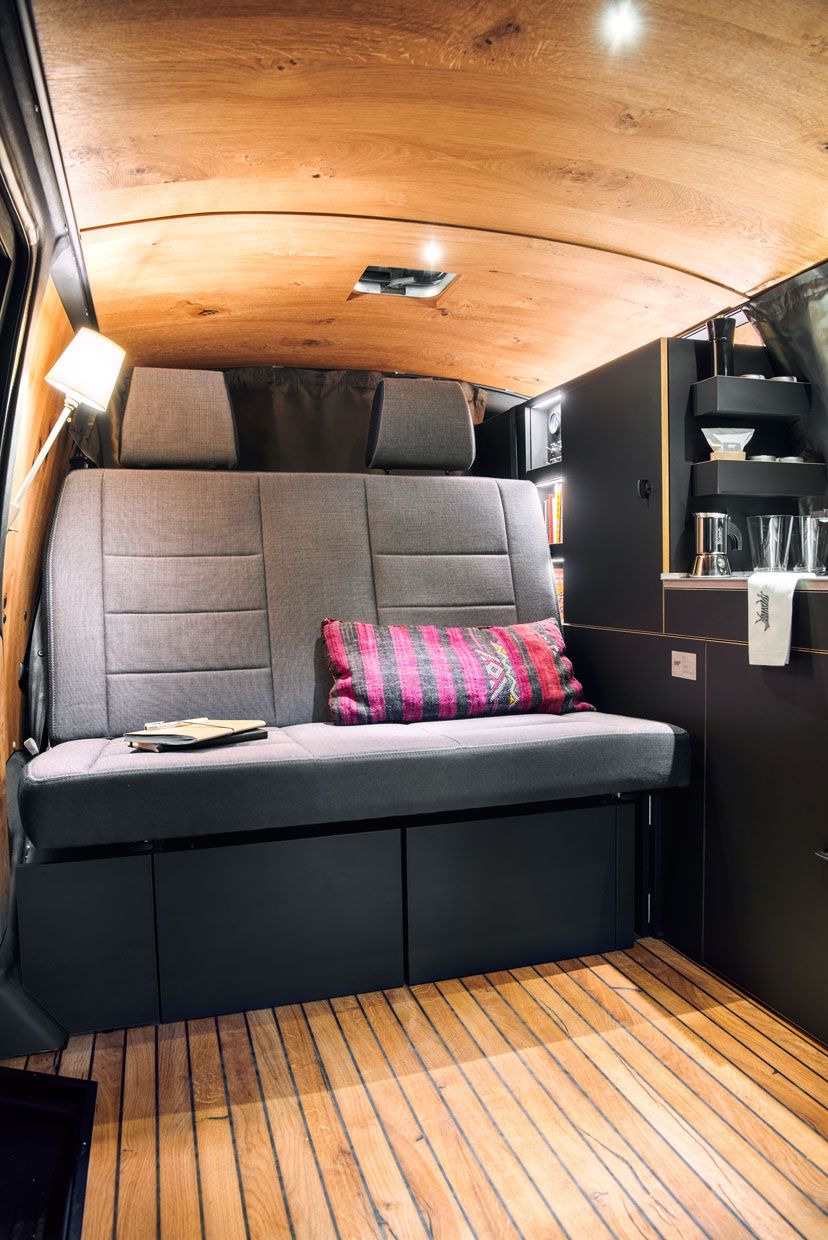
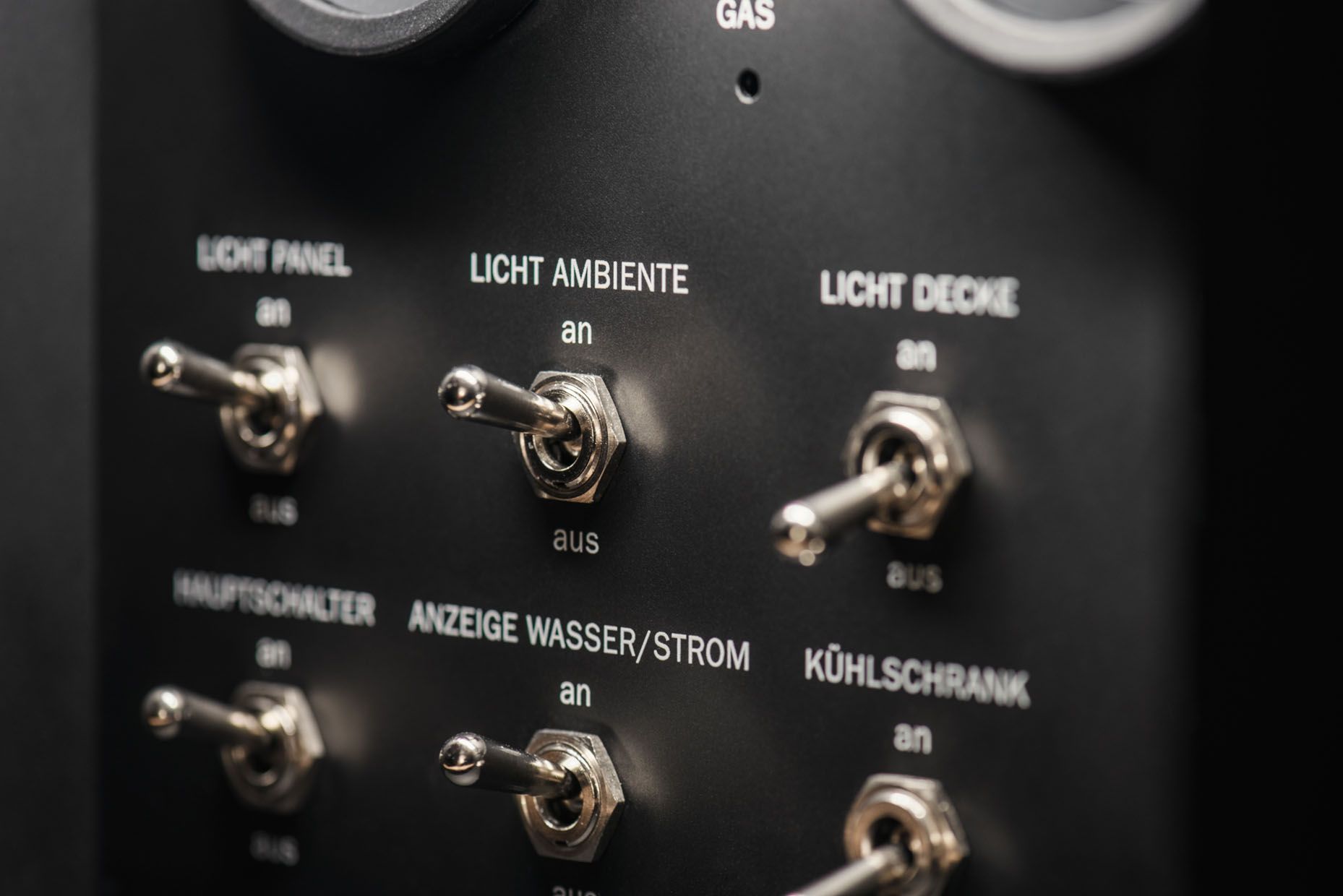
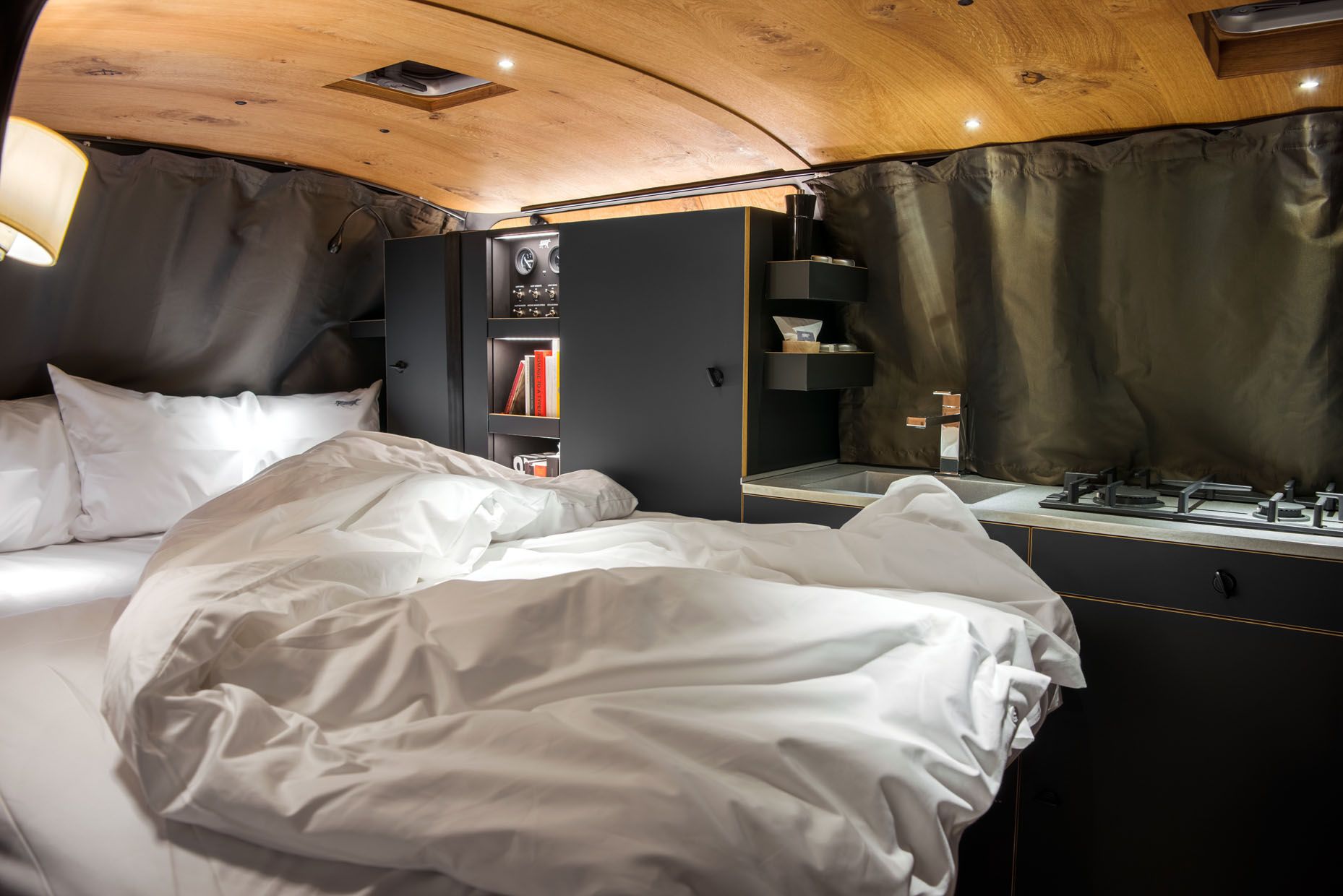
We remember! At one of our very first partner meetings, we were slightly irritated because you hadn’t booked a hotel room. When we asked you about it that evening, you simply looked at us and said: “Why? My car is parked outside.” Apparently, everyone in the industry already knew that about you – except us at the time.
Well, that was, after all, our first meeting in person! (laughs)
How do you look back on your company and on the design industry in general?
On the one hand, it was certainly strange to sell the company. On the other hand, I had no real difficulty letting go, because the industry has changed considerably in recent years. I still come from the classic era, when there were locally rooted retailers with a strong affinity for architecture and design who were much more than mere retailers. They were more like ambassadors, with enormous experience and knowledge – they were just as eccentric as we were. Enthusiastic, full of personality, and anything but simple product distributors. Unfortunately, there are fewer and fewer of them around because they can hardly withstand the ruthless competition any longer.
I really miss them, but right now it simply doesn’t seem to be the right moment. Perhaps it’s similar to what happens in other disciplines, such as architecture or art. They also go through phases that are unbearably dull. Everyone paints the same picture, everyone paints it expressively, perhaps a little more pointedly than before – but nothing actually happens. And then, at some point, someone comes along and triggers a small revolution. Something genuinely new always has to emerge again: a new longing, something even the scene itself doesn’t fully understand yet. These periods come and go, and they will return, because we all cherish our individuality and personal expression.
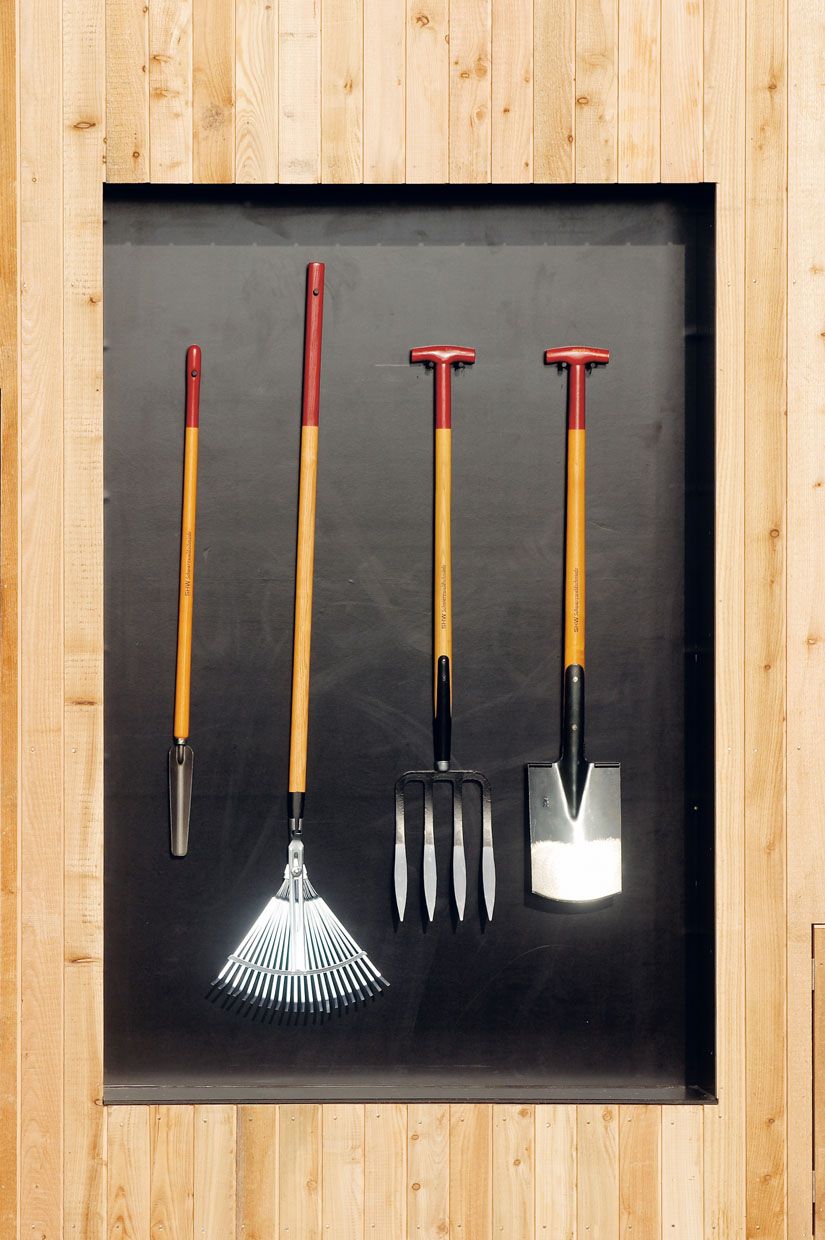
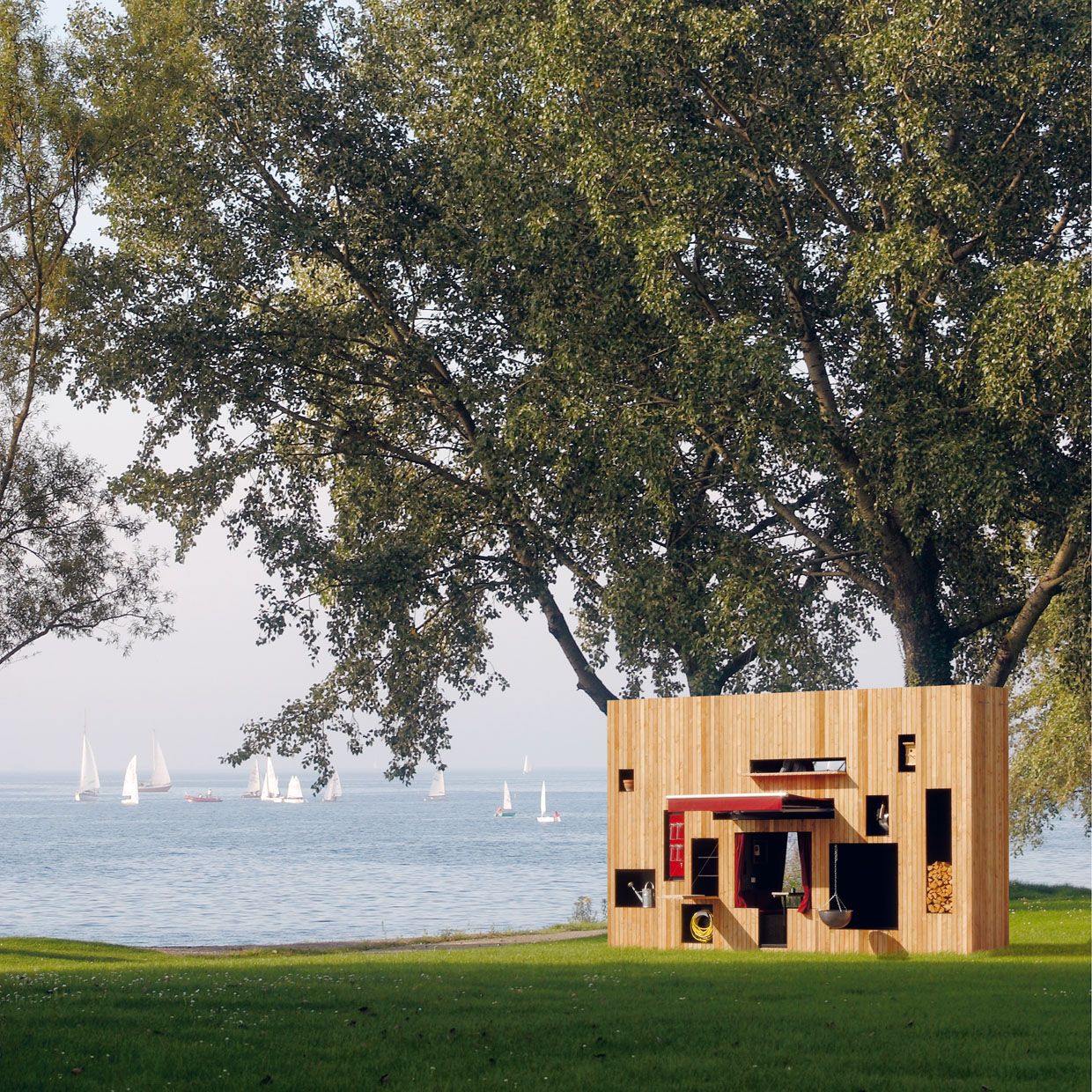
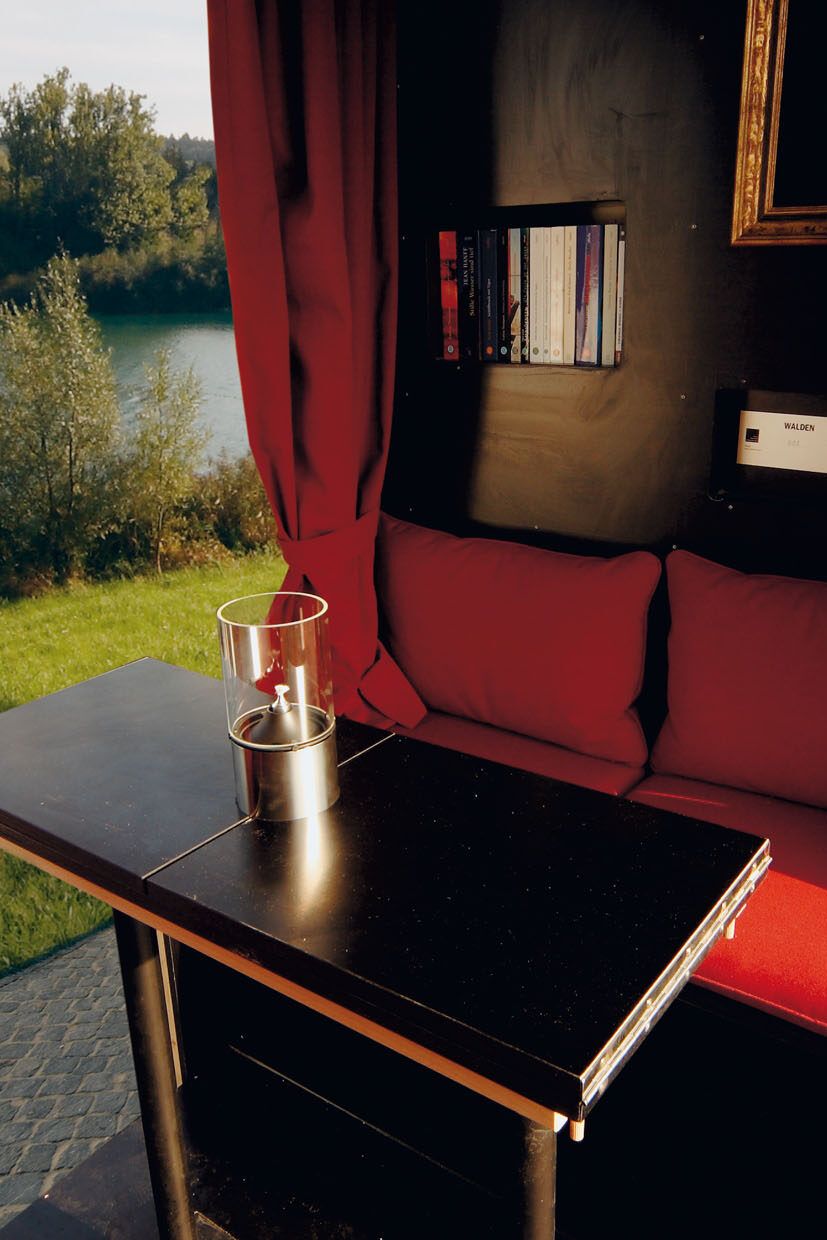
At the time, I felt those new impulses were missing from the market – the cheekiness and rebellious spirit, the courage to experiment. Towards the end, what increasingly bothered me personally was the fact that the company automatically had to keep growing and I never really knew how to control that. My guiding principle was: we want to grow like crazy, but in terms of content. I would much rather have remained small and distinctive, penetrating the market in a different way. But that became increasingly difficult, and at the same time the company became more and more impersonal to me as it grew larger.
When selling the company, the most important thing for me was that the buyers should not be investors purely driven by profit maximisation. Thankfully, we eventually found a brother-and-sister team who genuinely want to run the company themselves. That impressed me.
Although, for me, that chapter is truly closed. I’m hardly in contact with them anymore. And almost none of my former employees are still with the company either.
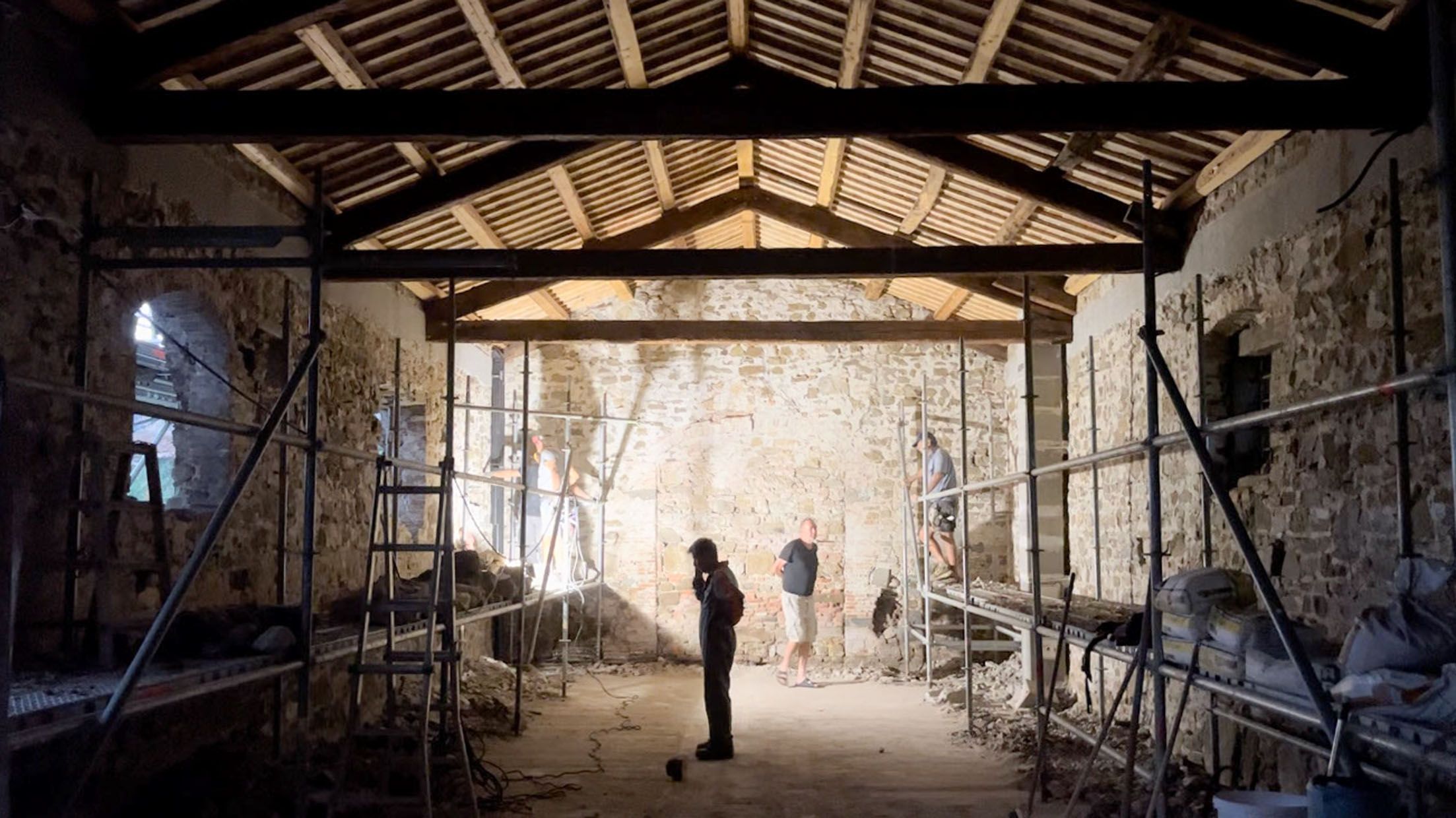
In the meantime, you’ve renovated a house in Italy. Will that also be rented out?
That’s right. And before you know it, four years have passed and it’s already finished (laughs). During the renovation process, however, we decided that our house in Friuli would remain entirely private. Even for visitors, we only created what we call a “guest-toleration area” – accommodation that is just about acceptable to impose on our guests – meaning: the ideal guest should feel comfortable, but after one or two days should naturally feel inclined to leave again.
So you spend roughly half the year there and half the year in Aschau?
Yes, exactly. The distance is less than 400 kilometres, which is perfect. You don’t need to fly and you can decide very spontaneously.
If you were starting all over again today, what would you do differently in retrospect?
Nothing. Life can’t really be planned. There may be people fortunate enough to stumble relatively early upon what they are truly good at or what genuinely moves them. But I think they are the exception. That’s why we all end up going to career counselling.
What I know about myself today is that creativity is what triggers me. Even as a child, I would drift off into my own thoughts, looking at tree bark and wondering: “Why is this one so rugged and coarse, while the other is wonderfully smooth and shimmering?”
But until I was 28 or 29, I had absolutely no idea that I had that in me. So in that sense, it was an enormous stroke of luck to be able to do what I did. And an immense freedom that the timing in my life happened to be exactly right for it.
Of course, being an autodidact is incredibly exhausting, and you need an awful lot of luck to run into serious trouble with the banks early enough to learn only to spend what you genuinely have and not become too dependent.
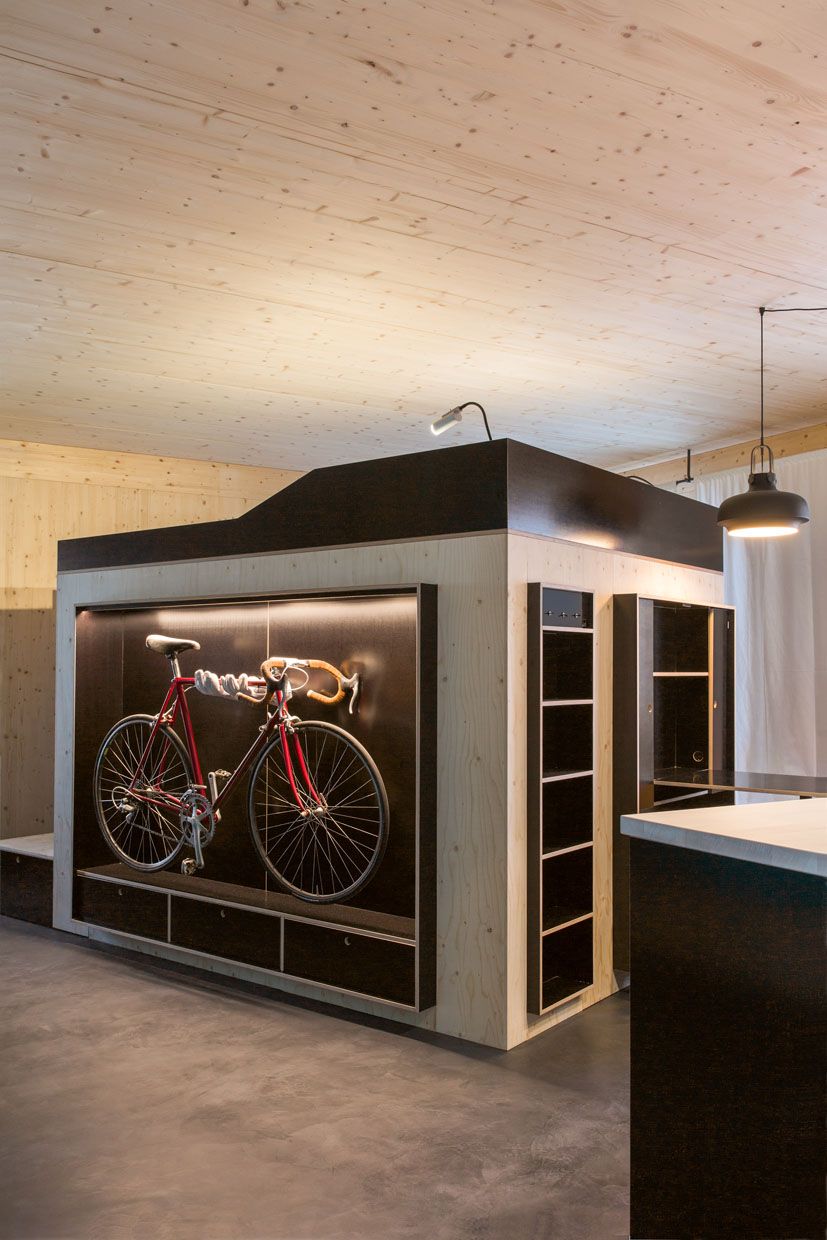
But in the end, it all worked out. And then, at my advanced age, I was even able to accept a visiting professorship in Kassel. Naturally, my inaugural lecture was titled in the most classic fashion possible: “Design education: none”. I not only liked that title, it actually summed things up perfectly. After all, there are very few professions in which you can become a professor without a subject-specific academic education, and it describes my path quite accurately.
Ultimately, though, it’s very simple: you can do whatever you want, as long as it feels genuinely right for you. Whether I’m a rural postman who is extremely happy because I get to walk the same route every day, or a daredevil working in design and equally fulfilled there – as long as it has meaning, it’s great.
Apart from the courage to simply set off on your own path: what, in your opinion, helps people become successful?
One thing is to keep your sense of humour, no matter what the times are like. Humour creates freedom, and it also brings people together.
And then, around 25 years ago – probably a typical autodidact’s move – I wrote down 20 guiding principles for myself. Later, they were whittled down to ten. And now, in later life, over the past few years, I’ve reduced them to just three. They’re completely banal, but they work for me:
consistency, transparency, integrity.
Do everything you do properly, or don’t do it at all. Half-hearted things have always gone badly wrong for me.
The same applies to transparency: be as open as possible with your manufacturers, your staff and your customers. Everyone should know as much as possible: why, how, where from, at what price. There are no great mysteries. Transparency turns other people into partners and conveys appreciation.
And the third mantra comes directly from everyday life: integrity. Do things you can genuinely stand behind. Instead of making dubious deals and focusing purely on profit maximisation. That simply isn’t right.
If you’re not brutally honest about these things, everything eventually turns into a marketing show. And that brings neither you nor your customers and partners any joy. But if you take these principles seriously, then you achieve the greatest thing possible: meeting each other on equal footing.
But you haven’t retired, have you?
No, that’s impossible. Creative people are never retired.
As always, it’s been a great pleasure talking to you. Until next time!
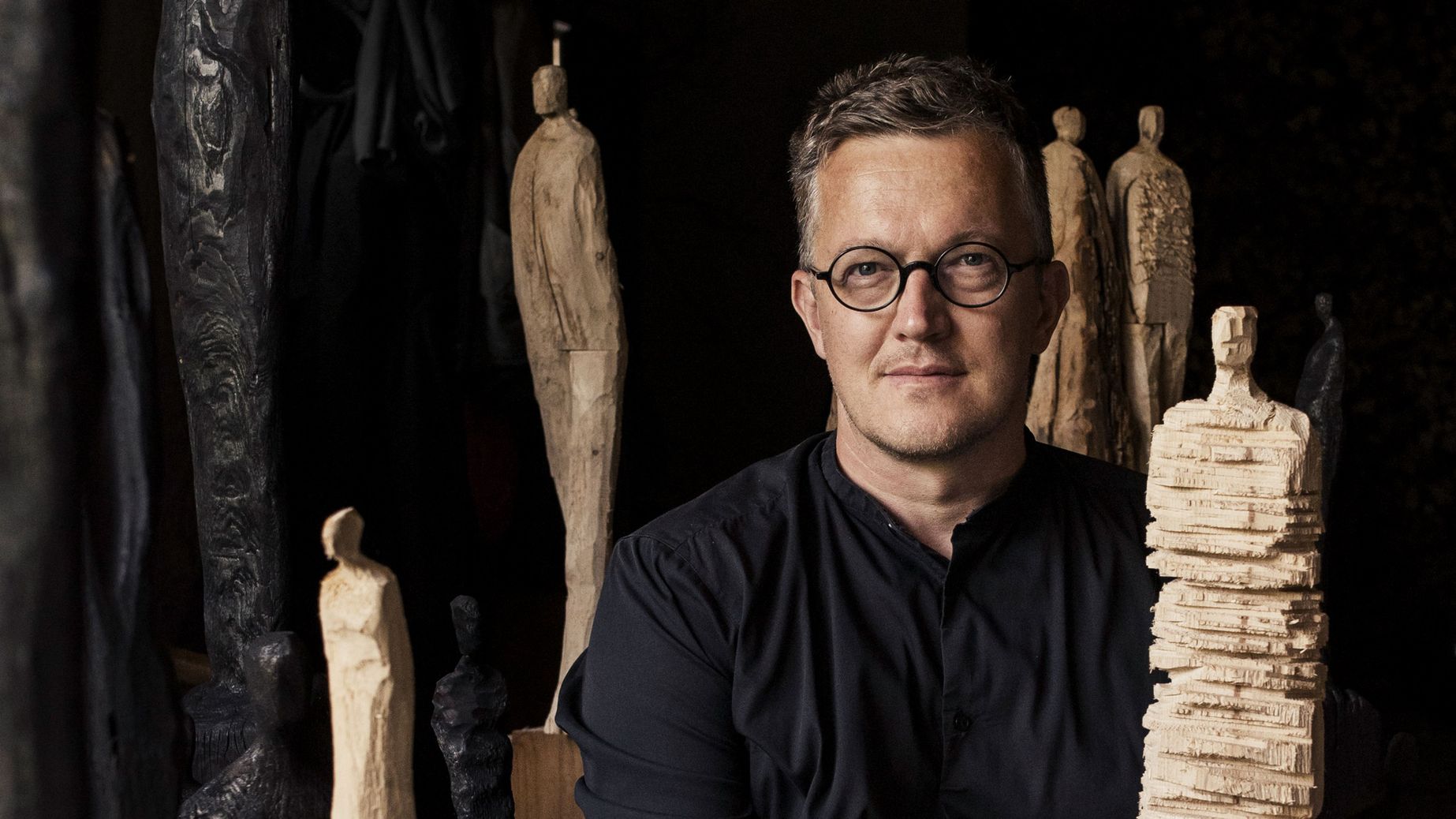
According to the German newspaper Die Welt, Nils Holger Moormann is like his furniture, and his furniture is like him – intelligent, ascetic, humorous and clever. As an autodidact, career changer and free spirit, Nils Holger Moormann has been developing furniture with a reduced design vocabulary and precise detailing solutions since 1982. In 2020, he placed both his company and the guesthouse berge into new hands and has since remained curious about new ventures under the label Nils Holger Moormann Art Direction. He continues to share his great passion for good design through numerous jury appointments, as a mentor to emerging designers, and as a visiting professor at the Kunsthochschule Kassel.
Interview: The interview was conducted by Jan Hamer and Ulrich Stefan Knoll.
Photos: Nils Holger Moormann © Silke Moormann (Cover photo), berge © Stefan Josef Müller (1–4) © Jäger & Jäger (5/6), Abgemahnt © Nils Holger Moormann Möbel GmbH. Photo: Julia Rotter (7), Vorstand © Nils Holger Moormann Möbel GmbH (8), Seiltänzer © Nils Holger Moormann Möbel GmbH (9), Kampenwand © Nils Holger Moormann Möbel GmbH. Photo: Jäger & Jäger (10), Bookinist © Nils Holger Moormann Möbel GmbH (11), berge, historic view © Nils Holger Moormann Private archive (12/13/15), berge © Stefan Josef Müller (14/16/17/19, 20–25, 28), berge © Julia Rotter (18), berge © Jäger & Jäger (26) © We Make Them Wonder (27), Custombus © Nils Holger Moormann Art Direction. Photos: We Make Them Wonder (29–32), Walden © Nils Holger Moormann Art Direction. Photos: Jäger & Jäger (33–36), Private project Friaul © Nils Holger Moormann Private archive (37), Kammerspiel © Nils Holger Moormann Art Direction. Photo: Julia Rotter (38)
0 Comments