
Route 6 — on the road in the Alps
The renowned South Tyrolean architect Werner Tscholl designed six architectural sculptures for the high alpine Timmelsjoch Experience between Italy and Austria. “On the road” to the dreamlike and spectacular route of the six special shapes.
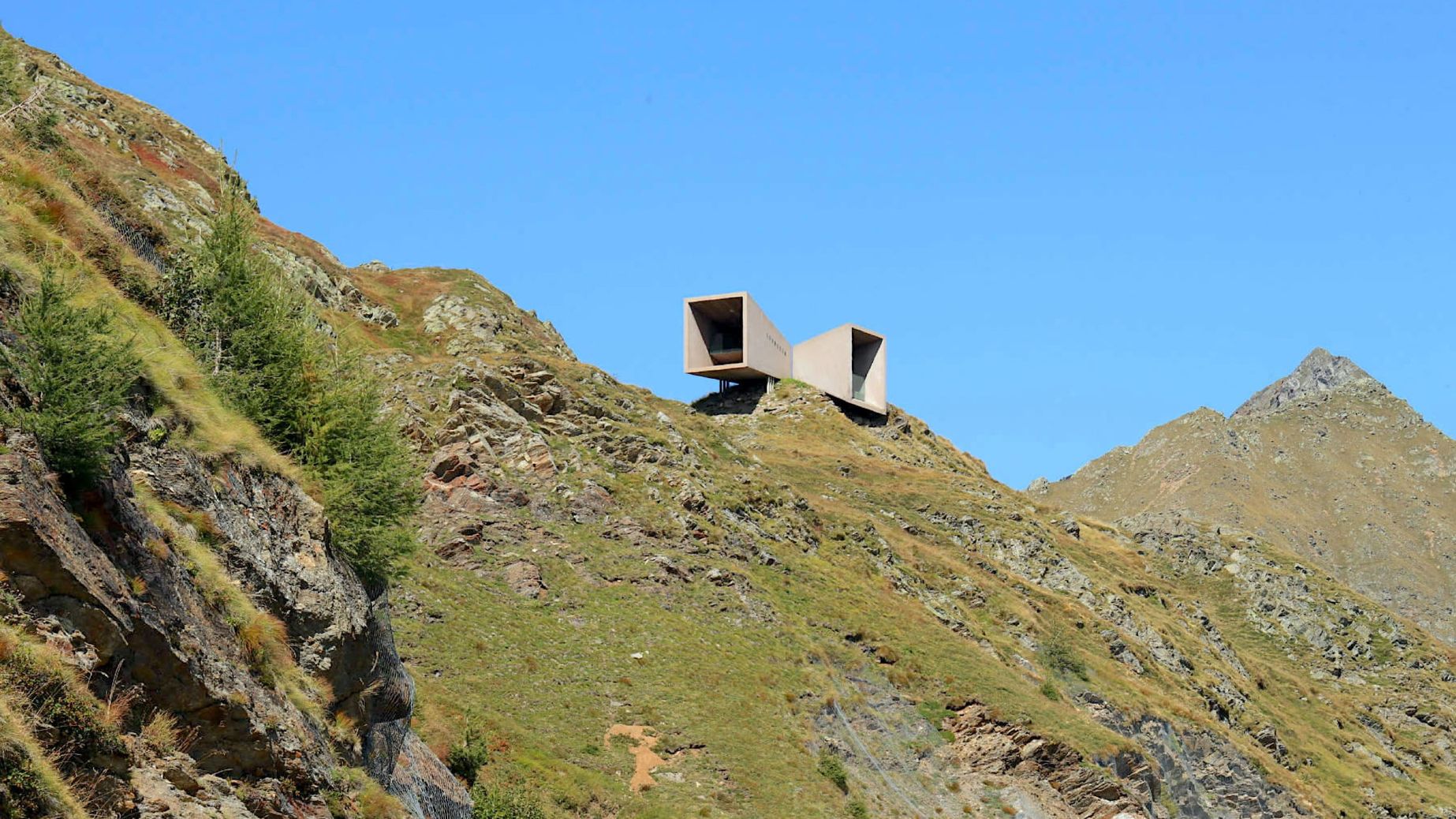
The Timmelsjoch Road is one of the most beautiful pass roads in the Alps and connects the Austrian province of Tyrol with the Italian province of South Tyrol. At an altitude of 2,500 metres, it is Austria’s highest road border crossing. The ancient path has always represented an intertwining of the regions, with the Timmelsjoch as the gateway to the south. Before the pass became a cultural experience, it took visionaries and pioneers on both sides, as well as the skills of clever road engineers and architectural designers to create the Timmelsjoch Experience in its present form. The result is a high alpine road somewhere between a dream and a transit route, between cascading hairpin bends and masterful architecture against a majestic mountain backdrop.
Along the approximately 30-kilometre-long pass road, six architectural sculptures were erected in 2011 and 2018 at particularly significant locations in keeping with the landscape. They frame it, emphasise the terrain, are striking landmarks and create a balance between visibility and modesty, between architecture and the experience of nature.
Werner Tscholl is an Italian architect from South Tyrol. He founded his office in Morter in Vinschgau in 1993. He gained international fame through his projects for private residences in South Tyrol. He also attracted attention with conversions of historical buildings such as Sigmundskron Castle near Bolzano and commercial buildings such as the Tramin Winery.
The tour to the Timmelsjoch was part of our multi-part road trip to modern Alpine architecture in Italy and Austria with the High Alpine Road as the ideal link between the two worlds. The word Timmel has been traced back to the old Rhaeto-Romanic word tombl and denoted a hill. The pass was mentioned in documents in the 13th century as Thymels and was built as a mule track – too narrow or too steep for or carts or teams, but no problem for mules or donkeys. In Italian, the crossing is called Passo del Rombo and means “Pass of Thunder”. Plans for the construction of a road over the Timmelsjoch had existed on the Austrian side since 1945, and the road link between the two countries was opened with its completion in 1968. The road, which is subject to tolls and closed to trucks, is open from 7 a.m. to 8 p.m. from June to October, depending on the weather conditions.
The route of the six shapes
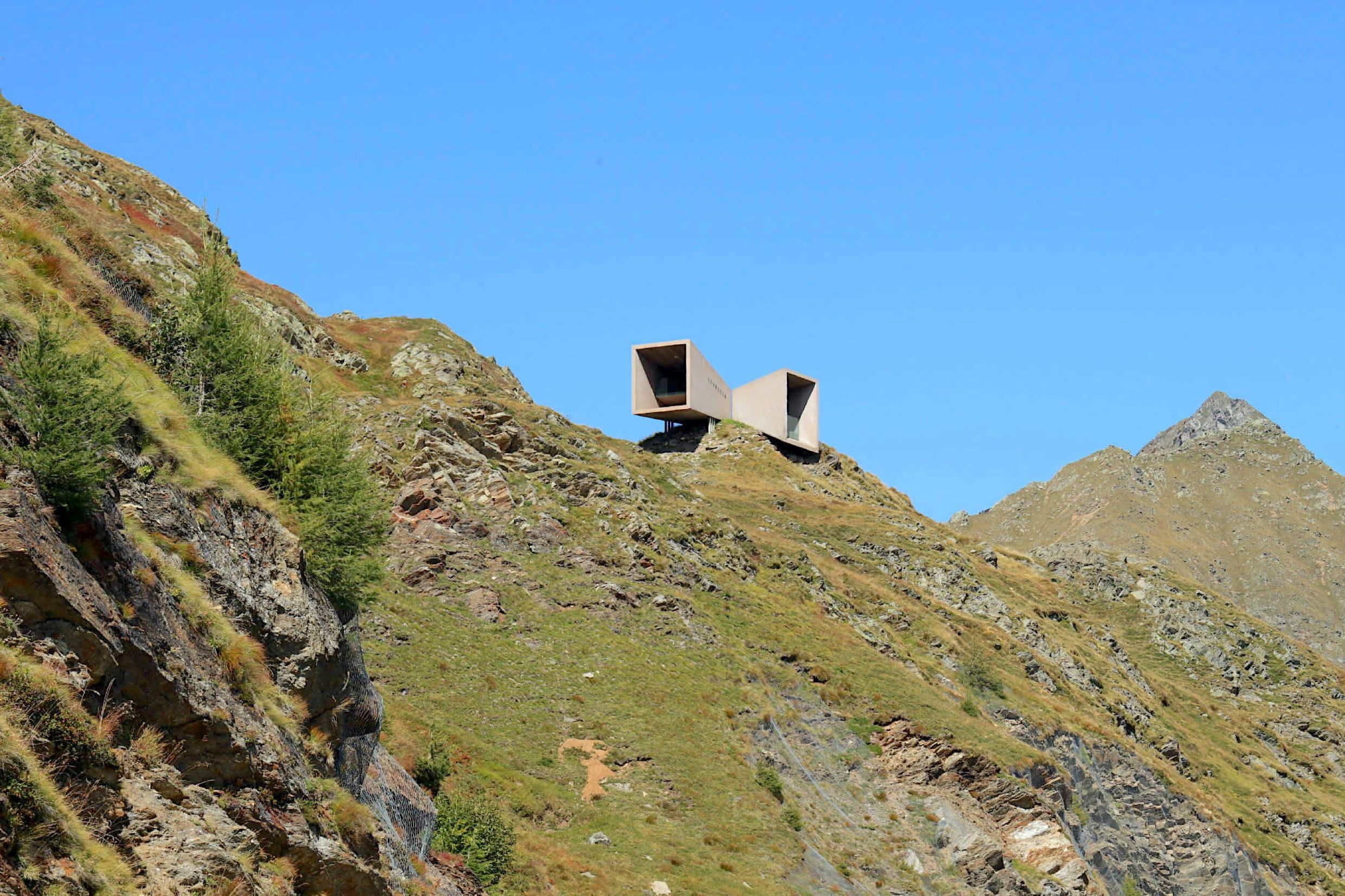
In order to give the High Alpine Road a new image after forty years of existence, the South Tyrolean provincial government commissioned Tscholl and engineer Siegfried Pohl to develop a master plan for the design. The result is walk-through sculptures and buildings that provide information about the region’s nature, history, culture, society and economy. Five were completed in 2011 and the sixth was added in 2018. Tscholl’s sculptures are minimalist and monolithic. They are self-confident and at the same time appear reverent and humble before the omnipotence of the mountains. The concrete of the structures, which is mixed with colour pigments, is raw and the colouring refers to the respective rock at the various locations.
Garnet, Telescope, Transit, Passmuseum, Smuggler and Walkway
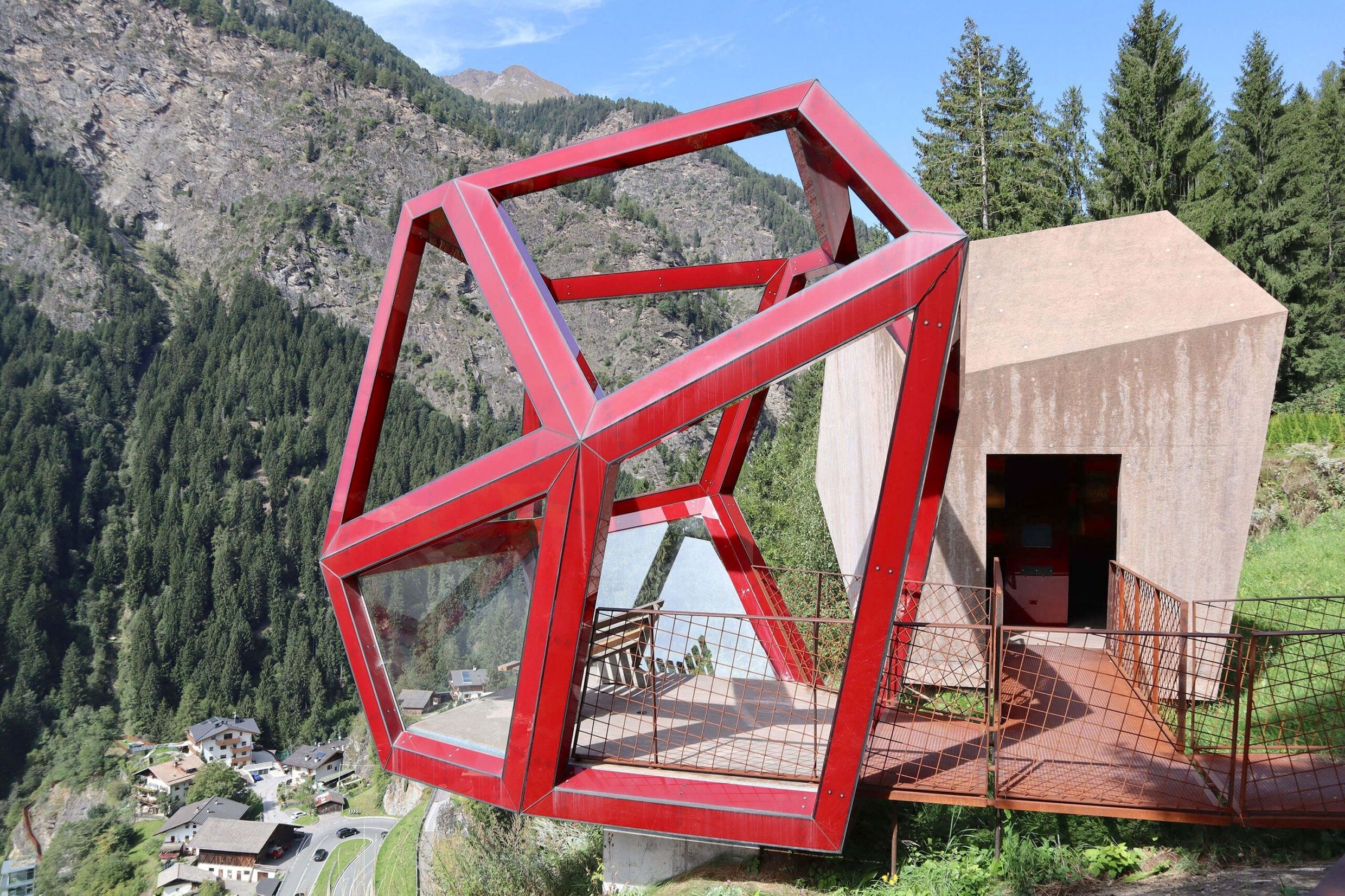
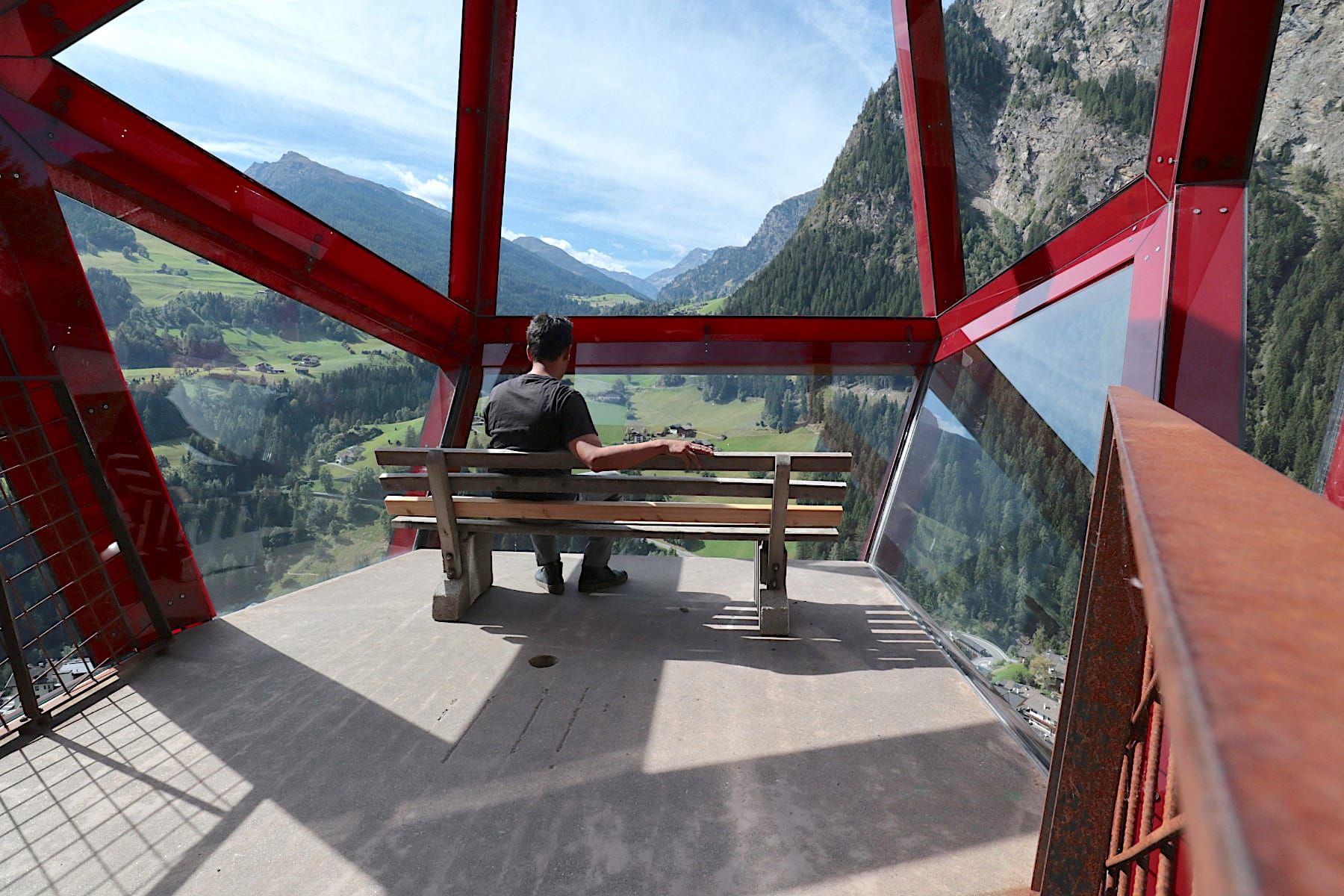
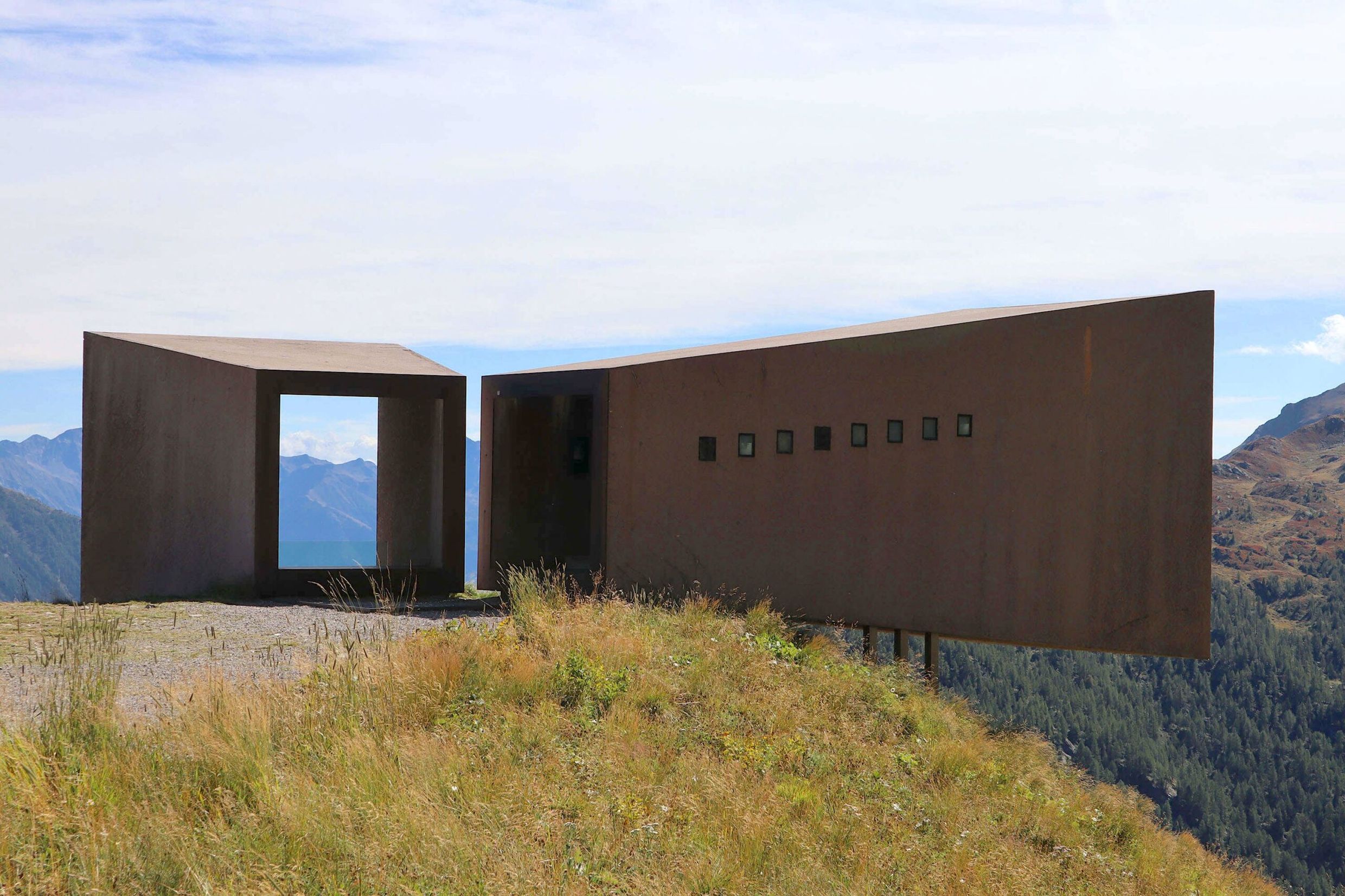
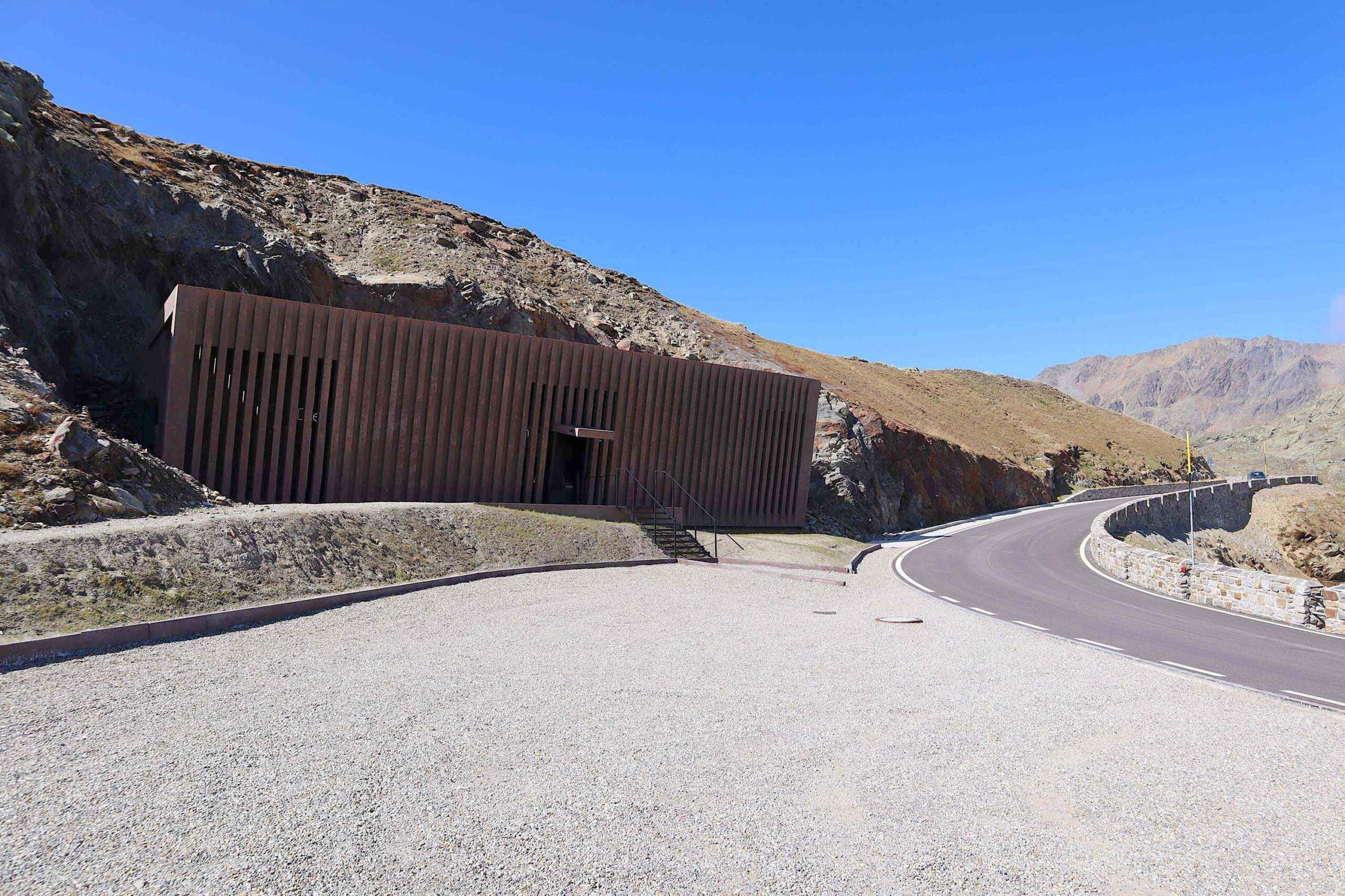
Coming from Merano, South Tyrol, we stop at the first station: “Granat” in Moos in the Passeier Valley. The two structures are modelled on the rock formations of the mountains. The open form serves as a platform and offers a spectacular view of the village of Moos and the valley. The closed pavilion is an information space on the vegetation and culture of the area. The “Fernrohr” is about 16 km away and is located above the road. Two large, walk-through tubes direct the view to the dramatic mountain panorama with the three-thousand-metre peaks Hoher First and Granatkogel. The third station on the Italian side is the “Transit”. The barracks, built in 1930, are now a museum. The old building looks as if it has been dug into the rock and has been repaired with few modifications for its new function. The cool, clammy interior gives a good impression of the mammoth task at the time with pictures of road construction with interviews with contemporary witnesses. “Transit” was inaugurated in 2018 to mark the road’s 50th anniversary.
Sculptured statements and the Crosspoint
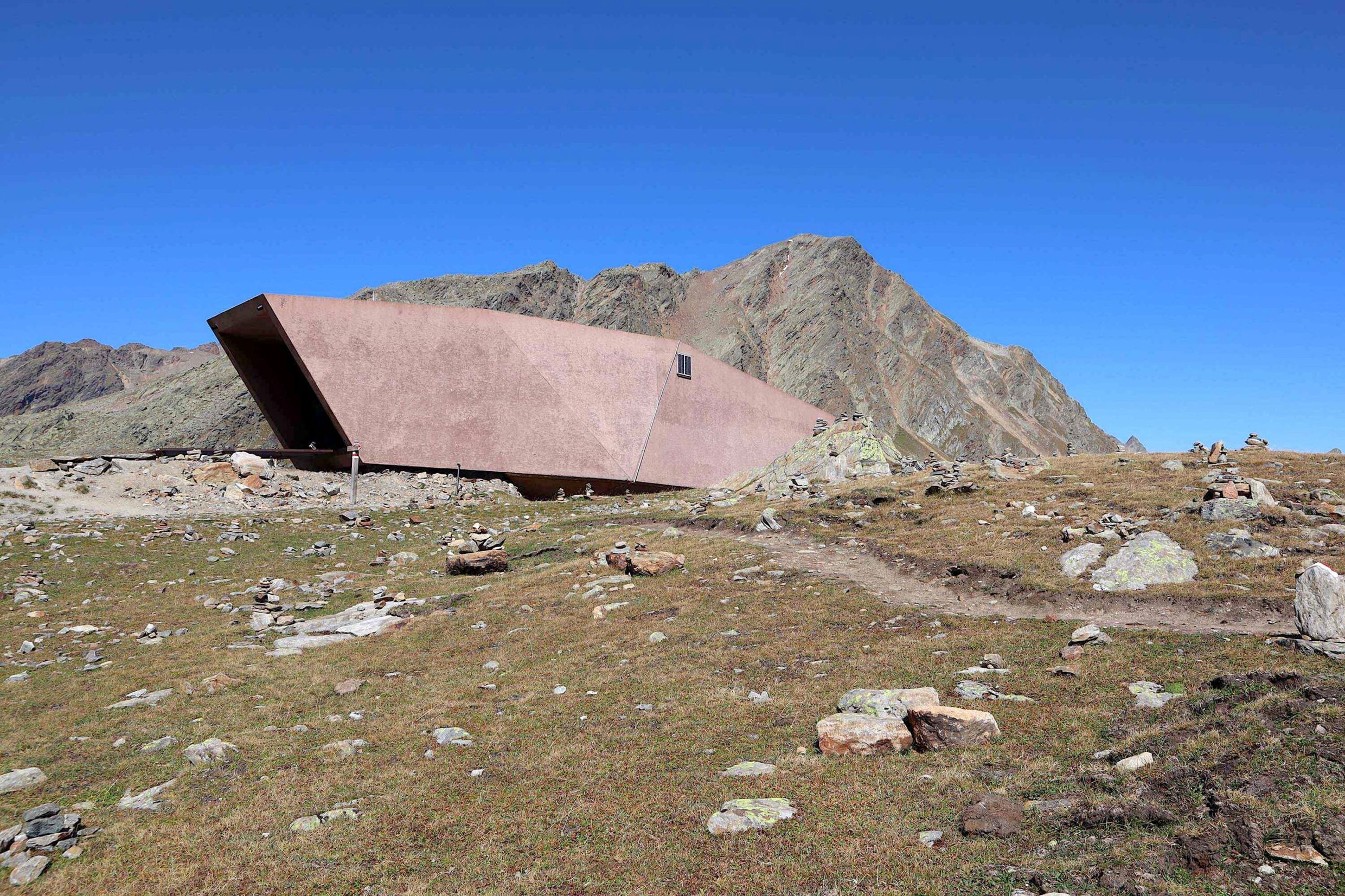
The route from here to Austria is short: the “Passmuseum” stands at 2,509 metres directly on the national border and is the fourth stop. Just like “Transit”, the Passmuseum also shows the history of the Timmelsjoch road. There are also archaeological finds. Like a recumbent menhir, it juts out over the edge of the rock and points in the direction of South Tyrol. A bold sculptured statement with a lot of symbolism.
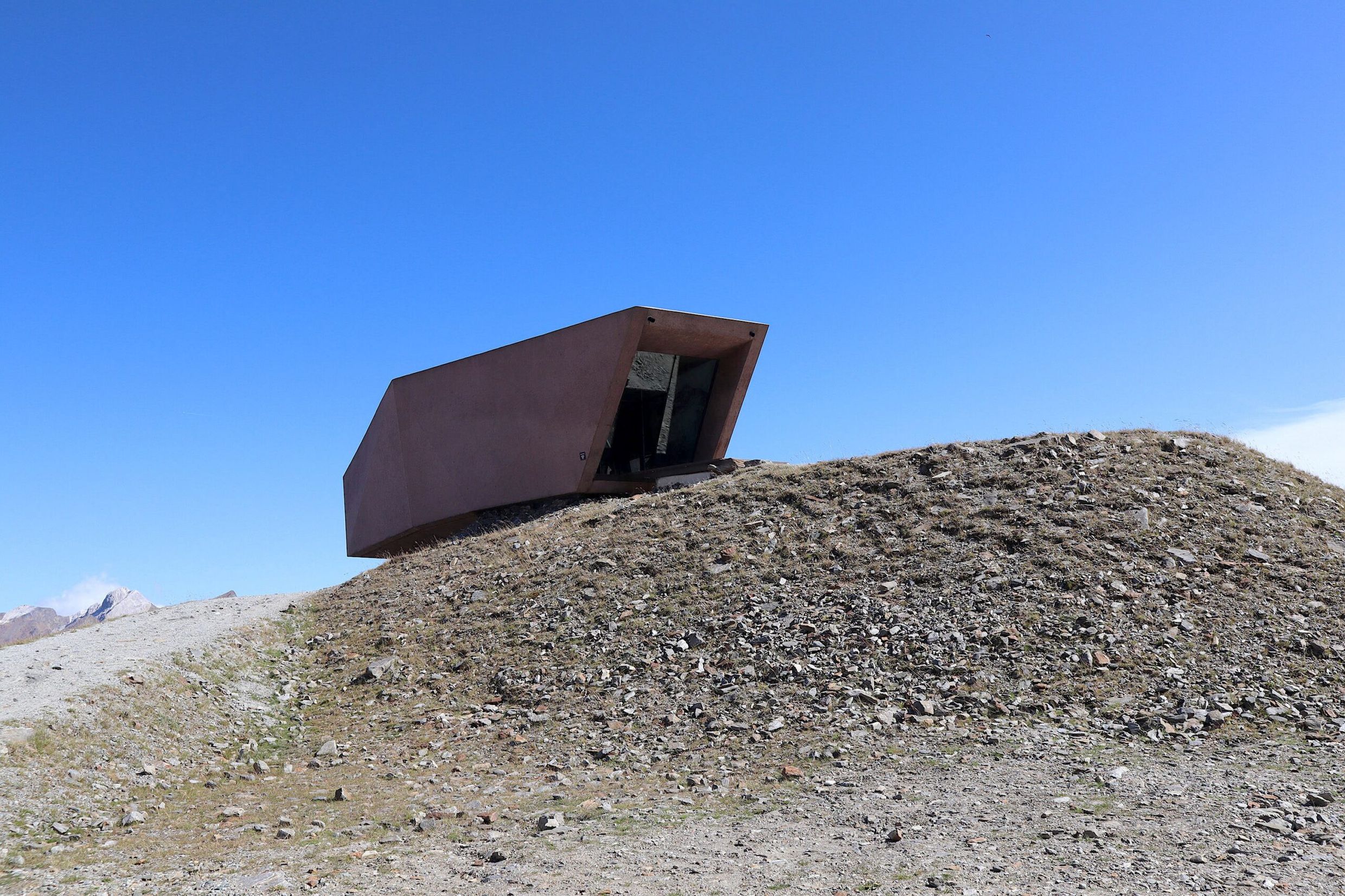
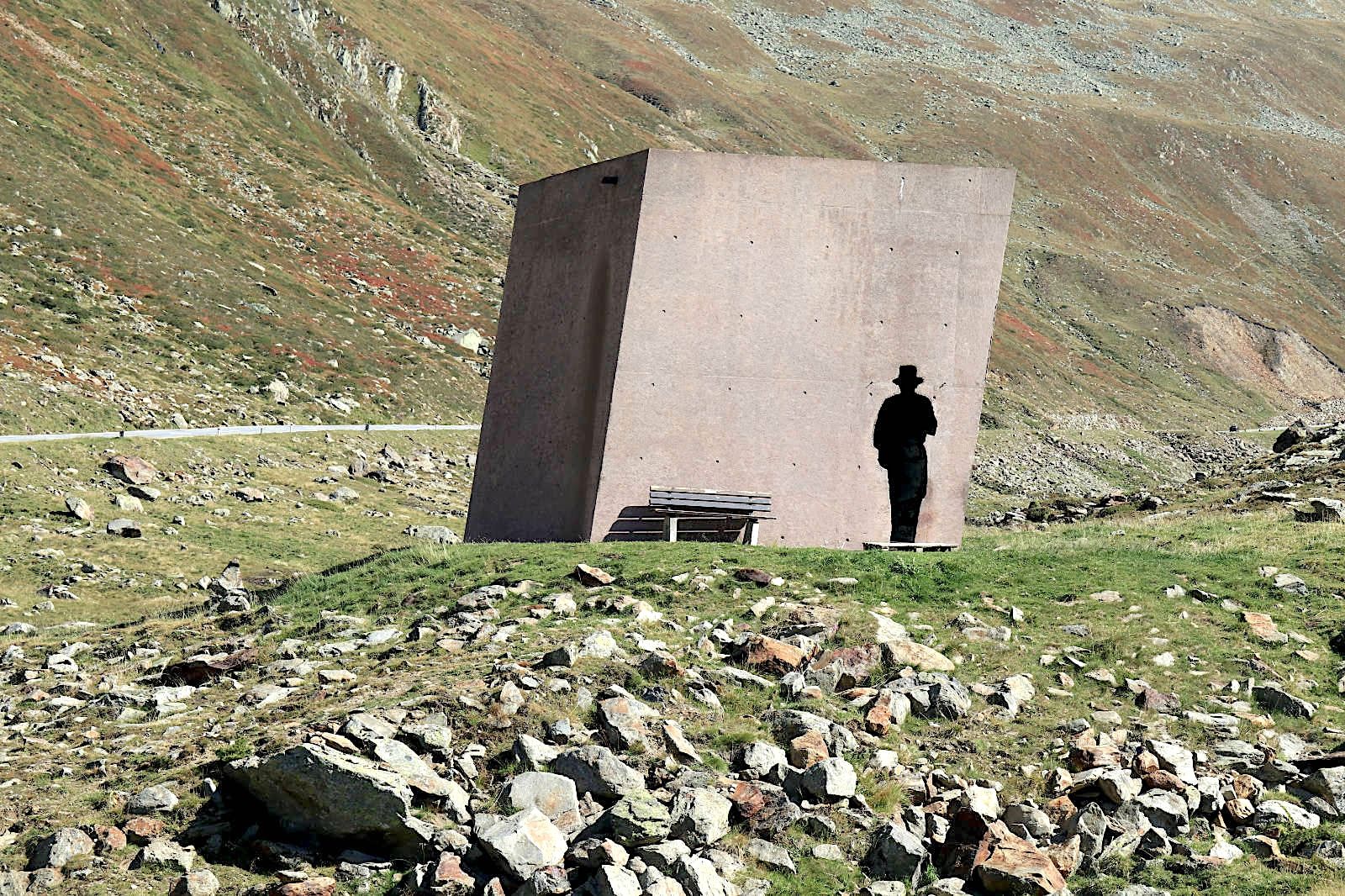
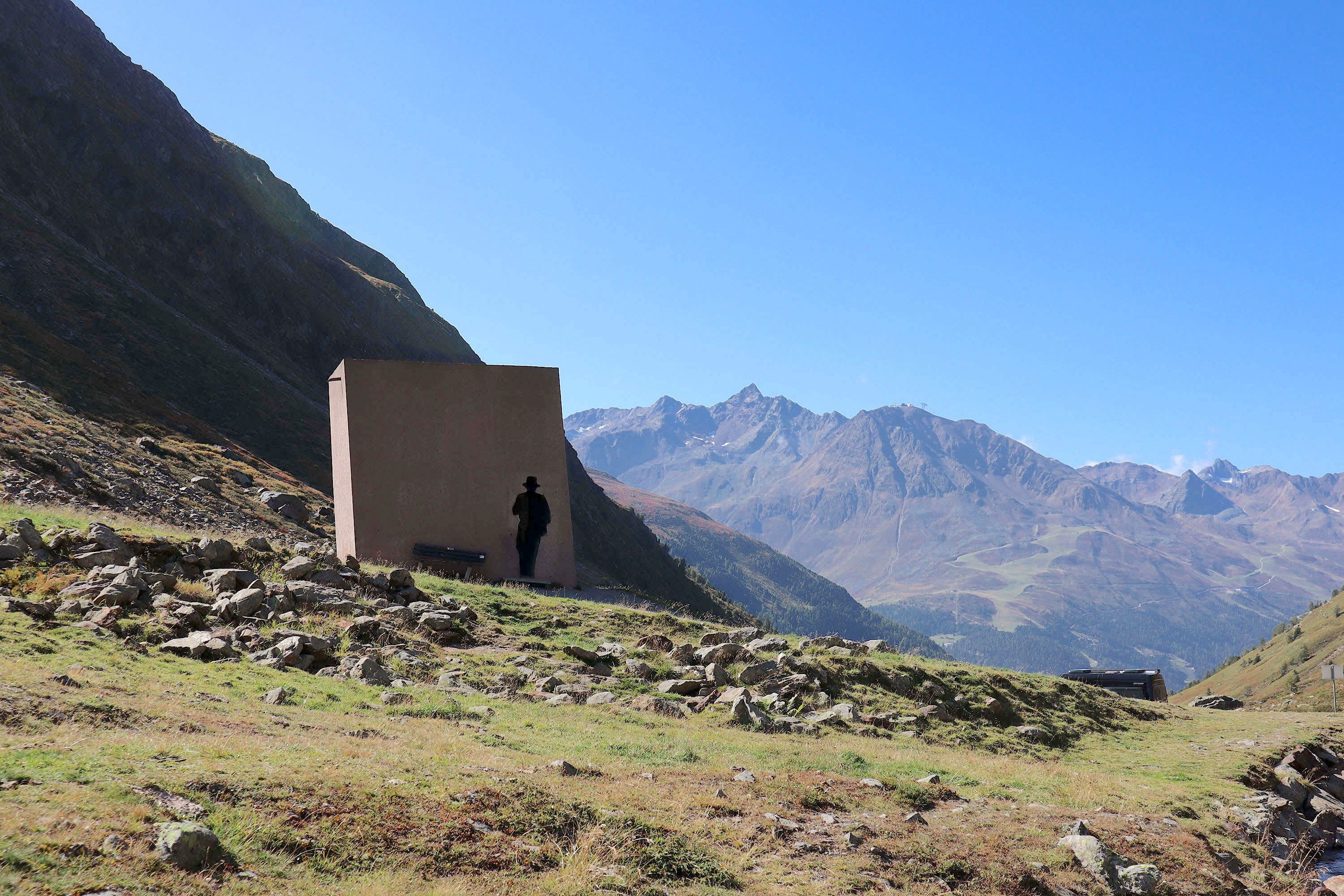
The two other sculptures on the Austrian side are the “Schmuggler” and the “Steg”. The former is a walk-in concrete cube with an entrance in the shape of a human figure. Here, the story of smuggling is told and with it the legends about the famous Ötztal Kraxenträger. These porters transported 100 kilograms each way and with their skills they established an aspect of modern alpinism. The “Steg” in Hochgurgl hovers above a slope and provides information about the glaciers as shapers of the landscape and the history of settlement in the high alpine region
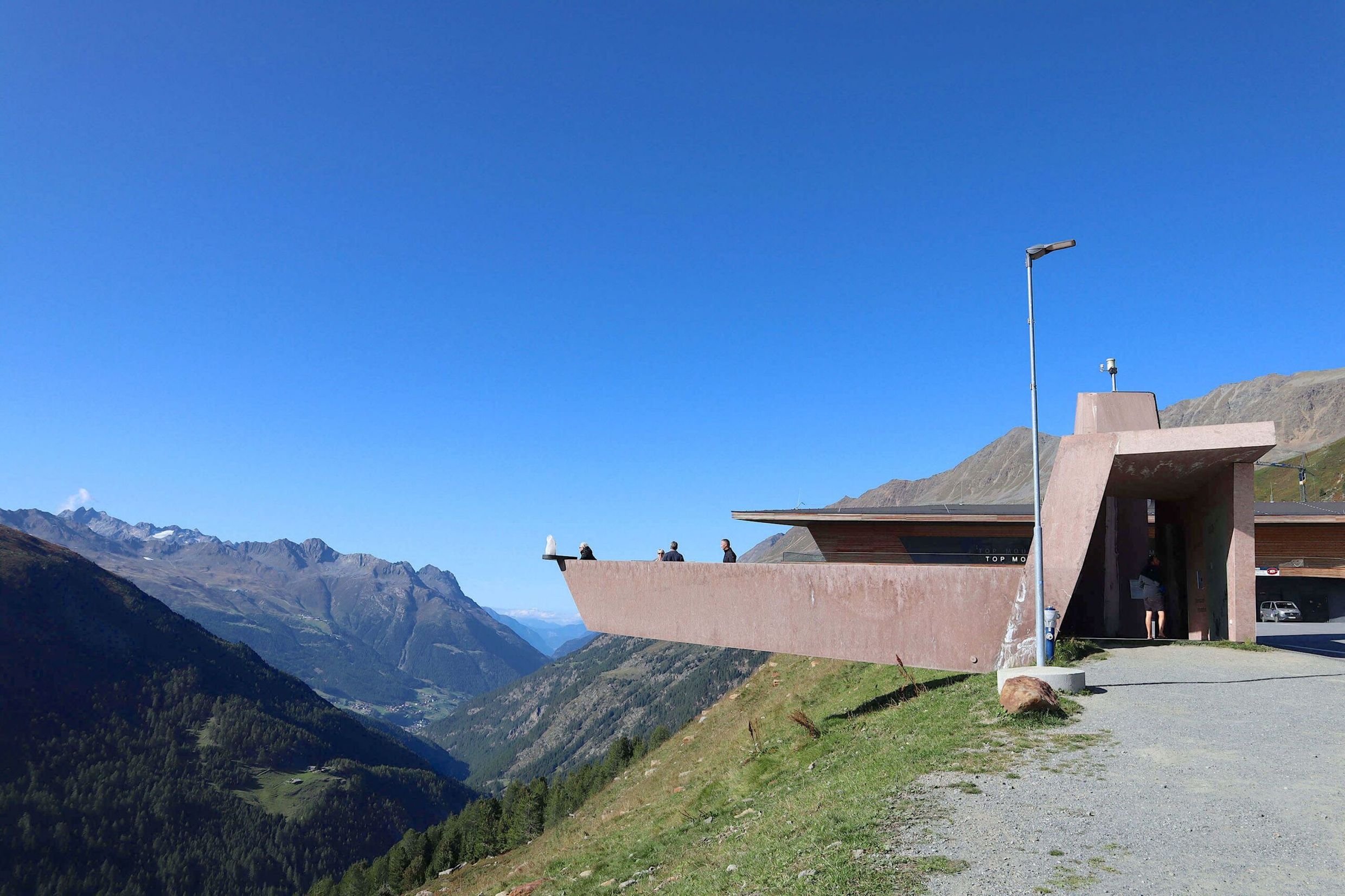
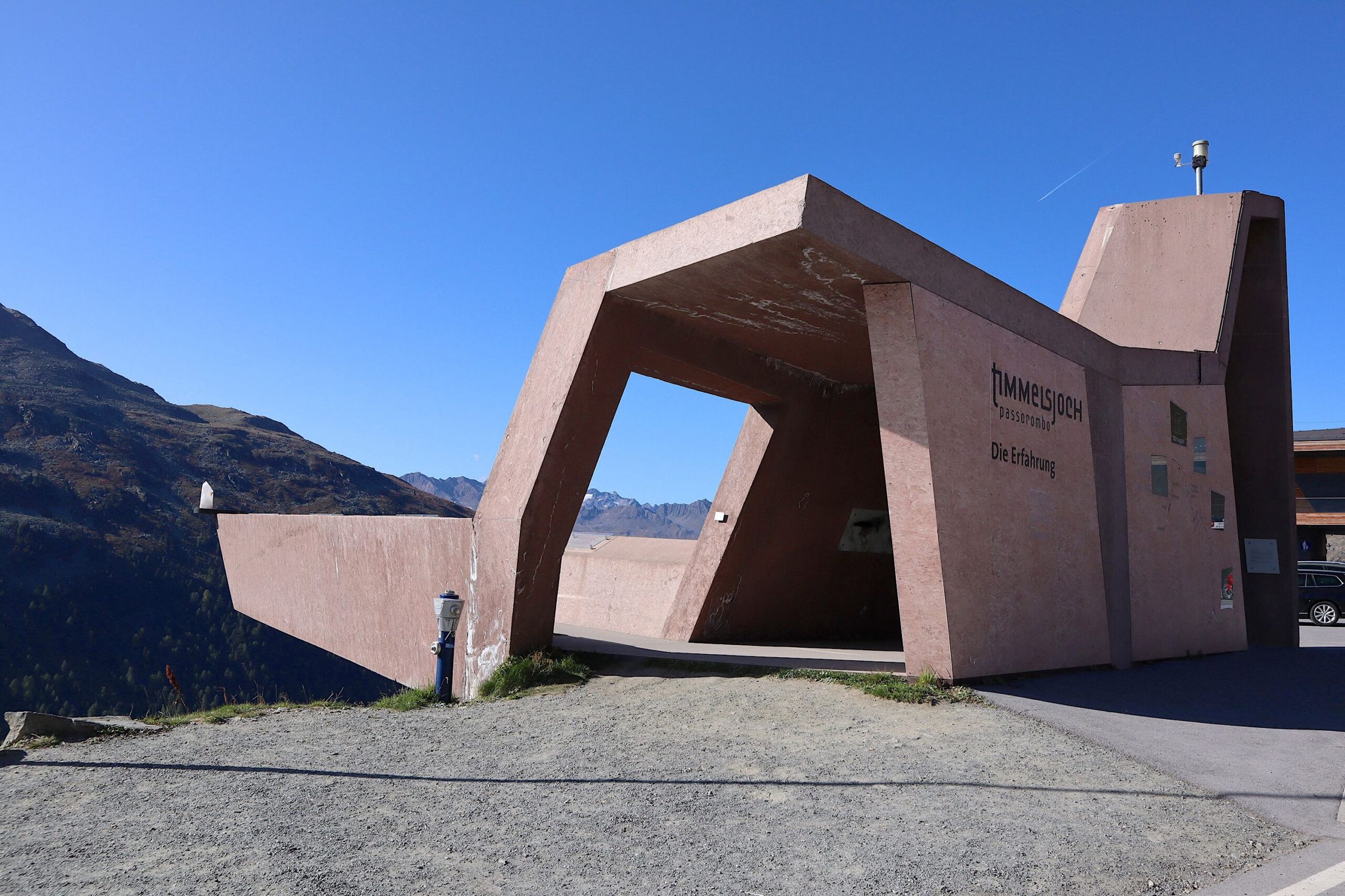
Here you will also find the “Top Mountain X‑Crosspoint”, which is a multifunctional toll station, restaurant, museum and gondola station. Michael Brötz, the Austrian architect in charge, designed a curved building that refers to the regional-alpine timber construction. With its organic, large-scale shape, the Crosspoint contrasts with Tscholl’s minimalist, angular contours.
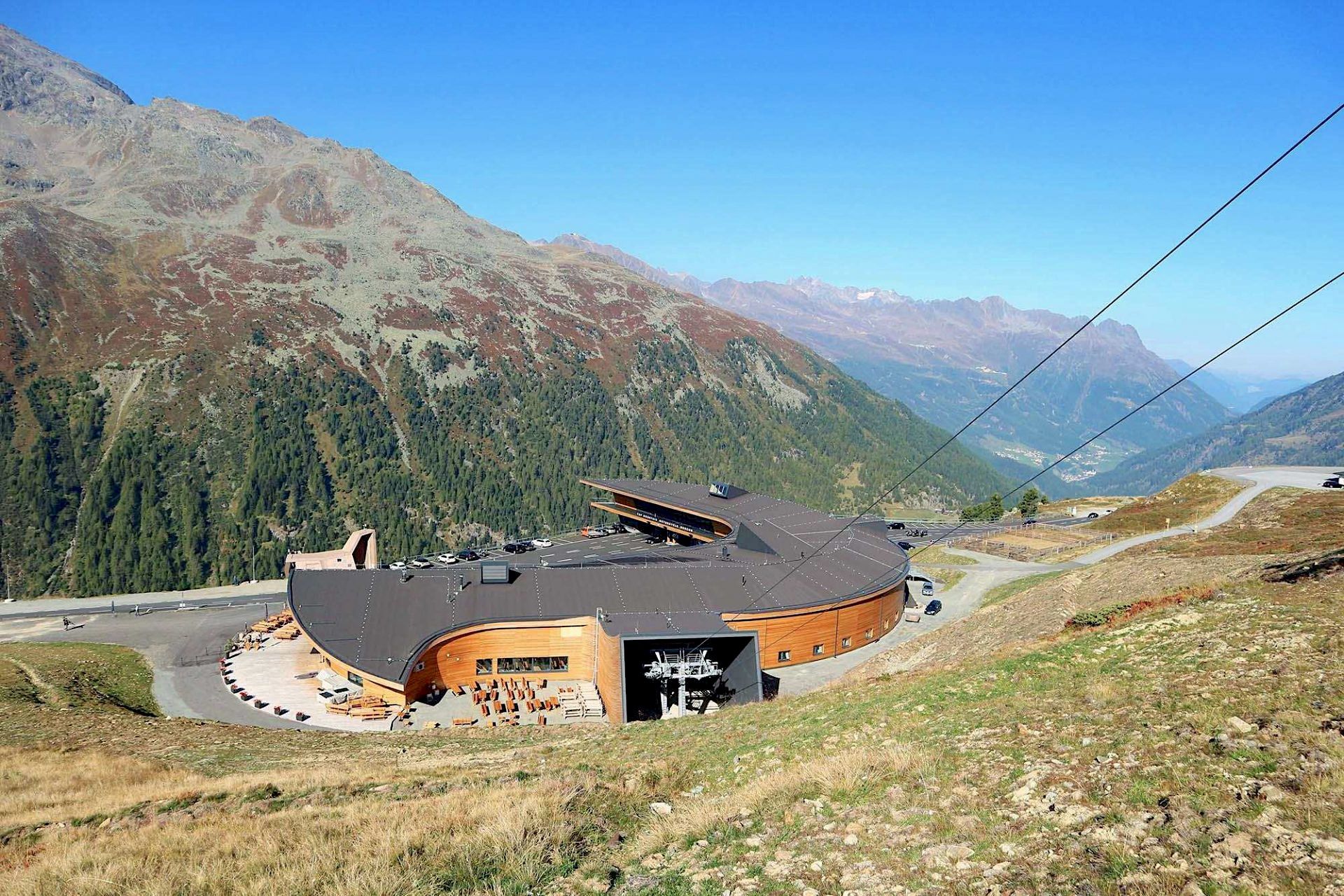
We planned several hours for the Timmelsjoch Experience and chose the restaurant in the Crosspoint as the end point of the tour. Helpful for the exploration of the route and the sculptures is certainly the old mountaineer’s greeting: “Take your time!”
Author: Jan Dimog, thelink.berlin
Photo credits: © Jan Dimog, thelink.berlin (Titelbild, 2, 3, 8) / © Hendrik Bohle, thelink.berlin (1, 4 — 7, 9 — 12) / © Heike Albrecht (13)
Author info:
Journalist Jan Dimog runs a digital magazine on building culture together with architect Hendrik Bohle. On thelink.berlin they have been telling about their discoveries in Europe for years, especially about the connections between people and architecture.
When they are not on the road, they curate high-profile exhibitions, such as the travelling exhibition on Arne Jacobsen’s architecture.

One Comment
Tolle Strasse, fantastische Bauten und Landschaften. Auch mit dem (e-) Bike ein absoluter Genuss; umso mehr, je weniger sonstiger (motorisierter) Verkehr am betreffenden Tag herrscht.
Aber auch im strömenden Regen war der Trip (wie im Artikel von süd (IT) nach nord (AT) mit dem Bike ein echtes Erlebnis.