
When Architecture Becomes an Invitation: Seoul
Nowhere else in the world do tradition and modernity meet in such a striking way as in Asia’s megacities. The contrast is most evident in their urban architecture. Part I of our series Architecture of (Quiet) Contrasts: Seoul.

Both Seoul in Korea and Kyoto in Japan unite centuries-old culture with contemporary architecture – yet in strikingly different ways. Seoul embodies dynamism, density and visible contrasts, while Kyoto – which we will explore in the second part – approaches change with restraint and subtlety.
How can urban spaces mediate between past and present? An exploration of this complex relationship from two very different perspectives.
In South Korea’s capital, tradition and modernity collide head-on – and yet complement each other as if naturally intertwined. In the midst of this architectural and social mosaic, countless public spaces promise moments of tranquillity while promoting social interaction – often right in the busiest corners of the city, between neon billboards and sizzling street-food markets.
A warm spring evening in Seoul: the sun sets behind the glass façades of futuristic high-rises, while just a few streets away, hanoks – the city’s traditional wooden houses – cast their shadows on cobbled lanes.

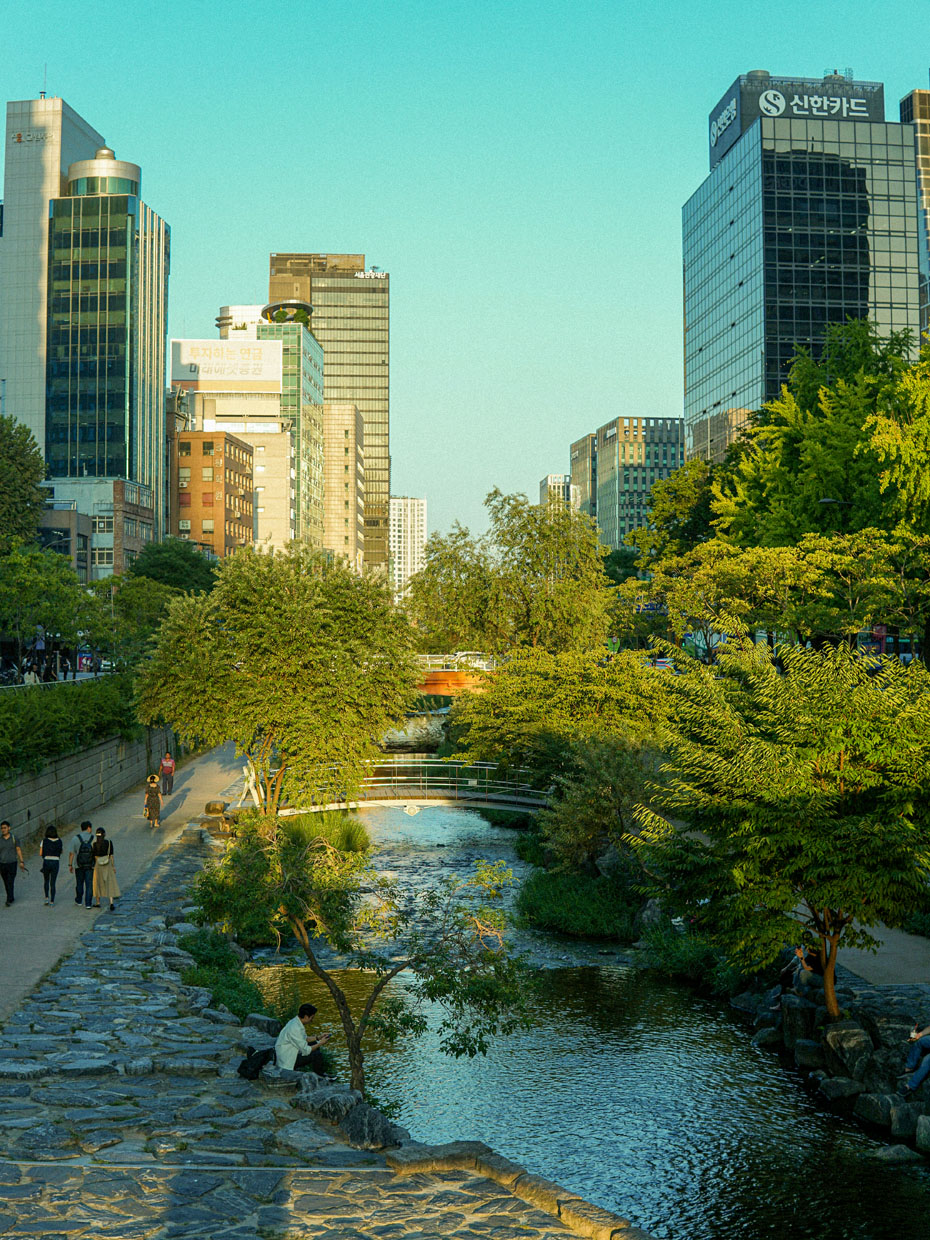

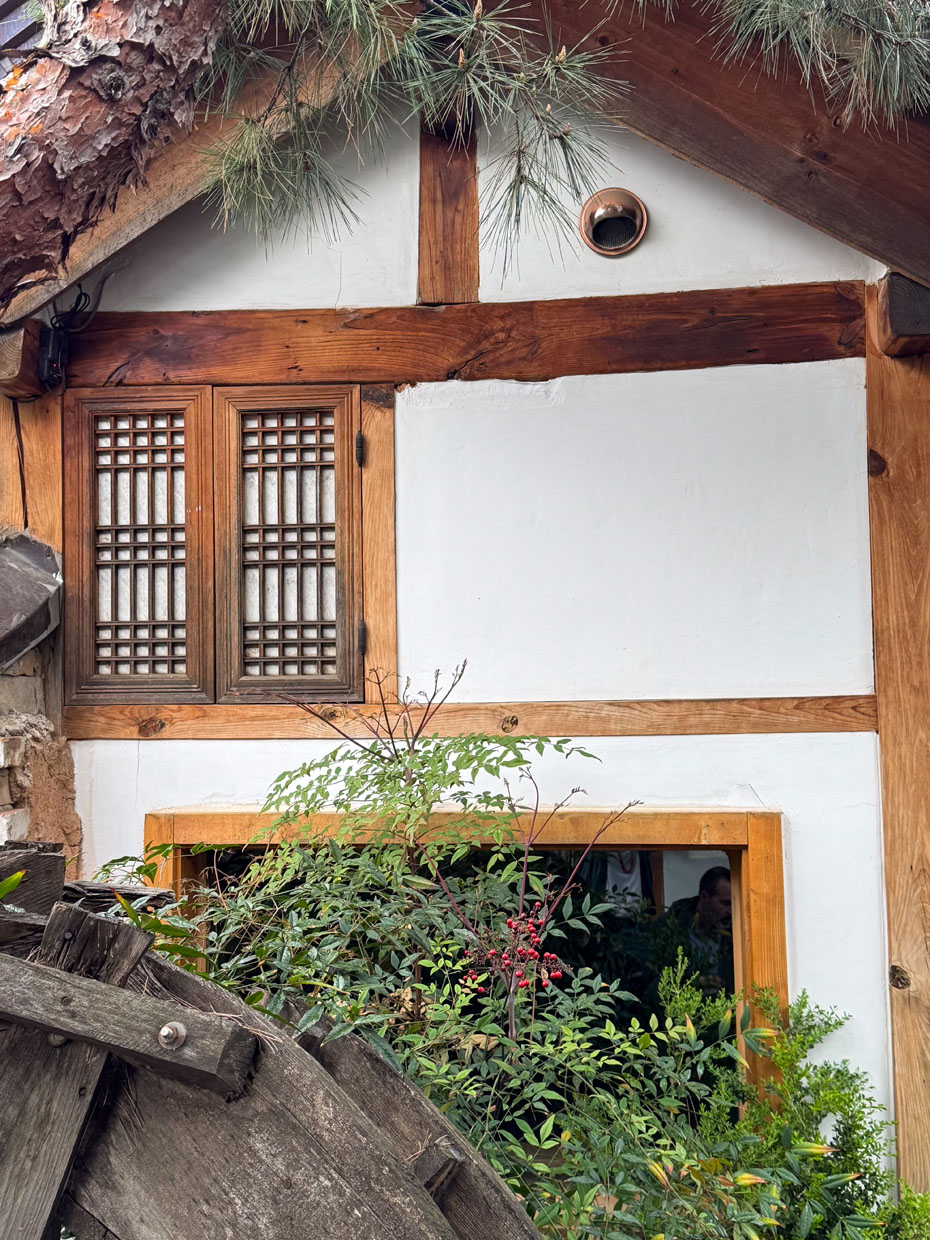
In the park of Gyeonbokgung Palace, tourists in borrowed Korean costumes pose among blossoming cherry trees. Outside the palace walls, animated 3D advertisements illuminate the path leading into the historic Insa-dong district. In hardly any other city do past and future stand so close together: Confucian ancestral shrines sit side by side with parametrically designed façades; tea ceremonies meet mega-trends like K‑Pop. The contrasts permeate the city – and its architecture – like a dialogue.
Mosaic of tradition and modernity
Seoul’s history is one of upheavals: from being the seat of the Joseon dynasty, which ruled for over five centuries, to its period as a colonial city, from the ruins of the Korean War to today’s smart city. The city’s architectural history reflects these shifts: on the one hand, traditional architecture continues to shape urban planning (and not merely as a museum-like relic); on the other, international star architects and local studios alike use the city as their stage, turning Seoul into a showcase of global future architecture. The result is an urban mosaic where tradition and modernity coexist on equal terms. Within this field of tension, one repeatedly encounters public spaces of deceleration – often precisely where one would least expect them: in central, very busy and high-traffic locations across the city.
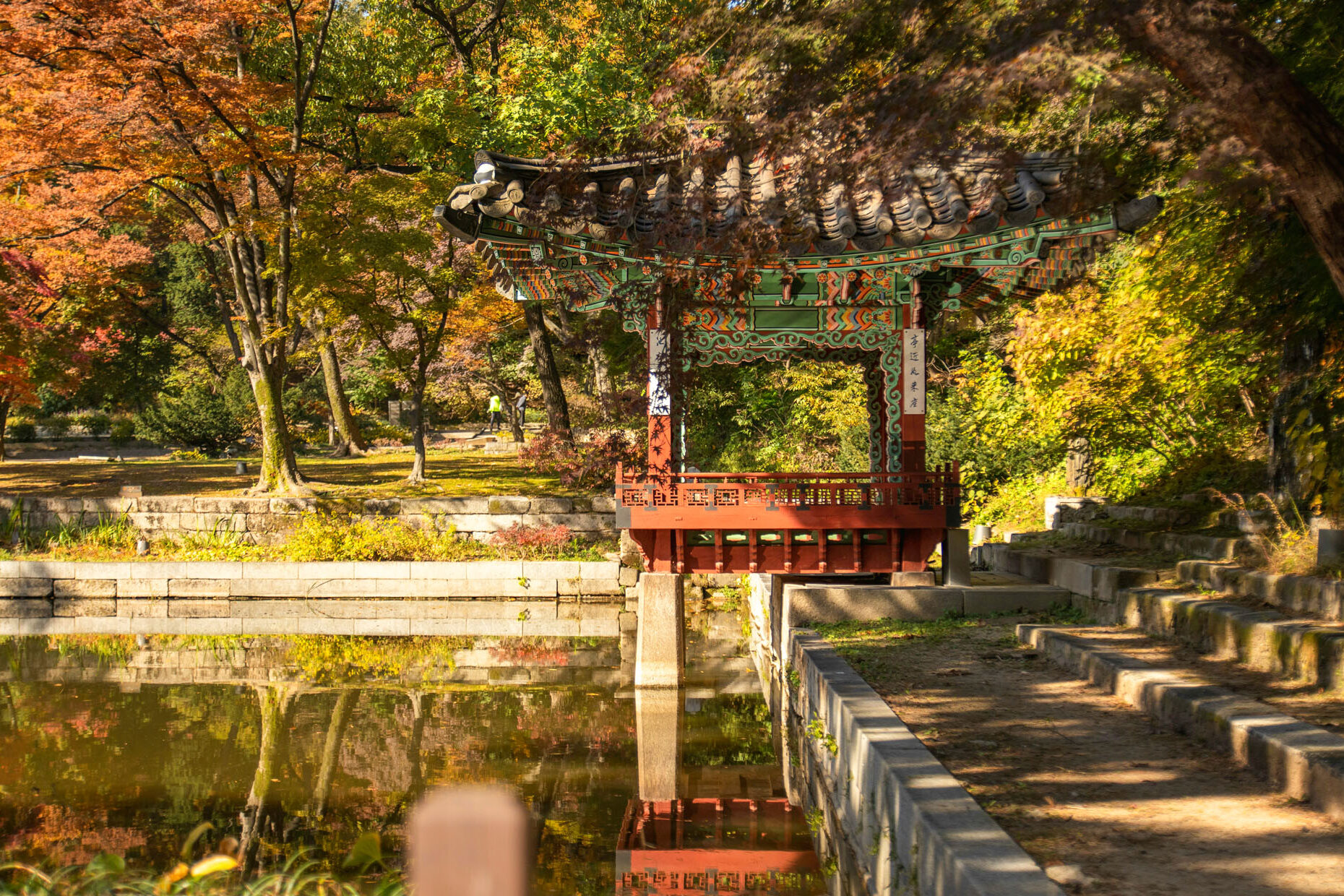
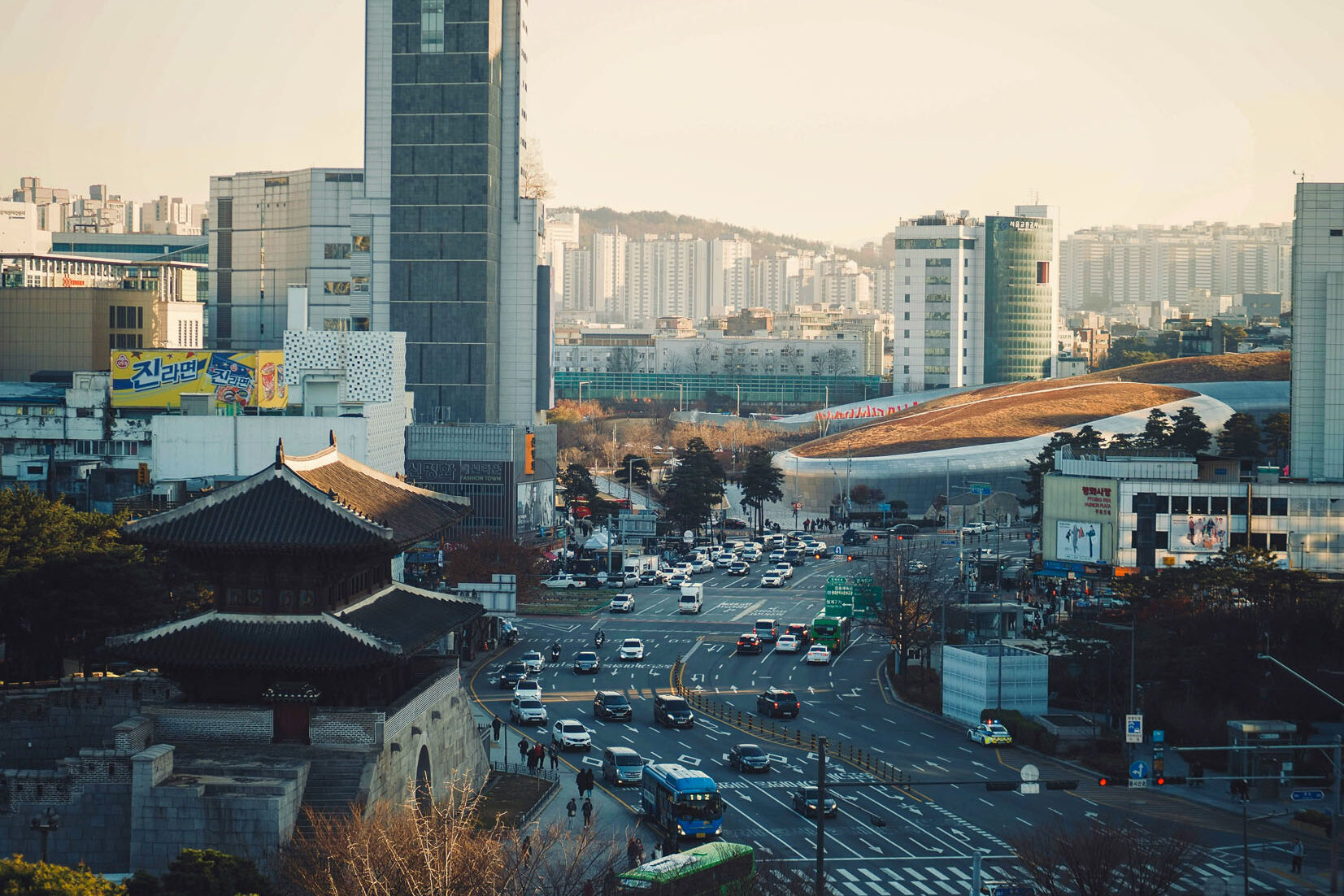
This does not only mean the secret Huwon Garden of Changdeokgung Palace, the many temples and shrines, or the recreational spaces along the renaturalised Cheonggyecheon stream. Rather, Seoul abounds with urban areas and publicly accessible architectures that provide spaces (of retreat) for diverse demographic groups.
Place of togetherness – a selection
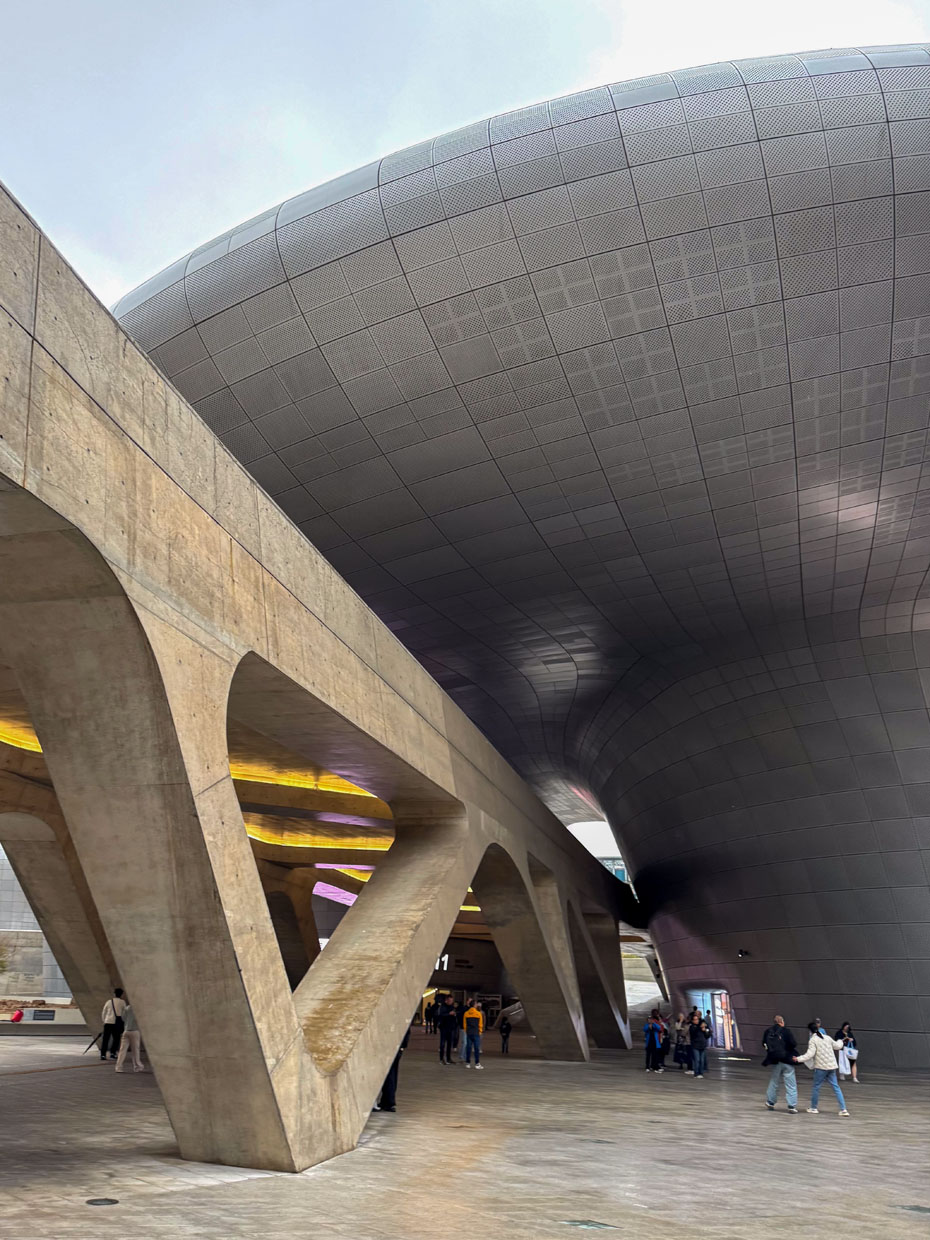
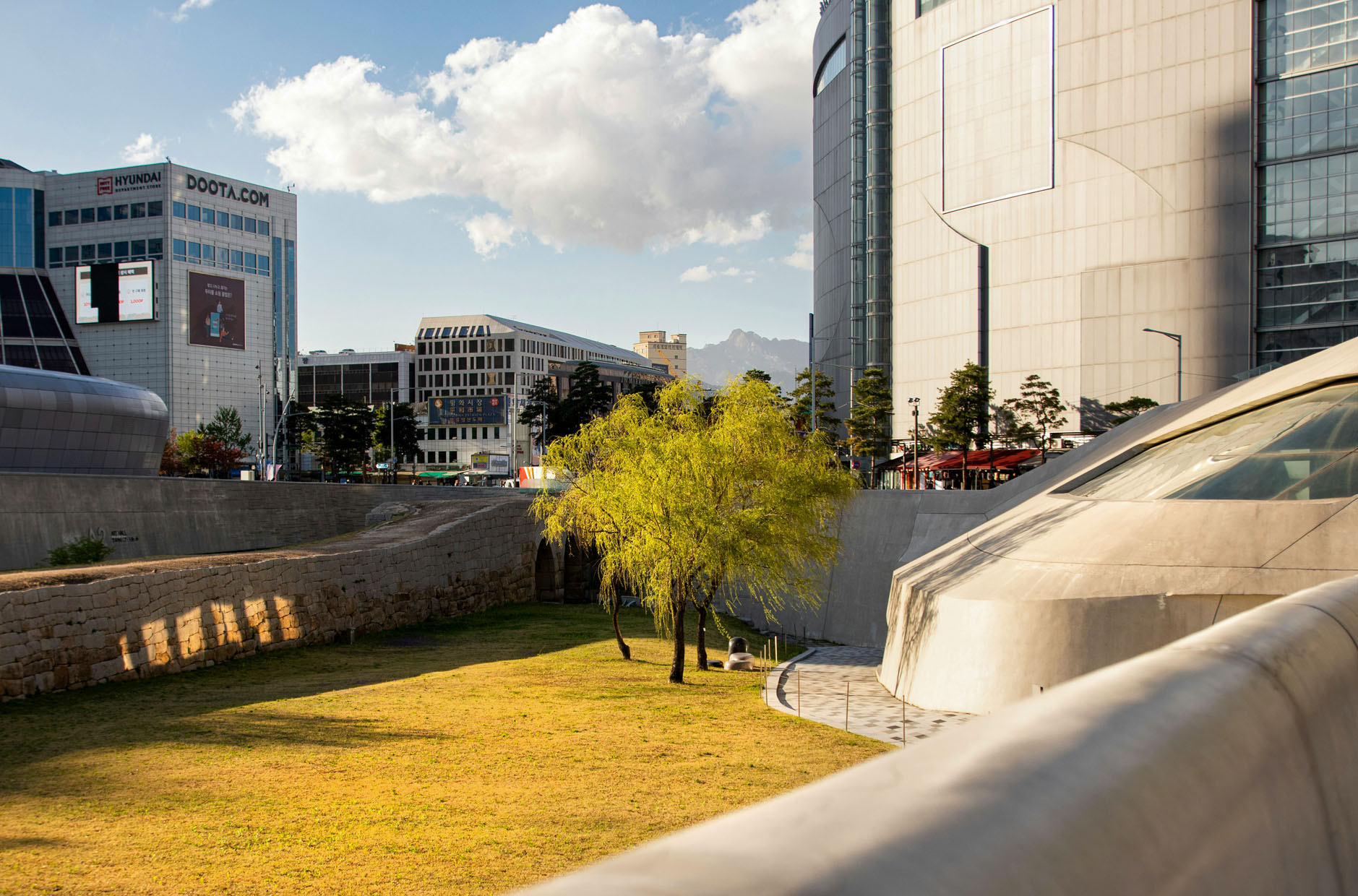
Like an aluminium sculpture, the amorphous building of the Dongdaemun Design Plaza, designed by Zaha Hadid, nestles into the city’s former fortress zone. Exhibition hall, marketplace, museum and public space all in one – with its variety of indoor and outdoor areas, the building is a vibrant place and social meeting point for everyone. Not far away, the Seoullo 7017 Skygarden invites visitors to stroll: redesigned by MVRDV, the elevated motorway viaduct, now landscaped with 24,000 plants, hovers above Seoul’s largest intersection, linking two districts while also serving as a green recreational space – a poetic act of urban sustainability.


On the other side of the river, right in the bustle of the COEX Mall – one of the largest underground shopping centres in the world – the Starfield Library offers a freely accessible place of reflection. With its 13-metre-high bookshelves, the library feels like a cathedral of knowledge – in the very midst of a bustling shopping mall.

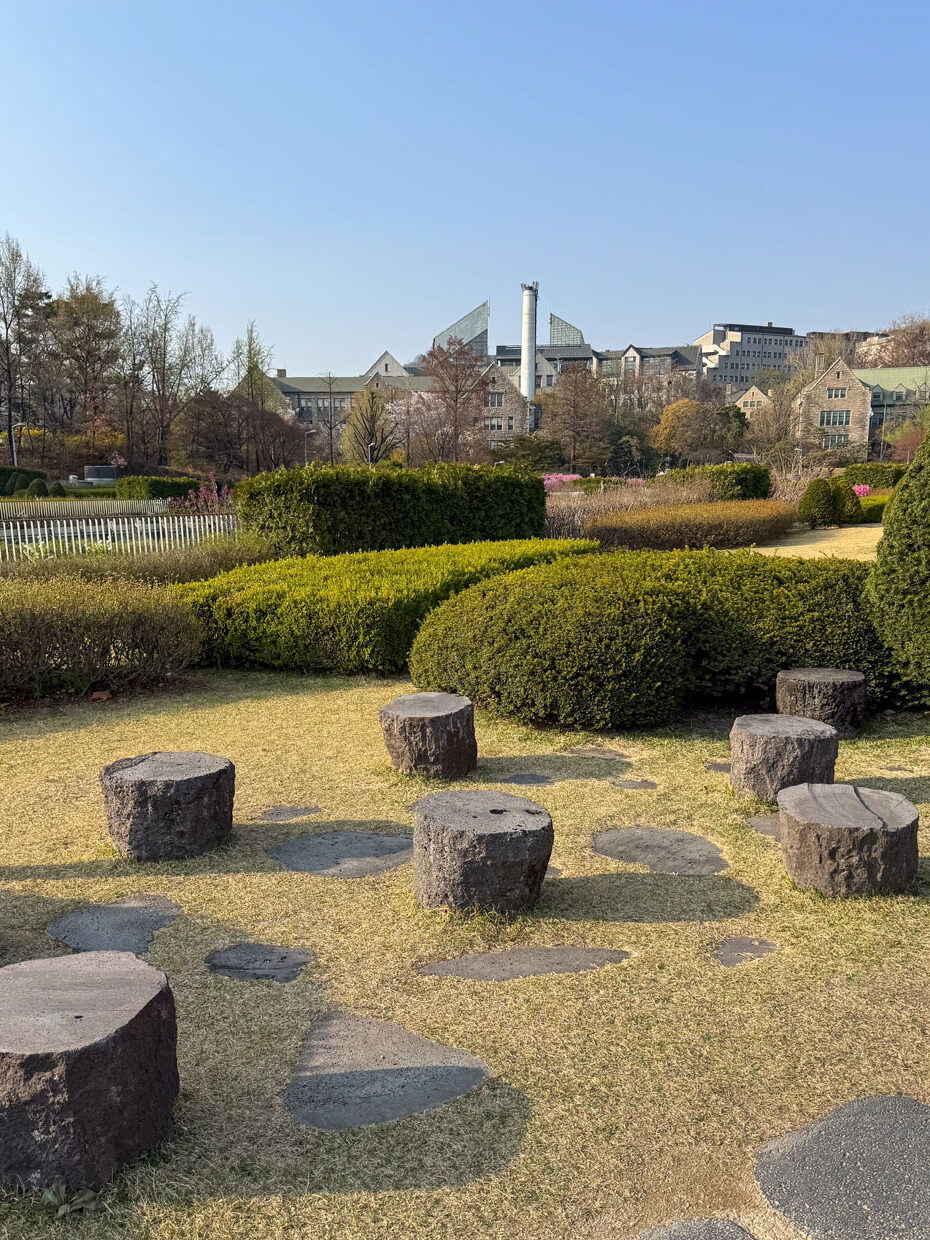
At the Ewha Womans University Campus, designed by Dominique Perrault, education is imagined not as retreat but as an open, public offer: the path running through the landscaped campus seems to disappear into the hillside, only to open up towards the city – with generous seating and spaces for social exchange, far beyond the academic context. Similarly, at the Leeum Museum, supported by the Samsung Foundation, architecture is not an end in itself either – even though the building bears the signatures of architecture icons Mario Botta, Jean Nouvel and Rem Koolhaas. Rather, its monumental yet minimalist design creates a framework for dialogue – between Korean antiquity and the Western contemporary world, between local identity and the global art scene, welcoming art lovers and the broad public alike.
A play of contrasts
The architecture in the Korean capital thrives on the juxtaposition of different styles, of tradition and technology, of silence and noise, of monuments and micro-spaces. It plays with tension and contrast – and in doing so, becomes a source of inspiration. It creates places of encounter that are not only functional but also culturally charged and sustainable, giving the city its distinct architectural identity in its diversity. In Seoul, the future is built without erasing the past – and architecture itself becomes a medium of togetherness, or better still: an open invitation to all.
Picture Credits: Campus der Ewha Womans University ©️ Tina Barankay (Cover Picture, 11, 12), Gyeonbokgung Palast ©️ Tina Barankay (1), Cheonggyecheon Stream ©️ Jieun Kim / Unsplash (2), Das moderne Seoul ©️ Tina Barankay (3), Traditionelles Hanok ©️ Tina Barankay (4), Garten Huwon des Palastes Changdeokgung ©️ Inhyeok Park / Unsplash (5), Dongdaemun Design Plaza ©️ Clark Gu / Unsplash (6), ©️ Tina Barankay (7) ©️ Inhyeok Park / Unsplash (8), Starfield Library — ©️ Kelvin Zyteng / Unsplash (9), ©️ Riza Gabriela / Unsplash (10)

0 Comments