
Architectural Culture in Northern Greece: A journey through the ages
From modern concert halls to ancient sites and contemporary museums: a tour of the architectural world of Thessaloniki and Verginas in northern Greece shows how old and new can coexist harmoniously.
The constant interaction between past and present is evident in Thessaloniki, from the eclectic new City Hall to the Megaro Mousikis Concert Hall by a Pritzker Prize winner. The buildings tell not only of power and religion, but also of the city’s cultural wealth and its ability to reinvent itself. In this respect, the architecture is not just a backdrop, but shapes the collective memory and identity of the second largest city in Greece after the capital Athens.
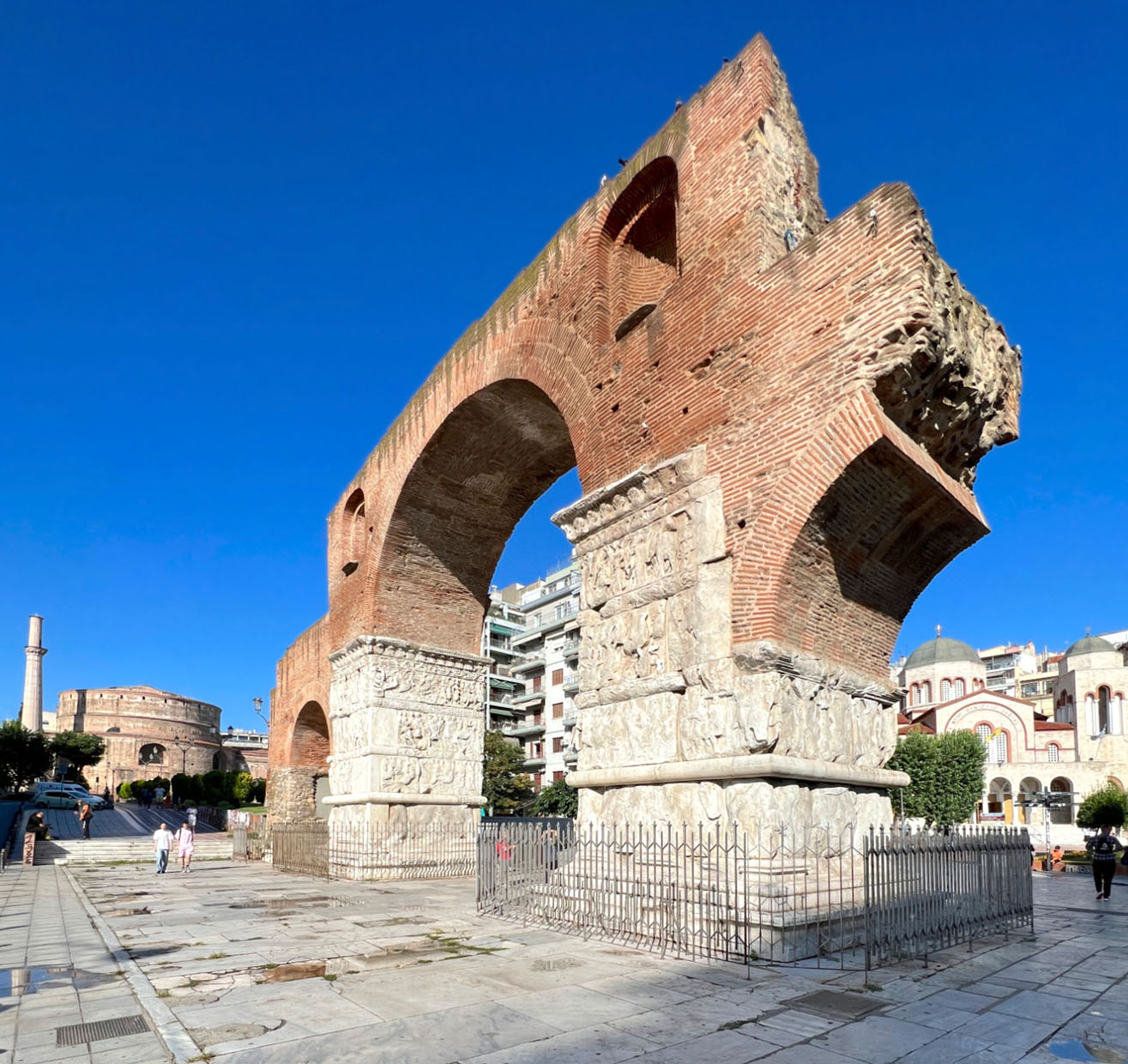
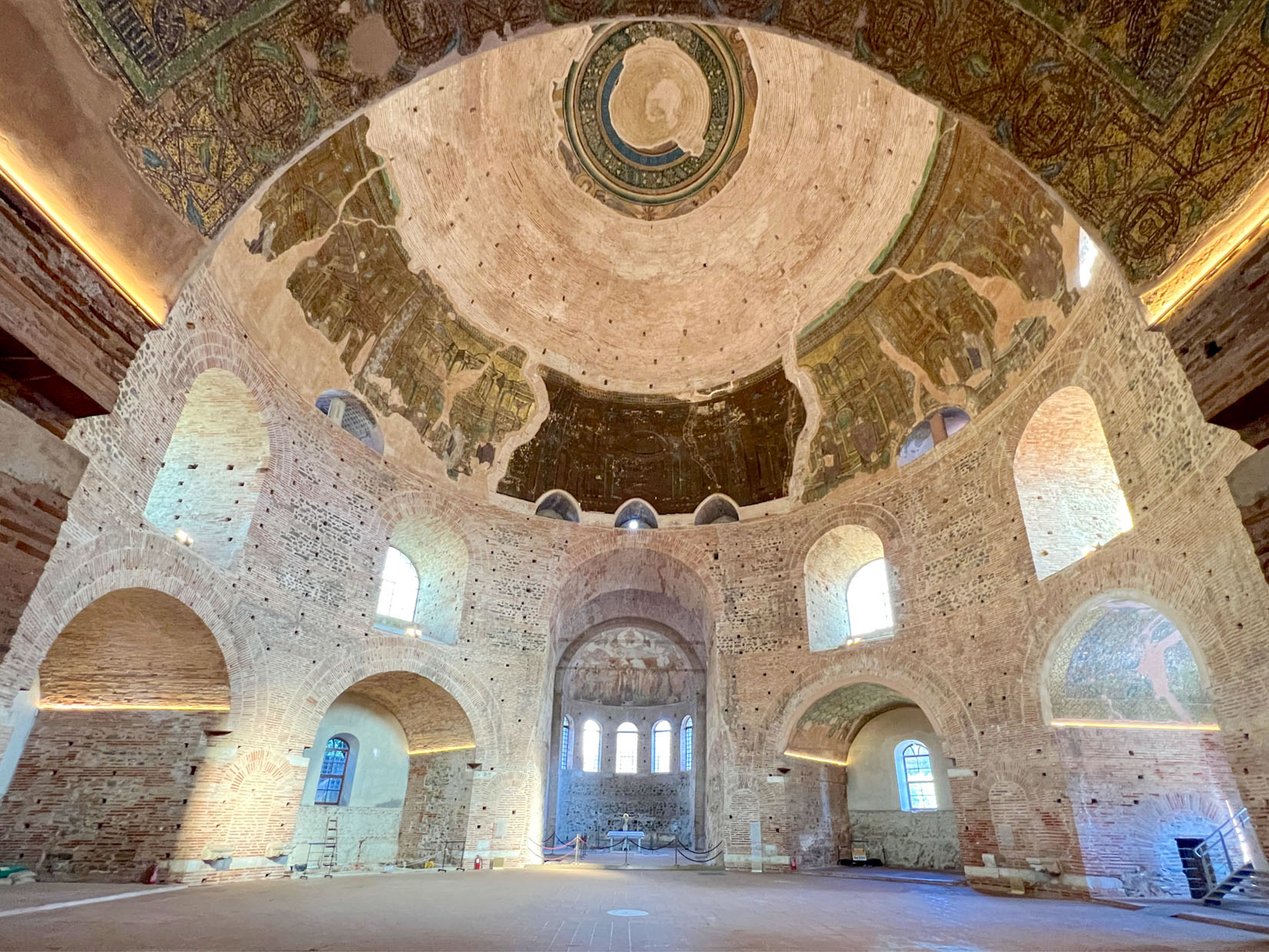
As the European Capital of Culture, Thessaloniki experienced a glorious high point in 1997. The title was an acknowledgement of the city’s rich history and an opportunity that the city seized to showcase its historical architecture, museums and cultural life. Numerous renovation and restoration projects were initiated to present the architectural heritage in an appropriate way. The Rotunda of Galerius, the Byzantine churches and the White Tower Museum shone in new splendour.
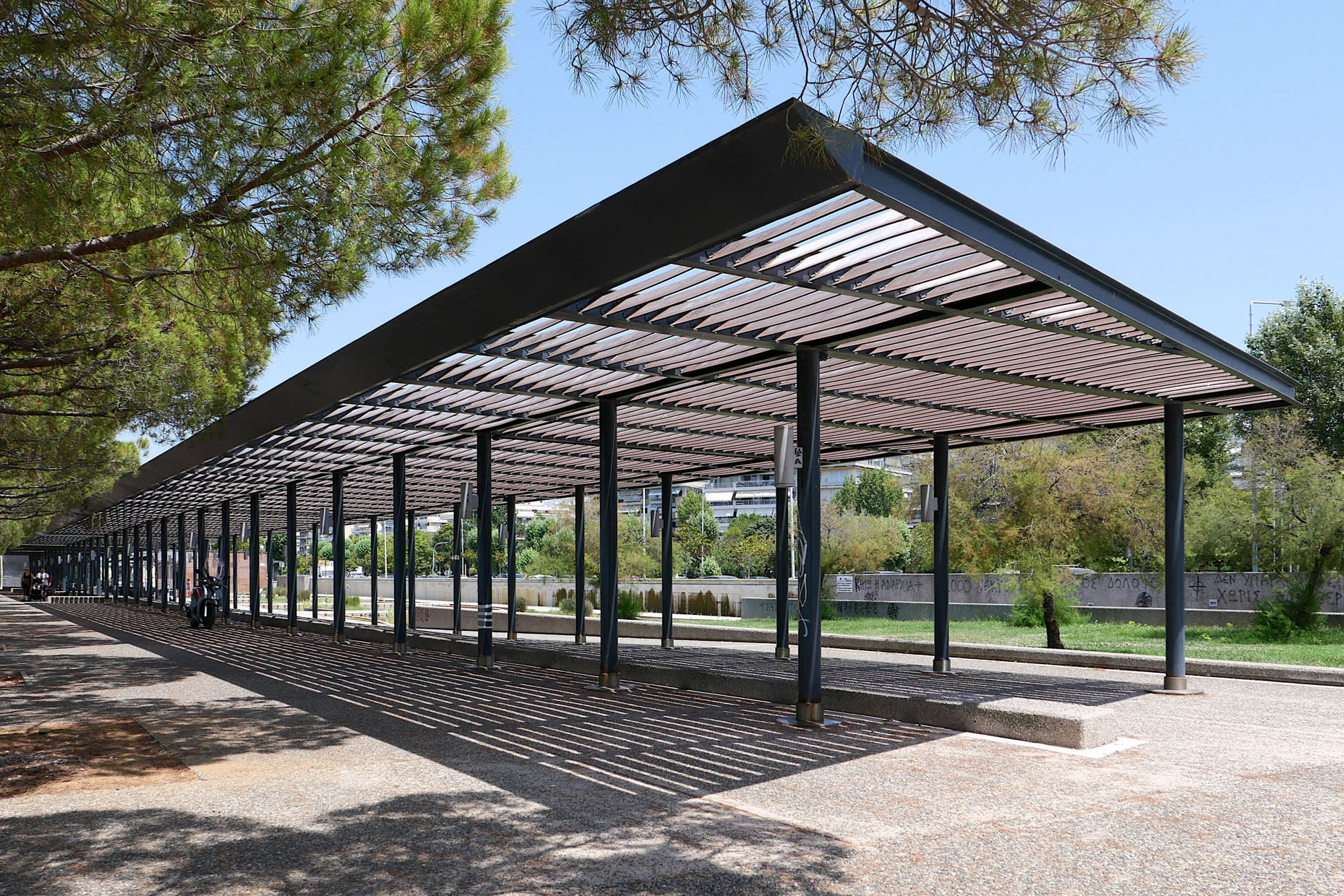
Both during the year of the Capital of Culture and after 2000, new projects were pursued that also aimed to improve the quality of life for residents. ‘Nea Paralia’(New Shore) is a park that connects the city centre with the Kalamaria district over a length of 3.5 km. The winning design by Nikiforidis-Cuomo Architects was implemented from 2006 to 2014. The promenade is characterised by its modern architectural elements, a generous green space and a wide range of leisure activities. A walk along the ‘New Shore’ is like a journey through time: the White Tower was built by the Ottoman grand architect Sinan in the 16th century, and next to it is the Alexander the Great Monument, a monumental equestrian statue by the sculptor Evangelos Moustakas (1974).
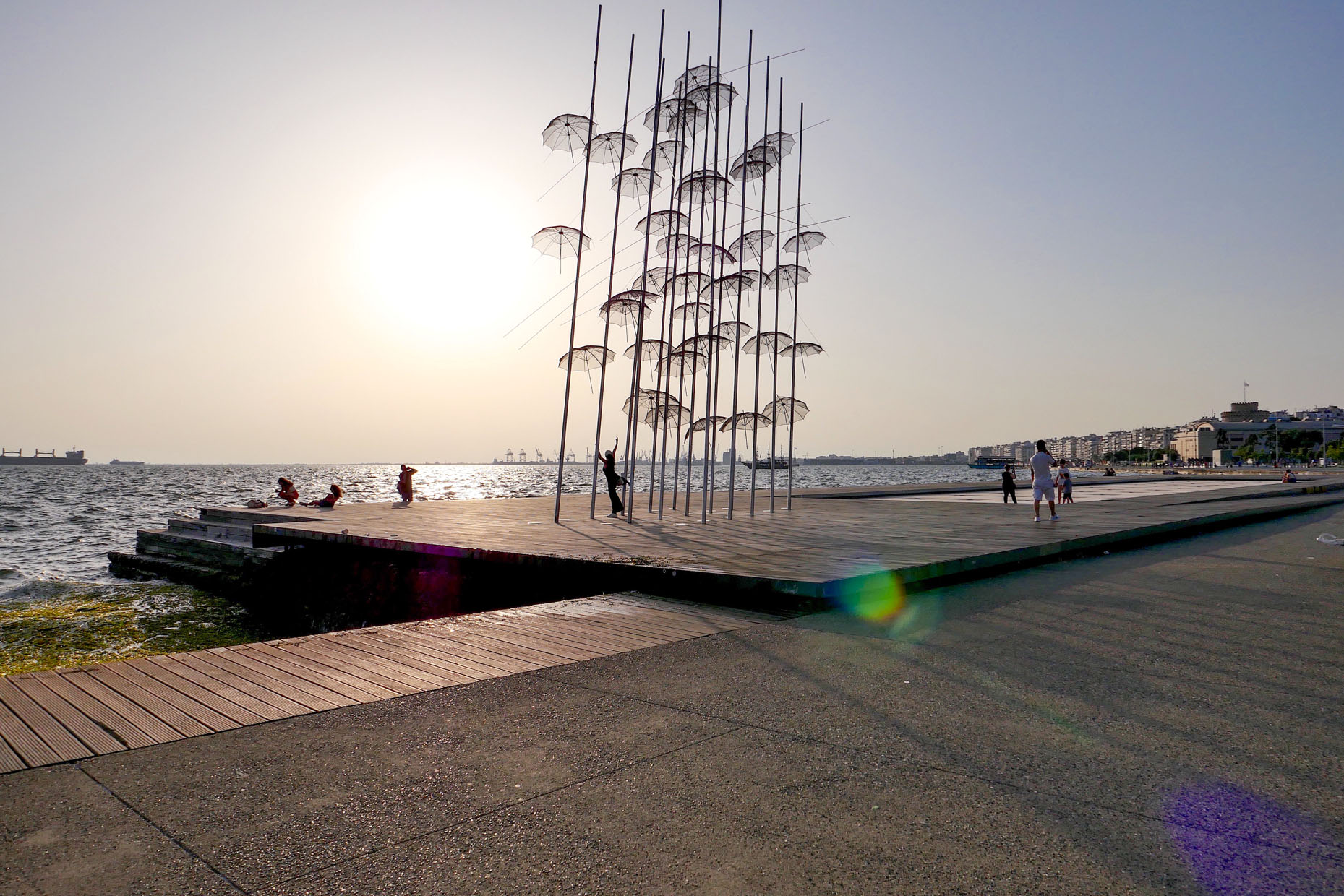
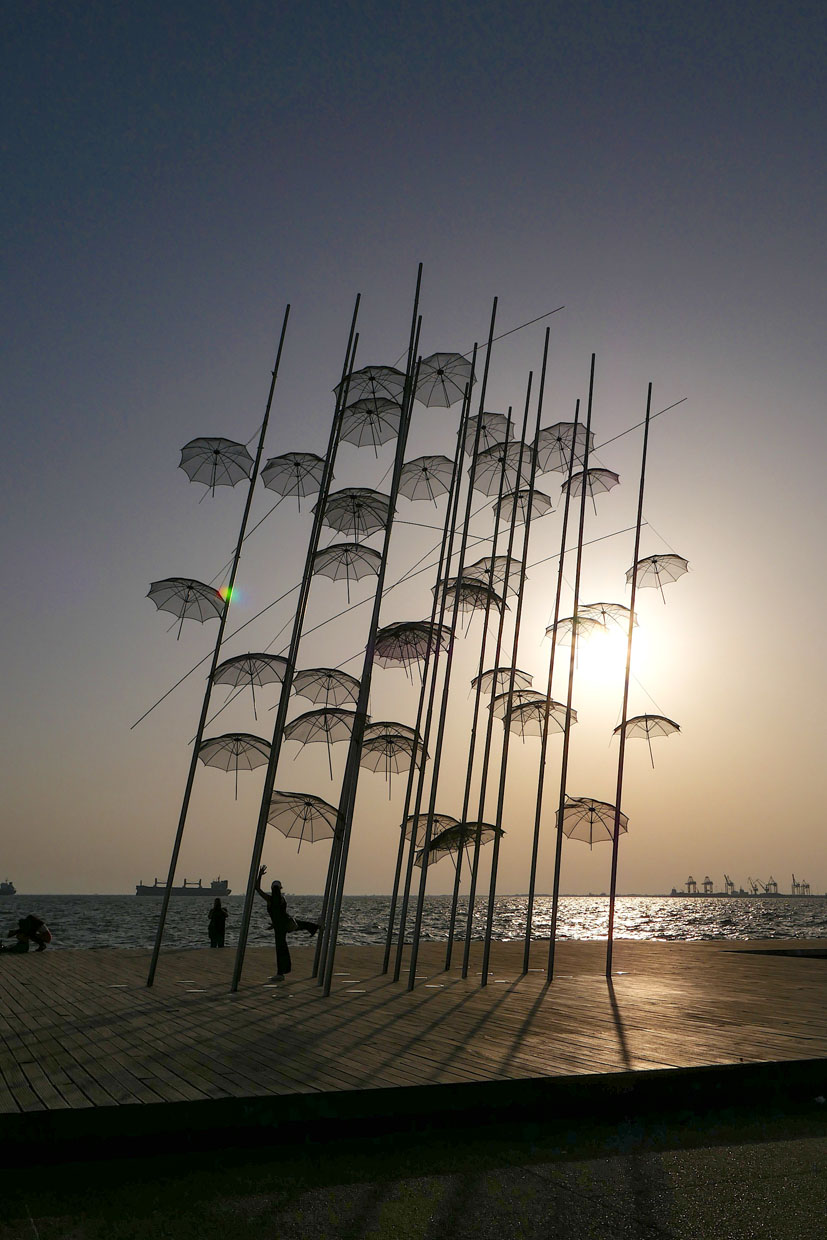
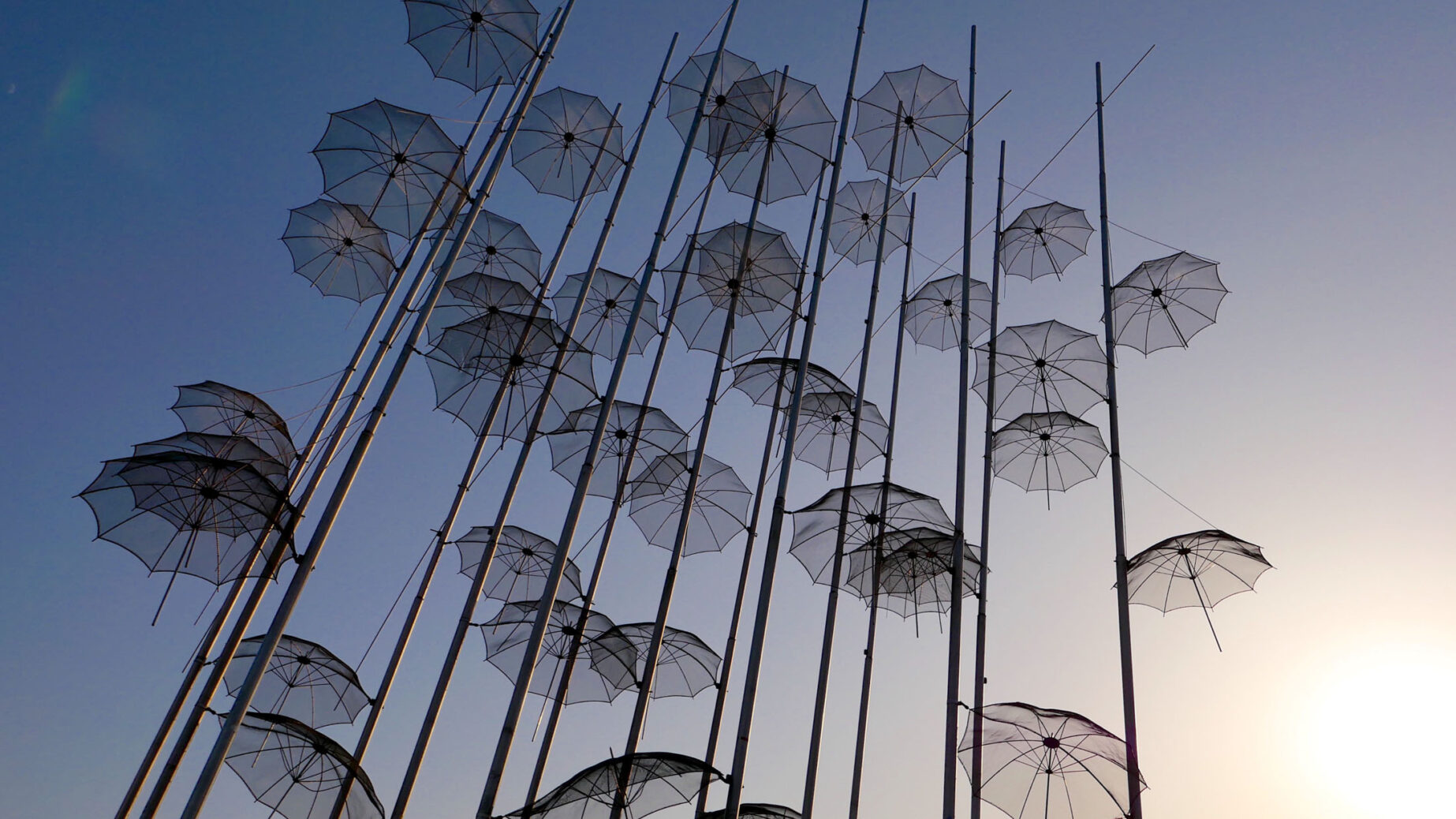
Nearby, George Zongolopoulos’ ‘Umbrellas’ reach for the sky – a 13-metre-high sculpture made of vertical steel rods set at an angle. It is very ‘instagrammable’ and a popular photo motif with locals and tourists alike.
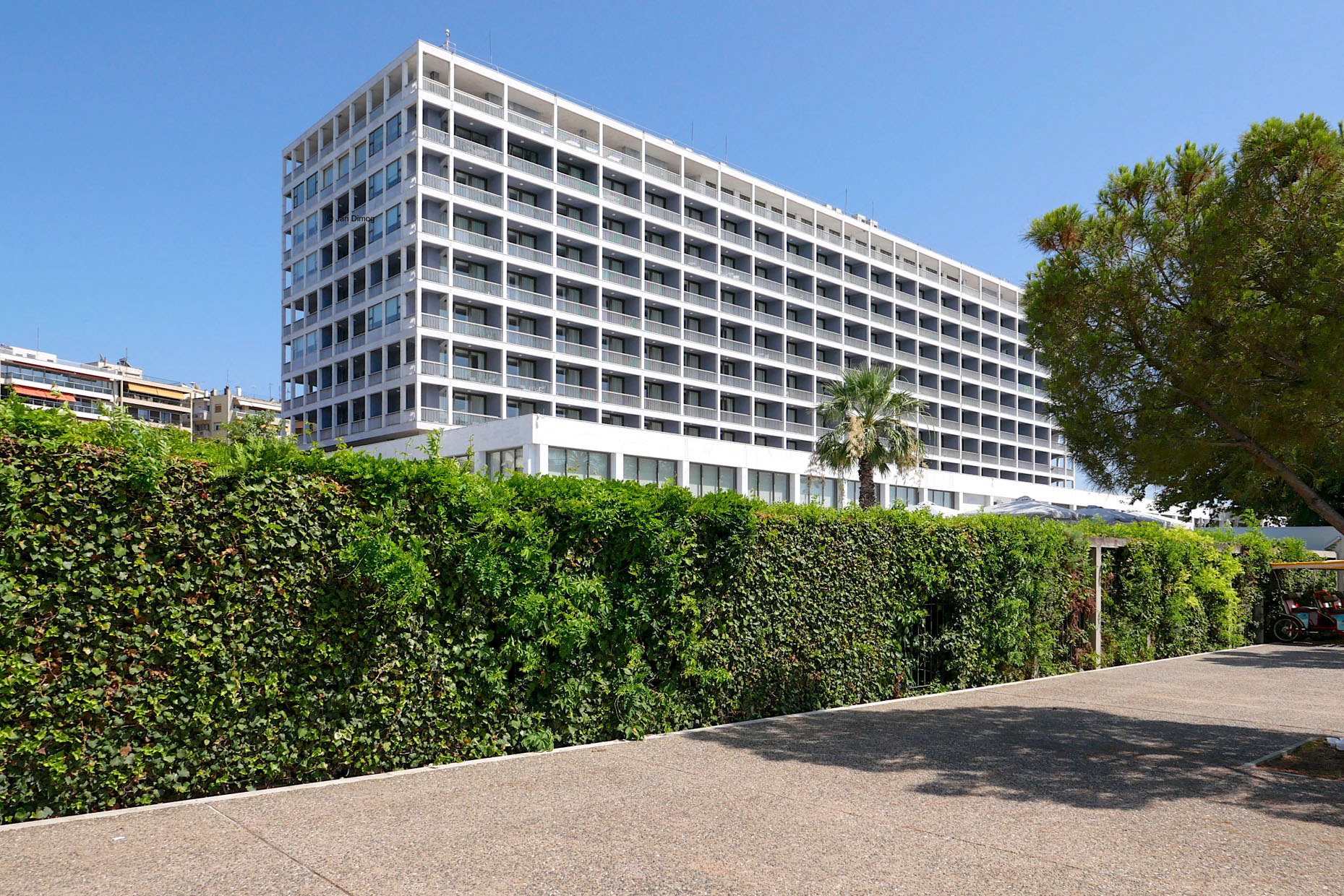
The ‘Hotel Makedonia Palace’ just a few minutes from the umbrellas is a five-star hotel and a prime example of late modern Greek architecture. Konstantinos A. Doxiadis (1913–1975) designed an eleven-storey rectangular building with grid facades, which was reopened in 2017 after a complete renovation. The city planner and architect was one of Greece’s most prominent builders, with over 100 projects in his home country as well as in Pakistan, Brazil, Iraq and the United States.
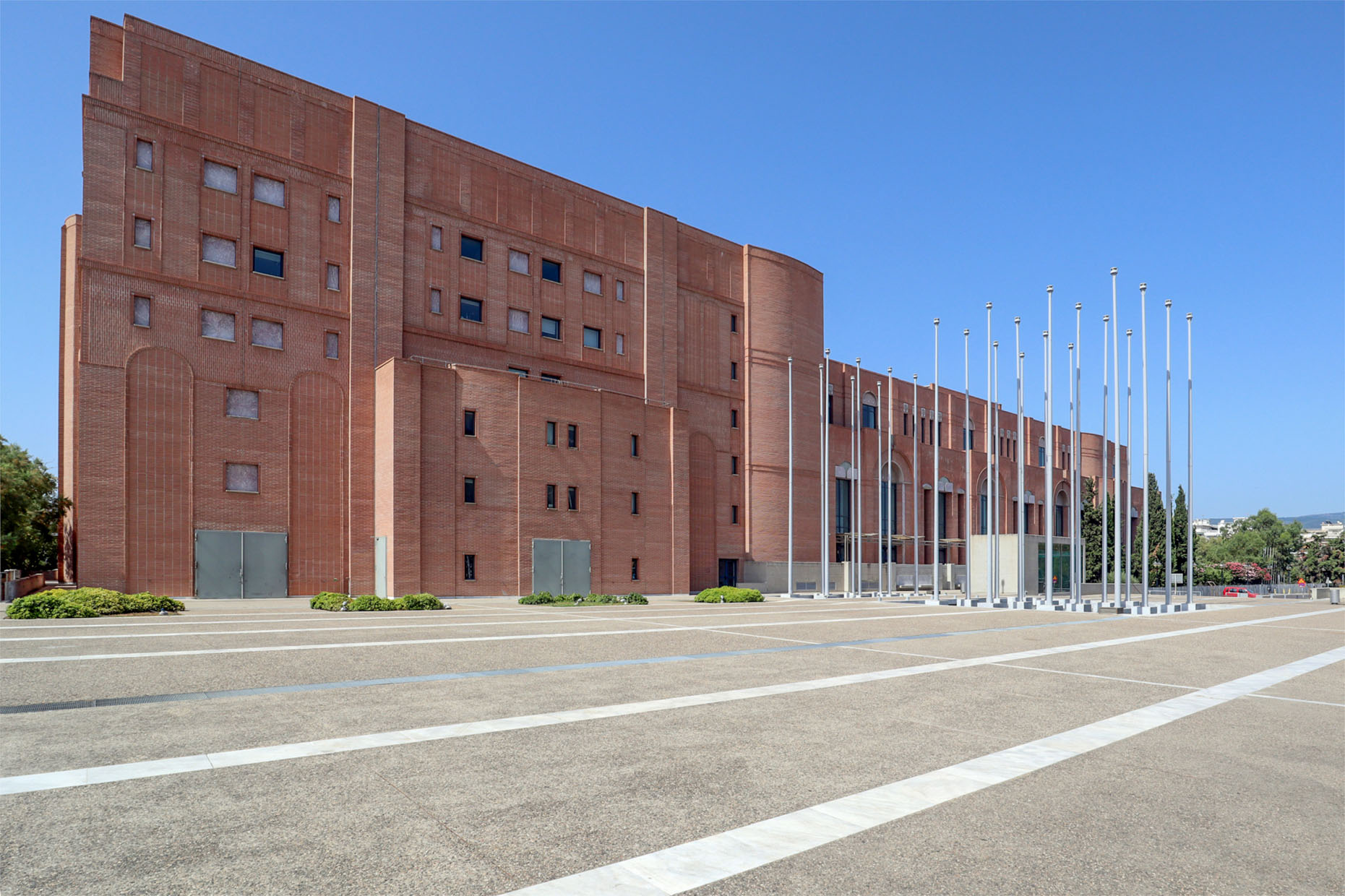

At the other end of Nea Paralia stands the ‘Megaro Mousikis’ Concert Hall. The complex for the performing arts, conferences and congresses consists of the buildings M1 (designed by Vassilis Sgoutas) and M2 (designed by Arata Isozaki). The former has a brick façade and its design draws on the Byzantine architectural tradition (round arches, domed structures). M1 was completed in 2000, M2 in 2010. The design by the Japanese Pritzker Prize winner Isozaki (1931–2022) represents a contrast to the neo-modernism of M1, both architecturally and with its clear, geometric lines.
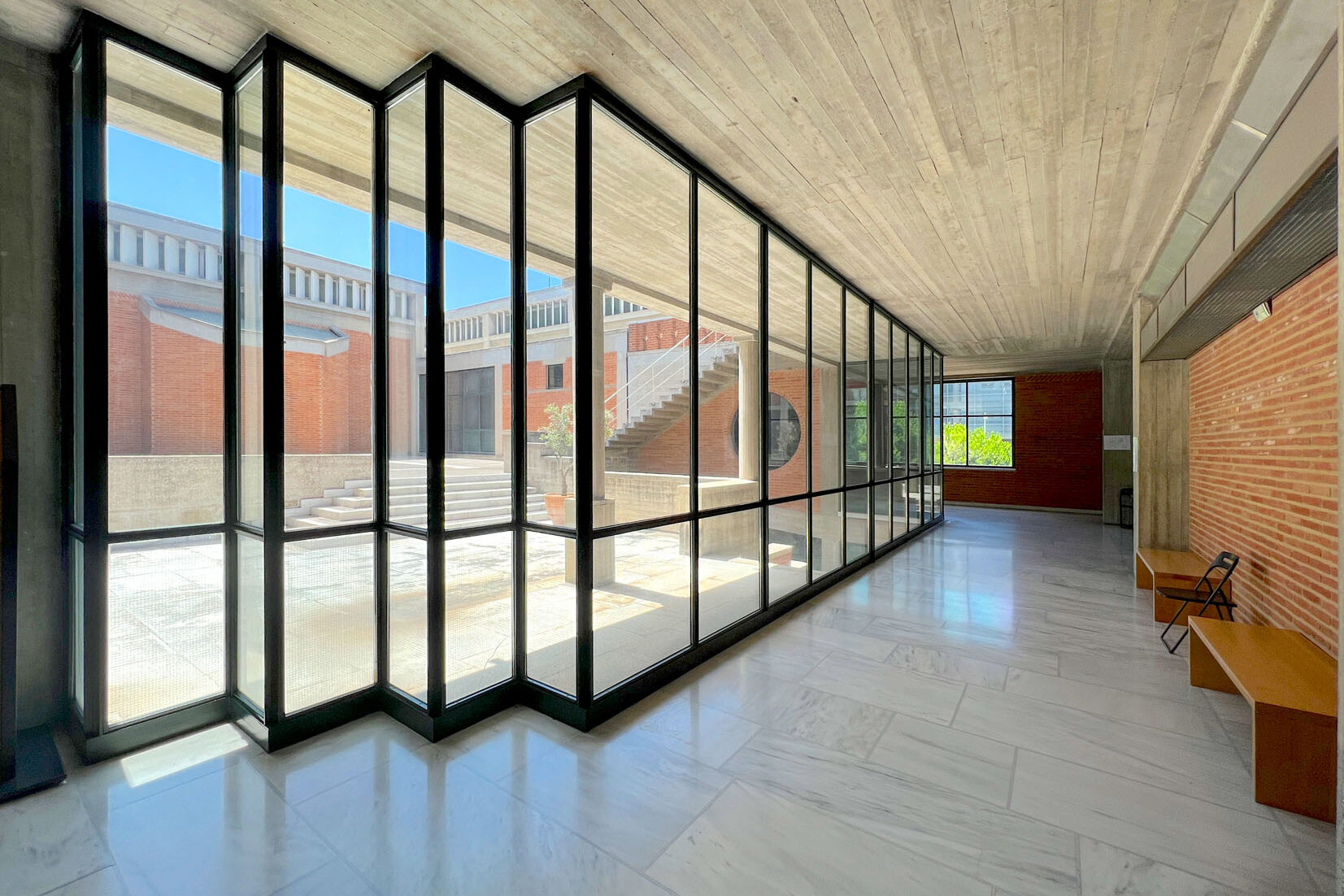
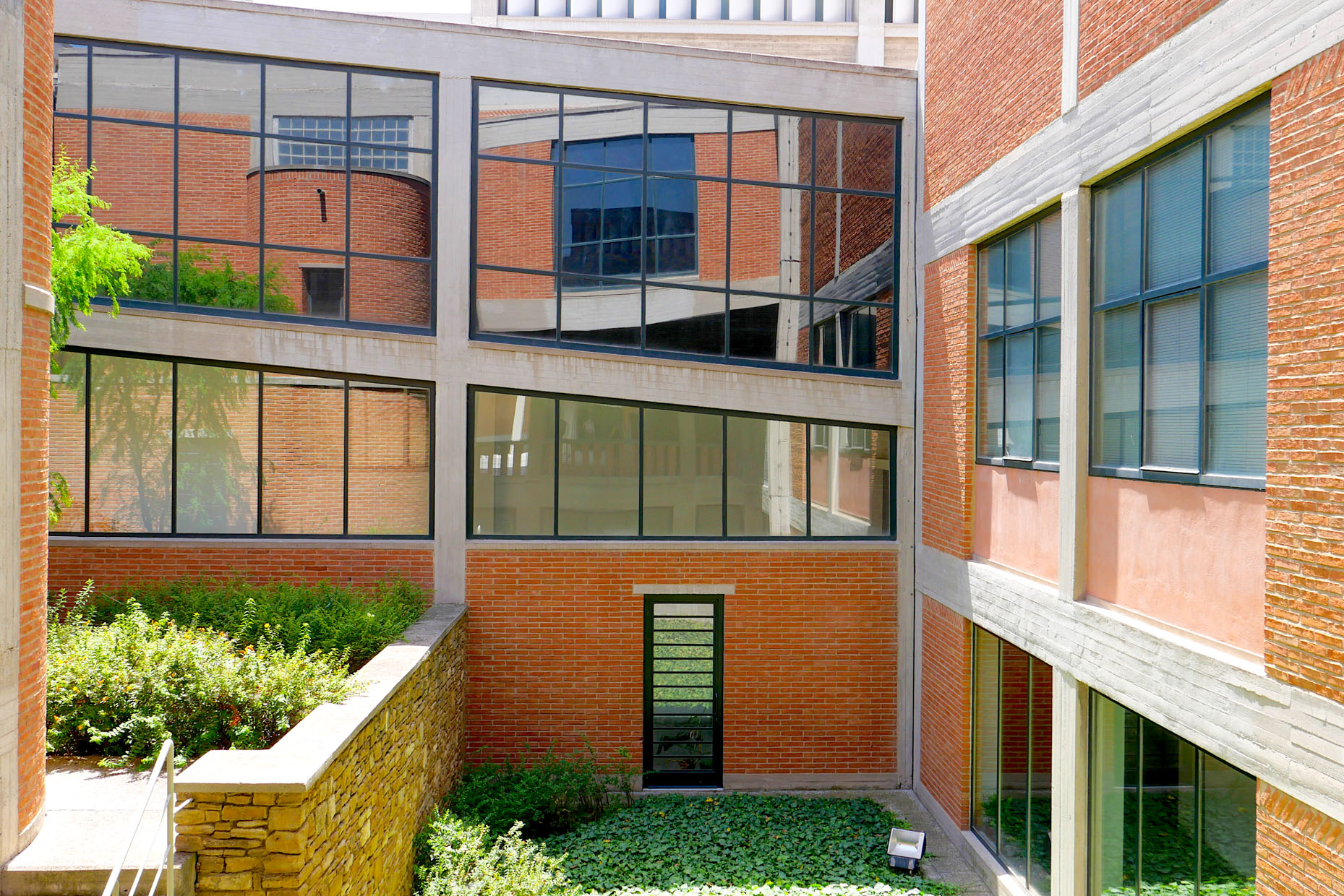
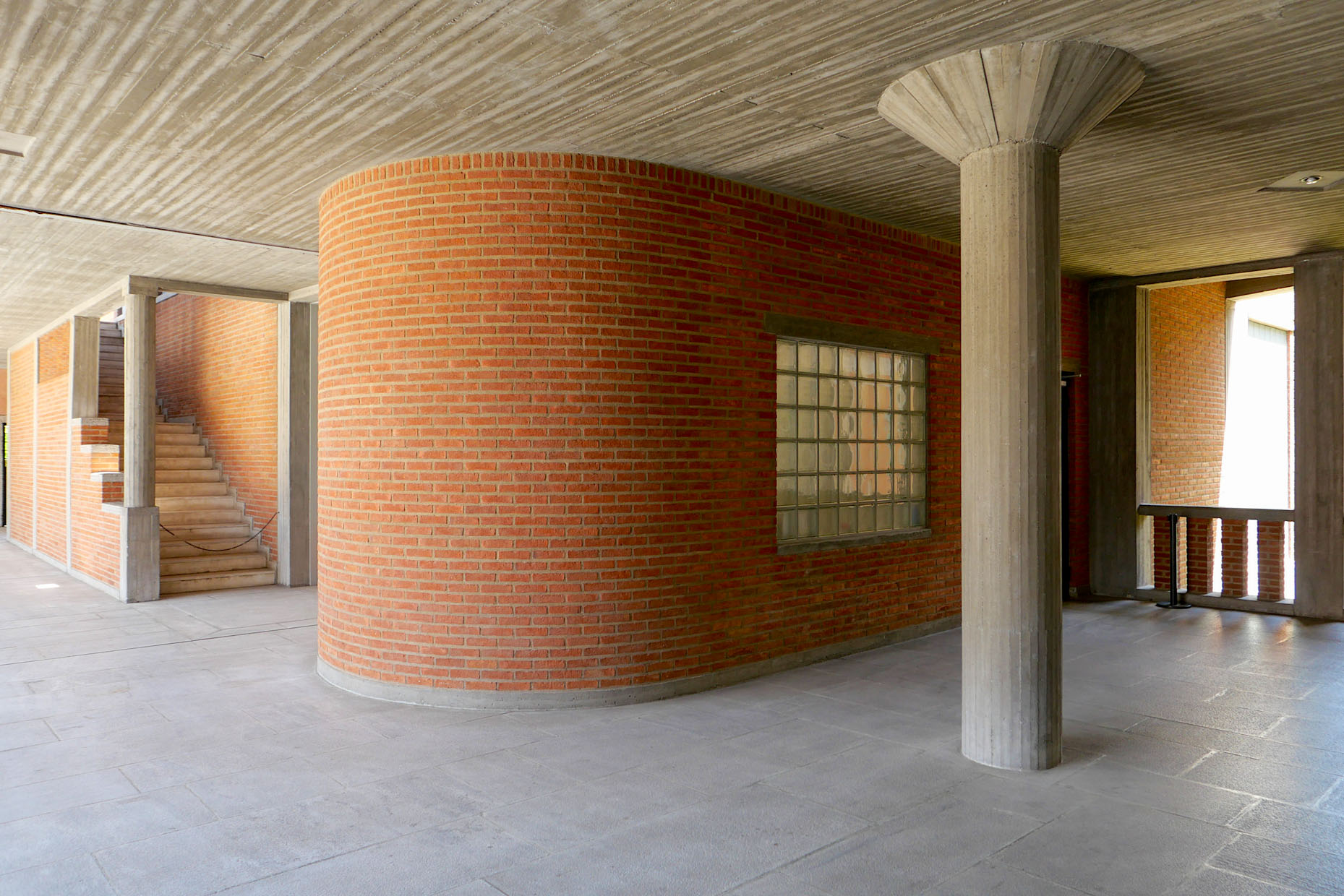
The way in which clarity, lines and Byzantium can be interwoven was demonstrated by the architect Kyriakos Krokos, who came from the island of Samos. He designed the building of the ‘Museum of Byzantine Culture’, which combines contemporary design with Byzantine elements and opened in 1994.
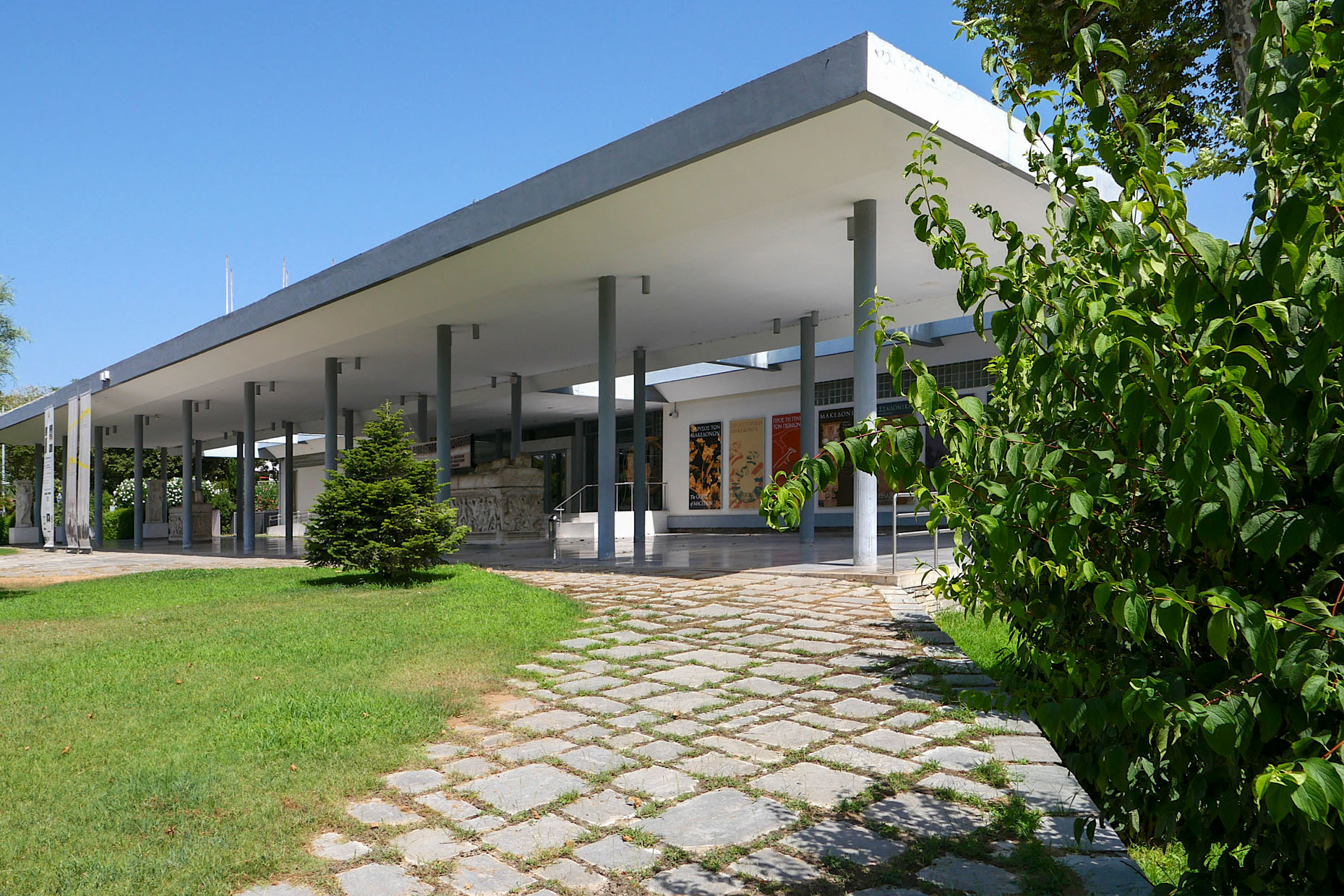
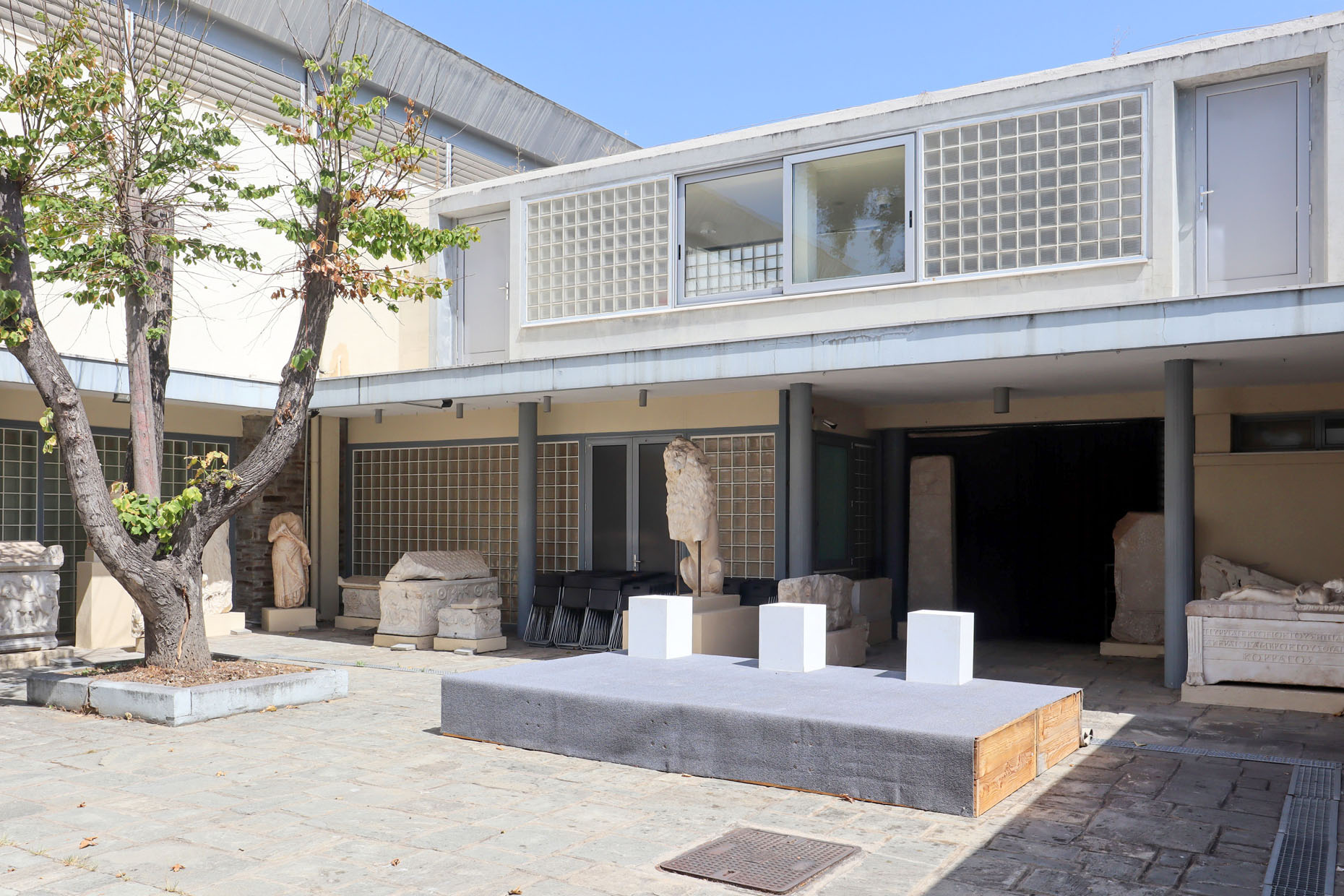
Nearby stands the ‘Archaeological Museum’ by Patroklos Karantinos (1903–1976). The classical modernist architect designed an atrium building. The complex was built around a central courtyard. Slender round columns support the dominant flat roof. The museum opened in 1962 and has since been modernised and converted several times, especially the interiors.
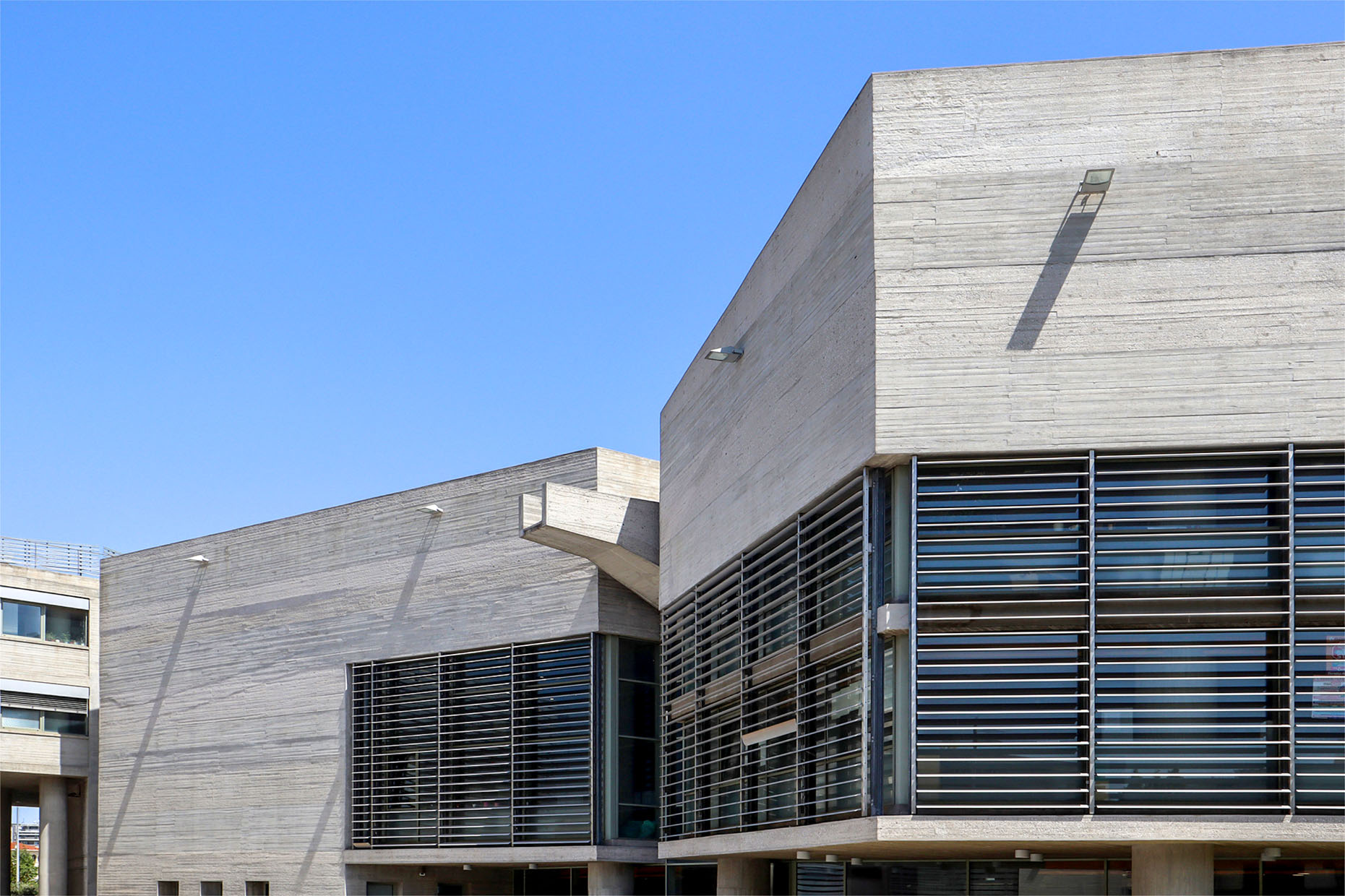
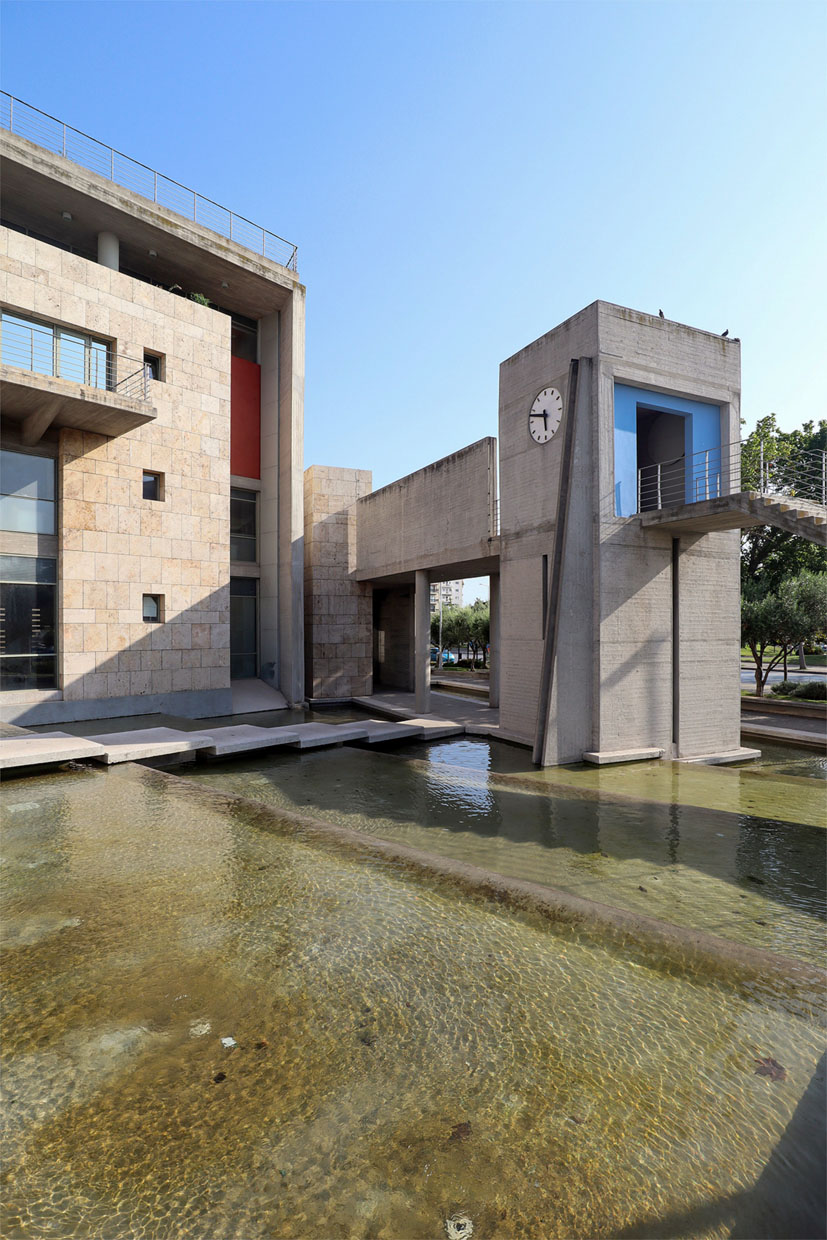
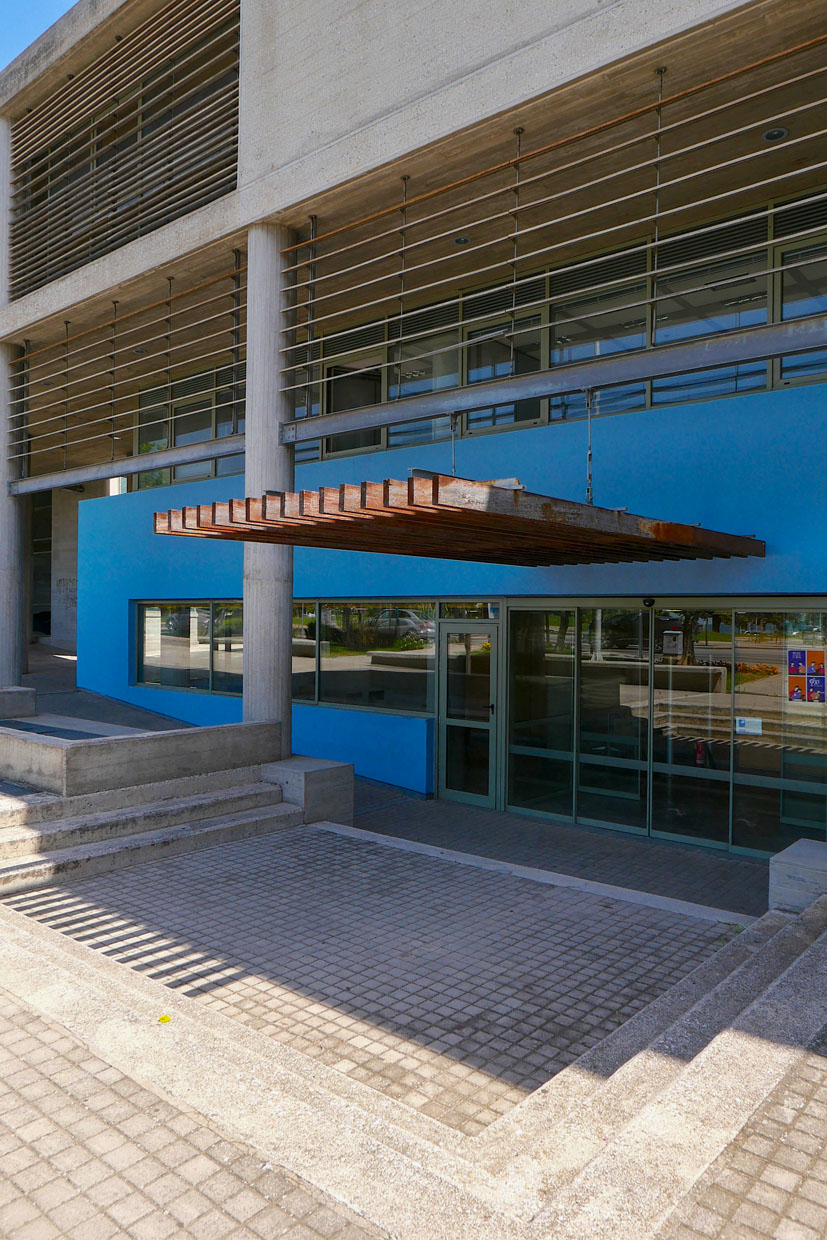
The new Thessaloniki City Hall was built in the same neighbourhood as the Krokos Karantinos buildings. Planning for the project began in the 1980s and was completed in 2009. The architects Anastasios and Dimitrios Mpiris designed a complex of bars, edges and triangles made of glass, concrete and water surfaces, which they arranged around a large city hall square. The area is freely accessible even after opening hours, both on the ground floor and partly also in the upper areas. The sharp-edged concrete design is idiosyncratic, yet it appears open and faces the city with the neighbouring museums and the nearby Nea Paralia.
Outside Thessaloniki, a cultural building in Vergina in particular has caused a sensation. The opening at the end of 2022 was a state ceremony attended by Prime Minister Kyriakos Mitsotakis and other high-ranking officials. About an hour’s drive away is the ‘Polycentric Museum of Aigai’ by Greek architect and university lecturer Alkmini Paka.
Aigai was the political cradle of the ancient Macedonian Empire, where the family of Philip II (382 BC-336 BC) and Alexander the Great ruled for over three centuries. For many centuries, the significance of the historic area was forgotten. It was only in 1977 that the archaeologist and university lecturer Manolis Andronikos came across significant treasures during excavations. It was a sensational find that rewrote the history of Macedonia. As a UNESCO World Heritage Site, the archaeological site houses the remains of the ancient city and the royal palace, as well as the tombs of several Macedonian kings, including the tomb of Philip II.
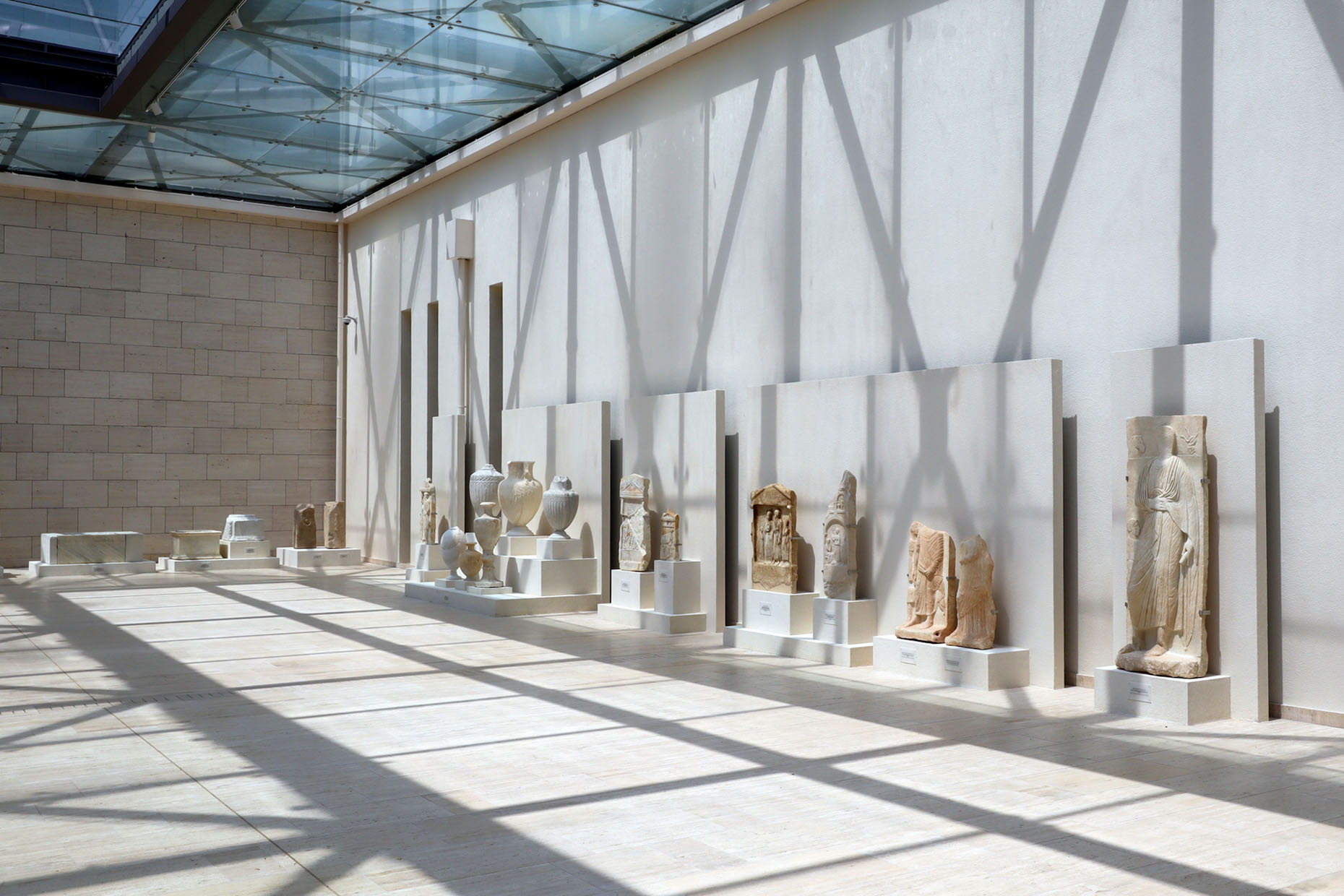
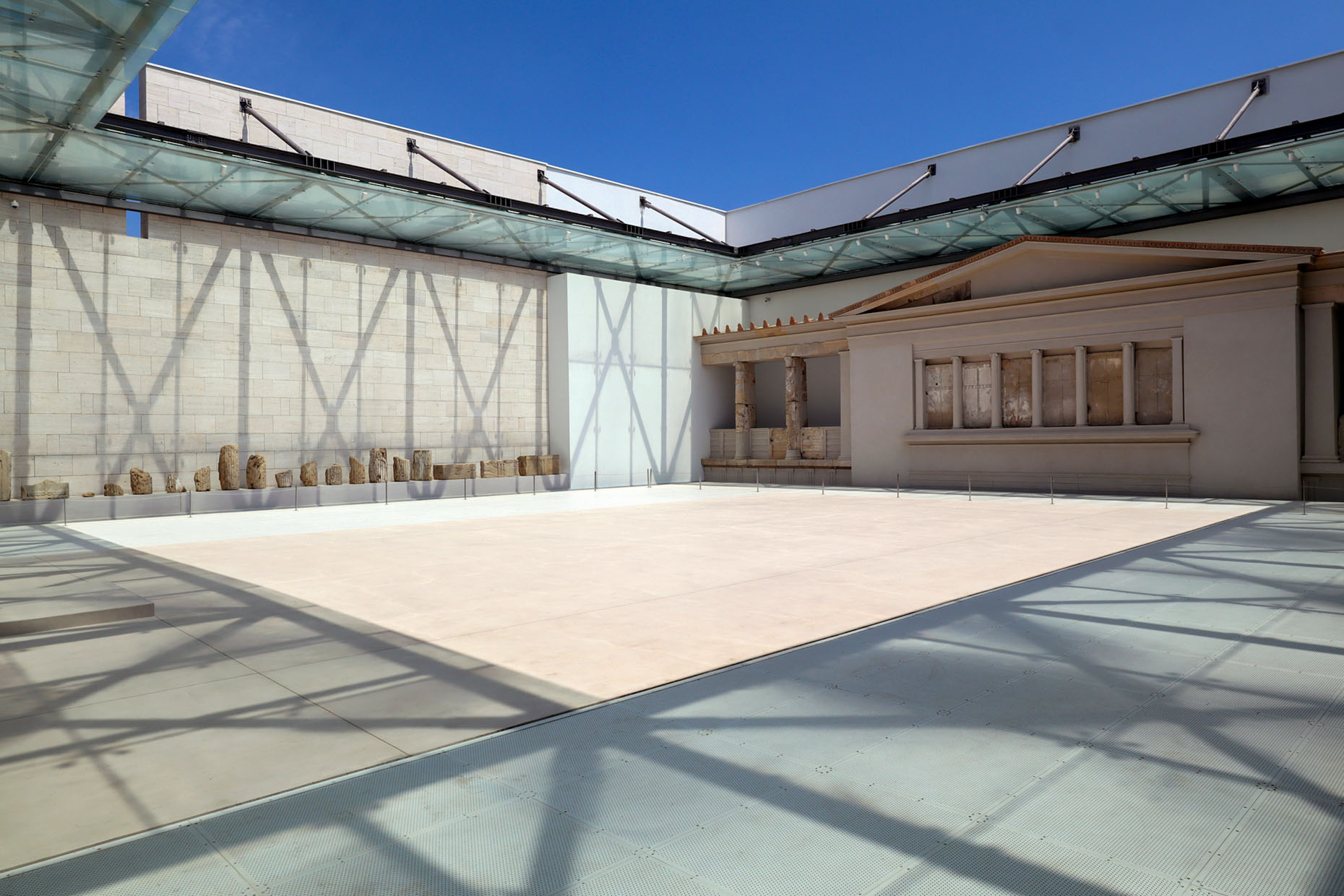
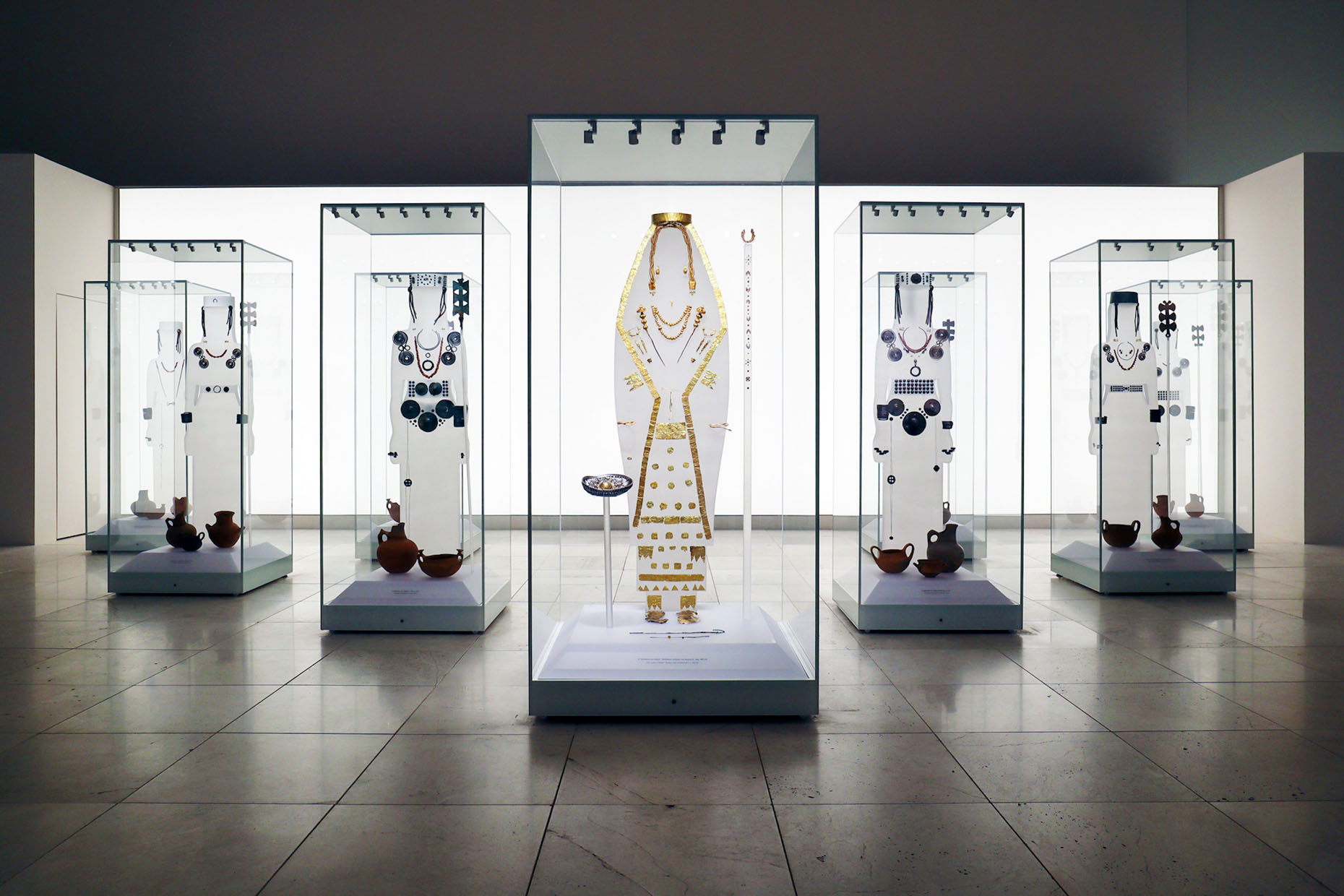
The central museum building of Aigai was created to connect these sites. Paka, who comes from Thessaloniki, designed large window fronts and open spaces that allow visitors to remain visually connected to the surrounding landscape. The colour scheme of the light-coloured façade allows it to blend into the sand-coloured surroundings despite the size of the building. Several exhibition areas highlight different aspects of Macedonian history and culture. Museum director Angeliki Kottaridi explains the concept as a kind of gateway: the new museum forms a comprehensive portal into the ancient history of Macedonia. According to Kottaridi, this includes the stories of the deceased, their everyday objects, customs and desires. The Polycentric Museum of Aigai: a journey through time by means of exhibits, architecture and the special atmosphere of the Central Macedonian lowlands and the foothills of the Vermio Mountains.
Text: Jan Dimog
Photos: Art installation ‘Umbrellas’, Thessaloniki (title picture, 4, 5), Rotunda of Galerius, Thessaloniki (1,2), New Embankment, Thessaloniki (3), Hotel Makedonia Palace, Thessaloniki (6), Concert Hall ‘Megaro Mousikis’, Concert Hall M1 (7), Concert Hall ‘Megaro Mousikis’, Concert Hall M2 (8), Museum of Byzantine Culture, Thessaloniki (9–11), Archaeological Museum, Thessaloniki (12, 13), New City Hall Thessaloniki (14–16), Polycentric Museum of Aigai (Aegae), Vergina (17–19)
Picture credits: © Hendrik Bohle und Jan Dimog / thelink.berlin
Author info
Journalist Jan Dimog runs a digital magazine on building culture together with architect Hendrik Bohle. On thelink.berlin they have been telling about their discoveries in Europe for years, especially about the connections between people and architecture.
When they are not on the road, they curate high-profile exhibitions, such as the travelling exhibition on Arne Jacobsen’s architecture.


0 Comments