
La Mugletta and the Colli Euganei – A fine blend of Italy’s most charming facets
A shared vision, volcanic landscapes and an aperitif under Goethe's palm tree. A holiday at B&B La Mugletta reveals distinctive architecture and a region that enchants with its quiet charm and cultivated gusto.
Venice can wait.
Very often, the decision to go on holiday initially revolves around the Hamletic questions of “Sea or mountains?”, “City or Countryside?”. In certain circles, it’s also about whether architecture is more important than landscape. Just a 15-minute drive from the elegant university town of Padua, the answer that reconciles all lies tucked away in a wild garden, amidst the peaceful Regional Park of the Euganean Hills: La Mugletta. Here, host Ulla Mugler serves up exquisite holidays in the best-kept secret of the Veneto.
There is hardly any other area that has internalised the concept of “gentle tourism” better than this fascinating, authentic and beautiful part of the Veneto region. The Adriatic Sea and Venice are both at a comfortable yet safe distance, but right on the doorstep of the Mugletta, the impressive cultural landscape of the Colli Euganei turns out to be a fine blend of Italy’s most charming facets. Those who are willing to embark on a slow journey of discovery far from the crowds will be surprised and will most likely be putting off a visit to Venice for another time.
A Hundred Hills.
Most people travelling through Italy know the Po Valley only from a quick transit on their way to more southerly realms. But they miss out on a geologically, botanically and culturally unique area: the forested volcanic formations of the Euganean Hills southwest of Padua, that with their conical silhouettes rise like giant sculptures on the western edge of the Italian lowlands.
At first sight, a film instantly comes to mind: “The Englishman who went up a hill but came down a mountain” — for only one of the roughly one hundred elevations is higher than 600 metres. Their almost perfect geometry is due to volcanic phenomena. The geological peculiarity of the hills has enabled the development of a wide variety of flora and fauna. In 1989, therefore, the first Veneto Regional Park was created to preserve the biodiversity and cultural heritage and to establish the Euganean Hills as a slow-tourism destination of excellence. That proved to be successful.
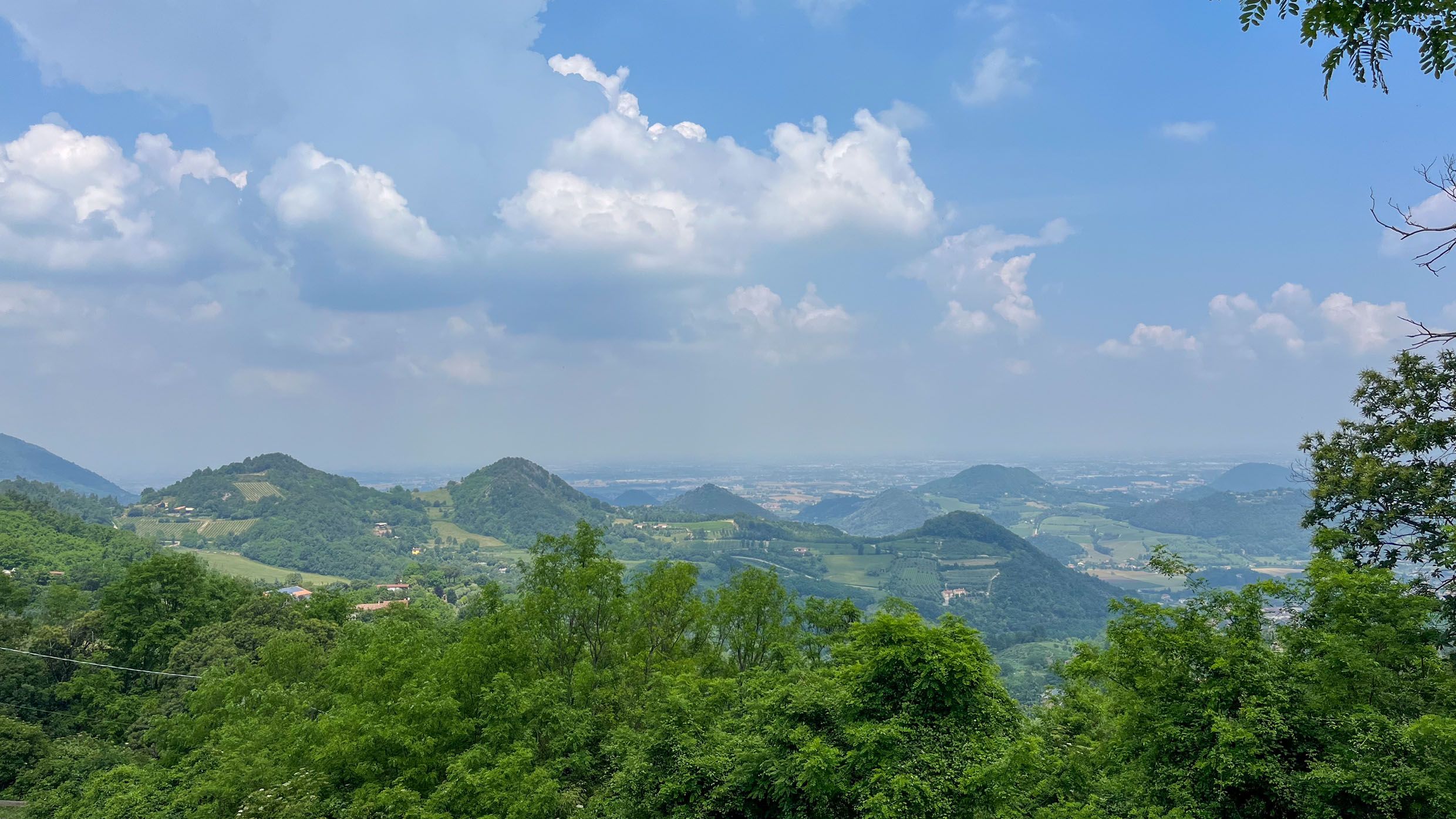
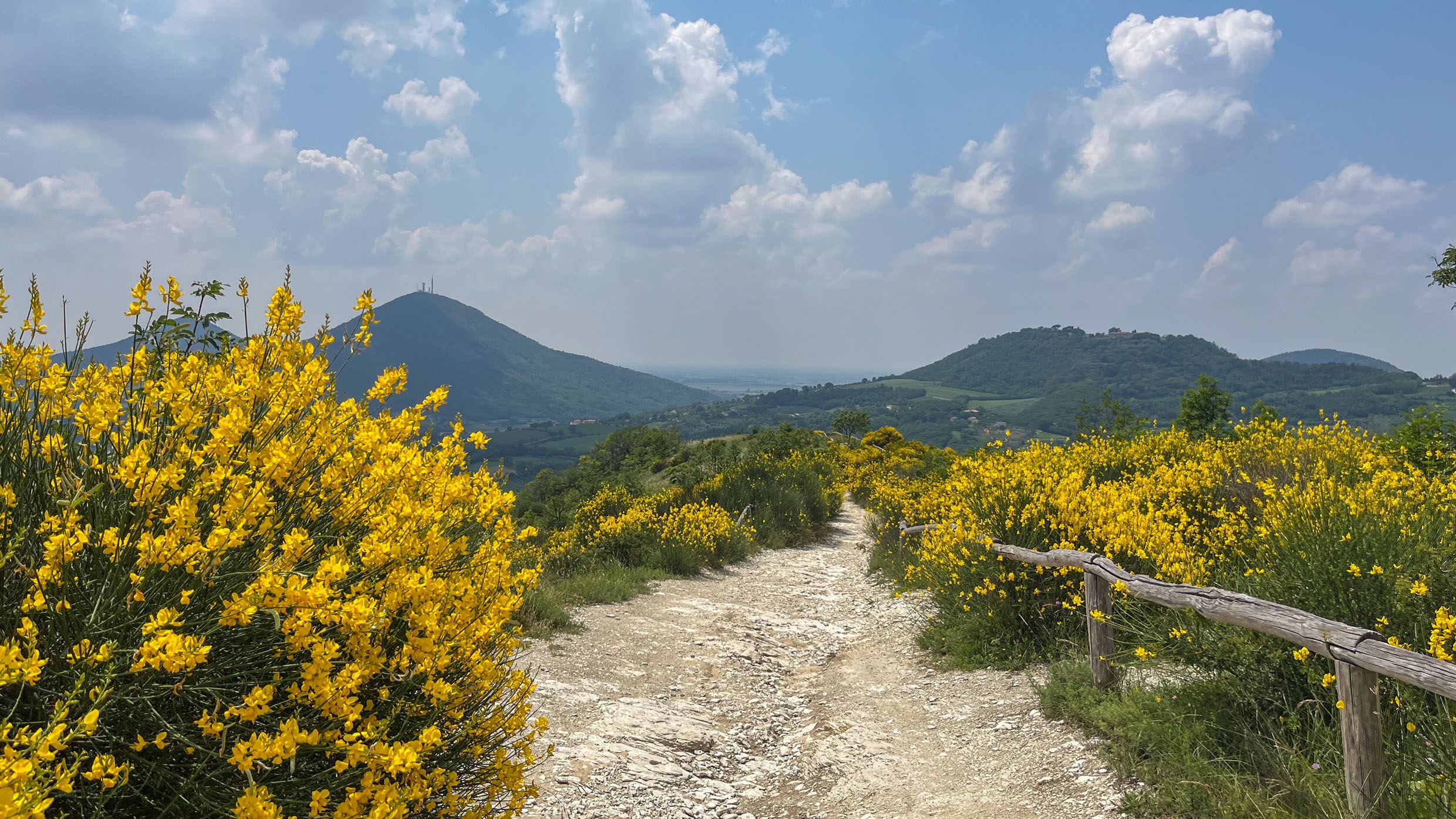
The Parco Regionale dei Colli Euganei covers more than 18,000 hectares and includes 15 municipalities that are committed to a common vision: Abano Terme, Arquà Petrarca, Baone, Battaglia Terme, Cervarese Santa Croce, Cinto Euganeo, Este, Galzignano Terme, Lozzo Atestino, Monselice, Montegrotto Terme, Rovolon, Teolo, Torreglia and Vo’. Each place contributes its unique features and character to the park project. This “talent fusion of destinations” has brought about a multifaceted spectrum for memorable holiday experiences in the midst of the archaic landscape of the volcanic hills.
A dense network of hiking trails and cycle routes also make it possible to explore the Regional Park in a climate-friendly way: On foot, by bike or on horseback. Unspoilt nature and beautiful historic villages line the countless little roads and paths that wind around and over the tops of the gigantic molehills. Anyone cycling along the lonely country lanes and barely frequented side roads will be reminded of Tuscan scenery. But these timeless landscapes with lush forests, vineyards, olive groves and orchards are just as typical of this region as the graceful villas, delightful gardens and quiet hamlets in no hurry.
It is no coincidence that the Euganean Hills have been chosen over the centuries by Venetian noble families, poets and clergymen as a place of contemplation and feudal leisure. And yet, this region is still relatively unknown. For lovers of authentic places and exquisite products however, this corner of Veneto is case of lucky serendipity, as excellent wines, award-winning olive oil and gourmet cuisine are to be found here behind and on top of every hill.
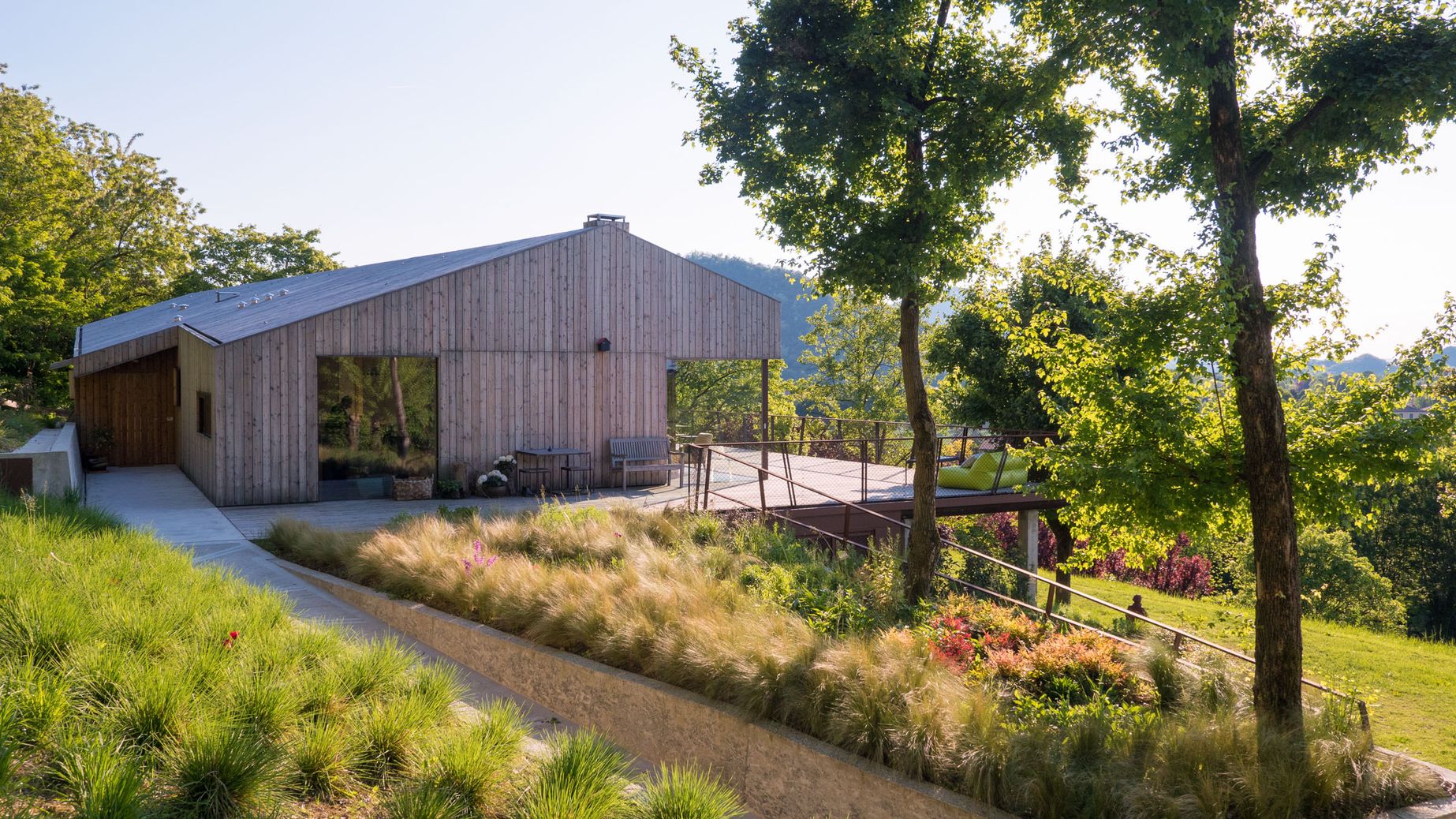
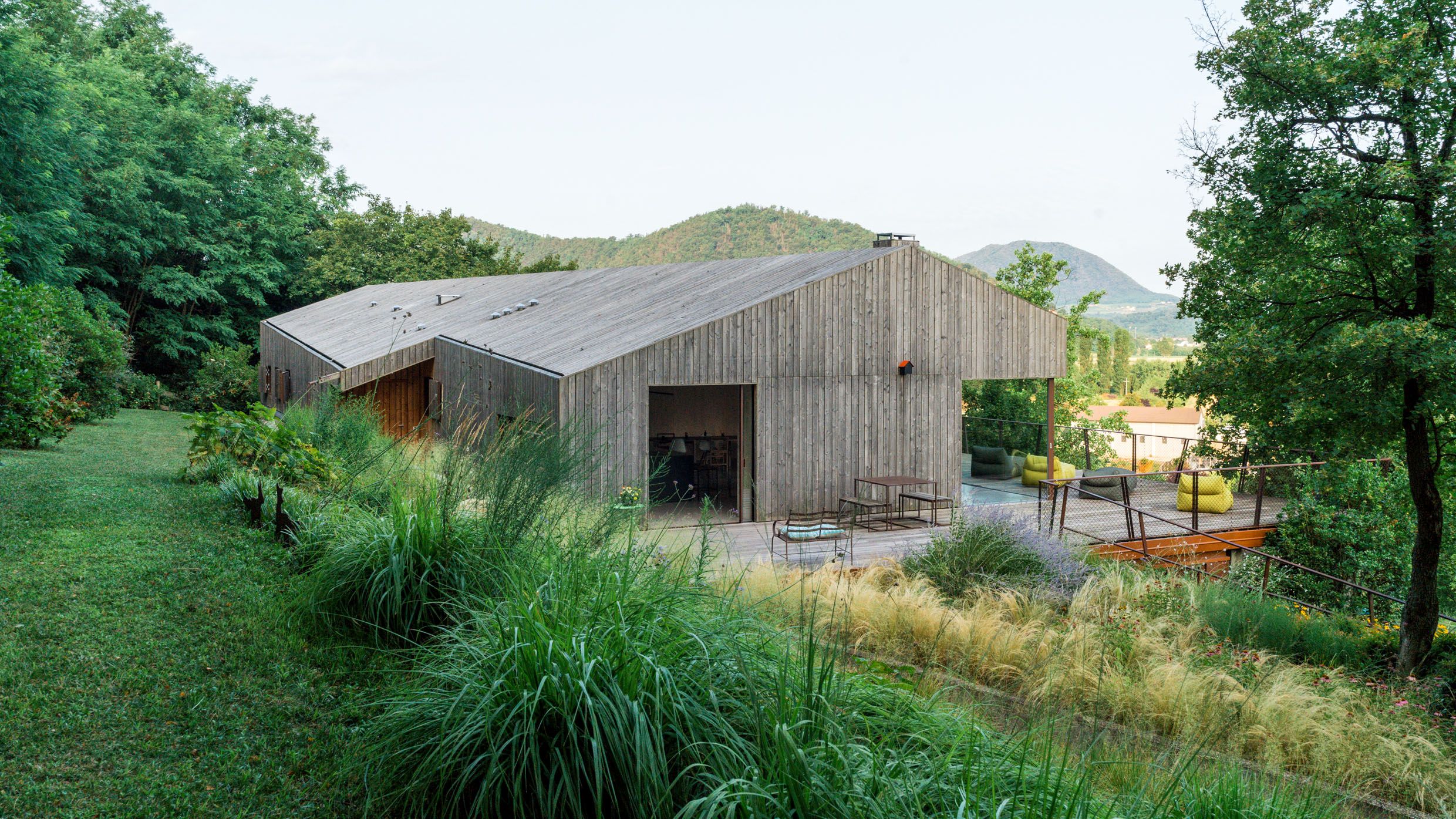
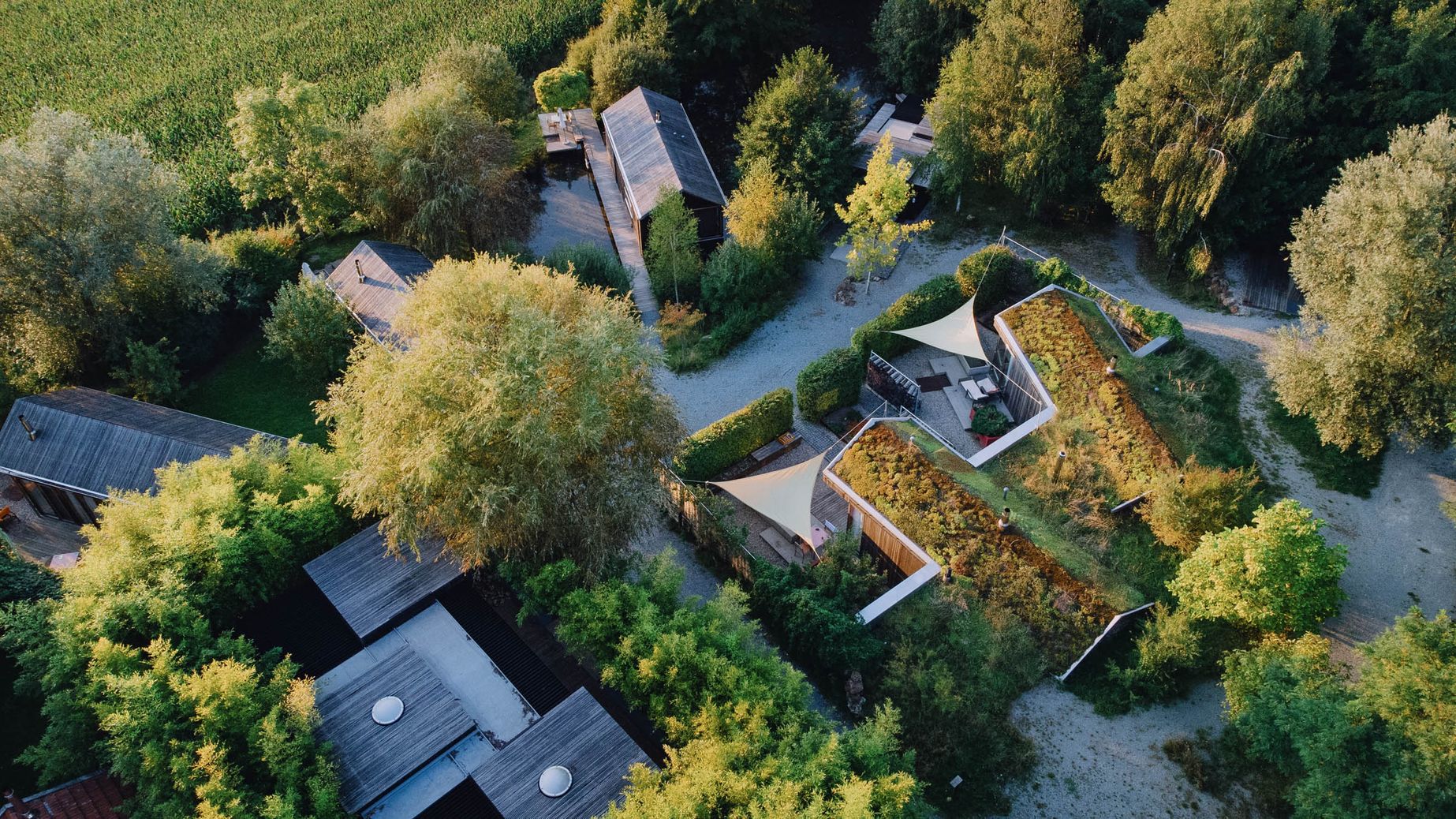
Nestled right in the middle of this epicurean campagna is the B&B La Mugletta, designed with contemporary aspirations and great sensitivity to the natural context and built on a slope above the village of Monterosso. Clever, discreet yet striking architecture merges with wild, gently tamed nature; relaxed holiday spaces embrace style and gusto, warm-hearted dialogue meets creative inspiration.
Fior d’Arancio.
It’s been a few months since my visit to La Mugletta, but it’s still so present that it deserves the present tense here.
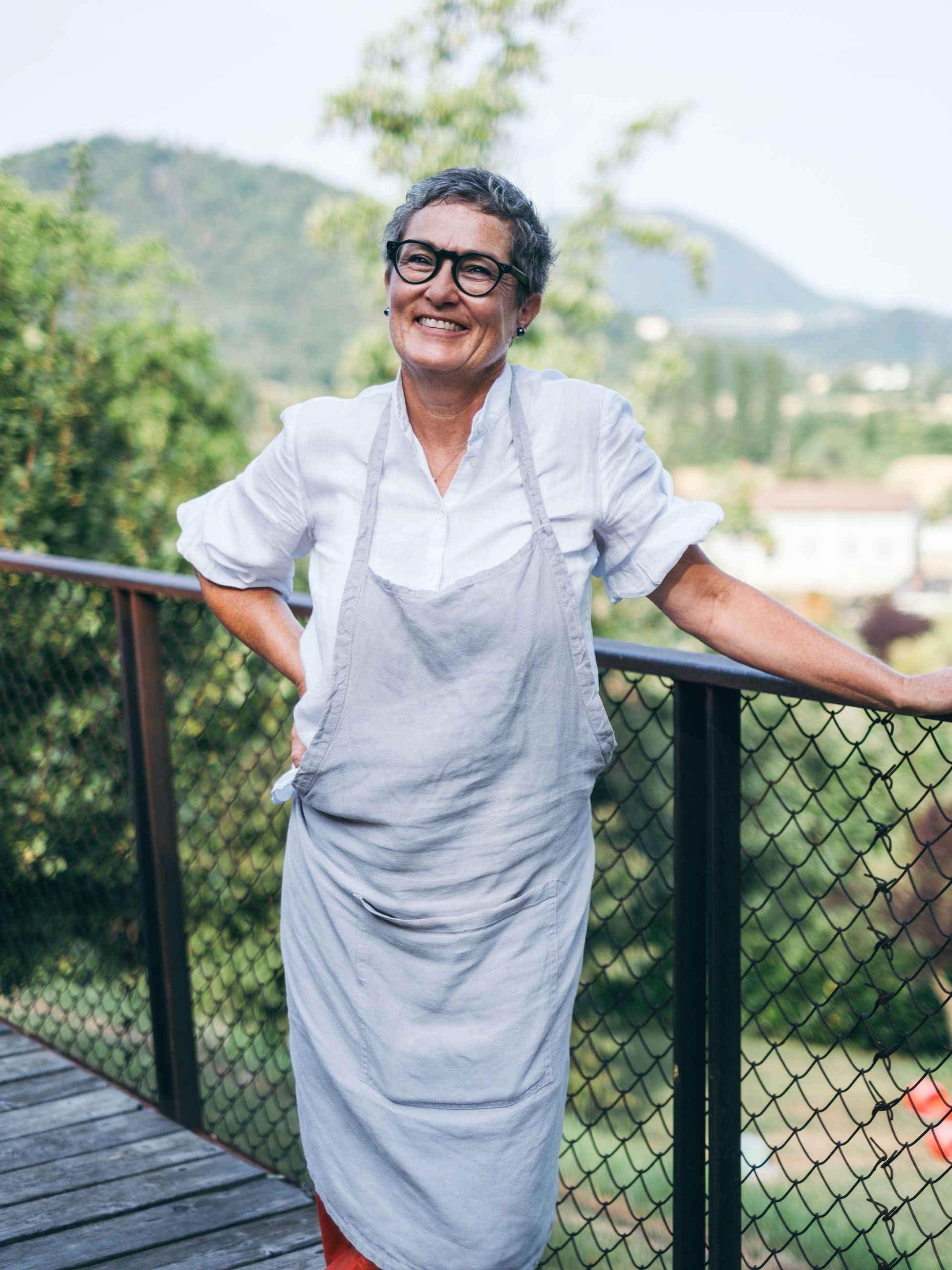
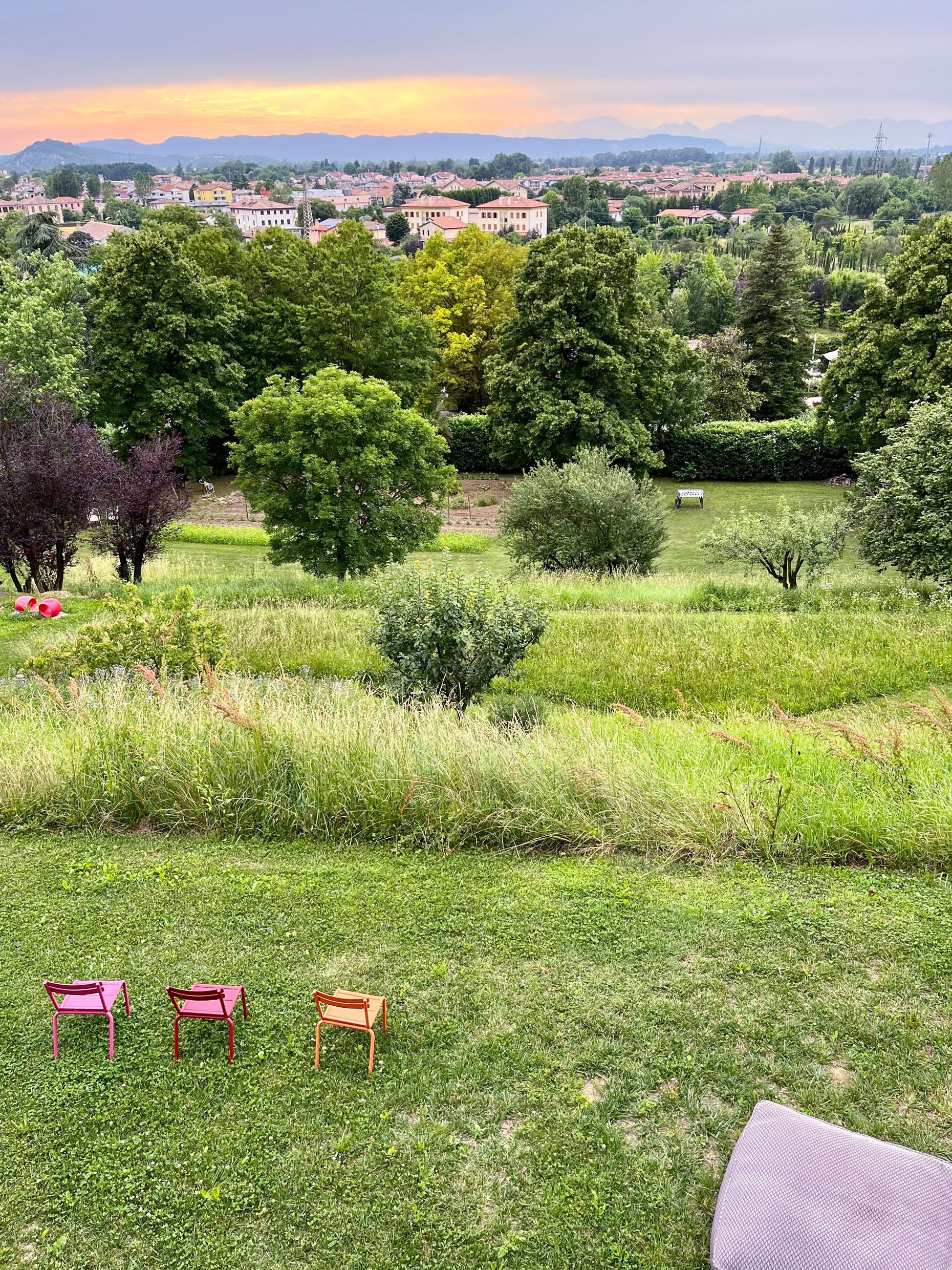
In the balmy spring air you can already feel all the summer’s delight and nature is pulling out all the stops to tickle my senses. On a mild evening in June, I am sitting on the spacious terrace of La Mugletta, with a view of Monterosso and the homonymous hill. The evening turns out the way mild June evenings are meant to be in Italy. A group of old friends has gathered around the table: Ulla and Eberhard Mugler, the owners and hosts of the B&B, the graphic designer Francesca Forte and the architect duo Sergio Corazza and Valentina Lazzaro, who with their multidisciplinary planning studio Integrate Collective have conceived the overall design concept for La Mugletta and carefully placed it on the hill. Other protagonists of the evening: a dry, aromatic Fior d’Arancio DOCG from the Colli Euganei, all the time in the world and Ulla’s antipasti, which are an ode to joy.
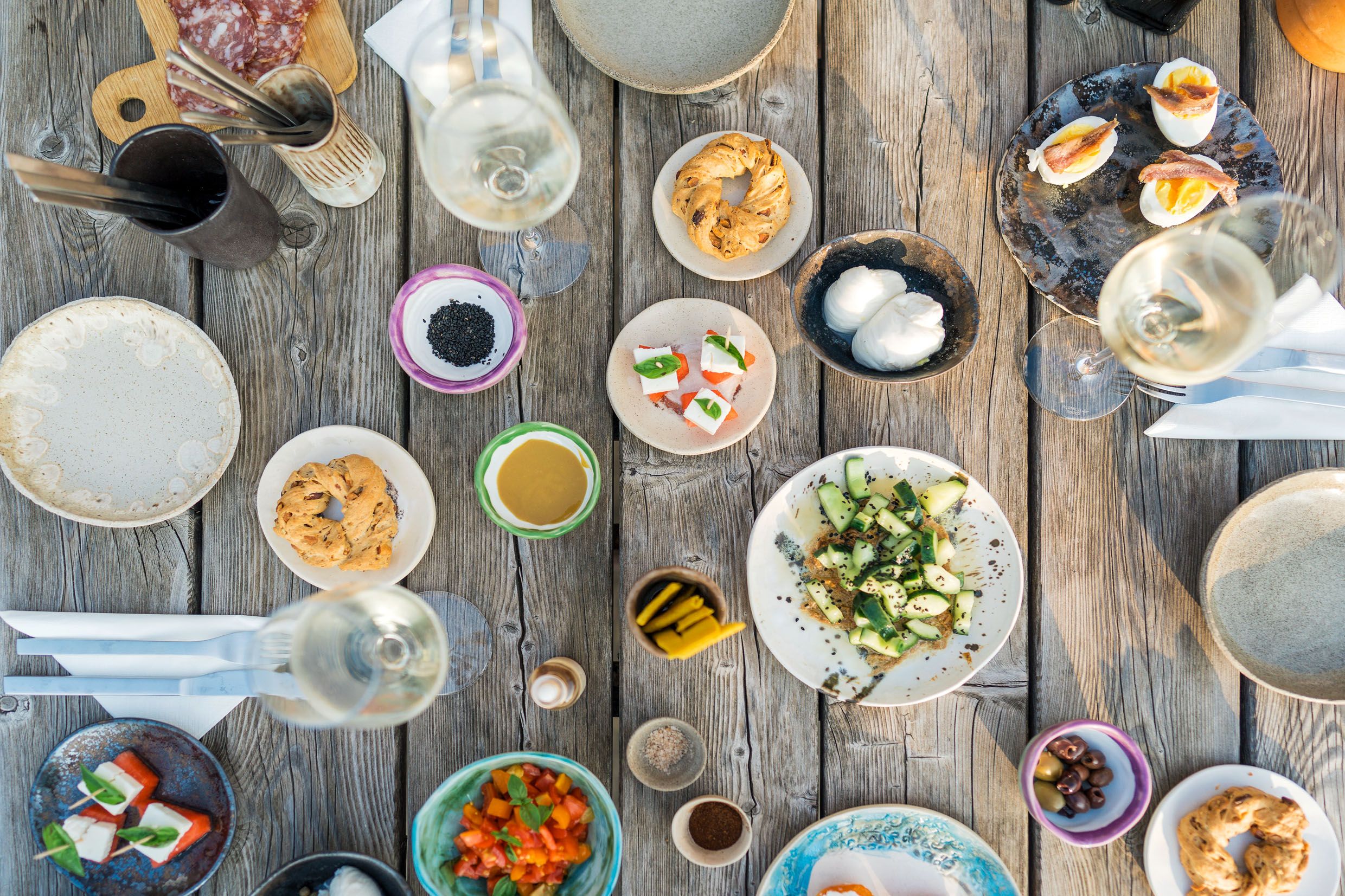
My questions are not simply followed by answers, but rather by five-part, gesticulated narratives in full colour, while the countless small plates of appetisers are passed across the table. I realise how important the making of La Mugletta was for everyone involved. Privately as much as professionally.
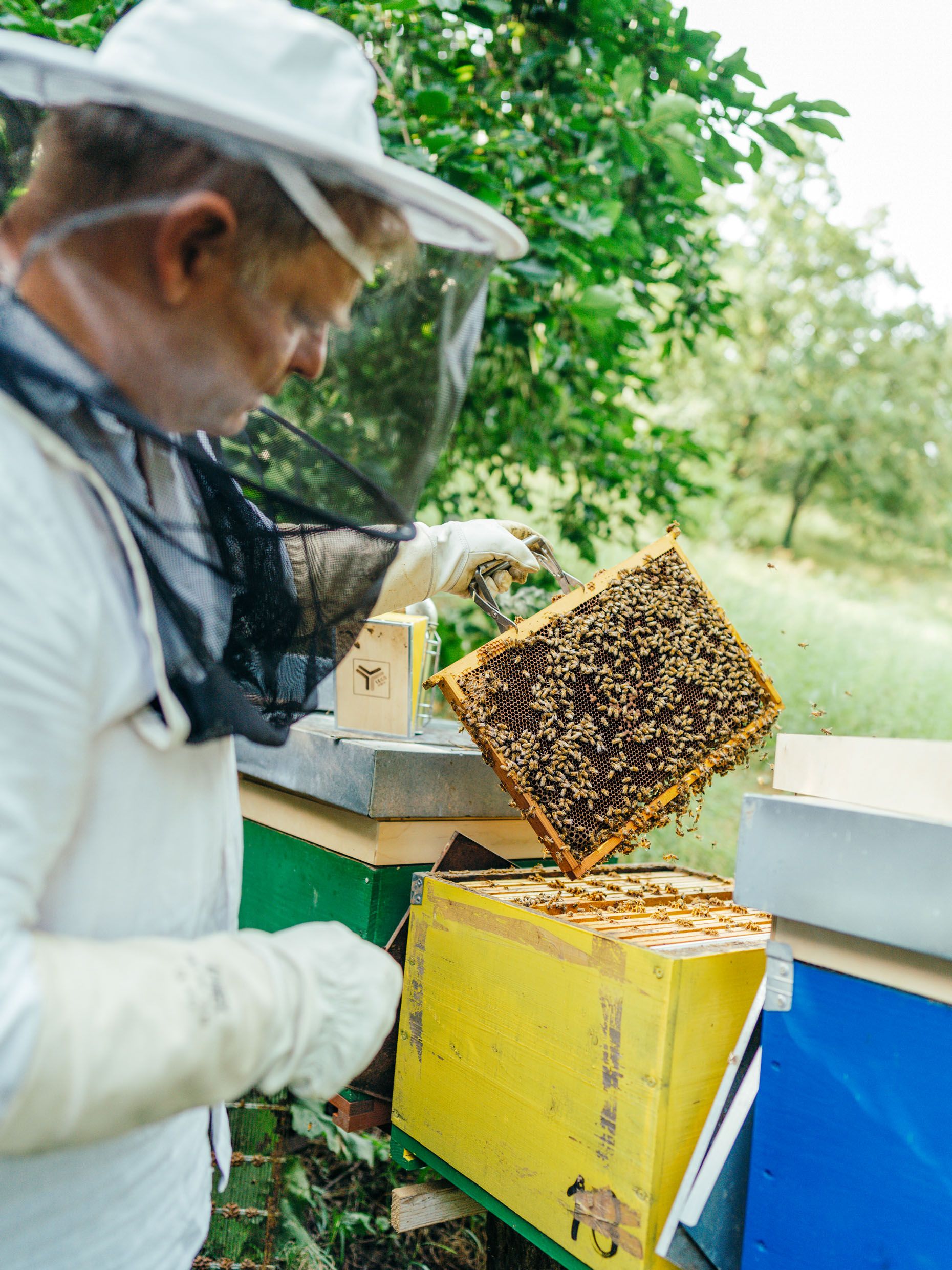
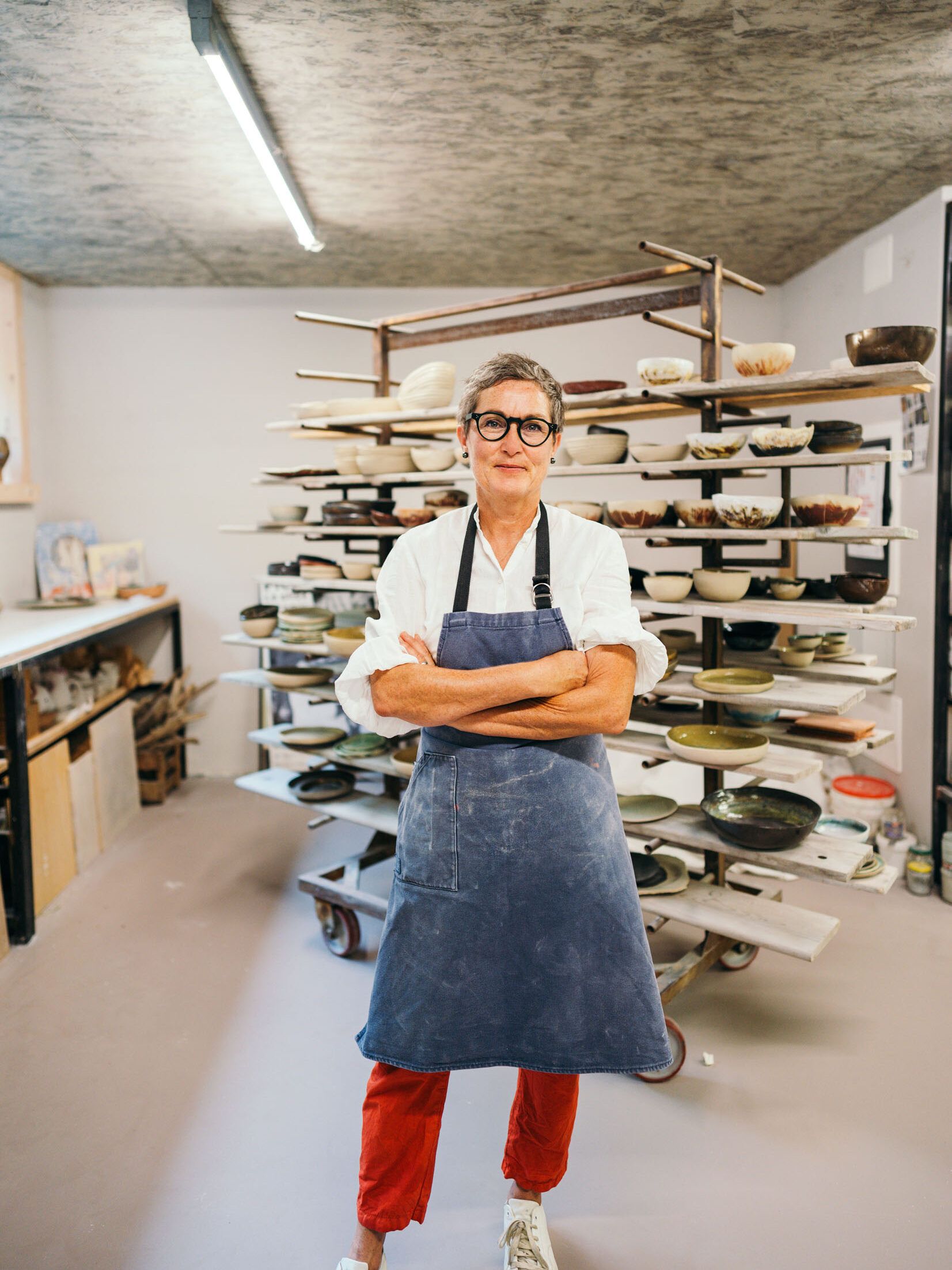
It was a career-changing moment for Eberhard and Ulla, who met in Italy 25 years ago, fell in love with the rare beauty of the Paduan hinterland and found their new home in Monterosso for themselves and their two now grown-up daughters. With the B&B project, both of them have started all over again. Packed schedules and tightly timed meetings around the globe have made way for a new quality of life. Eberhard indulges in beekeeping in his spare time, Ulla in the art of pottery. In doing so, they have learned to be fully in the present moment, and this is something the guests can sense. The couple shares a passion for gardening, disagreeing only when it comes to who may cut the lawn.
For the architect duo Corazza-Lazzaro, La Mugletta was a courageous move to place an obstinately consequent and contemporary essential building between the strictly regulated hills of the Regional Park, especially in the land of Palladio. In doing so, they have also set an statement for integrated, nature-related building. The process of creating La Mugletta has brought a lot into motion, has challenged the conventional repertoire of Venetian architecture and at first caused incredulous reactions and quite a few bureaucratic obstacles. Today, La Mugletta is well-known and appreciated in the neighbourhood and beyond. And so is la Signora Ulla. All together — the house as well as its creators — have contributed a lot to bringing the Parco Regionale Colli Euganei into the focus of an audience that has a soft spot for hidden gems.
Integrate Collective.
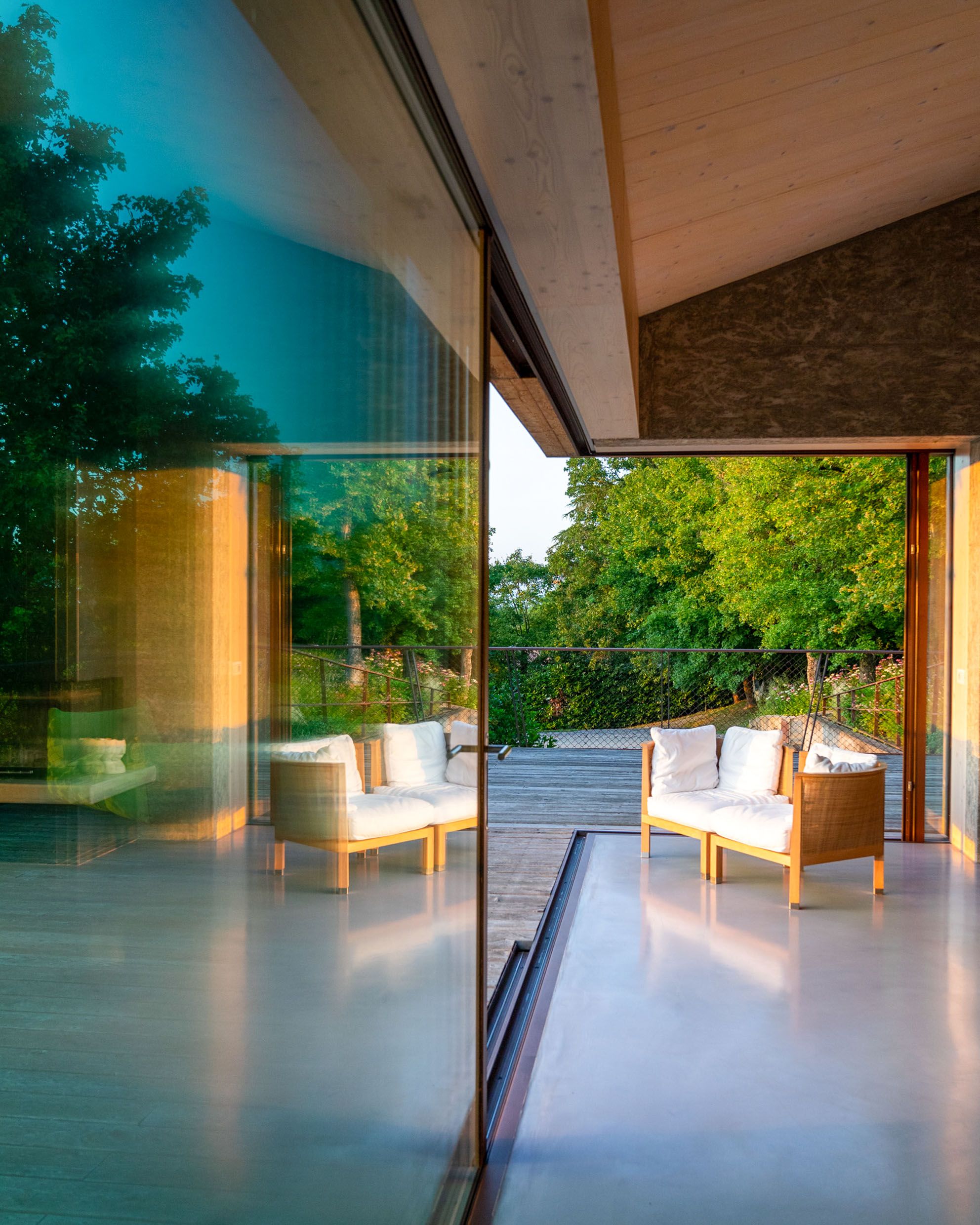
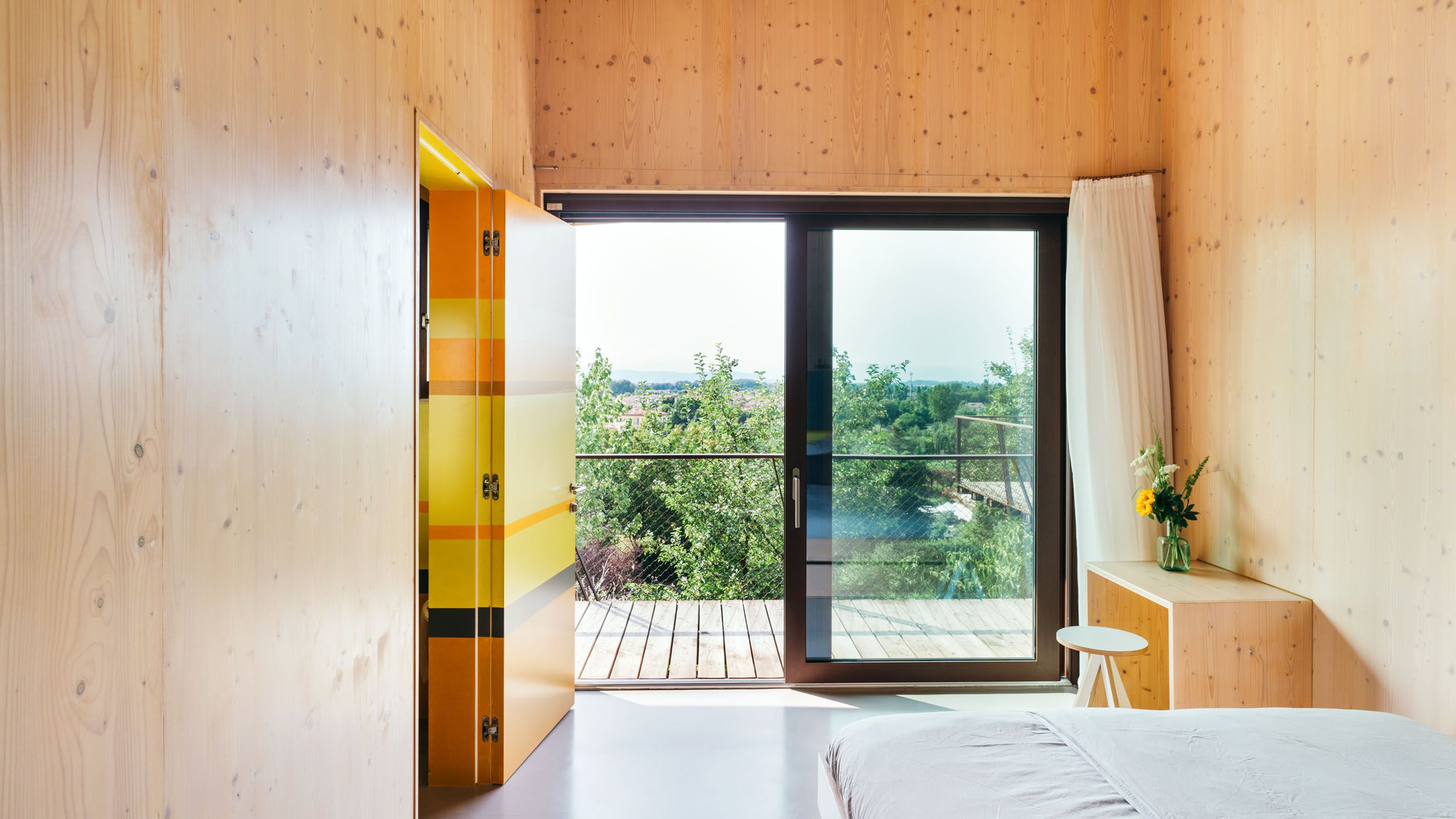
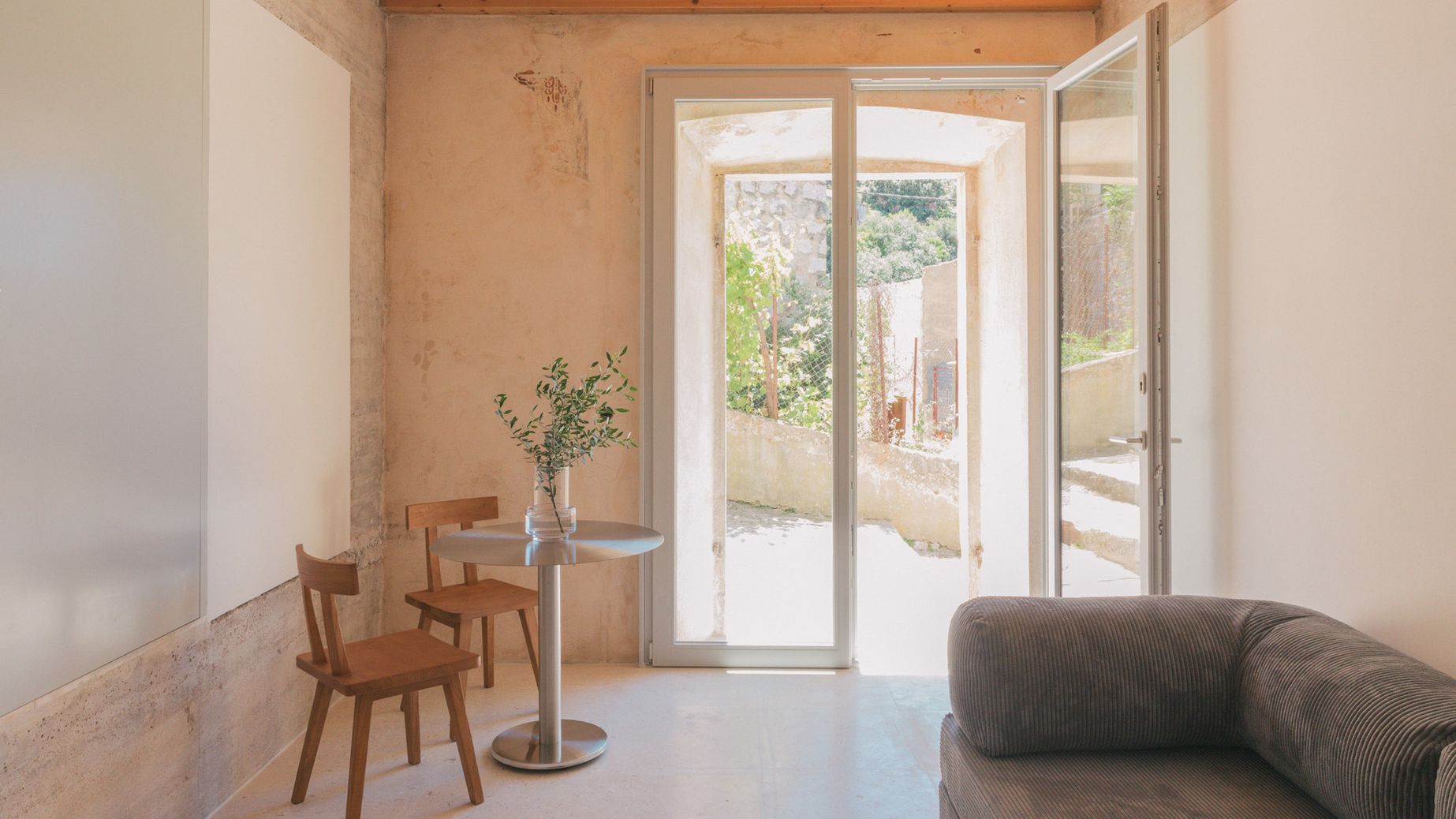
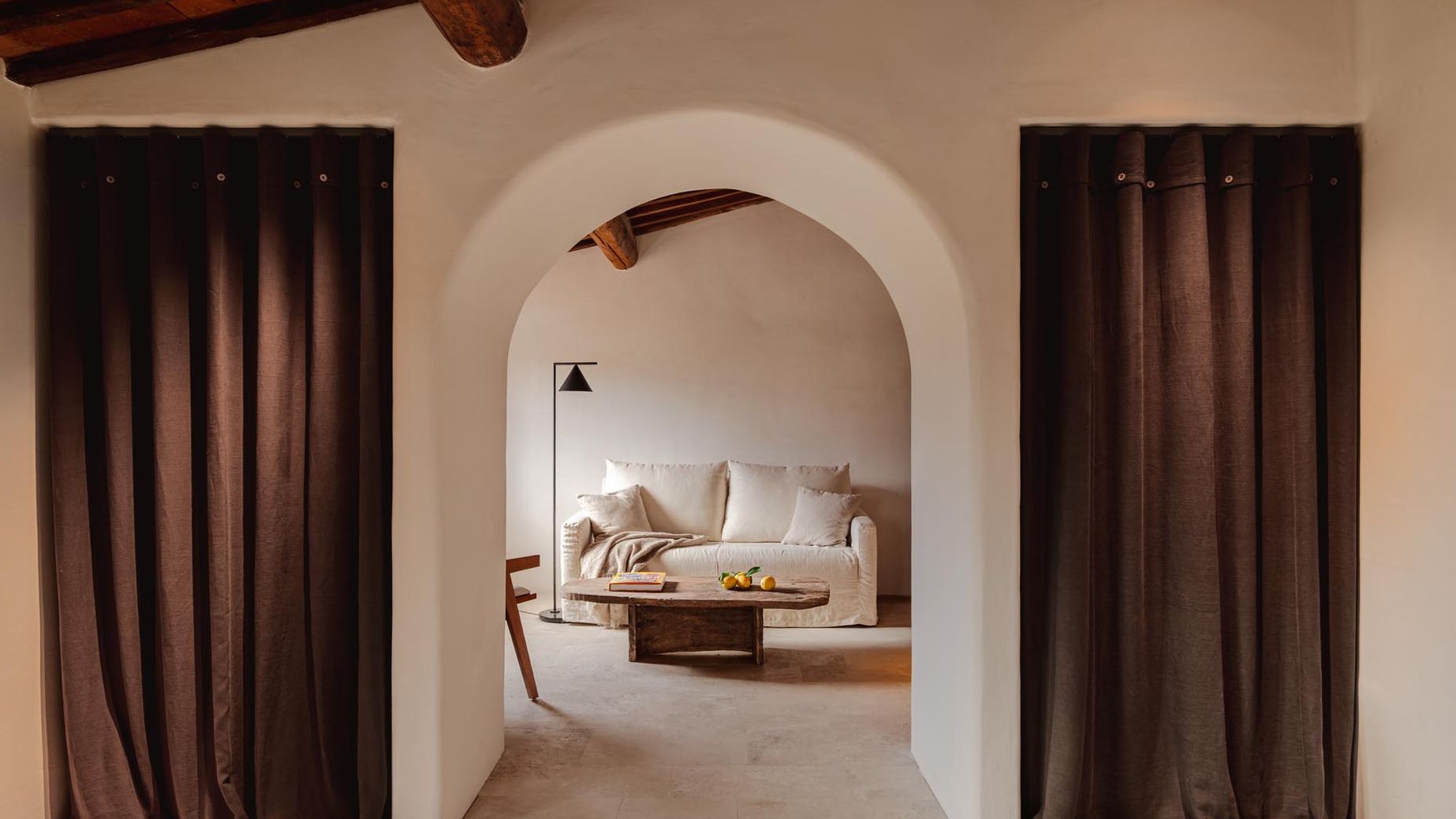
The Muglers’ brief to the team of Integrate Collective was precise, yet left room for playful creativity: they dreamed of an unconventional place to relax in contemporary architecture, which would be in full symbiosis with nature. Also, the overall concept should incorporate some key features in the design process of the B&B: Family, shelter, growth, integration of abilities and disabilities, well-being, time sovereignty, simplicity, sharing, openness, context. All this surrounded by and integrated into spaces where nature and architecture flow into each other seamlessly and barrier-free in a constant interplay of light and matter. When the floor-to-ceiling sliding doors of the large salotto are open, all boundaries disappear: Nature permeates living space, the garden becomes an outdoor salon.
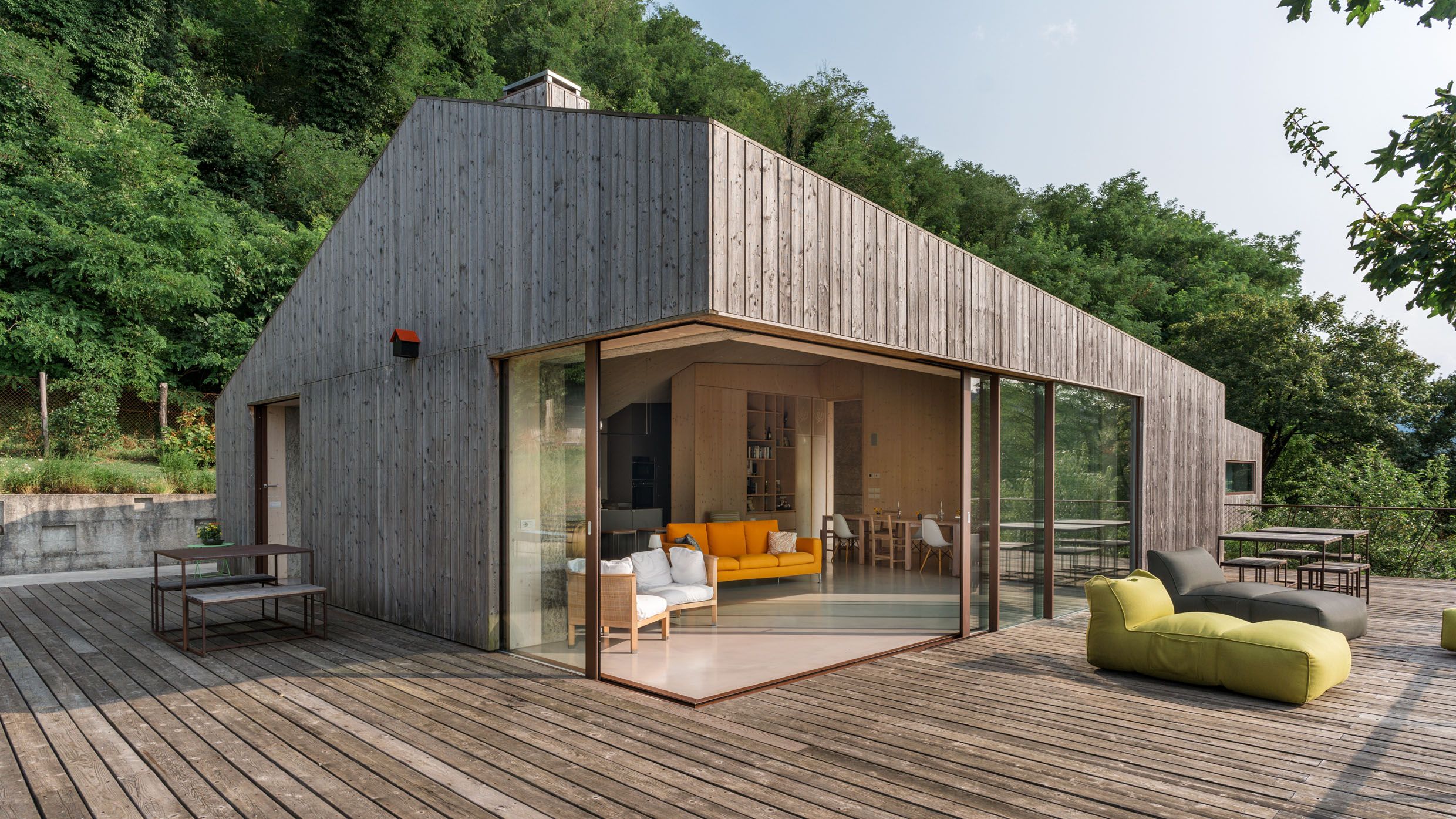
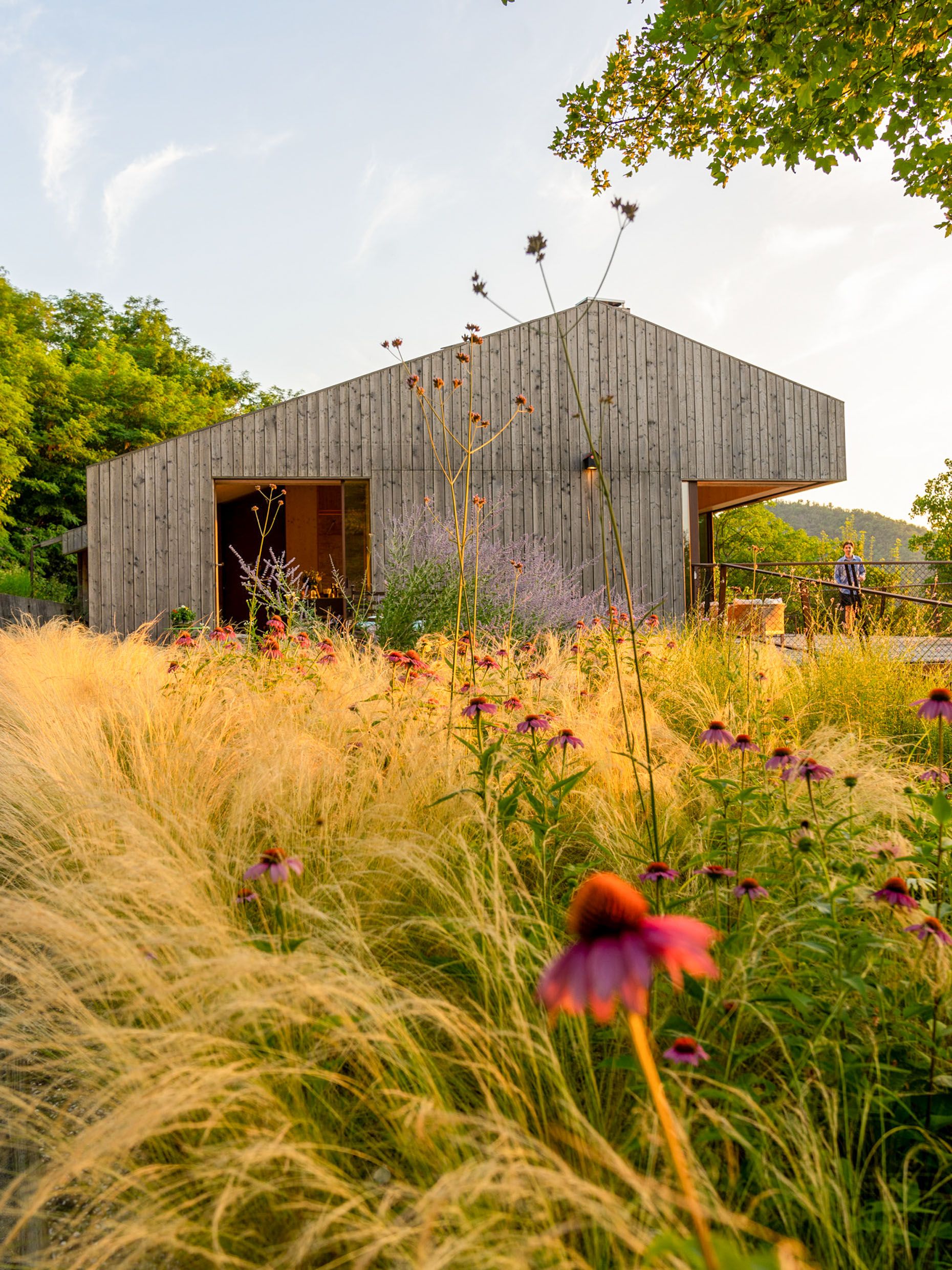
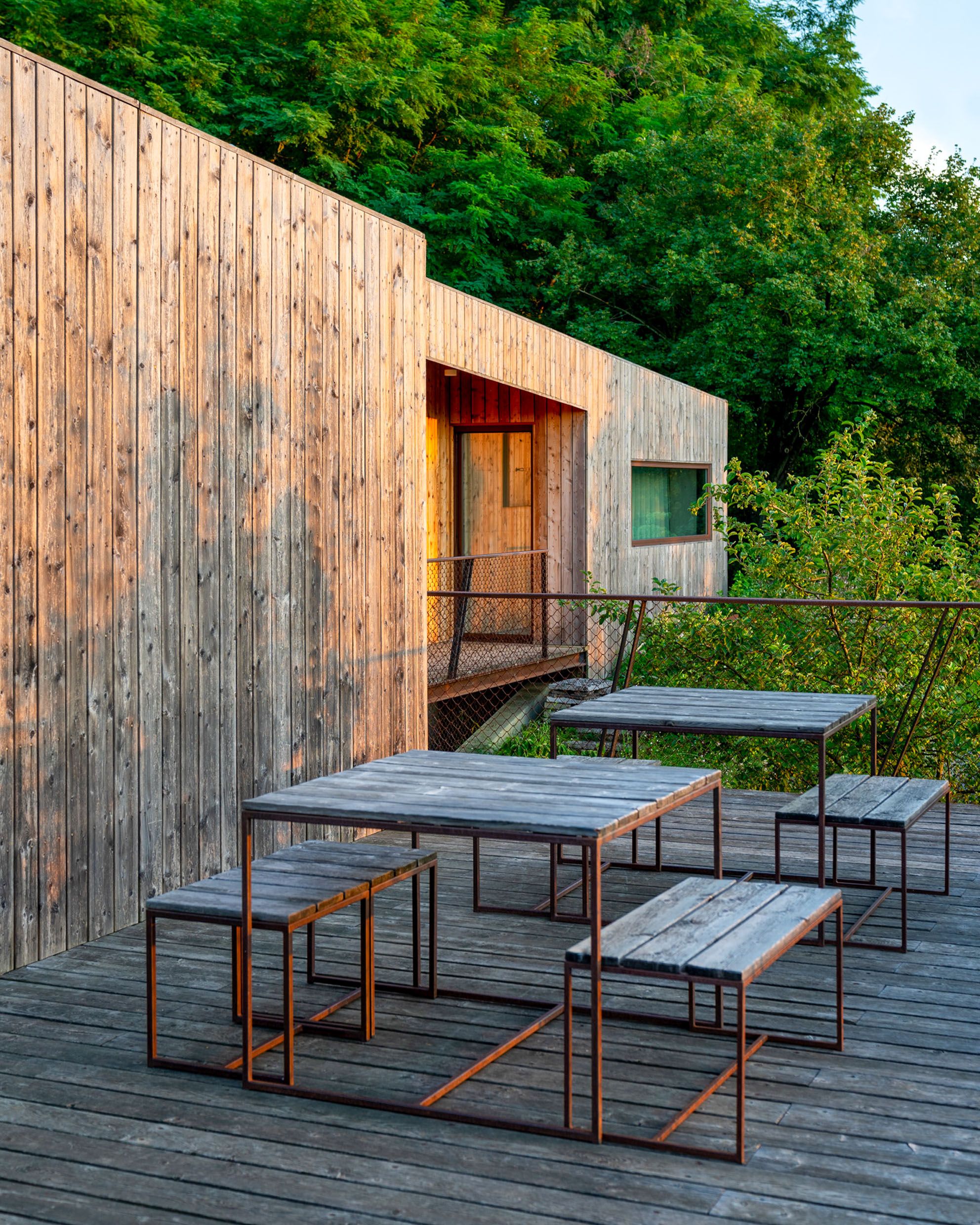
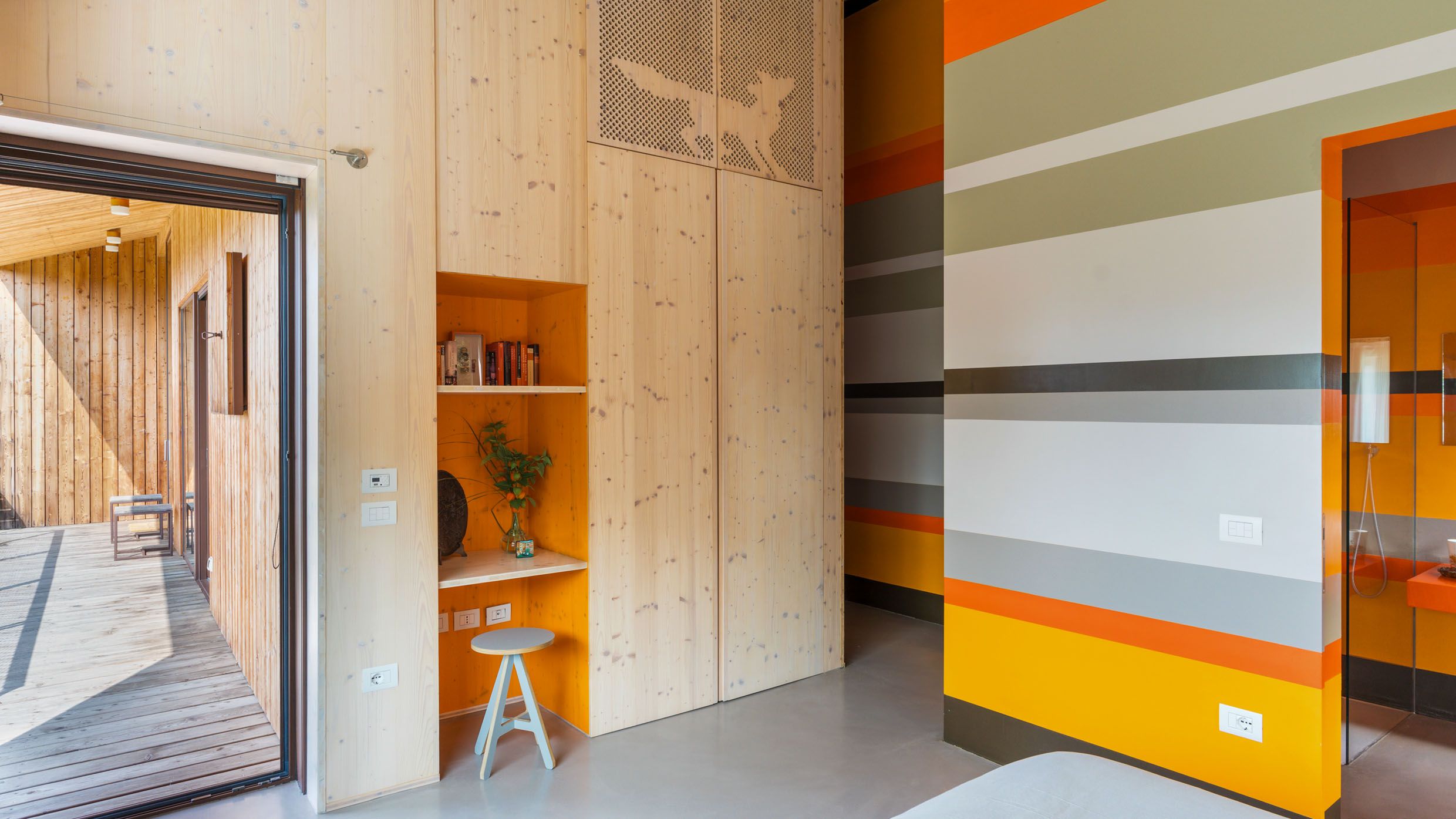
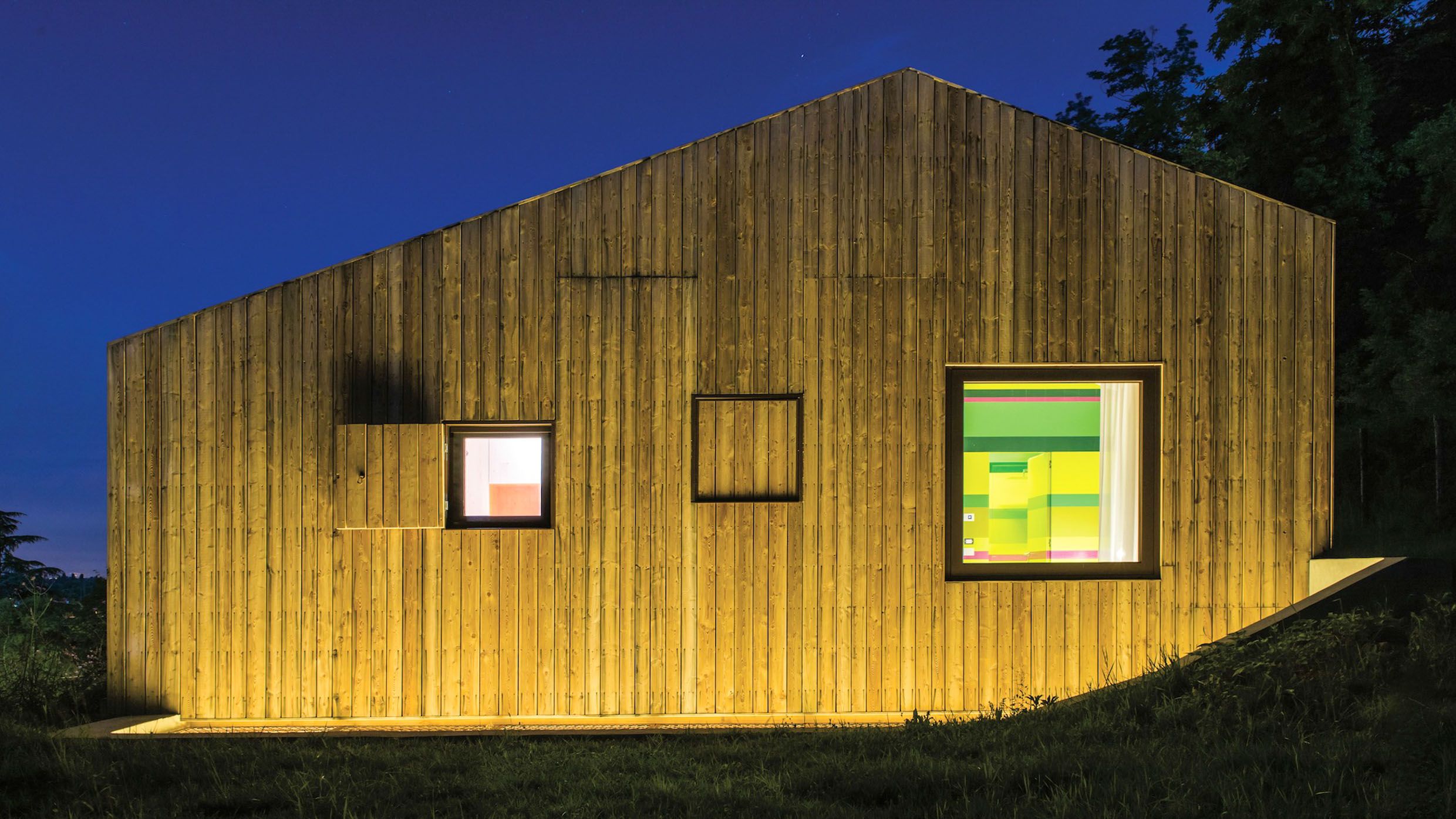
The elongated, two-storey building is defined by simple, clear lines; the plain exterior cladding of natural larch wood underlines the reduced formal language. The Muglers’ B&B is a place of essential clarity. The senses calm down in the midst of a quiet aesthetic that always has a little twinkle in its eye.
On the upper floor, the structure is made of sustainably produced XLAM wood panels with wood fibre insulation, while the basement is made of reinforced concrete cast in wooden formwork and insulated with foam glass. In terms of energy, the house is self-sufficient: heating and cooling are provided by heat exchangers that use the thermal energy available underground with the help of two geothermal sensors. Rainwater is fully recovered and fed into an underground cistern via downpipes and drainage systems.
Courage for colour.
Architect and graphic designer Francesca Forte was in charge of the naming as well as the development of the logo and colour concept of the house.
La Mugletta is a fancy name, an Italianised declination of the family name Mugler. A gentle, happy, soothing sound that onomatopoeically affirms the essence and atmosphere of the B&B.
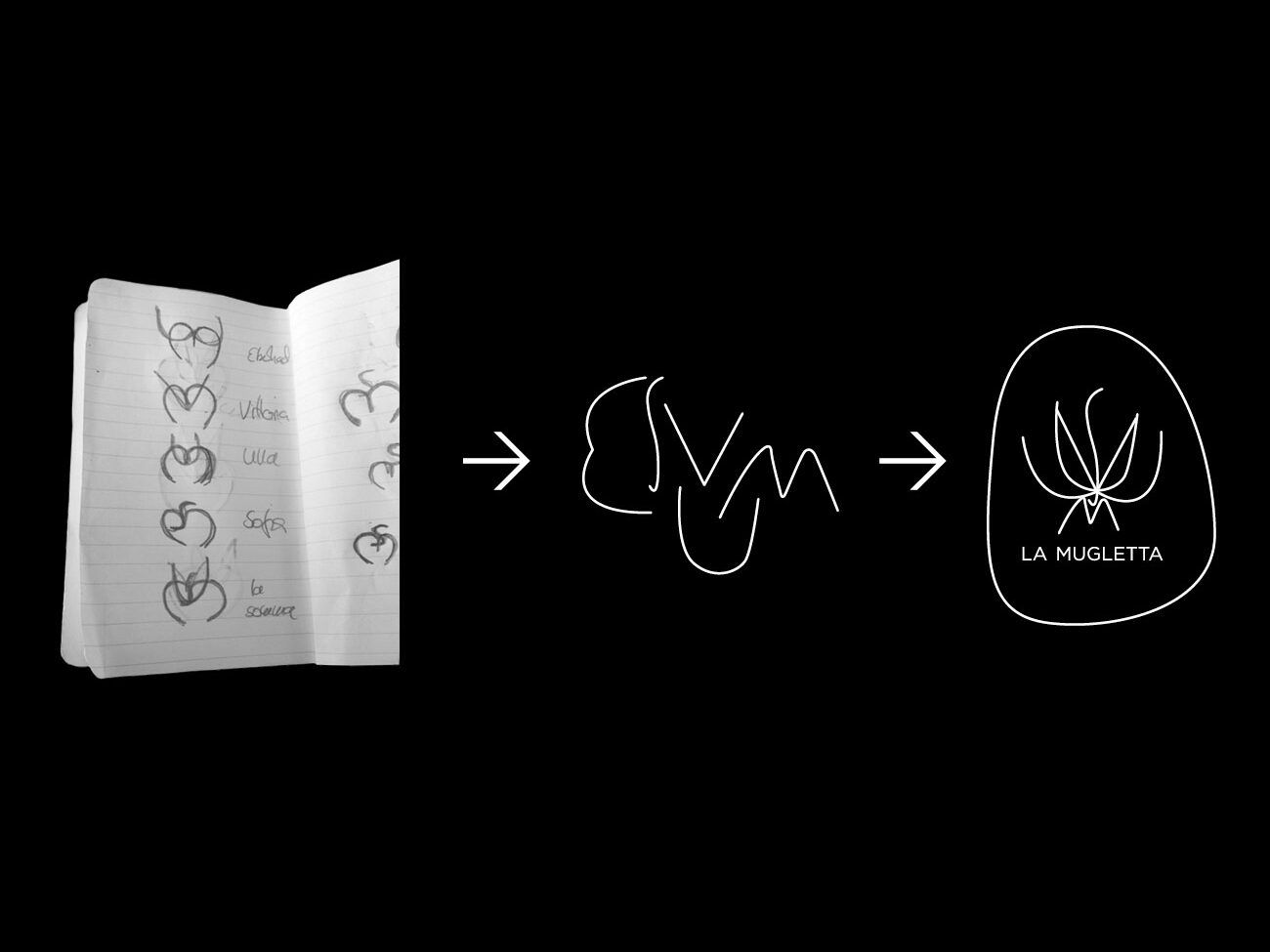
The logo is based on the landlady’s calligraphy. It incorporates the initials of all four family members, refines them graphically, mixes them and reassembles them. The result is an unmistakable sign that looks like a flower or an insect. Its allusion to ancient family heraldry is a humorous and tender homage to the two essential elements of the Mugletta: nature and the people who shape it.
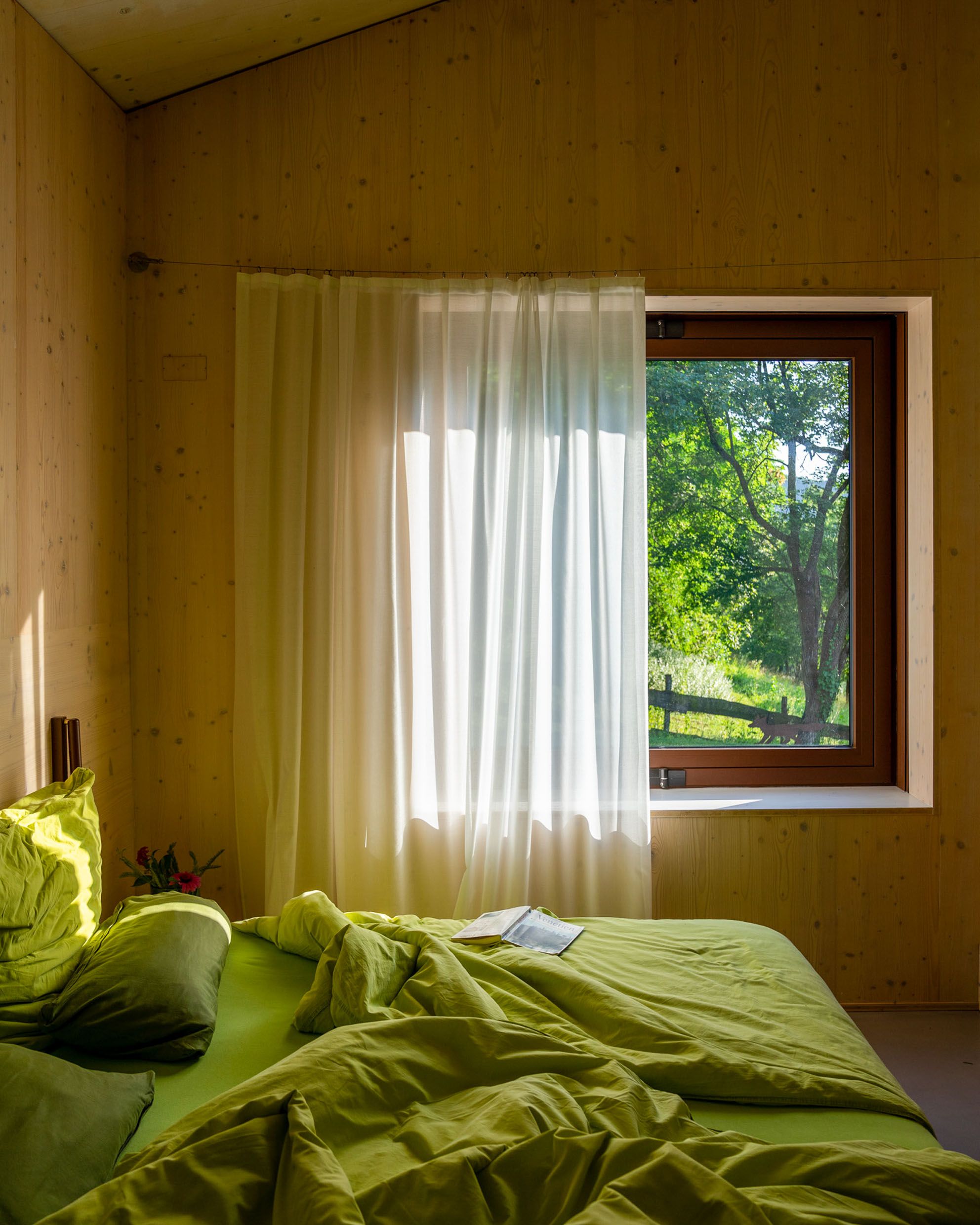
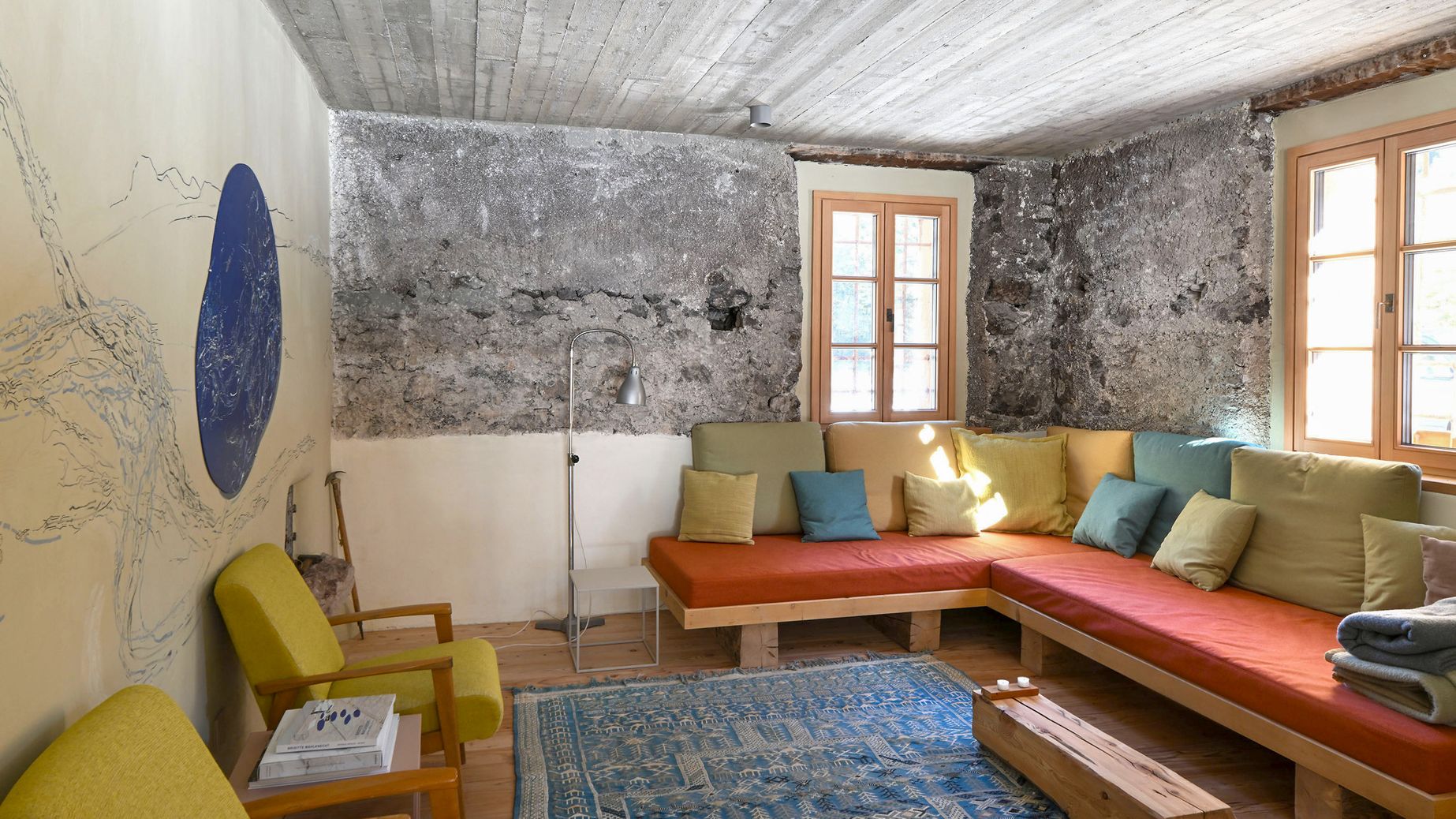
The three guest rooms in the rear, more introverted area of the Mugletta are the stage for the colour concept of the house. In contrast to the neutral wooden façade and the natural tones in the living area, the bedrooms clearly show their colours: green, yellow and orange set the tone, while the multi-striped bathrooms quote the palette of the Mugletta garden.
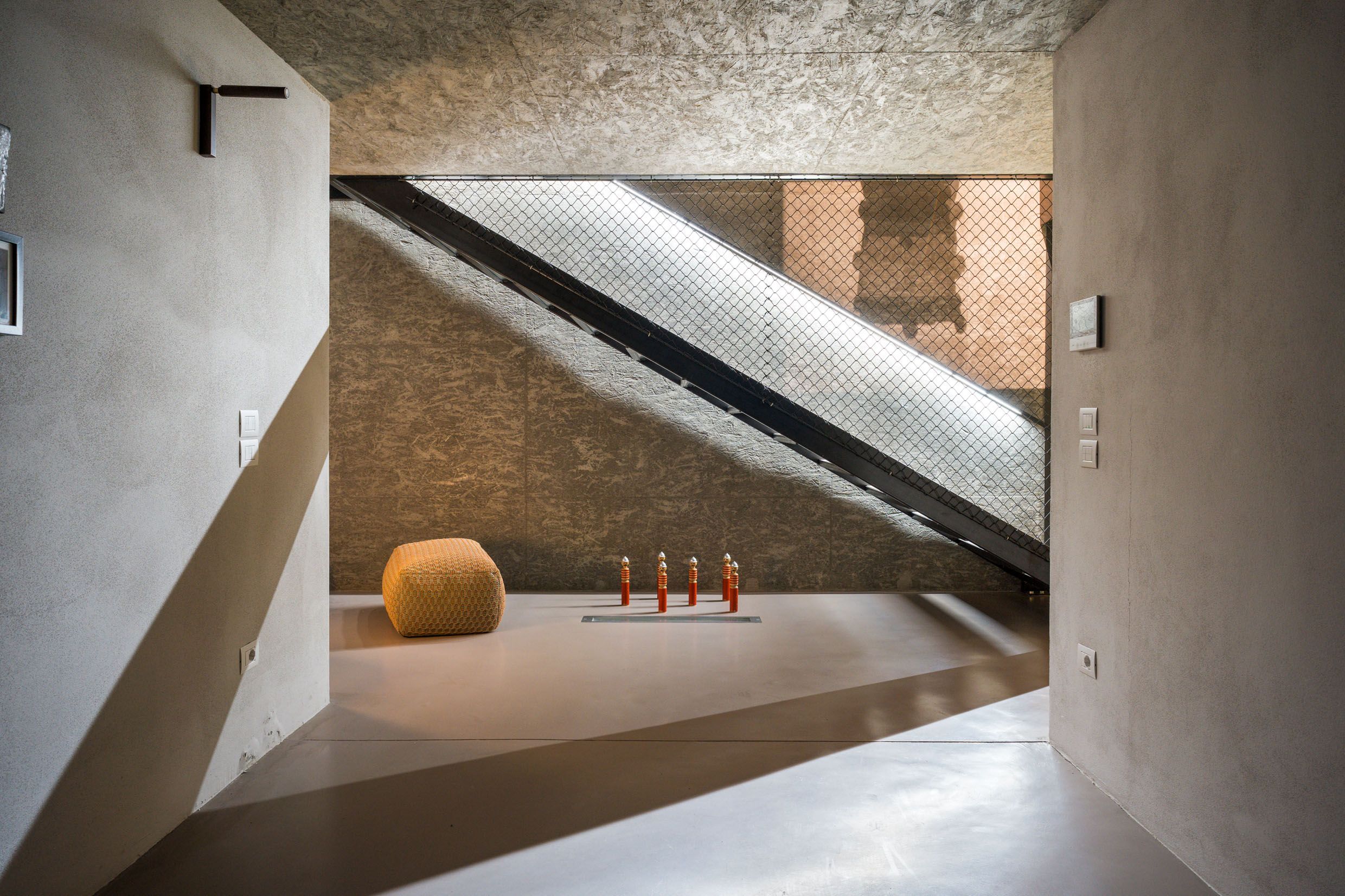
Guido Granara’s lighting concept stages and defines the interior and exterior spaces, with different colour temperatures chosen to highlight the characteristics of the prevailing materials — wood, concrete and iron — and to bathe the interiors in the right light in terms of function and atmosphere.
Otium.
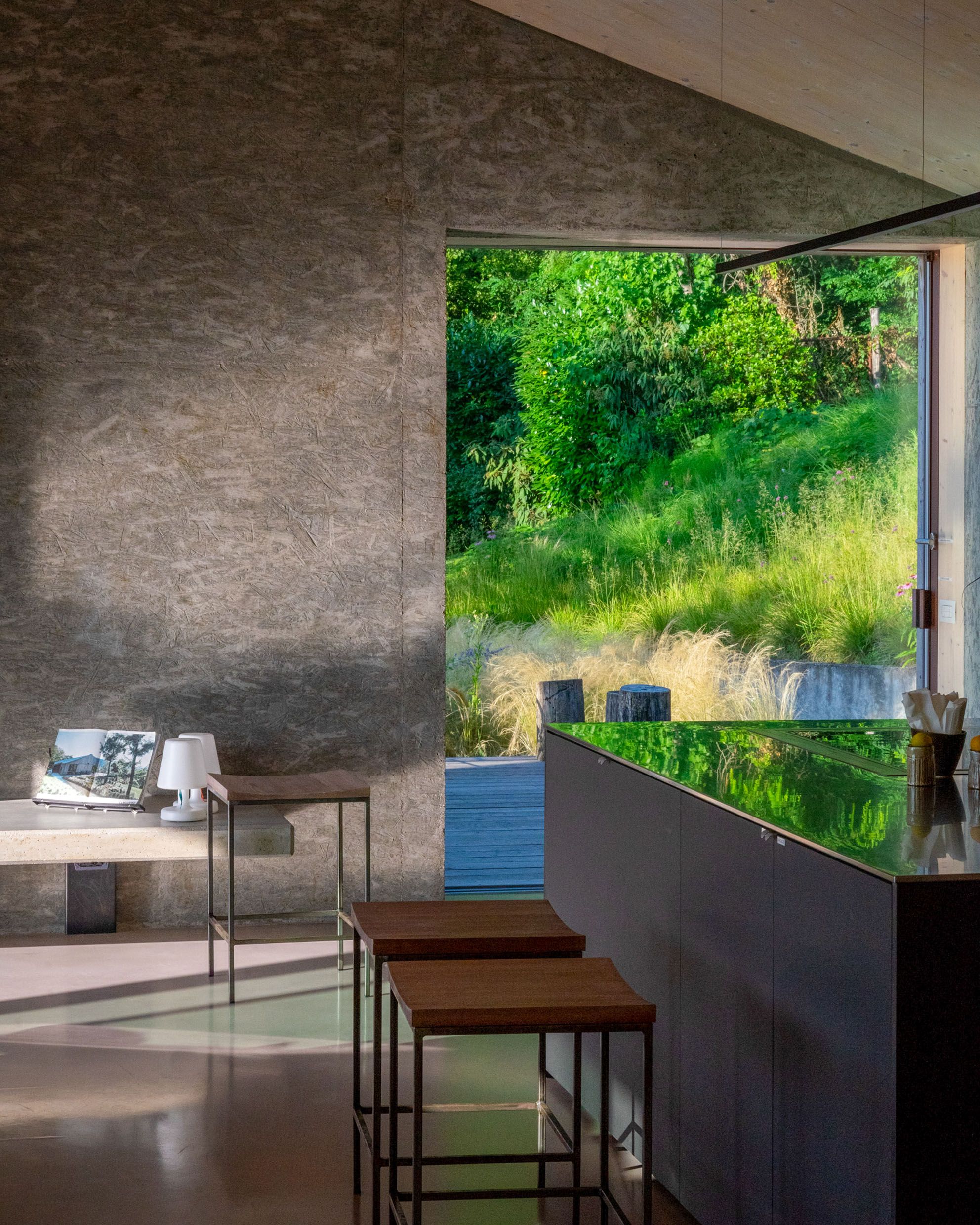
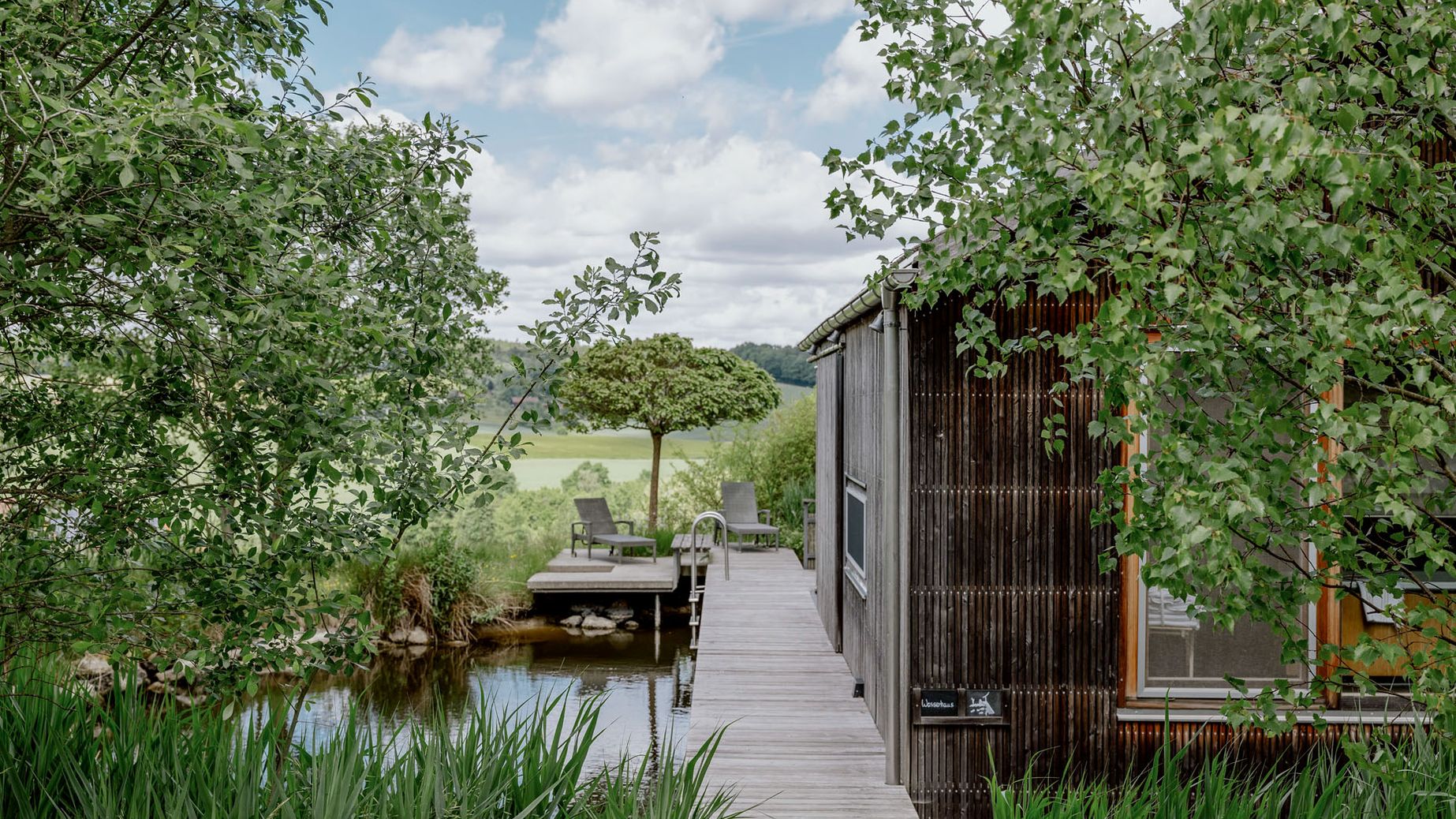
La Mugletta is a place that gently forces its guests to come to rest and deliberately choose for retreat or shared moments. The B&B offers the perfect setting for both — indoors and outdoors. Deckchairs doze in the shade of the old trees, comfortable daybeds loll on the large panoramic terrace and the sofas, a long table, the small library and the spacious kitchen island encourage joint cooking sessions and good conversations in the salotto, which always offers pleasant insights and great views. A small wellness area with steam bath and Ulla’s pottery studio are hidden in the basement, waiting for leisure time to unfold.
The garden is wild, vast and ever changing. Carefully designed and harmoniously composed, a never-ending choreography of shapes, textures and colours unfolds here in the rhythm of the seasons. The giardino extends over several levels of the property, it follows the topography and thus provides for a variety of nature scenarios. Ancient trees, perennials, shrubs and grasses become the evergreen backdrop of laid-back holidays.
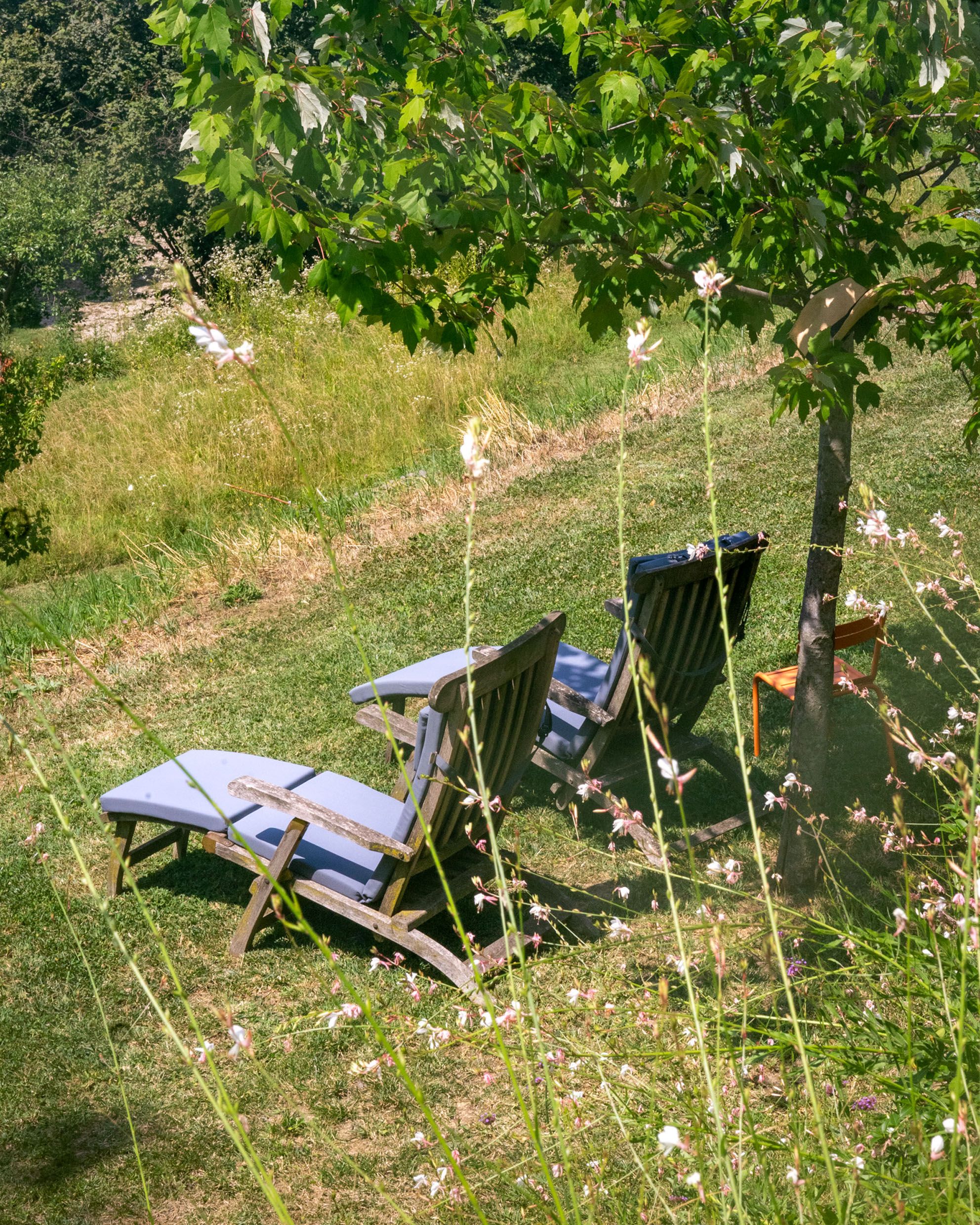
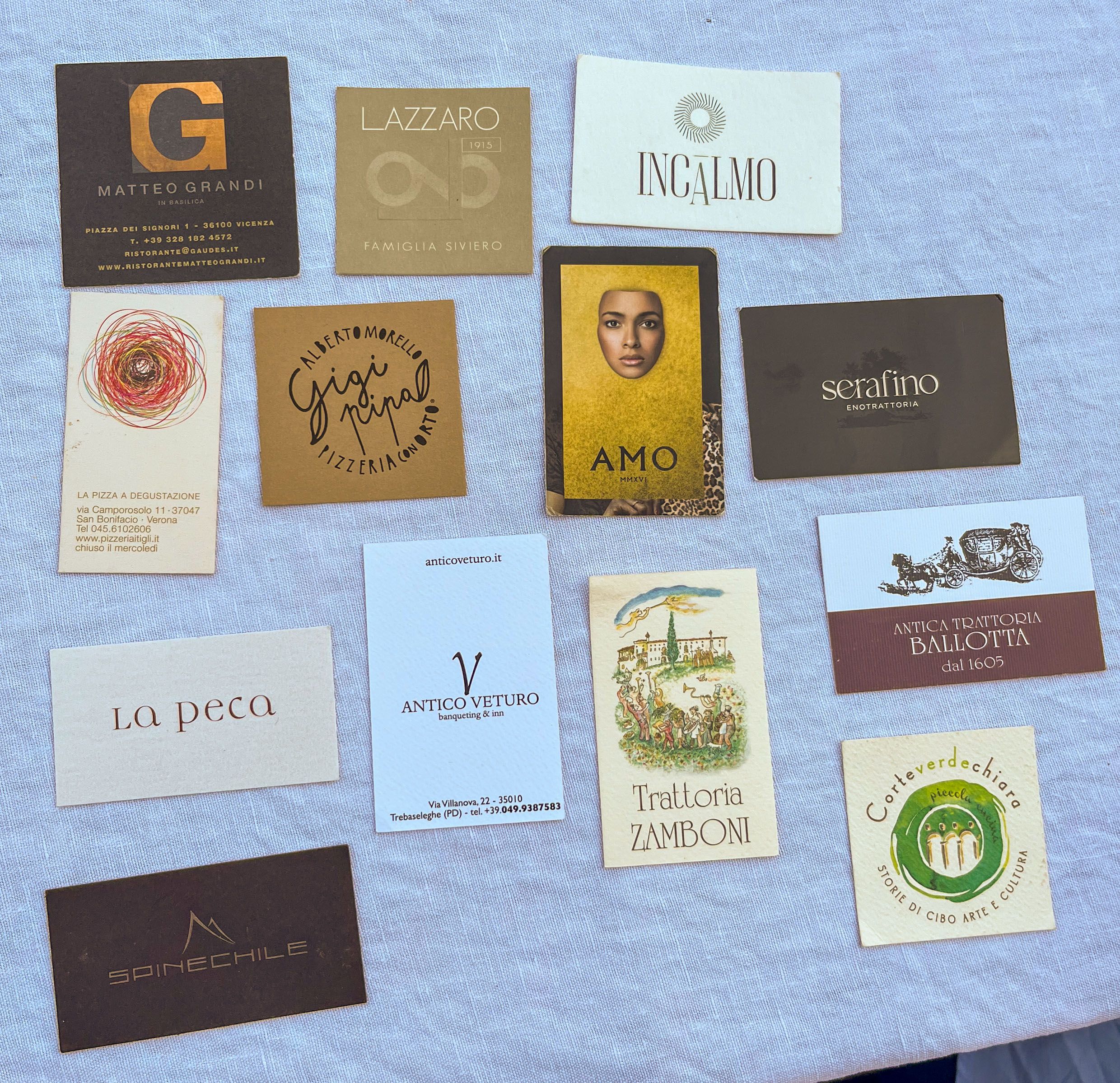
The cherry, pear and apple trees and a generous vegetable garden look forward to gardening guests who can pick their fresh ingredients for dinner here. If you are in the mood for even more green and silence, you can hike through the adjacent forest. Or simply listen to Eberhard’s bees buzzing while flipping through one of the many cookbooks to prepare for the culinary delights in one of the fine restaurants of the Colli Euganei. This is how dolce farniente between the volcanic hills is like.
Mary Poppins.
A holiday at La Mugletta unfolds all by itself. In this, the hostess is not entirely innocent. In fact, I’m pretty sure that la signora Mugler must be a distant relative of Mary Poppins or has at least somehow come into possession of her bag: Pleasant courtesies and precious information always materialise at just the right moment. Ulla Mugler has fine antennae for slumbering holiday desires and brings them to light as if by coincidence. She brings together what is on the same wavelength — people, places and pretty things. (She very successfully set me up with a charming, locally made chaise lounge that now lives in my office).
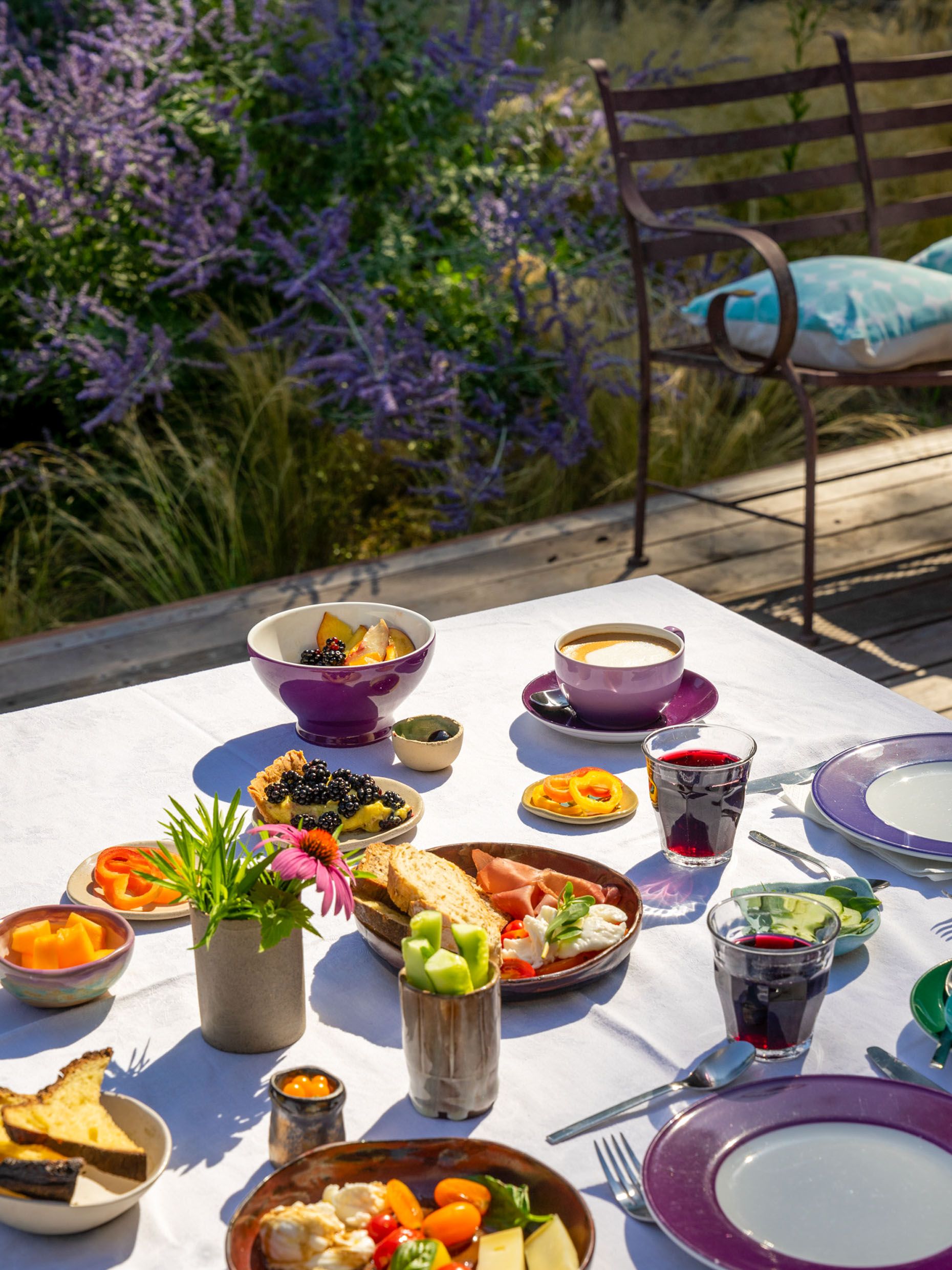
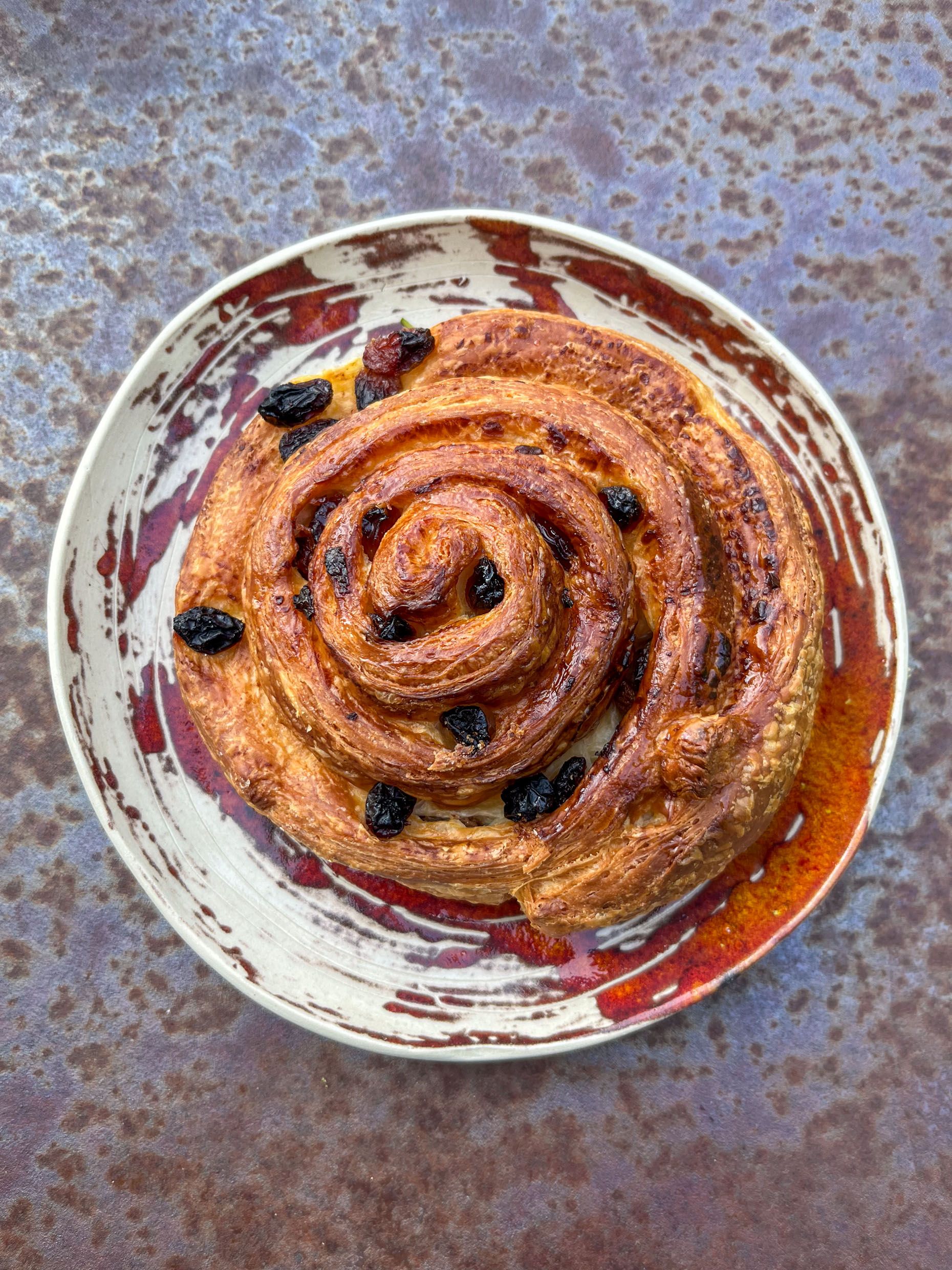
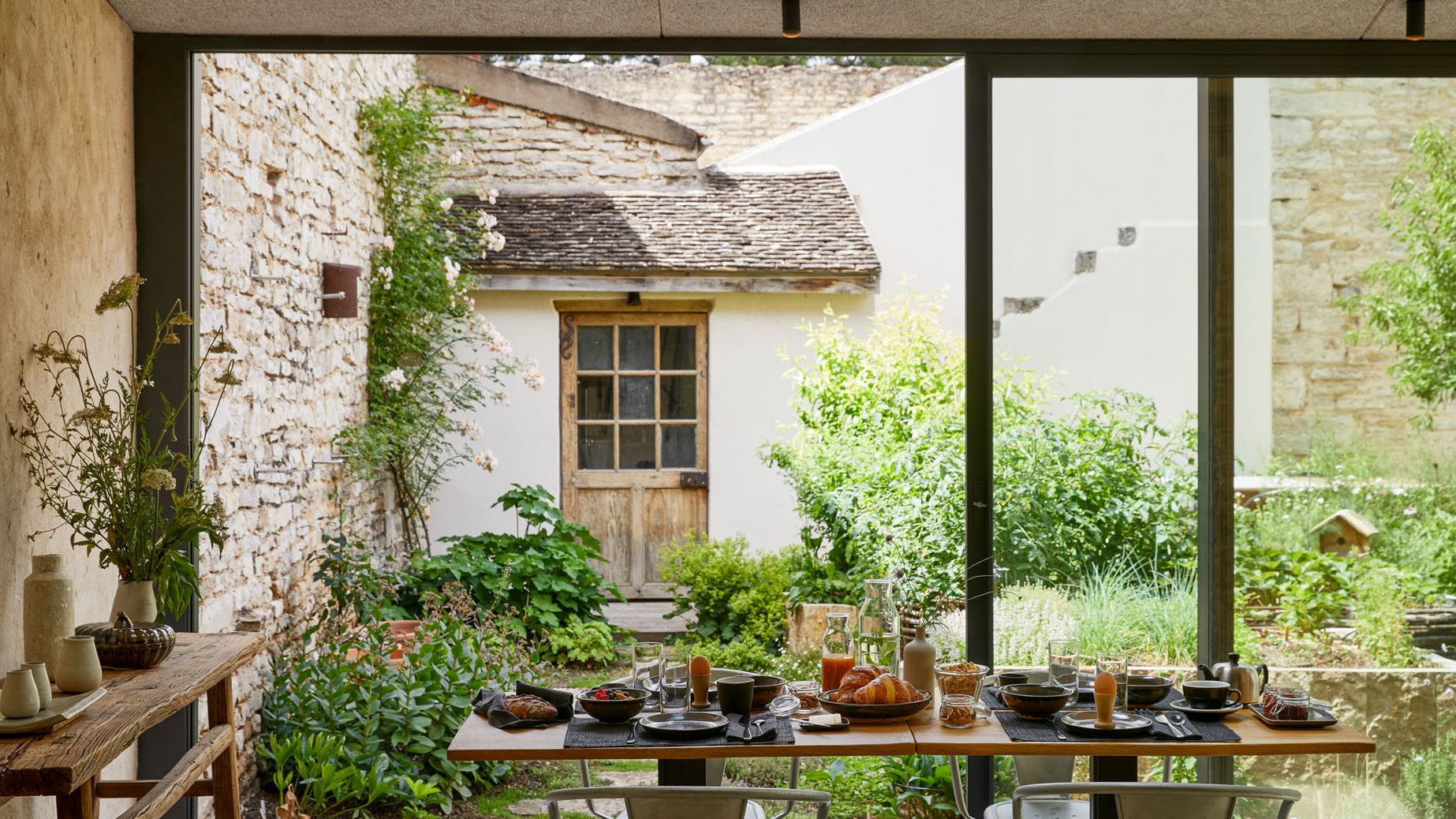
The best part comes as soon as you get up: Every morning, the large kitchen island in the salotto turns into a vibrant still life — Matisse and Renoir would have loved it! Mulberries sit like tiny works of art on home-made pottery, home-baked bread, cakes, aromatic tomatoes and treasures from the garden are served alongside local delicacies from the Eugean Hills. La Mugletta’s breakfast is a feast for the eyes — una vera delizia! How does it taste like? You’ll have to find out on your own.
La grande bellezza.
Even if it is not easy to leave this quiet idyll, you should — sooner or later. Because outside the door, la grande bellezza is waiting to enchant you.
Padua, for instance. The vibrant and charming university city is full of energy, culture and delights. The Padovani have style, charm and good taste; they are obsessed with their cichetti and Aperol Spritz — no wonder — it was invented here in 1919! This city with its countless arcades and one of the oldest universities in the world has a pleasantly human scale — the Italians call this a misura d’uomo. Maybe that’s why almost a third of the 200,000 inhabitants are under 30 years old. For Italian standards, this is remarkable and reflects’s the city’s quality of life. Goethe must have been aware of the fact as he spent quite some time in Padua for his botanical studies in the oldest university garden in the world which was opened in 1545. The German poet was particularly fond of a dwarf palm tree planted in 1585, to which he turned his attention in his treatise “The History of My Botanical Studies”. The Giardino Botanico has been a UNESCO World Heritage Site since 1997 and the palm tree still exists today. What else is worth visiting? The tempting food market in the Palazzo della Ragione dating back to 1100. The Basilica of St. Antonius of Padua. The historic Cafe Pedrocchi and — certainly — the Capella degli Scrovegni with beautiful frescoes by Giotto.
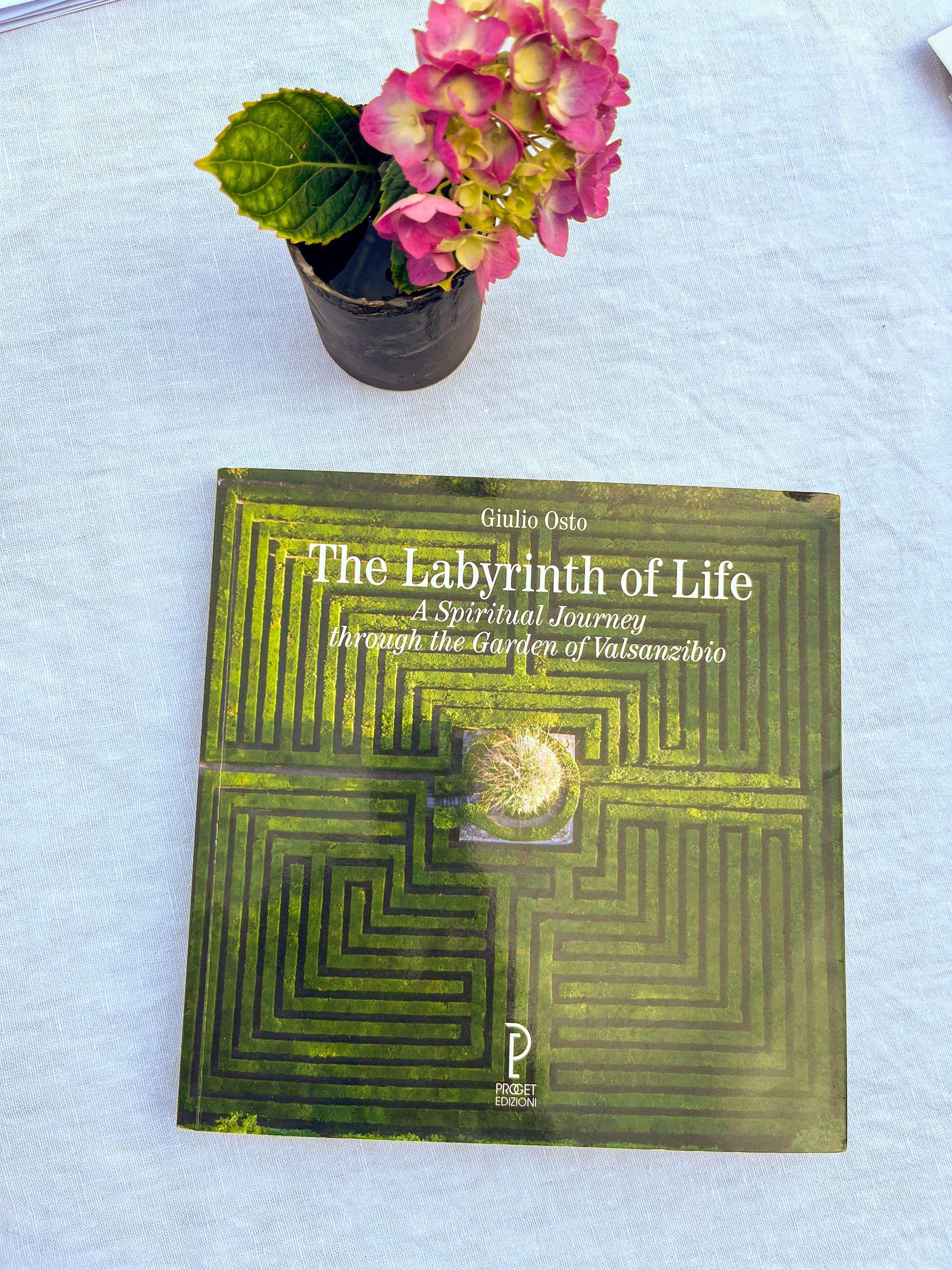
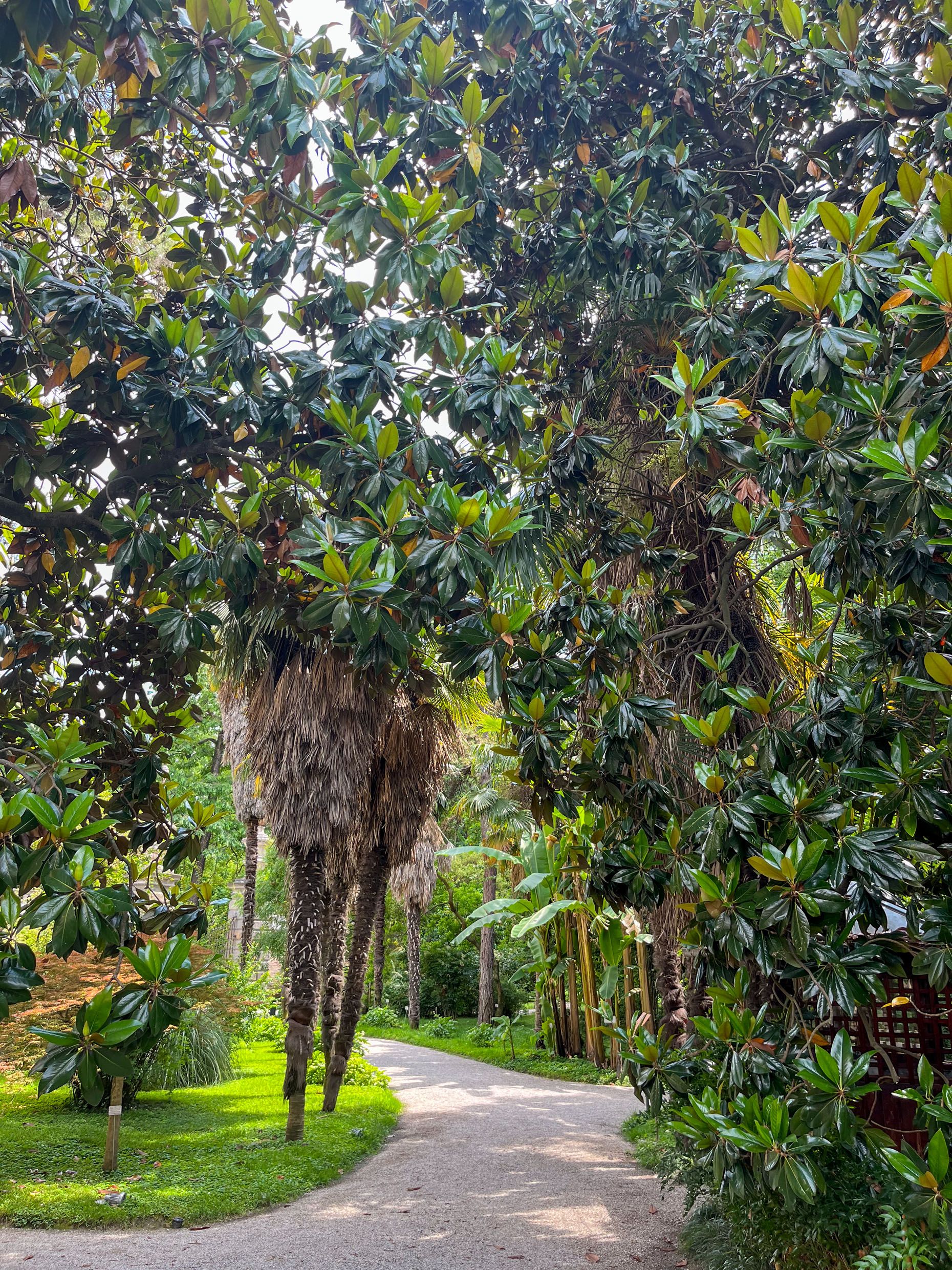
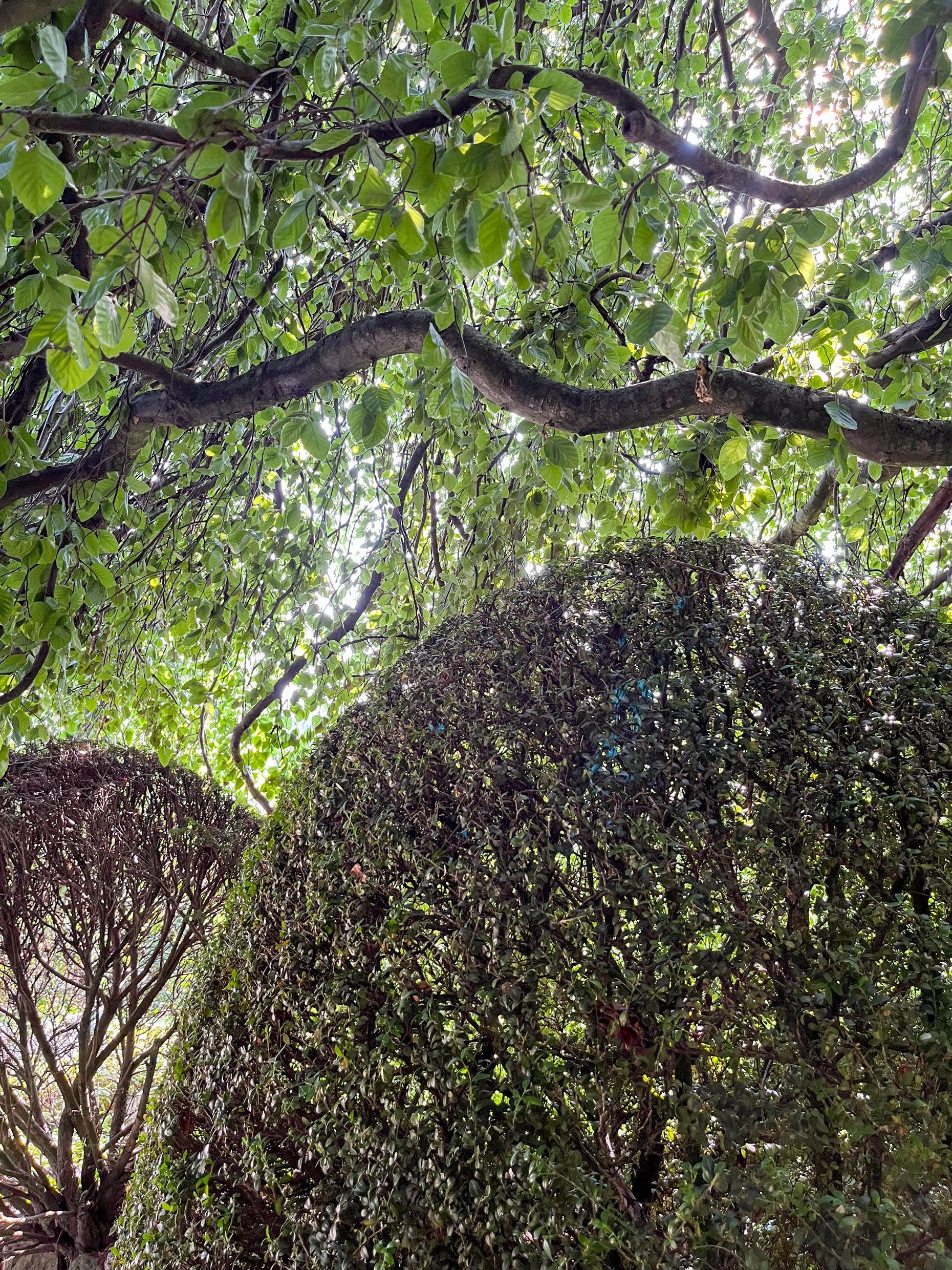
The Giardino Barbarigo in Valsanzibio, designed in the 17th century by Gian Lorenzo Bernini, the architect of the popes, has an atmosphere as if in another world. Under the dense crowns of centuries-old giant trees, a mystical semi-darkness spreads out between jungle-like bushes and ferns. The precious stone statues along the well-kept gravel paths are covered with a thin layer of moss, just as everything here bears the patina of another time. Water fountains suddenly spout up from invisible openings in the ground. The gigantic buxtree labyrinth awaits modern Maze Runners. A fascinating place full of hidden symbols and philosophical teachings, a place where you can get lost and find yourself.
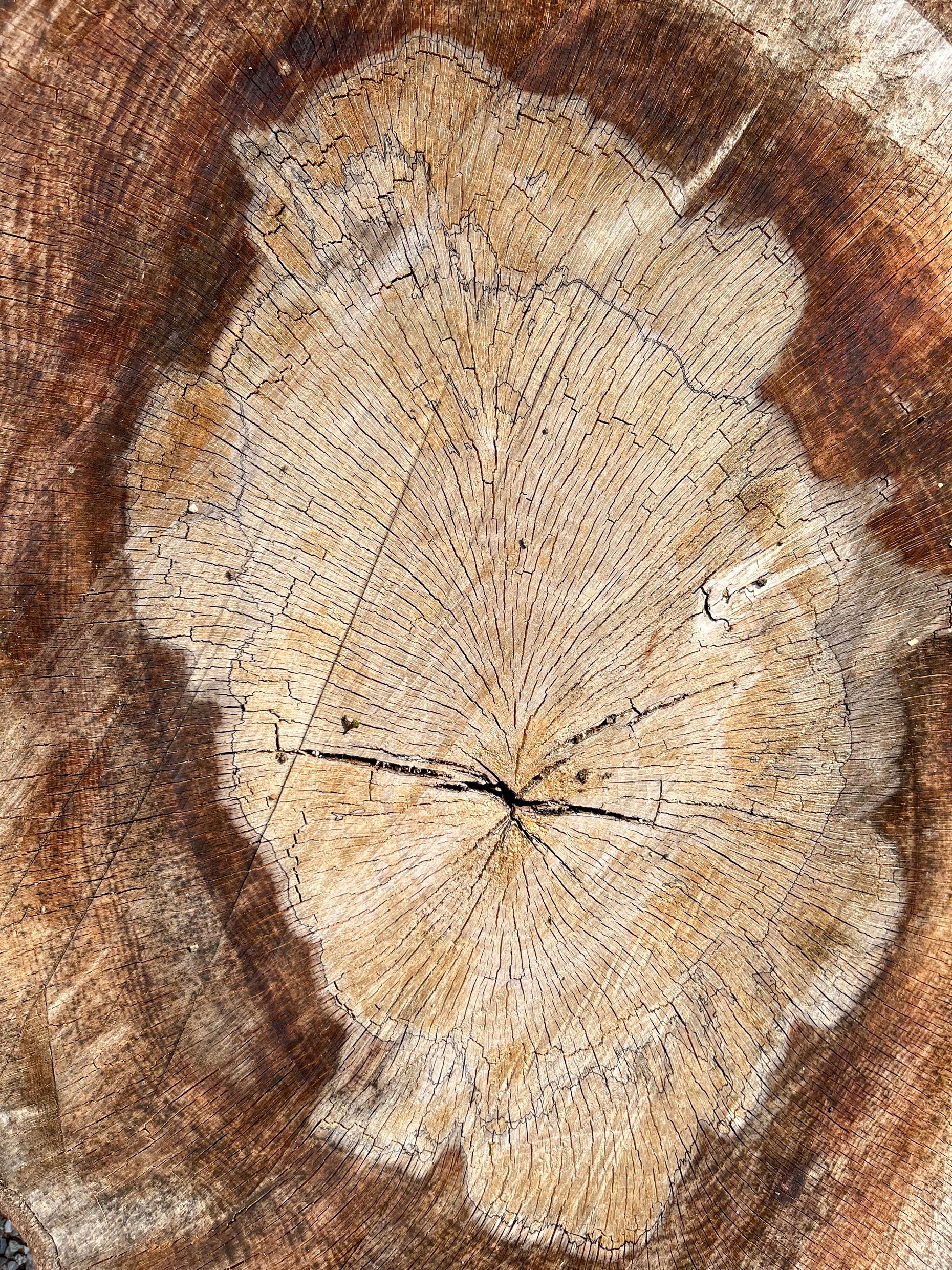
The literal hotspots of the region are the Euganean thermal baths, whose salty bromine-iodine waters have special thermo-mineral properties. The ruins of the ancient thermal pools and theatres of Abano Terme bear witness to the fact that the Romans too indulged in wellness in the volcanic land. Today, Abano Terme, Montegrotto, Galzignano and Battaglia Terme altogether form the largest thermal centre in Europe.
What else? The literary parcours of the Parco Letterario Francesco Petrarca, the noble residences such as Villa Vescovi in Torreglia or the eclectic Castello del Catajo with its frescoed halls. The evocative monasteries of Rua and Praglia, where time seems to stand still and moments of peaceful contemplation unfold. The latter is just a short walk from La Mugletta.
And then, finally, Venice won’t have to wait any longer, it’s time for the Serenissima. Because a holiday in Veneto without the Biennale and the Grand Canal, without Burano, the Guggenheim and the gondoliers would be somehow incomplete. Here, too, you will discover quiet corners that cannot be found in any travel guide. Ask Mary Poppins. She awaits you.
Text: Britta Krämer, October 2023
Images: Jacopo Tonet, Liz Bernatzek, Britta Krämer
HomeStory: La Mugletta and the Colli Euganei — Fine blend of Italy’s most beautiful facets
Information: TERME E COLLI EUGANEI: THE LAND OF HEALTH & EMOTION
“Project financed with the POC of the Veneto Region 2014–2020.”
The House

2 Comments
Es ist alles so wie beschrieben — oder noch schöner. Ein wunderbarer Ort, um Padua und die uns bislang unbekannten euganeischen Hügel zu entdecken, egal zu welcher Jahreszeit. Ulla ist eine charmante, erstklassige Gastgeberin und kennt die Region wie ihre Westentasche. Das Frühstücksbuffet ist phänomenal und überrascht jeden Tag von Neuem und feinem Sinn für Ästhetik.
Toller Ort, Supergastgeber und hinreissend geschrieben. Der einzige Nachteil: La Mugletta wird auf Jahre ausgebucht sein. Wir fühlen uns zutiefst ermutigt und werden das Kranich Café, Gutshof Hessenburg, ab Ostern 2024 wieder öffnen.