
Midcentury Architecture on Cape Cod: Summer houses
The peninsula in south-eastern Masachusetts has been a well-known summer resort since the 19th century. In the mid-20th century, some of the most famous modernist architects were also drawn here and designed remarkable summer houses.
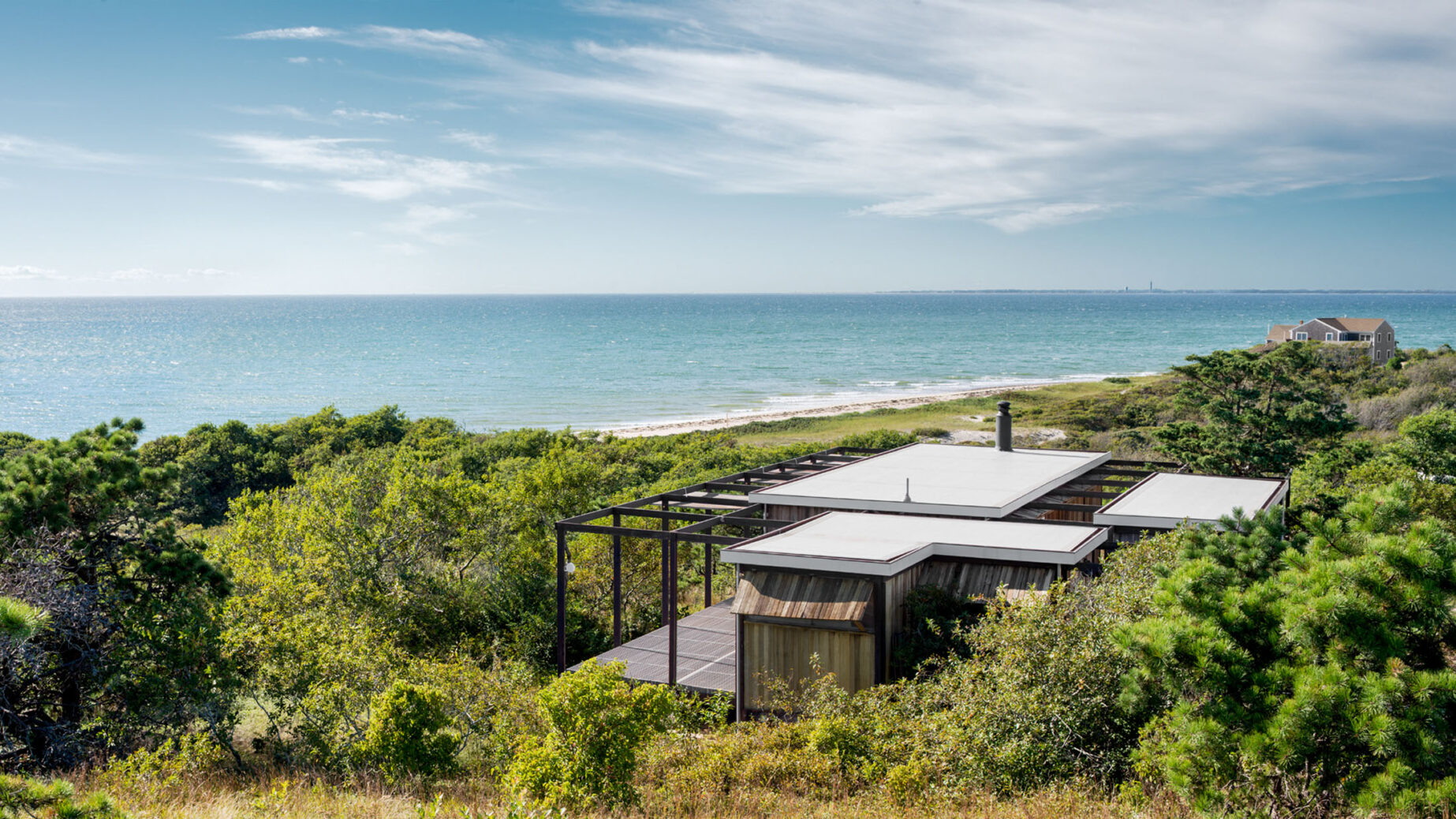
“Summer afternoon — summer afternoon; to me those have always been the two most beautiful words in the English language.” (Henry James)
There is nothing that compares with the pure joy of spending a warm summer day seated in an oversized chair on a shaded porch overlooking the sea and with a faint breeze coming off the salt water. There is no better place to spend a day like this than in a bungalow above the sandy beaches and high dunes of the East Coast, from Cape May, Fire Island and the Long Island Hamptons, to Cape Cod and its adjoining islands of Nantucket and Martha’s Vineyard. Here the summer beach house has reached a state of blissful beauty, simplicity and perfection.
The perfect beach house is a modest, clapboard cottage or brown shingle sided bungalow called a “Cape” along the Atlantic beaches. The simple style of these wood frame houses is very American, but as Lewis Mumford pointed out, it was taken from medieval English architecture, a tradition that had died out in Britain, but was kept alive on these shores. It was the preferred building type in America because of the continent’s abundant supply of wood from dense forests of cedar, oak, walnut and maple. The earliest ones were post-and-beam constructions made of hand-hewn oak or chestnut, built over 8 or 12-inch fieldstone foundations. The exterior was covered with planks of hand-cut, lapped cedar shingles (also called ‘Shakes’) or boards, always painted white.
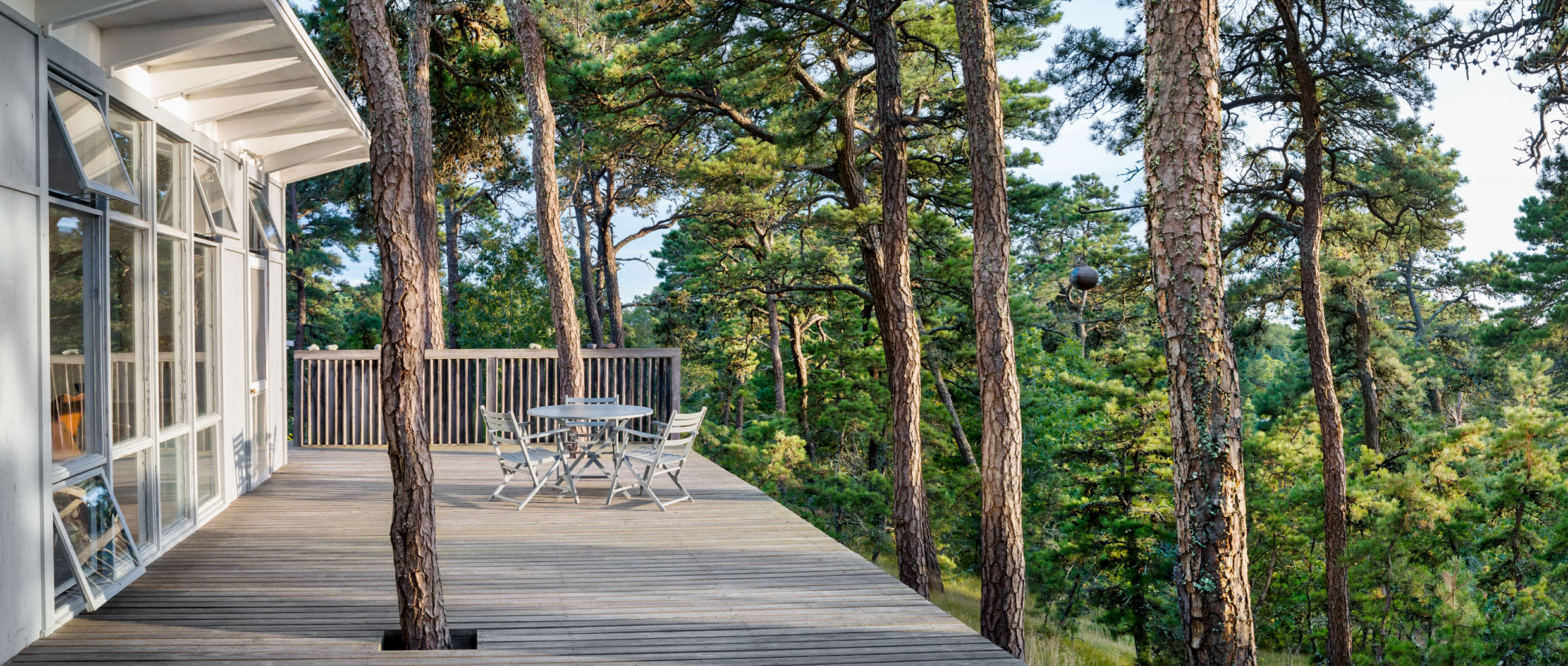
It took me several cold New York winters to appreciate the lemming-like east coast escape to summer beach houses (of friends). I was raised, you see, in California and always thought of the Pacific coast from Monterey Bay, Santa Barbara, and La Jolla as the perfect place to spend an August day. The Beach Boys summed it up for American culture when they sang, “I wish they could all be California Girls,” which is hard to beat when you’re a teenage boy. But summer in California lasts all year and one becomes a bit blasé about warm weather on the left coast. In fact, most Californians spend very little time at the beach and, in any case, the Pacific Ocean is way to cold for swimming, unless one wears a thick rubber wet suit.
In California, where coastal land is the most valuable in the state, houses on the ocean are large full time residences, with luxurious fittings, technology, and garages for six cars. The prototypical East Coast beach house, however, is lived in for only a short part of the year, no more than five months and looks and feels temporary. With little or no insulation these houses must be closed in late November and re-opened in May. Its temporality is its essence, its charm.
The houses traditionally sit gently on the land, some with no basements. The landscape around the house often has only hydrangeas that create enormous swathes of white, purple and blue into the late fall.
They have double hung windows with small 4‑over‑4 glass panes, and cheap screened doors, windows and porches to keep mosquitos at bay. But my favorite part of East Coast beach houses is the outdoor shower. Typically, they have modest, wooded privacy screens attached to an exterior wall (they start three feet of the ground so you can see bathers calves) and a hinged door. But most importantly it has hot water piped in, so that it can be enjoyed late at night and every day through to late November. It is one of the most sublime feelings to come back from Atlantic Ocean swim in the late fall, when the sea is starting to turn cold, the air crisp and cool, to step into a hot outdoor shower and then dry off before a “shore” dinner of oysters, lobster, sweet corn on-the-cob, potatoes and local beer.
The beach dwelling I am describing here is a modest structure, not the huge summer faux “bungalows” of 19th century that line Bellevue Avenue in Newport, or the enormous new mansions on Lilly Pond Lane in East Hampton. Henry David Thoreau who spent summers in a small beach shack describes these houses in his classic book Cape Cod: “generally, the old-fashioned and unpainted houses on the Cape looked more comfortable, as well as picturesque, than the modern and more pretending ones, which were less in harmony with the scenery, and less firmly planted.”
These houses, evolved from a simple fisherman’s shacks, are traditionally styled with dormers, sloped roofs and old fashioned brass or wrought iron door and window pulls, handles and knobs. They are still being built along the Atlantic coast and are the prototype for a large number of suburban homes across the United States.
But there was a moment on Cape Cod after World War II when a group of young, mostly European-trained modern architects, embraced the Atlantic beach house tradition and radically updated it, and created a new hybrid version of experimental modern vacation cottages, architecture and lifestyle. It did not produce a large number of homes, but was a movement because of the freshness of its approach to affordable modern living in a photogenic landscape. It is wonderfully illustrated and written about in the book Cape Cod Modern: Midcentury Architecture and Community on the Outer Cape.
But before these European educated architects arrived in the United States, a group of “Brahmin Bohemians,” untrained as architects, but aware of the modern movement, started things off on the Cape by gently re-thinking and re-imagining a new type of beach house for a new generation. These scions of wealthy New Englanders wanted and could afford, a retreat or escape and many of them moved full time to the sandy peninsula. It was a time, unlike today, when descendants of the financial elite sought alternative and experimental life styles. They desired to live more simply in Cape Cod, with its reputation as a land apart and with a tradition as an arts colony, was a perfect setting for their experiments.
One of these figures was Hayden Walling, the handsome son of society figures, who gave much of his fortune away, designed five houses on the Cape and built others for architects (and raised turkeys during World War II). In the 1930s he built his own house that “married traditional … silhouettes to modern form and interiors.” It is a meandering complex of mostly vernacular forms, opening to a modern expanse in the saltbox-shaped living room. A saltbox is a New England term for a traditional type of house, generally two full stories high in front and one story high in back, the roof having about the same pitch in both directions so that the ridge is well toward the front of the house.
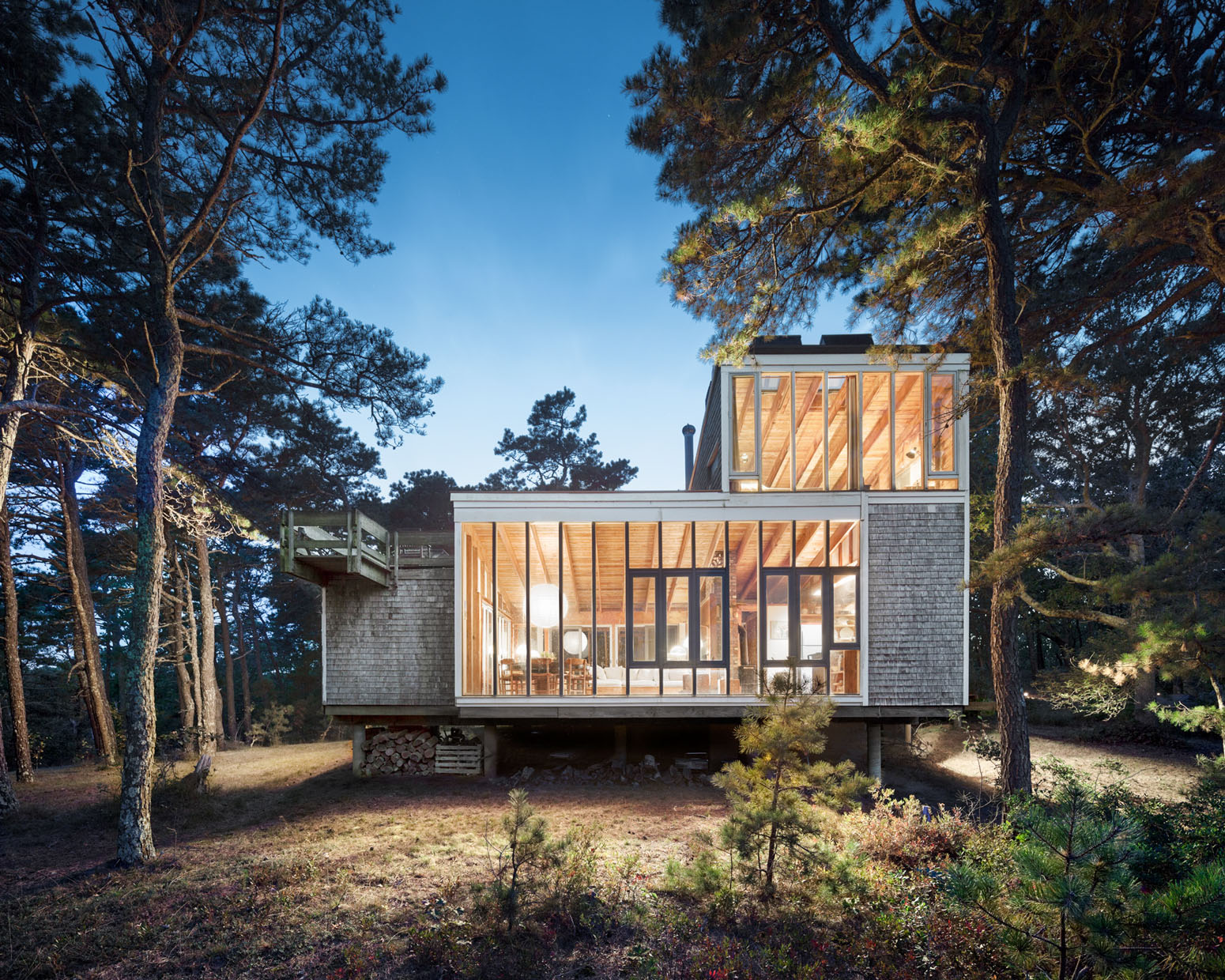
He followed his own house by designing a more modern cottage and studio for James Lechay, built of reclaimed barn wood and standard construction rafters. He also designed and built by hand (he was accomplished wood worker) the spectacular Halprin House, constructed of off-the-shelf 2x4’s (the standard American building through the 20th century). It’s interior walls were left uncovered and the structural wood columns serve as decoration. This is traditional in cheap fisherman’s cottages, but is also an example of the modernist belief in function and direct detailing. It is both a traditional beach house and the modernist one at the same time.
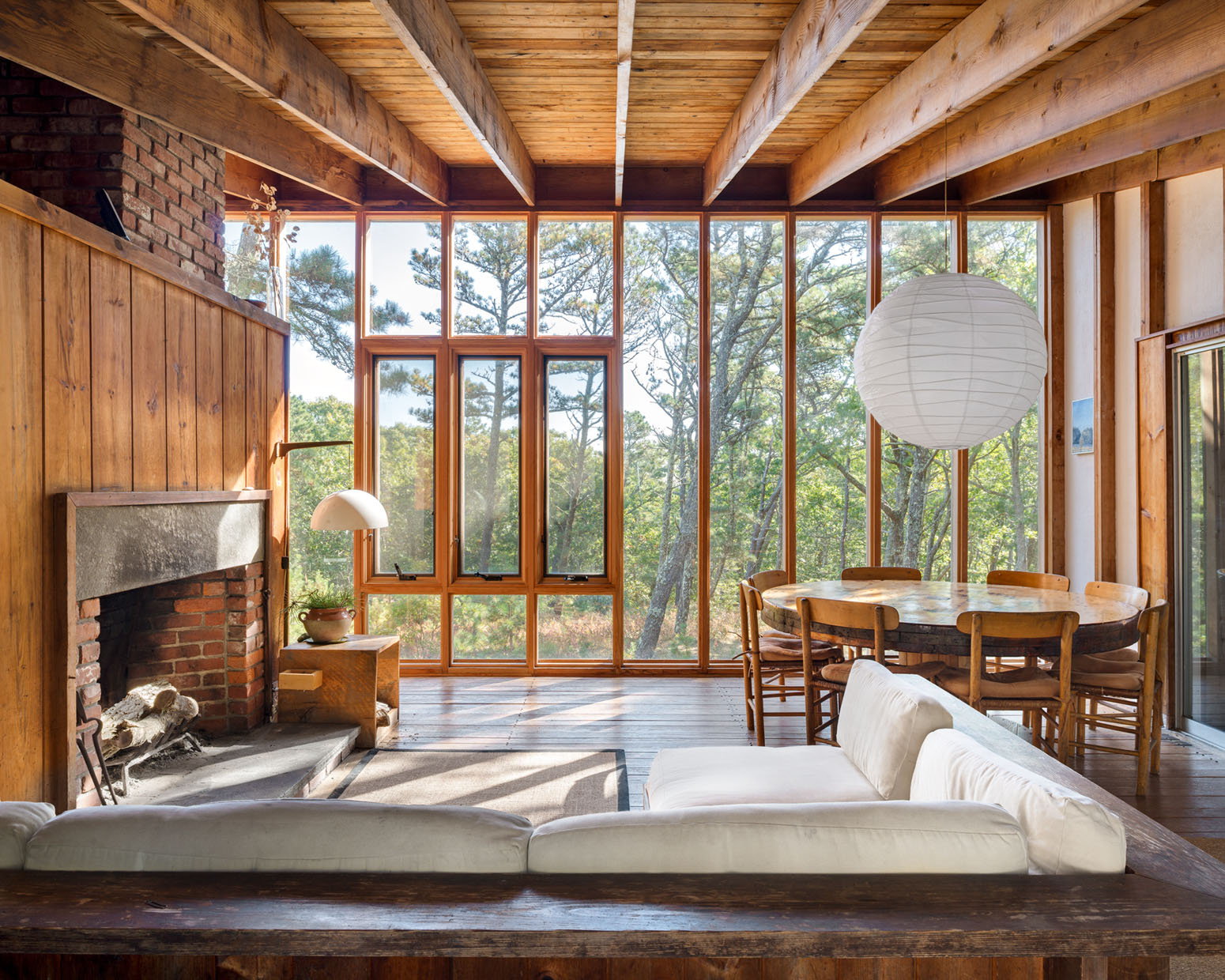
But it was the modernist émigrés lead by Serge Chermayeff who can be said to have taken the Cape Cod beach house into new and experimental territories. Chermayeff, a Russian (via England) émigré, was the first modernist designer to build in the area and he brought out Marcel Breuer and they were joined by Eero Saarinen, György and Juliet Kepes, Bernard Rudofsky, Walter Gropius, and many others. They were attracted to the area, because it was a short distance from their academic positions and offices in Boston, Connecticut and New York and many built summer houses here. They in turn brought along their students who also began building updated versions of the lightweight, modular timber framed structures well into the 1980s. Here the Cape’s modern designers “enjoyed a lifestyle based on communion with nature, solitary creativity, and shared festivity. Their houses captured this ethos with their blurring of indoors with outdoors, their secluded studios and their outdoor party spaces.”
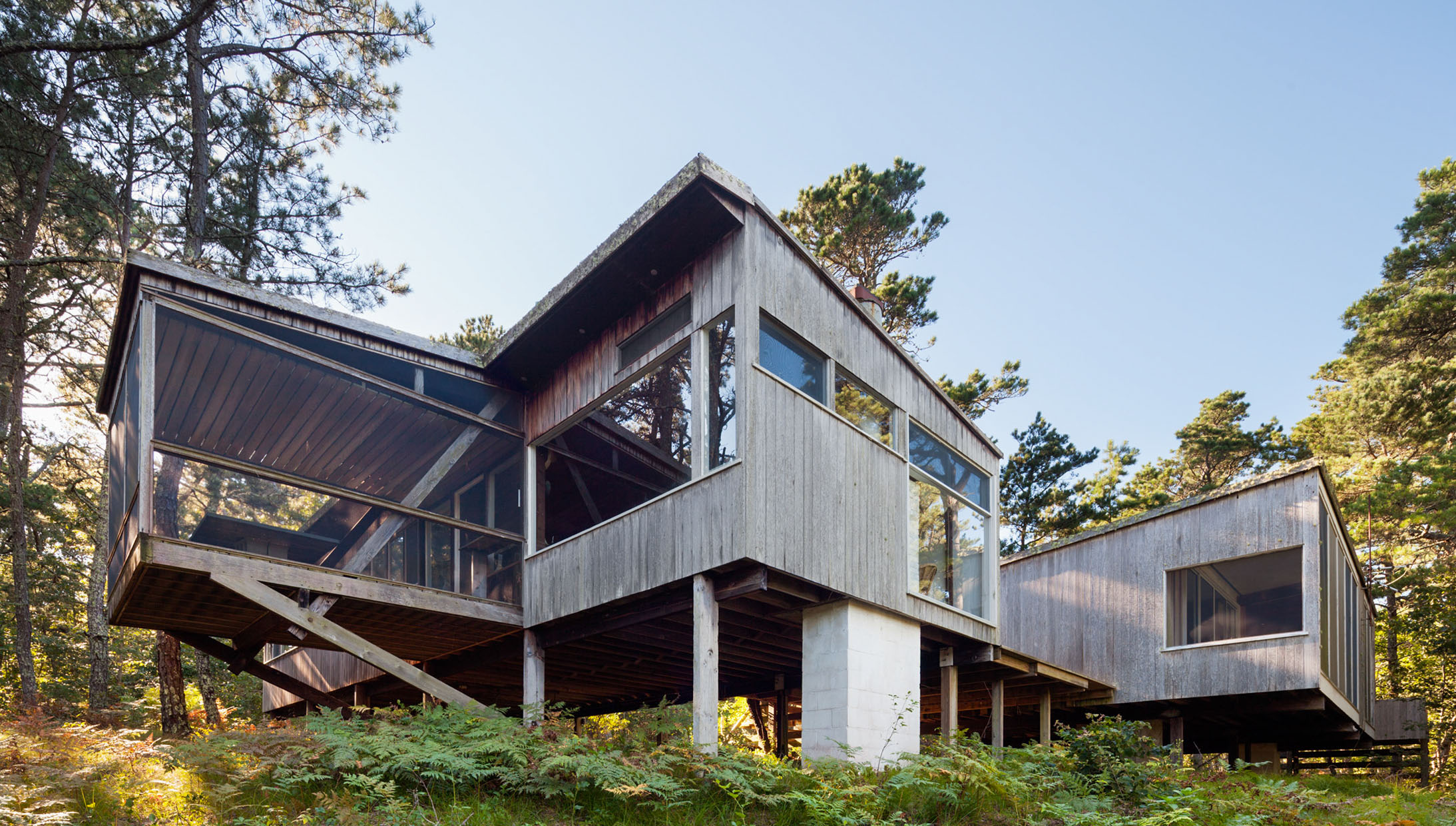
Chermayeff found his way to the Cape in 1944 and bought a small cabin built with homasote (cellulose based fiber wall board made from compressed recycled paper) siding that had only a “hand pump, an outhouse, kerosene stove, but it also a royal view of the sunset.” The house became a life long “laboratory for design experiments” for Chermayeff, who began by re-framing it and punching windows through the wall with large panes of glass creating modernist thin and opaque walls. In addition, he created a scissor or “bow-tie” cross bracing that left it open and expansive not hidden behind a false ceiling. He added a small out-building for guests and a studio, and constantly worked and refined it over several decades. But true to the summer cottage tradition it remained a simple modest house. He enjoyed “playfully departing from vernacular forms of the salt box, but with traditional “prosaic locally available materials.” His architect son Peter claimed he “enjoyed doing these things in a way that he felt related to the traditions of the Cape.” The house looks far different than the classical beach house I have been describing, but it is still very much one in the 200 year old tradition.
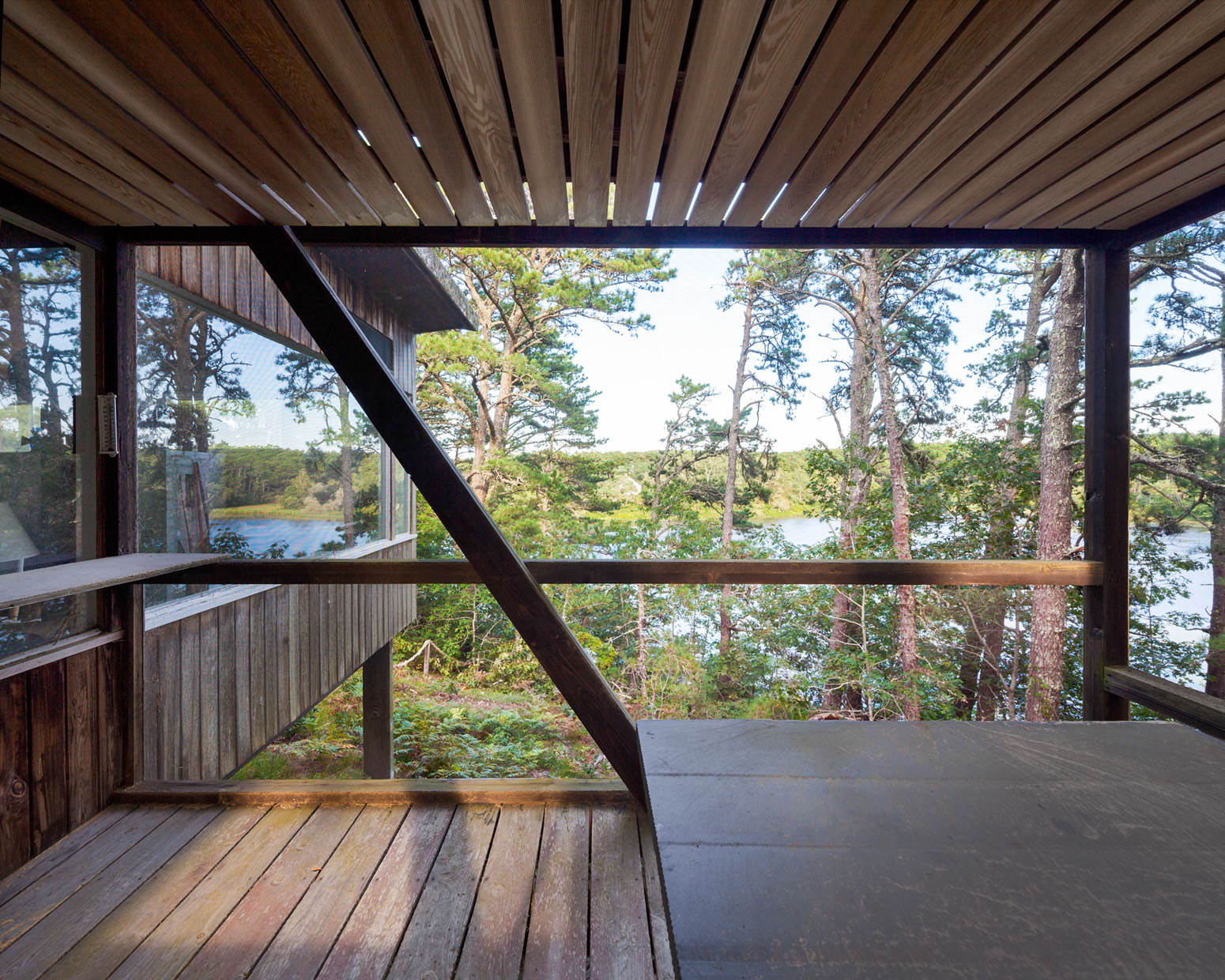
Further, he started what would become a modernist Cape Cod tradition by raising the house off the ground as a type of “summer camp in the air.” Marcel Breuer who built a house nearby fixated on it being elevated of the ground, which allowed it to become like a tripod and camera to better to see the Cape’s magnificent landscape.
But Chermayeff was a painter and graphic artist (father to designer Ivan Chermayeff) whose greatest departure from the traditional beach cottage was his use of color panels of primary yellow, red and blue as walls that were, as he writes, “bright on the exterior and “calming” on the interior. The houses design made a wonderfully modern transition from the strict ethos of European modernism, adapting it to the regional American style of New England.
Today technology and changing patterns of full time work may be altering the notion of a part time house and the seasonal migratory lifestyle. But hopefully the culturally and geographically appropriate lessons learned in the traditional beach house and the updated modern midcentury version in Cape Cod will not be lost on future generations.
I can’t wait for next May and my trip back to modest comforts of the beach house. I purchased a typical 1890s Cape style beach house on Long Island. It’s image sustains me through the cold winters of New York and, come Spring, its simplicity and ease for warm weather living is perfect in every way.
Text: William Menking
Photos: © Raimund Koch. Hatch House (cover photo), Lachay House (1), Halprin House (2, 3), Breuer House (4, 5)
Author: William Menking († 2020) was the founder and chief editor of The Architect’s Newspaper. A professor of architecture, urbanism and urban planning he taught at one of the most prestigious art colleges of the United States, the New York Pratt Institute.
The quotes are taken from the book Midcentury Architecture and Community on the Outer Cape by Peter McMahon and Christine Cipriani, which presents the architectural heritage of Cape Cod in great detail and all it’s diversity.
This article first appeared in our book publication Holidayarchitecture 2017.
Further information on architecture on Cape Cod can be found on the Cape Cod Modern House Trust.
0 Comments