
Sourcing good material
Many people want to build sustainably. But the materials for this are not always easy to find. Private builders can mainly make use of existing materials. A guide to the relevant criteria and suppliers.
This is an article from our archive. It was published in February 2024, so some details may no longer be up to date.
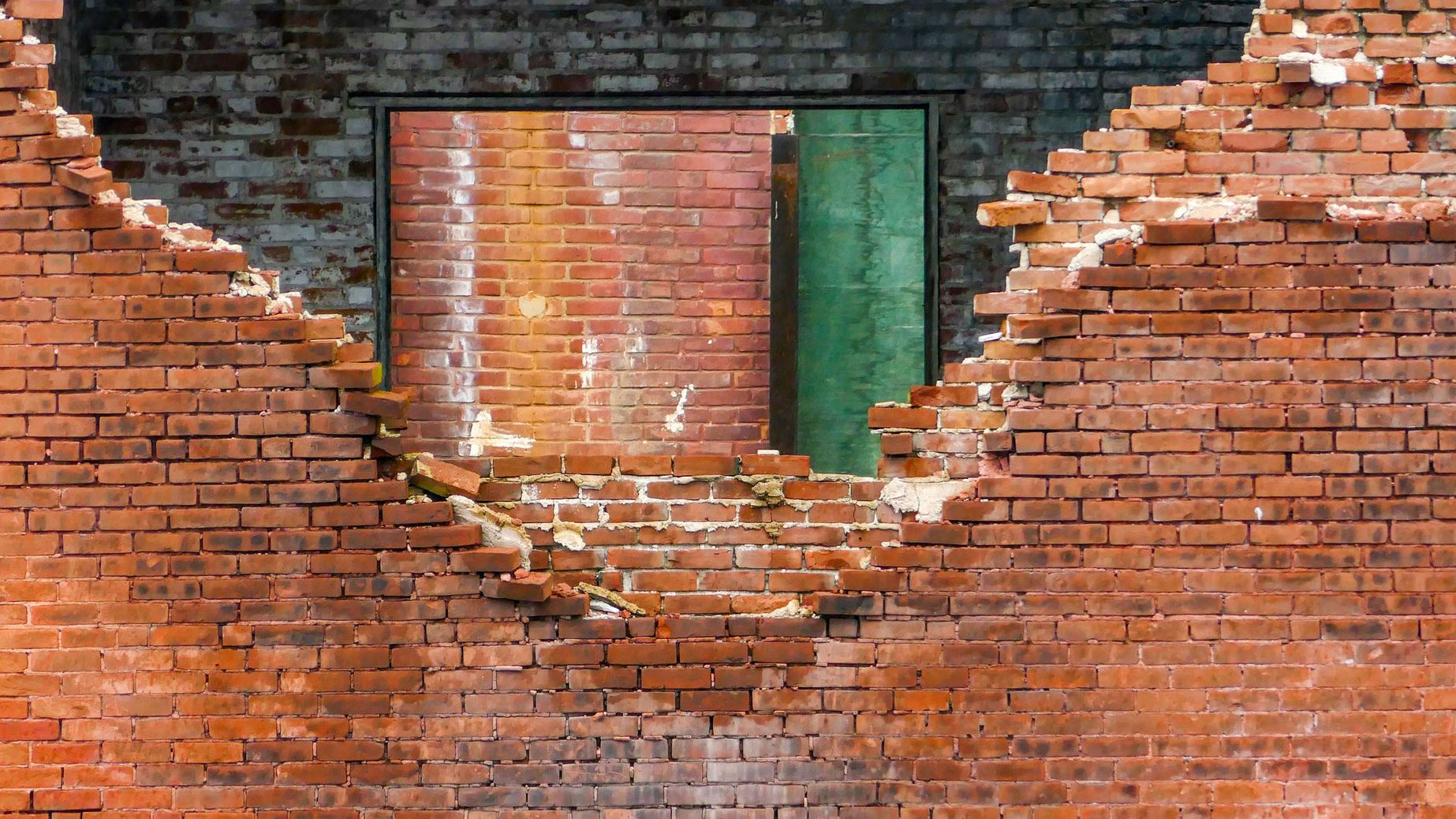
Builders who are guided by the principles of the circular economy, urban mining and Cradle to Cradle (C2C) not only need good concepts and designs. They also need the right materials.
Building materials with C2C certification must fulfil five criteria:
- They can be broken down into their component parts again without leaving any residue,
- are free from harmful and toxic substances,
- are produced as CO2-free as possible (through the use of renewable energies),
- do not have a negative impact on the natural water balance during production
- and are manufactured in a socially responsible manner.
Materials that fulfil these criteria and have already been installed in existing buildings can be reused (or composted). These components and materials must be removed during dismantling and separated accordingly – keyword: urban mining. In the second step, centres are needed where these building materials can be offered for reuse. If this is done regionally, it not only minimises CO2 emissions directly at the construction site but also during transport.
Component exchanges and online marketplaces can be found here, among others:
- The marketplace restado operates as an online shop; the platform works together with large architecture firms and project developers.
- The “urban mining hub” Concular, which claims to be Germany’s largest shop for circular building materials, emerged from restado, where the range can be searched for both individual products and projects.
- Germany-wide offers are summarised by Bauteilnetz Deutschland [Component Network Germany], where a component catalogue lists offers according to different categories and also refers to regional component exchanges.
- In addition to components and materials, the portal Bauteilbörse Hannover [Component Exchange Hannover] also provides links to other regional component exchanges.
- Timber components in particular (but also offers for bricks, stone slabs and tiles) can be found at the Knapp company in Deensen, Lower Saxony.
- Anyone looking for historical building components will find what they are looking for in Marwitz, north-west of Berlin.
- Alte Ziegelei [Old Brickworks] Lemgo also specialises in historical building materials.
- The Heritage Building Service in Lower Saxony supports owners in the preservation of historical buildings. It maintains two material warehouses with a large variety of historical building materials.
Building materials that can be used again and again in the future are also increasingly coming onto the market as new products. “The number of building products that comply with the C2C principle continues to grow. This shows us that manufacturers are paying more attention to the recyclability, innovative strength and sustainability of their building products,” says Peter Mösle, Partner at Drees & Sommer SE and Managing Director of EPEA GmbH – Part of Drees & Sommer. “For the construction and property industry, this means that Cradle to Cradle is no longer a niche topic but is becoming increasingly prevalent in the sector.”
Manufacturers are having their C2C construction products certified: The Cradle to Cradle Products Innovation Institute (C2CPII) is one of the players that analyse, evaluate and, in some cases, optimise products in terms of their toxicological properties and recyclability. In order to integrate raw materials for construction into a circular economy, companies must also take back their products. This can be initiated through a deposit system, for example. Other options include renting or leasing products. In these ways, C2C is becoming a promising business model: Management consultants from Accenture have calculated that a global circular economy across all sectors could generate a sales volume of USD 4.5 trillion by 2030.
There is currently a lot of movement on the supply side. Some regional exchanges have now closed again, while new ones are emerging elsewhere. In general, both new building materials that have a C2C certificate and building materials from existing stock are increasingly being offered – because demand has been growing significantly in the last few years. It is worth checking with your own architect and local tradespeople or building material dealers in good time before planning begins, to see whether there are materials available locally for reuse.
Text: Lars Klaaßen, February 2024
Photo: Peter Doran / Unsplash
About the author: Lars Klaaßen, journalist, has been working as a freelance author and editor — among others for taz, Süddeutsche Zeitung, Deutsches Architektenblatt and scientific institutions — since 1989. He specialises in the fields of architecture and urban development, construction and housing as well as energy transition and climate change. www.medienbuero-mitte.de
Editor’s note:
The first professorship for Circular Construction in Germany has now been established. In December 2023, Anja Rosen was appointed professor for the teaching and research field of Circular Construction at the Department of Building Construction at Münster University of Applied Sciences.

0 Comments