Stairs with a house
In the steep backstreets of Novigrad, a tiny town on the Dalmatian coast, artist Boris Kajmak has been turning derelict shells into habitable sculptures for years. A tribute to the ups and downs of a town.
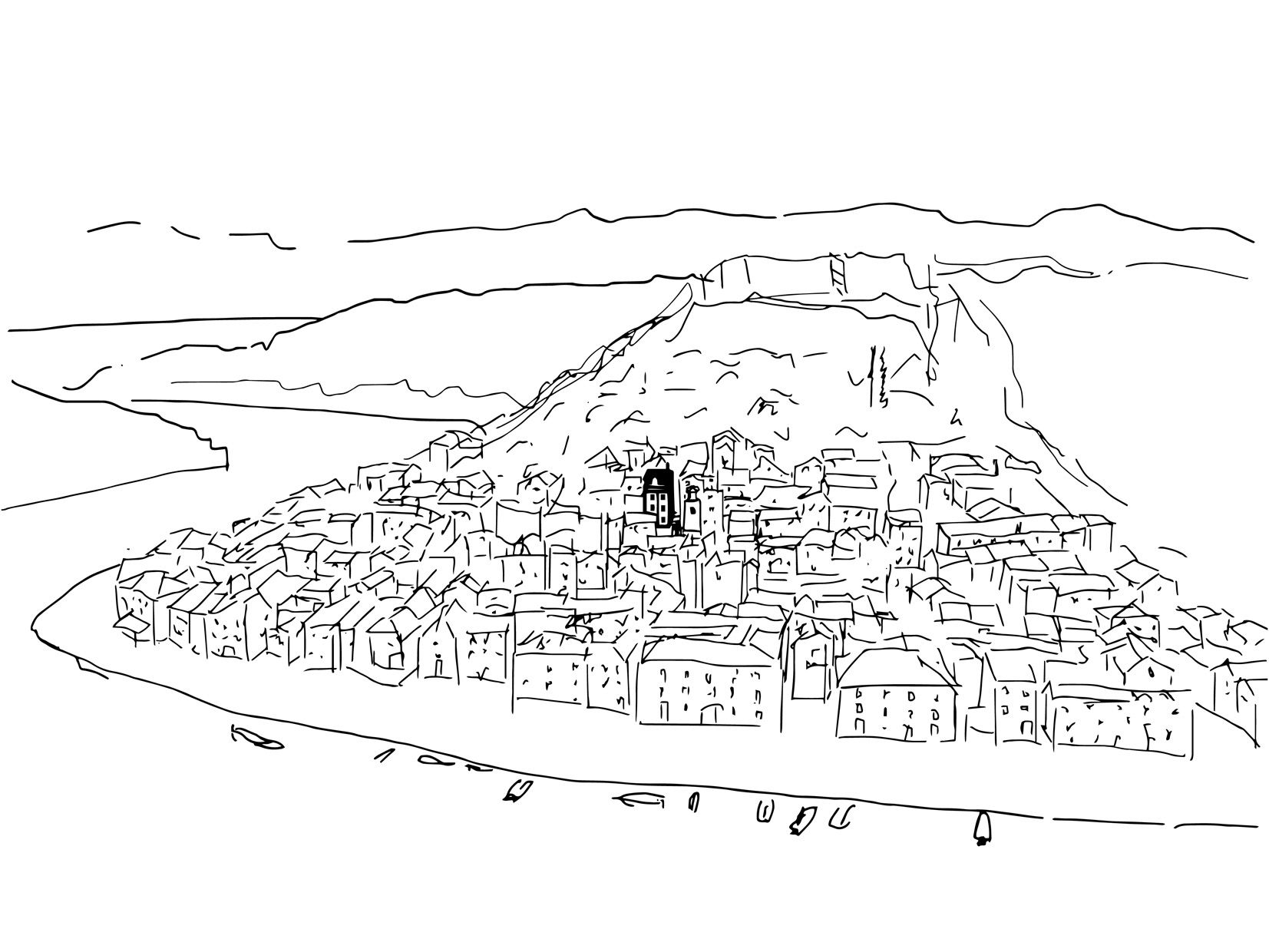
In Novigrad, a tiny Dalmatian town at the end of a road that refuses to go any farther, distances aren’t measured in metres but in stairs. Once a Venetian redoubt holding back the Ottomans and later a place of fishermen and modest summers, the terraced town sits between epochs, catching its breath. “Novigrad is a cul-de-sac – you only arrive if you mean to”, says artist Boris Kajmak, who grew up nearby and keeps returning with a jackhammer, a trowel, and a modest thesis: change the place just enough to keep it from changing too much.
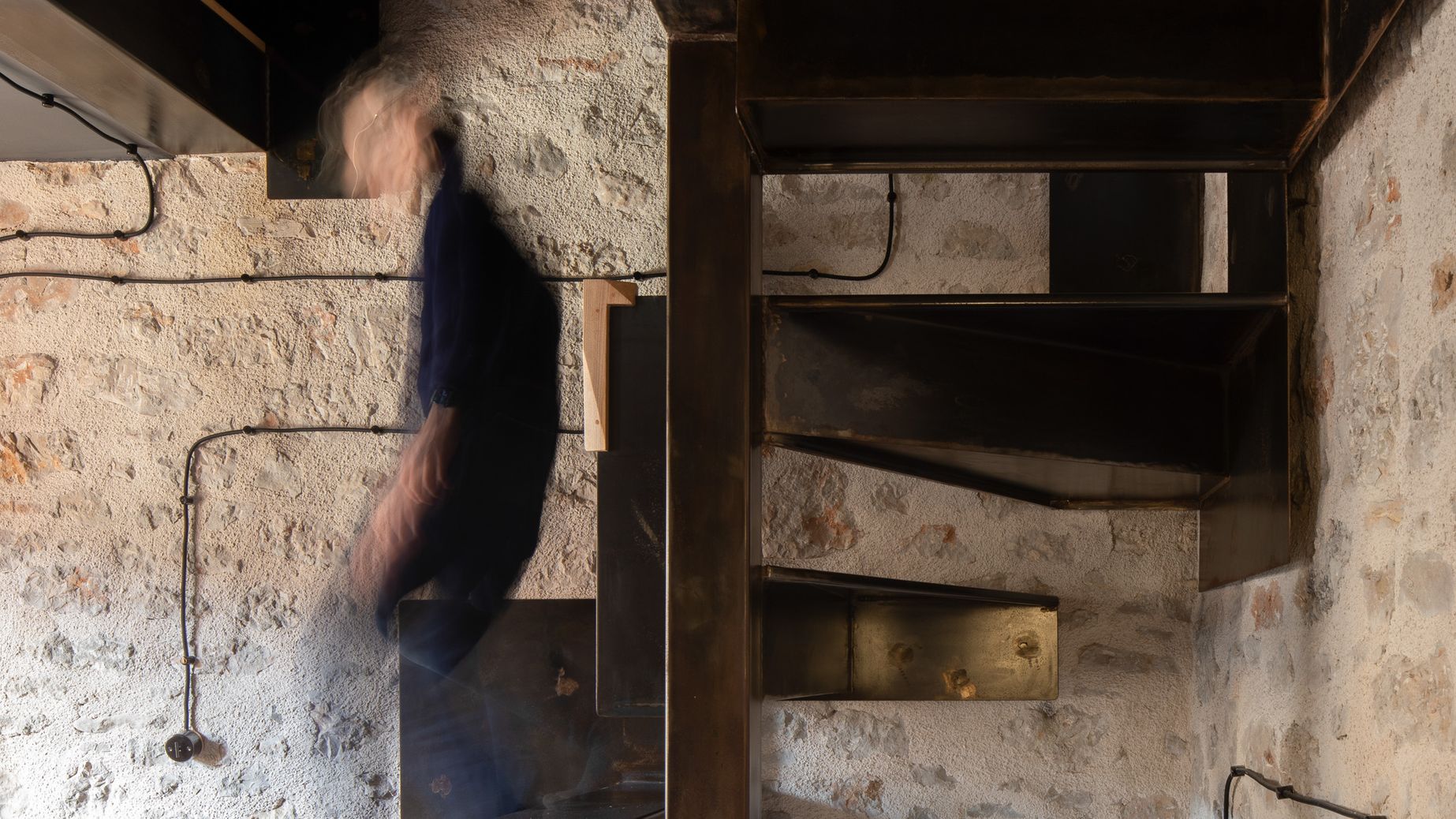
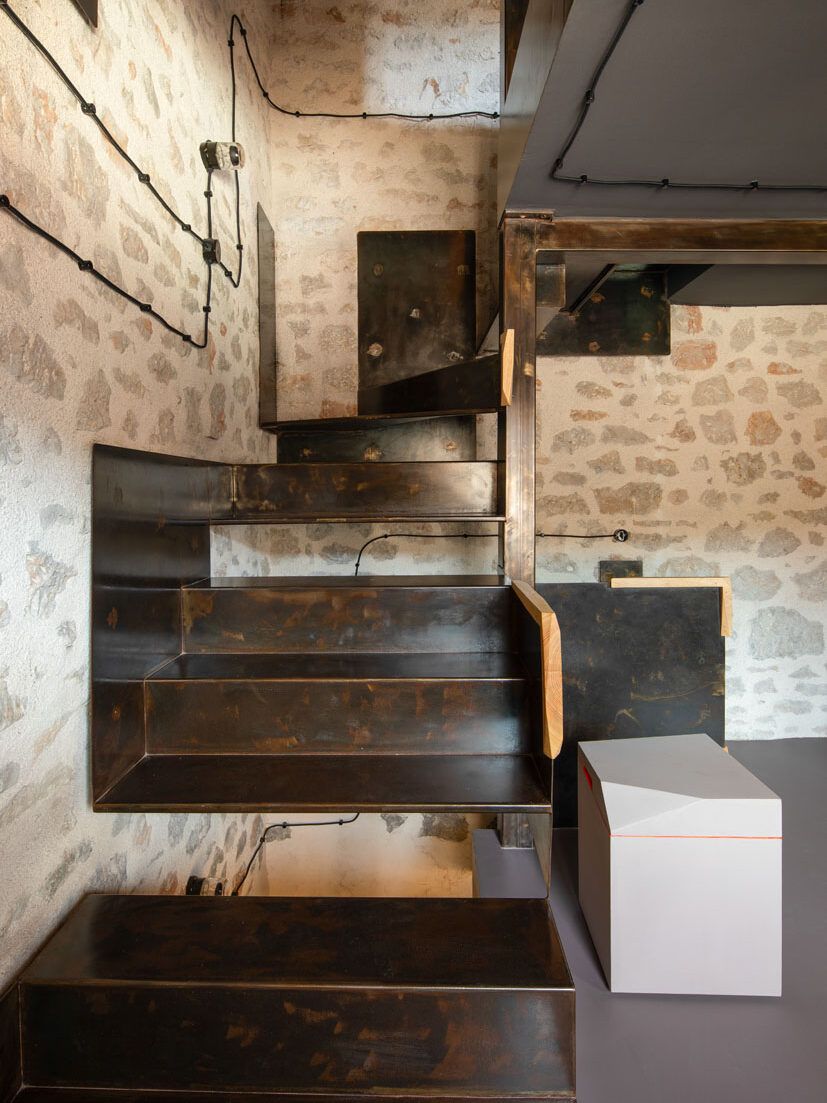
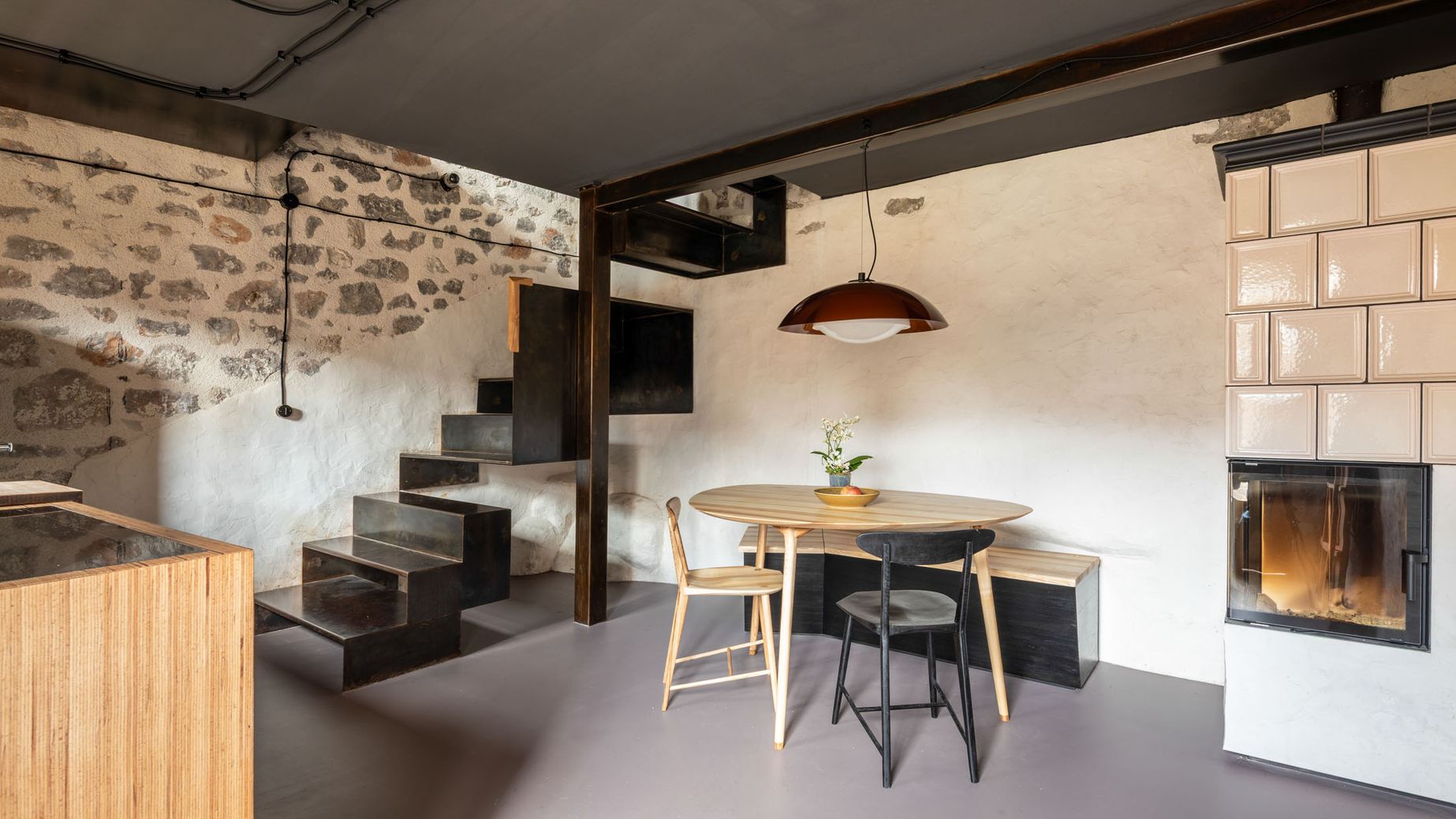
Kuća Skala – literally, the House of Stairs – is his latest chapter in that ongoing process. It occupies a 1930s stone shell left empty since the war in Croatia during the 1990s. Kajmak stripped it to the bones and rebuilt it as a vertical loft: four small, open platforms (about 12 square metres each) stitched together by a stair of blackened steel that serves as sculpture, seating, shelf, and social spine. “It’s a small homage to the town, where everything is up and down”, he says.
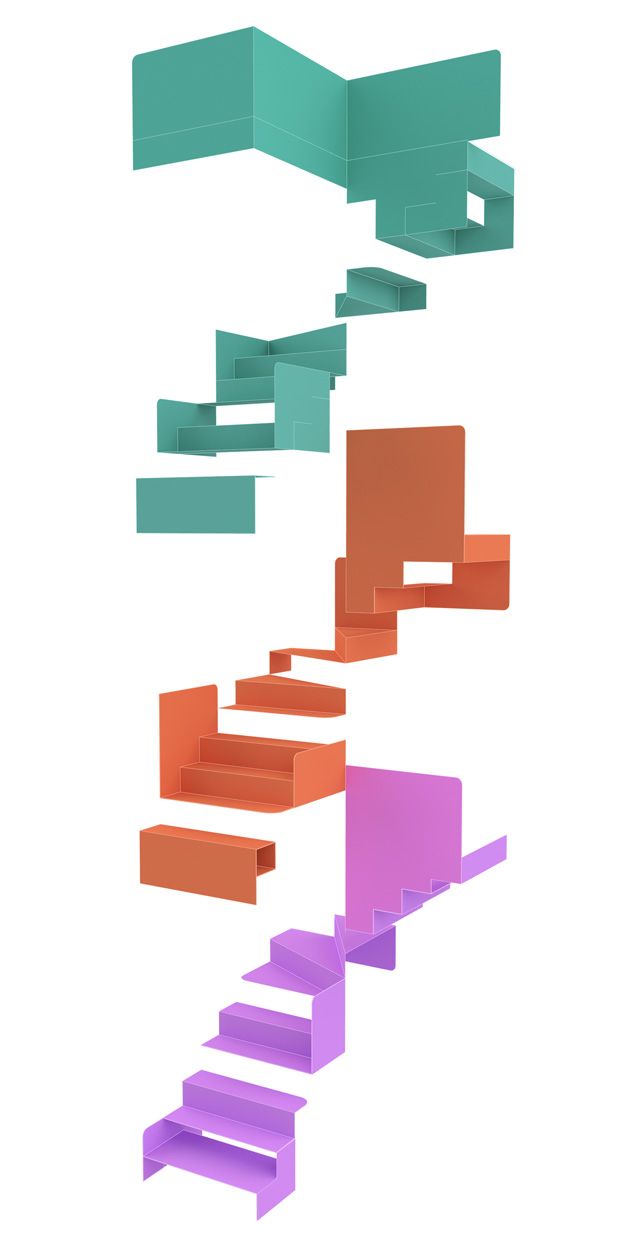
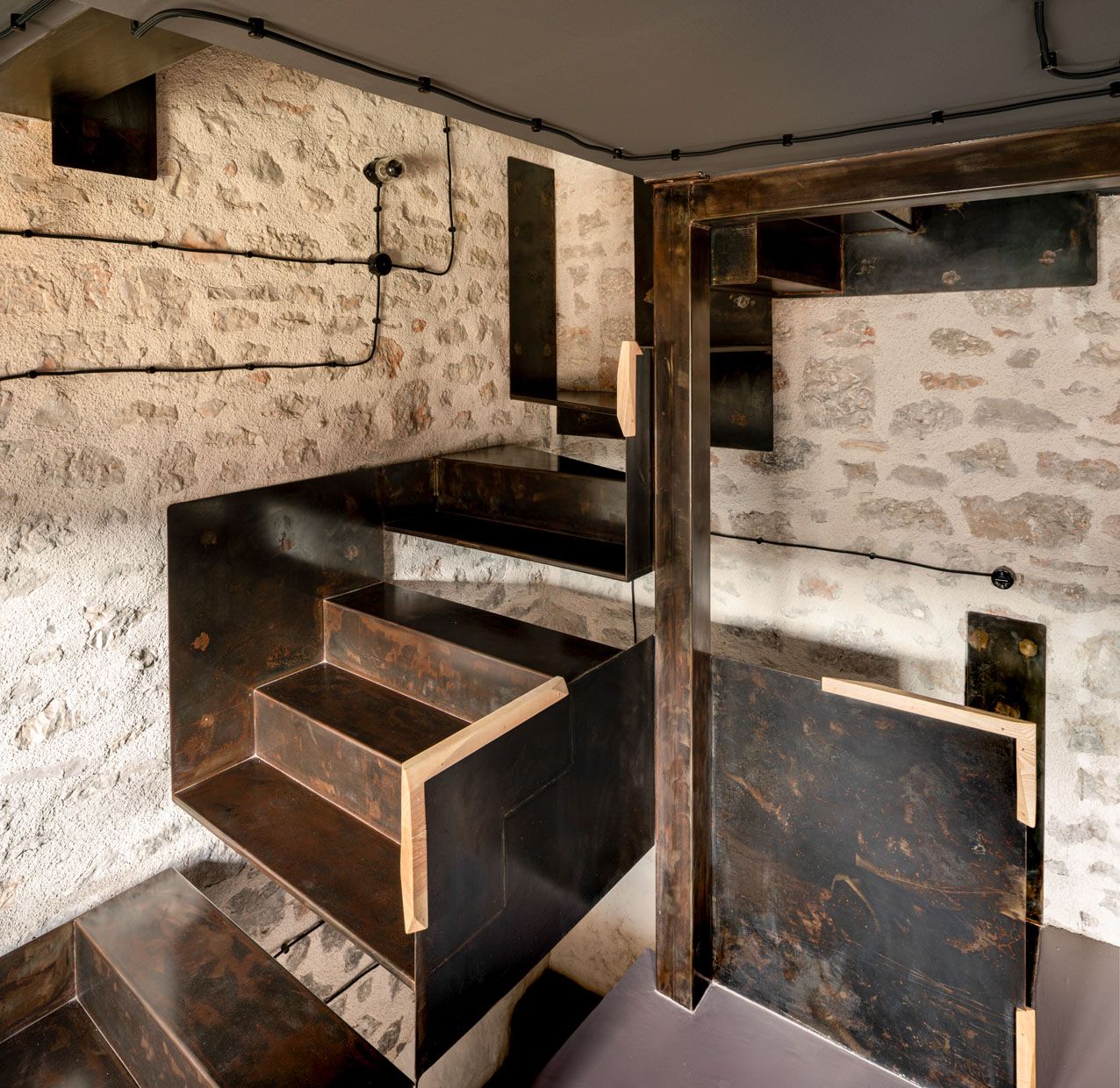
The stair is not a sealed corridor but an open, conversational piece. Intervals are deliberately unrhythmic: irregular gaps, uneven runs, and shifting risers break the rhythm, encouraging people to sit, pause, and talk. As often with Kajmak – who wandered into architecture without shedding the artist’s licence – the idea sharpened during the build rather than before it. “In the workshop, welding and folding the pieces together, it became clear that what emerges is an unabashedly formal, sculptural act.”
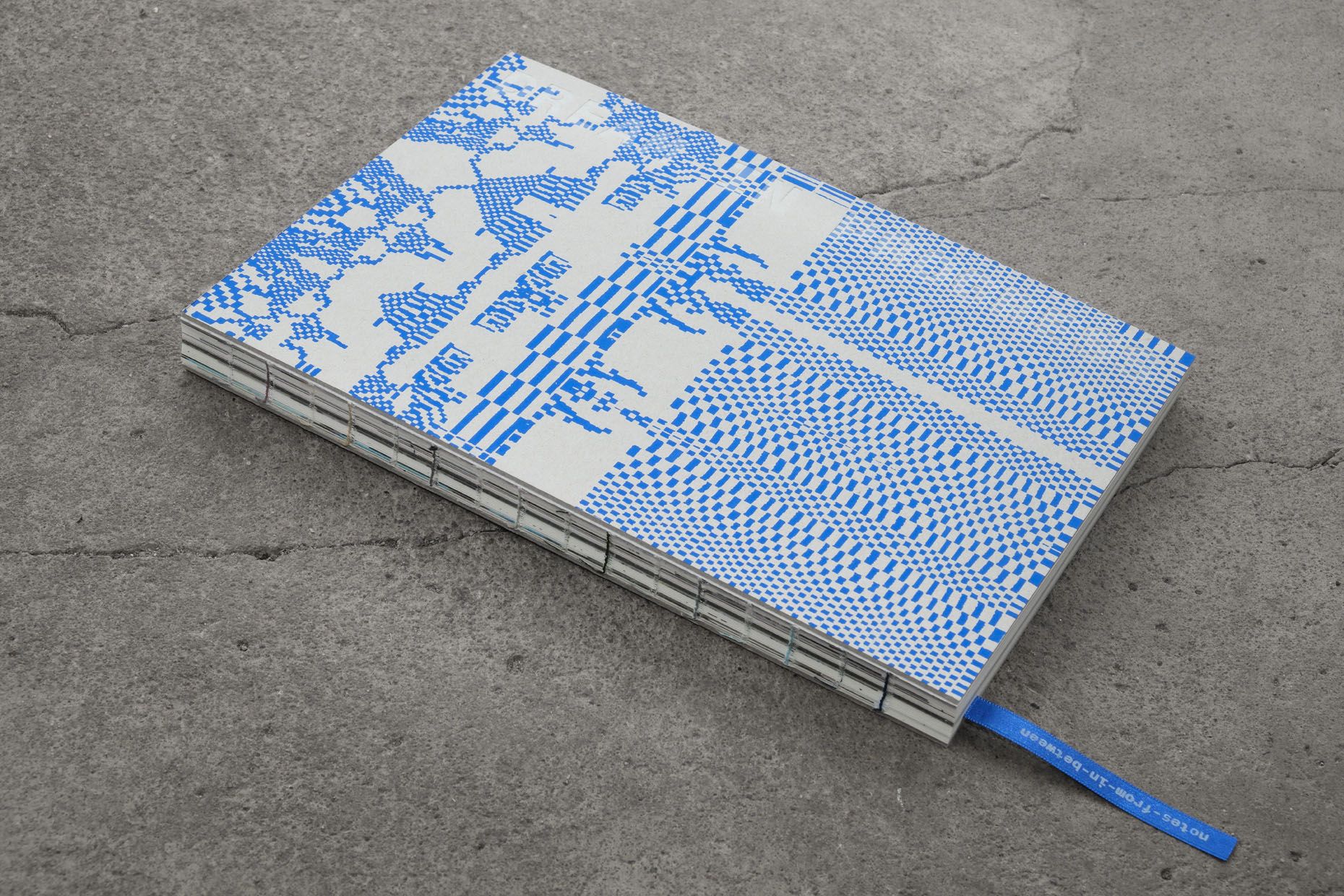
This article first appeared in our book Dream in Progress.
The book is a homage to those bold enough to leap into the unknown and trust serendipity. Sixteen distinctive projects offer a multifaceted plot of transformation – all coaxing you to see differently. Featuring a limited edition by artist Jana Gunstheimer, this playful atlas is ultimately an earnest invitation: Dream boldly and enjoy the journey!
You can purchase the book at any bookshop or directly from our online shop.
“The process is performative”, he adds. “I don’t need every element confirmed before I begin. An emotion, an idea, a way of moving – that’s enough to start.” Making the stair the house’s main act turned out to be a practical fix. When the floor was opened to thread the steel through, the structure proved shakier than it looked. A year went into stabilising the shell. A new steel spine – integral with the stair – that Kajmak tailored to the structural irregularities now quietly holds it together.
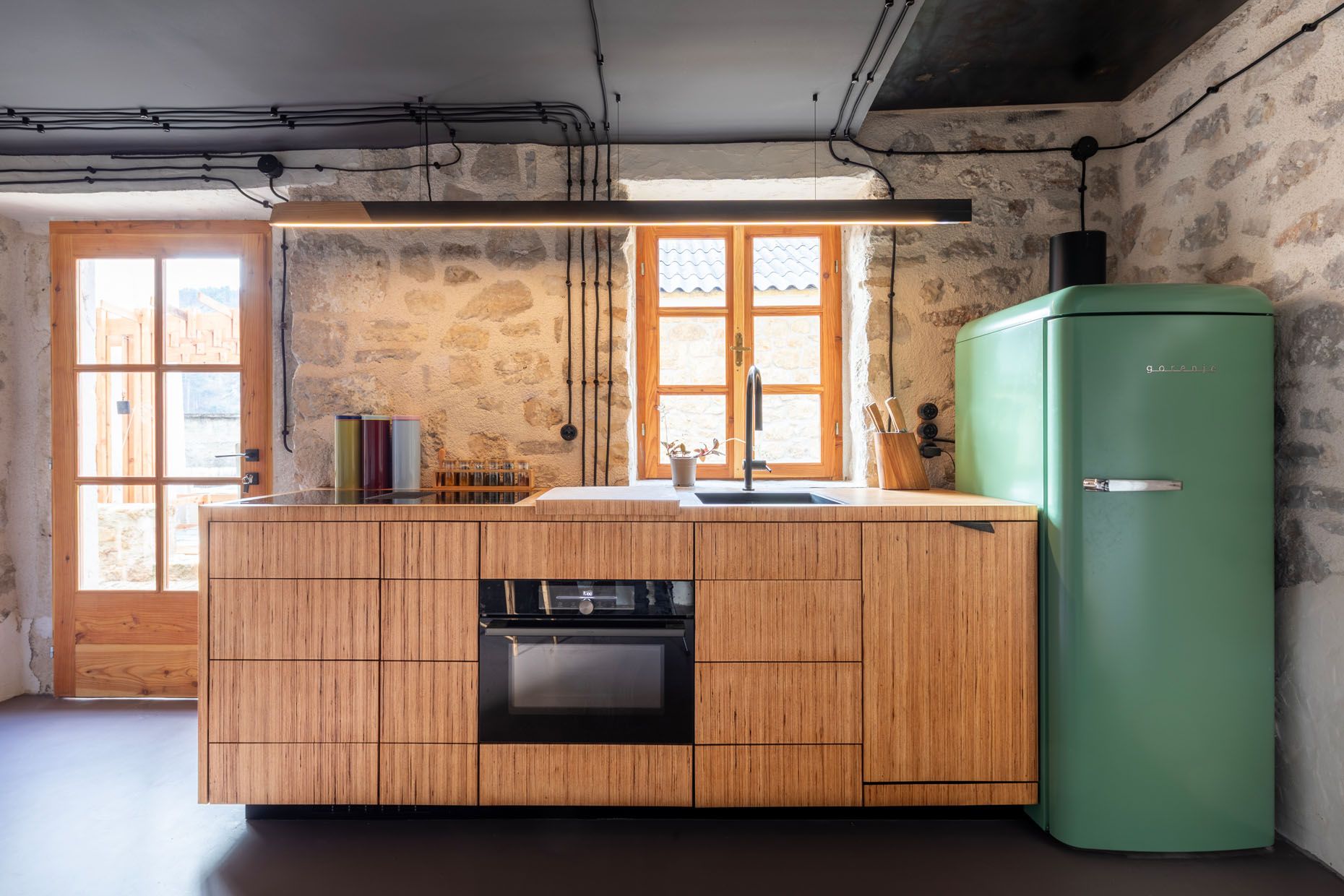
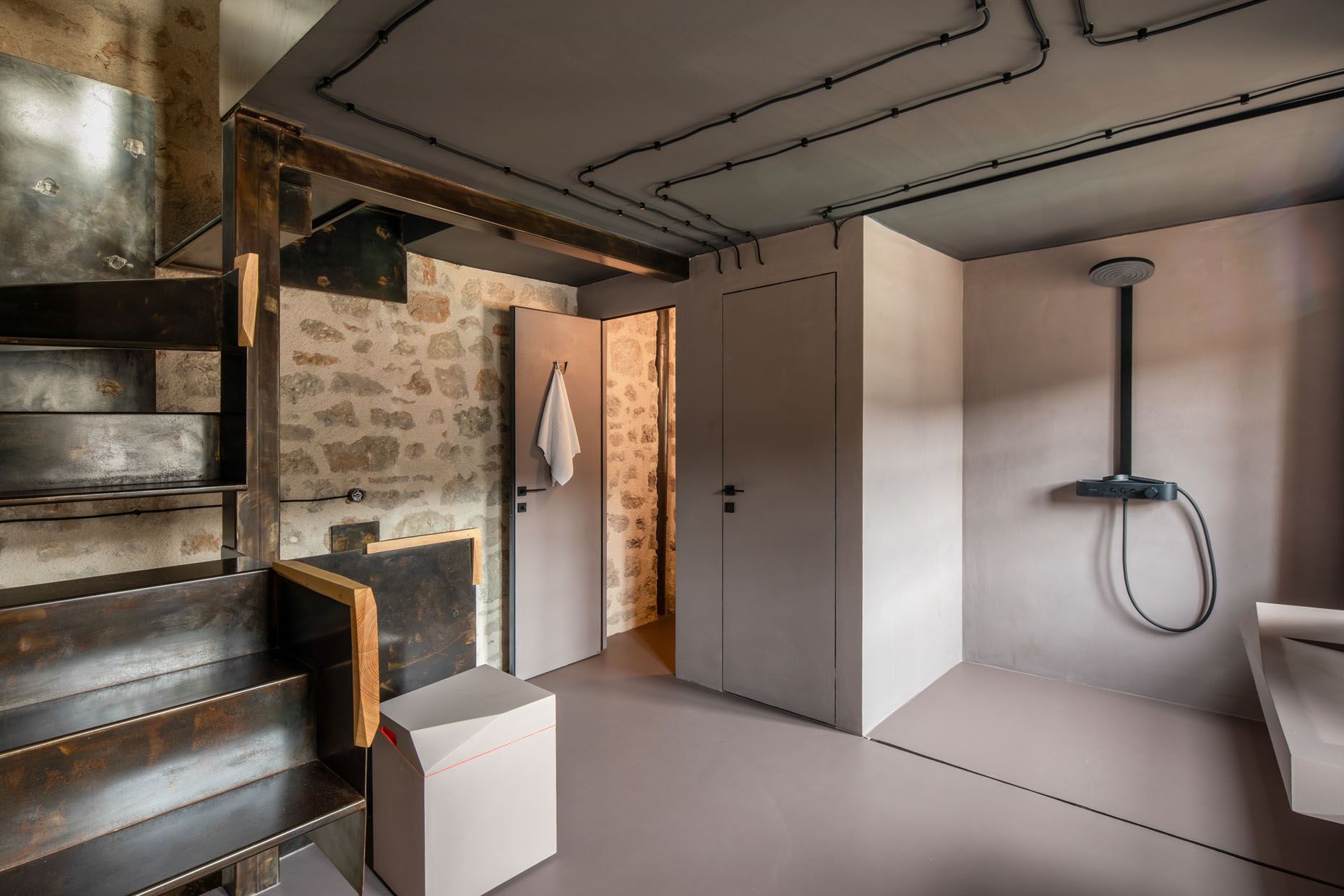
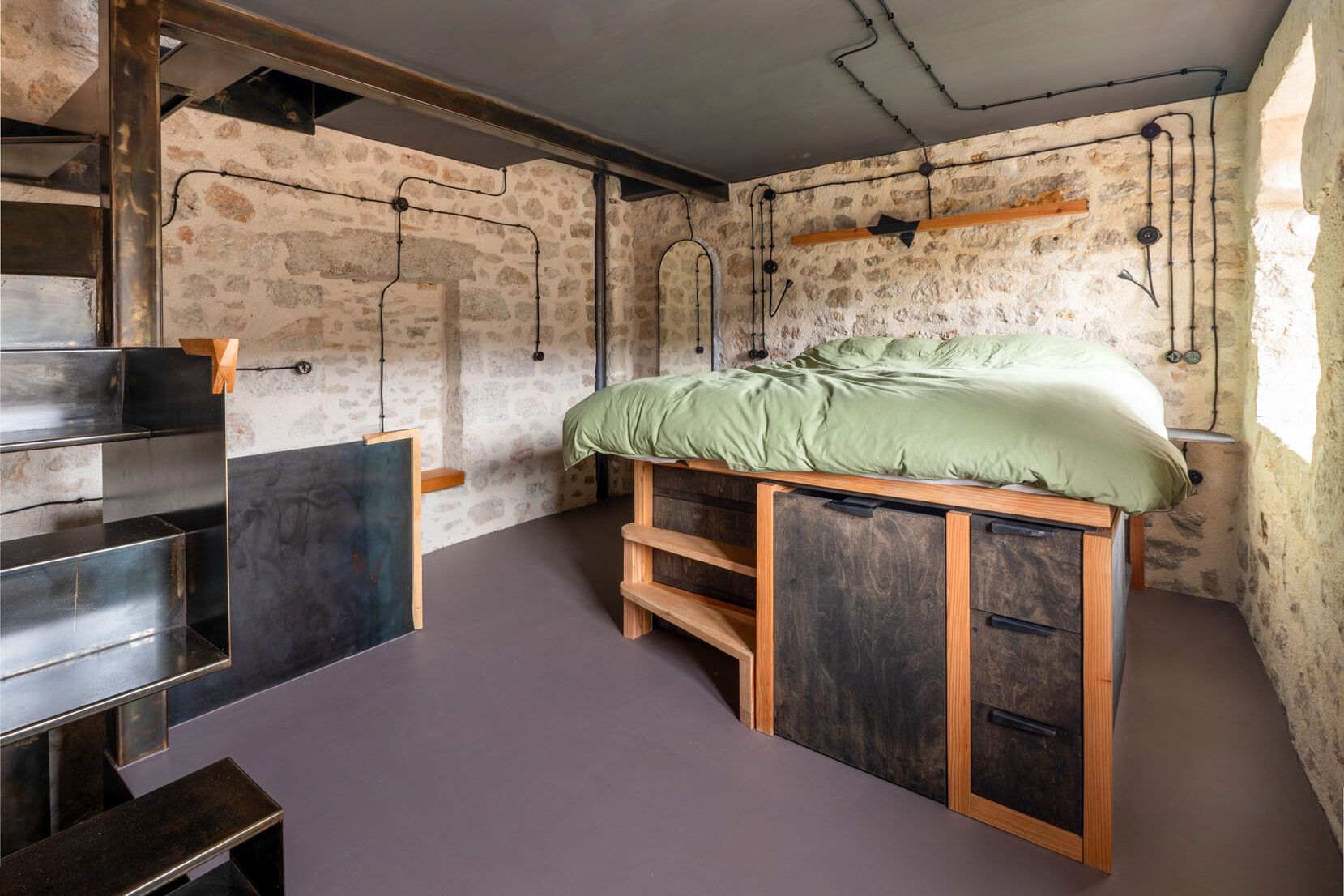
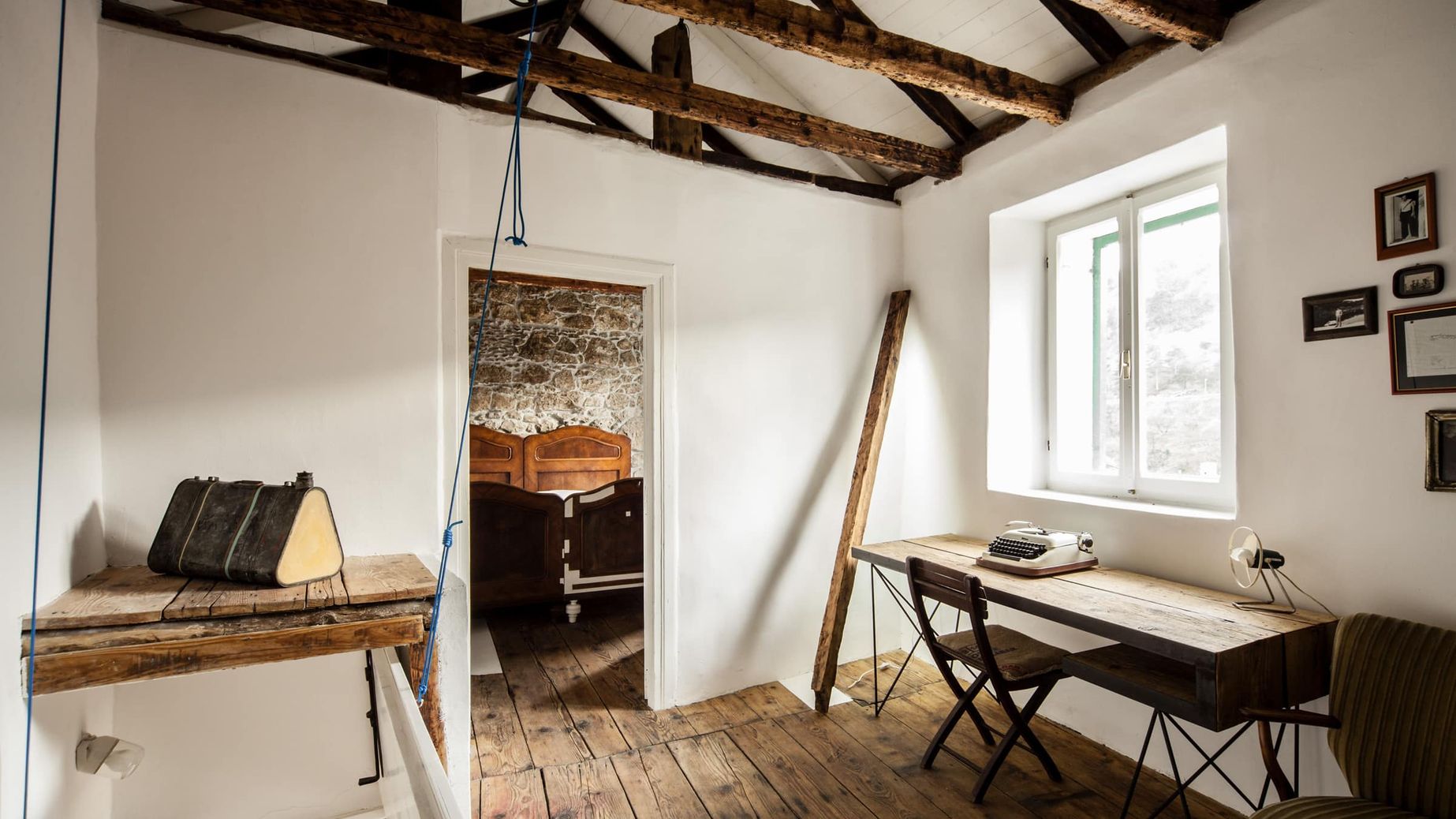
The plan is as lean as the footprint. Guests enter into a compact social kitchen with a hearth right at the door; one flight up, a bathroom borrows the view. The next level is for sleep – pared back, with a bed that hides storage. Under the eaves, a half-room for records opens to a small terrace peeking at the clock tower and Novigrad’s beautiful disrepair. “As you climb, sightlines break and recombine”, Kajmak says. “At the bottom, you feel you’re in a working, functional place; at the top, you discover how beautiful, broken, and abandoned Novigrad really is.”
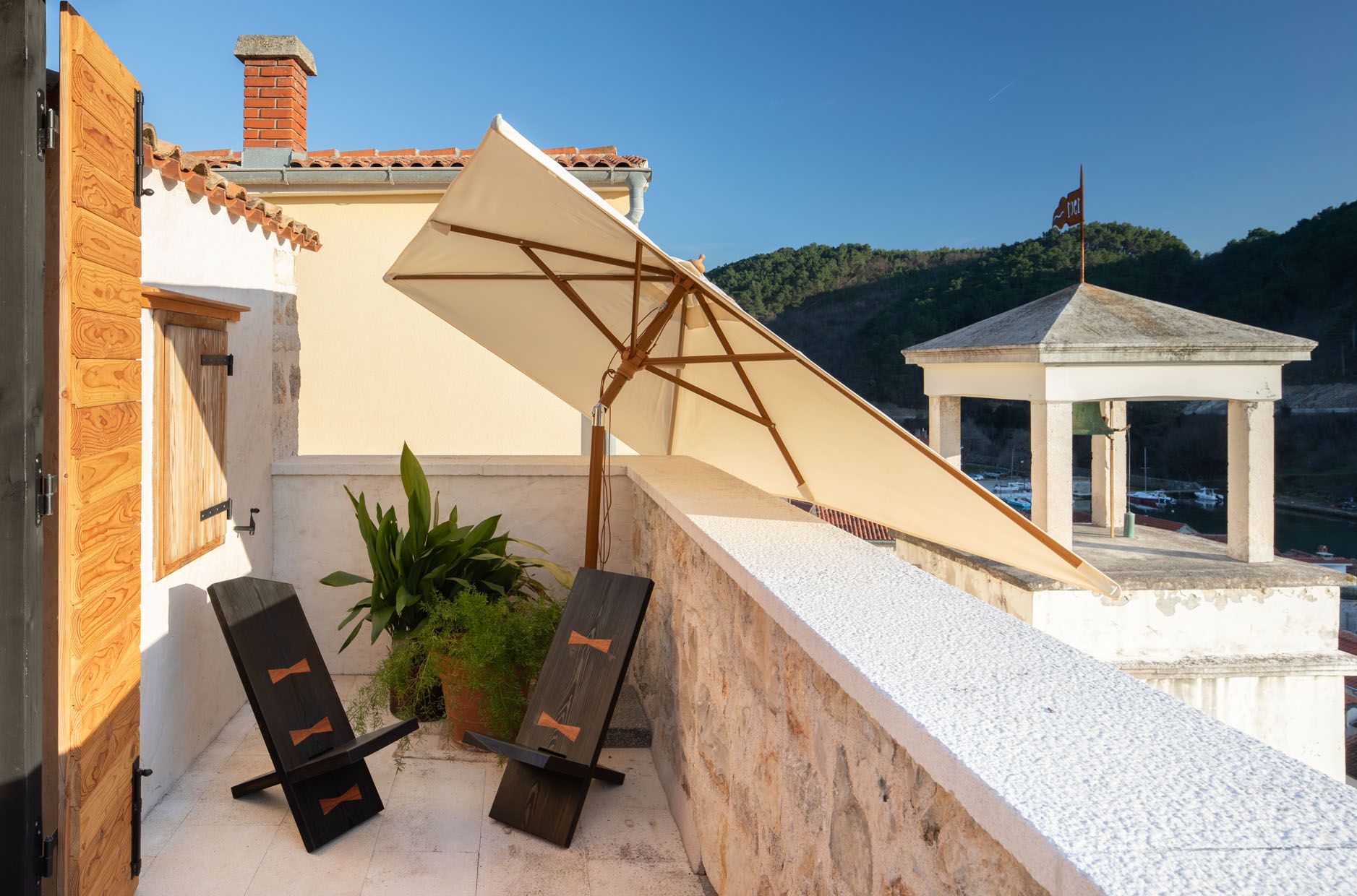
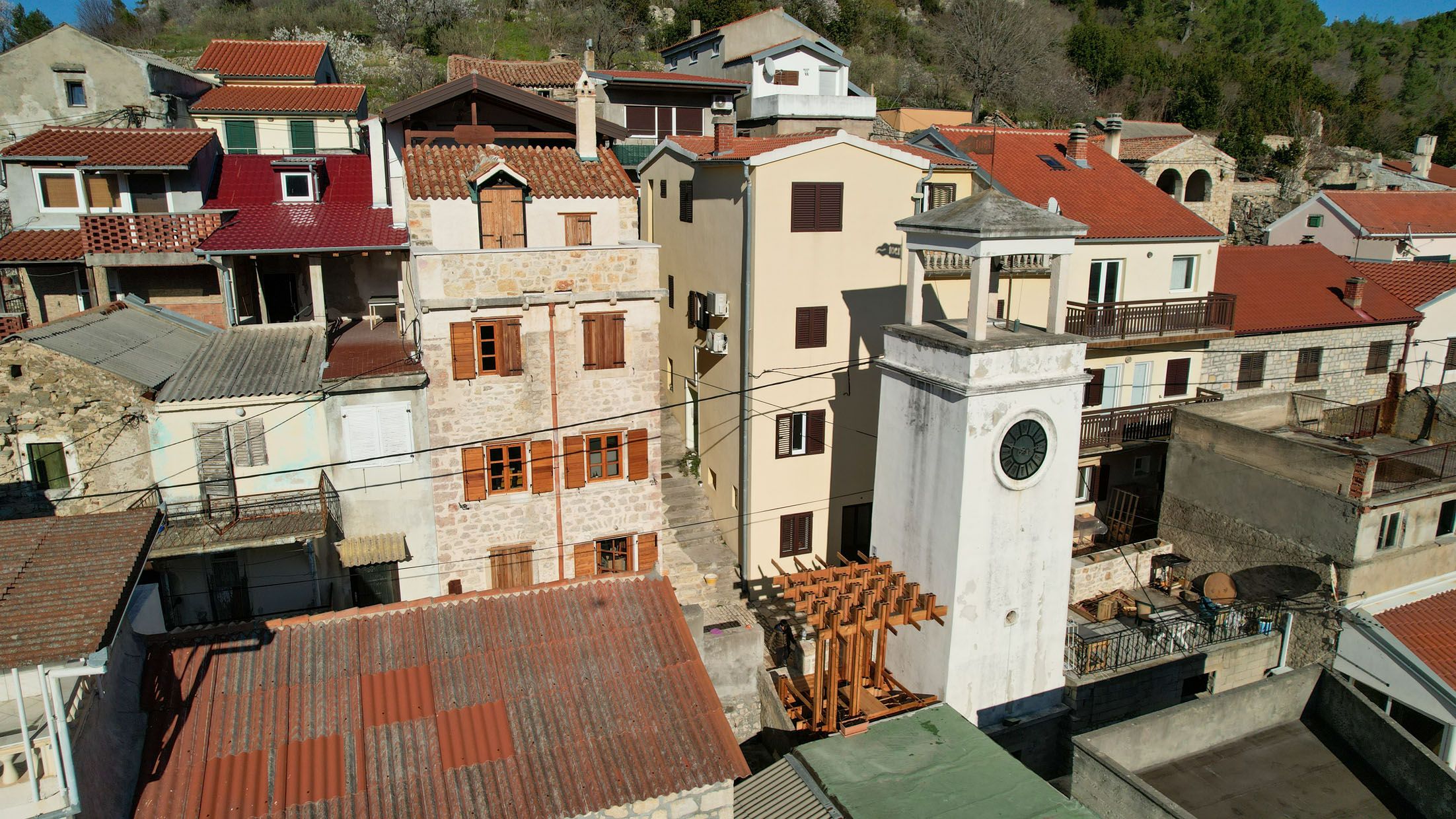
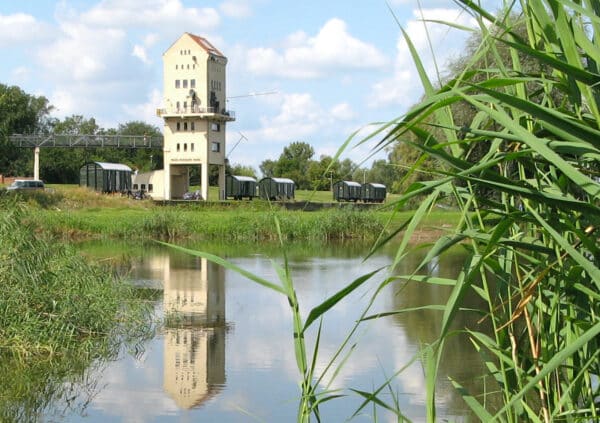
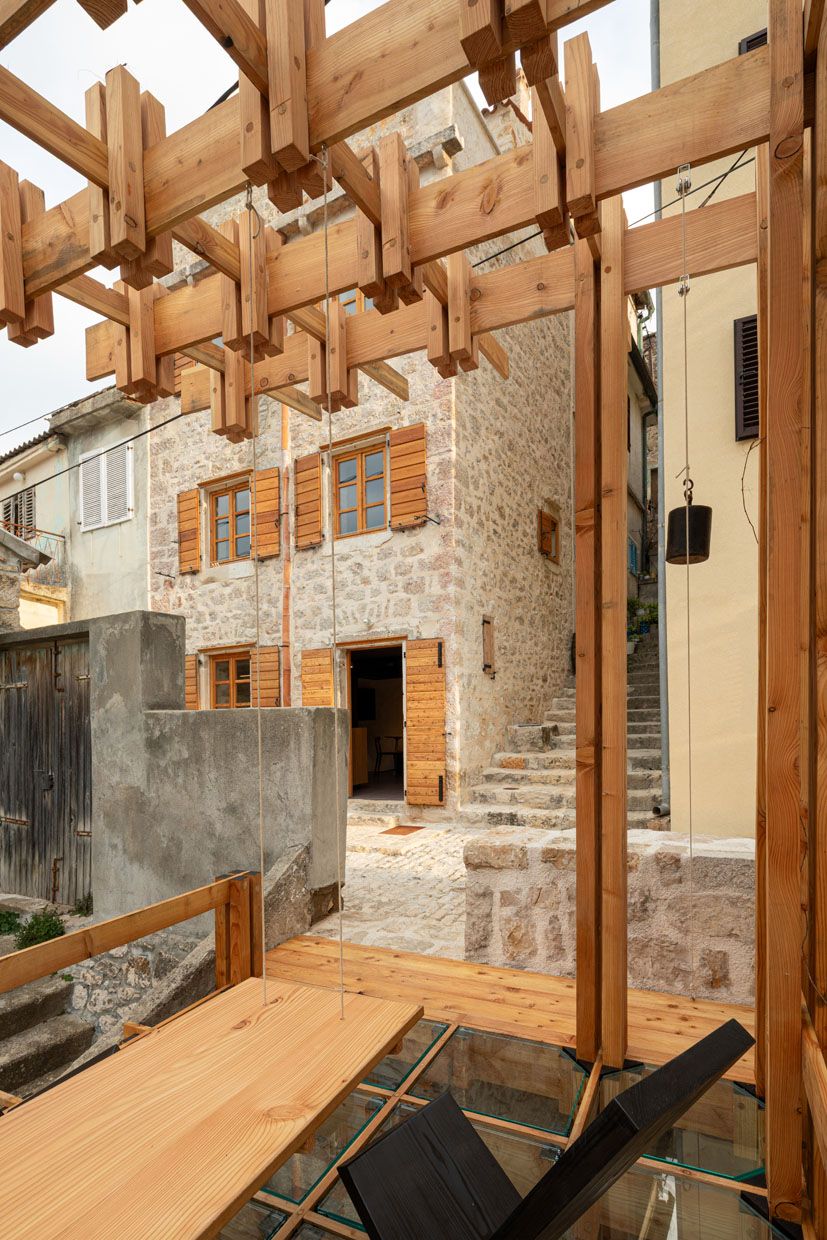
The stair’s blued steel looks stern, almost industrial. Yet in high summer it is (literally) the coolest seat in the house. “People think they’ll prefer the ash-wood bench”, he says, “and then the heat hits and everyone sits on the steel.” Elsewhere, elements are kept deliberately simple and handmade – ash stools, a green fridge, wiring that runs proudly on plaster like a faintly mischievous installation – so the old stone walls can do the talking. Outside, the house stakes a tiny claim beside the clock tower with a larch-wood pavilion, pegged together and glass-floored, a light box amid heavy masonry. It has become a small public theatre: locals pause, astonished, before turning their curiosity toward the house itself.
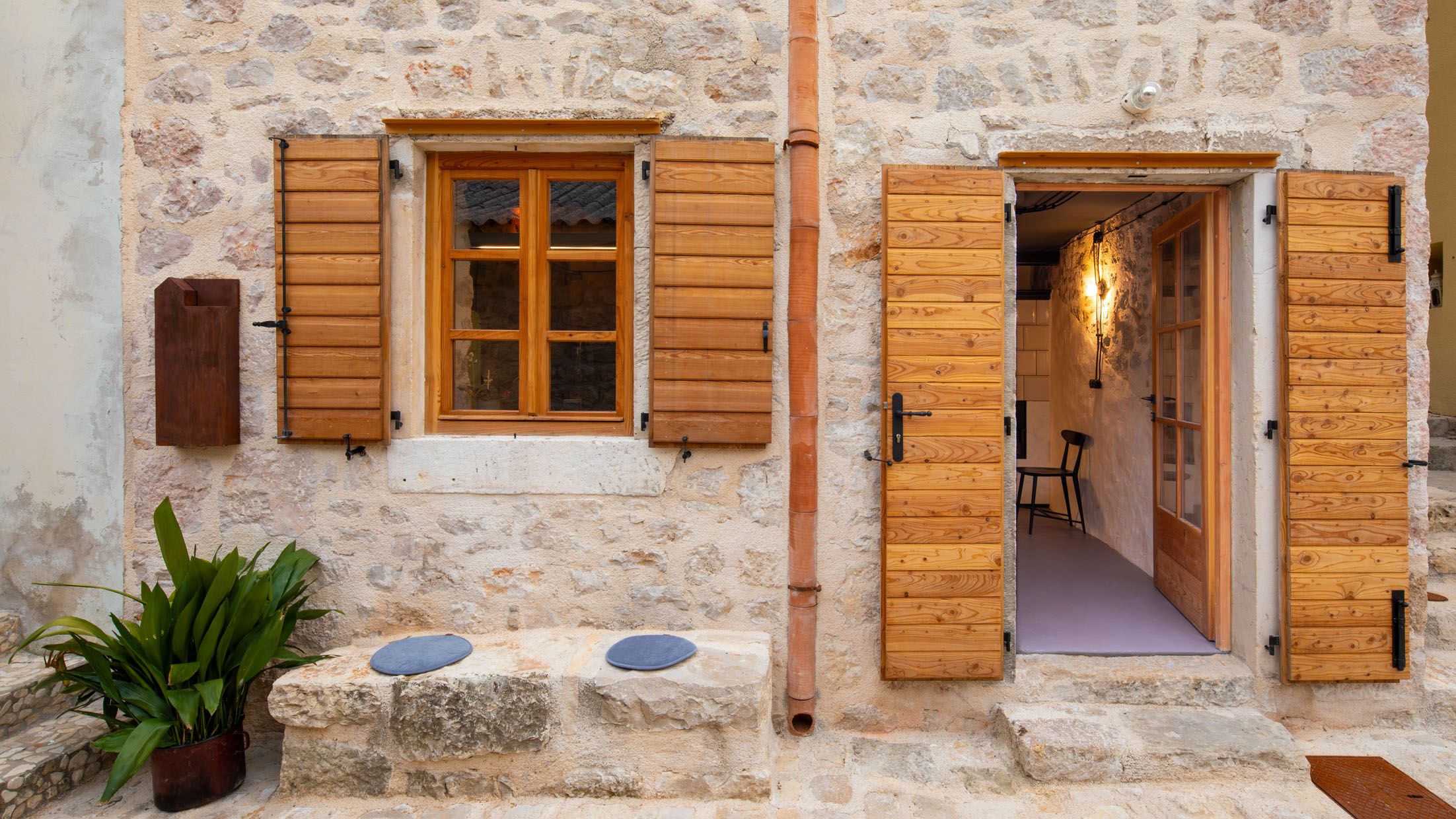
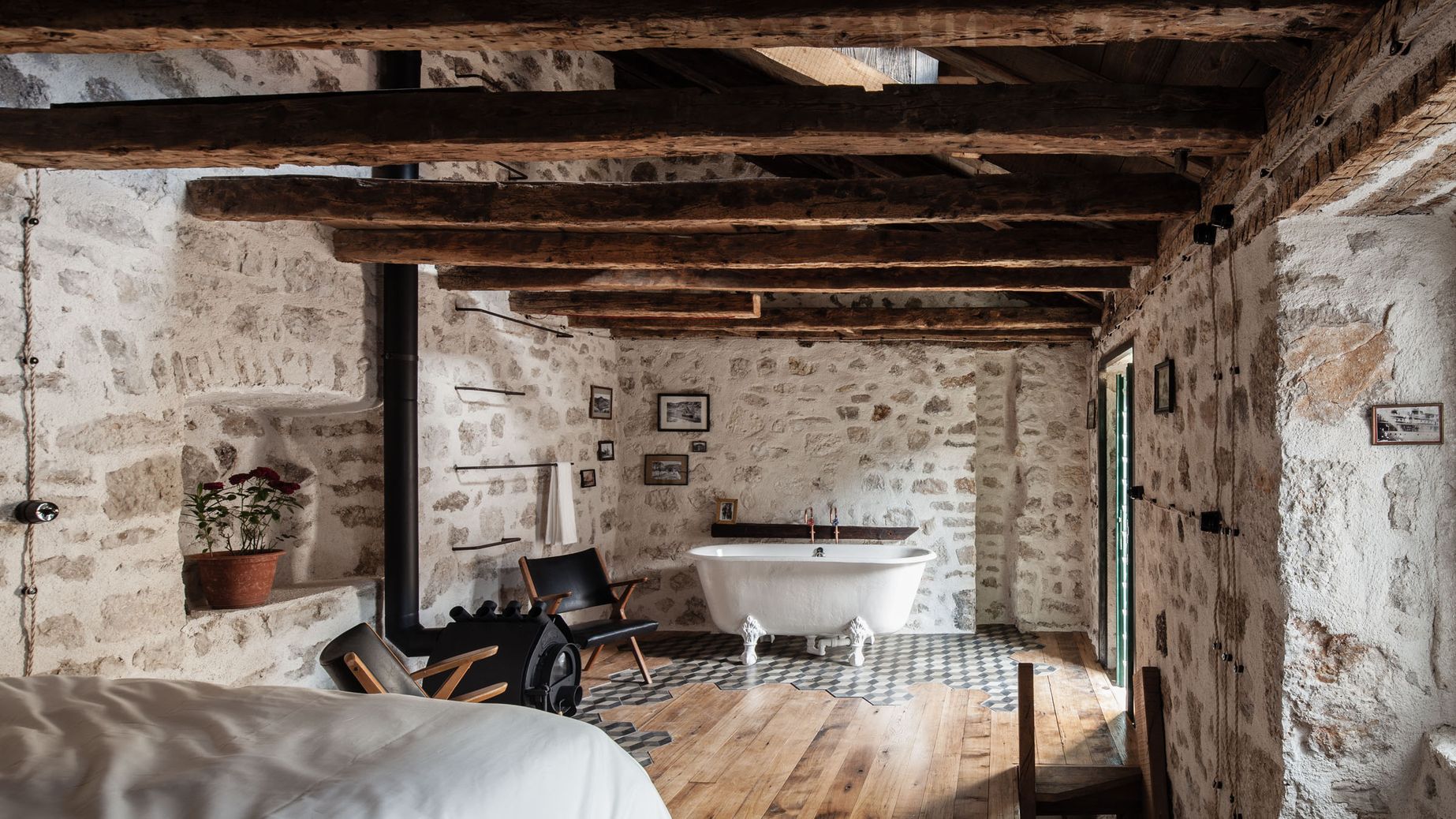
If Kuća Skala is an ode to ascent, it is also a paragraph in a longer story Kajmak calls Kuća, a family of enovations that treat Novigrad as both site and subject. Kuća Kamena (the Stone House), once his uncle’s place and a regular family holiday haunt, laid down the method: conserve the immaterial – smells, sounds, shadows – as carefully as the material. Kuća Fotografa (the Photographer’s House) pays tribute to its former resident’s craft with intimate scale and cinematic detail; there is room for two and not a centimetre more.
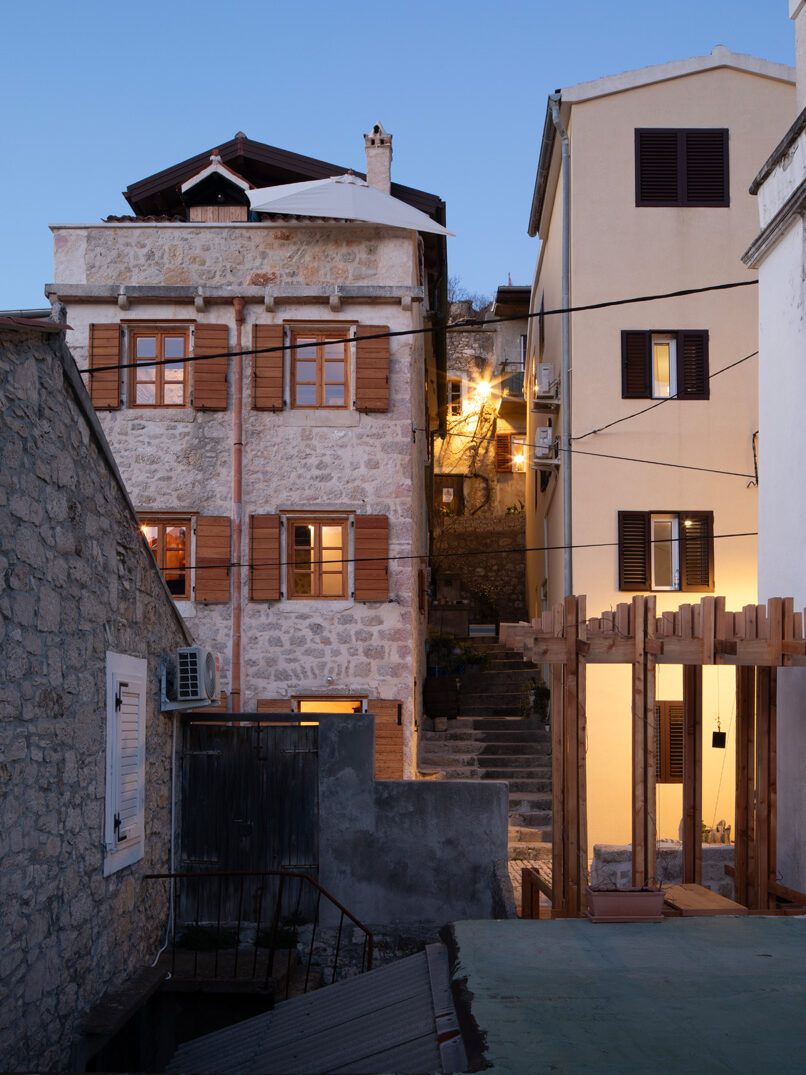
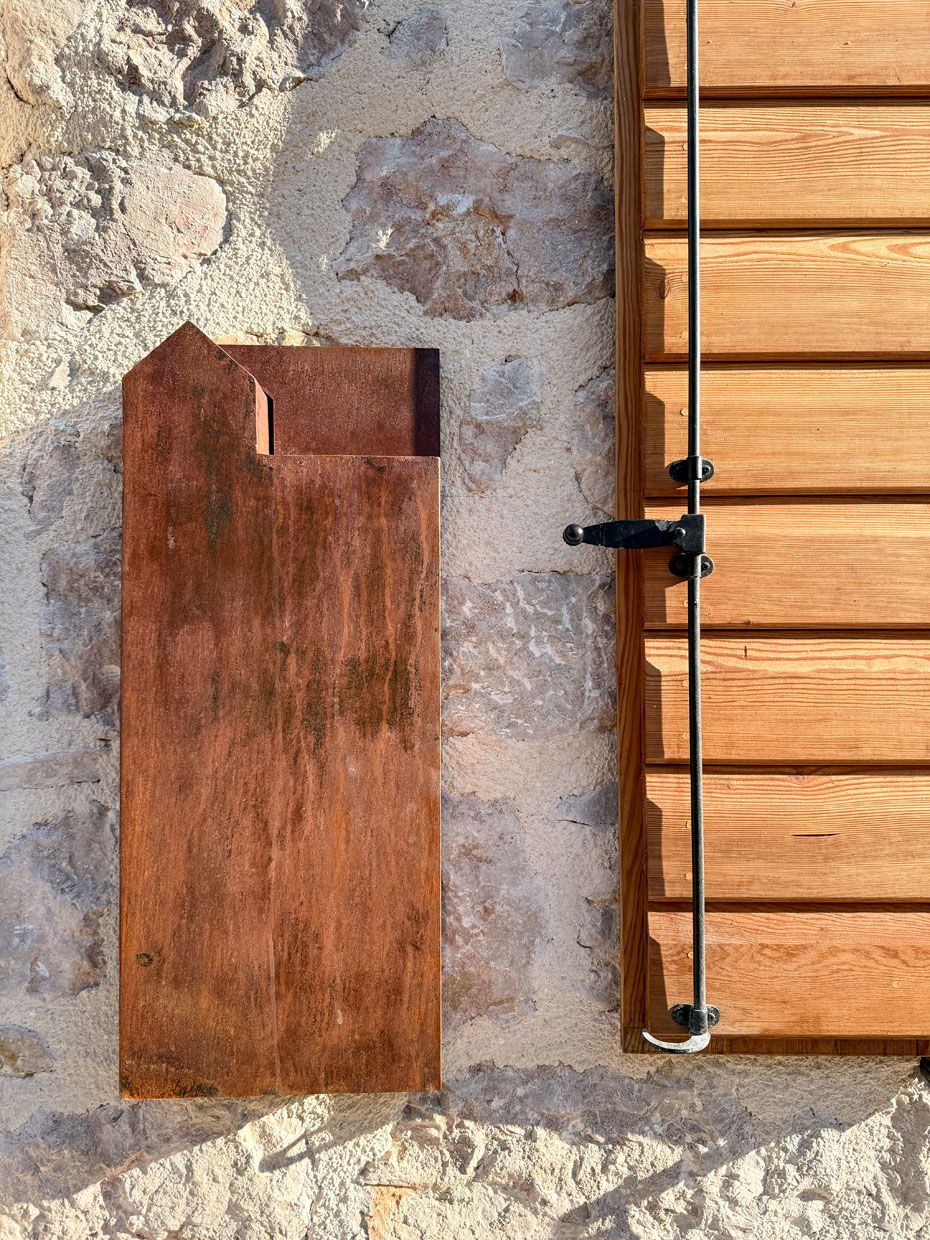
While Novigrad’s suburbs flirt with anonymous villas and infinity pools, the centre keeps its cadence of green shutters and improvised repairs. “It’s still totally sleepy”, Kajmak says with affection. Ownership tangles, heritage rules, narrow alleys, and the sheer hassle of hauling every single stone up the stairs have conspired into a kind of accidental guardianship. Kuća Skala turns those urban frictions into a language for living. It’s a reminder that change sometimes advances by landings, not leaps: a sequence of small, decisive gestures that add up to a climb — forward, yes, but rooted in what was already there.
Text: Florian Siebeck
Image credits: Tom de Gay (photographs), Boris Kajmak (sketches, graphic elements and logos)
This article first appeared in our book Dream in Progress. The book is available to purchase from our shop.

0 Comments