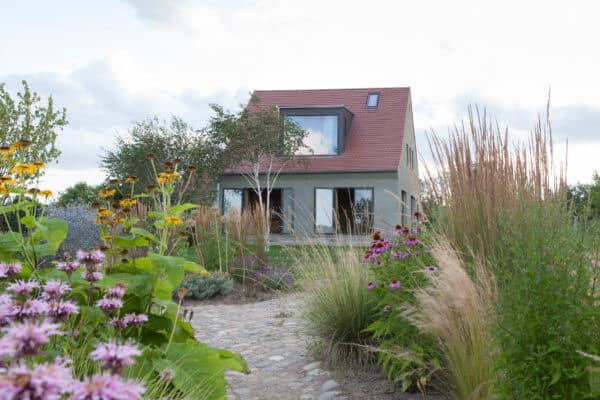
A Thing of Possibility
A space in Wendland that offers many possibilities with a guest house and event rooms. Behind the unusual name is an equally unusual concept — and a key question: How do we want to live and work in the future?
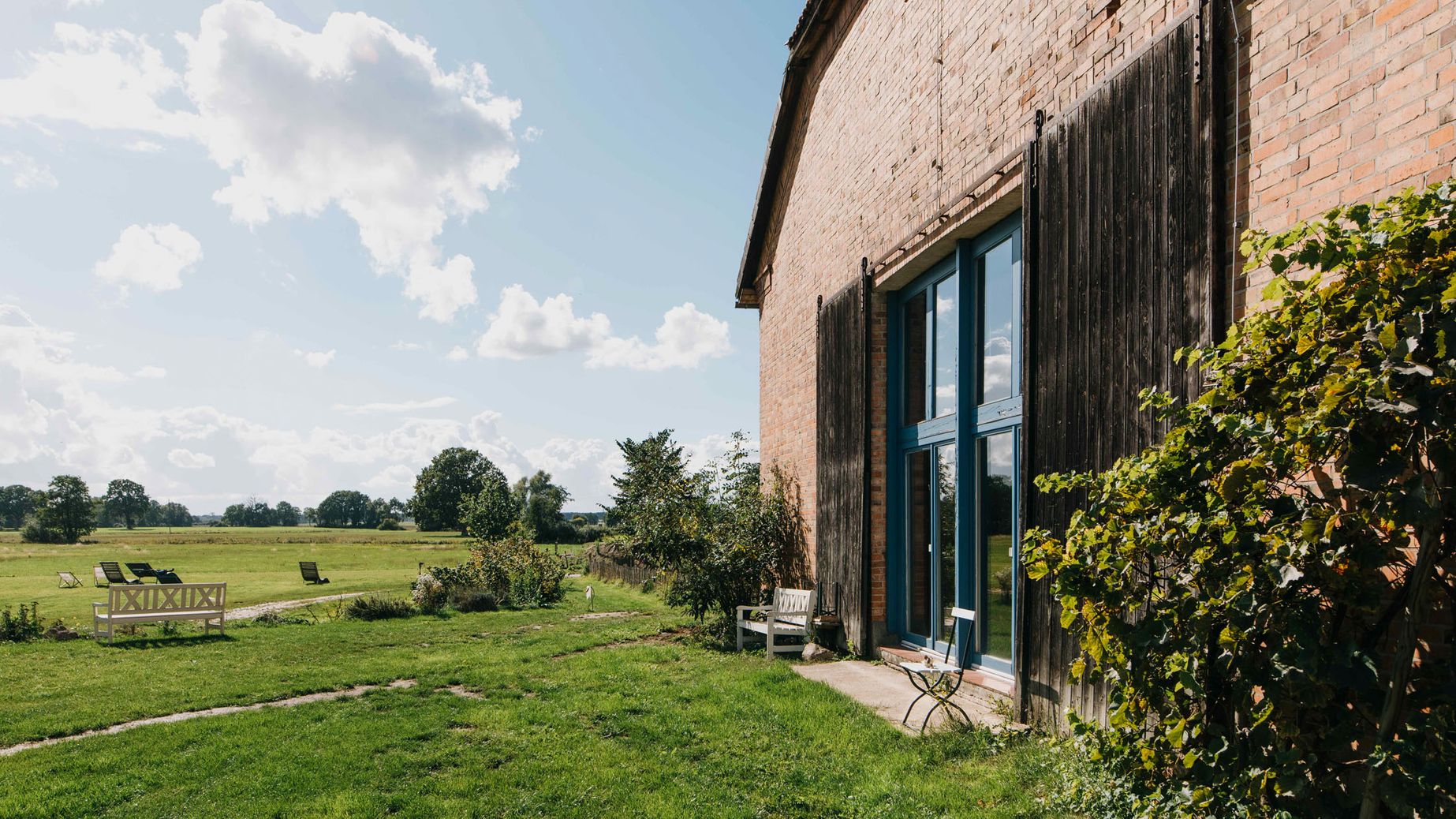
Ein Ding der Möglichkeit [A Thing of Possibility] is a space in Wendland that offers many possibilities with a guest house and event rooms. Behind the unusual name is an equally unusual concept — and a key question: How do we want to live and work in the future? Questions that are often addressed in workshops or seminars. Eight adults and three children from Berlin and Hamburg are trying out new ways of working together — also for their guests.
The Wendland region in eastern Lower Saxony, located between the Elbe glacial valley and the Lüneburg Heath, is firmly connected in recent German history with the anti-nuclear movement. Since the late 1970s, locals and opponents of nuclear power have joined forces in common protest against the nuclear waste repository in Gorleben. Numerous resisters have taken root during this time, settling down on empty farms and trying out alternative ways of life. The newcomers were welcomed with benevolence in this region, which has always been structurally weak. Just like the Slavs in the Middle Ages, who were settled in Rundlinge, a form of circular village typical of the Wendland, by the landlords. The houses of these radially arranged villages cluster around a common village square, thus forming a community.
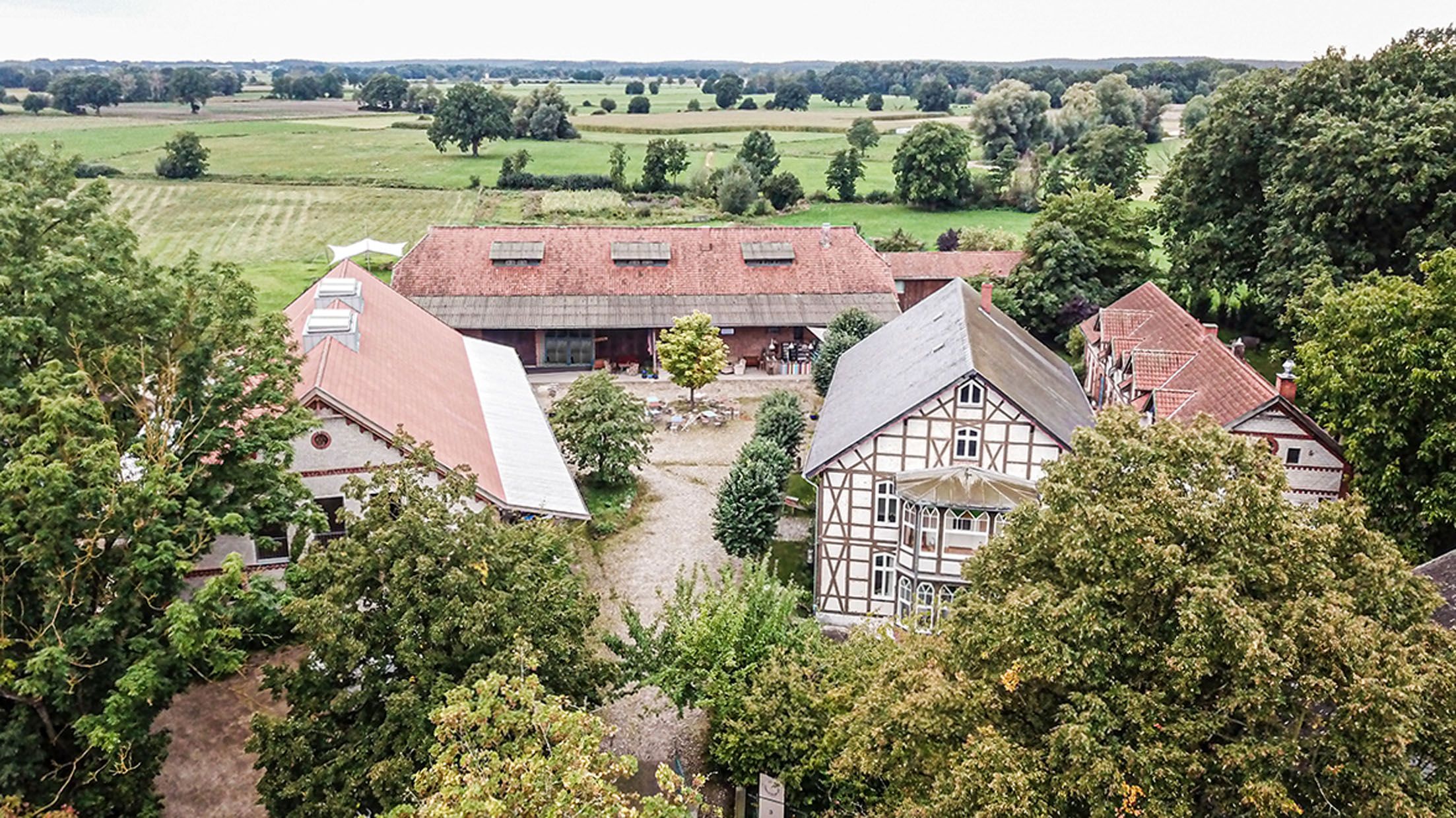
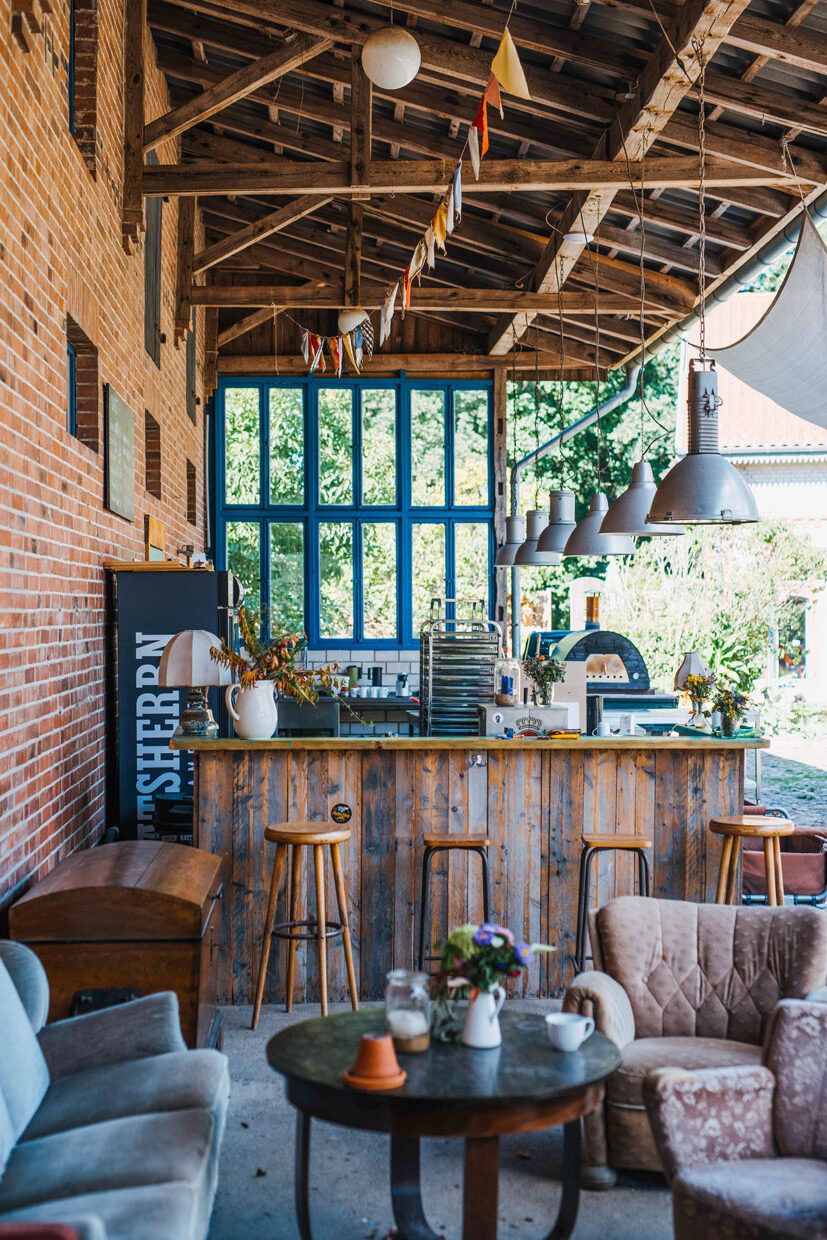
This sense of community continues to shape the mentality and life of the people in the Wendland and provides a fertile ground for new ideas. In the smallest Rundling of Salderatzen, located west of Lüchow, one of these new ideas has been emerging since 2021: “Ein Ding der Möglichkeit” [A Thing of Possibility] is a place for innovative forms of living and working, including a guesthouse, seminar operation and cultural activities. It has nothing to do with the hippie life of the 1970s. The founders from Berlin and Hamburg previously pursued successful careers in the creative industry and in boat building for many years, gaining a lot of experience with large projects. Olive-green parkas and anti-nuclear movement stickers are nowhere to be seen. Instead, a cup of cappuccino is available at the open-air bar, which conjures up an urban flair on the lawn with its old wooden parts in vintage style. And there is Julia Nagel, one of the founders of the project, who shows me around and explains this place for the future to me.
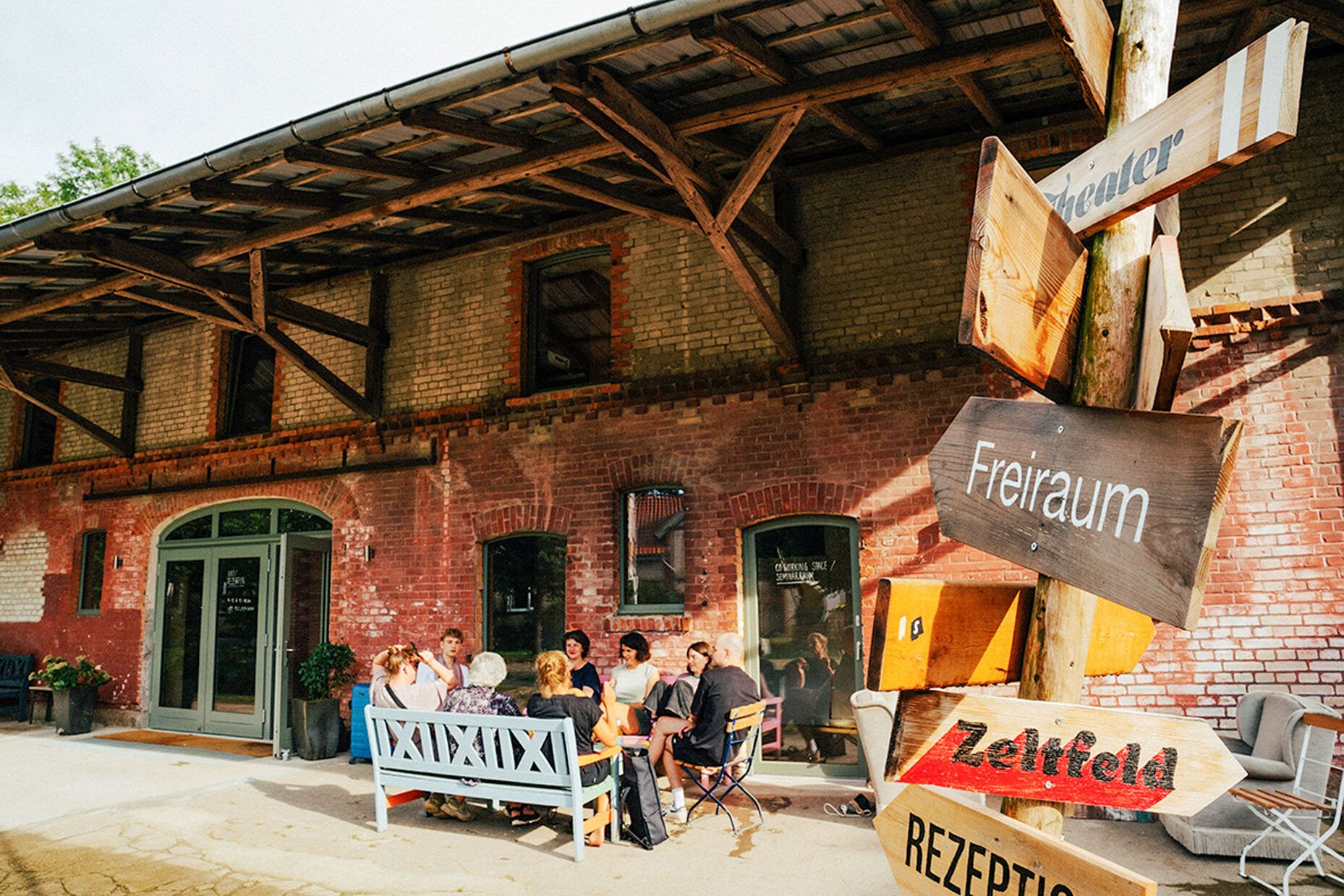
You moved to the Wendland three years ago with your 12-year-old son to start an alternative living and working project with friends. How did that come about?
We all felt the desire for more room to manoeuvre. We wanted to literally take our lives back into our own hands and realise our own ideas. However, we didn’t have the romantic idea that we would suddenly become farmers, but we no longer wanted to use our professional and personal skills only at the desk. In Salderatzen, a circular village with only 23 inhabitants, we fortunately found an ideal place for our vision of the future. The previous owner had already converted the farm into a guest and seminar house, which made it easier for us to get started. After three years of construction and renovation work, we are now at the point where we have not only created beautiful new spaces but can also finally fill them with our own ideas.
Why did you choose the co-operative as your type of business?
We think that this form best aligns with our ideas of communal living. We quickly decided that any kind of work is equally valuable, and we didn’t want hierarchies. Instead, we have teams that are responsible for a project and can also make decisions. A cooperative is ideal for this. We see ourselves as a platform of and for people. Anyone who comes here and works with us can contribute themselves and their ideas.
How have your neighbours received you?
Super! The people in the Wendland are open and curious. They just walk onto the farm and let you show and explain everything to them. There is a great deal of tolerance towards other ways of life. And, of course, they are happy about young people moving here and bringing their children.
What kind of events can take place on your farm?
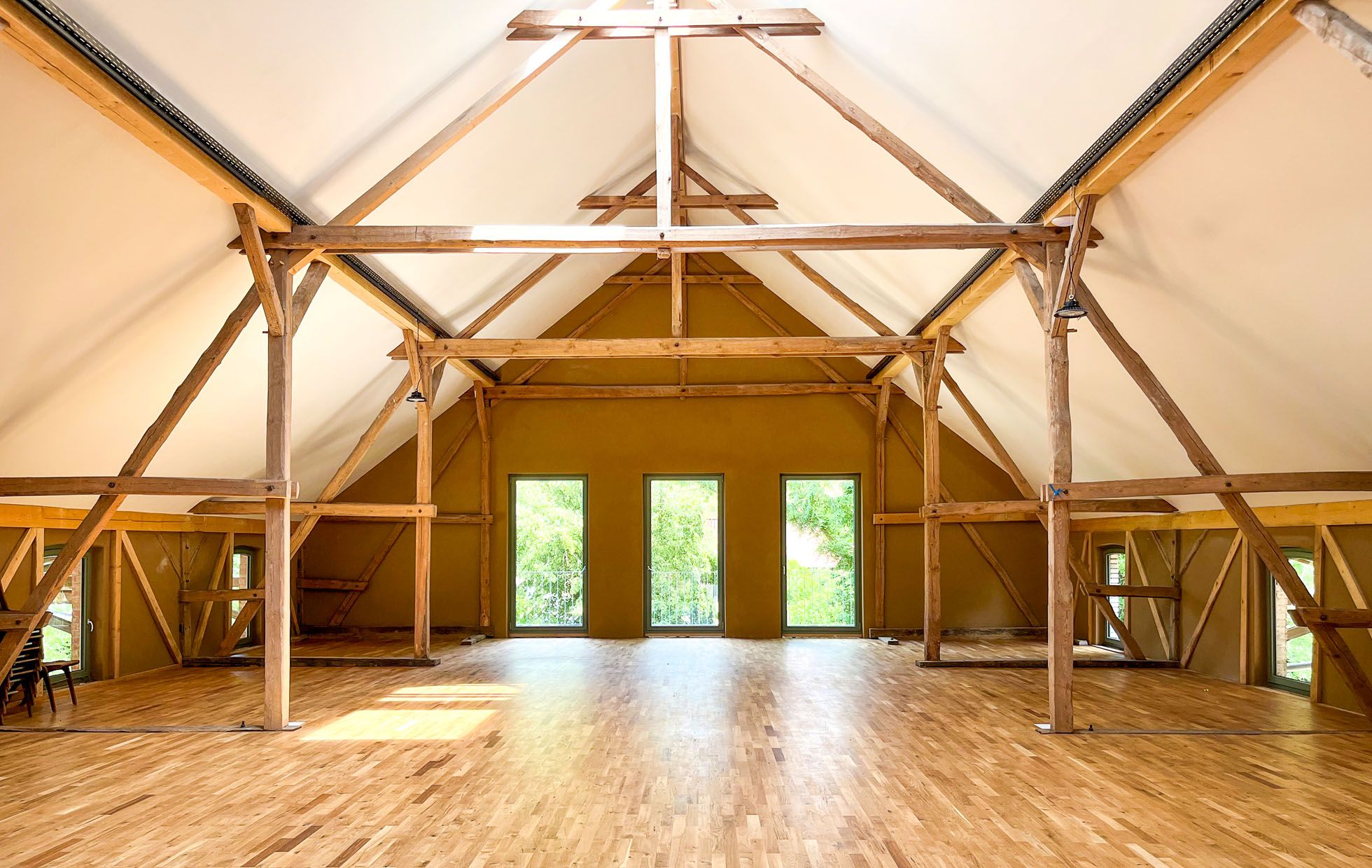
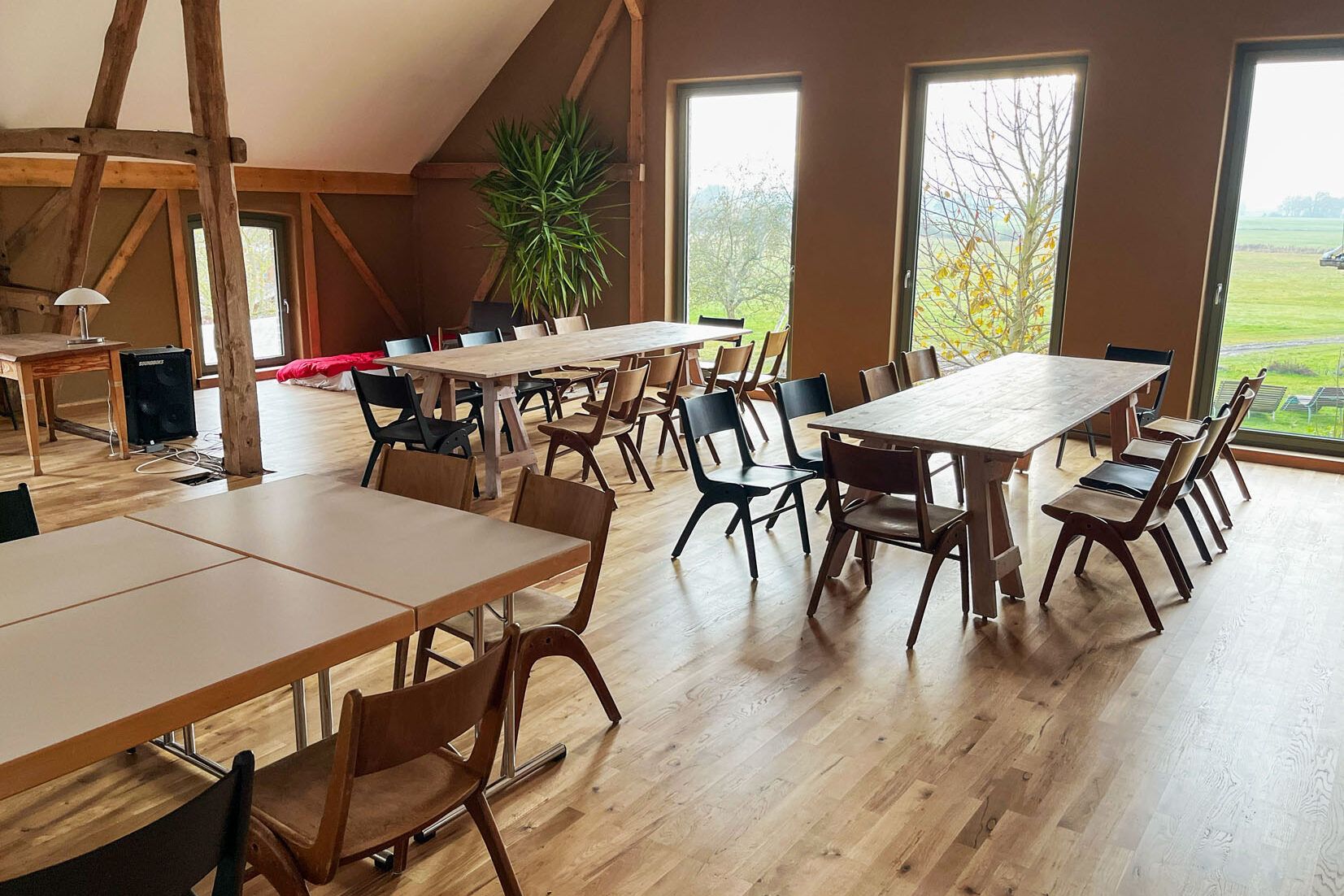
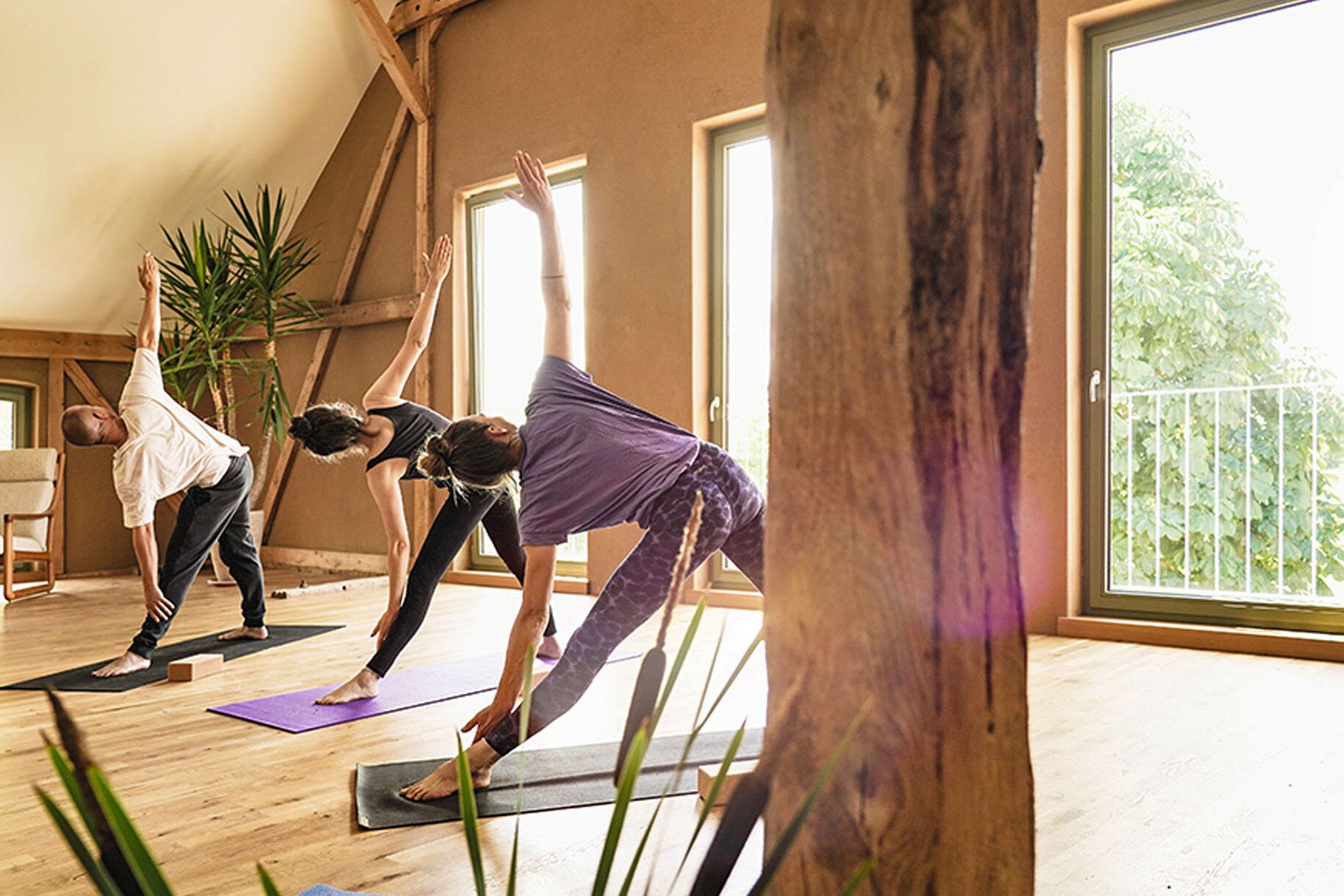
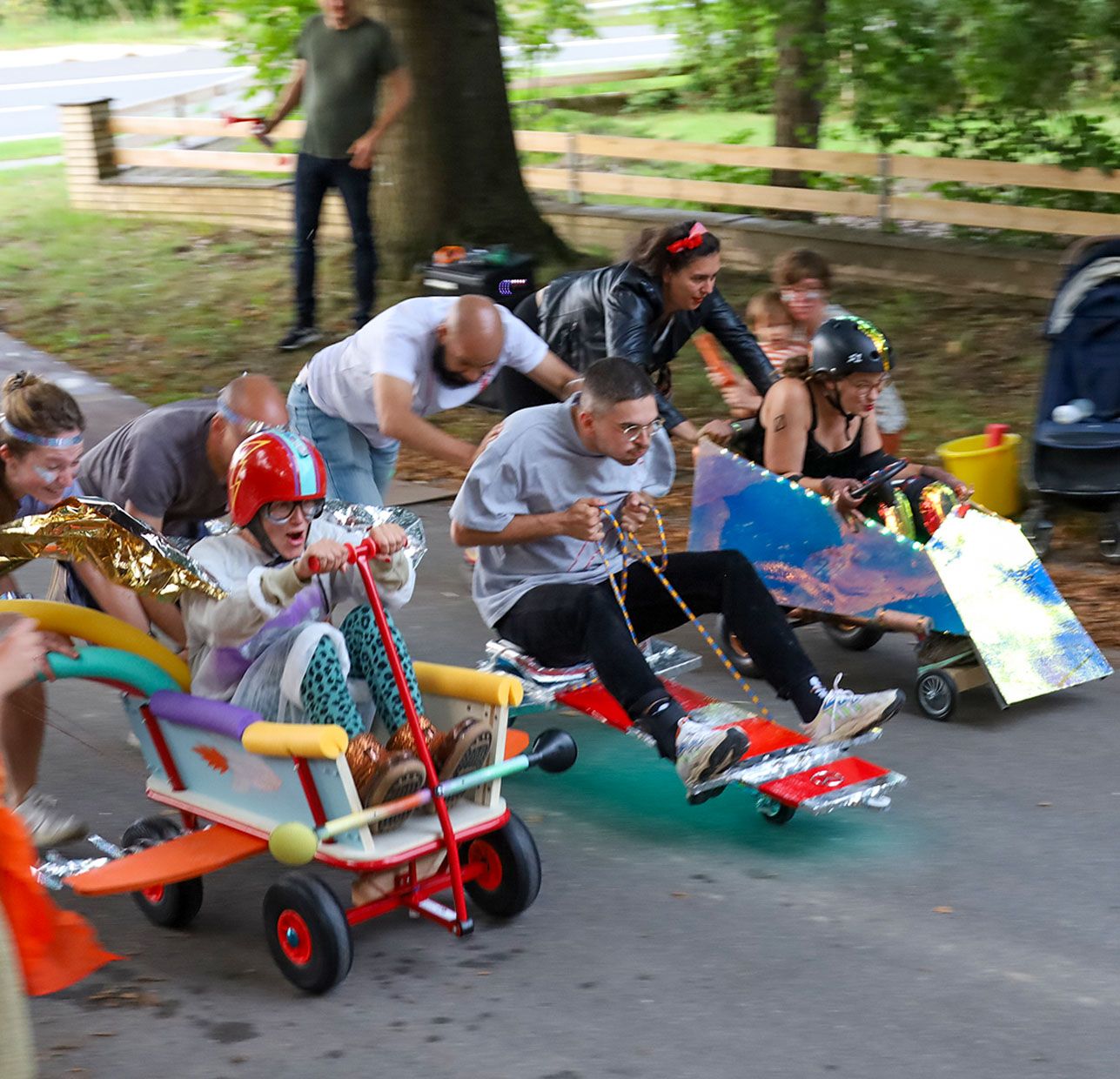
In principle, almost anything. We have different rooms suitable for seminars, workshops or yoga classes. For people who are just looking for a place to work, we offer coworking options. In summer, concerts, theatre performances or large events with up to 300 people can take place on our cultural stage. The large barn is also suitable for weddings. Our gastro kitchen provides organic, regional catering, and our garden café is a popular meeting place for tourists and locals. In the future, we want to offer more of our own courses. These include creative workshops as well as seminars on sustainable economic management and contemporary entrepreneurship. We are a member of the “Wissensplattform für Zukunftsorte” [Knowledge Platform for Future Locations] and are happy to share our experience with others.
What type of event would you most like to organise?
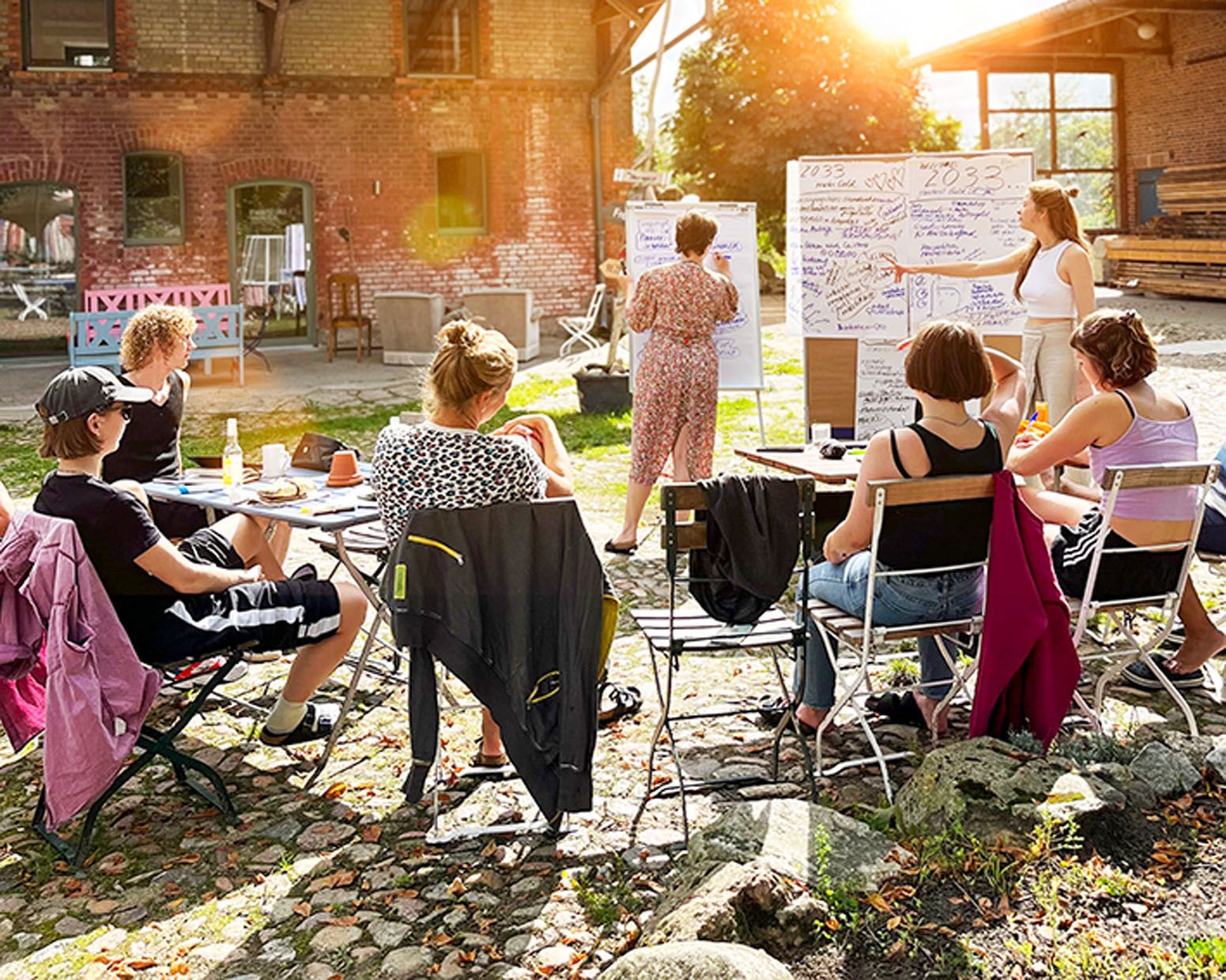
I love creative workshops. I really enjoy creating things together with people. I offer them a wide range of different materials and an idea of what can be made from them, and then we begin. For example, everyone has to build lampshades, which in the end are made into a long string of lights. Creative work allows people to get to know themselves and others in a completely different way. It’s primarily about emotions.
And why should we travel to the Wendland region?
This region is characterised by a good mix of sparsely populated and unspoilt nature, old buildings and open-minded people. Of particular tourist interest are the half-timbered towns of Lüchow, Hitzacker and Dannenberg and, of course, the Elbe that shapes this landscape. The sleepy quality has its advantages here: the Rundlinge, which are unique in their kind, have been preserved over the centuries. And the protest against the nuclear waste repository in Gorleben has had an impact on the local society. An elderly lady recently told me that they had been fighting for a good life here for decades and are still doing so today. You can still feel the spirit of optimism and resistance of the Wendlanders, and that excites me.
The Hostess
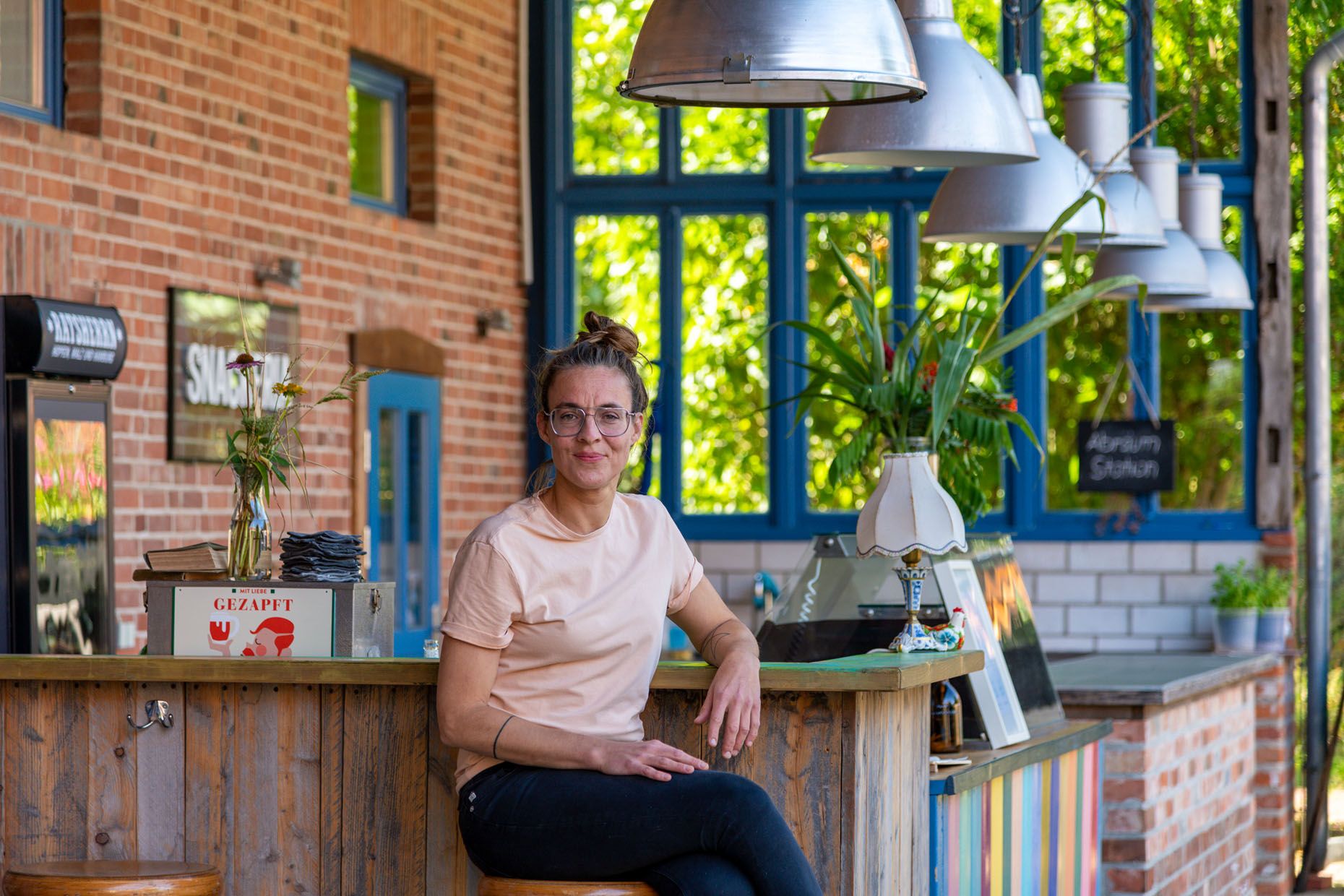
Julia Nagel, together with eight adults and three children, took the plunge and moved from the big city to the countryside. The graphic designer, who used to enjoy travelling through the countryside in an old fire engine and was annoyed by the ugliness of many campsites, had long wished for a place that she could design according to her ideas. The fact that it turned out to be Wendland region was a coincidence. Her hope as a single mum of bringing up her son in a community has come true. And she finds it enriching that folding bed linen is just as important as conceiving seminars.
SPACE
You can find beautiful spaces like this in our Spaces section. There you can discover inspiring places and unusual locations for workshops, conferences, events and more.
The Space
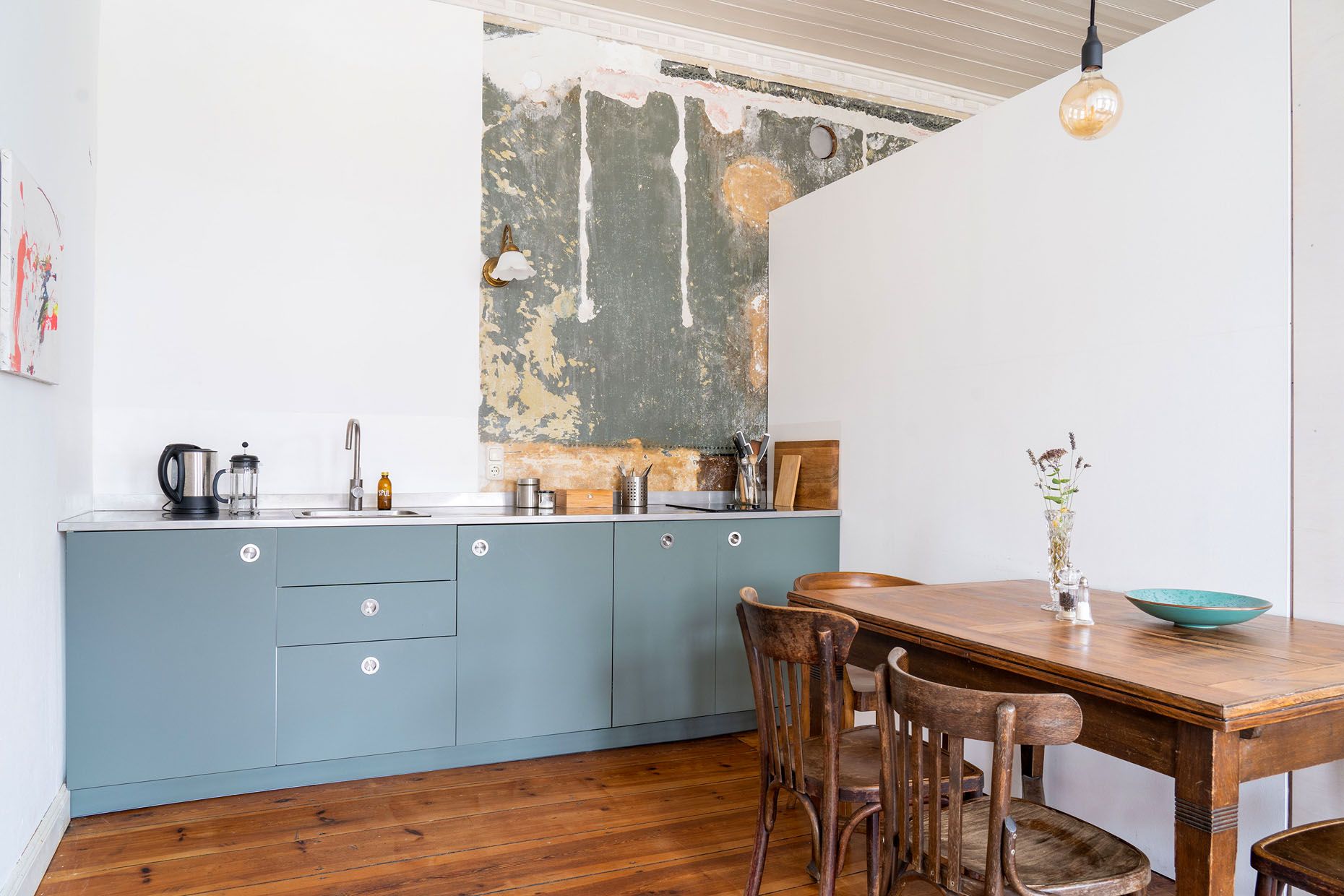
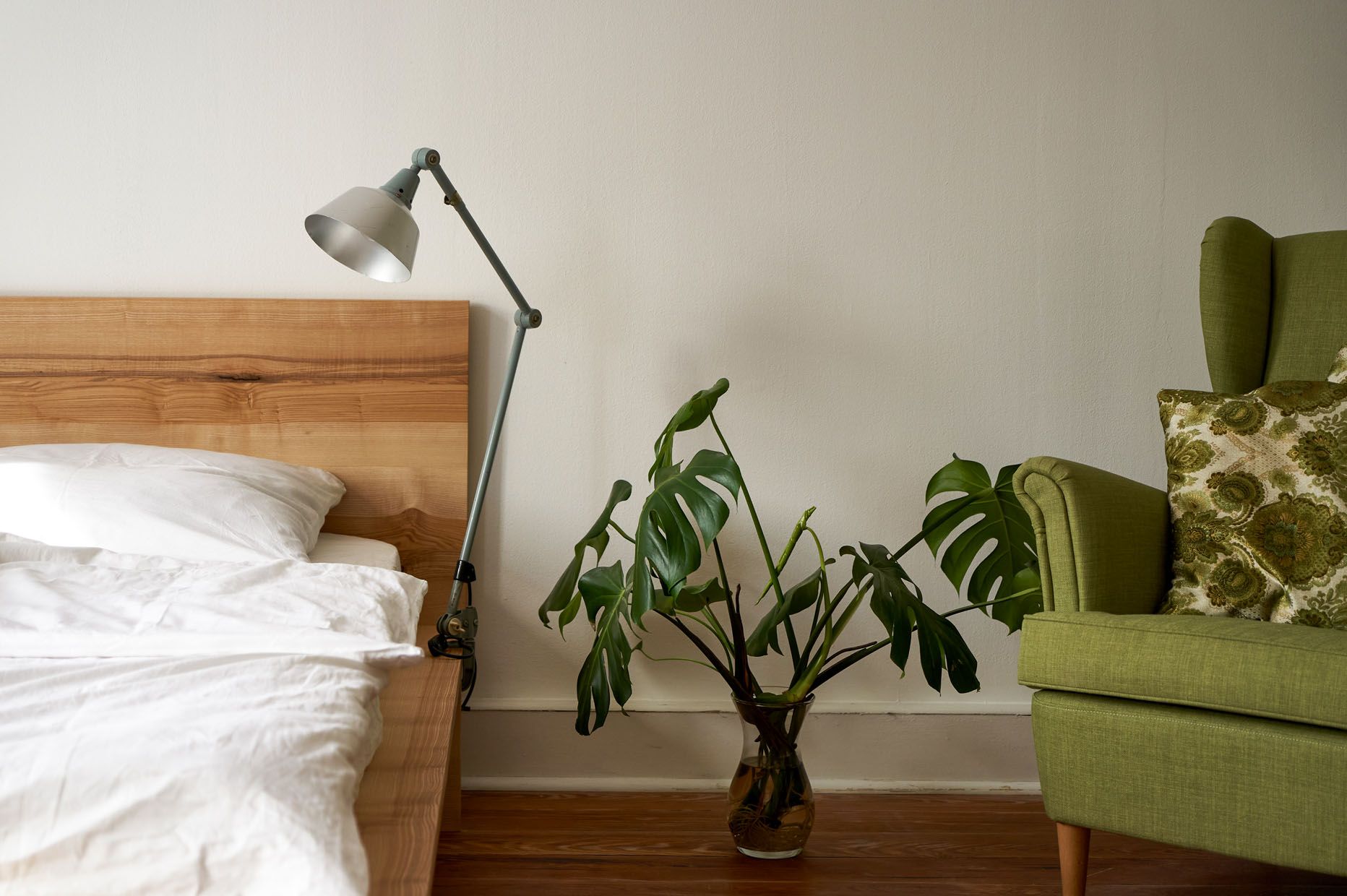
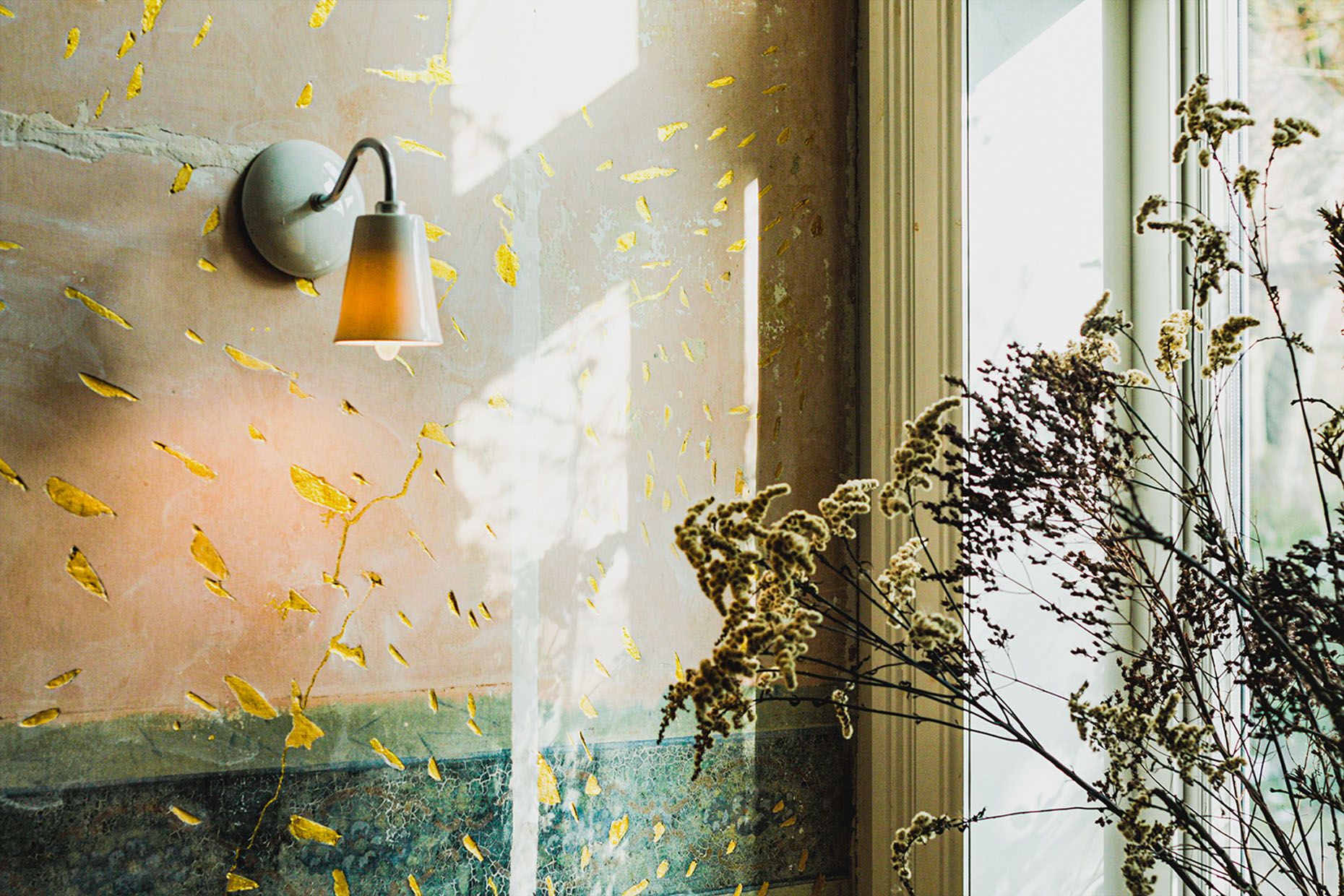
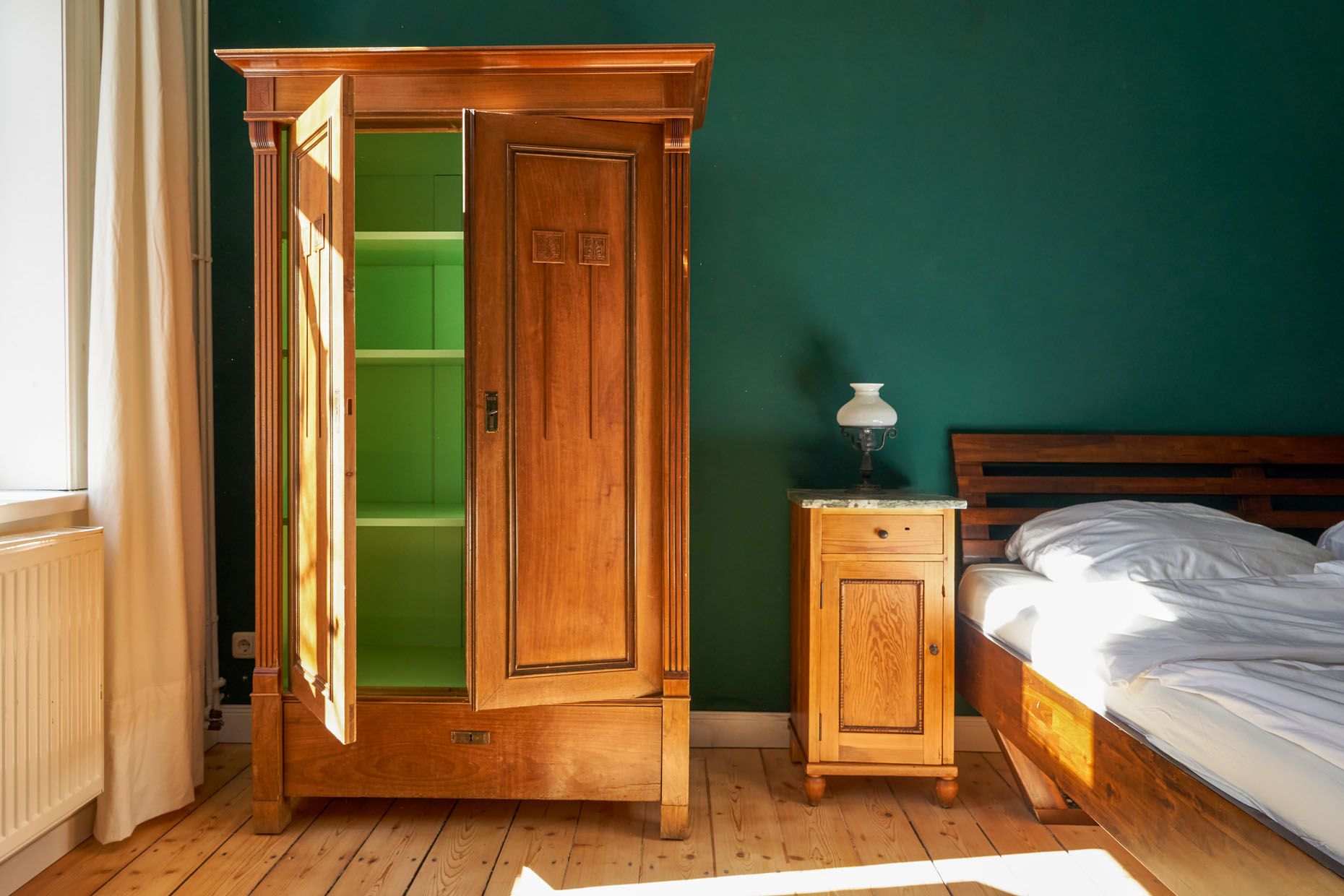
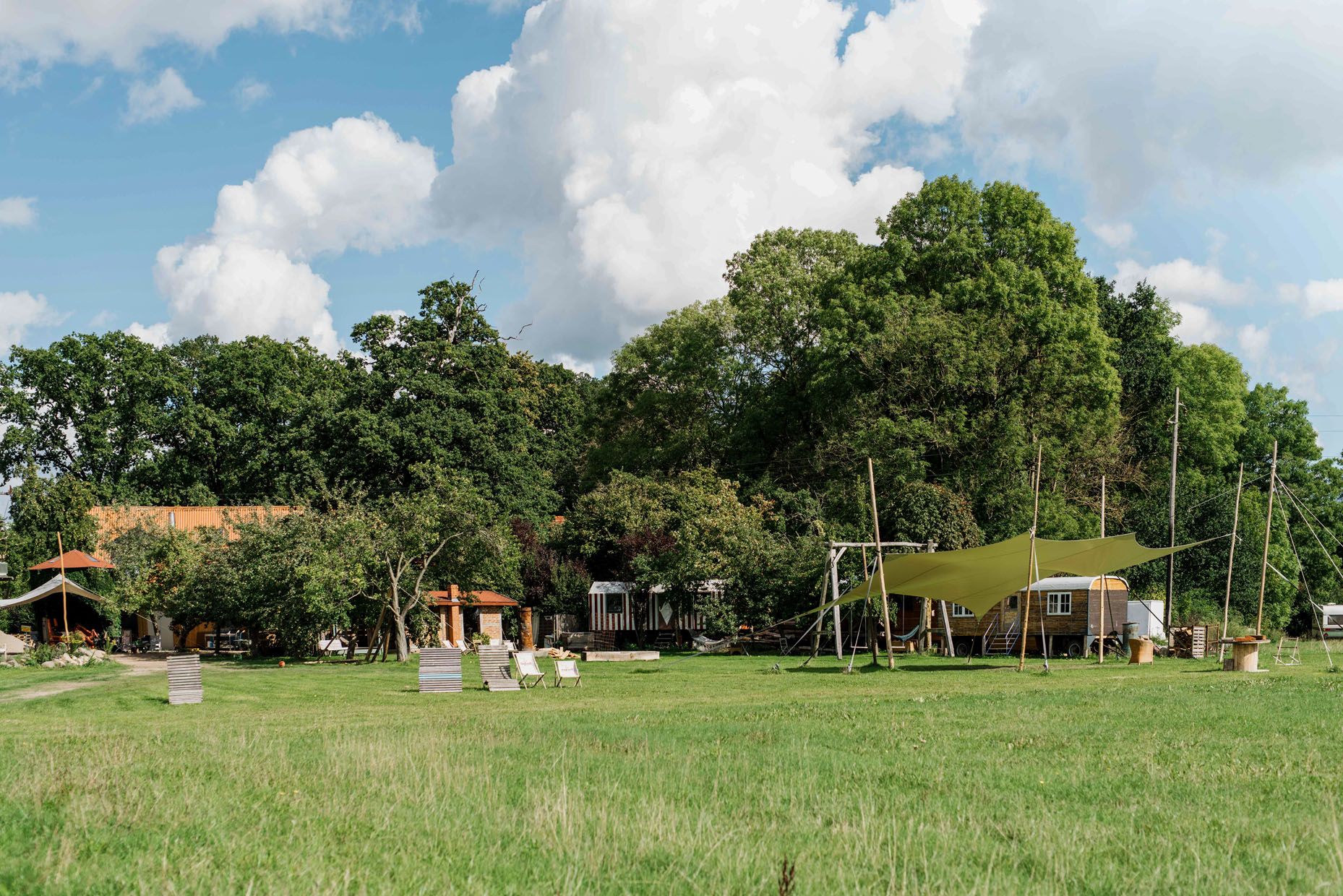
The cooperative project “Ein Ding der Möglichkeit” [A Thing of Possibility] provides an experimental space for new life and work concepts on a former farm in the Wendland region. The space of possibilities is a farm comprising a residential building, a barn and two former stables. The buildings were renovated predominantly by the members themselves, following sustainability criteria, and designed for professional, private and cultural events. The laid-back vintage style adds an urban touch to the rural area. The spacious “Kunstscheune” [Art Barn] with a stage can accommodate events with up to 300 people. For smaller formats, another three rooms can be rented individually or together to hold workshops, offsite events, yoga classes or private celebrations. The cooperative itself hosts numerous seminars, art and cultural events and offers art scholarships. A total of 15 guest rooms are available.
Text/ Interview: Anke Frey, December 2023
Photos: Ulrike Schacht, Niels Grugel, Line Tsoj, Arne Grugel, Björn Ewers, Kim Köster
0 Comments