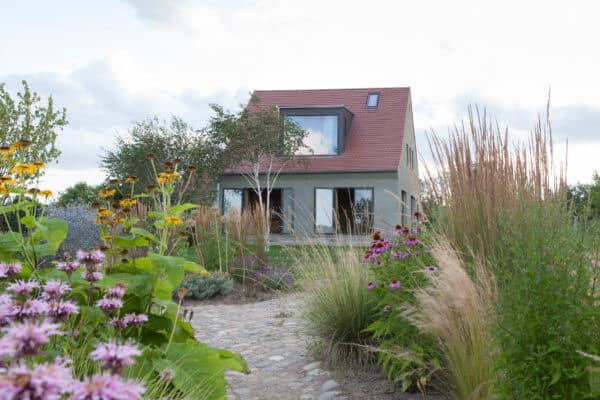
Sacred, Radical, Phenomenal: Derneburg
Once the impregnable domain of celebrated painter Georg Baselitz, Derneburg Castle in Lower Saxony is now evolving into one of Europe’s largest private museums of contemporary art.
“Beware of the dog.” A locked gate, impenetrable hedges, four towering defensive turrets: for decades, Derneburg Castle, situated east of Hildesheim, looked as though it were guarding a dark secret. Yet no robber baron ruled here, but rather a grand master painter – usually wearing a cap, often with a cigar in hand. Only those he wished to receive were admitted: gallerists, collectors, and fellow artists. For around 32 years, until 2006, Georg Baselitz lived and worked at the castle with his family, fiercely protective of his privacy. The residents of Derneburg and the neighbouring villages of Holle, Luttrum, Heersum and Sottrum were, unfortunately, kept out.
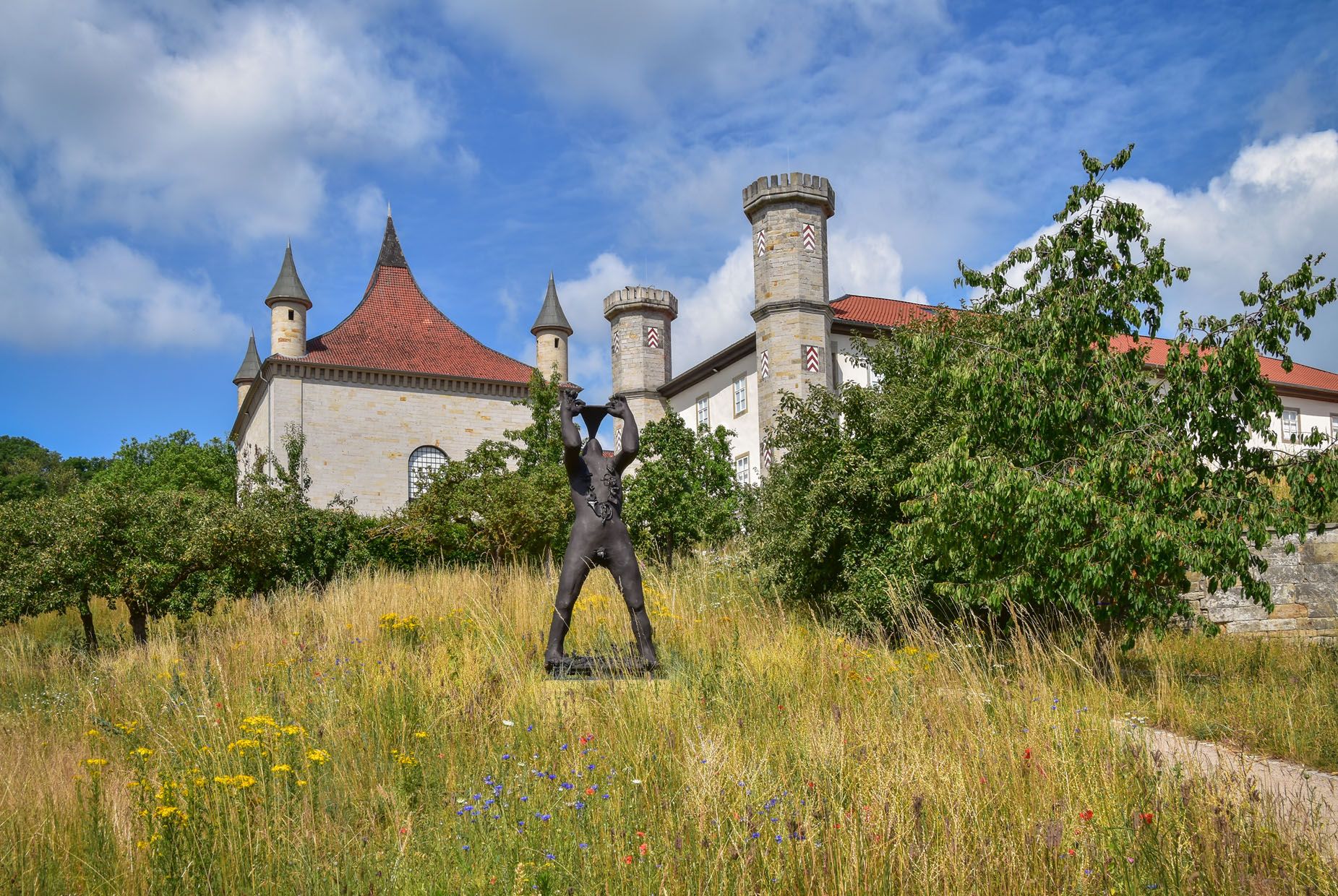
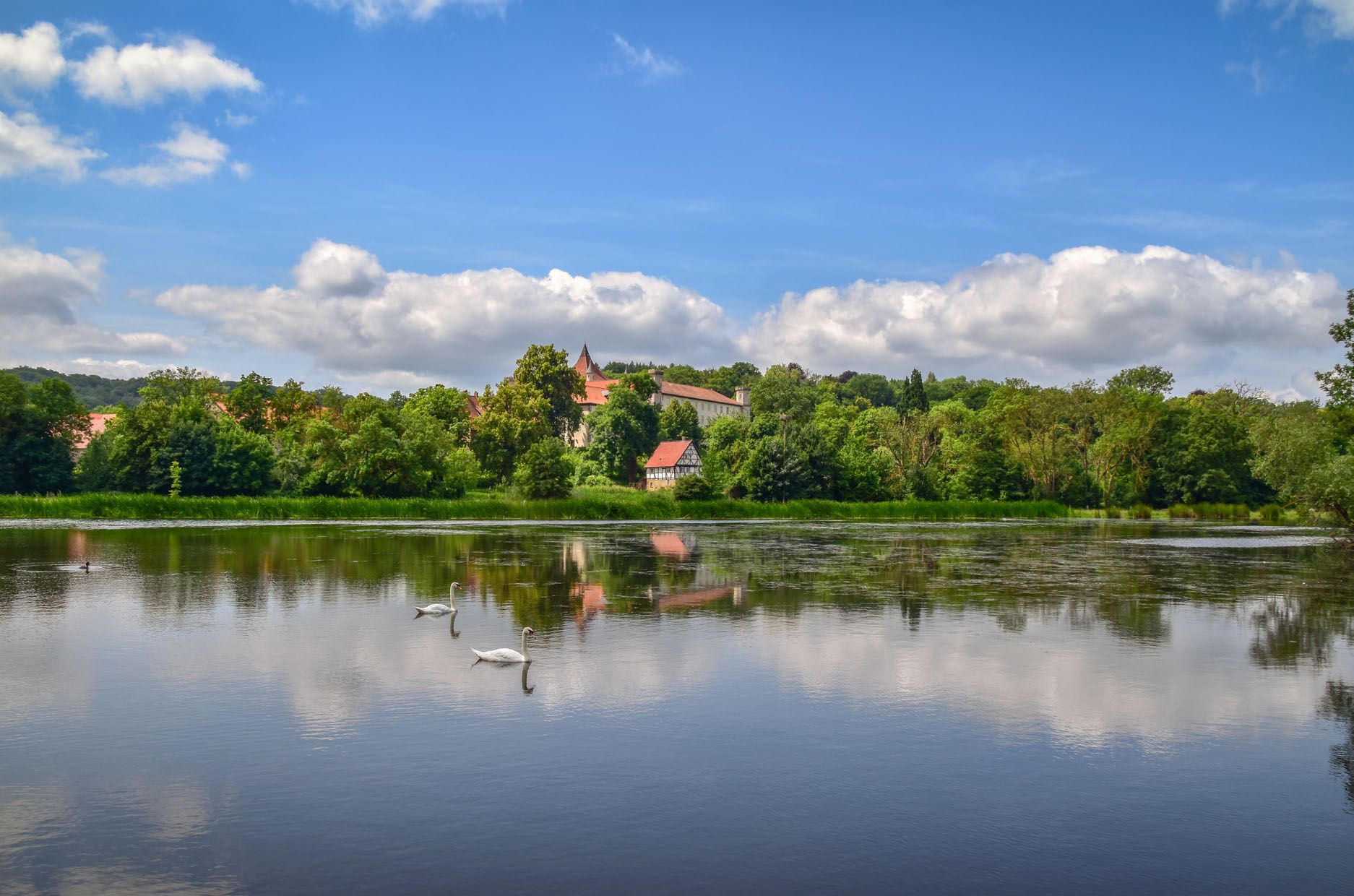
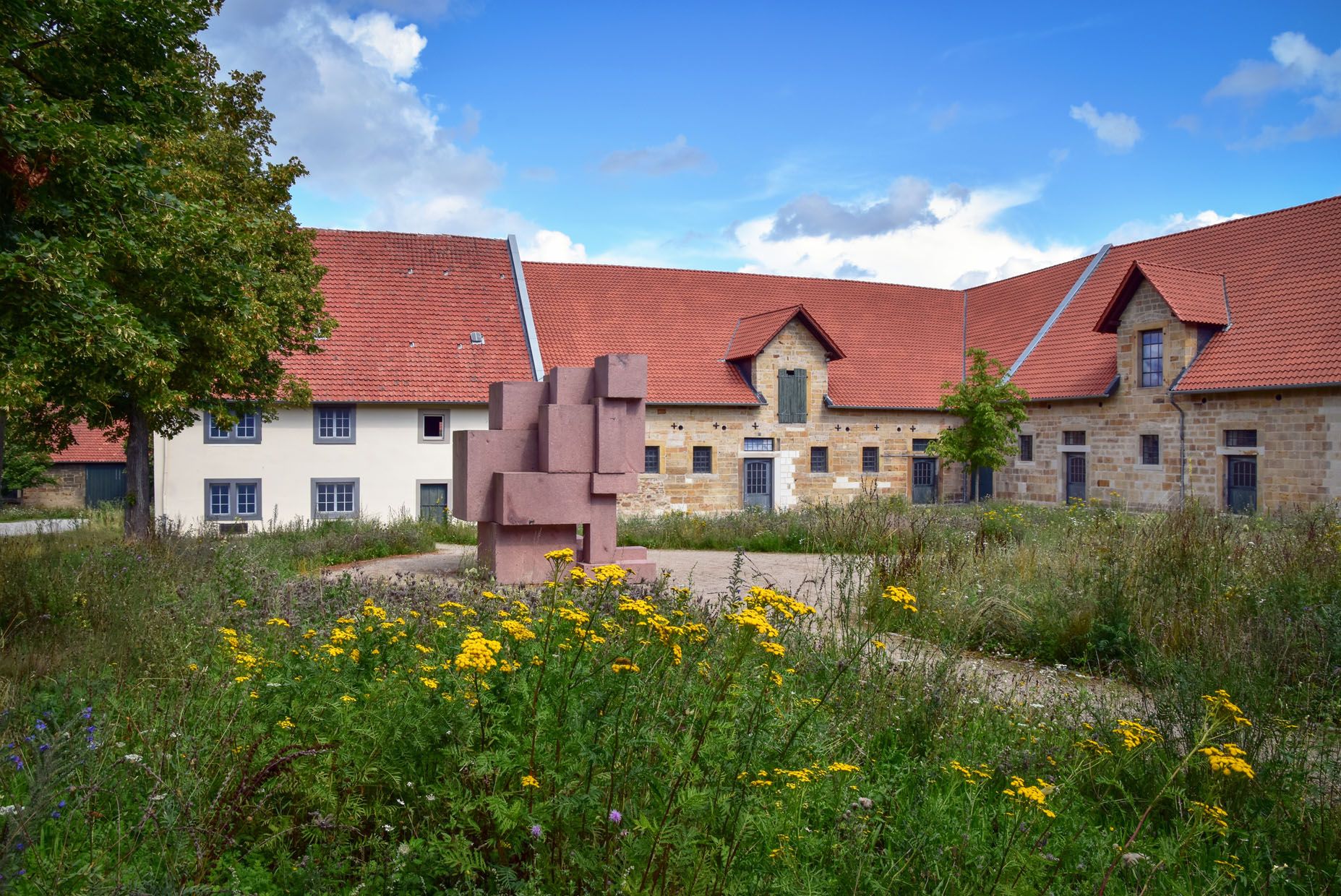
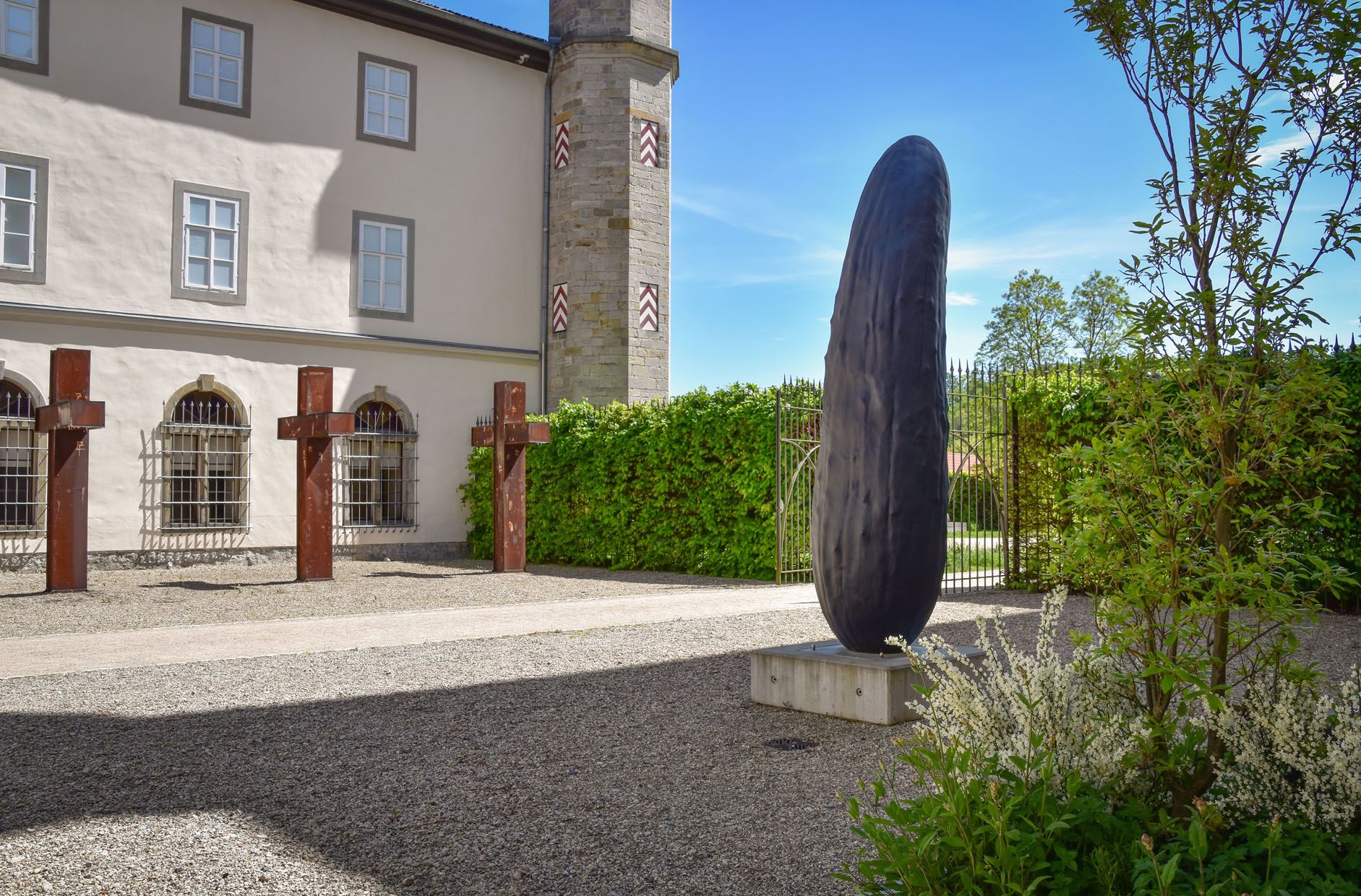
Things are different today. While dogs are not permitted at the Kunstmuseum Schloss Derneburg, visitors are warmly welcomed.
The once-secluded artist’s stronghold has been transformed into a public home for art – although access is currently limited to weekends, and the castle itself can only be visited as part of a guided tour. The historic structure of the north wing, which until the end of 2024 housed exhibition spaces, a café and a tea salon, proved unable to support its new use and now requires careful restoration in keeping with its listed status. Restricting visitor numbers while work is underway is a compromise – but preferable to closing the museum altogether, and entirely in keeping with the aspiration of the castle’s current owners, Andrew and Christine Hall, and their Hall Art Foundation, whose aim is to make art accessible to the public.
At present, 5,000 square metres of exhibition space are in use, with a further 4,000 square metres planned. Together with the Hall Art Foundation in Reading, Vermont, which opened in 2017, the museum in Derneburg is set to become one of Europe’s largest private museums of contemporary art once the restoration has been completed, spread across the castle and its ancillary buildings. After a great deal of hesitation, planning permission for the first phase of a restaurant project has finally been granted, according to managing director Alexander Haviland. “As for the proposed hotel or guesthouse, the future is less certain. At present, we cannot say what form it will take or when work might begin.” Yet, as Martin Ganzkow remarks with a shake of the head while guiding a group of six visitors through the parkland and bringing its history vividly to life, all the essential ingredients are already in place: a compelling spatial vision, sufficient funding and a strong commitment to design. If only heritage protection regulations did not make things so complicated…
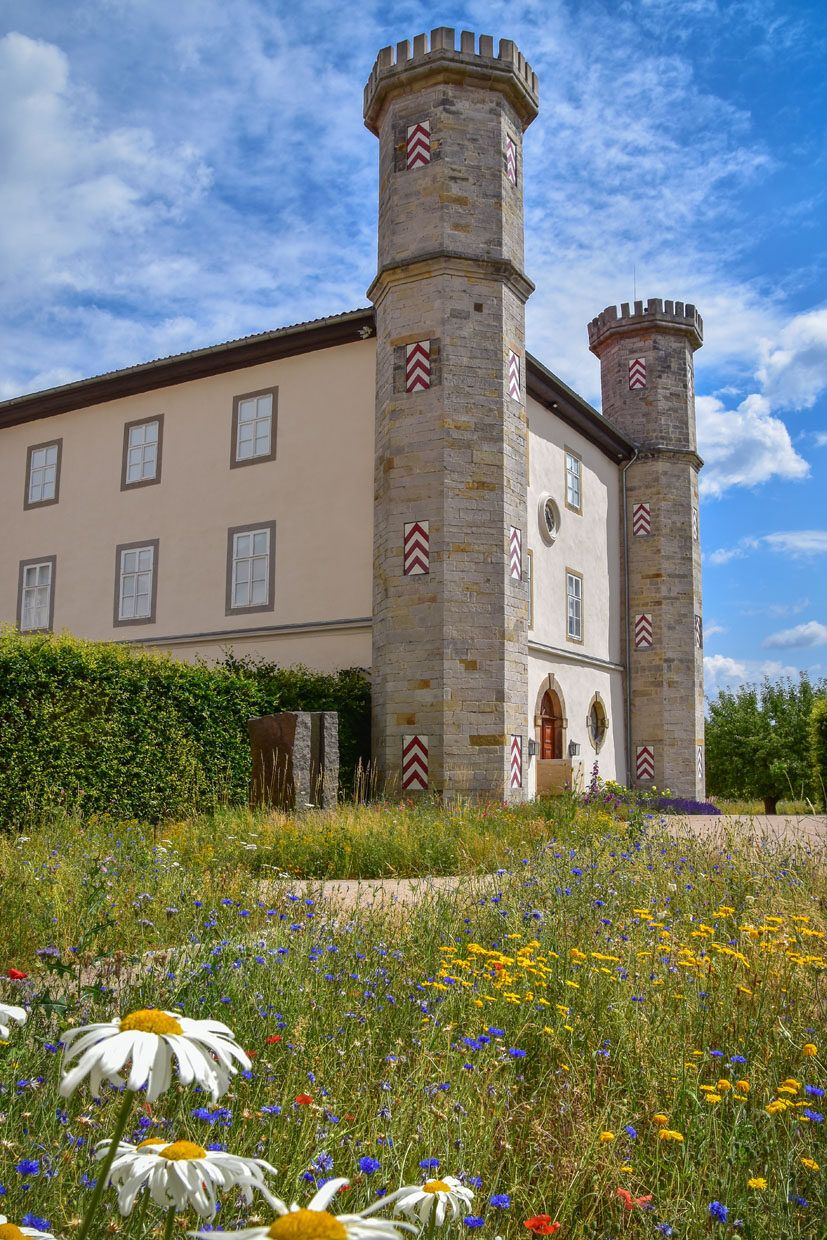
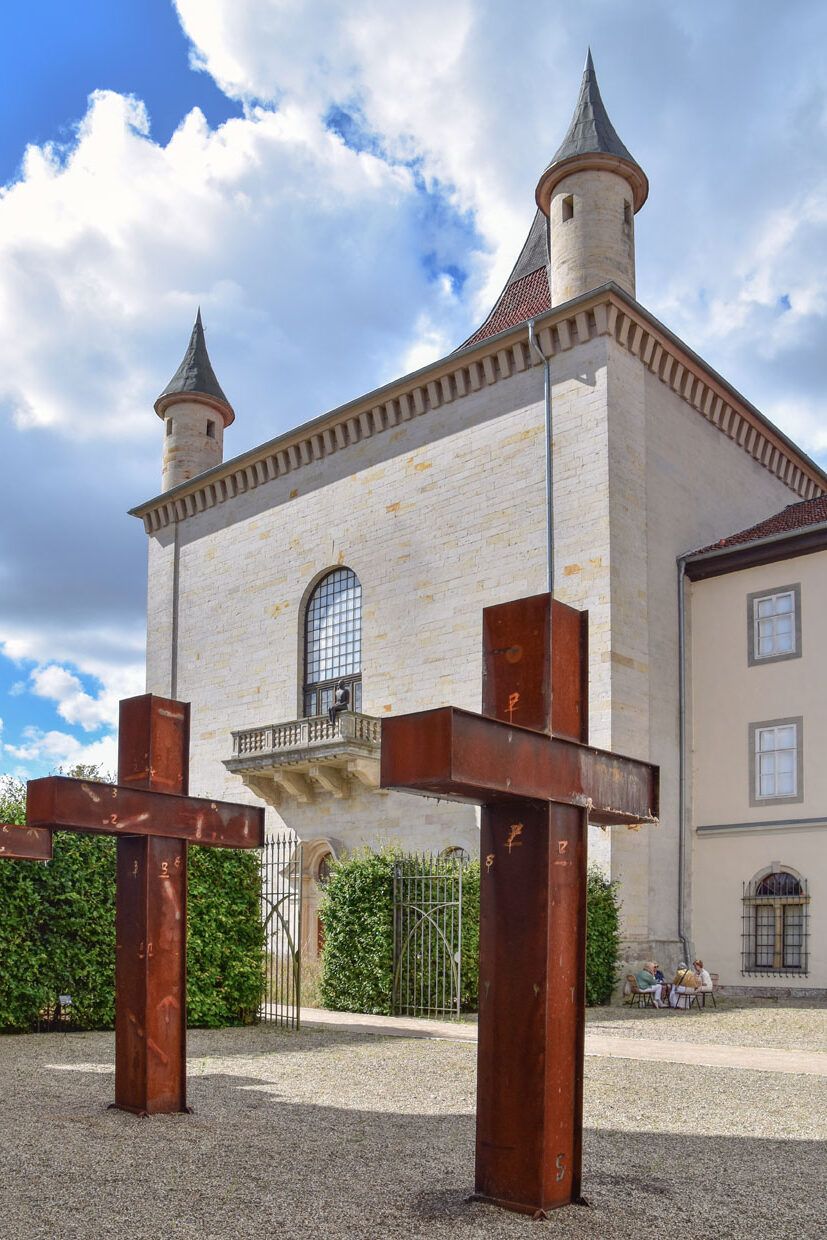
So, the future looks promising, but the history of this place is no less fascinating. The estate owes its existence to an act of atonement for murder. After a margrave of Winzenburg had a count killed in 1130, his son founded a convent as penance, which was occupied by Augustinian nuns from 1213 onwards. When the sisters apparently became too independent for the abbot’s liking, the Cistercians took over. Ora et labora: the monks transformed the complex into an agricultural estate. At its peak, around 100 brothers and an equal number of farmers worked the land. They opened a sandstone quarry, kept livestock, created fish ponds, built a mill, brewed beer and prayed – until Napoleon brought monastic life to an end and converted the complex into a military barracks.
In 1814, the neglected estate was granted to Ernst Graf zu Münster in recognition of his diplomatic achievements at the Congress of Vienna. At first, however, it was hardly suitable as a prestigious residence. It was his son, who had grown up in London, who commissioned the Hanoverian court architect Georg Ludwig Friedrich Laves to transform the former monastery into a castle in the English Gothic Tudor style between 1846 and 1848. The redesign included an extensive landscape garden complete with a Doric temple and an Egyptian-style pyramid more than ten metres high. The Baroque abbey church became a knights’ hall, where the count already displayed artworks on the lofty walls, while four slender towers were added as decorative accents. During the Second World War, the aristocratic residence served as a military hospital, later as a refugee camp and eventually as a retirement home.
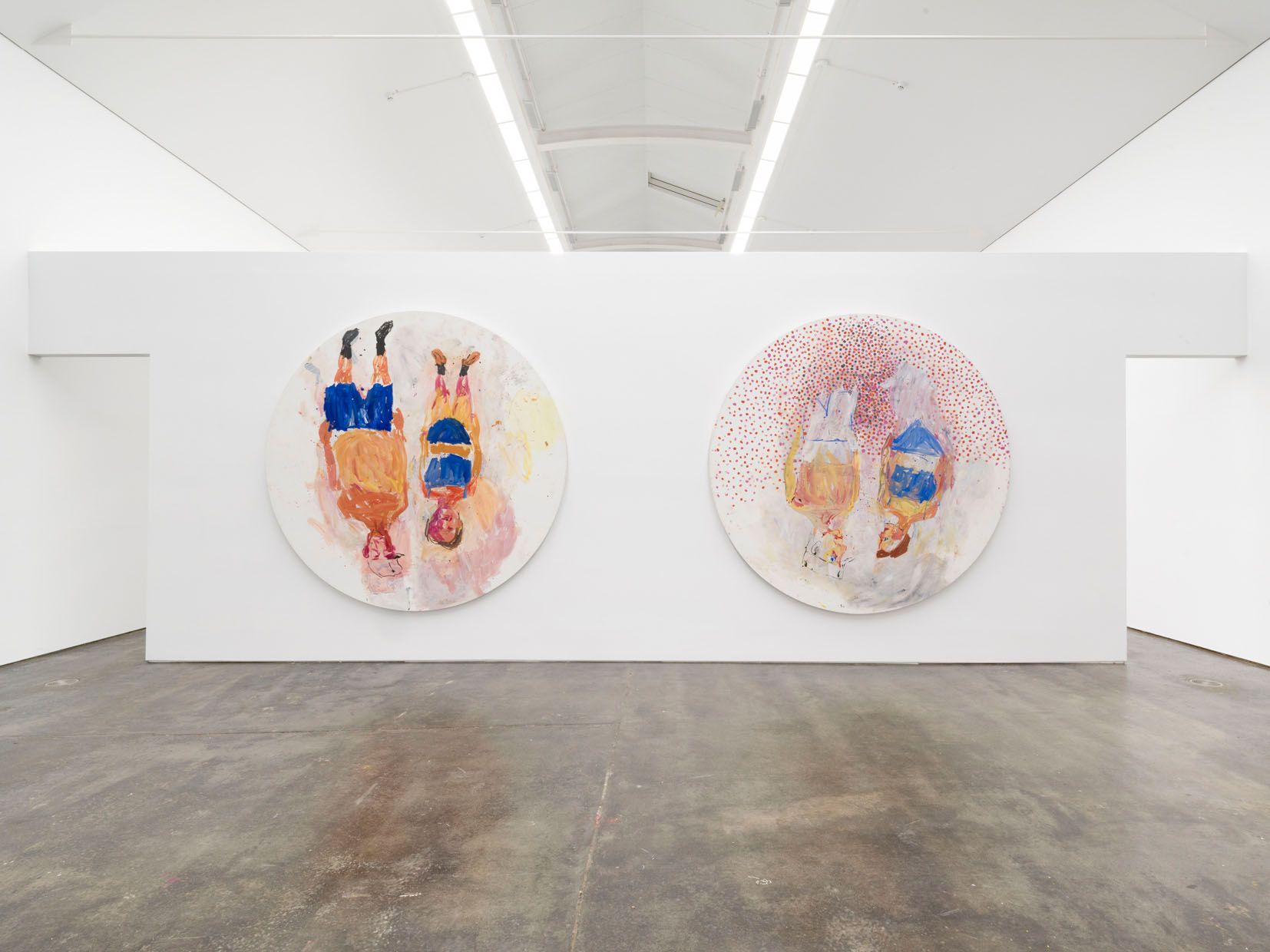
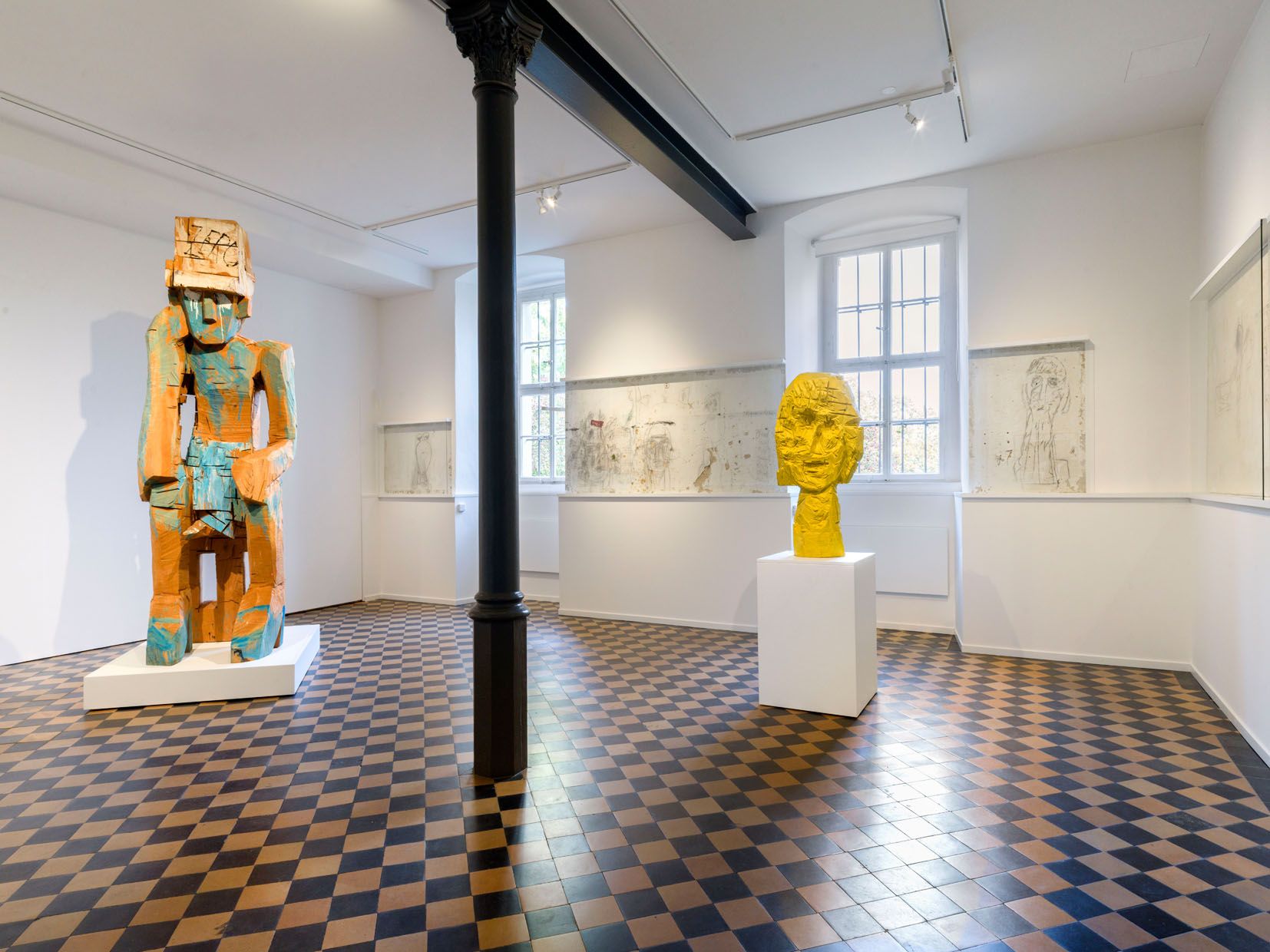
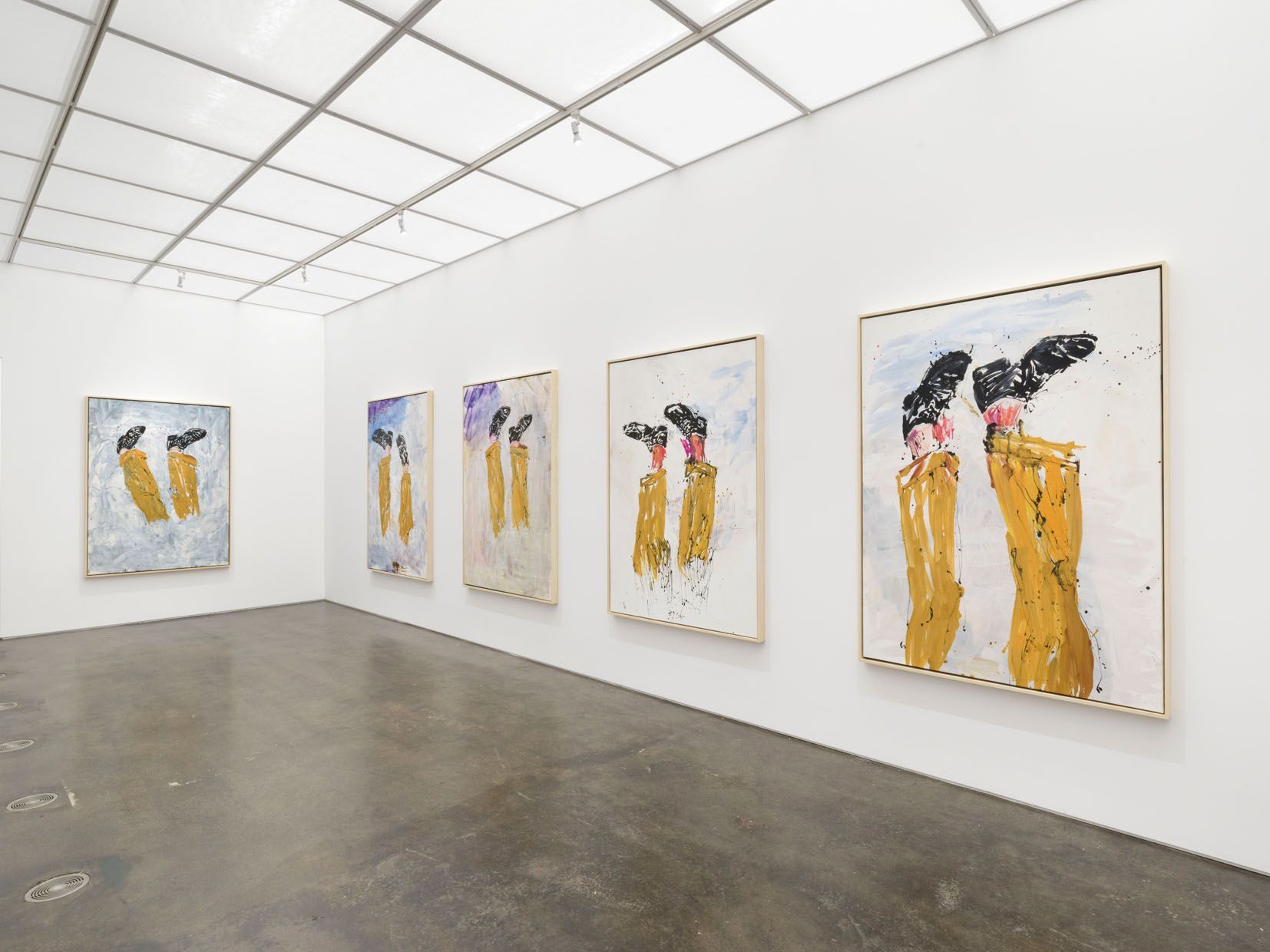
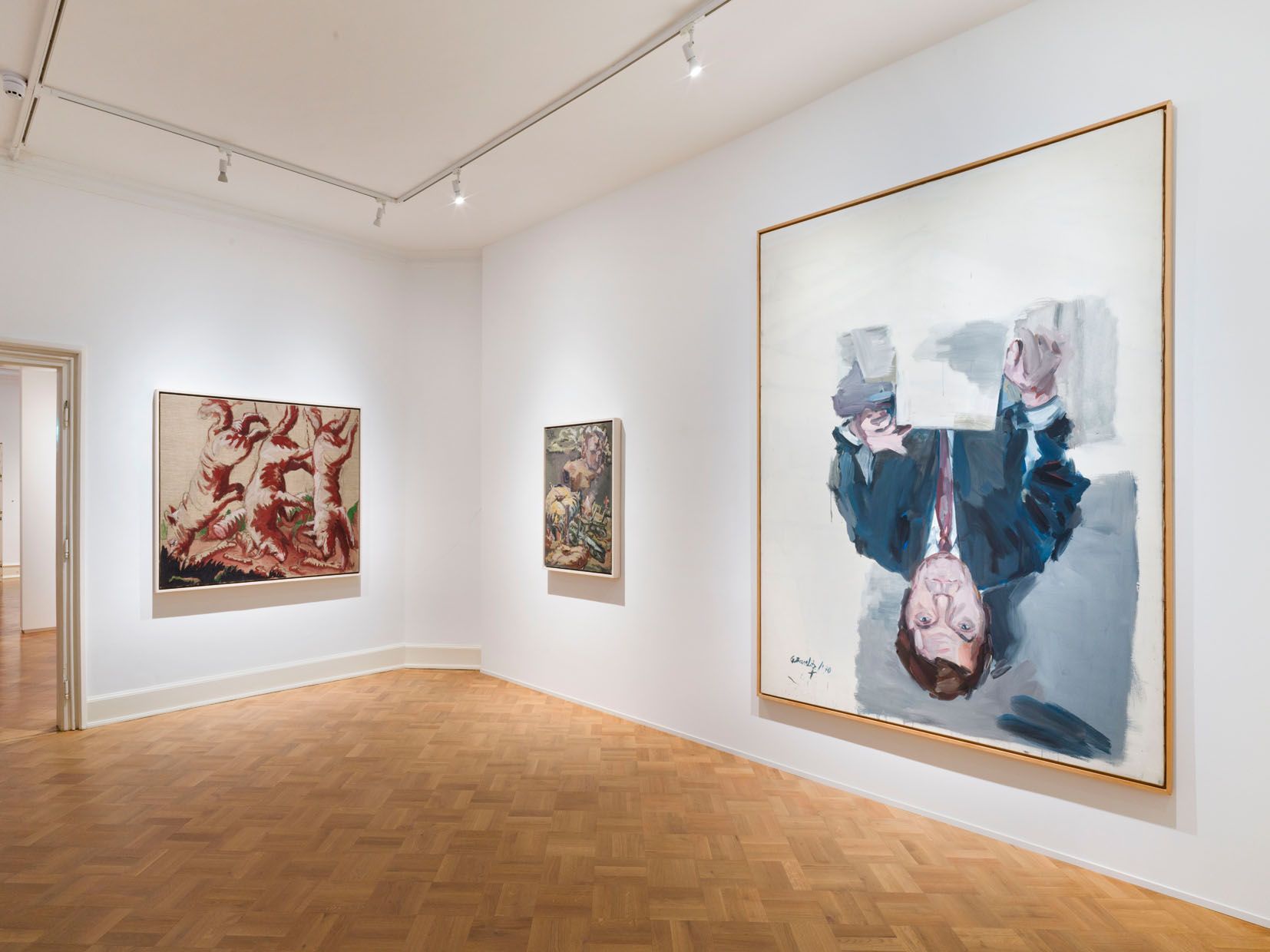
Then, in 1975, a man arrived who would leave an indelible mark on the estate’s history: Georg Baselitz. Born Hans-Georg Bruno Kern in 1938 in the Saxon village of Deutschbaselitz, expelled from the East Berlin Academy of Art in 1957 for “socio-political immaturity” and having fled to West Germany a year later, he purchased the castle for 300,000 Deutsche Marks. Berlin had become too cramped, too crowded and too noisy for him. In 1963, the public prosecutor’s office had confiscated his debut work, declaring The Big Night Down the Drain obscene. Five years later, he began turning his motifs upside down – a radical shift in perspective that would become his trademark. While many of his peers saw his move to the rural backwaters of Lower Saxony as the end of his career, Baselitz believed the opposite. He was right. Space and solitude proved fertile ground for his work. Today, he is regarded as one of the most important post-war artists.
The fact that the municipality of Holle held events in the nearby community centre and that the Laves Cultural Trail had been attracting visitors since 1988 – what Baselitz dismissed as “cheap tourism” – was very much to his dislike. Not in his backyard, and certainly not around his castle. Inside, he worked in studios housed in the knights’ hall and the former castle kitchen. The sketches he scrawled on the walls there have since become relics protected behind glass. Nearby stands his larger-than-life self-portrait with a cap, alongside the monumental yellow bronze head of his wife, Elke. Baselitz carved his sculptures from single tree trunks with a buzz saw. When the timber grew too large to fit through the castle’s narrow corridors, he commissioned the Basel-based architects Wilfried and Katharina Steib to build a new studio in the park in 1995. Since 2023, it has housed the exhibition Baselitz in the Studio.
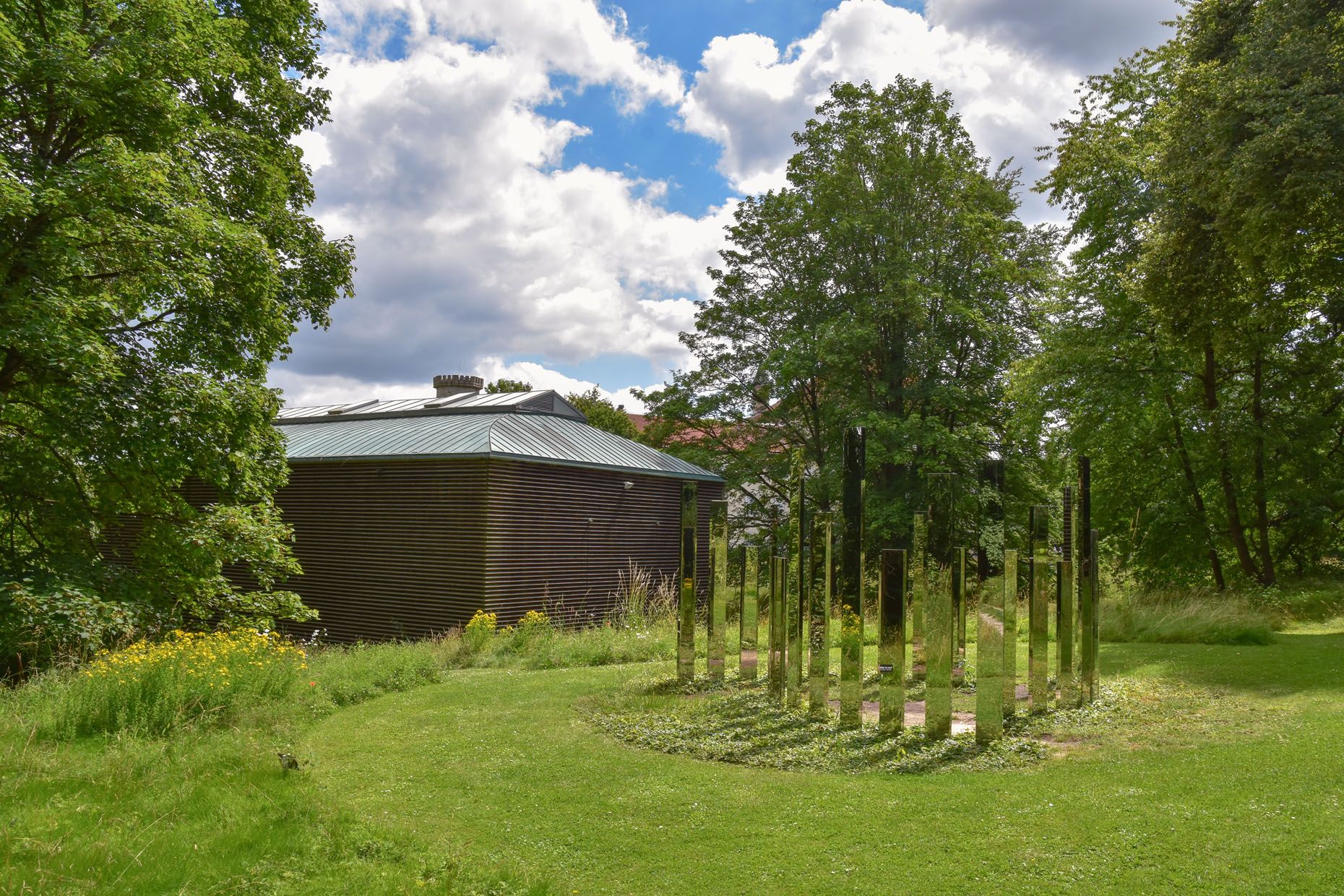
Yet even here, it is impossible to get particularly close to the elusive figure of Baselitz. Most personal traces of the artist and his family have been removed; tools and paints, books and furniture have all left the building. Derneburg today is about art, not about personality cult. The studio itself, clad externally in expressive horizontal timber boarding and gracefully weathered, is a luminous white space within – windowless on three sides and lit from above. “I think I’m a citizen. I have a wife, two children, and lead a respectable life,” Baselitz once said. “But when I paint, I am outside society.” It was not coquetry, but a working principle. Isolation was not an accessory to his art; it was a prerequisite. Had Picasso moved into the castle, presumes Martin Ganzkow, the castle guide, there would no doubt have been plenty of celebrations and drinking. Baselitz, on the other hand, was best left undisturbed.
He lived at Derneburg for about three decades. Winters were cold, there always seemed to be building work underway somewhere, and there were endless flights of stairs. By his late sixties, he decided to leave. His plan to establish a museum of his own failed because the federal and state authorities either could not or would not support it. Andrew Hall, however, both could and would. The Anglo-American hedge fund manager first acquired Baselitz’s collection – some 260 artworks – after he and his wife Christine had often been guests of the family. When Baselitz eventually asked him, “Andy, why don’t you just buy the castle?”, Hall did exactly that. In 2006, he acquired the entire estate, pyramid and Sleeping Beauty hedges included. Think big, size matters. Baselitz relocated to Lake Ammersee, to a residence designed by Herzog & de Meuron, of which no professional photographs seem to exist. It was no doubt peaceful there as well. Less draughty, one suspects.
Since 2007, therefore, one of Europe’s largest private museums of contemporary art has been taking shape in Derneburg, year by year and room by room. The collection now comprises several thousand works, with numerous new acquisitions added each year.
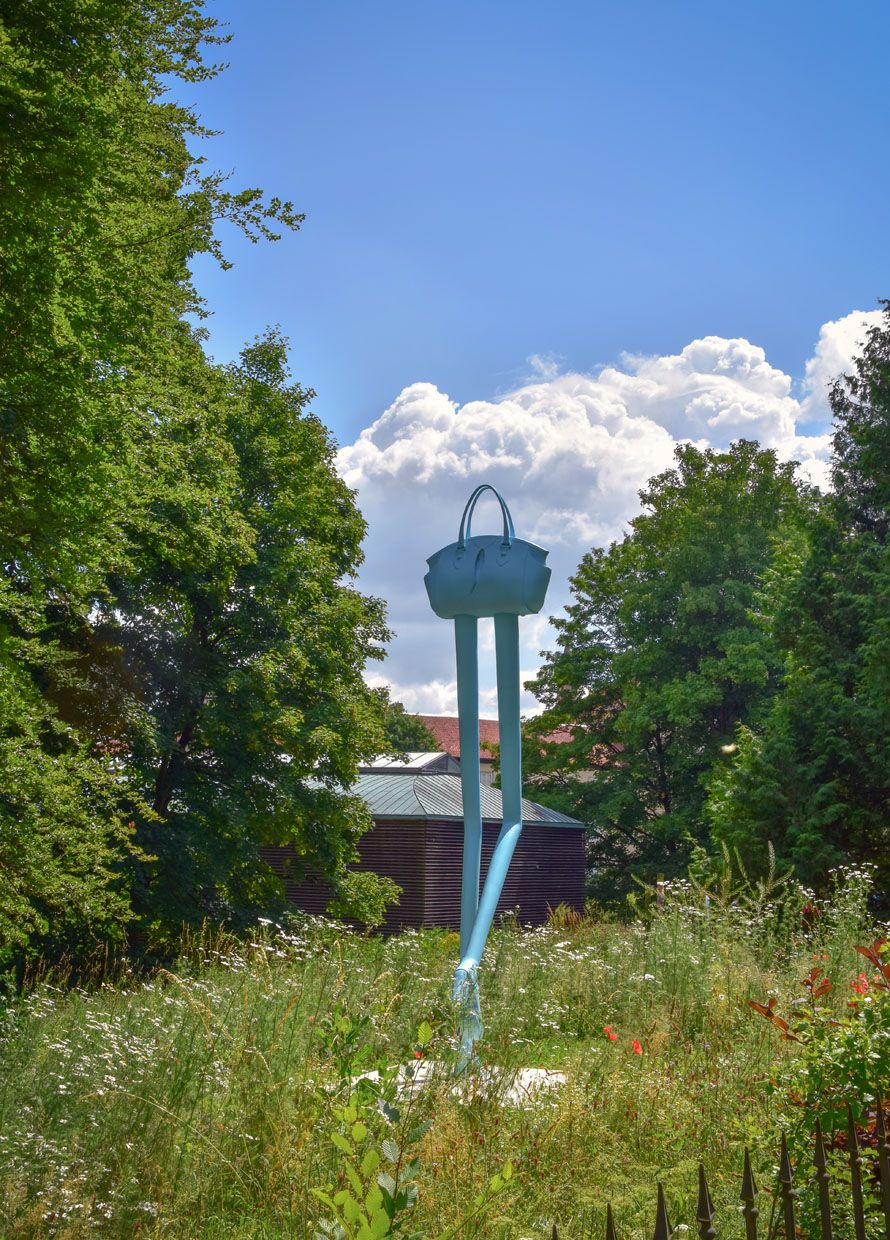
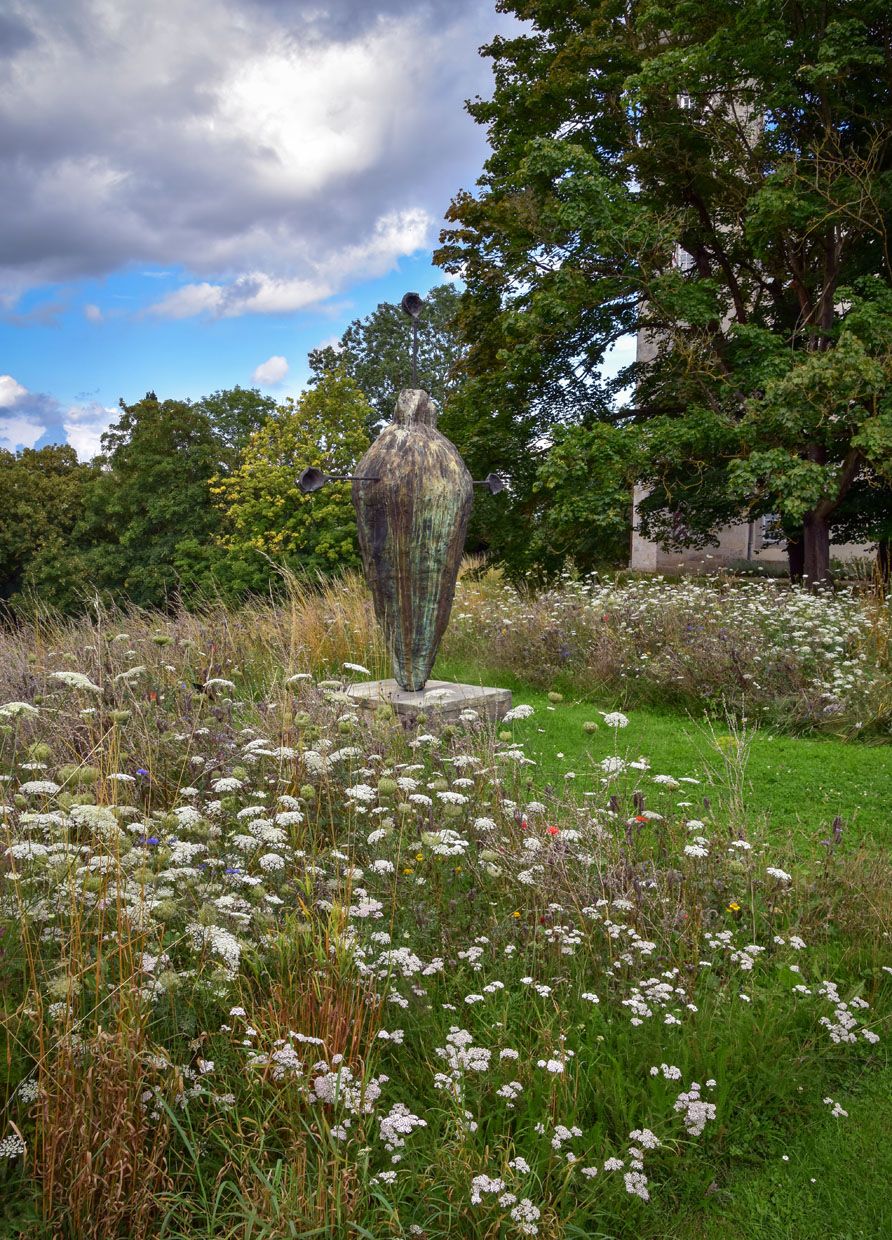
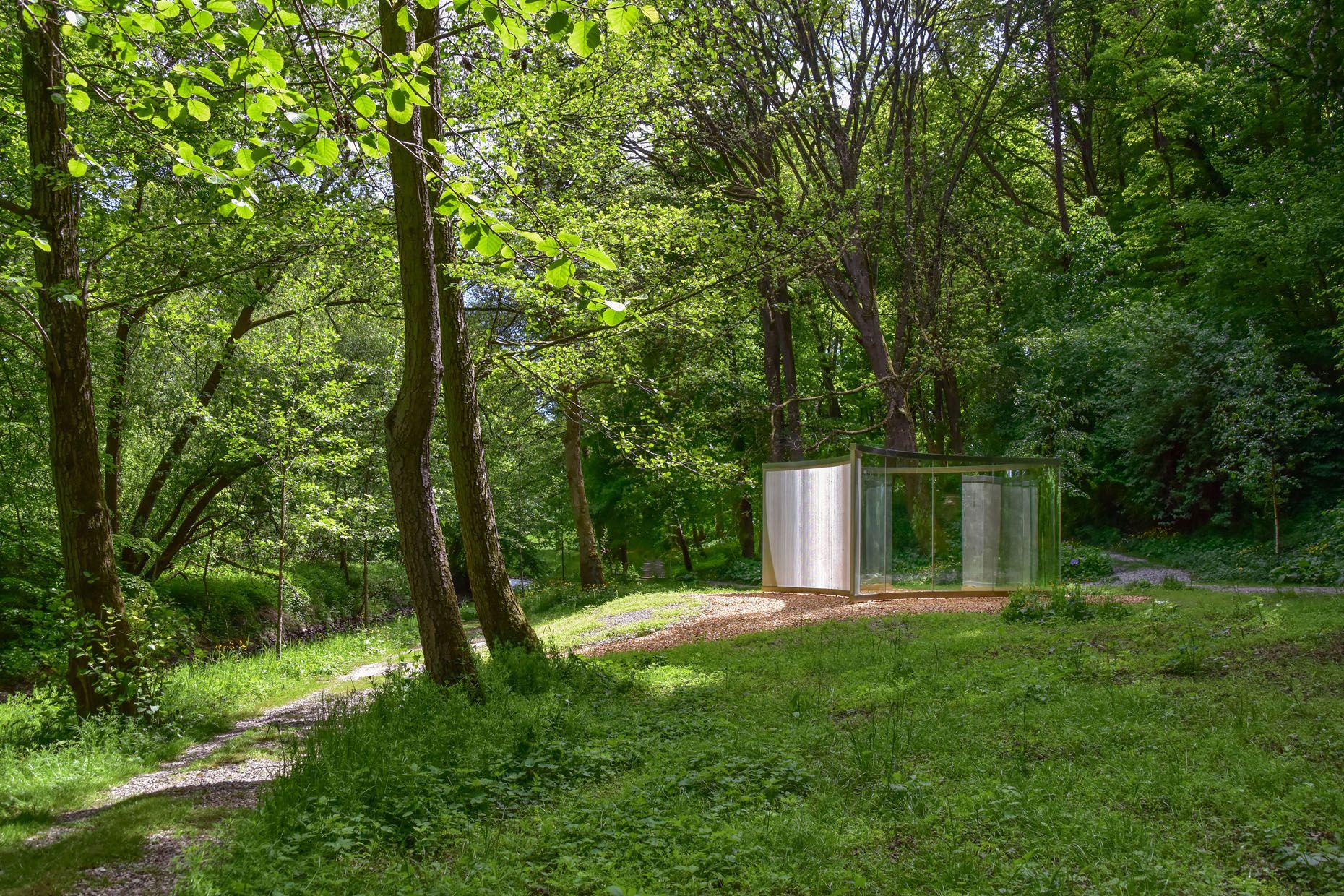
Since 2020, the gardens have been maintained as a biodiversity park with wildflowers. “Many people find art intimidating, especially contemporary art,” says Andrew Hall. “We make it easy for them.” Visitors come for the cloister and the park, remark on how beautiful the place is, and then end up looking at “all this stuff” after all. “That’s how you win them over,” Hall explains.
The nuns and their cells, the monks and their fish ponds, the counts and their gardens, the painter and his studios, the collector and his galleries: the spiritual, the worldly and the artistic have all found new life in Derneburg. One wonders what Georg Baselitz would have to say about this. The artist, who died in Salzburg on 30 April 2026 at the age of 88, once remarked: “I don’t want to build a monument to myself. But I’m pleased if someone else does it for me.”
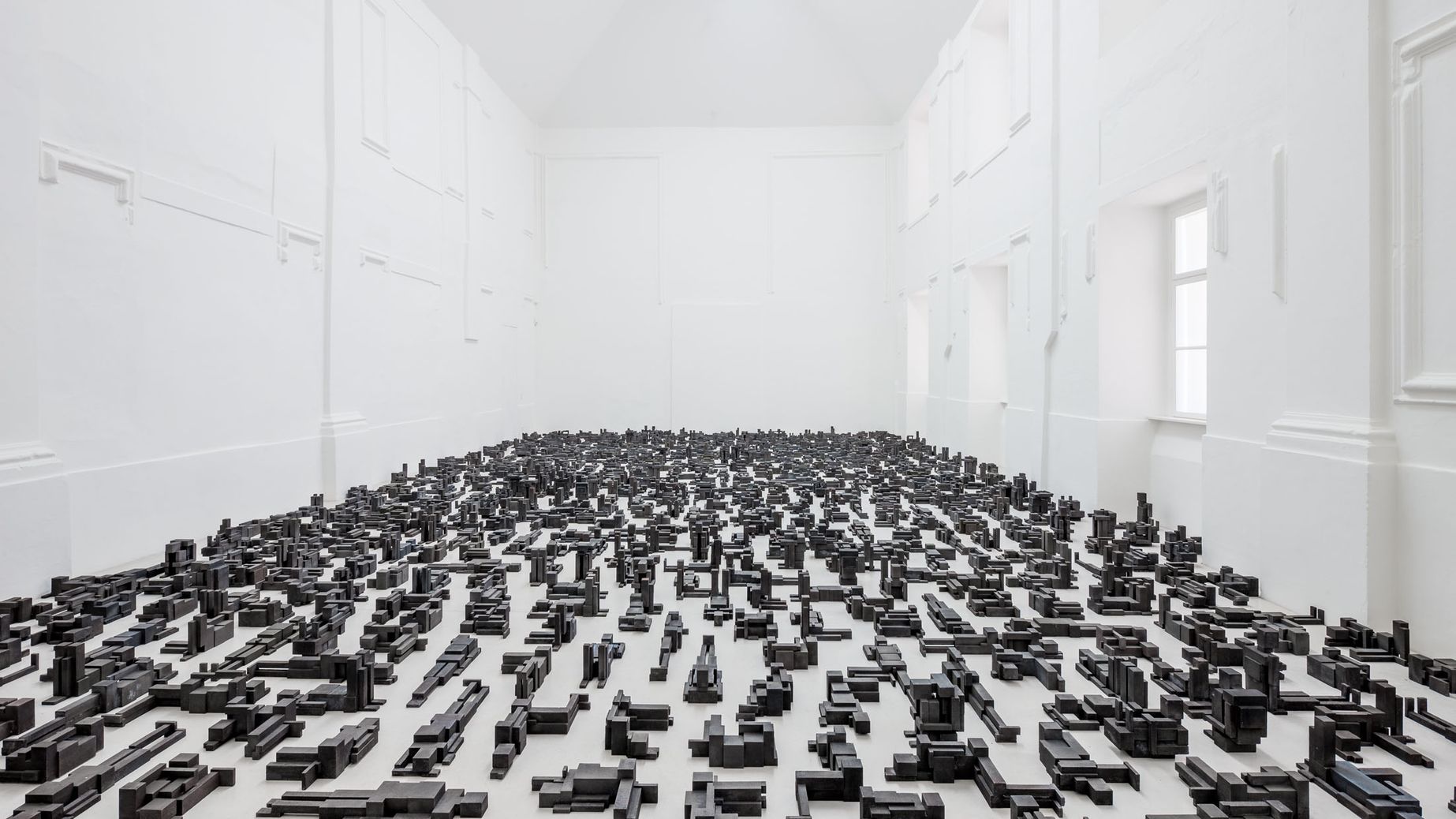
Today, a sculpture of Baselitz welcomes visitors to the park alongside one of his wife. They are in good company, placed among works by Antony Gormley, Erwin Wurm, Ulrich Rückriem, Julian Schnabel, Richard Long and Tracey Emin. The exhibition Conference brings together works by Baselitz and his fellow artists and friends Jörg Immendorff, Markus Lüpertz and A. R. Penck. Since mid-June, works by Daniel Buren, Michael Craig-Martin, Marcia Hafif, Carmen Herrera, Robert Indiana, KAWS, Imi Knoebel, Dóra Maurer and Kenneth Noland have been on display in the castle. Baselitz’s former fortress in what was once a border region of Lower Saxony is steadily becoming a place of pilgrimage for art lovers. And no, nobody has yet encountered a grumbling castle ghost wearing a cap and smoking a cigar.
The Kunstmuseum Schloss Derneburg is open from March to October on Saturdays and Sundays from 11 am to 5 pm. The art exhibitions inside the castle can currently only be visited as part of a guided tour, while the sculpture park, the new studio and the exhibition in the former sheep barn are accessible independently.
Text: Katharina Matzig
While studying in Braunschweig, a trip to Derneburg would have been a short hop for Katharina Matzig. Travelling from Munich involved a considerably longer journey, but every one of the almost 600 kilometres proved worthwhile – for the landscape, the architecture, the history and the art. Sadly, there was no time left to explore the Laves Cultural Trail. But that is another story.
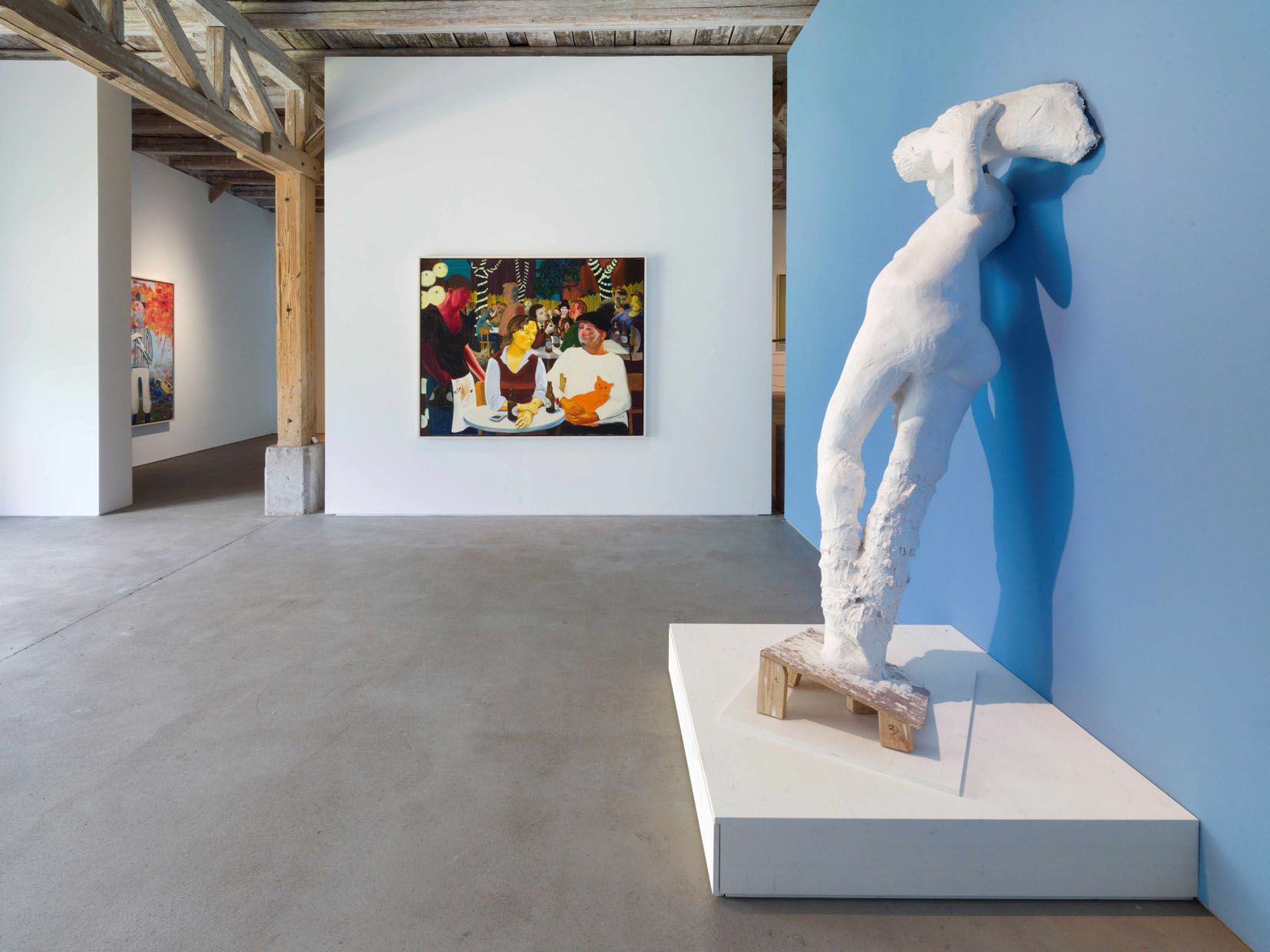
Photography: Antony Gormley, SLEEPING FIELD, 2015–2016 [Exhibition view, Kunstmuseum Schloss Derneburg]. © Artist, Photo: Heinrich Hecht (Cover photo), Nicole Eisenman, Inhaling Object Symbol Guy, 2024 [Exhibition view, Kunstmuseum Schloss Derneburg]. Hall Collection. Hall Art Foundation. © Artist, Photo: Franziska Lenferink (1), Kunstmuseum Schloss Derneburg. © Hall Art Foundation, Photo: Franziska Lenferink (2), Antony Gomley, BLOCK II, 2017 [Exhibition view, Kunstmuseum Schloss Derneburg]. Hall Art Foundation. © Artist, Photo: Franziska Lenferink (3), Skulpturenpark, Exhibition view, Kunstmuseum Schloss Derneburg. © Hall Art Foundation, Photo: Franziska Lenferink (4–6), Nicole Eisenman, Schloss Lyfe, Exhibition view, Kunstmuseum Schloss Derneburg. © Hall Art Foundation, Photo: Roman März (7), Georg Baselitz, Exhibition view, Kunstmuseum Schloss Derneburg. © Hall Art Foundation, Foto: Roman März (8–10), Konferenz: Baselitz, Immendorff, Lüpertz, Penck, Exhibition view, Kunstmuseum Schloss Derneburg. © Hall Art Foundation, Photo: Roman März (11), Jeppe Hein, ALL AROUND YOU I, 2017 [Exhibition view, Kunstmuseum Schloss Derneburg]. Hall Collection. © Artist, Photo: Franziska Lenferink (12), Erwin Wurm, Big Step, 2023 [Exhibition view, Kunstmuseum Schloss Derneburg]. Hall Collection. Hall Art Foundation. © Artist, Photo: Franziska Lenferink (13), Julian Schnabel, Joe, 1983 [Exhibition view, Kunstmuseum Schloss Derneburg]. Hall Art Foundation. © Artist, Photo: Franziska Lenferink (14), Dan Graham, Anamorphic Surfaces / 2‑way mirror / perforated steel, 2007–2008 [Exhibition view, Kunstmuseum Schloss Derneburg]. Hall Collection. Hall Art Foundation. © Artist, Photo: Franziska Lenferink (15)

One Comment
unbedingt hinfahren !