
Treasure Island on the Lower Rhine
Nature and art, landscape and architecture create an exciting interplay of elemental principles on the island of Hombroich. And above all: it is a magical place of tranquility, reflection and discovery.
Richard Branson has one, Leonardo DiCaprio, Johnny Depp and Shakira too: their own island. However, unlike in Robert Louis Stevenson’s classic, they are not searching for Captain Flint’s treasure there. The curse of celebrity is paparazzi piracy, and their private island is their sanctuary, surrounded by turquoise blue water. Karl-Heinrich Müller had something completely different in mind when he bought his island. It has neither sandy beaches nor palm trees. It is not even located in the sea, but in Neuss, North Rhine-Westphalia, between fields, pollarded willows and the Erft river. And above all, it is not a place of retreat. On the contrary: the island of Hombroich is a place that is open to the public.
Museum Insel Hombroich: Old Park
In 1982, the real estate agent acquired the 20-hectare floodplain area – not to own it, but to design it. Born in 1936, the passionate art collector was looking for a place to create a total work of art combining nature and art, landscape and architecture, where artists could live and work and visitors could relax and explore. The patron, who died in 2007, firmly believed in the power of direct experience, and together with sculptor Erwin Heerich and landscape architect Bernhard Korte, created a very special kind of cultural landscape on the marshy Lower Rhine terrain.
A treasure map full of riddles
The map for searching for and finding this treasure is available at the ticket office on Insel Hombroich, less than 20 minutes by car from Neuss main station: printed on white A3 paper, folded into a small square. It shows – in black and white and extremely simplified – the site plan of the Museum Insel Hombroich. Seventeen numbers mark Erwin Heerich’s sculptural buildings scattered across the grounds. There is also a small booklet to accompany it. It is called Vademecum, and that is exactly what it is meant to be: Vade mecum! Come with me! Mecum quaere! would also be a possible title: Search with me!
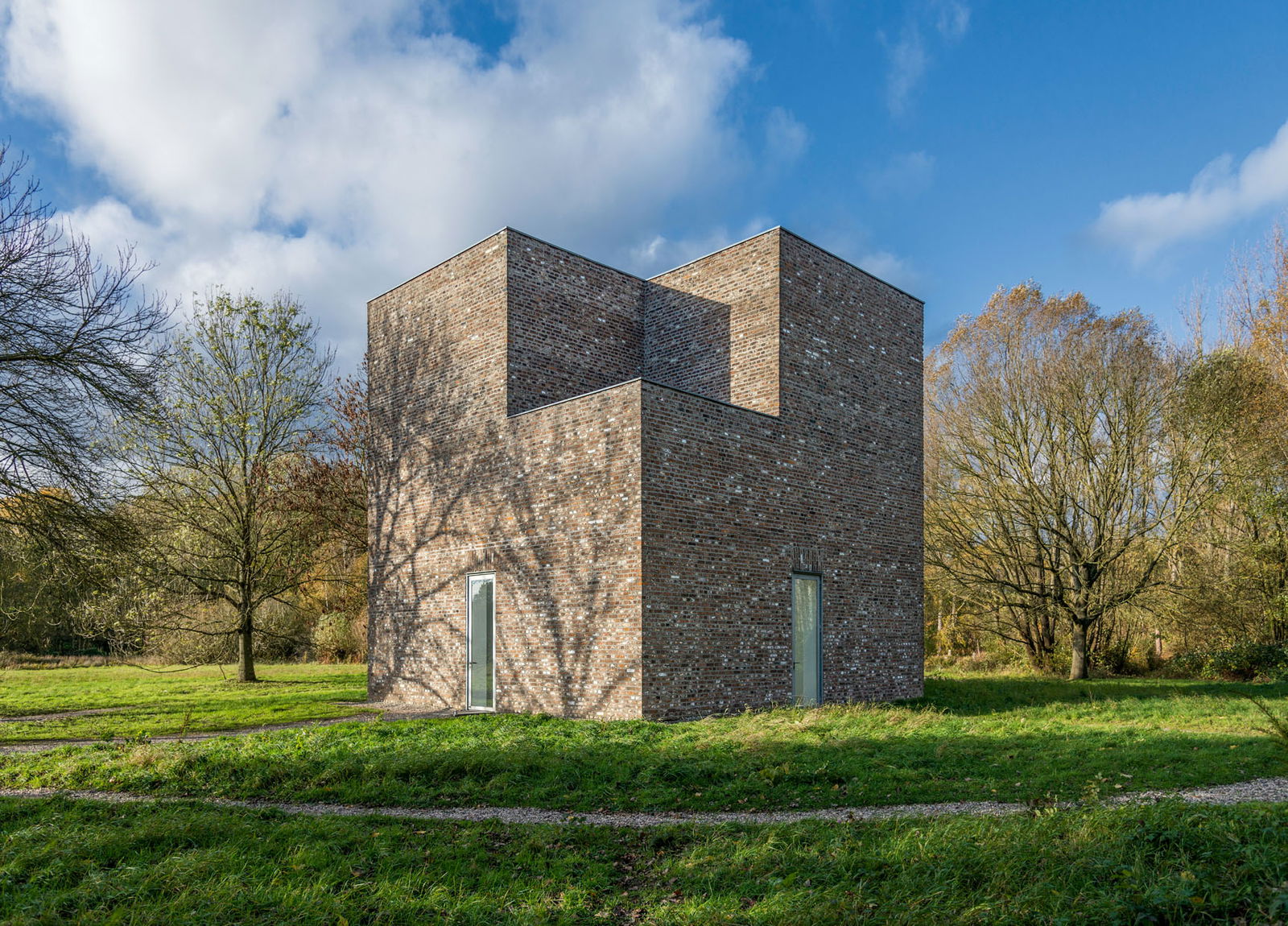
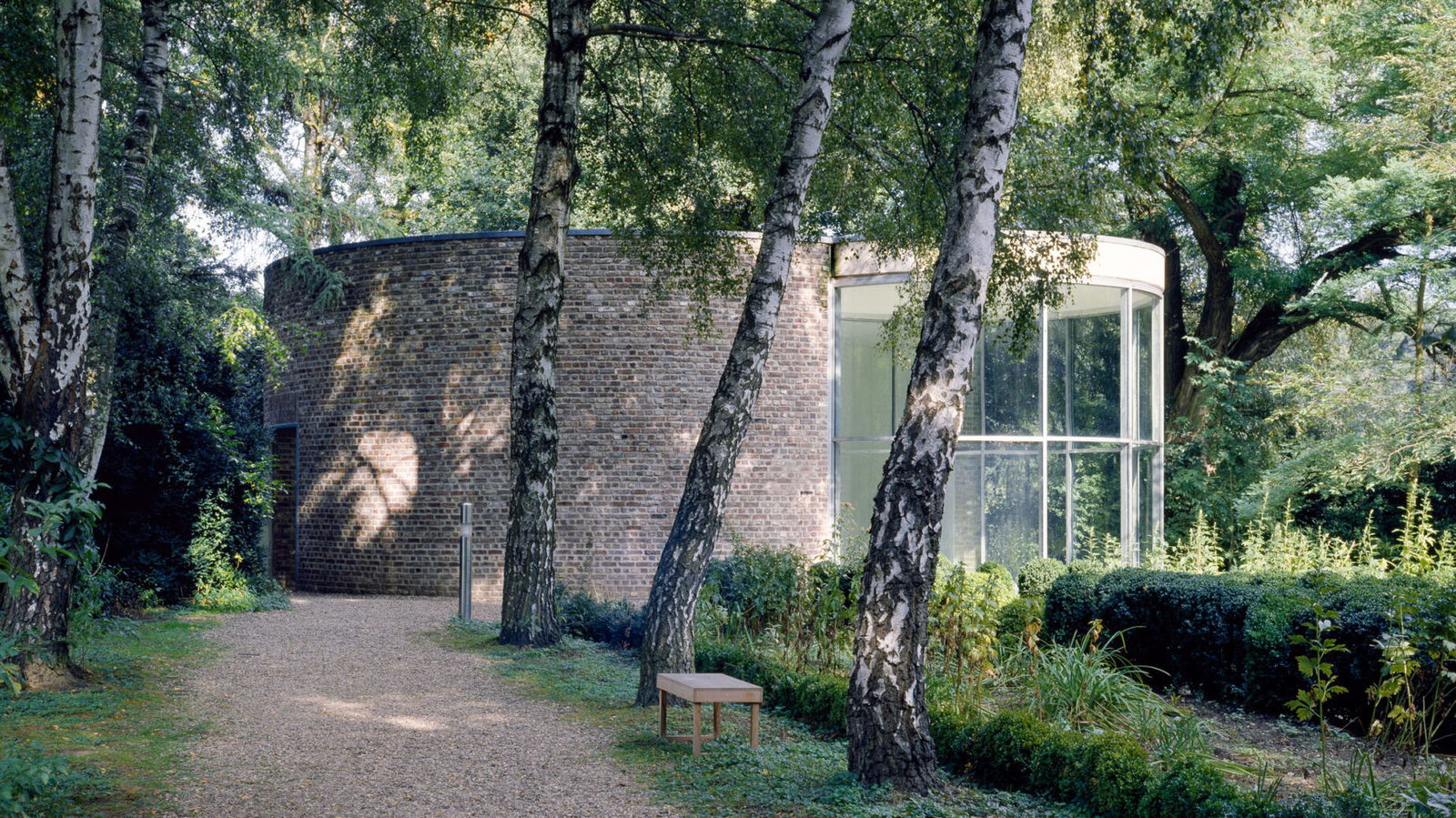
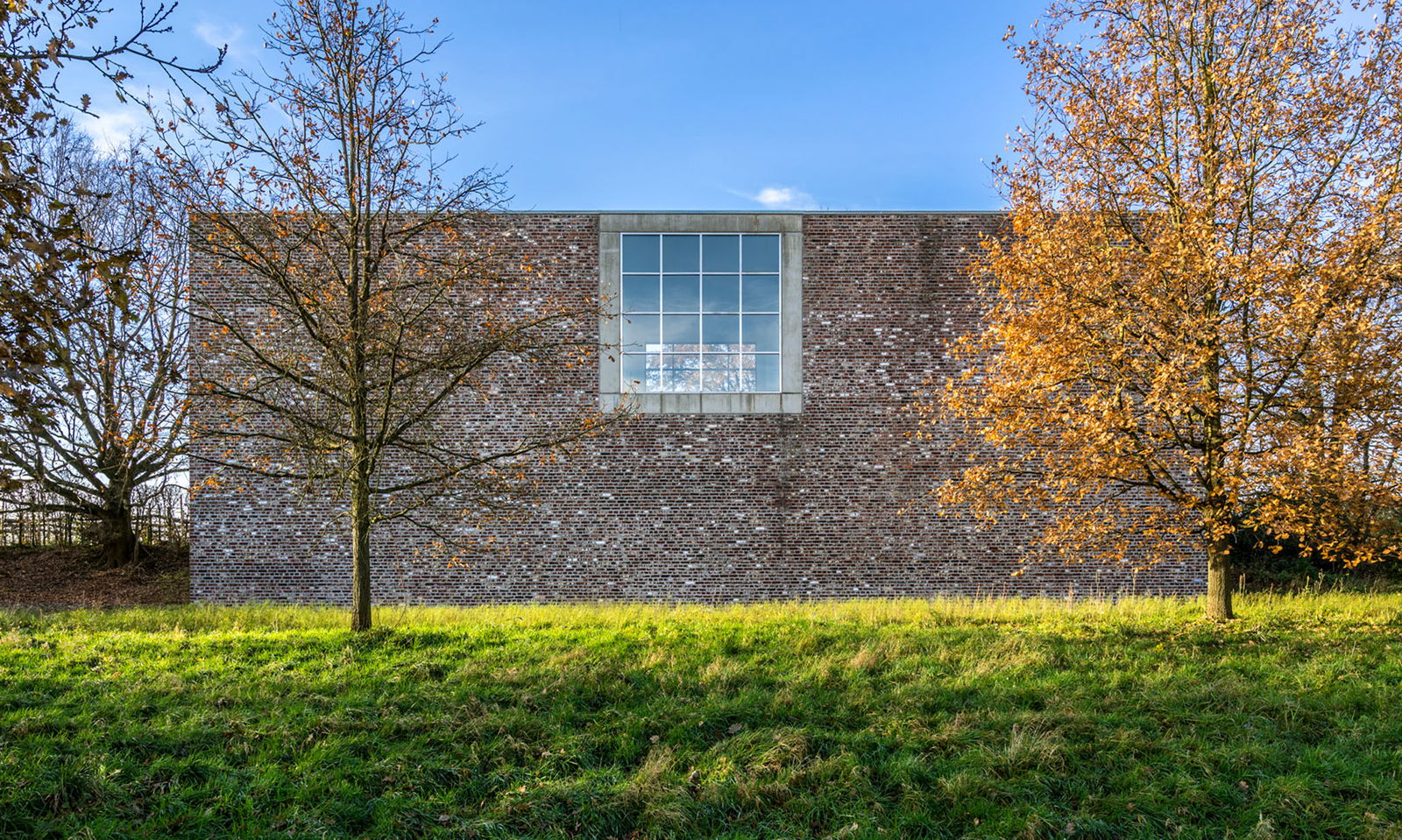
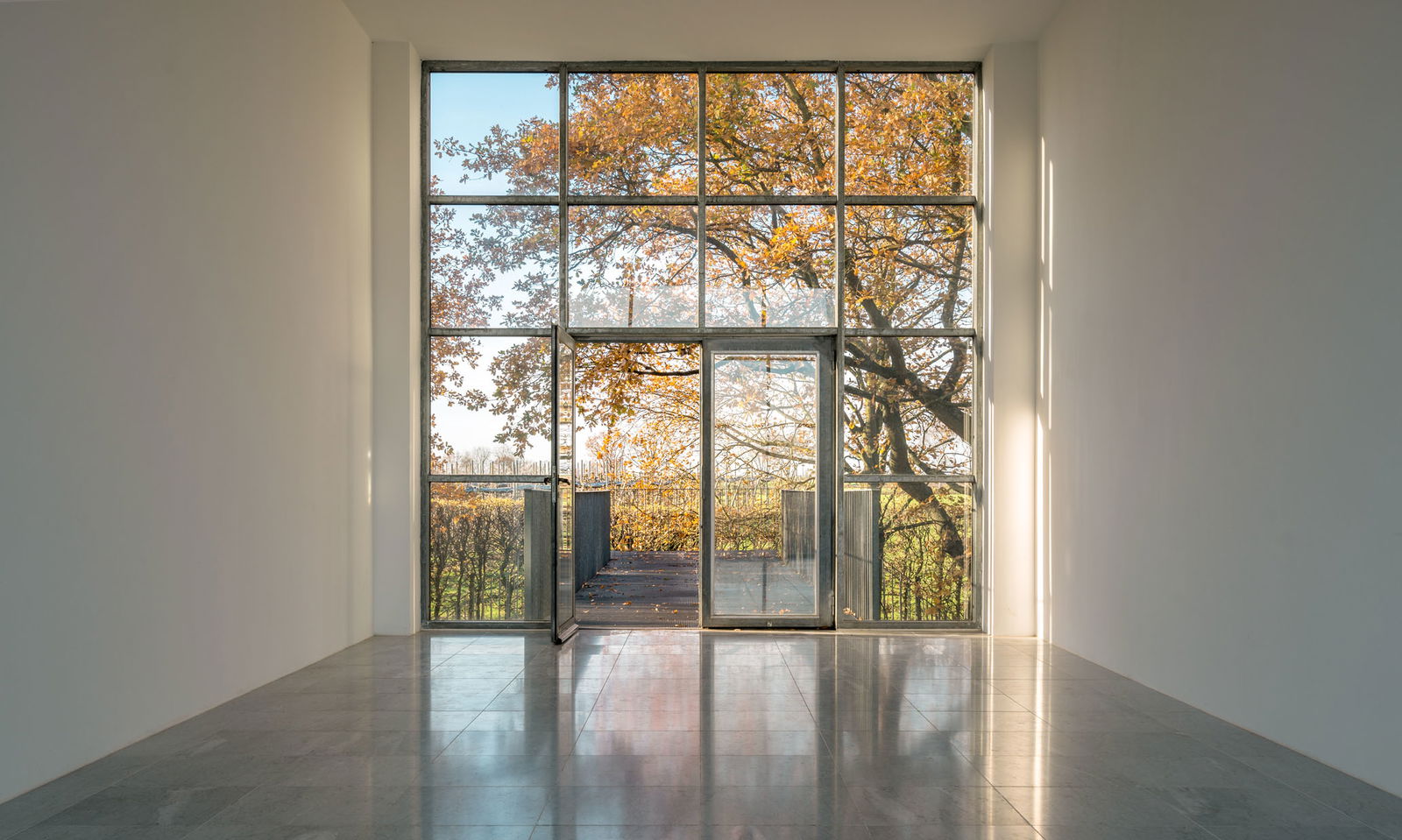
Let’s go then, past Gotthard Graubner’s former home and studio. The tower sets the tone for Heerich’s pavilion architecture: all red brick, minimalist, clear, geometric. Cubes, cylinders, cuboids, temples of minimalism. ‘I am not an architect and I don’t build houses. But the idea of creating a sculpture with an interior space appealed to me enormously.’ Some are indeed ‘just’ that: pure spatial sculptures. Others contain works of art from Müller’s collection. All of them manage without electricity, without artificial lighting, without staff. And: without signs indicating titles, artists or dates.
Discovering instead of explaining
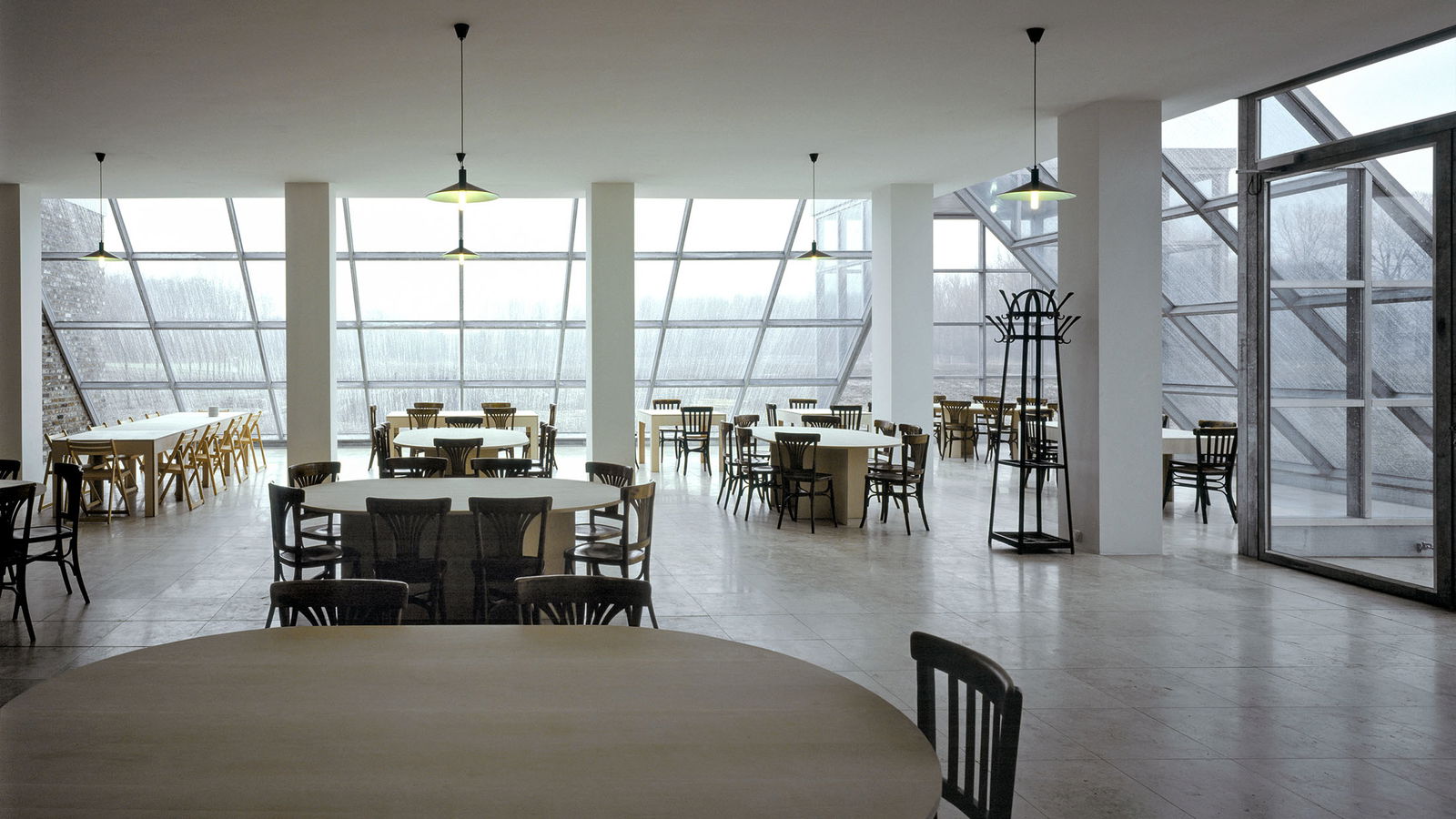
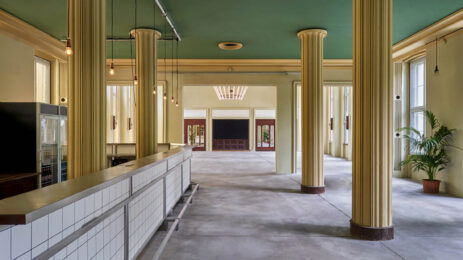
The radical anti-didacticism and minimal visitor guidance are part of the programme: from the very beginning, barriers, signage and catalogues have been deliberately avoided, and this is still the case today. Visitors are encouraged to puzzle, doubt, discover, feel, and thus engage in their own personal dialogue with art in the cultural landscape. And they should take their time doing so. Instead of a souvenir shop or audio guide, there is a rustic buffet, a “Lower Rhine Kaffeetafel [afternoon coffee spread]” with currant bread, herb quark[curd cheese] and coffee in the cafeteria located in the centre of the museum island. It is included in the admission price and accessible until one hour before the park closes, as often as you like: Karl-Heinrich Müller wanted to offer a place of hospitality that is not limited to enjoying culture and nature, but also satisfies physical well-being. This is not only unusual, but above all unfamiliar – and quite honestly, it takes time to endure the restlessness of wanting to know and to allow oneself to relax and enjoy the experience. Whether this does justice to the collection of some 400 objects is something everyone must decide for themselves.
The art of silence
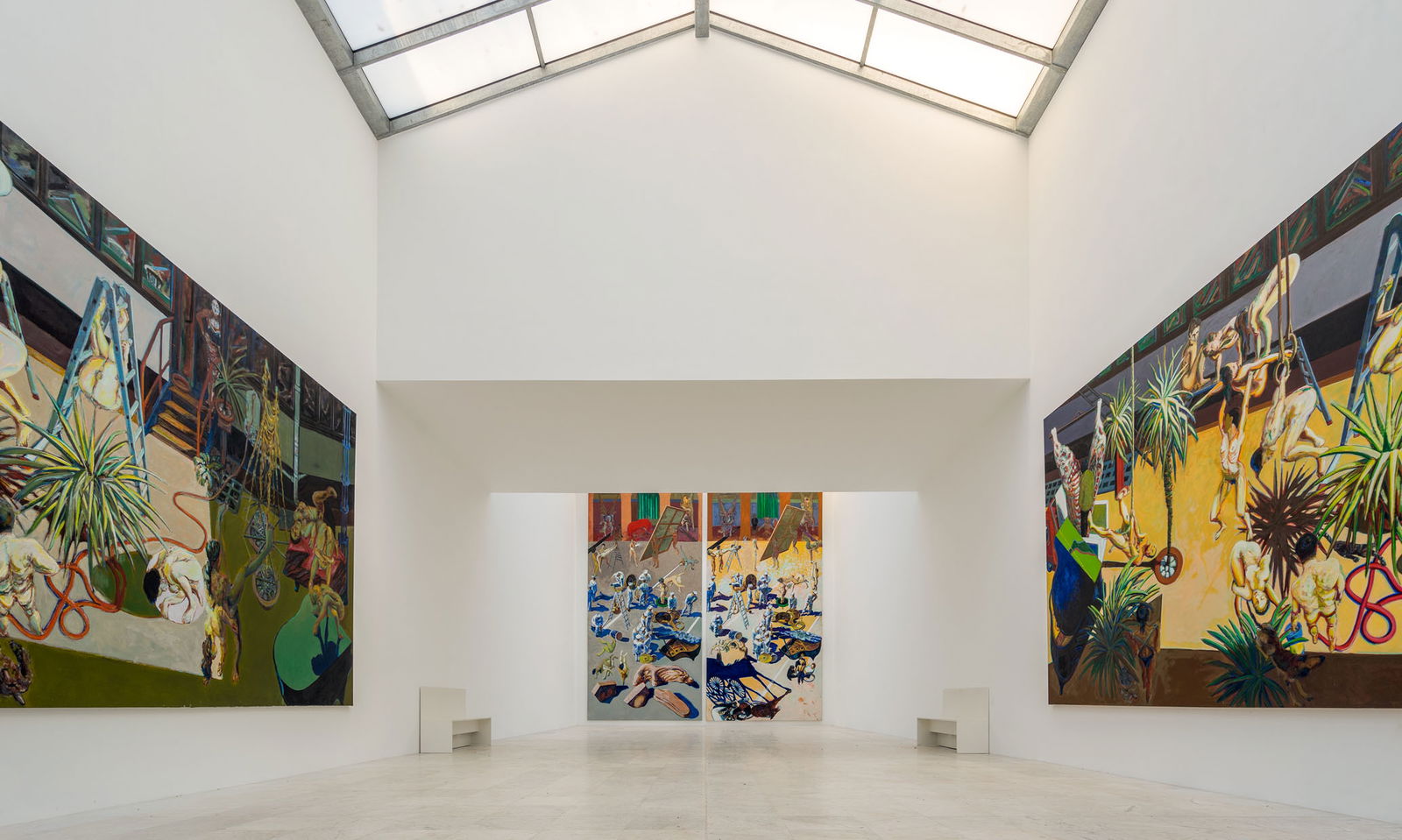
For it is certainly challenging: sculptures from the Khmer period meet works by Hans Arp, Yves Klein, Lovis Corinth and Francis Picabia. Ancient artefacts stand side by side with contemporary paintings, East Asian figures and African masks interact with European still lifes.
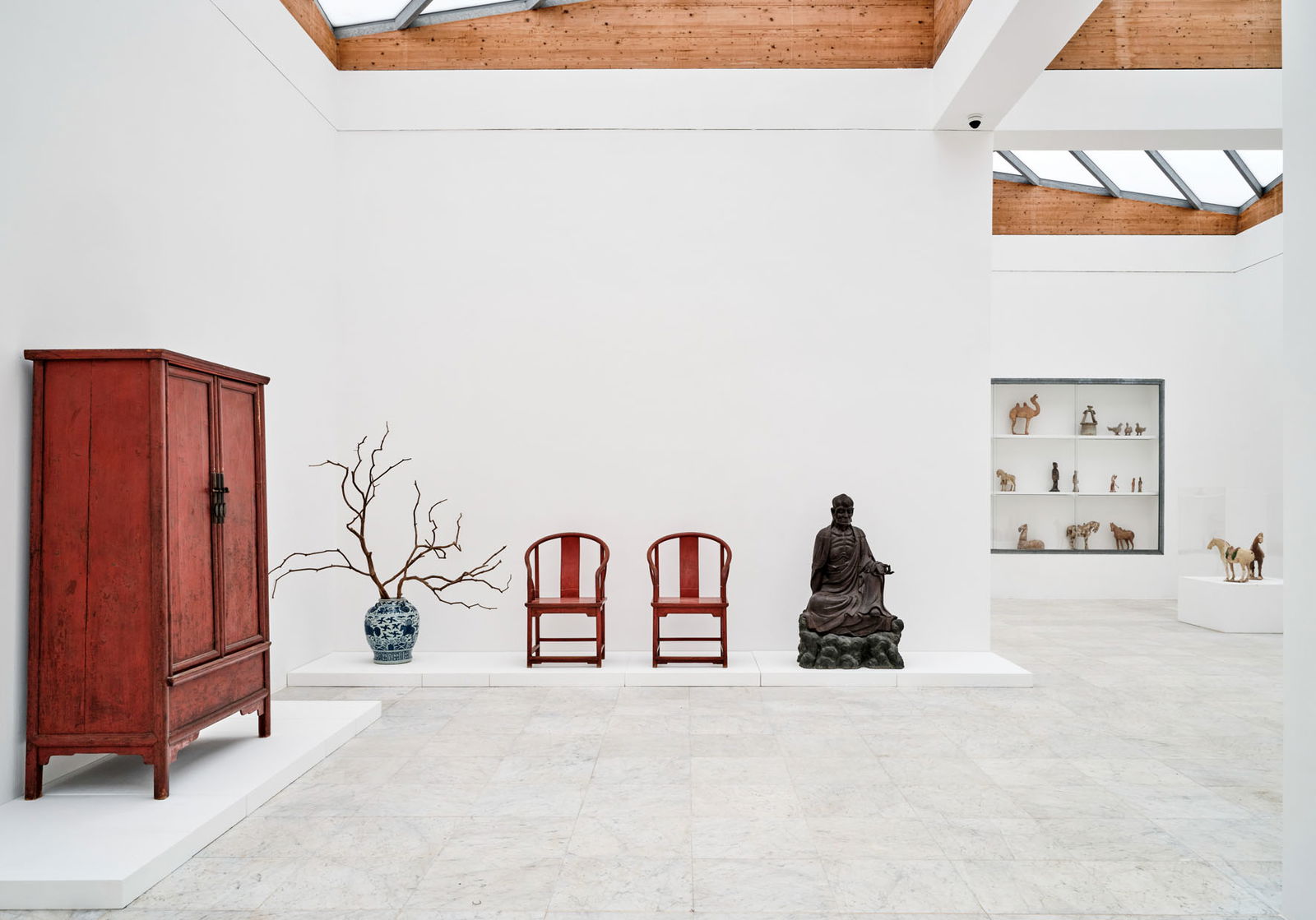
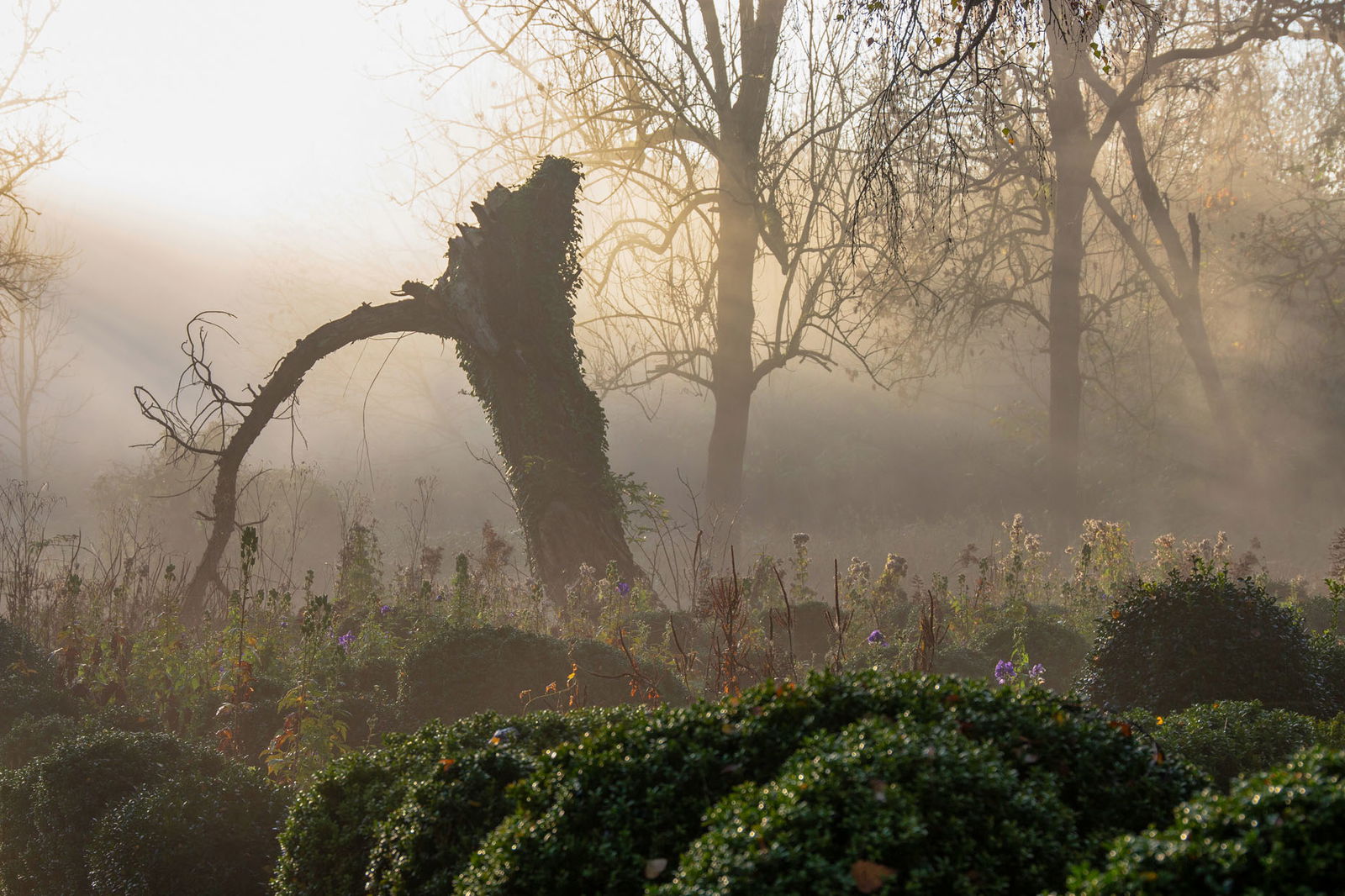
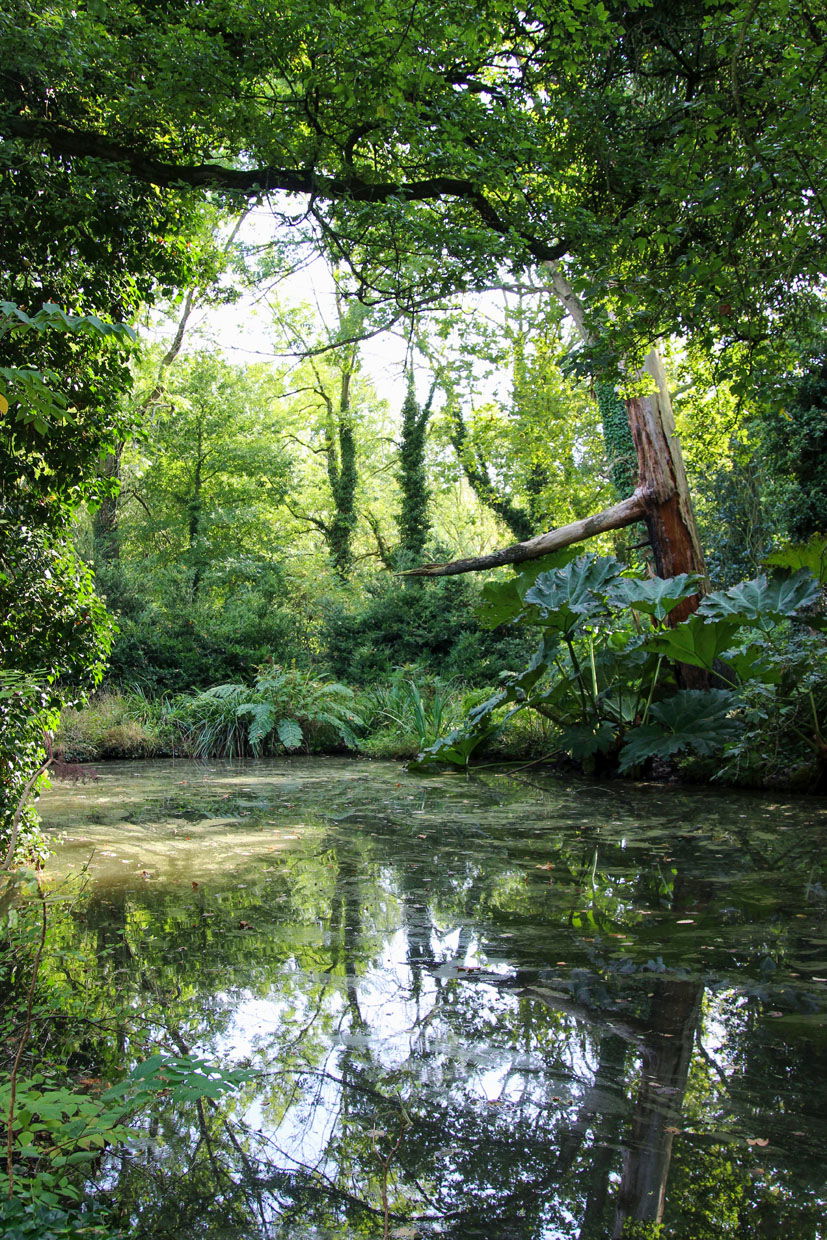
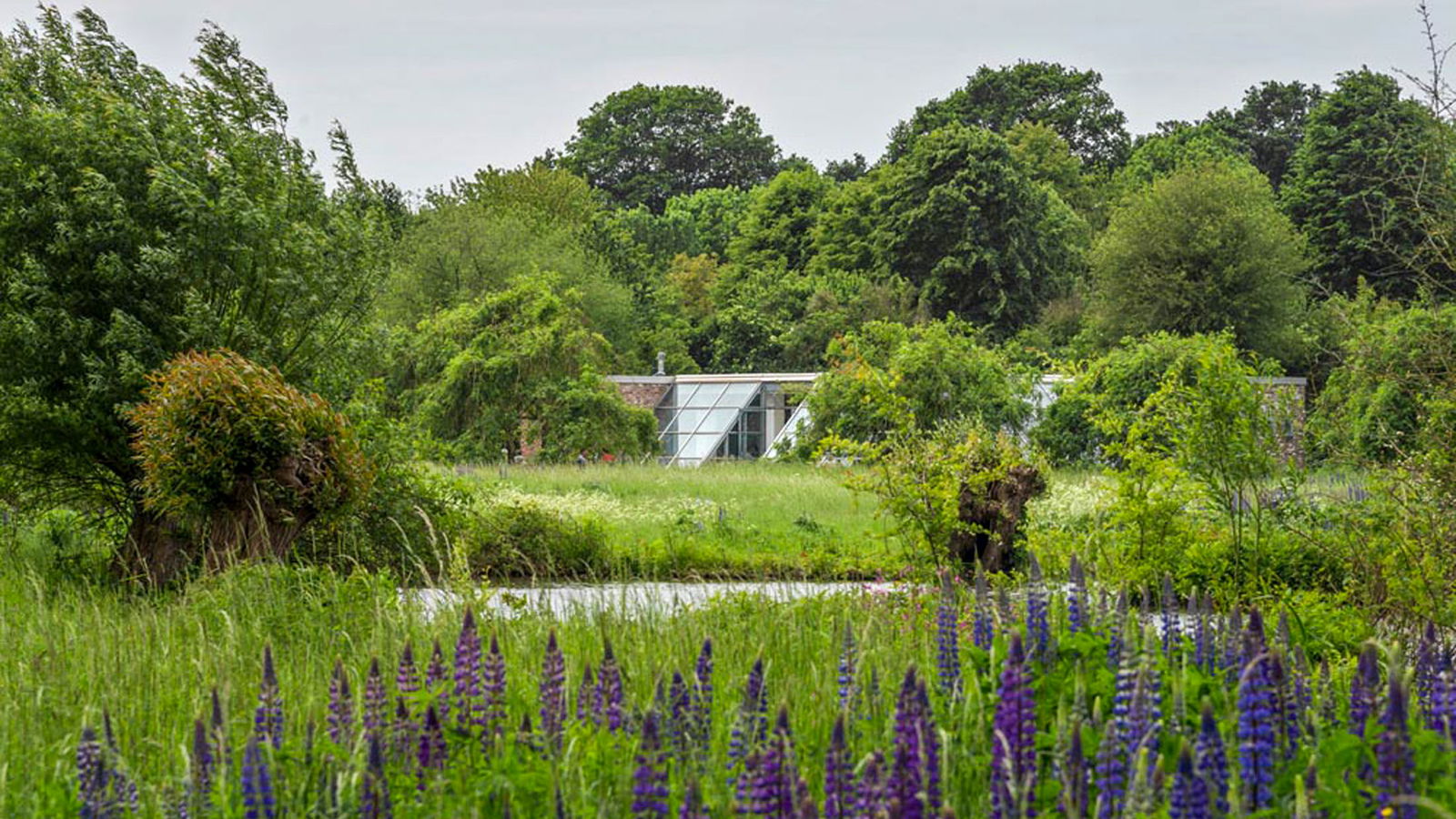
Müller did not collect art history, but his own world order, which is given appropriate, generous space in the wonderfully flat, wide landscape of the Lower Rhine. The Erft river flows around the site, dividing it into peninsulas and creating wet meadows and riparian forests. Bernhard Korte worked with nature, not against it. Paths meander between willows and reeds, small bridges lead over side arms, the light refracts in the water. One is glad that it is sunny and dry on the previous visit – and wishes for fog and drizzle on the next, glittering snow on the one after that, and on the one after that… ‘Perhaps the island can only be experienced, not described,’ the founder surmised.
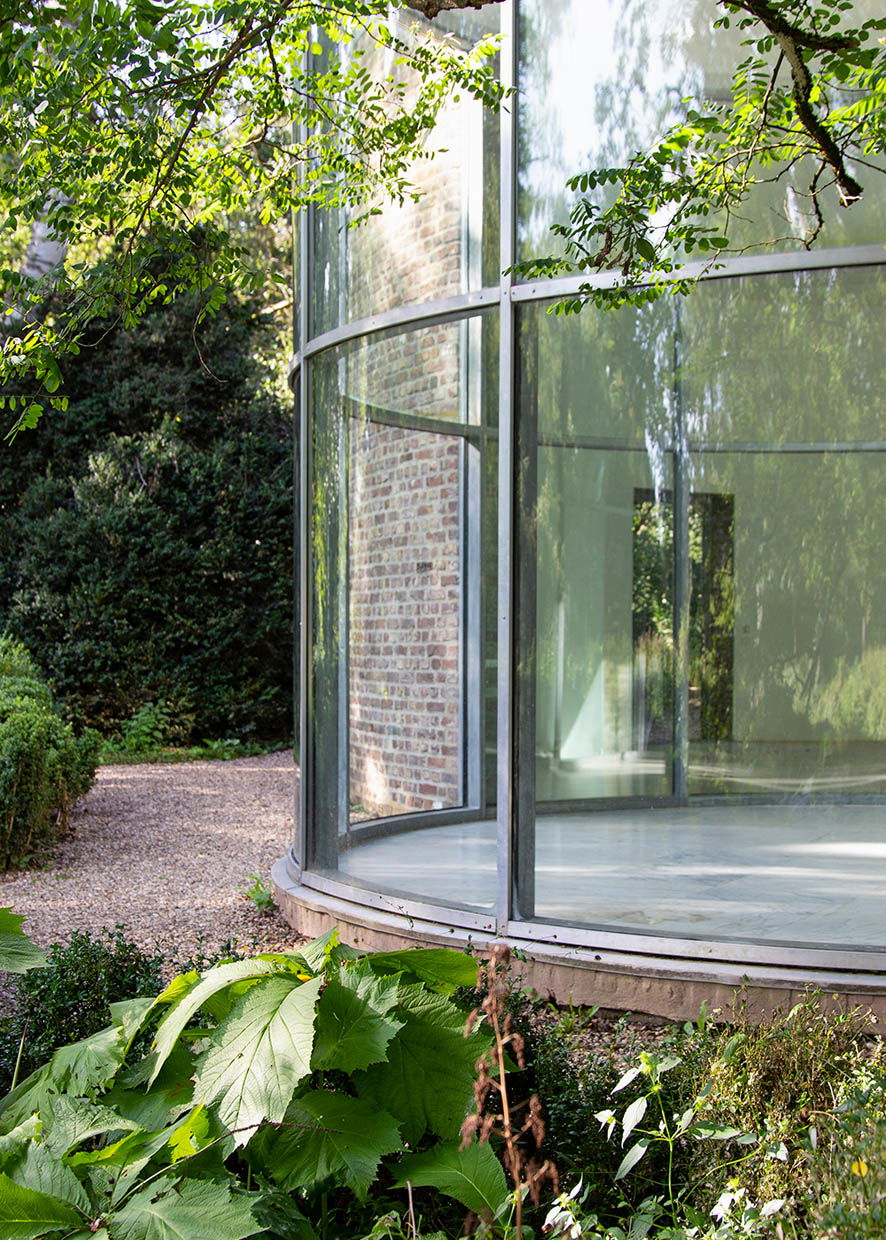
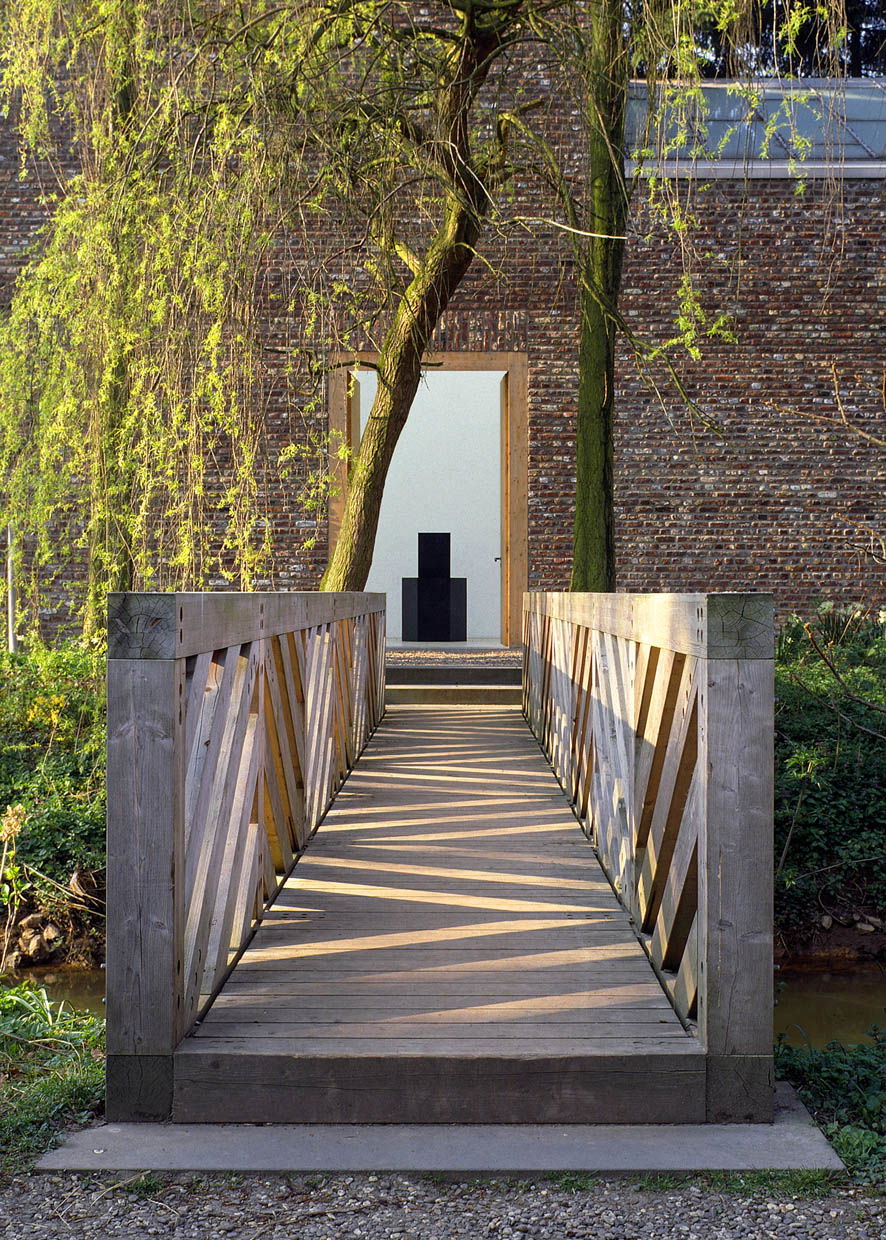
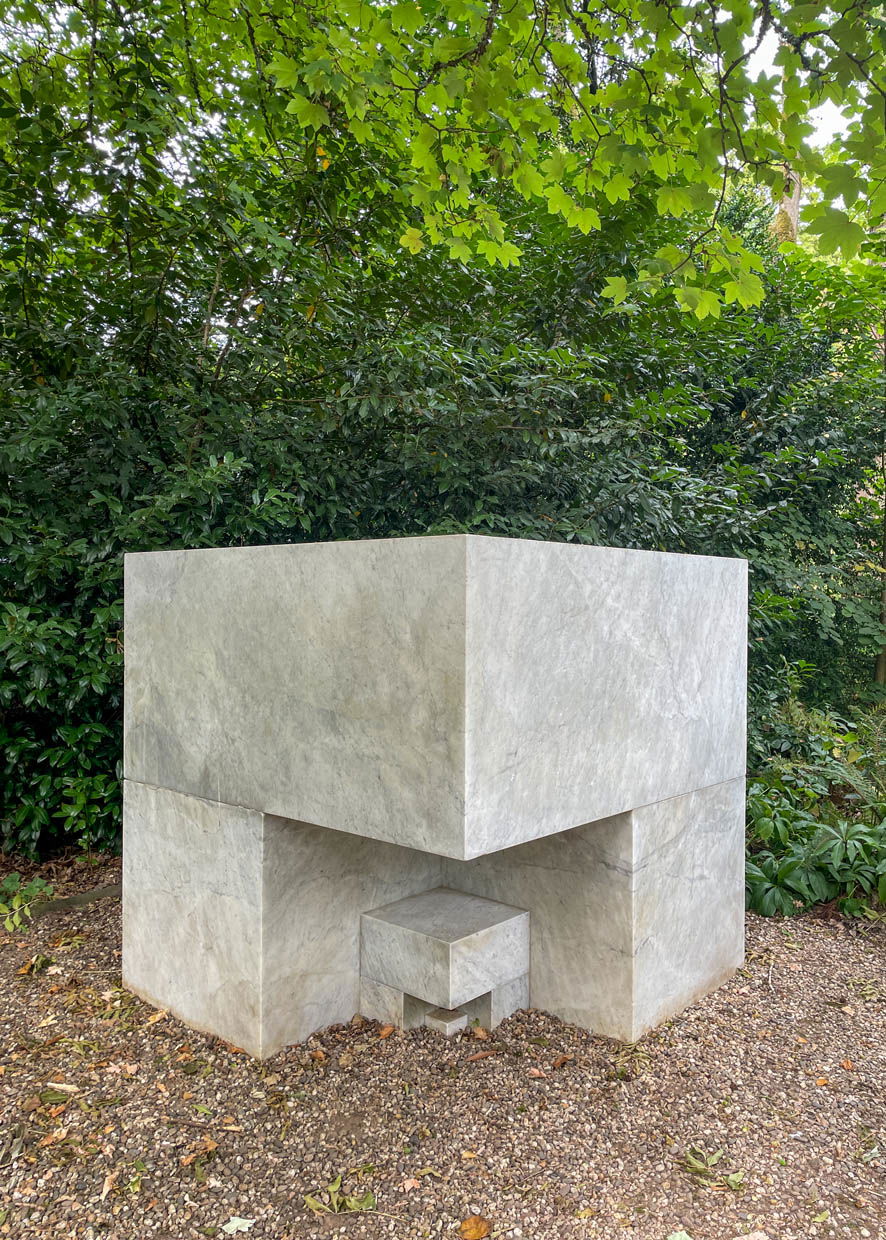
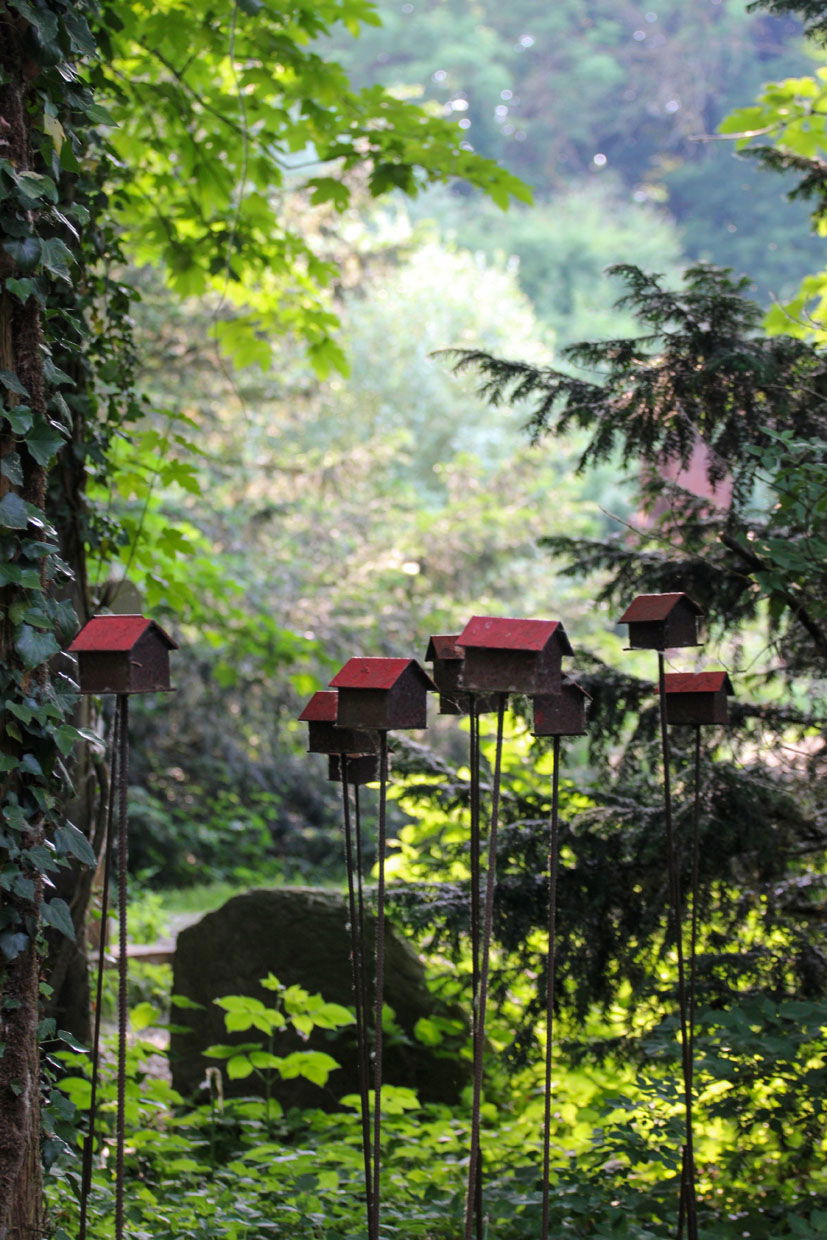
Erwin Heerich’s pavilions occupy the cultural landscape as landmarks. In between, visitors encounter his sculptures outdoors, as well as works by Anatol Herzfeld, a student of Joseph Beuys who, like Heerich and Graubner, worked at Hombroich for many years. His archaic forms, forged from iron and wood, seem to have grown directly out of the earth: for 36 years, the island was his creative space and a place for exchange and work, just as Karl-Heinrich Müller had wished.
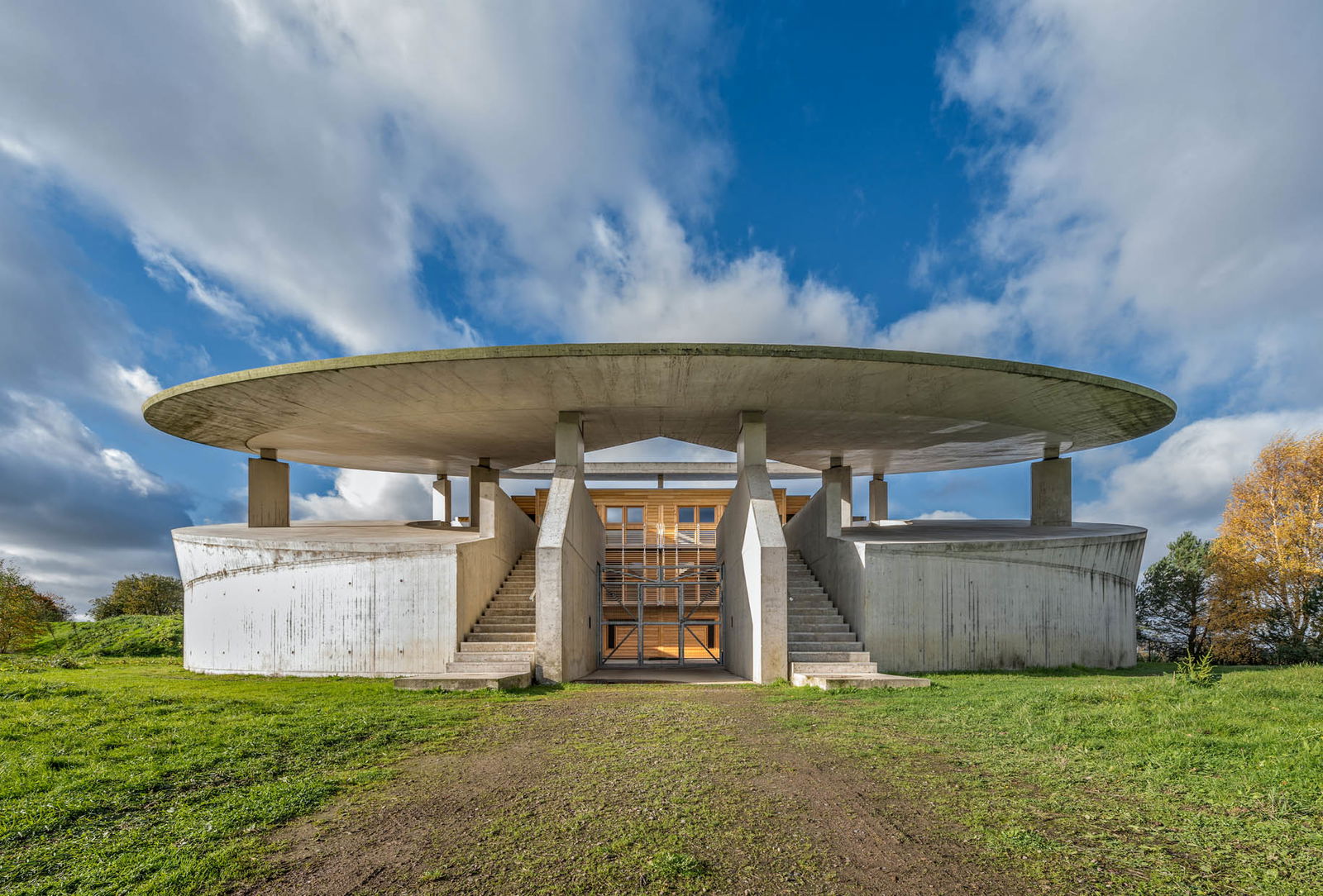
The Raketenstation [Missile Station]: from military site to cultural space
Time to turn over the treasure map and enter the Raketenstation, a good two kilometres away. In 1994, Müller purchased the site of the former NATO missile station, expanding his dream of a cultural space to over 60 hectares.
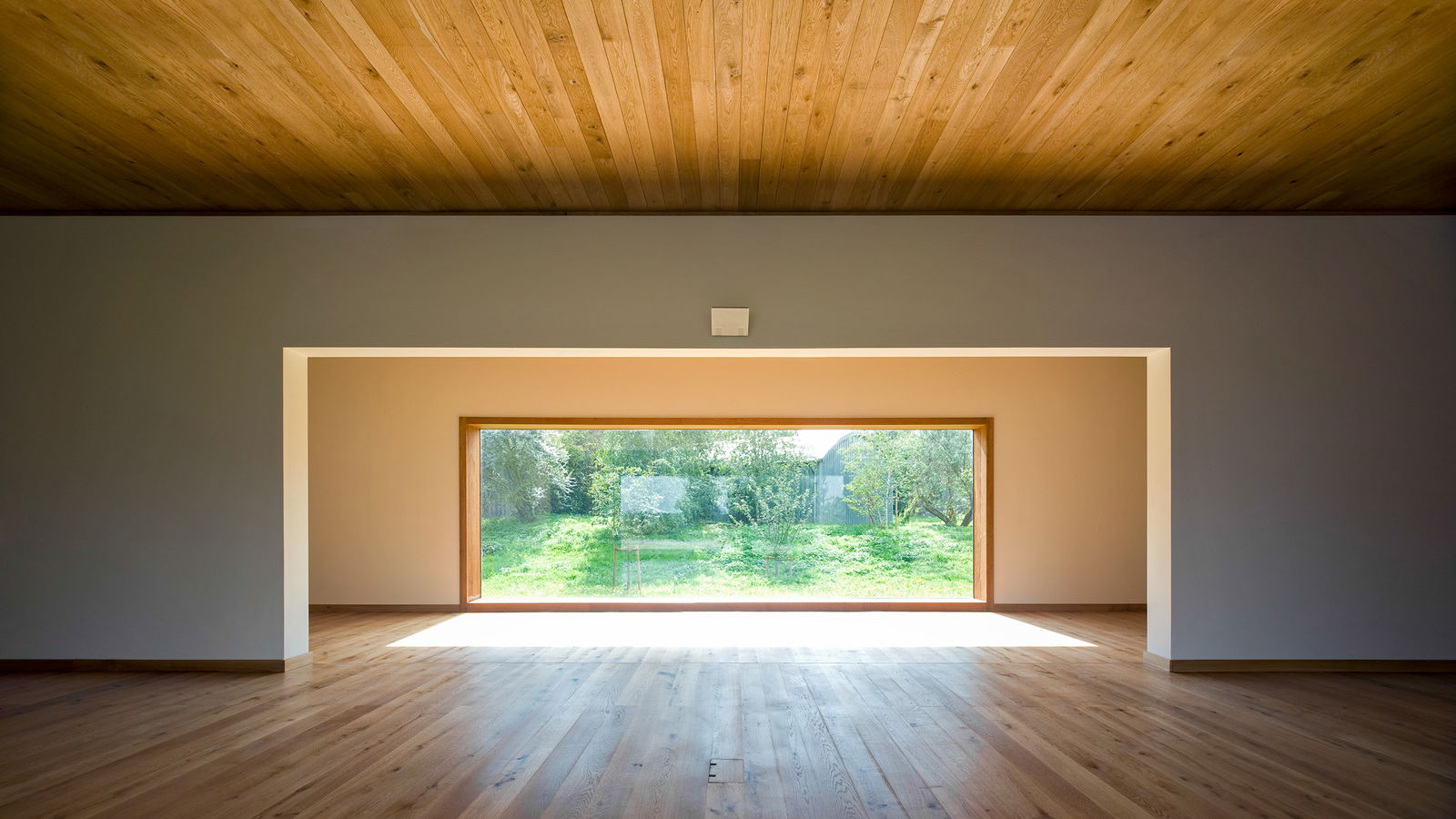
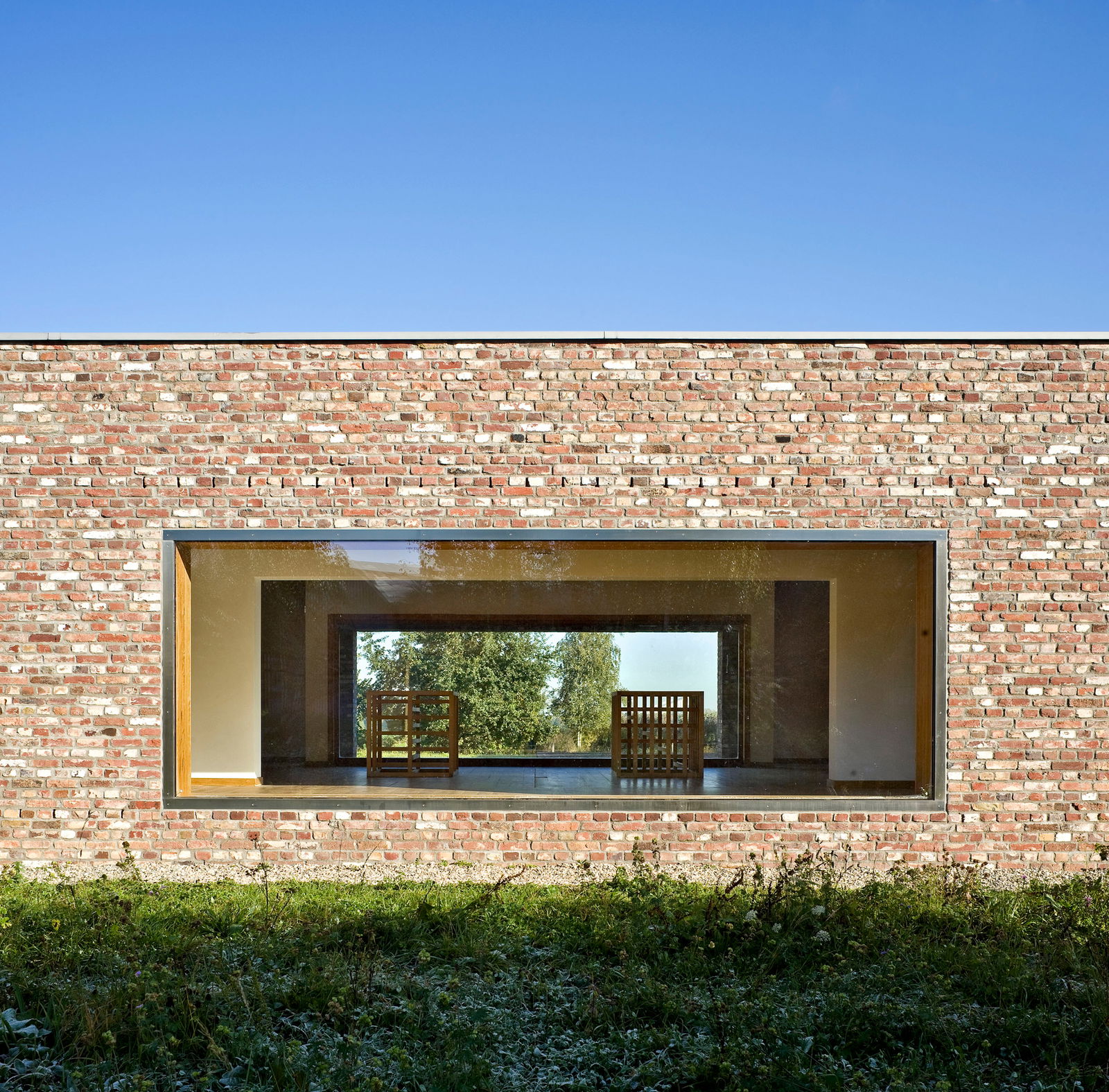
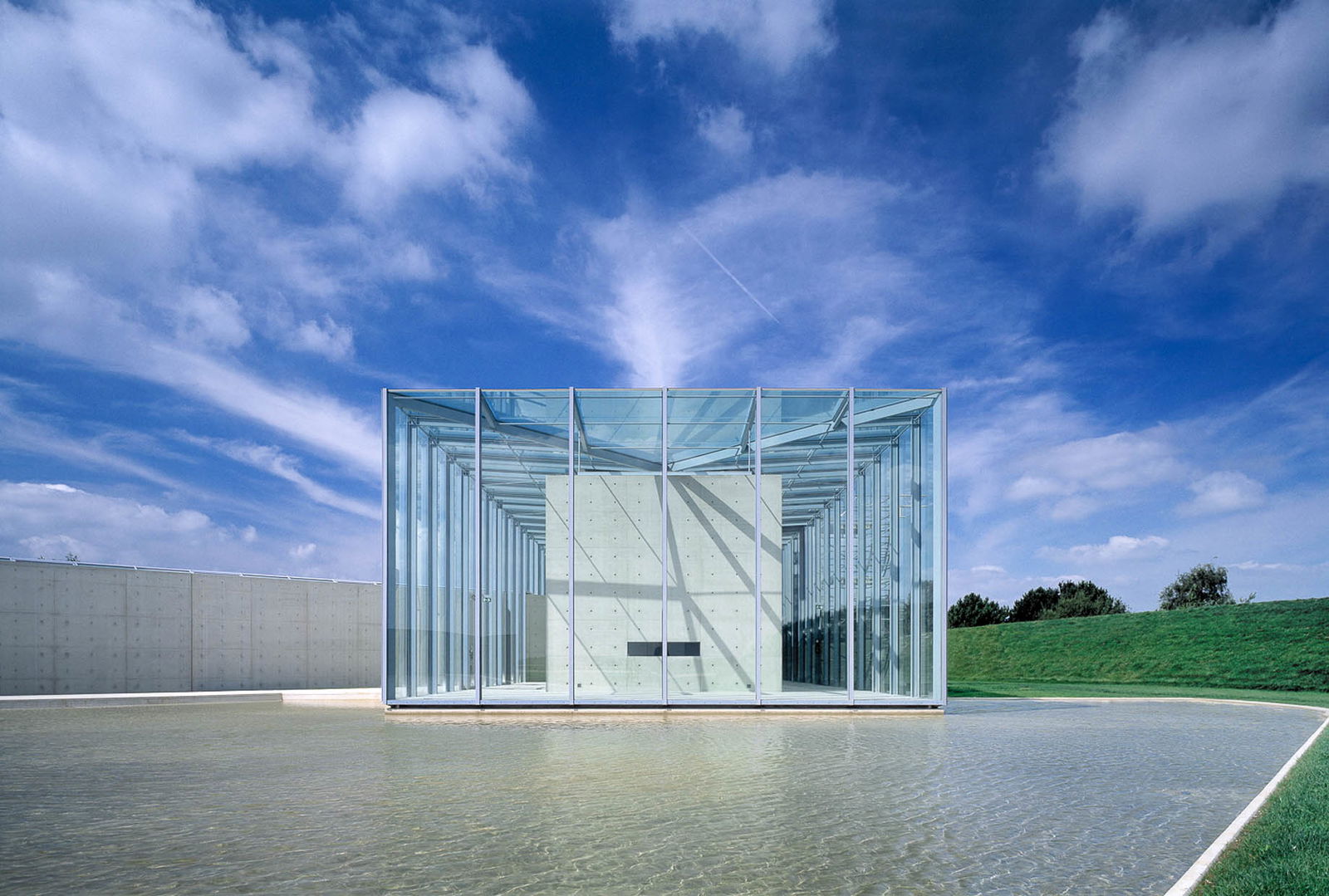
Today, the site features buildings by Per Kirkeby, Alvaro Siza, Raimund Abraham, Terunobu Fujimori and Tadao Ando, who designed the Langen Foundation in 2004, a museum for Victor and Marianne Langen’s collection of East Asian art and for temporary exhibitions.
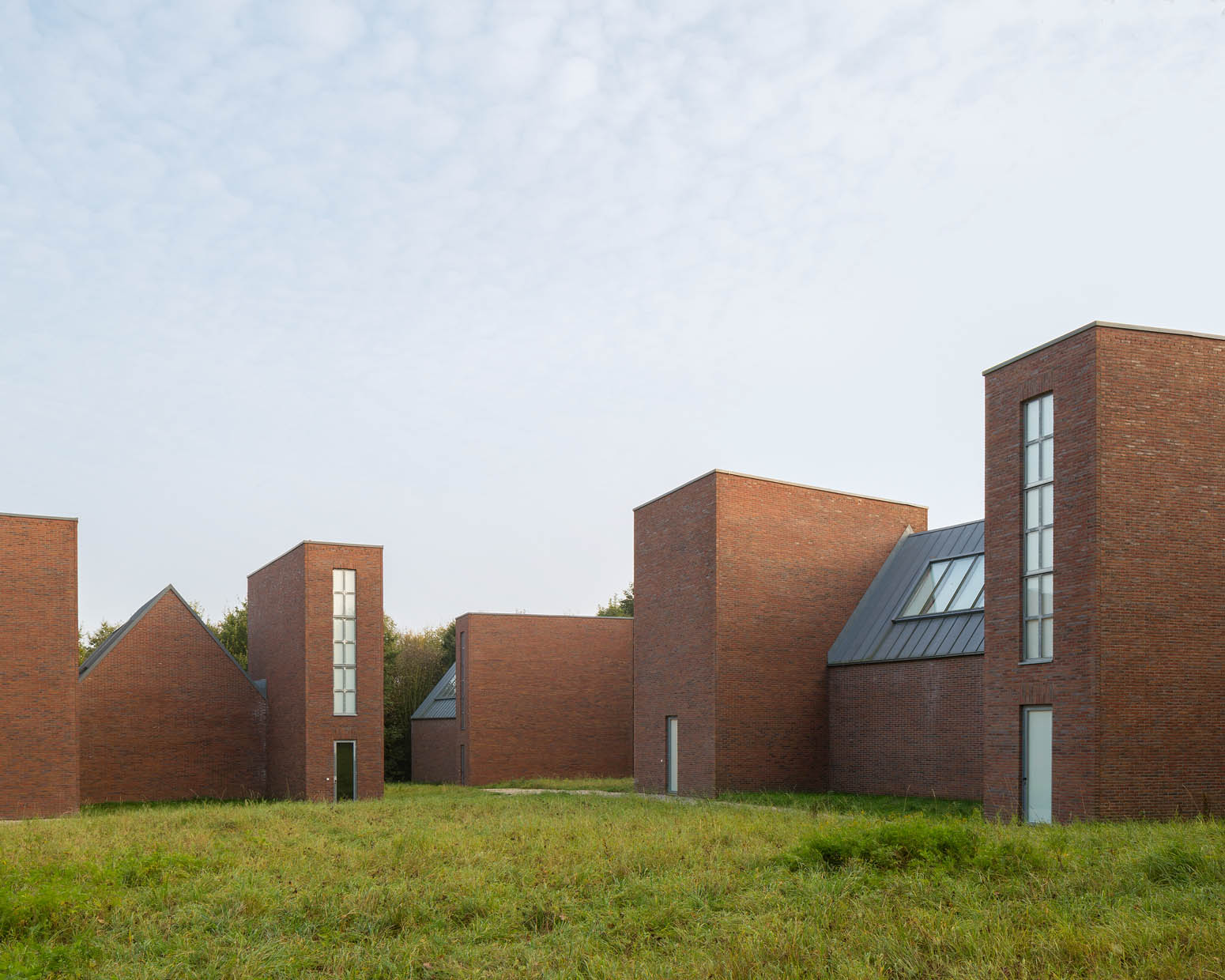
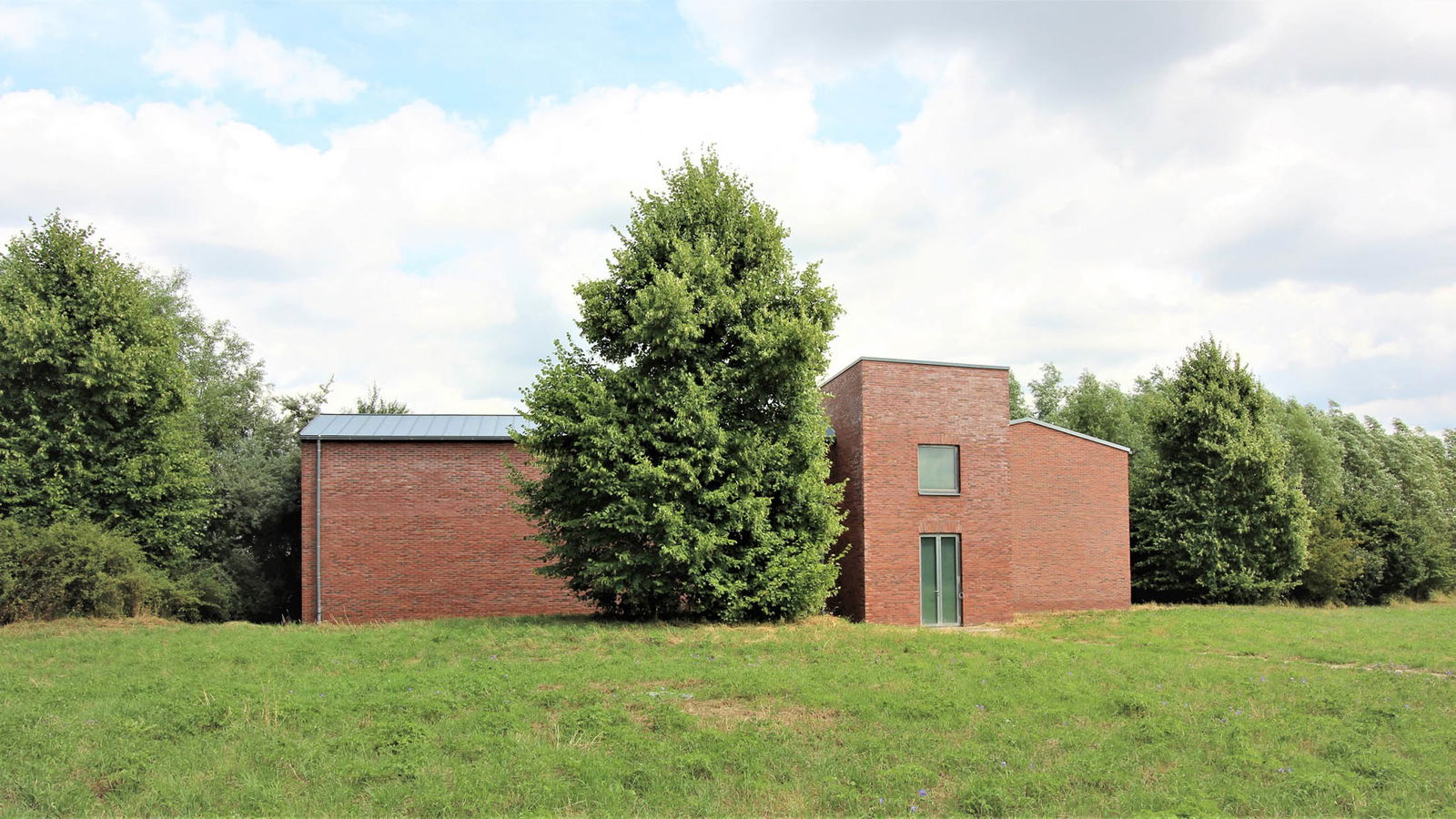
But the Raketenstation is also a place for living and doing research. Since 2001, this has no longer been limited to artists, composers and scientists, but also includes guests: twelve rooms, which can be used individually or in pairs, can be booked in the Guest House Kloster for 100 euros per night, with the bill arriving by mail after your stay. This is also part of the concept of the Insel Hombroich Foundation, which is now responsible for the fate of this treasure: trust instead of transaction.
Guest House Kloster [Monastery]
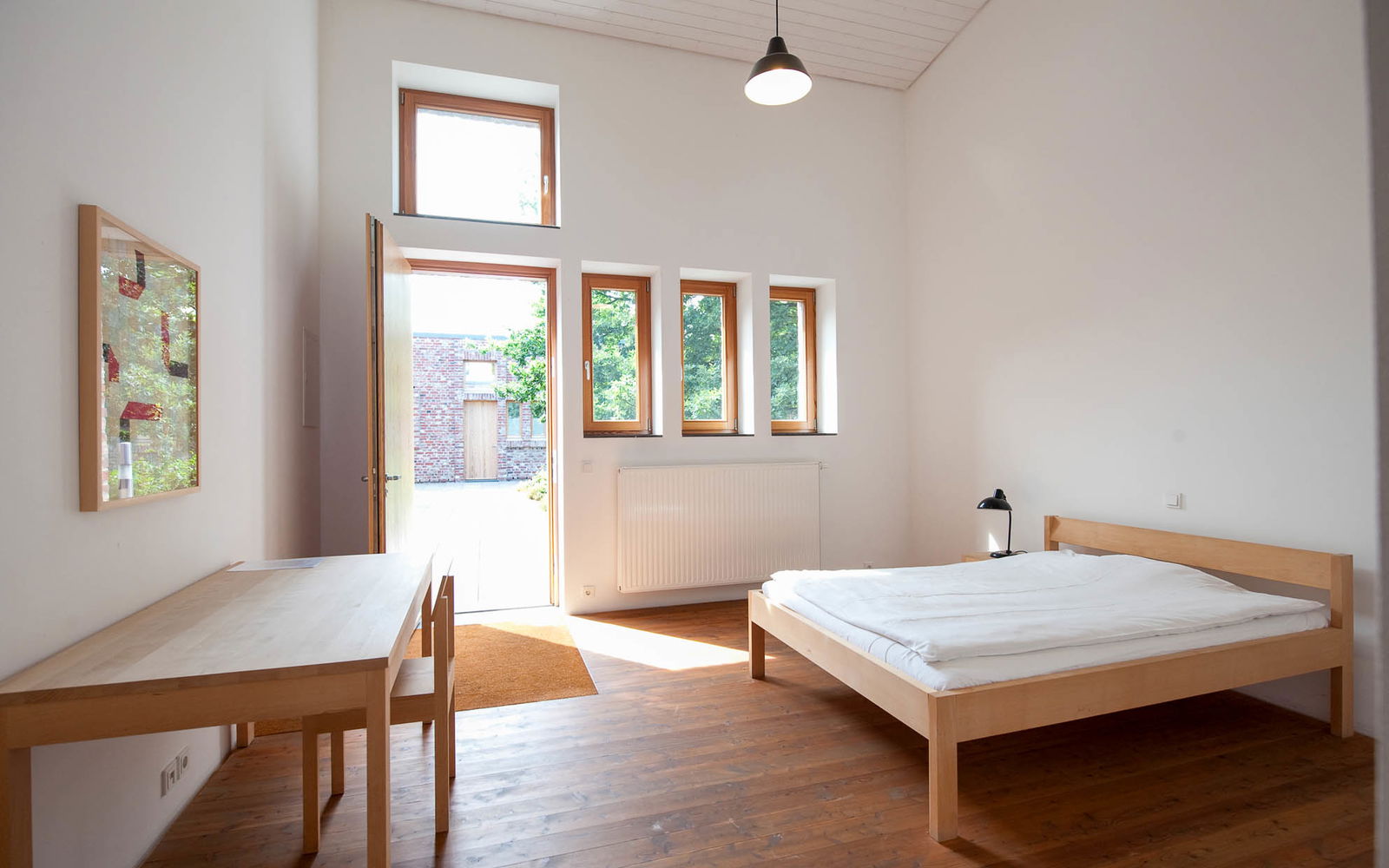
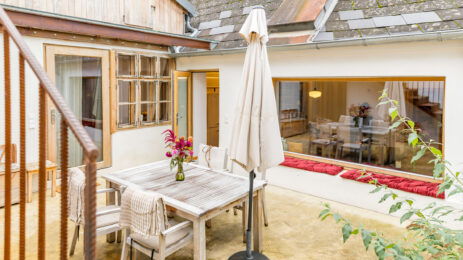
Guests can pick up the key for the four wooden gates leading to the H-shaped courtyard during opening hours at the ticket office of the Museum Insel Hombroich. They also open the extra-high bedrooms: Erwin Heerich’s son Martin, an architect, implemented his father’s usual radical, minimalist design.
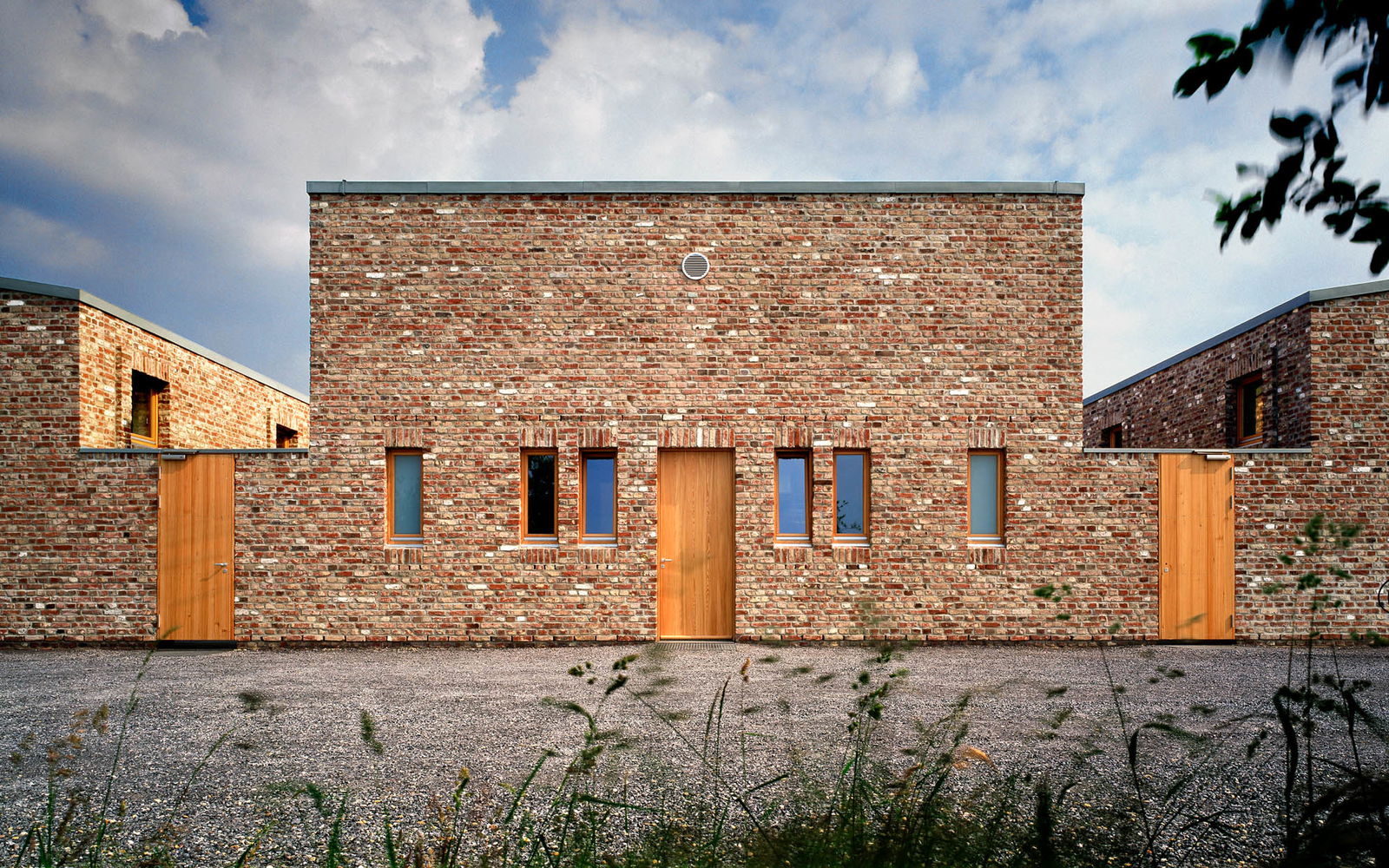
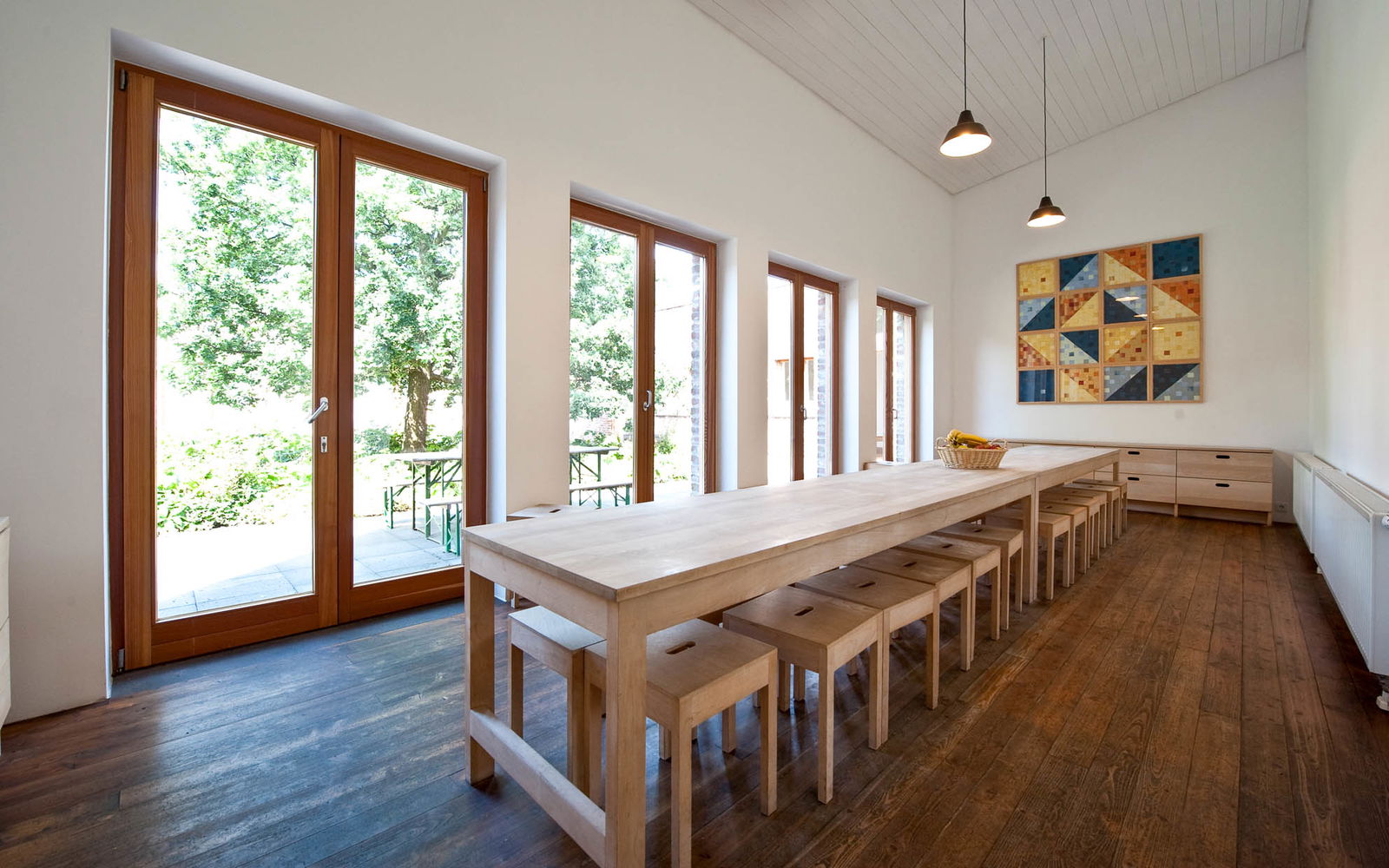
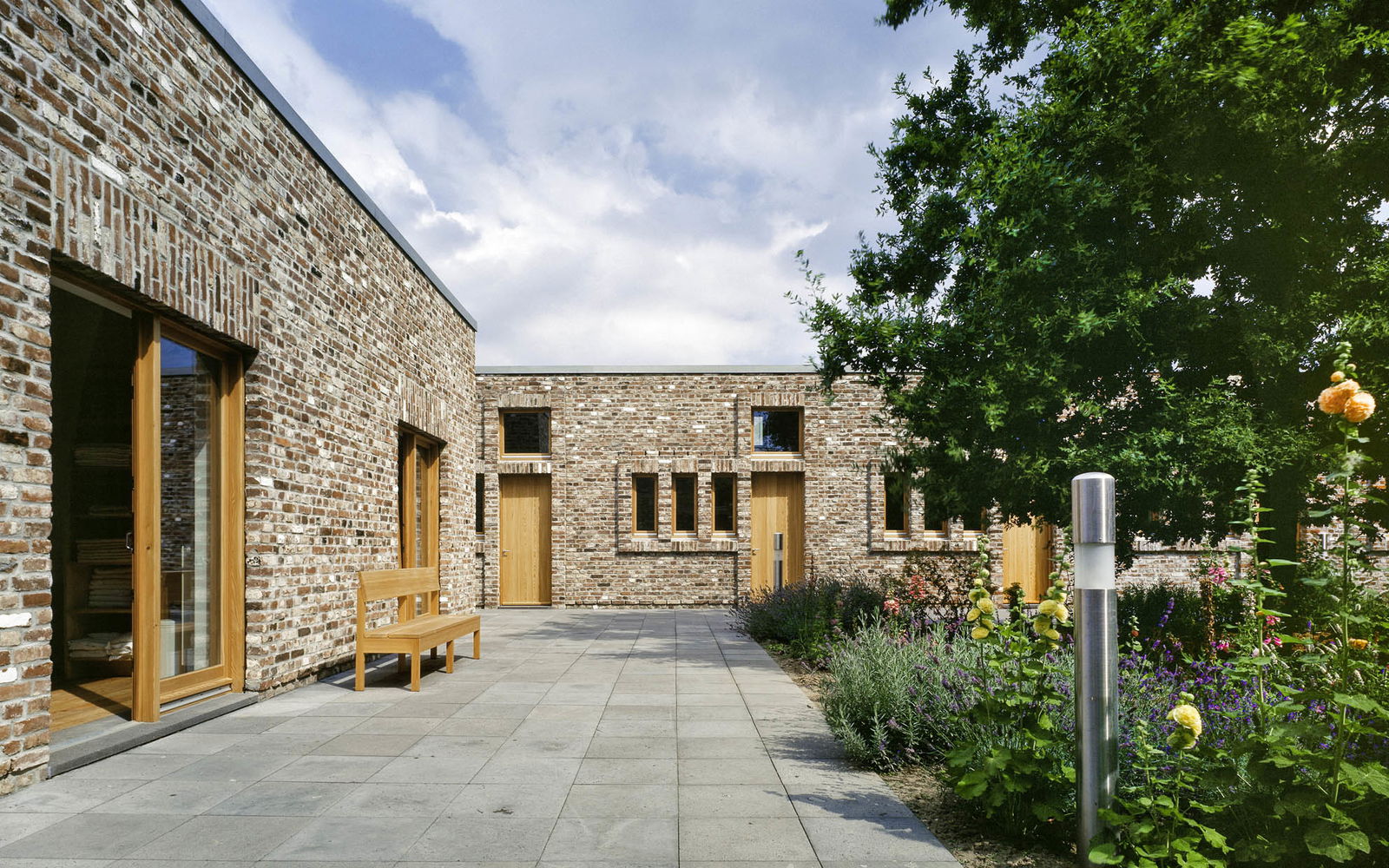
Guest House Kloster
Wi-Fi is a concession to today’s demands, as is the retrofitted mid-height privacy and light protection, which can be taken out of the cupboard and attached to the windows as needed. The artist and chairman of the foundation, Oliver Kruse, designed the furnishings in an appropriately sparse style, while the textile interpretations of the floor plan on the white walls are by Erwin Heerich’s wife Hildegard. The large kitchen for self-catering is available to all guests. It is the perfect place to talk loudly about the silence of the cultural landscape and the mysteries of art. And certainly also – a little exhausted, but greatly enriched – to raise a glass to an experience that stimulates all the senses.
The Hombroich ticket for the island and the Raketenstation costs 25 euros.
Museum Insel Hombroich, Minkel 2, 41472 Neuss
Gästehaus Kloster, Lindenweg, 41472 Neuss
www.inselhombroich.de, vermietung@inselhombroich.de
Text: Katharina Matzig
Image credits:
Cover image – Museum Insel Hombroich: Graubner-Pavillon. Walk-in-sculpture by Erwin Heerich © Bildarchiv Foto Marburg / Foto: Tomas Riehle © Erwin Heerich, VG Bild-Kunst Bonn, 2024
1 / 2 – Museum Insel Hombroich: Old Park © Stiftung Insel Hombroich / Photo: Jennifer Eckert
3 – Museum Insel Hombroich: Untitled (Houses), Anatol Herzfeld, undated © Anatol Herzfeld, Stiftung Insel Hombroich / Photo: Jennifer Eckert
4 – Museum Insel Hombroich: Tower © Erwin Heerich VG Bild-Kunst Bonn 2025 © Bildarchiv Foto Marburg / Photo: Tomas Riehle
5 – Museum Insel Hombroich: Landscape / Cafeteria © Bildarchiv Foto Marburg / Photo: Tomas Riehle
6 – Museum Insel Hombroich: Cafeteria. Walk-in sculpture by Erwin Heerich © Bildarchiv Foto Marburg / Photo: Tomas Riehle © Erwin Heerich, VG Bild-Kunst Bonn, 2025
7 / 9 – Museum Insel Hombroich: Tadeusz Pavilion. Walk-in sculpture by Erwin Heerich © Bildarchiv Foto Marburg / Photo: Tomas Riehle © Erwin Heerich, VG Bild-Kunst Bonn, 2024
8 – Museum Insel Hombroich: Tadeusz Pavilion. Walk-in sculpture by Erwin Heerich. Works by Norbert Tadeuzs © Bildarchiv Foto Marburg / Photo: Tomas Riehle © Norbert Tadeusz, VG Bild-Kunst Bonn, 2024 © Erwin Heerich, VG Bild-Kunst Bonn, 2024
10 – Museum Insel Hombroich: Labyrinth Collection © VG Bild-Kunst, Bonn 2025 / Photo: Helmut Claus
11 – Museum Insel Hombroich: Graubner Pavilion © Erwin Heerich VG Bild-Kunst Bonn 2025 /Photo: Jennifer Eckert
12 – Museum Insel Hombroich: High gallery © Erwin Heerich VG Bild-Kunst Bonn 2025 © Bildarchiv Foto Marburg / Photo: Tomas Riehle
13 – Museum Insel Hombroich, Old Park: Sculpture [untitled] by Erwin Heerich, 1978 © Erwin Heerich VG Bild-Kunst / Photo: Katharina Matzig
14 – Raketenstation Hombroich: House for musicians © Bildarchiv Foto Marburg / Photo: Tomas Riehle © Raimund Abraham
15 – Raketenstation Hombroich: Langen Foundation © Bildarchiv Foto Marburg / Photo: Tomas Riehle
16 / 17 – Raketenstation Hombroich: Siza Pavillon © Bildarchiv Foto Marburg / Photo: Tomas Riehle
18 – Raketenstation Hombroich: Kirkeby-Feld, Kahmen Collection © Per Kirkeby, VG Bild-Kunst Bonn, 2024 / Photo: Stiftung Insel Hombroich
19 – Raketenstation Hombroich: Kirkeby-Feld, Three chapels © Per Kirkeby, VG Bild-Kunst Bonn, 2024 / Photo: Stefano Graziani
20 / 21 / 22 / 23 – Guest House Kloster © Bildarchiv Foto Marburg / Photo: Tomas Riehle


2 Comments
Hombroich ist grossartig.
Es ist geradezu irreal schön.
Es ist spektakulär eigenständig.
Es ist ungewöhnlich uneitel und selbstgenügsam.
Es ist eine atemberaubende Einbindung von Kunst und Architektur in eine Landschaft, die zugleich gewachsen und gestaltet ist.
Es ist ein seltenes Beispiel der gelungenen Verknüpfung von moderner Formensprache und traditionellen Materialen.
Es zeigt eine Auswahl von Künstlern, denen der handwerkliche Charakter Ihres Werkes noch selbstverständlich war.
Und das in Deutschland.
Wir waren im Oktober 2004 erstmalig dort, und wundern uns seitdem, wie wenig öffentliche Wahrnehmung dieses Gesamtkunstwerk erhält.
Aber es ist gut so. Die Insel lebt von der Ruhe und Contemplation.
Danke für die Erinnerung, wir kommen wieder.
Wundervoll diese puzzleartigen Einblicke in diesen Inselgarten , der Kunst und der Begegnung, man möchte sofort Anreisen.Frühling, oder Sommer :) , ich komme:):):)