Architectural Walks through the Bregenzerwald (Part 2)
In the second part of our series, we invite you to join us on a journey through the Hinterer Bregenzerwald, exploring small architectural gems nestled in the valleys and perched on the mountains between Schwarzenberg and the Kanisfluh.
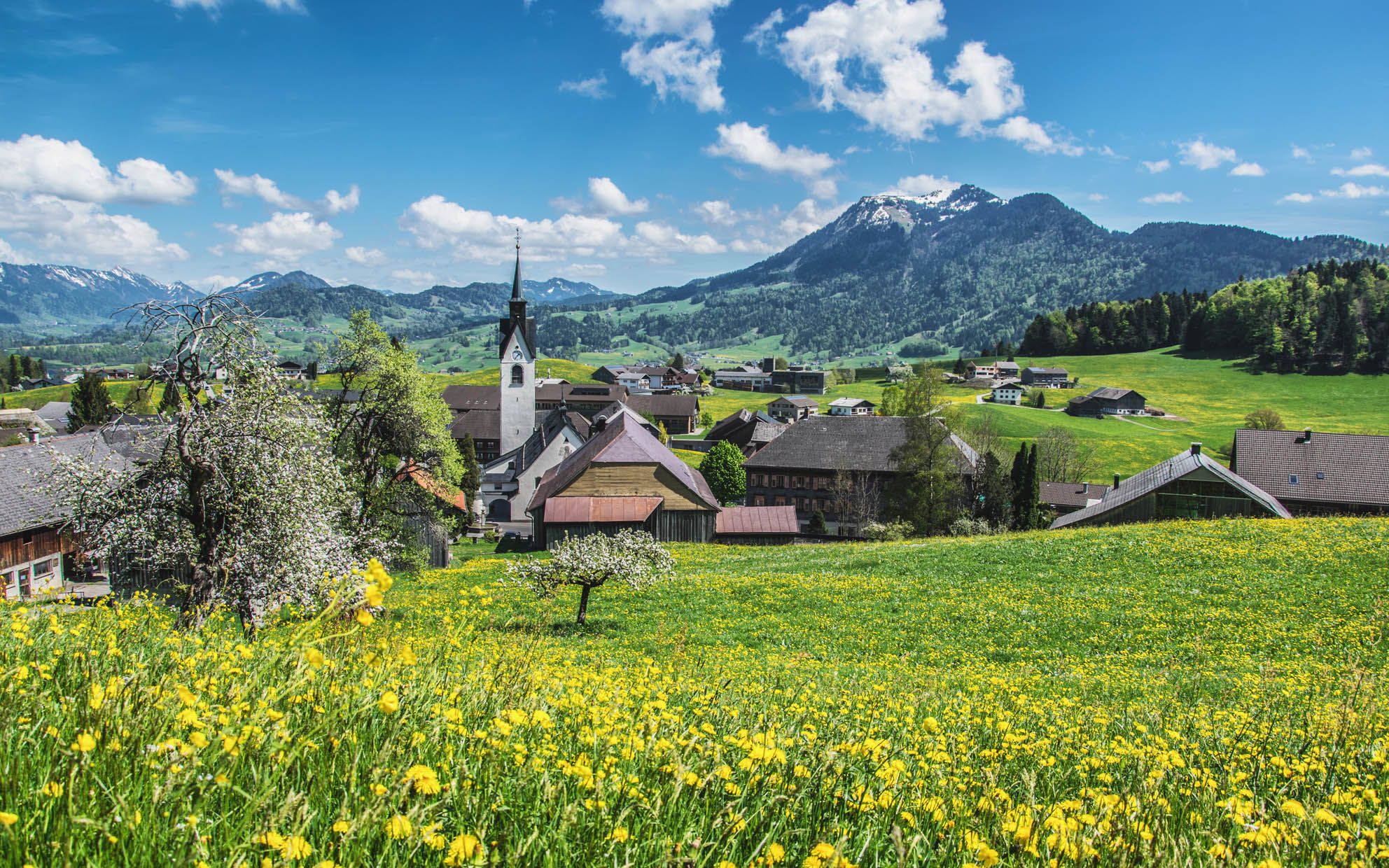
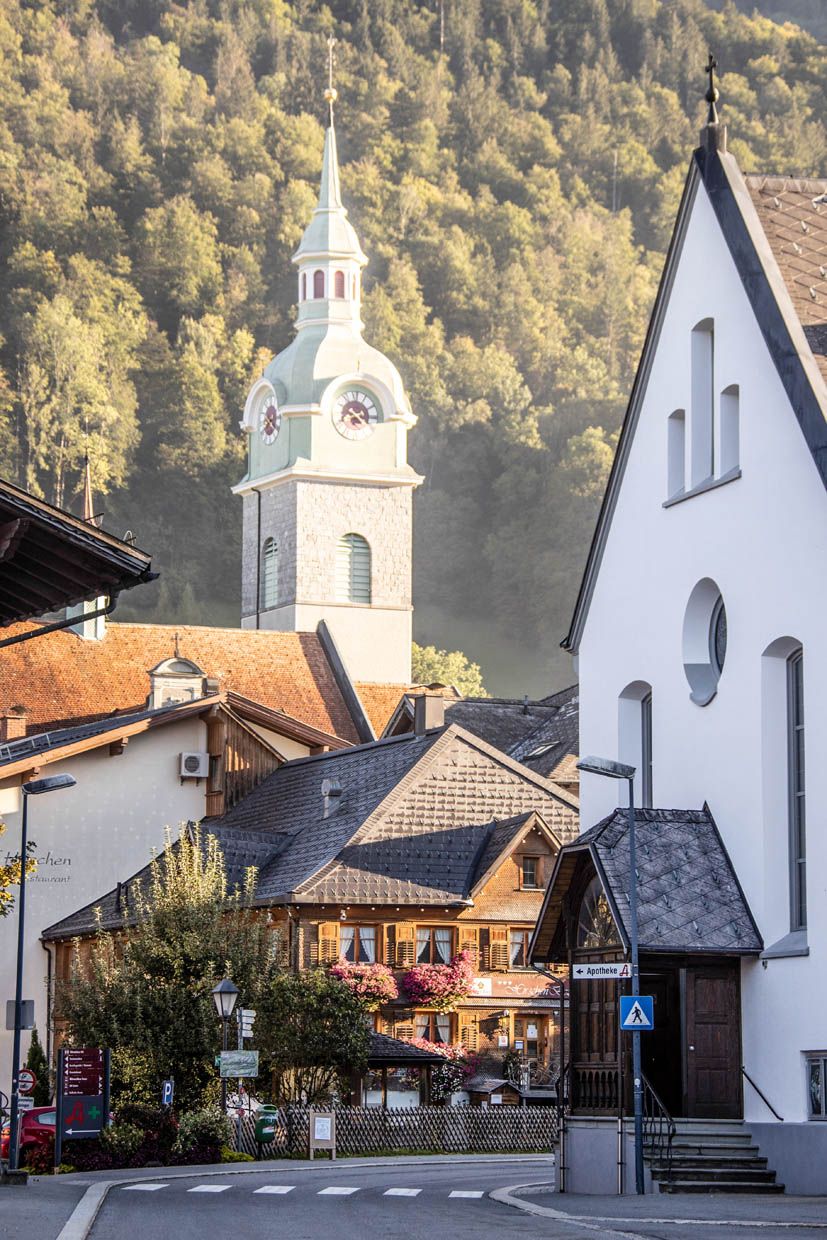
Our journey into the upper Bregenzerwald begins in the picturesque village of Schwarzenberg. The scattered settlement clings to the eastern slope of the Bödele, offering magnificent views over both the Vorderer and Hinterer Bregenzerwald.
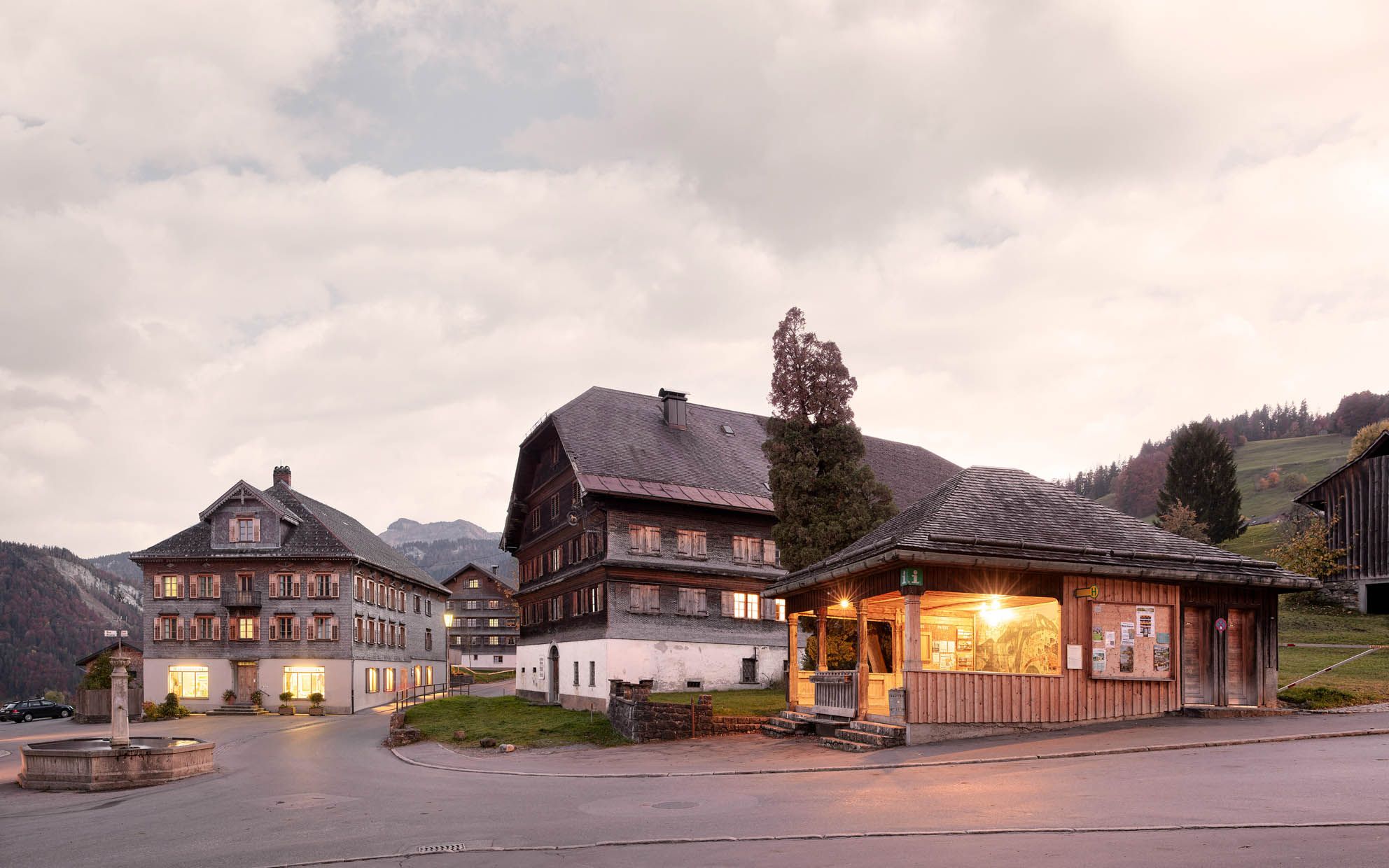
Around the village square, splendid wooden houses line up in harmony: hotel, inn and Wälderhäuser, houses typical of the region, form a distinctive village centre. Anyone wishing to stock up on fine mountain cheese for the excursion should stop by Käsladen Vögel – a perfect opportunity to slow down in a “supermarket” of the last century. And the cheese is excellent.
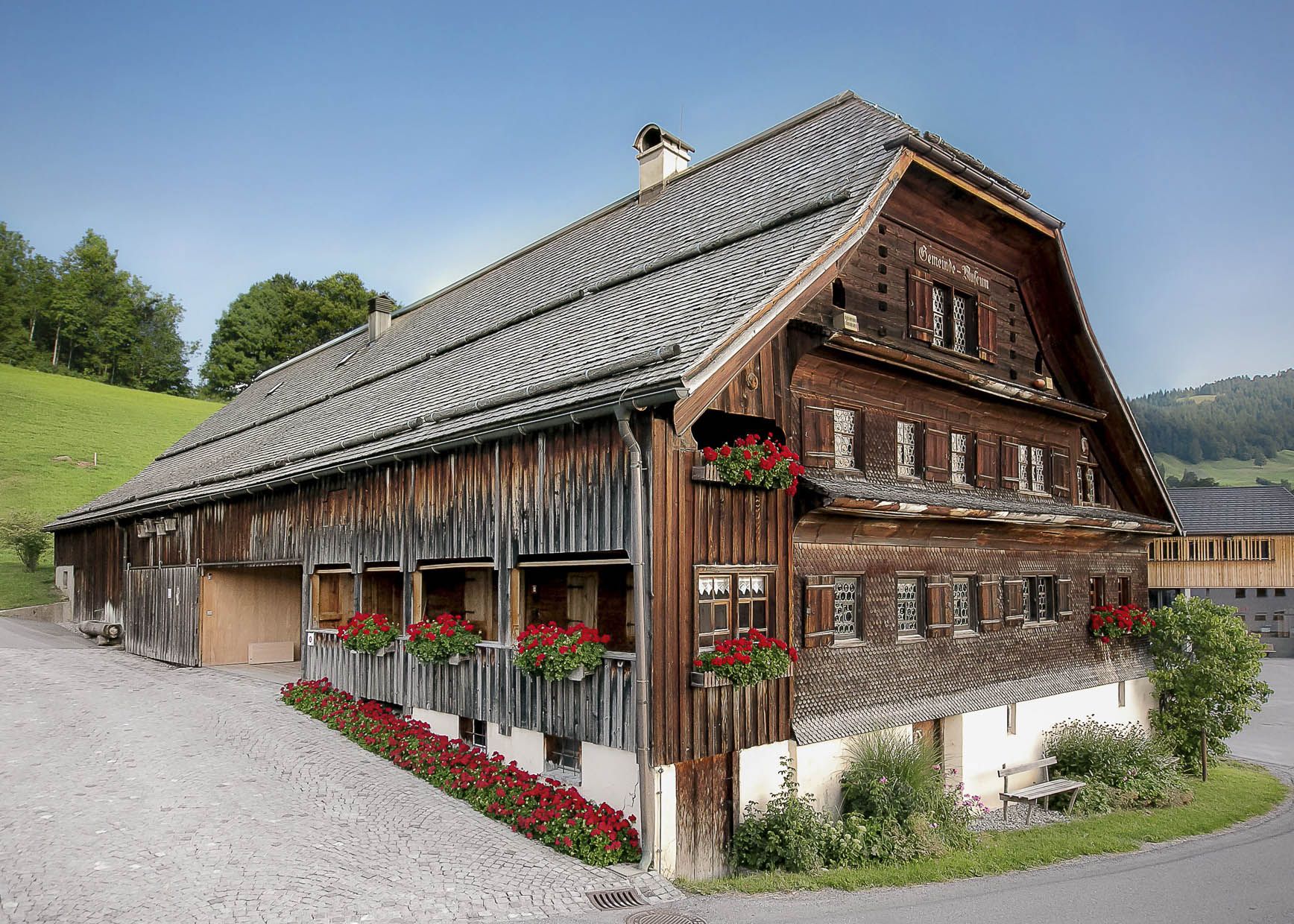
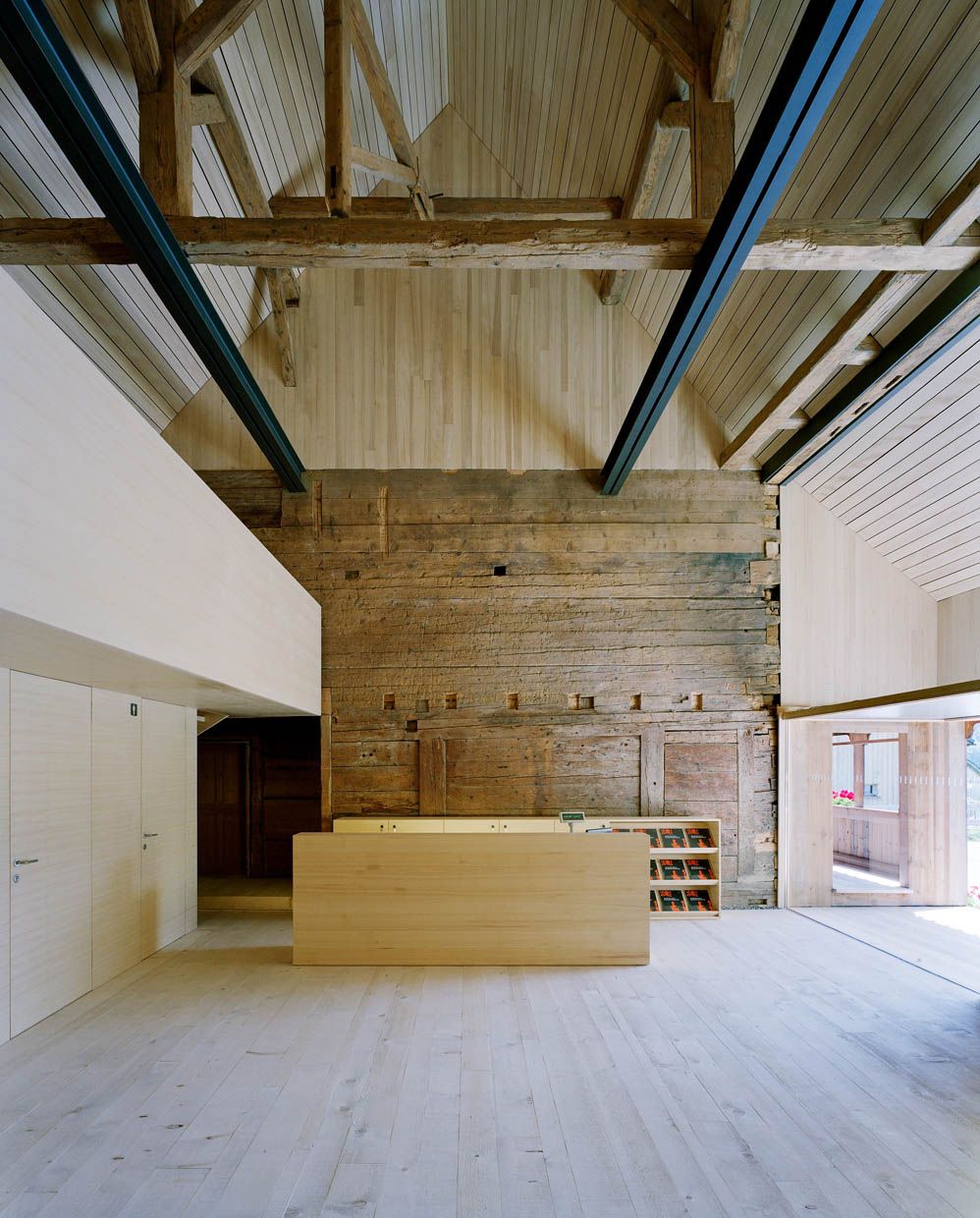
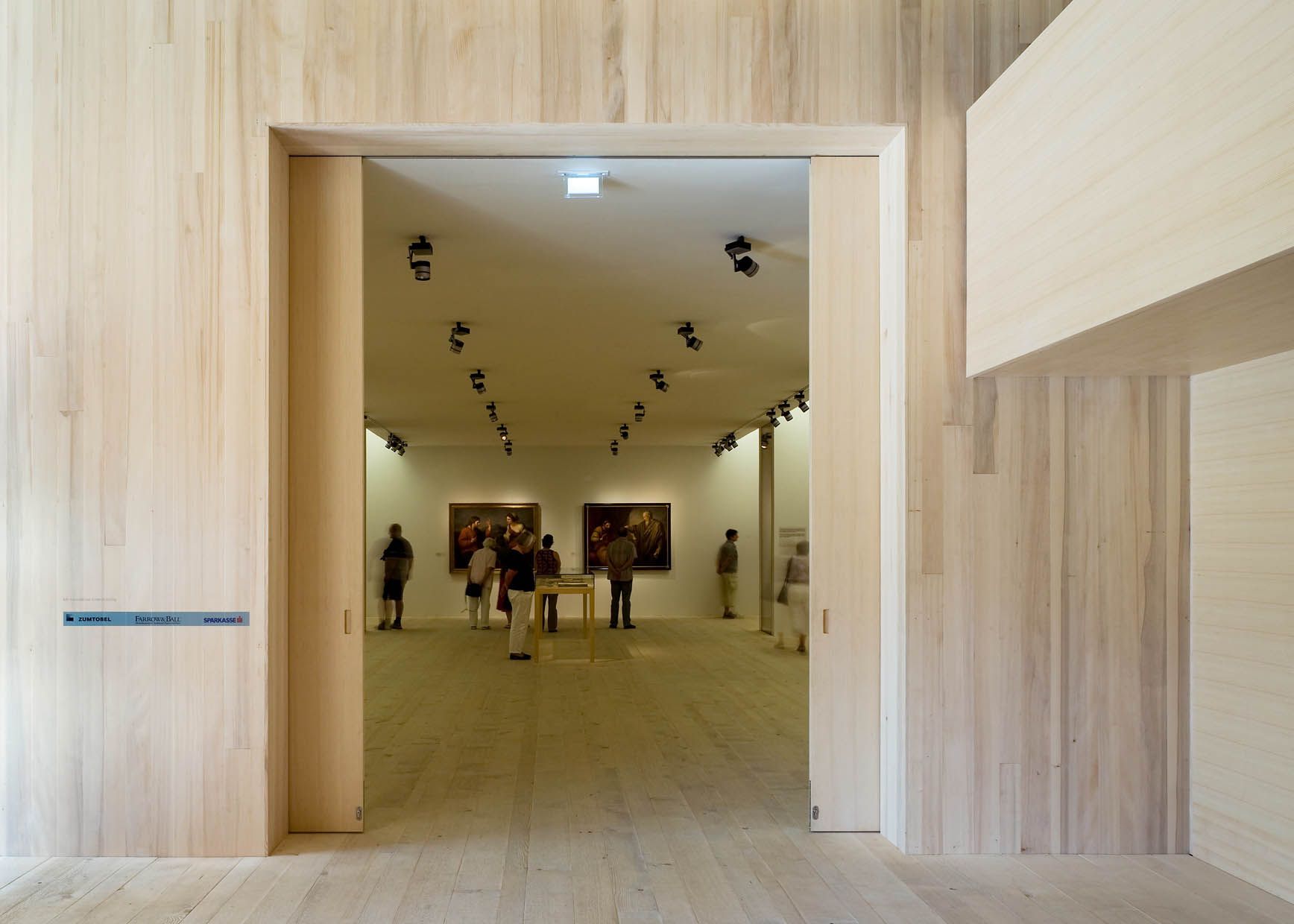
Just a few minutes’ walk from the village square lies the Angelika Kauffmann Museum, designed in 2007 by Dietrich | Untertrifaller Architekten. Angelika Kauffmann was a prominent portrait painter of the eighteenth century who spent several years living in Schwarzenberg. The museum is located in a more than 450-year-old Wälderhaus. When the large sliding gate mounted at the side stands open, the museum is too – revealing the precision of the architectural intervention. The residential part of the house now accommodates the local history museum, while in the former agricultural section the architects inserted the exhibition hall as a “house-within-a-house” construction. The entrance area opens up right to the roof ridge – an impressive entrée, and a fine example of how, in the Bregenzerwald, traditional craftsmanship continues to evolve through contemporary architecture and modern workmanship.
That craftsmanship plays a central role in the Bregenzerwald can be sensed, seen and felt everywhere – and this is reflected in a unique way by the Werkraum Bregenzerwald.
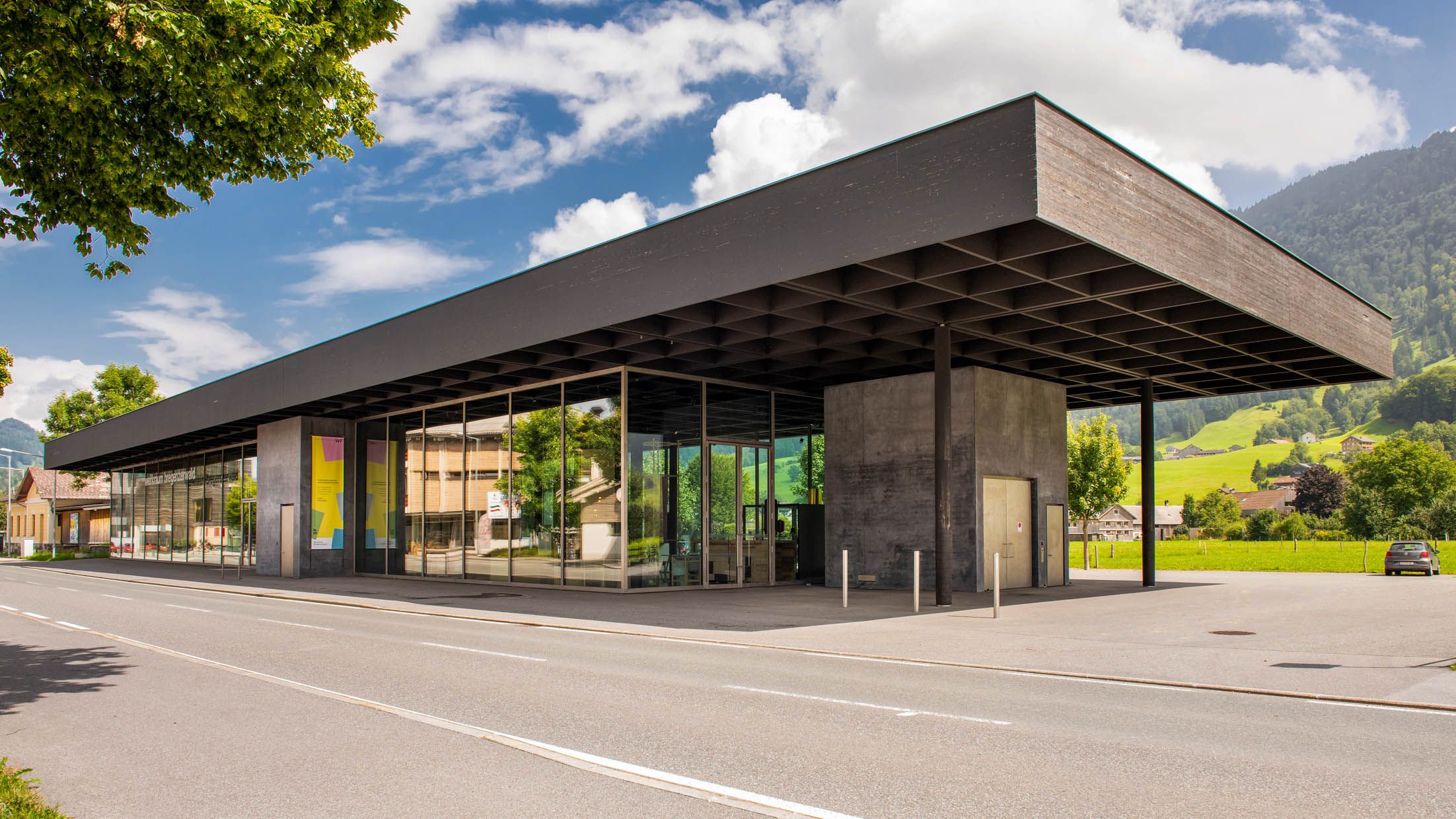
In 1999, the association was founded by local craftspeople to promote the culture of craftsmanship and building. From joiners, carpenters, masons and electricians to goldsmiths, painters and stove builders, around 100 workshops and businesses are currently members, representing every facet of the region’s craft tradition. Since 2013, they have had a home of their own in the Werkraum Haus in Andelsbuch. No less a figure than Pritzker Prize laureate Peter Zumthor designed this exhibition space – and of course the spacious, light-flooded building was constructed by the craftspeople themselves. Since its opening, annually changing exhibitions have illustrated, in ever-inspiring ways, the artistry and refinement of skilled manual work. Visible from afar, the Werkraum Haus is recognisable by its dark, cantilevered roof. The roof structure consists of a gigantic timber grid floating 5.8 metres above a brightly polished black terrazzo floor. Almost all around, full-height glazing allows views of the interior, turning the building into a true showcase of craftsmanship.
From the rear of the site, we can already see our next destination: the Sonderdach, rising steeply above the landscape – a mountain ridge and high plateau from which, when the thermals are right, numerous paragliders launch themselves into the air and glide gracefully over the valley.
We continue our journey to the village of Bezau. Before setting off on our hike up to the Niedere mountain range, it’s worth taking a stroll through the village itself. Every community in the region offers a local Umgang – a walking route that leads visitors to notable buildings. The Umgang in Bezau, along with twenty-two others, can be found on the exemplary Bregenzerwald Tourism website or purchased in printed form.
For each walk, historical and contemporary buildings are described with concise, well-written texts – an excellent insight into the region’s building culture. The walk through Bezau is the perfect warm-up before tackling the climb to the Niedere mountain range.
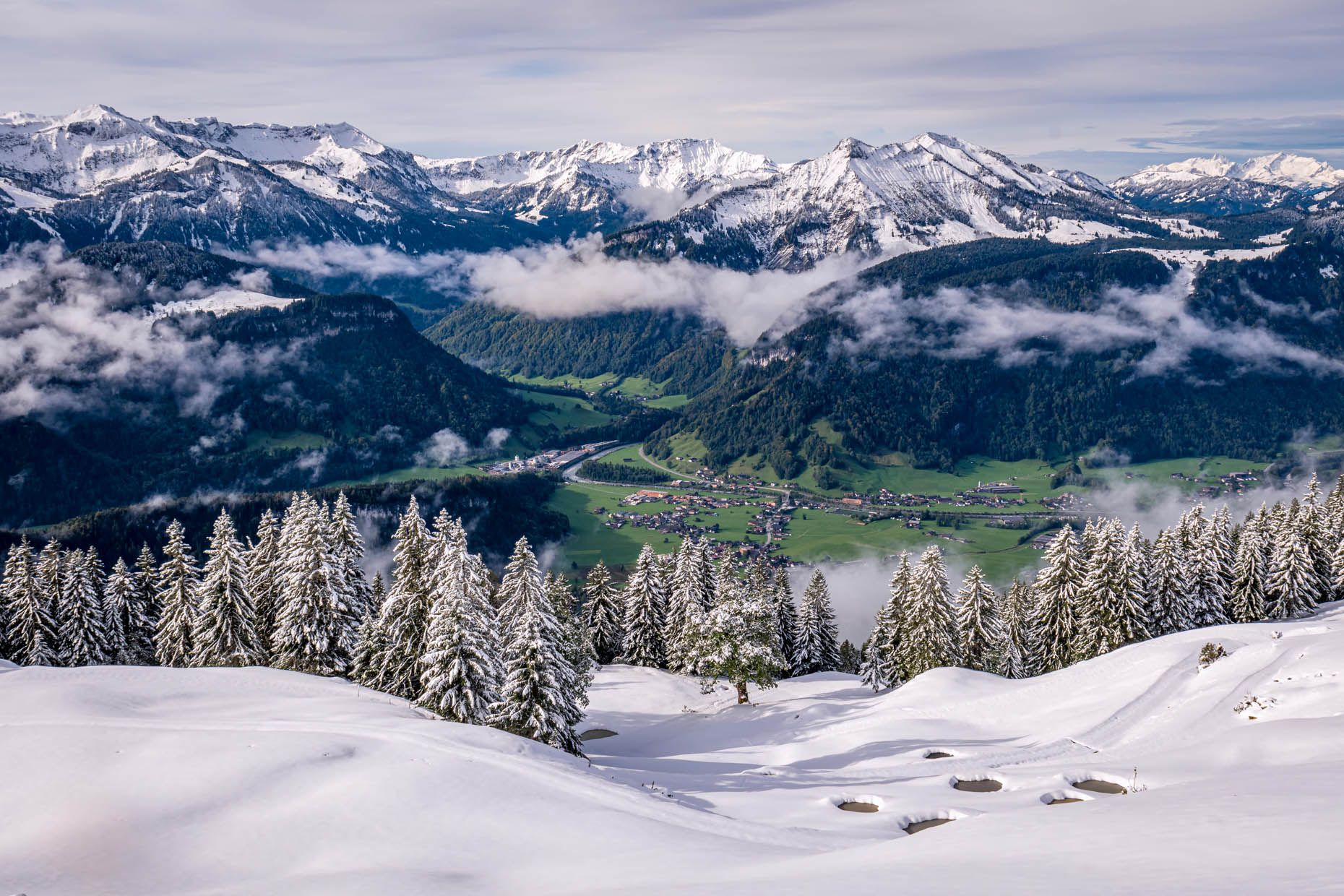
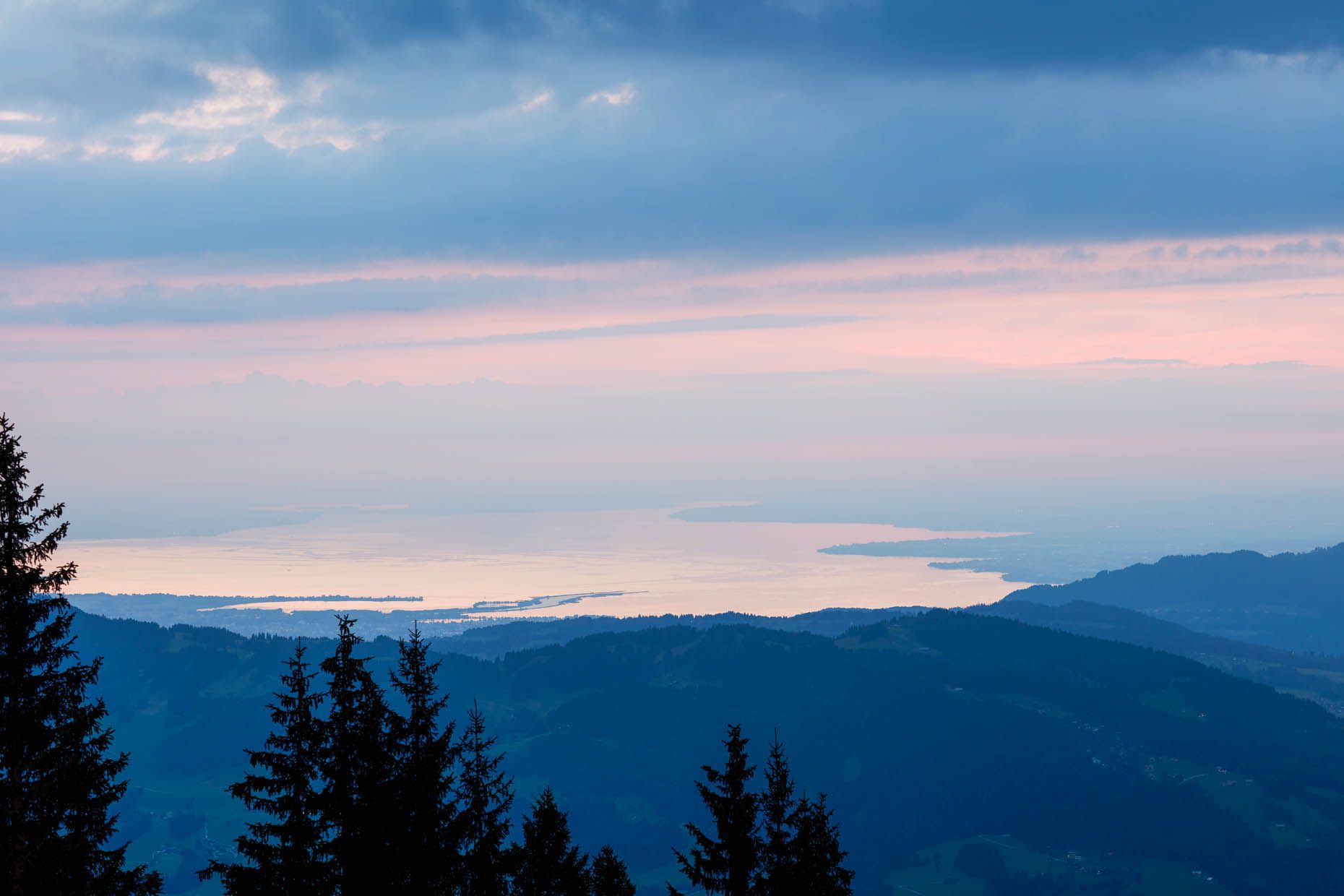
We park at the valley station in Bezau and set off well prepared – with bread, cheese, the original Manner Neapolitan wafers and plenty of water in our rucksacks. The hike up to the Baumgartenhöhe mountain station and along the panoramic trail across the plateau of the Niedere Alpine pasture takes about four and a half hours without breaks. The route ascends steadily, first through woodland and later across Alpine meadows – a varied trail culminating in the circular path across the high plateau. From here, sweeping views open up across the valleys and peaks of the Bregenzerwald, reaching all the way to Lake Constance.
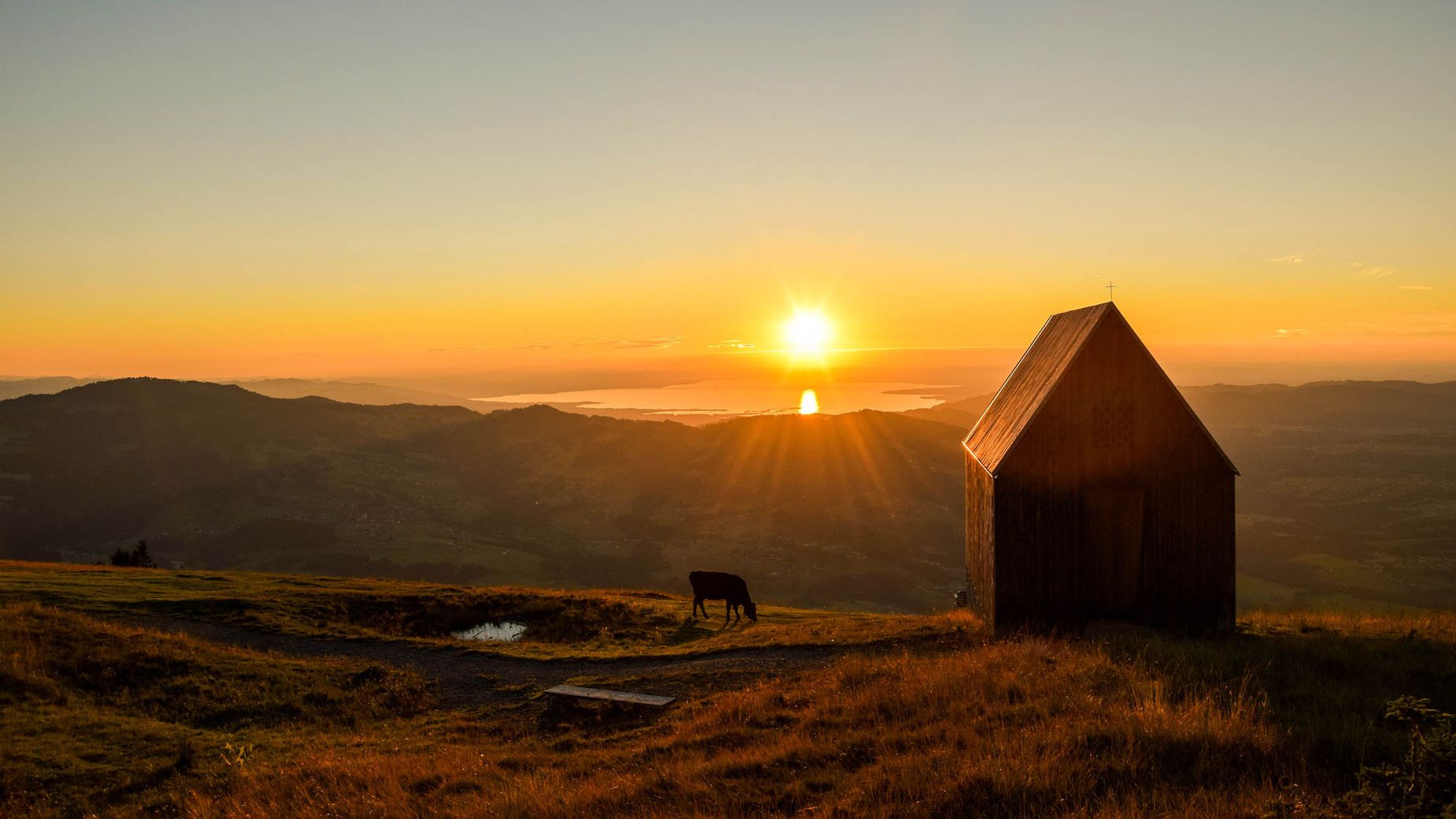
Our architectural destination is the Niedere Mountain Chapel. The wooden structure, now shimmering silver-grey in the sunlight, stands strikingly on the edge of a slope. From here, the terrain drops gently at first and then steeply – it feels as if you are standing between heaven and earth. The chapel was designed by Cukrowicz Nachbaur Architekten, who won the privately organised architectural competition launched by the Feuerstein family. Having lost their first baby, the family vowed to build a chapel if they were blessed with another healthy child. Instead of a cash prize, the winning architects received three wheels of cheese from the family’s own dairy.
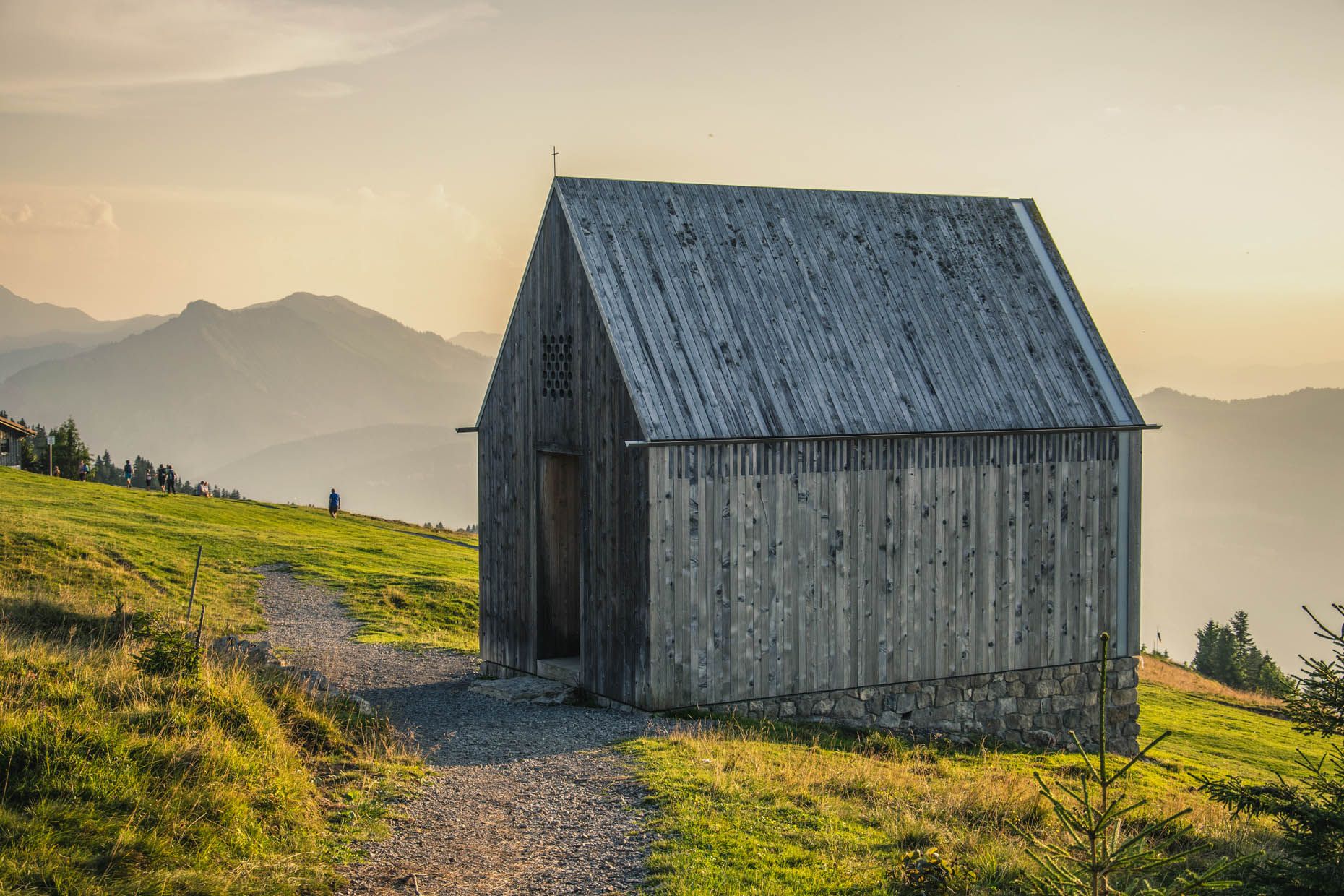
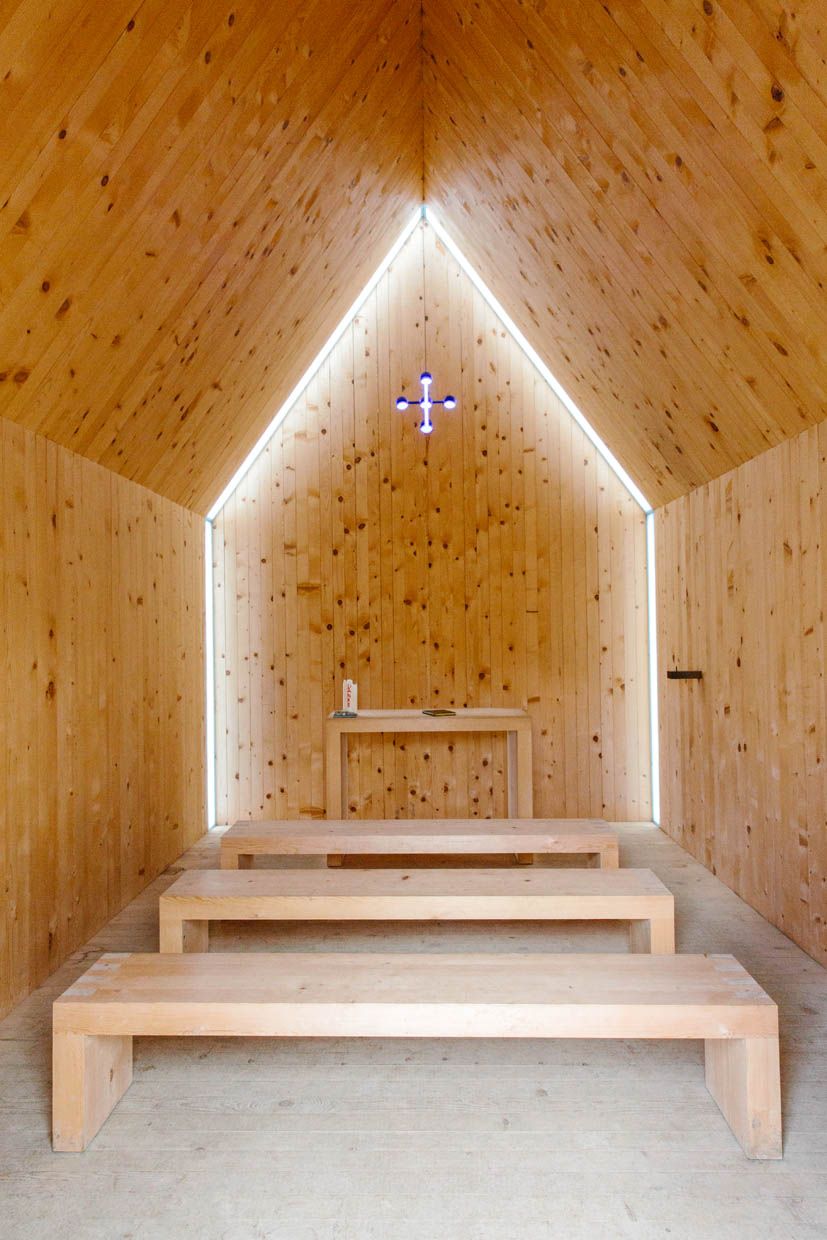
With the help of family friends and many of those involved in the design and planning, the chapel was built entirely by hand using a vertical log construction. It sits on a base of stones gathered from across the surrounding Alpine pasture, while the spruce timber came from the family’s own forest. Using timbers just ten by twenty centimetres in section, the builders created the exterior walls, roof and floor. “There are no cladding elements – everything is visible both inside and out,” explain the architects. The building’s length, width and roof pitch are in perfect proportion to each other. The structure exudes a natural sense of calm, and my heartbeat always slows when I see the chapel. Once the door closes behind you, absolute silence fills the interior. It is a place for reflection – ideal for gathering one’s thoughts, engaging in quiet contemplation or saying a prayer. Nothing here distracts from the moment. A narrow slit of glass running along the wall and roof makes the altar wall appear to float, while the daylight entering from the side gently bathes the wooden space in a soft, muted glow.
Outside, one of the large stones lying nearby provides the perfect spot for a rest. In good weather, you can watch the paragliders taking off from here, launching themselves into silent flight with quick steps.
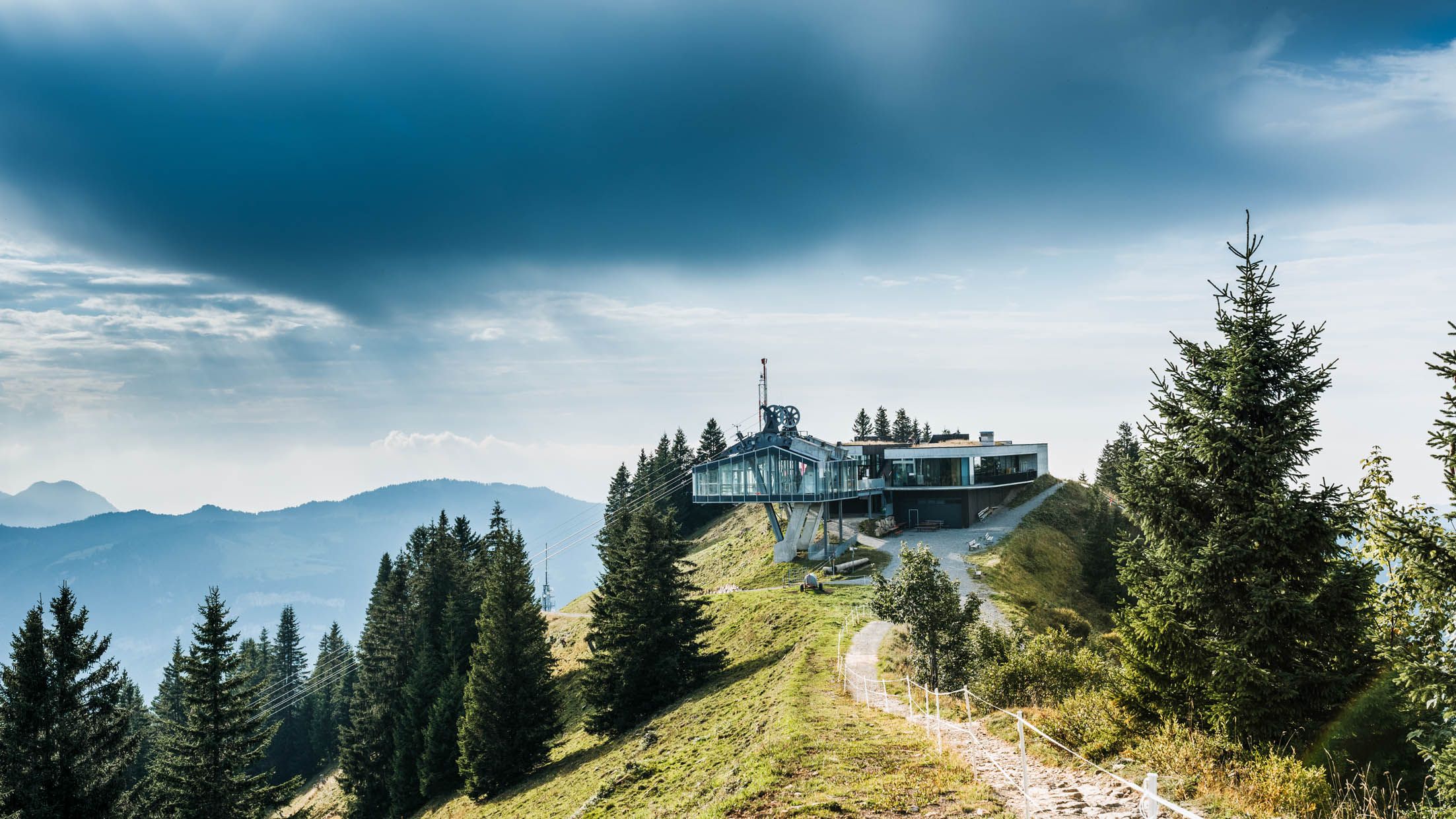
Those who haven’t packed provisions can stop at the Feuerstein family’s mountain inn and enjoy a hearty snack. Refreshed, we set off for the final short ascent to the mountain station – and then glide back down to Bezau by cable car. Visitors staying for more than three days receive a Guest Card, which allows free use of the lifts in summer, as well as complimentary bus travel and entry to the open-air swimming pools.
By the way, Bezau is worth a second visit – and if you return, you should set aside some extra time for a visit to the Bezau Museum, which has been in existence for over a hundred years. It is housed in a typical farmhouse dating back to 1555. Since May 2024, a new extension has provided additional space for the reception area and contemporary museum operations, along with new exhibition spaces.
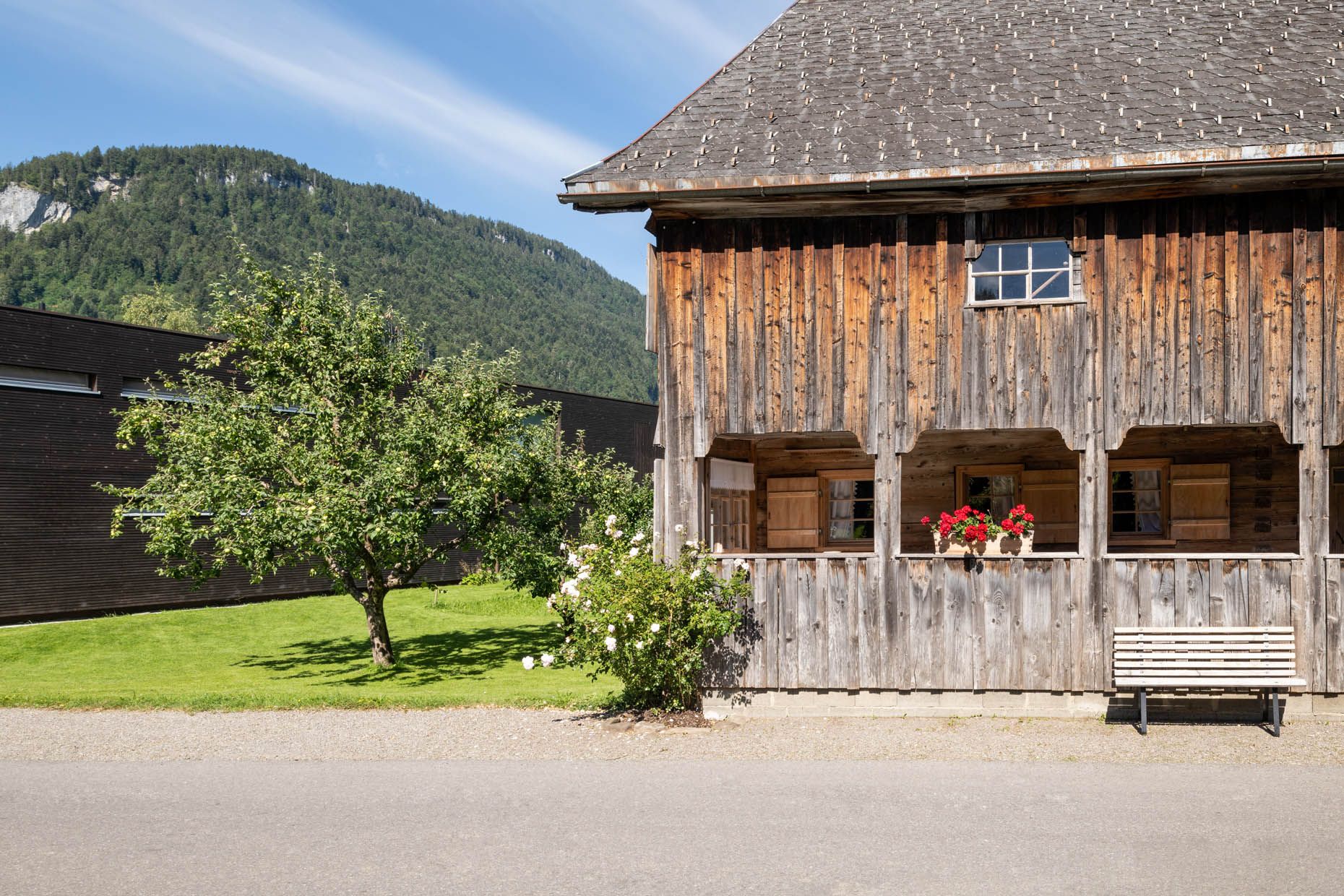
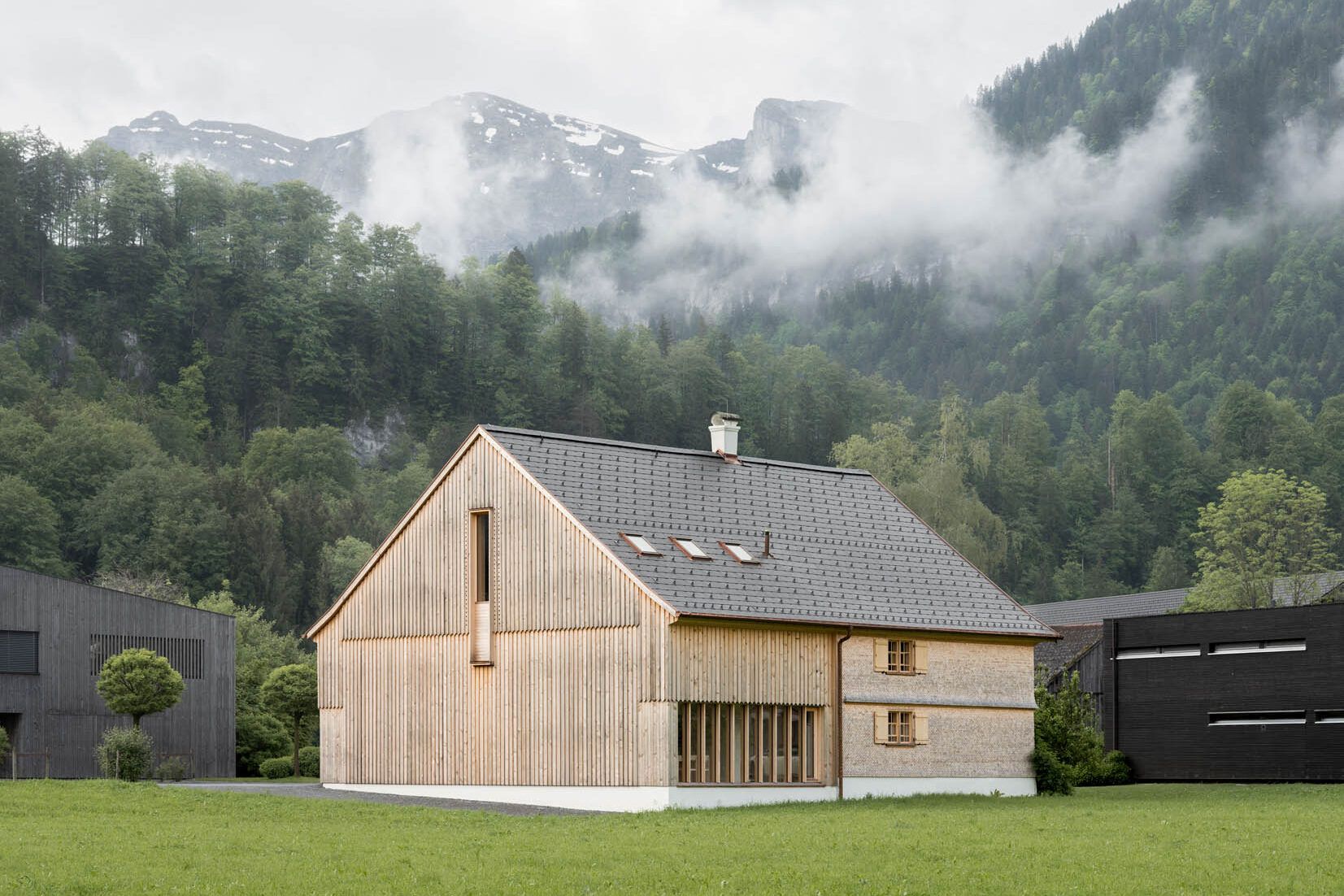
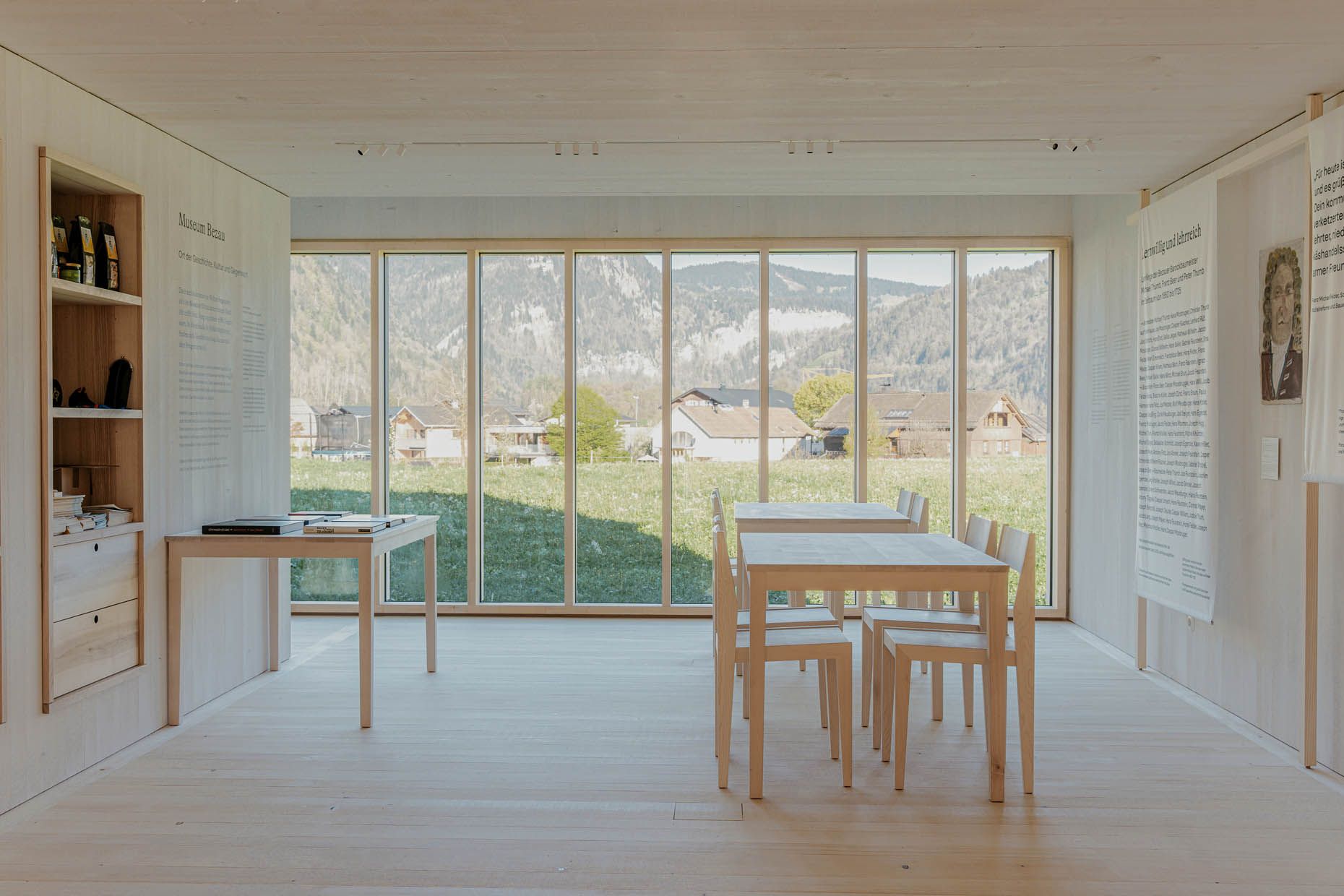
The architects Markus Innauer and Sven Matt, whose practice is based in Bezau, were commissioned with the expansion. As one might expect, craftsmanship once again plays a key role – as does respect for the existing building. Innauer Matt Architekten continued the structure with the same volume, weaving the old and the new together with great sensitivity. They played with contrasts: the dark, aged timber of the historical house set against the pale white fir panelling of the new addition; the small, intimate rooms of the old building juxtaposed with the generous, open spaces of the extension. The traditional shingle cladding of the old house finds its contemporary counterpart in a modern reinterpretation of the board-and-batten cladding, whose design motif was also integrated into the museum’s graphic identity. The rooms on the upper floor are skilfully supplied with daylight via skylights, where a white wooden screen diffuses the light evenly throughout the rooms, creating a unique atmosphere. The result is a well-considered building, crafted with impressive skill. Anyone who associates a “local history museum” with dusty relics of past centuries should think again. Here, nothing is old-fashioned or yodelling. Instead, the museum offers a refreshingly contemporary and engaging look at the history of the Bregenzerwald – focusing particularly on the lives of the region’s people in earlier times, and especially on the women and their crafts. After a visit, you gains a deeper understanding of what makes this cultural landscape so special – and why here, tradition and modernity are not empty marketing slogans but a lived reality.
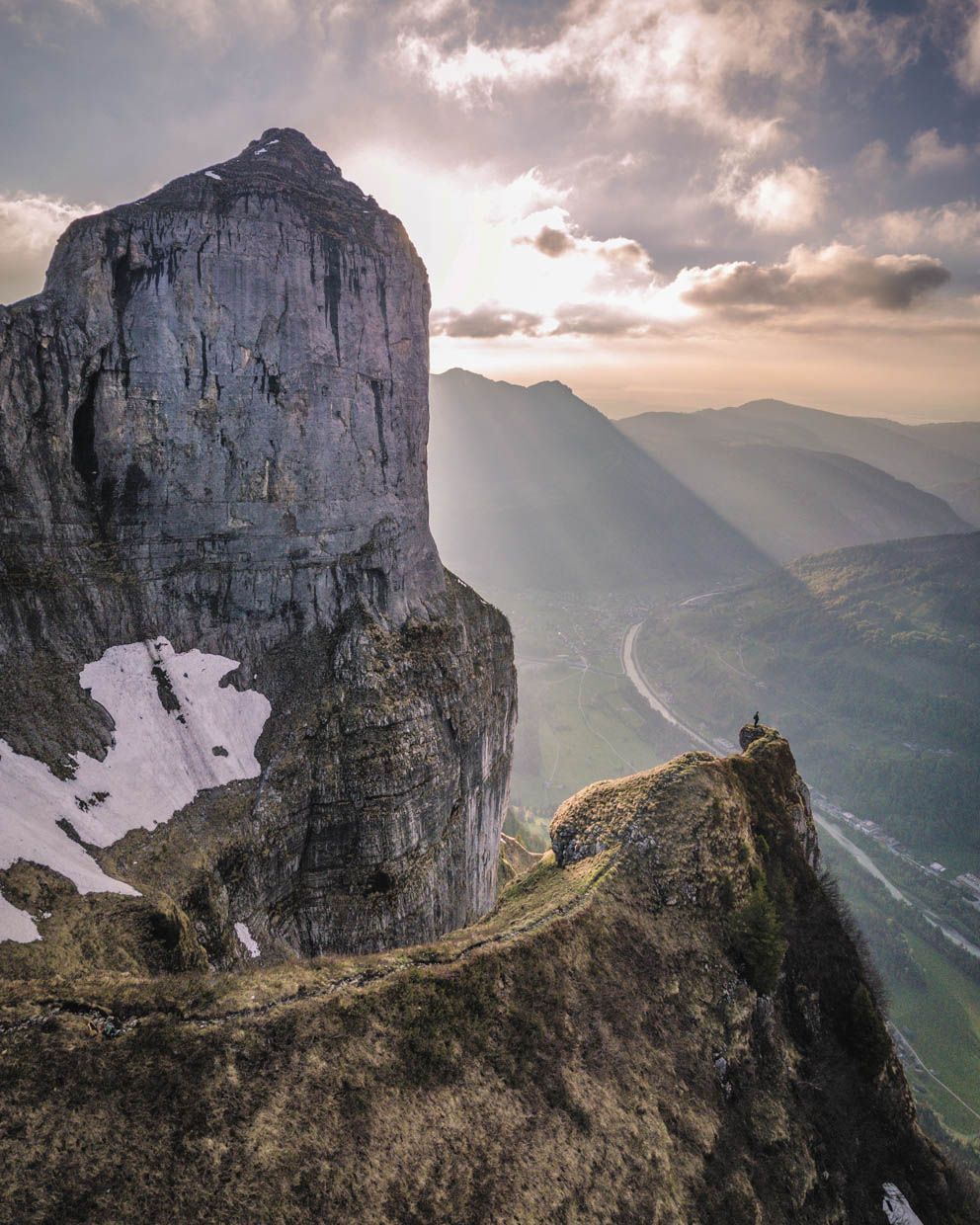
We now continue to Mellau. The mountains become higher, rockier and more rugged. Towering above the village rises the Kanisfluh, an imposing mountain massif that is a fixture in the local landscape and considered one of the symbols of the Bregenzerwald. From Mellau, its rock face rises steeply into the sky; from the opposite side, gentle Alpine meadows lead up to the summit at 2,044 metres. The climb is well worth the effort – an unforgettable way to get close to this almost mystical mountain.
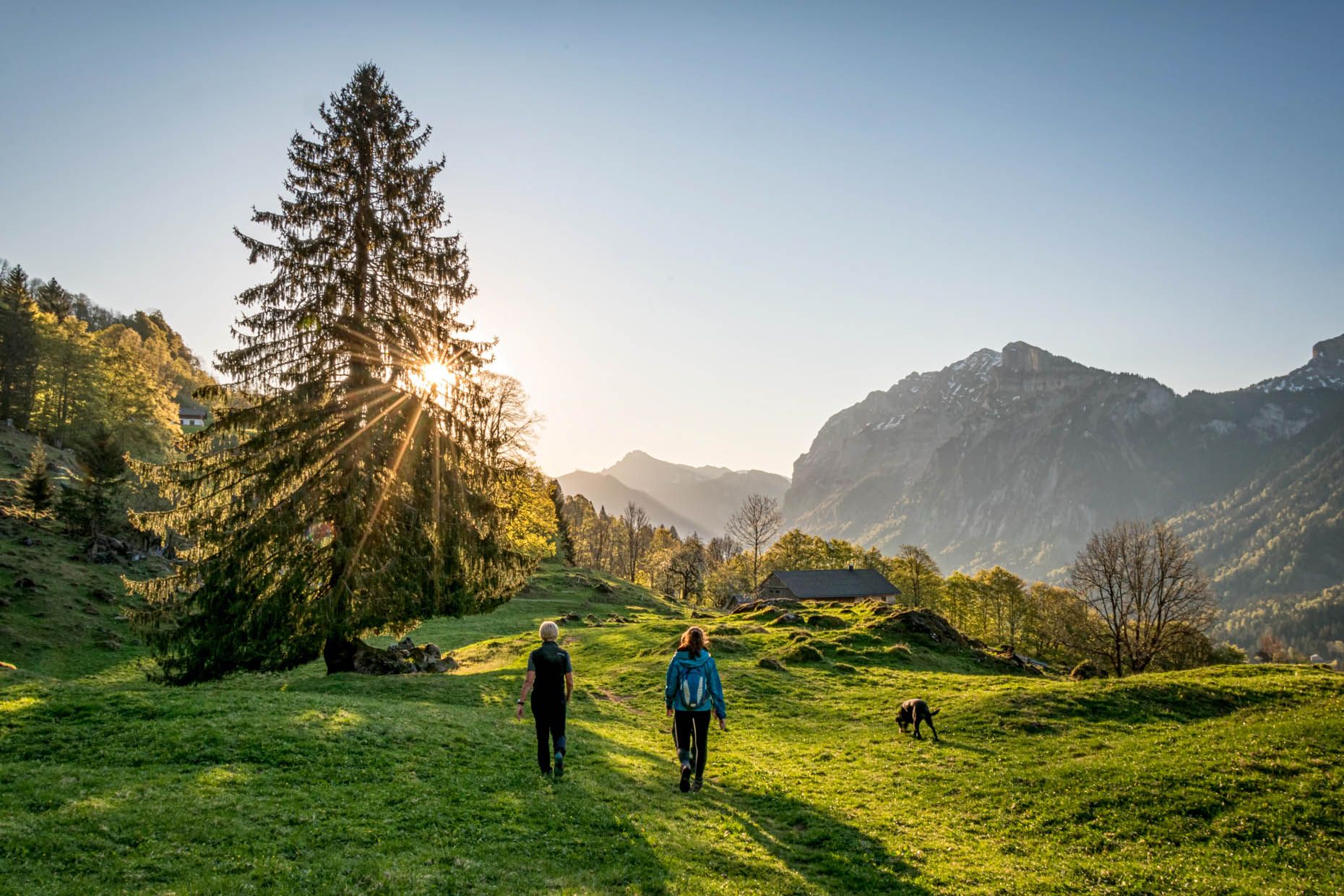
When staying in a hotel or holiday apartment in Mellau, we often start the morning with a short walk after breakfast. We follow the Mellenbach stream and climb up to the Doseggalpe. Usually we meet no one along the way. The air is fresh, and in spring and summer, the scent of hay drifts through the meadows. In autumn, the deciduous forest turns into a brilliant sea of colour, always accompanied by the soft murmur of the mountain stream.
At the edge of the village stands the Mellau Fire and Mountain Rescue Station, designed by Dietrich | Untertrifaller Architekten and completed in 2005 – a functional building with true architectural quality.
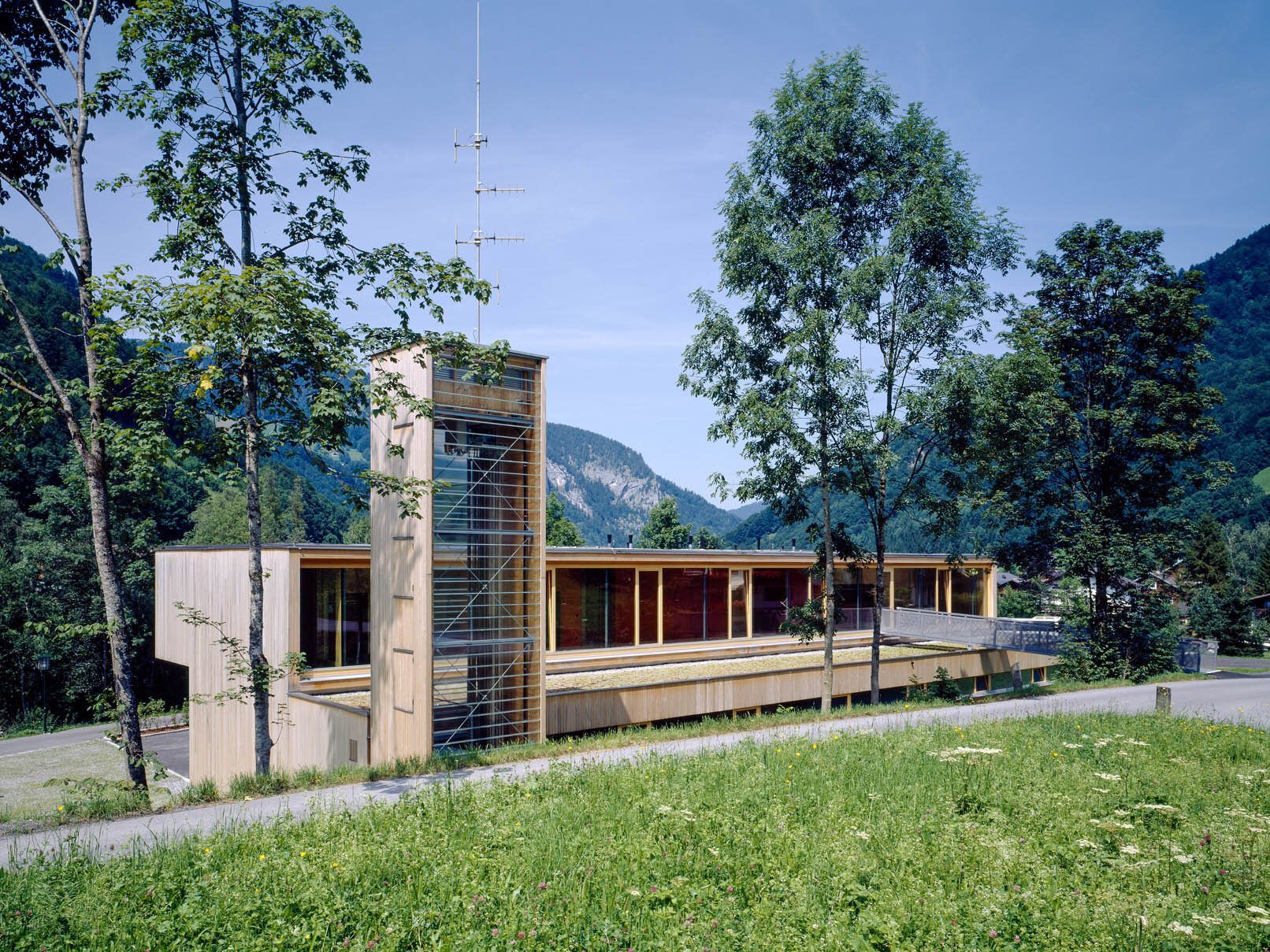
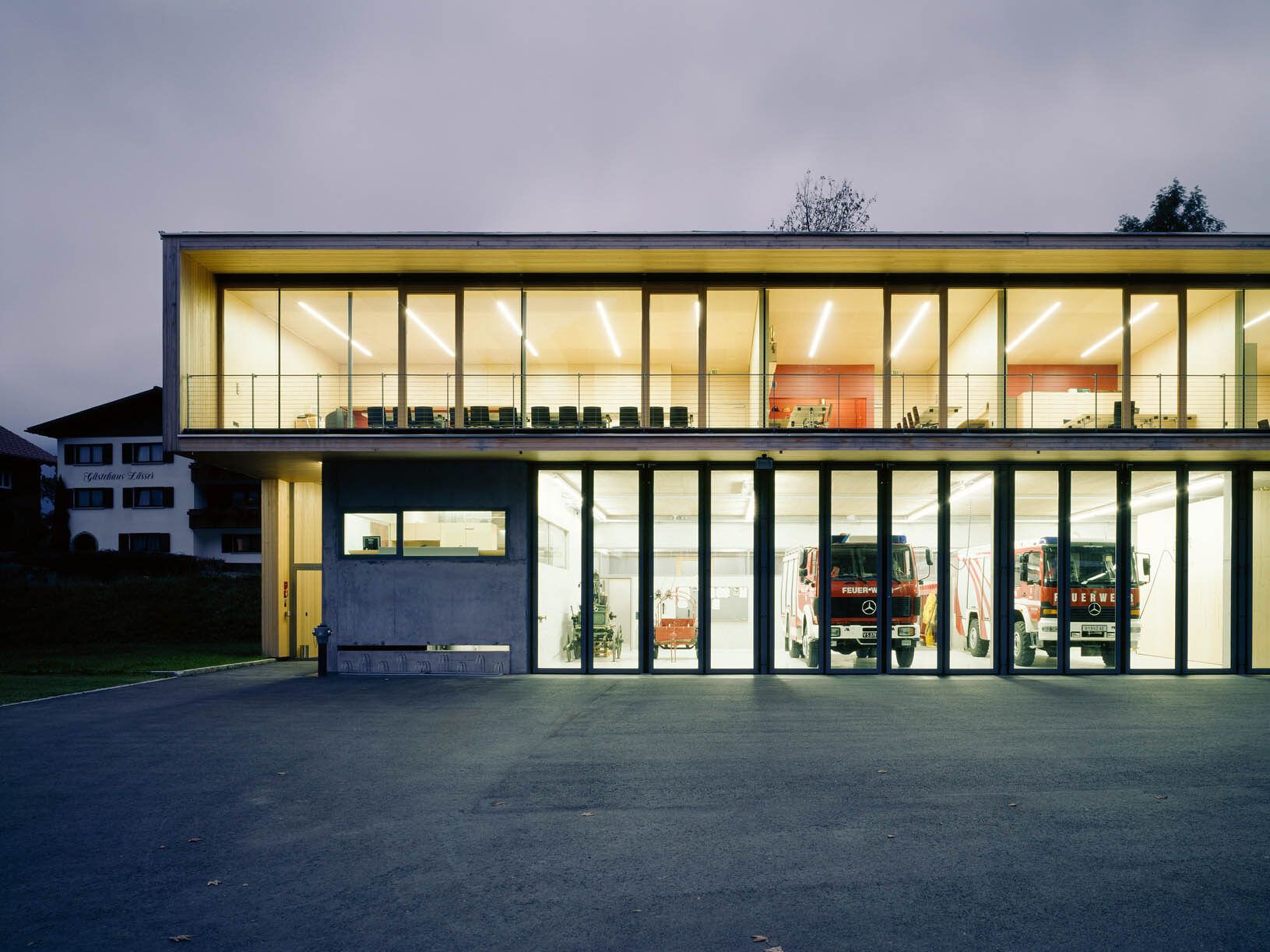
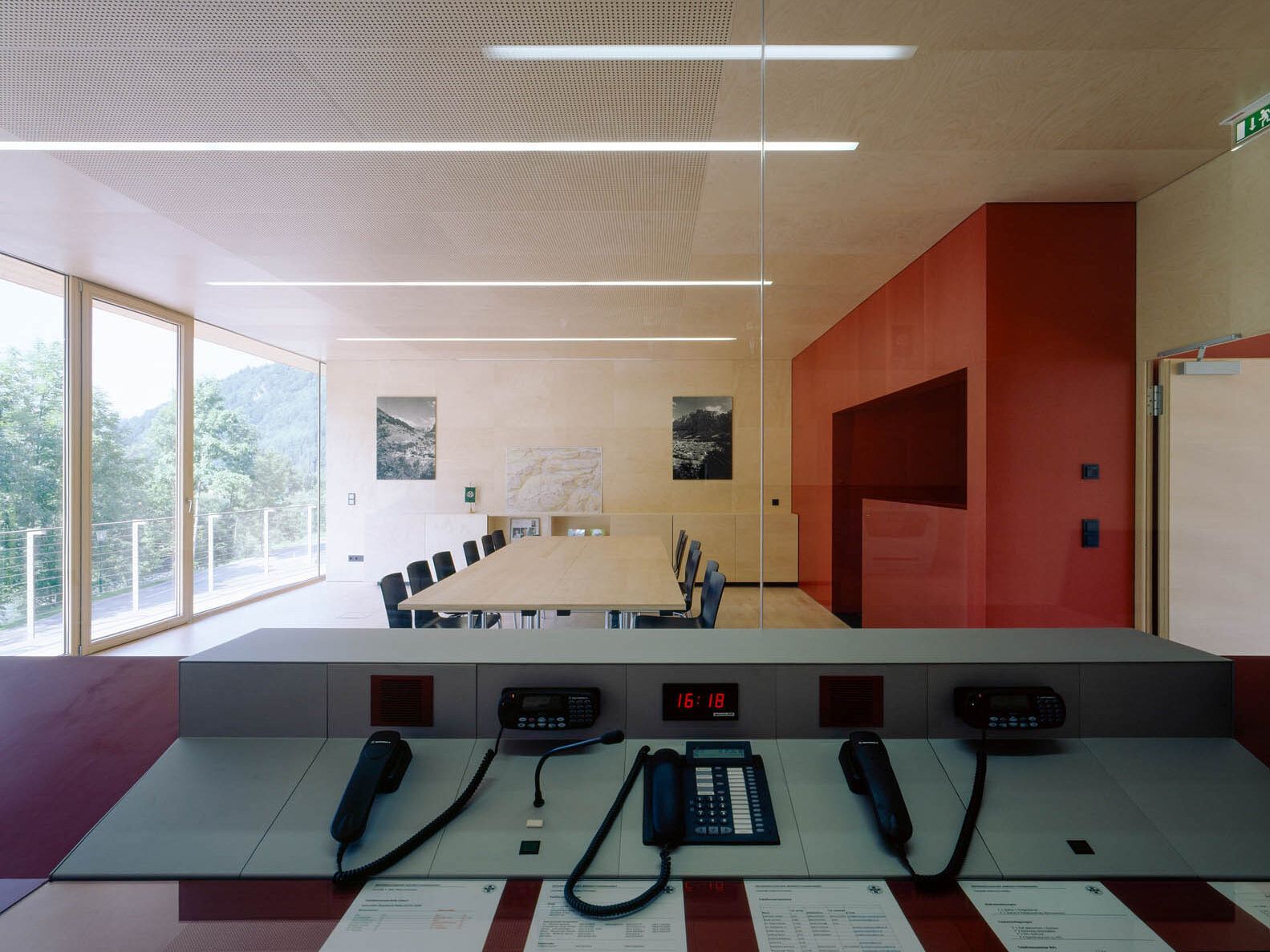
The architects made clever use of a height difference in the terrain: the lower concrete base houses the vehicle hall, workshops and changing rooms, while the upper timber structure contains the operations centre, offices and training rooms. This level is accessed via a bridge from the road above. Thanks to these separate access routes, rescue operations can run smoothly without interference. The special quality of the building lies in the interplay between a façade that is completely closed at the sides and fully opens up with storey-high glazing along the entire longitudinal sides on the upper floor. The perfect synthesis of function, architecture and craftsmanship results in a building culture that serves its purpose exceptionally well and is far more than just a garage for fire engines. This building has become an integral part of community life in the village.
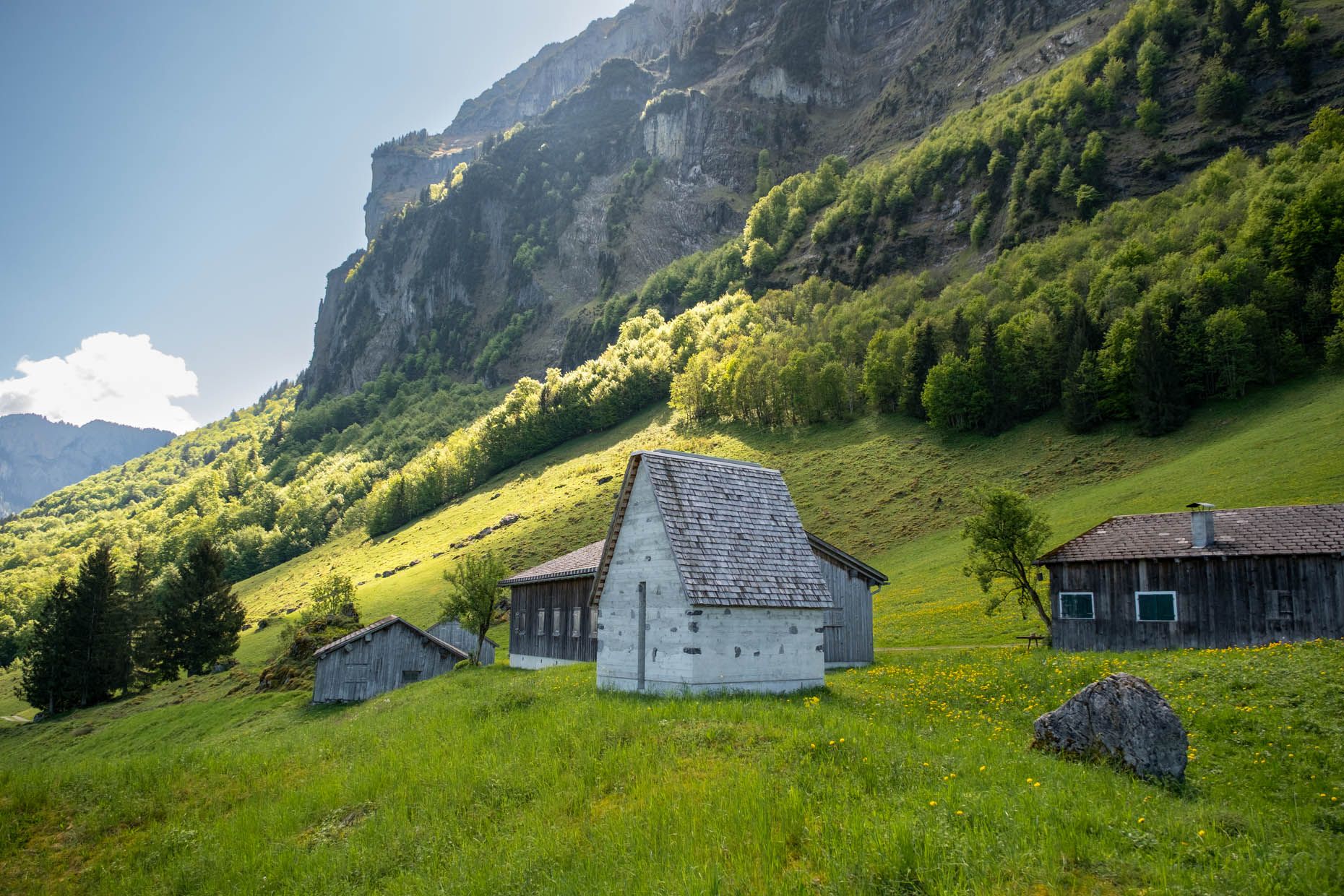
Beneath the mighty Kanisfluh lies another chapel – the Chapel at the Wirmboden. Wirmboden is what locals call a Vorsäß. “A what?” you may ask. Dairy farming in the Bregenzerwald follows a unique three-stage system. In winter, the cows remain in the stables in the valley. In spring, they do not move directly to the high Alpine pastures but make an intermediate stop “halfway up the mountain”, where the first fresh grass begins to grow – this area is called the Vorsäß. Once the upper slopes are free of snow and in full bloom, the cattle are driven further up. On their return in autumn, the same happens in reverse – another stopover on the way down. To accommodate this rhythm, farmers built simple shelters at the Vorsäß: sometimes isolated barns, sometimes small clusters of huts – as here at the Wirmboden, where they also built a chapel. Sadly, the original chapel was destroyed by an avalanche in 2012. Four years later, in 2016, the decision was made to rebuild it. The commission was awarded to the architectural practice Innauer Matt Architekten. The new chapel, measuring roughly three by two metres inside, now stands among the Alpine huts. Its walls are made of rammed concrete mixed with coarse gravel, and boulders from the surrounding slopes were embedded into the material. With a bit of imagination, you can spot abstract animal shapes within the stones. The shingled roof has weathered to a silvery grey over the years. From the outside, the chapel appears rough, archaic and resilient – as though standing its ground against the sheep rock face of the Kanisfluh. A simple wooden door with a delicate timber grille above it leads inside. Slender, tall rafters made of finely grown hazel spruce form the roof structure. Light filters softly through a narrow slit in the roof and a blue-tinted opening in the gable wall. A single candle stands on a large glacial boulder. Next to the door, two planks set into the wall serve as benches – a place to sit, pray, or simply pause for a moment of quiet reflection. Between the rafters hang small photographs of deceased family members who once owned huts here on the Wirmboden.
Simple, modest and yet full of strength – this is what defines these chapels. They place the human being at the centre and dispense with any display of religious power or grandeur. It is precisely this humility that makes these spaces so special and so unique.
Speaking of uniqueness: you will soon notice that time moves differently in the Bregenzerwald. Life here has its own rhythm. That’s what makes a holiday in this region so special, and perhaps a little more relaxing than elsewhere.
Enjoy your time in the Bregenzerwald and discover its architecture, craftsmanship, landscape and culinary delights. All the buildings and walking routes described here are only a small selection. There is so much more to discover when on a visit to the people of this remarkable region.
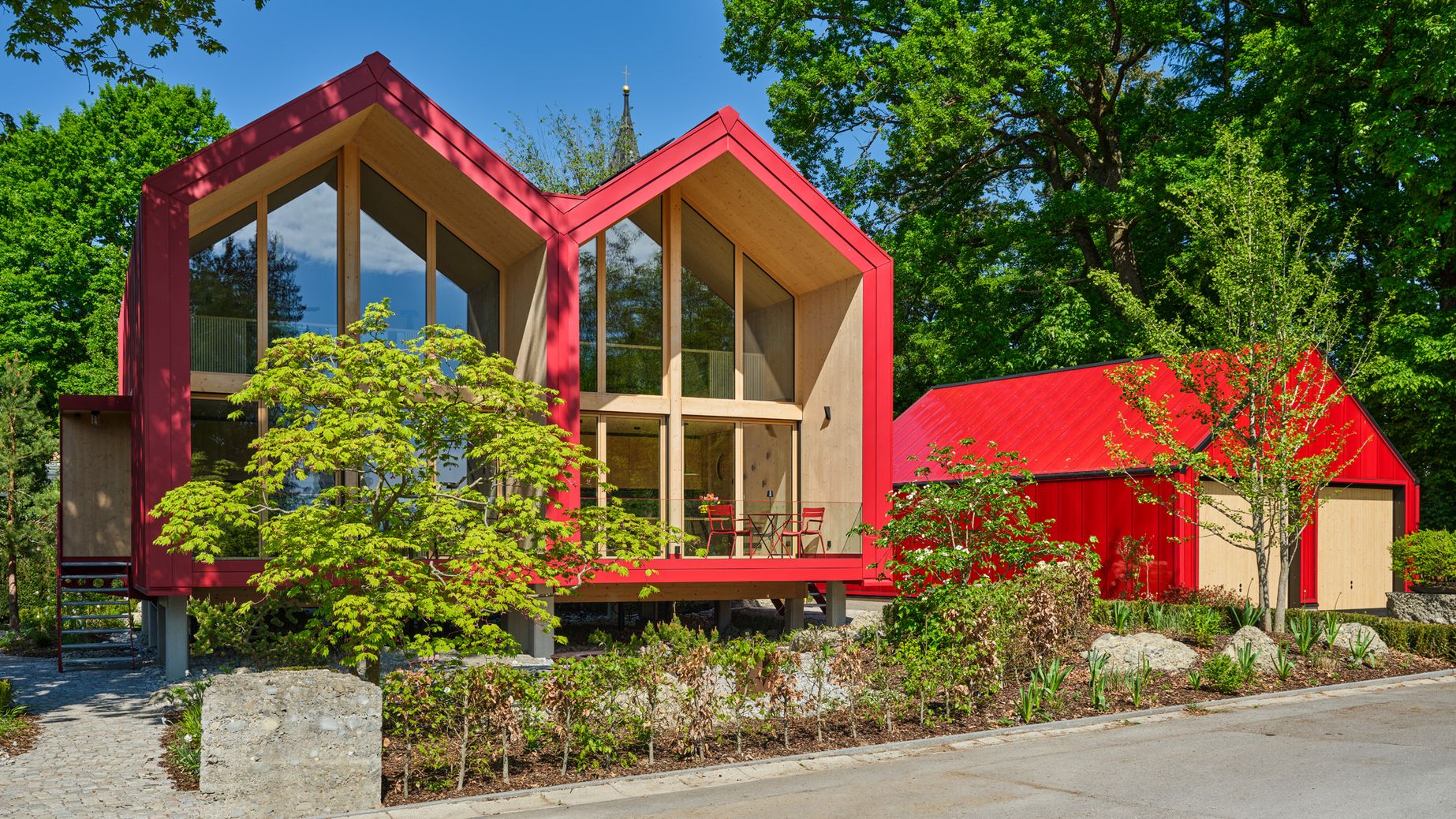
Here you will find part 1 of the journey through the Bregenzerwald.
Image credits: Chapel Vordere Niedere © Michael Meusburger / Bregenzerwald Tourismus (cover photo), Schwarzenberg © Michael Meusburger / Bregenzerwald Tourismus (1) © Adolf Bereuter / Bregenzerwald Tourismus (2), Angelika Kauffmann Museum © Marion Hirschbühl / Angelika Kauffmann Museum (3) © Bruno Klomfar (4/5), Werkraum Bregenzerwald © Rupert Mühlbacher / Bregenzerwald Tourismus (6), Chrich and monastery in Bezau © Emanuel Sutterlüty / Bezau Tourismus (7), View from vom Baumgarten towards Reuthe and Bezau © Nora Fröhlich / Bregenzerwald Tourismus (8), View from Baumgarten towards Lake Constance © Ian Ehm / friendship.is (9), Chapel Vordere Niedere © Michael Meusburger / Bregenzerwald Tourismus (10) © Kevin Faingnaert / Vorarlberg Tourismus (11), Mountain station Baumgarten, Cable car Bezau © Jana Sabo / friendship.is (12), Museum Bezau © Johannes Fink / Bregenzerwald Tourismus (13) © Dominic Kummer / Bregenzerwald Tourismus (14) © Julian Schmelzinger / Museum Bezau (15), Hiking in Mellau with a view of the Kanisfluh © Nora Fröhlich / Bregenzerwald Tourismus (16), Fire department Mellau © Bruno Klomfar (17/18/19), Chapel Wirmboden Vorsäß © Nadine Lerho / Bregenzerwald Tourismus (20), Sundowner at Kanisfluh © Michael Meusburger / Bregenzerwald Tourismus

0 Comments