
Building in existing buildings: The fairy tale of the ugly duckling
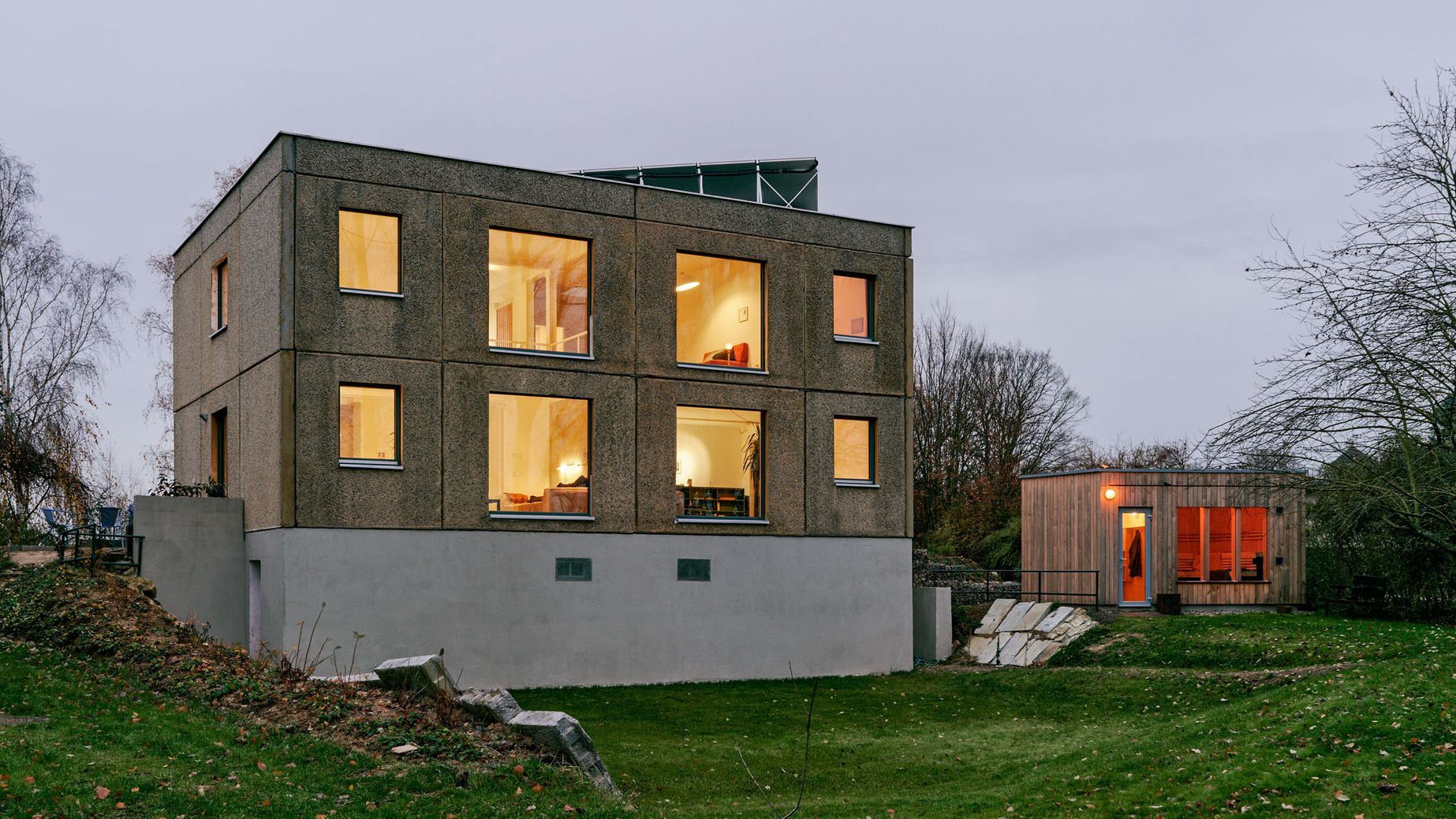
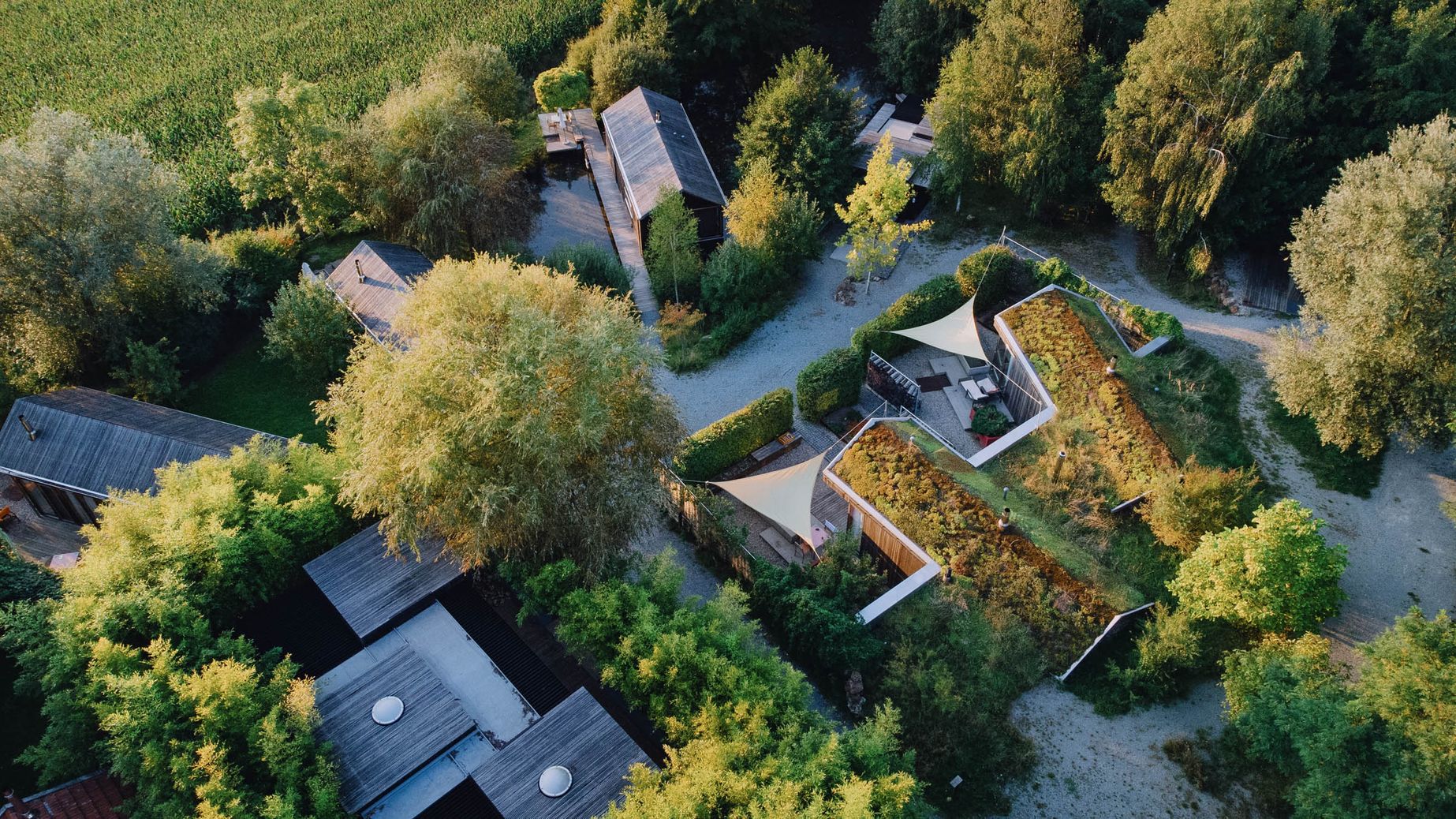
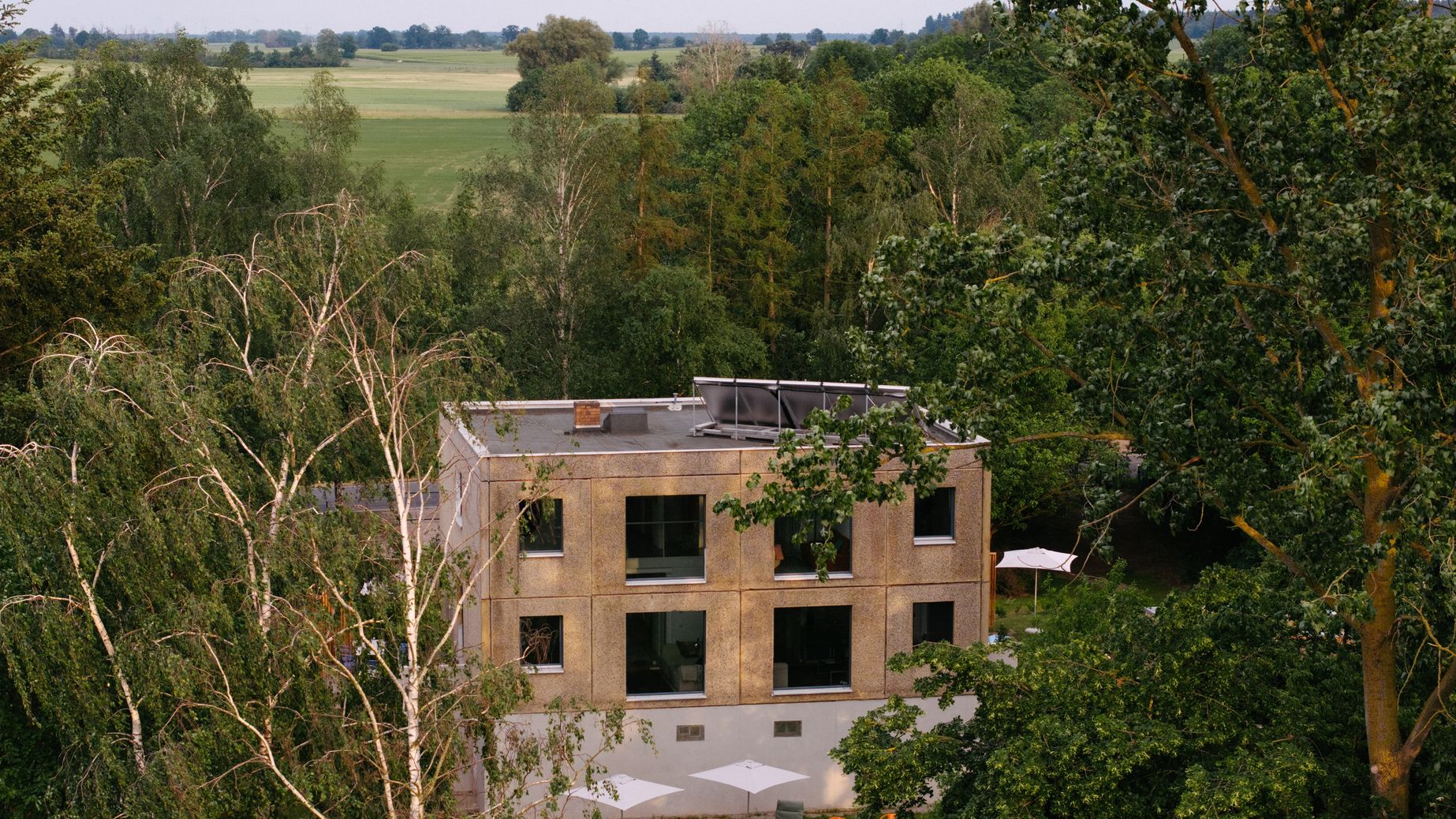
Plattenbauten [prefabricated concrete slab buildings, also known as prefabs, common in the GDR] do not have a good image and are mainly destined for demolition. Palais Brut shows the qualities that can arise when their potential is recognised and carefully developed. This prefab could set a precedent.
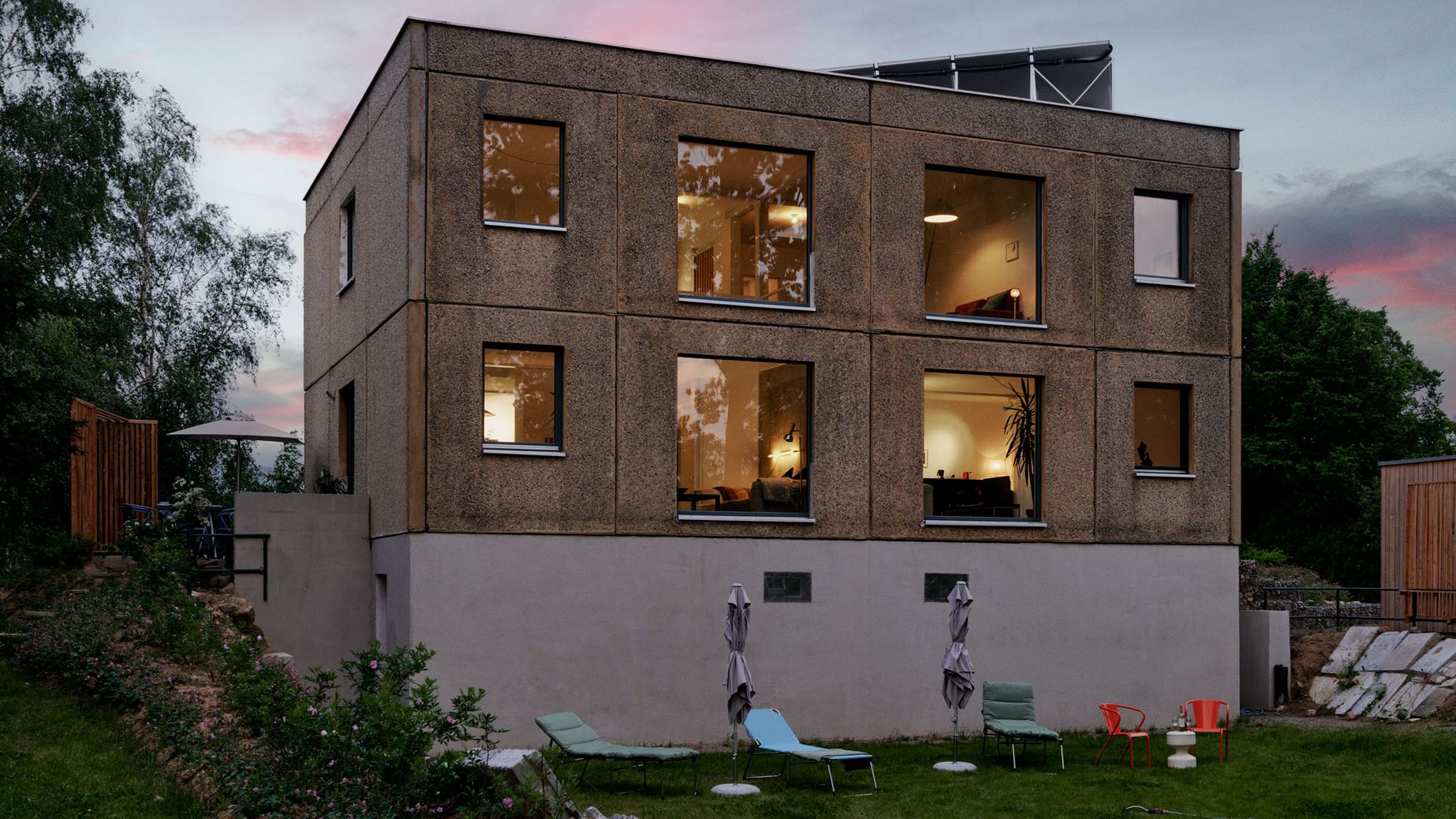
For HOLIDAYARCHITECTURE Frederik Fischer talked to owner Patrick Petzold and architect Hans Sasse, who together transformed a WBS70 prefabricated building on the edge of the Märkische Schweiz Nature Park into the present-day Palais Brut.
How did you come up with the idea of transforming this prefabricated building into the Palais Brut?
Patrick Petzold: It took a lot of small steps. I know the region well because I bought a bungalow nearby about ten years ago and spent a lot of time there with my family – especially during the lockdown. During this time, the plan to transform a prefabricated building matured. I discovered the property on ImmoScout, went there with my wife and we were both immediately enthusiastic about the location, the property and the dimensions of the building. In the secret hope that he would talk us out of this crazy idea, I called Hans Sasse, an architect whom I have trusted for a long time. My hope was in vain. Hans was also enthusiastic.
What happened next?
Patrick Petzold: We needed a loan and went looking for a bank. My wife and I were both employed and were earning well. I was therefore confident that we would have no problems with the financing. That was a mistake. One after another, the banks rejected us. We were not the problem. The problem was the type of building. Most of the banks we spoke to simply would not finance prefabricated buildings.
Did you just guess that or did the banks tell you that explicitly?
Patrick Petzold: Several banks were quite open about it. One bank would have financed us, but only with 30 per cent equity at a time when a maximum of 10 per cent was the market rate. However, we were lucky enough to be able to convince the local savings bank. If I had known how exhausting the financing alone would be, I probably wouldn’t have started the project.
The financing was certainly not going to be your last challenge.
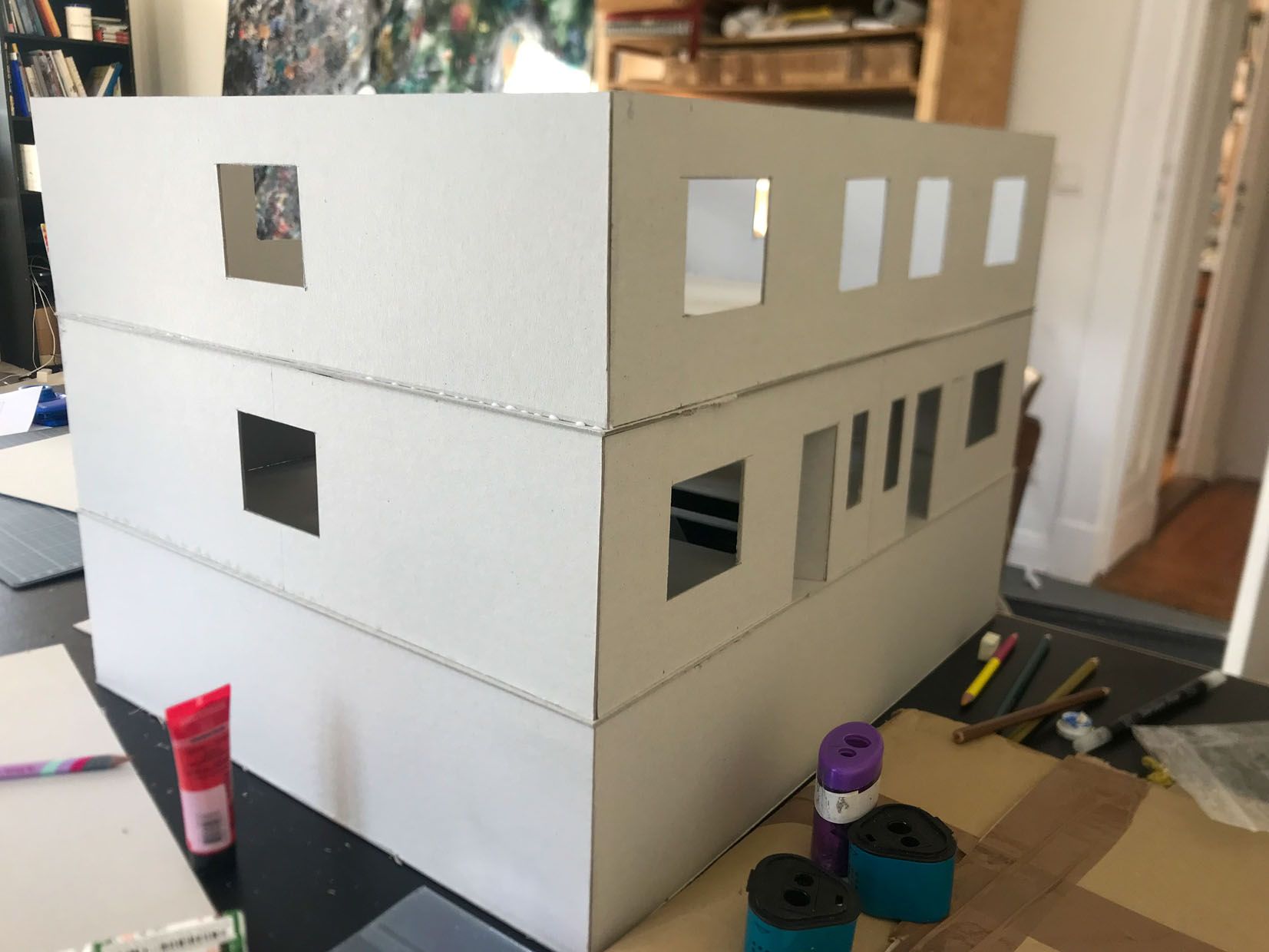
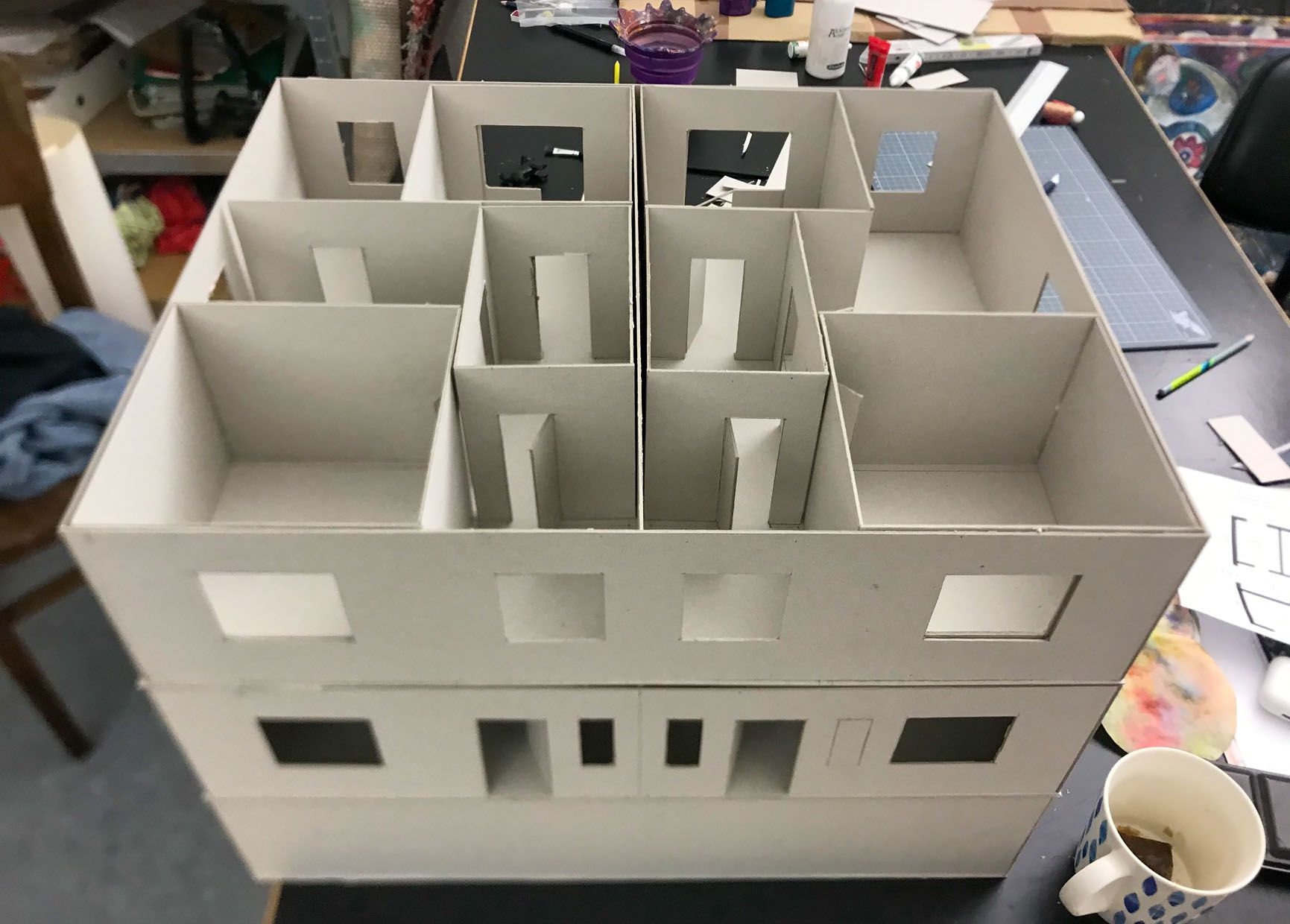
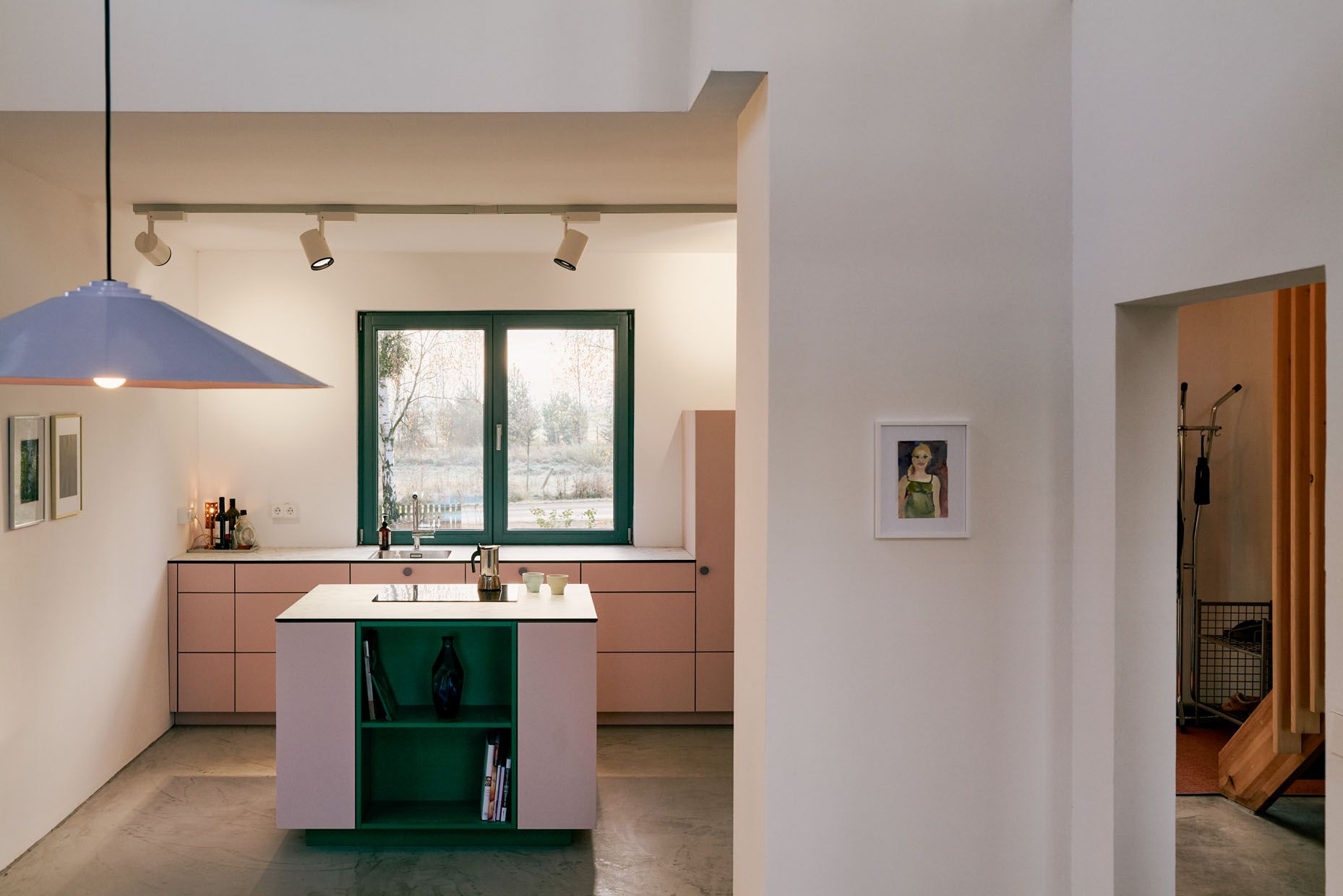
Patrick Petzold: That’s right, but the fun clearly outweighed the challenges as the project progressed. For example, the planning didn’t begin on the computer: I built a model, Hans came over for dinner and then we juggled with the individual modules until we had found the ideal room layout. That evening, we came up with pretty much the exact floor plan that you can see today.
Was it that simple?
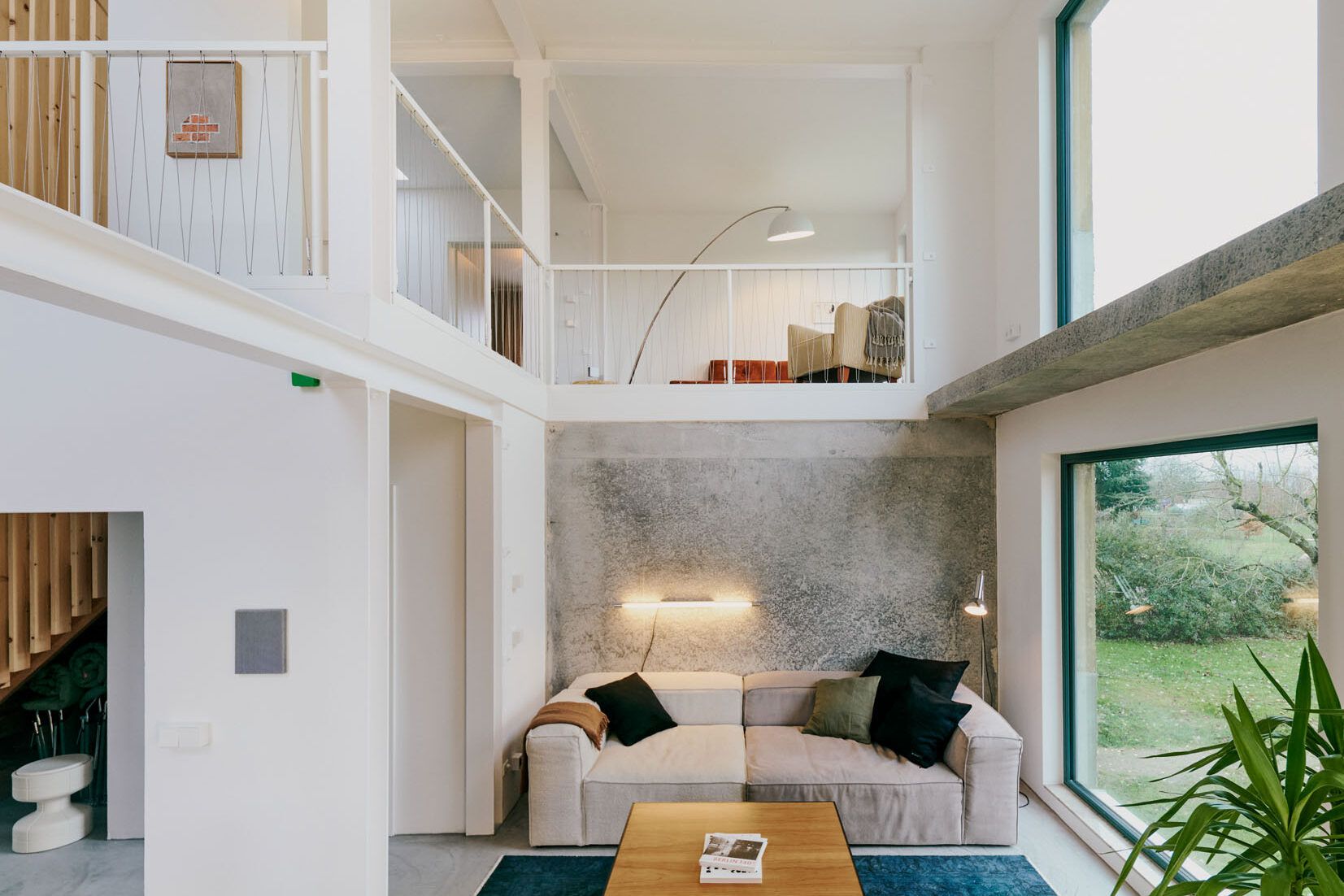
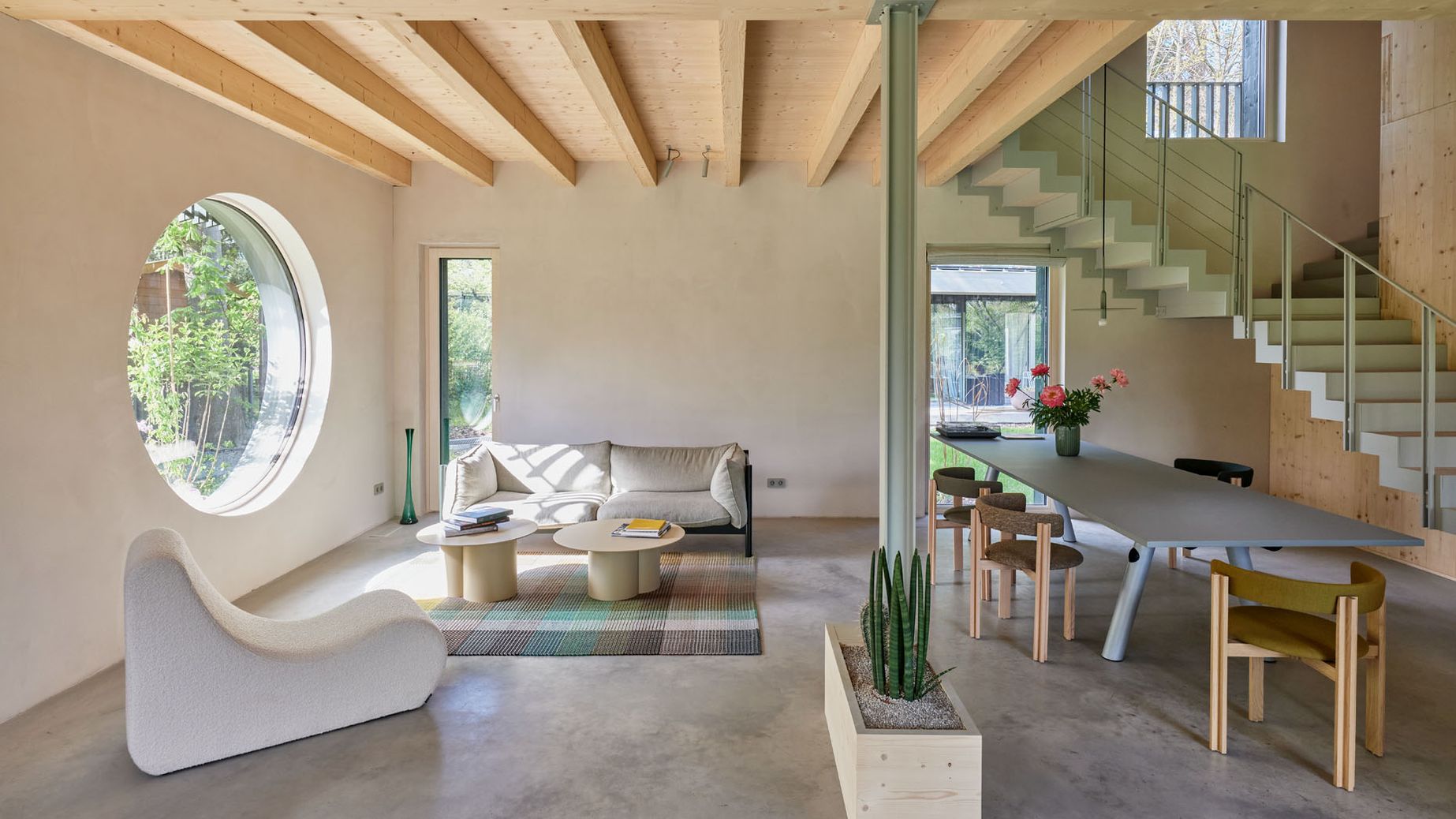
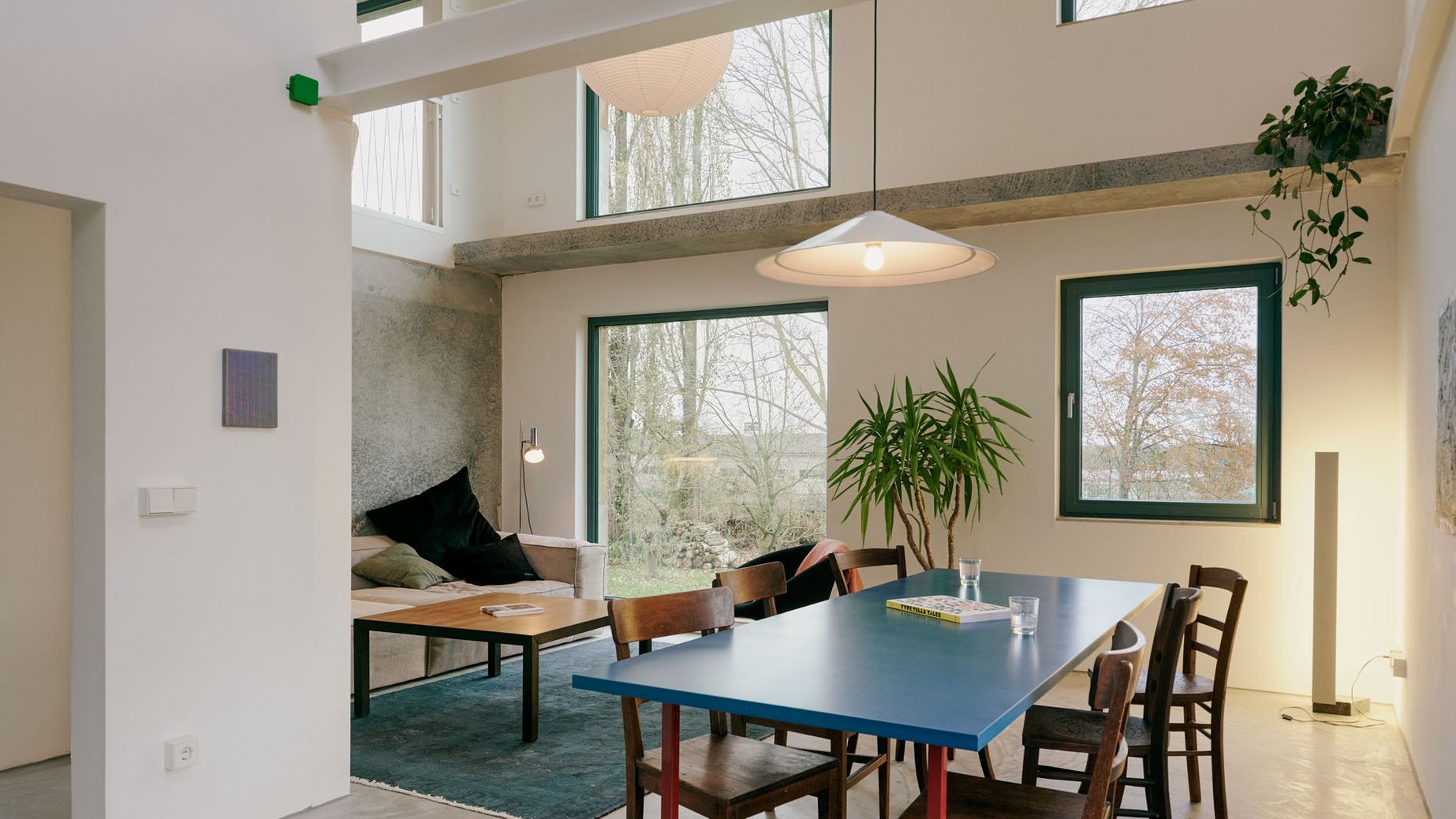
Patrick Petzold: Well, we were lucky on several occasions. For example, a former colleague of Hans’s who had studied this particular construction method in the GDR and still had a lot of documents on this type of prefabricated building helped us with the statics. He pointed out that we needed additional steel girders in the living room with the high ceilings. Without this information, we would not have been able to implement the room plan in this form. If we had done without the breakthrough in the ceiling, everything would have been much easier. You can remove the partition walls at will without endangering the statics. Nevertheless, I am glad that we decided to do it. This special sense of space was worth all the effort.
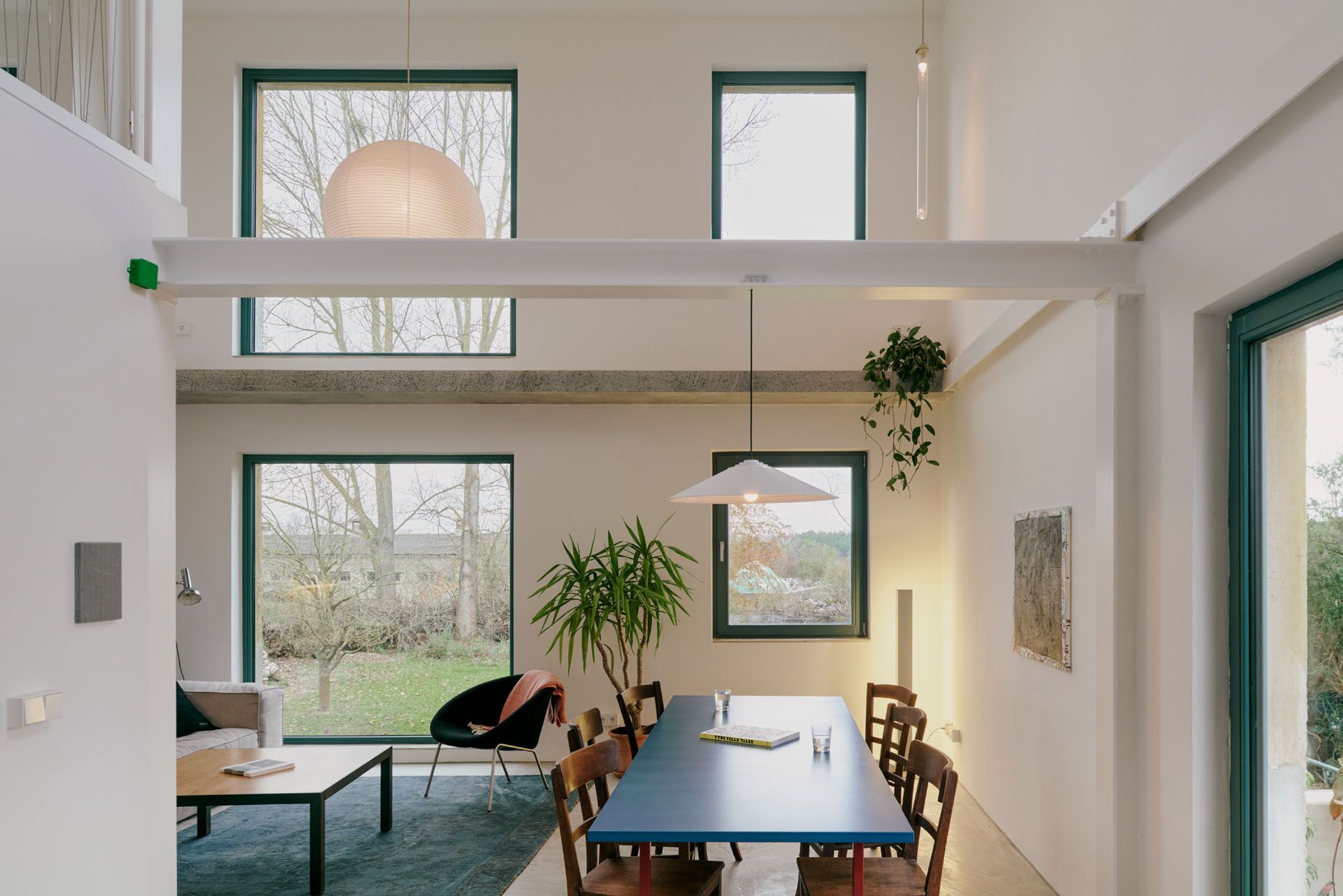
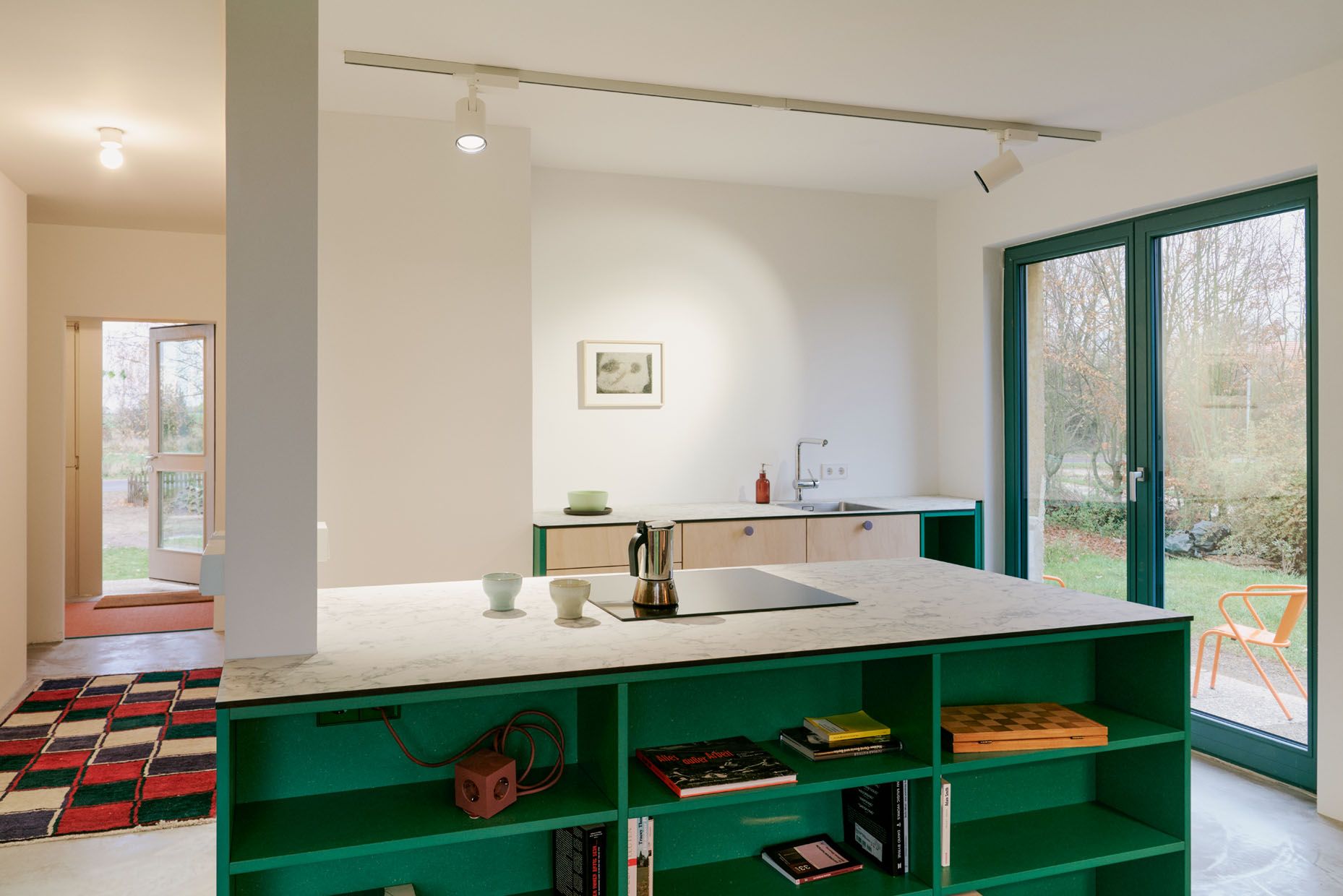
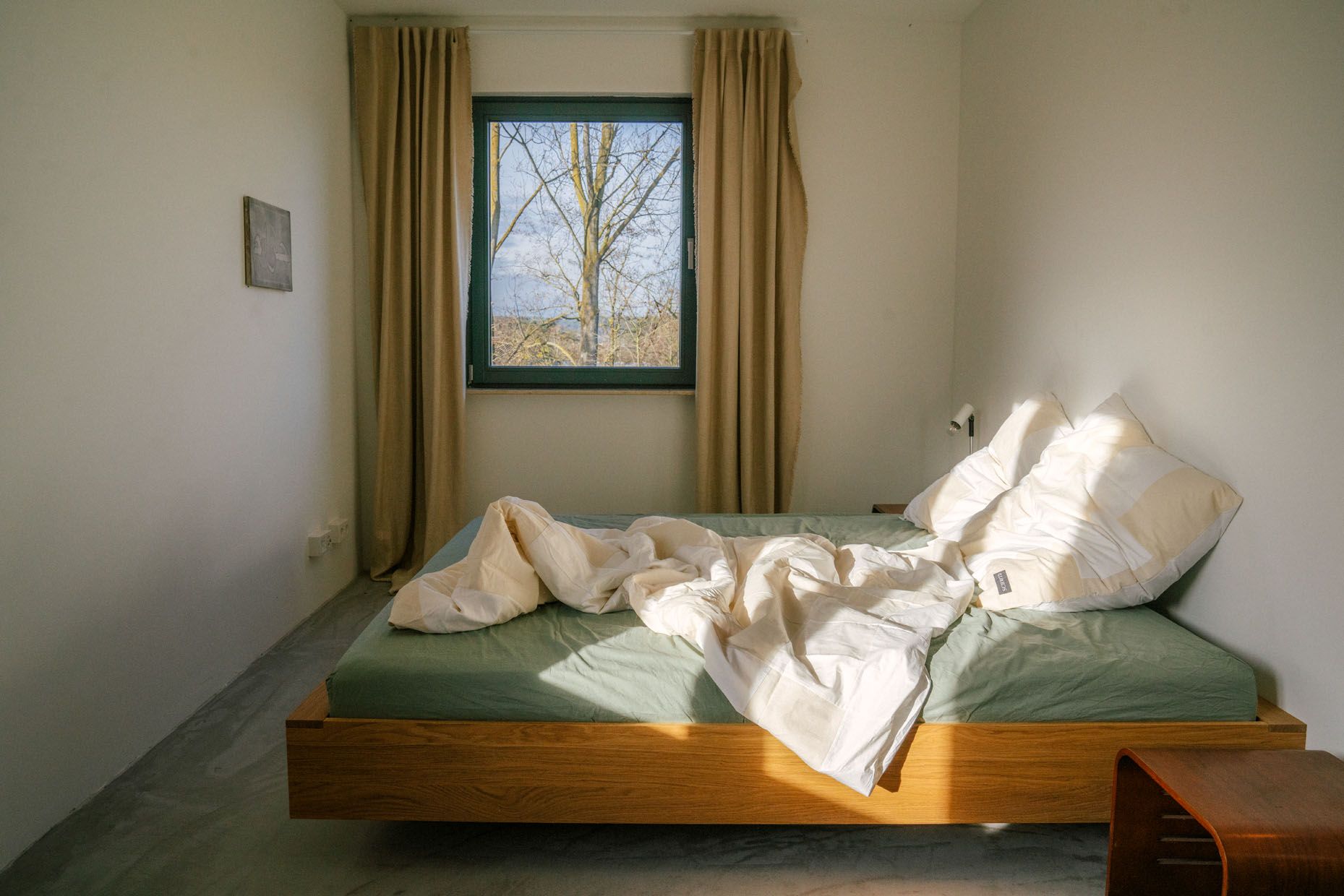
Was it always the plan to turn the building into two holiday apartments?
Hans Sasse: No, initially it was about optimally accentuating the qualities of the prefab and the location. Originally, it wasn’t even clear how the building should be rented out. The idea to divide it into a small apartment and an apartment for a family or a small group came from Jan Hamer, the founder of HOLIDAYARCHITECTURE. We got in touch with him early on and from the start he was very open and helpful.
How did you move from the planning stage to the implementation stage?
Patrick Petzold: Hans drew up calculations that we essentially adhered to. We prepared the tenders on this basis. Only the concrete cutting threatened to blow the costs. Fortunately, we then found a company in Wroclaw that carried out the work at a reasonable cost. However, the additional steel that we had to install to reinforce for the structure made it more expensive than planned.
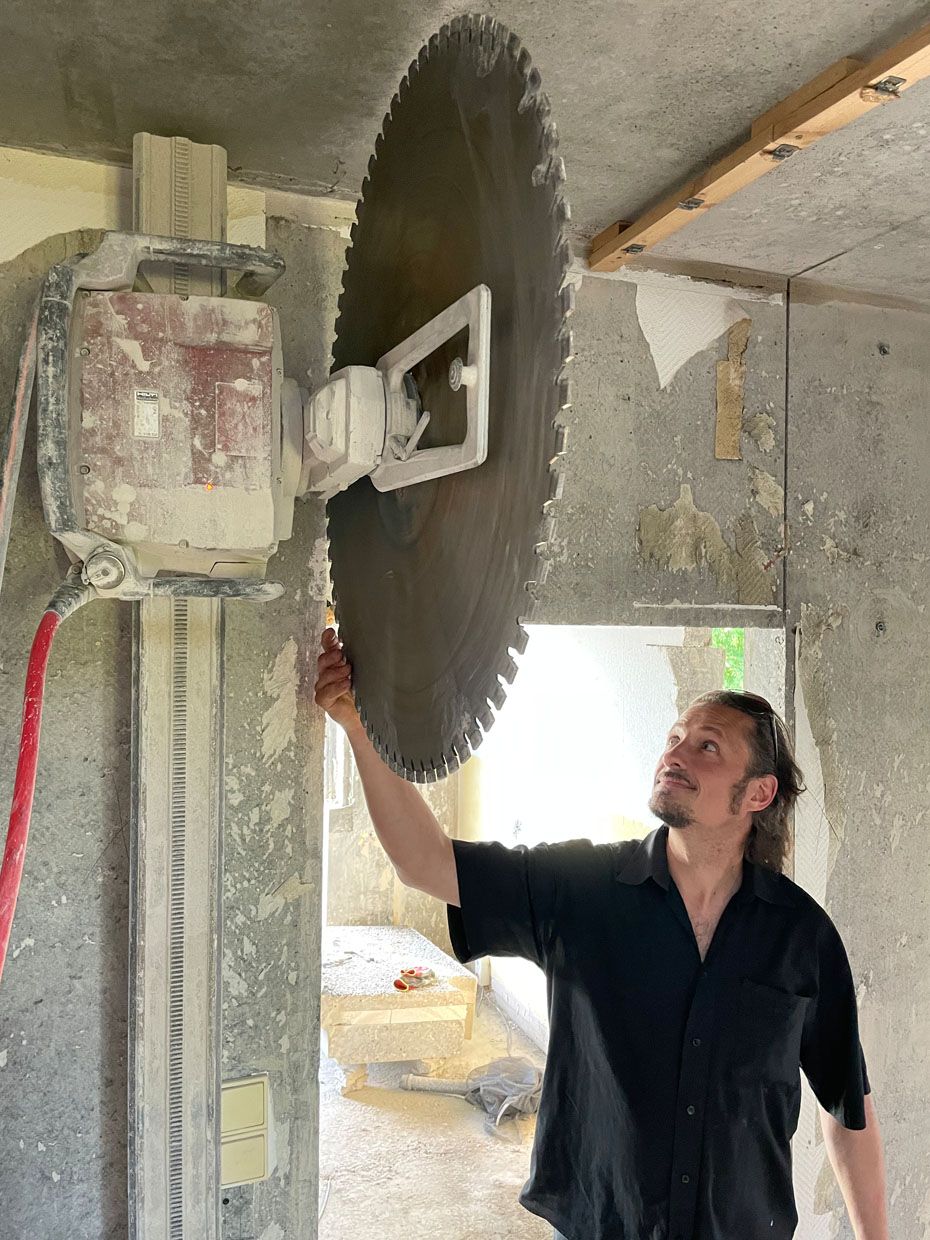
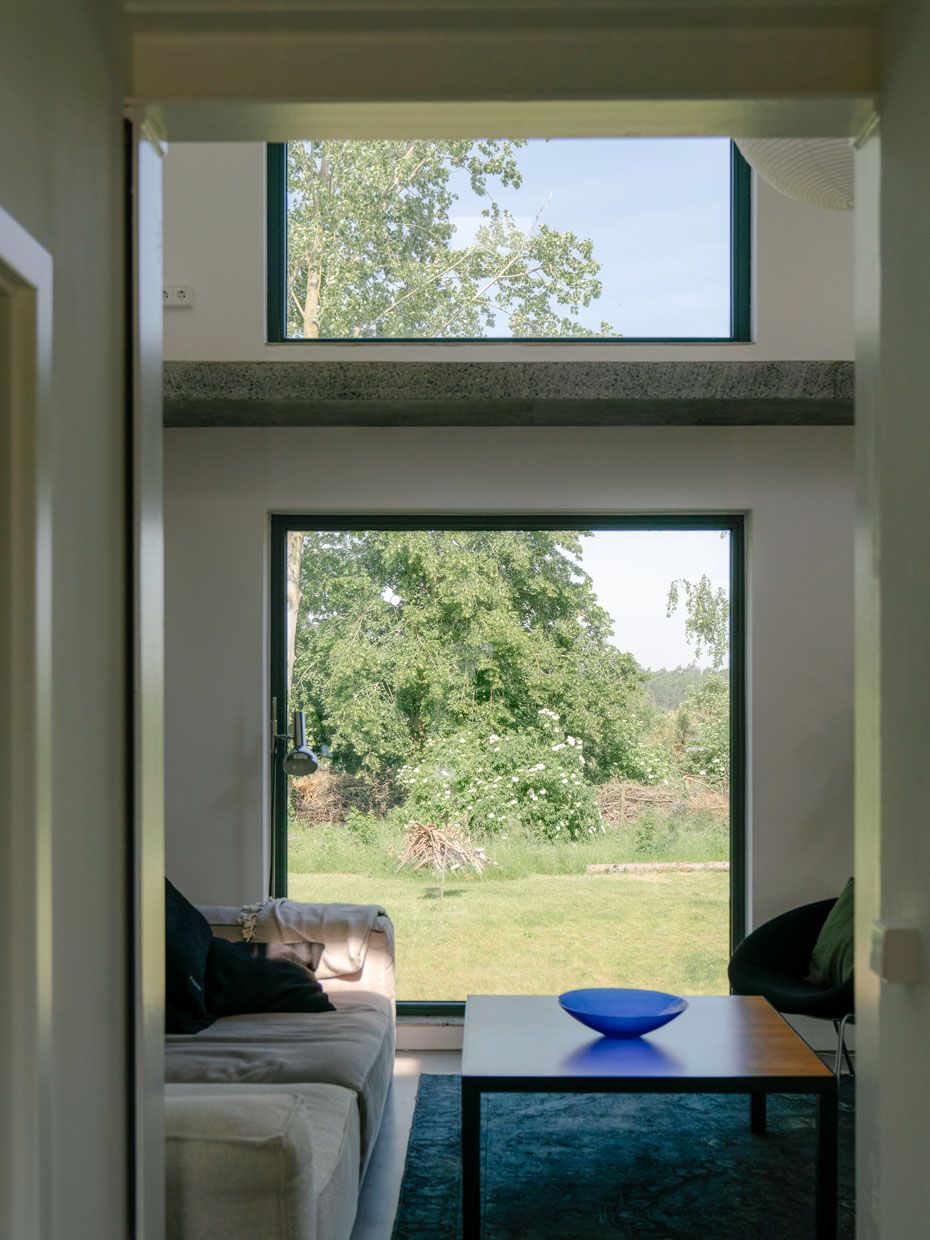
How did it feel to award a contract to a company to gut the entire building?
Patrick Petzold: I had an uneasy feeling. In my mind’s eye, I watched the building collapsing several times. Nevertheless, we trusted the company. They seemed competent and experienced and were really keen on the project. And I had worked with Hans quite often over the last ten years, so there was mutual trust and understanding. In addition to my work as an audio producer, I have also worked frequently as a carpenter, and in this capacity I have also worked with Hans.
Did you recognise any special features during the process? Were there any positive surprises?
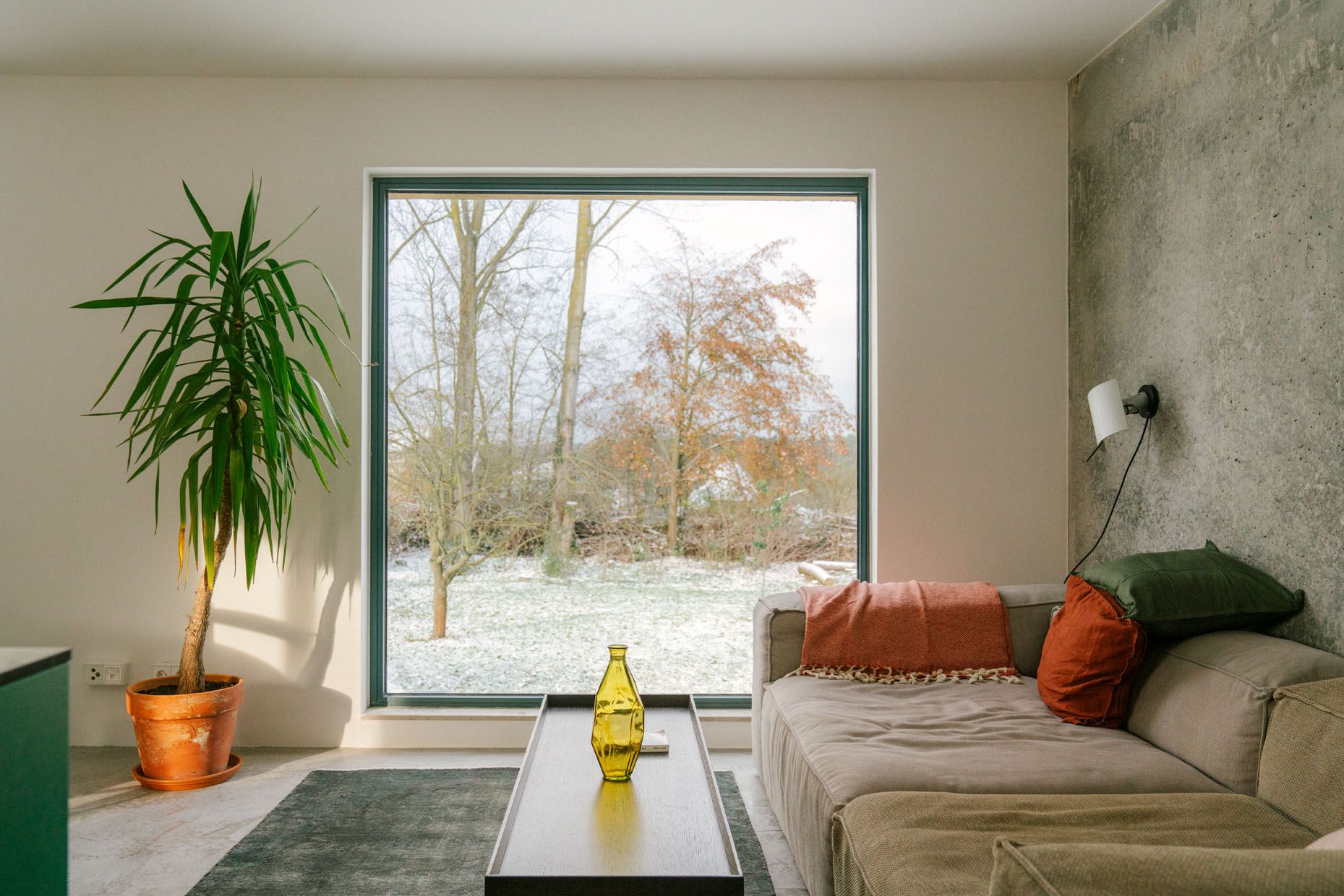
Patrick Petzold: The views still inspire me today. If you stand in the large apartment up on the gallery and look out of the new window diagonally opposite, you have a wonderful view over the fields. We hadn’t imagined it to be so beautiful. I remember standing in the shell for the first time with this new opening: the sun was setting and filling the whole room with golden light.
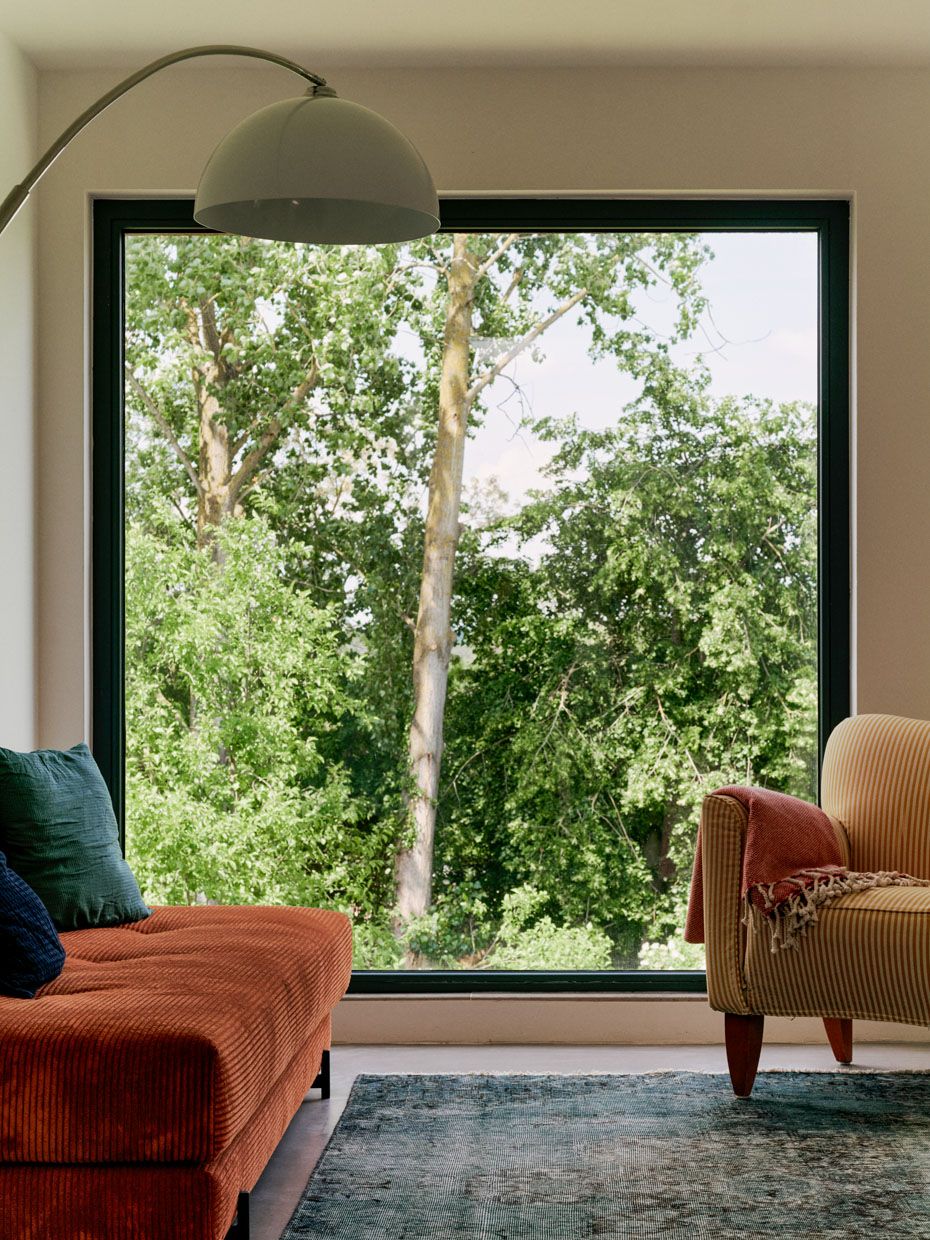
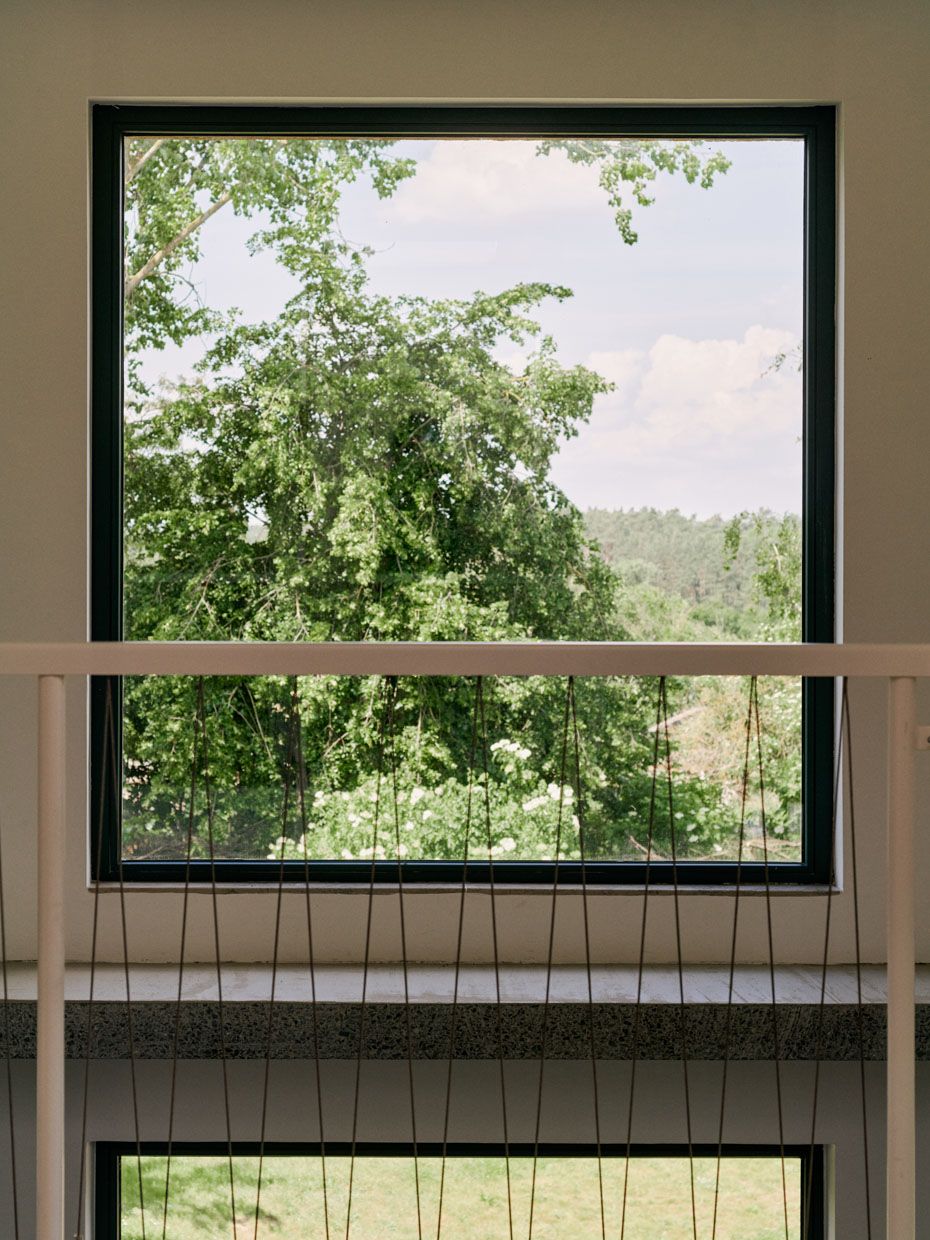
Can you tell us something about the history of your prefab?
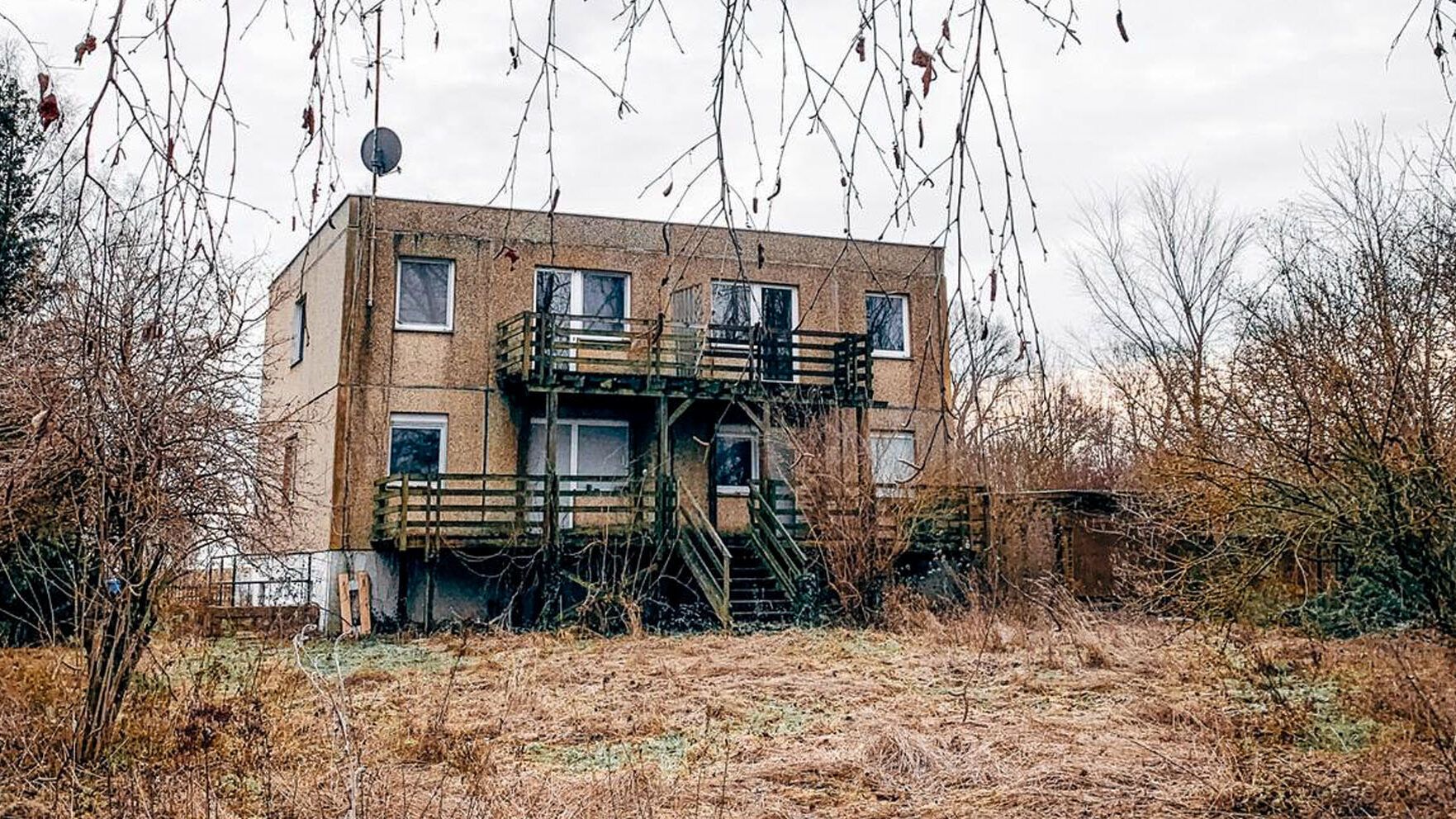
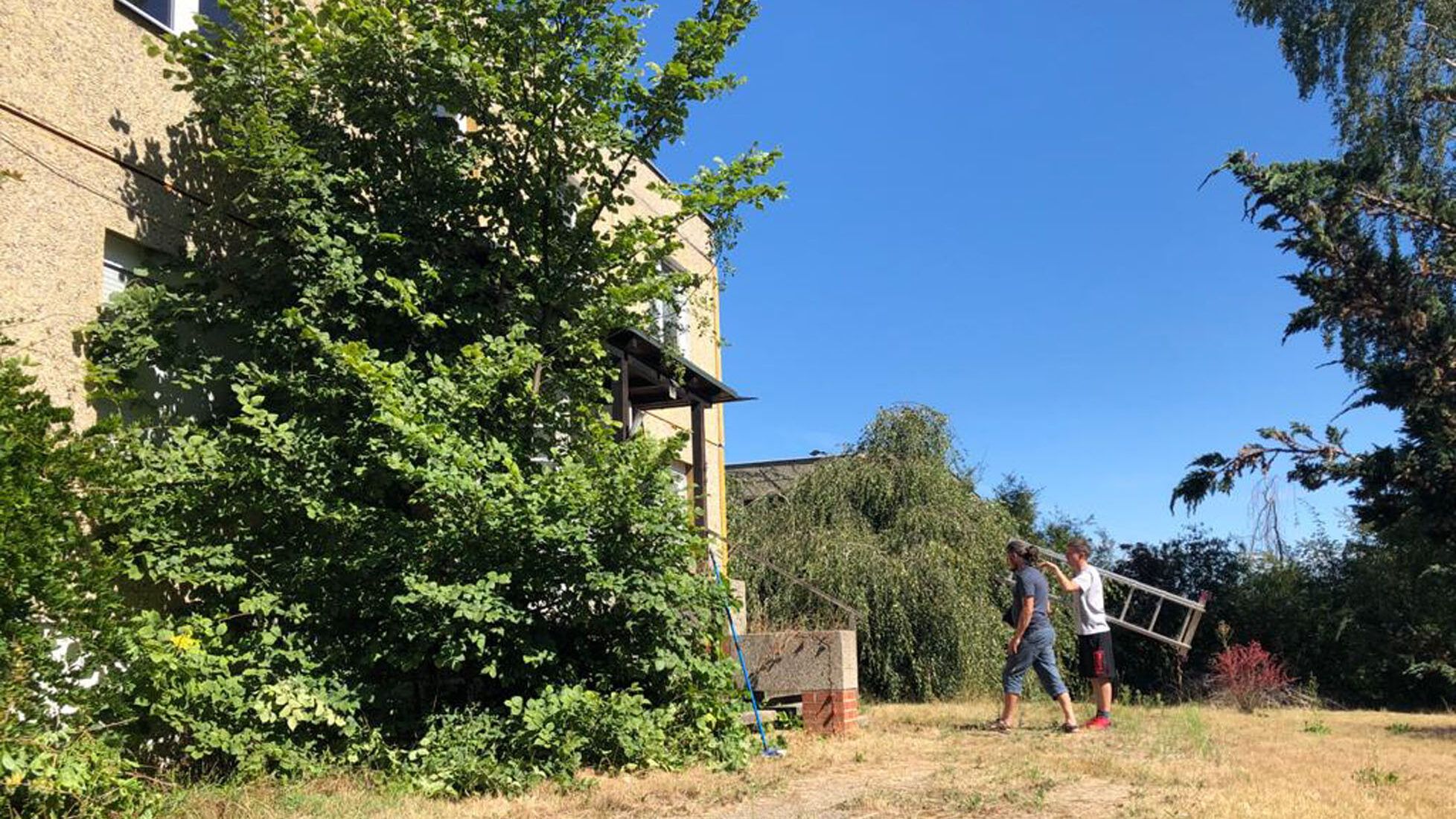
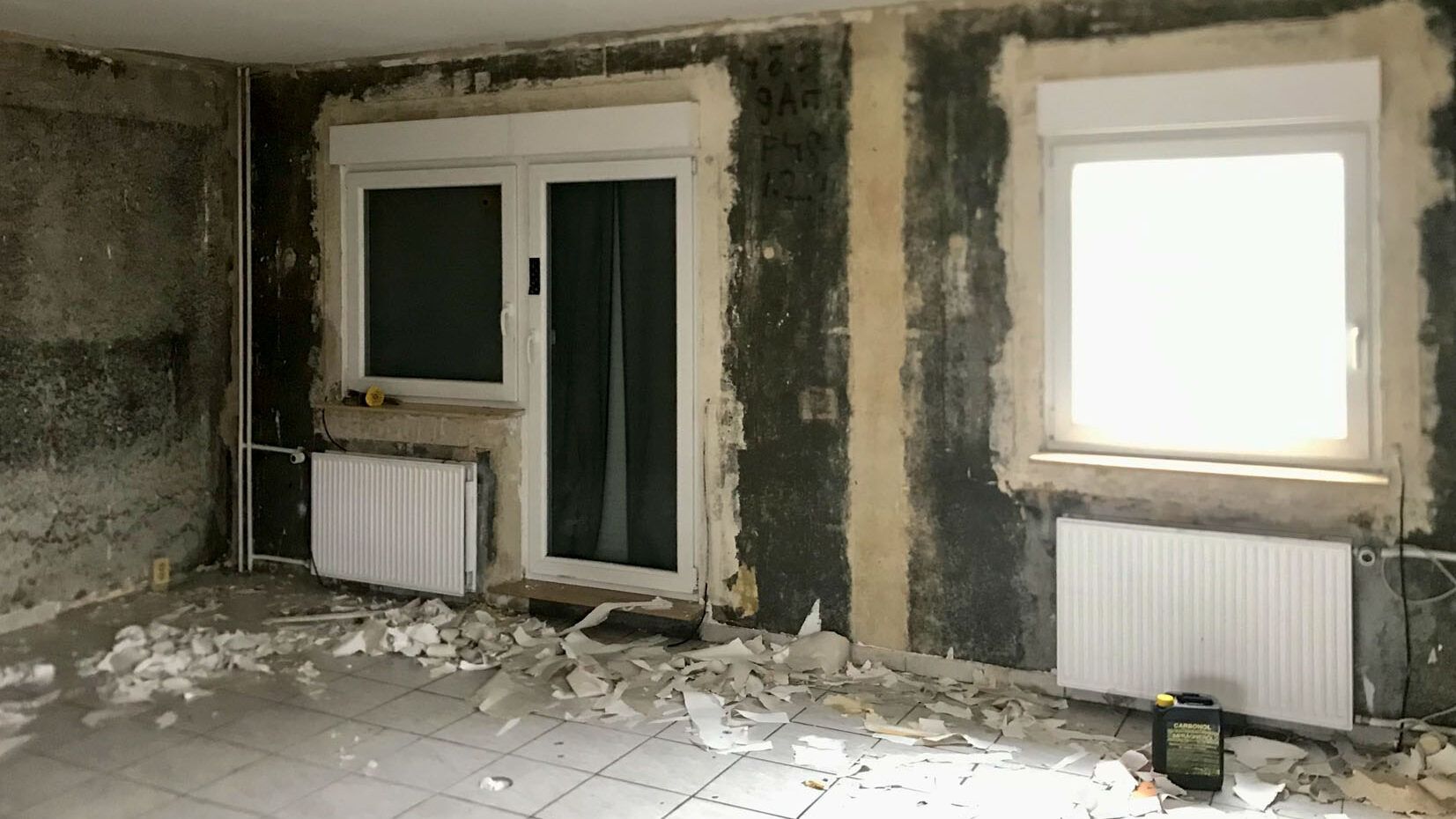
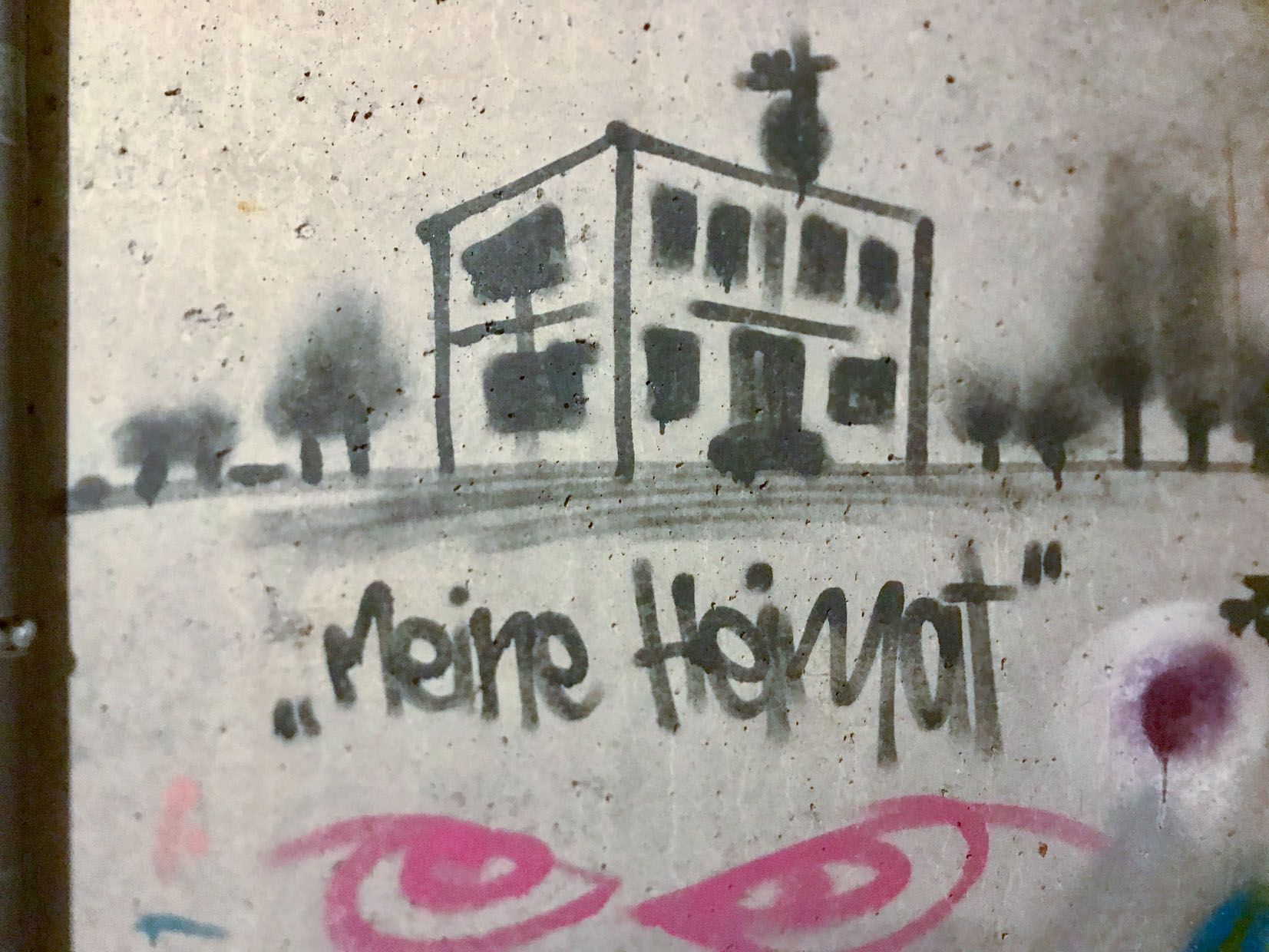
Patrick Petzold: According to residents, the prefab was not even finished when the Wall came down. It is a reminder of the fall of the Wall and stood as a windowless shell in the landscape. It was planned as a dwelling for workers of the neighbouring LPG [Agricultural Production Cooperative]. Via the Treuhand [Trust Agency set up by the former East German Government to reprivatise East German enterprises], the building initially went to an investor from Düsseldorf. He sold it to two men from the area. They rented out one half of the building. There was a wellness bathroom in the basement. There was also a bathroom in each of the rooms upstairs. The building was known as ‘Salon Cherie’ and, well, it looked very much like a brothel. The other half was only used for storage. Nothing worked there any longer. No heating, no water. It seems that young people used to party there a lot. I still have countless photos of the graffiti on the walls. One of them showed the prefab. Above it was written: ‘My home’. That moved me.
Hans, how do you explain that there are comparatively few conversions of prefabricated buildings? After all, you have proven that a high quality of living can be created in a prefab at a reasonable cost.
Hans Sasse: The image is simply bad and many prefabricated buildings stand quite lost in the landscape. That puts people off. There is also a lack of good examples. And then many also feel overwhelmed by the dimensions of a prefab. Anyone planning a house for their family would not think of using a prefabricated building for it. For institutional investors, on the other hand, the poor conditions offered by the banks for this type of building are a real stumbling block.
Patrick Petzold: It is also an East-West issue. GDR architecture is repeatedly and aggressively vilified. The Palace of the Republic is just one of many examples. But to be honest, you also have to say that the buildings, too, had disadvantages from an objective point of view. The acoustics are one of them, but the rooms are also mostly too small for today’s living requirements. With the Palais Brut, however, we can hopefully show that the rooms can also be extremely spacious. So far, we have not noticed any problems with the acoustics either.
How did you come up with the name?
Patrick Petzold: We just wanted a name that sounded good. Not so technical, not blunt marketing. Some houses have such old-fashioned names like ‘Elfriede’. That’s the direction we were headed in at the beginning. Prefabricated buildings usually only have unromantic type designations like WBS70. That would have been a nice contrast.
Palais Brut, on the other hand, felt right immediately and still does today. I am French myself, born and raised in France, and so the French name didn’t sound affected to me. Besides, the hint cannot be overlooked. A prefab is the opposite of a palace. And Brut, of course, comes from ‘brutalism’.
How has the response been so far?
Patrick Petzold: The rental has got off to a very good start. The enthusiastic comments on HOLIDAYARCHITECTURE are additional motivation. Some guests are already completely enchanted before they arrive, just from looking at the photos. Thanks to HOLIDAYARCHITECTURE, we are also reaching exactly the people we want to reach. The collaboration was a great stroke of luck. After three years of construction, I also had my doubts. I was often alone on the construction site and occasionally wondered if we were building a castle in the air here. The relief is all the greater now.
Interview: Frederik Fischer
Photo credits: © Tobias König and Michael Romstöck / / KKROM Services (interior and exterior shots), © Patrick Petzold (model, graffiti, before images)
Author info: Frederik Fischer grew up in a village and spent his youth in a small town in Bavaria, then set out into the big wide world. He studied Media Studies and Economics in Hannover, Aarhus, Amsterdam, London and Washington, and co-founded several Startups in Berlin. However, he has since become convinced that the truly exciting designs for the future are created in the provinces. He has been consistently promoting these for years, among other things, as managing director of Neulandia.


One Comment
Ich habe den Beitrag gerade mit ziemlich viel Interesse gelesen, weil wir im Bekanntenkreis auch so einen Fall haben, bei dem von außen erstmal alle sagen: „Lohnt sich doch nie.“ Genau deshalb fand ich eure Geschichte so stark. Nicht nur wegen der fertigen Bilder, sondern weil man hier mal nachvollziehen kann, wie sich die Qualität erst Schritt für Schritt zeigt – und nicht schon auf dem Exposé. Nebenbei bin ich auch über https://ingeba.at/fruehjahrs-check-fuer-bestandsgebaeude-werterhalt-trifft-potential/ gestolpert. Da geht es ebenfalls darum, Potenziale im Bestand überhaupt erstmal zu erkennen, bevor man vorschnell urteilt. Für Leute, die selbst gerade an einer Bestandsimmobilie zweifeln, ist das vielleicht eine gute Ergänzung zu eurem Artikel.