
Gem on the dyke: Tetenbüllspieker
High in northern Germany, André and Sebastian Schäfer have lovingly restored a centuries-old storehouse on the Eiderstedt peninsula. Their guests can explore the Wadden Sea World Heritage Area and discover the immense freedom of the endless horizon.
This is an article from our archive. It was published in September 2022, so some details may no longer be up to date.
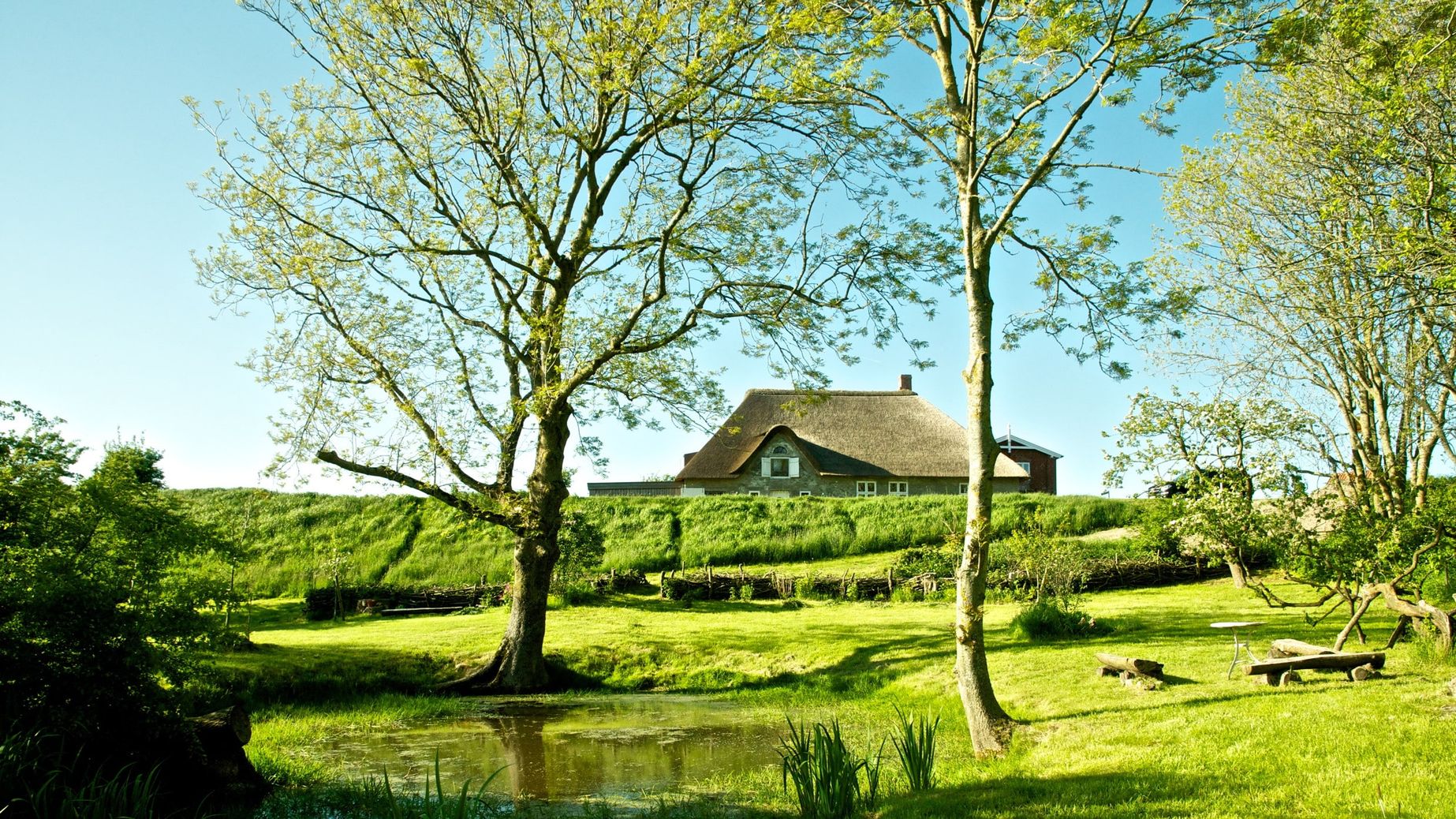
Life sometimes takes wonderfully tortuous paths. It was his profession that first brought the Cologne-born documentary filmmaker, screenwriter and film producer André Schäfer to North Frisiamore than twenty years ago to work on a project. There he came to know Jan Leseberg. Leseberg, an architect and member of the Professional Association of Visual Artists, had been dedicated to the preservation of North Frisian building culture for decades and is known, among other things, for the Leseberg thatched-roof dormer.
The acquaintance developed into friendship. André, who had come within a whisker of devoting himself to architecture, frequently visited the architect in the far north over many years. On these occasions, he was not only expertly guided back and forth through the marshlands, dunes and, of course, architectural landscapes of northern Germany, but he was also gradually infused with a passion for the region’s architectural heritage. At some point it became clear: “Cologne, all well and good. But this is where I, or rather we, would like to live someday.”
“I began searching and found dormers that barely protruded from the roof area and almost followed the roof pitch, that were small, with the elevation of the surrounding wooden construction limited to the most necessary, that is, the frame.
These stand out pleasantly from the pathetic dormers, whose wooden surround – if it is wood at all – often turns out to be twice as large as the window area itself. Dormers are only needed to let in light and air, but not to place a table for 12 people there.”
– Jan Leseberg
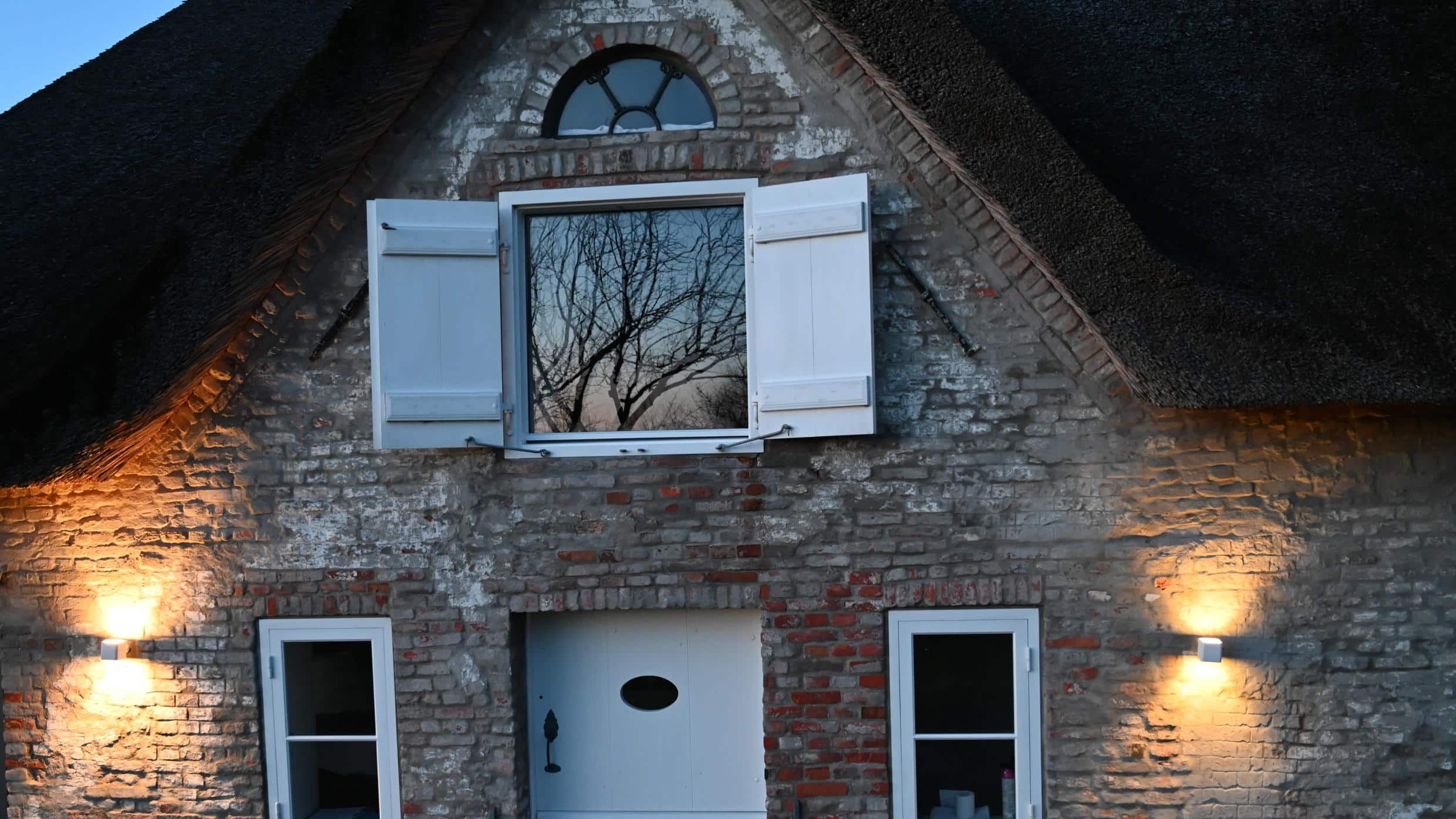
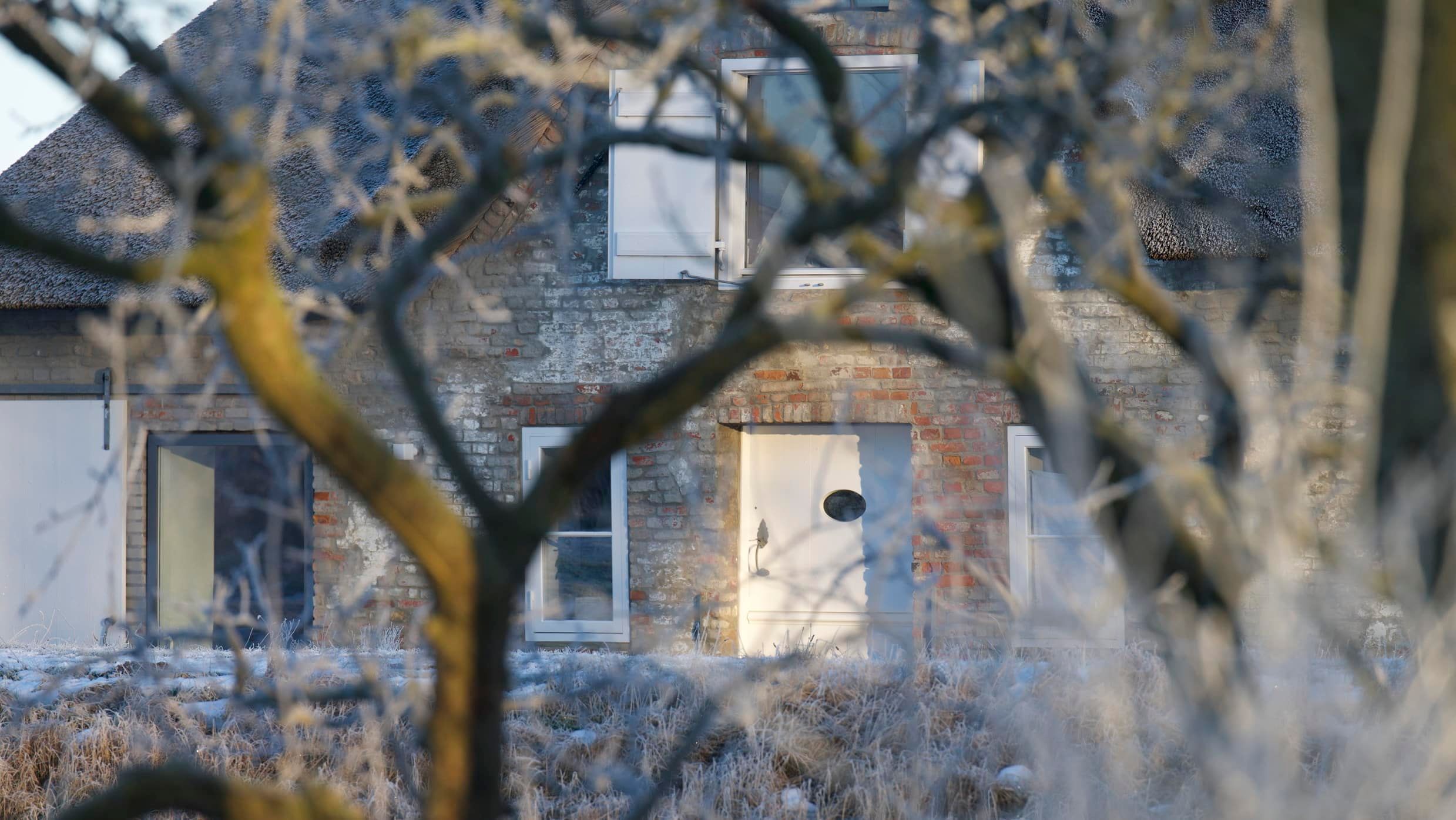
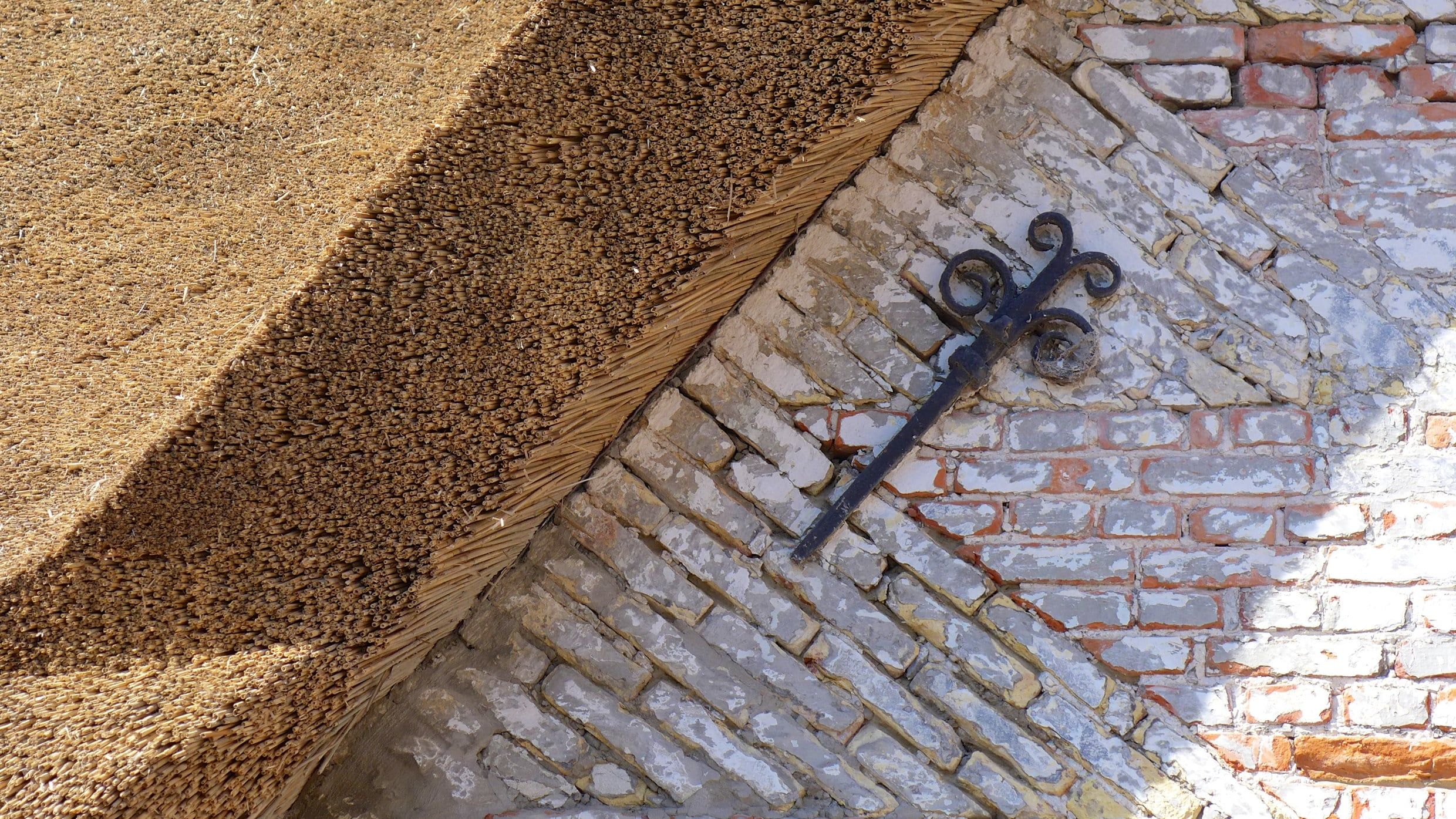
Even though Jan Leseberg unfortunately did not live to see the fulfilment of André and Sebastian Schäfer’s dream: he would have probably benevolently nodded his approval at the sight of the comprehensive refurbishment of the Tetenbüllspieker cultural monument, which took several years.
For in 2010, they actually found a suitable house on the Eiderstedt peninsula – the several-century-old Spieker (storehouse). It must be said, though, that the project – at the latest in retrospect – seems more insane than “suitable”. André’s father, for example, immediately advised against it. “You can stay in the most famous luxury hotels in the world for the rest of your life and get away cheaper!” Well, where he was right, he was right. Today, Sebastian and André Schäfer affectionately and mockingly call their house “our little Elbphilharmonie”, of course only in allusion to the stately construction costs. Otherwise,they are more than happy to have taken the risk.
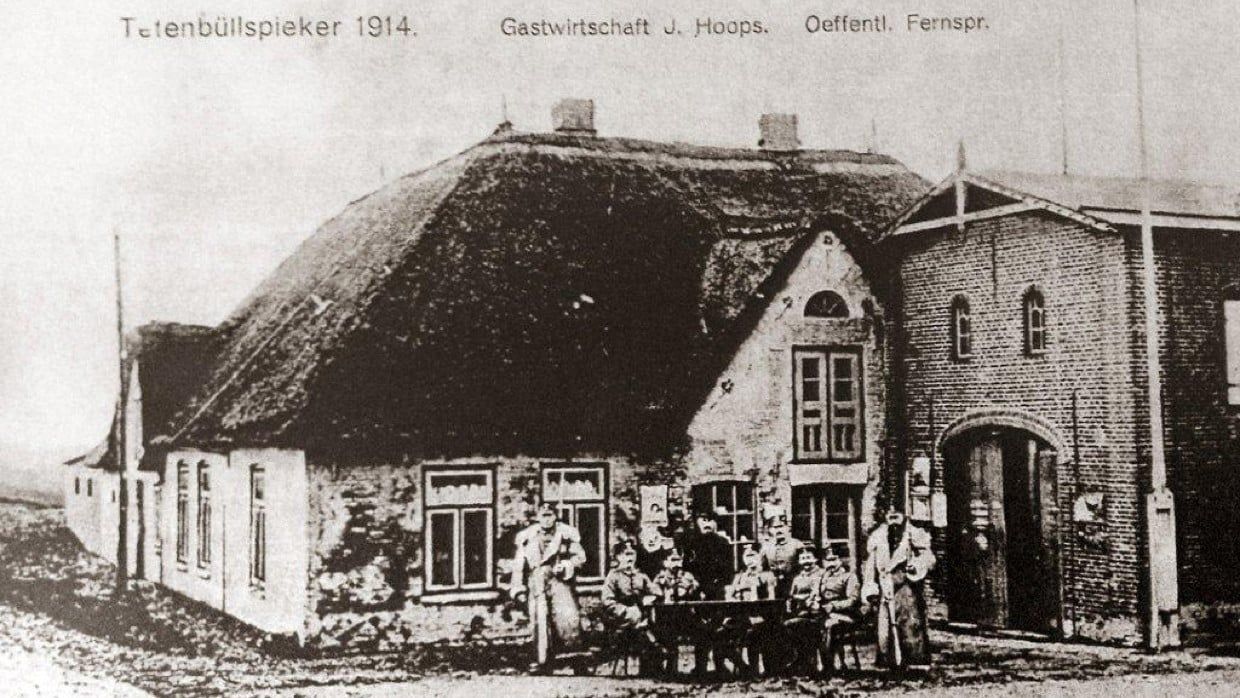
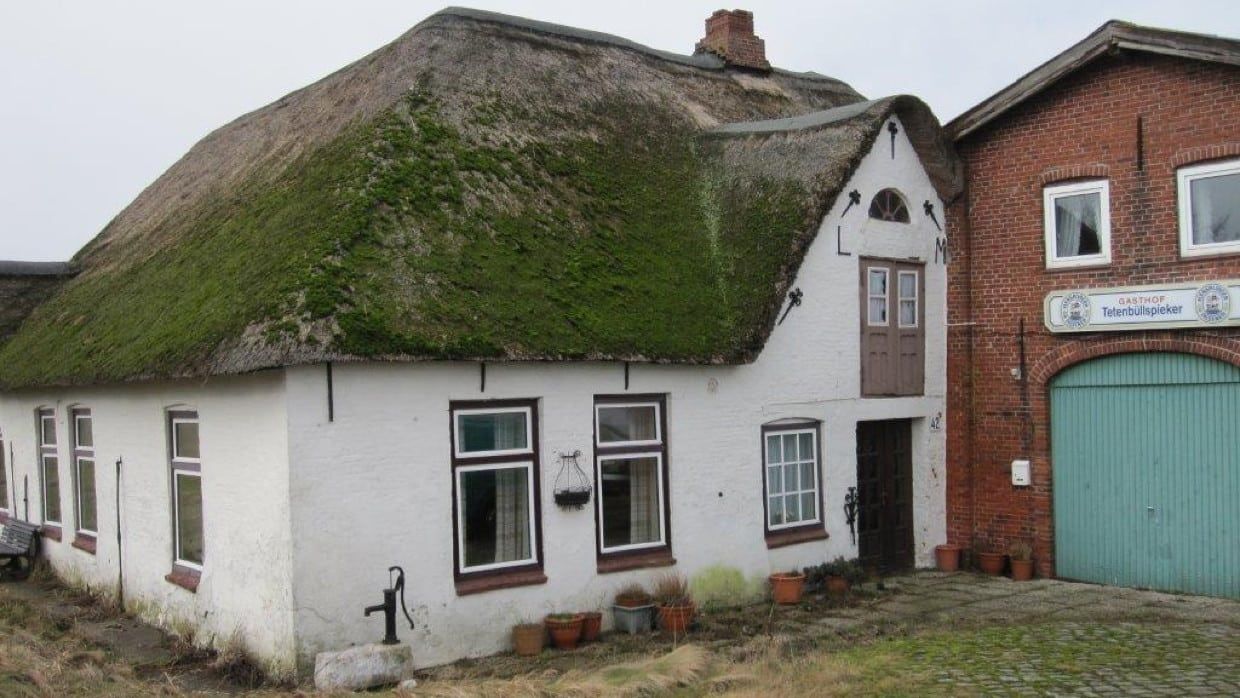
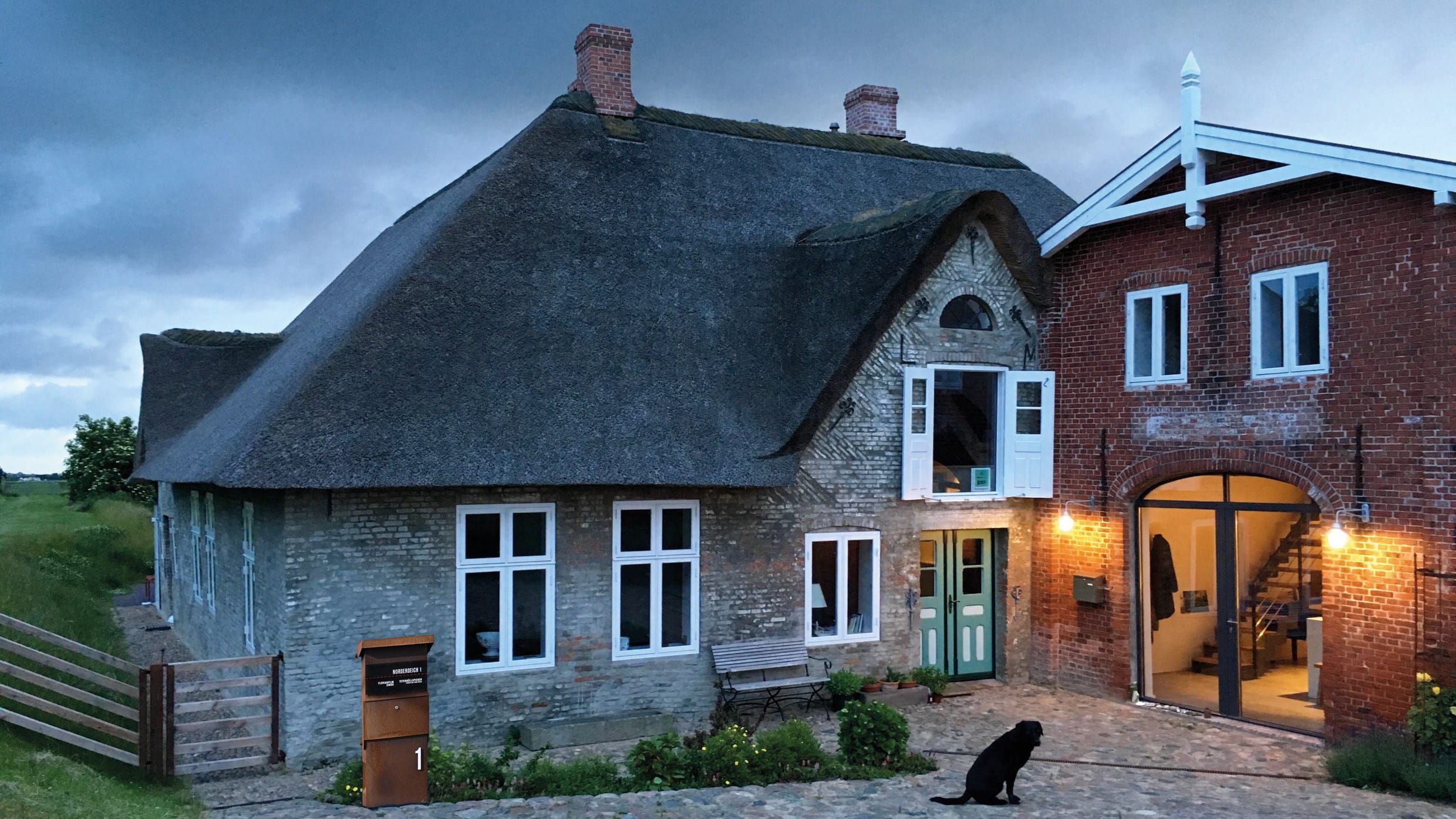
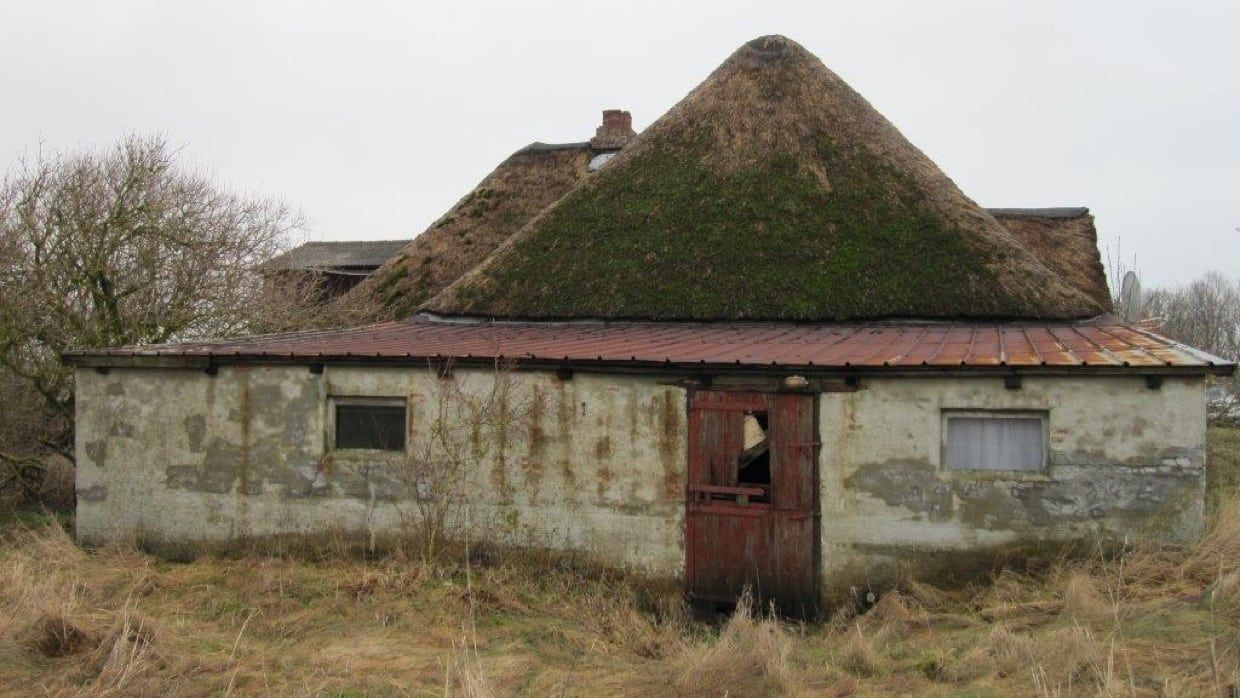
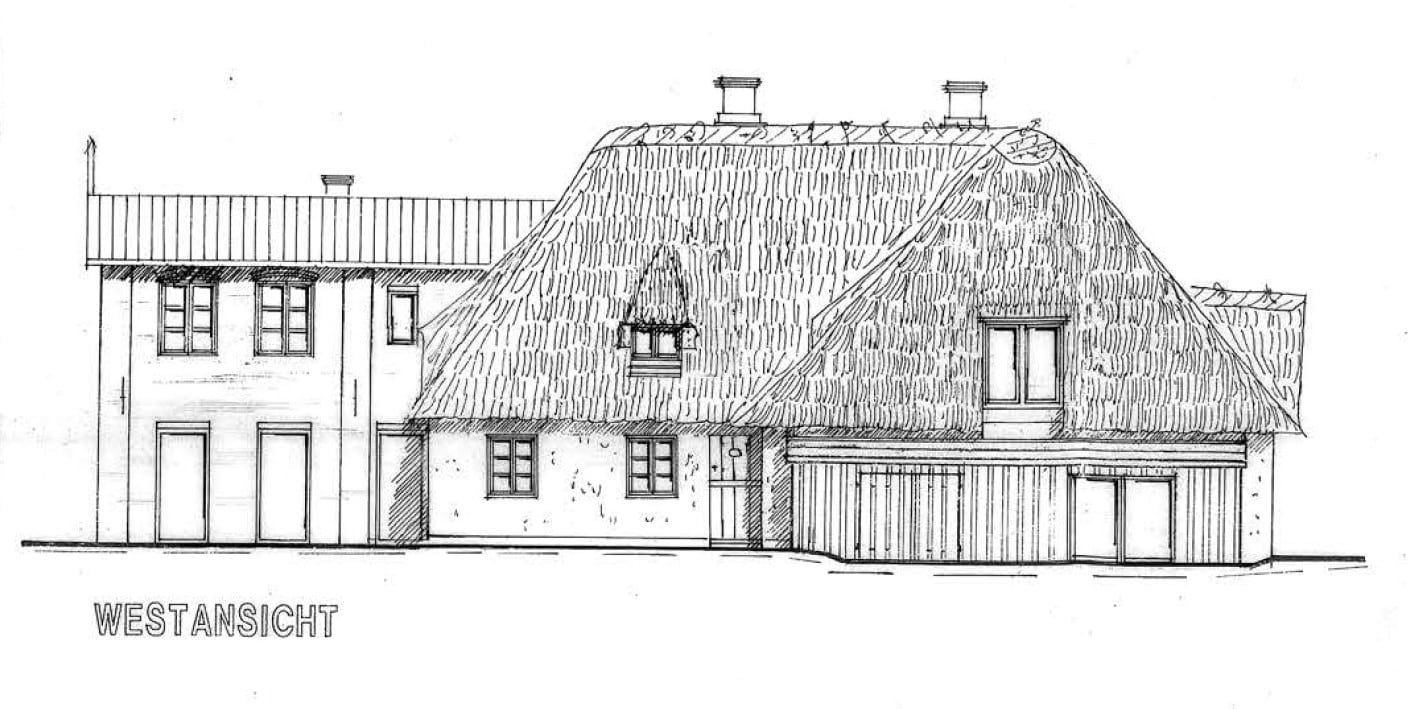
Customs station, village inn, provincial cinema – a place of local identification
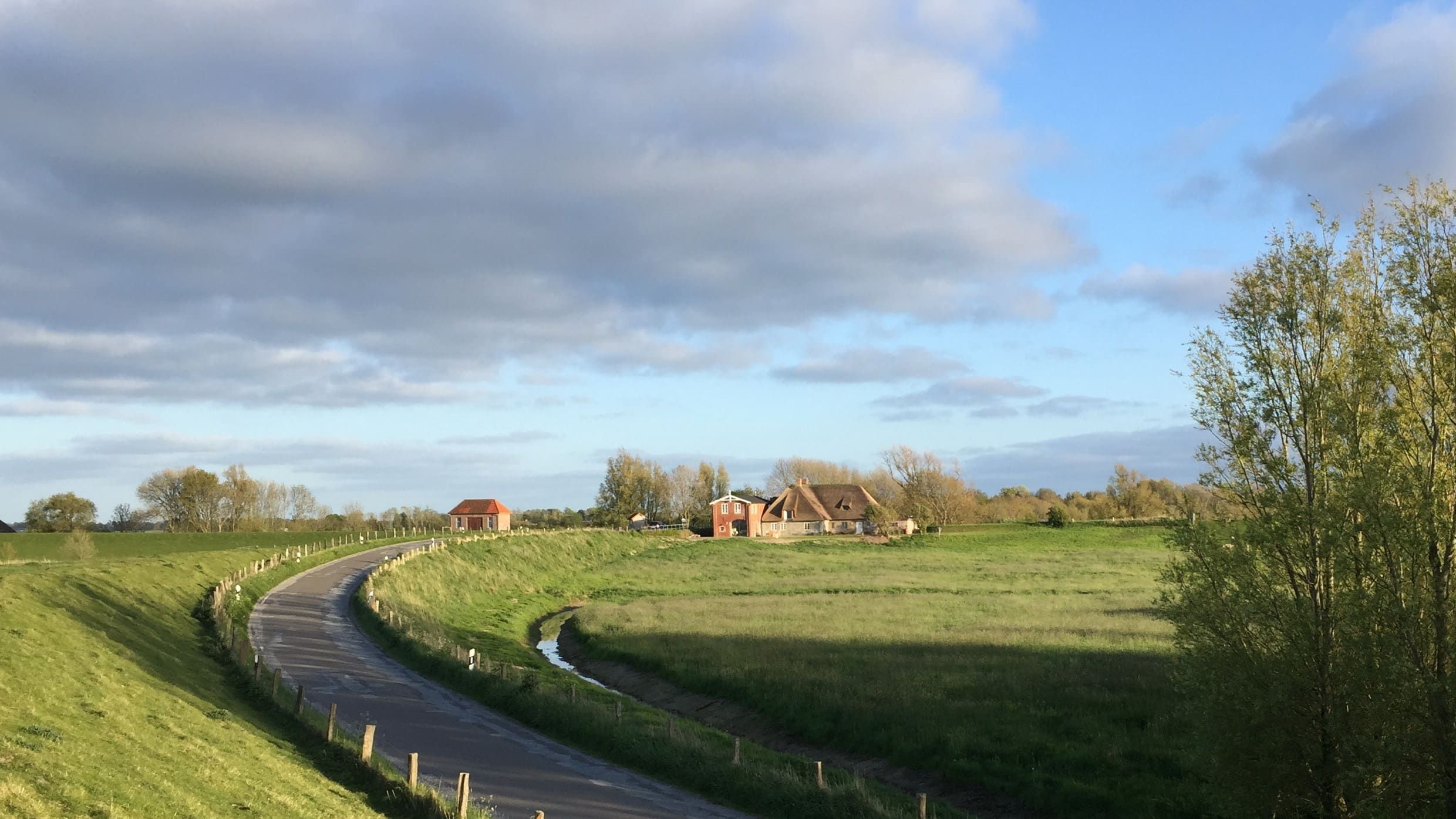
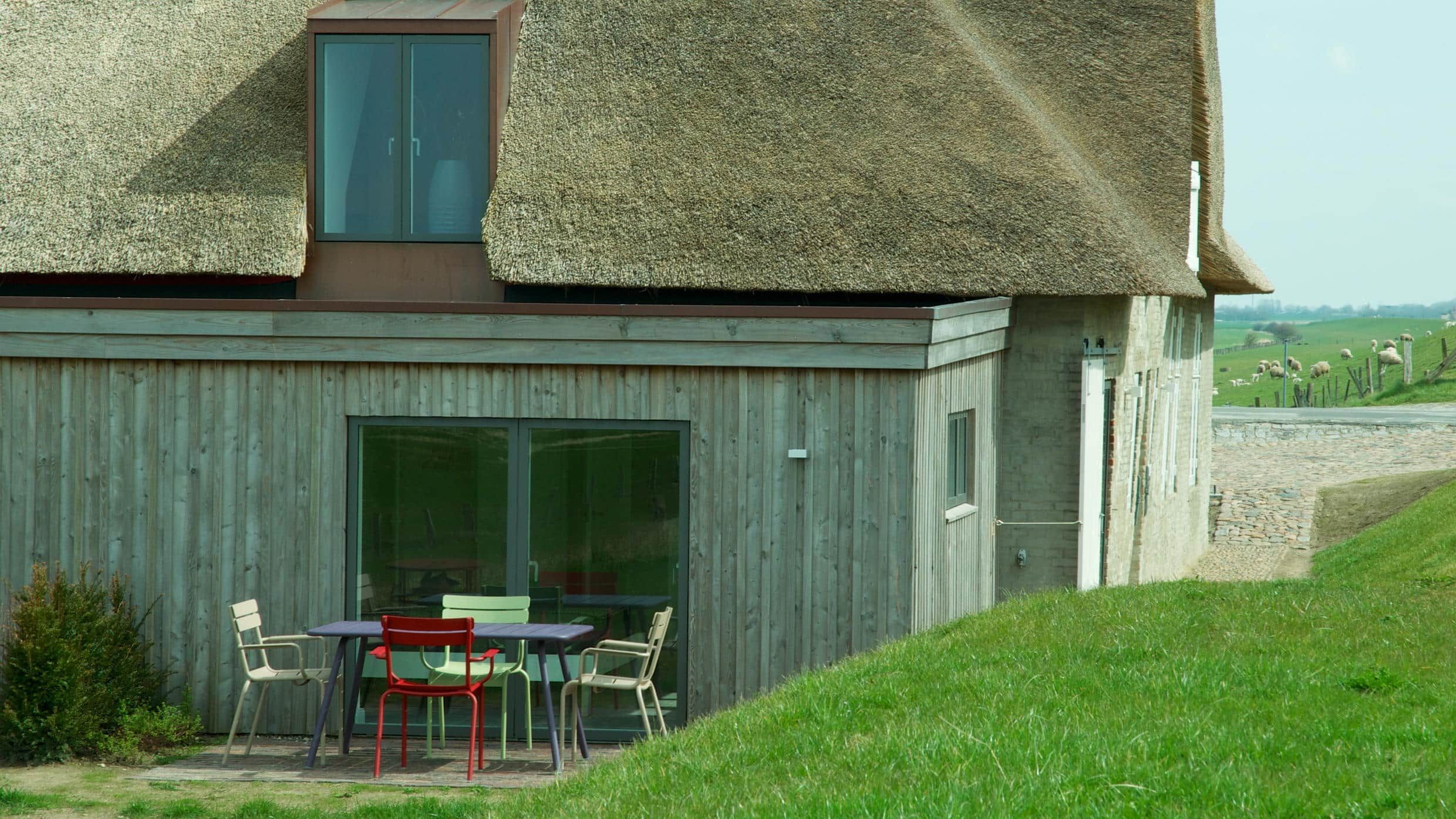
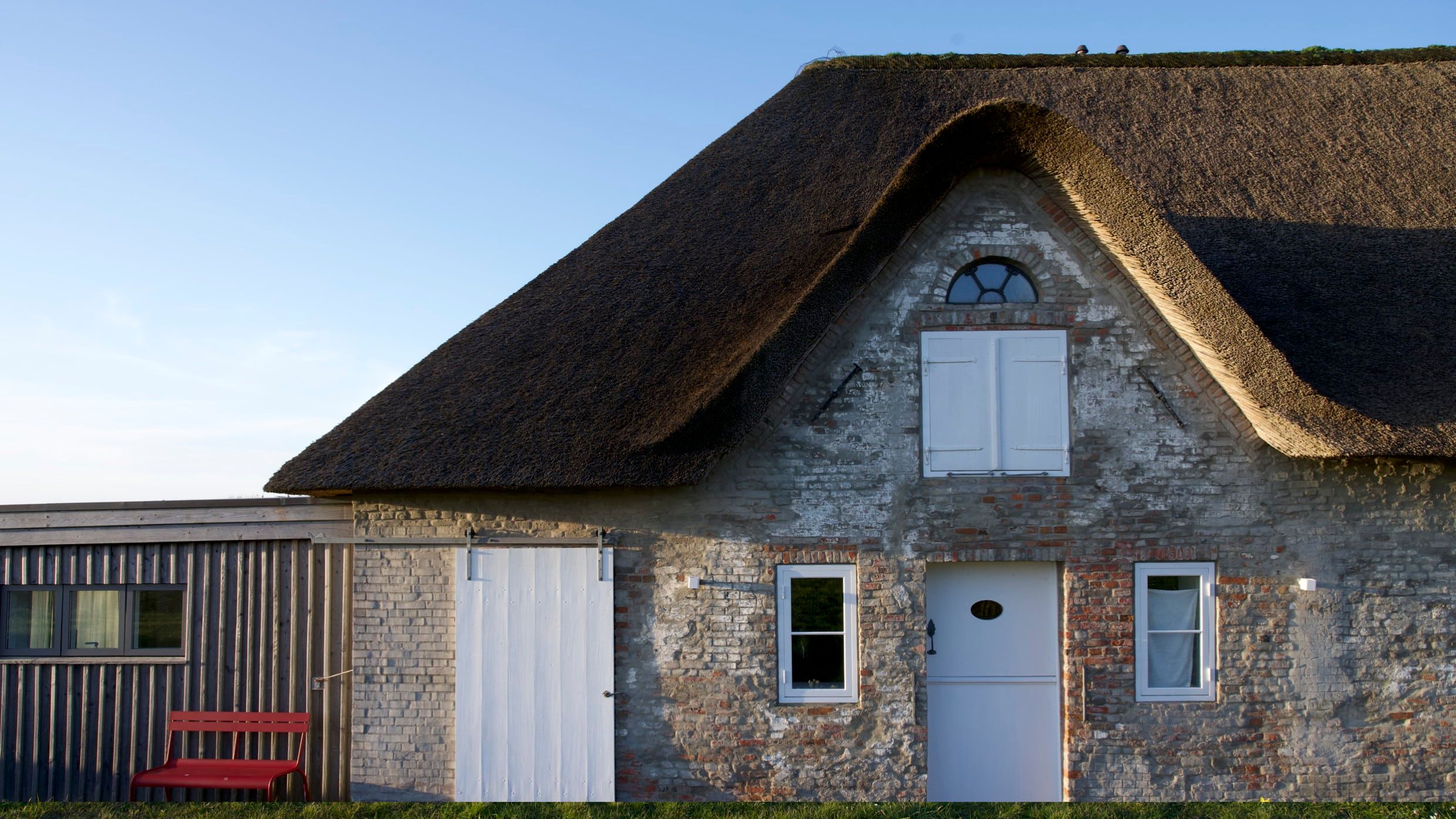
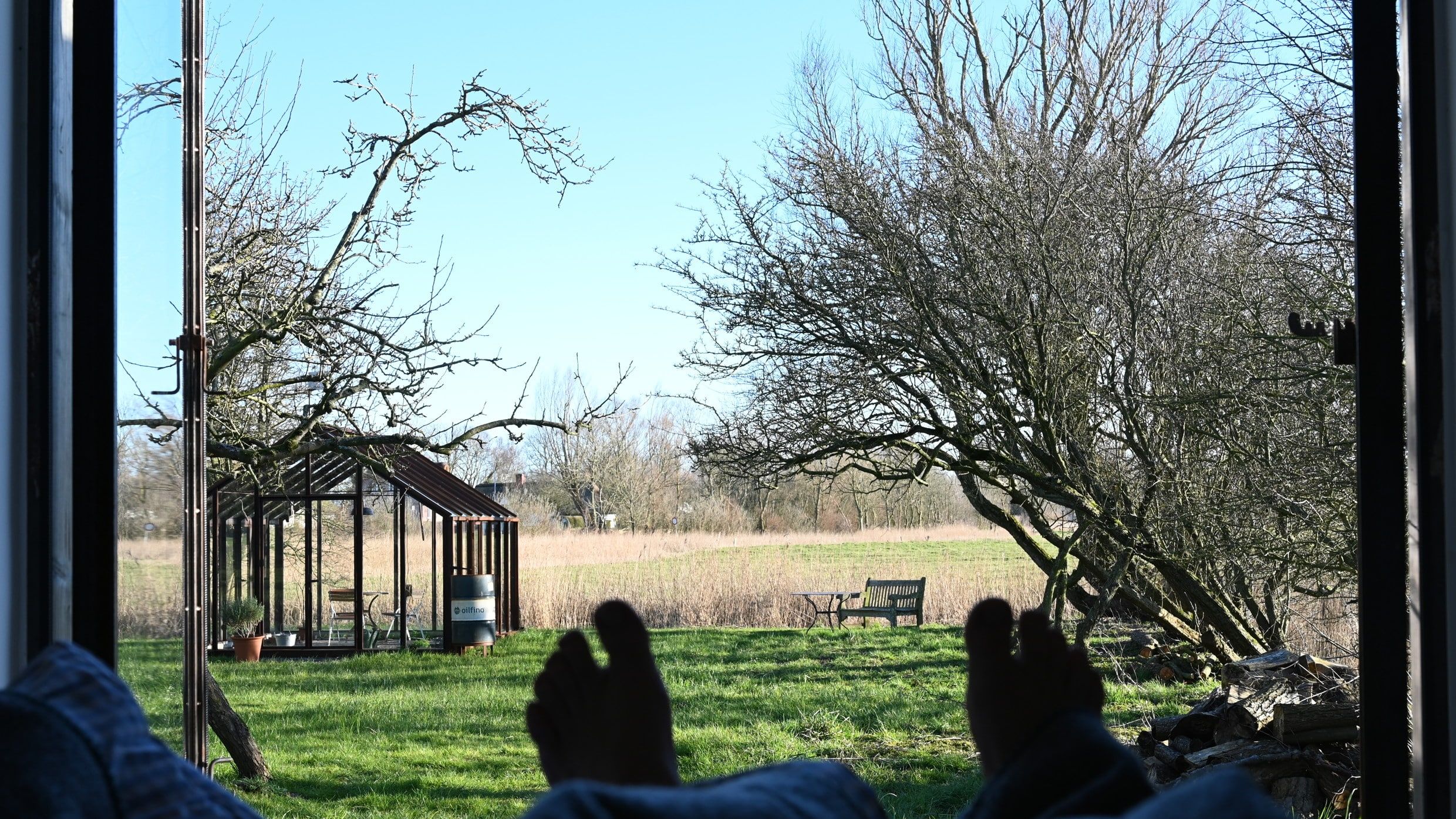
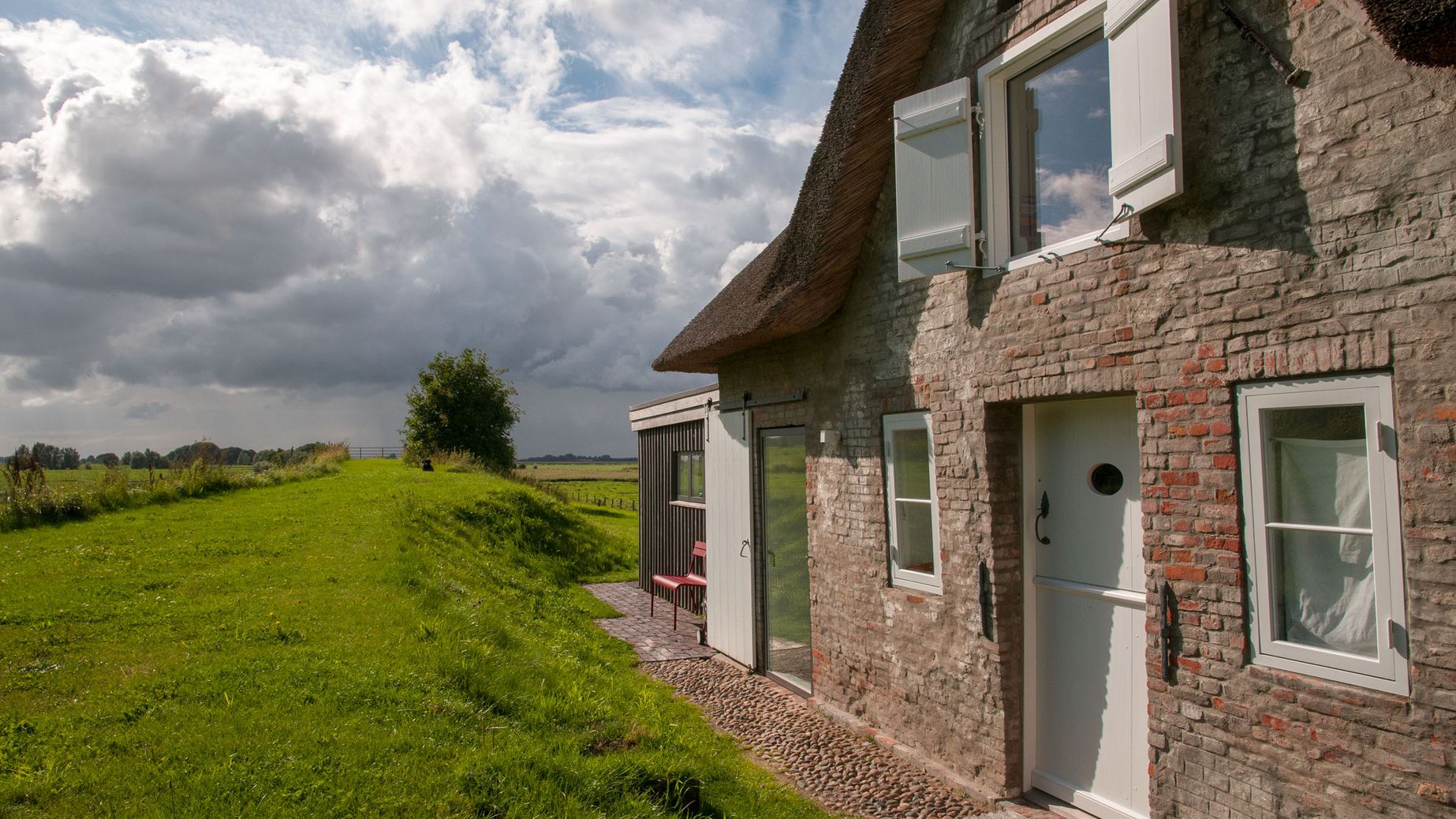
The main house, built around 1750 and meanwhile listed as a cultural monument, looks back on a remarkable history. It was originally built as a customs station. Countless goods transports to the Halligen (small islands without protective dykes off the coast of Schleswig-Holstein) and North Frisian islands passed the storehouse, as the building was still situated right next to the harbour until the great storm tide of 1962. Today, however, it is located on the so-called “summer dyke”, as the harbour was moved several hundred metres out for coastal protection and shielded from nature’s caprices with a new dyke. The view now sweeps over the dyke, the own orchard behind it and the meadows in front. The sea, mudflats and the endless horizon round off the panorama into infinity. From time to time you can see the sheep passing by on the dyke, sometimes nearer, sometimes farther away. Or occasionally people, mostly locals, strolling through the Wasserkoog on their walk around the village.
The official function of the building as a customs post also explains its unique location directly at the dyke, as no other buildings were permitted in this location.
Moreover, locals also know the house as a village inn. Farmers and carters used to unhitch their horses in the so-called “Durchfahrt” (gateway) and have something to eat or drink whilethe loading of the goods was progressing as usual. This tradition was maintained until 2008: when the last innkeeper, Liese Volquardsen, affectionately known to everyone as Aunty Lieschen, died, an era came to an end.
Nevertheless, the place remained in the local public mind even then. During and after the refurbishment, which lasted several years, the neighbours, the priest and other dignitaries would often drop by to get to know the new neighbours and to see what would become of “their” inn.
Even today, the residents of Wasserkoog meet here at least once a year. This is because the turn of the year is traditionally celebrated up here on the dyke. After all, at seven metres above sea level, the estate is situated at the highest point for miles around and therefore affords the best view of the fireworks in the nearby town of Husum. So some of the 70 villagers are sure to be there. And as a guest, you are quickly in the middle of it all, if you want to.
Ultimate pleasure, at 7 metres above sea level
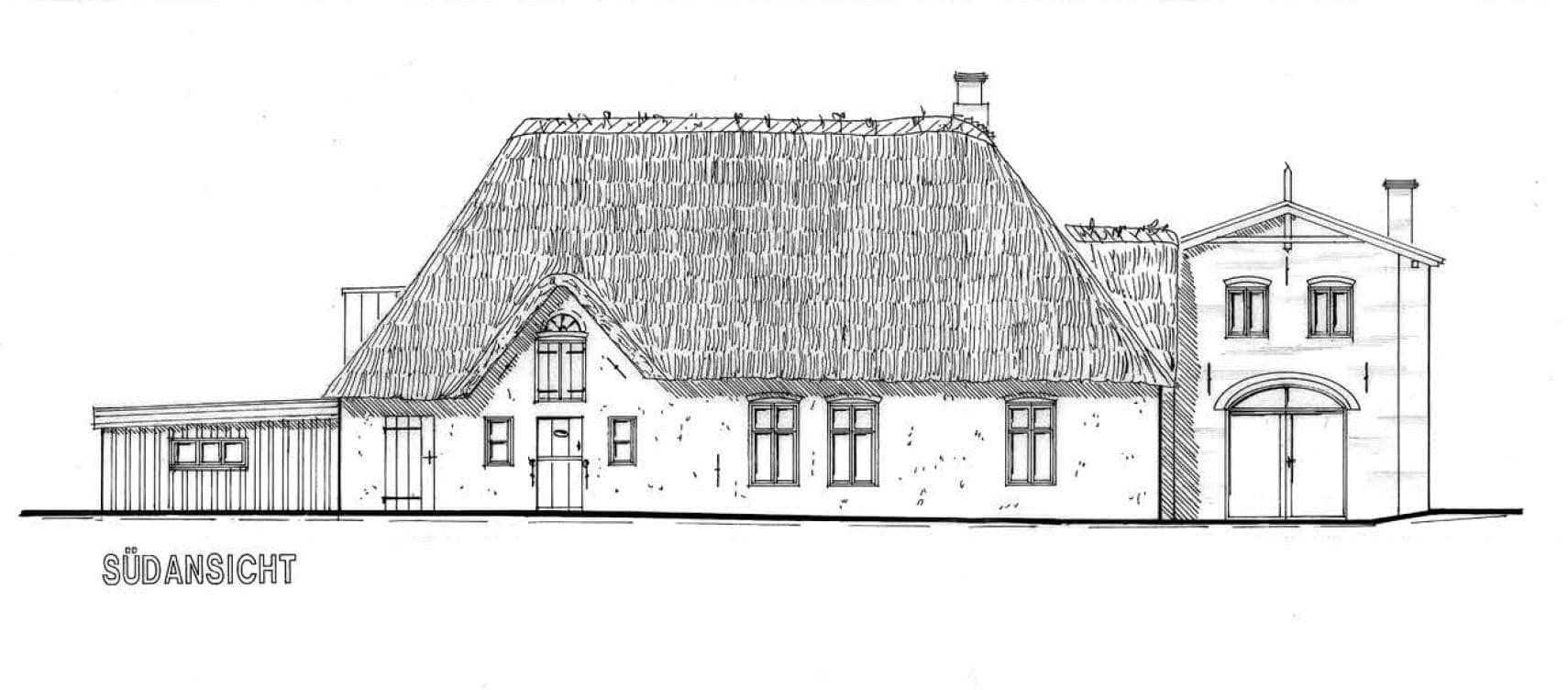
For André and Sebastian, the house is far more than just an ordinary dream of a holiday home that only comes true for a few weeks each year. André, who runs his own film production company in Cologne and has made a name for himself with documentaries about Willy Brandt, Martin Suter, Reinhold Messner, Agatha Christie, Perry Rhodan or Falco, among others, often relocates the company’s head office to this place. His small team also raves about the tranquillity and the way they can focus on their work here. The former “Durchfahrt”, a brick gatehousethat was added to the main building in 1902, serves as a place of work and retreat.
André’s genuine love for the area is evident from the fact that he has been actively involved in the region for years, has established a good network of contacts and is now a member of the local council. His husband Sebastian, pedagogical director of a primary school in Cologne, comes whenever he can. When the two of them are around and guests need something or feel like a chat, they simply knock on their door.
If they are present, you will see them anyway: laundry is hung outand flutters in the wind, apples, quinces and pears are harvested and processed into homemade jams and jellies. Or perhaps you receive an invitation to a barbecue – where you might learn about the local “chitchat”along the way.
The hosts even keep bee colonies. A neighbouring beekeeper takes care of the beehives so that, with a bit of luck, guests can enjoy homemade honey.
Modern living experience in a historical ambience
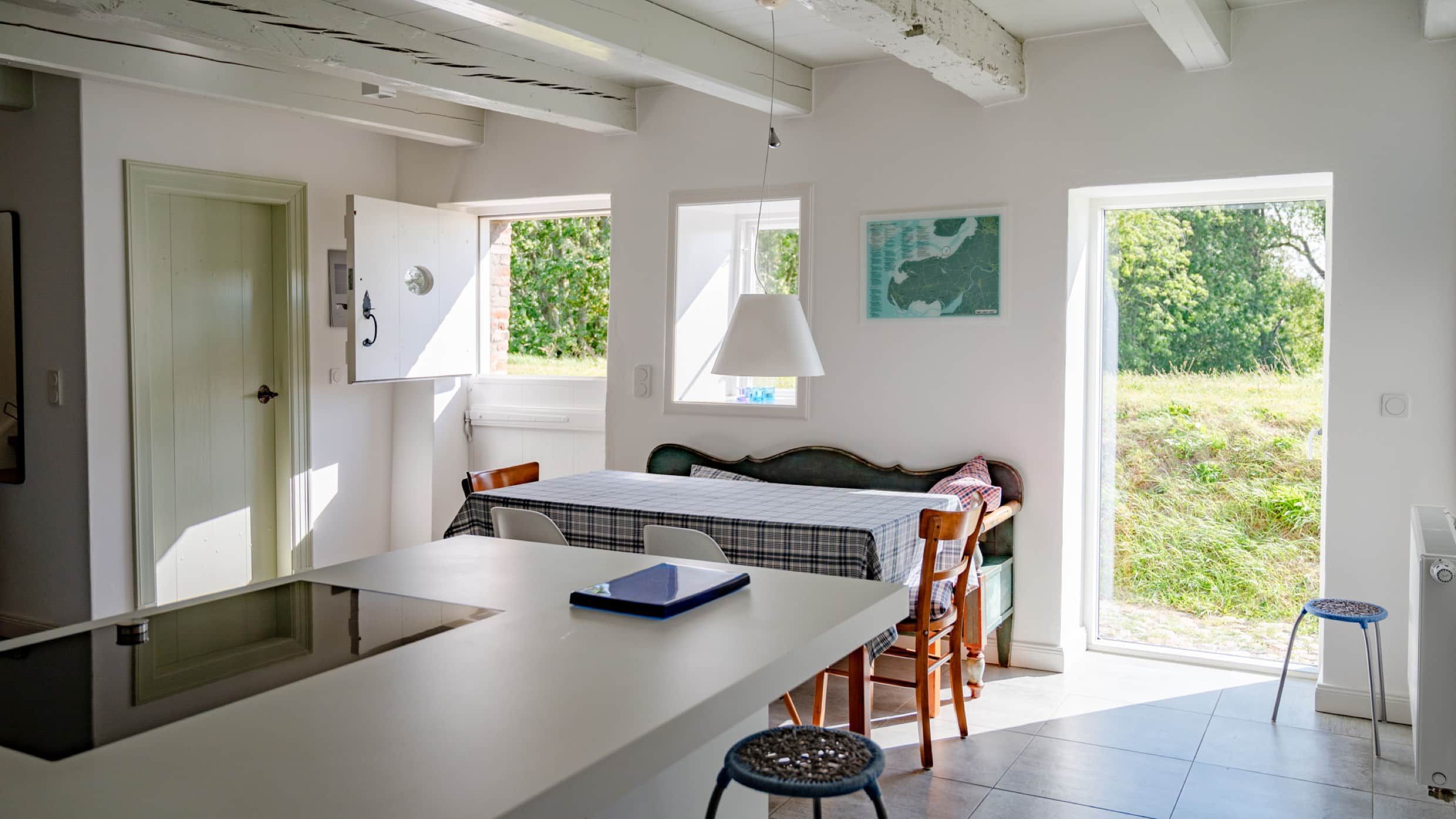
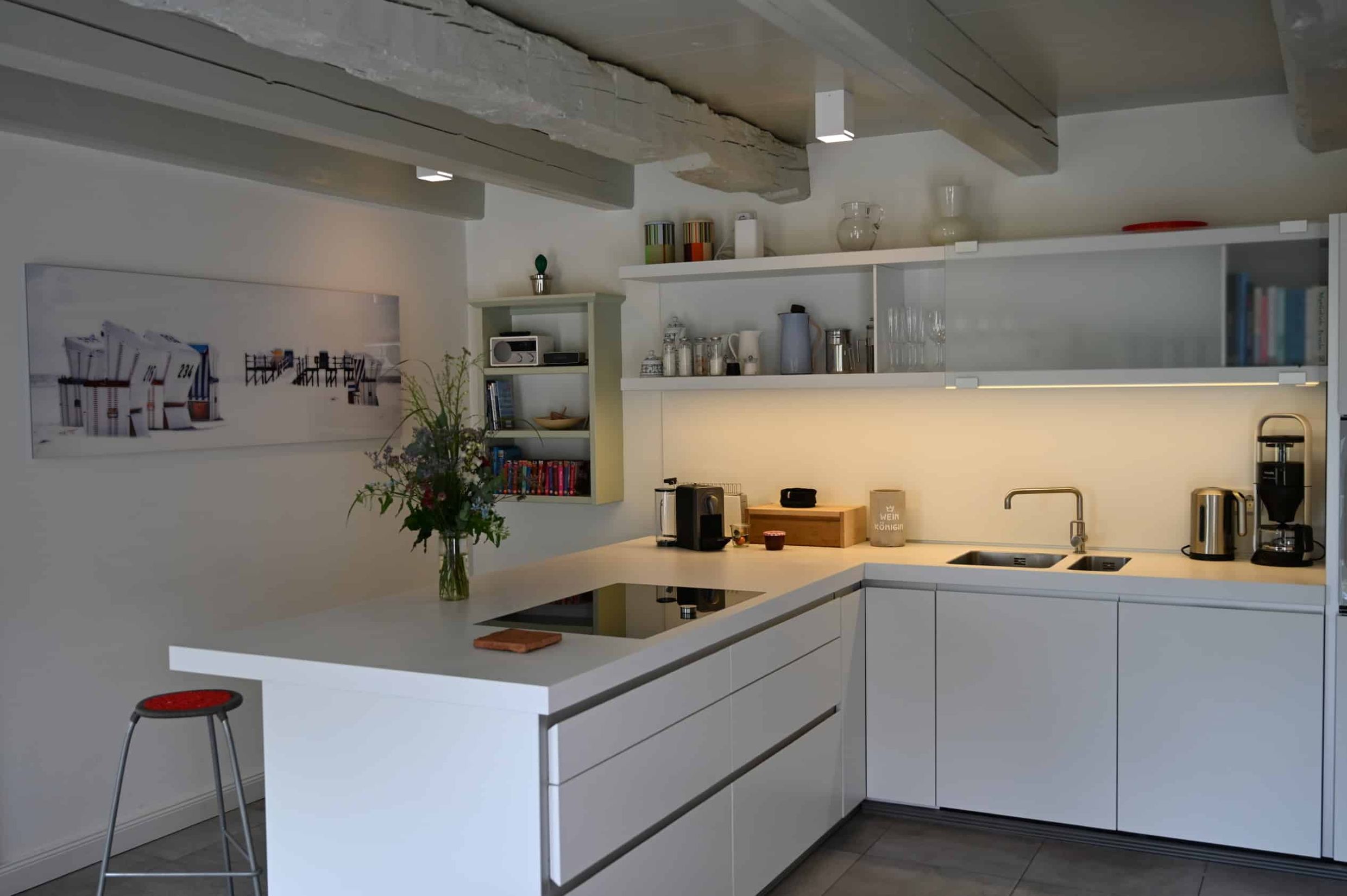
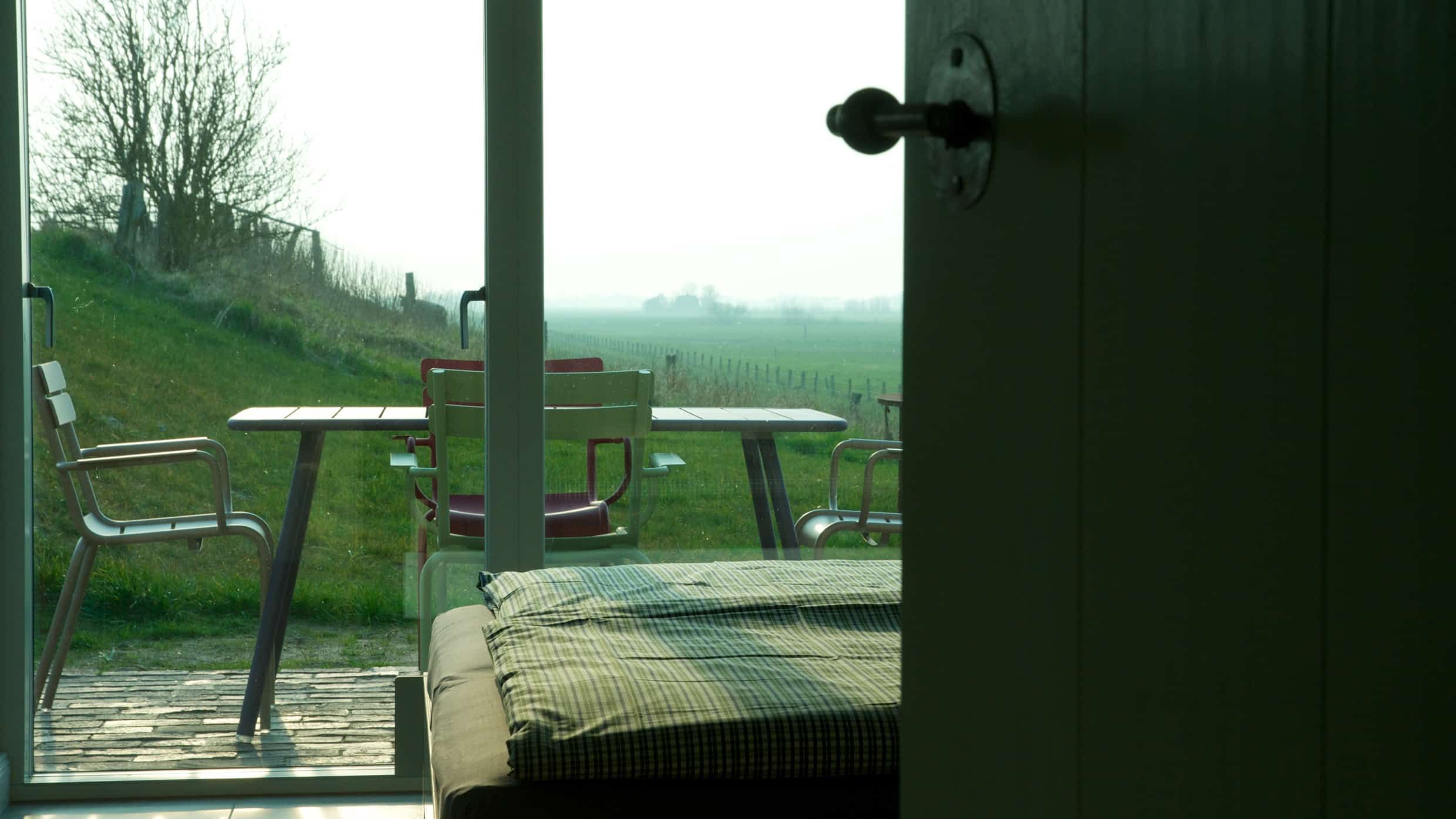
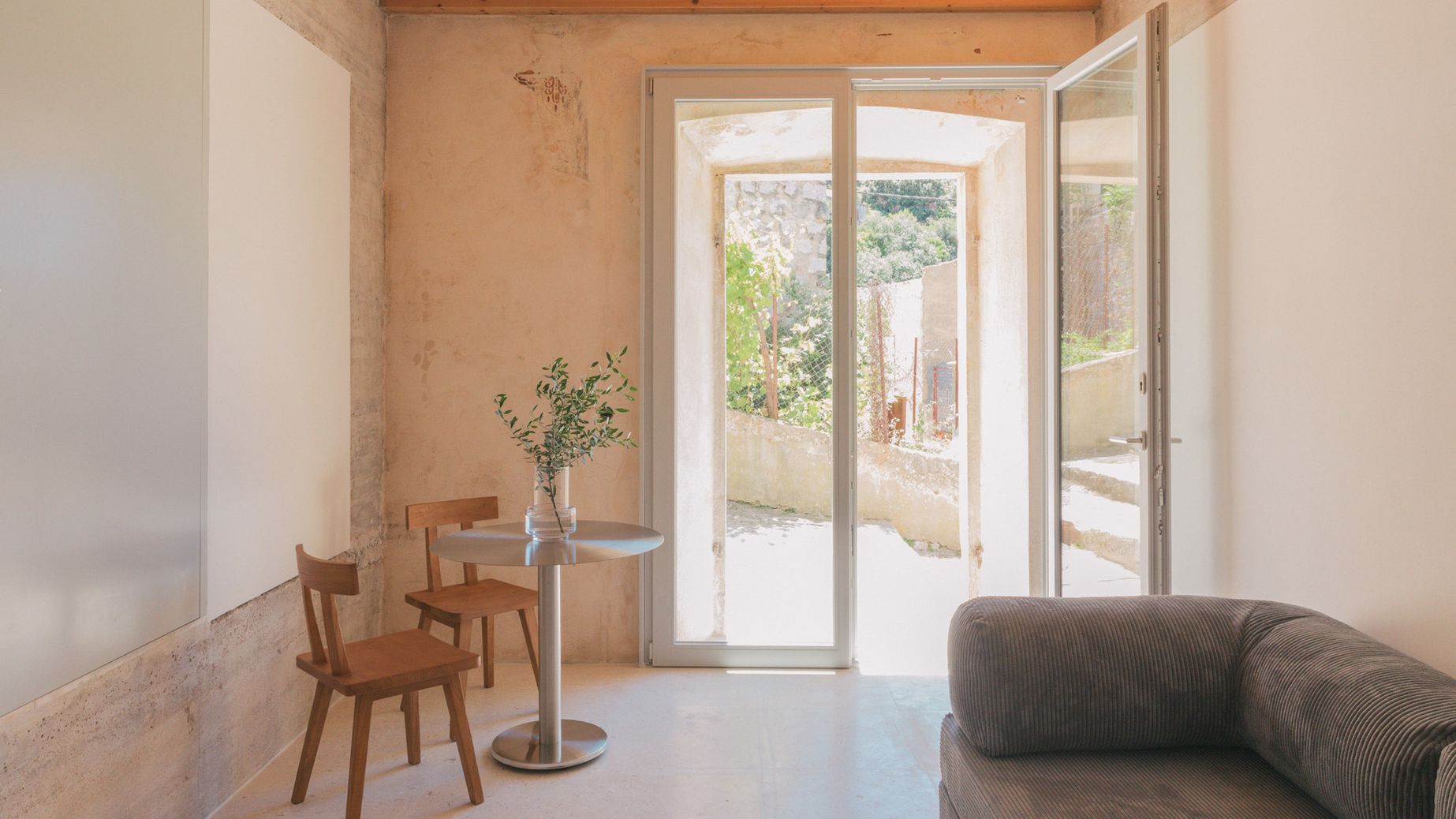
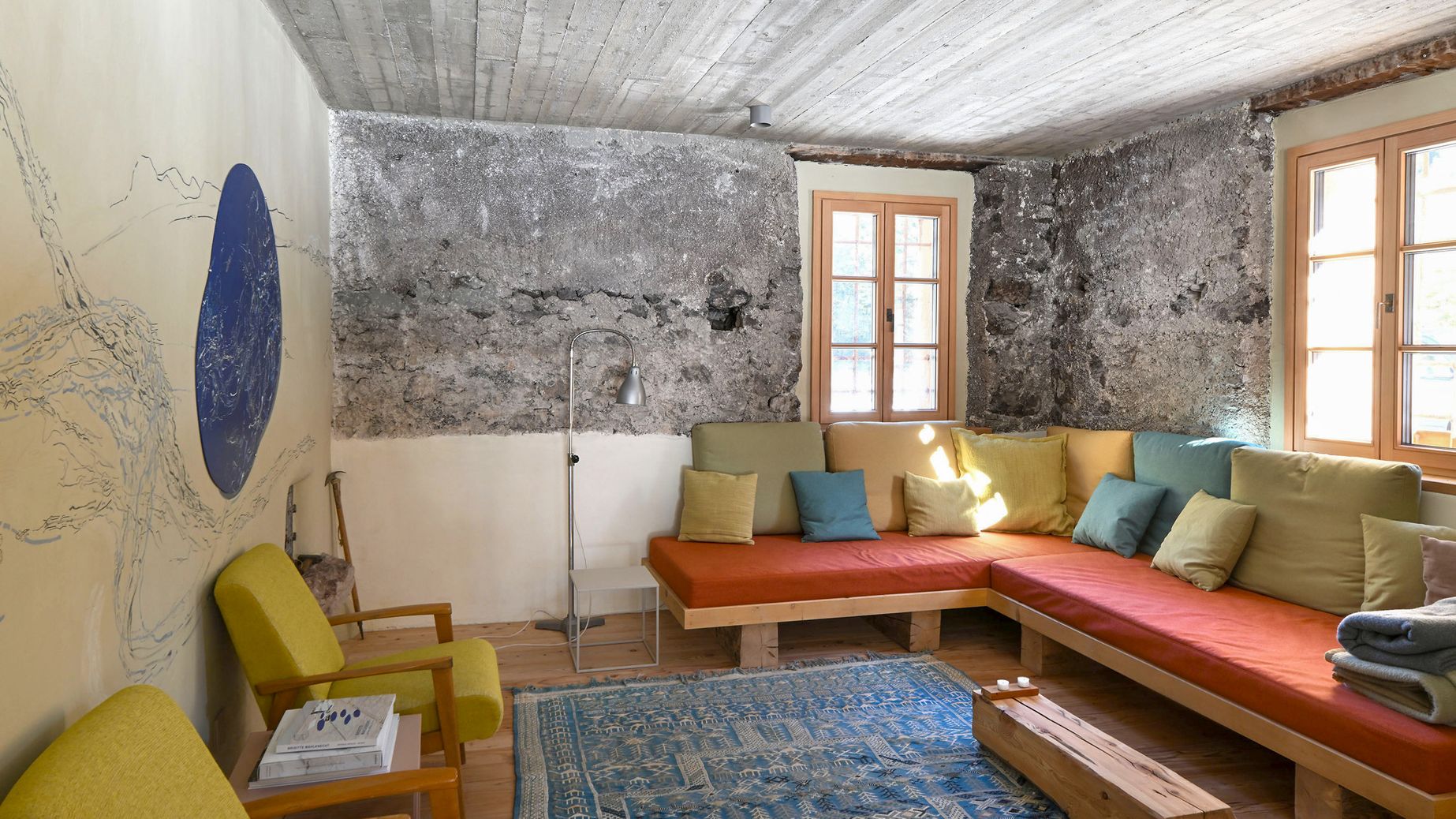
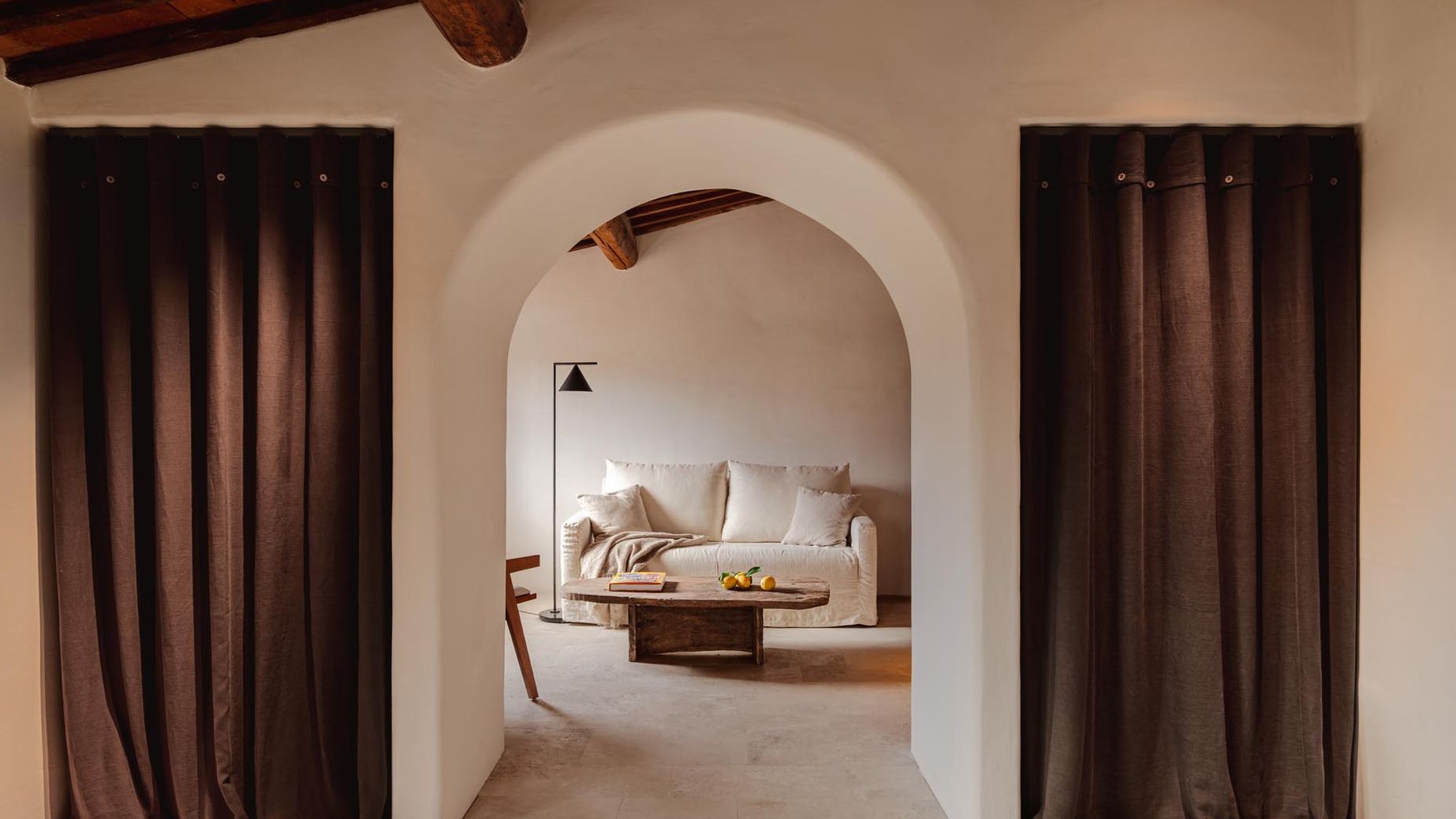
To the west of the main house, there is a 100-square-metre, two-storey holiday apartment, including a loft, where up to five people can spend unforgettable days. The “house within the house” welcomes guests with a spacious eat-in kitchen, which is also very popular with passionate hobby cooks as it is well-equipped. From here, you can access the bedroom with west-facing terrace, which is located in the annex. Upstairs, there is a large combined living/sleeping area with bathroom. Those who want to retreat to a completely secluded place can climb the ladder to the platform in the attic, which can optionally accommodate a fifth person. The higher you climb, the more fantastic are the views, of course.
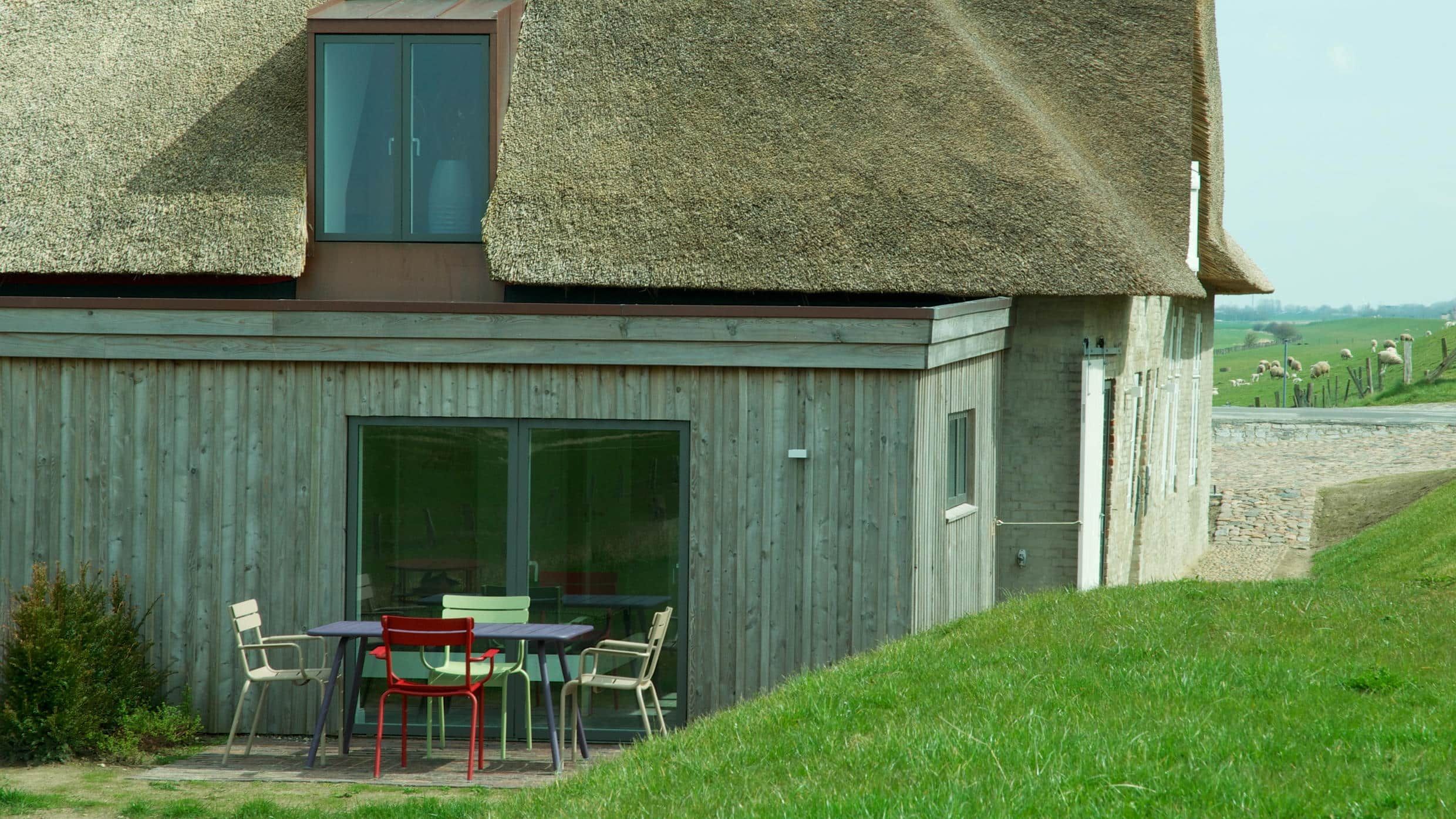
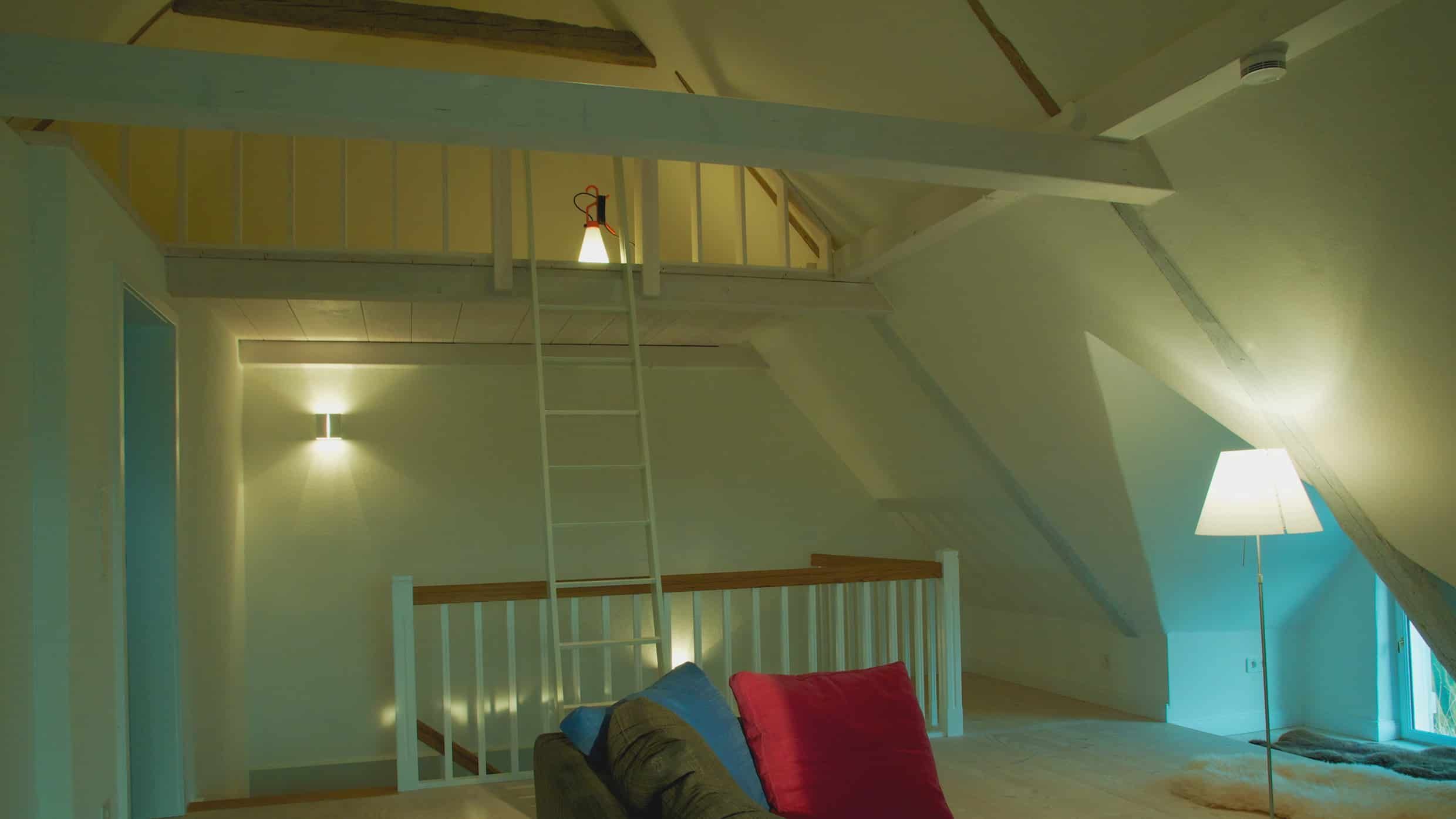
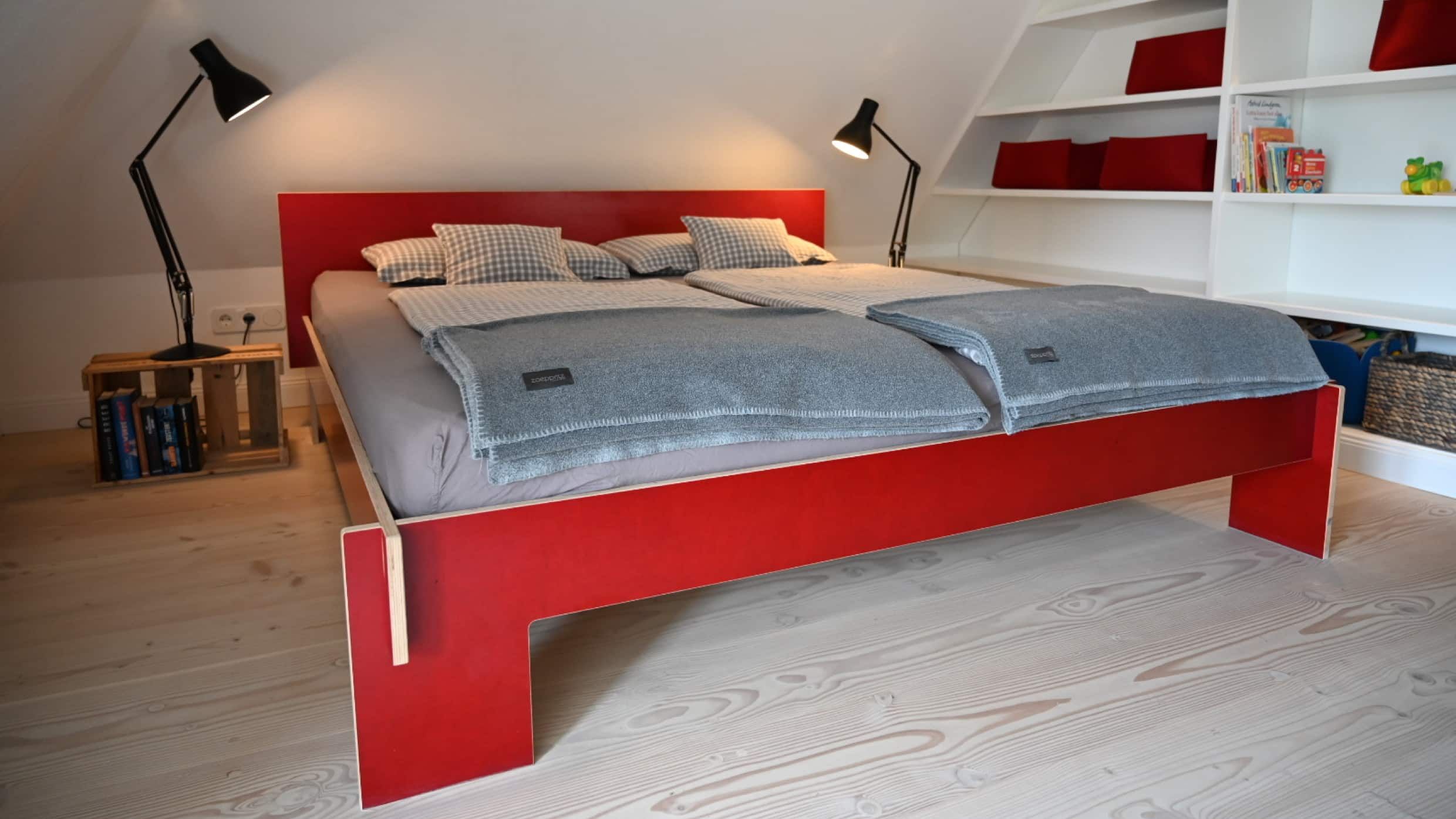
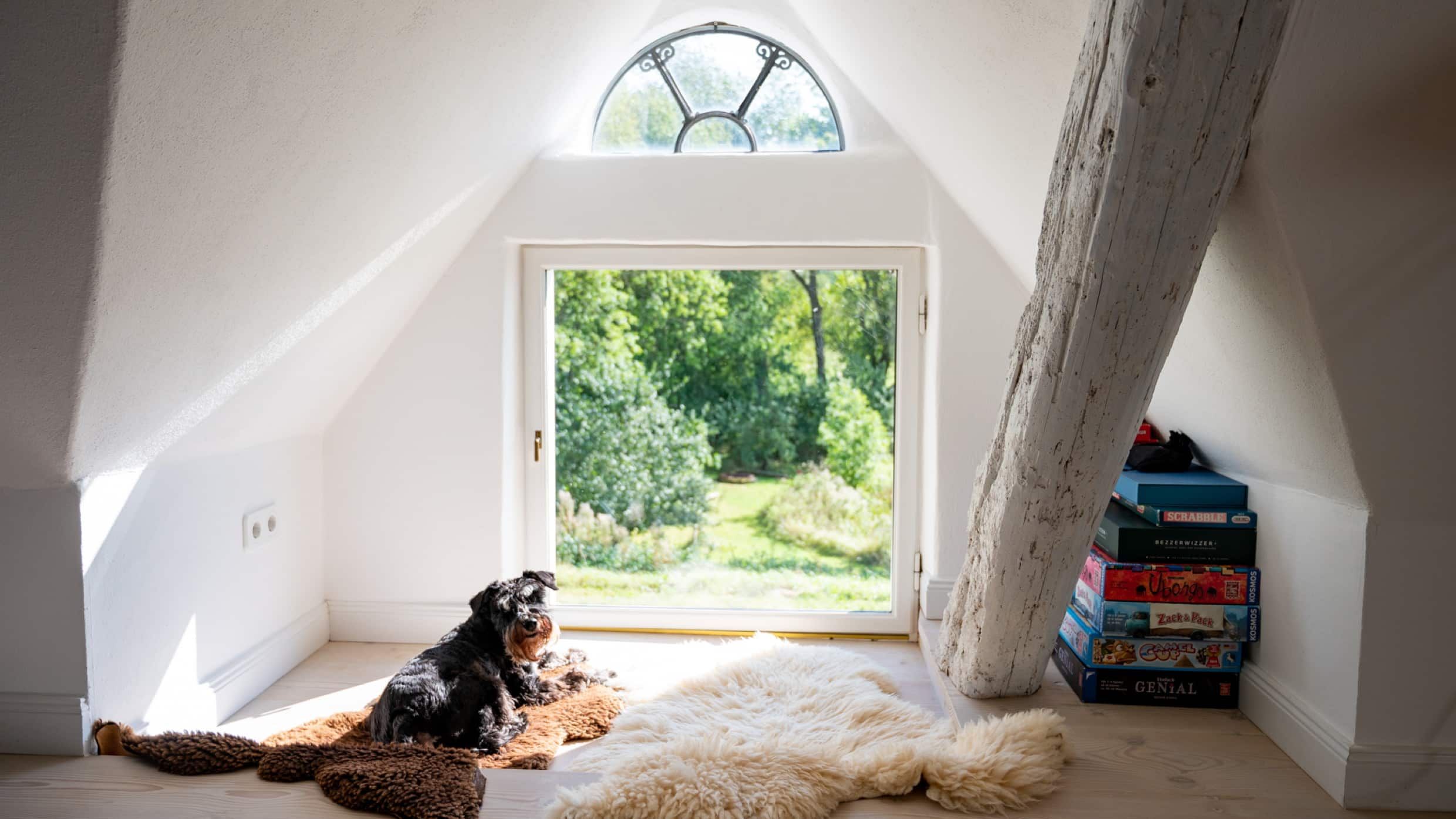
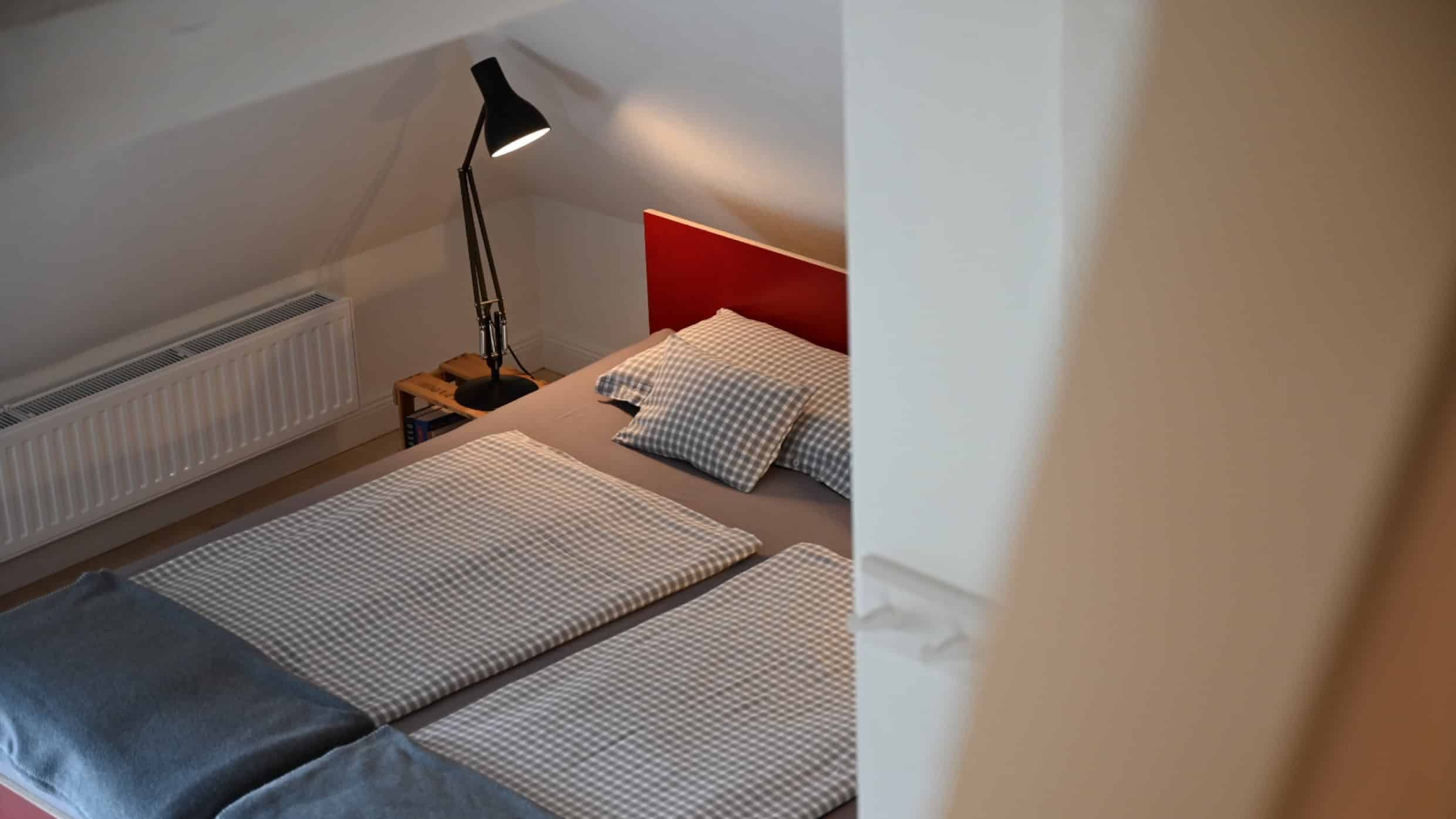
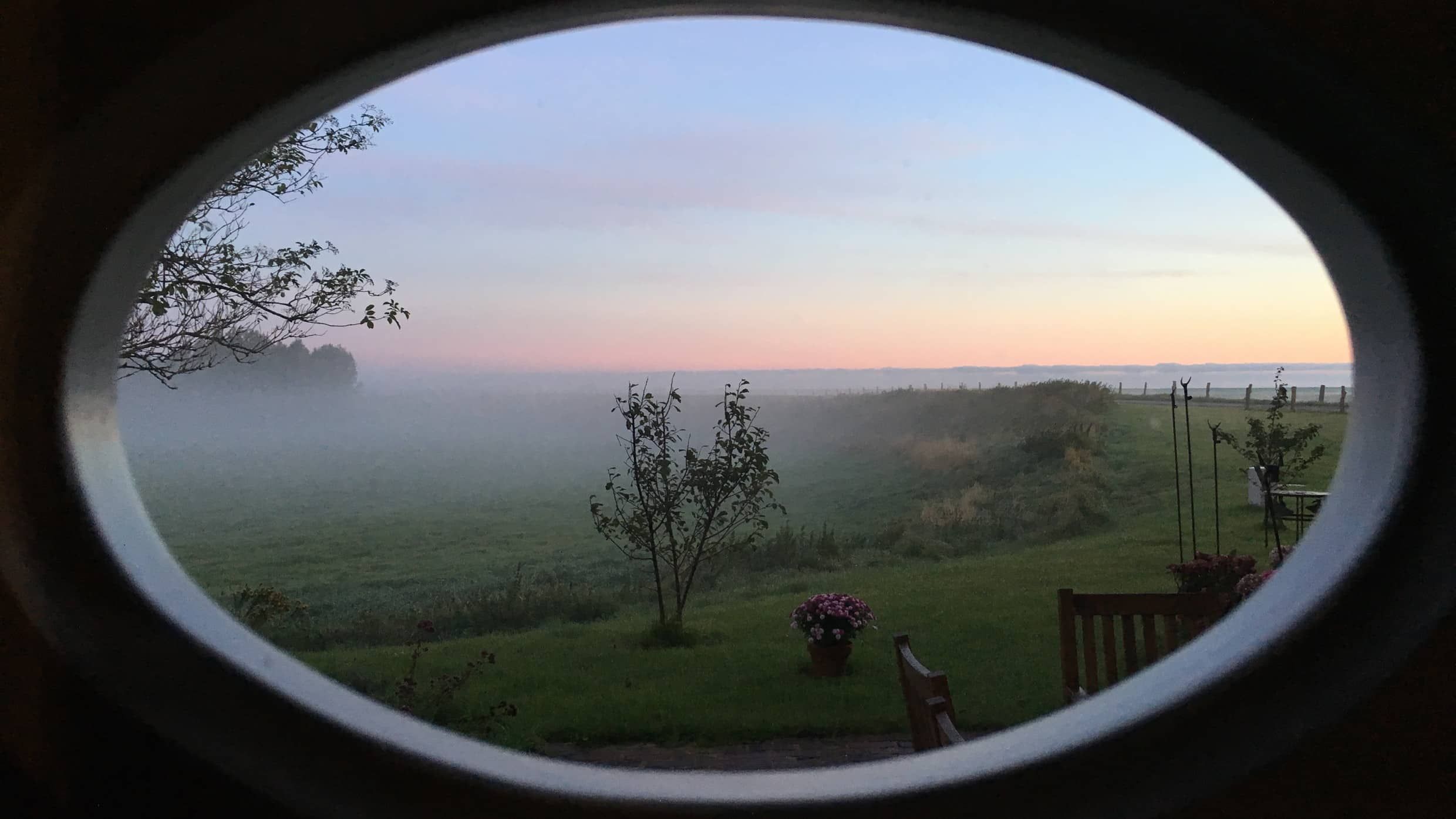
When leaving the holiday accommodation, you directly get to the large orchard with pond, which is situated behind the dyke. The former chicken coop has been converted into a spacious sauna house with three floor-to-ceiling windows and a relaxation room. A greenhouse, which can be transformed into a tea house, various resting spotsand a hammock perfect the idyll.
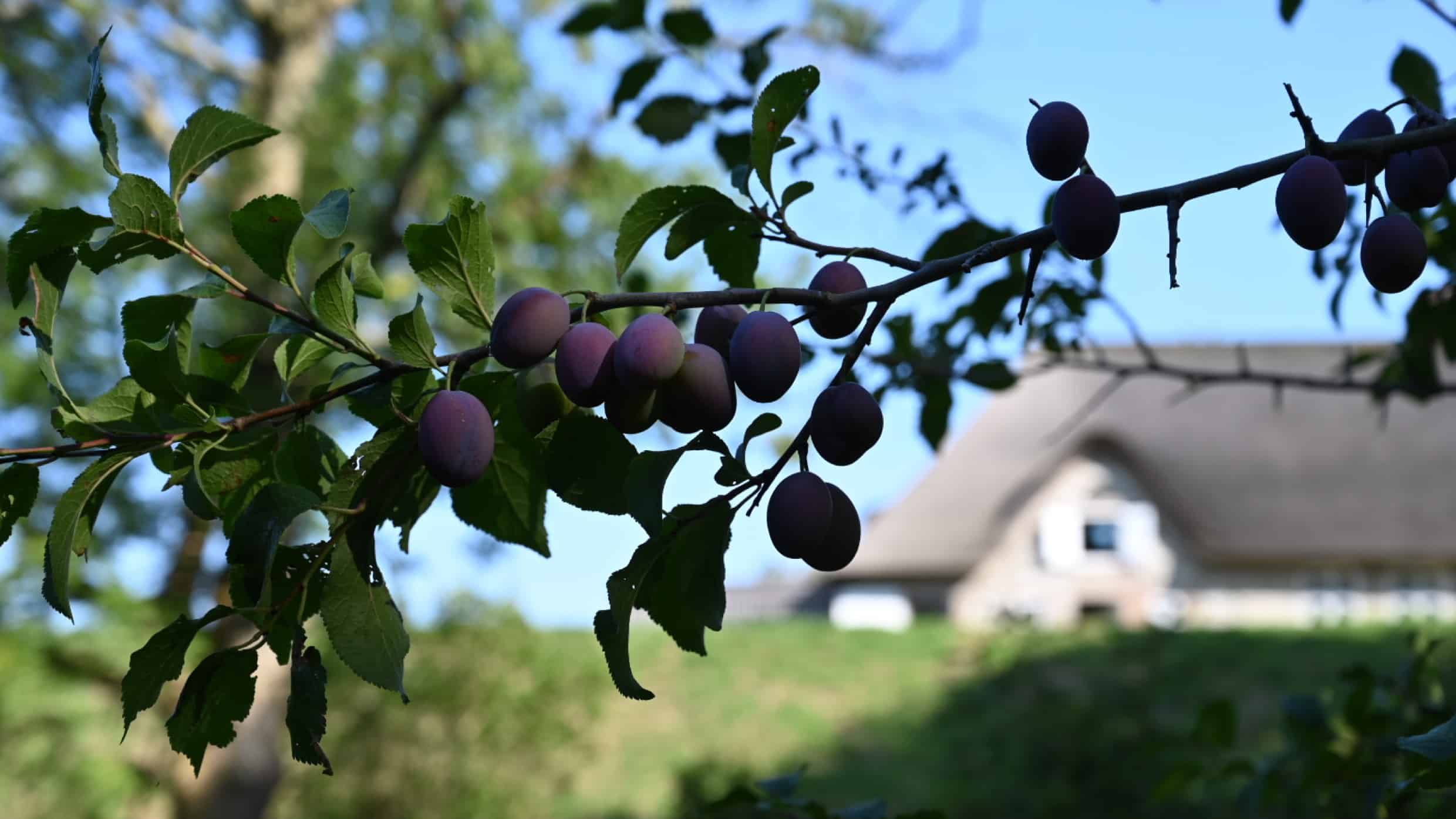
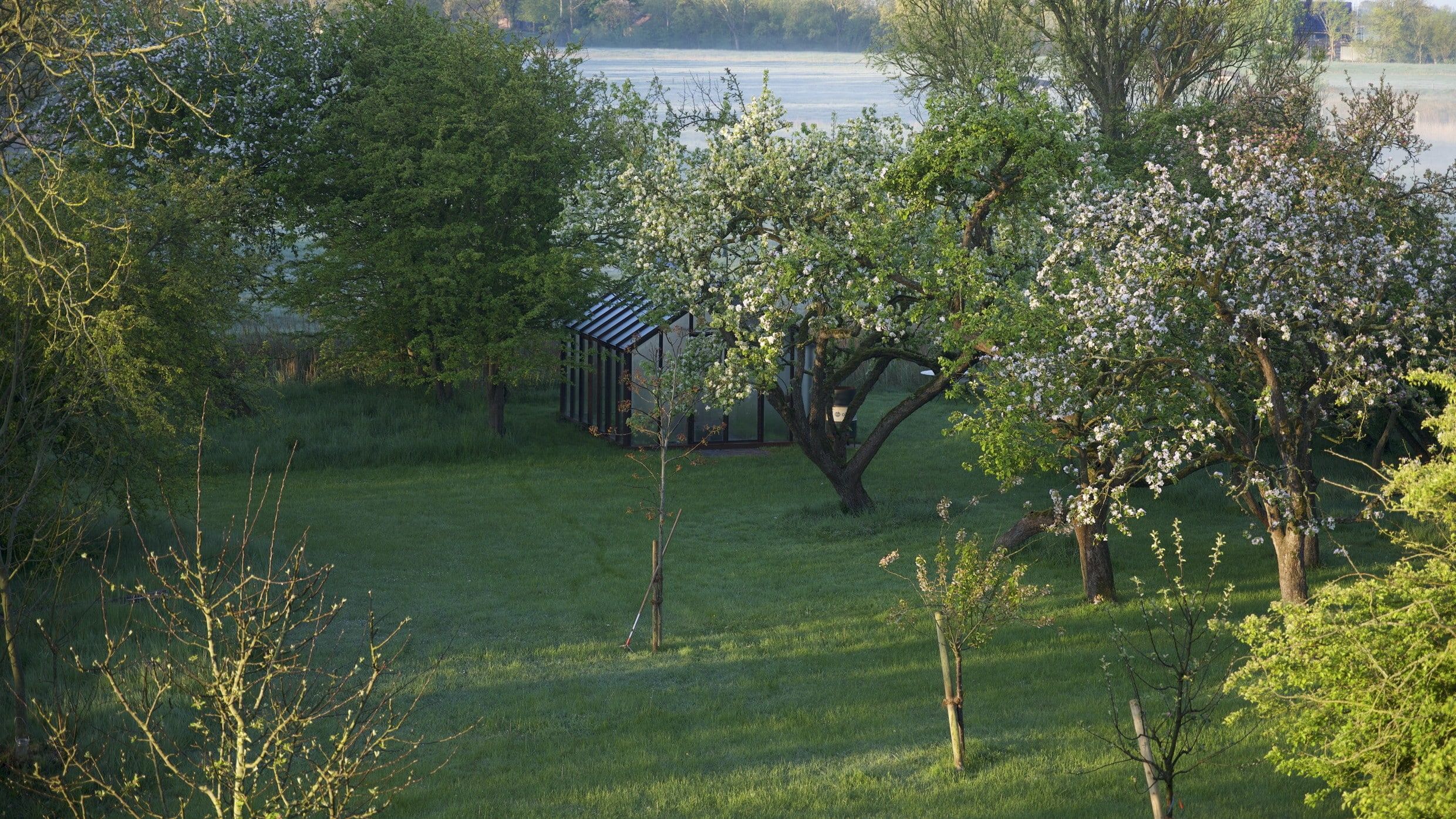
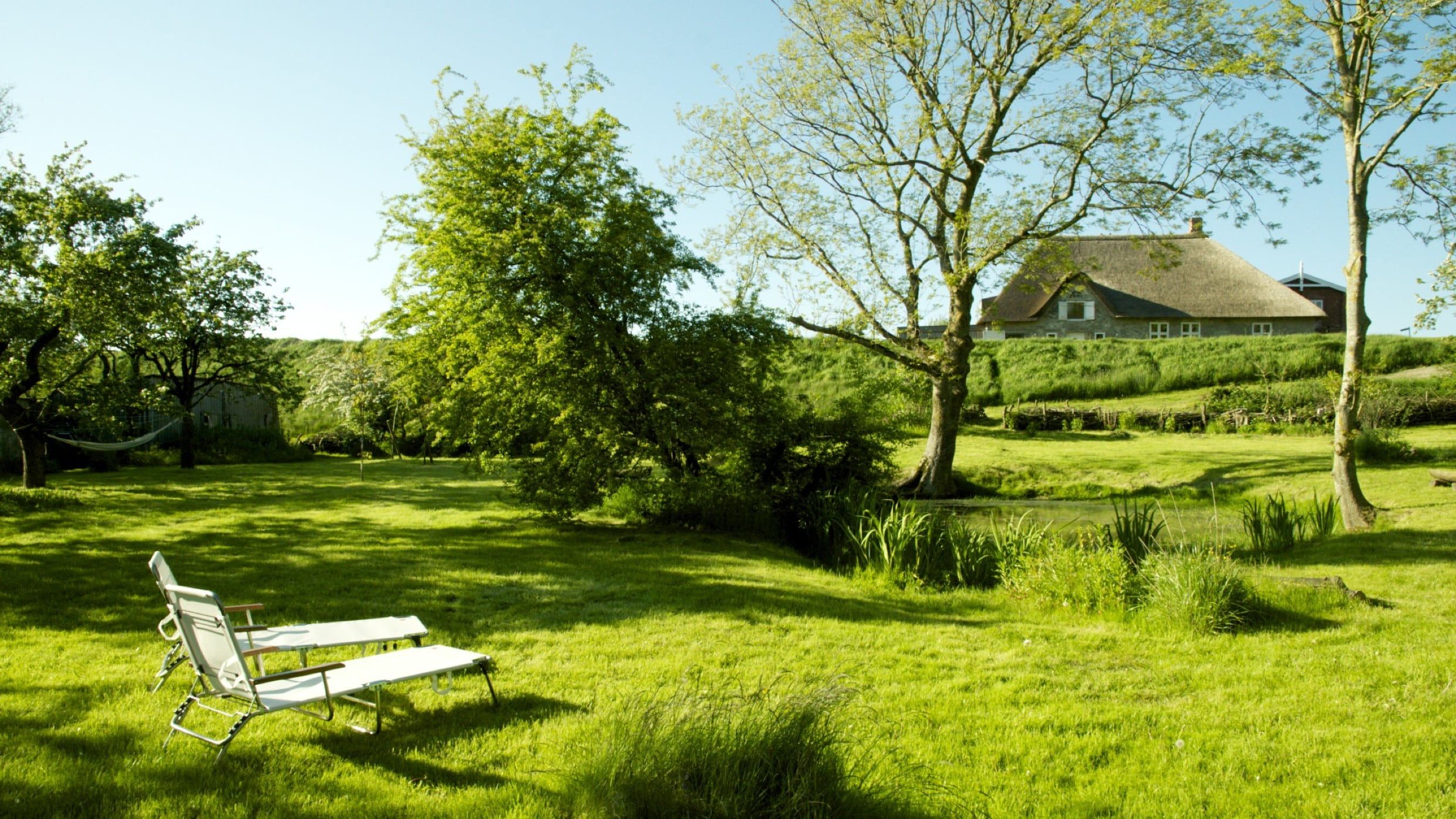
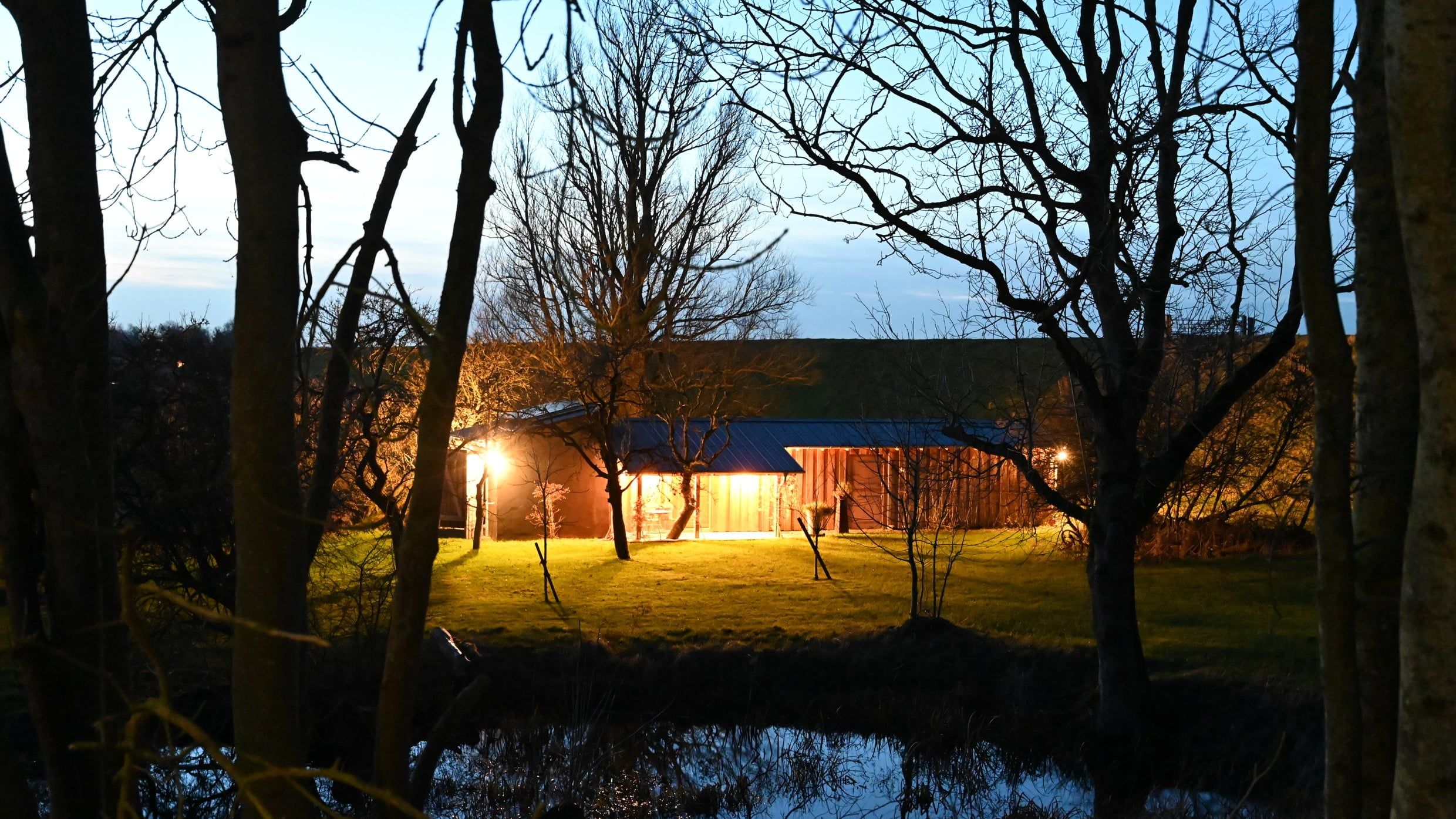
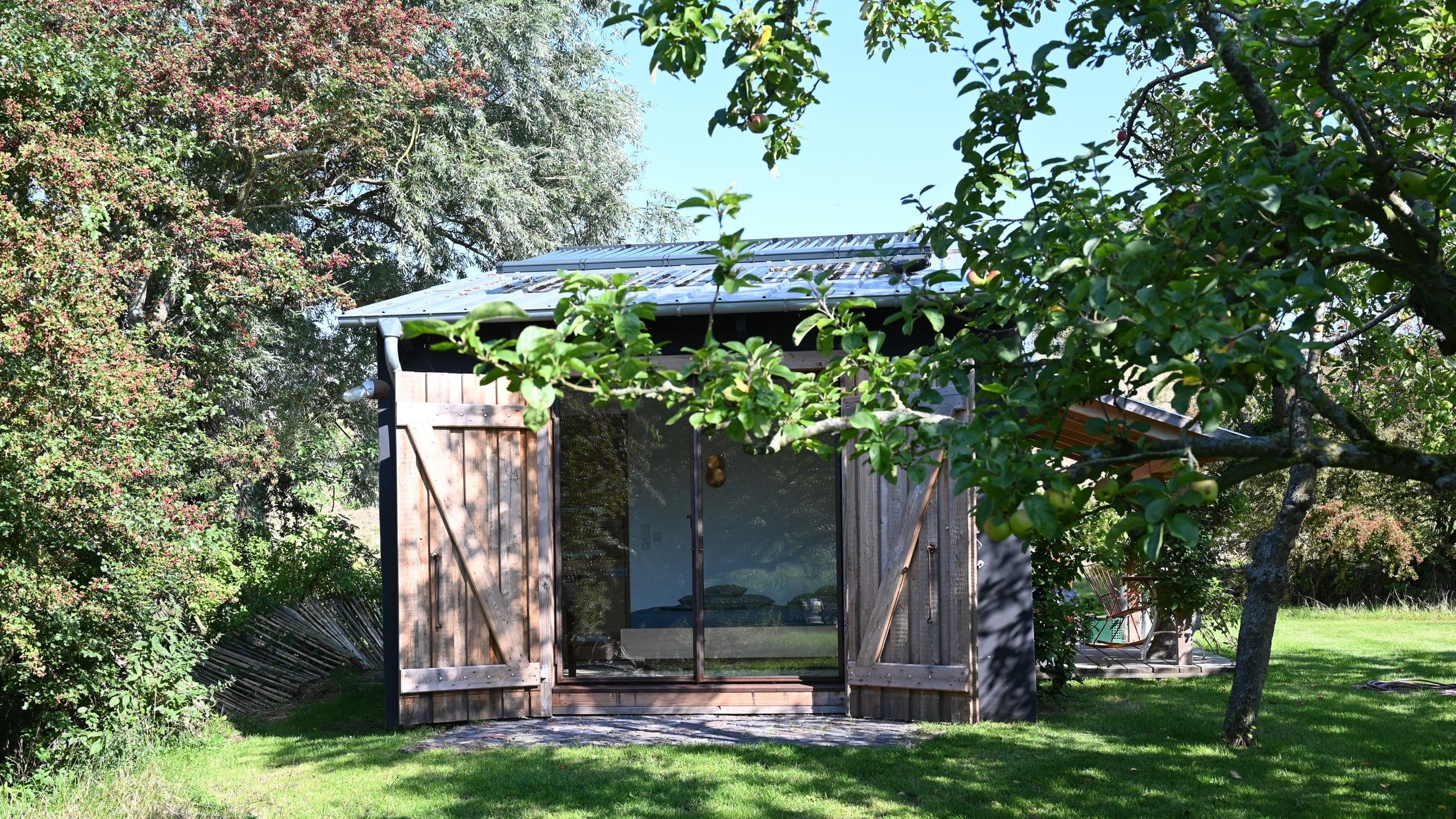
However, before all this was ready for the owners and guests to enjoy, the building had to be given back its original structural integrity. In the course of a conversion of the inn in the 1960s, several load-bearing walls had been removed. A disastrous intervention that had to be painstakingly corrected. Even architect Barbara Barten was not completely sure at first whether this could be accomplished.
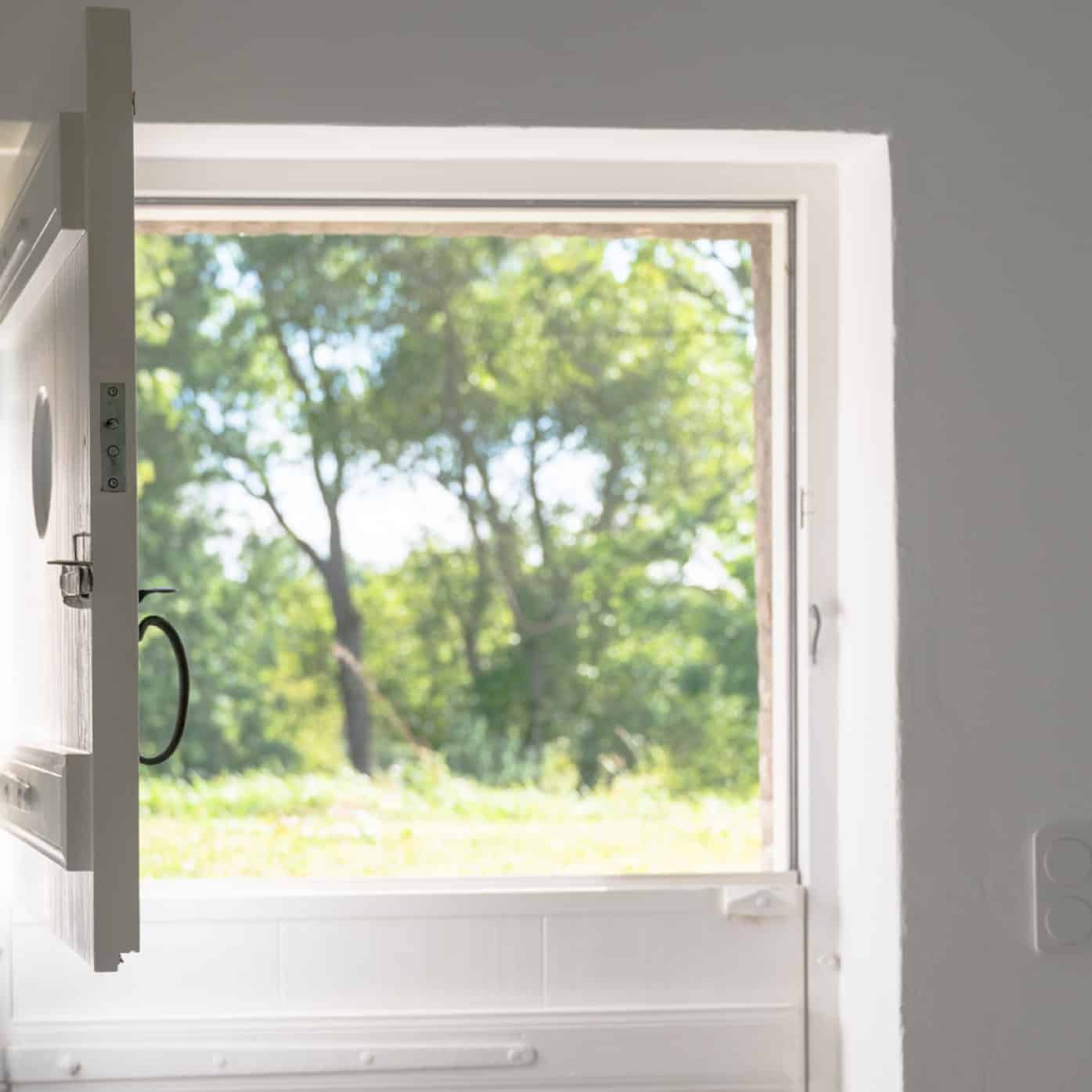
Well, time (and of course competent intervention) sometimes heals wounds in architecture as well – it was accomplished. Little by little, the various trades were able to revive the building in both its former and new splendour, adorning it with their craftsmanship right down to the last detail. Most guests are particularly struck by the work of the Danish carpenters. For example, the hand-planed doors with ornate iron fittings or thetypical Dutch door (Klönschnacktür; Low German for “chitchat door”), which once again welcomes visitors in style according to historical models. This two-part entrance door, typical of the region, makes it possible to have a conversation – sometimes a lengthy one – with visitors whom one does not wish to invite in. In this case, only the upper part is opened.
Open the door and enjoy great freedom!
Those who pull the door shut to enjoy a day in the surrounding area are spoilt for choice. The hosts not only have numerous personal tips for excursions, they also have five bicycles of different sizes available for their guests.
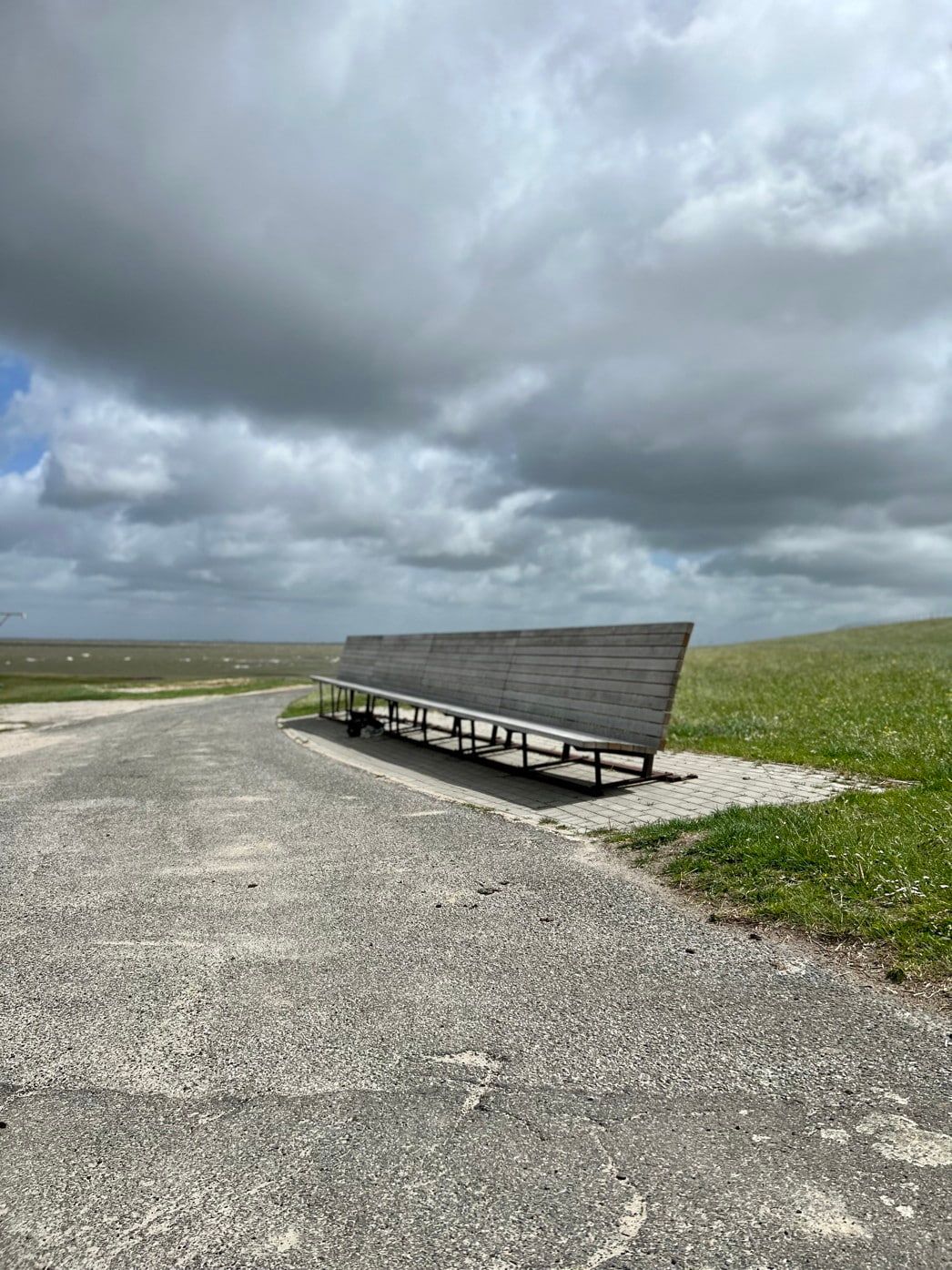
The tranquil sailing harbour of Everschopsiel, for example, is only a few minutes’walk away. It’s a great place for a sundowner or a refreshing swim in the adjacent harbour basin at high tide, when the coolwater of the North Sea comes in. Here you only meet locals and the atmosphere is very relaxed. One of Tetenbüll’s attractions has been standing in front of the harbour basin for a few months now: the “Long Bench”. Following a local council initiative by André Schäfer, the ornamental blacksmith Arne Prohn, who has also carried out many works in the Spieker, designed a 12-metre-long bench. The neighbours like to meet here, have a chat and enjoy the view.
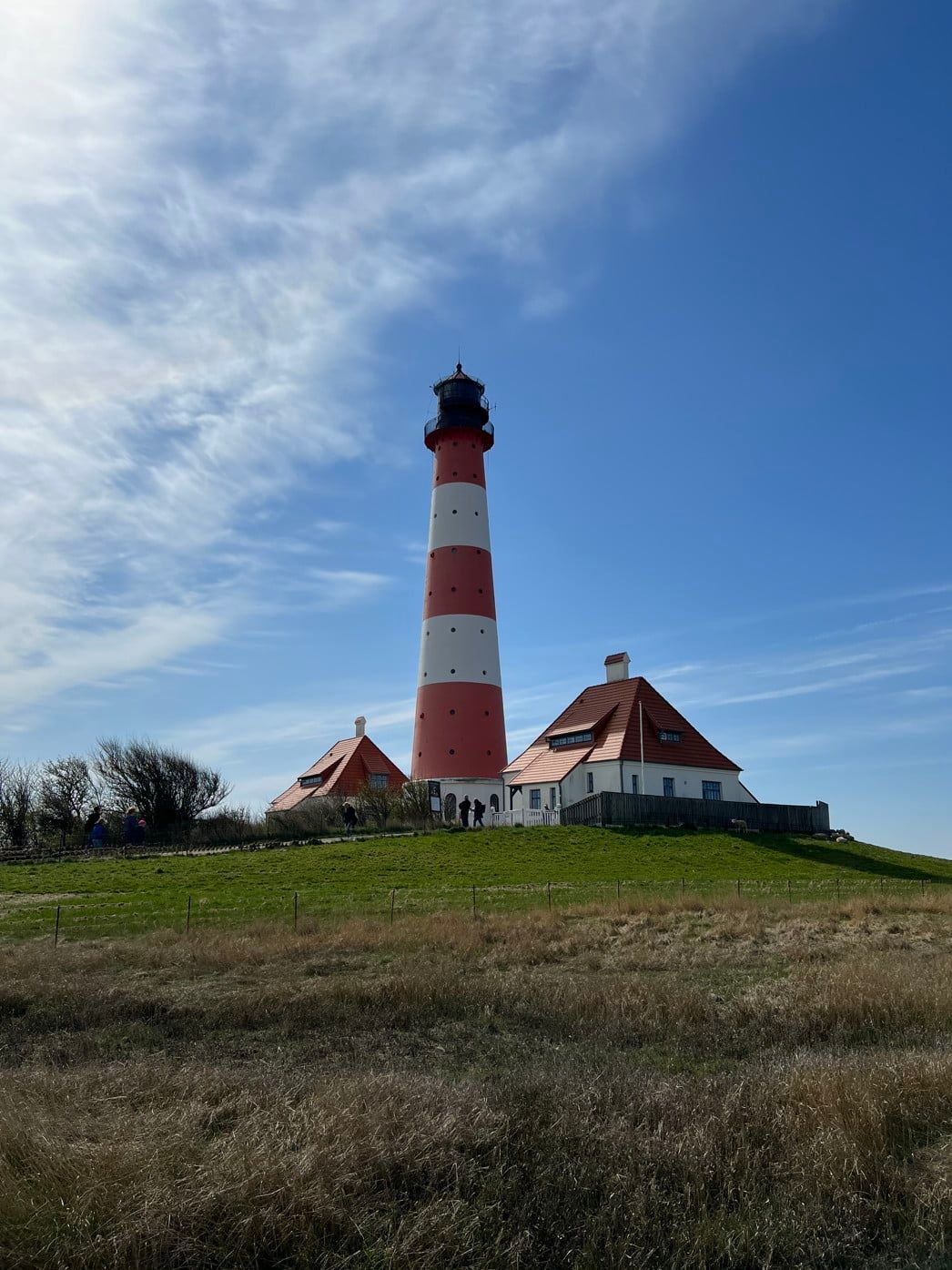
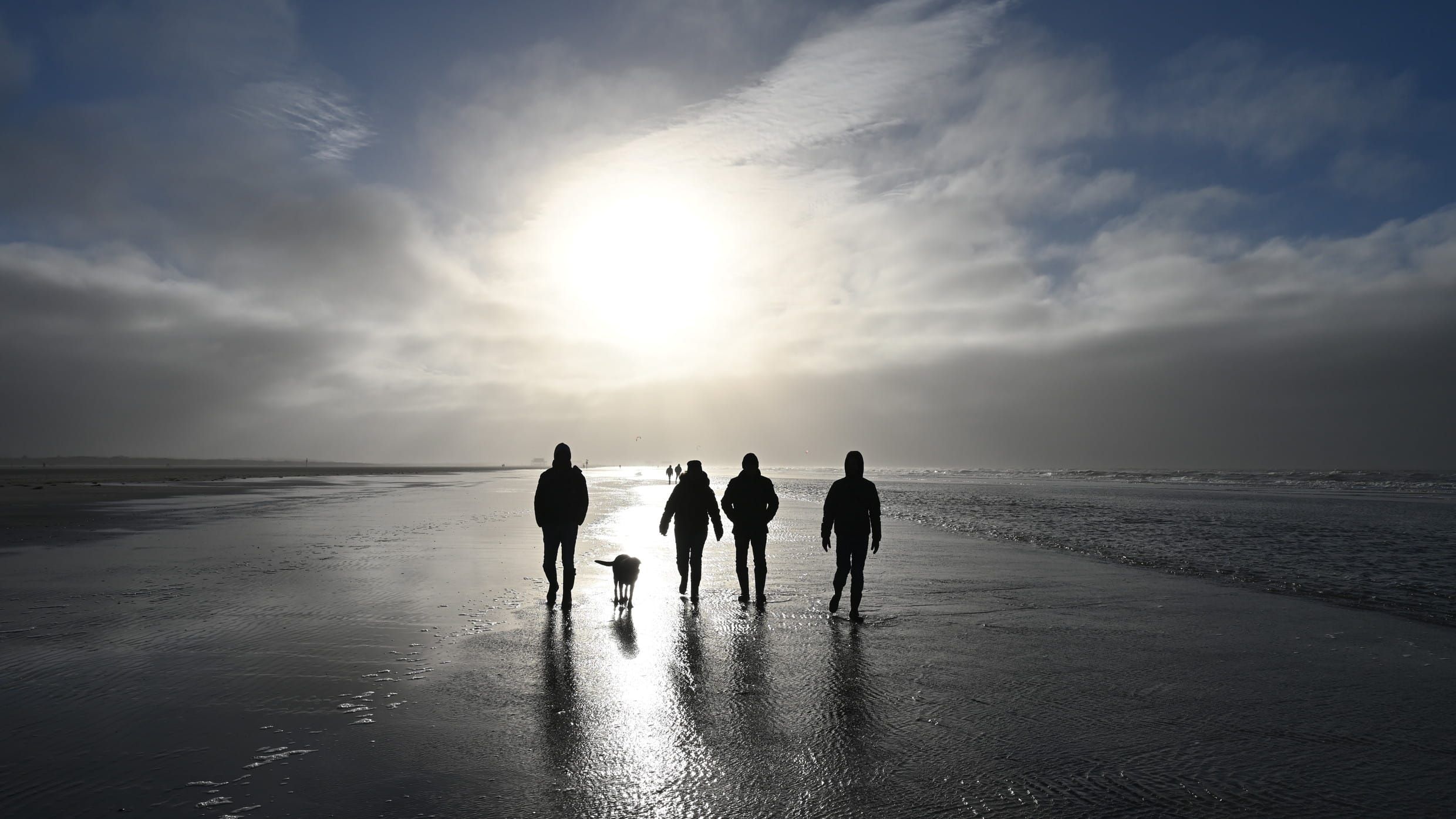
Another favourite destination of the hosts is the sandbank in Westerhever; you can walk there from the lighthouse in half an hour at low tide and be enchanted by its magical white, clean sand and complete silence. It is a wonderful place for undisturbed bathing. However, the tides must be strictly observed, because at high tide the way back to the mainland is cut off.
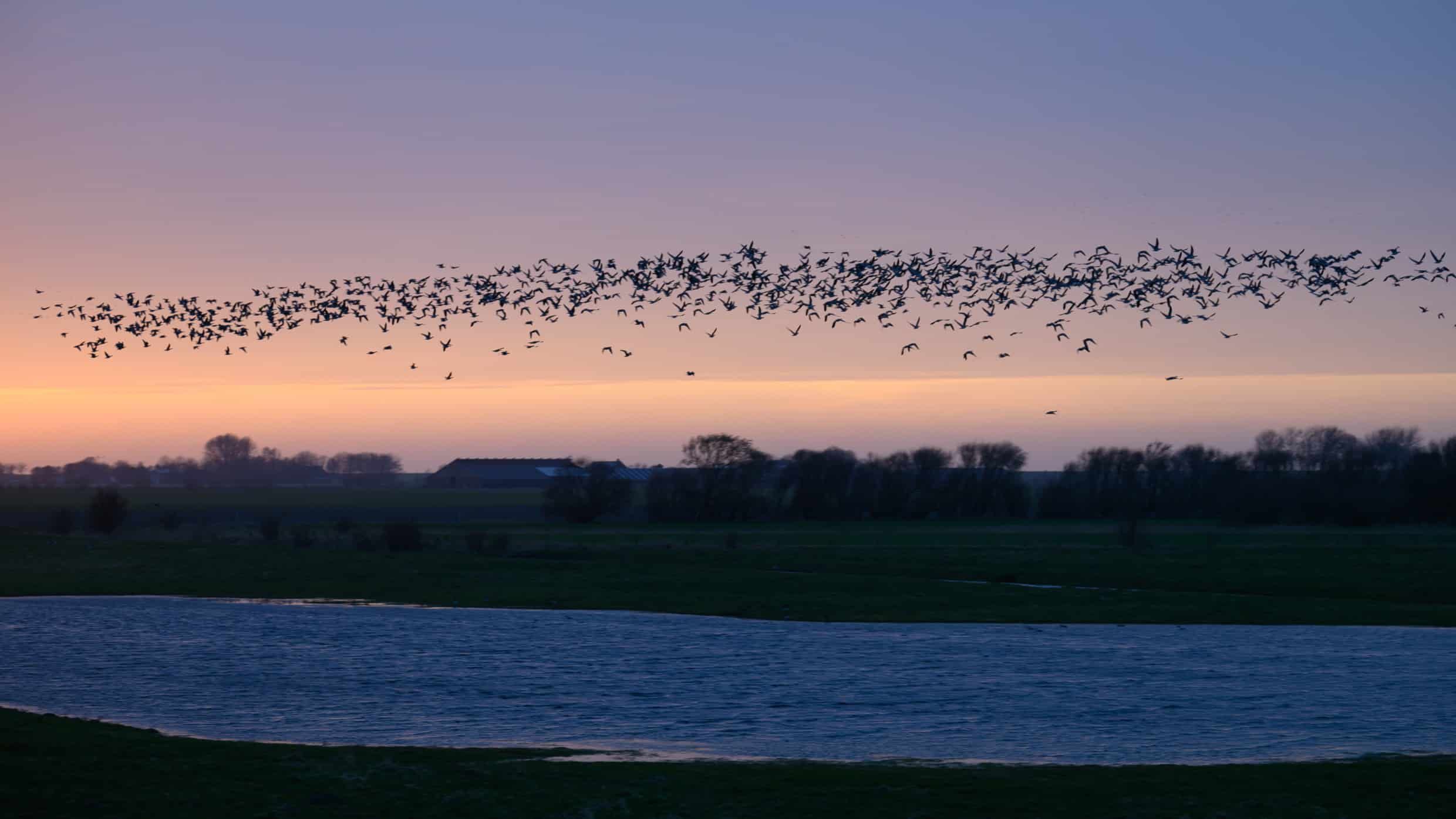
Many other destinations in the Wadden Sea World Heritage can also be reached without a car from the Spieker. The area around Eiderstedt is considered a paradise for cyclists, nature lovers and bird watchers.
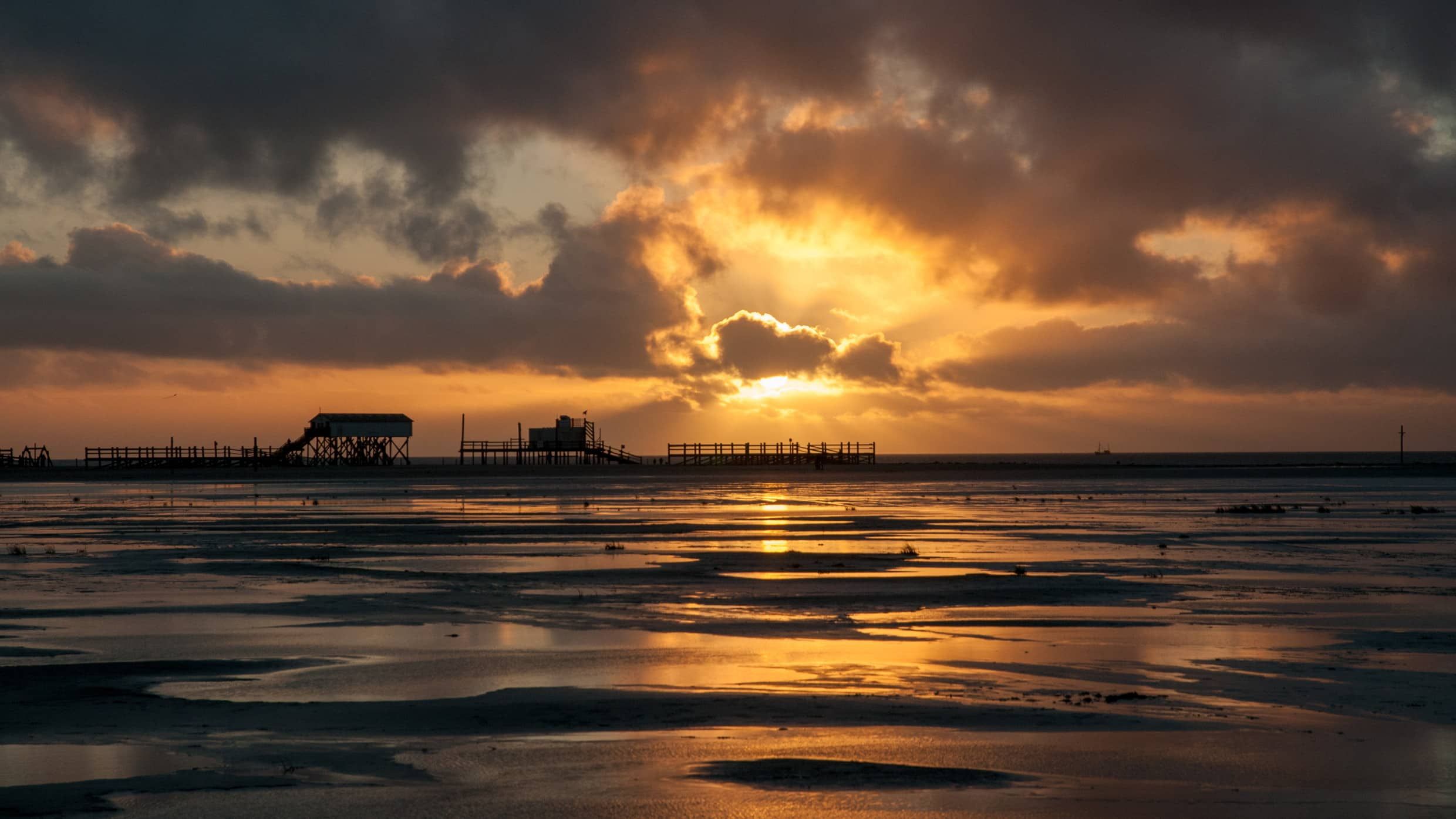
One example is Sankt-Peter-Ording with its 12-kilometre-long sandy beach, which is also very popular for surfing, kite surfing and beach sailing and attracts visitors with restaurants in the stilt houses above the beach. The harbour towns of Husum and Tönning are also worth visiting. From Tönning harbour, for example, you can set off by cutter to seal sanctuaries and bird islands, and completely surrender to the magic of the Schleswig-Holstein Wadden Sea National Park. Eiderstedt, home to many cultural artists and several galleries, is also a worthwhile destination.
In case you have been bitten by the travel bug: the holiday home is almost fully booked until the end of the year, but nothing will stand in the way of your dream holiday from January 2023 at the latest!
Text: Ulrich Stefan Knoll, September 2022
Photos: André Schäfer, except 7 (Private archive André Schäfer) and 11 / 13 (Barbara Barten)
The house
0 Comments