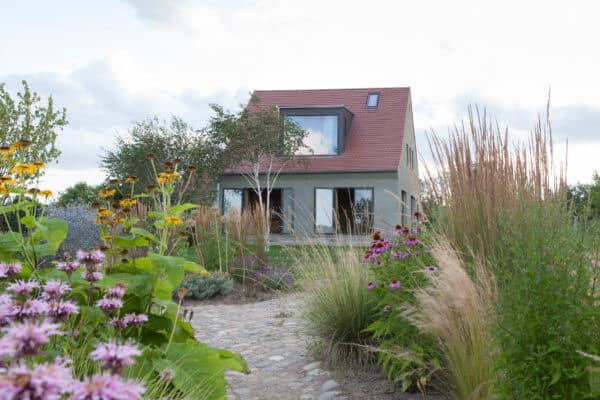
Greater initiative! Jurek Brüggen in conversation
More than just beautiful projects. For architect Jurek Brüggen, the process of transformation begins long before the actual planning stage. His proactive approach is producing remarkable results – including innovative solutions for prefabricated housing blocks.
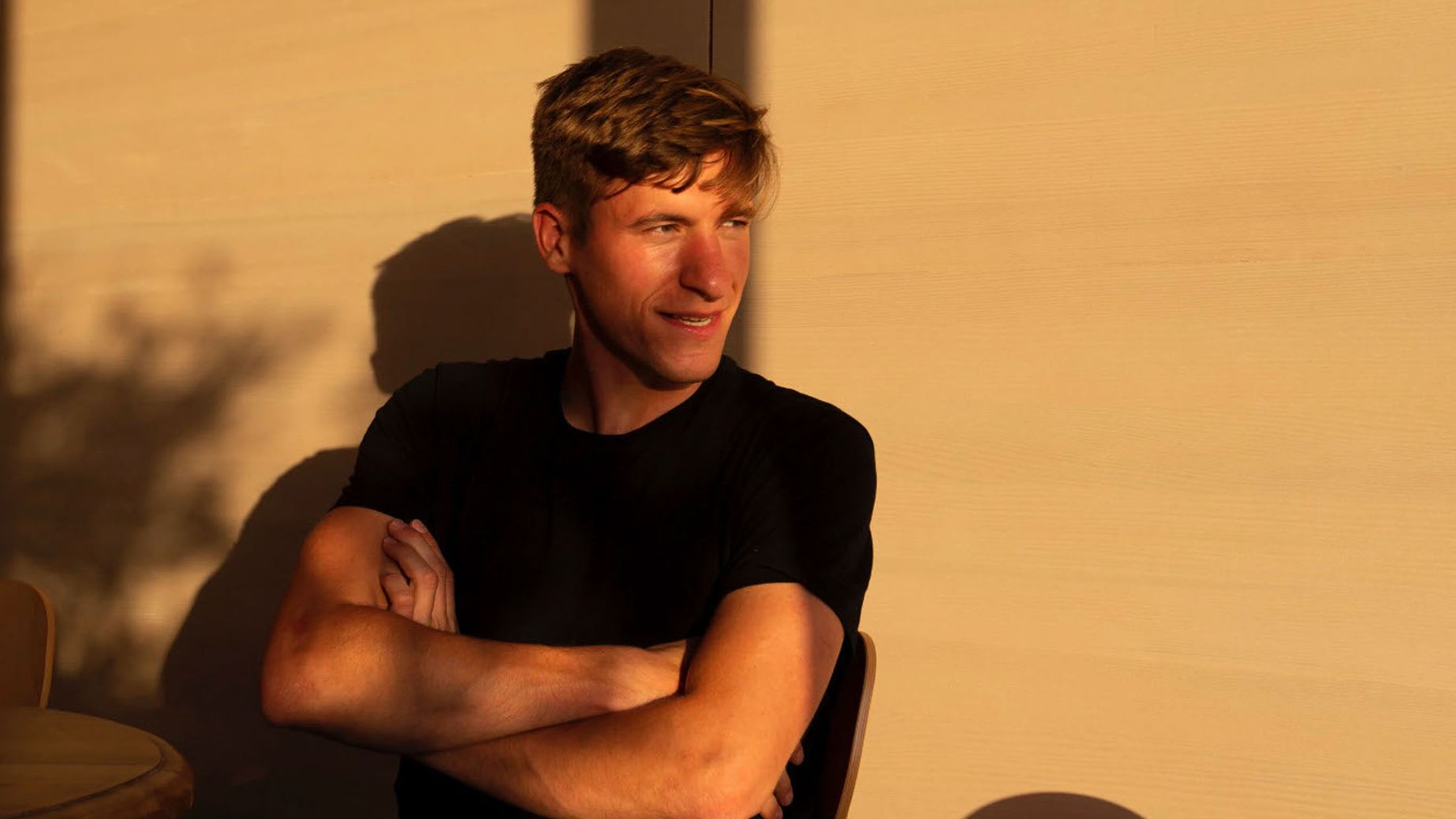
Hello Jurek, it’s great that you have time for an interview! We would like to talk about the wide range of projects you are working on.
The Verwalterinnenhaus in Werben and Ferien Werder are presented here on URLAUBSARCHITEKTUR, but there is much more. You haven’t been in this business for that long – which makes it all the more remarkable how many different topics you cover. Given this diversity, we wonder: where is it all heading?
There is no overarching master plan. It is very important to me to initiate projects ourselves that we consider right and relevant from a social or ecological perspective – or because we want to preserve an existing building. Often, new ideas arise from the existing fabric, from the specific situation and also from the political constellations. We then try to realise a project on our own initiative together with other actors.
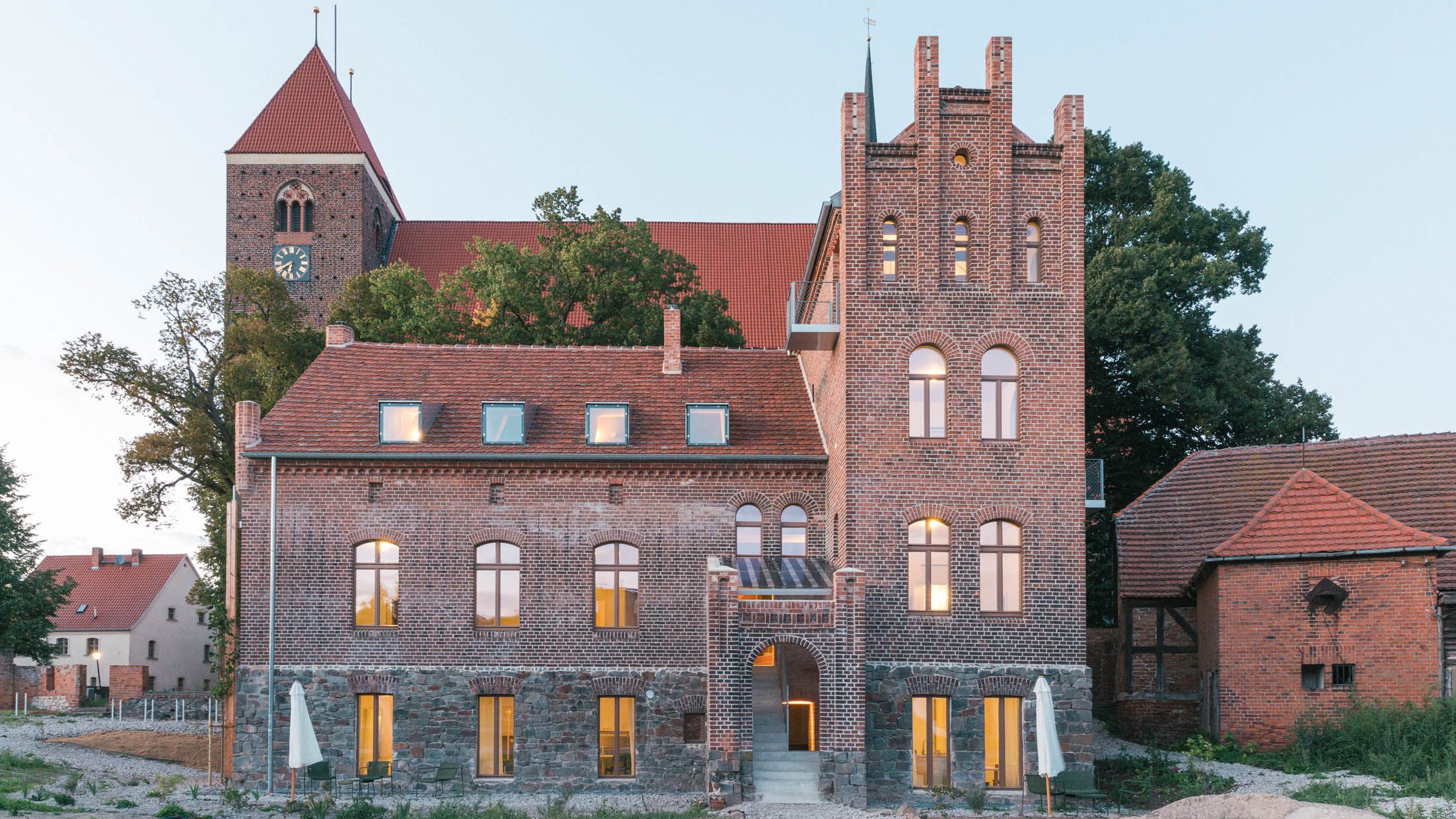
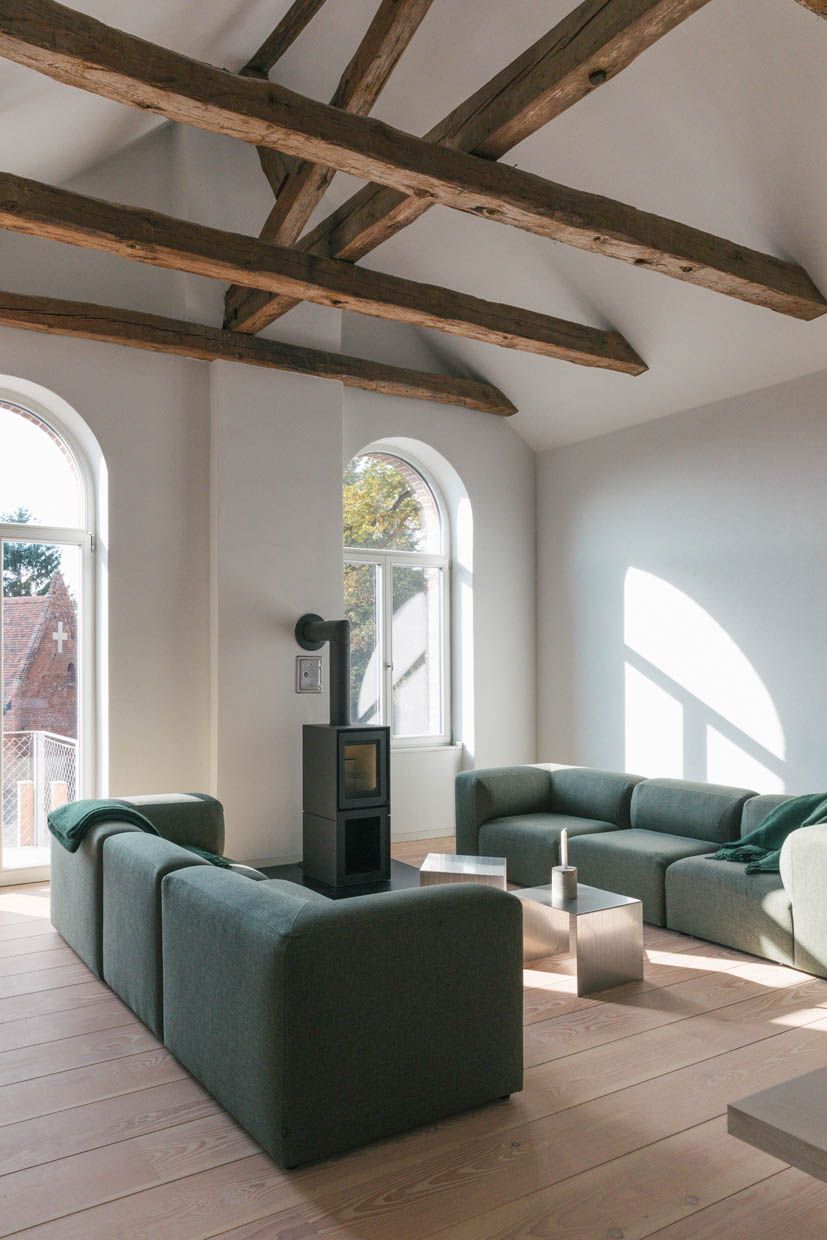
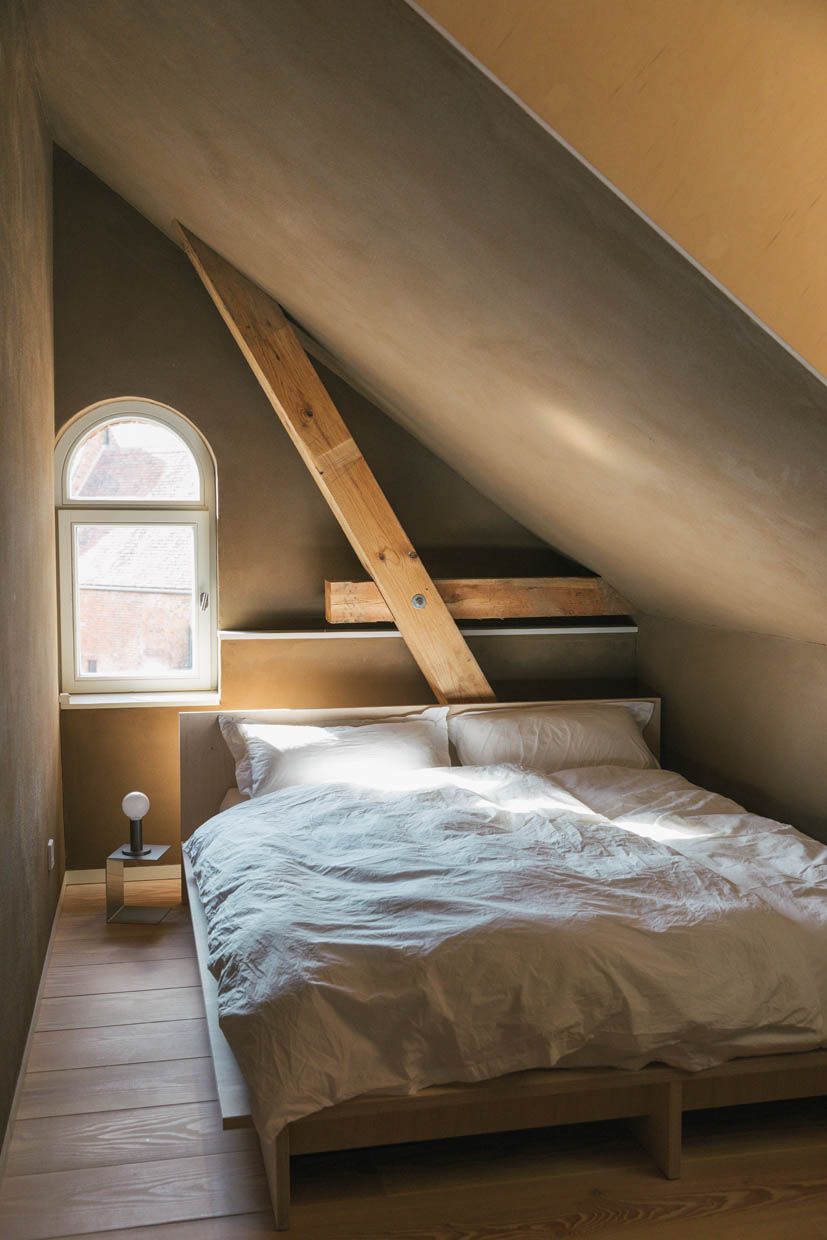
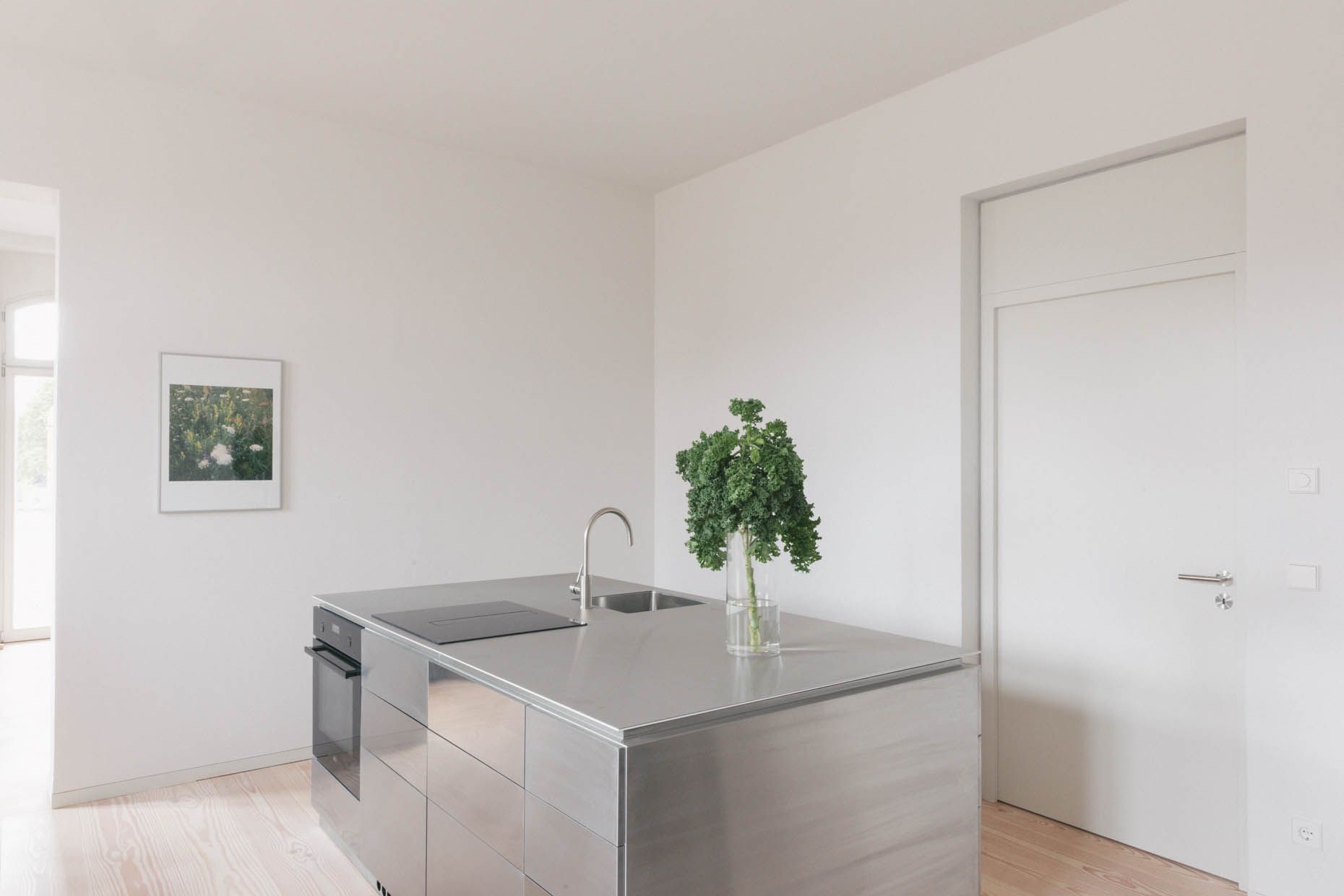
That is why the projects are so diverse – because they are often not primarily about an architectural language, but about initiatives that emerge from the constellation itself. I would like to do this more often, more professionally, and to institutionalise it. This is also how I understand the role of architects: to be more active, to take more initiative and to become more involved.
You just said there is no clear overall plan – yet the timetable for the Komturei is quite detailed and precisely mapped out well into the next decade…
Exactly. For the individual buildings there is a concrete plan that outlines the process up to the beginning of the next decade, and in the case of the Komturei until 2032.
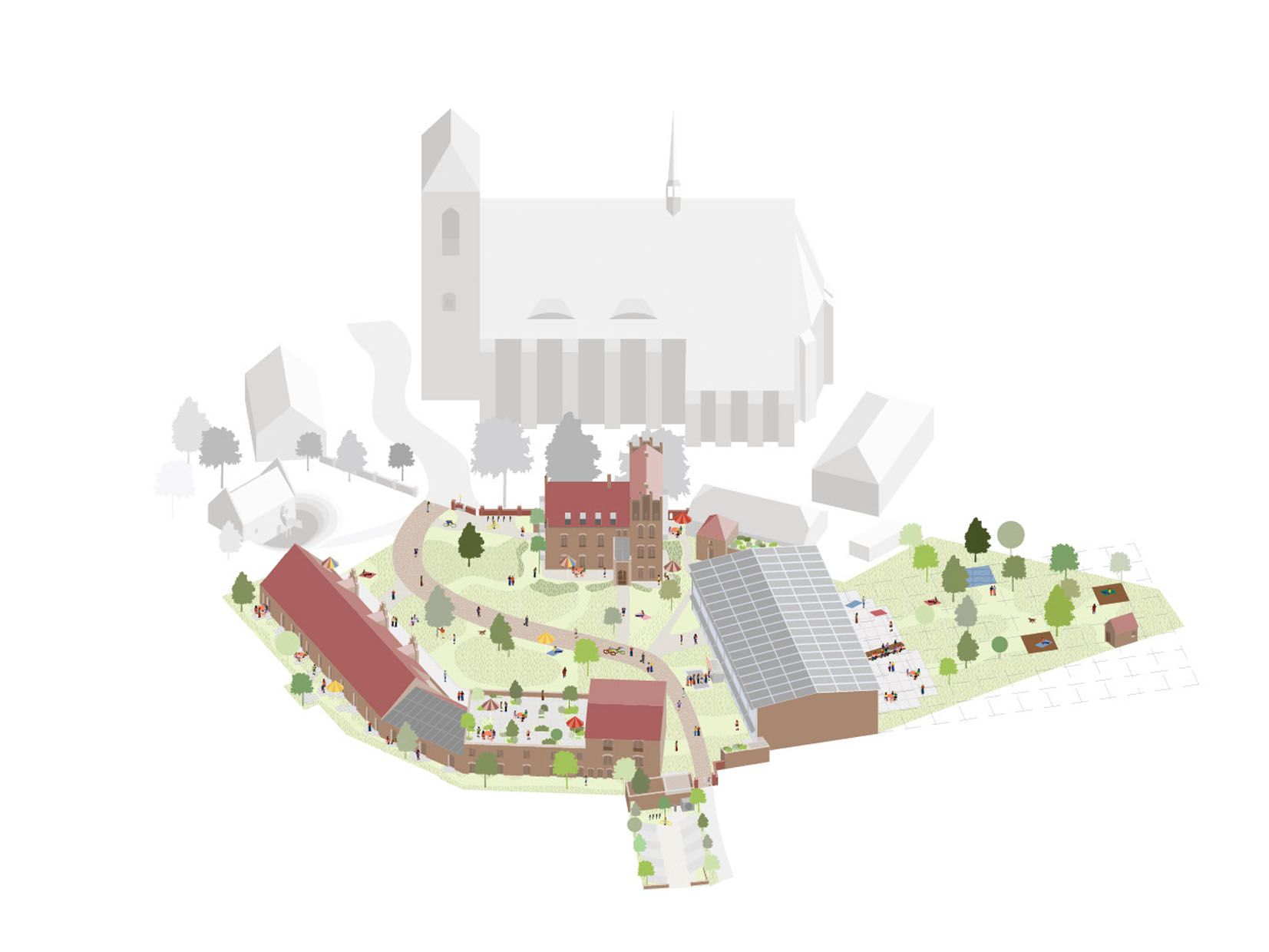
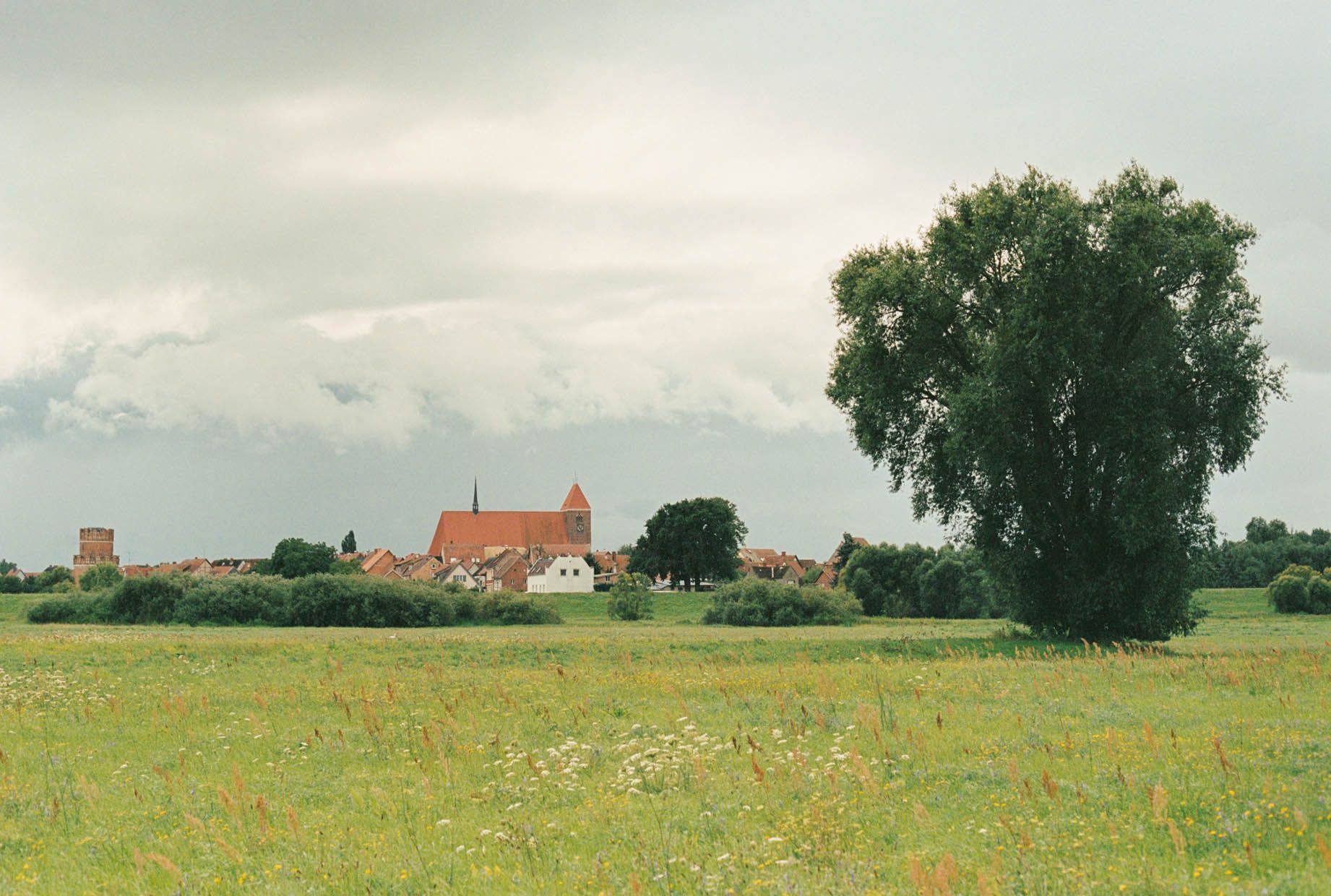
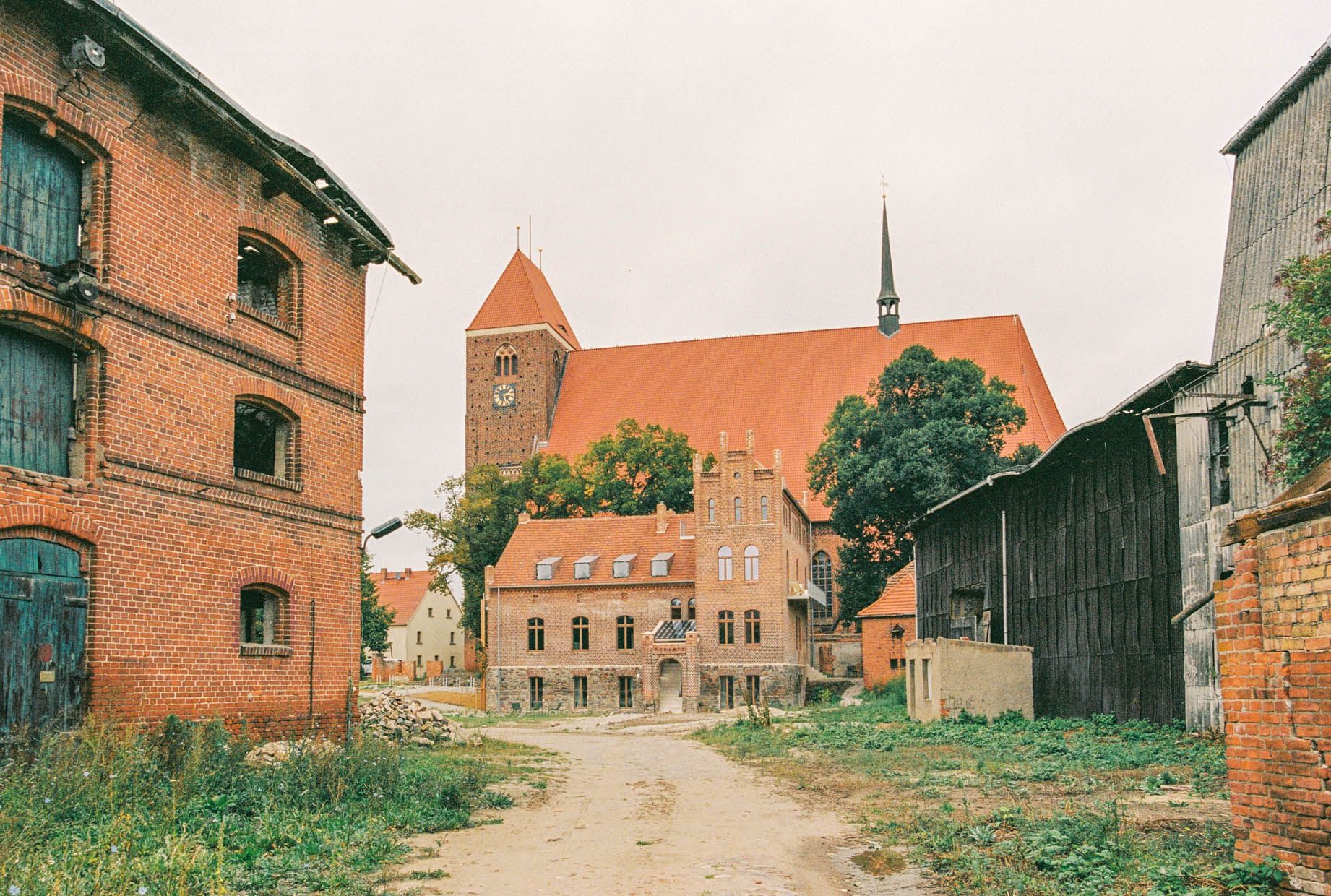
You are not working on the Komturei only with your own office team but also together with other architects and actors, correct?
For a long time, these constellations were not entirely clear, because we simply started and got going – they developed gradually along the way and with the individual projects. My starting point is my office undjurekbrüggen, a rather classical architectural practice for planning services. For initiative projects such as the Komturei, I joined forces with my colleague Aimée Michelfelder. Our organisation Association for Ecological Architecture (AFEA) stands for all the services that are normally not understood as architecture. This begins much earlier than the actual planning services and initially addresses questions such as: How will the project be financed? How will it be used? Who are the actors? Will it lead to a cooperative or a joint building venture? Who are the contact persons?
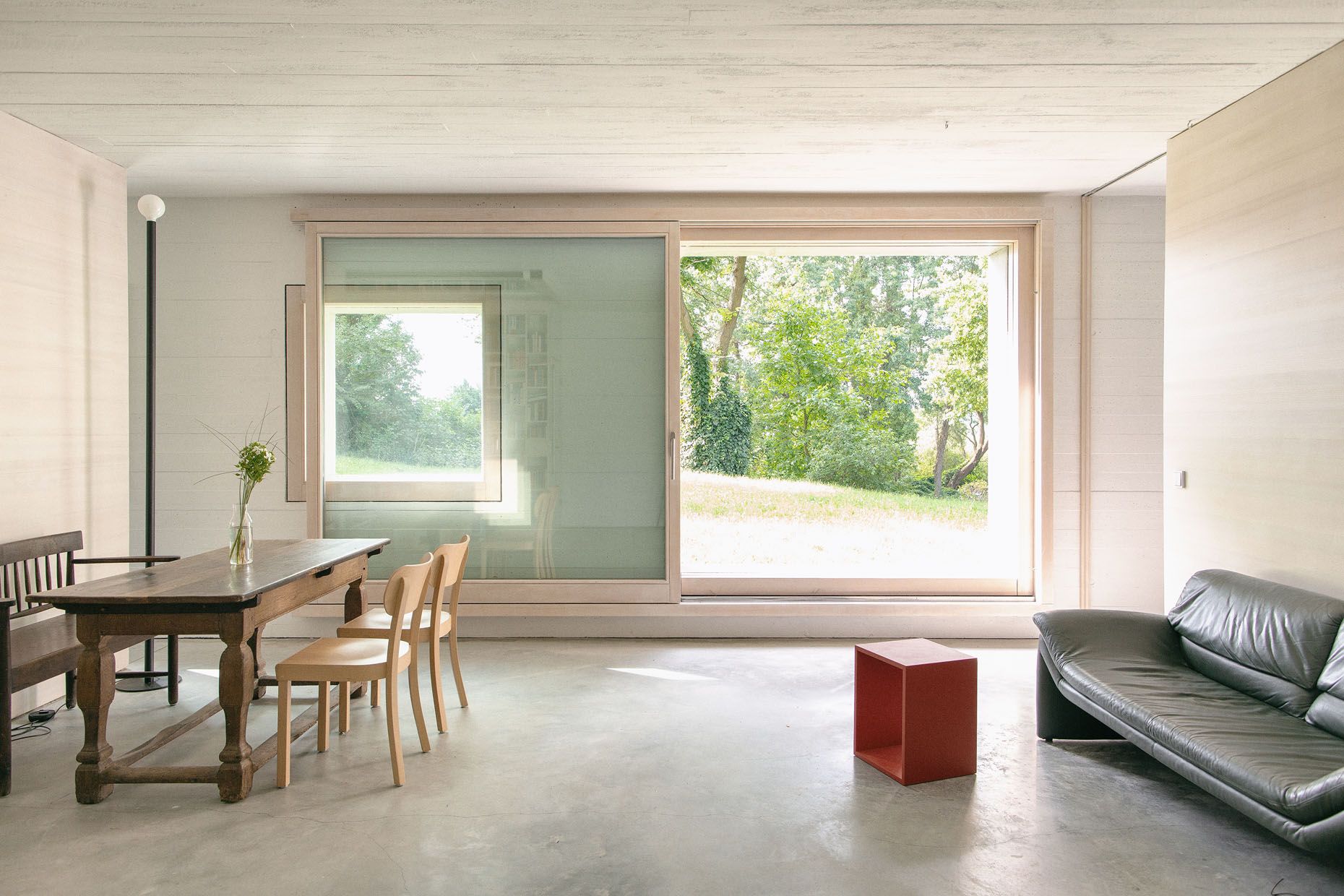
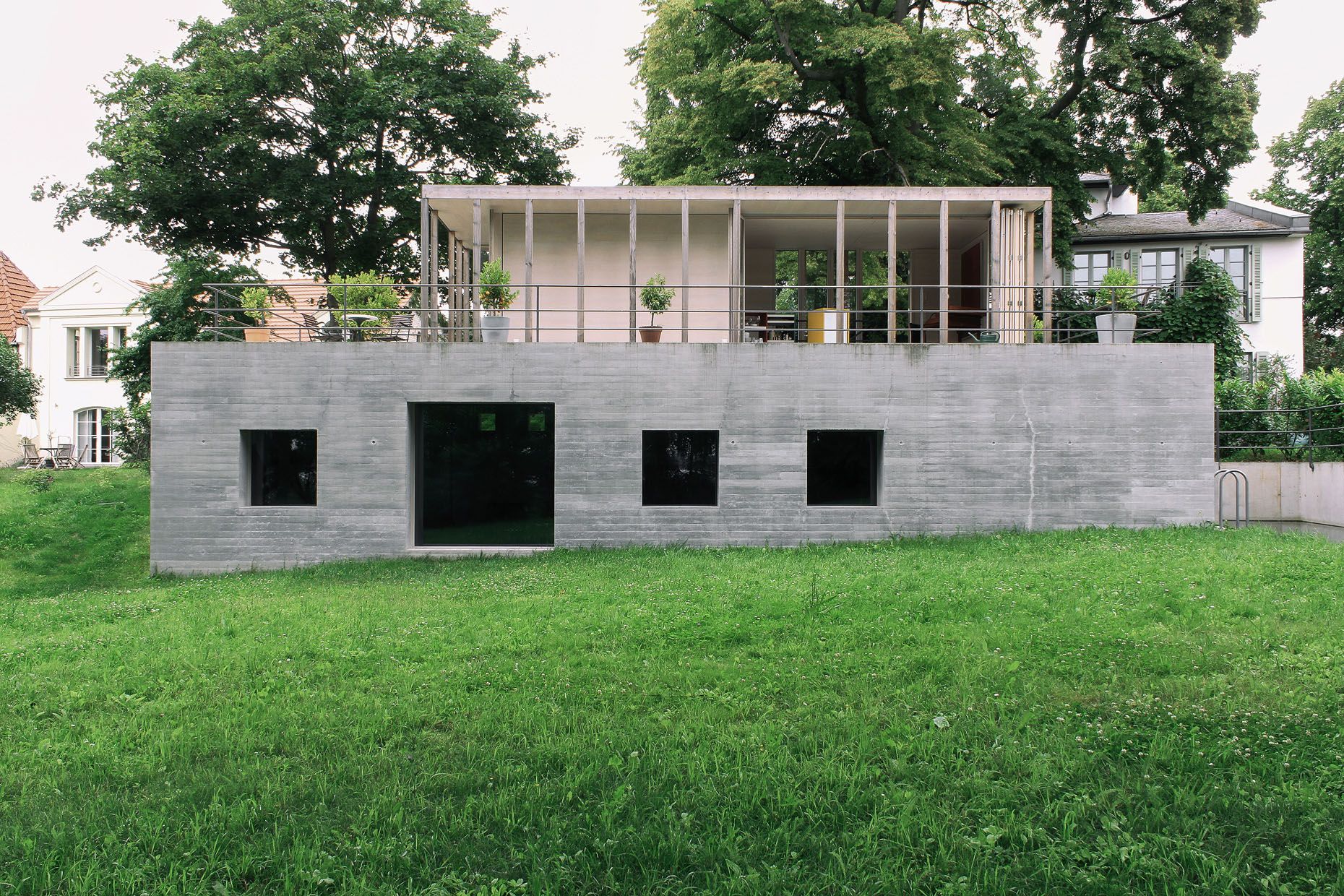
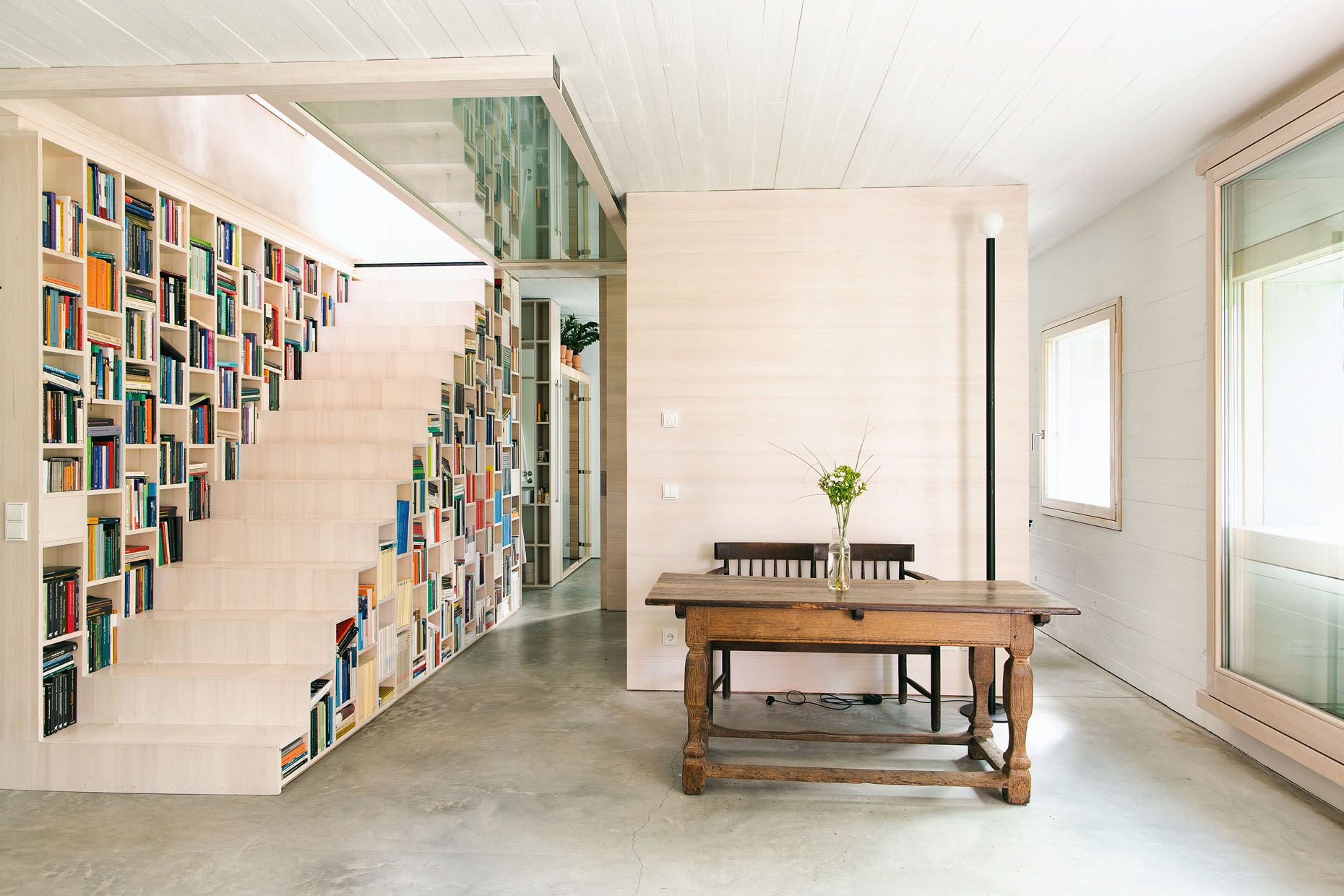
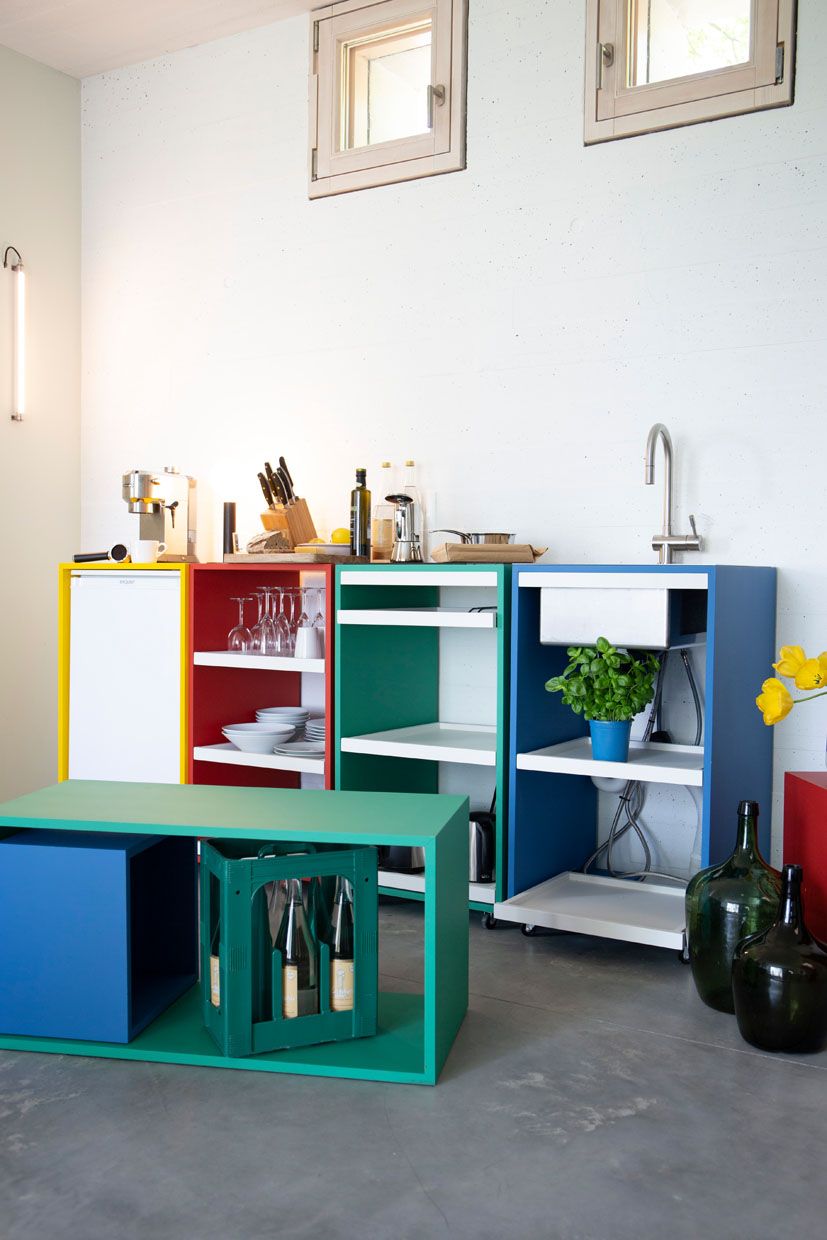
And then there is the furniture label Eins und Viele, which evolved from the Jahreszeitenhaus. That was one of my very first projects and was listed with you for a while. For that house I designed lights and a mobile kitchen. Together with Karla Philipp and Victor Nagel, the furniture label was then created. We also designed new furniture for the Verwalterinnenhaus, which we are now adding to the collection. Here, too, the furniture was developed for a project rather than primarily for the label.
Which designs are you talking about?
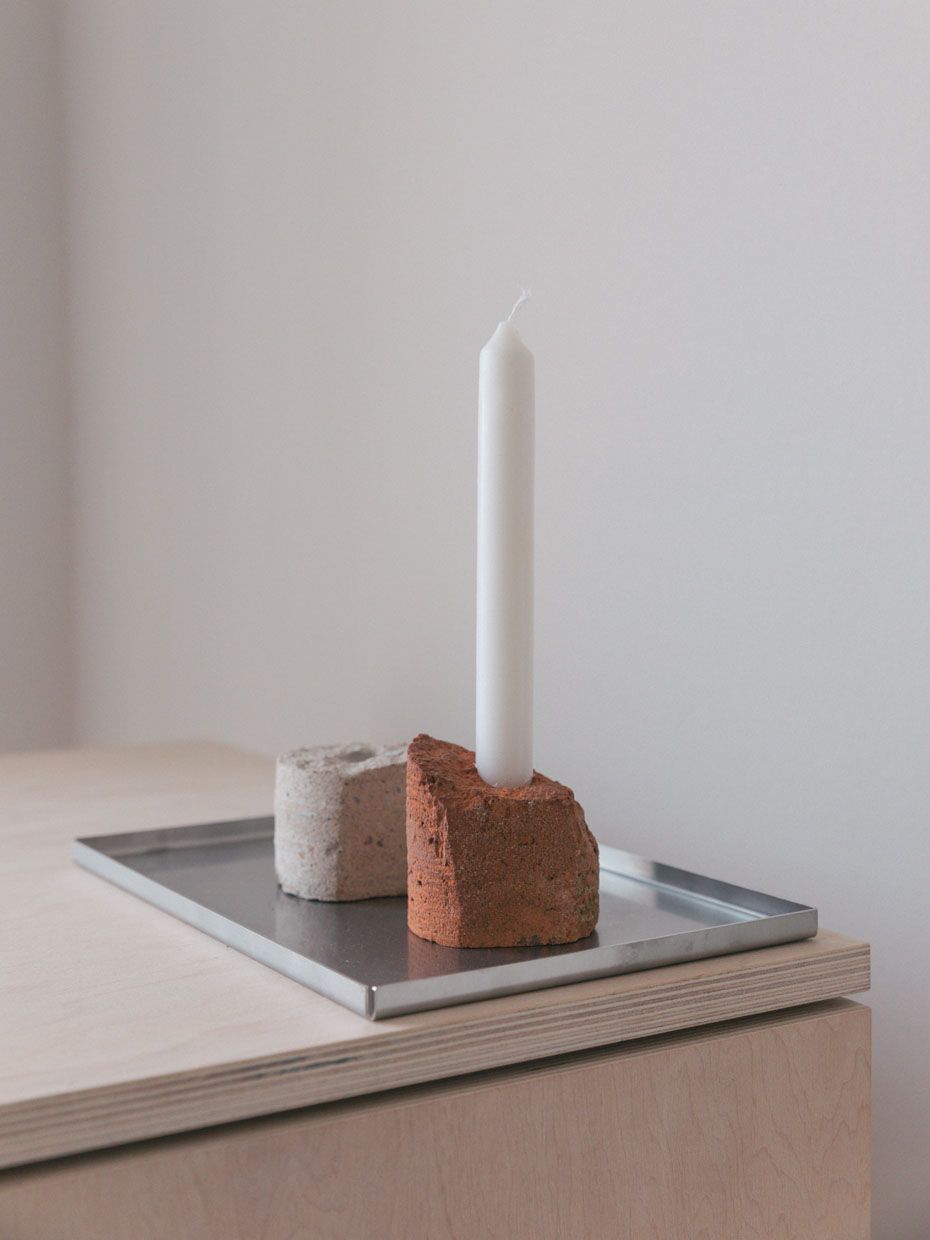
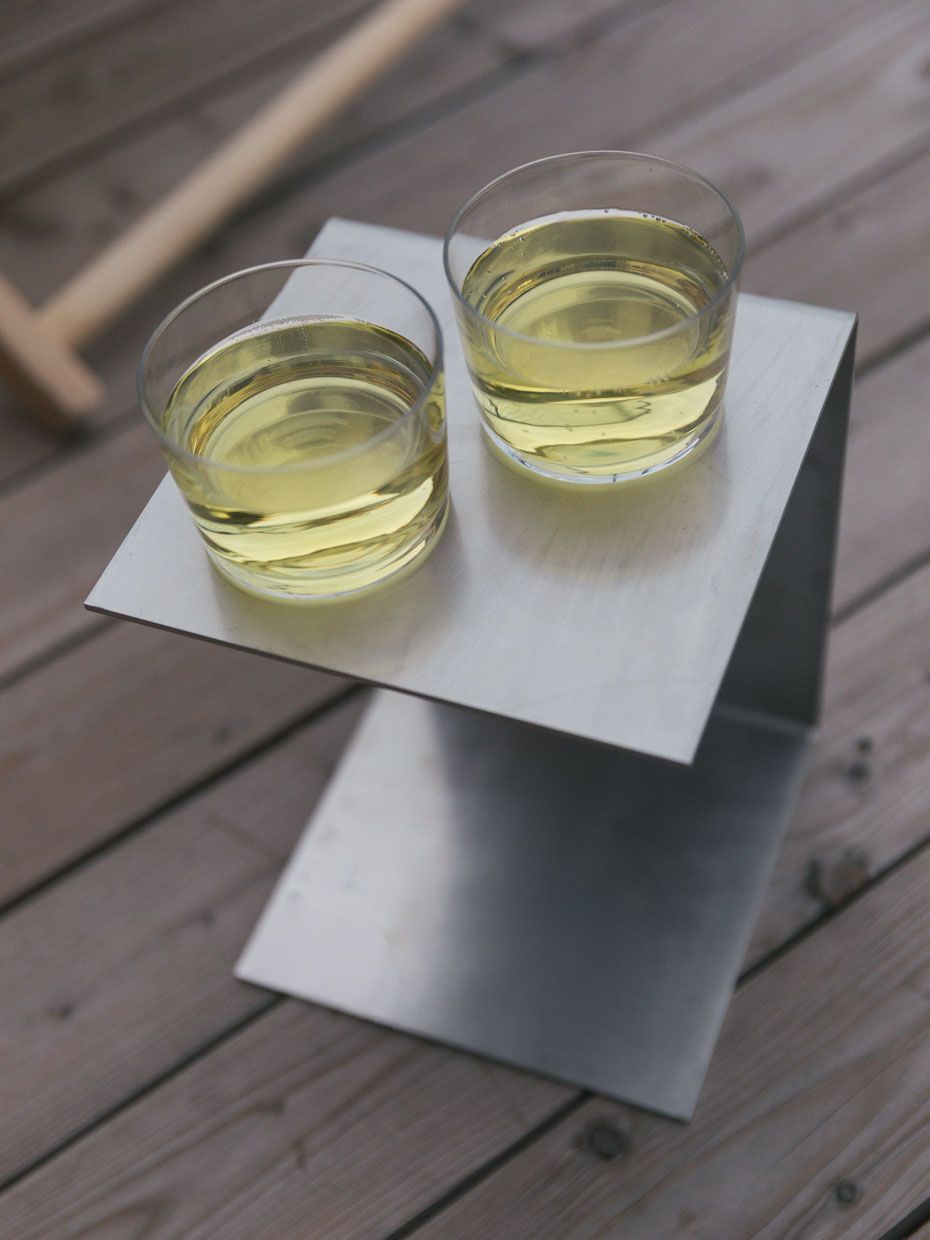
I’m talking about all those folded stainless-steel pieces of furniture – side tables, wall shelves, shoe racks, stools and small trays. That’s in line with our principle, because the idea is always to start with a simple but clear concept from which different objects emerge.
You seem to pursue a wide range of activities…
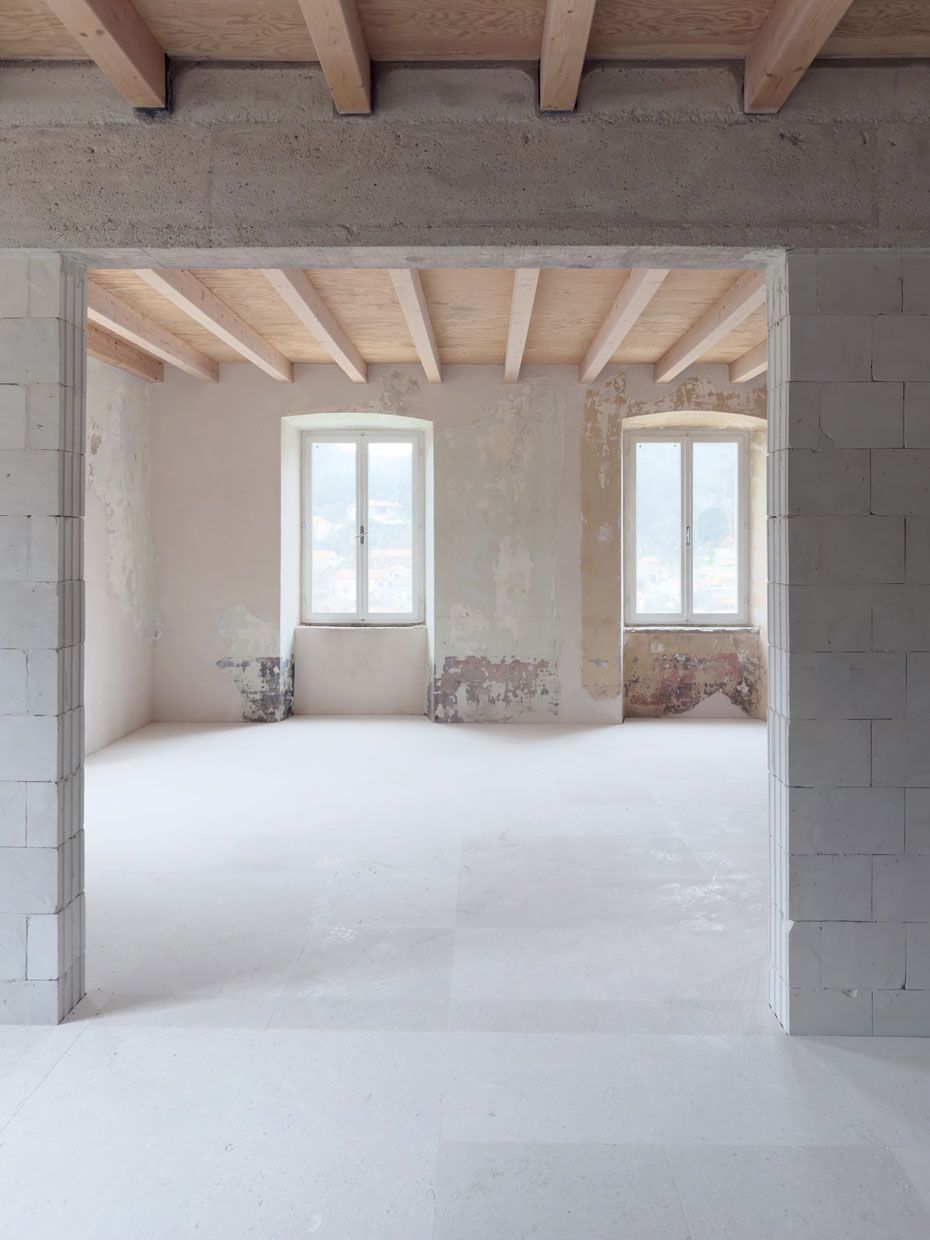
True enough. In general, it’s about advocating for the preservation and adaptive reuse of existing buildings in rural areas. Where these are located is of secondary importance. A new project is on the Croatian island of Lastovo.
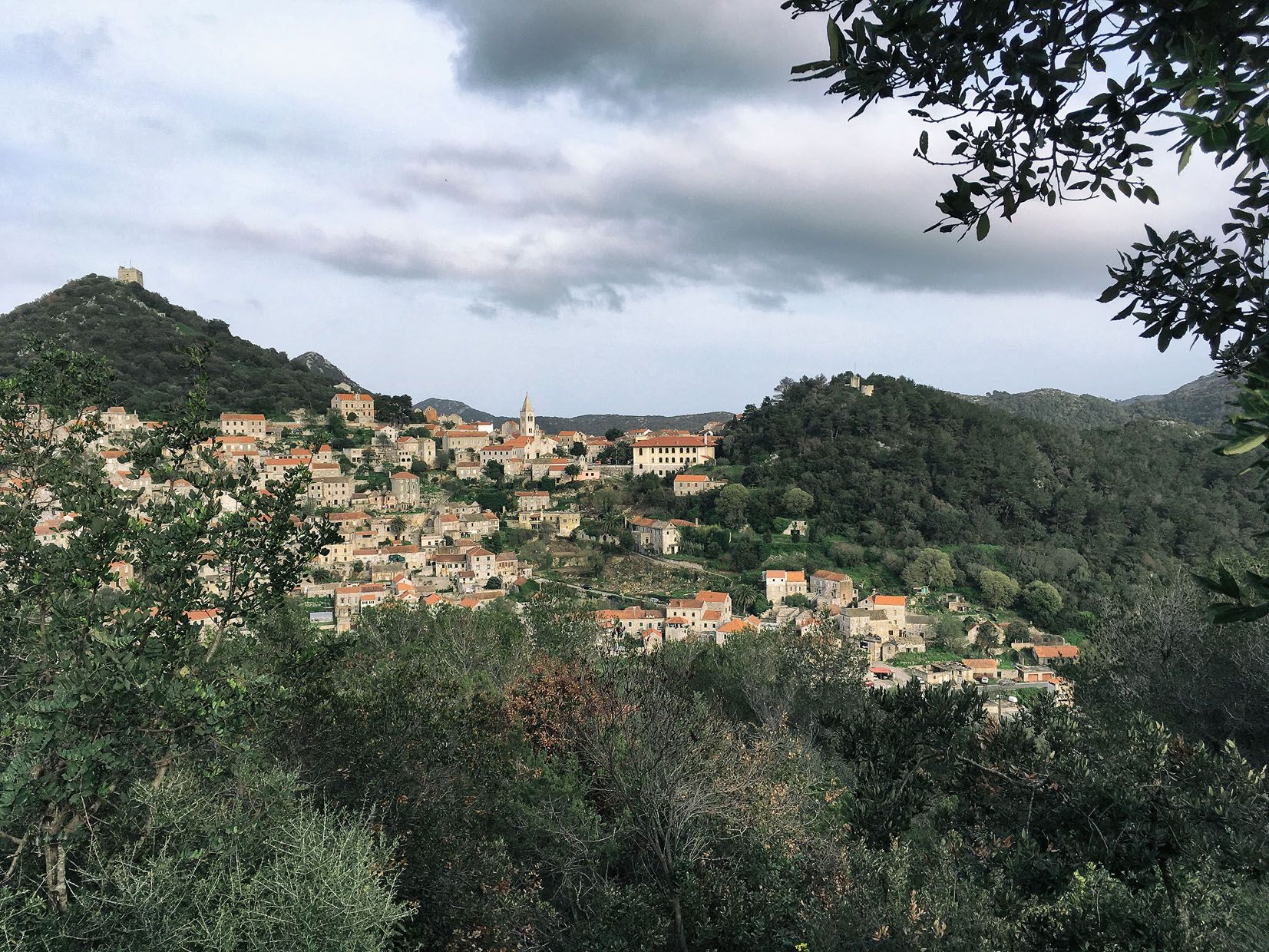
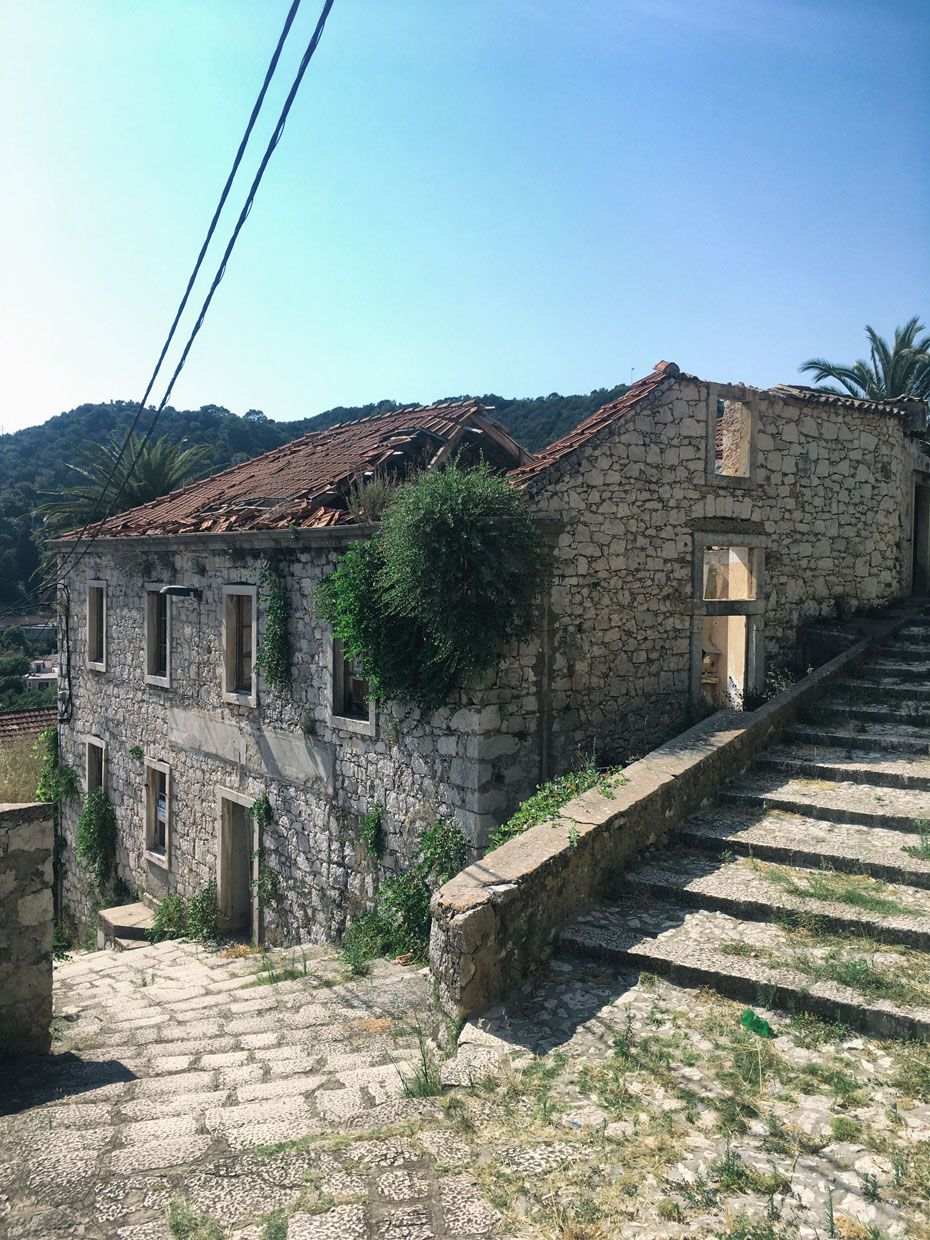
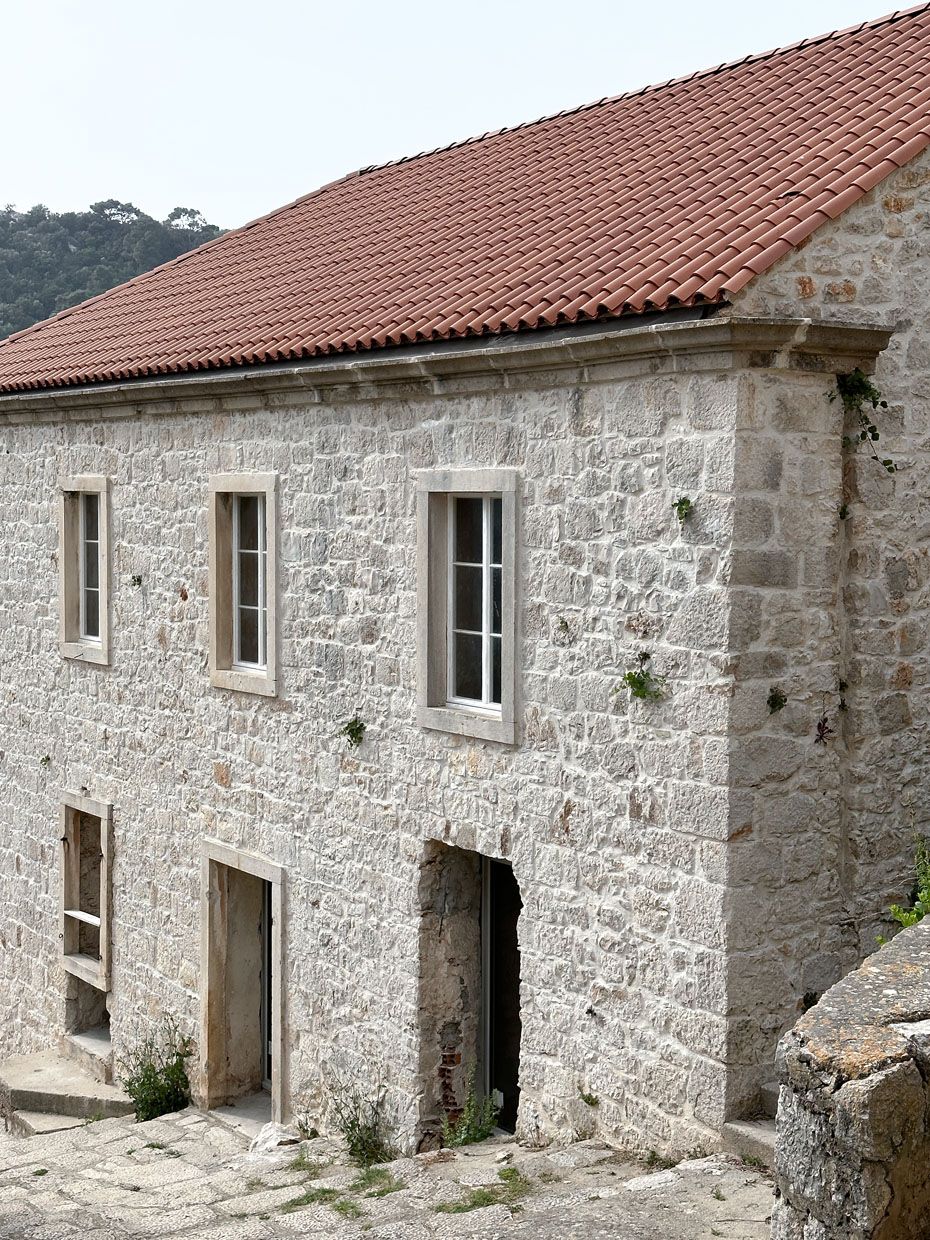
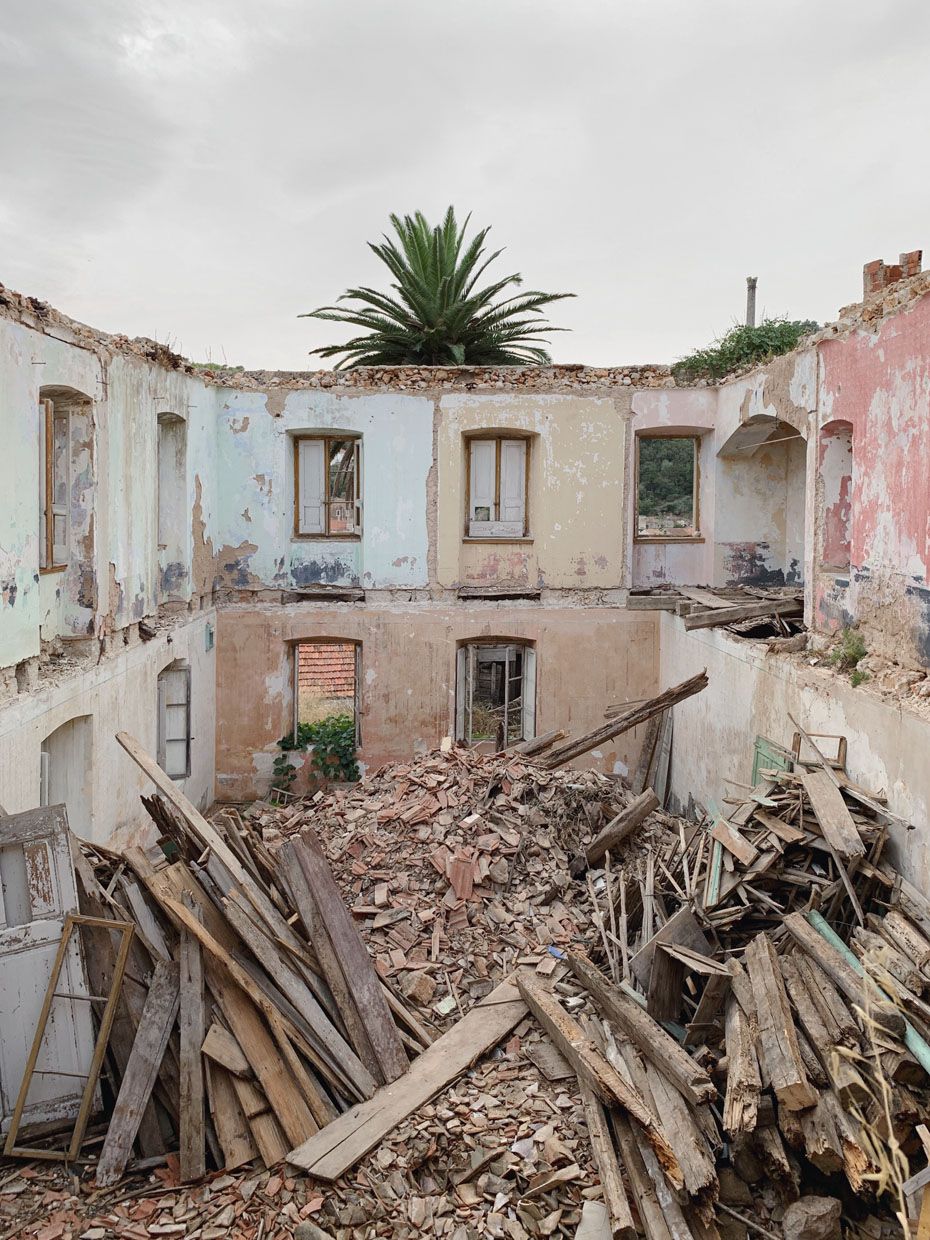
Since the island was a restricted military area until the early 1990s, it has long been spared from tourism and is now a protected nature reserve. The island’s history is also interesting: it was independent for a long time and even had its own constitution. In the centre of the village of Lastovo we refurbished a house that will soon be rented out.
We are excited to hear more! What other projects or initiatives are you currently working on?
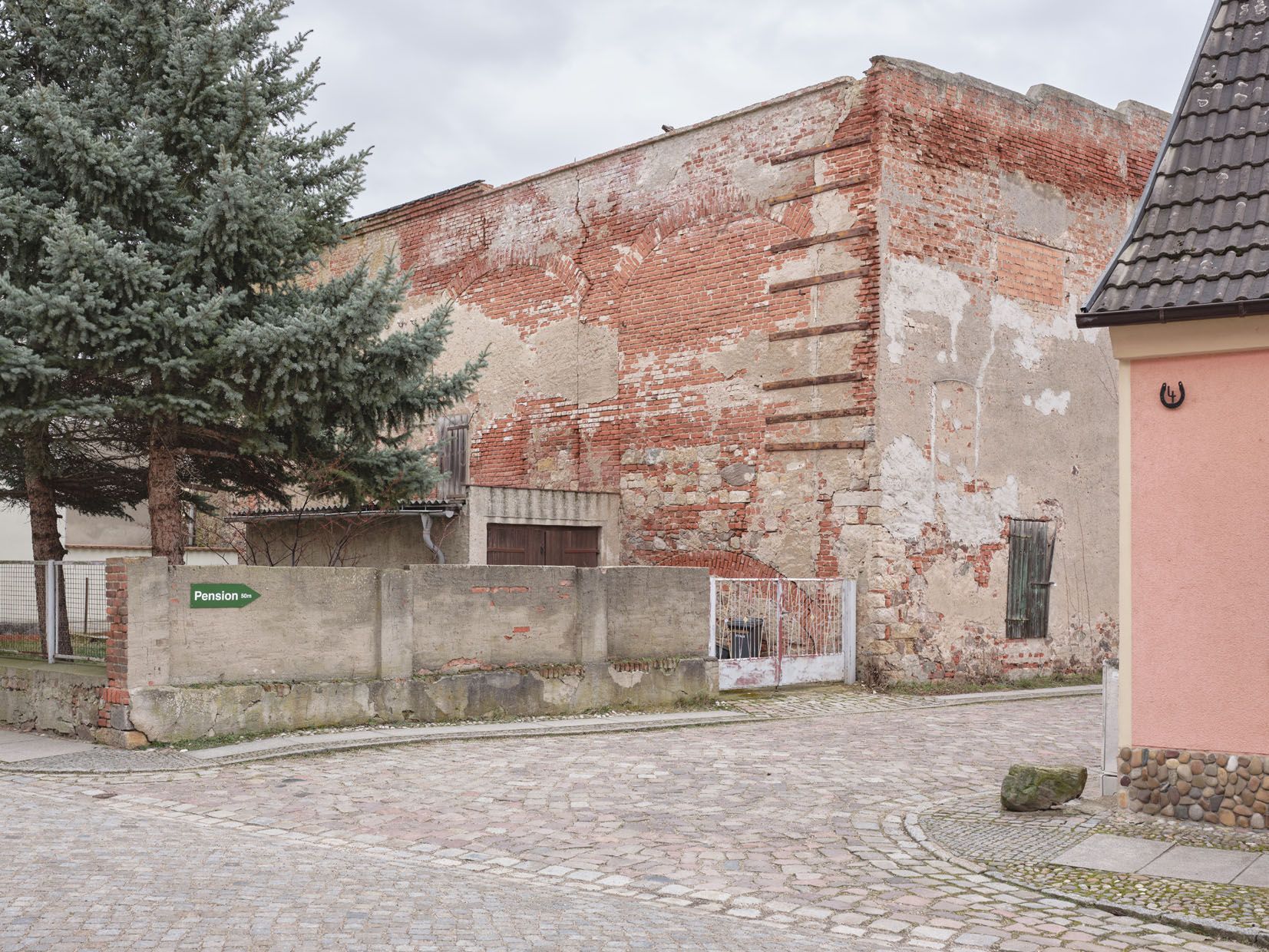
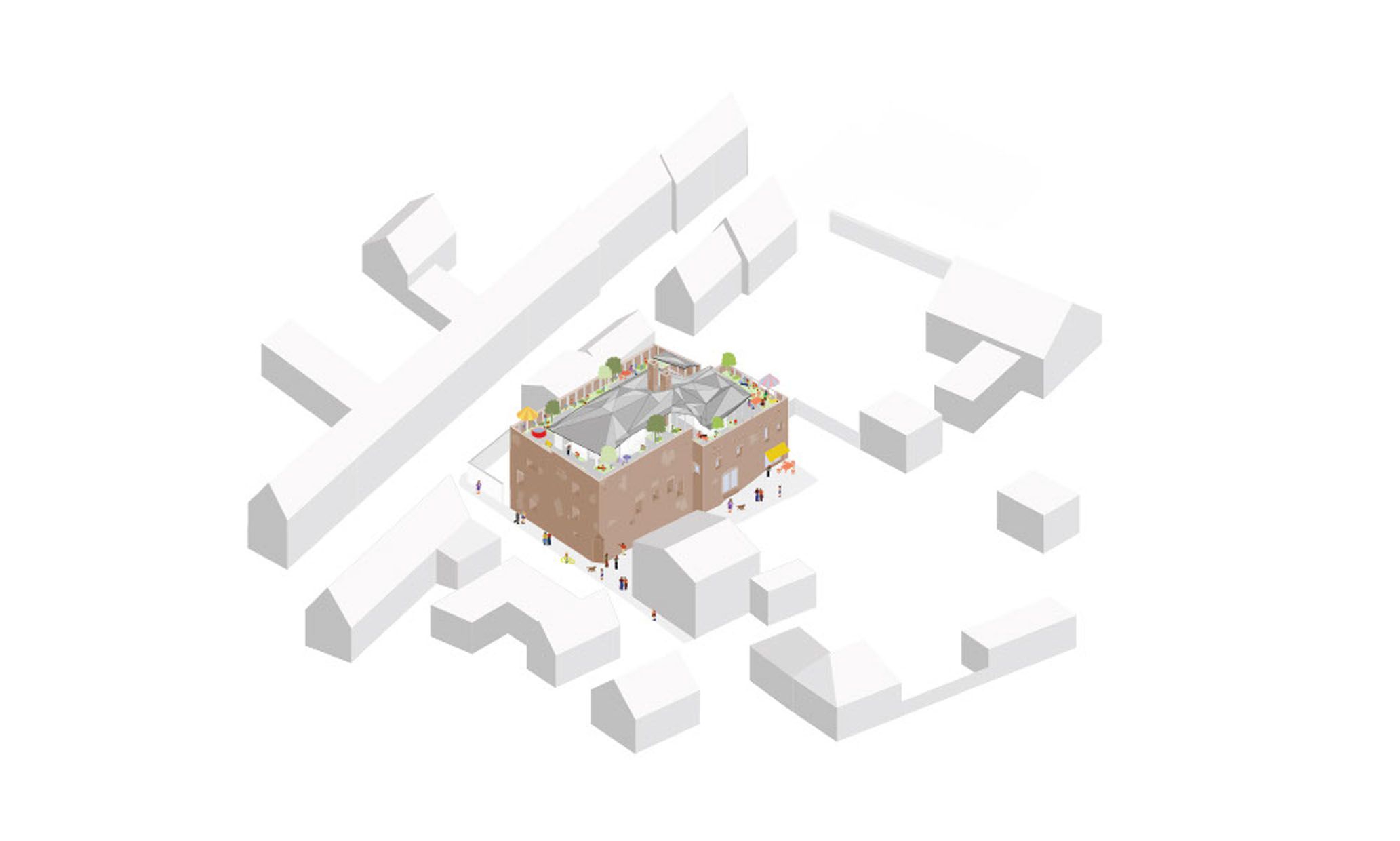
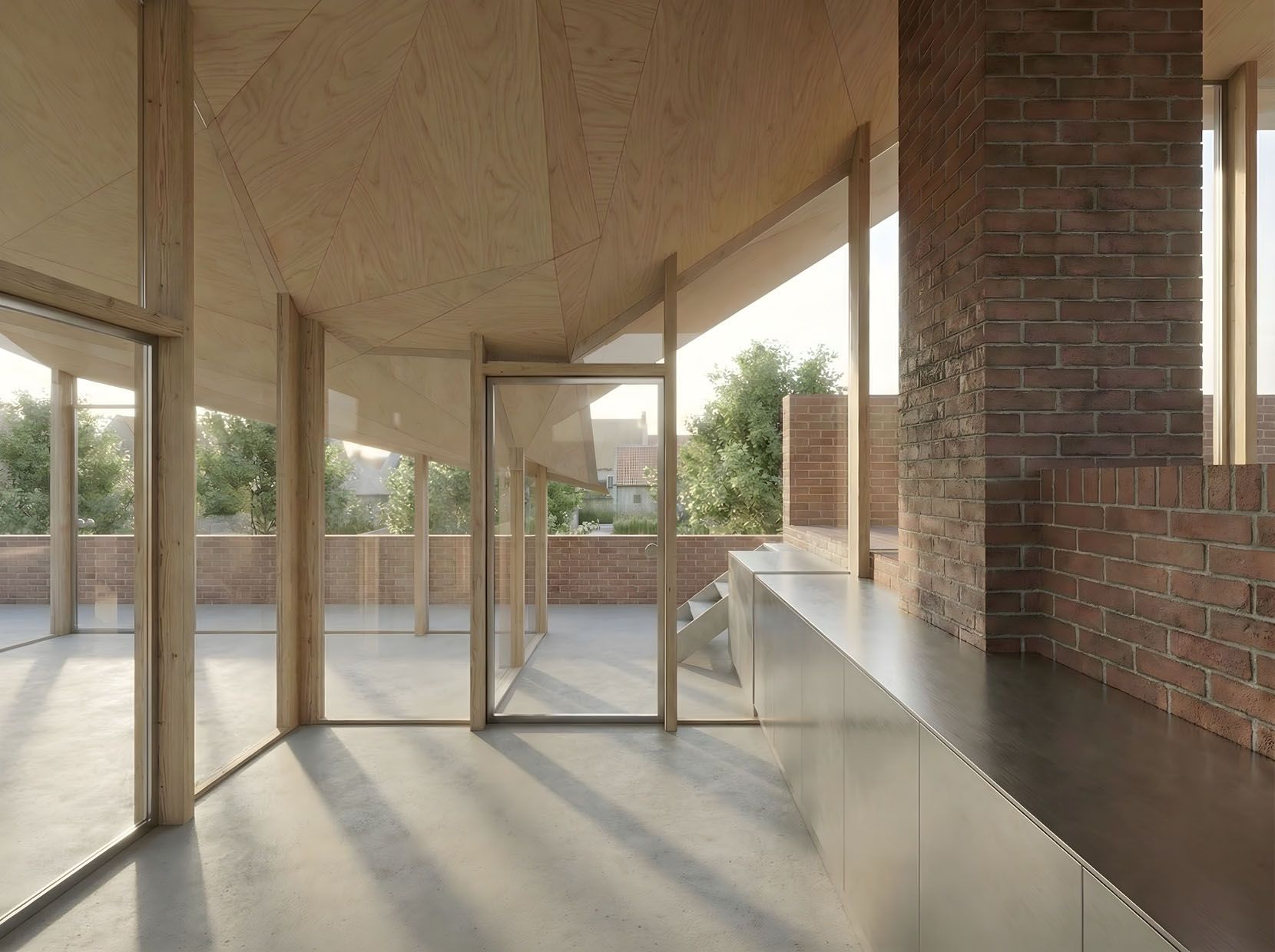
For example, a property in the Elbe-Elster district south of Berlin, a former brewery, the so-called Palazzo. We are currently looking for someone to buy it and continue planning and developing it together with us.
We would like to talk more about Werben. The Verwalterinnenhaus is only one part of the Komturei. The overall project will reach its full potential only when the other buildings have also been reactivated. What are the next steps?
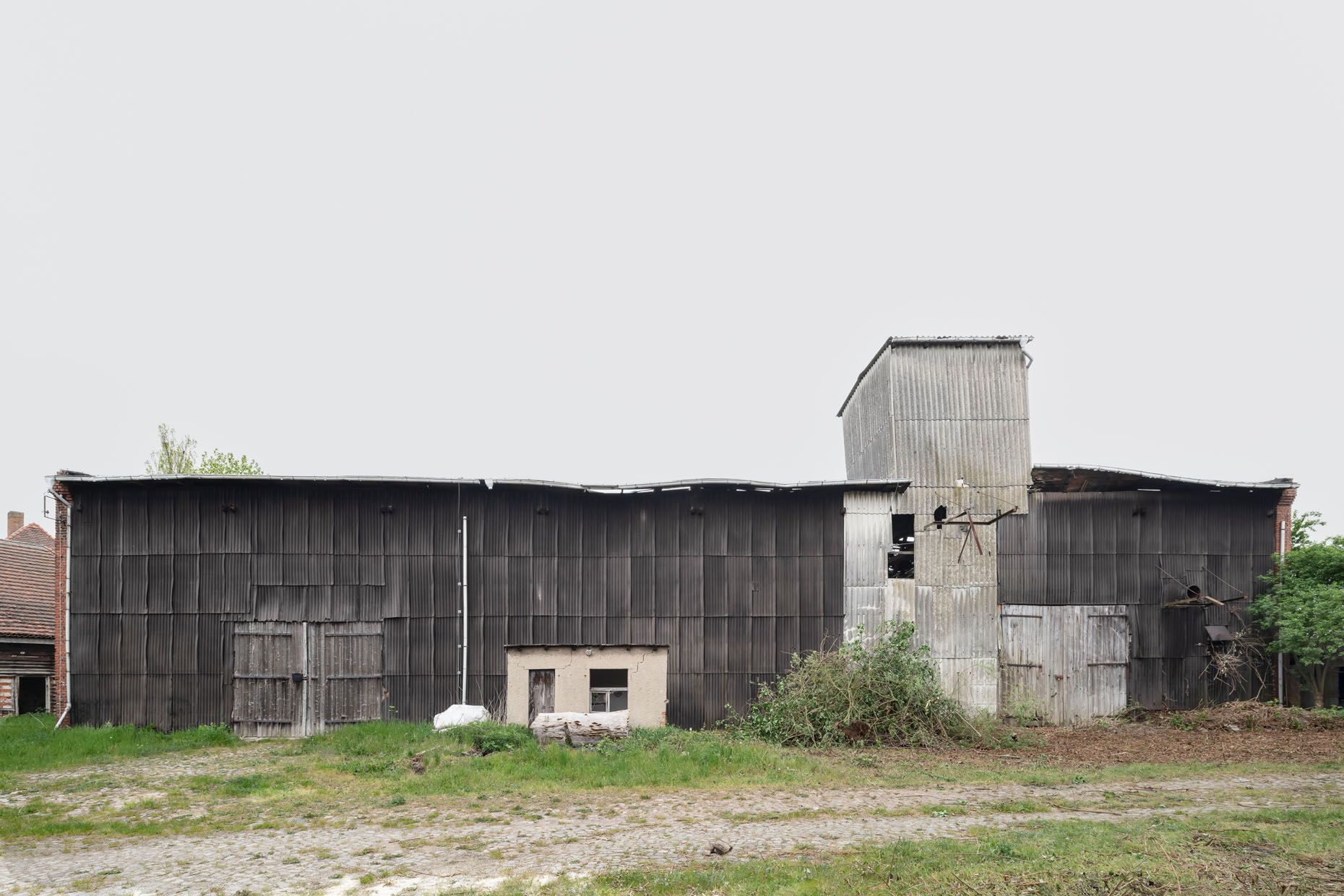
For the remaining three large buildings we have different ownership models. The long stable with assisted living for the elderly will follow a developer model. The company that owns the land will act as the developer. Then there are private investors who will purchase apartments and rent them to the Borghardt Foundation in Stendal, which will operate them as assisted living and primarily rent them to local elderly residents who require care and barrier-free apartments. We have now found the first interested parties and will sign contracts and sell units this year. Planning for the renovation will also take place this year, with construction starting in 2027.
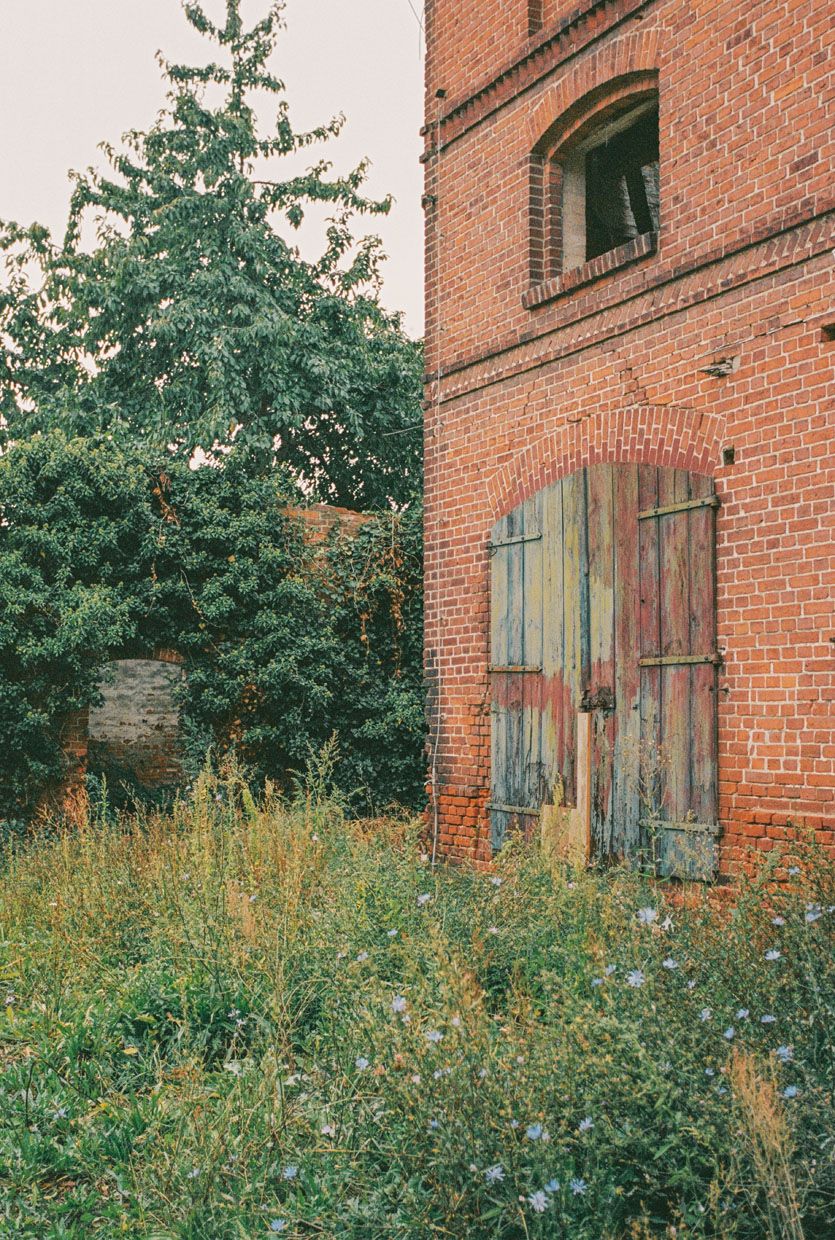
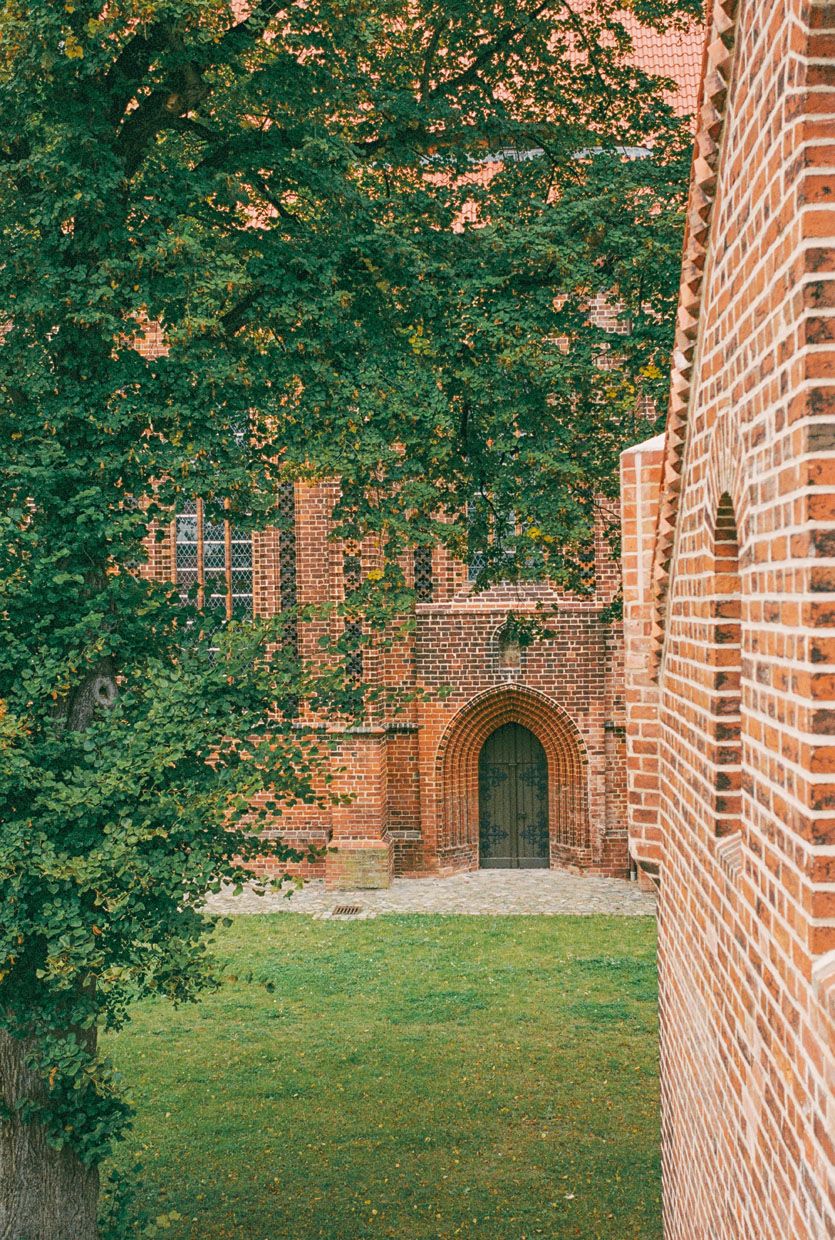
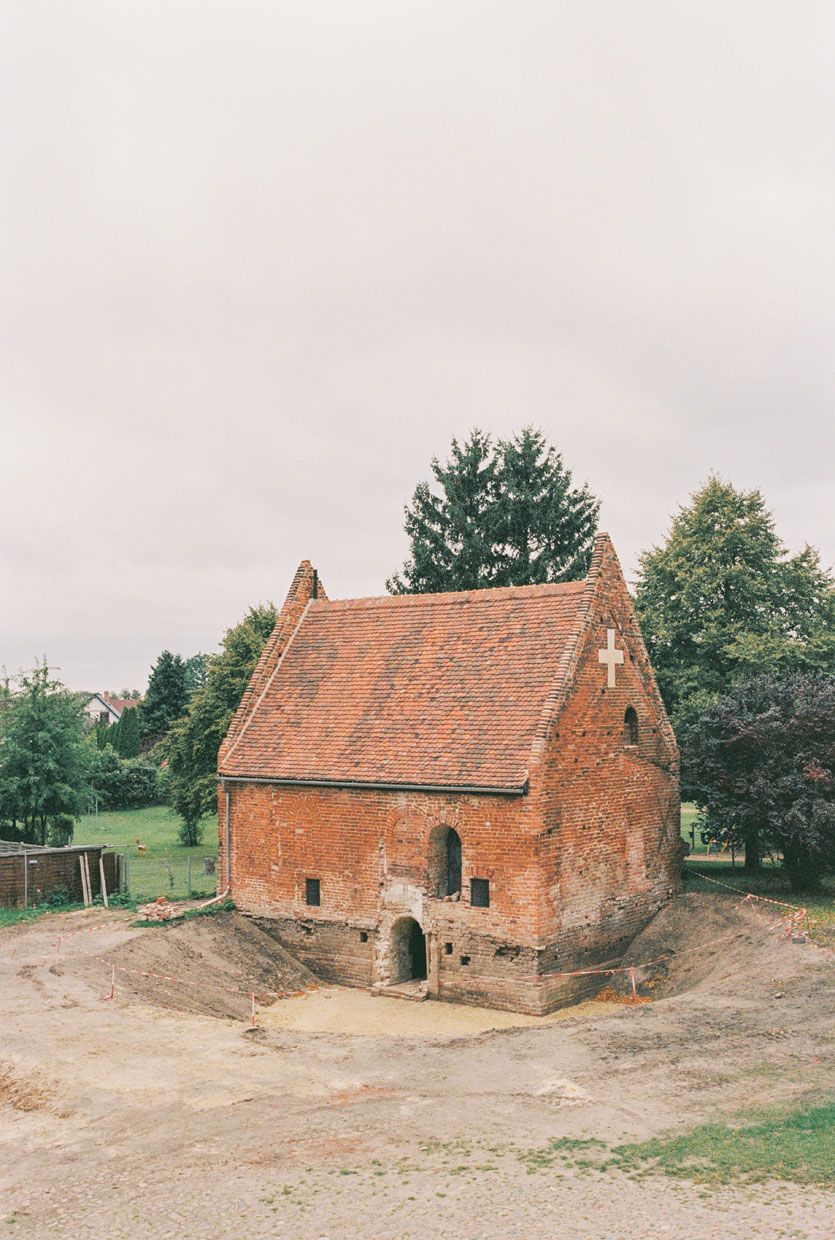
The second and third construction phases are the barn and the granary. For the granary, the idea is to found a cooperative and find people who want to live there permanently and become members of the cooperative. Our aim is to enable flexible living.
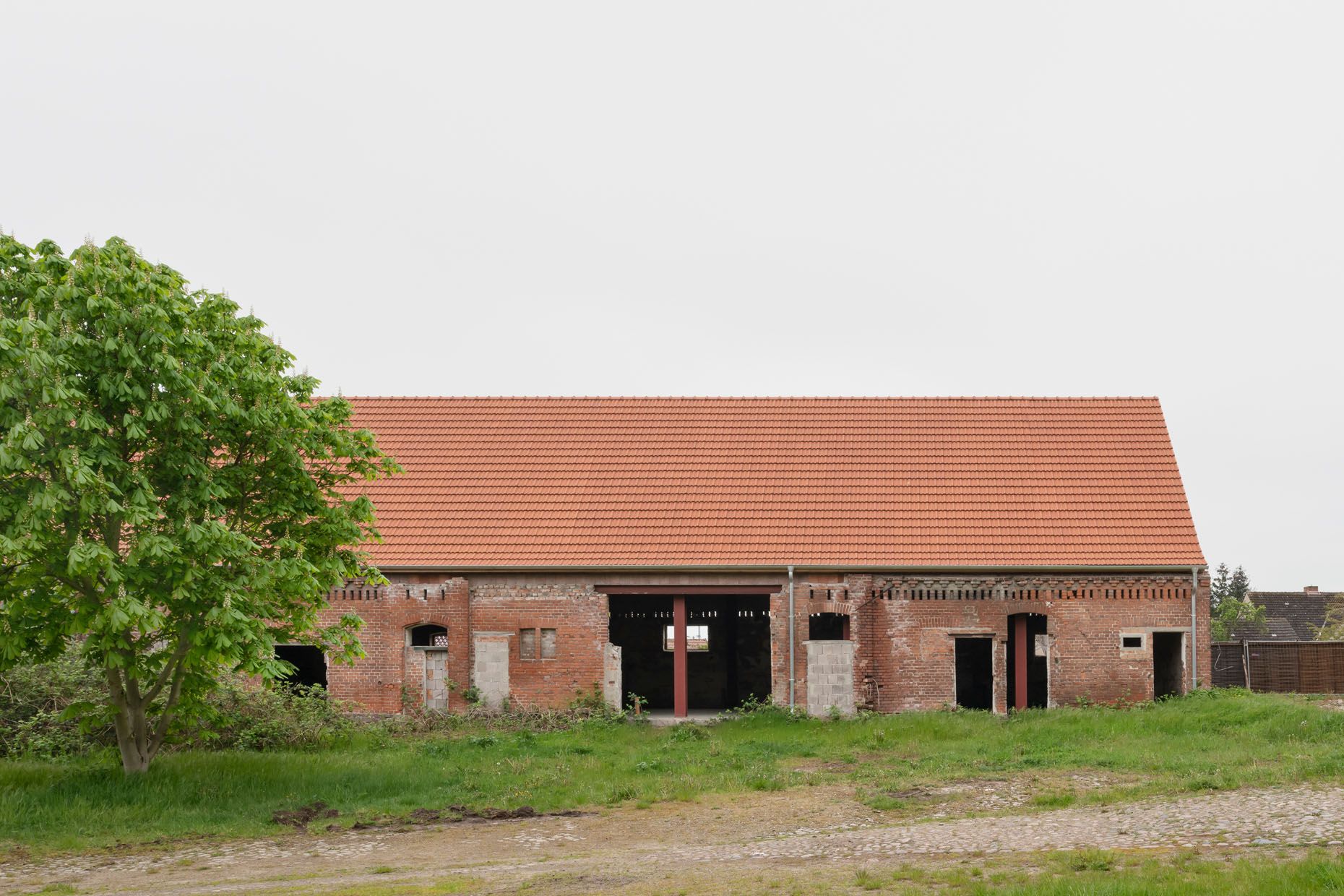
The last building is the barn, planned as a mixed concept of living and working. It will consist of large open studios or spaces with winter gardens, the interiors of which users can complete and subdivide themselves as they wish, defining how they want to use them. This project will be realised as a joint building venture, and there are already initial interested parties.
And how does this work in Werben in relation to the town and its community?
It has always been important to us that the project should not become a satellite detached from the town. This is achieved above all through the assisted living facility for the elderly. This is a use that not only the town council and the mayor supported from the outset, but which also attracts strong interest among the long-established residents. Until now, local residents have had to leave Werben to find accessible housing, losing their social environment in the process.
The other two buildings will probably be inhabited mainly by people from outside. My hope is that Werben will benefit from this – for example through newcomers getting involved in clubs and community life, creating a good mix of new and long-time residents.
Are you also planning your own office in Werben?
Yes, so neither I nor the staff will have to commute from Berlin every morning and return in the evening.
Does Werben also thrive on its contrast to the big city?
Ja, und umgekehrt. Die Kombination ist das Allerbeste. Ich bin immer total happy, wenn ich nach einer Woche voller Arbeit und privater Termine im ICE raus nach Werben sitze und in die Einsamkeit der Landschaft eintauche.
Until the end of last year you were a fellow at Casa Baldi. What were you working on in Italy?
The idea that occupied me at Casa Baldi was again that of initiative projects. I believe this offers architects an opportunity to broaden their understanding of our profession. Of course, I am not the only one thinking about this. There have long been exciting projects initiated and developed by architects themselves – planned either for their own use or for others, but on their own initiative. Some are as unconventional as they are visionary, such as the Baumhaus in Darmstadt by Ot Hoffmann, which has existed for more than 50 years. Over the past months, I have carried out extensive research and developed concepts on how to strengthen the initiative character of architectural work – especially when one does not have significant financial backing.
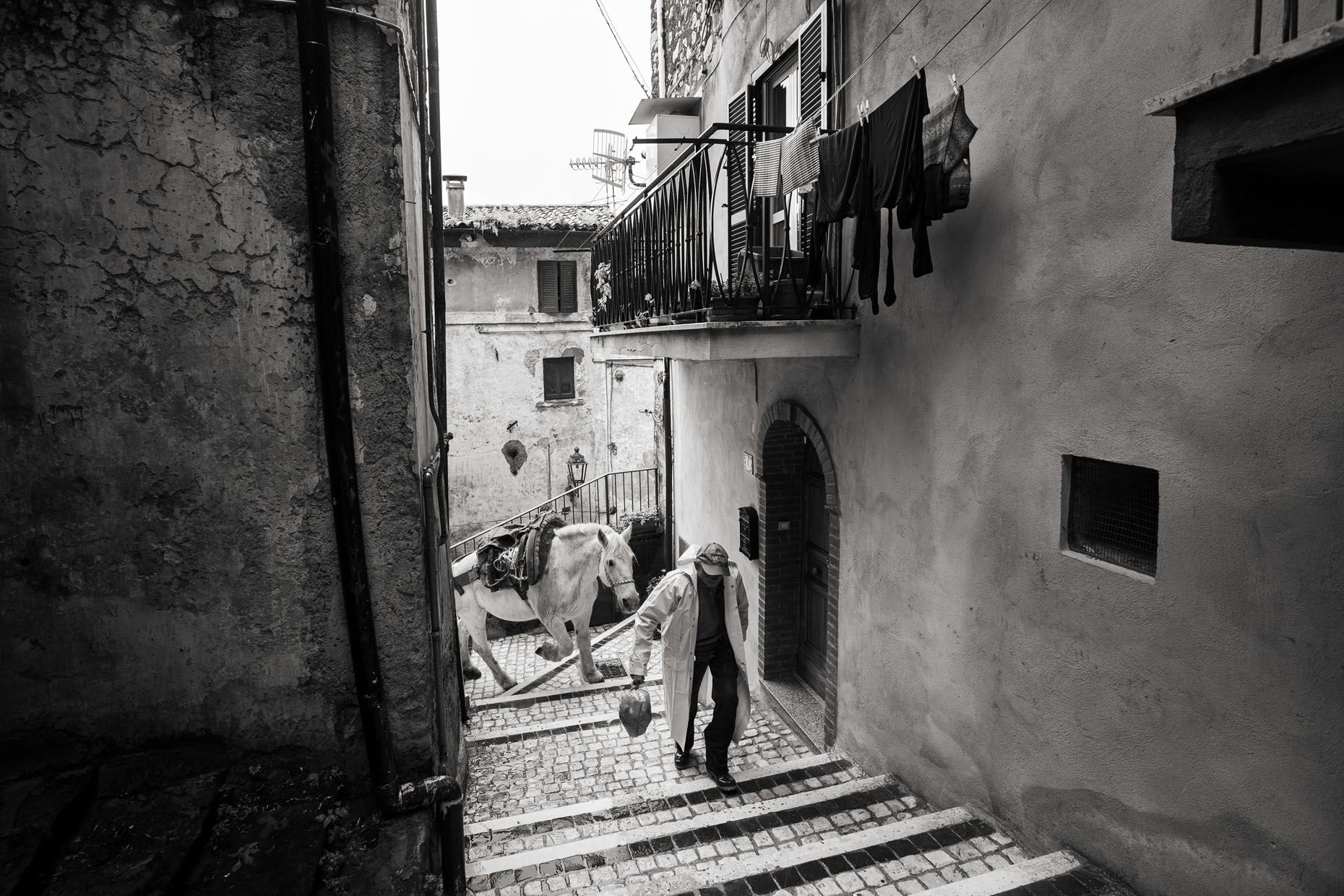
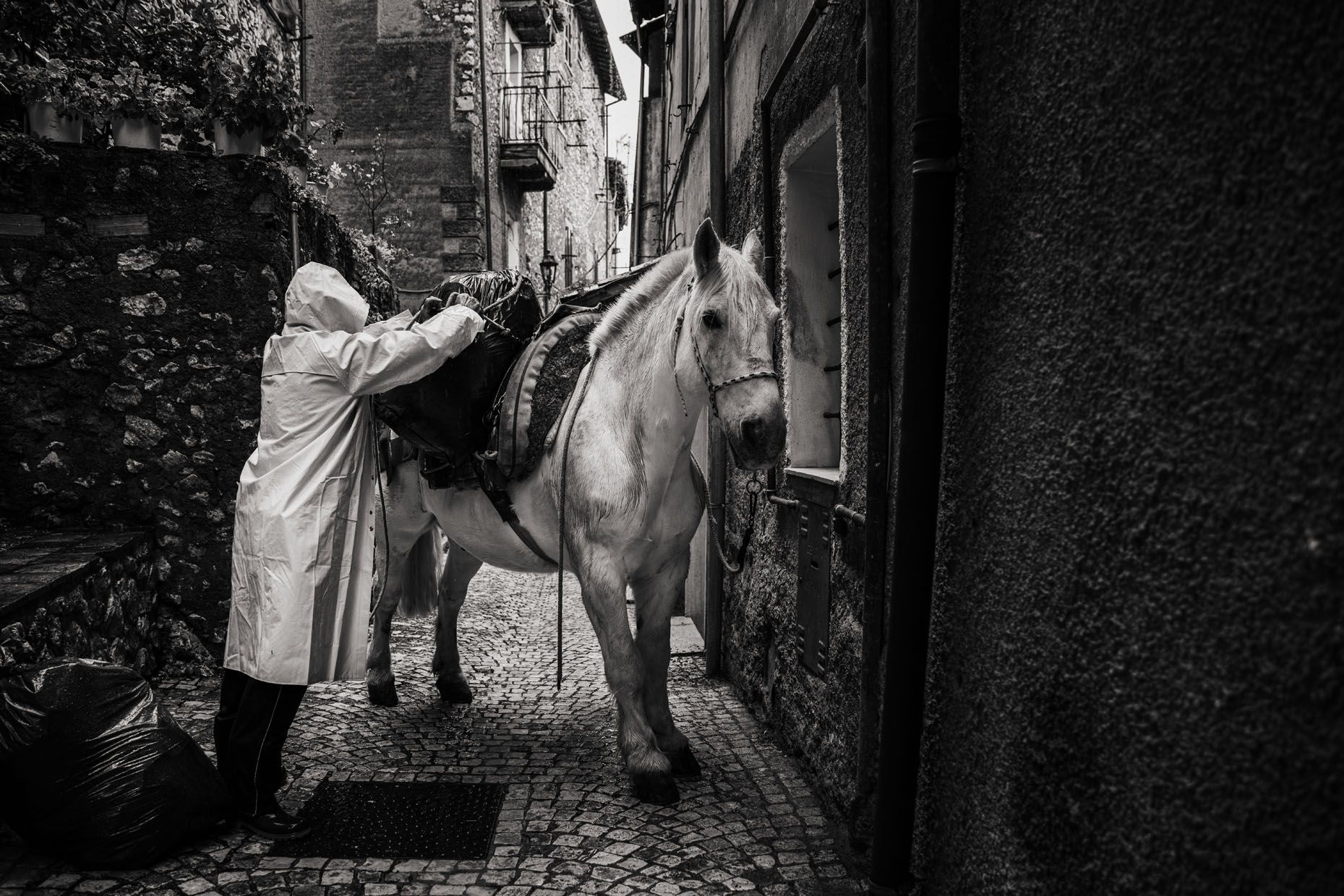
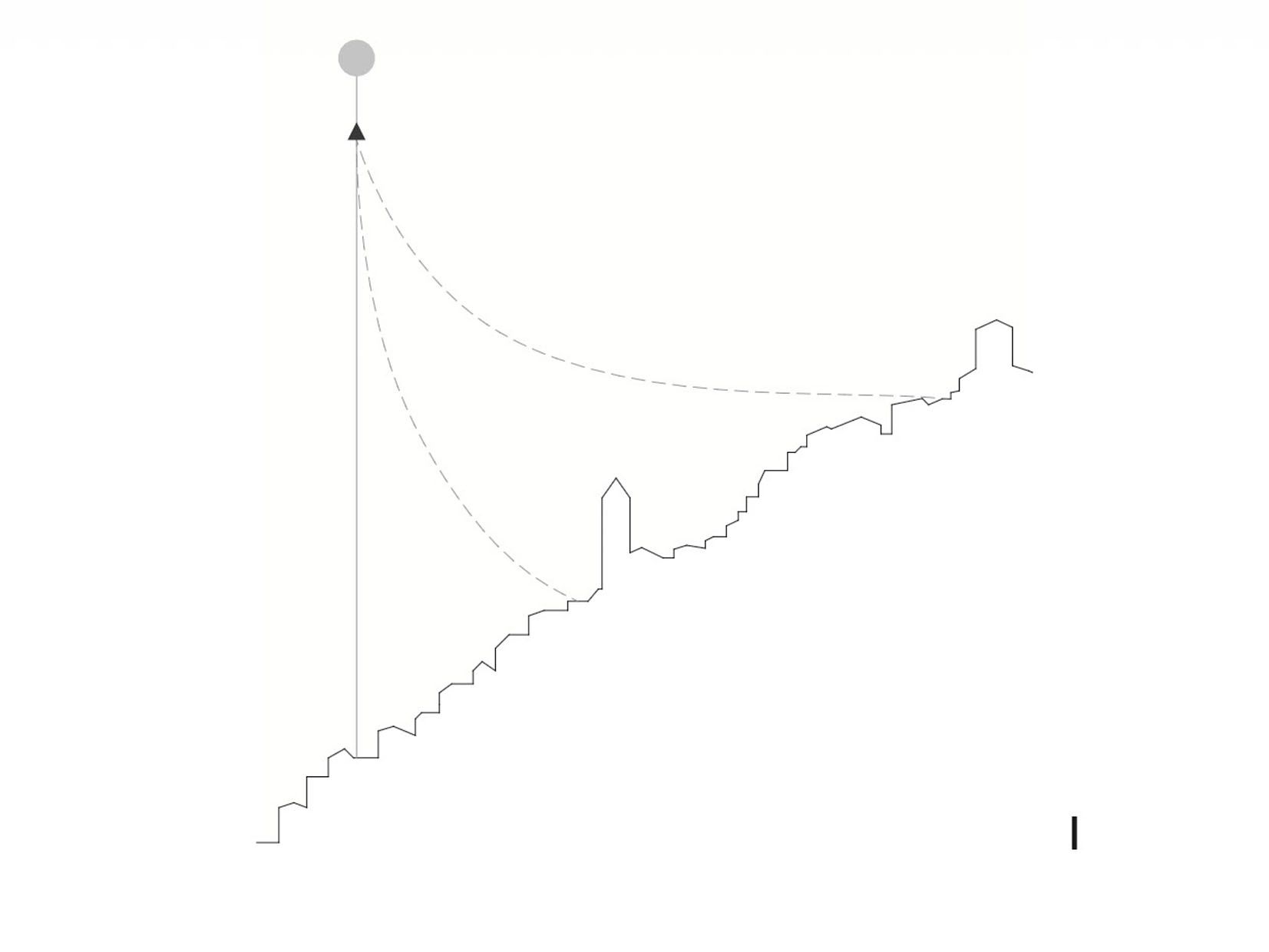
As a fellow, I proposed an initiative for the village of Olevano, where Casa Baldi is located. The mountain village is actually very contemporary – car-free, with steep, narrow alleys and a very favourable microclimate – but extremely inconvenient when it comes to transport. Everything has to be carried on foot. Waste collection, for example, is done by a man and his horse, who walk up and down the stairs countless times until all the rubbish has been taken outside the village for removal. A rather tough job! Together with a photographer, I accompanied them and created a photo series. So, I put forward a proposal on how hydrogen balloons and transport baskets could make transport easier for the people there. Perhaps this could help make such villages more attractive again and reduce rural exodus.
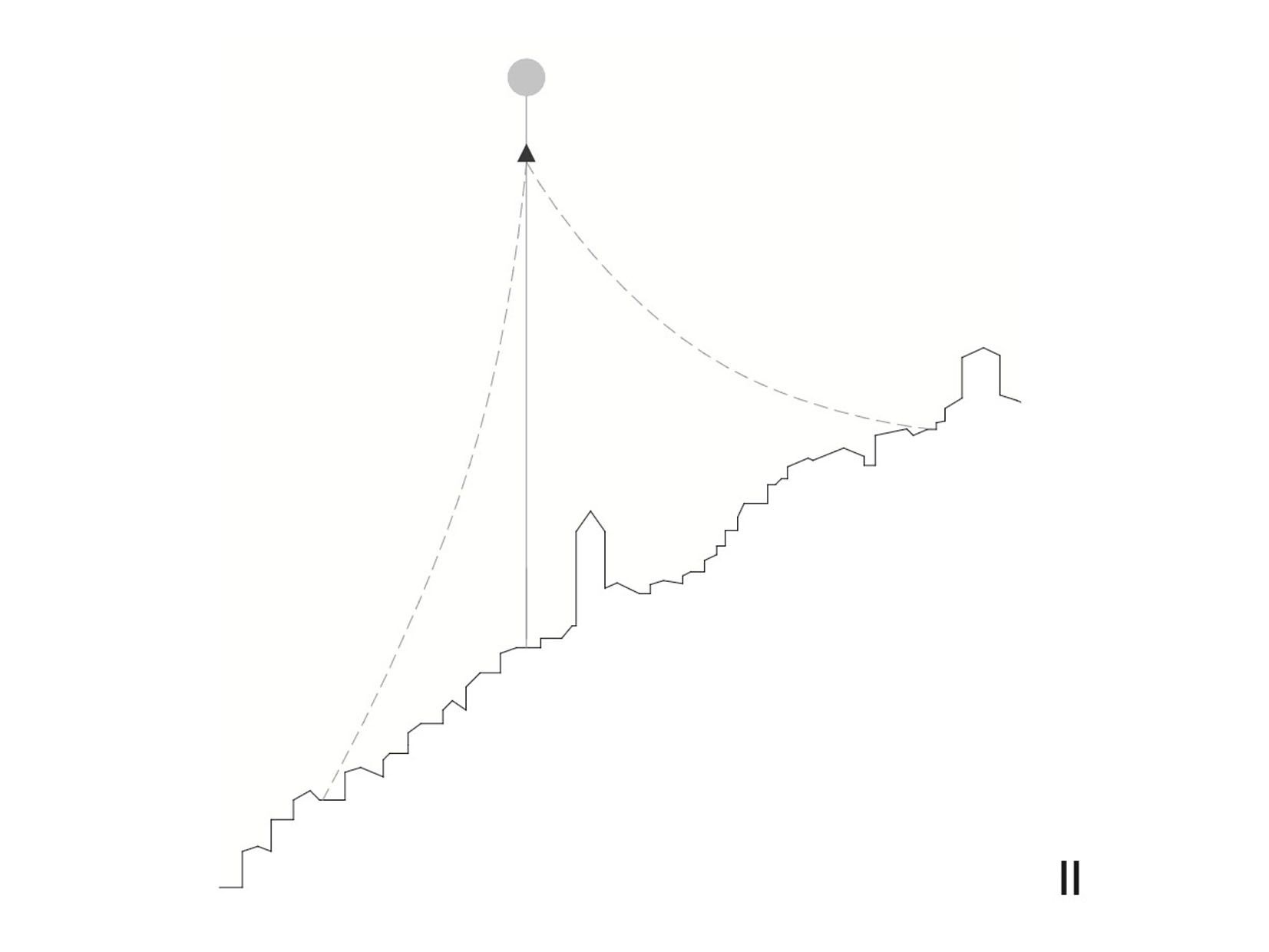
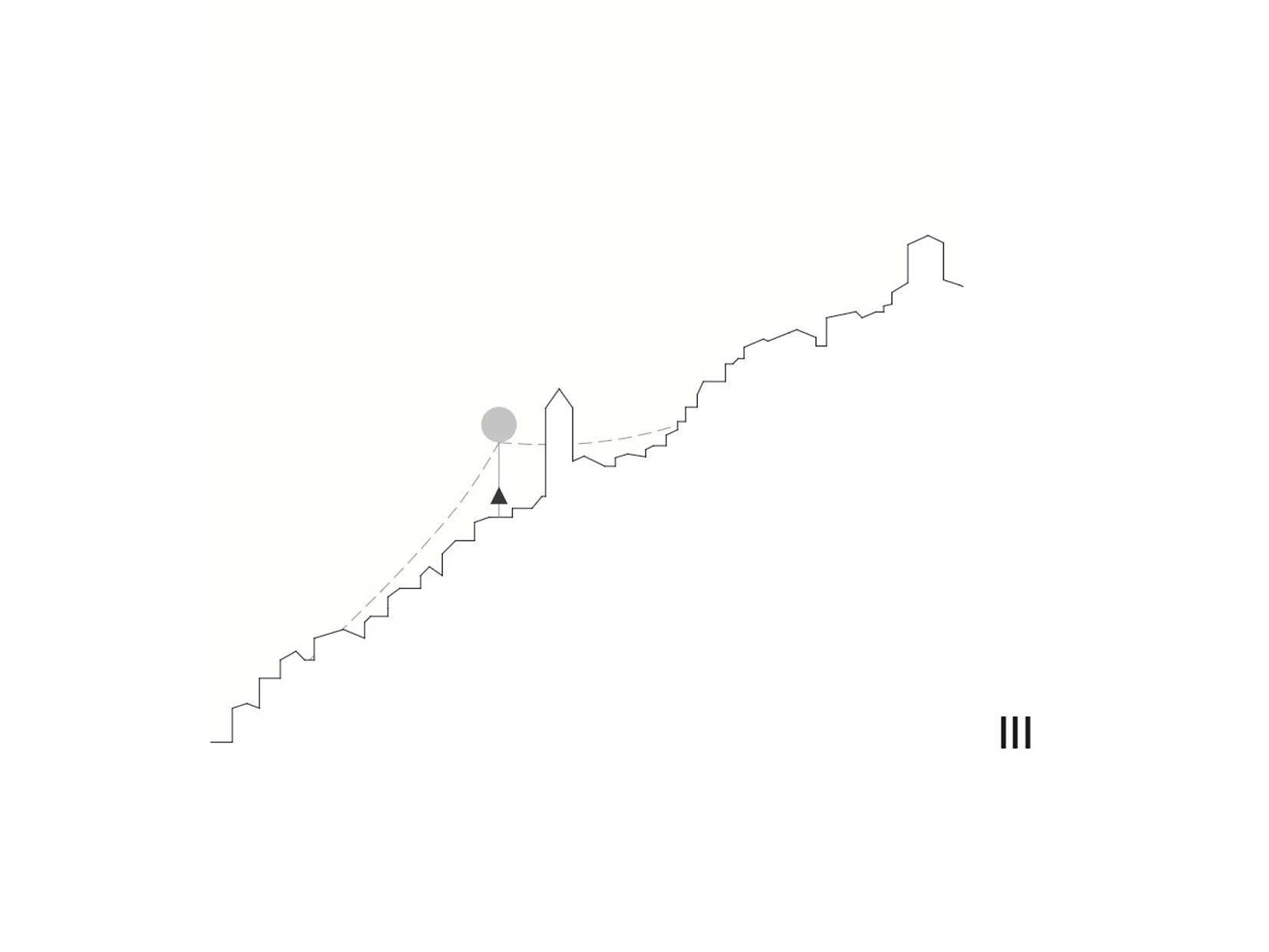
Vacancy in rural areas is something that occupies me frequently. Statistics suggest that Germany lacks one million homes, yet around one million homes also stand empty – just in the wrong places. I believe this represents enormous potential.
Your project Luise 19E has received many awards but is still relatively unknown. Could you briefly describe it?
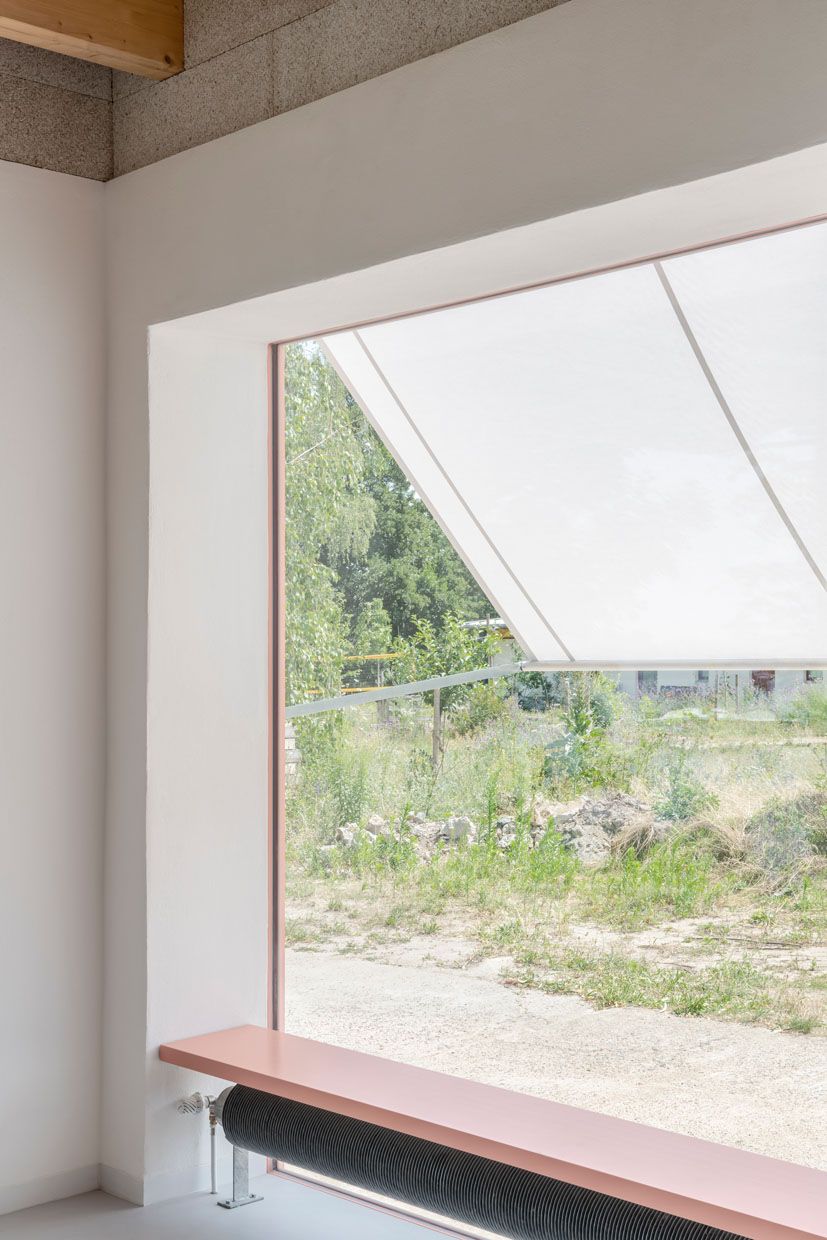
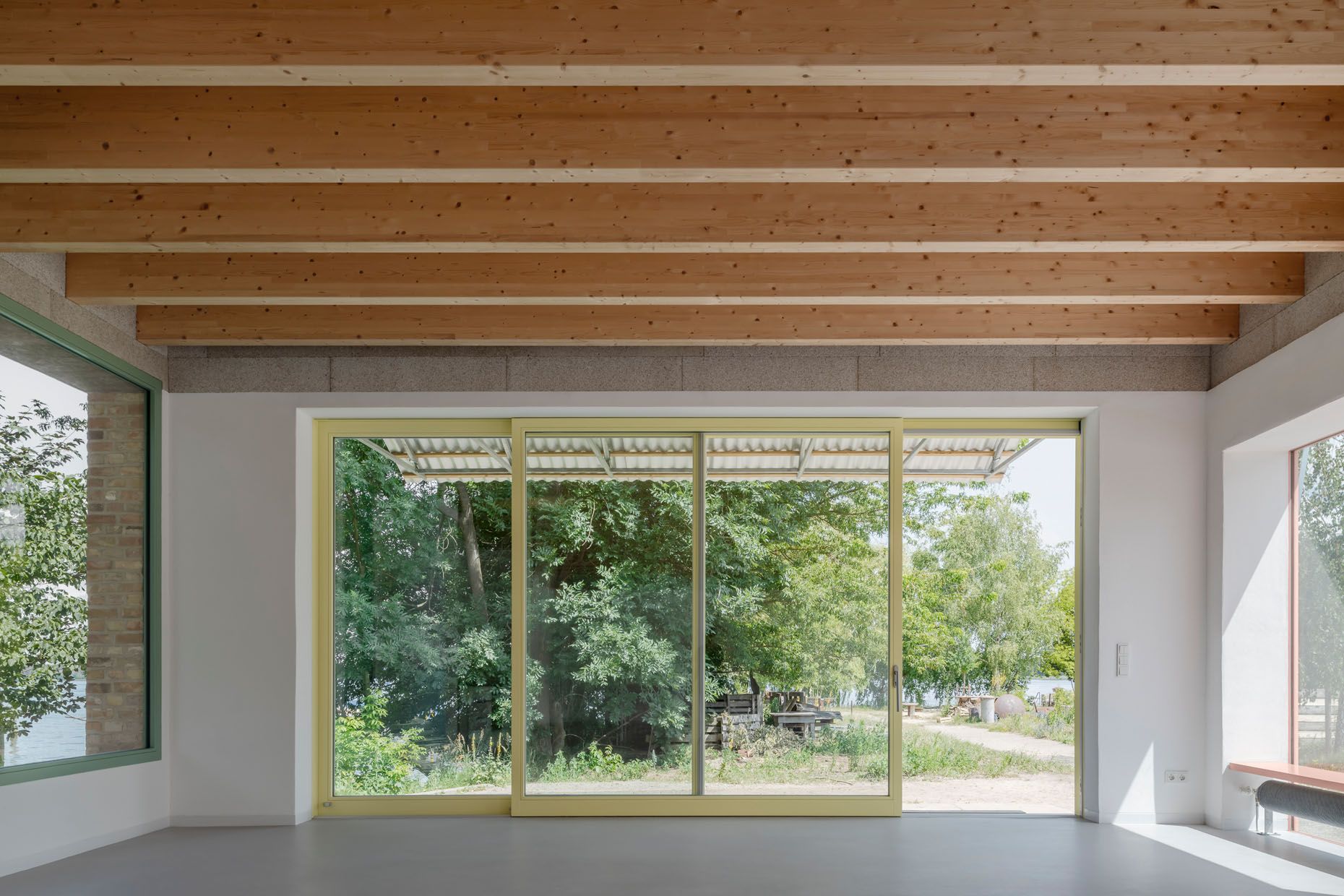
The project involves a community building for a cooperative that renovated an entire industrial site in Werder (Havel). Everything had already been completed except the community building, which had been postponed. A building permit had already been granted, which included the extensive demolition of the rather dilapidated garage complex.
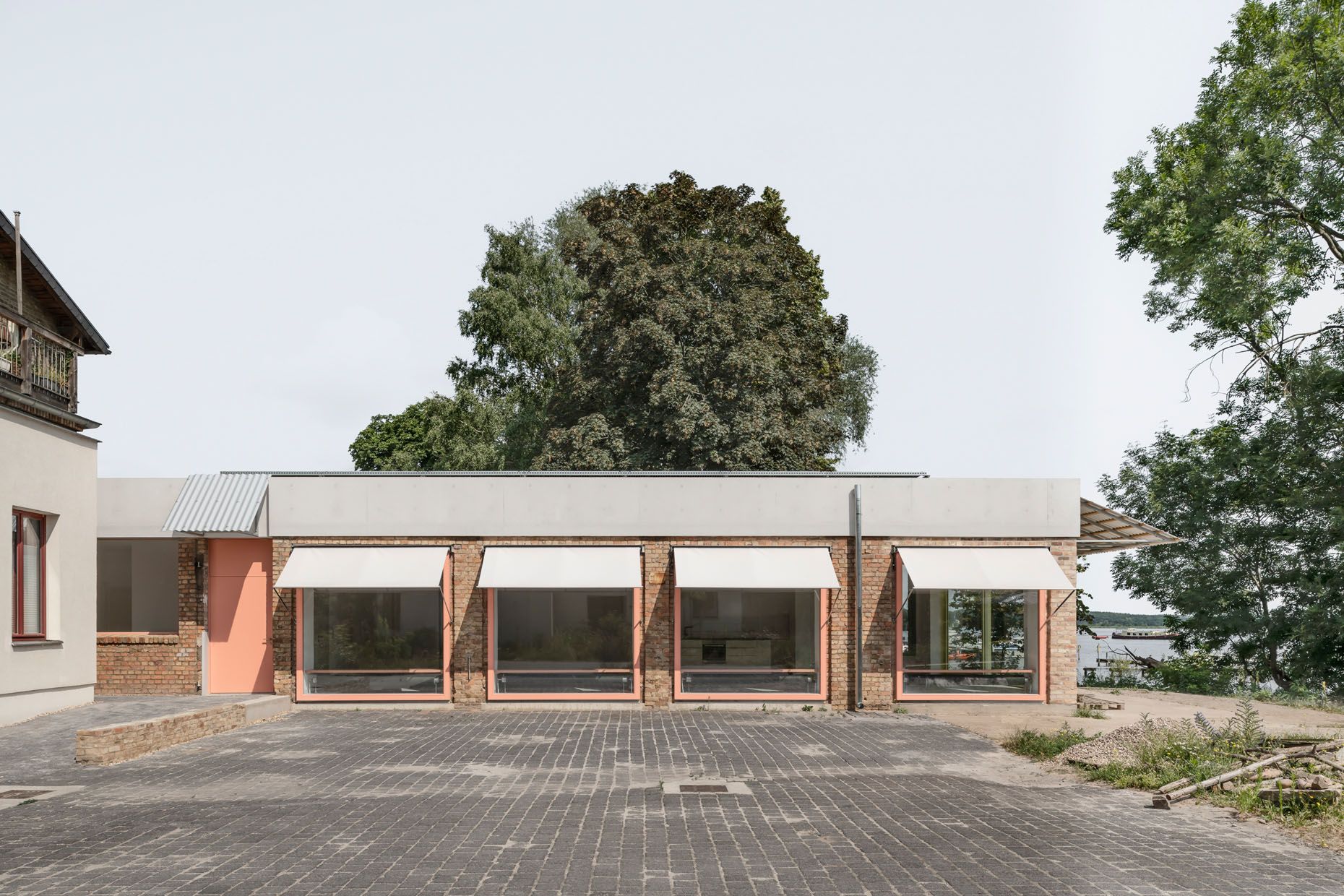
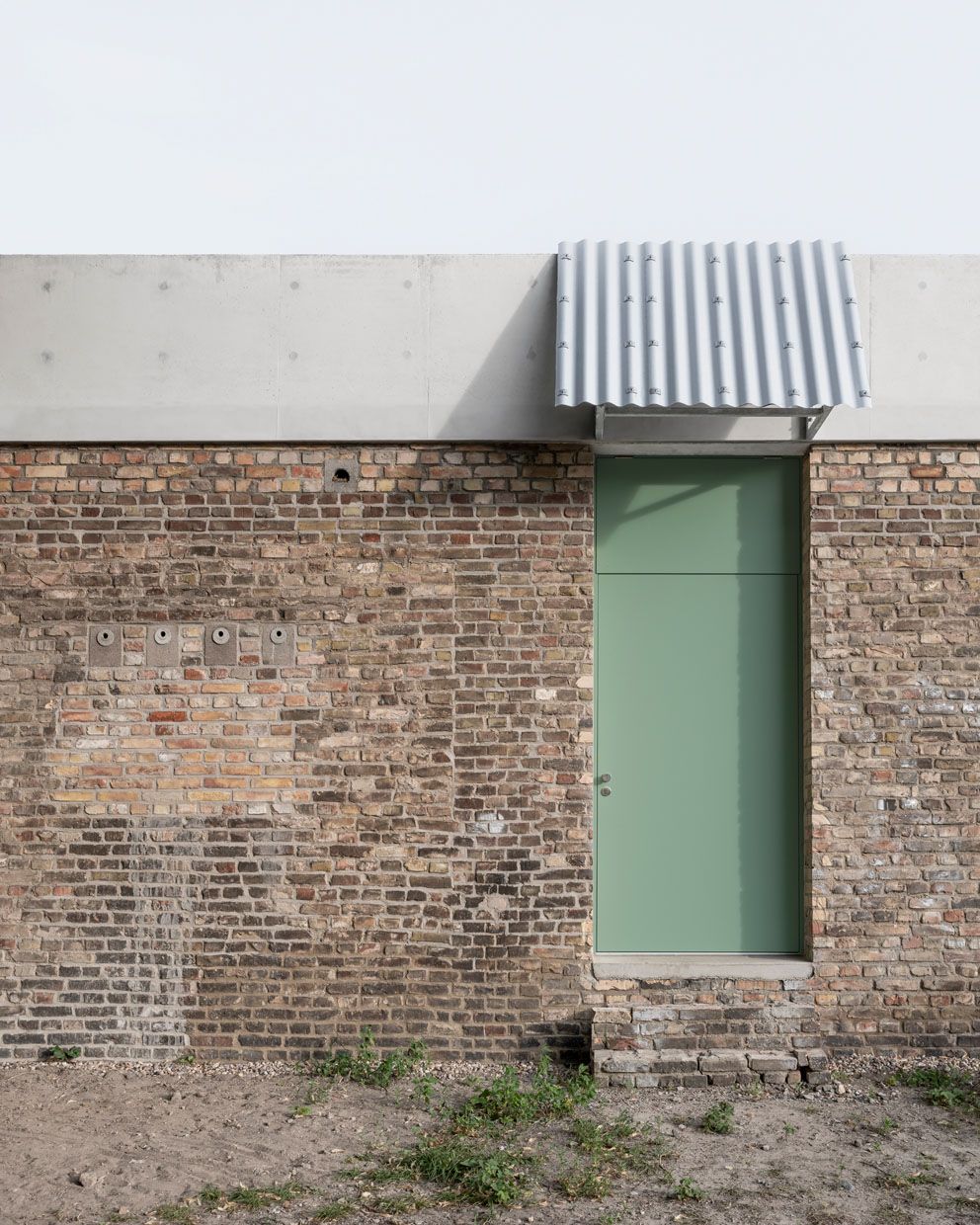
When I was invited to take part in a local architecture competition, I wanted to preserve the existing structures – contrary to the plans. Especially since garage complexes in the former GDR were important social places with a rich history. Although the garages looked old, they had been built gradually after the 1950s – one in the 1950s, then another next to it in the 1960s and another in the 1970s. They were not even connected and some no longer had foundations, but they were built from old bricks. Effectively, reuse as a theme was already embedded in the existing fabric. We therefore proposed preserving them as much as possible, removing some of the dividing walls and using the bricks from the last garage, which really had to be demolished, to add new elements , put a large roof on top of the ensemble and install windows where the garage doors used to be. With a great deal of personal efforts by the cooperative members, we repaired and preserved as much as possible – materially, culturally and historically.
Are the cooperative members happy?
Absolutely. And the jury for the BDA Prize, who announced their visit at short notice and during a party held by the cooperative members, were clearly impressed by the project.
Speaking of iconic existing buildings: you are currently working on a redevelopment project of prefabricated housing in Stendal. What is the current status?
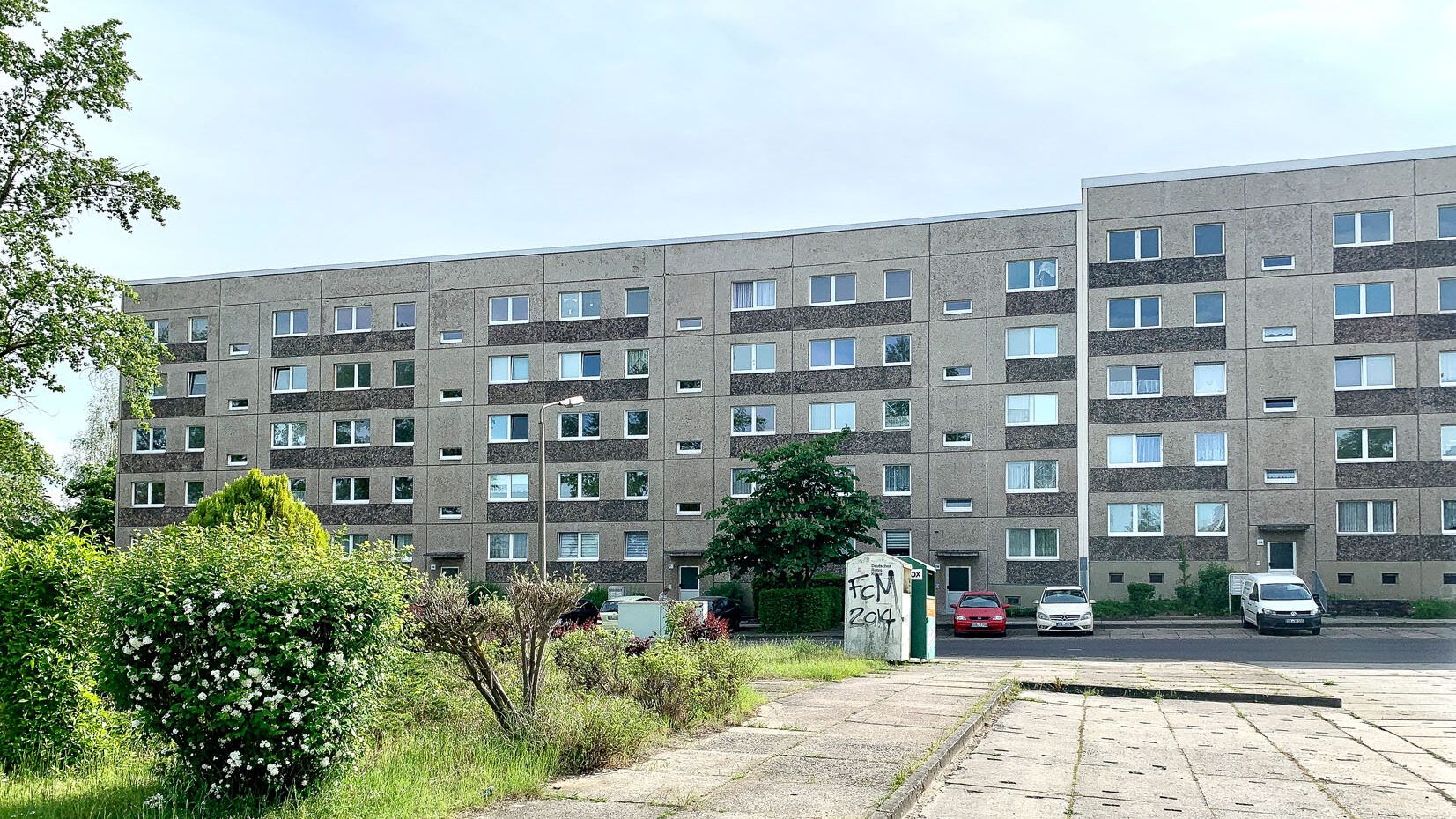
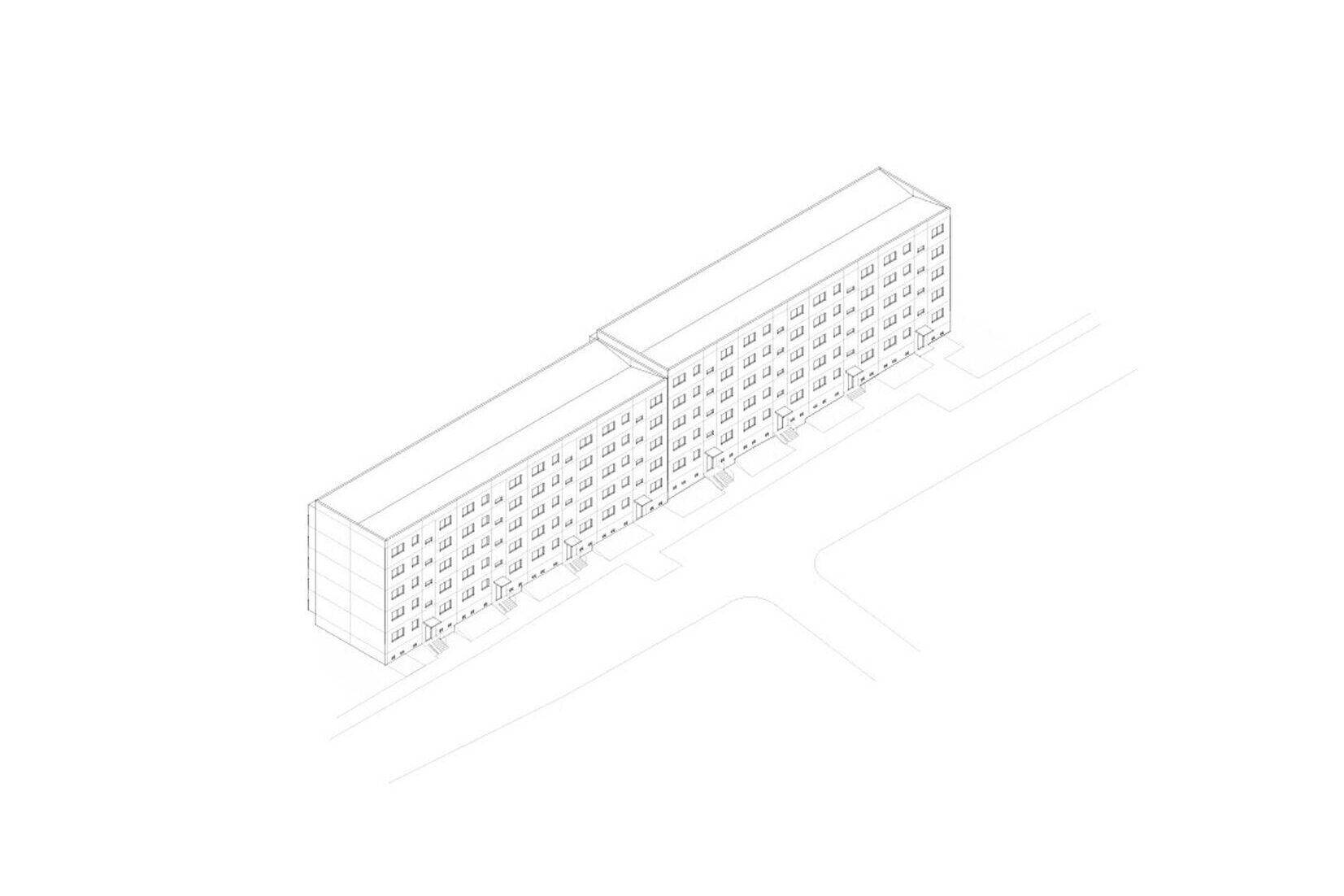
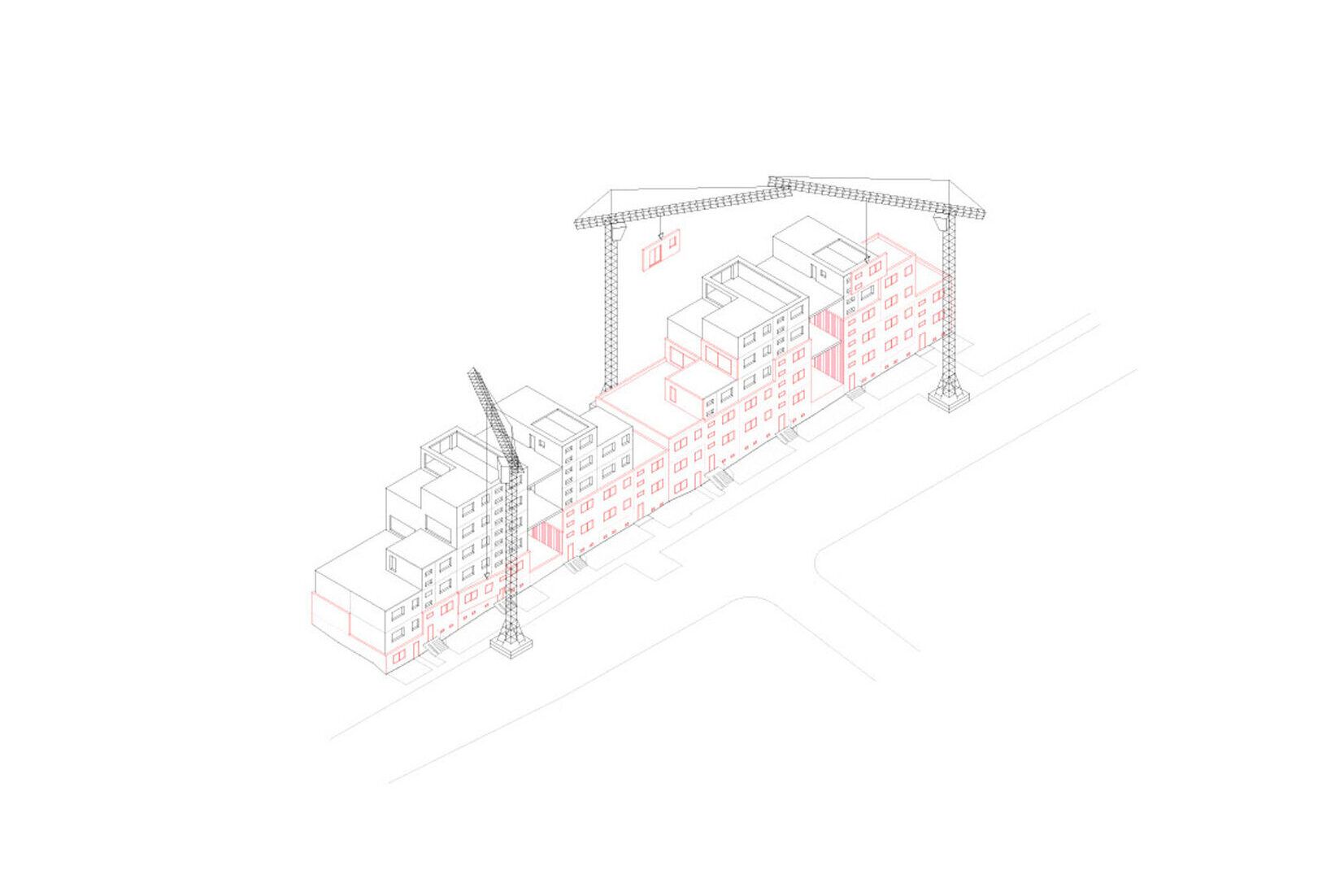
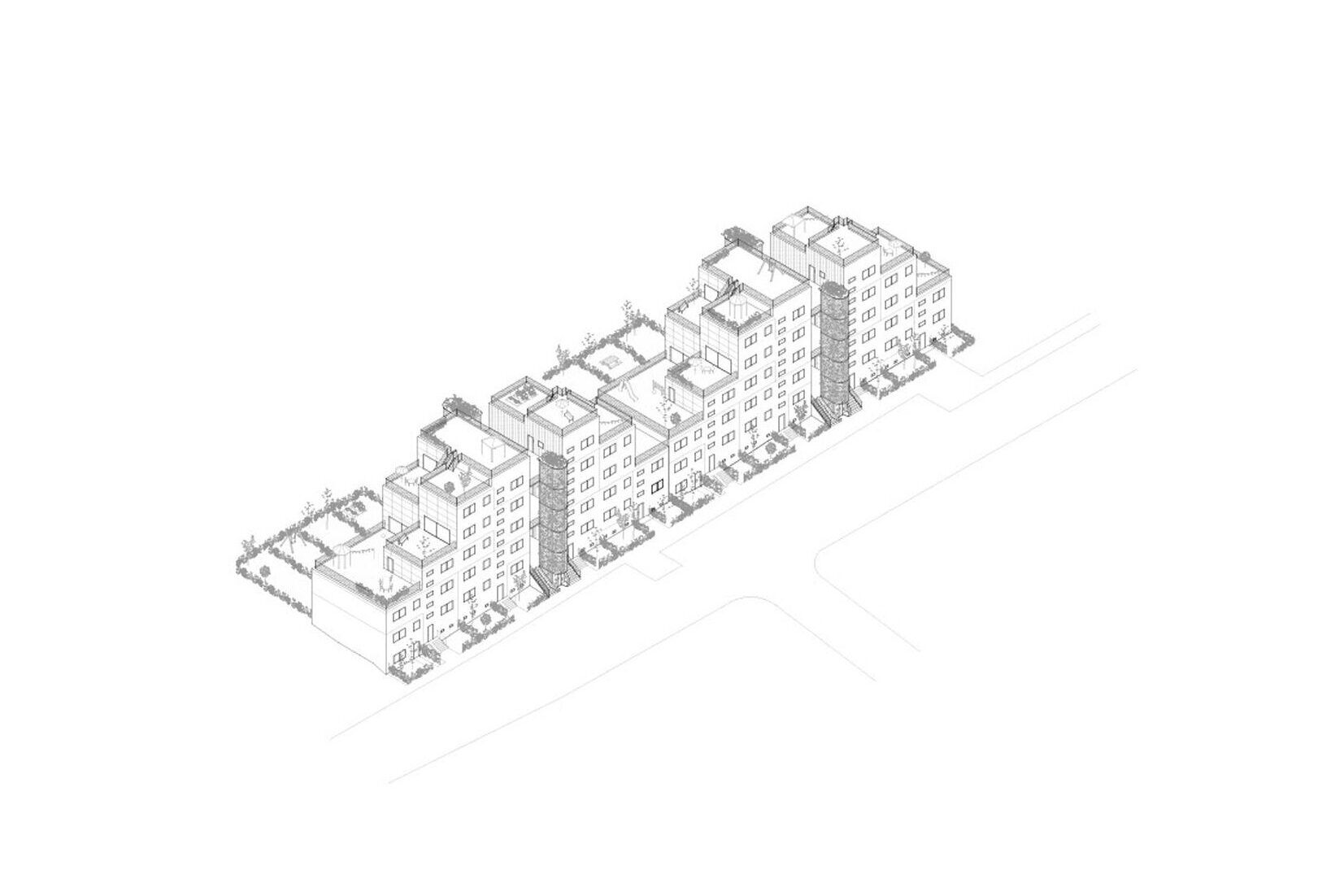
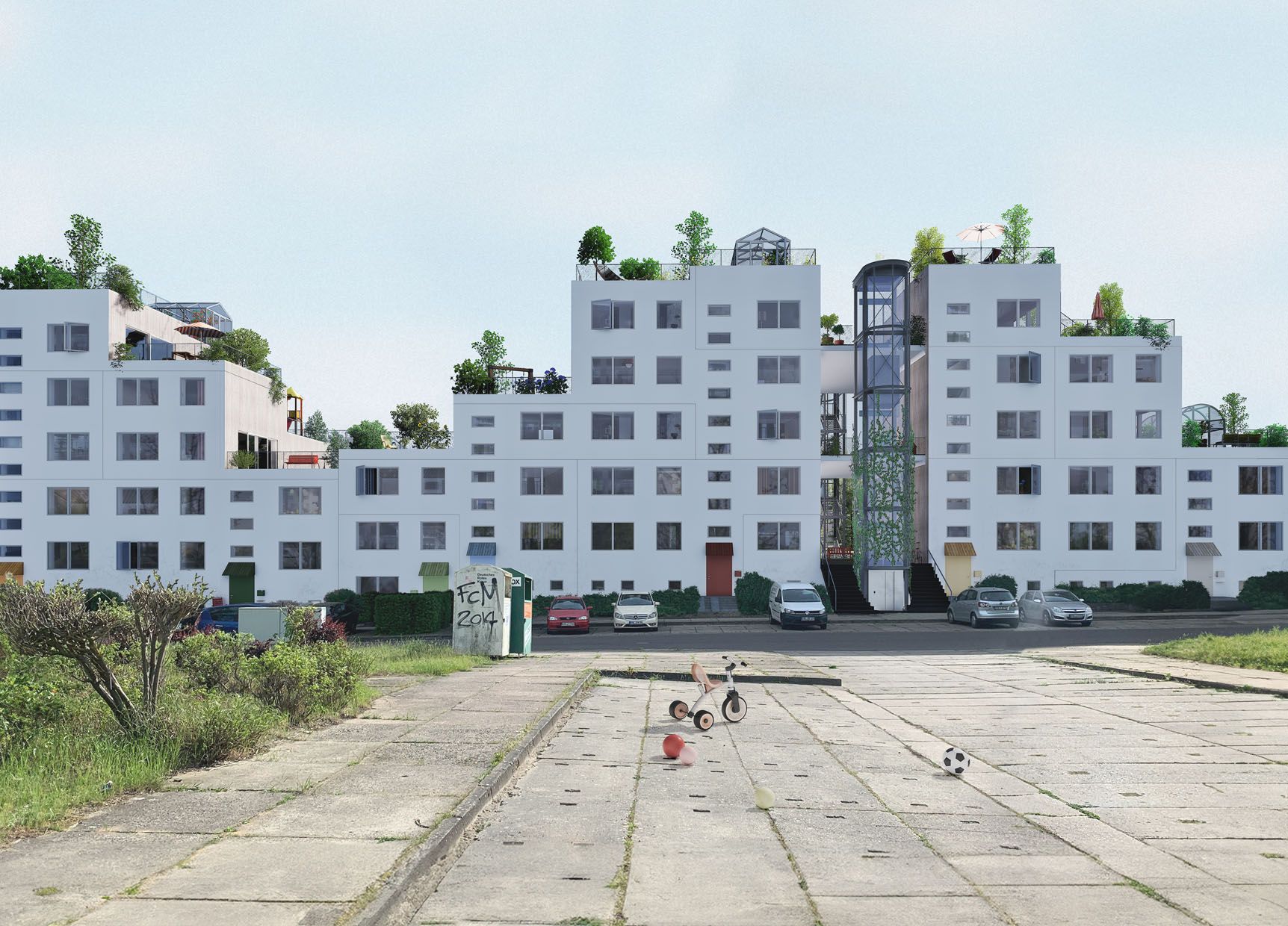
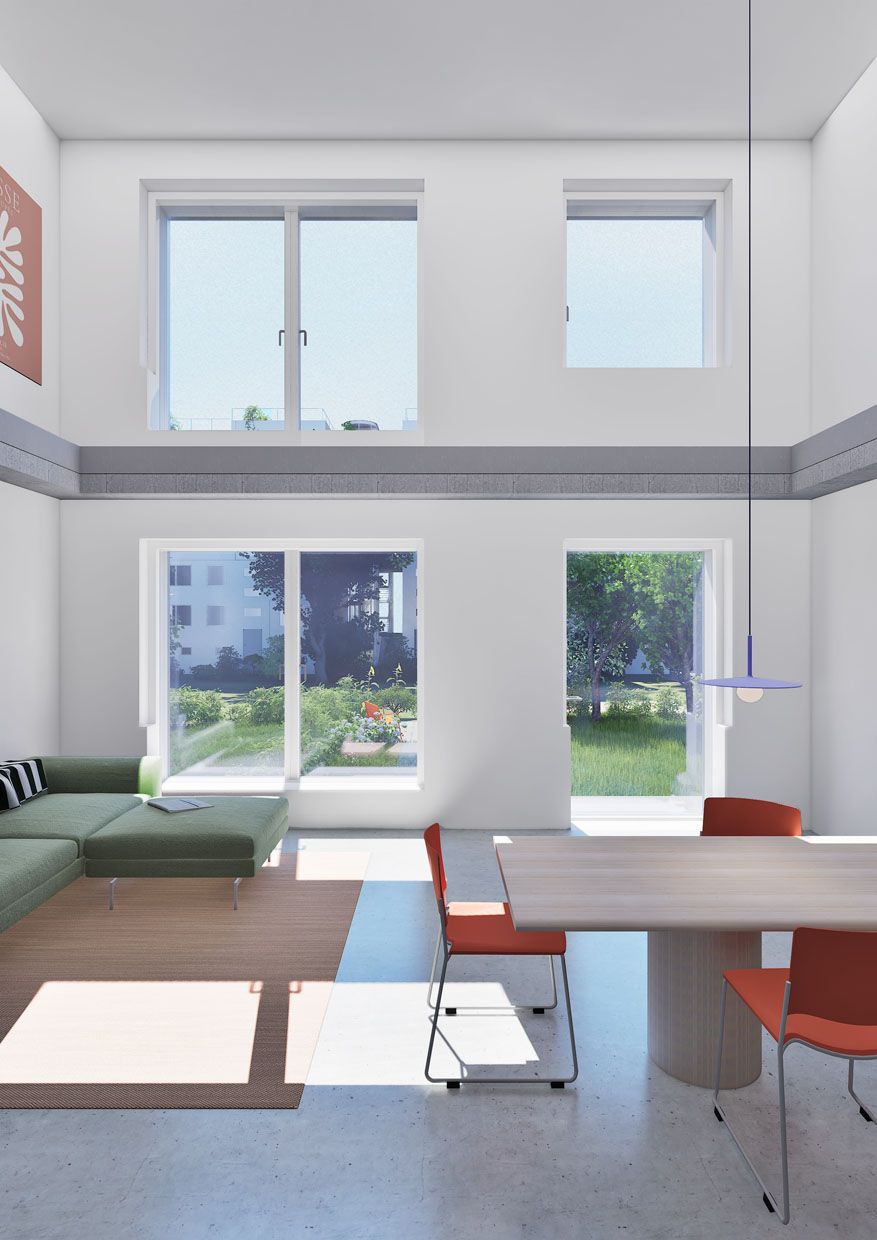
The good news is that we began the first construction phase on 7 January. Initially, we are removing the panels that we will either reuse or no longer need. The aim is to transform the existing building into a single-family-house house – a building of stacked individual houses with roof gardens and open corridors. The future buildings are based on the 6 × 6 m grid of the supporting structure.
How exactly did this unusual approach come about – one that, if successful, could perhaps serve as a model for other prefabricated housing blocks?
The rather conservative theme of single-family houses actually helped. Prefabricated blocks are simply unpopular, and the common practice is to demolish them completely and replace them with a few detached houses – exactly what we do not want to do. Yet the logic is clear: single-family houses remain popular. We therefore understood our architectural task as requiring a different model – namely, as transferring the idea of the single-family house to the existing building stock.
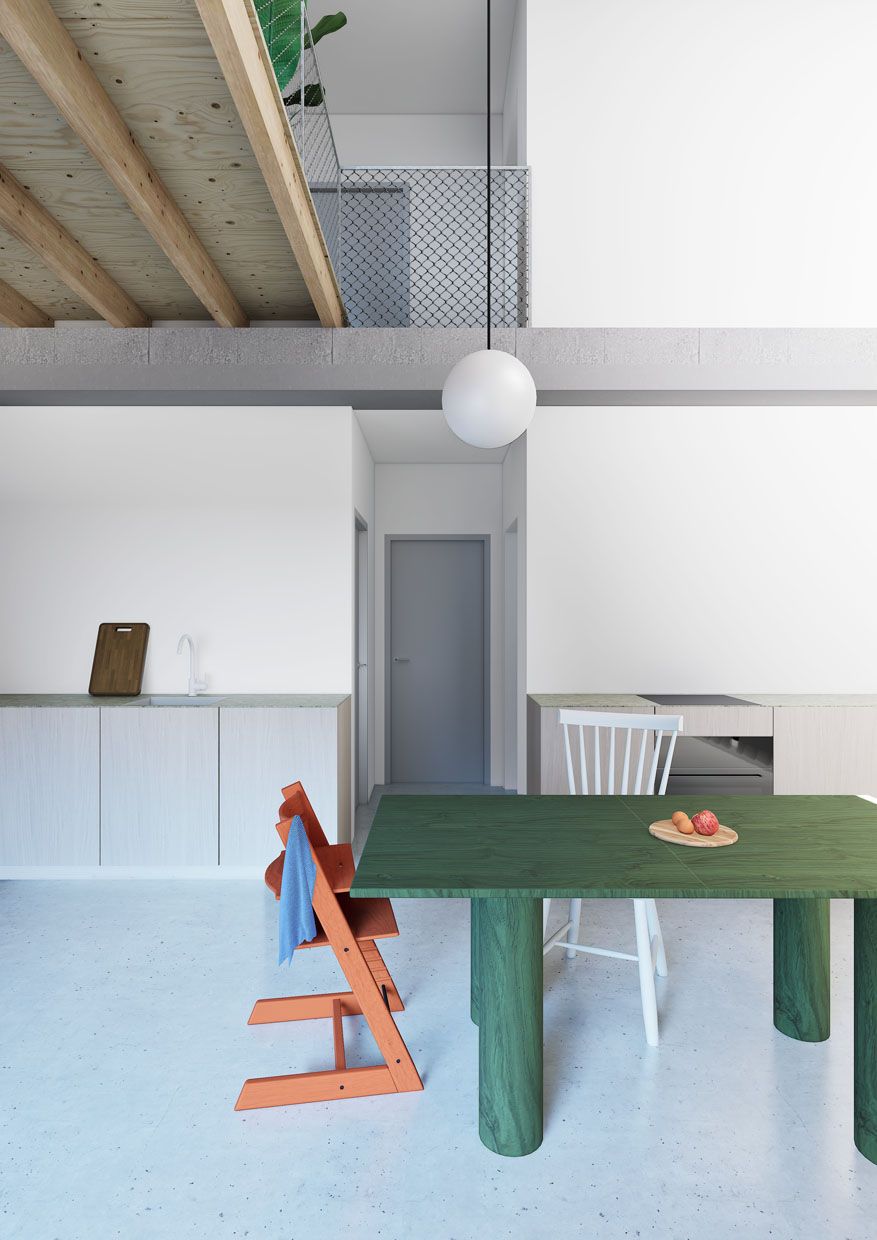
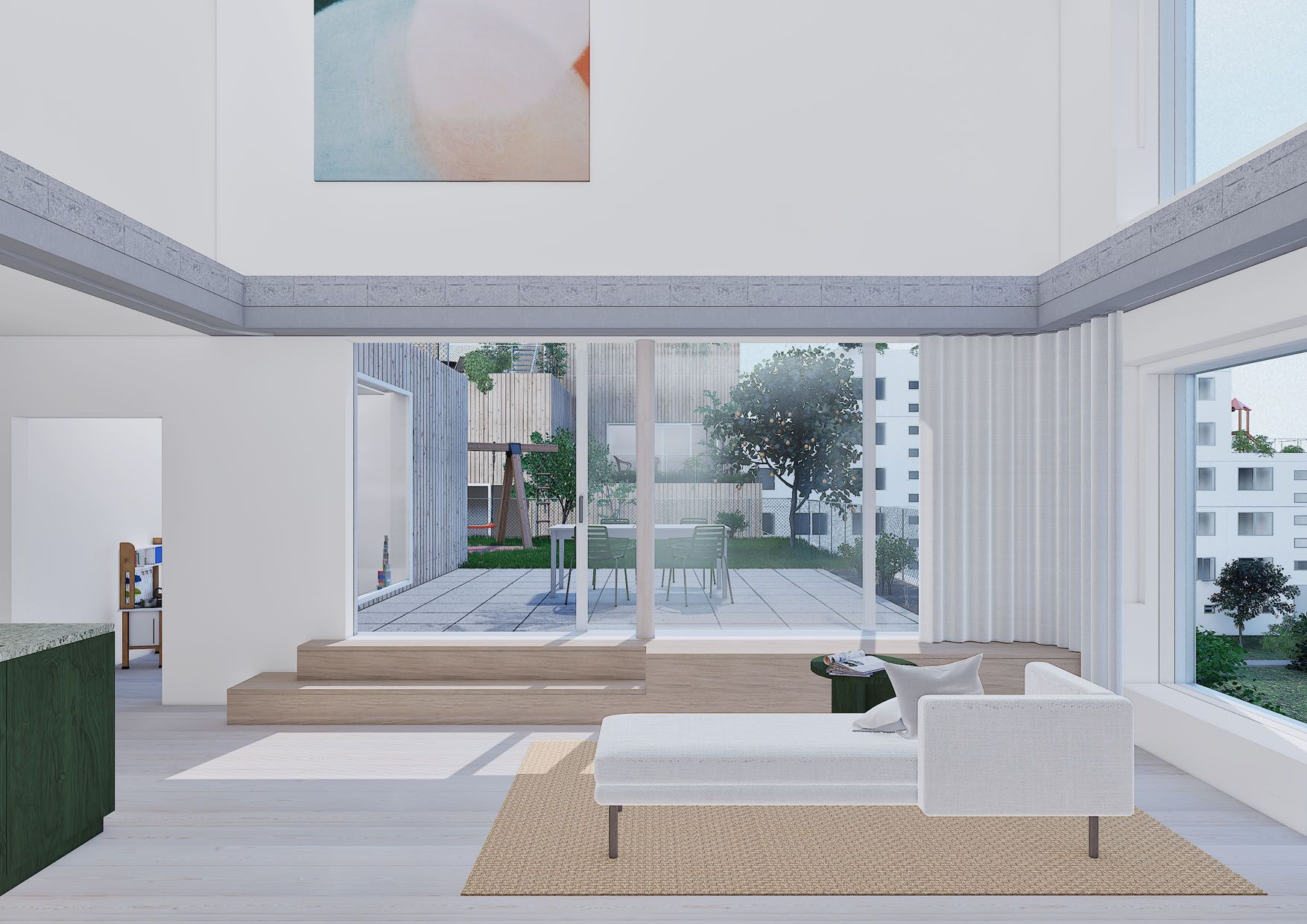
If more financial resources or research funding were available, this could help in many places and lead to greater innovation.
How did the Stendal project come about?
By chance. I once got stranded in Stendal and had to stay overnight unexpectedly. I walked through the large prefabricated housing estates and learned that many of them were due to be demolished to create building land for single-family homes, because there was too little land available for them. I found that irritating and somehow illogical. So we made a sketch and sent it to the city. Eventually we came into direct contact with the local housing cooperative – and that’s how the project began.
So you took a risk and did some work upfront.
Exactly. But that’s what I enjoy most: thinking through these processes rather than focusing purely on classical design. And when it works, all the better. The cooperative has now commissioned the partial dismantling. My aim is to create a kind of show home within the building shell, which will serve as a prototype catalogue for potential future buyers.
Since you’ve just spent several months at Casa Baldi and away from daily office life – how does your Berlin office work organisationally, and what’s your philosophy?
I really like taking responsibility and initiating projects, but what defines the office is that the team works very autonomously and is highly skilled. That worked well during the three months I was away, because I don’t have to constantly comment on or control everything.
Since you work conceptually and tend to deal with structural, political and organisational issues: what does that mean for your design language?
I’d say I don’t have a single design language. And, at least in my view, that’s no longer appropriate. What matters much more to me is that you can see that the different, highly individual requirements of each project are taken into account and that the project itself has coherence and tells its own story.
You also held a visiting professorship at Karlsruher Institut für Technologie (KIT) last year…
Yes, it was great fun. You have to apply for the visiting professorship, and since the semester focused on working with existing buildings, it was exactly my topic. What fascinated me most was how the students approached the semester project. The task was to find and work on a relevant existing building in Karlsruhe or the surrounding area. The students did extensive research and built contacts – with authorities, owners and neighbours. The actual design phase , which you would do in a traditional degree programme, only began five weeks before submission. Before that it was more about stakeholder constellations, financial aspects, legal issues, interests, empathy and commitment. Some excellent projects emerged.
That sounds exciting. Over the past few months, we’ve talked about this very topic – about architects taking the initiative to find tasks – in other interviews. We are left with the feeling that there’s a generational divide in the profession – or rather, that the tools and the way of taking risks are completely different. Is that accurate?
I can only speak for us. We do take financial risks, for example with the Komturei, where we are co-owners and act as developers ourselves. Perhaps younger colleagues simply take different paths. For example, the way the Ana Institute managed to secured funding for its publishing projects was interesting, and the co-ownership project Homer by Common Agency is a compelling constellation. So maybe the paths to achieving goals are slightly more diverse among younger architects.
What I would really like to see is more support for initiatives. If cities and municipalities could commission small feasibility studies for existing buildings without clear uses – often 10,000 euros would be enough. Providing municipalities with more money and freedom would ultimately be helpful for all parties. The key question is always: where do architects get the resources to work in advance and initiate projects?
In any case, I believe it would be positive and important for politics and architecture to work more closely together at these early stages. Architects could play a greater role, particularly in the conceptualisation phase.
We’ll keep our fingers crossed. Thank you for the engaging exchange and the many inspiring ideas.
After studying at ETH Zurich, Jurek Brüggen (born 1993 in Berlin) founded the architecture practice undjurekbrüggen in 2020, based in Berlin and Werben (Elbe). The office aims to contribute to the regeneration of climate, nature and the built environment. Its planned and implemented projects have received numerous awards and been widely published.
Together with Aimée Michelfelder, he founded the non-profit organisation AFEA – Association for Ecological Architecture in 2025. In collaboration with other partners, they develop initiatives and proposals for civil society, public institutions and private stakeholders to actively shape and implement ecological transformation.
In the summer semester of 2025, Jurek Brüggen was a visiting professor at Karlsruhe Institute of Technology (KIT), focusing on work with existing buildings. In the fourth quarter of 2025, he received the Casa Baldi scholarship from the German Academy Rome. Furniture designed by Jurek Brüggen is produced by the label Eins und Viele.
Since 2025, Jurek Brüggen has been renting and mediating projects initiated or planned by his office via the ORTE platform.
Interview: The conversation was conducted by Jan Hamer and Ulrich Stefan Knoll.
Photos: Jurek Brüggen © Victor Nagel (Cover photo), Verwalterinnenhaus © Anne Schwalbe (1–4), Komturei Werben © AFEA – Association for Ecological Architecture (5), © Anne Schwalbe (6/7), Jahreszeitenhaus © Random Acess Studios (8–10), Mobile Kitchen © Jurek Brüggen (11), Floor lamp © Jurek Brüggen (12), Tray and side table © Jurek Brüggen (13/14), Lastovo © Jurek Brüggen (15–19), Palazzo — Axonometric projection of new building © AFEA – Association for Ecological Architecture (20), Palazzo — Current view © Alexander-Paul Brandes (21), Palazzo — Visualisation © Aimée Michelfelder (22), Komturei Werben © Anne Schwalbe (23–25), © Hannes Heitmüller (26/27), La Picola Luna © Alessio Panunzzi (28/29), © Jurek Brüggen (30), Luise 19E © Hannes Heitmüller (31–34), Einfamilienhaus-Haus Stendal — Current view © Jurek Brüggen (35), Stendal — Axonometric projection & Visualisation © AFEA – Association for Ecological Architecture (36–42)
0 Comments