The Bühelwirt — Focussing on the essential
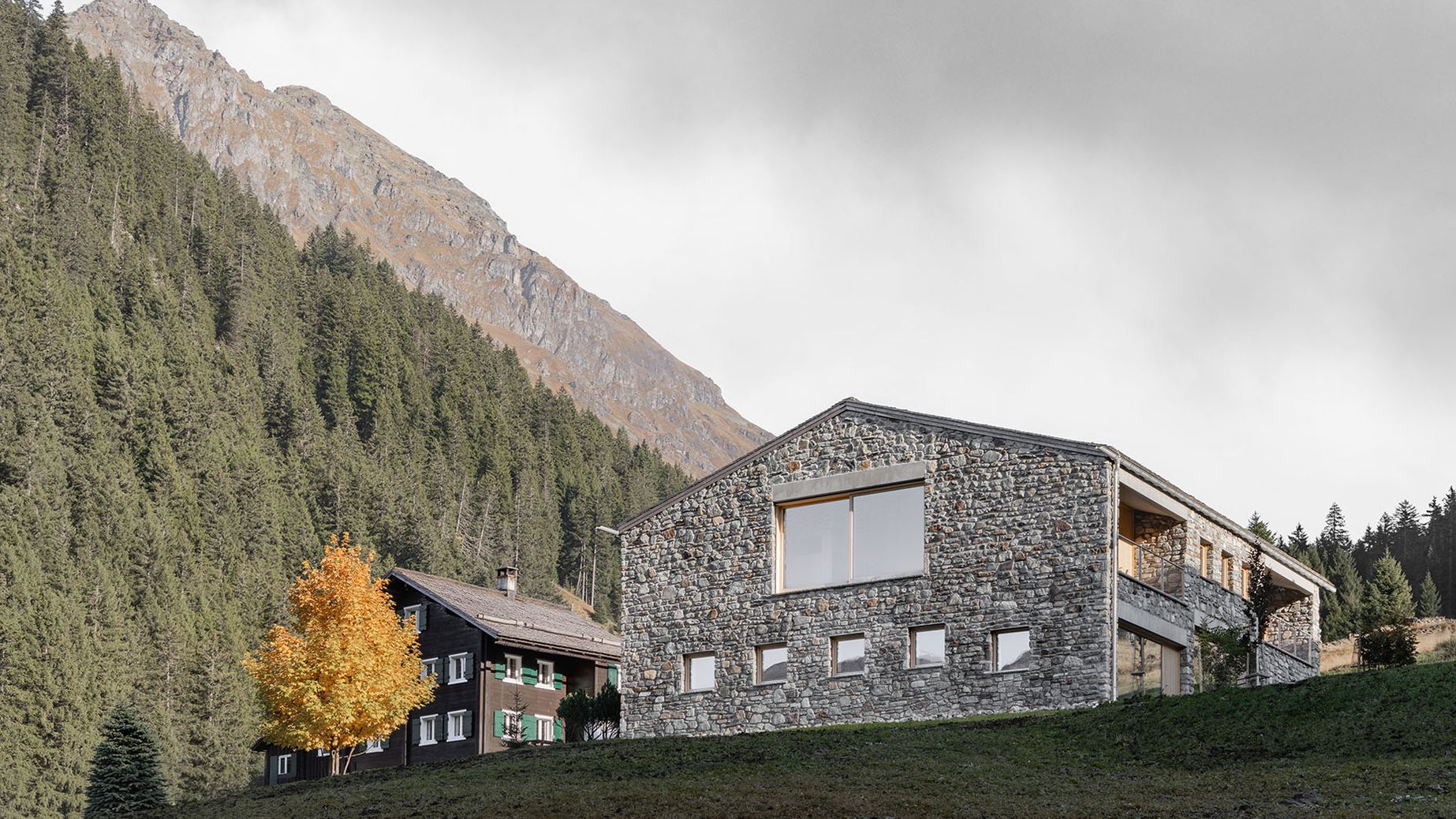
In the village of San Giacomo in the northern part of Upper Adige – in the heart of the Aurina Valley, an old lady stands on a rise, and surveys a breath-taking and timeless natural scene.
This is an article from our archive. It was published in September 2017, so some details may no longer be up to date.
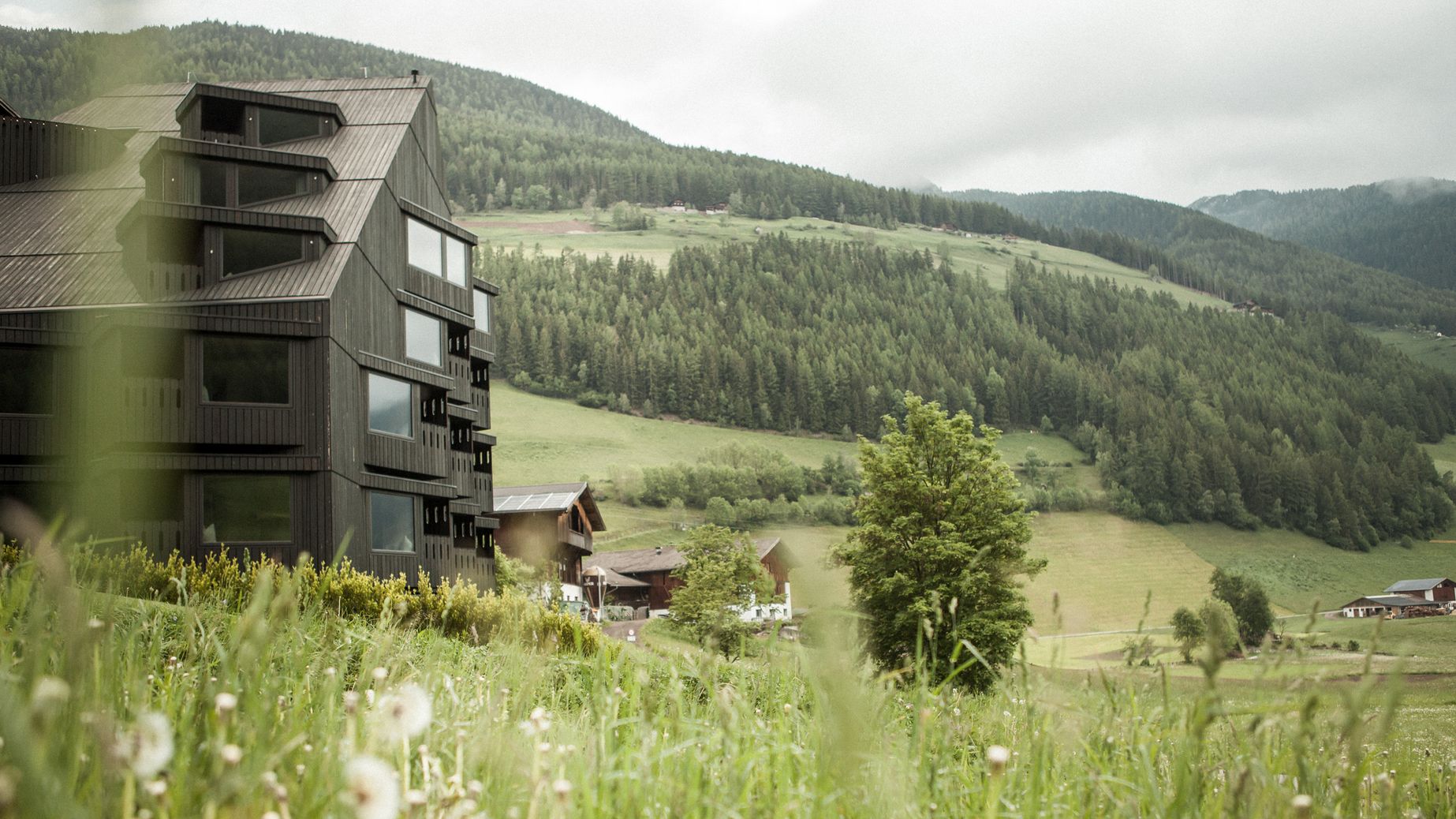
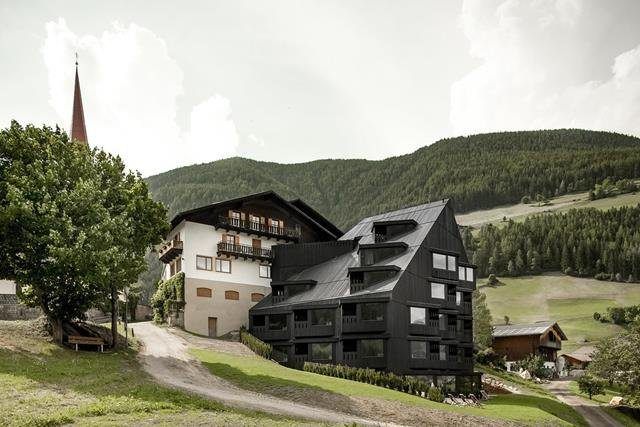
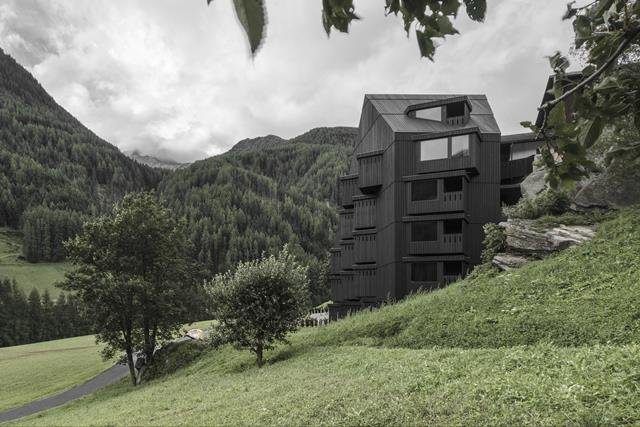
The “old lady” is Michaela and Matthias Haller’s fond name for the historic original building of the Bühelwirt hotel. Its history reads like a family saga. The current chapter is being co-authored by its young owners as they venture into new stylistic territory. For some months, a walkway has linked the traditional 107 year old building with the modern extension designed by architectural duo Armin and Alexander Pedevilla. Flooded with light, pared-down and minimalist inside, dark, serious and somewhat secretive from the outside. The contrast with the original building is noticeable only for a brief moment. No sooner has the dark new build made its impact on the senses than the character that has pervaded this place for more than a century reveals itself: the identity of a family, the way of life in San Giacomo and the essence of nature, the Genius Loci – the spirit of place – reloaded.
Michaela Haller, owner of the Bühelwirt:
“Somehow women have always played a special role here. In 1910 the Bühelwirt was built by two women, which was very unusual at that time. Maria and Notburga Steger, two sisters from the “Roanerhof”, had to go before the Innsbruck Regional Court to obtain approval to build a guest house with a village shop. They finally achieved their aim and were able to realise their dream.
The younger sister, Maria (my great grandmother), after a few years, married Josef Niederkofler, the village schoolteacher. They were to have seven children together. The older sister and “Töüte” (godmother) Notburga continued to work in the business.”
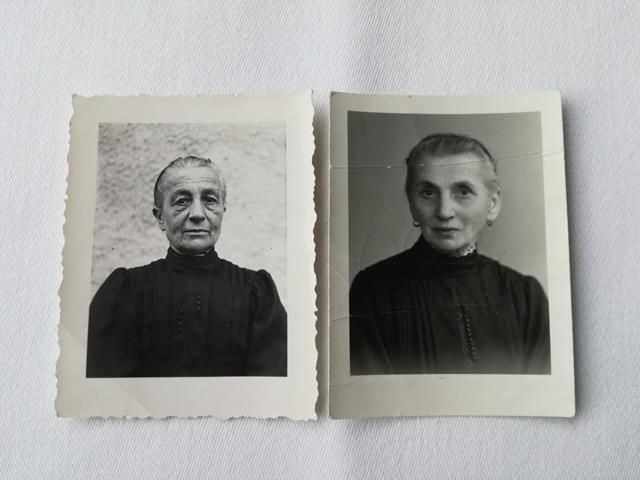
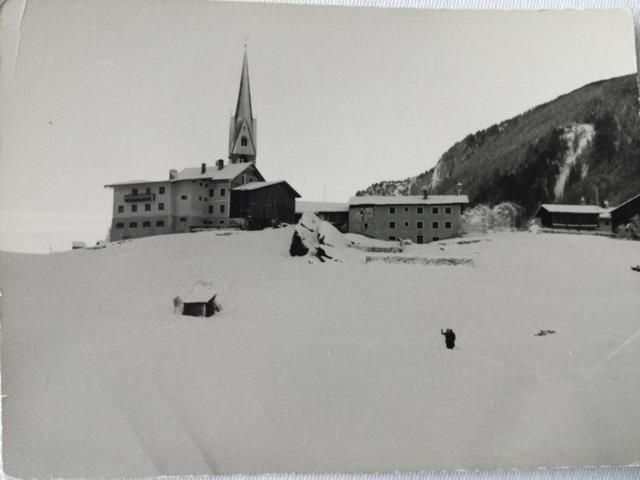
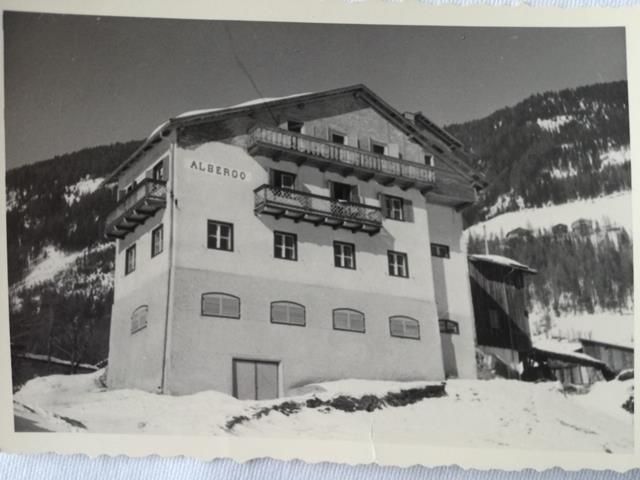
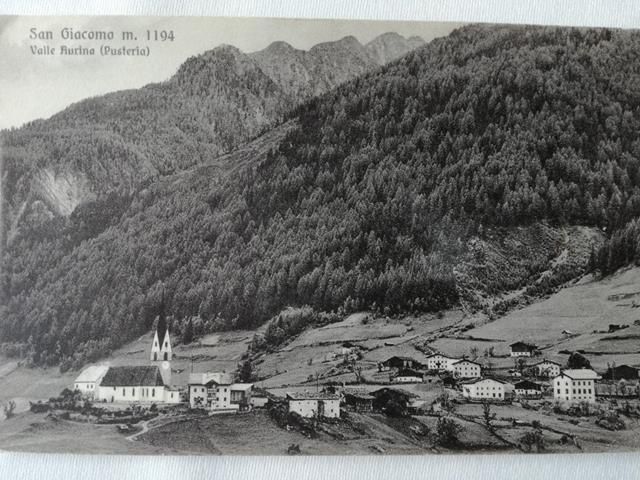
Maria’s youngest son, my grandfather Johann, took over the businesses in the 1950s and extended the guest house several times. Like his father before him, he was a village schoolteacher, and he married the neighbour’s daughter, Anna Niederkofler – she too was a teacher. For a long time, the couple shaped the history of the guest house, as Bühelwirt and ‑wirtin (the landlord and the landlady).
Then the Bühelwirt as a female-run business really took off. Anna gave birth to seven daughters, all of whom worked to some extent in the family business. However, as it turned out, none of the seven daughters were ready at the right time to take over management of the guest house.
For me, the daughter of the first-born, it was the ideal time. I had completed my studies, I was the mother of two little girls, wanted to make a start on my career and was looking for a challenge. The hotel had always fascinated me and my grandparents needed support. A lot of trust was placed in me, and I was very soon given free rein. Then, after a few years, my husband Matthias joined in the adventure by my side.
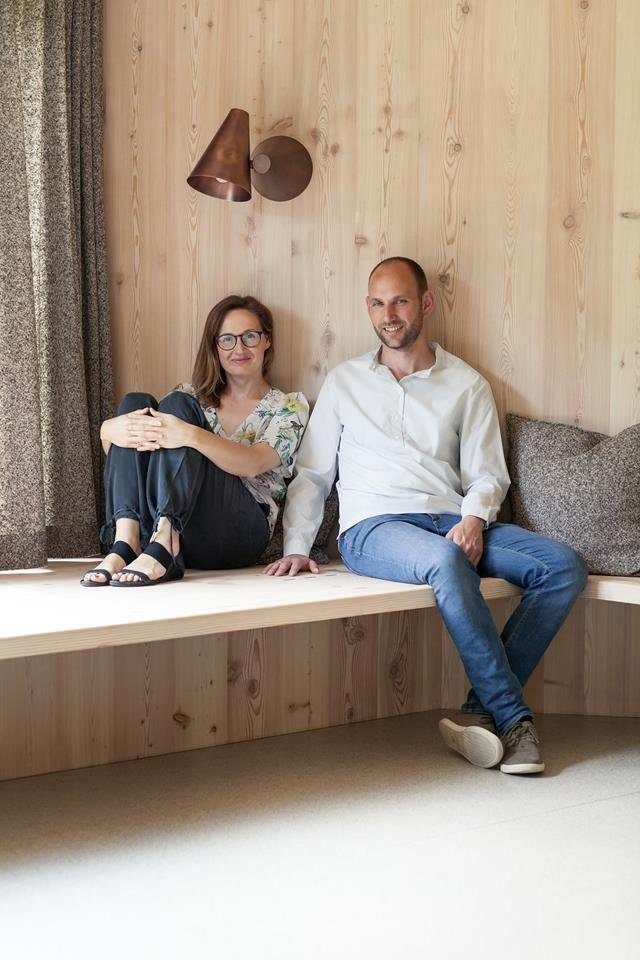
We reached our limits quite quickly in the main building I inherited from my grandparents, as there had been virtually no investment in it in recent times, indeed, for some decades. What we needed initially was plenty of “plaster”. We made the most of our own resources, used new technologies and invested quite a bit. It was apparent to us right from the start that we could only continue the business viably into the future by putting our money where our mouths were.
We had been thinking about renovating the main building for a long time as we had no land to extend onto. A structural survey however put an end to this plan. Our aim now was to acquire the neighbouring property which fortunately we succeeded in doing after lengthy negotiations. This fundamentally altered the situation. A new business plan was drawn up and we were finally able to start designing the building.
Matthias and I love linear architecture, plenty of timber, good quality materials, and simple yet welcoming design. That is what attracted us to the work of Pedevilla Architects. We had known Armin Pedevilla as a friend for a long time and had seen his wonderful house La Pedevilla which had just been built in Enneberg. We felt we were on the same wavelength right from the start and we quickly realised that things were going in the right direction. We wanted the new build to represent our family history and take more than 100 years of tradition at Bühelwirt into the future.”
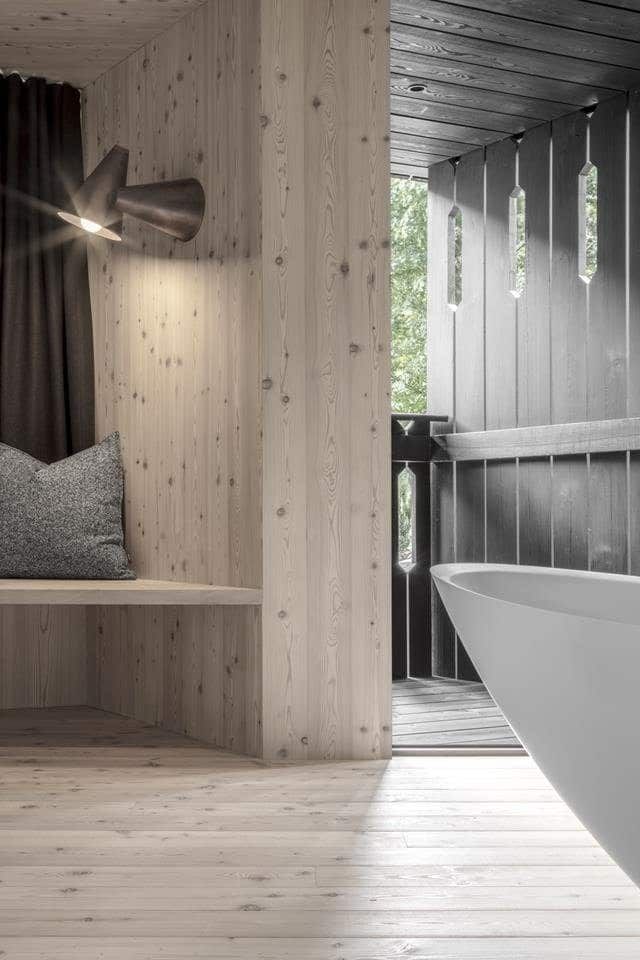
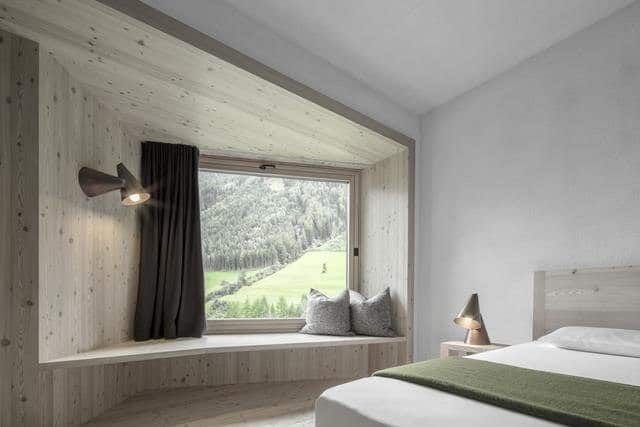
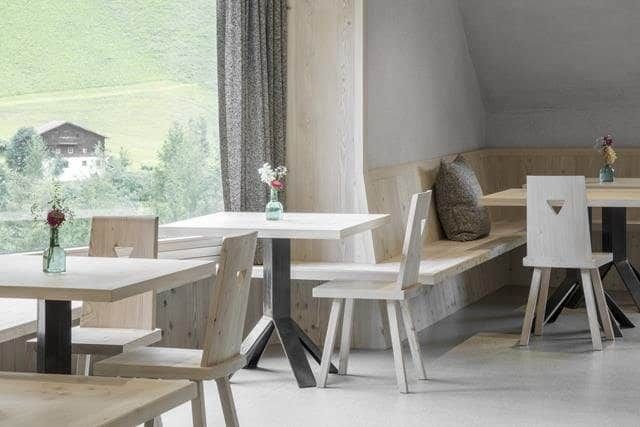
Pedevilla Architects’ building has six storeys and accommodates 20 panoramic rooms, a wellness spa and the restaurant extension. The entire project was based on one overarching idea: making the most of what was available. Local materials and elements of traditional craftsmanship dominate the purist new build and nature is omnipresent. In this way, in the clear, pared-down lines of the new guest house the architects have in no way created a stylistic counterpoint to the “old lady”. Rather, they have respected its legacy and brought it sensitively yet insistently into the future.
Armin Pedevilla of Pedevilla Architects on the Bühelwirt project:
“Reduction to the essentials is the theme running through our most recent projects. We always try to ask ourselves whether components or customs have a function, or whether they have become surplus to requirements. These considerations have resulted in a pared-down project that is tailored precisely to the location, the users and the landscape. Nothing superfluous and nothing lacking. Everything in just the right quantity. This approach has given rise to projects that have a familiar feel. Although the architectural idiom is new and contemporary, it is interwoven with the principles of our forebears.
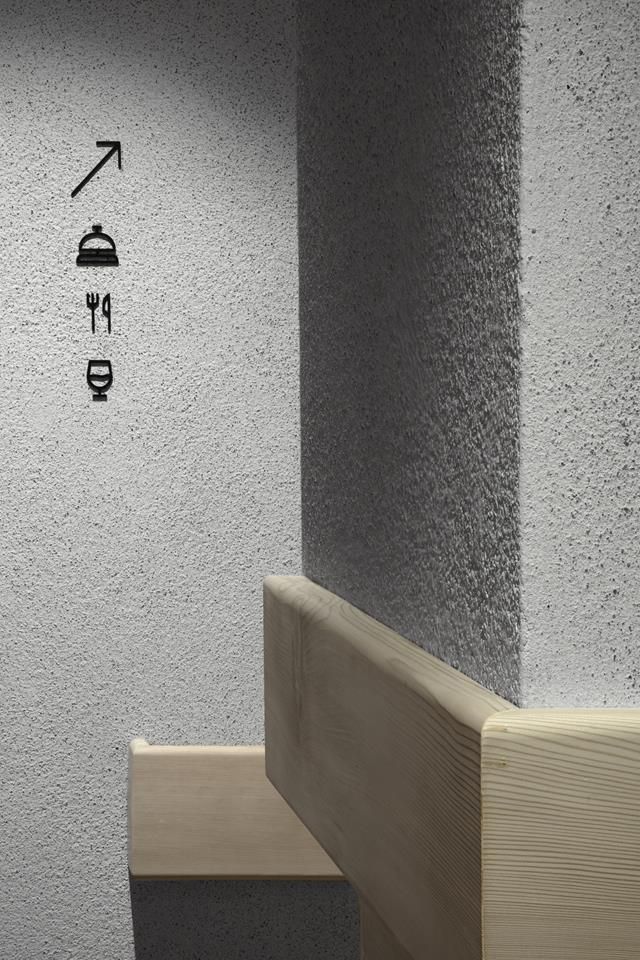
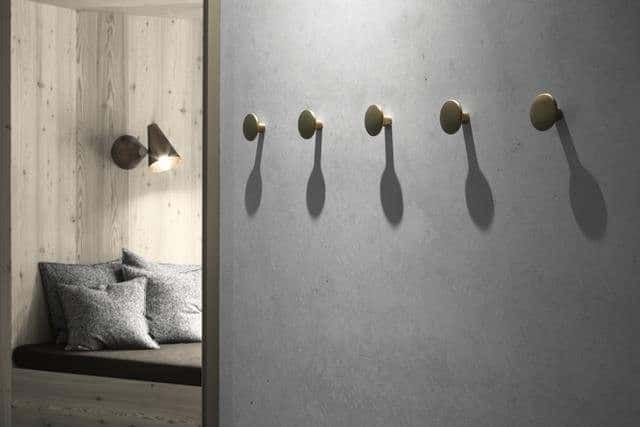
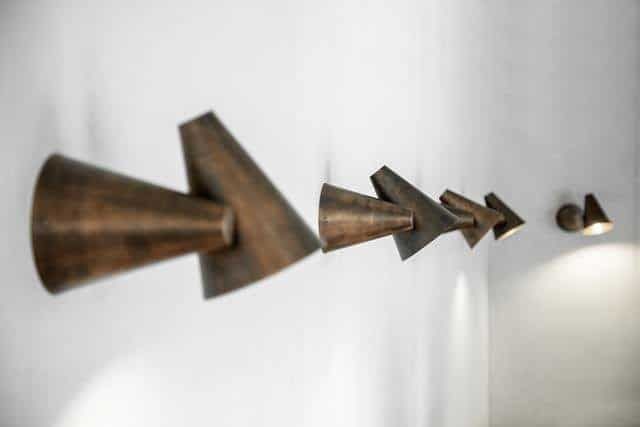
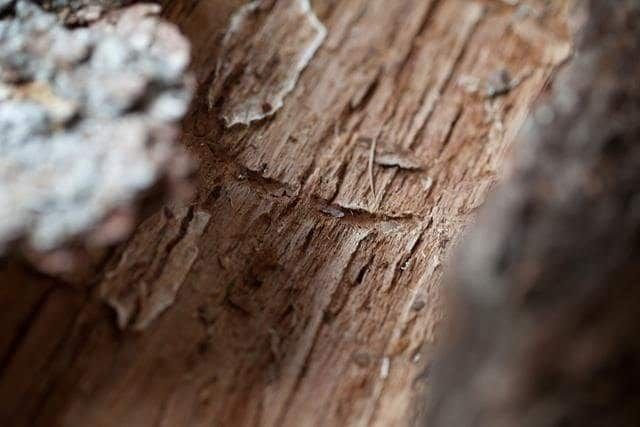
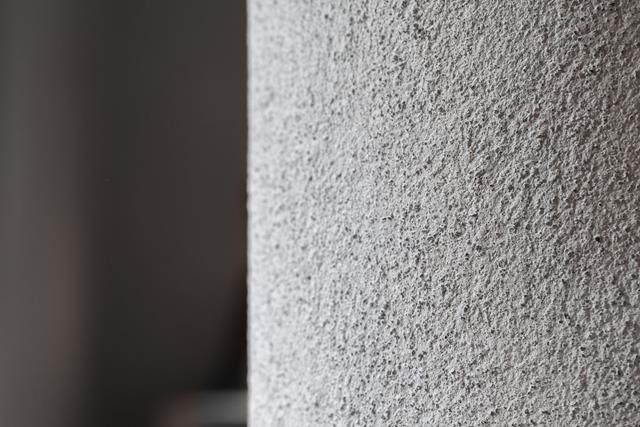
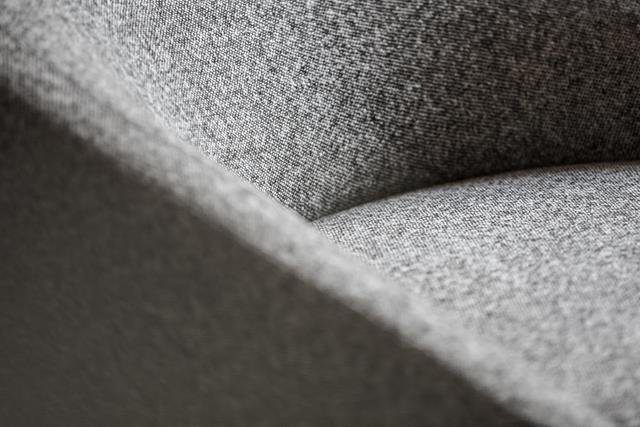
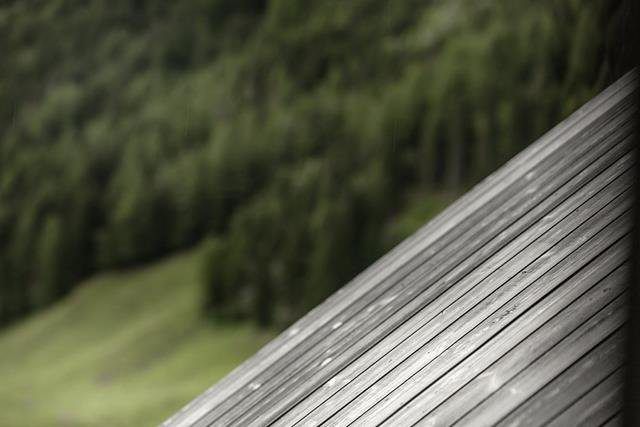
The craftsmanship of the Aurina Valley lives on in Project Bühelwirt. Every smallest detail has been made to measure by craftspeople and tailored to this project. Materials from the surrounding area have been used. Larch wood, for instance, and a supplement to the loam rendering which comes from the local copper mines. Even the copper light fittings have been designed especially for the hotel. Loden cloth from the local loden factory has been used.
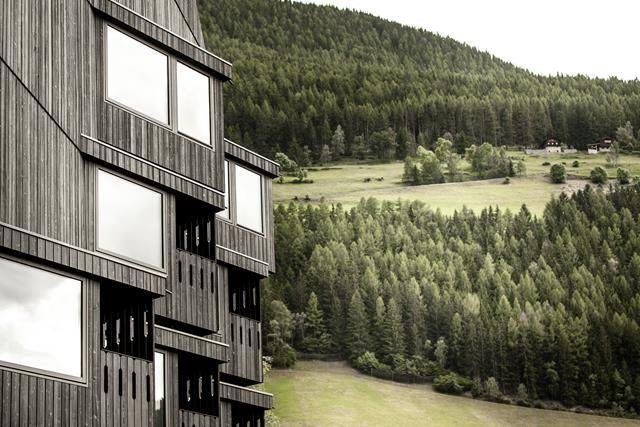
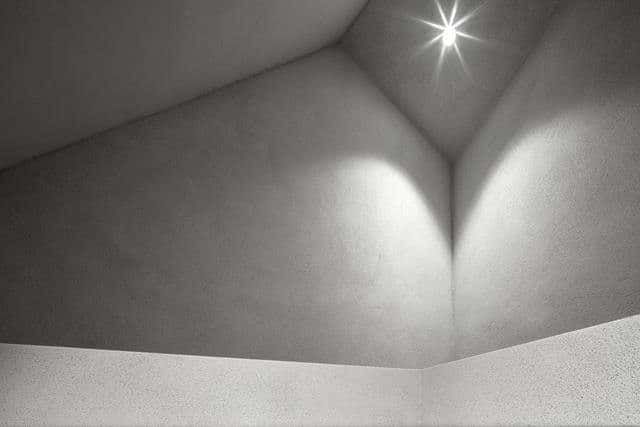
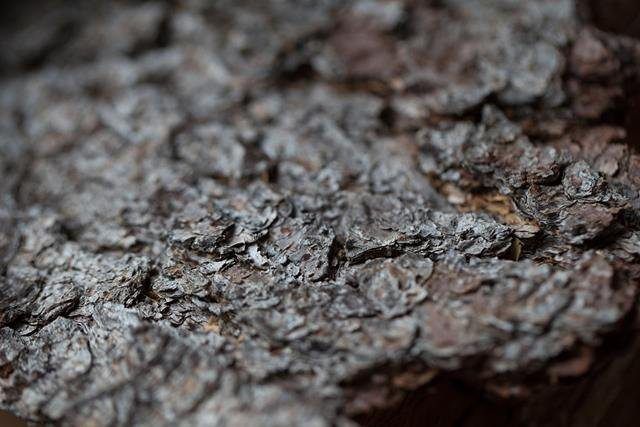
The loam supplement from the copper mines gives the plasterwork a green shimmer which reflects the tones of the surrounding mountain landscape, turning the interiors into familiar places. The larchwood from the surrounding forests conveys a sense of security. The green shimmer in the black façade picks up the colouration of the deep green to black forests of summer. Nature and topography meld with the project. The result is a new kind of architecture”.
Text: Britta Krämer, September 2020
Overview: Here you can find all our HomeStories at a glance! If you want to stay up to date, you can opt-in for our HomeStory-Newsletter here.