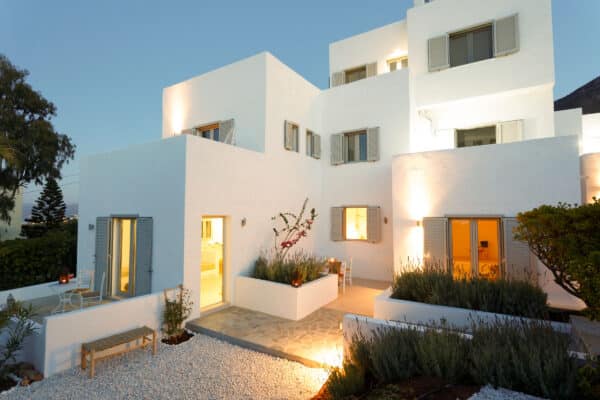
Tourist infrastructure as a location factor
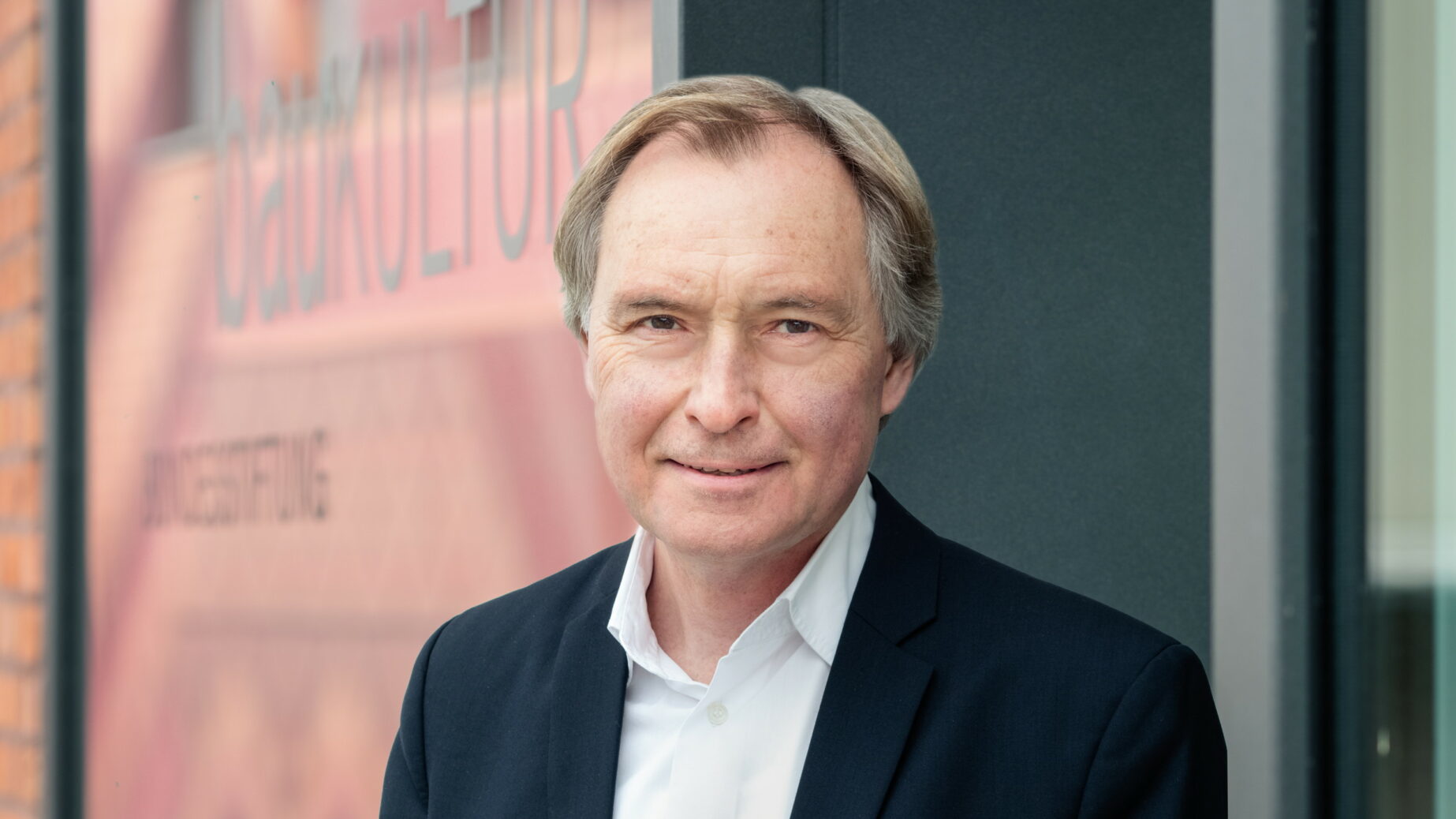
Reiner Nagel, Chairman of the Board of the Federal Foundation of Baukultur, in interview about golden energy, the cultural relevance of tourism architecture and his personal vacation preferences.
URLAUBSARCHITEKTUR (UA): Mr Nagel, what are the most impressive projects at the interface between architecture and tourism that you personally have come across in recent years?
Architecture and Baukultur [approx. translation: Building Culture/Culture of Building] have historically been the key drivers of tourism. Even today, there is no travel brochure without photos of the architectural highlights at the destination. The way in which city tourism has utilised this principle in recent decades has certainly been impressive. Iconographic new buildings have emerged as symbols of economic structural change, but also as tourist destinations. From the Guggenheim Museum in Bilbao to the Elbphilharmonie concert hall in Hamburg. Personally, I am most impressed by the fact that the high quality architectural infrastructure has now also become a hallmark and often a decisive location factor in small towns and rural areas.
UA: Do buildings for tourism purposes play a significant role for the Federal Foundation of Baukultur?
Yes, tourist infrastructure is very important, especially from the perspective of Baukultur . Hotels, inns, cycling hostels and “spa architecture” create social places and opportunities to connect with the world. For guests and residents alike. After all, being a guest is a cultural skill that is reflected in high-quality architectural spaces. Back in 2020, the Federal Institute for Urban Development and Spatial Planning BBSR presented the study “Baukultur und Tourismus” (German version only) and demonstrated the importance of regional Baukultur in terms of location policy. For the Federal Foundation, the benefits of Baukultur are particularly significant if it is possible to preserve, reuse or convert buildings that characterise the local area.
UA: Holidays offer the opportunity to experience and live in Baukultur for yourself. How can we make even better use of this opportunity to convey the concept of Baukultur?
A successful holiday also has something to do with a change of scenery. Spending the night or living in a very special place may even leave a more lasting impression than the holiday weather or the food. In Switzerland, you can try living in heritage listed buildings to get a feel for an old house yourself. (Editor’s note: You can read the interview with Christine Matthey, Managing Director of the Ferien im Baudenkmal Foundation [Holidays in Heritage Listed Buildings] here). Of course, this is also about conveying the story behind the building. According to Goethe, we only see what we know. But conversely, we also need convincing visual objects and a positive experience of architecture with all our senses.
UA: In your opinion, what should our partners pay particular attention to in order to realise future projects appropriately or to further develop existing projects in a sustainable way?
I believe that future projects should be based even more than before on remodelling rather than on new construction or replacement construction. There is huge potential in this. Not only in terms of climate- and environmentally- friendly construction, but also in terms of realising existing atmospheric potential. We are talking about the golden energy inherent in existing buildings. Those who recognise this and lead it into the future create a high social benefit. Financial feasibility is usually a given with good planning that works with and not against the building. And many project participants can confirm from experience that high-quality materials, good workmanship and great flexibility of use pay off over its life cycle.
UA: Wouldn’t it actually be time to award a nationwide prize for exemplary architecture in tourism?
Good idea. Award procedures are like the finishing touch to everyday dishes. In construction, the references for Baukultur become visible here. This has worked very well for the Bavarian artouro TourismArchitecturePrize since 2011. The organisers here are the Bavarian Chamber of Architects and the the Ministry of Food, Agriculture, Forestry and Tourism. A similar constellation would certainly also make sense at the national level, as the German TourismArchitecture Award.
UA: What is important to you personally on holiday? And what are the “no gos” for you?
On holiday, I look for harmony between an intact cultural landscape, a lively, not too touristy holiday destination and beautiful accommodation. It’s actually banal, but it’s not a given. A “no go” for me would be if this triad is only artificially staged in a holiday resort. I find such a promise of luxury, even at a high price, uninteresting because it lacks authenticity and soul.
Since 2007, the Federal Foundation of Baukultur, based in Potsdam, has been an independent organisation promoting Baukultur. To this end, it anchors the topic of Baukultur in society at the national level and communicates its importance to the general public. It therefore acts as an advocate for high-quality construction planning and realisation. It also acts as a platform that promotes public dialogue on Baukultur through events, publications and collaborations, as well as expanding and consolidating existing networks.
Reiner Nagel, architect and urban planner BDA + DASL, has been Chairman of the Board of the Federal Foundation of Baukultur since 2013. Previously, he was head of department in the Berlin Senate Department for Urban Development for the areas of urban development, urban and open space planning and nature conservation (since 2005). Reiner Nagel has worked for the City of Hamburg in various functions at a district and senate level since 1986, most recently as a member of the management board of HafenCity Hamburg GmbH from 1998. He is a lecturer in Urban Design at the Technical University of Berlin, a member of the German Academy for Urban and Regional Planning and an associate member of the Association of German Architects.
Interview: Ulrich Stefan Knoll, January 2024
Photo: © Lidia Tirri


2 Comments
Sehr erfreulich, dass in diesem Interview auch das in unserer Welt verknappter Resoursen wichtige Thema “Erhalten, nicht Neu Bauen” angesprochen wird, das Erhalten von Material UND Seele. Ich möchte auch noch auf die touristischen Erfolgsprojekte Hombroich in Deutschland, Naoshima und Tejima in Japan und Marfa, Texas, alle begonnen in den 1980 — er Jahren!, aufmerksam mach en. Dort ist es gelungen, abgelegene Orte (Tejima war Industrie-verseucht, Marfa eine heruntergekommene Militäranlage) mit großartigen Kunstwerken und ebensolchen Architekten und Landschaftsarchitekten zu touristischen Pilgerstätten umzuformen. Diese touristischen Welterfolge mögen gleich uns im Kranich Hotel auch anderen an schwierigen Standorten Mut machen. Wir sind das Gegenbeispiel zu “Lage, Lage, Lage”, die Orte der besonderen Art.
Dem Interview können wir als Betreiber eines sehr denkmalgerecht restaurierten museumsartigen Ferienhauses nur zustimmen: Das Erleben von Baukultur ist nicht nur Motivation für Tourist/innen und Reisende, sondern kann darüberhinaus – im Qualitäts‑, Auslands- und Binnentourismus – entscheidend dazu beitragen, eine breitere Vermittlung, ein tieferes Verständnis sowie eine generelle Wertschätzung gegenüber unserer gebauten Umwelt, der Regional‑, Zeit- und Kulturgeschichte zu fördern. Unser Projekt TAUTES HEIM in der von Bruno Taut entworfenen Hufeisensiedlung etwa füllt tatsächlich eine eklatante Lücke in der Berliner Welterbe-Vermittlung und Museumslandschaft. Gäbe es – wie vorgeschlagen – einen solchen “German-Architectural-Heritage-Tourism-Award”- Wettbewerb würden wir uns sofort bewerben ;)