
The Modernist(s)
Mon Oncle, South Modern and a move from Paris into the deep blue of Faro. The story of a creative domino effect that began in the Arizona desert.
Living between lines
New materials, clear forms, open floor plans and a purely purposeful approach to the function of buildings and objects: Minimalism without frills and historical burden was the design premise of Modernism, which developed into the most important epochal movement from the 1920s onwards. For architecture, it found its pioneers and protagonists in Le Corbusier, Frank Lloyd Wright, Niemeyer, Mies and Gropius. Their principles spread like a wave once around the globe and produced – from Brasília to Dessau – a multitude of typologies and regional expressions. Remarkable, but frequently viewed critically, buildings and living spaces of the modern era, exhilarated by the economic boom. Their architecture is seldom love at first sight, but behind the sober forms and façades there are visionary basic ideas that have profoundly shaped and modelled our time.
As the spiritual father of the concrete cities of this world, Le Corbusier defined the house as “a machine for living”. Who knows whether French director and actor Jacques Tati had the Swiss architect’s words and Villa Savoye in mind when he made film history in 1958 with the French satire “Mon Oncle”. “Geometric lines do not produce amiable people,” the master of taciturn comedy remarked about his Oscar-winning film, in which sterile, modernist residential buildings and a charmingly dilapidated Paris with patina became metaphors for the contrasting lifestyles of the post-war period. In doing so, Tati was by no means messing with modern architecture per se; rather, he masterfully mimed a question into the minds of his audience: Can true, warm life unfold freely between all the reduction and slick aesthetics?
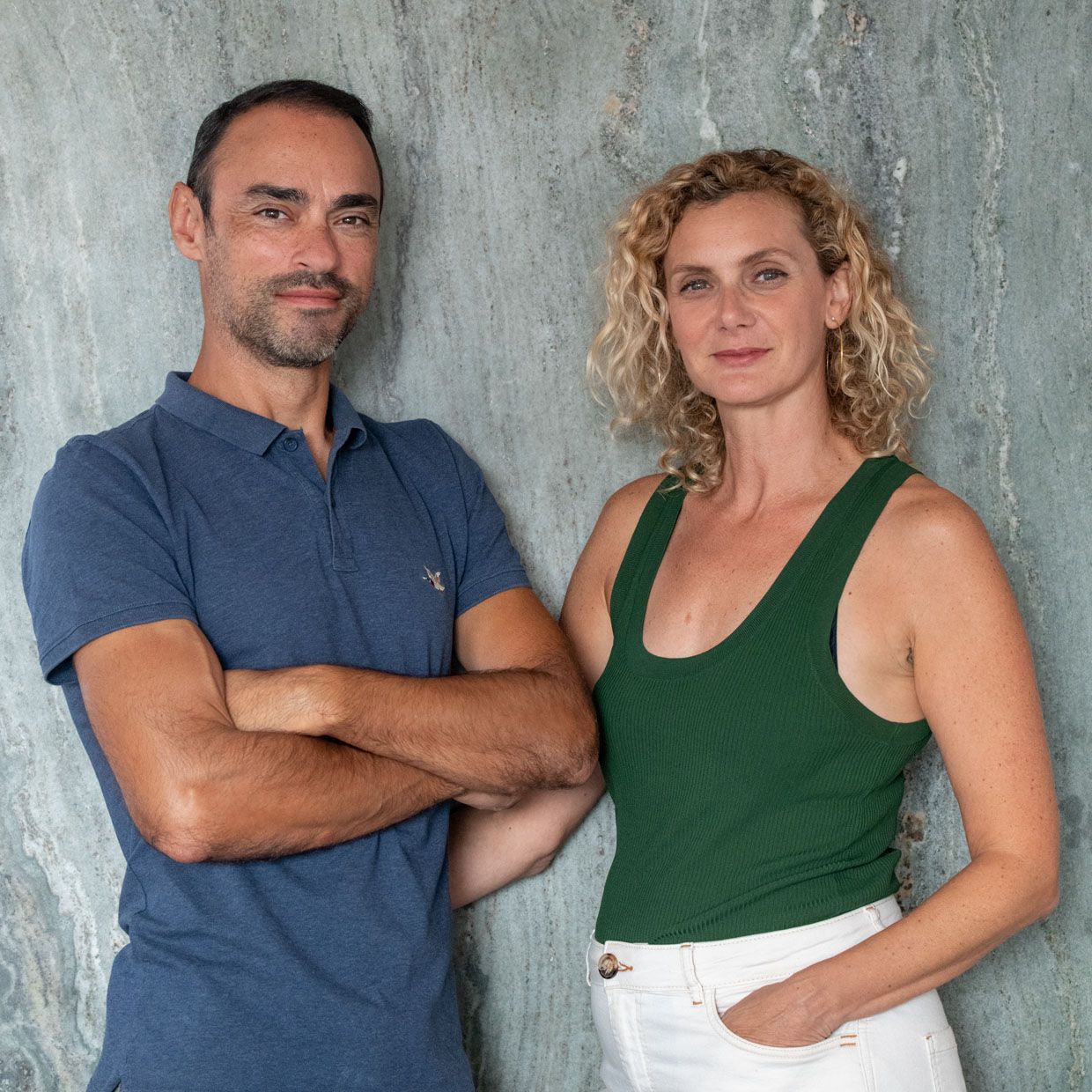
“Mais oui, bien sûr!” two of his compatriots would enthusiastically reply to him today. Angélique and Christophe De Oliveira, enraptured by their “esprit modern”, chose the Portuguese port city of Faro as their second home in 2018 and have dedicated themselves heart and soul to a very personal mission: They want to help the almost unknown modernist heritage of the sun-drenched capital of the Algarve receive the attention it deserves and establish Faro as a lively forum for architecture fans from all over the world.
Southern Modernism
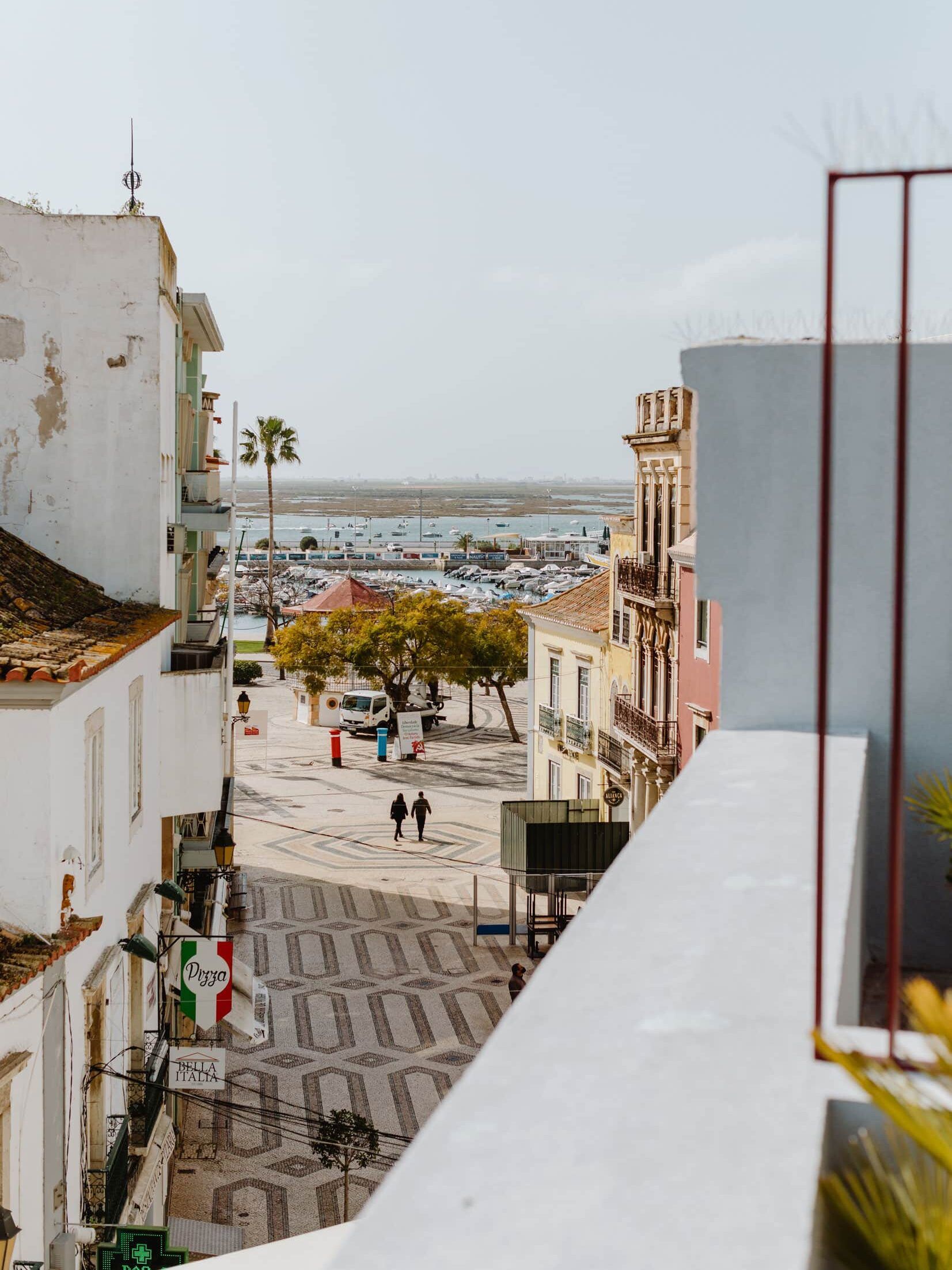
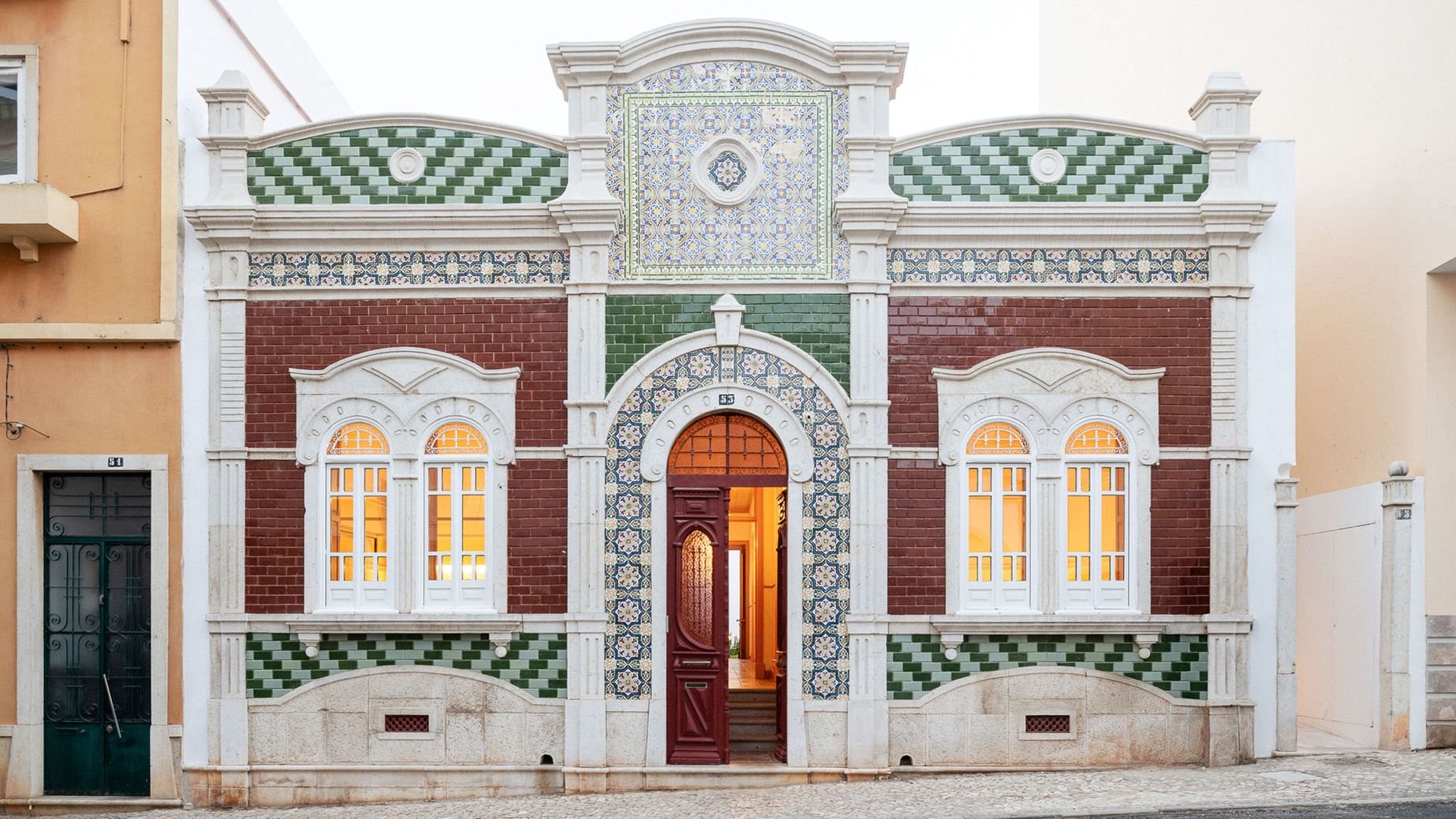
Portugal’s southernmost and still largely undiscovered metropolis surprises with an exceptionally broad spectrum of modernist buildings. Surrounded by the lagoons of the Ria Formosa National Park, the city unfolds in a field of contrasts: Wild coasts and quiet salt flats meet a labyrinthine maze of alleys, complex history and tropical flair as well as a kaleidoscope of cultural influences and urban planning epochs. You will literally stumble across modern architecture here at every turn.
Between 1920 and 1979, around 500 buildings were built here, whose unprecedented presence is due to a handful of visionary architects, graduates of the renowned architecture school of Porto, and their equally far-sighted clients. The latter were mostly Portuguese who had become wealthy in Brazil and from there brought their impressions and ideas of “Tropical Modernism” back home. Architects such as Manuel Gomes Da Costa, Fernando Távora (PhD supervisor of Pritzker Prize winners Alvaro Siza and Edouardo Souto de Moura), Antonio Vicente Castro or Joel Santana created their very own interpretation of the Bauhaus and the International Style architecture by expanding their repertoire to include the tropical visions of their clients, adapting it to the climate and local building types and thus giving the Algarve its very own style. “Southern Modernism” – at least that’s what two of its most passionate fans call it.
Paris, Miami and the desert
Angélique De Oliveira comes from a small town near Paris, her husband Christophe comes from near Nancy but has Portuguese roots. The two met at the SKEMA Business School, lived in Boston for a while after graduating, until they both returned to the French capital, she to marketing and he to finance. In 2006, they jointly initiated the project “Artisan Lofts Paris” – a small collection of very distinctly designed lofts that were created in the former studios of artists and fashion designers as well as in converted business premises. The idea was to offer travellers a new perspective from which to discover Paris for themselves, inspired by the creative flair of the accommodation and by being integrated into the neighbourhood environment of the authentic districts of the Ville Lumière.
In Florida, on a tour of Miami, the couple discovered the Art Deco buildings of South Beach – and that’s when it clicked: “This experience triggered a real obsession in us for the buildings of Modernism. From then on, architecture and design became the main reason for our travels, which also took us again and again to the Algarve and back to my roots,” says Christophe. Road trips in the footsteps of Frank Lloyd Wright through California and Arizona followed. A visit to the Taliesin West complex in Scottsdale, the architect’s winter home and desert laboratory, brought a very specific place to mind: “In the middle of the barren Arizona landscape, we saw the architectural potential of Faro with completely new eyes.” And once again it clicked.
The ugliest house in town
Anyone strolling through the bustling Rua Francisco Gomes in Faro’s maze of alleys is unlikely to pay much attention to the house at number 27. But behind the unobtrusive façade are not only special holiday rooms, but also a prime example of revitalised cultural heritage. The building was constructed in the early 1970s from plans by Joel Santana and housed the customs office of a shipping company. “In the wake of Portugal joining the European Economic Community, the company closed down and the building remained abandoned until we discovered it in 2016,” Angélique recalls. “The first impression was disastrous: a drab building invaded by pigeons and completely dilapidated after 35 years of being vacant.” It was a thorn in the side of Faro’s inhabitants because it was located in the middle of the pedestrian zone and its ramshackle exterior looked like a wound in the heart of the city.
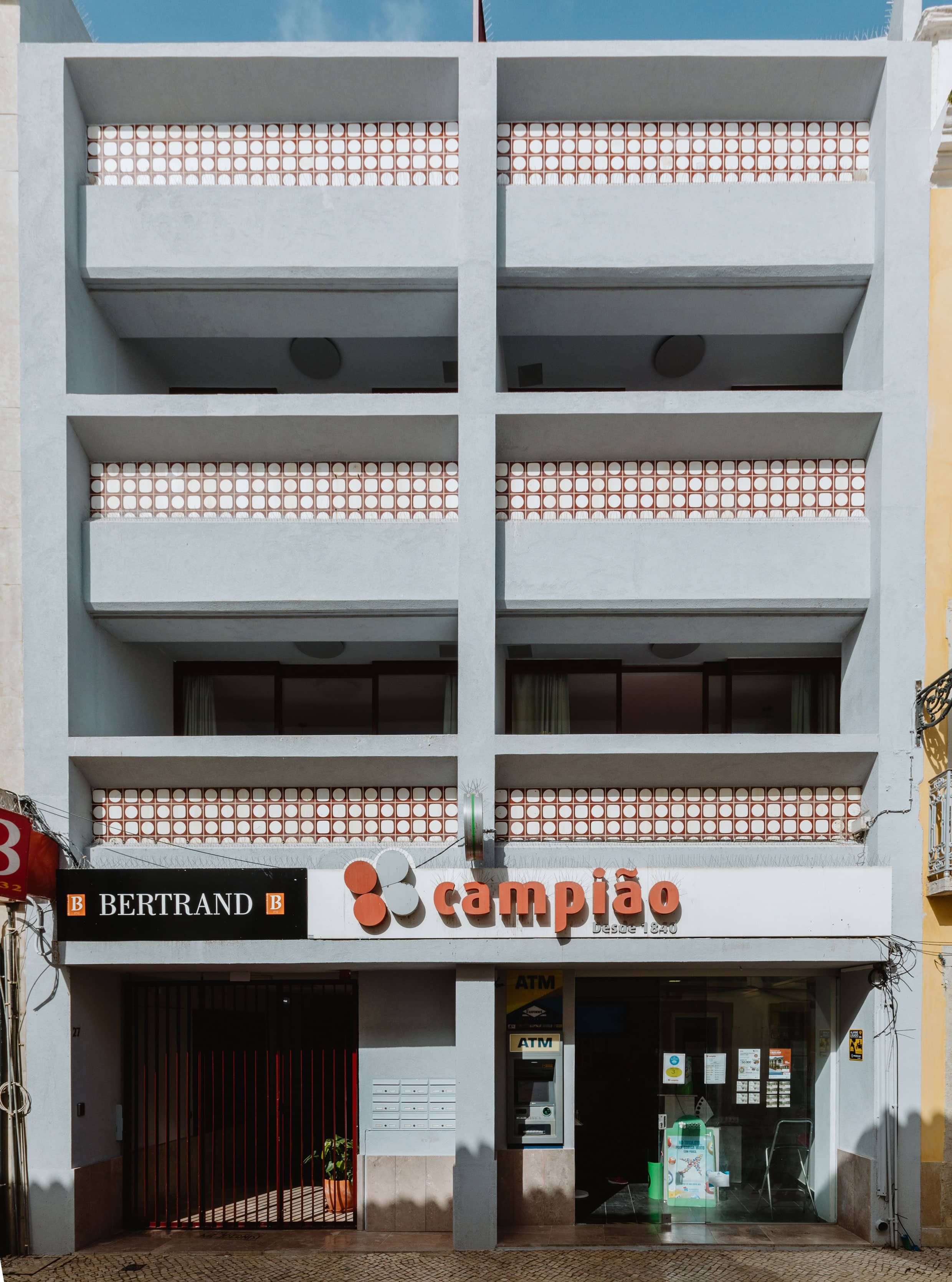
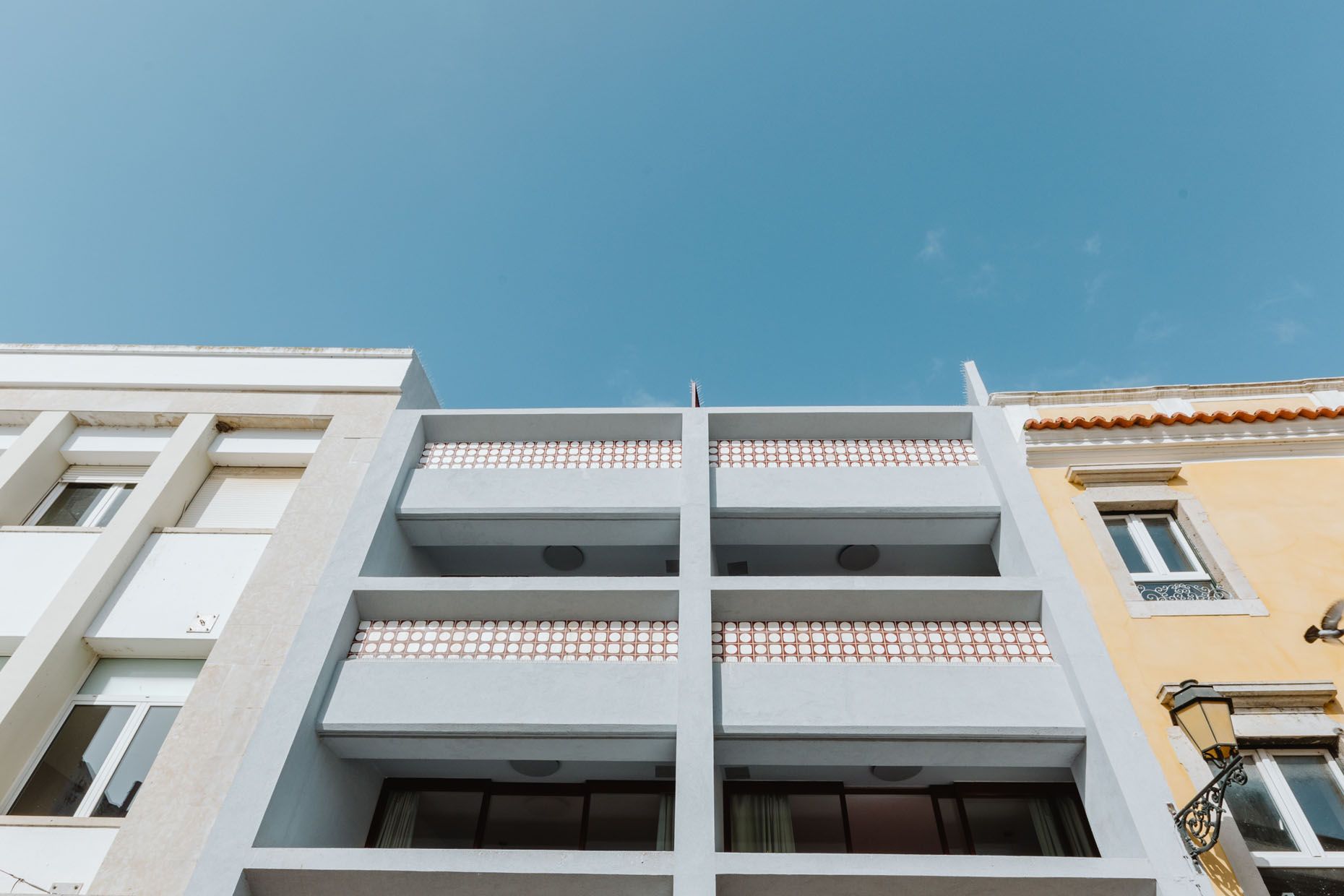
It was reviled as the ugliest building in Faro and contributed to the association of Modernism with decadence here. Common sense cautioned them to give the house a wide berth, but something wouldn’t let them go: the déjà vu of the clean lines, raw materials and monochrome colour scheme. Modernist elements could be glimpsed in the dilapidated building, and it became the couple’s obsession to preserve and bring them back into the light. “Our Parisian experience with seemingly hopeless restoration projects, which the ‘Artisan Lofts’ had taught us, gave us the decisive push and we decided to buy the building and transform it into a habitable homage to Modernism.”
The Modernist
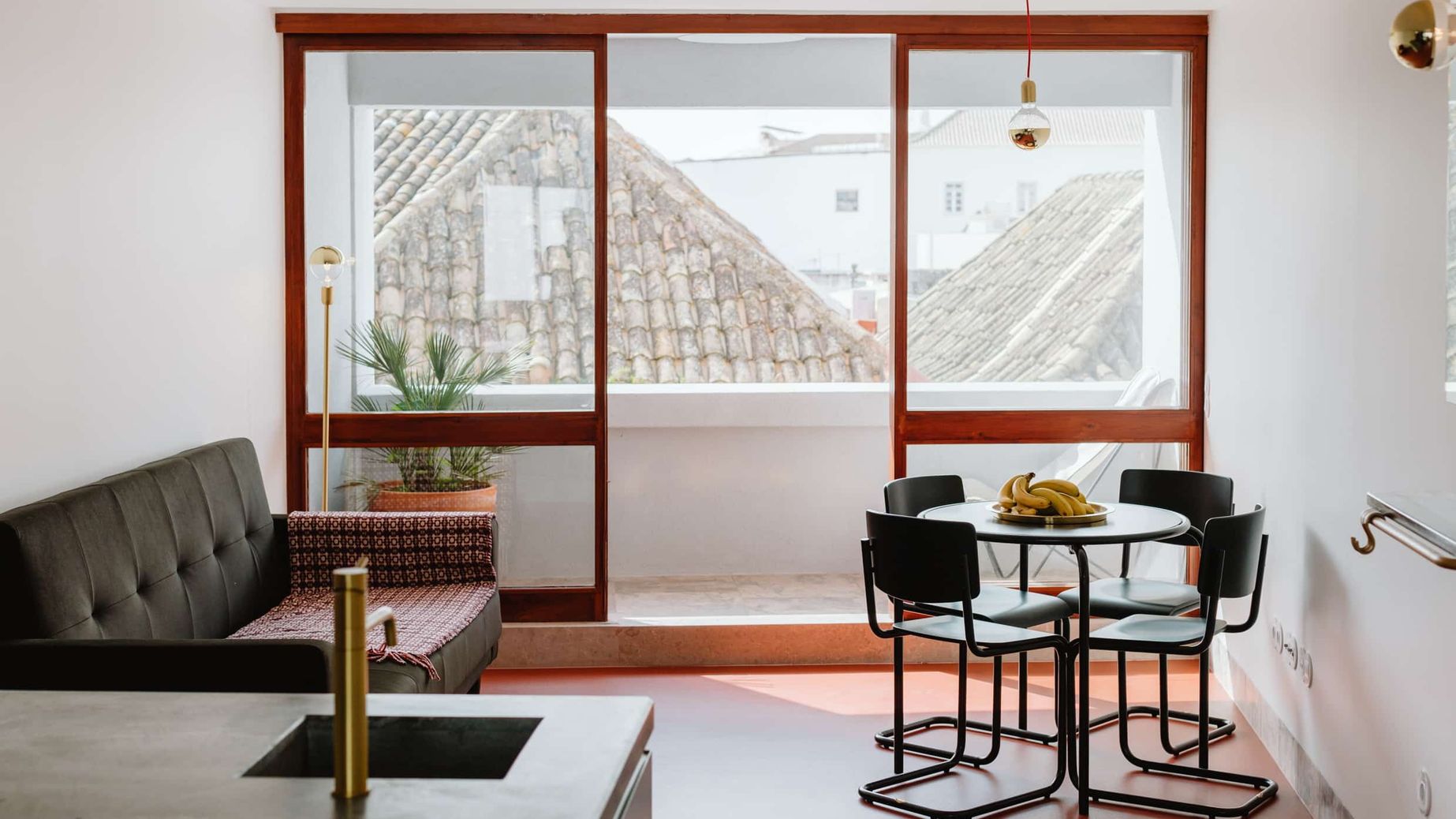
Angélique and Christophe entrusted the conversion to the award-winning trio of architects PAr. The projects of Joana Carmo Simões, Susana Dos Santos Rodrigues and Vânia Brito Fernandes are at the crossroads of vernacular design, local craftsmanship and timeless minimalism. PAr planned and renovated with the aim of highlighting and accentuating the original character of the 1970s building. Working closely with local artisans and using the original materials, they also designed the interior. Every element – from the door handle to the stone kitchen block – is unique and was made regionally to keep the ecological footprint particularly small and encourage the involvement of local businesses.
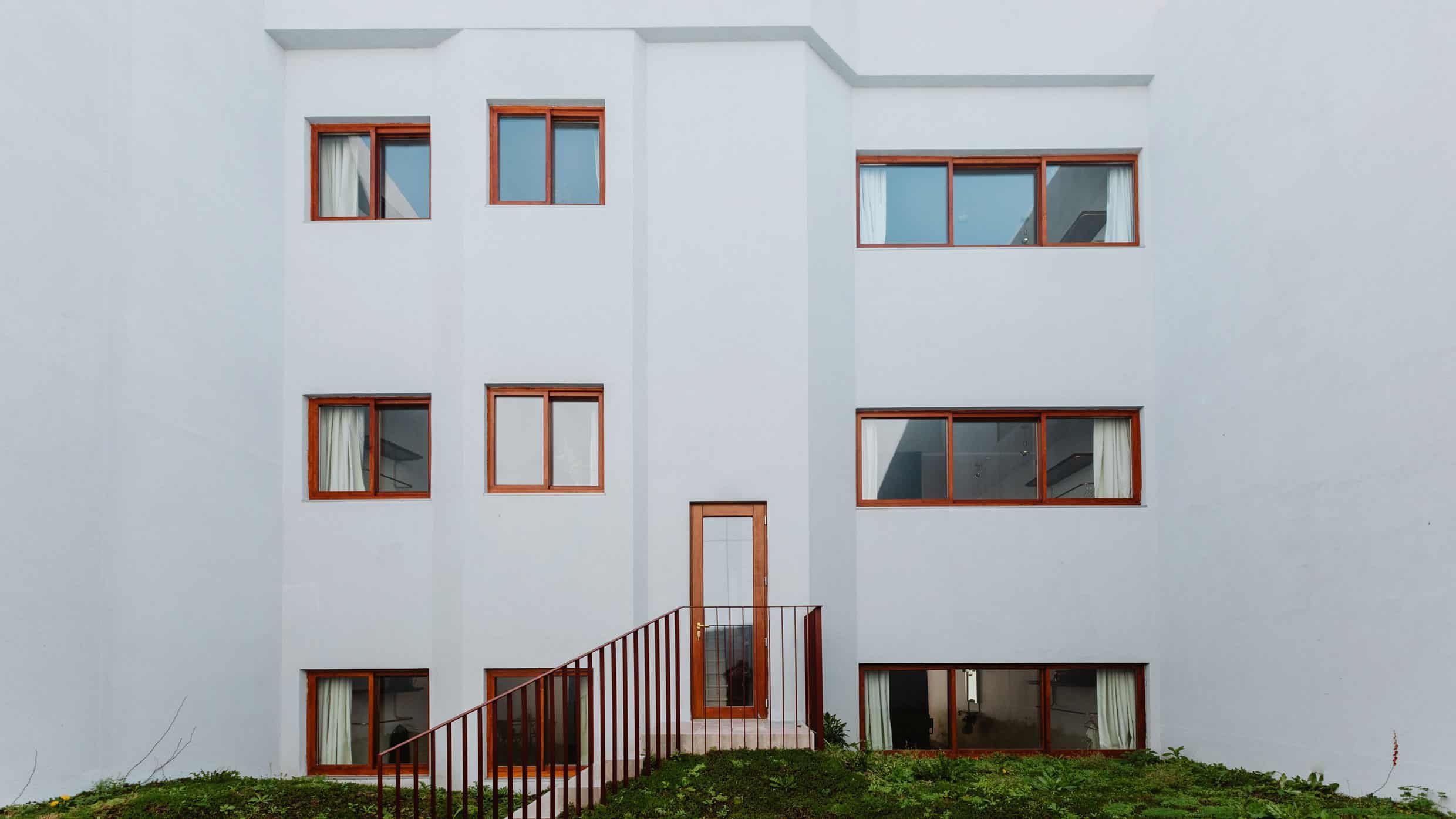
“PAr did an incredible job during the three-year remodelling phase to give shape to our vision, as we faced countless challenges in terms of time management and sourcing materials in the middle of the pandemic, as well as budget. But it was worth the effort! The project was a test of how cultural assets are best preserved when they are revitalised with good ideas and a breath of fresh air.” The De Oliveiras are convinced of this.
At the end of 2021, the two opened “The Modernist” and since then have been offering travellers with a penchant for special places an inspiring temporary home. If you get out of the airport taxi at the harbour, you’ll be right in front of the apartment building’s entrance after a few minutes’ walk. A number code makes the barred gate buzz, the door clicks, and the automated key box snaps open. Applied Modernism, originally set to music: “Mon Oncle” sends his regards.
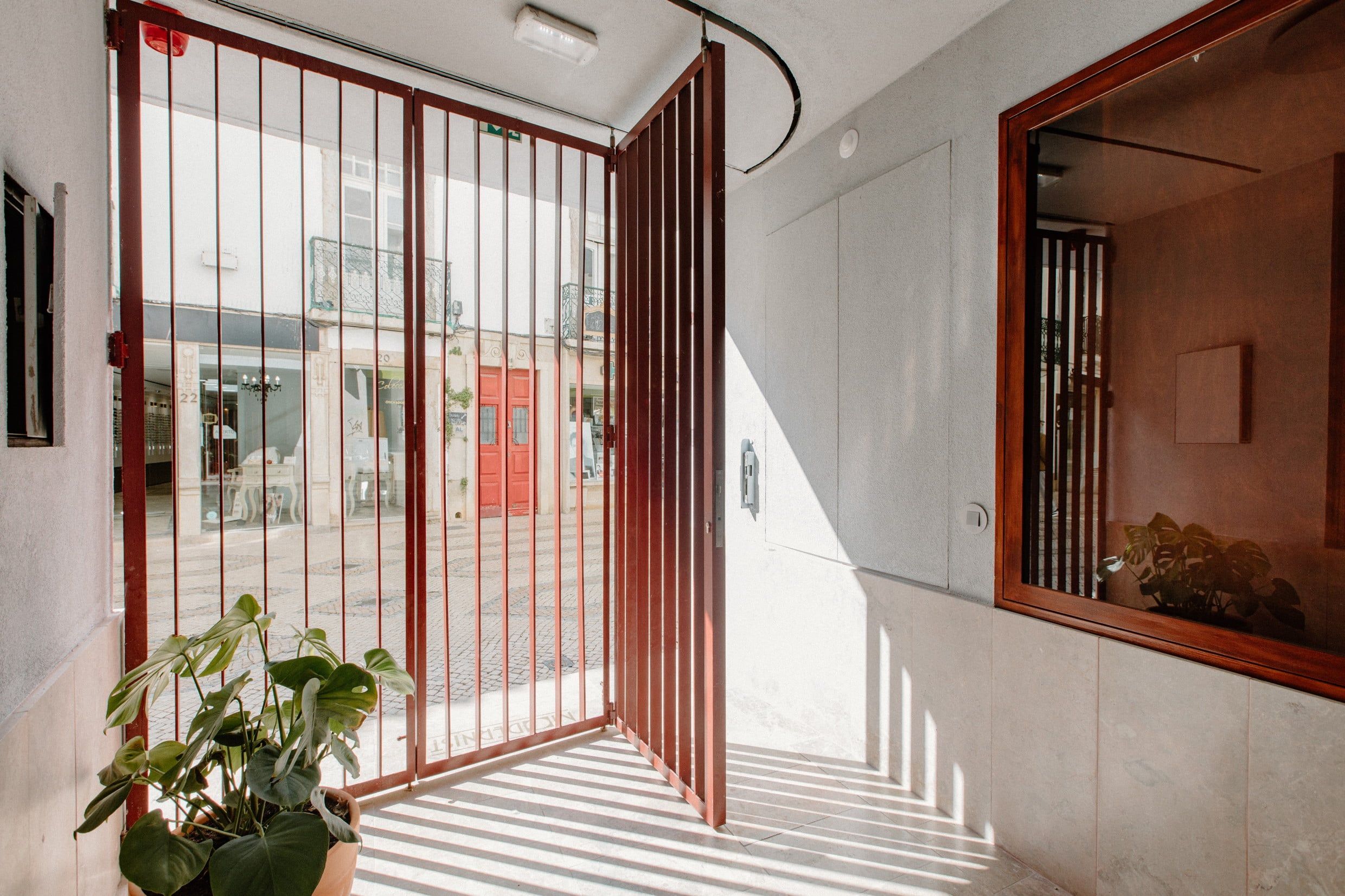
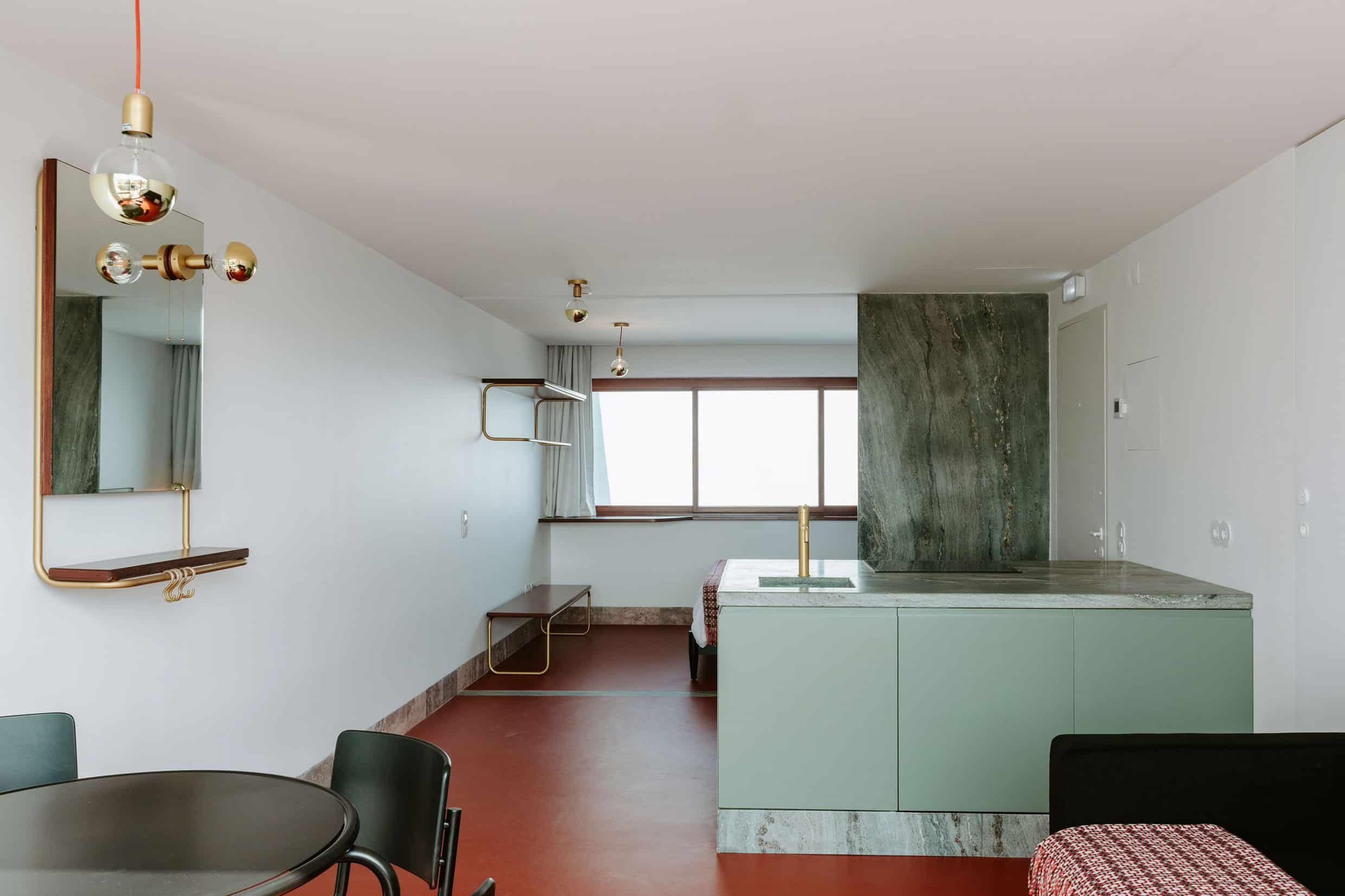
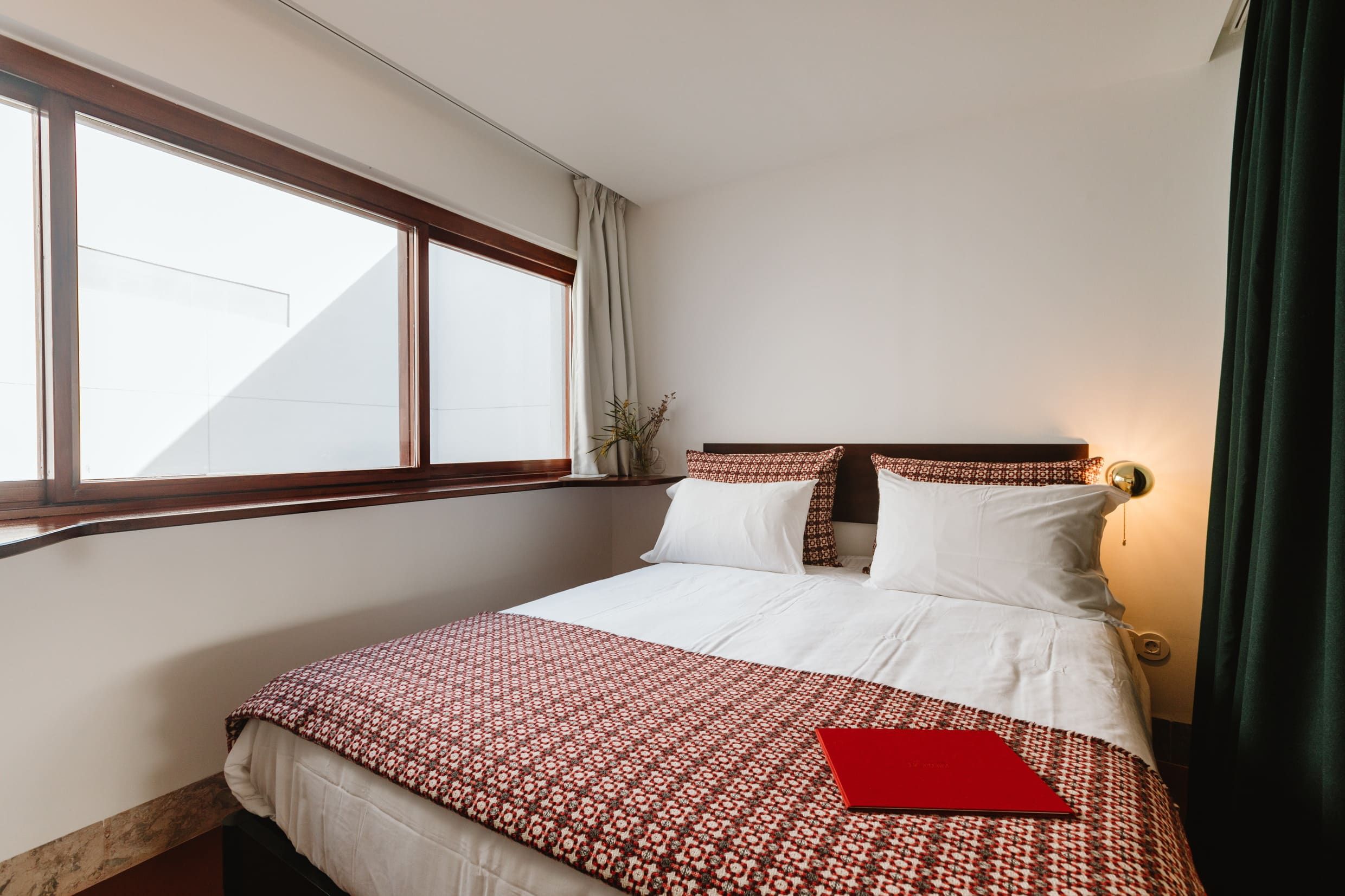
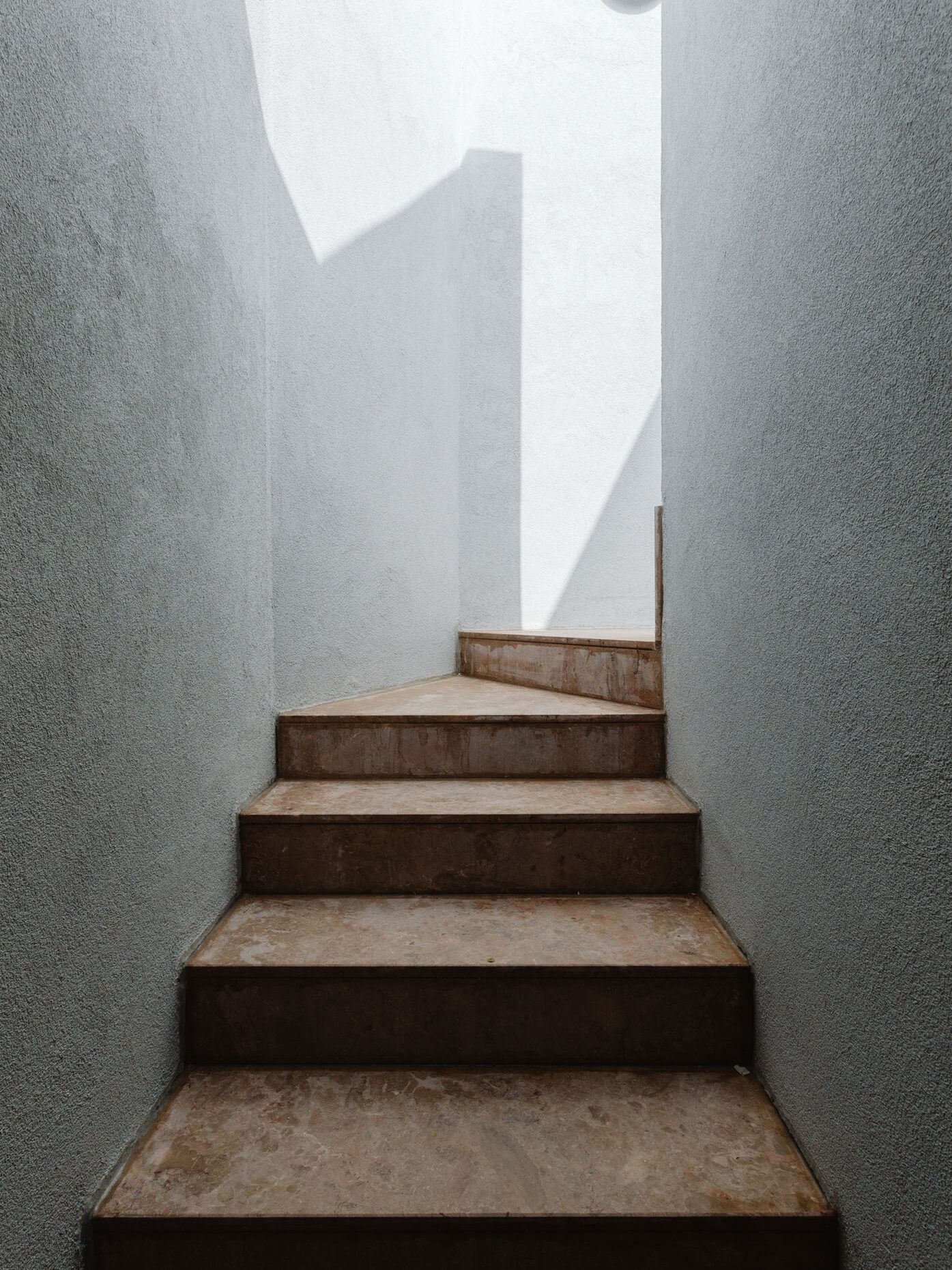
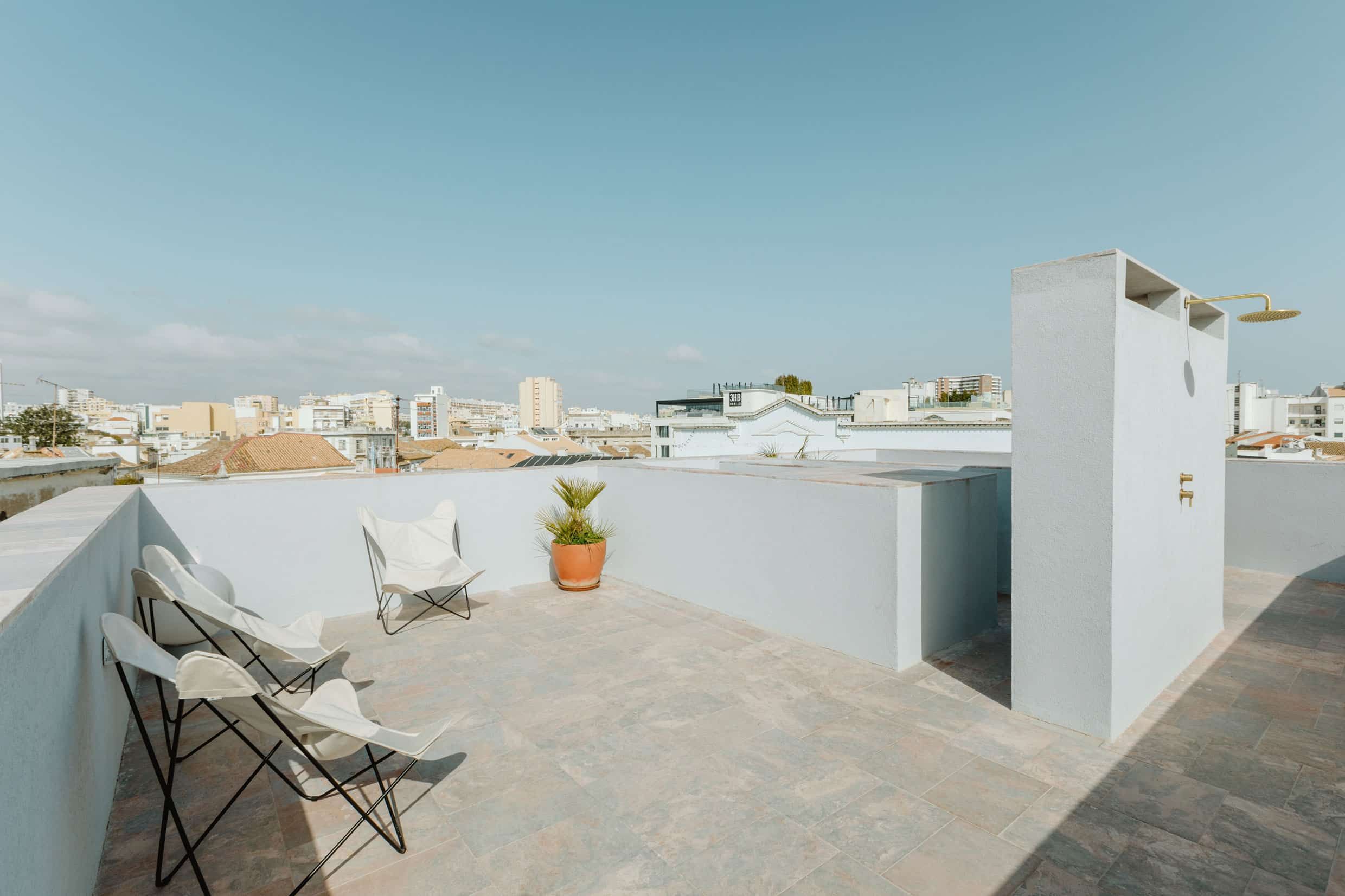
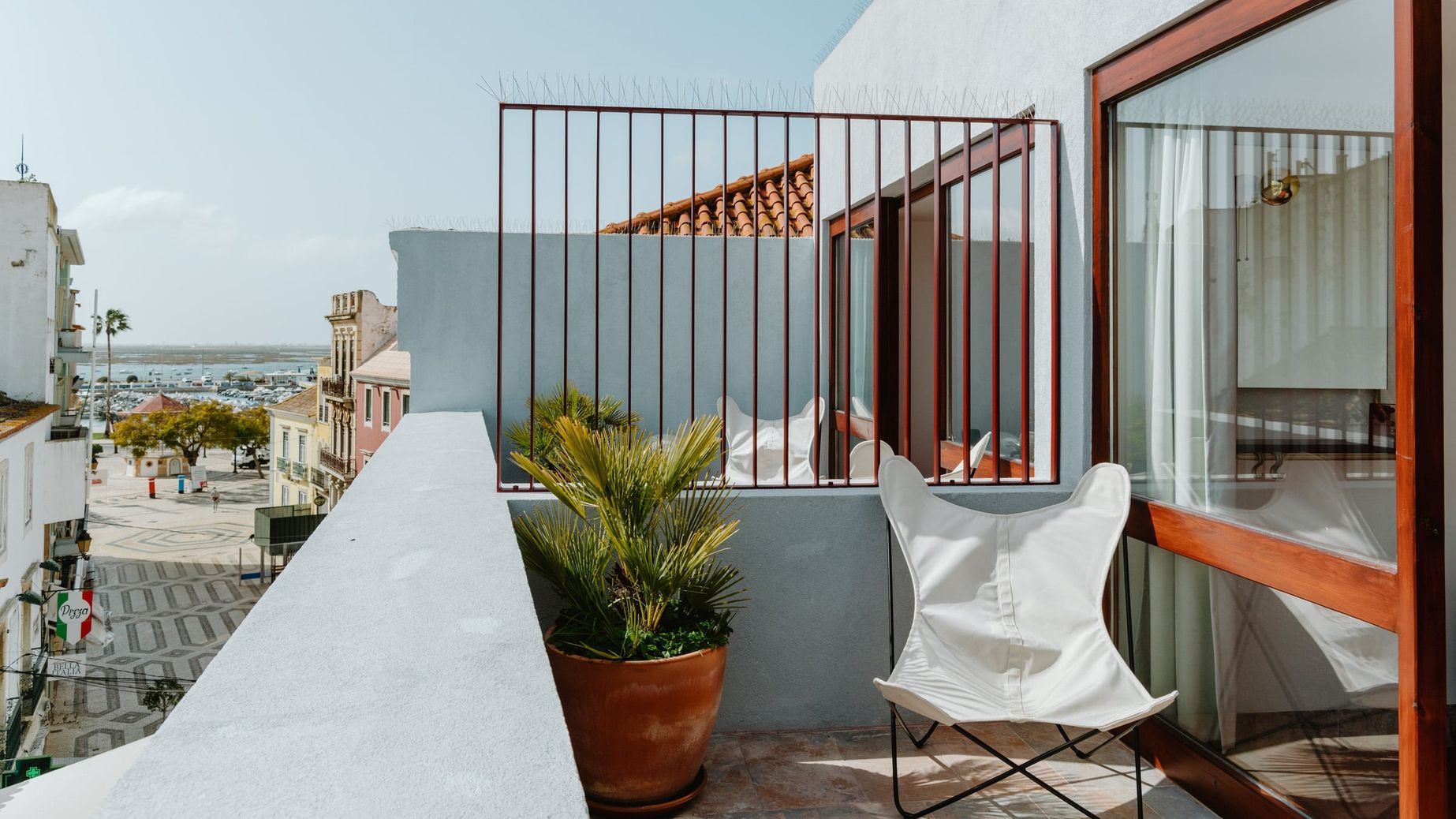
The staircase gives access to the private and communal areas of the house on four floors. The introverted, leafy patio provides shade and a tropical atmosphere, the roof terrace becomes a box seat at sunset. Below are the six suites, which impress with their reduction and materiality. Each on an area of 45 m² , intimate yet open rooms unfold, which have everything, but only the bare essentials. There is no TV, the sky over Faro is the show. For those in a modernist mood for discovery, the self-guided city tour designed for house guests is a great “instruction manual”.
Modern pilgrims
The successful revival of Faro’s former eyesore seems to have set a creative perpetuum mobile in motion for Angélique and Christophe. Just one year after the opening of “The Modernist”, the first edition of “The Modernist Weekend” took place in November 2022: a three-day international event with a multi-faceted programme, for which architecture enthusiasts from Europe and the USA made the pilgrimage to Faro to get up close and personal with the city’s modernist heritage. Open house tours opened the doors to a carefully curated selection of private homes, renovation projects and properties for sale. The tours, led by Christophe with infectious enthusiasm, traced Art Deco, Brutalism, Tropical Modernism and Bauhaus “à Portuguesa” and inspired lively exchanges that continued over an aperitif at the iconic beach hotel Aeromar.
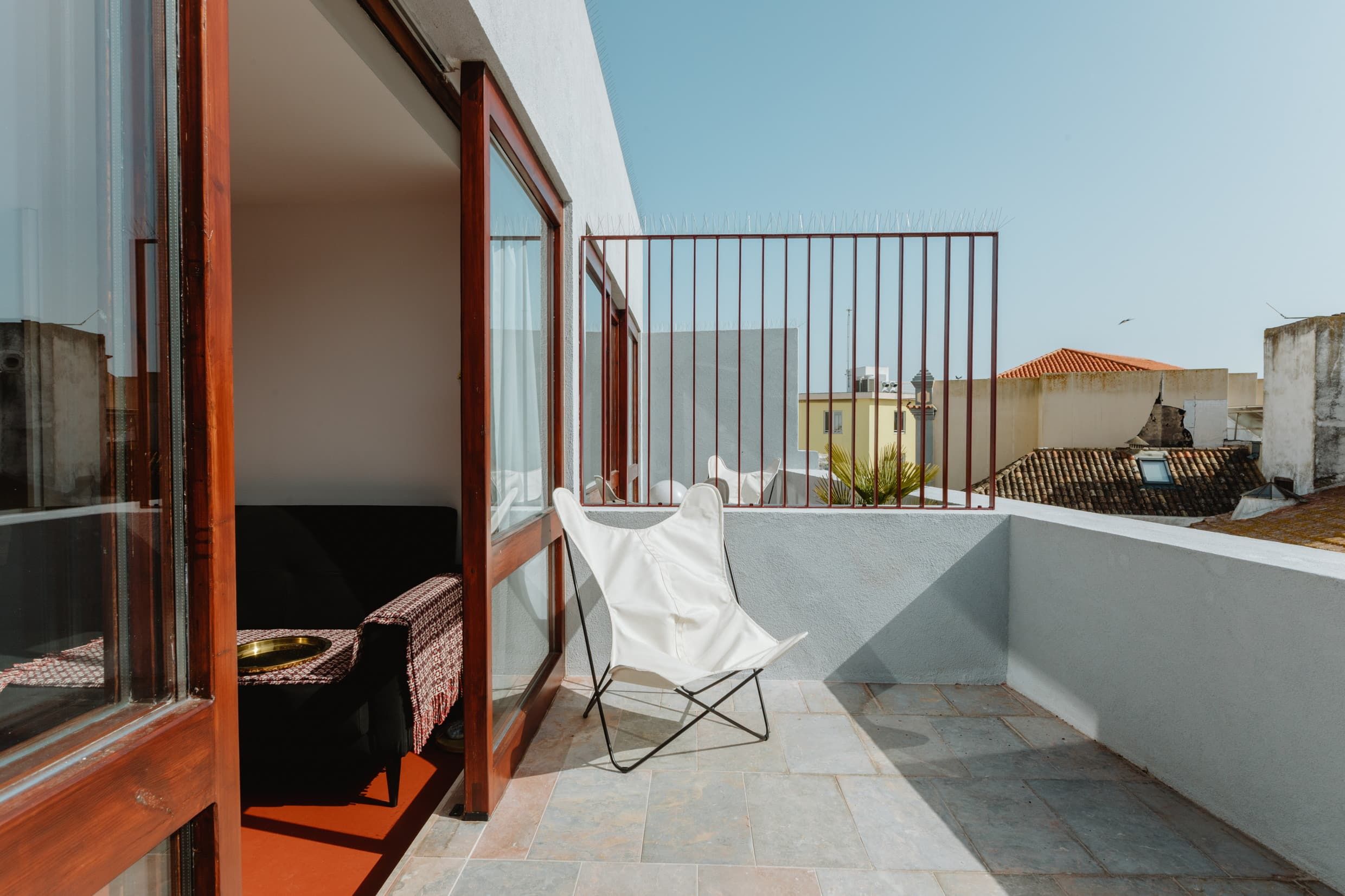
With so much human interaction, even Tati would have been conciliatory, following the success of the film “Mon Oncle”, after all, concluded : “I’m not against modern architecture at all, but I think it should come not only with a building permit, but also with a life permit.” Angélique and Christophe have taken this advice to heart, and you can feel it whether you’re strolling along the pier or enjoying a sundowner together on the roof terrace of Rua Francisco Gomes No. 27. Here, between geometric lines, the cooing of pigeons and the deep blue of the Algarve, life unfolds as true and warm as ever.
Text: Britta Krämer
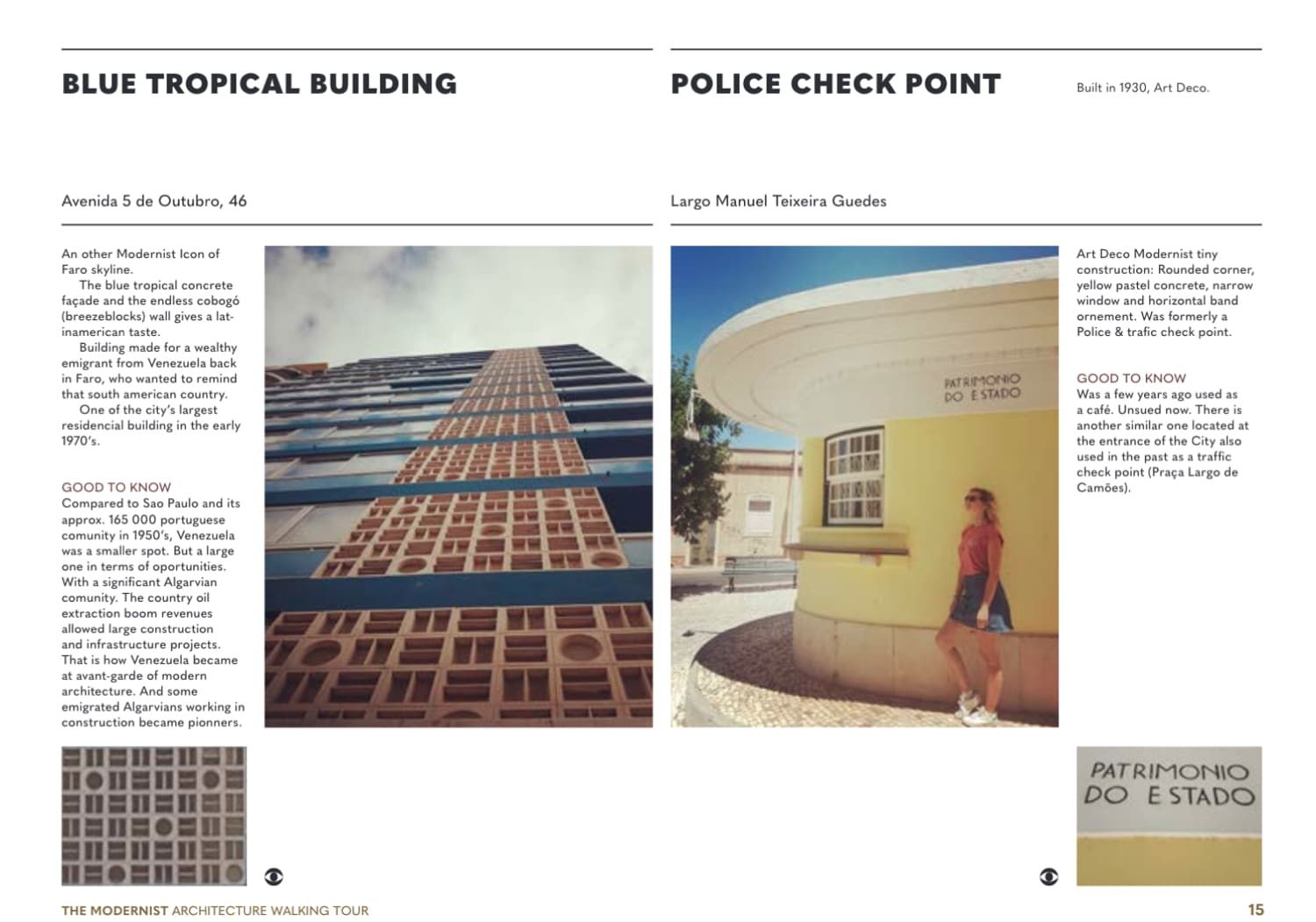
Photos: © Joao Mascarenhas (exterior and interior photos), © Christophe de Oliveira (guided walking tour), © Aymeric Warmé-Janville (portrait photo)
This article first appeared in our book publication Places & Visions.


0 Comments