
Architectural walk: Quiet Architecture in Bavaria
Those who walk have time. Time to look, observe, absorb and embrace. Whether nature, architecture, visionary ideas or ourselves. On our first foray into Upper Bavaria, we hike from Bad Aibling to Bayrischzell. Surprises guaranteed.
In the distance, the Mangfall Mountains emerge in pastel shades, as though someone had rubbed an eraser across the sky. It is early, the air still fresh and the light soft. There is some way to go before we reach the first hills of the Alps. But that is all we need – after all, we have decided to walk. This is no mountain tour with ridges to negotiate or summits to tick off in an app, but simply a journey from one stage to the next. For the sake of the journey itself.
Anyone who has ever found their travel preparations too complicated, their suitcase too heavy or the traffic jam too long may well have wondered: why not simply set off on foot? Without much fuss or luggage. The Latin root is pergere, meaning roughly to set out on a journey. Over the past 20 years, pilgrimage has enjoyed a renaissance, even without a religious motivation. Leaving everyday life behind, slowing down to walking pace, following your own rhythm and experiencing the landscape consciously. The less that happens, the more you find your way back to yourself. And those who want this gentle form of travel to offer not only rest for body and soul but inspiration too, with the occasional discovery along the way, will find themselves in the best of company as they explore extraordinary architecture away from Instagram hotspots and queues of visitors. Even in Bavaria, Bavaria, a popular tourist destination.
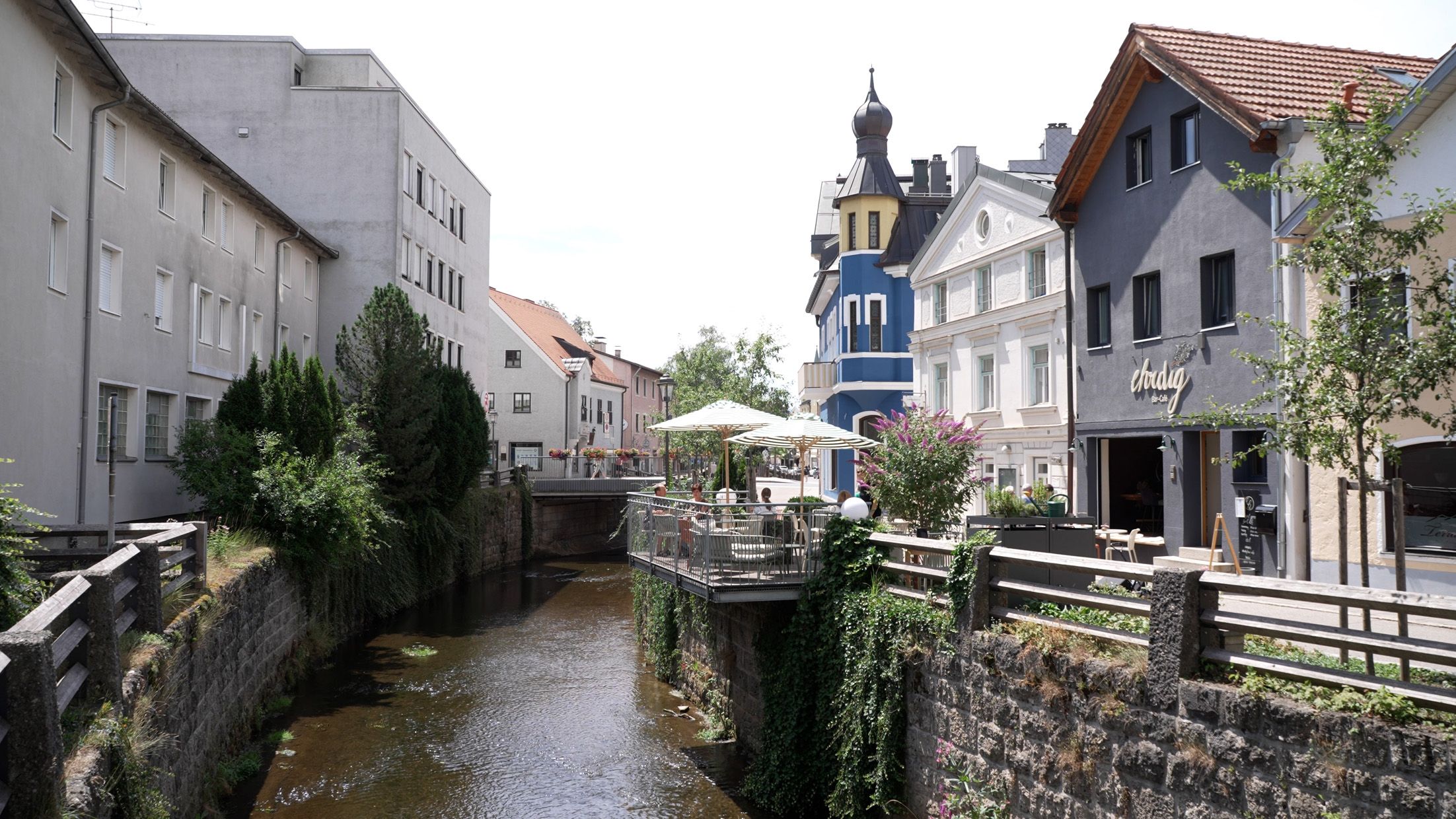
We start on the edge of the Chiemgau region in Bad Aibling, a charming spa town in the Mangfall Valley known for its “black gold.” Those who wish can start by giving their muscles a little preventive relaxation – and their complexion a fresh hiking glow – at Bavaria’s oldest peat spa. Thanks to Dr Desiderius Beck, a physician to the Royal Bavarian Court, Aibling’s first brine and peat-mud bathing facility opened in 1845. But the town also takes visitors on a journey through time and space. From Baroque townhouses with elaborate figurative Lüftlmalerei façade paintings to an impressive concentration of historic villas strongly associated with the heyday of spa resorts in the late nineteenth and early twentieth centuries – ranging from grand residences for doctors and wealthy spa guests to exclusive spa guest houses. To this day, there is no shortage of places to stay and give this architectural pilgrimage a fitting start. Whether for one, two or several days, there is plenty to discover – and two of the sights are right on the doorstep.
Spinning history forward
Following the Mangfall towards Rosenheim, after about an hour you reach the imposing main building of the Alten Spinnerei in Kolbermoor – an industrial monument whose characteristic red exposed-brick façade, striking clock tower, segmental-arched windows and projecting bays still tell the story of its past.
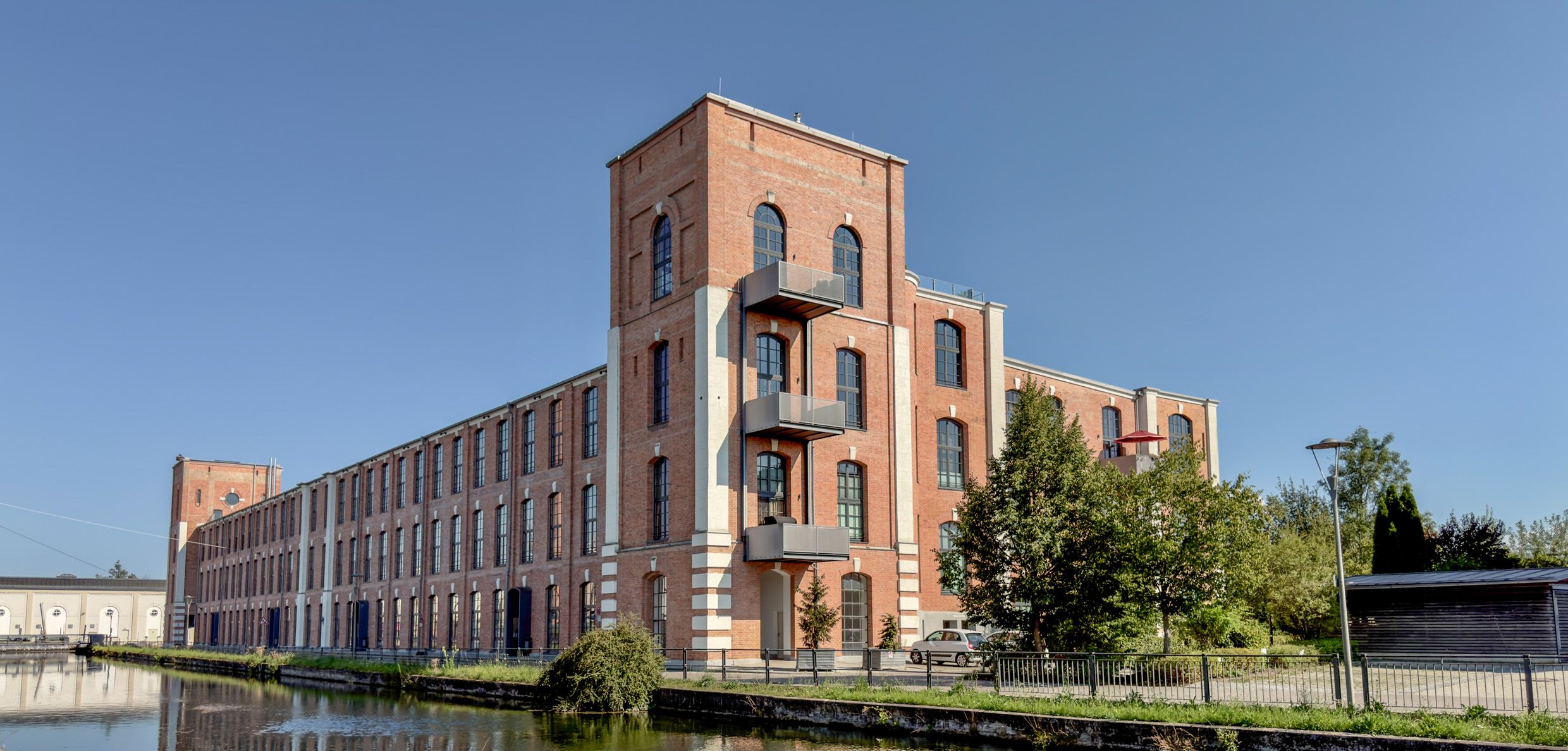
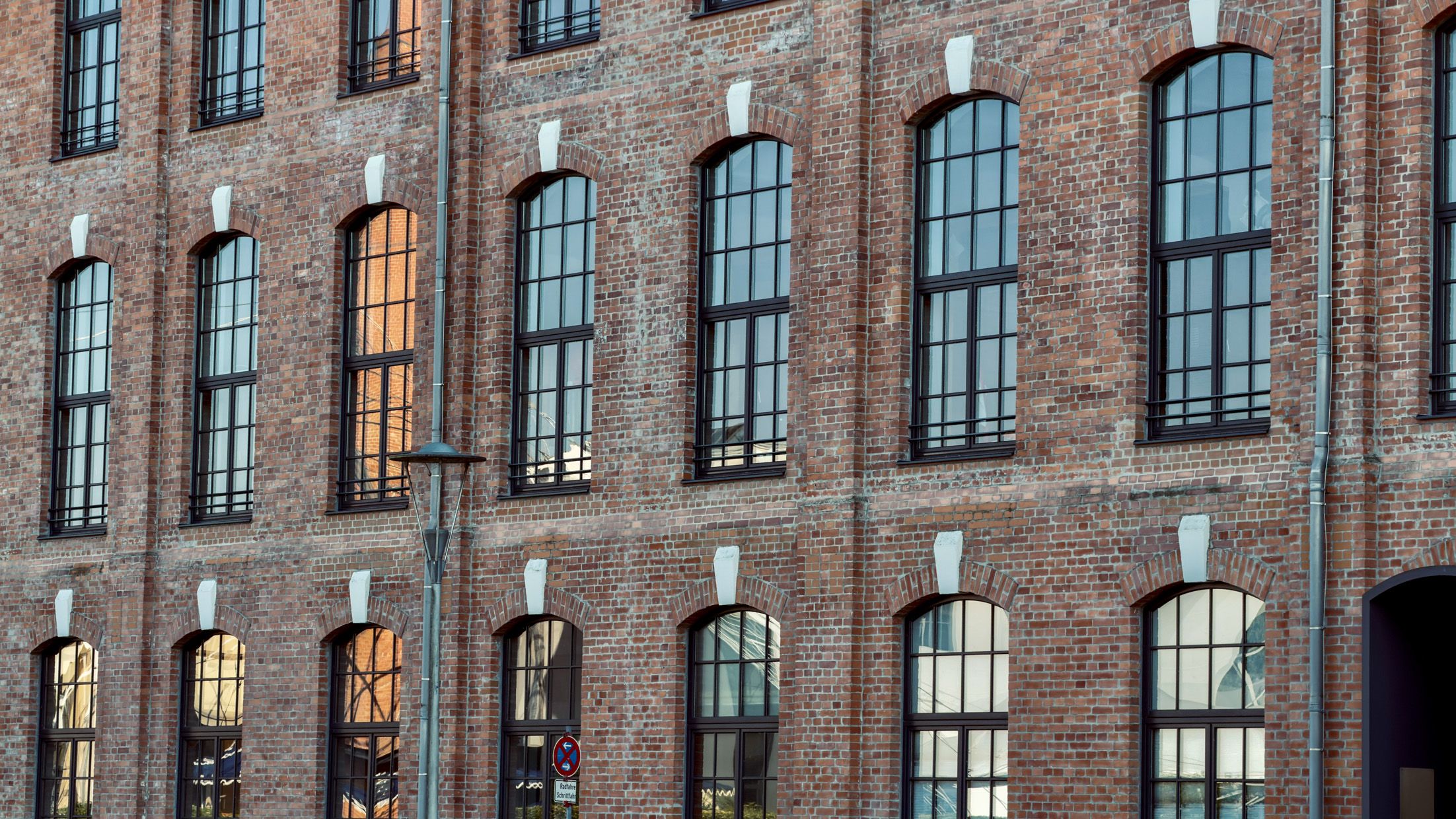
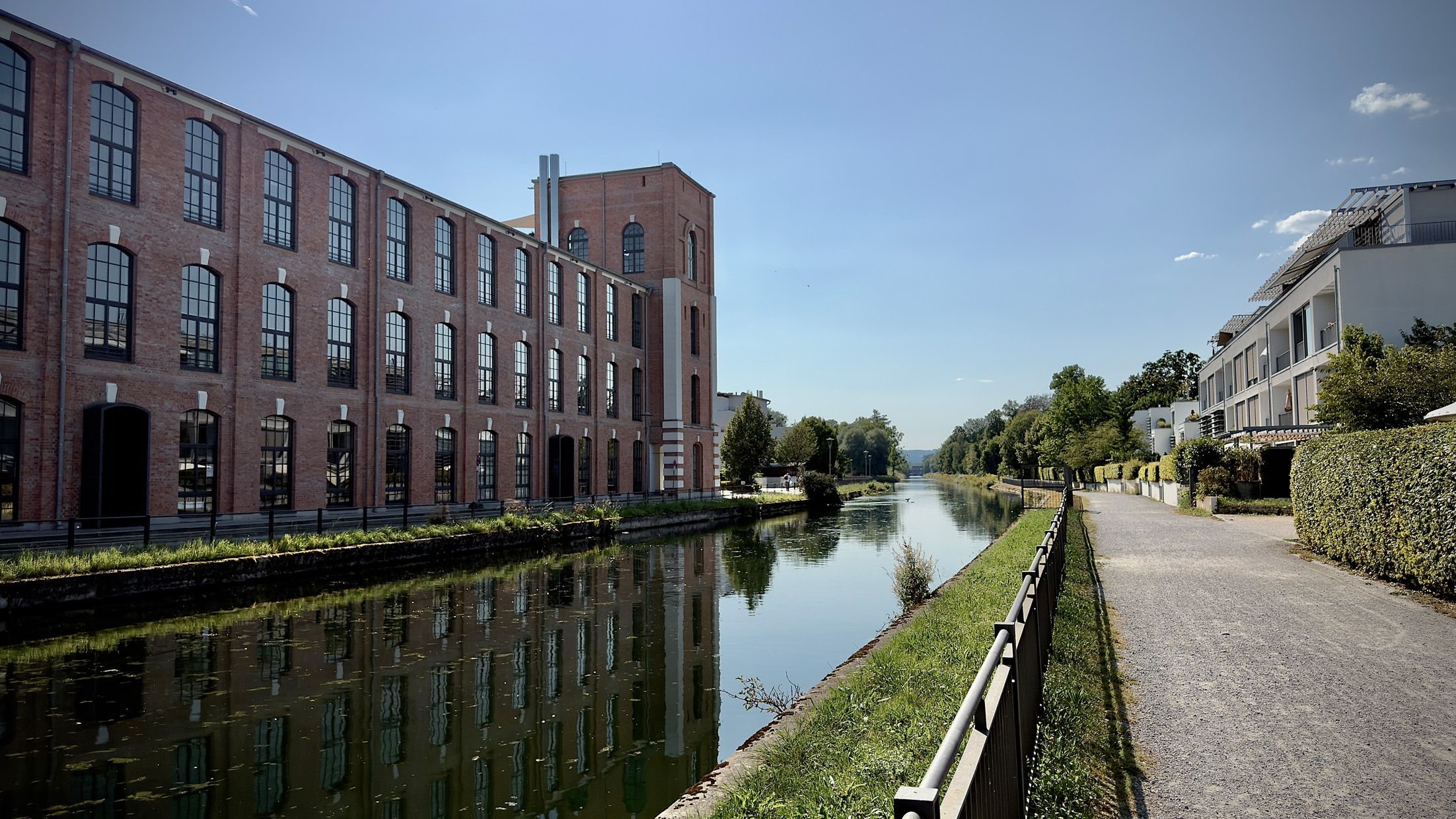
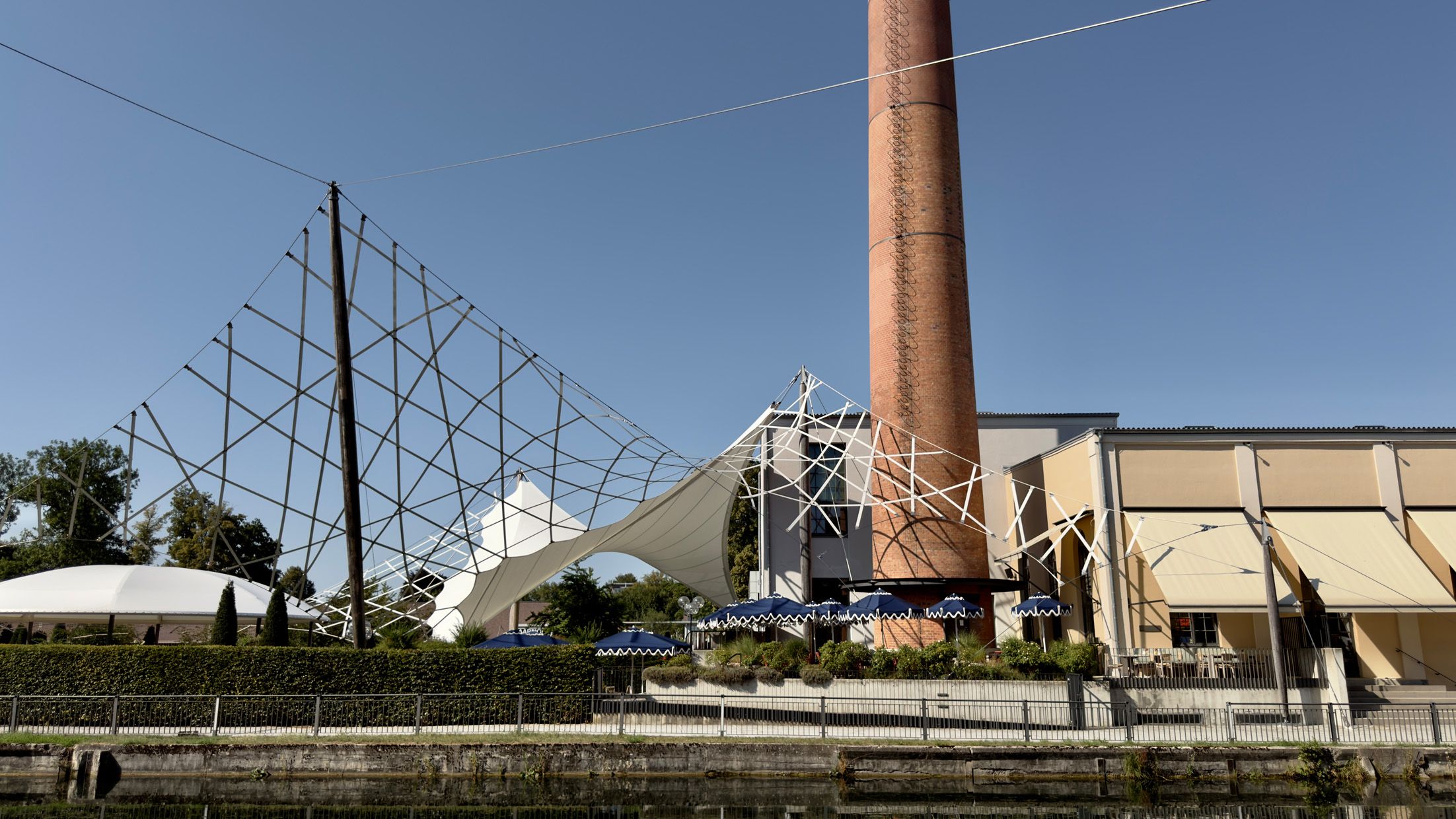
With a railway connection and hydropower at its disposal, the J. P. Bemberg AG cotton mill began operating in 1863 with 11,000 spindles. The number quickly quadrupled, until a major fire destroyed the main building in 1898. The new spinning mill building, now three storeys high, was rebuilt in two stages: the eastern section in 1899, in classical industrial architecture with cast-iron columns and vaulted ceilings, and the western section in 1908, using modern reinforced-concrete construction – testimony to the architectural transformation taking place around the turn of the century. The complex was complemented by a boiler and turbine house, a scutching building, bale store and dye works, as well as an administration building and gatehouse.
After the dark years of the war, when part of the mill was used by the armaments industry, production ceased in 1993 and the site slowly fell into disrepair. To save the ensemble, by then a listed monument, the Werndl family of entrepreneurs began an extensive revitalisation at the beginning of the new century, preserving as much of the historic fabric as possible. Today, the 200,000-square-metre Spinnerei site is a vibrant urban quarter combining living, working and culture – and an award-winning example of successful heritage restoration and contemporary adaptive reuse. Whether visiting an exhibition at the Academy of Fine Arts, dining beside the canal, strolling around the mill pond or exploring the modern architecture in the park, this excursion between past and present is rewarding in many different ways. A few steps further, you arrive at the historic Kolbermoor workers’ settlement – another listed ensemble and a unique example in Bavaria of company housing, built for the cotton mill from 1862 onwards.
From military base to model town
Back in Bad Aibling. Perhaps this is a moment to catch our breath, to enjoy a peat treatment, or perhaps it is finally time to set off. After all, we have not actually made much progress on our route yet. But before heading towards nature and mountain panoramas, another detour is well worth making. This one comes with a top-secret past – and an important contribution to our future. Like enormous white golf balls scattered across the Alpine foothills, nine iconic radomes rise from the landscape on the outskirts of Bad Aibling, part of a historic military base. Once belonging to an NSA listening station and the global Echelon system, they are now part of a satellite intelligence facility of the German Federal Intelligence Service (BND).
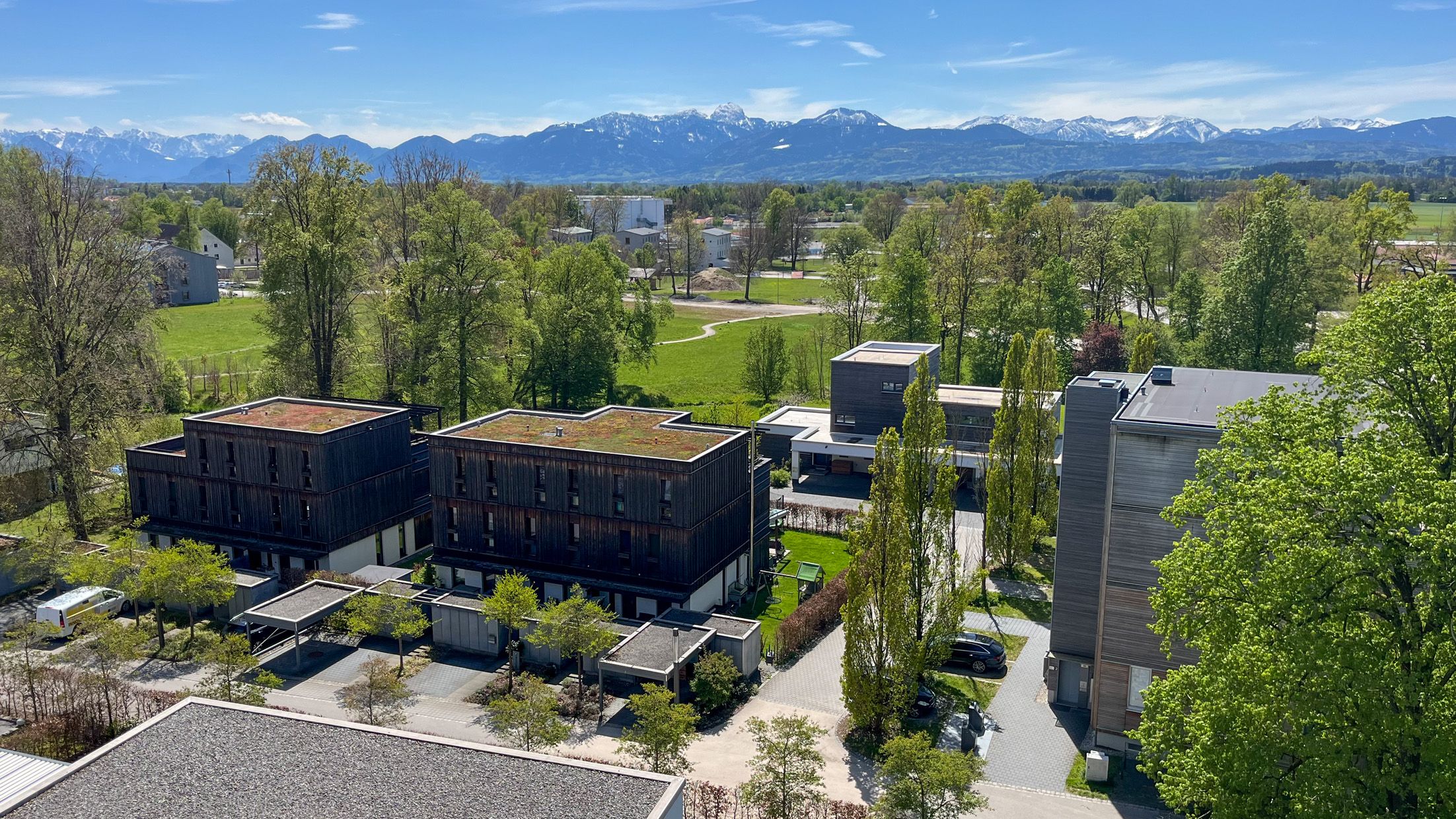
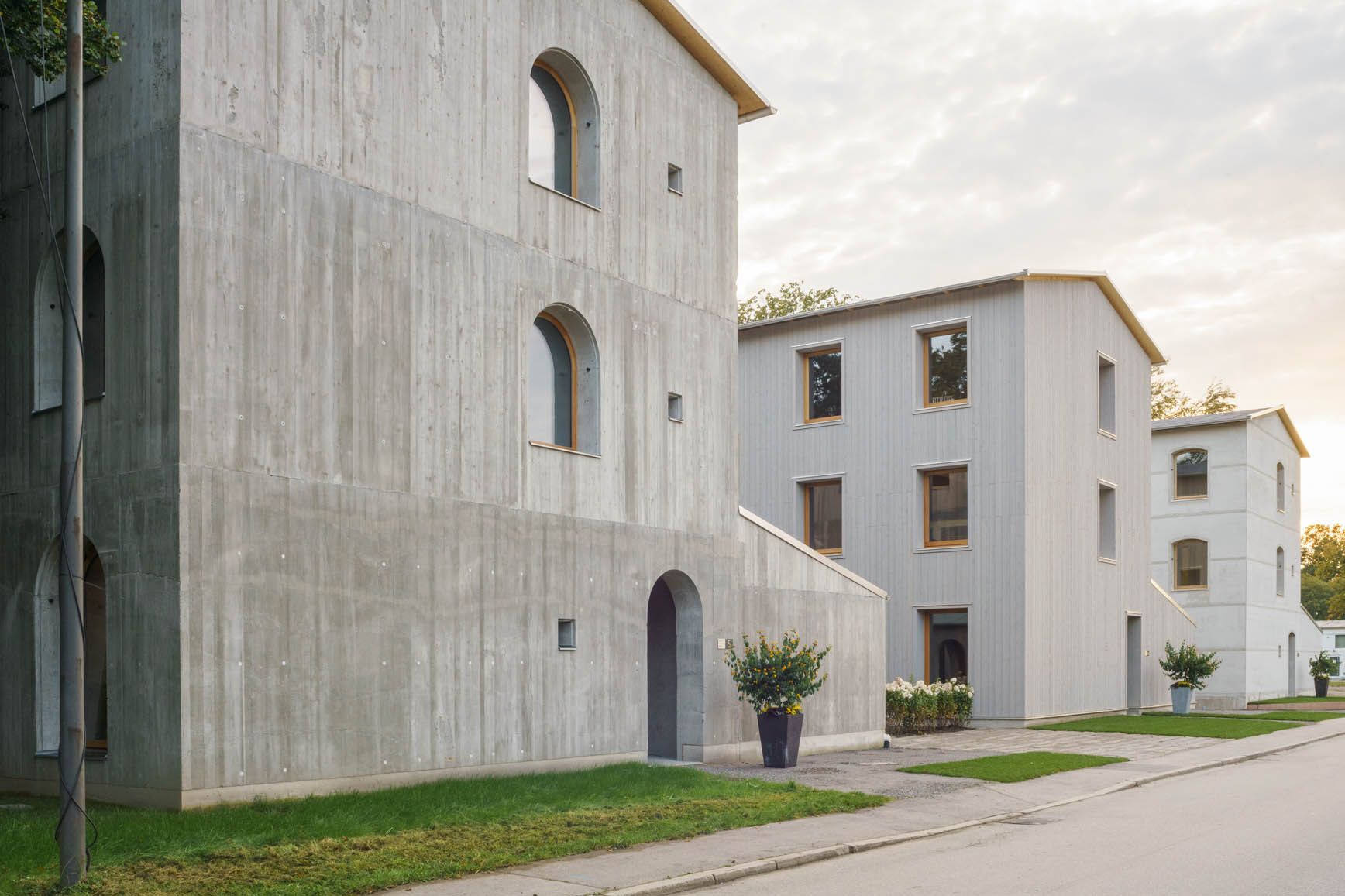
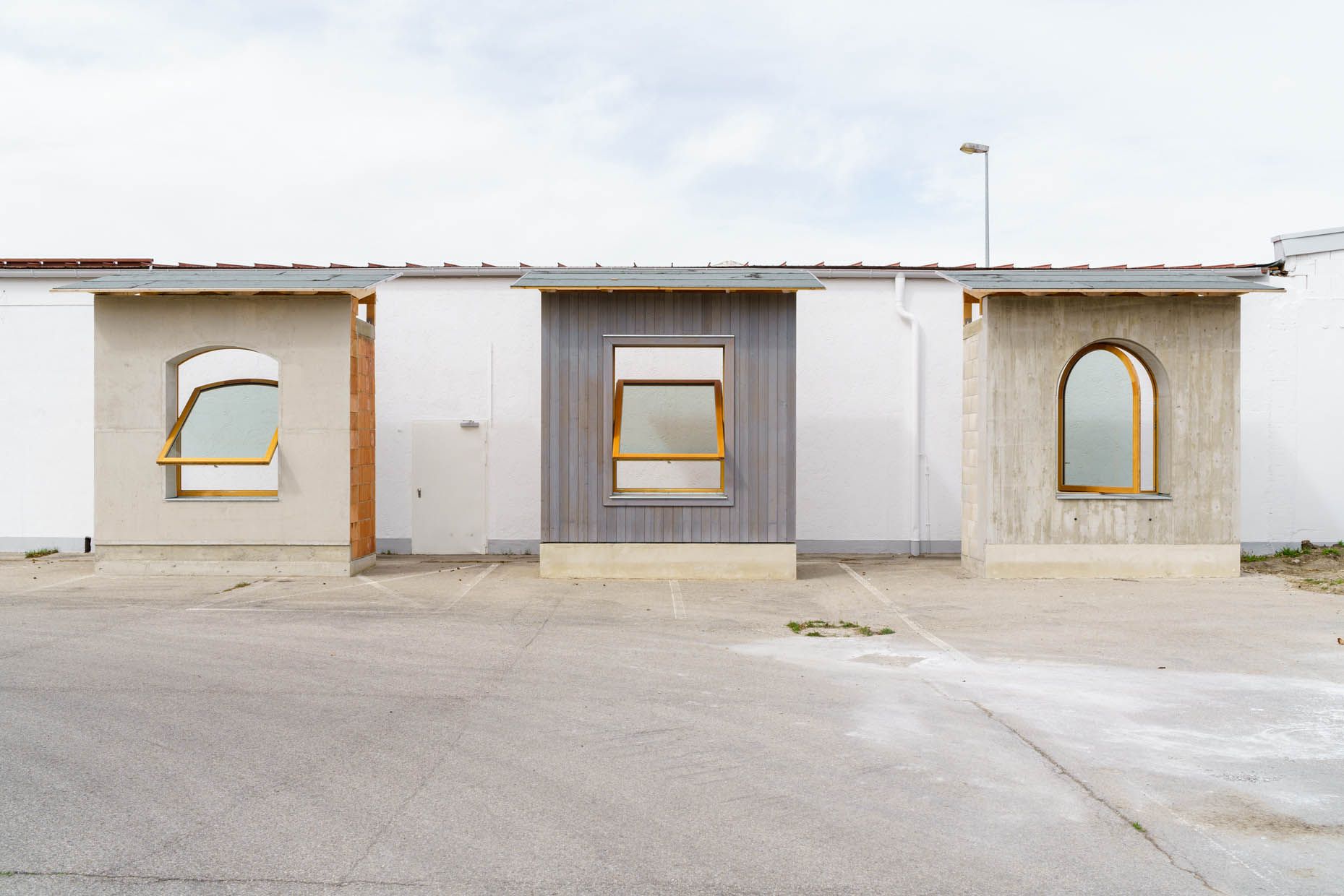
Right next door, pioneering architecture is emerging – open, inviting and focused firmly on the future. The visionary transformation began in 2005, when the B&O Group acquired around seventy hectares of the former military site with the aim of developing a neighbourhood dedicated to sustainable architecture and innovative construction processes. Today, the B&O Bau ForschungsQuartier is a pioneering project that combines living, working and everyday life with ambitious ecological goals while also serving as a real-world laboratory.
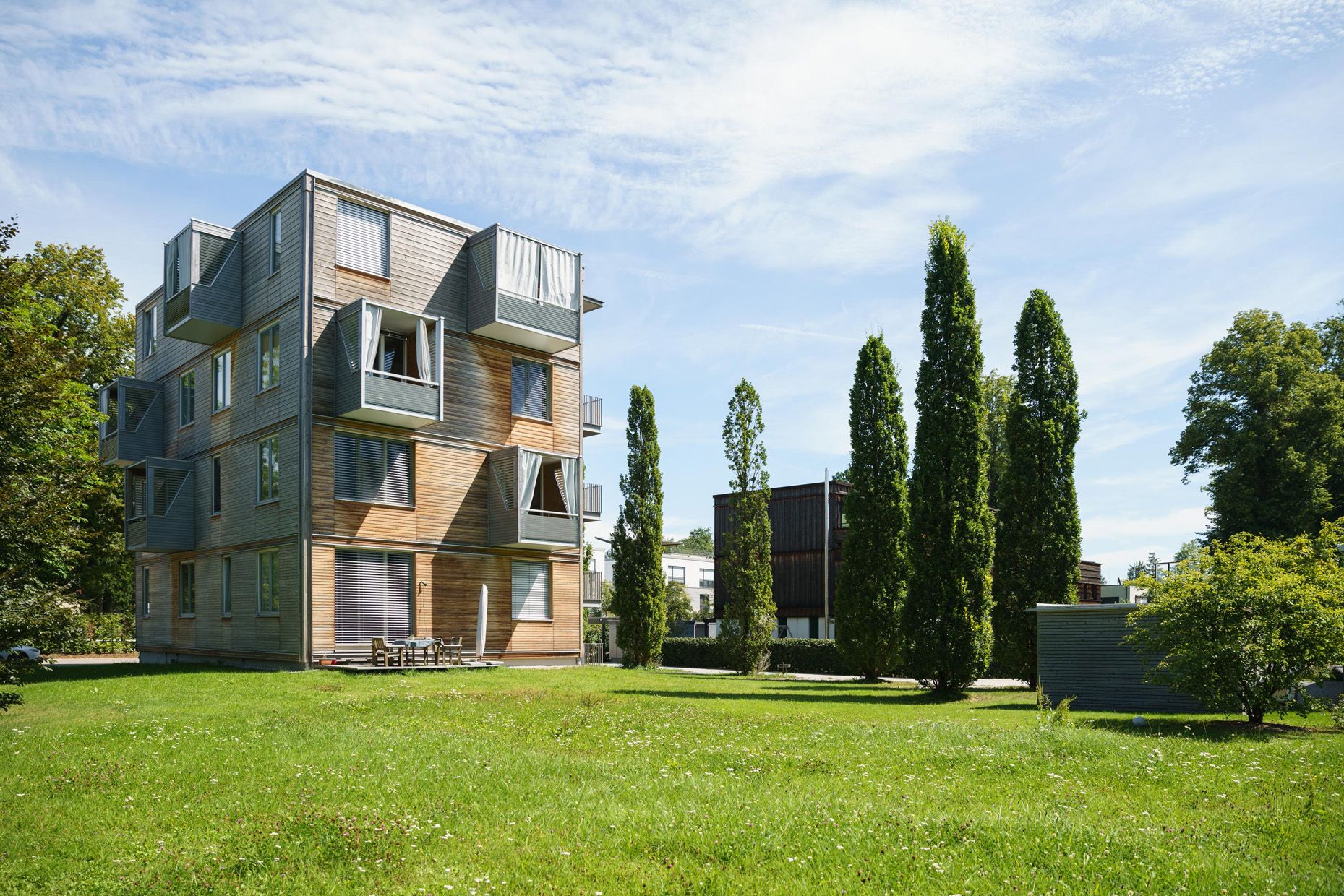
At its heart are contemporary timber architecture, renaturalised green spaces incorporating mature trees, a stream and wildflower meadows, and a carefully conceived energy concept that makes the neighbourhood a net-zero-energy district. Schools and nurseries are within easy reach of workplaces, leisure facilities and community gardens. There is also a hotel and conference centre as well as a technology park dedicated to advancing research. From the outset, the development of the neighbourhood has been accompanied by academic research through collaborations with universities. Munich-based architect Florian Nagler, for example, applied his “Simple Construction” principle to a series of research houses constructed in timber, brick, concrete and clay, whose energy consumption and indoor climate are monitored over time.
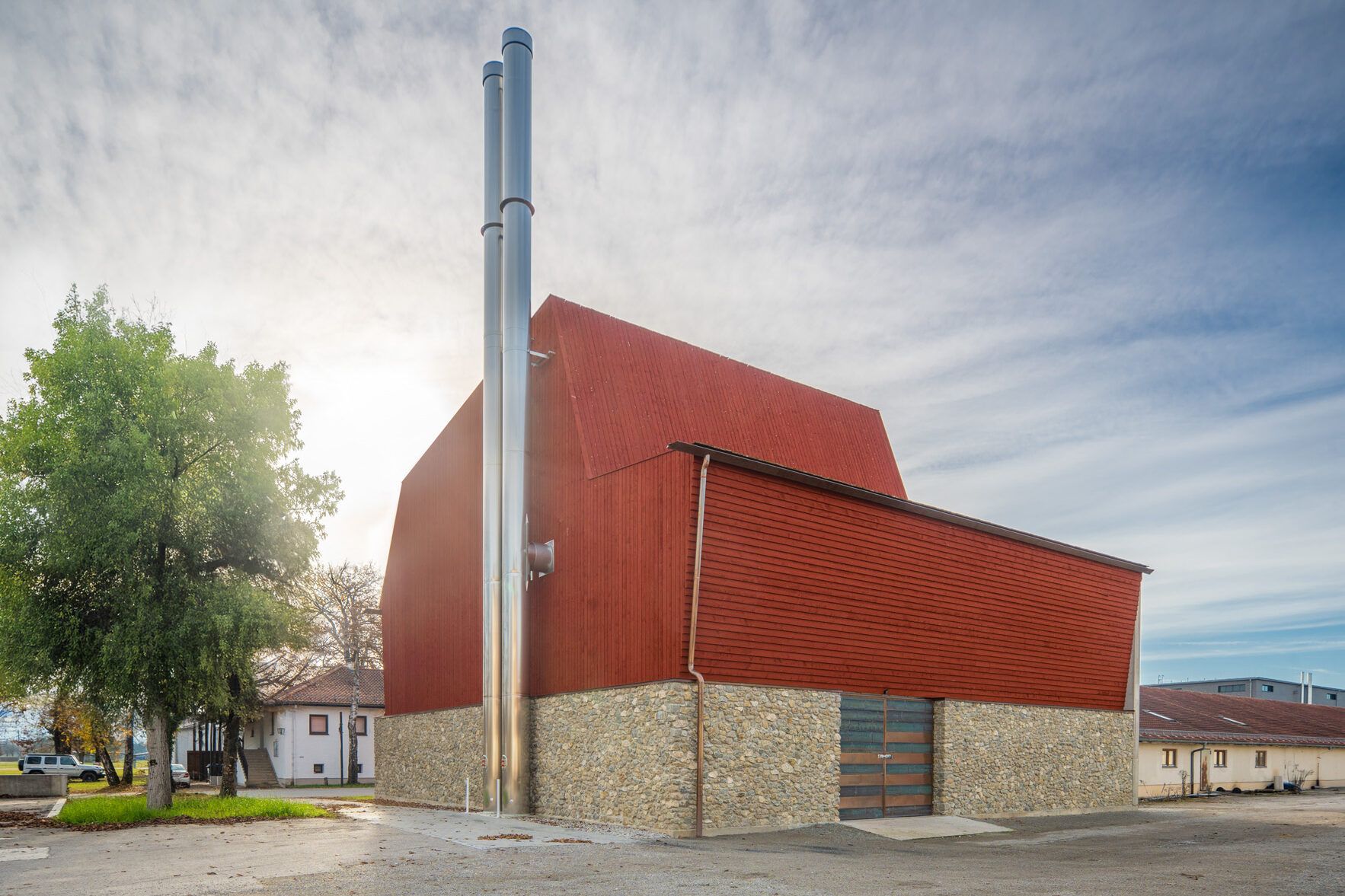
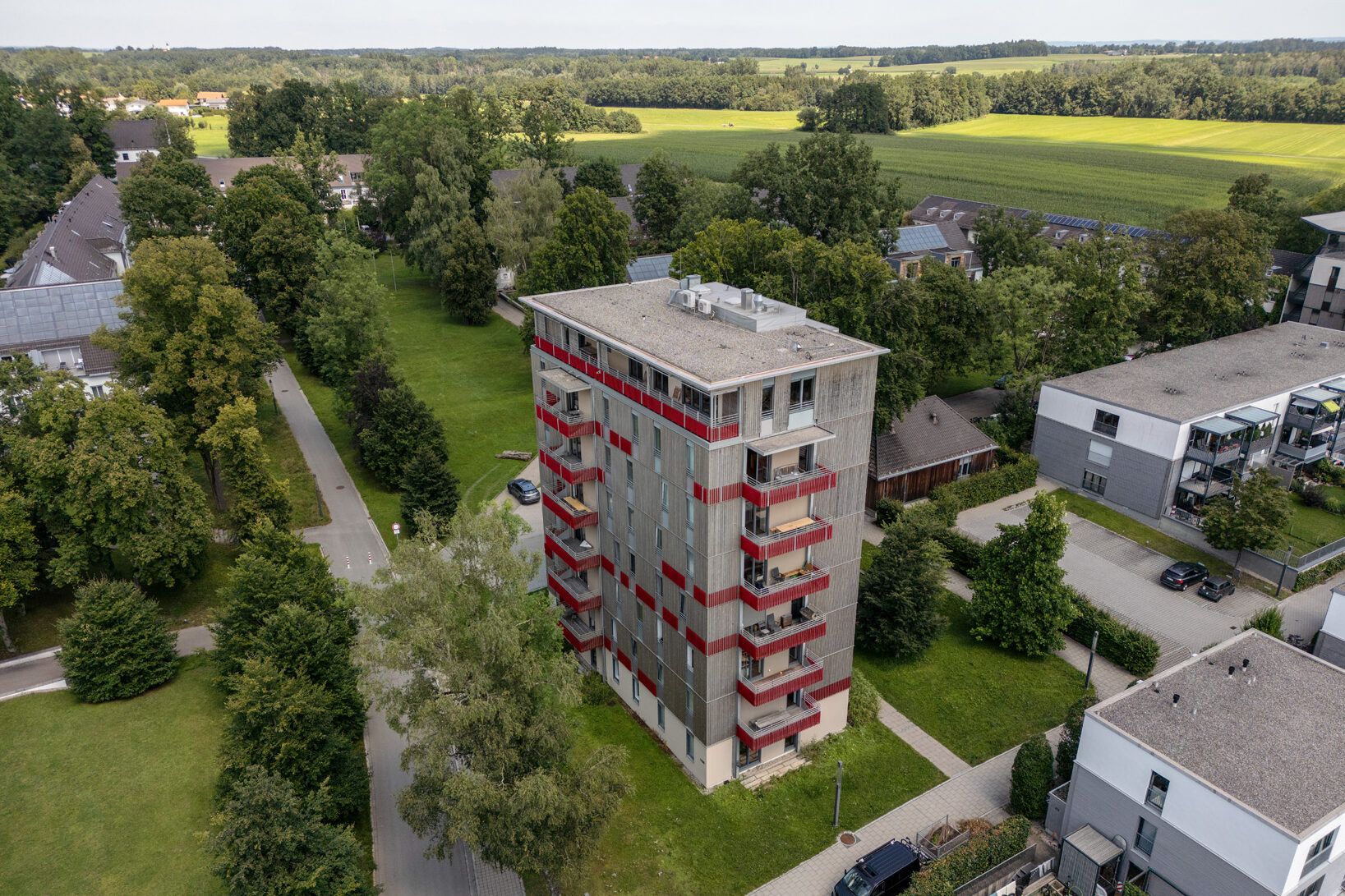
Among the many other pioneering projects to discover across the park-like grounds are Matteo Thun’s Heizikone, a small biomass heating plant in the form of a chapel clad in larch shingles, and Holz 8, which was erected in just three weeks and, when completed in 2011, was Germany’s tallest timber building.
Stillness
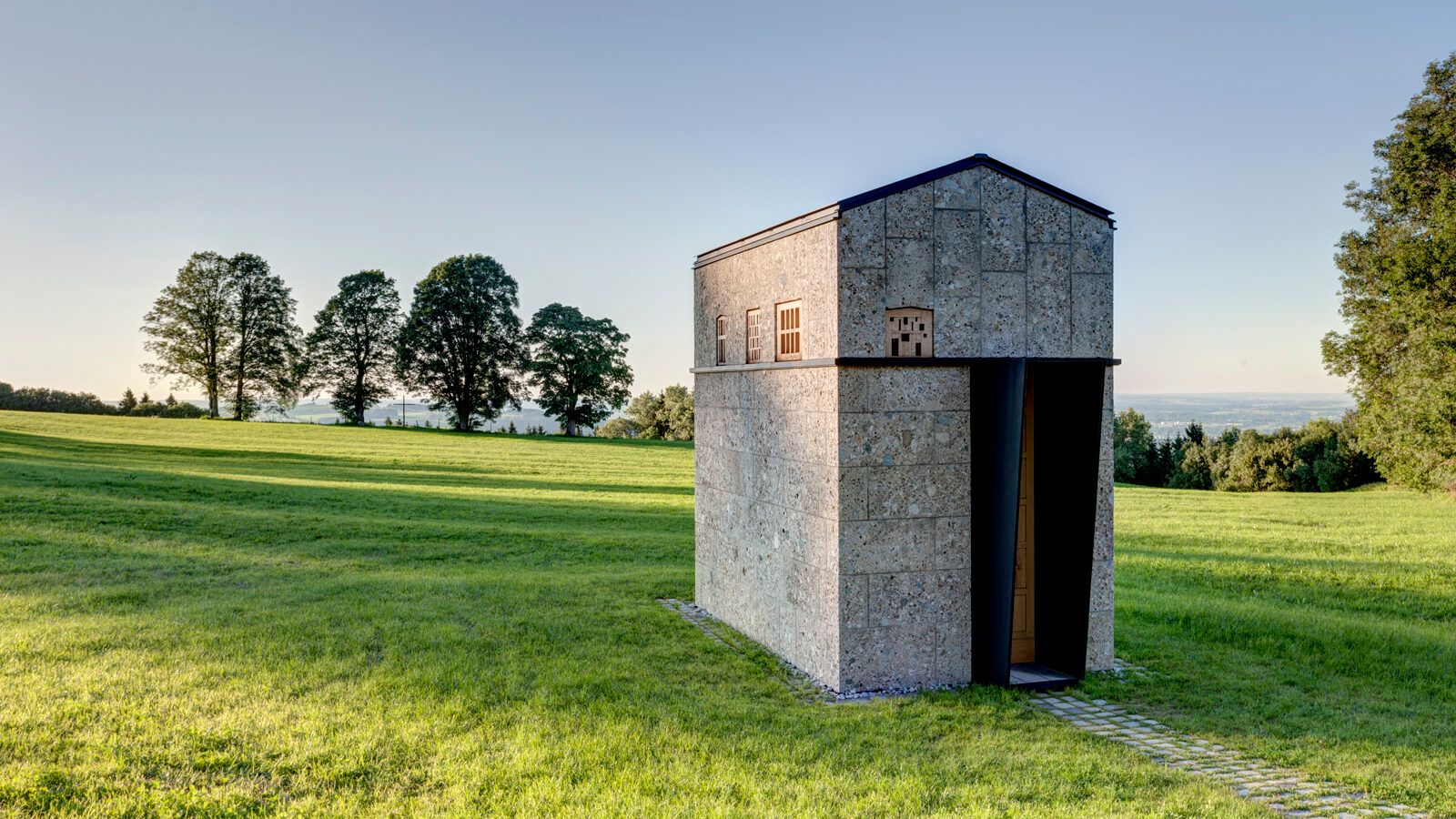
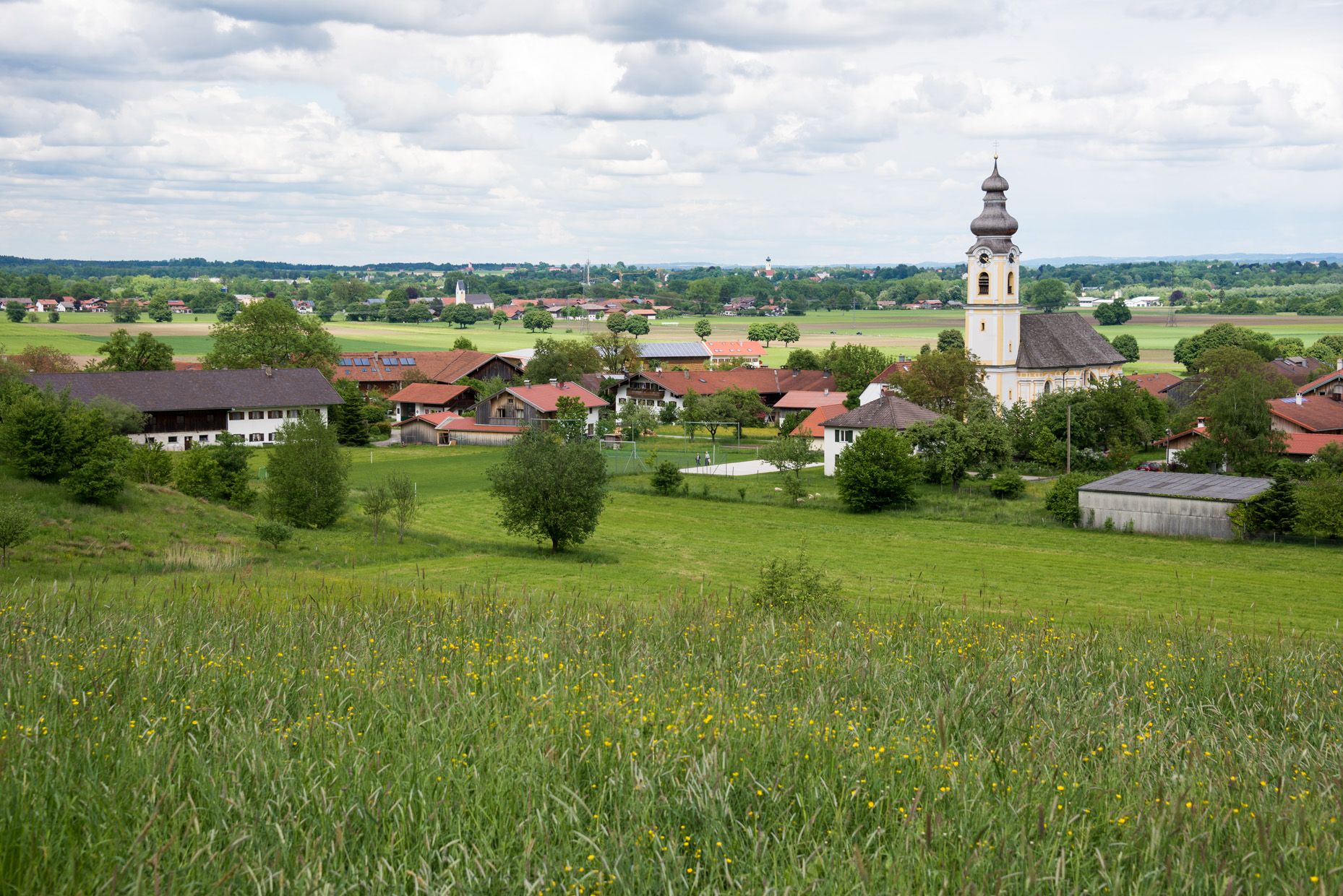
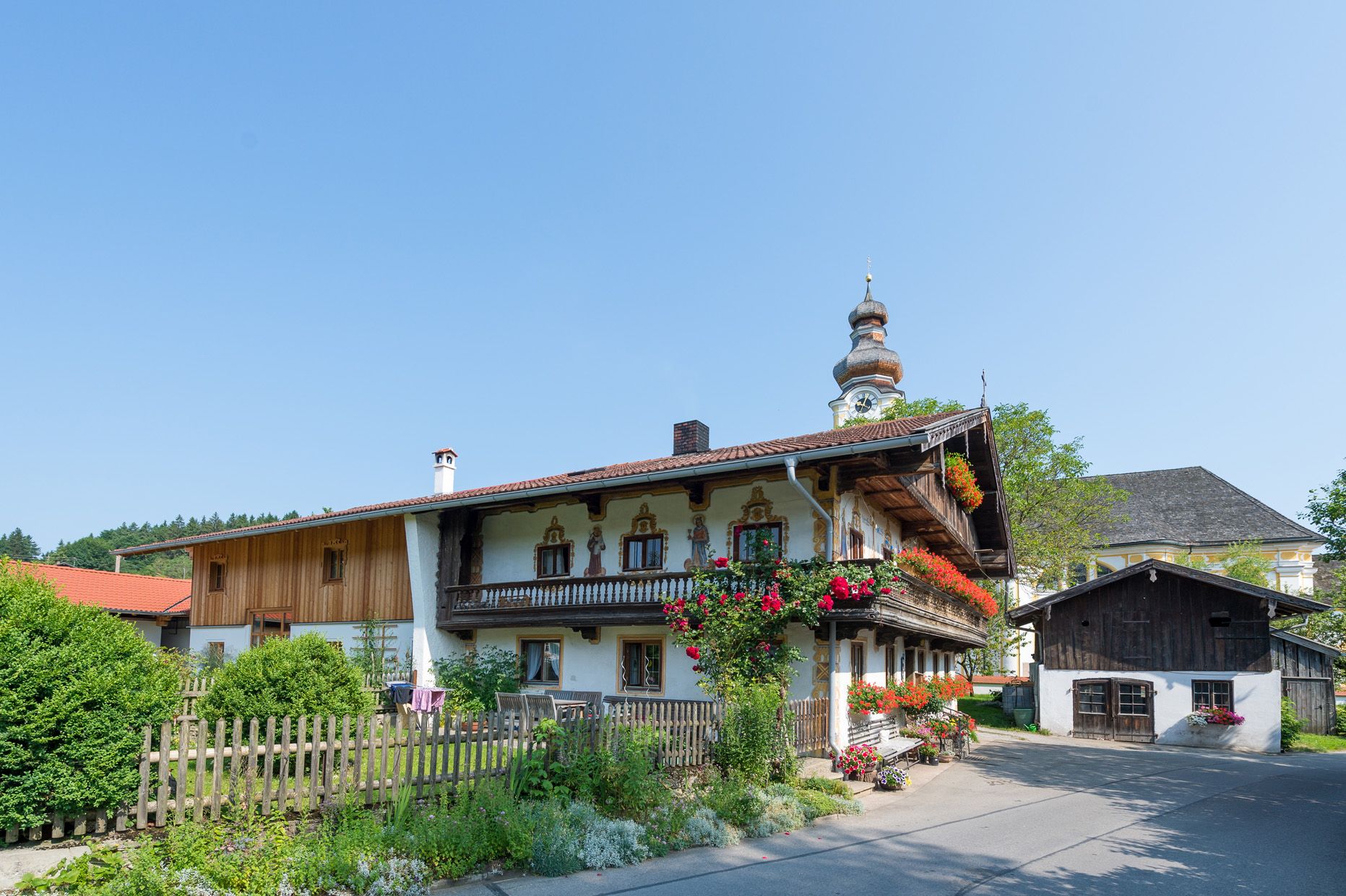
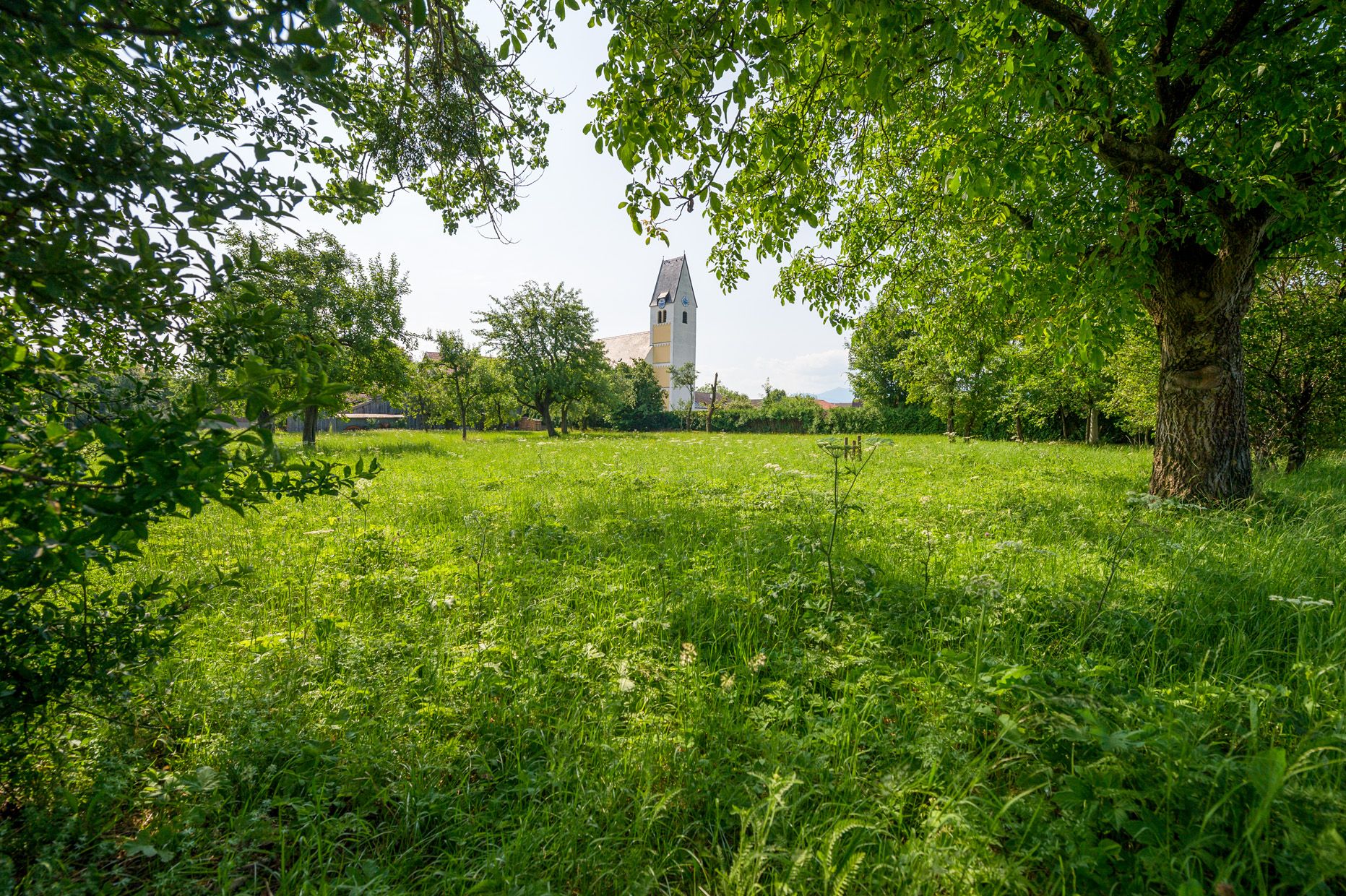
Finally, we are on our way. Via Willing and Berbling, the route leads towards Au, beneath shady avenues and past open fields, cows and chapels. The Upper Bavarian Alpine foothills, with the Wendelstein rising beyond, remain constantly in view – weather permitting, of course. Once in the village of Au, there is a choice: those who prefer to take things at a leisurely pace can make a detour and spend the night in Bad Feilnbach – known as the “Bavarian Merano” for its mild climate and famous for its fruit distilleries and annual apple market. Those with energy to spare can continue straight on. But first comes a climb up the Auerberg. Whether you take the paved road or one of the narrow, steep paths, the effort is amply rewarded, for the destination is the ecumenical St James’s Chapel, designed by none other than Michele De Lucchi, one of the most influential architects of our time.
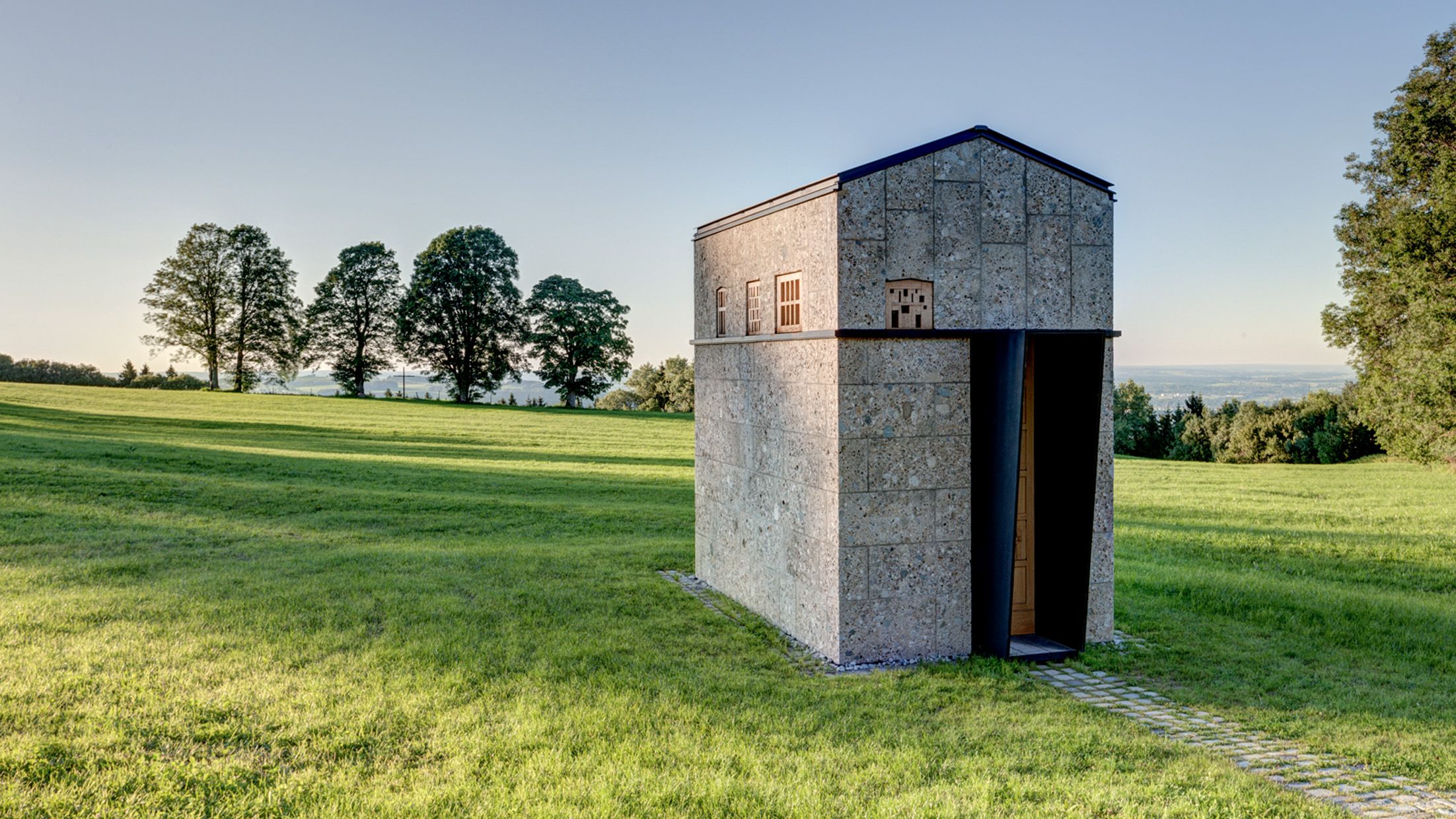
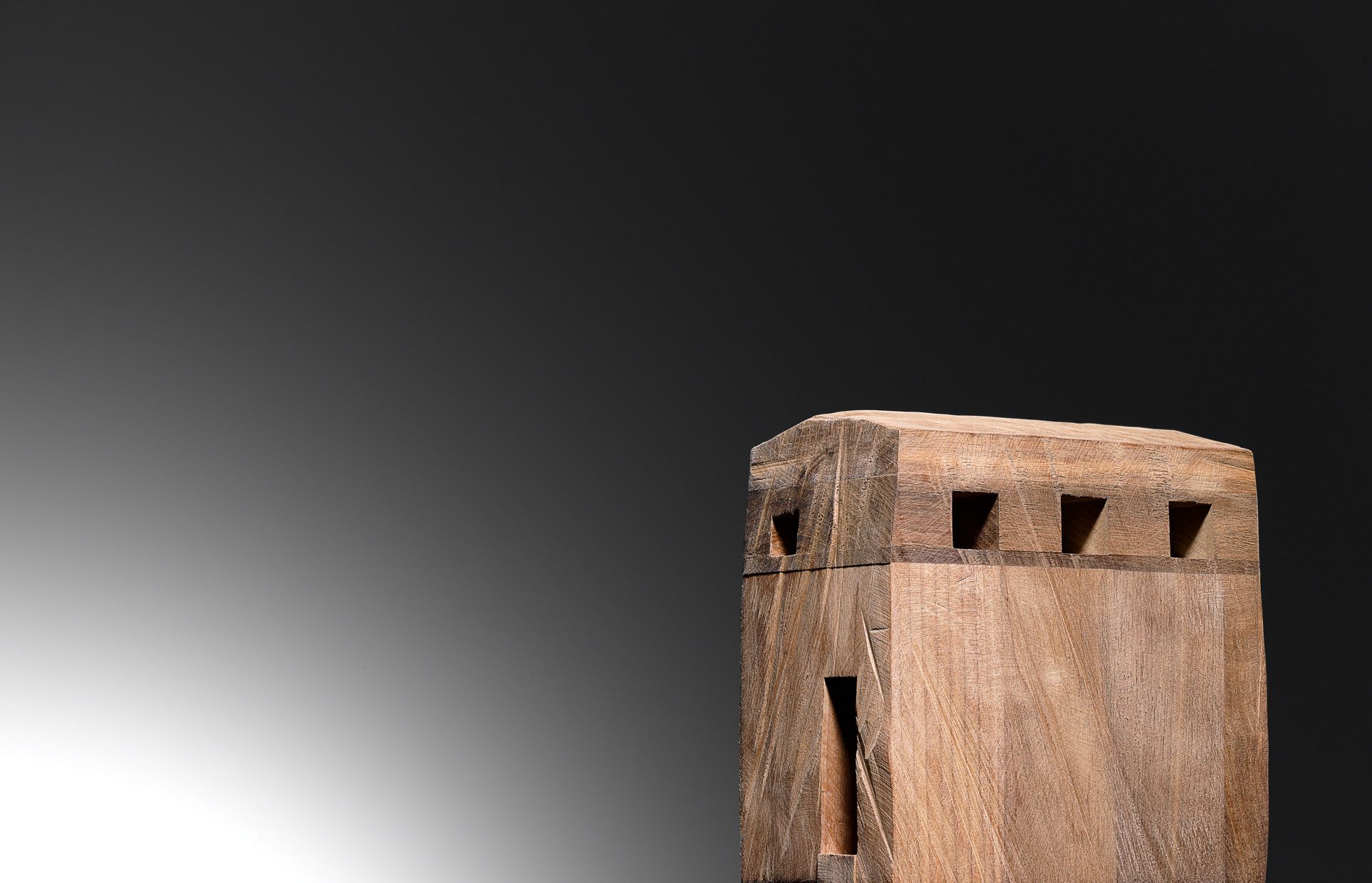
Completely unexpectedly, the delicate, simple 15-square-metre structure stands in a meadow overlooking the Alpine ranges. On clear days, you can see as far as the Bavarian Forest. The sight of the chapel alone is contemplative, but stepping inside is essential – and a spiritual experience. So quiet, so entirely focused on the essentials. The play of light from the small wooden windows, each with a different texture, falling across stone and door, is almost magical. A place of stillness and connection with nature that touches you – no matter what you believe in.
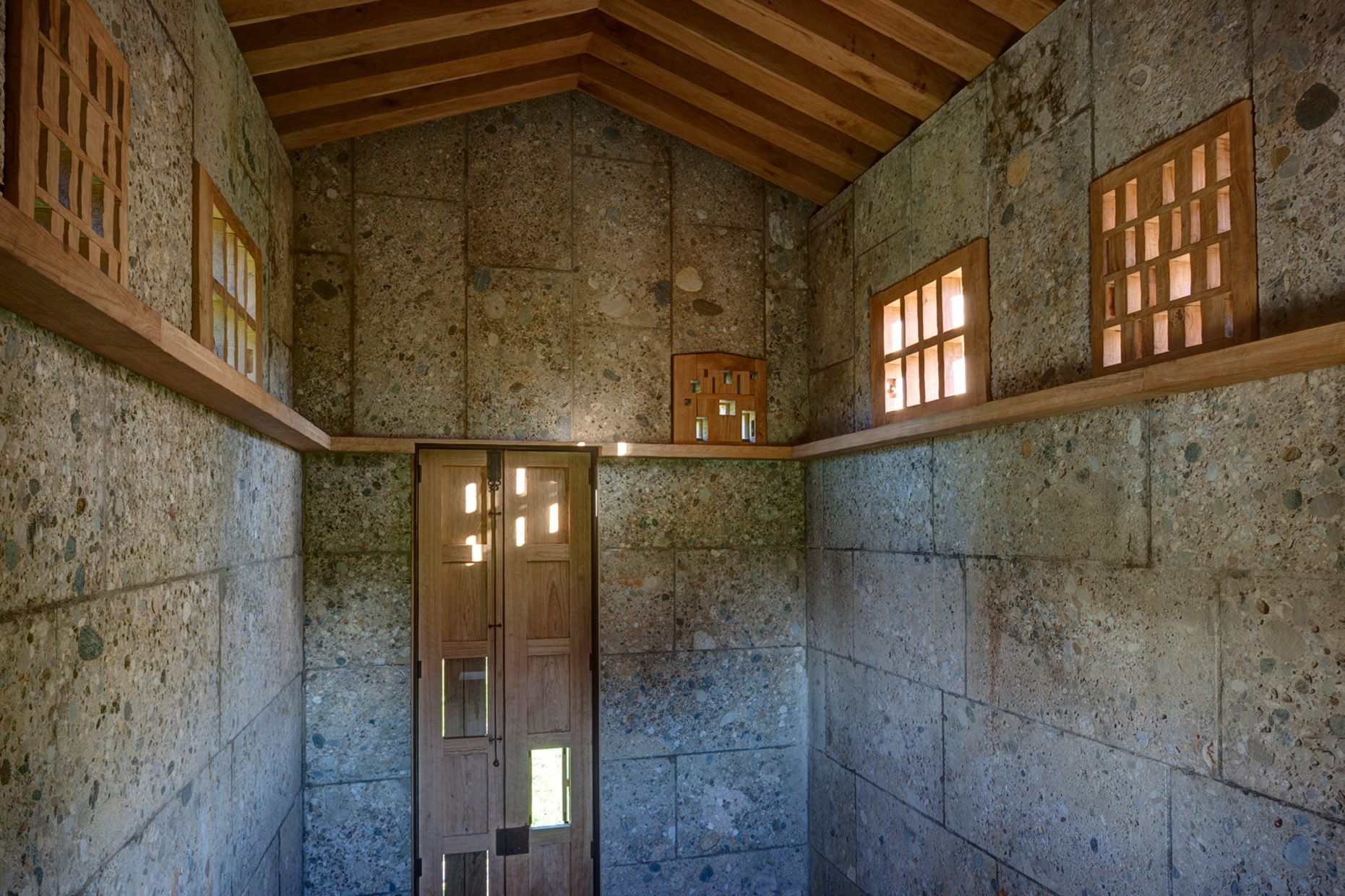
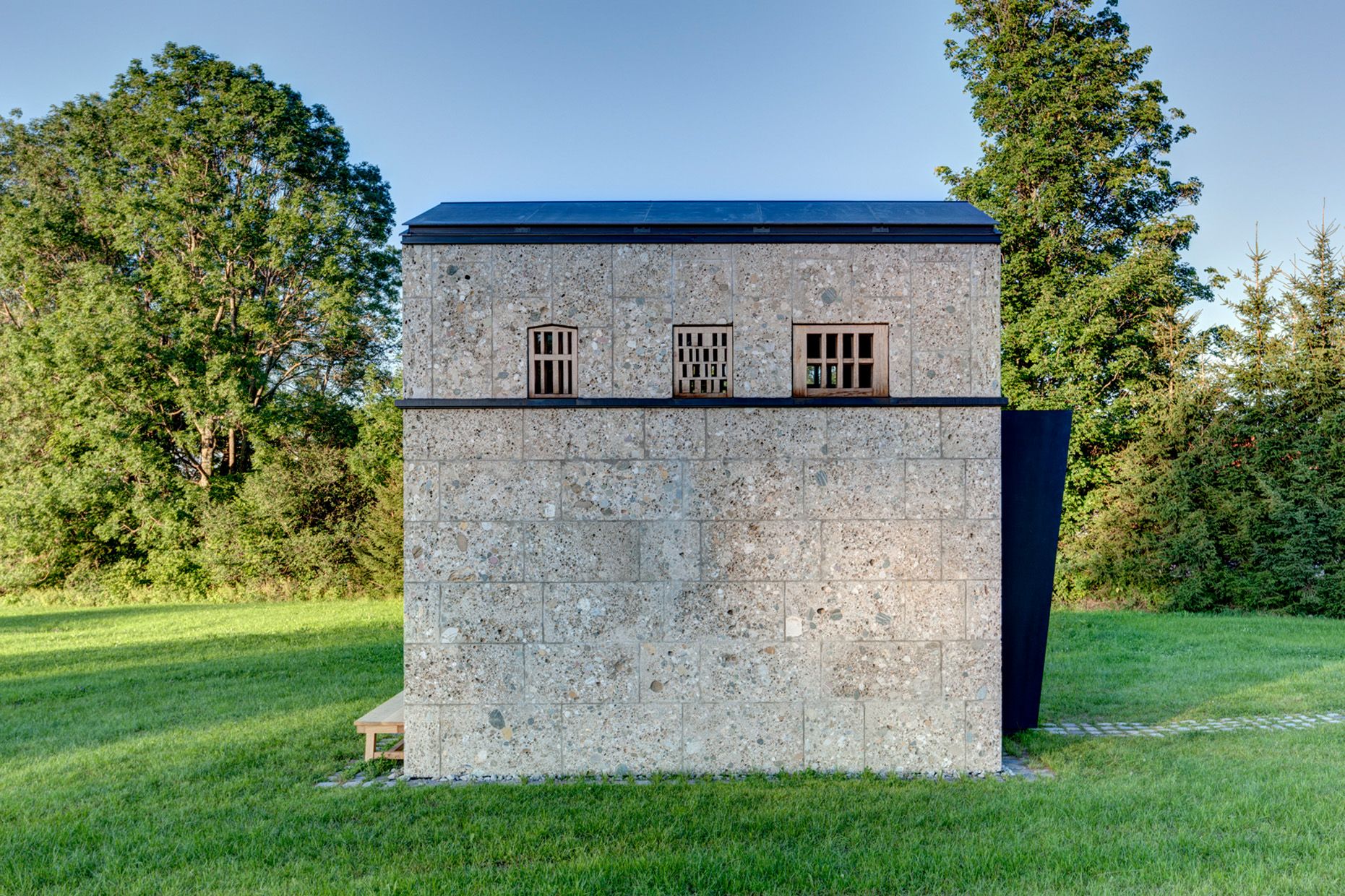
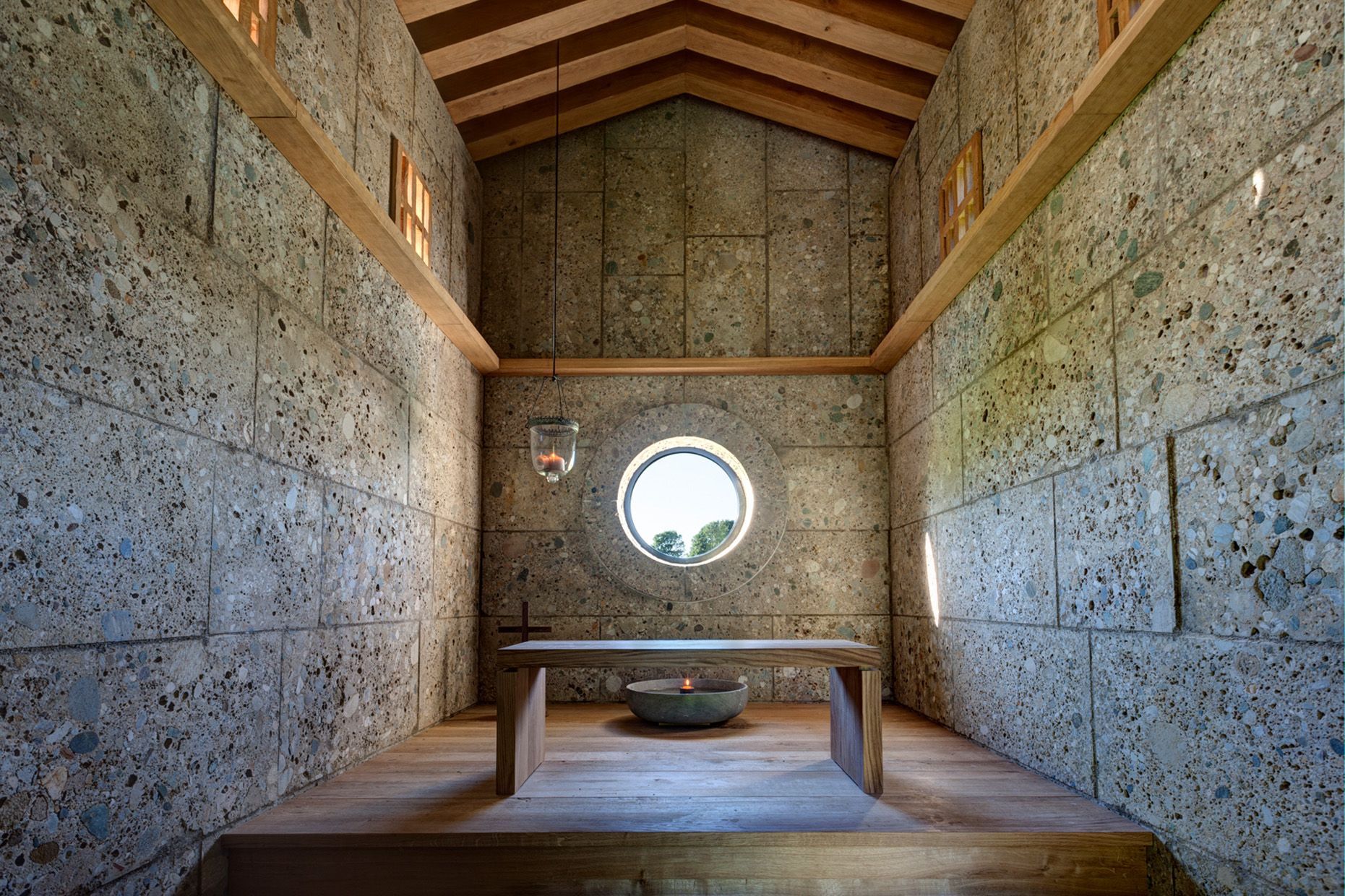
When an art lover discovered De Lucchi’s small, abstract wooden sculptures exploring the theme of the ‘house’, he was so fascinated that in 2012 he had one of them built. Hidden away on the Hocheck yet directly on the Way of St James, exactly 2,347 kilometres from Santiago de Compostela, the ecumenical chapel combines postmodern art with the centuries-old tradition of Upper Bavarian farm chapels.
For the materials, De Lucchi chose traditional blocks of Nagelfluh conglomerate – also known locally as Herrgottsbeton, or “God’s concrete” – bronze for the roof and entrance canopy, and oiled oak: materials that age gracefully and are made to last. A continuous cornice at window height, positioned in a 1:3 ratio, accentuates the proportions in the tradition of Renaissance architecture. In the minimalist interior, furnished with only a bench, a sanctuary lamp, a water basin and a bowl of sand with slender candles, a wooden steps lead to a raised space for contemplation. Here, a large circular window opens up a cosmological perspective onto the landscape. A cross can even be glimpsed between the trees, although religious symbols play no real part here. For De Lucchi, the chapel is about a new spirituality, closely interwoven with a natural world that must be respected and preserved.
A welcome break
St James’s Chapel lingers in the mind. And makes the walk to Niklasreuth seem to fly by, where a hidden beer garden with panoramic views, large parasols and cold drinks offers the perfect place to reflect and refuel. Alternatively, another two kilometres brings you to Wörnsmühl, with further opportunities for a break – whether for food and drink, an overnight stay, a cold footbath in the Leitzach river or a refreshing dip in the small natural swimming pool at the edge of the forest. A meadow, a long pool, a sign saying “Freibad” – it could hardly be more straightforward or relaxed. Once you have replenished your energy for another seven kilometres and 200 metres of ascent, you can tackle the next stage – partly through shady woodland, crossing small streams along the way – before spending the night at the Pförtner Penthouse in Hausham.
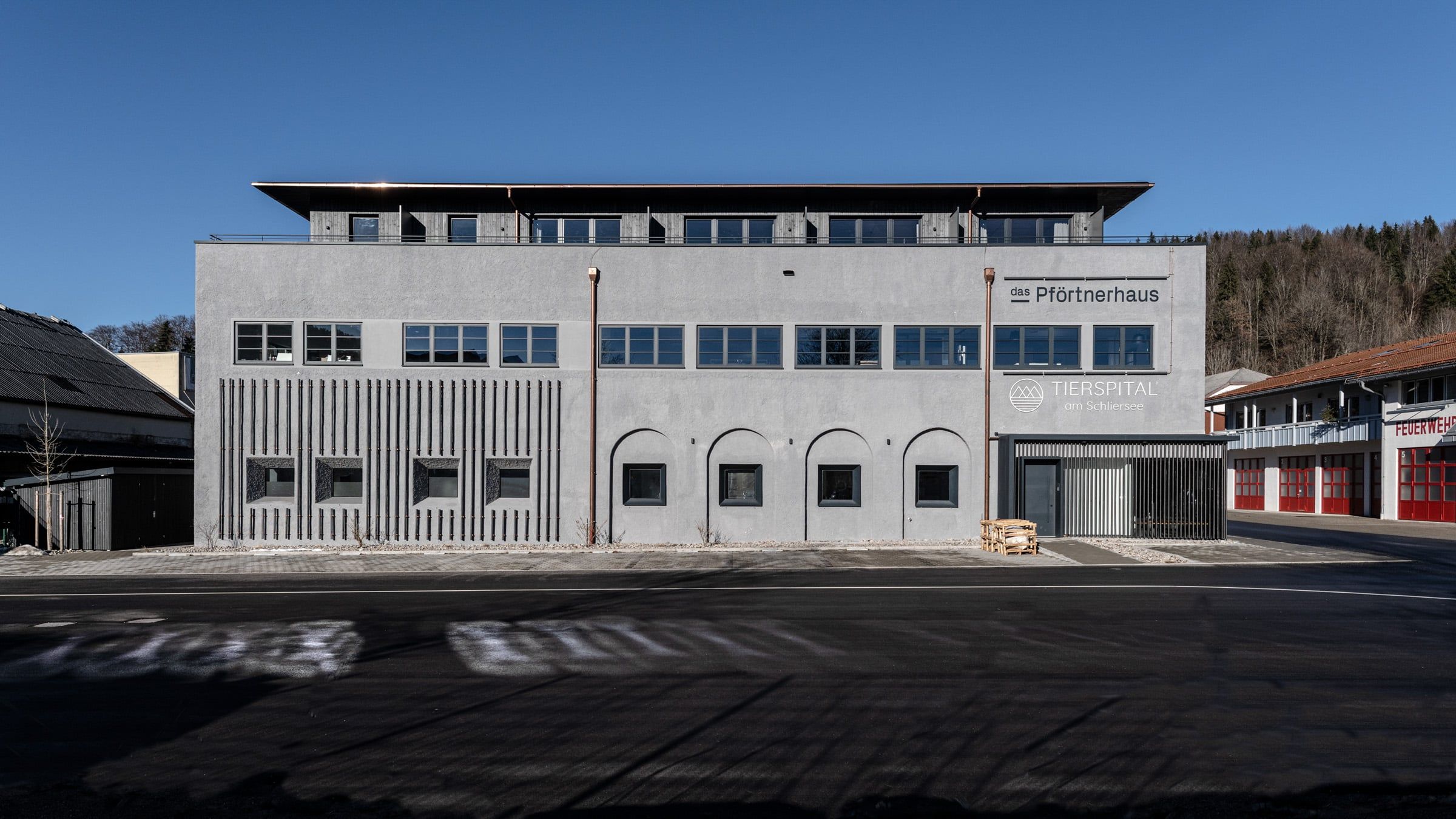
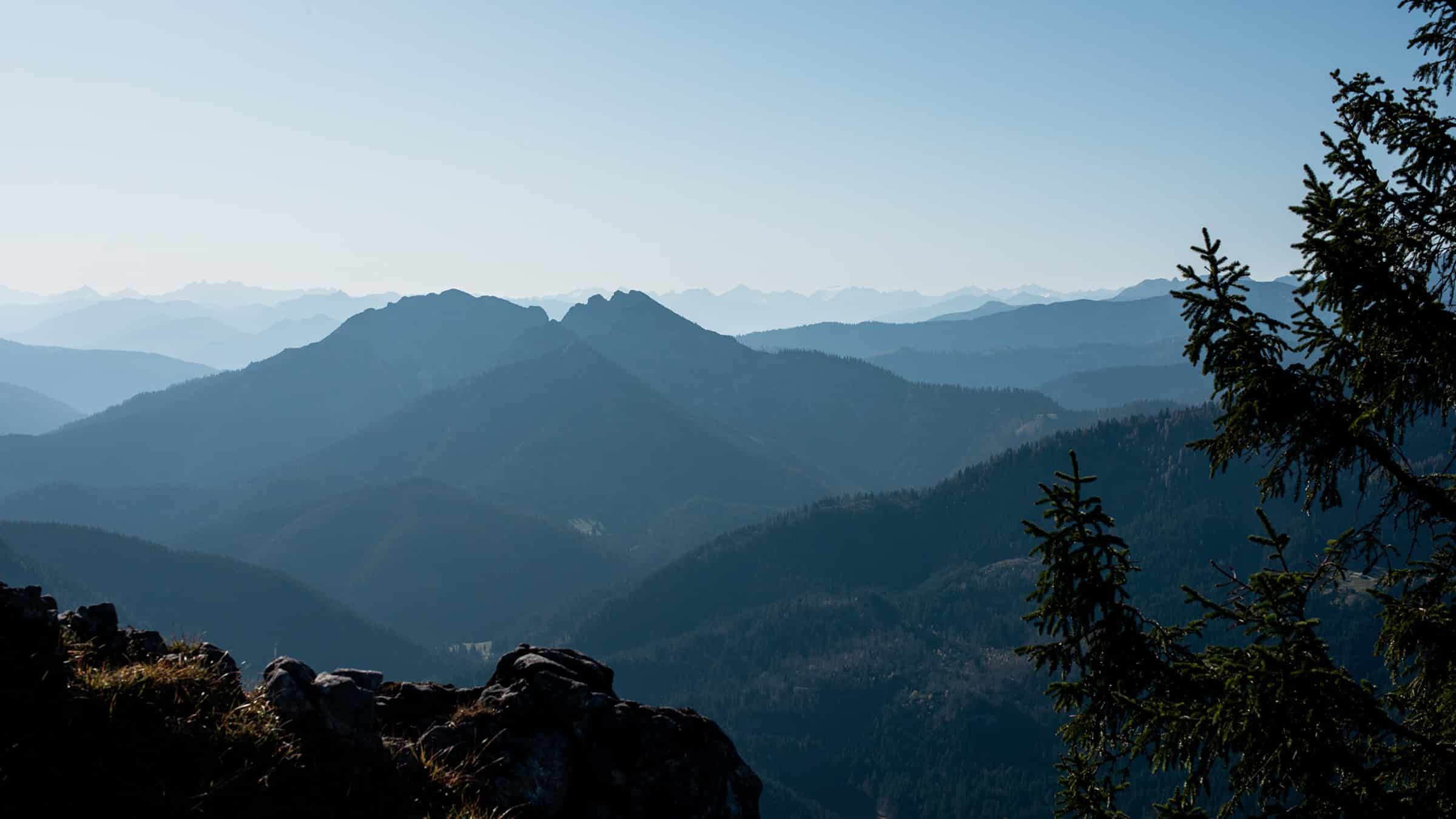
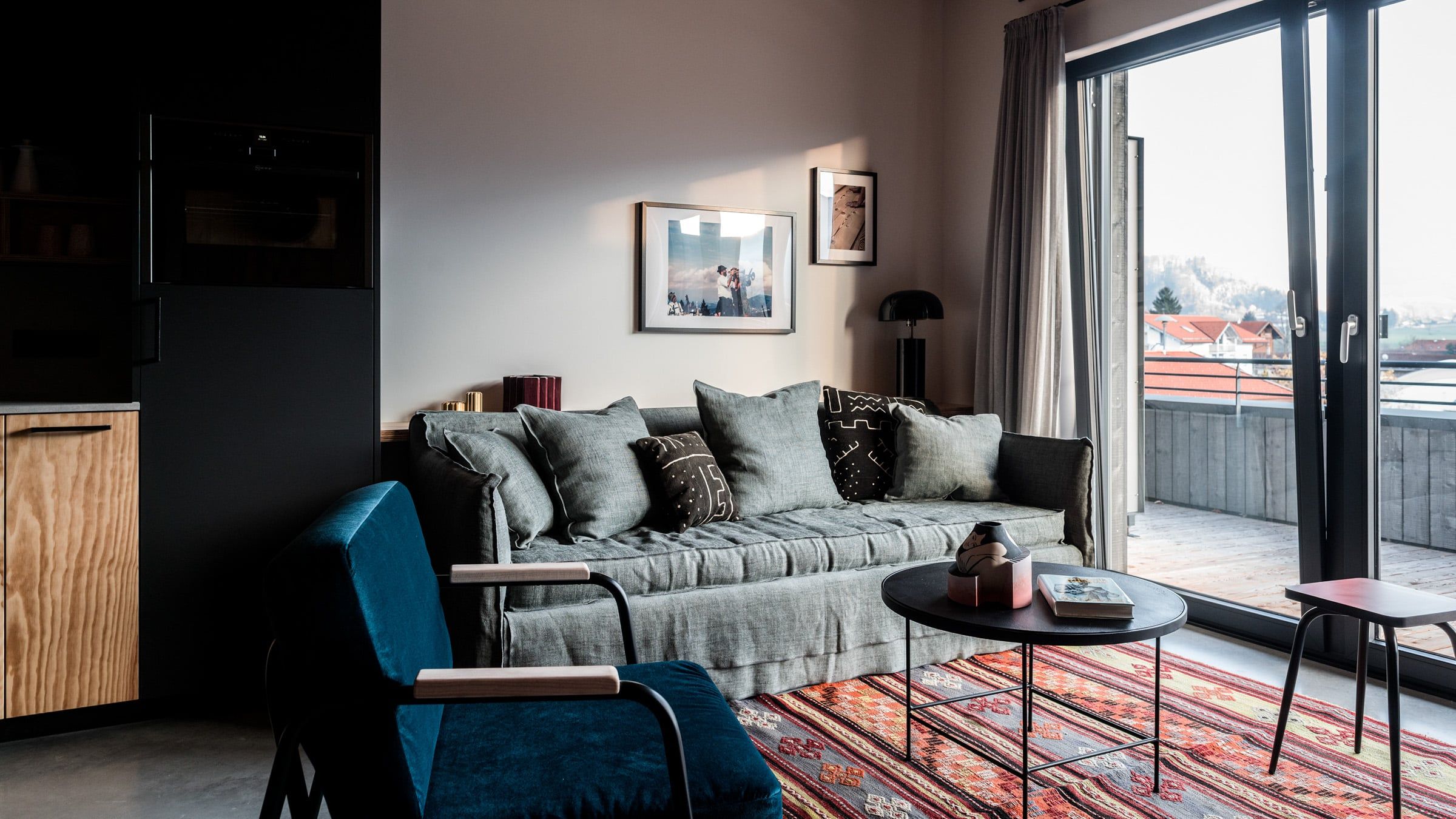
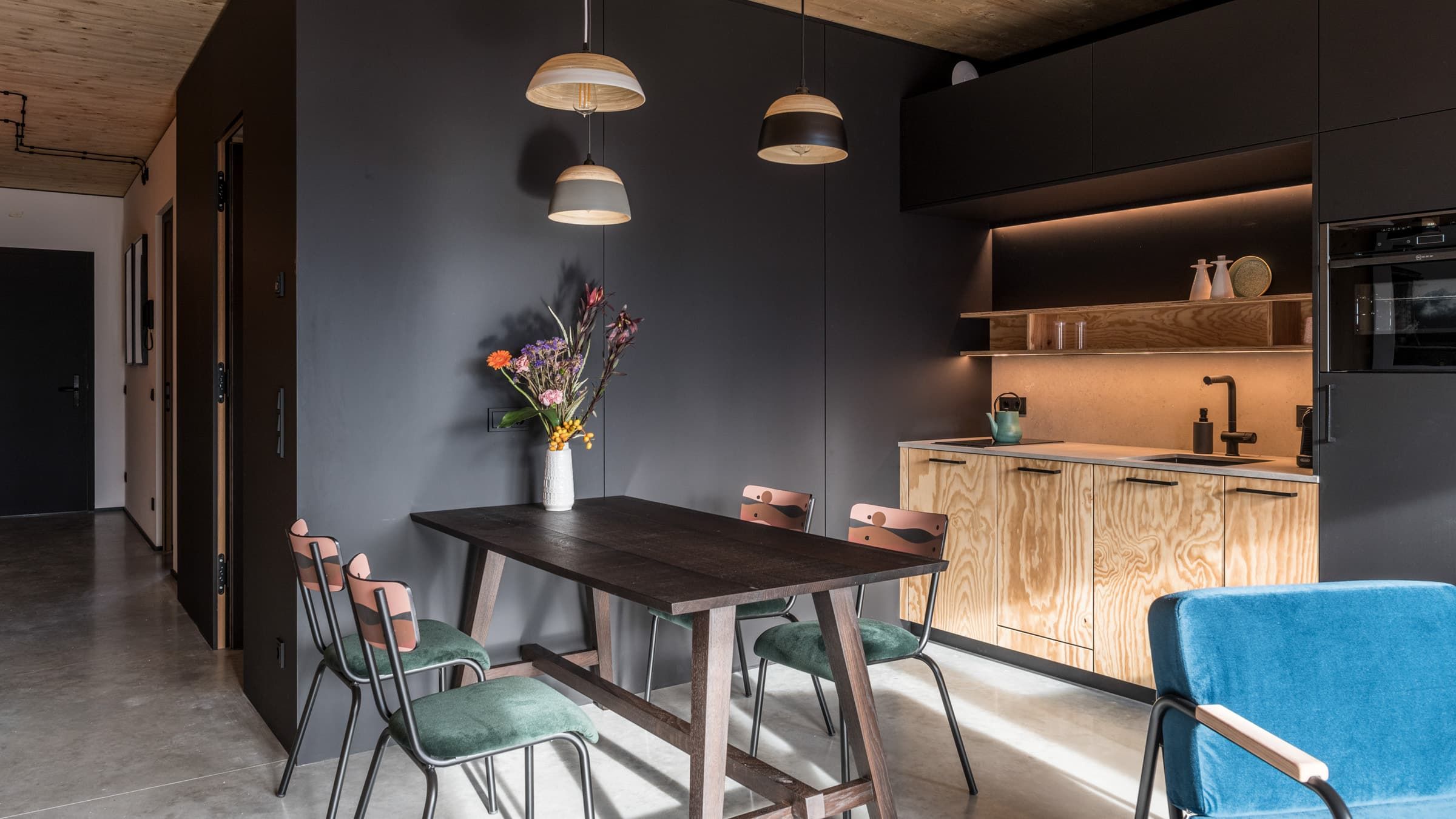
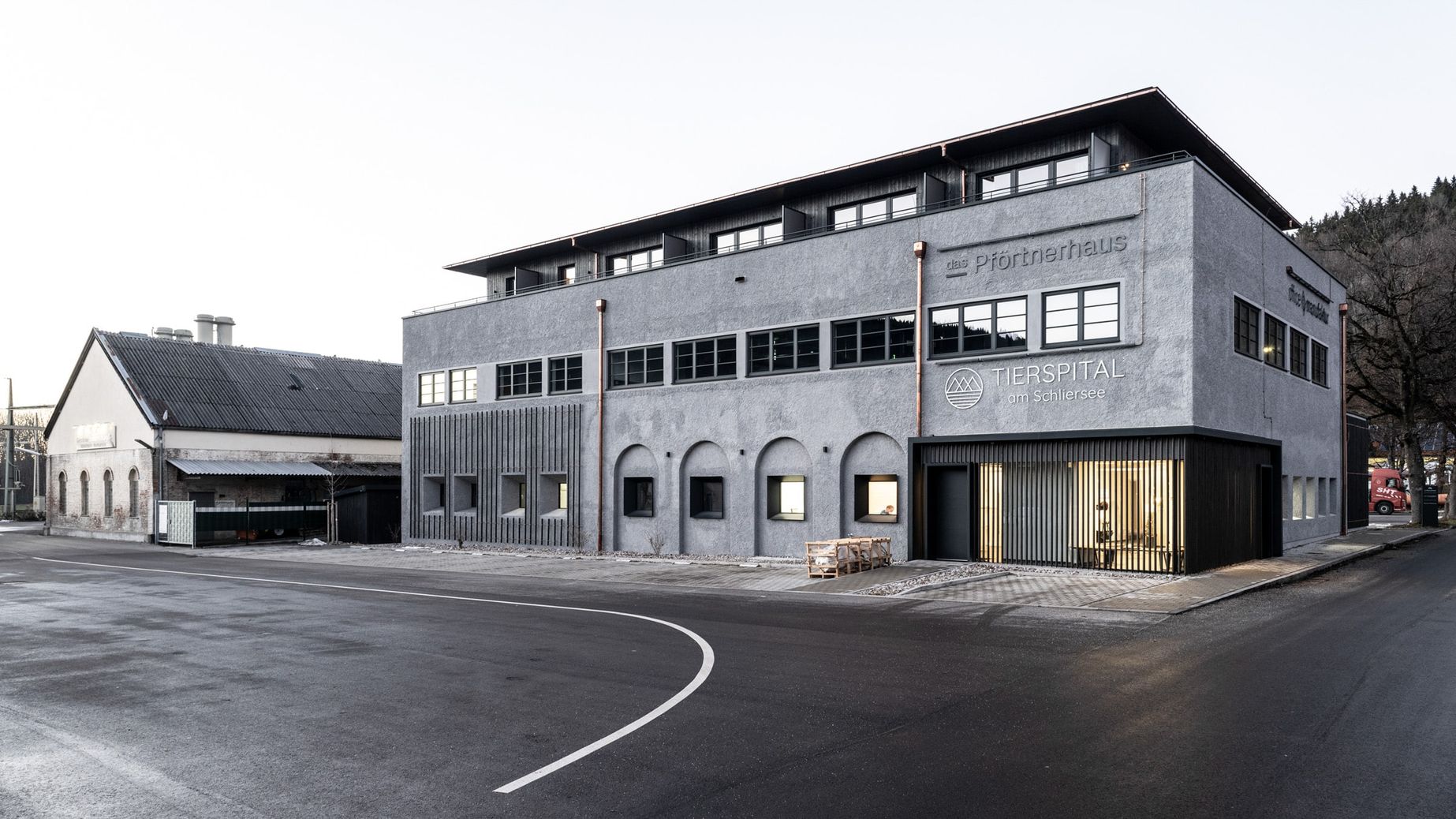
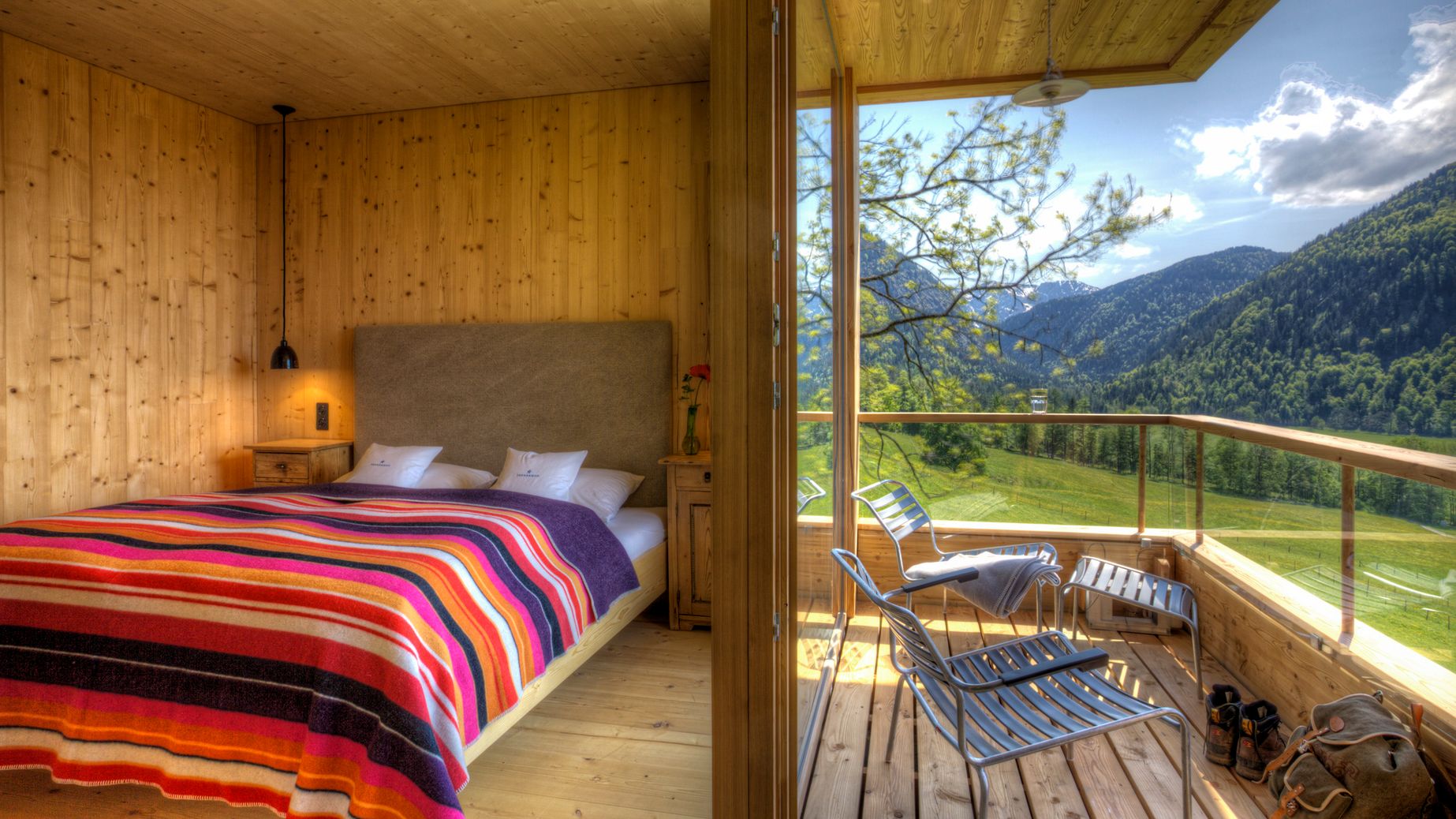
Once the entrance to the region’s pitch-coal mine, the industrial-looking building is now an unusual yet laid-back retreat that combines its Brutalist character with contemporary cool and a generous sense of comfort. As part of its complete refurbishment, the former gatehouse was extended with a locally sourced spruce structure accommodating four individual holiday apartments that invite you to stay a little longer. There is not only plenty of space to stretch out and take a deep breath, but you can also enjoy sweeping views.
Pedal boats and castles
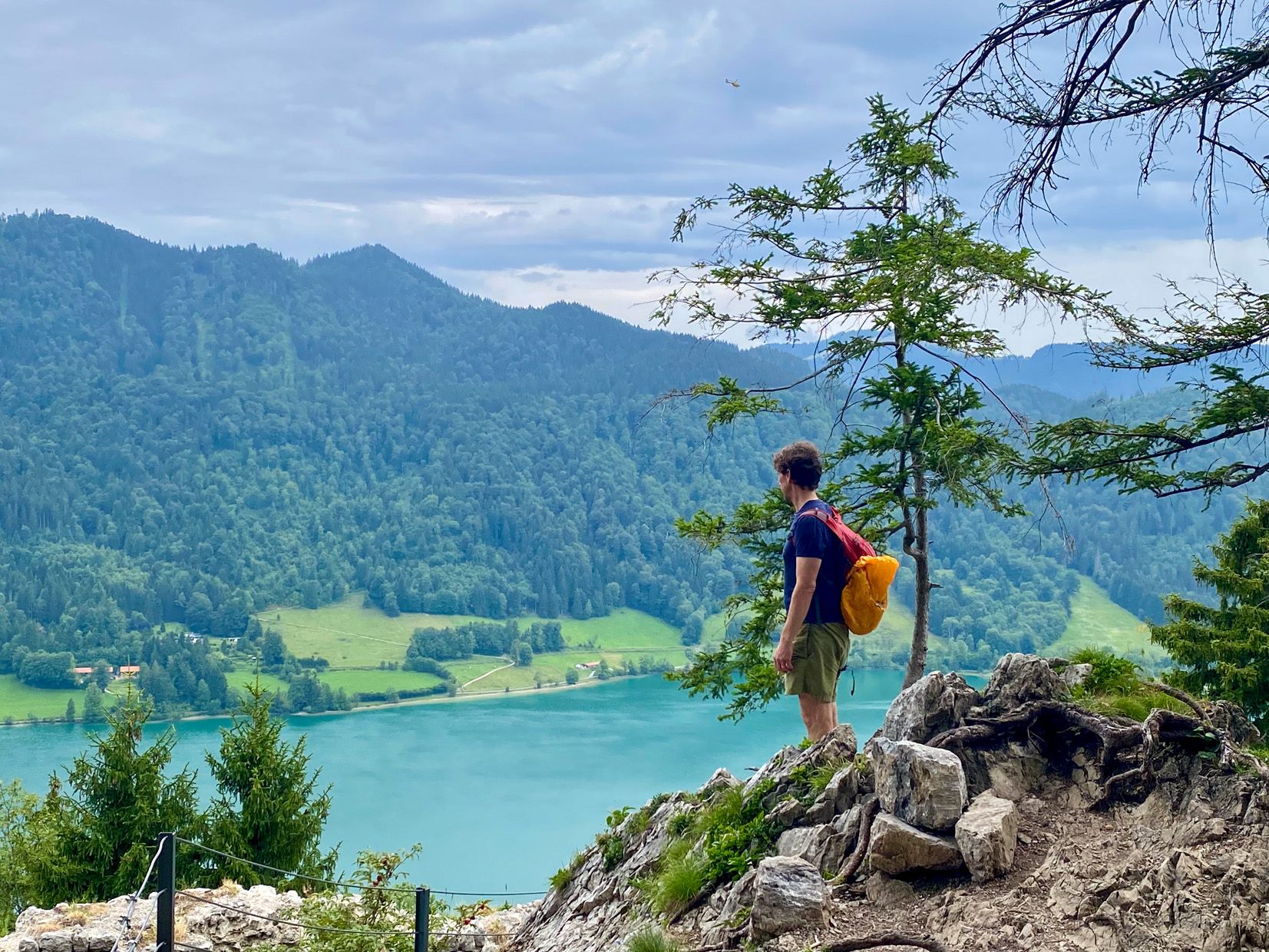
Before setting off on the final two stages – those feeling energetic can, of course, make faster progress – don’t miss the chance to jump into Lake Schliersee and take in the peaks of the Mangfall Mountains, together with the island of Wörth, in glorious widescreen. As you float in the clear water and admire the panorama of Brecherspitz, Bodenschneid, Jägerkamp and Aiplspitz, cafés with retro-style awnings, lively lidos and pedal-boat hire stands line the lakeside promenade in the background, unmistakable signs of the resort’s long tourist tradition. Passing centuries-old log architecture, late nineteenth-century summer-retreat villas, Upper Bavarian country-house style and a local whisky distillery, the route then leads back out across green meadows towards Bayrischzell, the final destination of our walking journey. Here, too, there are numerous options . Whether you prefer a gentler ascent through shady woodland or steeper paths with views of the lake, various apps will find a suitable route for everyone.
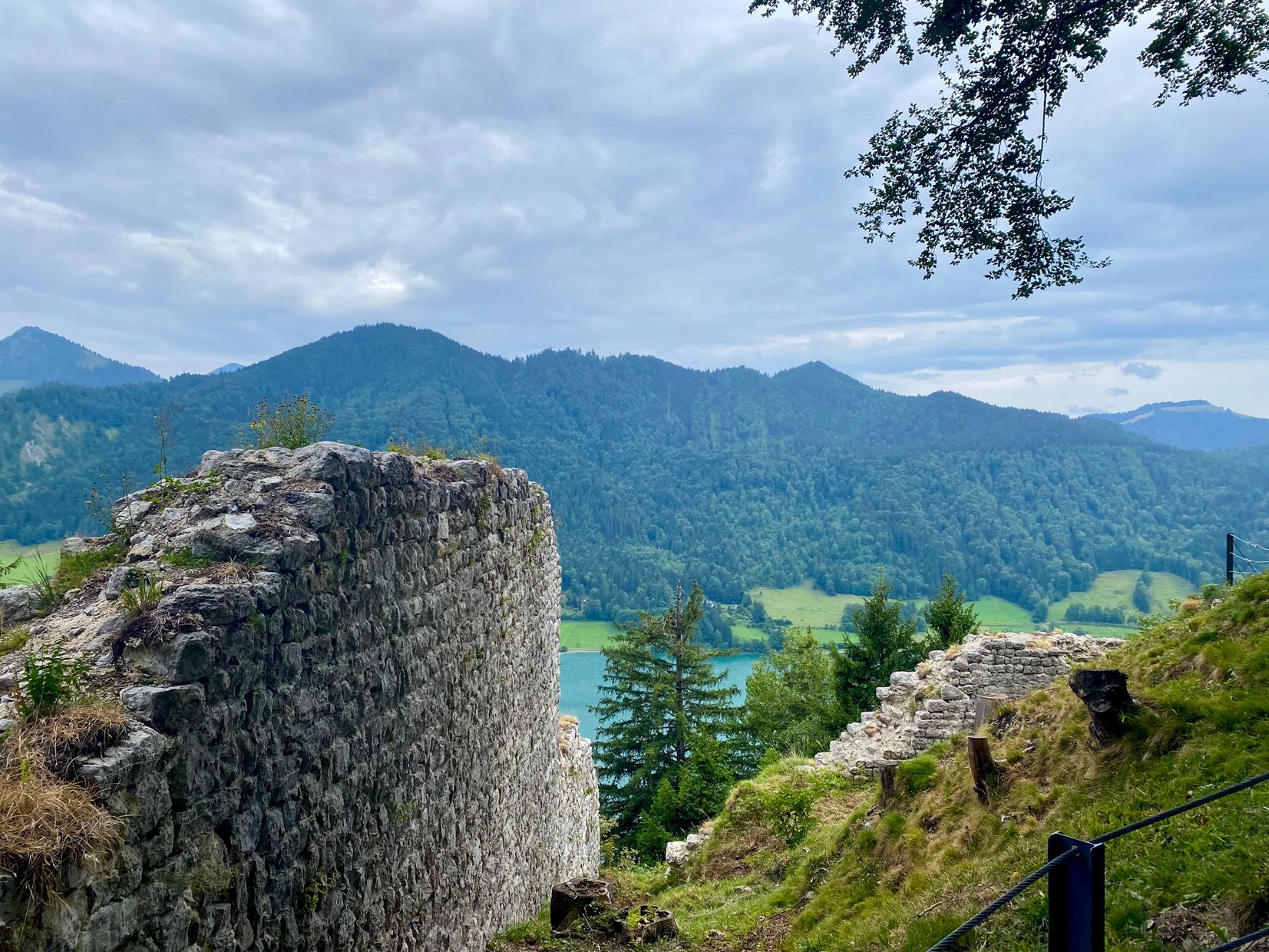
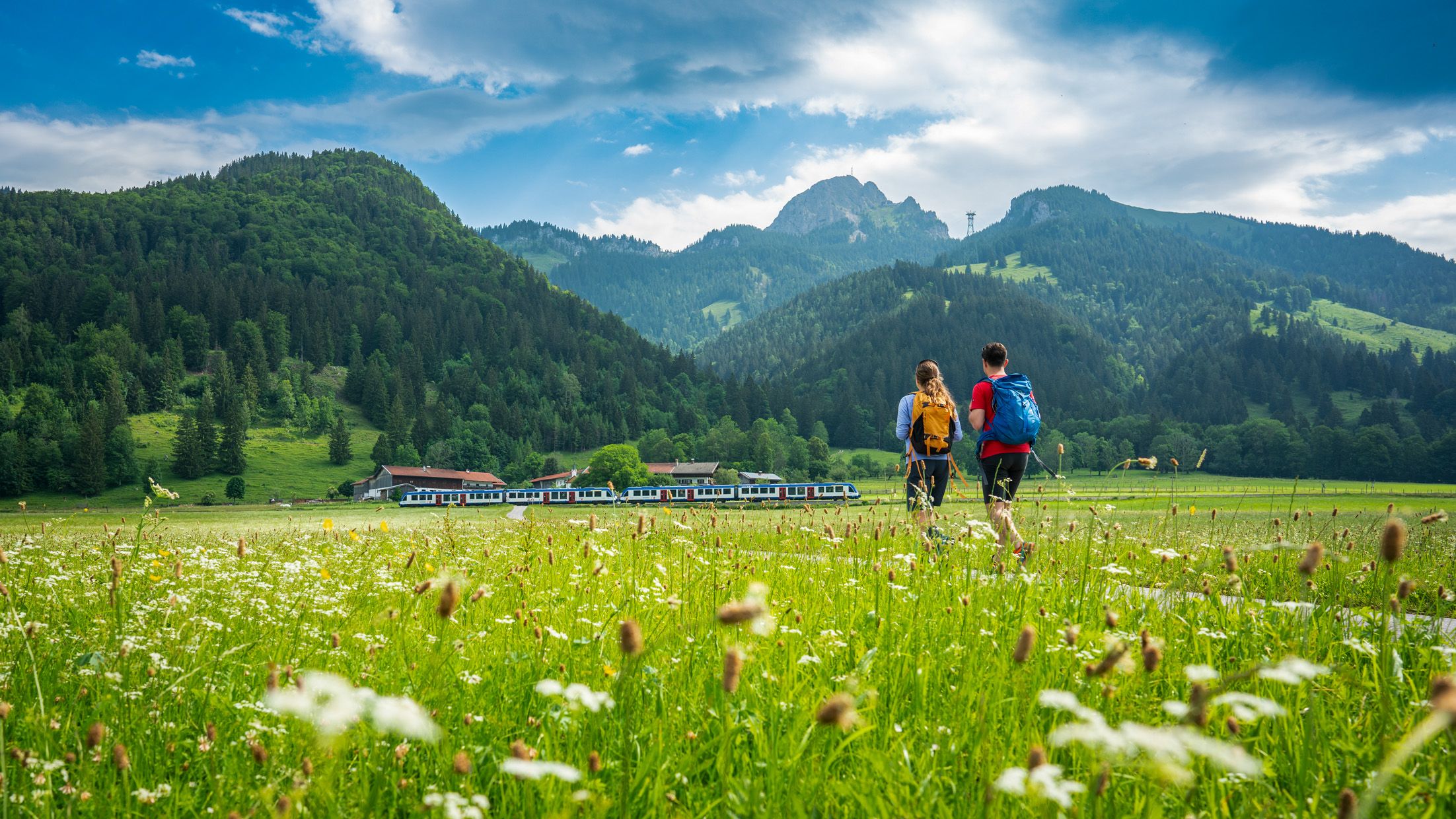
Those who take the path along the western flank of the Leitnerberg towards Neuhaus pass the thirteenth-century ruins of Hohenwaldeck Castle, around two hundred metres above the lake. The striking masonry fragments provide the perfect viewpoint for a snack break with a journey back in time. Enjoy one last look across the lake before heading downhill into the valley again. Once at the bottom, there are several routes to choose from: keen walkers can tackle the final fifteen kilometres in one go, following the Upper Leitzach Valley with its wooded slopes and idyllic meadows along the stream all the way to Bayrischzell. Those with tired legs can simply hop aboard the little regional train in Neuhaus or Hammer near Fischbachau and travel leisurely through the picture-postcard scenery. And anyone looking for one more stop along the way can spend the night in Fischbachau, a village steeped in tradition where, alongside the well-known Maria Birkenstein pilgrimage site and St Martin’s Minster, you can also make a pilgrimage to Café Winklstüberl for its legendarily enormous slices of cake. Queues on public holidays cannot be ruled out.
Getting to the essence
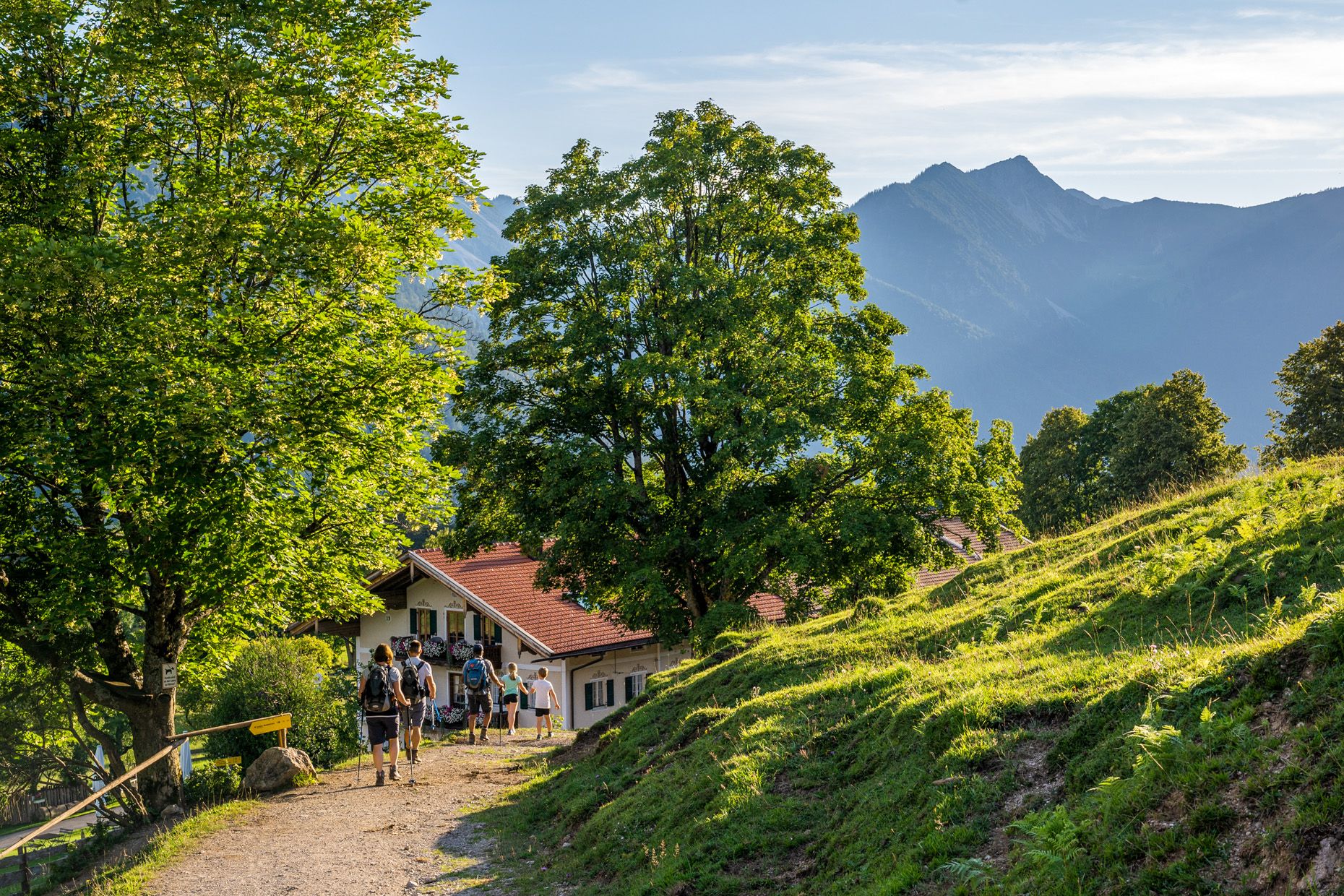
Almost there. Whichever route you take to approach the climatic health resort of Bayrischzell beneath the Wendelstein, there is plenty to look forward to. And yes, plenty to be proud of. After all, you have covered a considerable distance and accumulated a wealth of experiences along the way. Anyone who wants to go one step deeper on this slow journey through the landscape and towards the self should head straight for the Tannerhof, which combines nature-centred architecture with a focus on health and brings the journey to what feels like its logical conclusion – complete with creative regional cuisine (the cake alone is a feast!), numerous opportunities to unwind and a rich cultural programme.
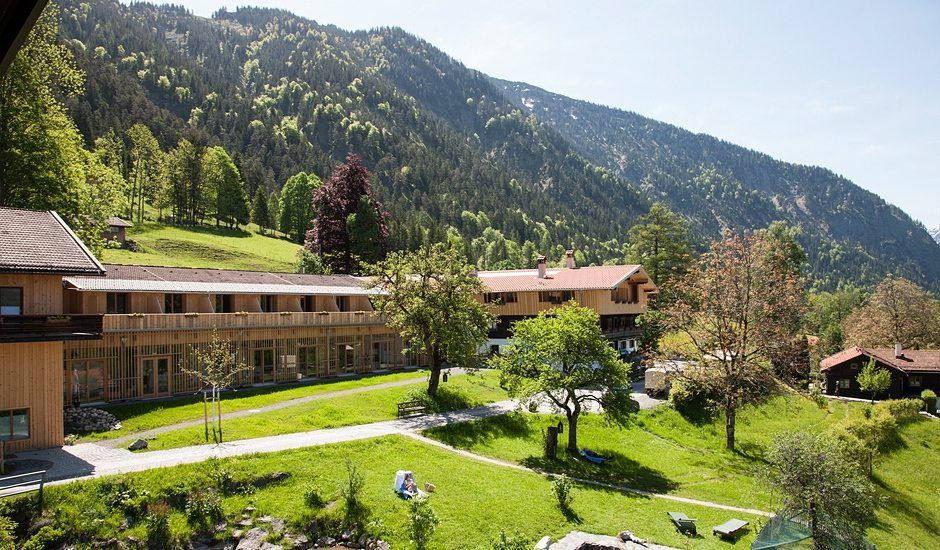
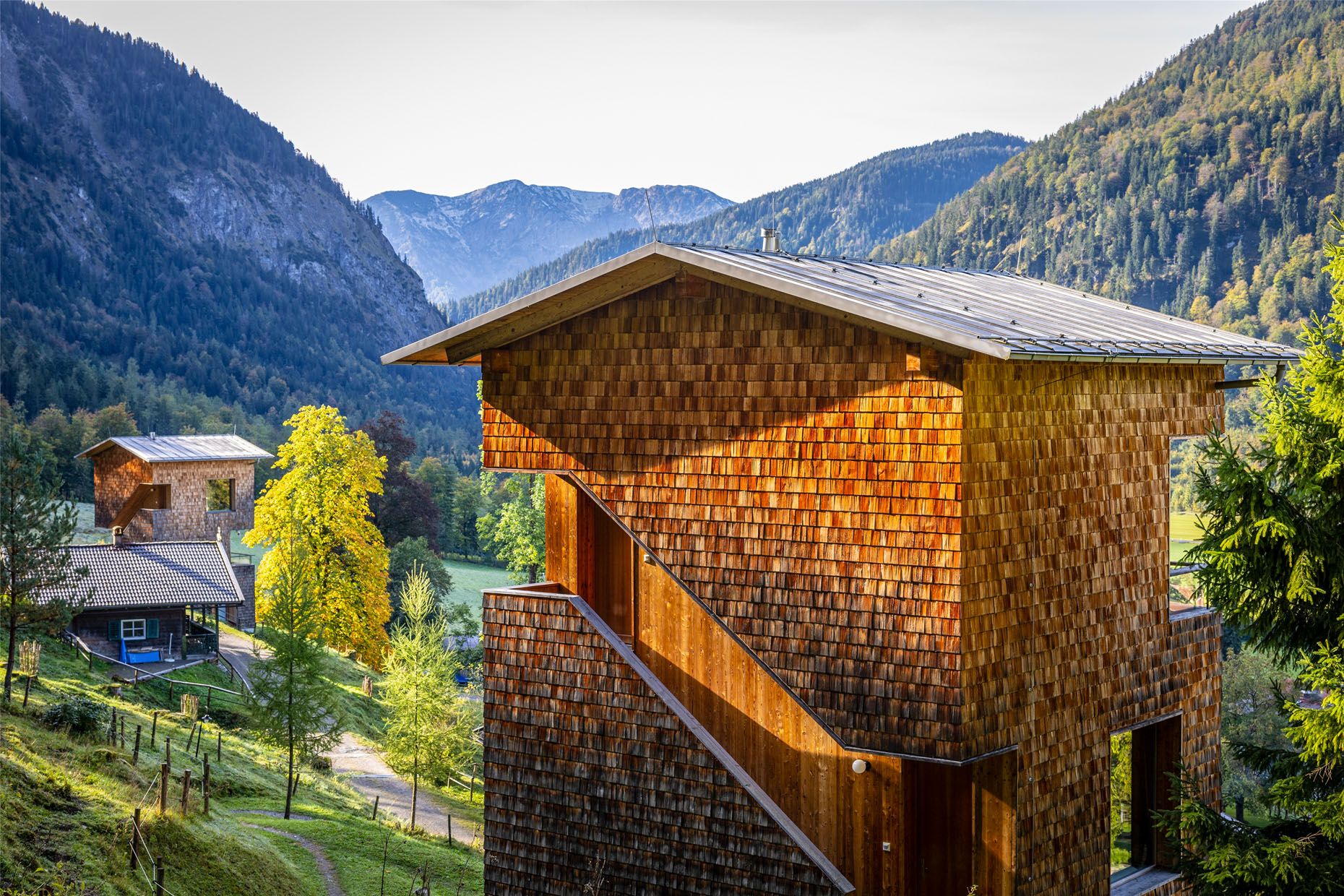
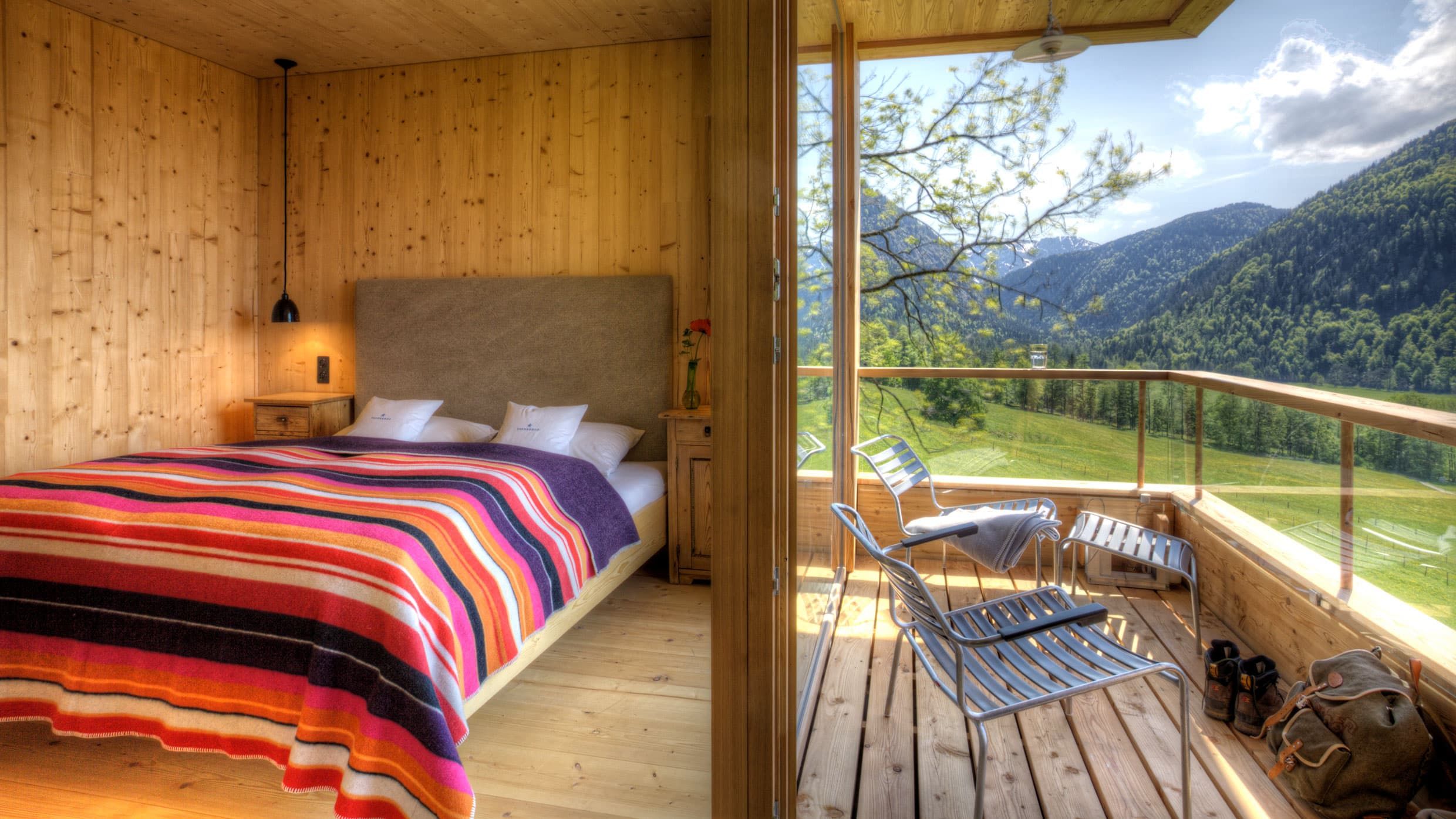
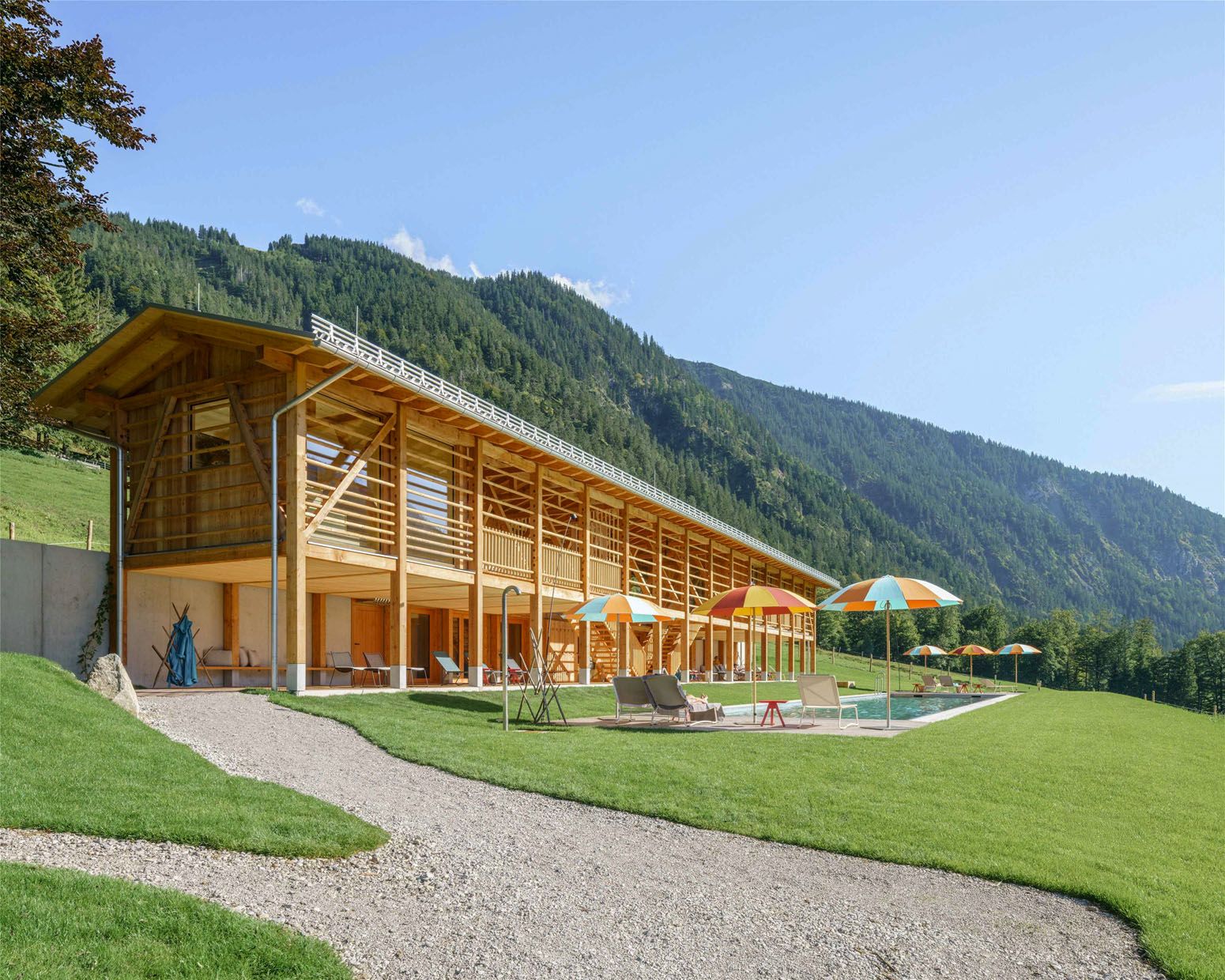
Even Florian Nagler brings the journey full circle here: he is responsible for the Hüttentürme, the Orangerie and the Badeharpfe. The latter is a simple, light-filled space for regeneration in the form of a long agricultural building, where you can reflect on the days just passed – between a muscle-relaxing sauna infusion and a few lengths in the cold natural pool. “Mensch, werde wesentlich” – “Man, become essential” – is the vision behind this special world. There is little more one could ask of a journey like this.
Text: Julia Hauch
Photos: Jakobskapelle von Michele de Lucchi © Thomas Koller (Cover image); Bad Aibling Innenstadt © AIB Kur GmbH; Alte Spinnerei © Xaver Bühler; B&O Bau ForschungsQuartier © B&O Bau ForschungsQuartier; Forschungshäuser © Sebastian Schels; Wandaufbau-Forschungshäuser © B&O Bau ForschungsQuartier; B&O Bau ForschungsQuartier © Sebastian Schels; Heizwerk B&O Bau ForschungsQuartier © Matthias Aust; B&O Bau ForschungsQuartier © B&O Bau ForschungsQuartier; Berbling Kirche außen © Andreas Jacob, AIB Kur GmbH; Berbling Hof © Andreas Jacob, AIB Kur GmbH; Willing Kirche © Andreas Jacob, AIB Kur GmbH; Jakobskapelle von Michele de Lucchi © Thomas Koller; Pförtner Penthouse © Sofie Latour; Blick auf den Schliersee © Julia Hauch; Burgruine Hohenwaldeck © Julia Hauch; Bayrischzell © Dietmar Denge; Tannerhof Alte Tann © Rainer Hoffmann; Tannerhof Hüttenturm © Hansi Heckmair; Tannerhof Interior © Rainer Hoffmann; Tannerhof Badeharpfe © Sebastian-Schels
More about Florian Nagler


0 Comments