
Between the Elements
What happens when you escape the daily breathlessness of mundane life, and the tension unravels like a knotted thread? Amidst mythic nature, kind souls, and the timeless elements, Fowlescombe Farm in the county of Devon follows the whisper of its history and nature’s rhythm.
AIR
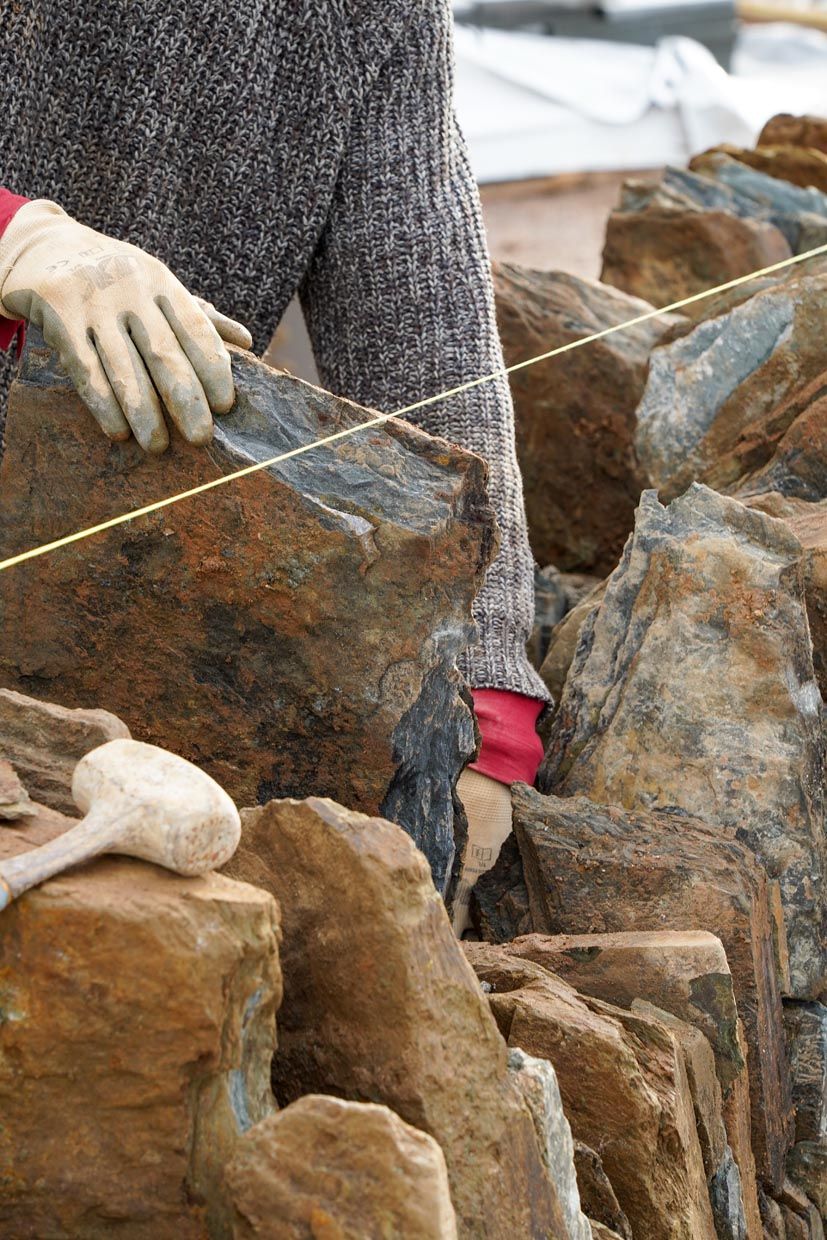
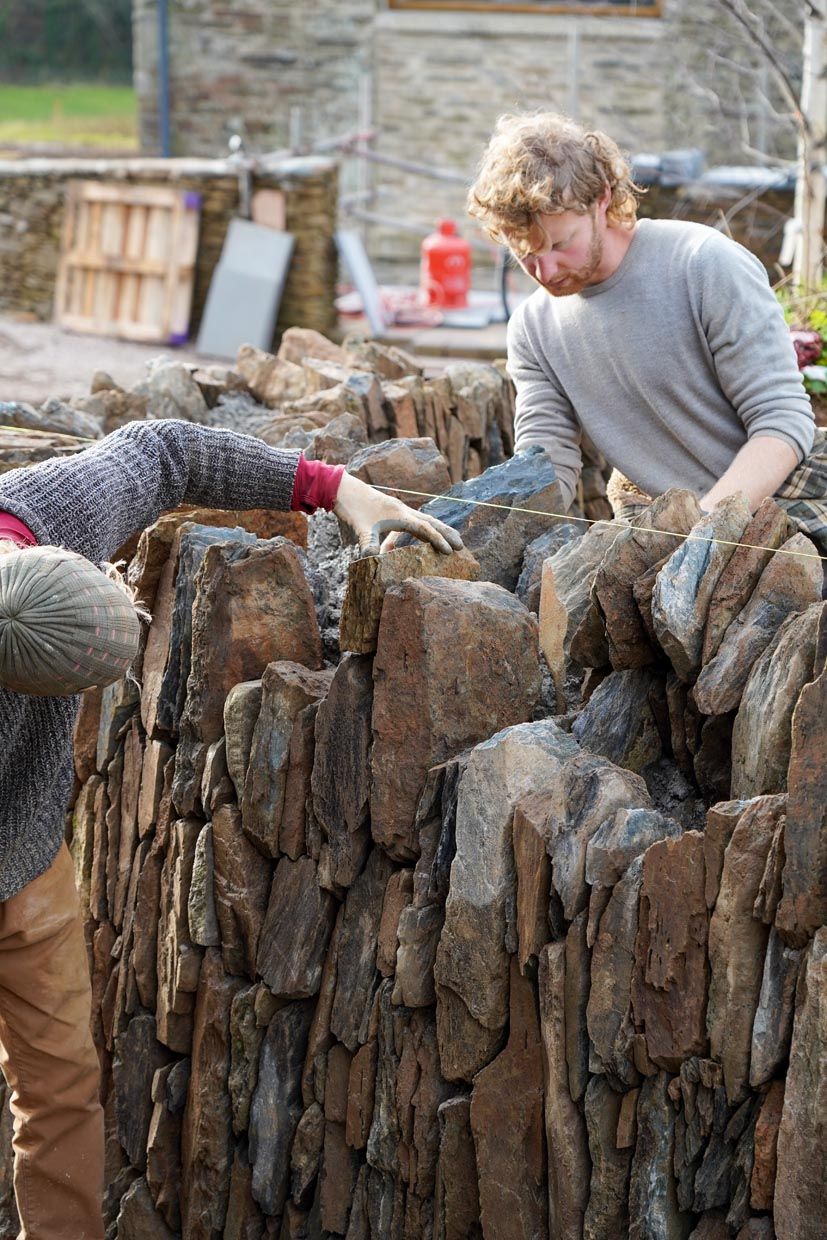
Both the rising mist and steaming tea cast delicate veils in the clear morning air. Meanwhile, a tableclothladen with fresh pastries lies spread out on the completed dry-stone wall. Mark looks around proudly and thanks his assistants — four guests of Fowlescombe Farm who set out early that morning with the master stonemason to repair some of the property’s characteristic stone walls, to learn more about the region’s traditional craft, and at the same time to leave their own mark on this ever-changing landscape. Hand in hand, stone upon stone, all salvaged from the farm’s own quarry.
STONE
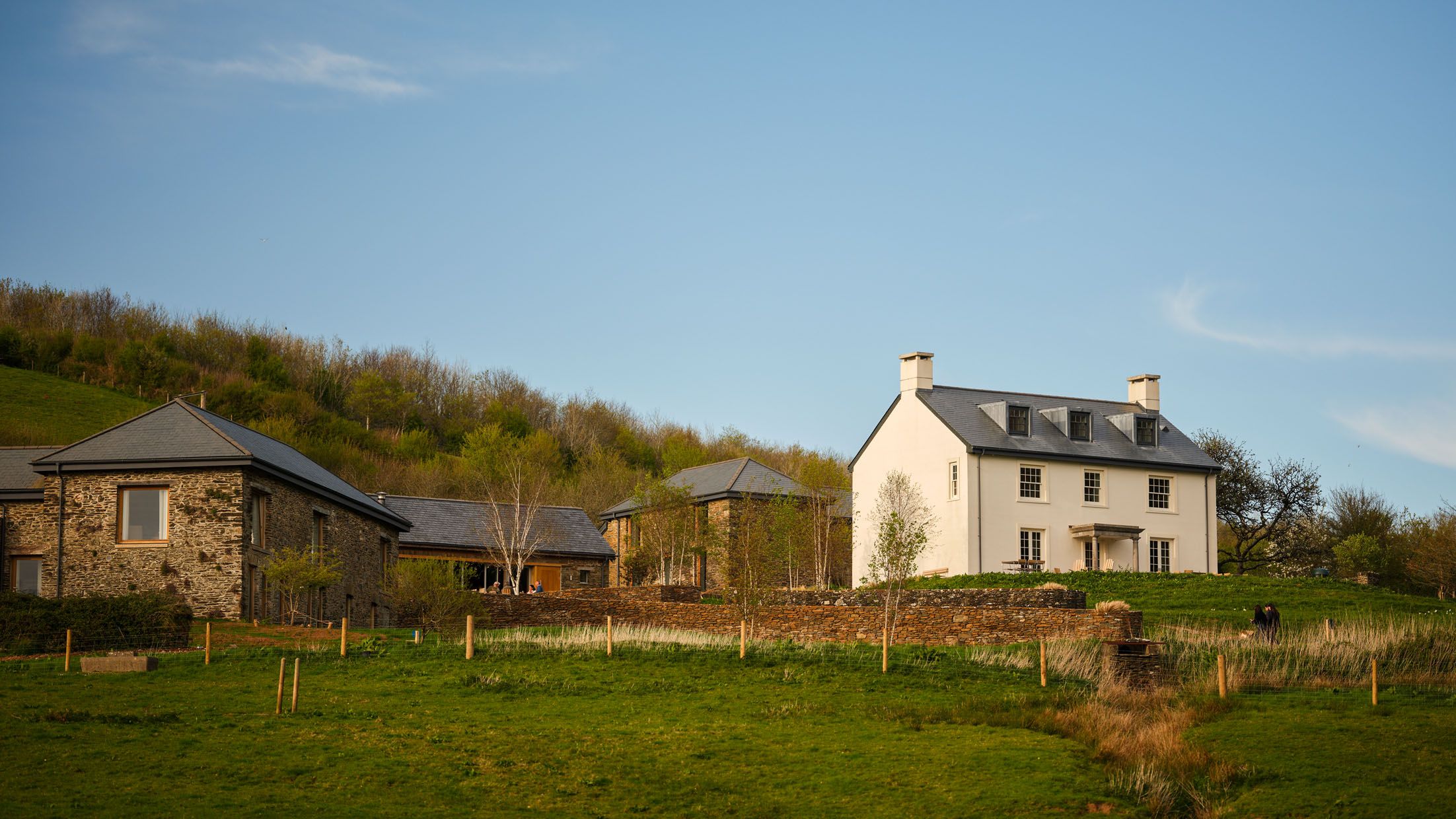
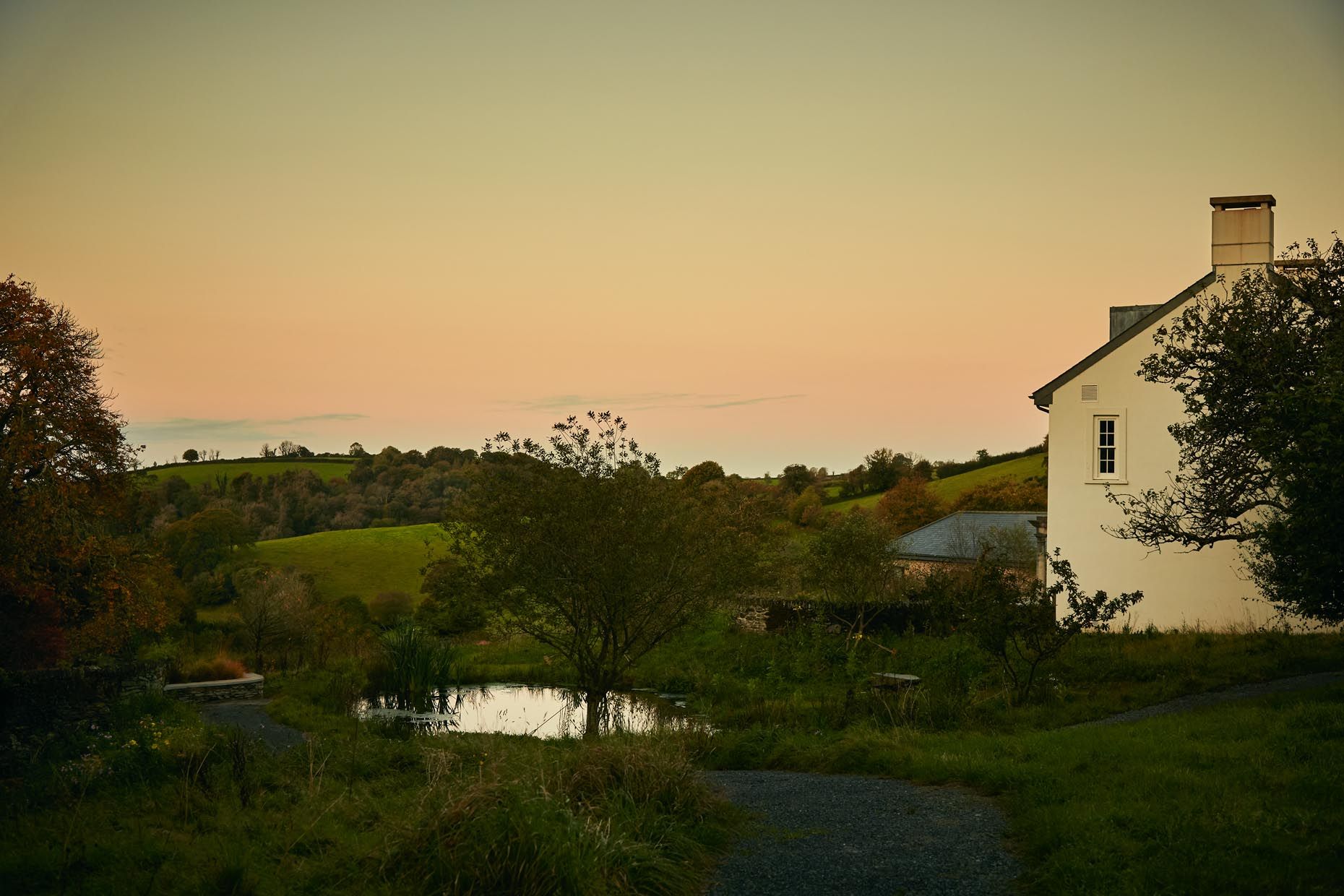
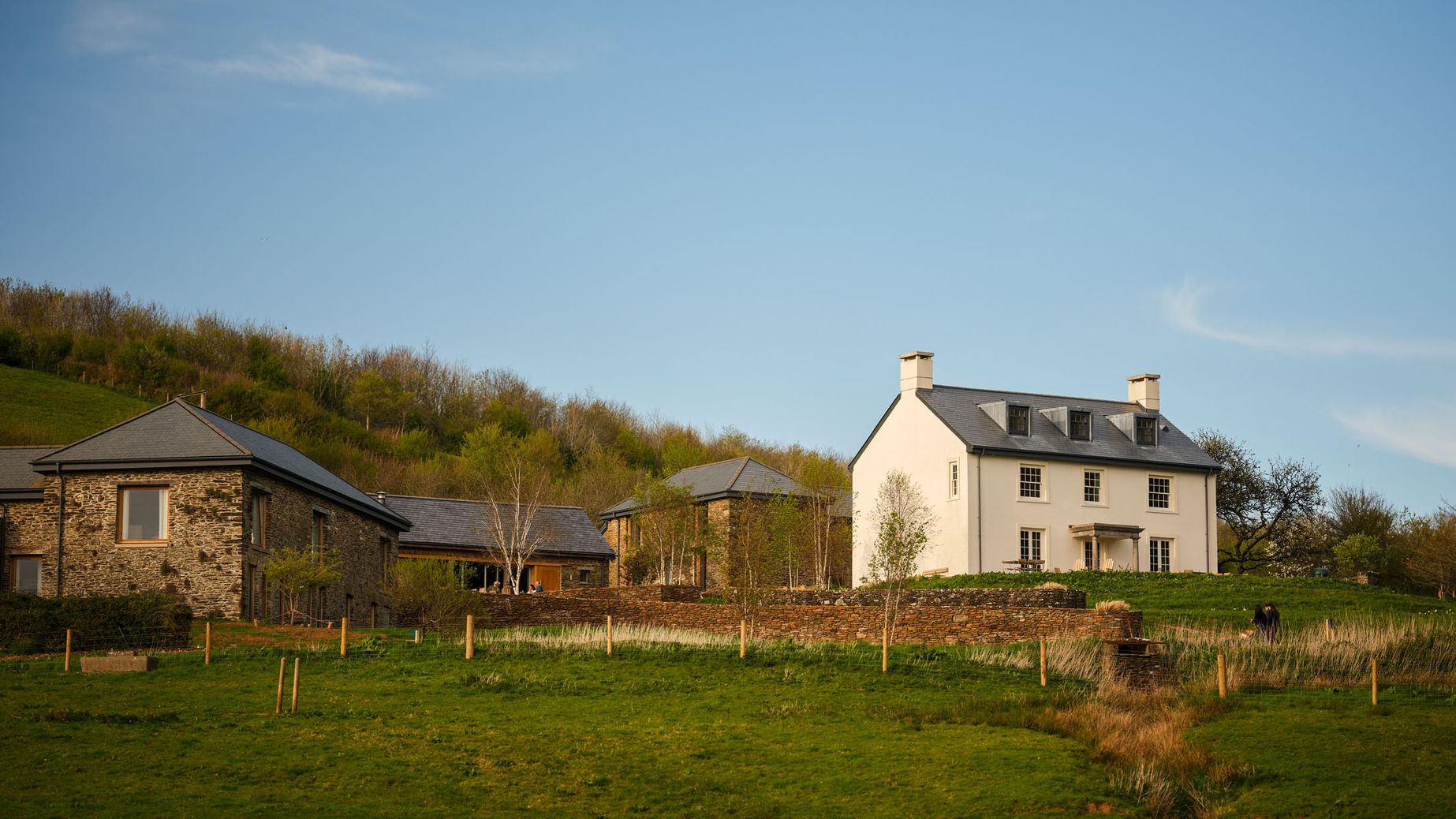
Barry is still sleeping. After all, it’s clearly too early for a barn owl, even if he does add the final enchanting touch to the ivy-covered ruin. It is a dramatic scene set amidst a patchwork of fields and woodlands, visible from some of the suites at Fowlescombe Farm. Built in 1537 by Thomas Fowell — whose influential family owned large parts of Dartmoor — the imposing manor house, constructed from the estate’s quarry,was even said to have served as the inspiration for Sir Arthur ConanDoyle’s novel, The Hound of the Baskervilles. Reclaimed by nature after it burned down in 1907, it is a space replete with history and stories, much like the Victorian farmhouse with its stone barns 300 metres further up the valley, Fowlescombe Farm.
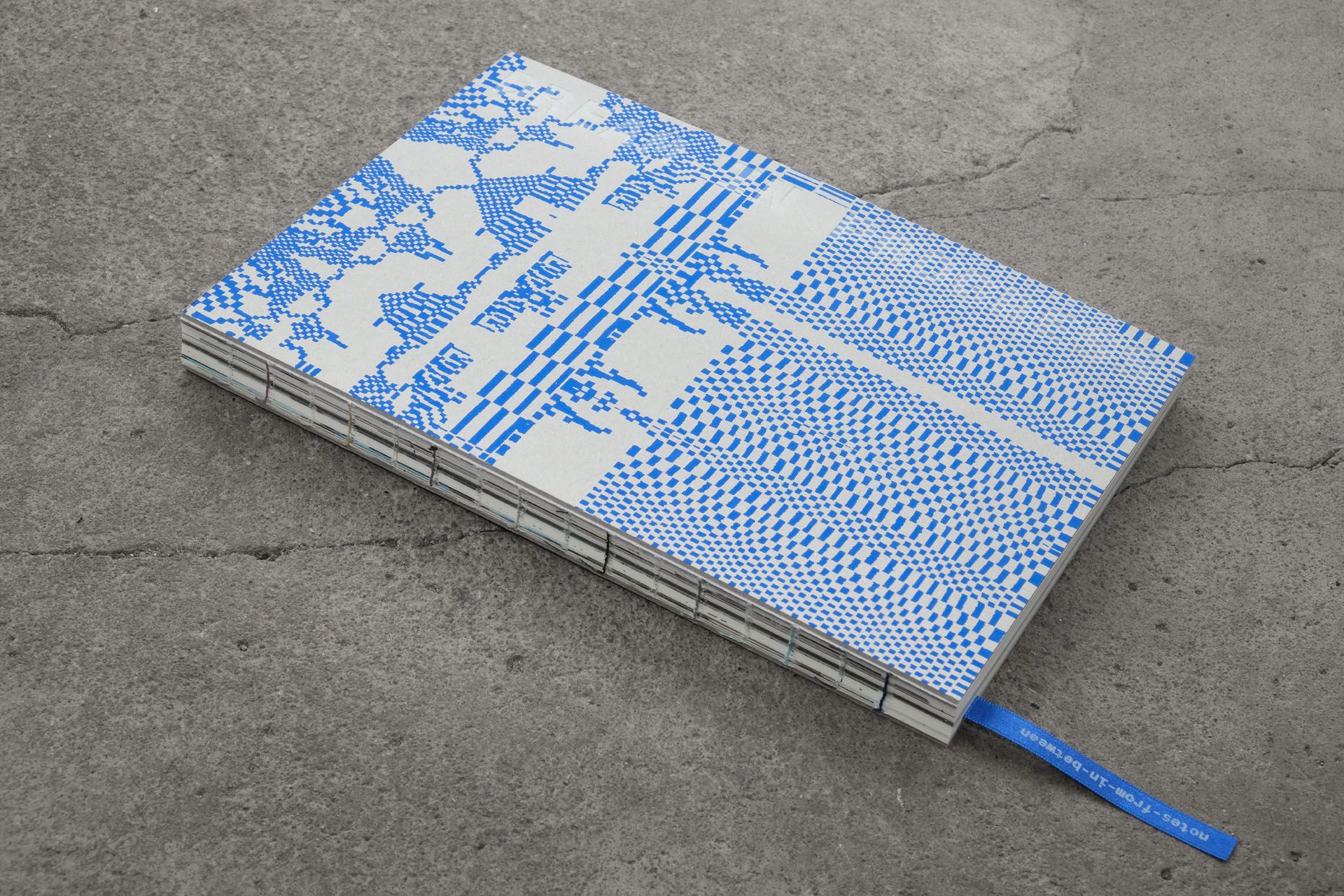
This article first appeared in our book Dream in Progress.
The book is a homage to those bold enough to leap into the unknown and trust serendipity. Sixteen distinctive projects offer a multifaceted plot of transformation — all coaxing you to see differently. Featuring a limited edition by artist Jana Gunstheimer, this playful atlas is ultimately an earnest invitation: Dream boldly and enjoy the journey!
You can purchase the book at any bookshop or directly from our online shop.
WATER
“When you are down here in the valley,the world completely disappears”, observes Caitlin Owens, the current owner. With ancient trees, woodlands, birds, and ponds, this secluded spot nestles in the foothills of Dartmoor National Park. “Beautiful! Even thelight is always changing. And at the same time, we are only a few kilometres away from the wild beaches and spectacular cliffs of the coast”. At the moment she is loading blankets and picnic baskets into a van to take a morning dip at Bigbury Beach together with a friend down from Londonand a few other guests. The sense of freedom Caitlin rediscovered in Fowlescombe is one which she, her life partner Paul Glade, and the unique members of their team want to pass on to others.
Sometimes it is hard to explain why a hotel’s atmosphere lingers in one’s memory. Is it the door or the teacup, the tea itself or the way it is served? For me, architecture is the interaction between all of these elements.
TIME
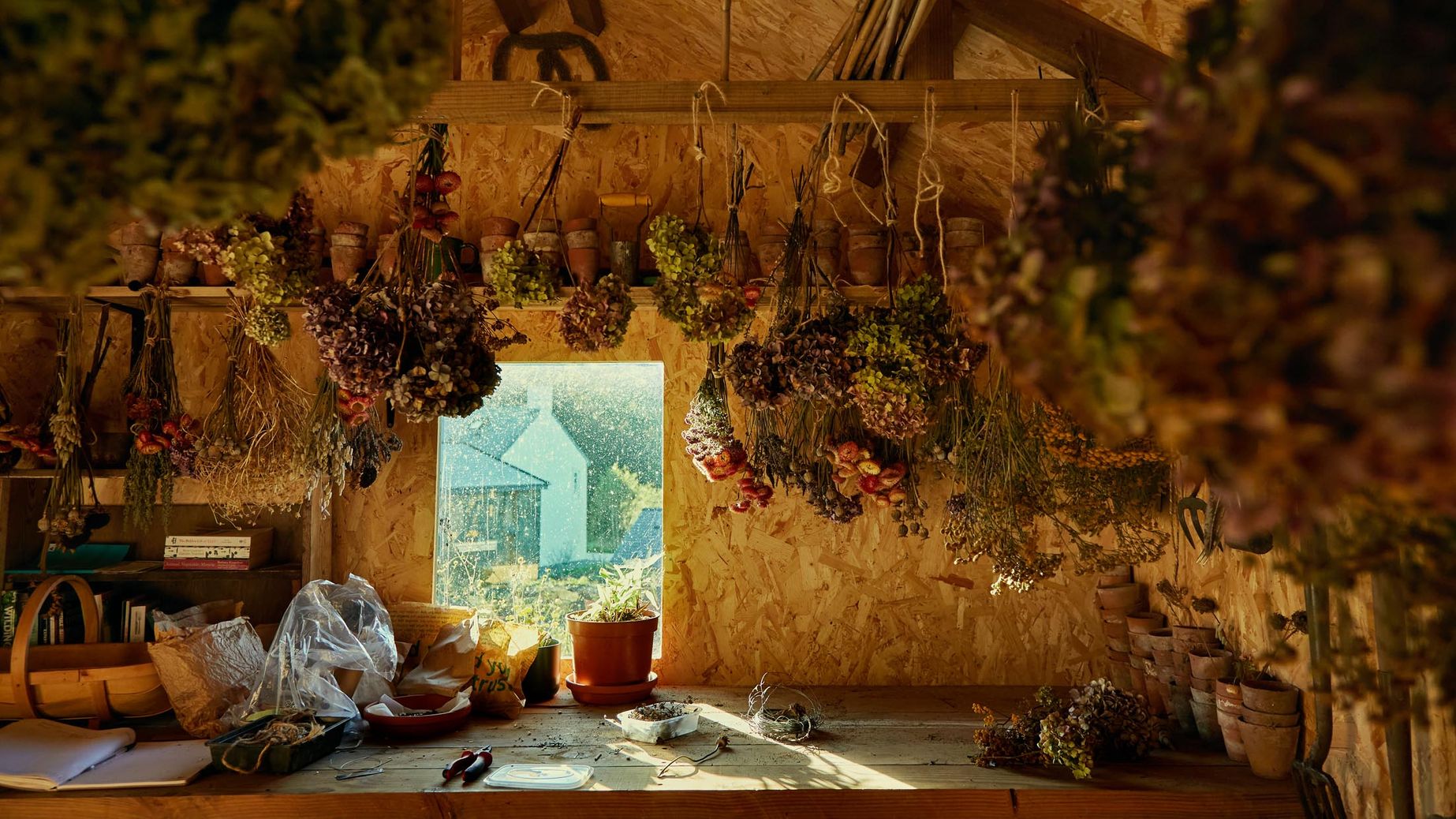
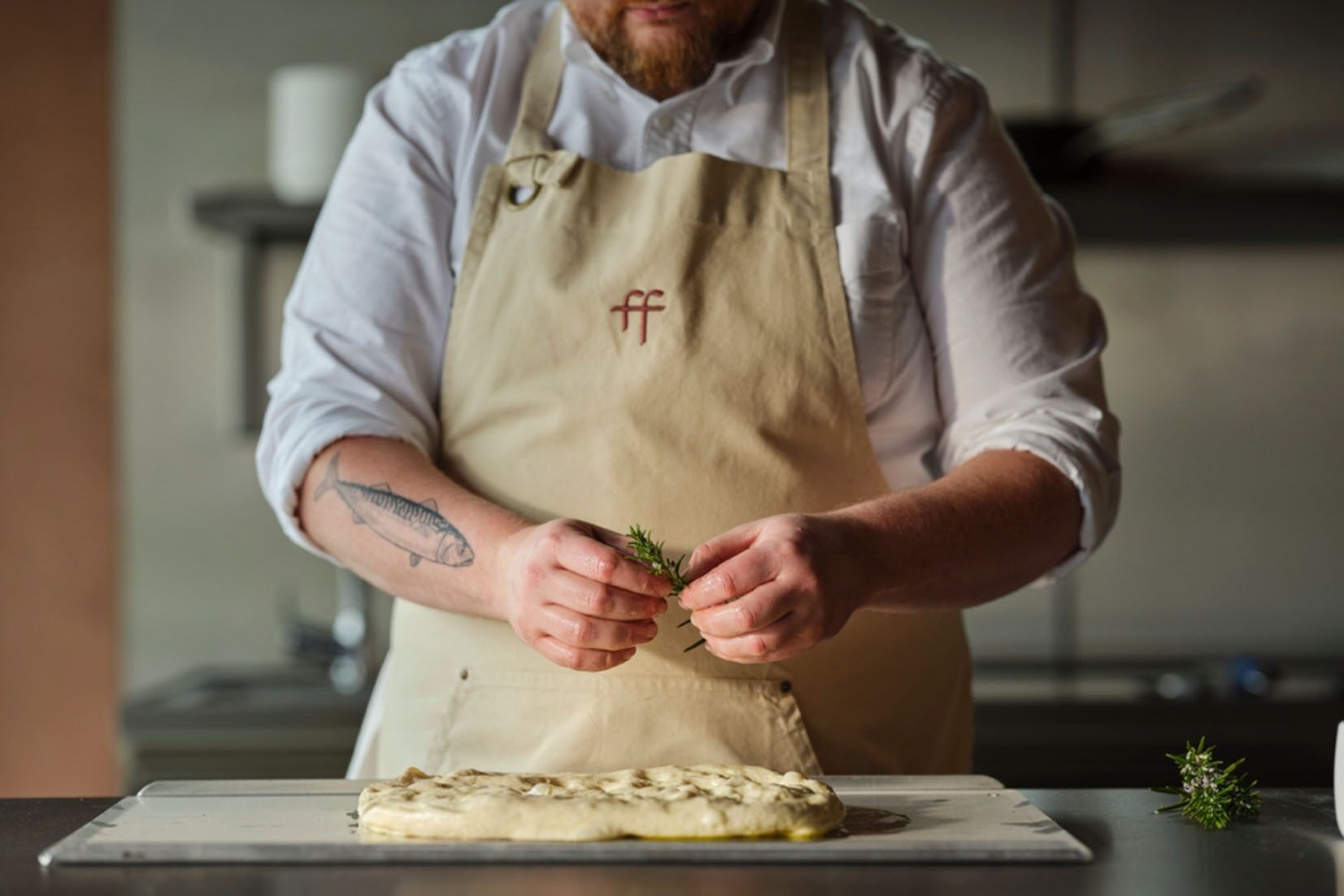
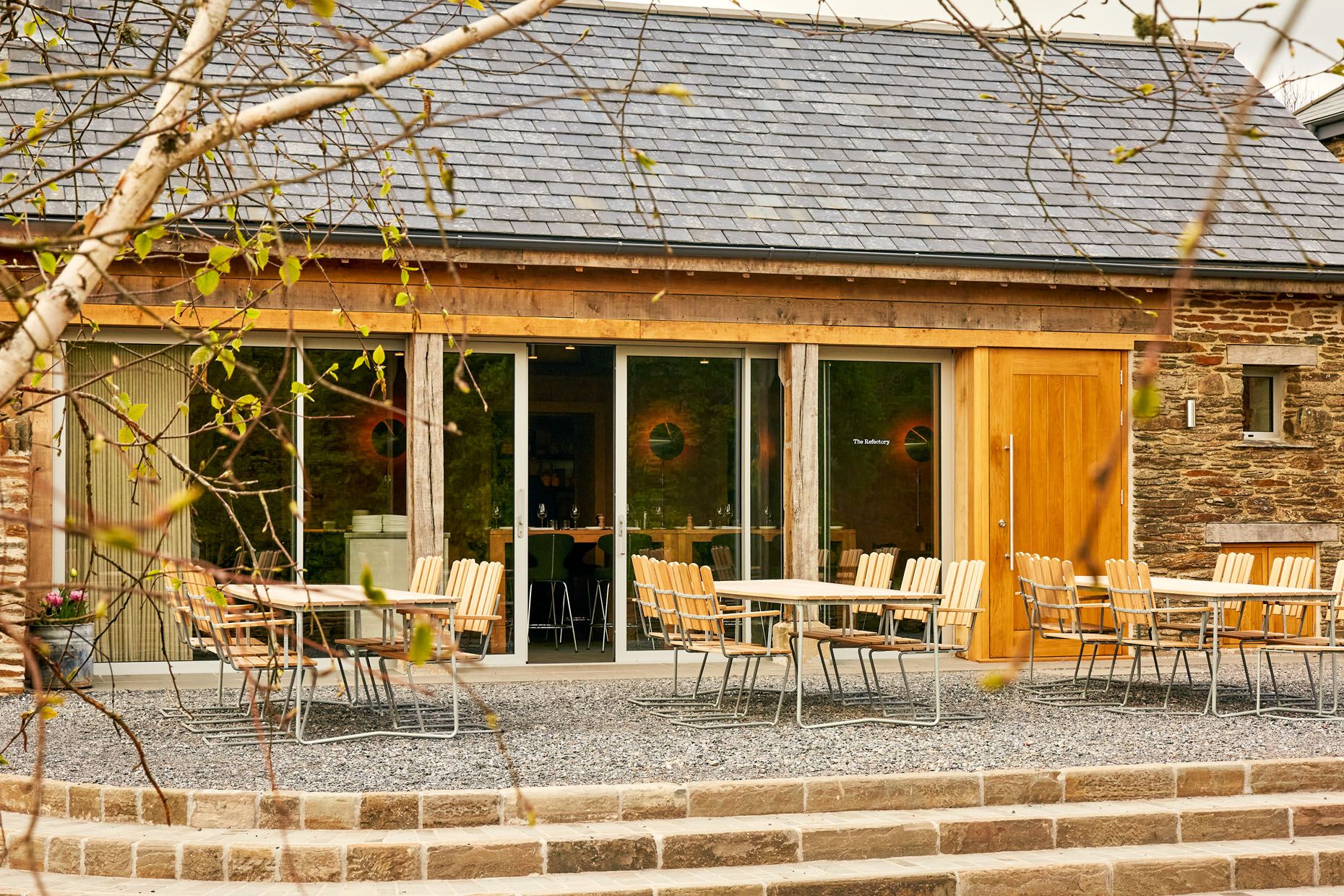
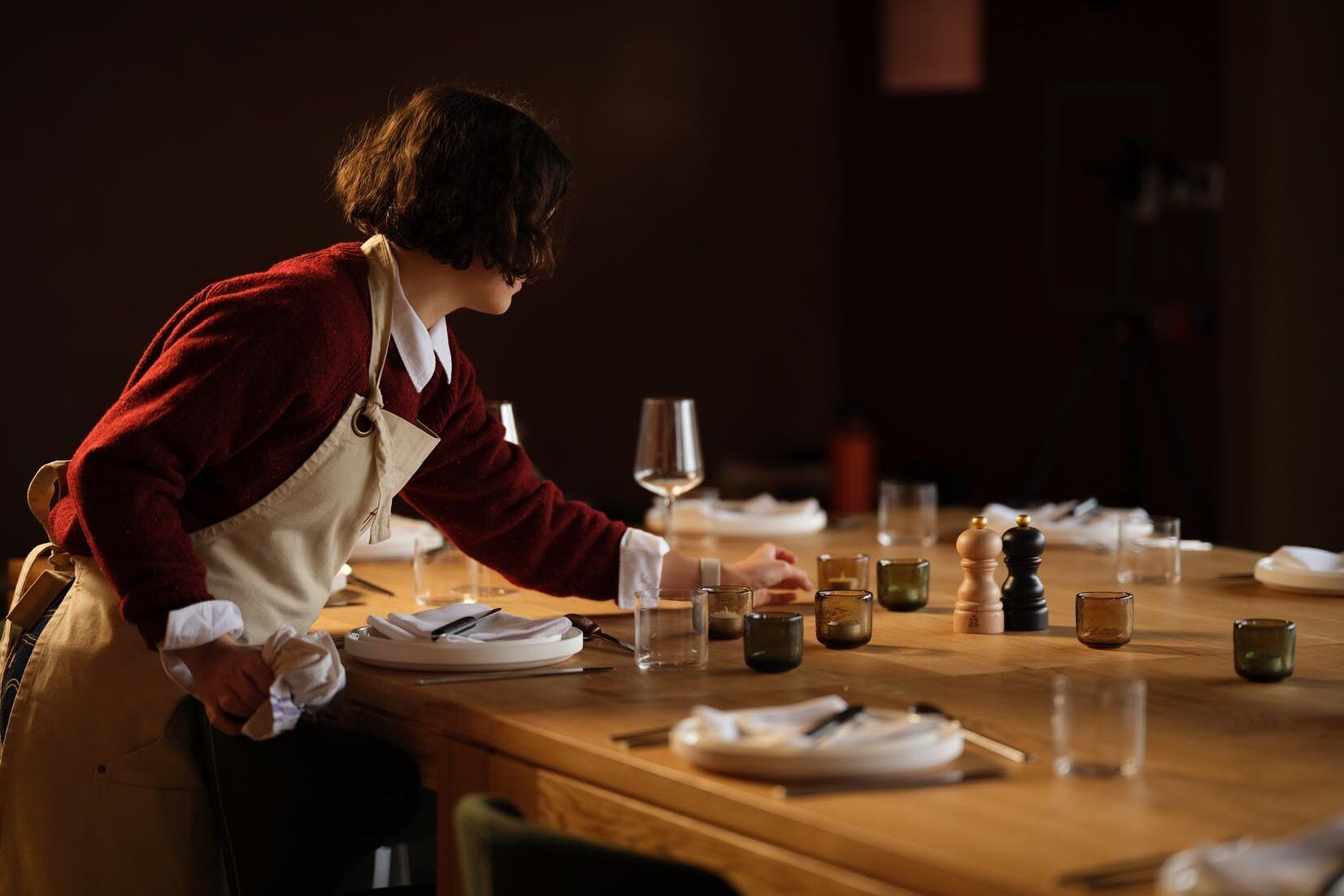
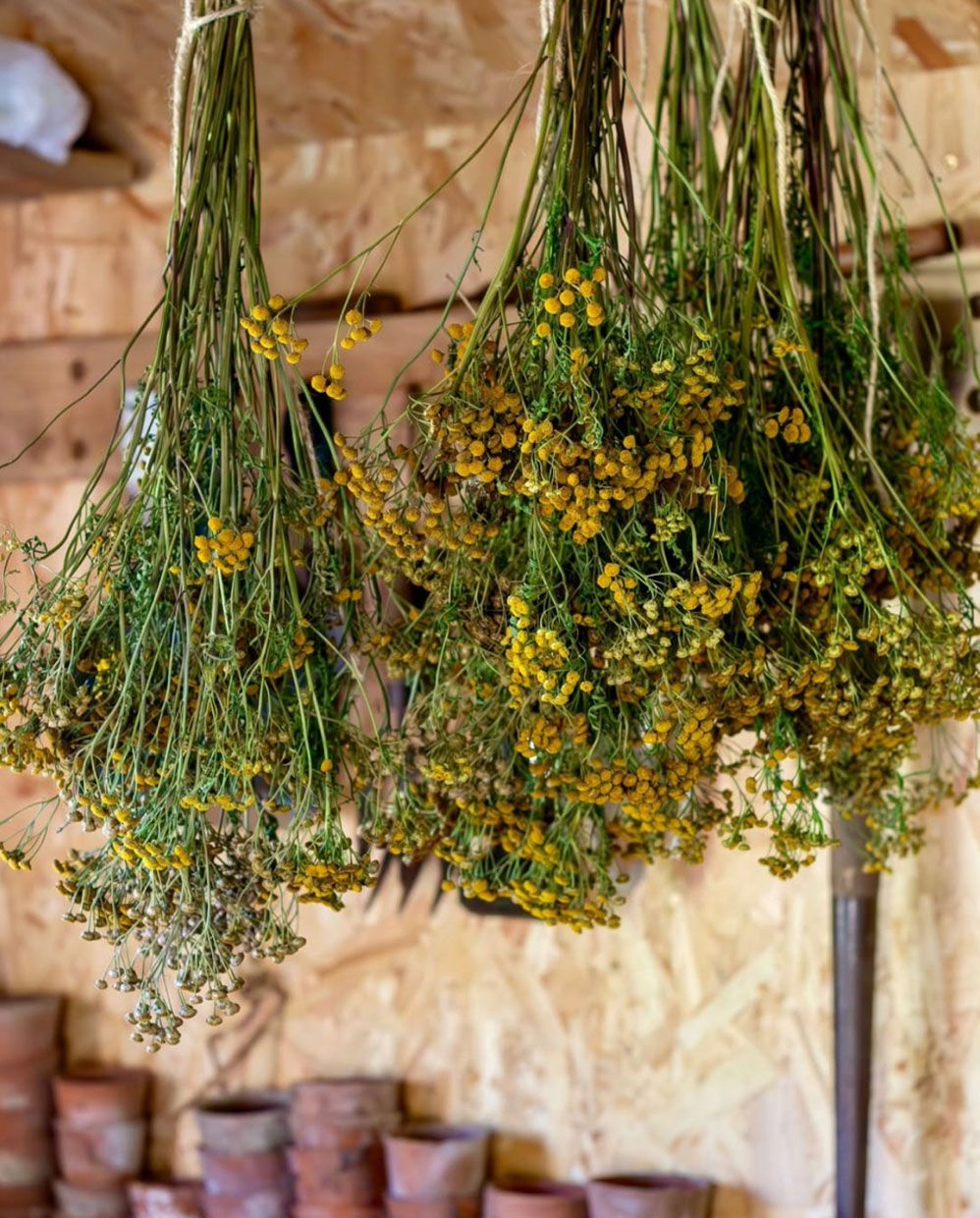
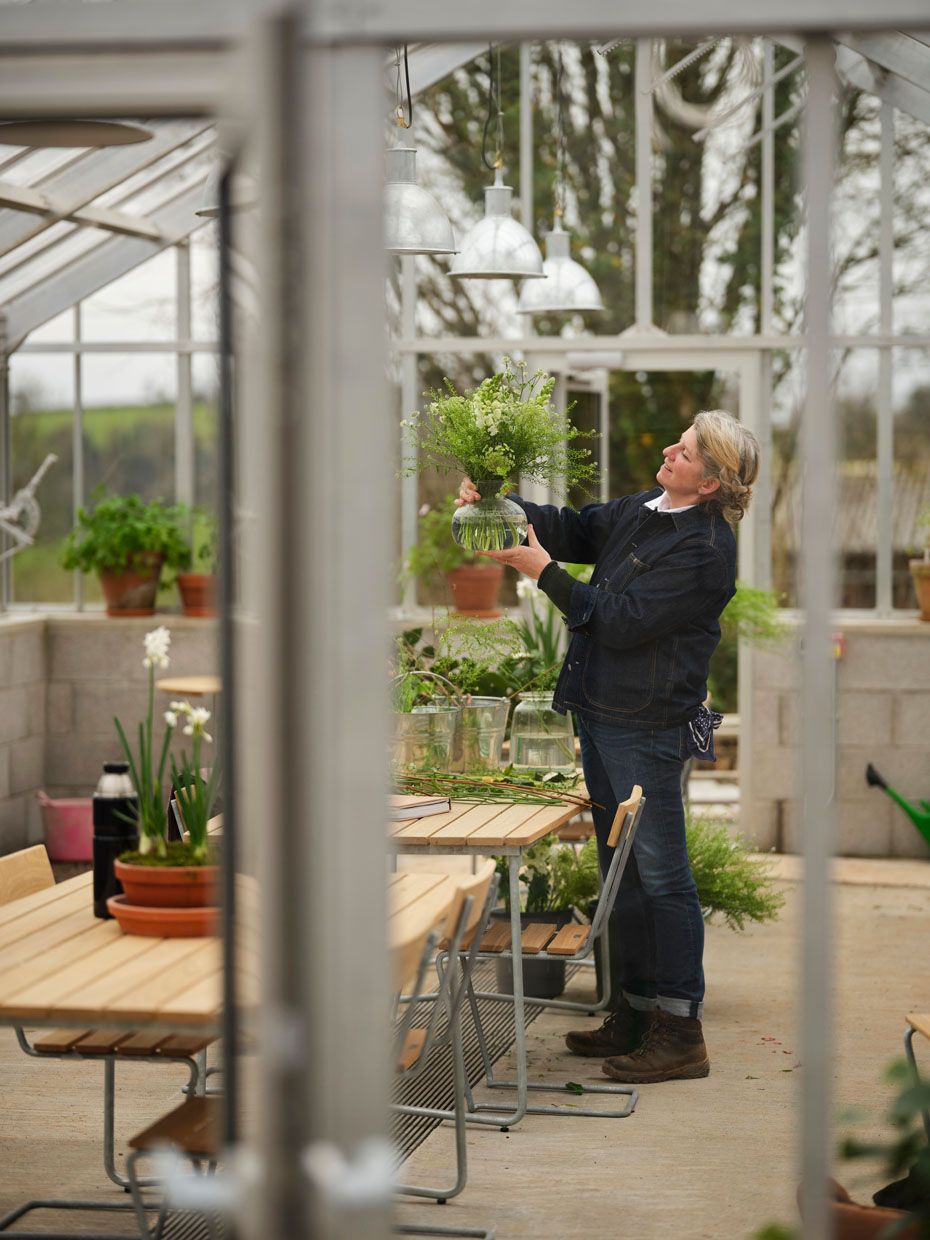
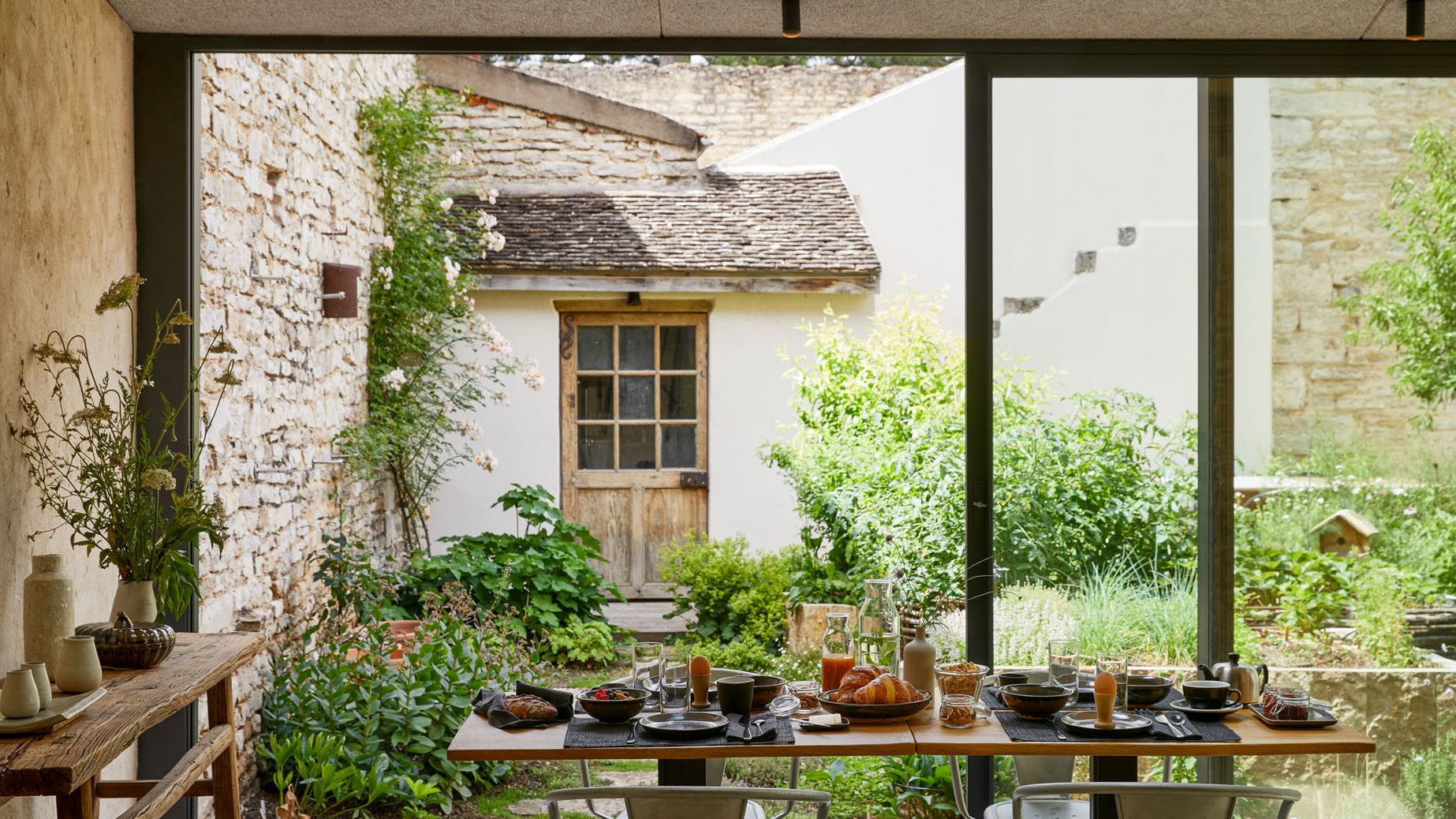
Fowlescombe Farm is an open invitation. Sleep in, deeply, soundly, because the air here is somehow more bracing. Linger in your dressing gown over a leisurely breakfast on the terrace. Enjoy freshly baked bread with honey from Fowlescombe’s own bees along with many other items sourced from its garden or farm, lovingly prepared by Elly and served in The Refectory, the restaurant at Fowlescombe Farm. For those who prefer to feel the dew on the meadows, set out early on the densely wooded paths leading to Dartmoor, one of the loneliest places in England, full of rare flora and fauna, not to mention witchcraft and folklore. Then there is this particular rhythm that invites one to pitch in, whether it is helping Neil feed the chickens, George in the fields, Ruby drying ingredients for teas, or Shelley as she arranges wildflower bouquets.
HOME
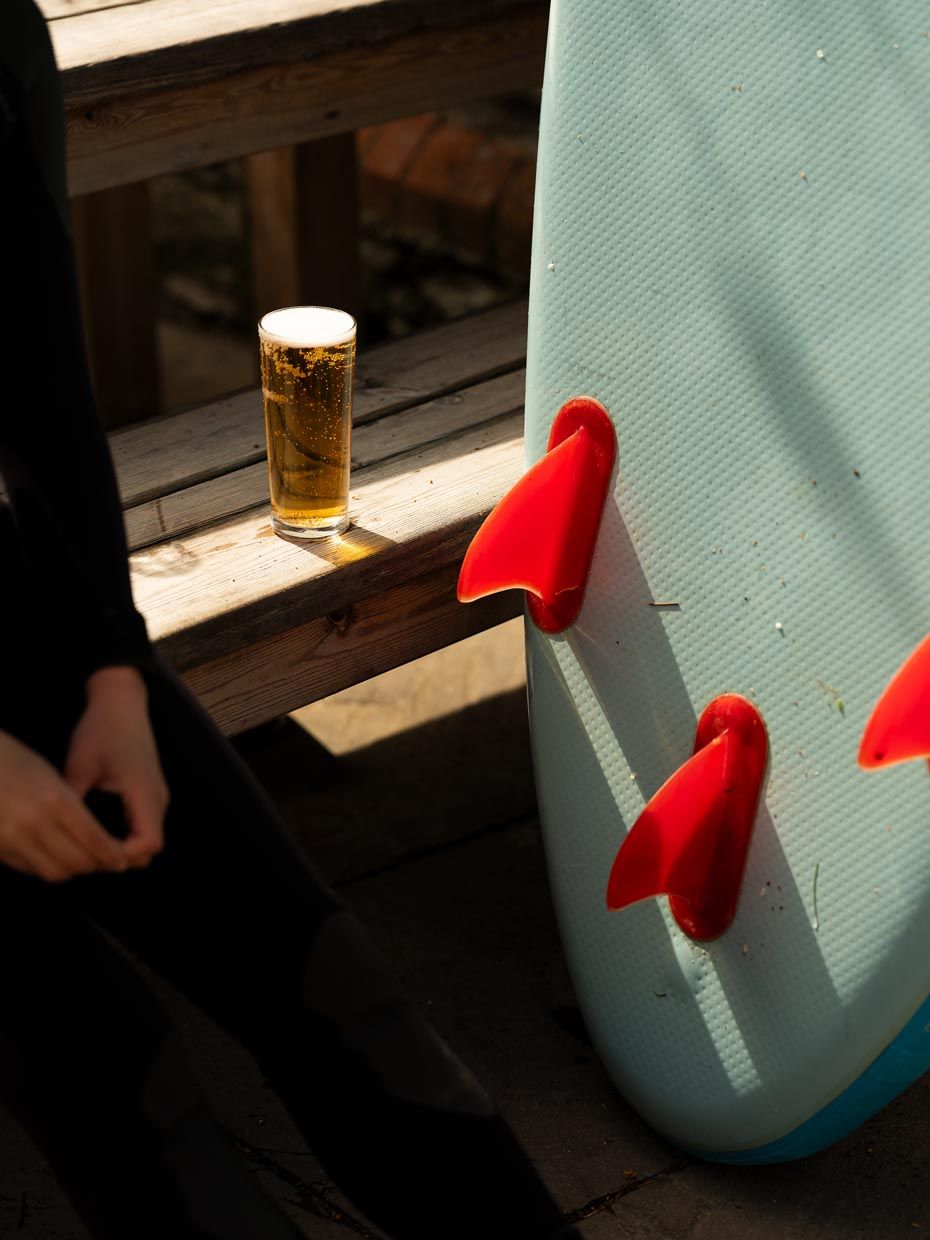
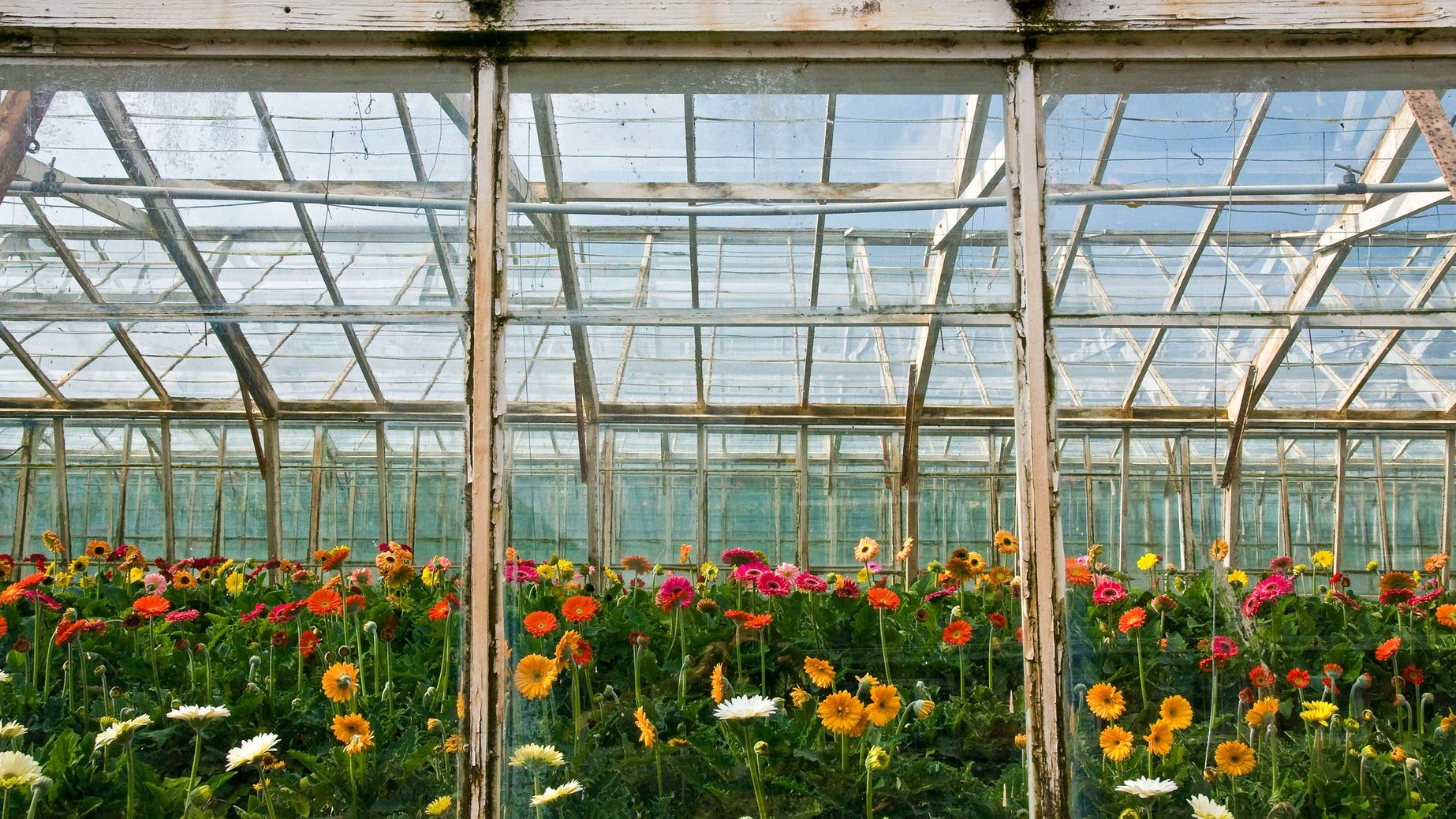
Whether it’s essential farmwork or yoga in the greenhouse, flower-gathering excursions for the evening’s gin, or stand-up paddling to the nearest pub, things happen naturally at Fowlescombe and vary from day to day. The experiences here change, just like the seasons, the weather, the landscape, and the guests. Rather than presenting some artificially created programme for stressed out city dwellers, the activities and experiences here are, quite simply, those needed to run the farm. You participate and become a part of it — as if you were at home.
“My family bought Fowlescombe in 2018 in order to transform the existing farm into one practising regenerative agriculture. Then the lockdown happened, and I wanted to get out of London where, at the time, I was working at a large consulting firm. So, I moved in with my parents, who live nearby, and spent a lot of time on the farm together with Paul. We even helped out with the lambing”, recounts Caitlin, clearly still excited. “And that is when I realised that I didn’t want to go back to London or my job. This intensive time here in nature gave us so much; and we knew that it had something to offer other people too”.
BALANCE
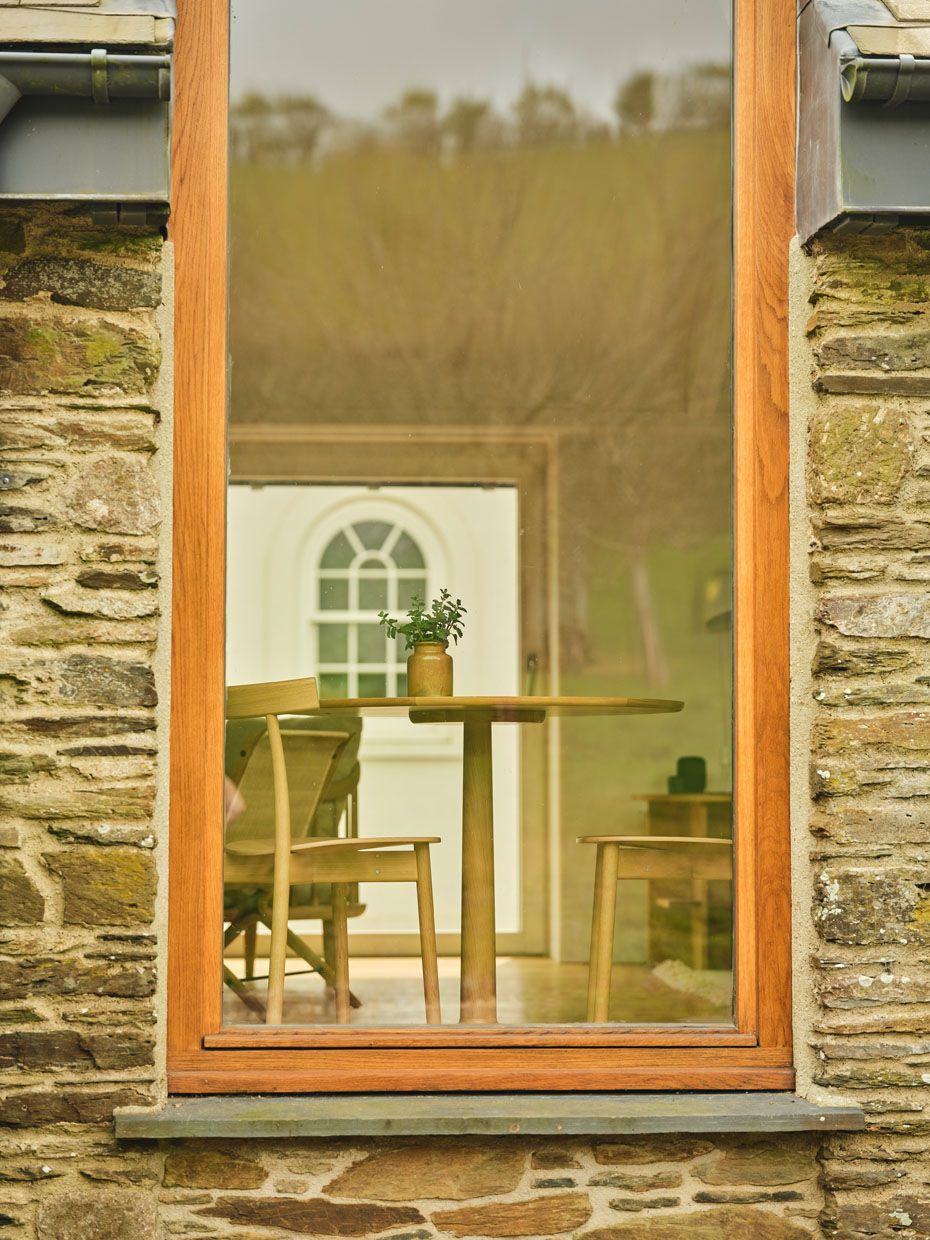
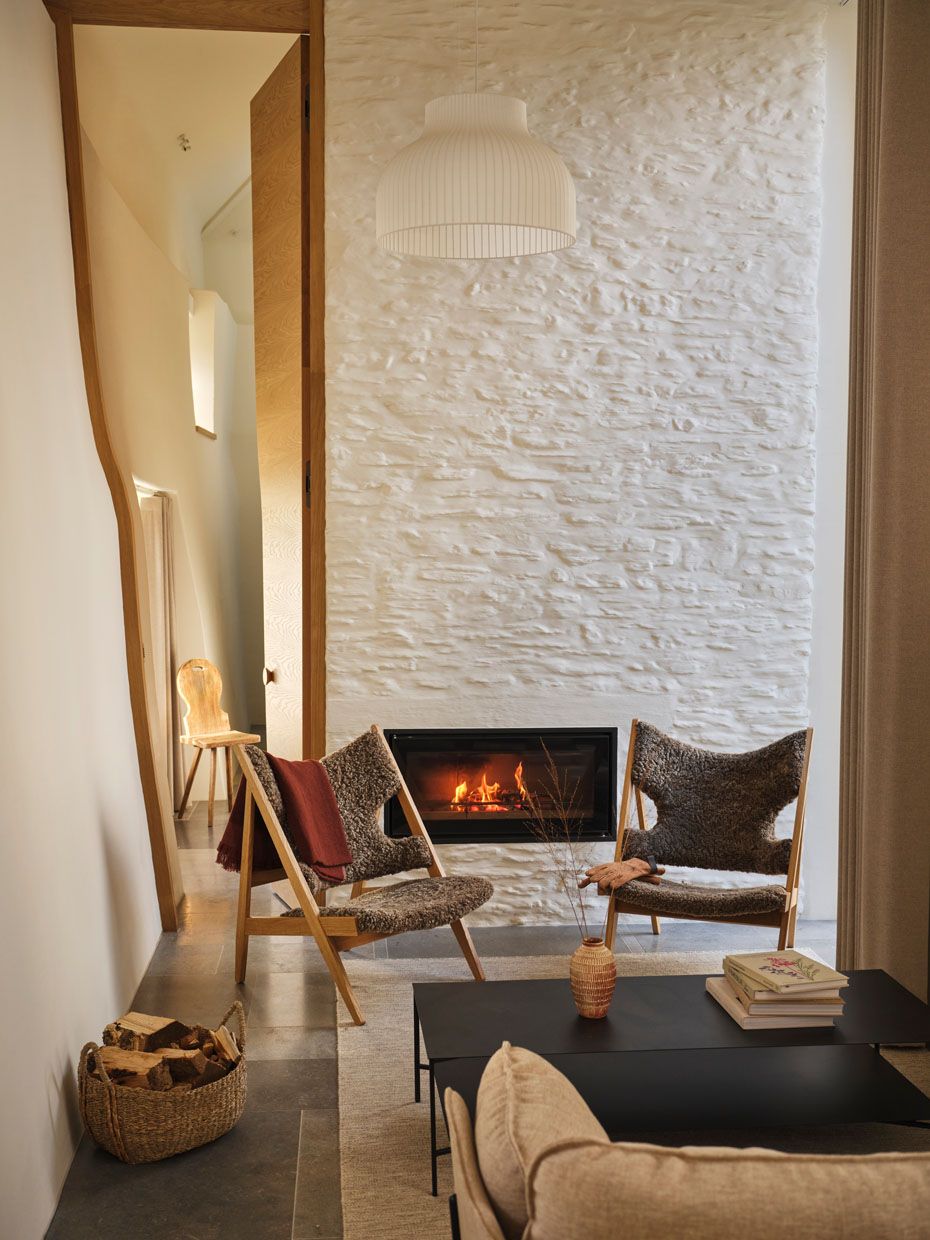
“The renovation of the property is informed by the principles of beauty and utility”, explains Paul, who oversees the entire project as Creative Director. The Swiss native met the British-born Caitlin at Cambridge, where he was studying architecture, and she, French and German. Since then, Fowlescombe has become the perfect outlet for the couple’s symbiotic strengths. “Sometimes it is hard to explain why a hotel’s atmosphere lingers in one’s memory. Is it the door or the teacup, the tea itself or the way it is served? For me, architecture is the interaction between all of these elements”. The first step was to dismantle the farmhouse, which had been spoiled by concrete, paint, and massive marble steps. “We took the interior apart like a Lego set to help the house regain its balance and continue its story”.
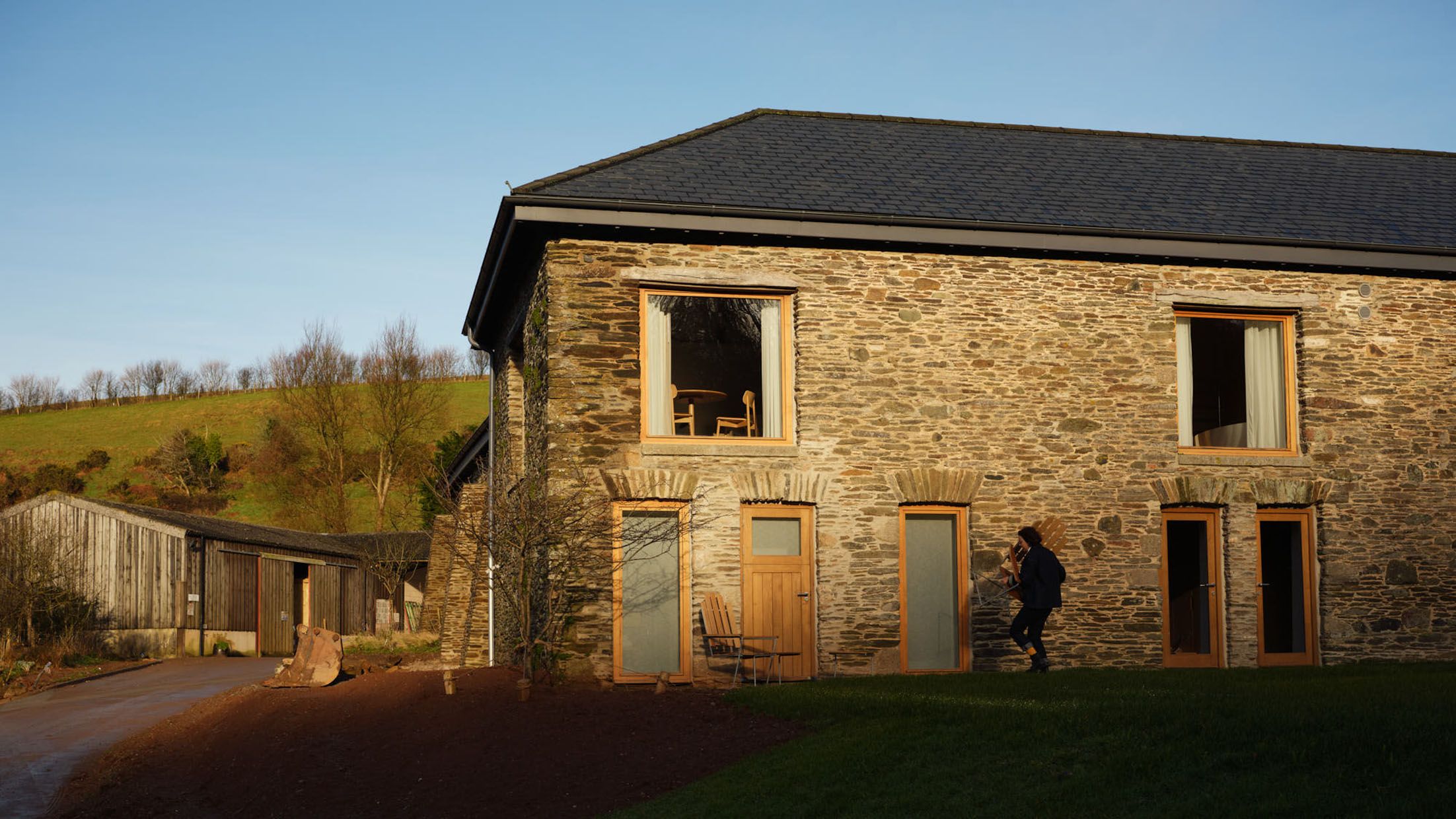
We took the interior apart like a Lego set to help the house regain its balance and continue its story.
AUTHENTICITY
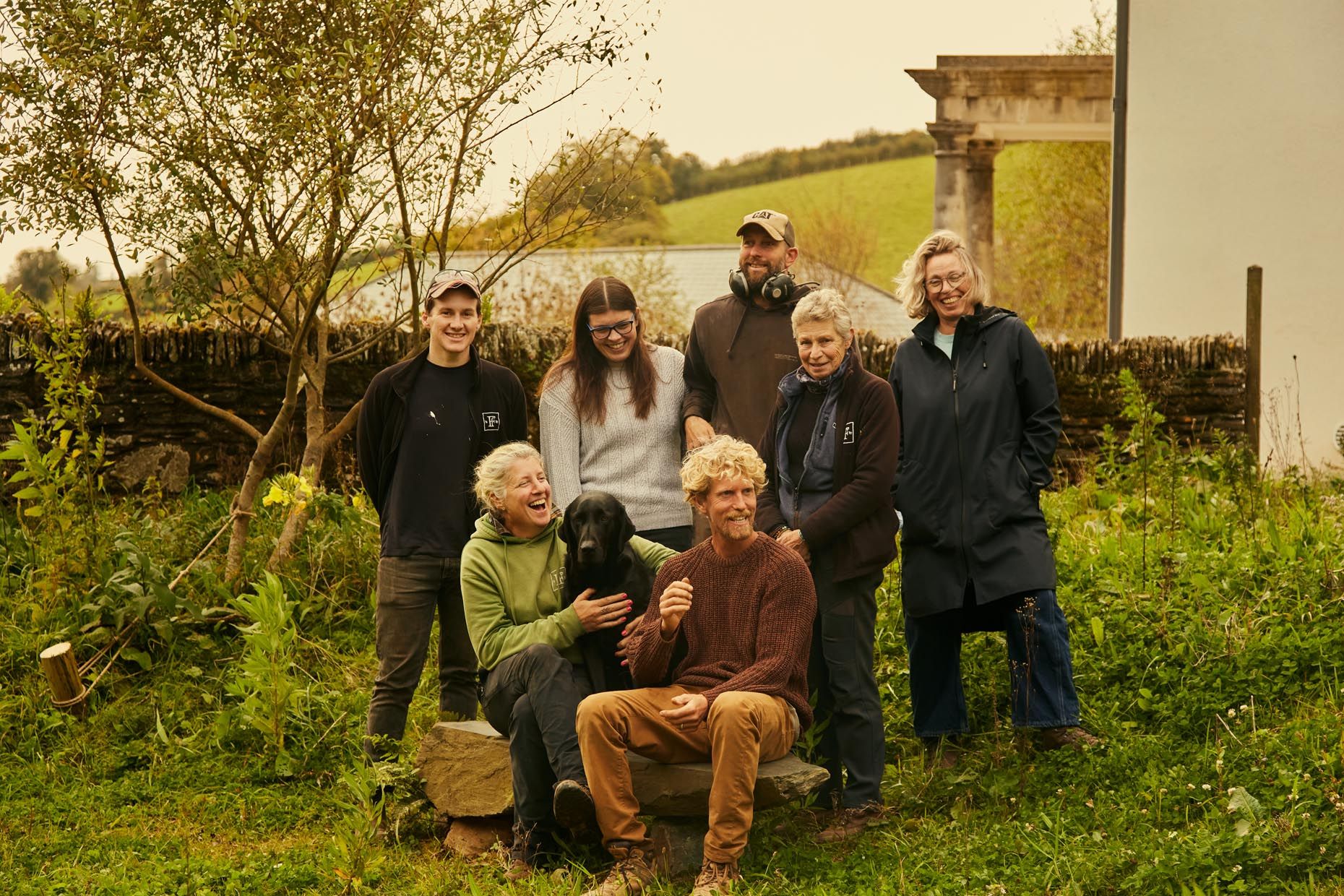
They also wanted the farm’s function clearly reflected. “It’s not just a hotel, but also a productive place whose utility and simplicity we wanted to celebrate”, explains the architect. The same applies to their co-workers, who all play essential roles. Some of them ended up here by chance and just didn’t want to leave, because Fowlescombe functions like a big family, a cosmos you can immerse yourself in, and a rhythm with which you can resonate, whether for a few days’ break or for longer.
FRIENDSHIP
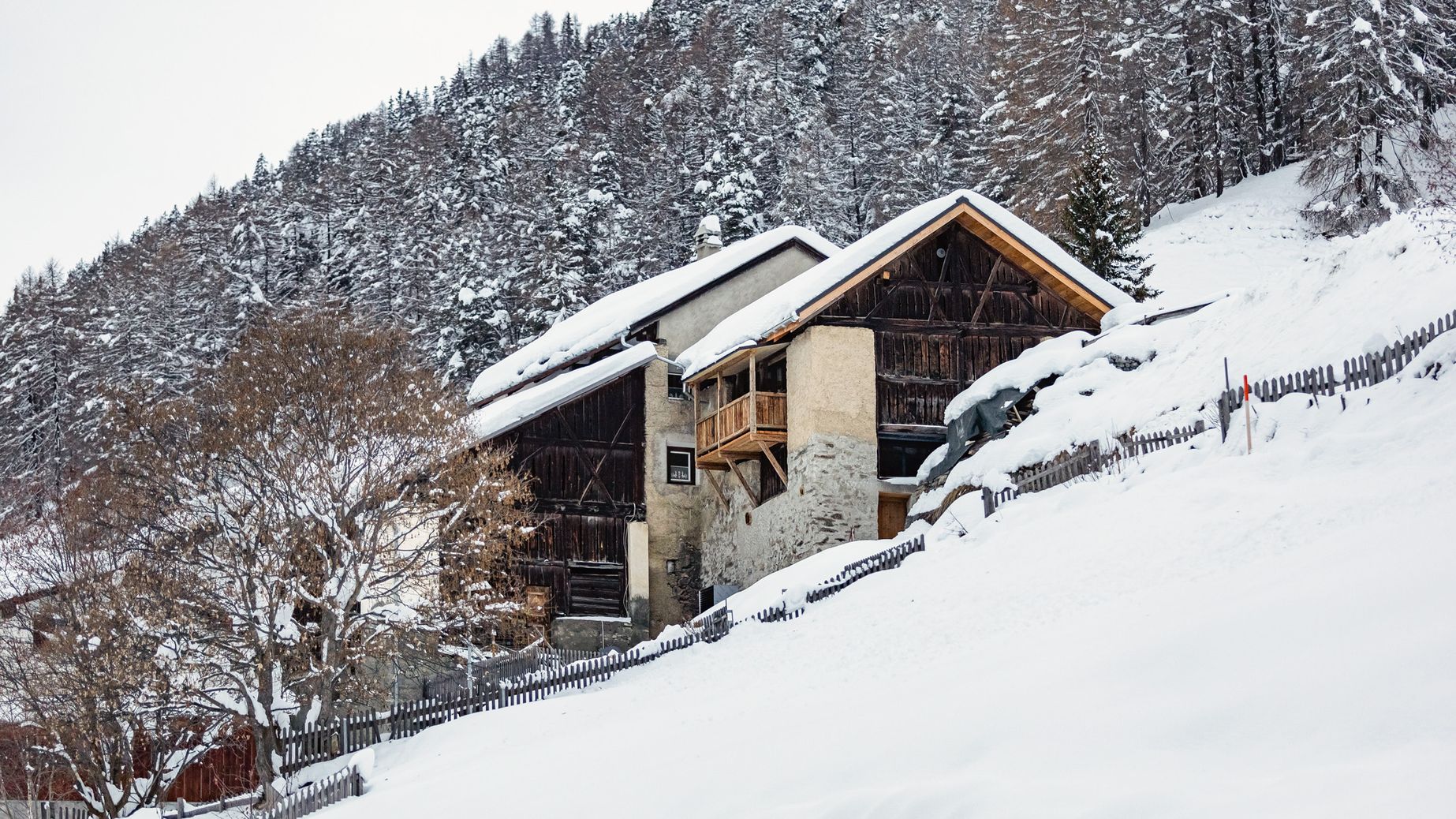
The collaboration with the Swiss architectural firm Studio Gugger was also a bit of serendipity. Paul unexpectedly meets Harry Gugger, his former boss, on the train to Devon. This brief encounter brings about big changes. Together with Studio Gugger and the London-based architect Ryan Cook and his firm Channel, the property is redesigned and the relationship between humans and animals reconfigured. The old stone barns are transformed into guest suites, and new stables and a greenhouse are added to the property.
SILENCE
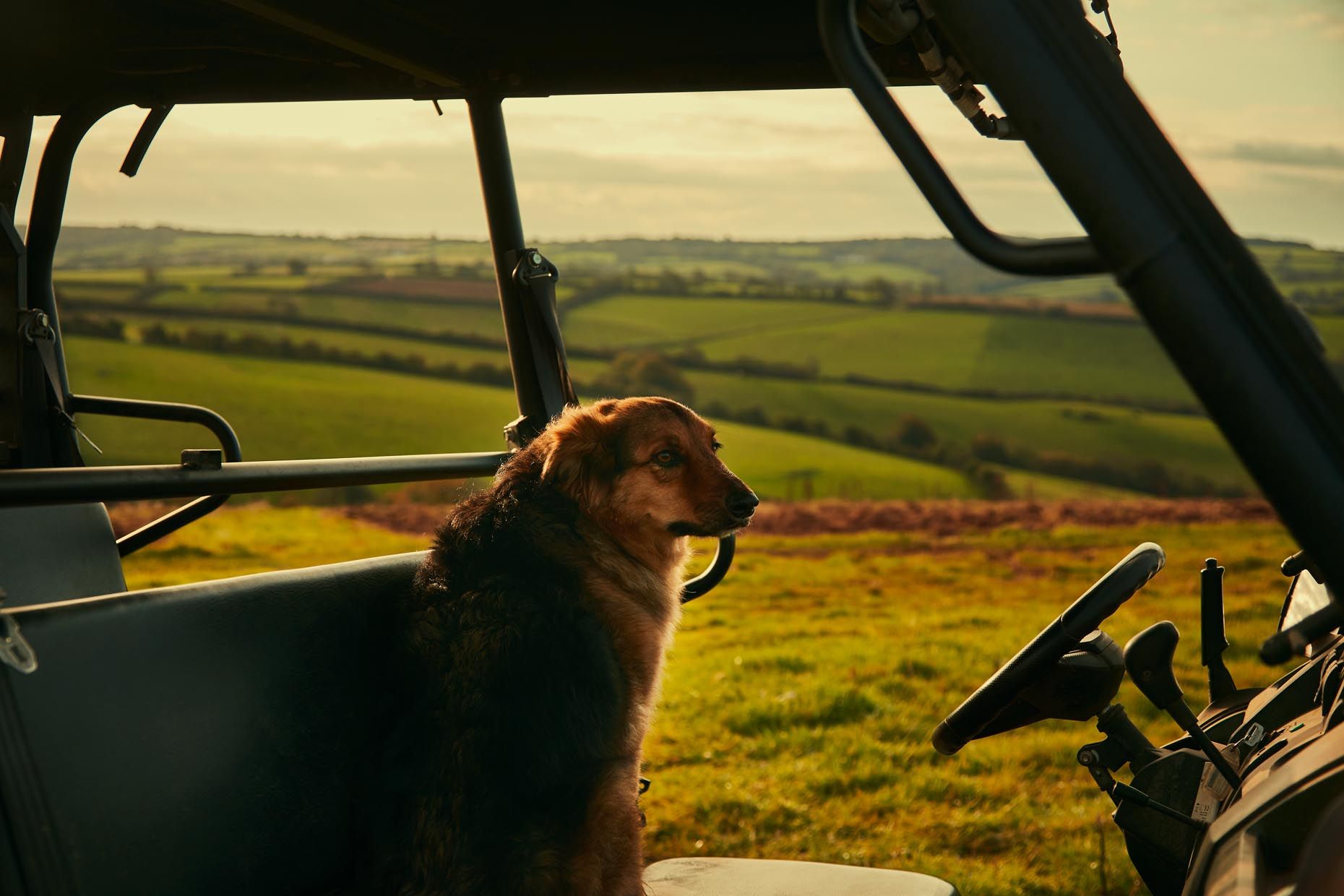
Oak, the farm dog, runs across the yard, past chickens and a couple that has been playing Scrabble on the terrace for the past few hours. A large, intimidating dog at first glance, he snuggles up to Caitlin’s side. “He was initially quite nervous and suspicious because his previous owners did not treat him well. Now he’s a real softie”, she smiles. A result, perhaps, of the slower pace on the farm. Like Oak, guests and staff at Fowlescombe undergo their own transformations: from guests who continually extend their stay, to folks dealing with illness who feel better with each passing day, a digger operator who changes his job, and the children who learn about biodi-versity using all their senses. “Mostguests arrive here pretty stressed. And suddenly everything calms down. Like taking a deep breath”.
TRANSFORMATION
The farm’s regenerative agriculturepractices return nutrients to the earth. “The regeneration of our guests is equally important to us”, claims Caitlin. “You connect with nature, with the seasons, and with each other. You can enjoy the tranquillity, the suites, fantastic seasonal cuisine, and very friendly service. Though the transformation goes deeper than that: something takes root, which grows and changes things”. Transformation takes place on a small as well as large scale. Architecture provides a fitting frame-work for this experience.
Luxury means that things happen without me having to think about them.
HISTORY
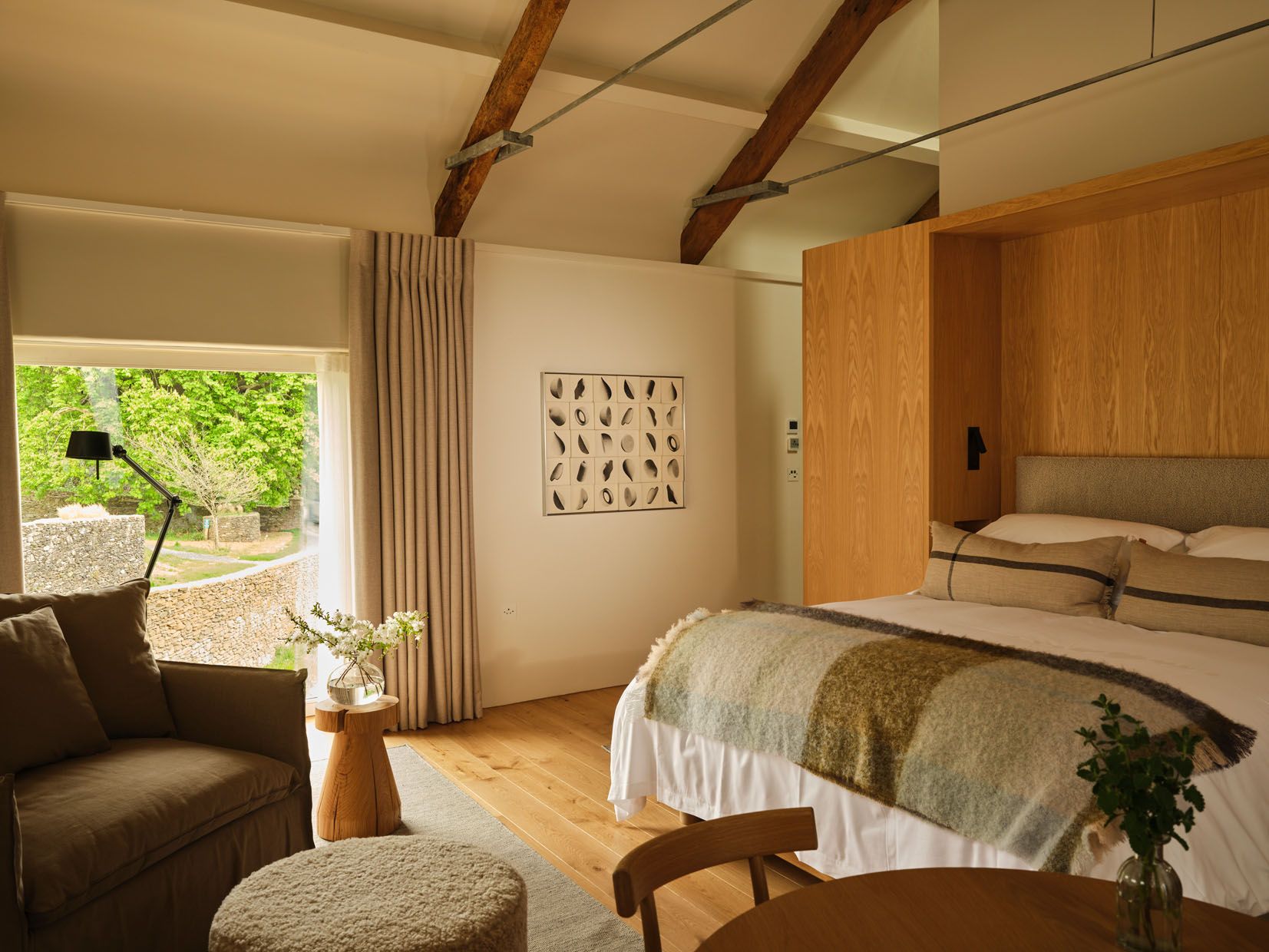
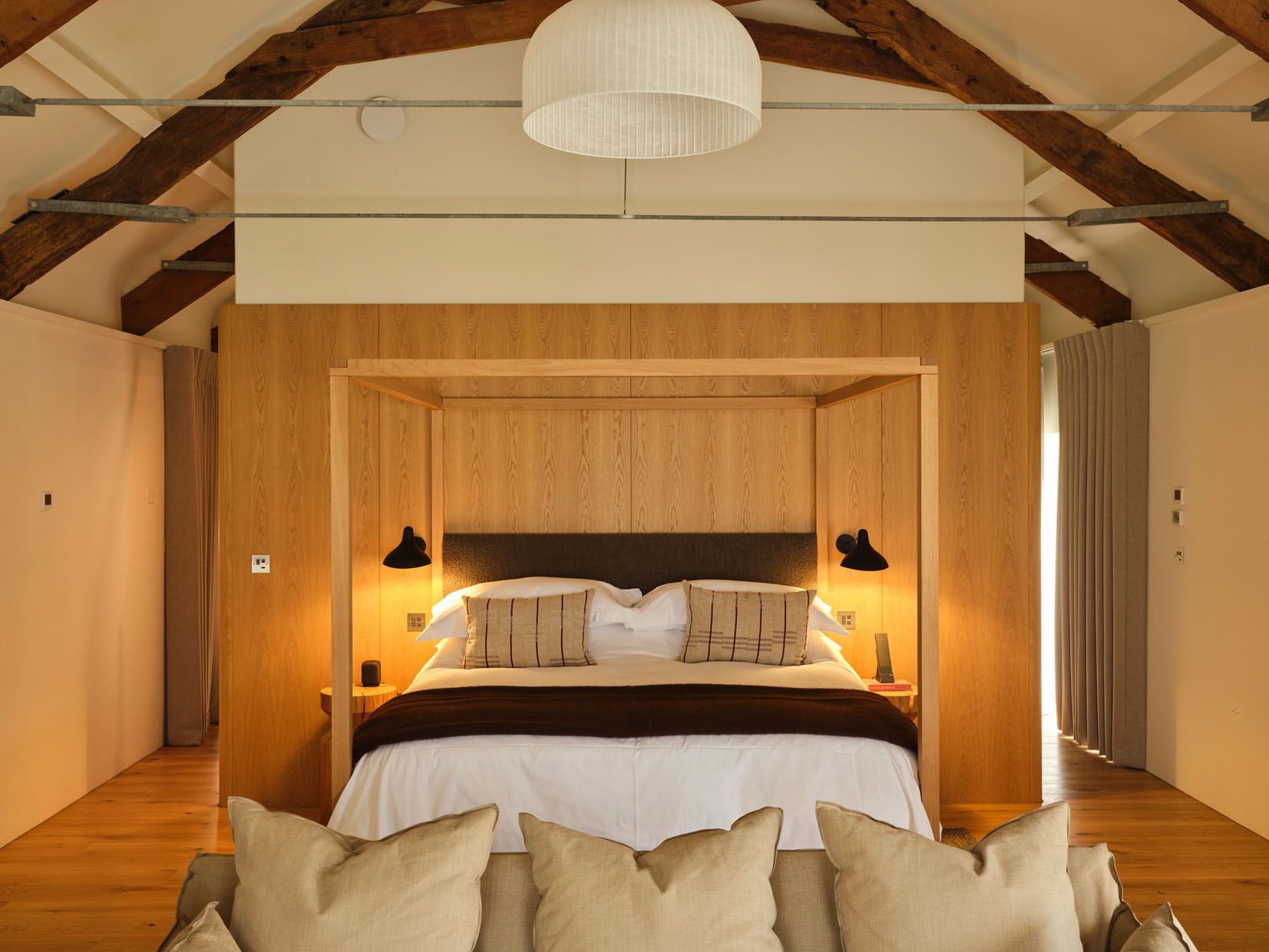
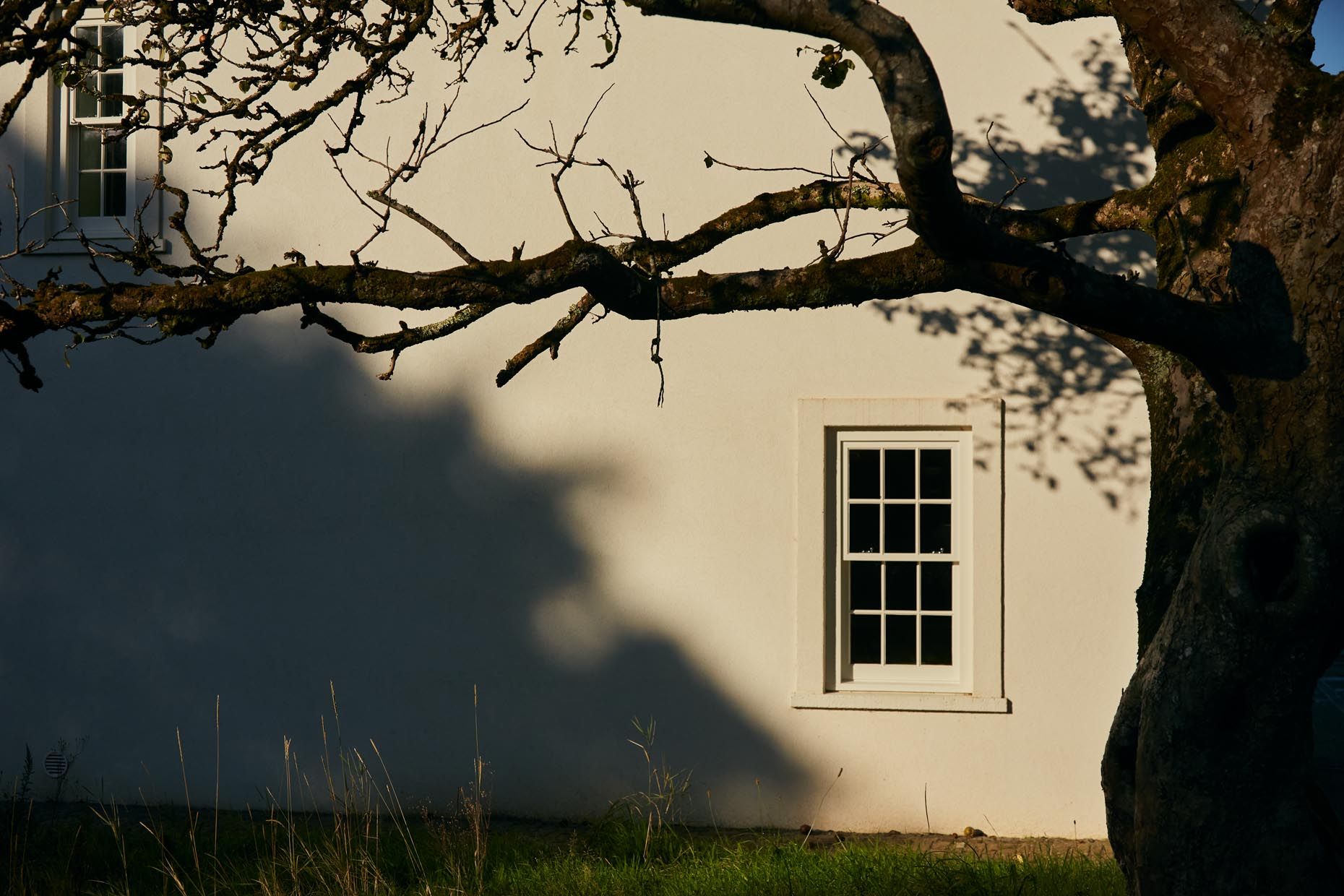
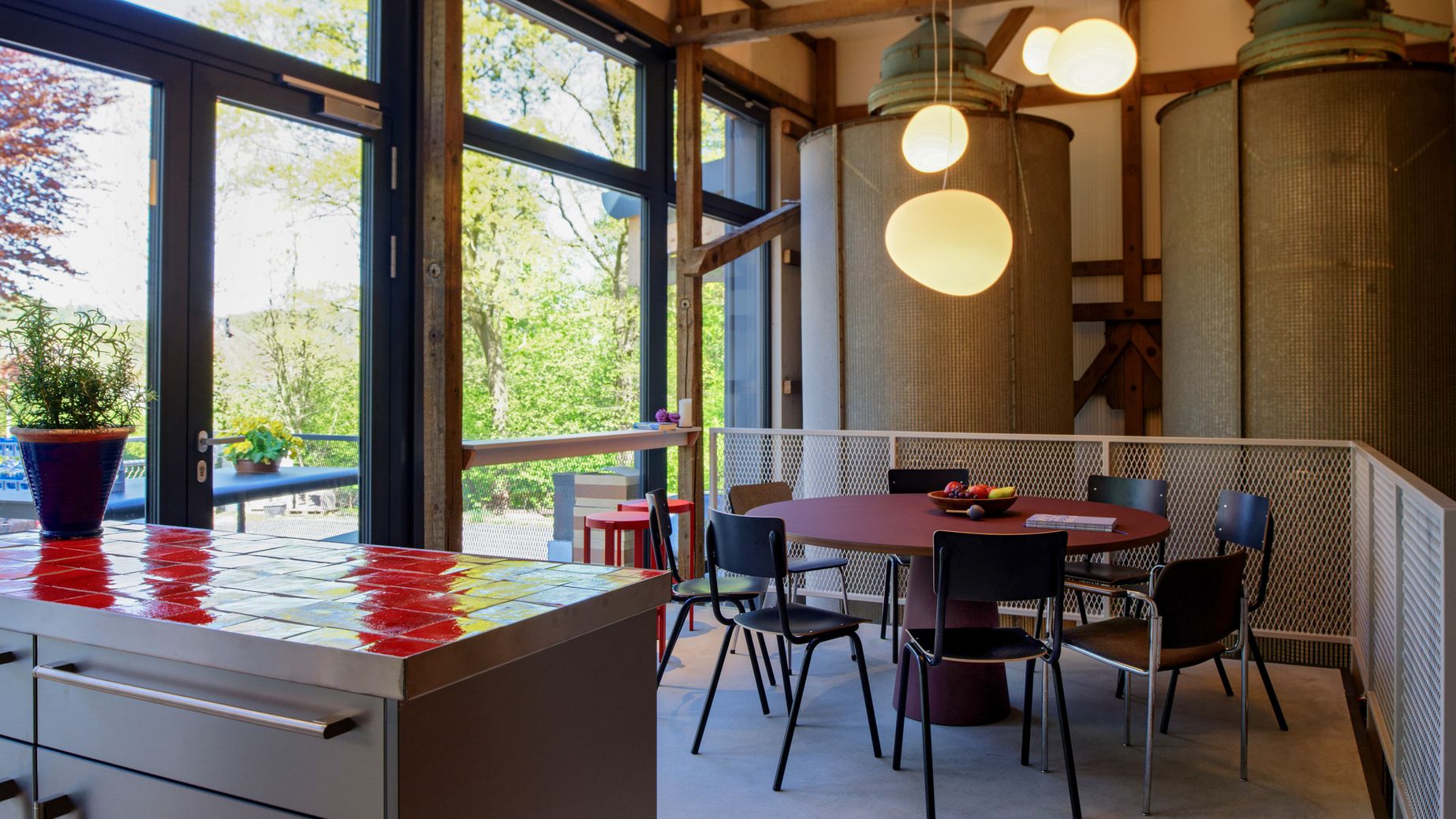
With a lounge bar and reception, the Victorian rendered farmhouse serves as the centre of the estate. However, most of the ten suites, as well as The Refectory and a library called The Map Room, are located in the converted barns. Large and small windows, low ceilings, and unusual doors gesture to earlier structures and dimensions. Some rooms stretch to lofty heights under exposed beams, while other individual areas are small and cosy. “We didn’t want to standardise anything”, remarks Paul. “Sometimes you have to duck to get into a particularly large room”. Fowlescombe Farm stays true to its history, present in even the smallest details, and closely connected to the landscape that shines through every window.
OAK & WOOL
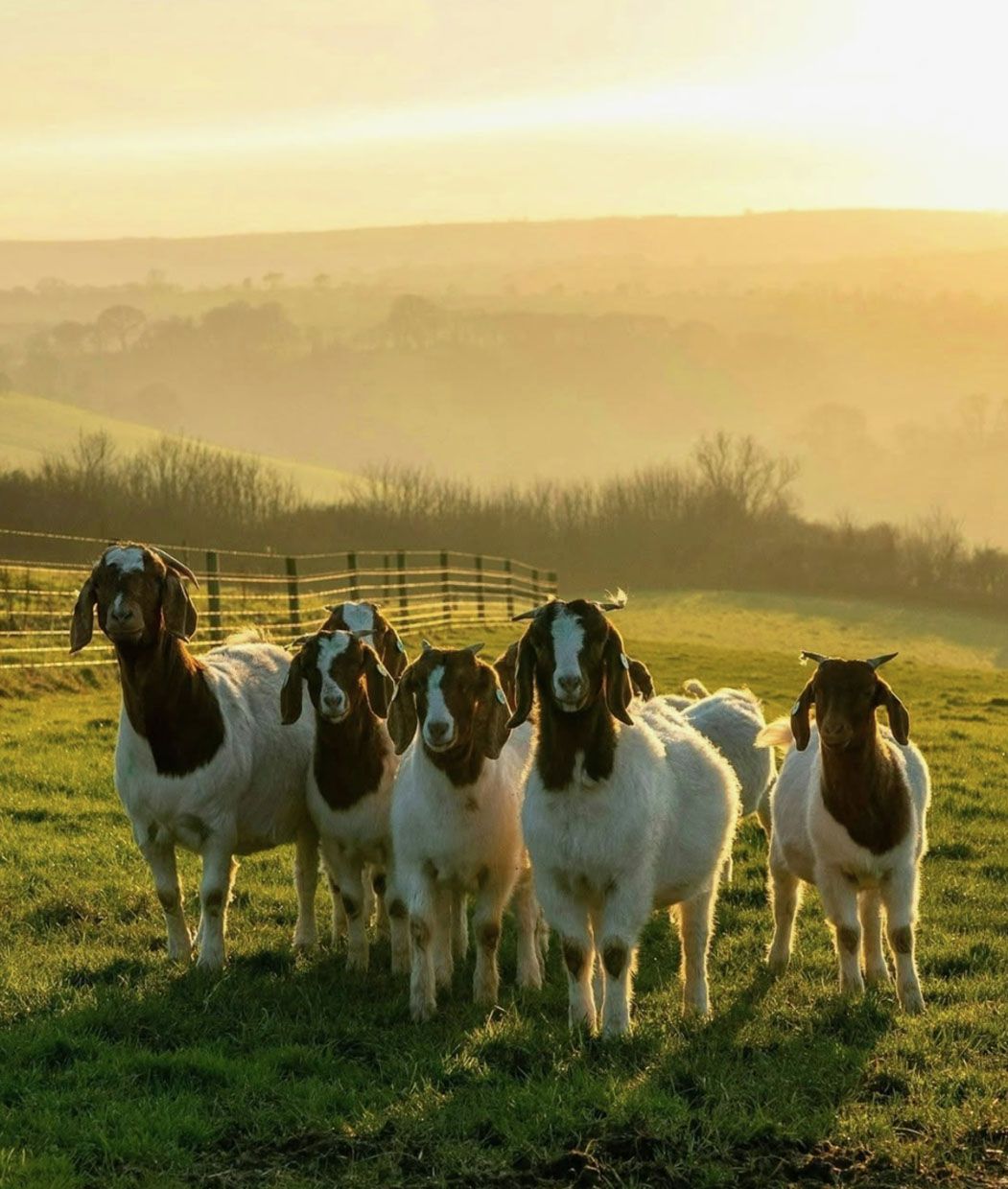
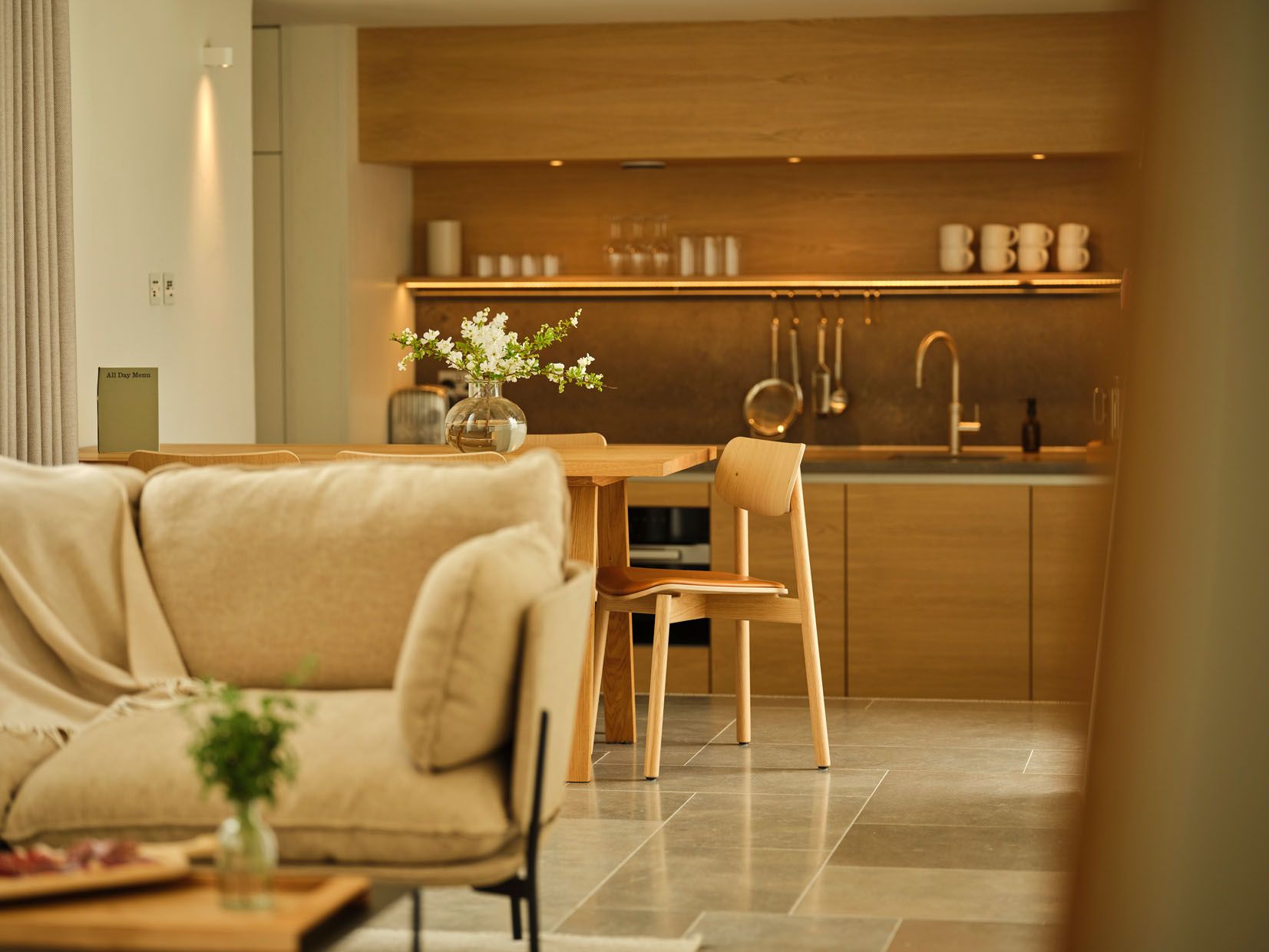
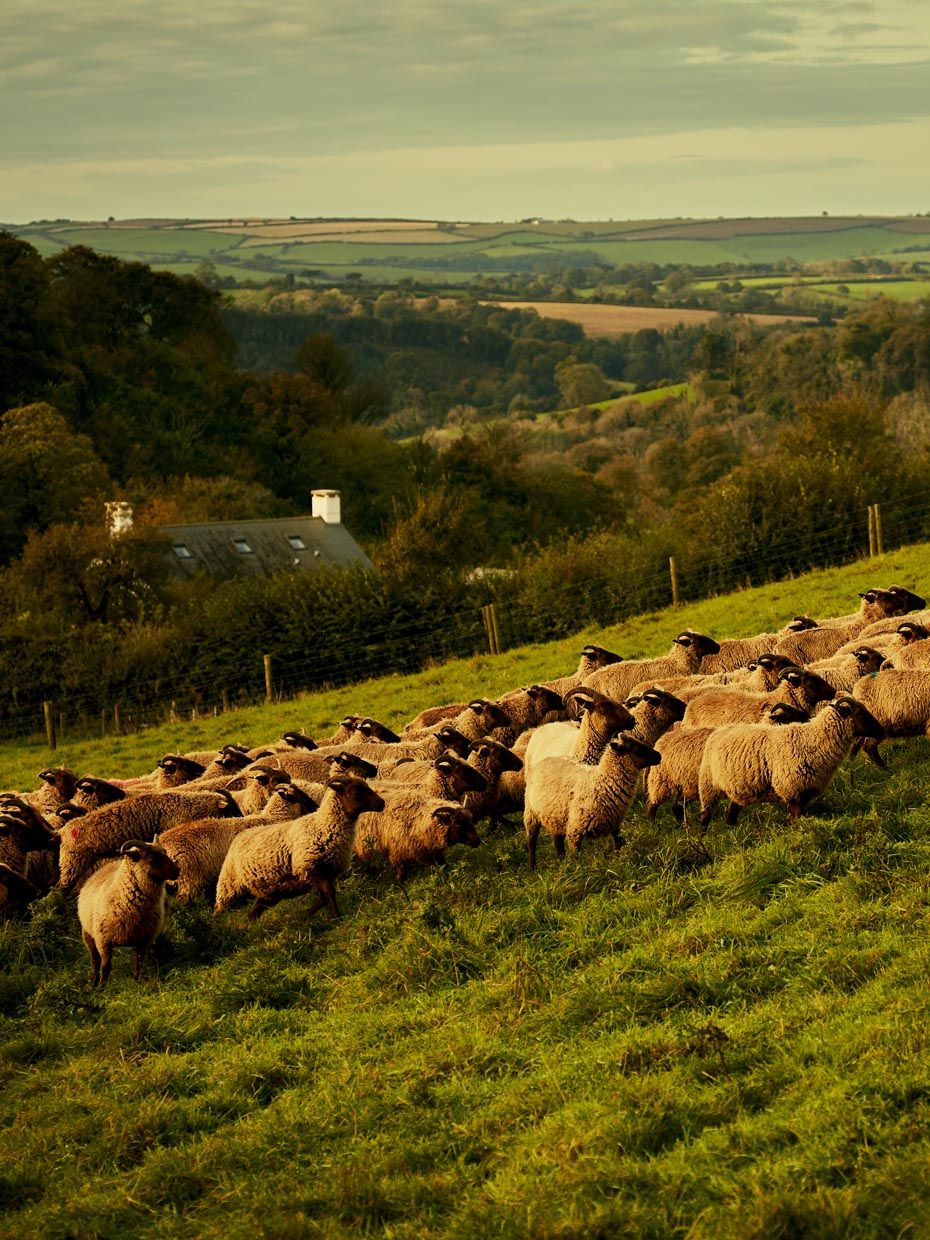
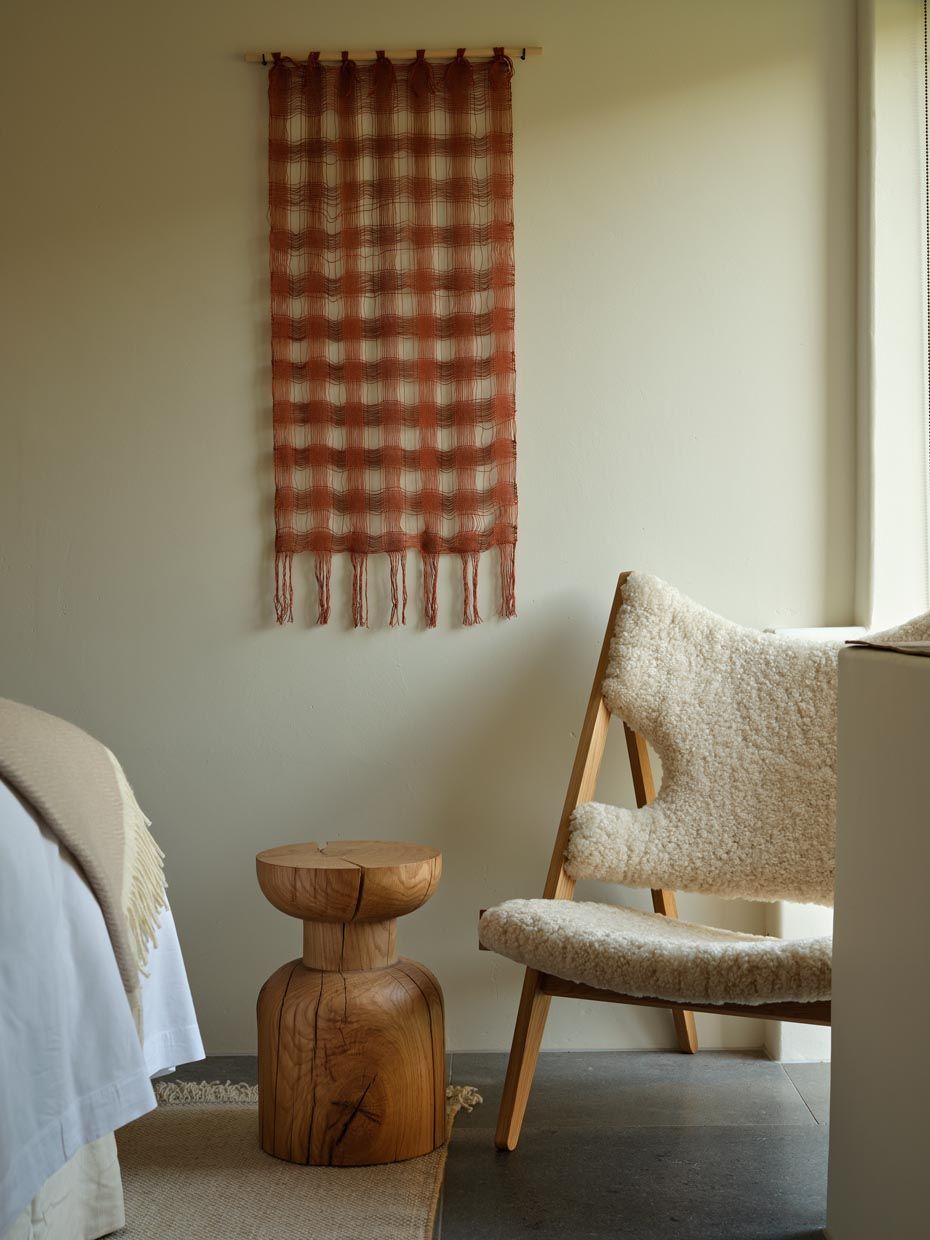
“We only employed a small range of materials. There is the stone from our own quarry, which we polished partially to transform it into a bench, a table, or a sink. The oak wood for the windows and walls was also already there, just in a rough-er form. We didn’t want to introduce any new material but rather refine what already exists”. Woollen curtains and textiles translate the colours of the landscape — ranging from green to blue to violet — letting you sense the warmth and harshness of the region. Even the mattresses come from the wool of the farm’s own Manx Loaghtan sheep, an ancient breed that finds a home on Fowlescombe Farm along with cattle, pigs, and goats.
FIRE
“Luxury means that things happen without me having to think about them”, says Caitlin, trying to capture the “magic” of Fowlescombe Farm, which dispenses with all forms of opulence. Even televisions, for example, are a frill no one seems to miss. Instead, dragonflies flit about the pond, and the evening sun bathes the meadows, fields, and orchards in a fiery red light. Anyone who wants to can wait for the starry sky and Barry on the small stone bench. It couldn’t be more spectacular.
Words: Julia Hauch
Photos: © Laura Edwards, Jon Tonks, Matthew Hague, Paul Glade
This article first appeared in our book Dream in Progress. The book is available to purchase from our shop.
0 Comments