
Milchhof Arnstadt. Bauhaus100.
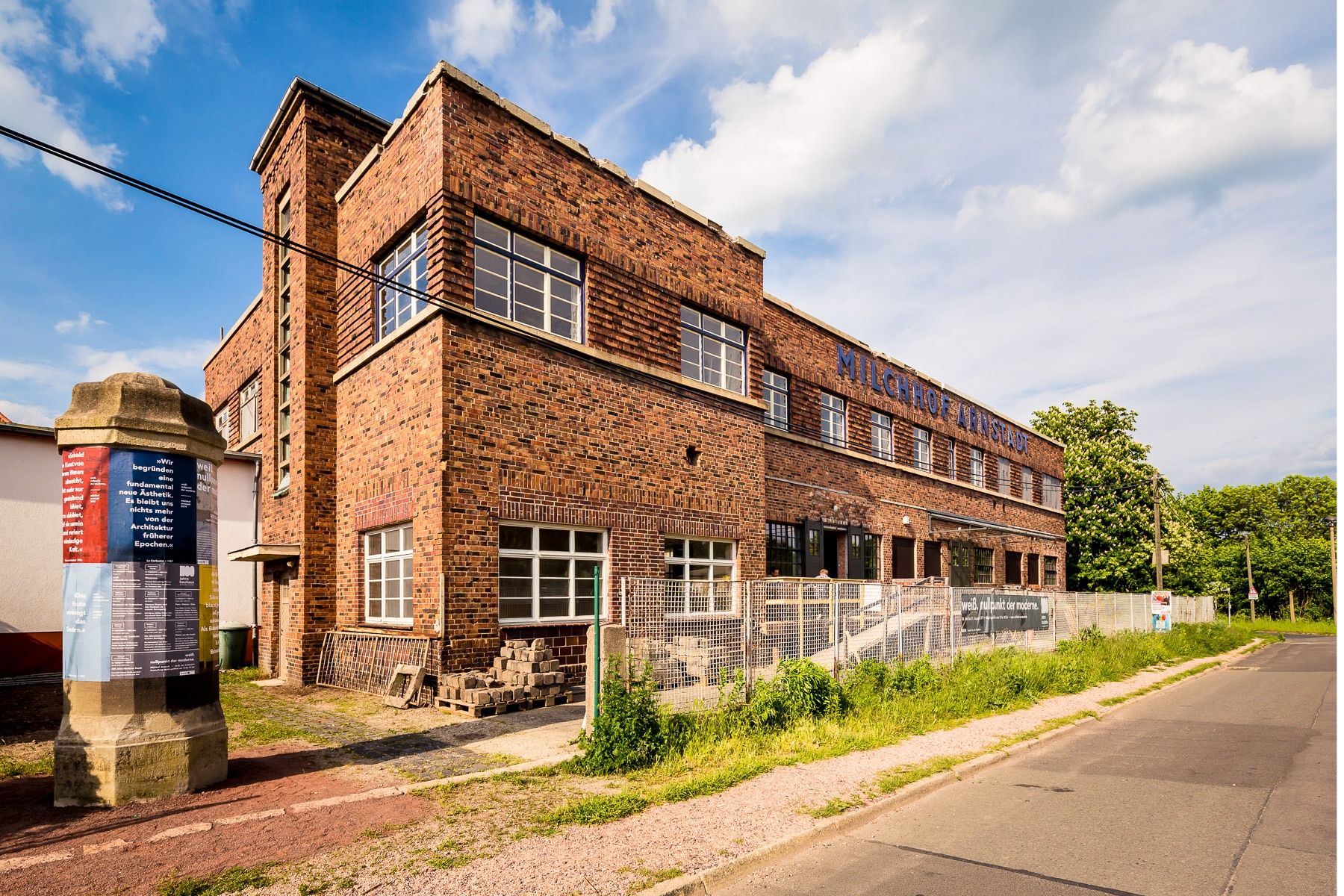
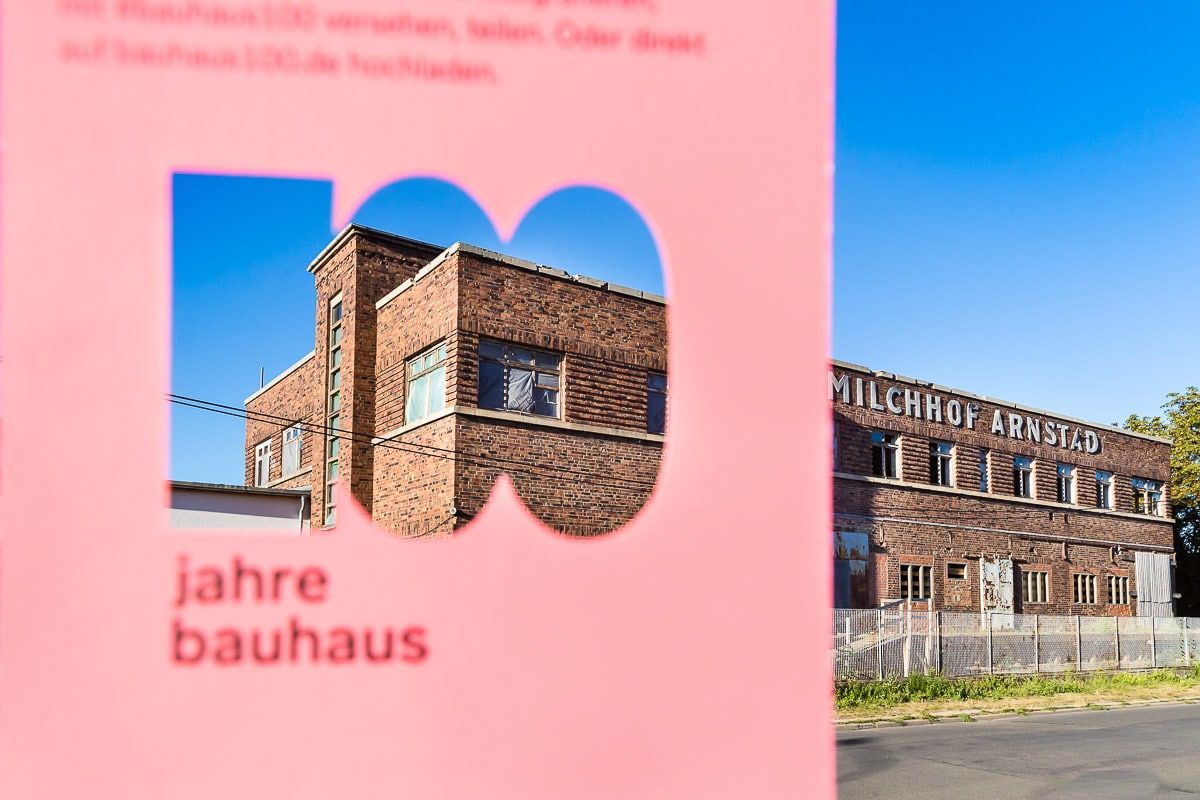
The Milchhof Arnstadt, a classic modernist monument from 1928, is currently part of the German GRAND TOUR DER MODERNE 2019 and an official partner of the Bauhaus100 programme.
This is an article from our archive. It was published in May 2019, so some details may no longer be up to date.
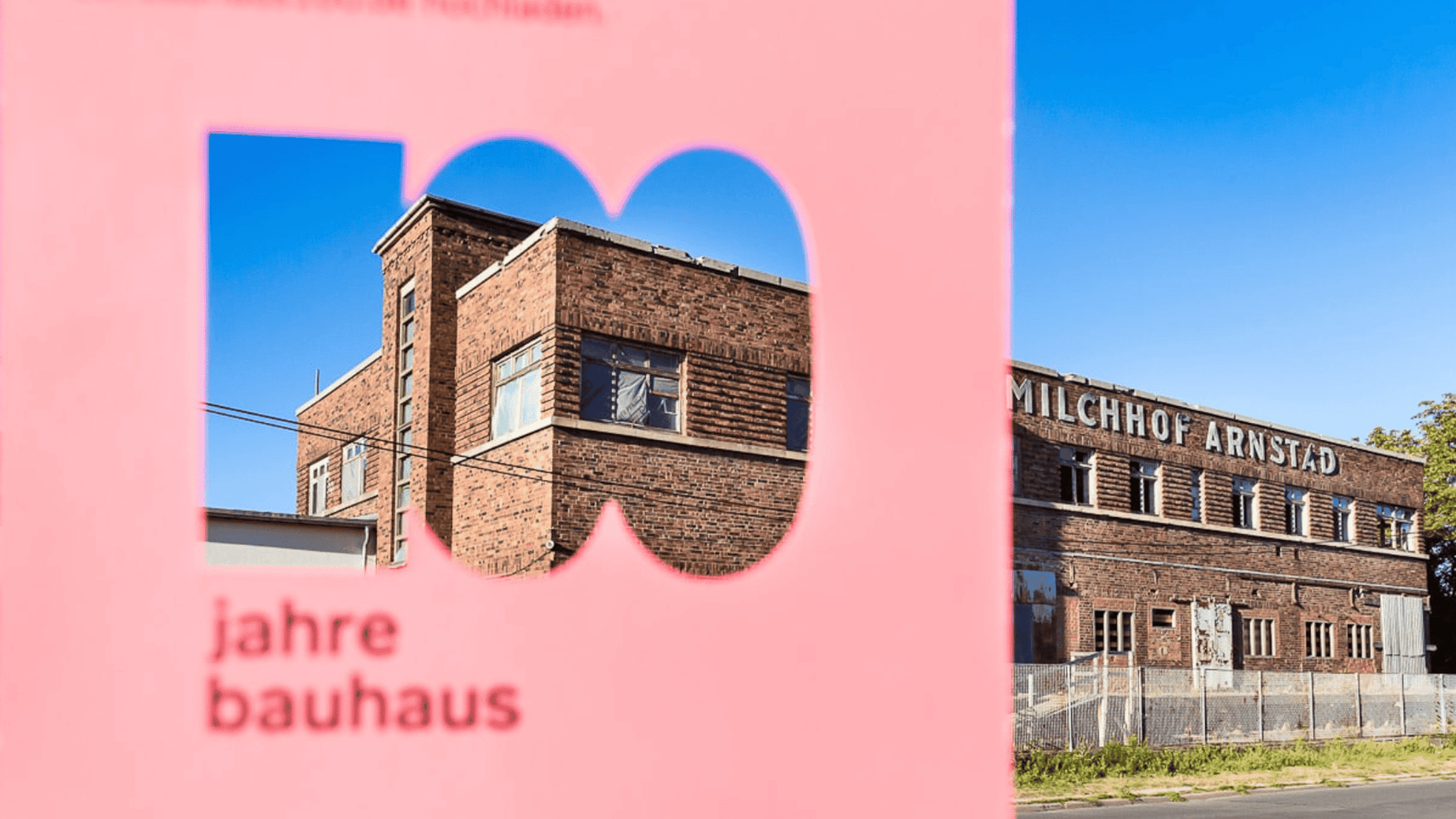
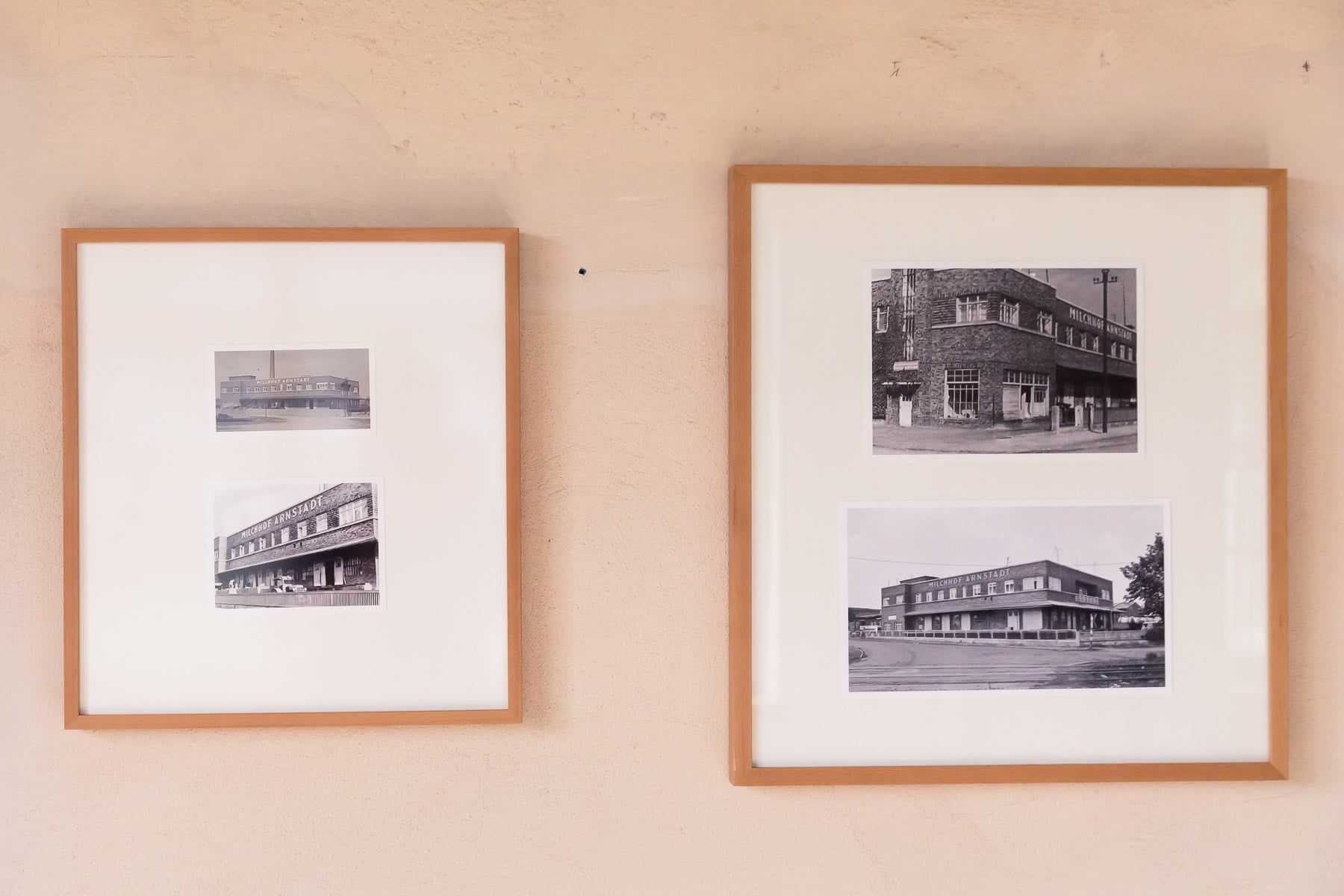
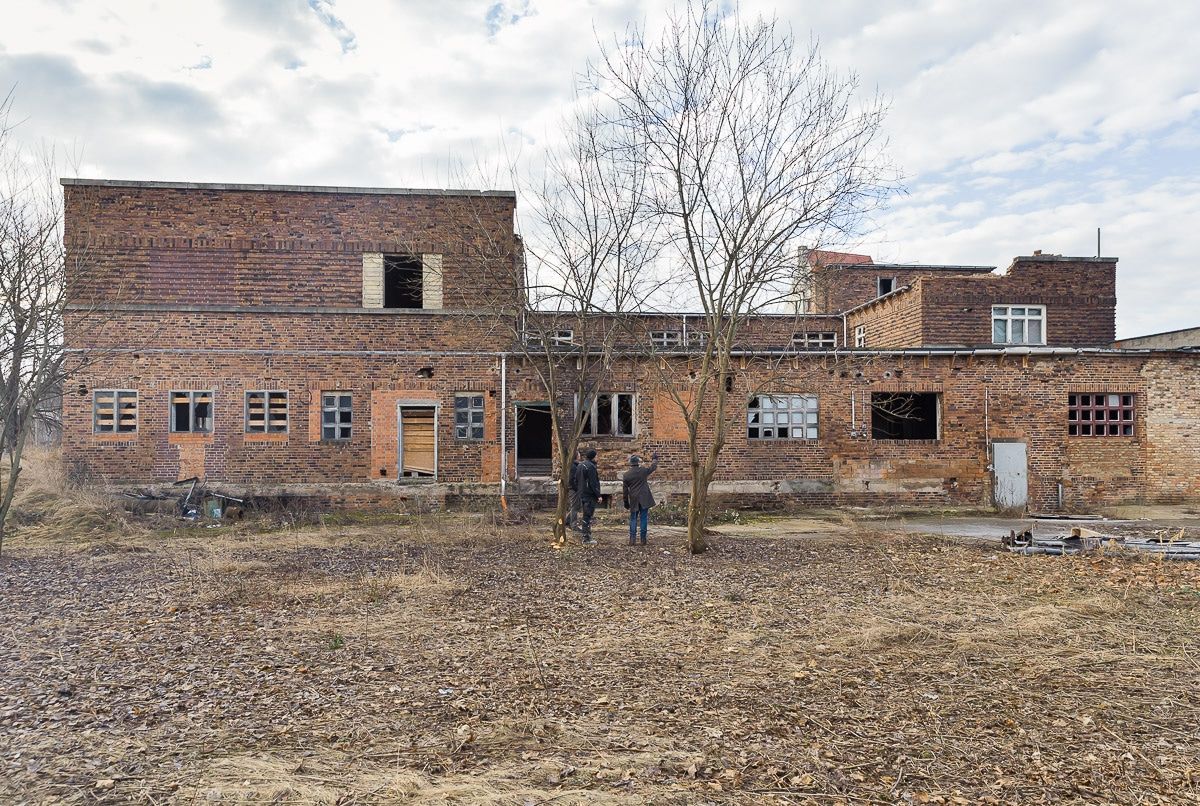
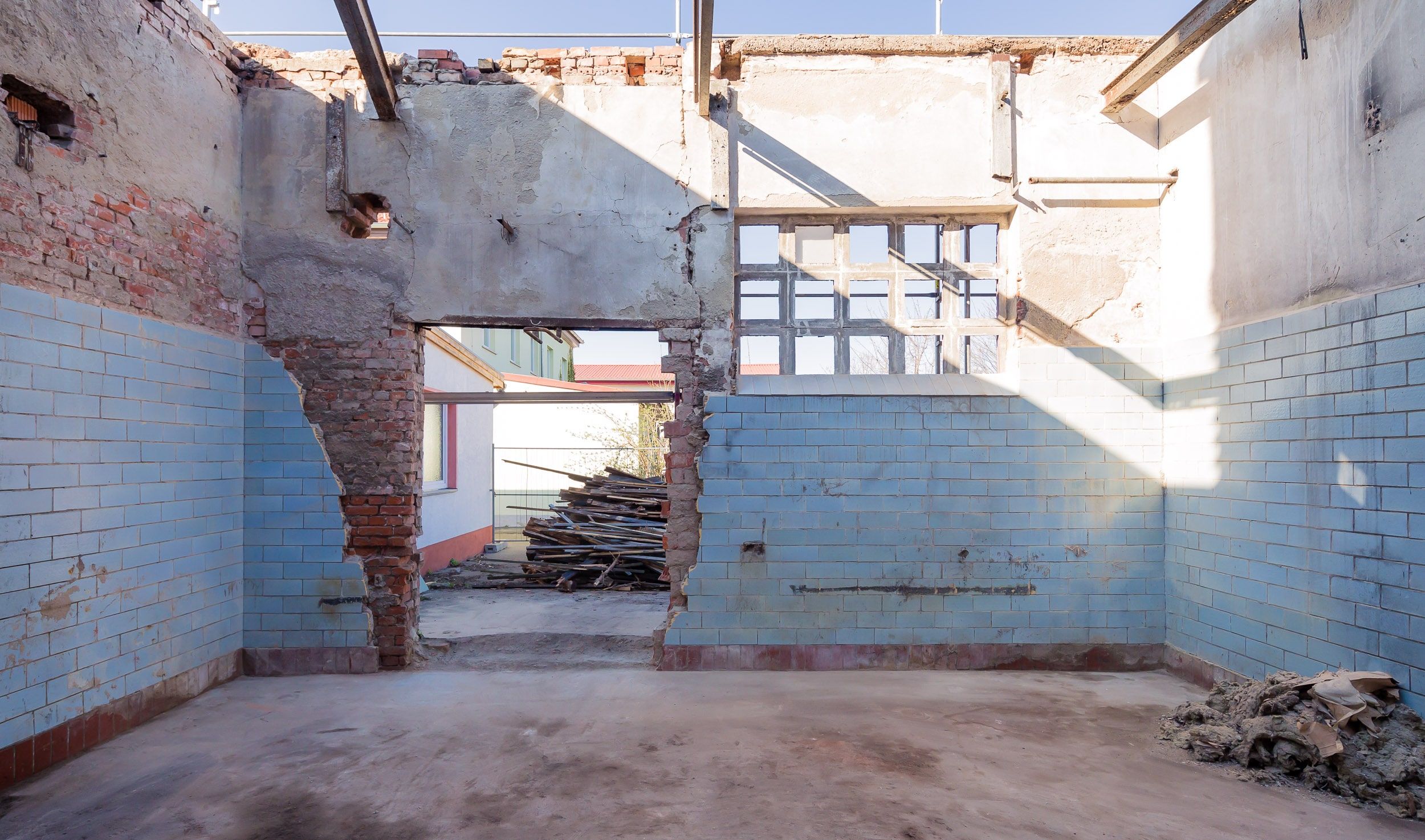
The hoteliers Judith Rüber and Jan Kobel have a weakness for abandoned industrial buildings and for the slumbering potential that often resides in them to become places for architectural and cultural experience. In 2014 Jan Kobel purchased the Arnstadt Milchhof (1928, by architect Martin Schwarz) together with a partner and as a co-shareholder in Baudenkmal Milchhof Arnstadt GmbH, with the aim of restoring the building as an outstanding example of the architecture of modernism to landmark preservation standards, and of establishing it as a multifunctional art and cultural centre. Jan Kobel sees the future Milchhof closely linked to the Bauhaus movement philosophy: ”Architecture that is not only simple and beautiful, but also optimises work processes, minimises cost, lets light into the building and reflects above all the interests of the people living and working in it”.
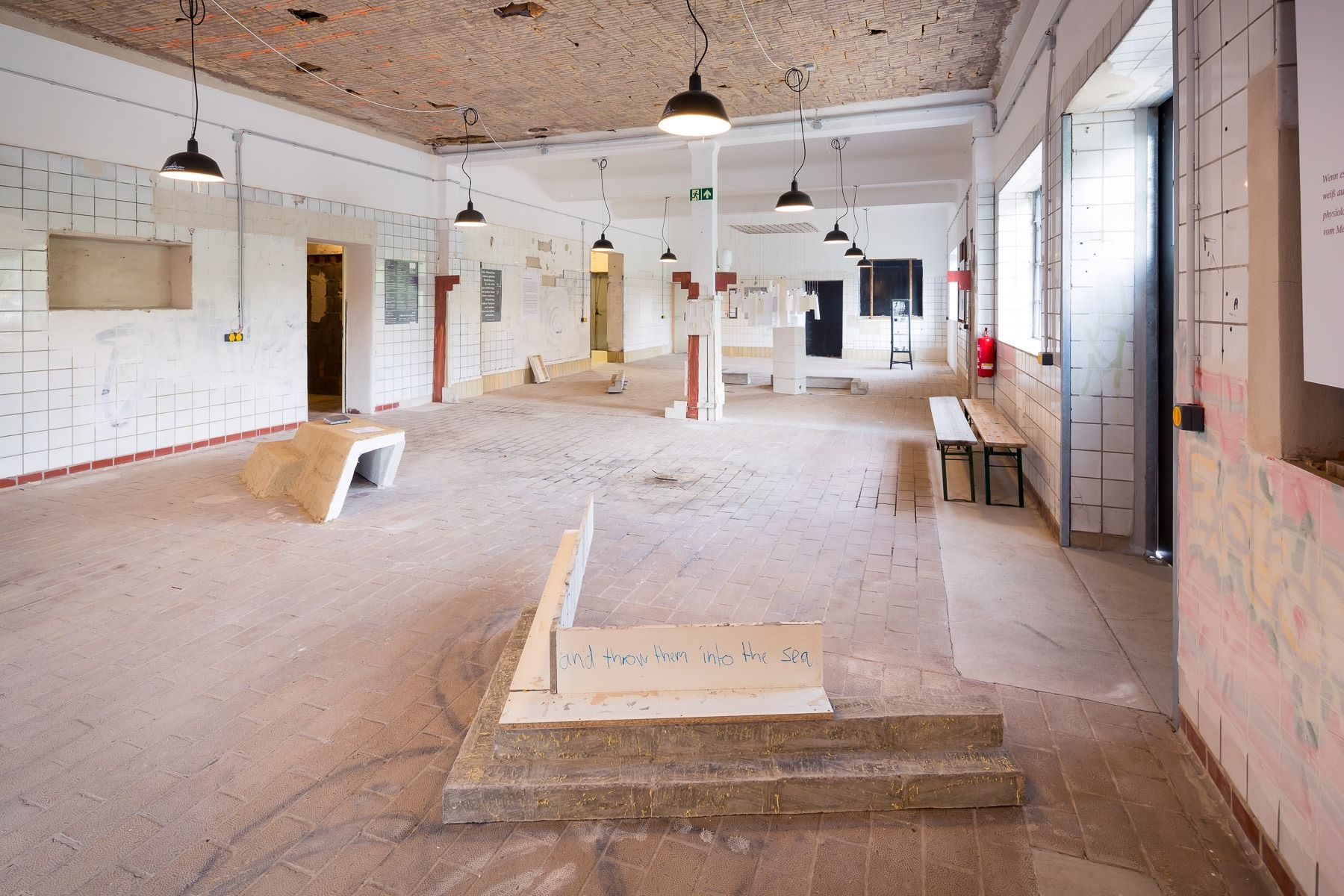
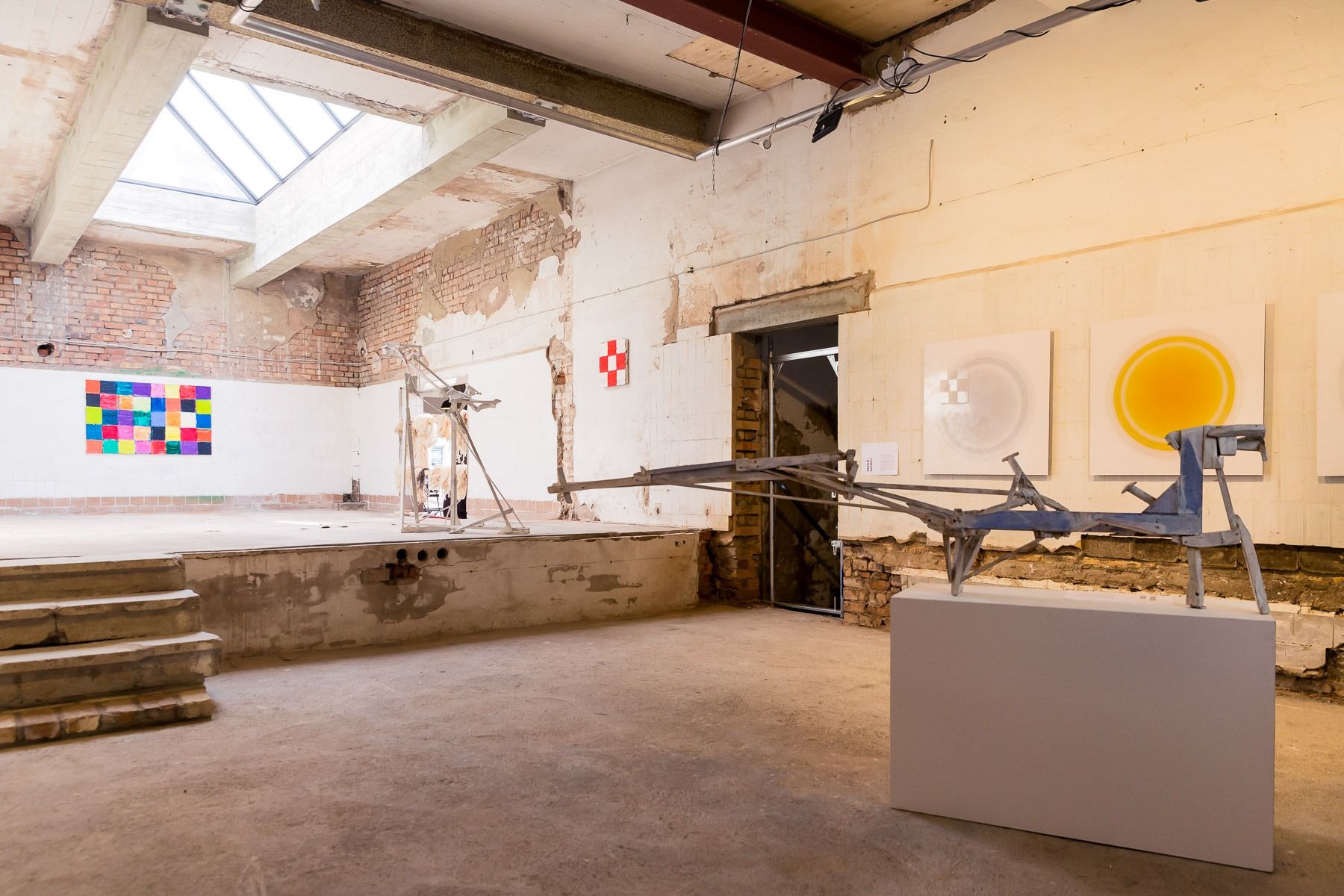
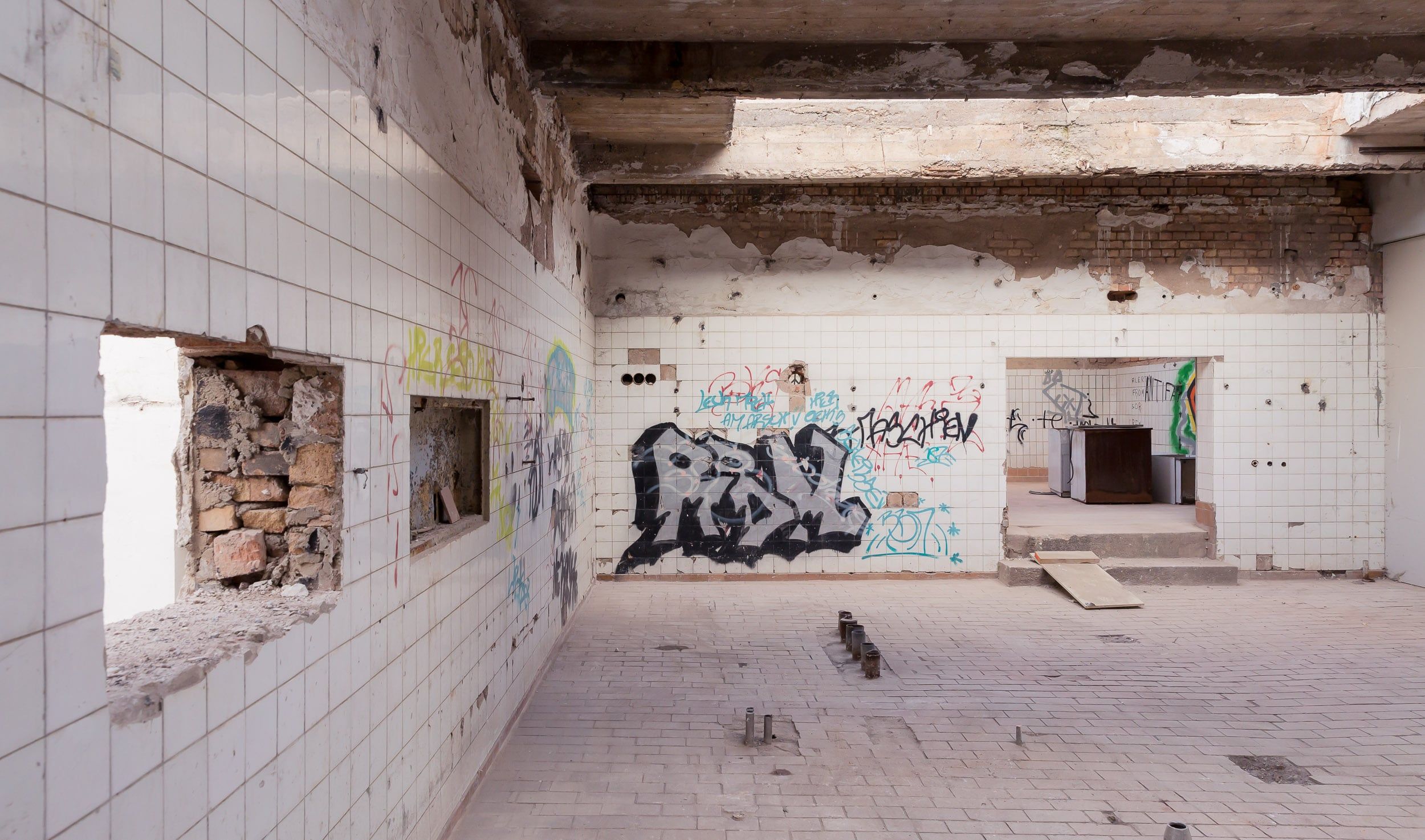
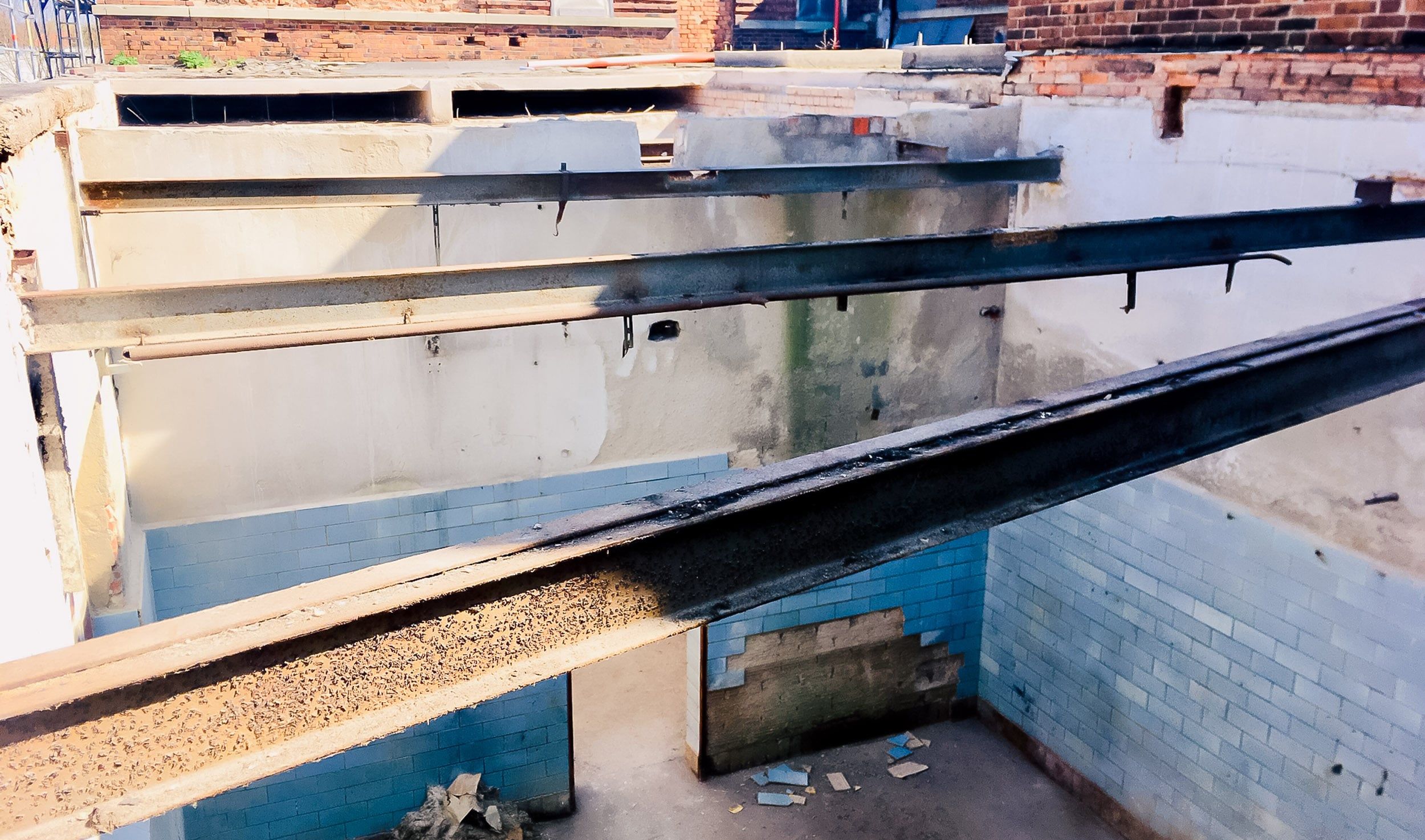
The now partly renovated Milchhof Arnstadt is a monument of Classical Modernism from 1928, and as such part of both the German and the Thuringian GRAND TOUR DER MODERNE 2019 as well as official partner of the Bauhaus100 program of the Bauhaus Association of the States and the Foundations. Because of this significance, the building designed by architect Martin Schwarz will be restored step by step with the help of the State of Thuringia and put to new cultural and social uses. In the course of this revival, the exhibition weiss. nullpunkt der moderne., curated by Judith Rüber, was opened a few days ago in the impressive rooms of the Milchhof (24.5. — 31.8.2019 open daily from 10 a.m. to 6 p.m.).
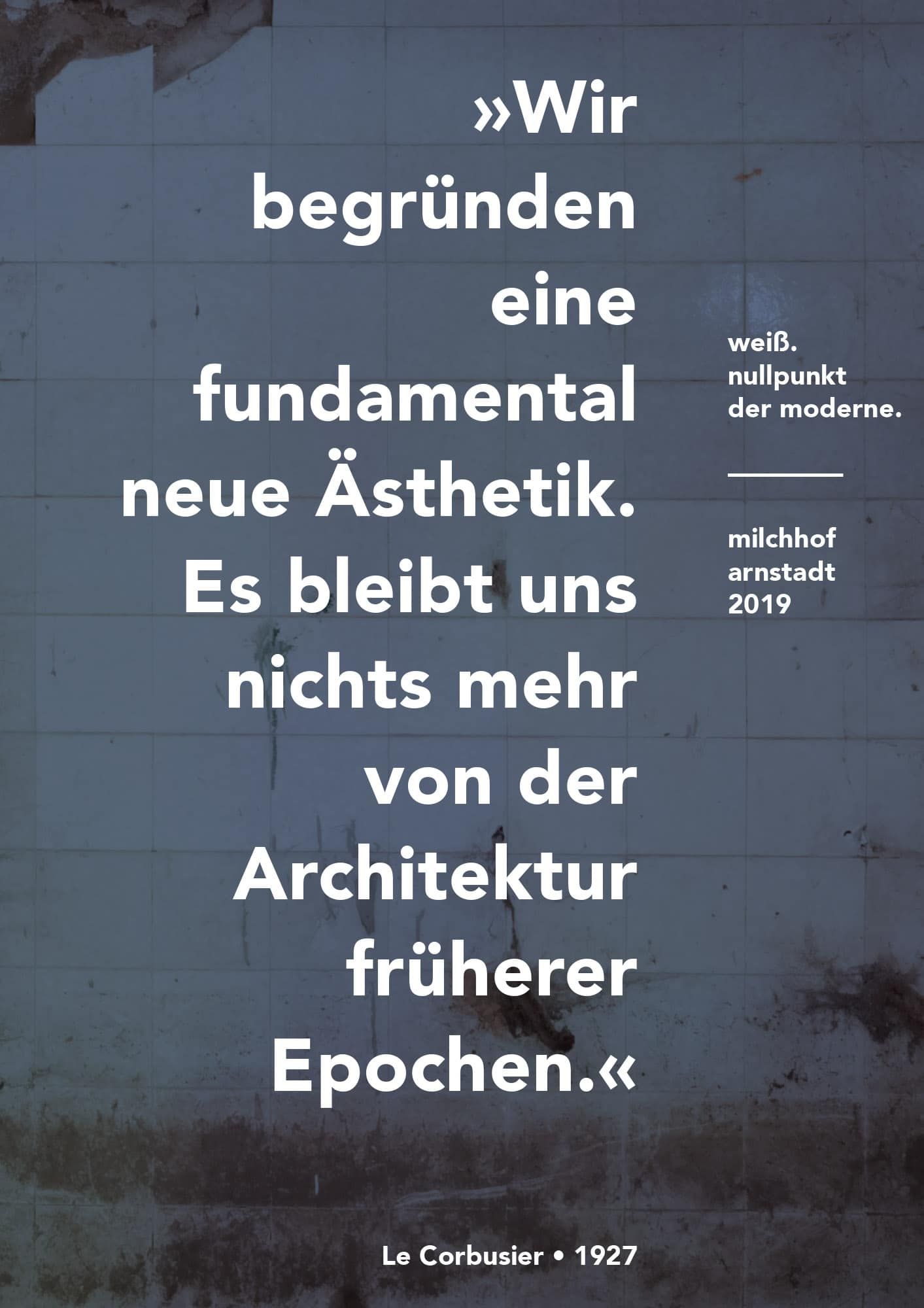
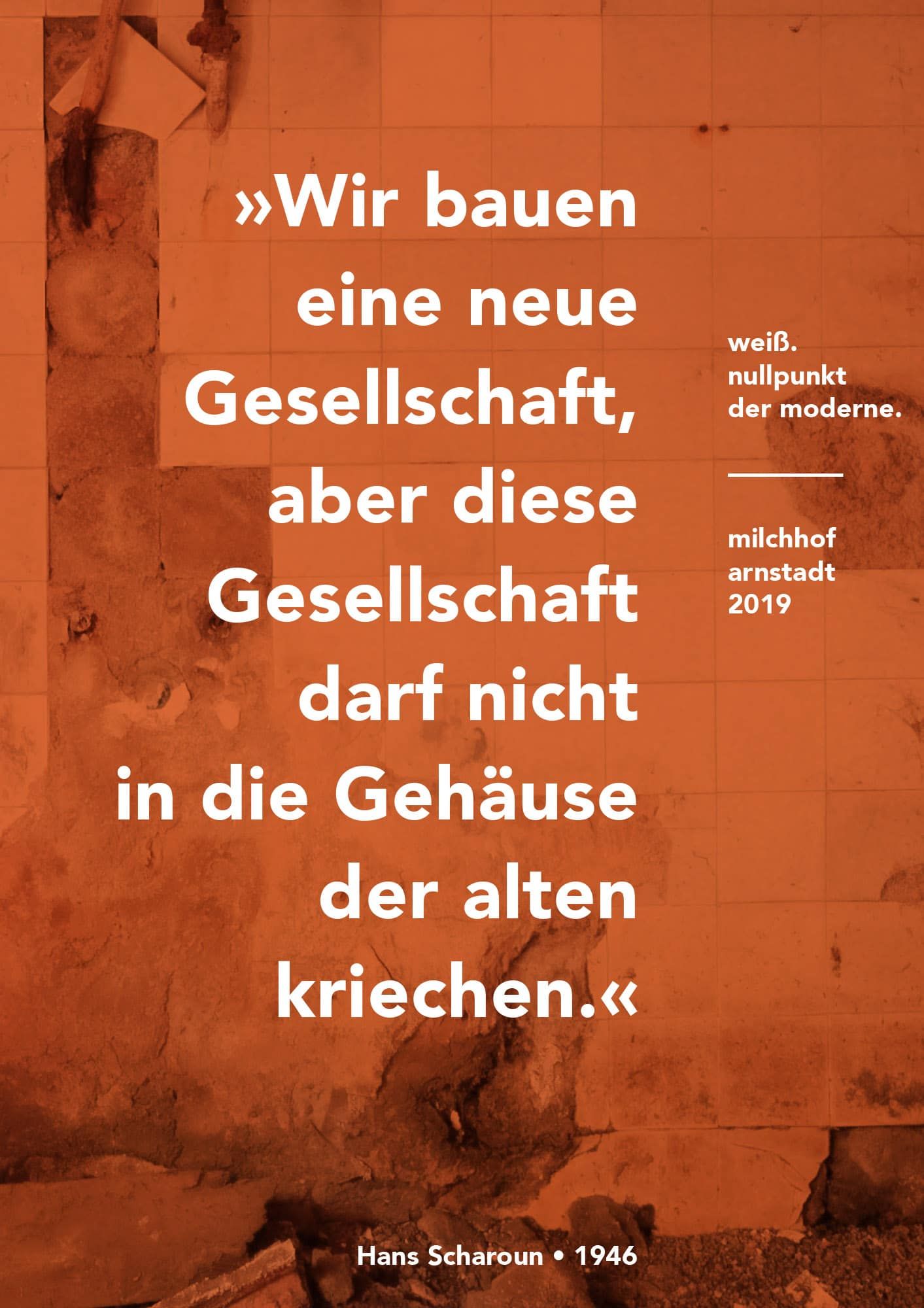
100 years of modernism
For 100 years we have been dealing with questions of design, which have been raised by modernity and which still fascinate us today. Groundbreaking and great things have arisen from it. But 100 years of modernity also mean 100 years of loss — of craftsmanship, of diversity of materials, of local building traditions and of our ability to perceive differences and subtleties. This exhibition follows facades, plaster, tiles, paper and porcelain in colour, structure and surface, and questions the avant-garde’s gesture of sitting in front of a white sheet of paper in 1919.
The Milchhof by architect Martin Schwarz, who like many of his colleagues at the time created exciting modern architecture without ever having been to the Bauhaus, shows how modernity and craftsmanship are compatible. The Milchhof as a cooperative building also stands for the fact that good architecture is always also social architecture, visible from the outside through the emphasis on the horizontal: not sky-high for representation, but simple and self-contained for a function. The works of contemporary artists continue the theme of modernity. They show just how much the confrontation with abstraction, simplicity, elementary formal language, rhythm and contrast has shaped the world of the fine arts to this day.
Red. Cooperative.
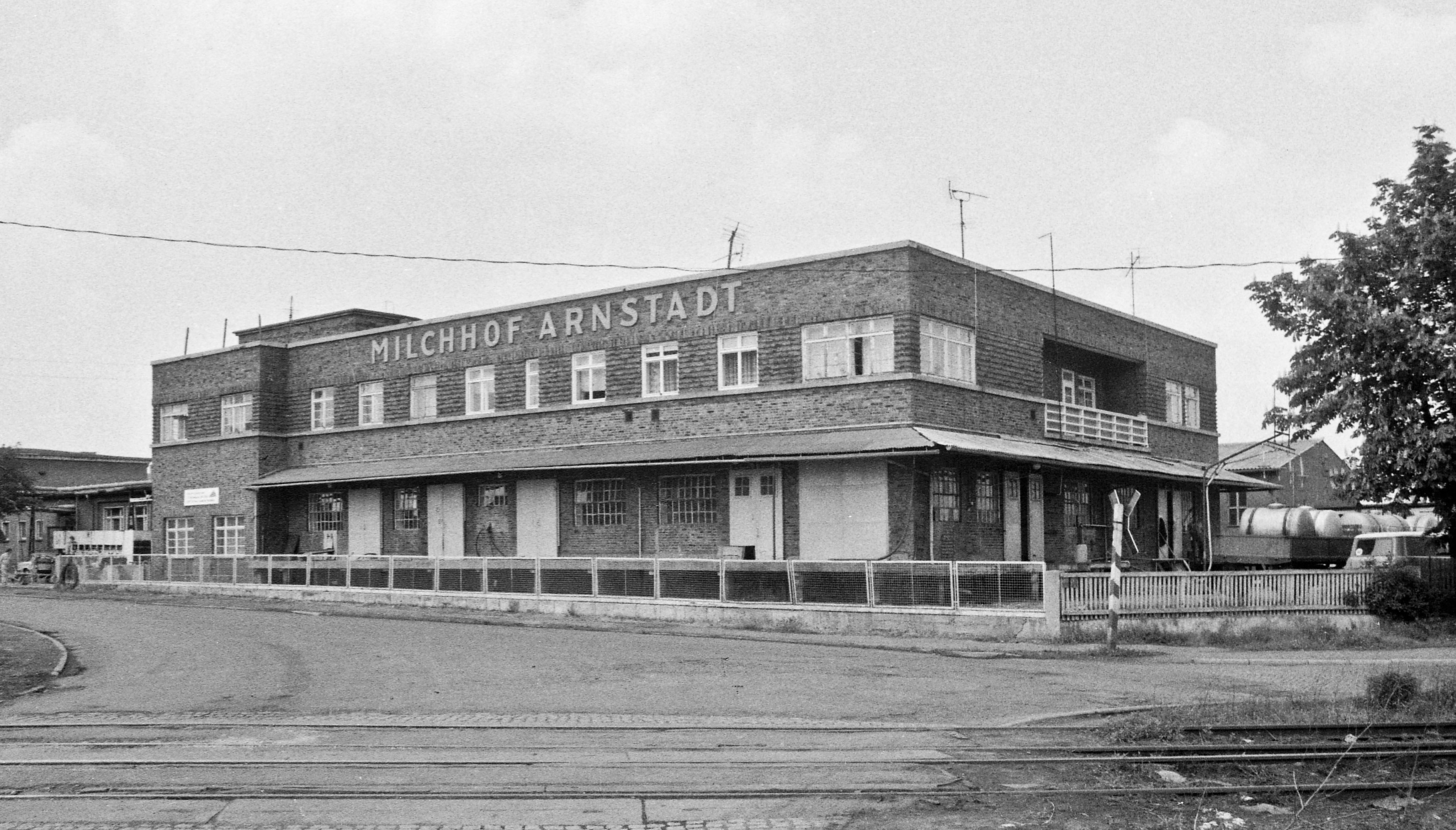
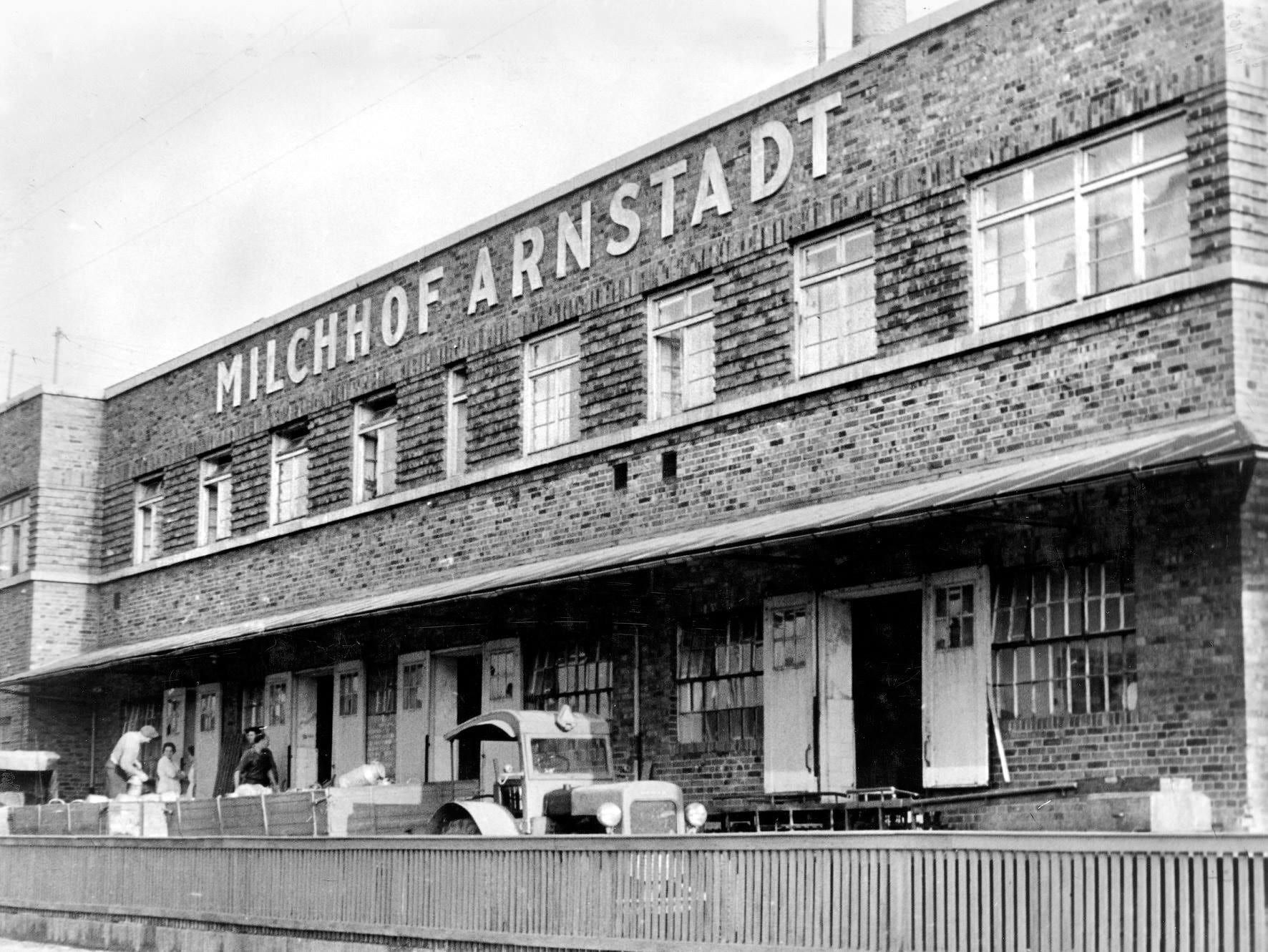
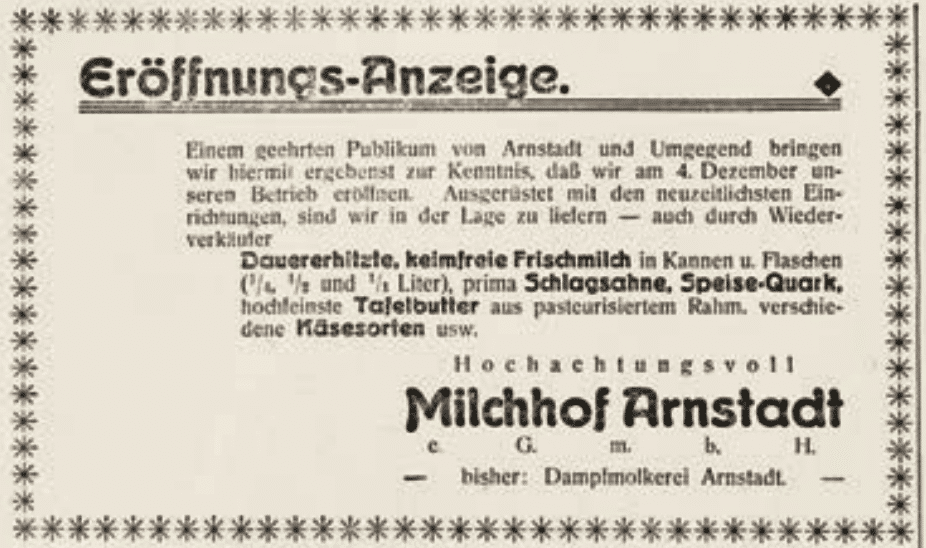
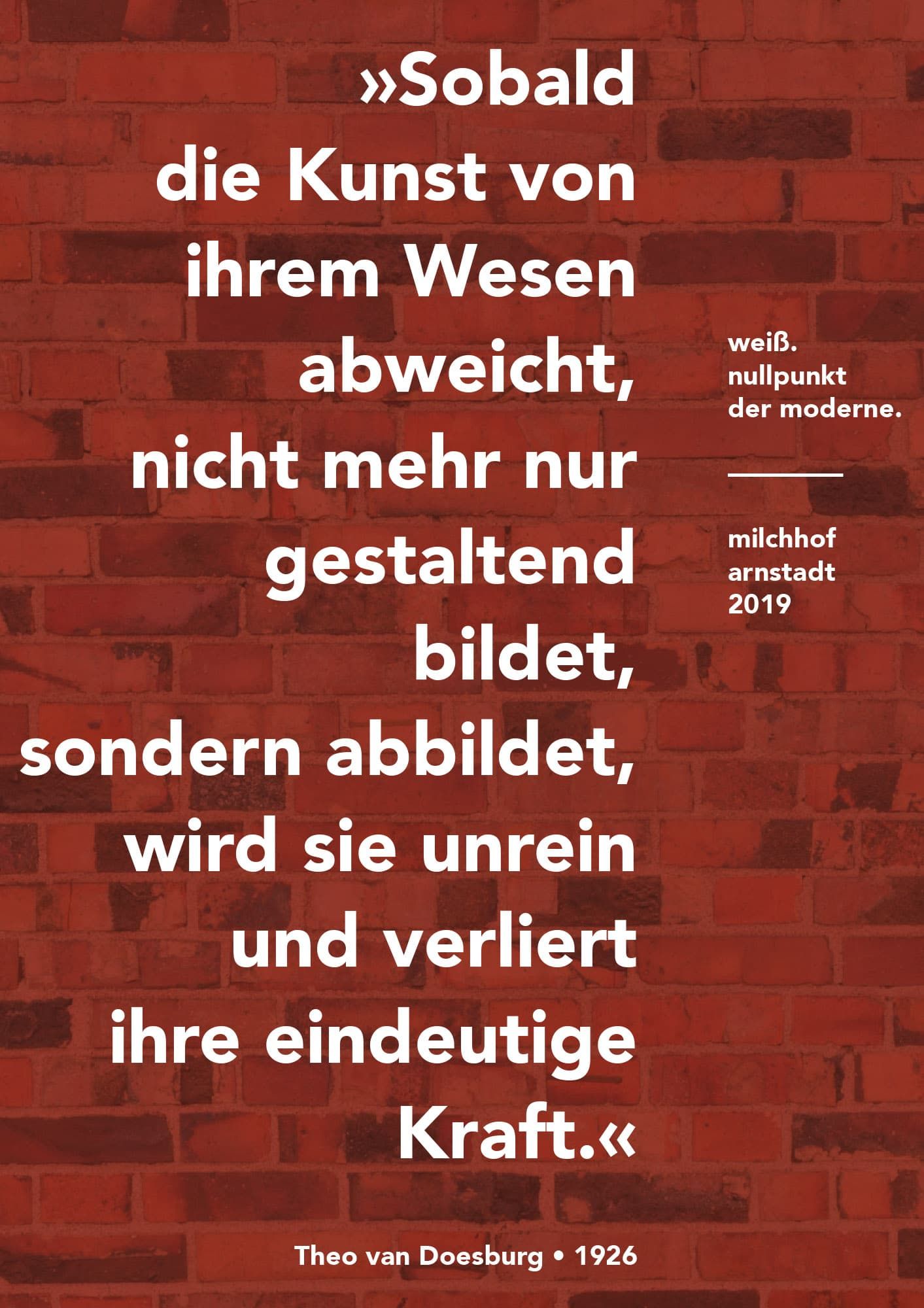
With the social movements from the middle of the 19th century onwards, savings, purchasing, exploitation or production cooperatives formed as a form of economy for the benefit of each of their members. In the 1920s, when it became clear that tuberculosis was also transmitted by untreated milk, a cooperative of over 80 dairy farmers from the region commissioned the architect Martin Schwarz to build the Milchhof Arnstadt to supply the population with hygienically perfect products. The red part of the exhibition tells the story of the cooperative on and beyond the Milchhof and shows the perspectives of a cooperative movement that is once again on the rise today.
Martin Schwarz
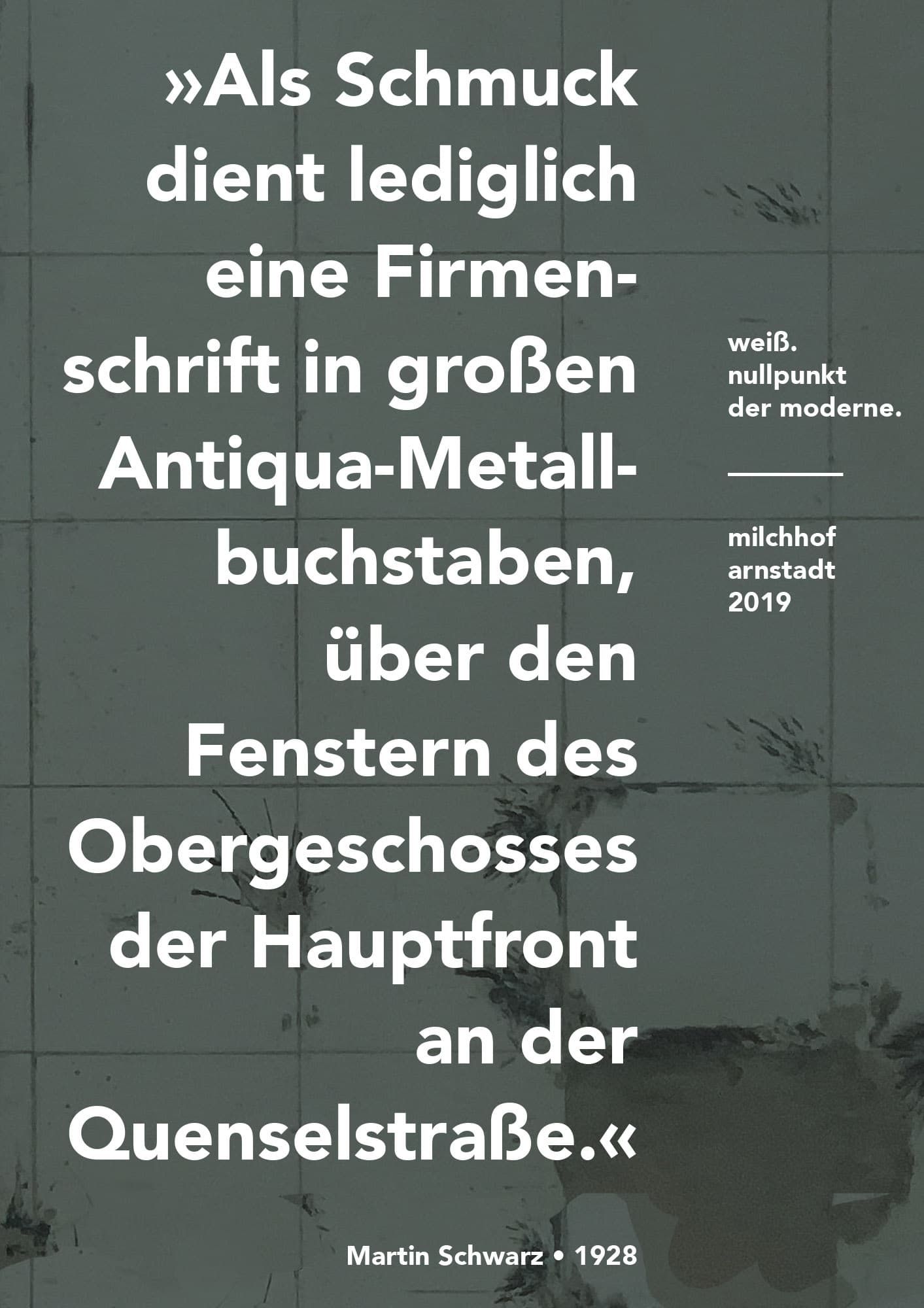
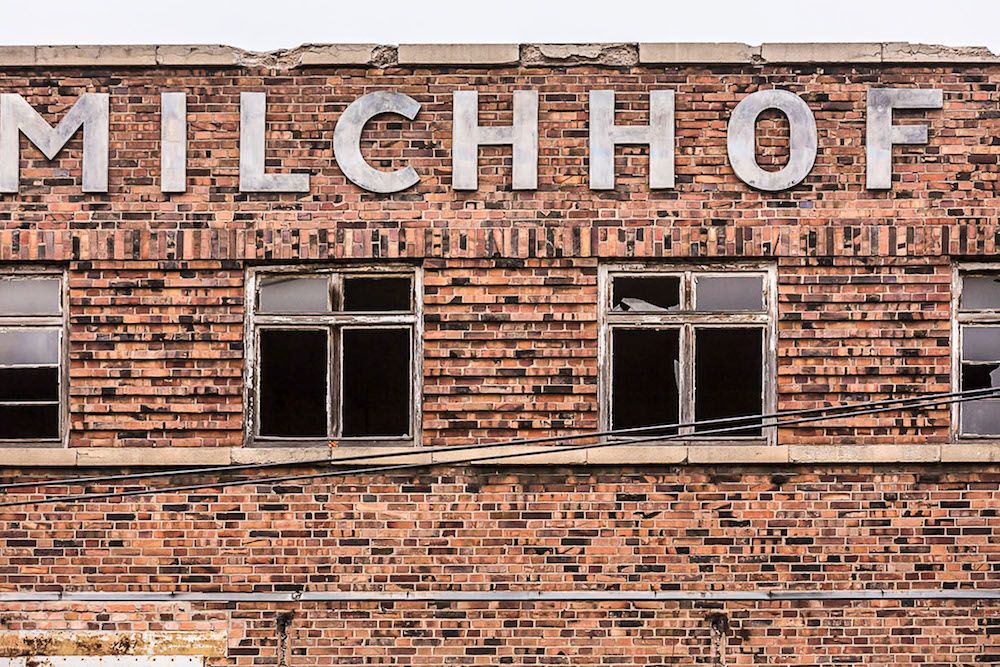
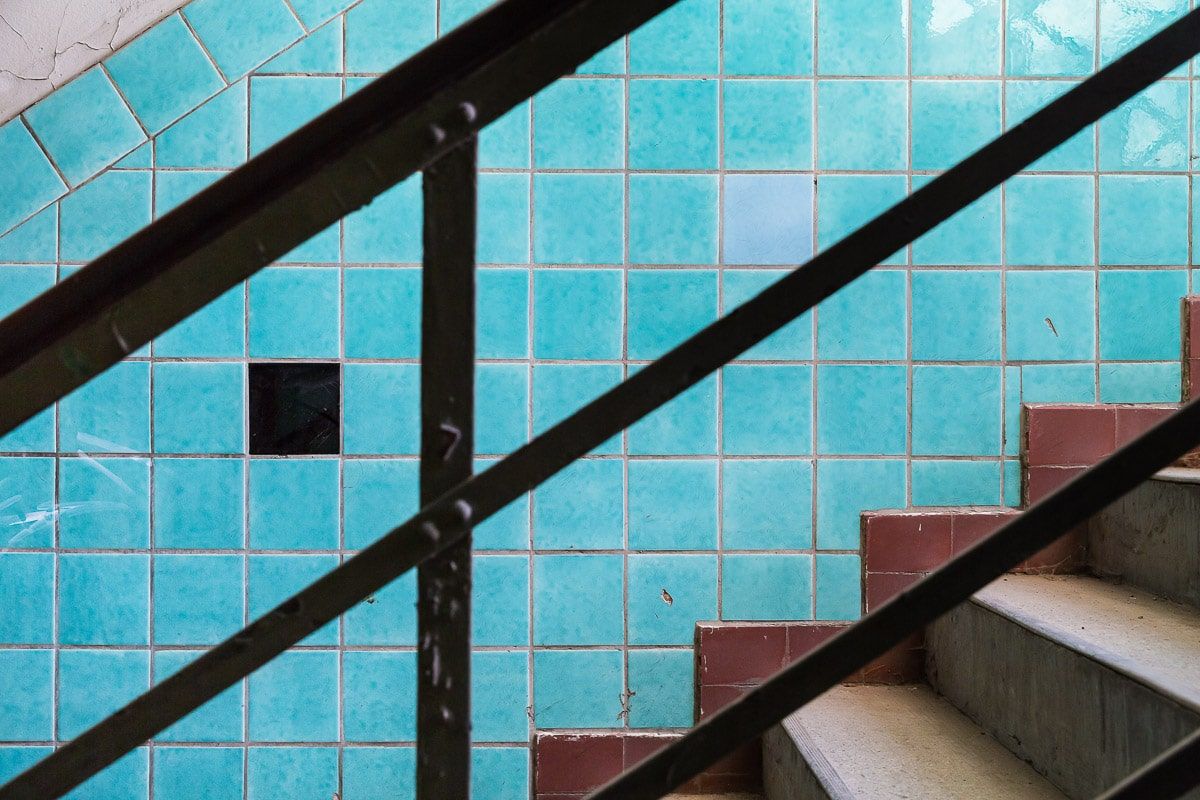
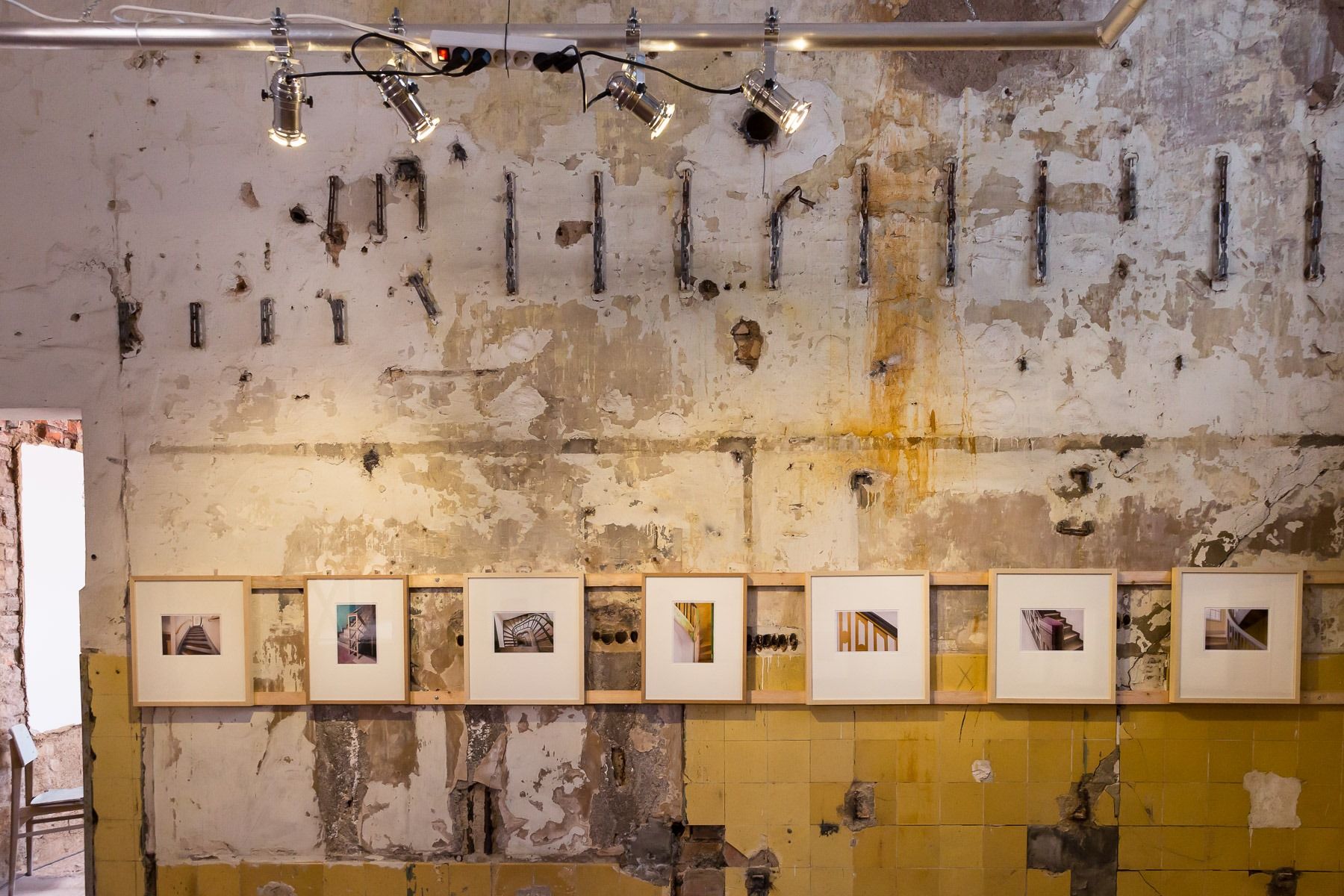
The architect Martin Schwarz was born in Frankfurt am Main in 1885. In 1911 he settled to Arnstadt, which he shaped like no other in the years that followed. Important buildings were the synagogue of the city (1913 — 1938) or the Fürstliches Gymnasium of 1915. Martin Schwarz designed more than 20 buildings in Arnstadt, always of high quality and in the style of the time. With the planning of the Milchhof Arnstadt in 1928, Martin Schwarz completely broke with his own formal language. Plenty of daylight, dairy-specific functionality, an asymmetrical cubature and the façade design with the distinctive MILCHHOF ARNSTADT lettering make the building a model of modernity. The exhibition traces the architect’s work through photographic documentation of the stairwells of 19 of his buildings, 17 of which still exist today.
White
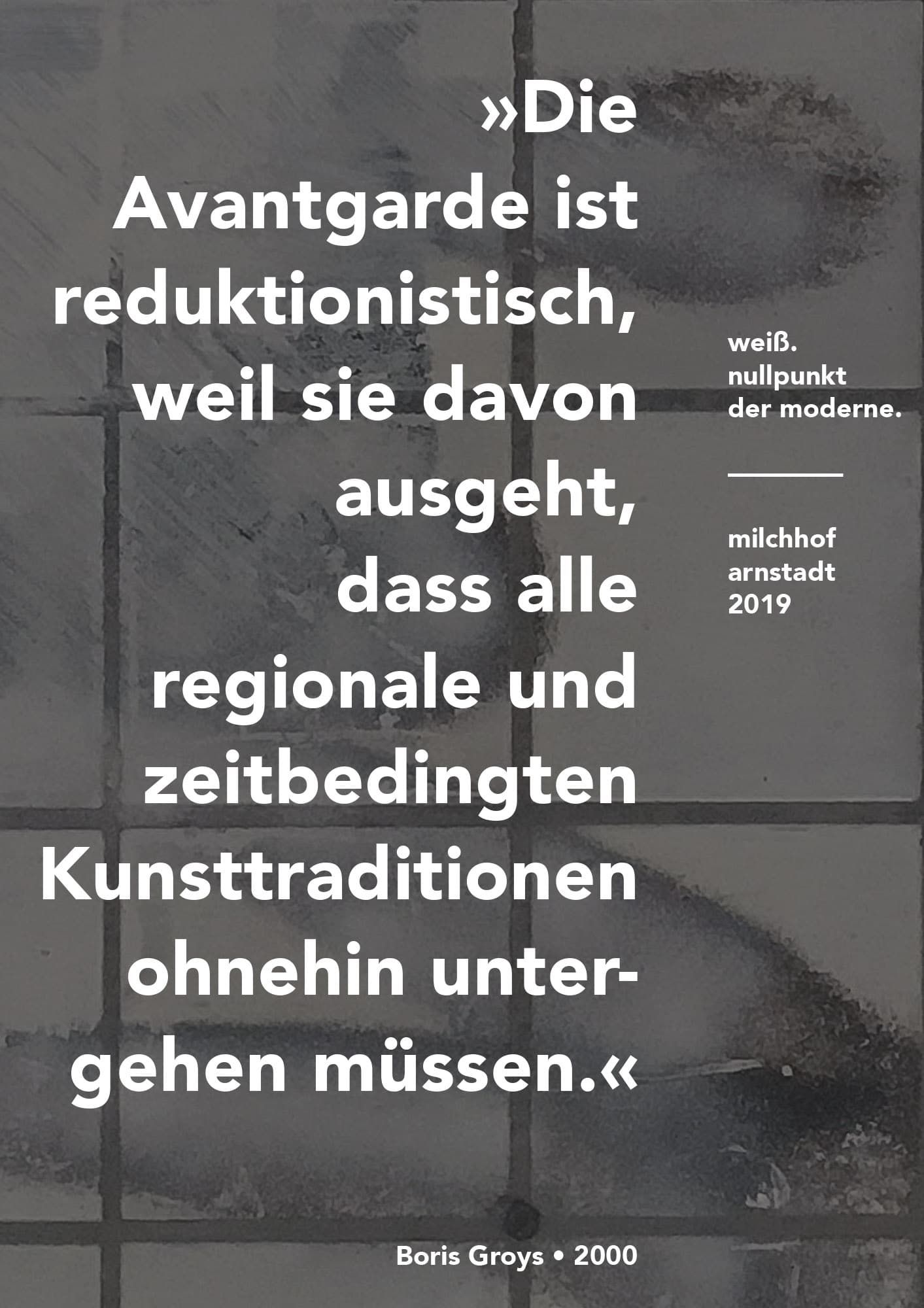
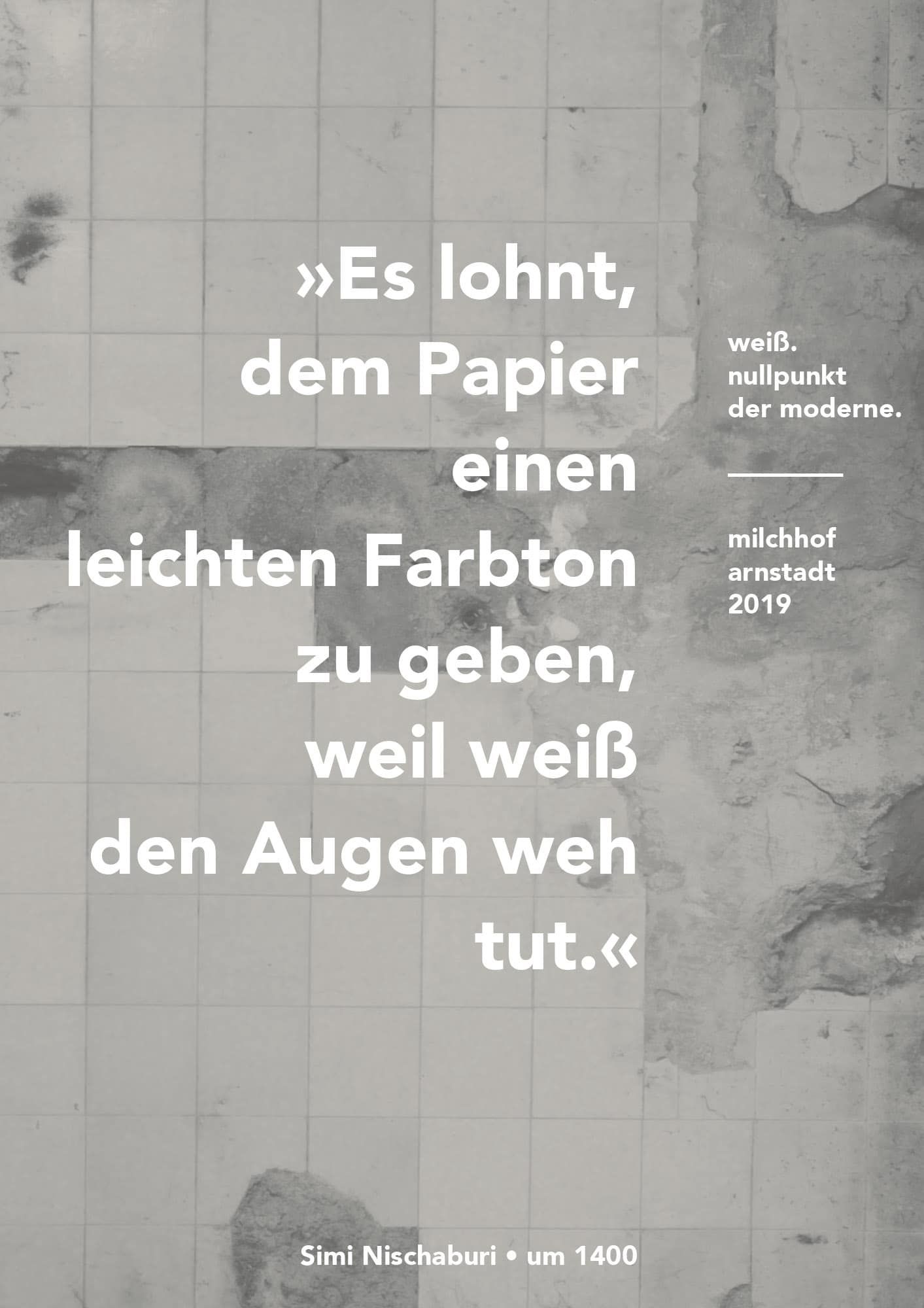
Pigments, like spices, were once weighed with gold. The lead white used in painting for centuries was also highly toxic, so that it was only used sparingly. The chemical paint industry made zinc white available from 1850 and titanium white from 1917. This meant that there were no longer any limits to the white surface in painting and architecture. What was colorful for a long time became white. Kasimir Malevich called out to his artist friends in 1917: I have broken through the blue screen of the colour limitations and have reached the white; floats after me, fellow pilots, into the depths. The white depth, the free infinity lies before you. In architecture, too, white becomes the colour of liberation from the handicraft ballast whose traditions one no longer wanted to follow. The future is white, pure, straightforward. In the inspired, as in the monotonous.
Tabula rasa
Germany was on the move in 1919. After the end of the First World War, people wanted to leave the old world behind and start anew. The time was ripe for a radical aesthetic break that would increasingly contribute to the industrialization of society. In 1945, after the next lost war — the “disgrace” this time also associated with prescribed shame — the break with the past could no longer be stopped.
What the war had not destroyed fell victim to urban planning. Art Nouveau or Wilhelminian style, stucco or colour, historicism or ornament: suddenly everything was spoofed. Even today, the contempt for historical buildings is deeply inscribed in the DNA of German planners, administrations and architects.
DIN
Subsequent events such as the founding of the Bauhaus, which were considered epochal incisions, are in fact part of previous and parallel developments. The desire for a more effective war economy and the industry’s need for standardized products led to the founding of the Standards Committee for Mechanical Engineering in May 1917.
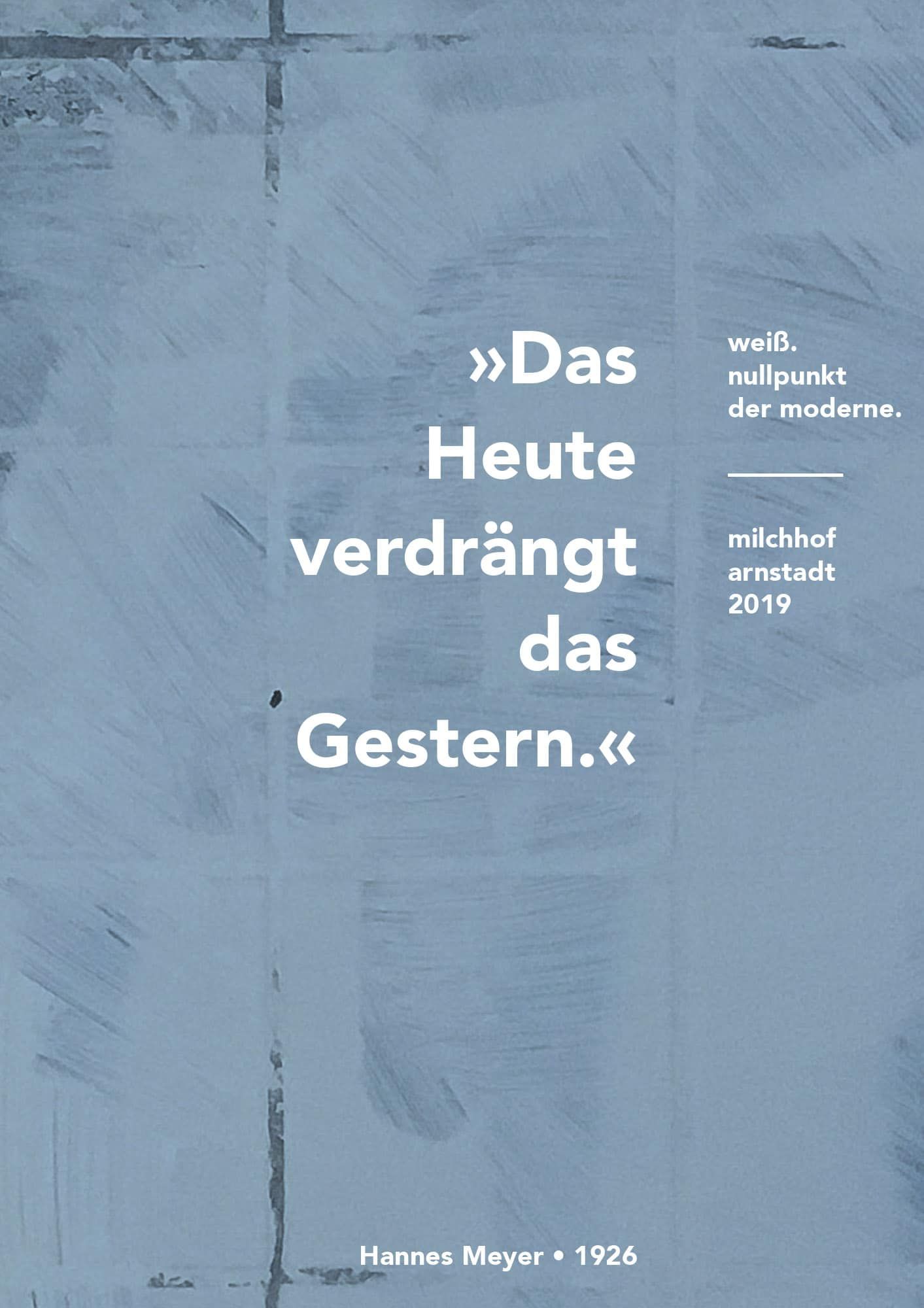
The first DIN was published on 1 March 1918 and regulated the uniformity of a mechanical connecting part, the taper pin. In 1926, Hannes Meyer postulated “the result is the standard product” in the spirit of DIN. In the meantime over 30,000 standards have been drawn up in Germany. Approximately 2000 standards are added every year. The question has long been raised as to where the benefits and limits of standardization lie — and whether anything that does not comply with DIN must fear for its right to exist.
Surfaces. Haptics
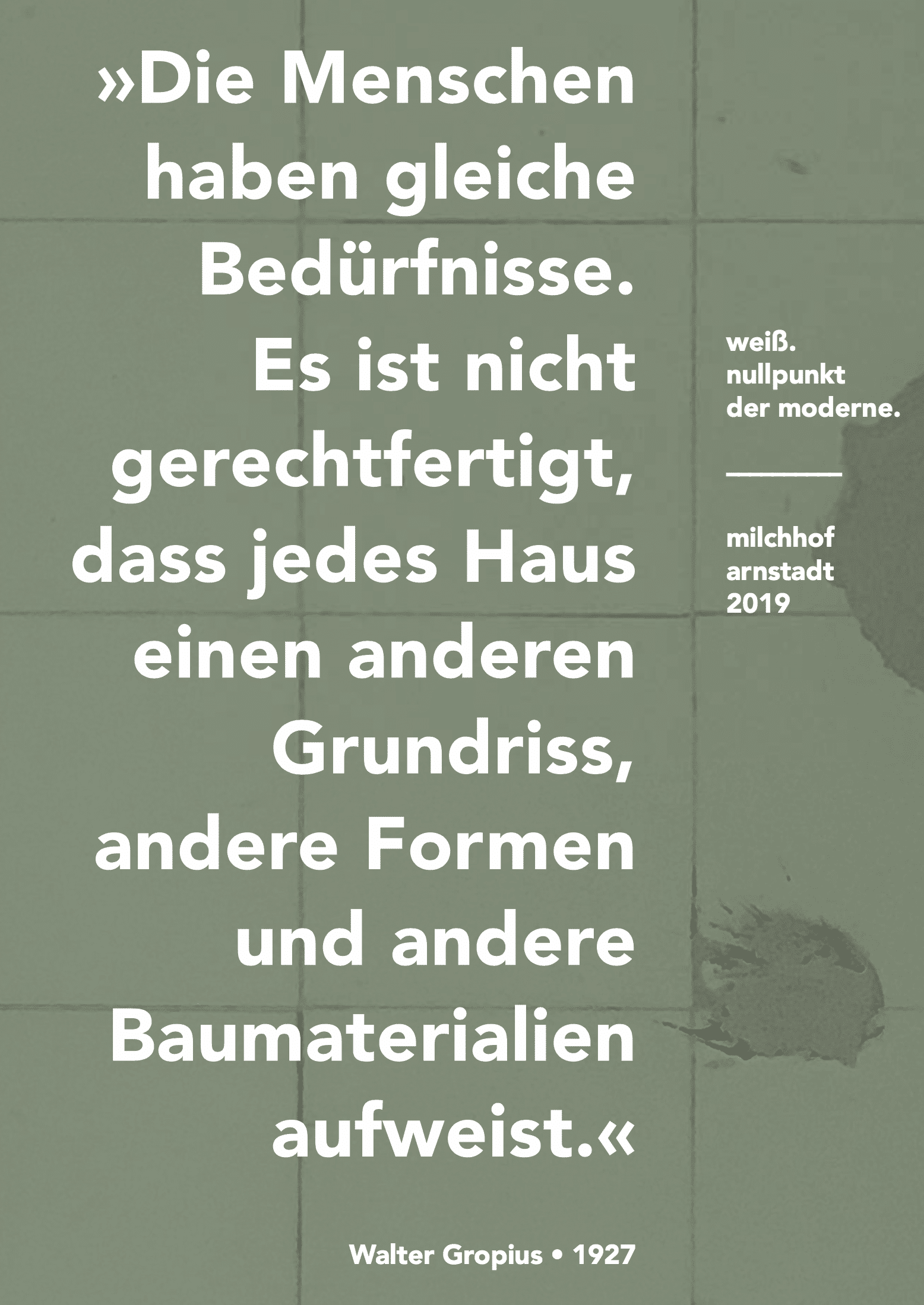
Simplicity and straightforwardness, reduction and functionality are the ideals of modernism against the design traditions of the 19th century and craftsmanship, and they still are today. Many architects of that time were always aware of the special importance of the choice of materials and the design of surfaces with these creative ideas.
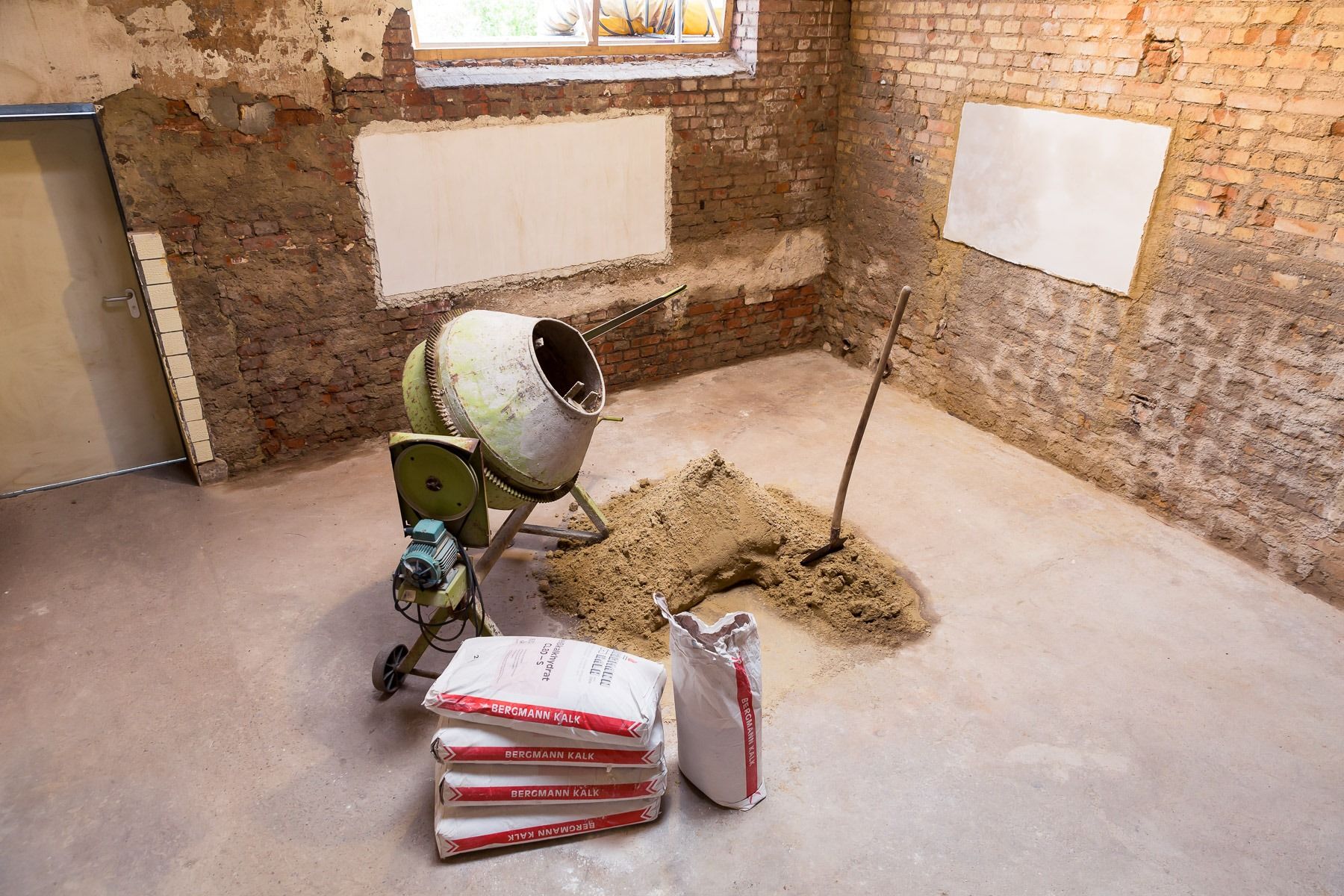
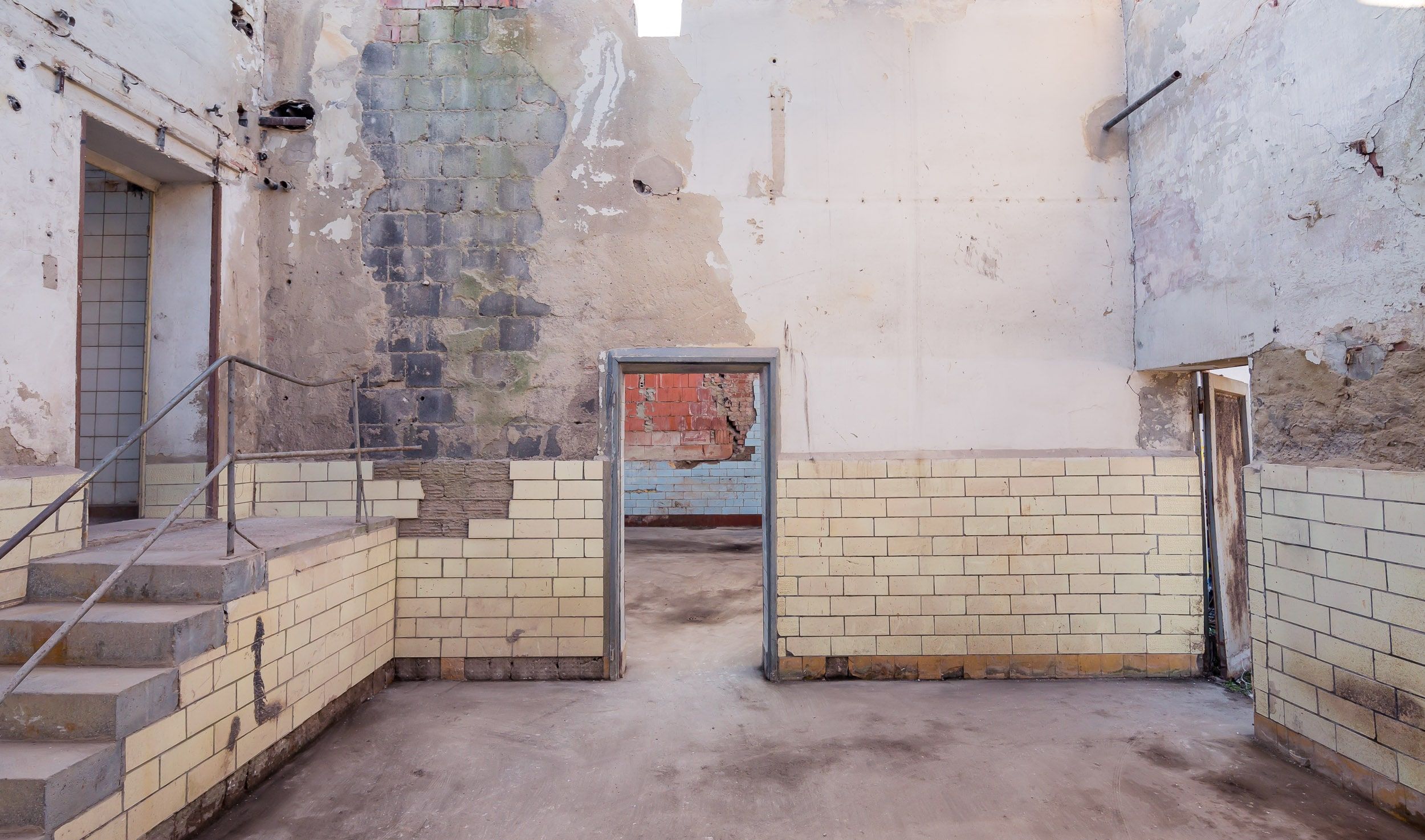
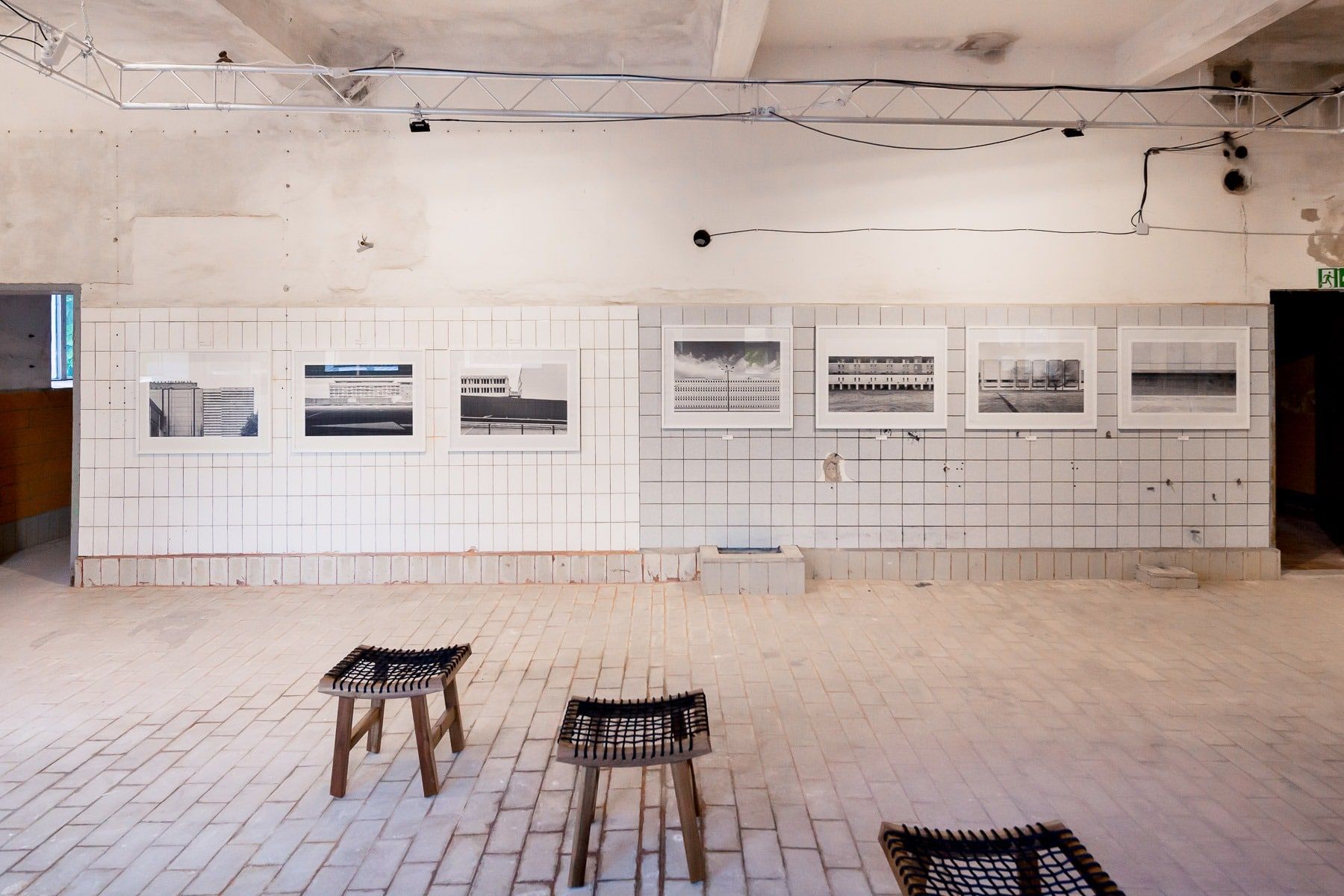
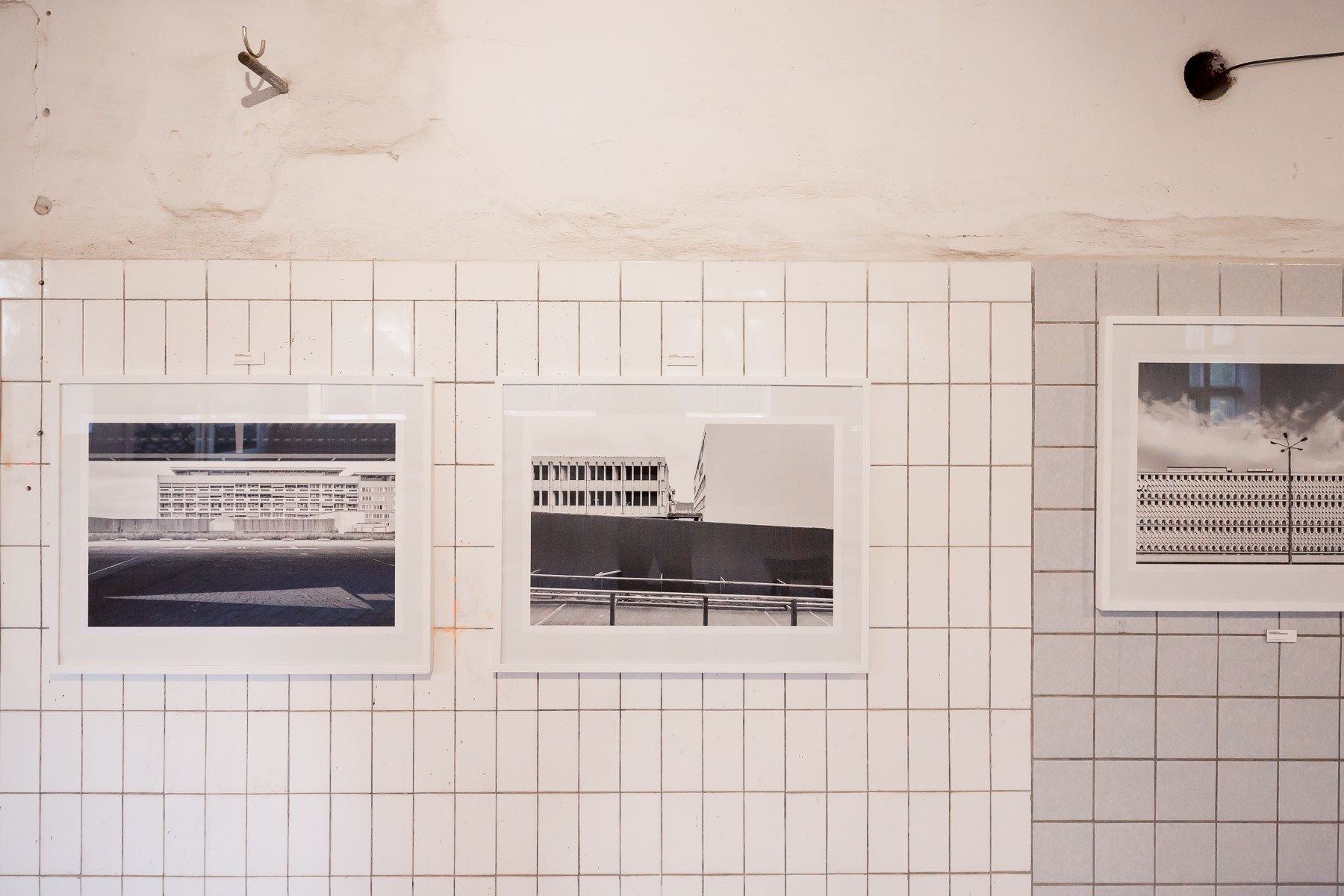
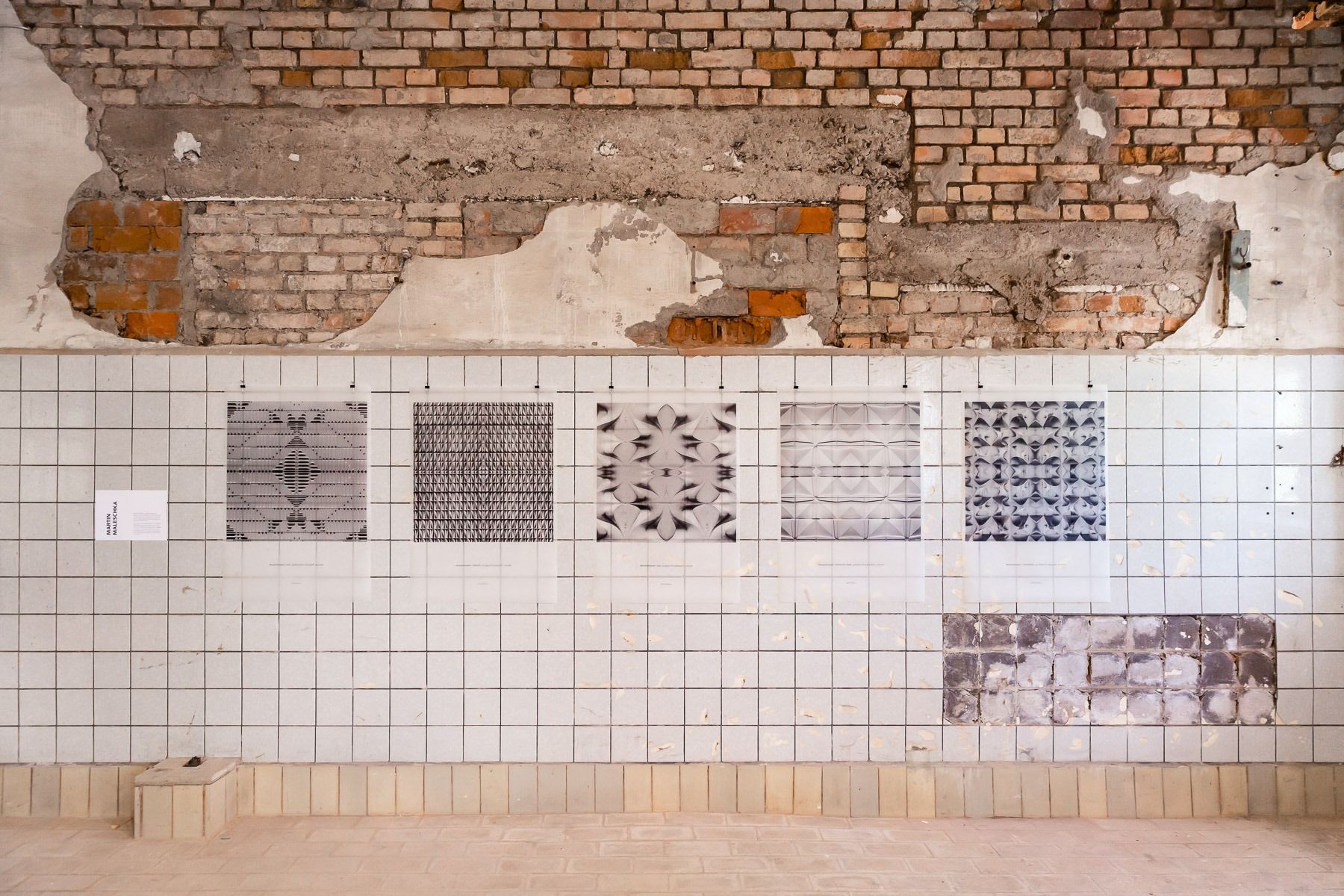
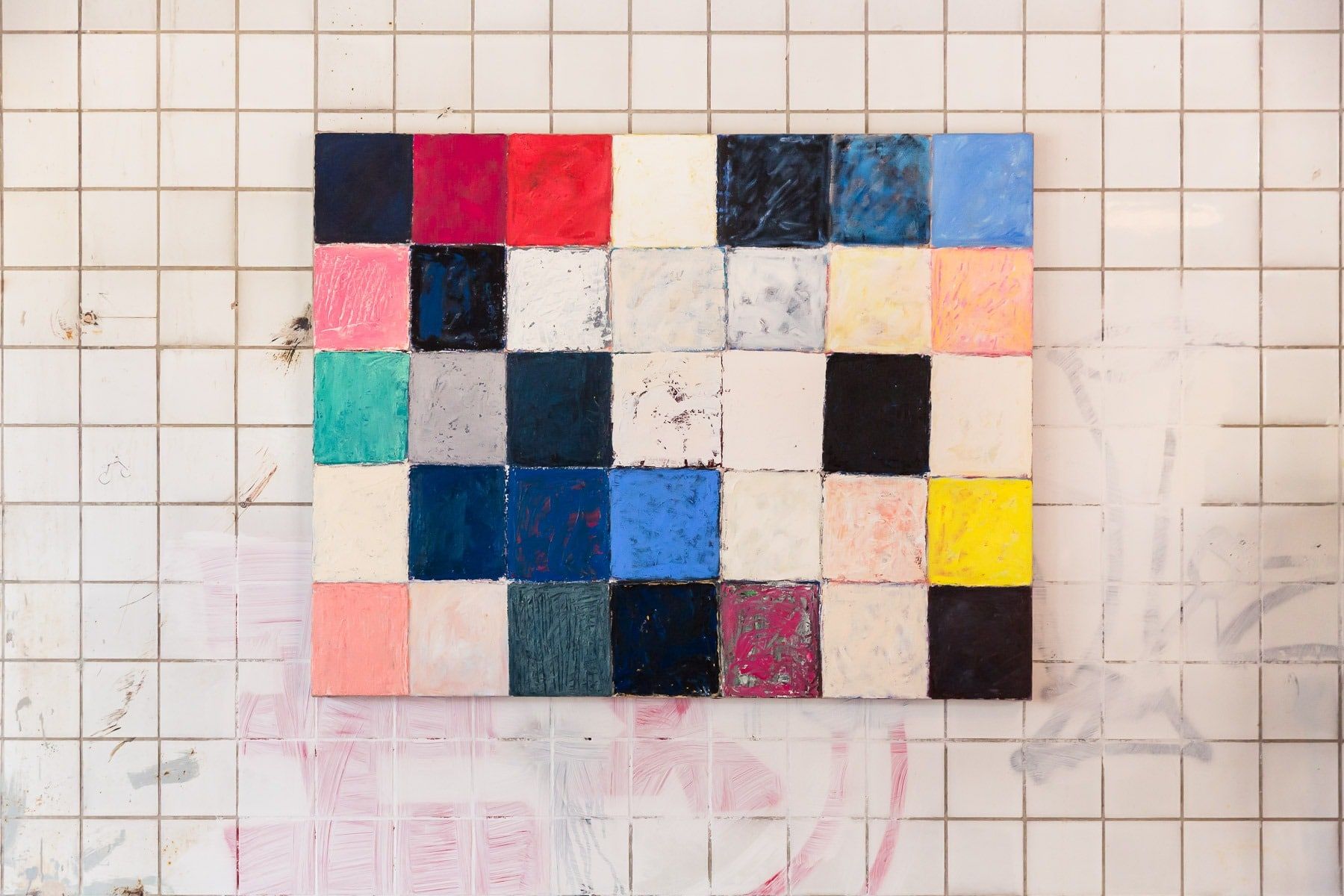
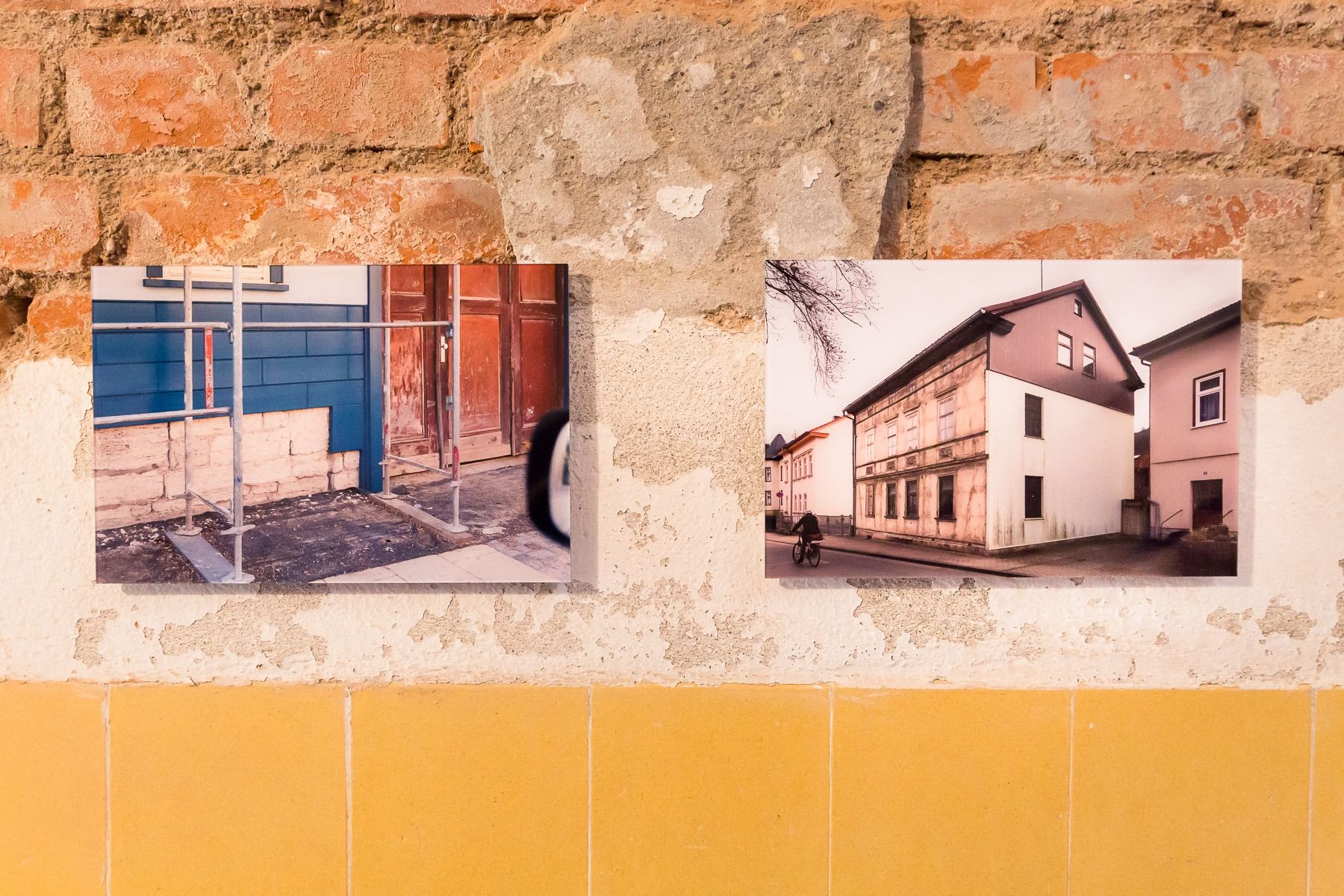
The exhibition weiß. nullpunkt der moderne. sees itself as a school of seeing. By means of various plaster fields and tiles, installations and collections of porcelain and paper and the juxtaposition of traditionally fired and industrially produced bricks, it makes the beauty and variety of handcrafted surfaces tangible.
Abstraction
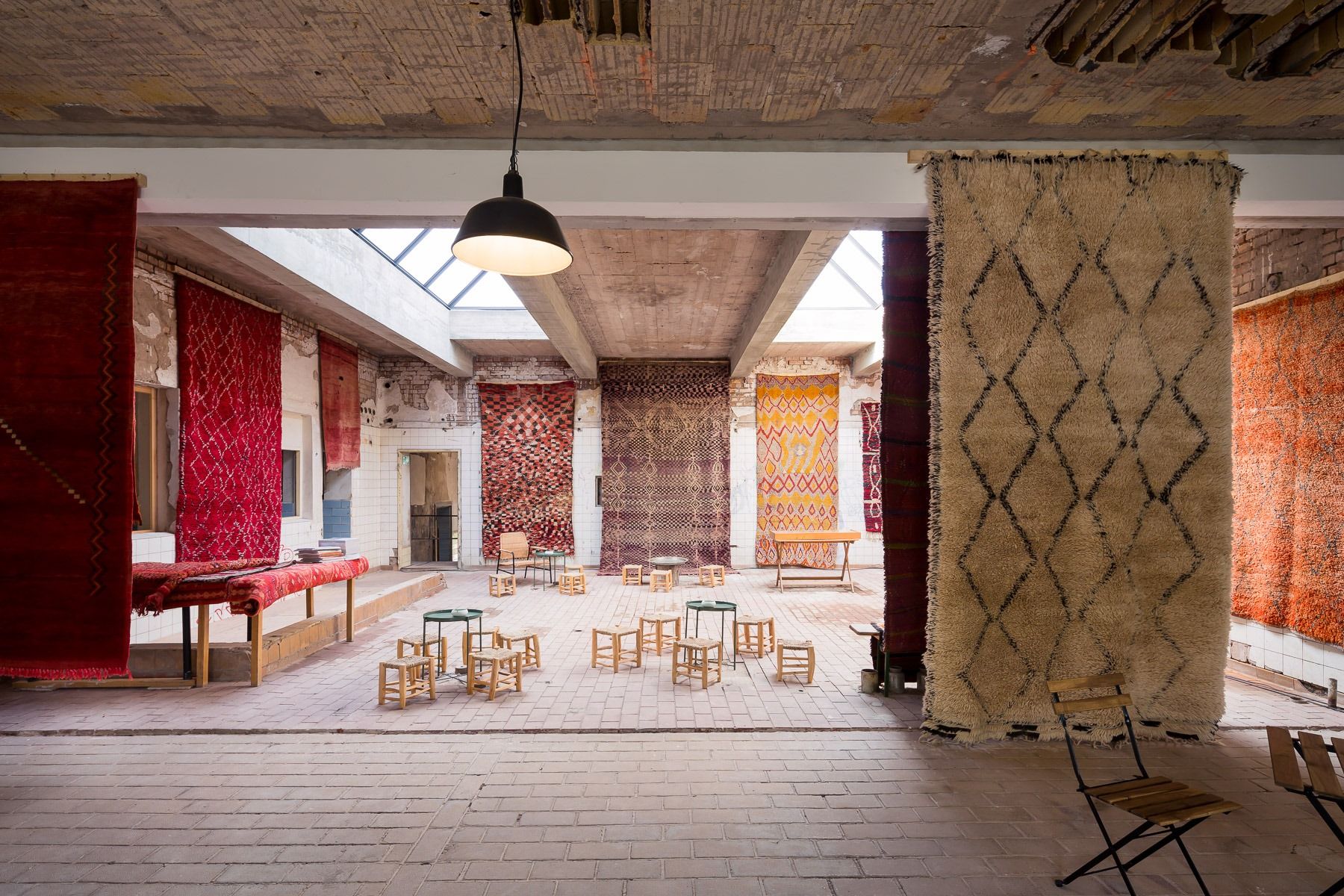
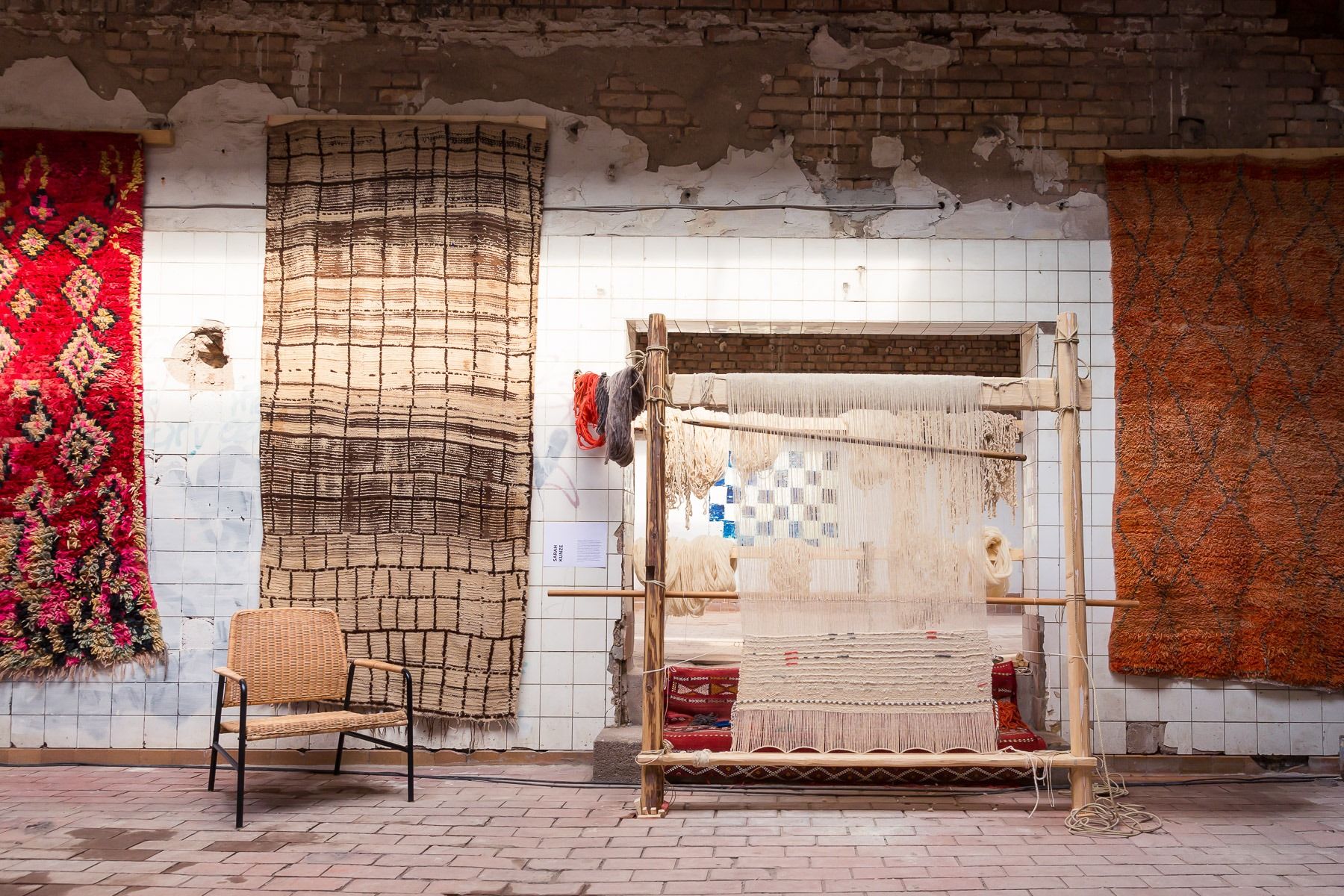
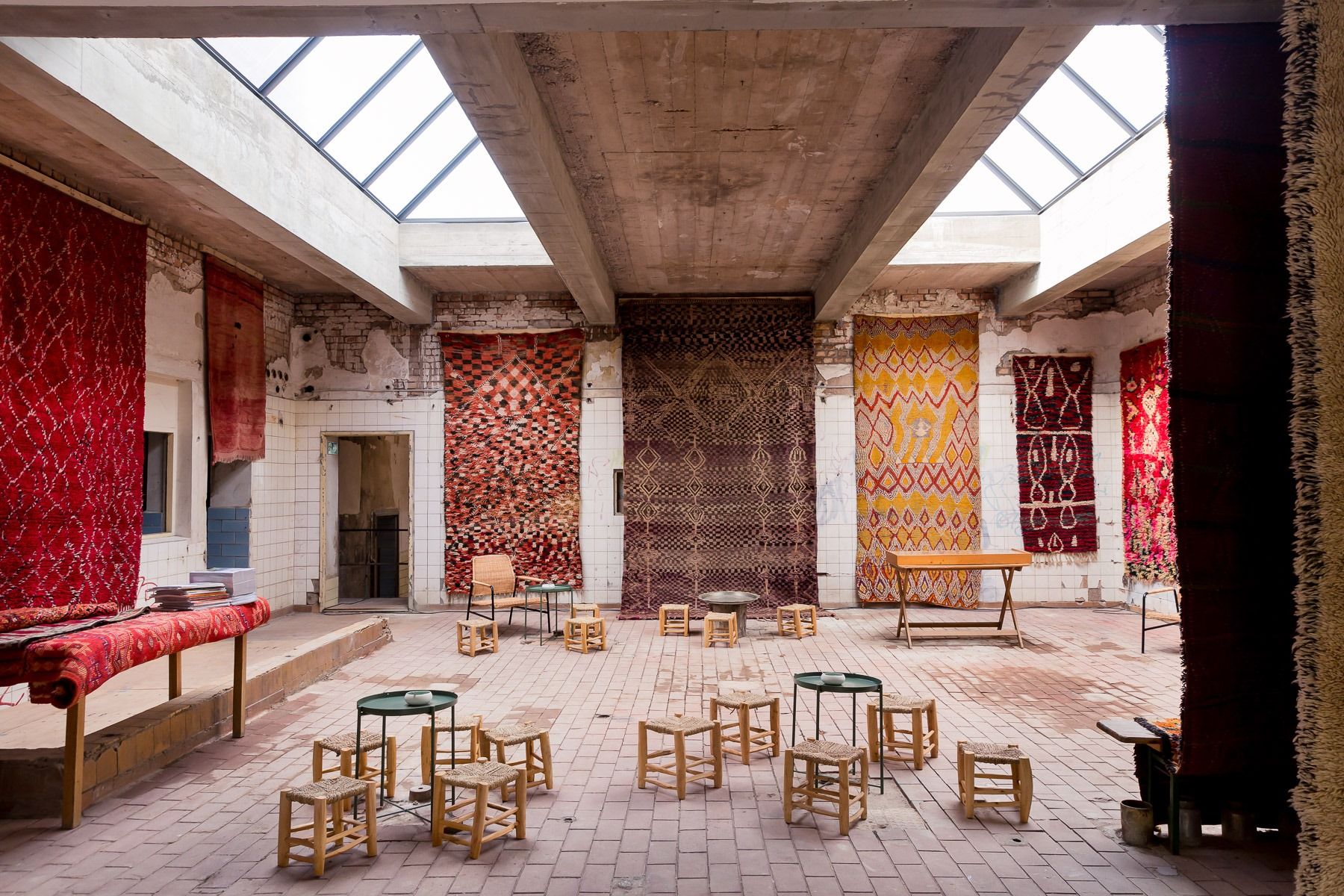
European art was an art of representation; the protagonists of modernism fought hard to find their way into abstract painting. In Islamic art, on the other hand, which is subject to the prohibition of images, abstraction, ornamentation and calligraphy play a central role. Both cultures share the ordering principle of writing. The situation is different with the Amazir women’s carpets, which fascinated Paul Klee as “Berber carpets” and whose white varieties Le Corbusier collected. The abstract world of forms of these Moroccan carpets is a tradition cultivated for centuries, but here the abstract symbol replaces a culture of writing that does not know the culture of the Amazir. The meandering forms of these “tapis fous”, mocking the ornament as much as the script, are to be understood as the narrative of a fairy tale, whose themes are familiar to everyone and which are constantly reassembled.
The exhibition shows a collection of these carpets and offers a world premiere of a film about the Amazir’s life today. On a knotting chair, visitors can take part in the creation of a carpet under their own guidance.
weiss. nullpunkt der moderne. An exhibition of the architectural monument Milchhof Arnstadt GmbH on the occasion of the Bauhaus 100 anniversary under the curatorial direction of Judith Rüber.
Project Management. Jan Kobel
Texts. Judith Rüber und Jan Kobel
Photography. Jan Kobel
Contributing artists.
Hartmut Bechmann, glass artist and sculptor (1939 Ernsttal — 2013 Lauscha)
Angela Brandt, Photographer (Essen, *1967 Stuttgart)
Philippe Derlin, sculptor (Düsseldorf, *1998 Würzburg)
Angela Dwyer, painter (Berlin, *1961 Palmerston, NZL)
Paolo Giudici, Photographer (London, *1969 Padova, I)
Jan Kobel, photographer and painter (Arnstadt, *1960 Munich)
Markus Krug, sculptor (Munich, *1965 in Singen/Hohentwiel)
Sarah Kunze, goldsmith & textile designer (Stralsund, *1993 in Heidelberg)
Martin Maleschka, Photographer (Cottbus, *1982 Eisenhüttenstadt)
Eberhard Schrammen, painter and photographer, (1886–1947, Bauhaus Weimar 1919–1925)
Pomona Zipser, sculptor (Berlin, *1958 Sibiu/Hermannstadt, ROM)
Program information. Here.
The rights to the reproductions of the works of art lie with the respective artist. Supported by the State of Thuringia and the Bauhaus Association of the States and the Foundations. The Milchhof Arnstadt is part of the GRAND TOUR DER MODERNE www.grandtourdermoderne.de
Responsible Historical monument Milchhof Arnstadt GmbH GF Jan Kobel . Parsonage 1 . D‑99310 Arnstadt www.milchhof-arnstadt.de
We thank the Thüringer Staatskanzelei and the Bauhaus Kooperation Berlin Dessau Weimar gGmbH
Text by Judith Rüber and Jan Kobel, images by Jan Kobel, May 2019
Overview: Here you can find all our HomeStories at a glance! If you want to stay up to date, you can opt-in for our HomeStory-Newsletter here.

0 Comments