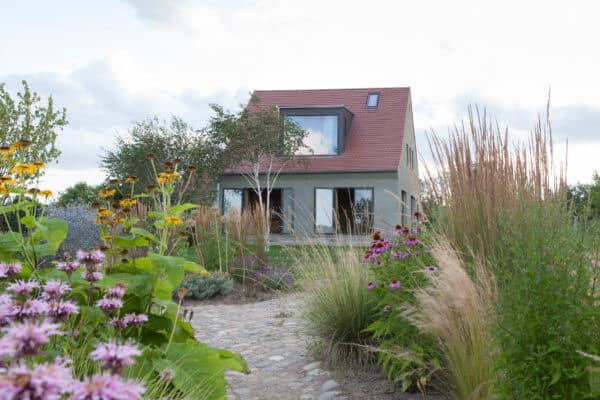
Near but unknown: konjiček – house above the valley
Mountains and sea in a small area. Culinary discoveries paired with diverse landscapes for nature lovers and active holidaymakers: if you want to explore Slovenia, the Vipava Valley is the perfect starting point.
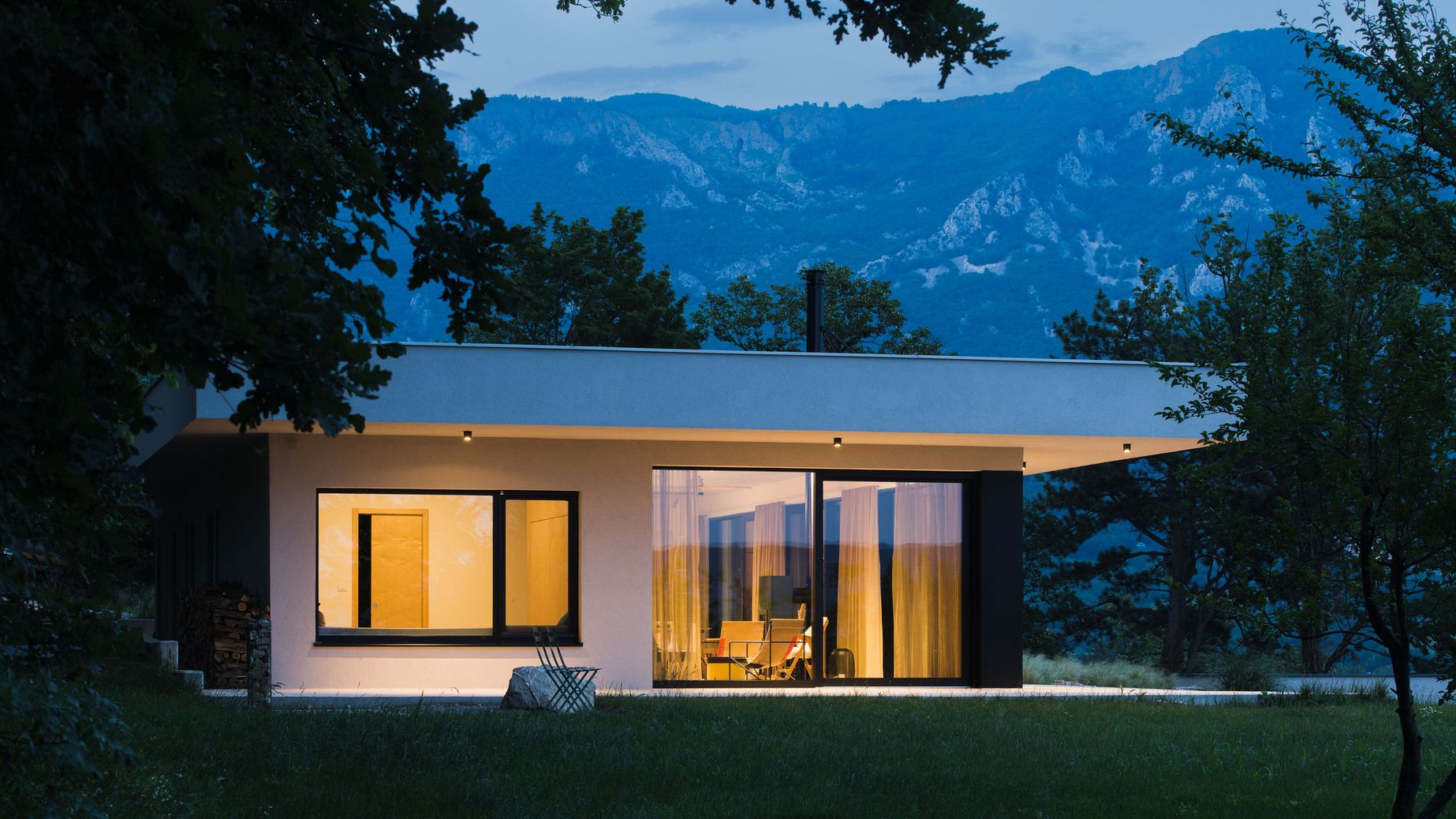
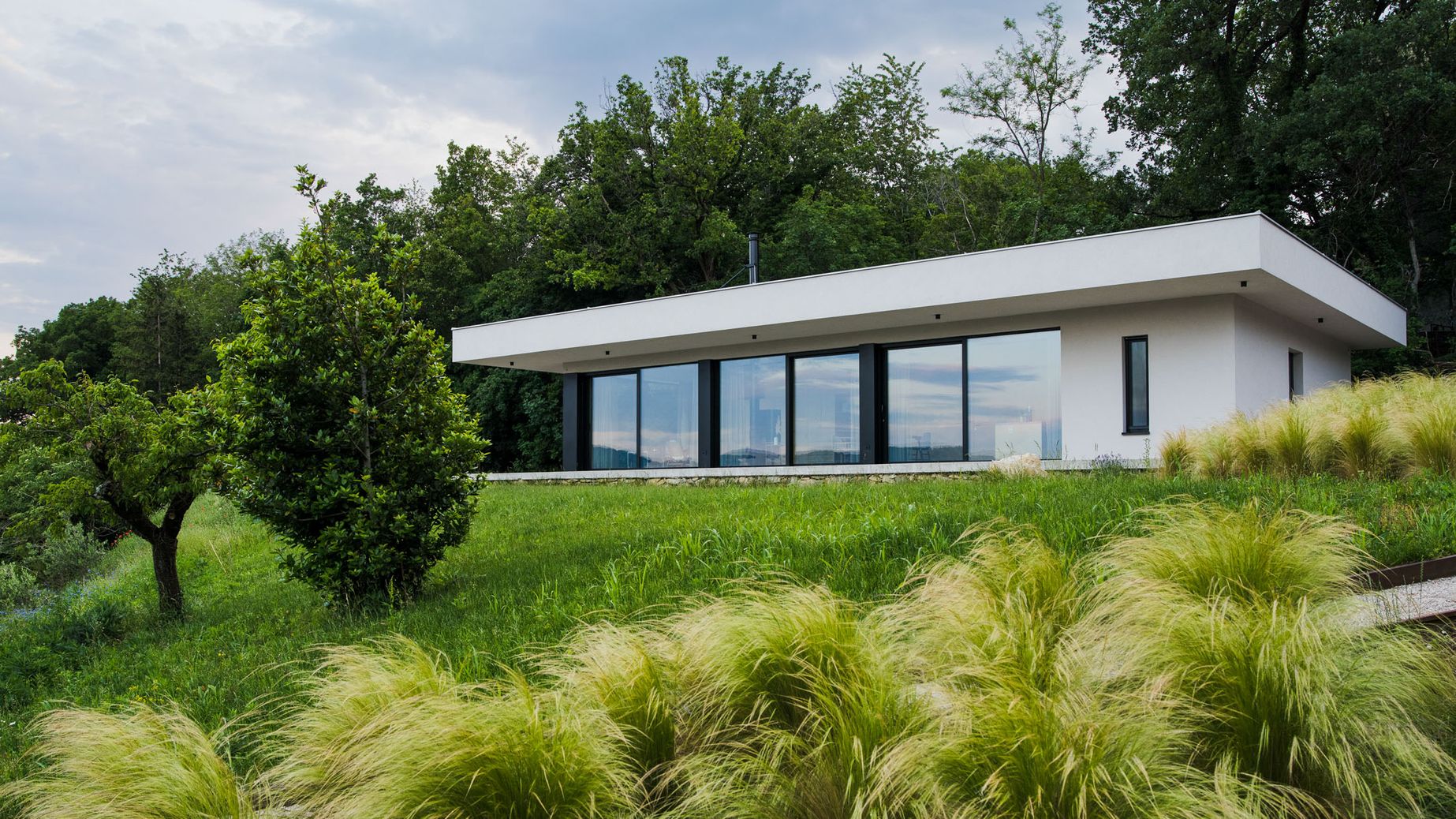
October 2023, Design Week in Ljubljana. The organiser is BIG SEE, a platform that aims to recognise and showcase the creative potential of 21 Southeast European countries (SEE). Architecture and design, art and culture, travel and food, for example. Part of this: annual awards such as the one for Tourism Design. Winner 2023: konjiček, the house above the valley, a holiday home in the Vipava Valley in the southwest of Slovenia, a project close to the hearts of German couple Heike Heidenreich and Otger Wendt. A work of architecture that blends almost invisibly into the surrounding landscape of karstic ridges, vineyards and deciduous forests. In an exposed location above the valley with a magnificent view. The architecture is congenially integrated and playfully designed with simplicity and elegance at the same time.
Looking back: Autumn 2013: Heike Heidenreich is leafing through a book of fine hotel recommendations in the “lounge” of a hotel in Carinthia’s Gailtal valley and comes across a description of holiday residence in Slovenia’s Soča Valley, which is particularly praised for its phenomenal restaurant. Slovenia hardly means anything to her; she only has her husband’s voice in her ear – he has been interested in the country for some time. But what does she want to do in former Yugoslavia, in Eastern Europe so to speak? As she is always tempted by culinary discoveries, she memorises the page and later asks: “Is this roughly the corner of Slovenia that interests you?” He confirms this, the next short trip is pencilled in.
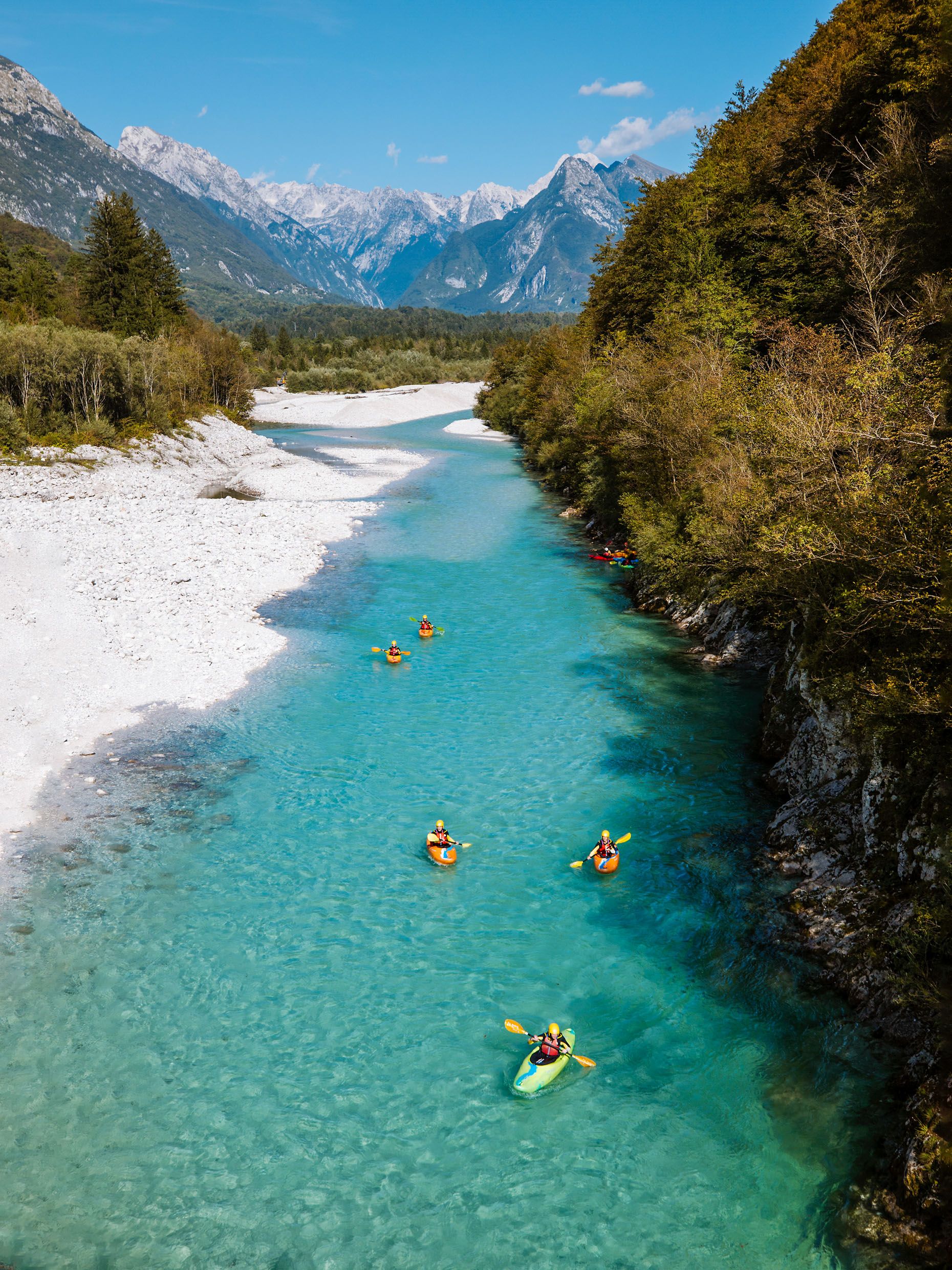
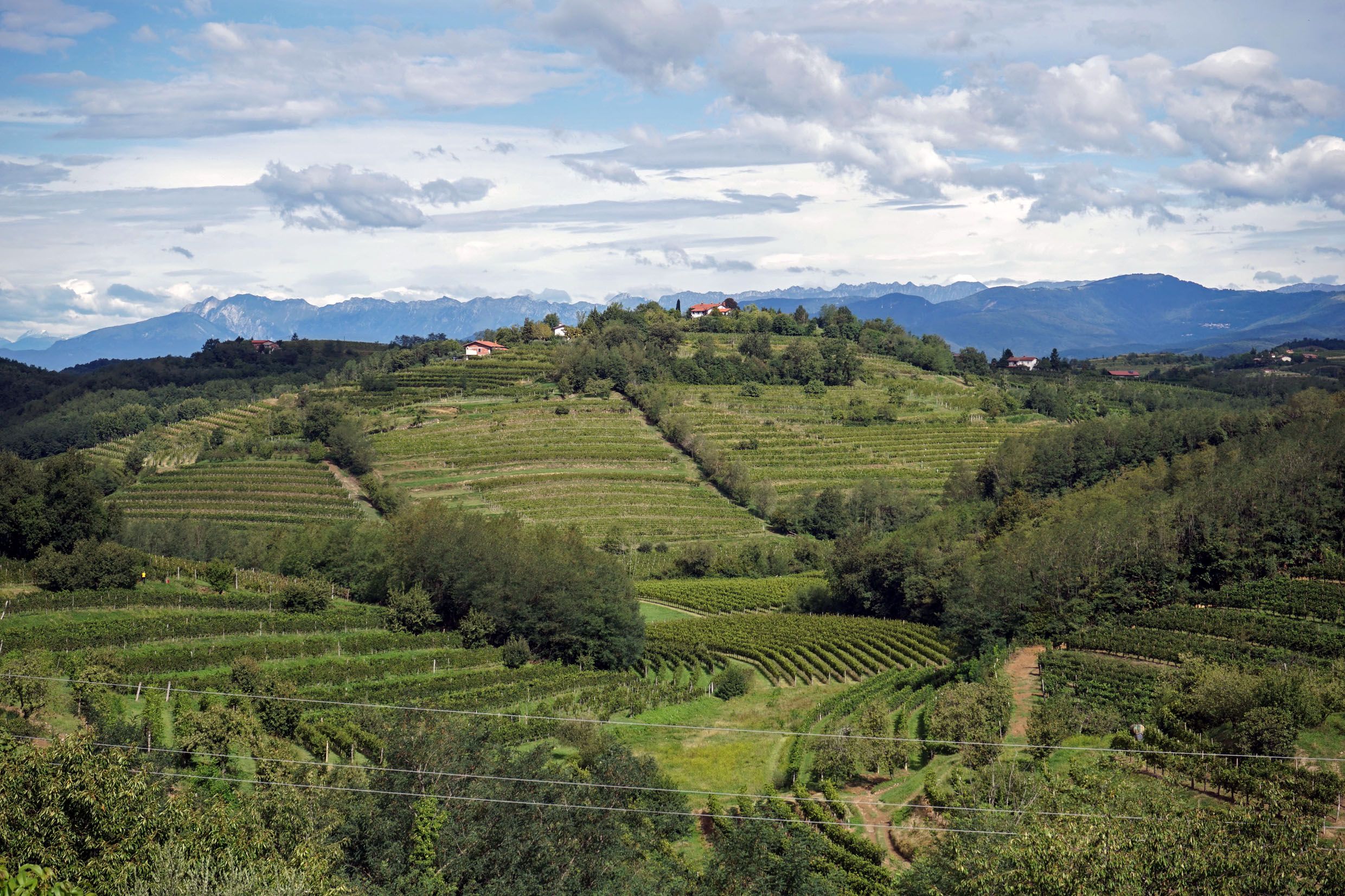
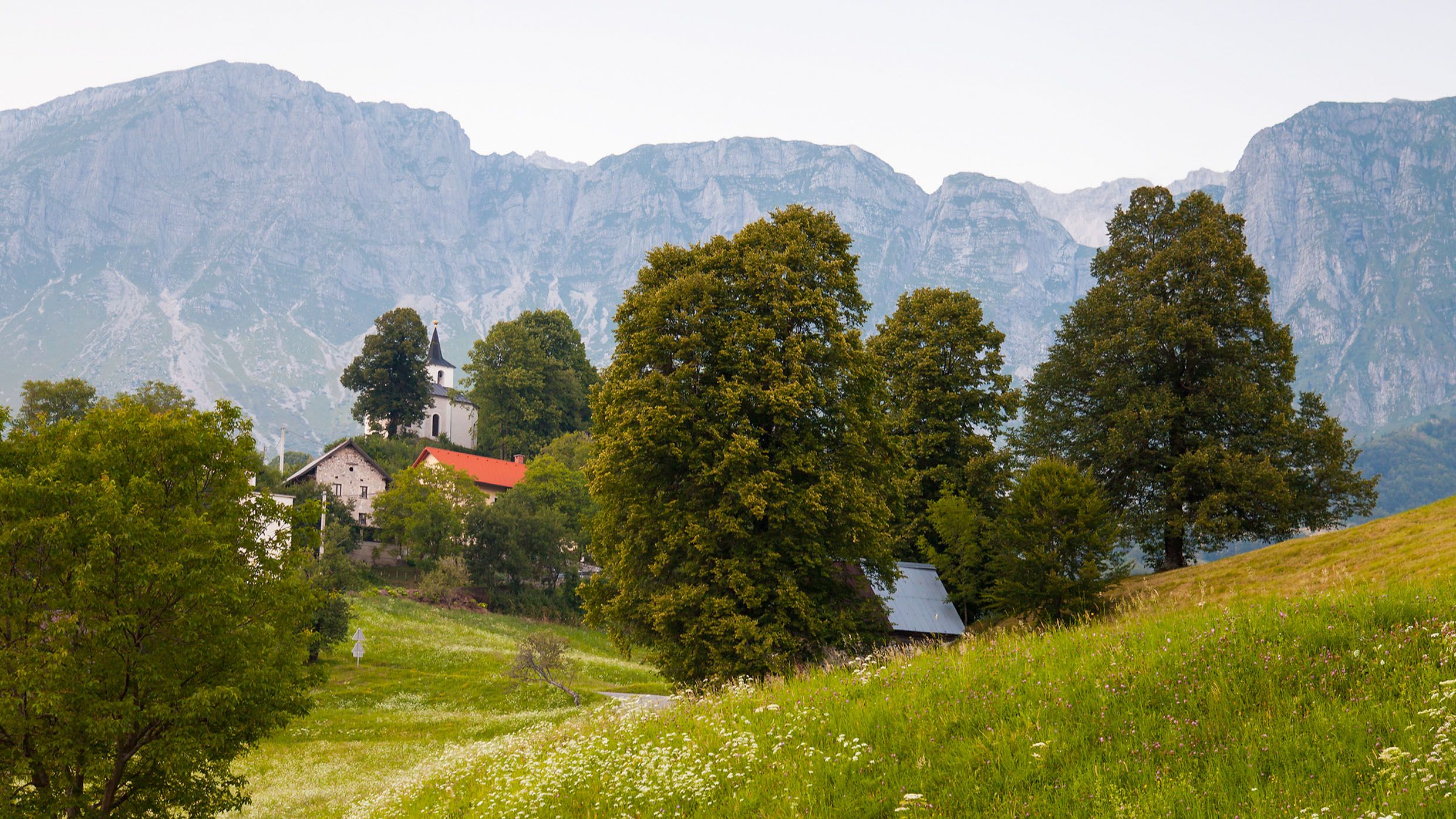
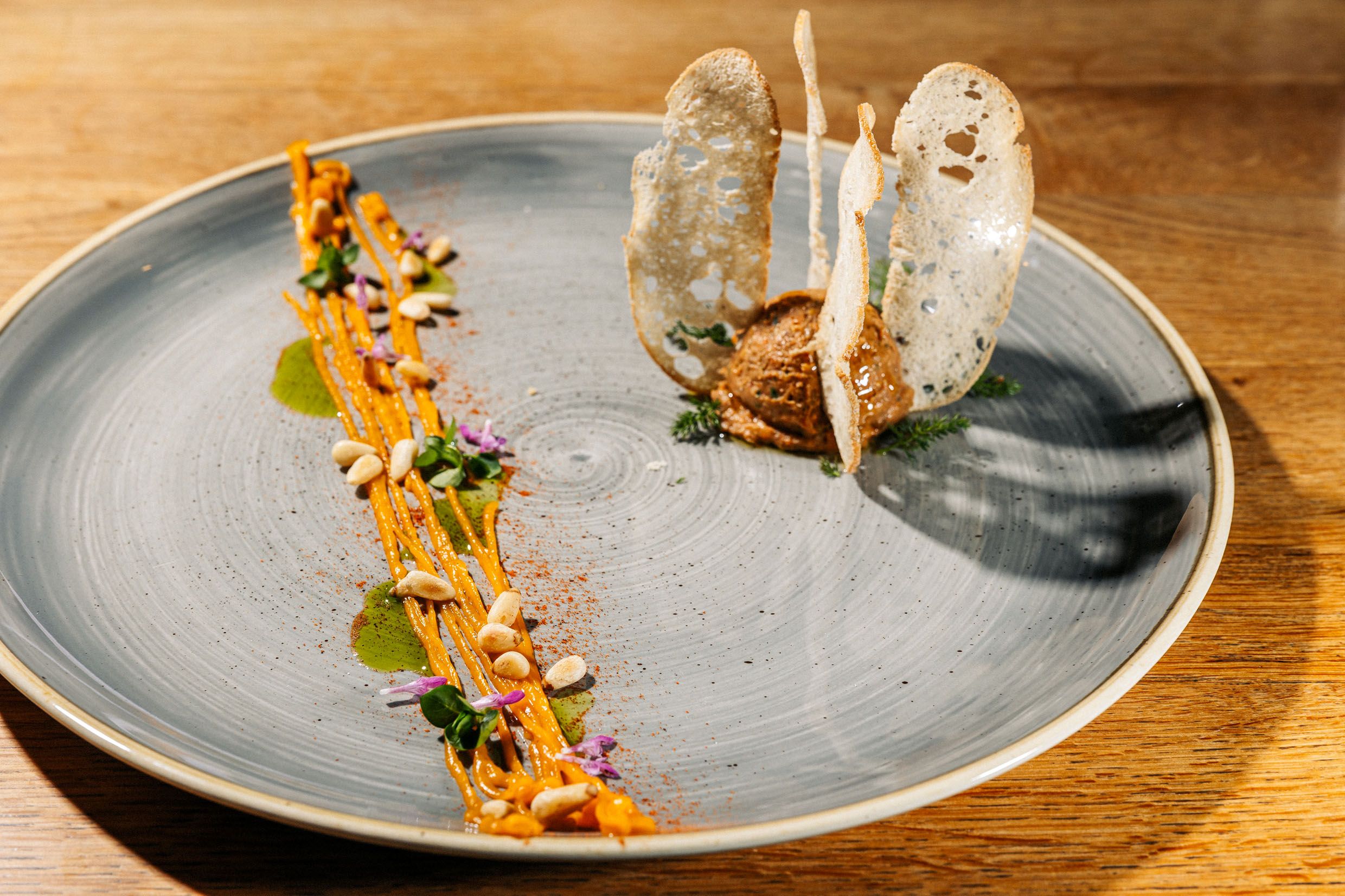
Almost a year later. The couple cross the Slovenian border for the first time and are speechless as they drive over the Predil Pass into the Soča Valley. They thoroughly enjoy their first short stay in Slovenia: the creative, hitherto unknown dishes in their accommodation, partly Mediterranean, partly locally influenced, with a signature flavour all of their own. The Slovenian wines. The visit to a winemaker couple in the Brda, a kind of Slovenian Tuscany a little to the south. The wild, incredibly turquoise Soča with its gravel banks. The tree-lined little roads that haven’t been straightened, almost as they remember them from their childhood in Upper Franconia. The lonely mountain hikes through untouched countryside. And again and again these views: of the imposing peaks of the Trglav, of the Dolomites, even of the sea. With many inspiring impressions and a few boxes of wine in their luggage, it is clear on the way home that they have not been here for the last time.
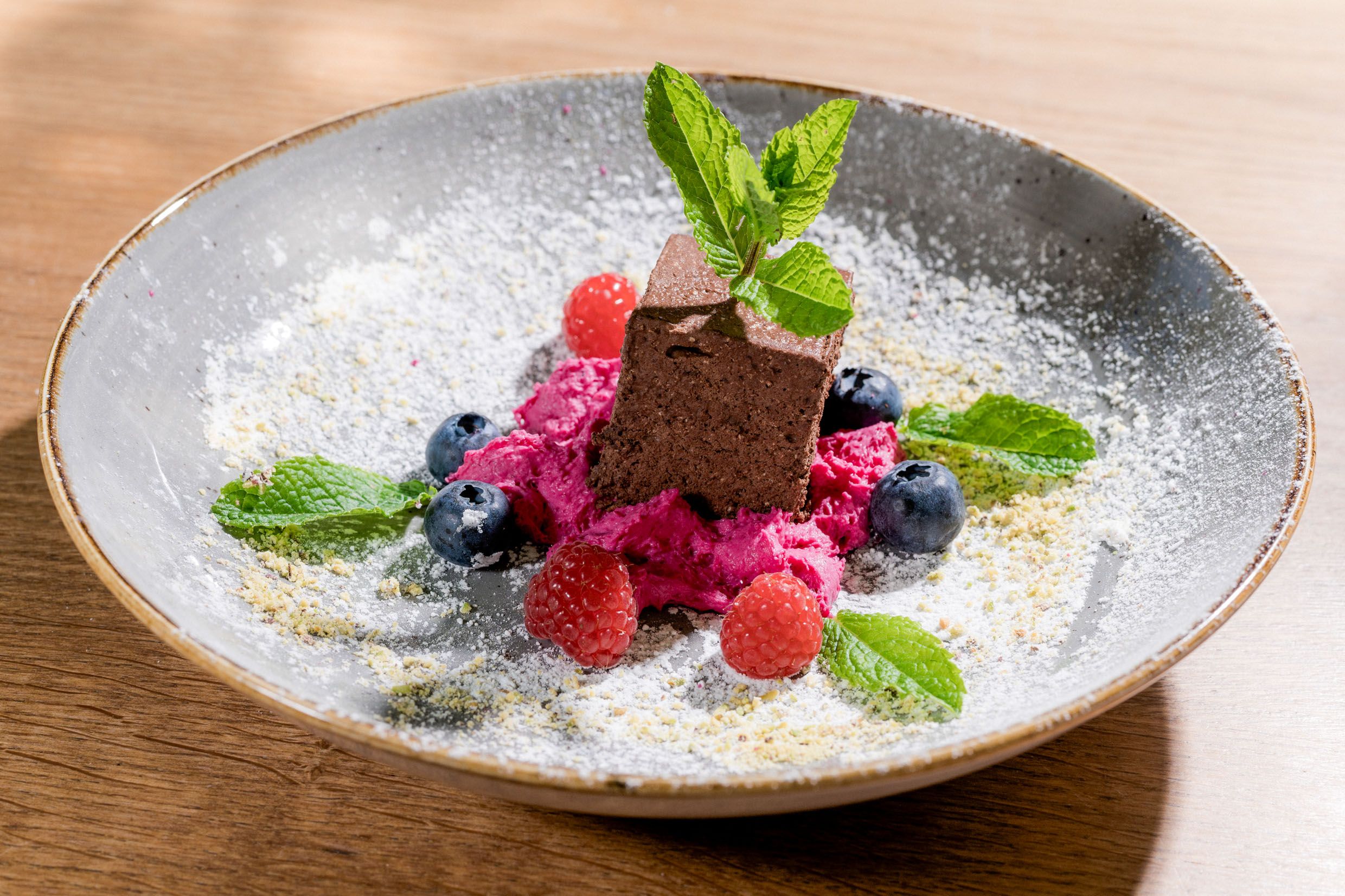
The place reveals itself through its cuisine
I recommend a glass of orange wine from Batič with mlinci
Matej
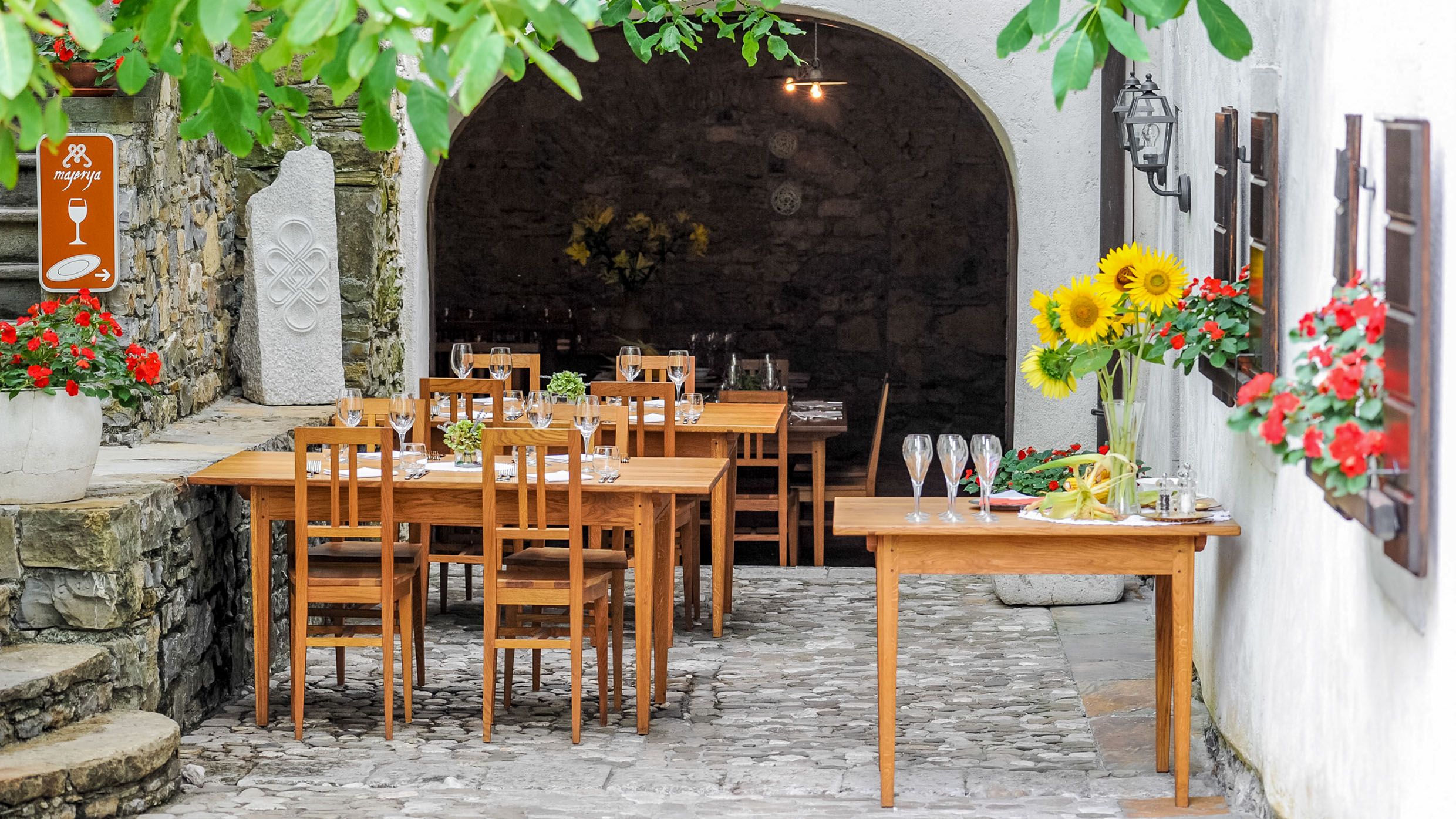
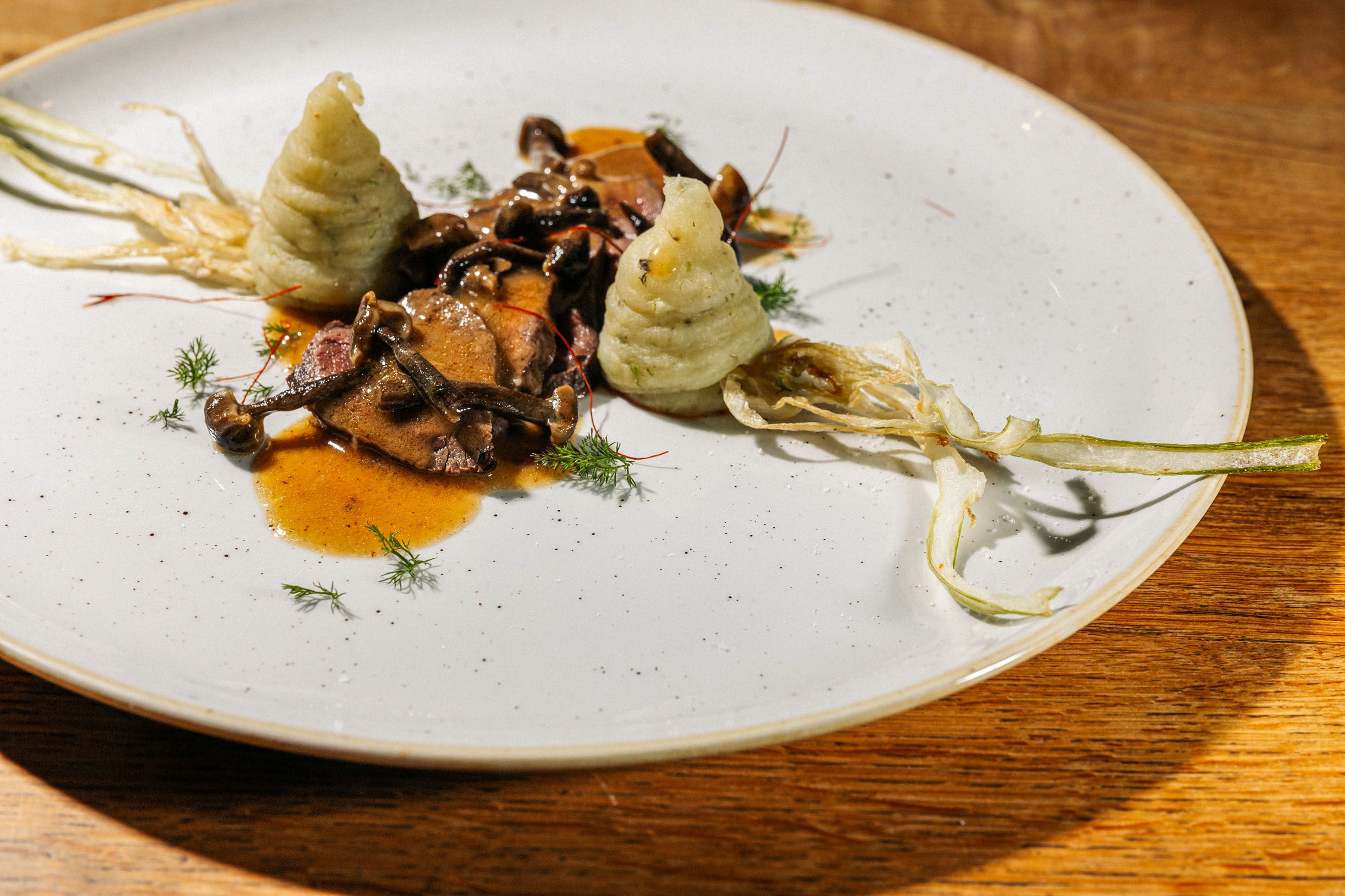
It is already dark when they miss the exit onto the motorway coming from Ljubljana and take the small country road down into the Vipava Valley. They are on their way to the Majerija Hotel in Slap. The dishes in the restaurant here can be chosen freely from the menu, the only condition: the same selection at the same table. The two rely on the food and wine recommendations of chef Matej – and they revel in the variety of local, often home-made salamis and hams. In mlinci, the local pasta speciality, which resembles crèpes in taste and consistency due to the roasting of the raw pasta sheets. In roasted mouflon, the meat of the wild sheep that they will actually come across later on a hike along the Beg Massif of the Nanos. And Matej’s excellent wine recommendations, which they have trusted blindly since that day: “I recommend a glass of orange wine from Batič with mlinci.” Difficult to drink on its own, but it develops into a completely new flavour experience when paired with food.
This time, the couple take their bikes with them, they cover a surprising number of metres in altitude as they ascend and descend the hills of the Vipava Valley and stop off at one of the rare rest stops, such as Mirjana’s, a winery in the enchanting village of Vipavski Kriš, which has since become a kind of local pub. Thanks to Matej’s recommendations, they get to know the first top winemakers, Sutor and Krapež and their cellars. They hear about the indigenous grape varieties Zelen, Pinela and Klarnica. They learn about the resurgence of individual, non-cooperative viticulture after the country left Yugoslavia and the joy of experimentation since then. Of the new tradition of spontaneously fermented natural wines. The couple’s love for this overlooked and yet so blessed valley in the southwest of Slovenia has been rekindled.
Pioneering spirit in demand
She doesn’t answer the phone with a foreign dialling code.
Jošica’s German-speaking friend
The potential of this small country never ceases to amaze. Whether it’s the landscape and nature, the food and drink, the sporting opportunities or the geographical and climatic location. The best that Europe has to offer, combined in a small area. Why is it that so many people are drawn to the well-trodden paths of South Tyrol or Lake Garda? Why do so many only know Slovenia from the transit to Croatia and the inevitable traffic jam at the Karawanken tunnel? Or even confuse it with Slovakia? The pioneering spirit of Heike and Otger is awakened. They believe in the future of tourism in this country, recognise the underdeveloped infrastructure and consider investing. In a plot of land to start with.
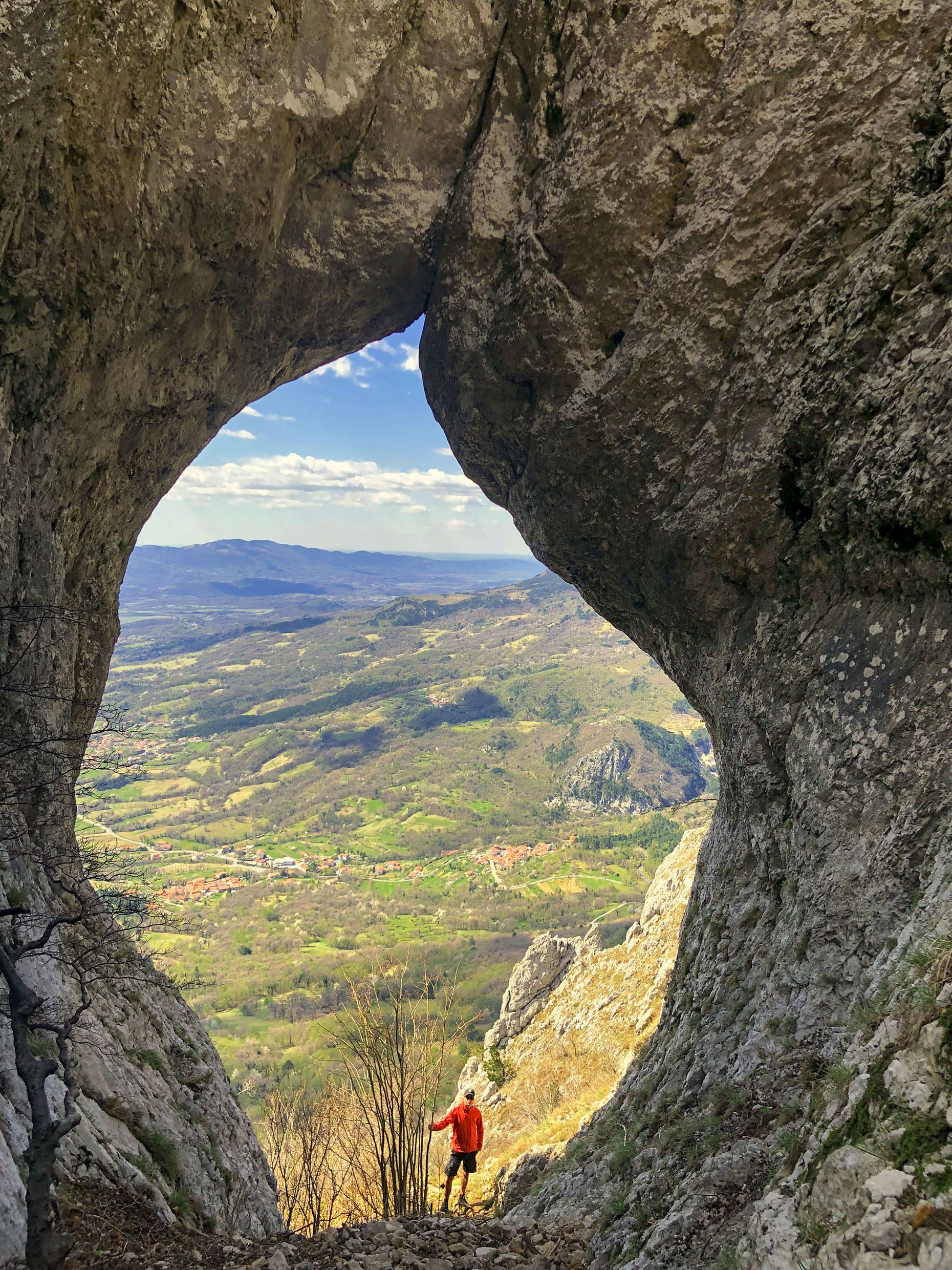
They scour the relevant Slovenian-language property websites and make enquiries with estate agents. Hardly any response. They still ignore private providers. Until one Friday afternoon. No answer on a private telephone number. Not even after an hour, not after two and three hours, not on the following Monday. Googling the phone number leads to the Facebook page of an elderly painter. The message remains unanswered. The next afternoon, the mobile phone rings. A lady introduces herself as a German-speaking friend of the same painter. Why isn’t the friend answering? “She doesn’t answer the phone with a foreign dialling code.” Contact is made and an appointment for a viewing is arranged – for a vacant 2000-square-metre holiday plot of land at the edge of the settlement of Lokavec. With lots of rosemary, a few vines and fruit trees, lots of rubble and some scrap metal and a small dilapidated old building – and planning permission! After a while, a deal is struck because it seems almost perfect for a holiday home: situated just above a farming village, directly adjacent to a Natura 2000 protected area, with a somewhat adventurous access road and a unique view over the entire upper Vipava Valley, the ridge of the Nanos mountain, Vipavski Kriš, the village on the mountain, and even the local landmark, the Otliško okno, a window in a rock formation.
Architectural preferences
If we ever build a house, I want a long house.
Heike Heidenreich
It must have been the summer of 2006. The couple are on holiday with their sons in Denmark, starting in Copenhagen. In keeping with their interests, they visit the Danish Architecture Centre. The book “architects’ summerhouses” from the associated design shop joins other valued sources of inspiration at home. Always fascinating: the floor plans of single-storey longhouses. Elongated, rectangular cubes that are zoned lengthways or widthways for living, eating, cooking, sleeping and bathing. One thing is certain: “If we ever build a house, it has to be a long house.”
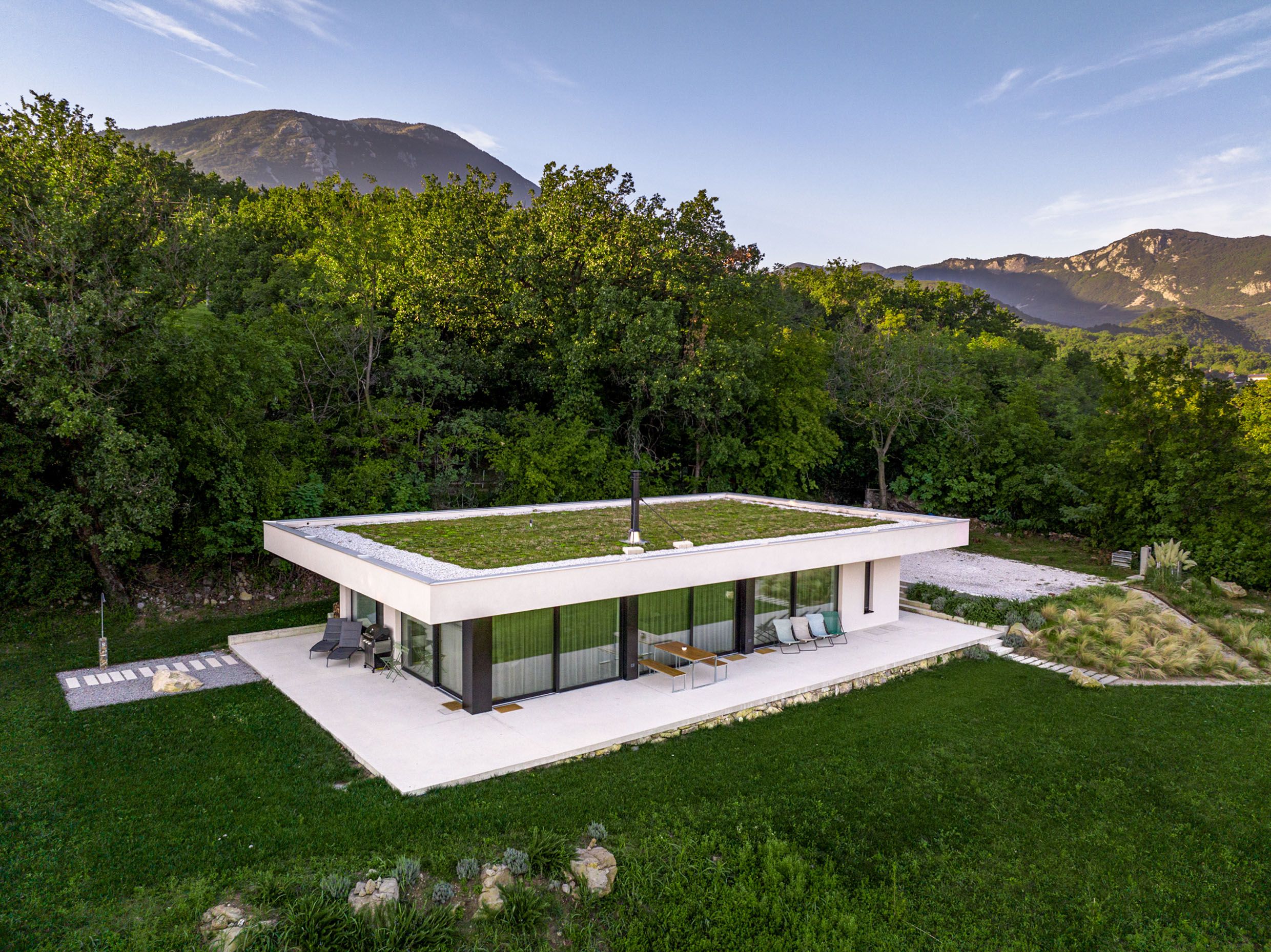
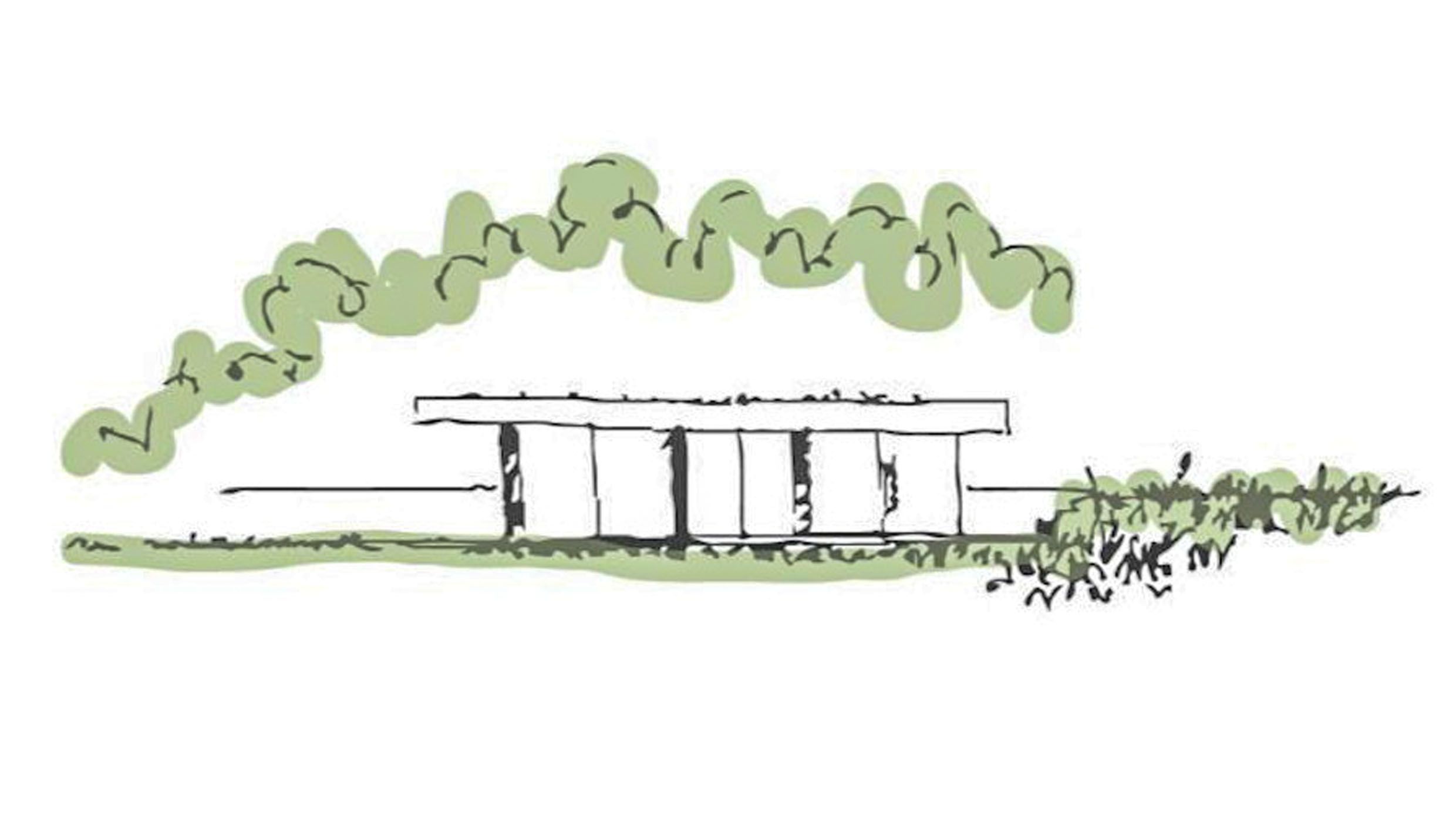
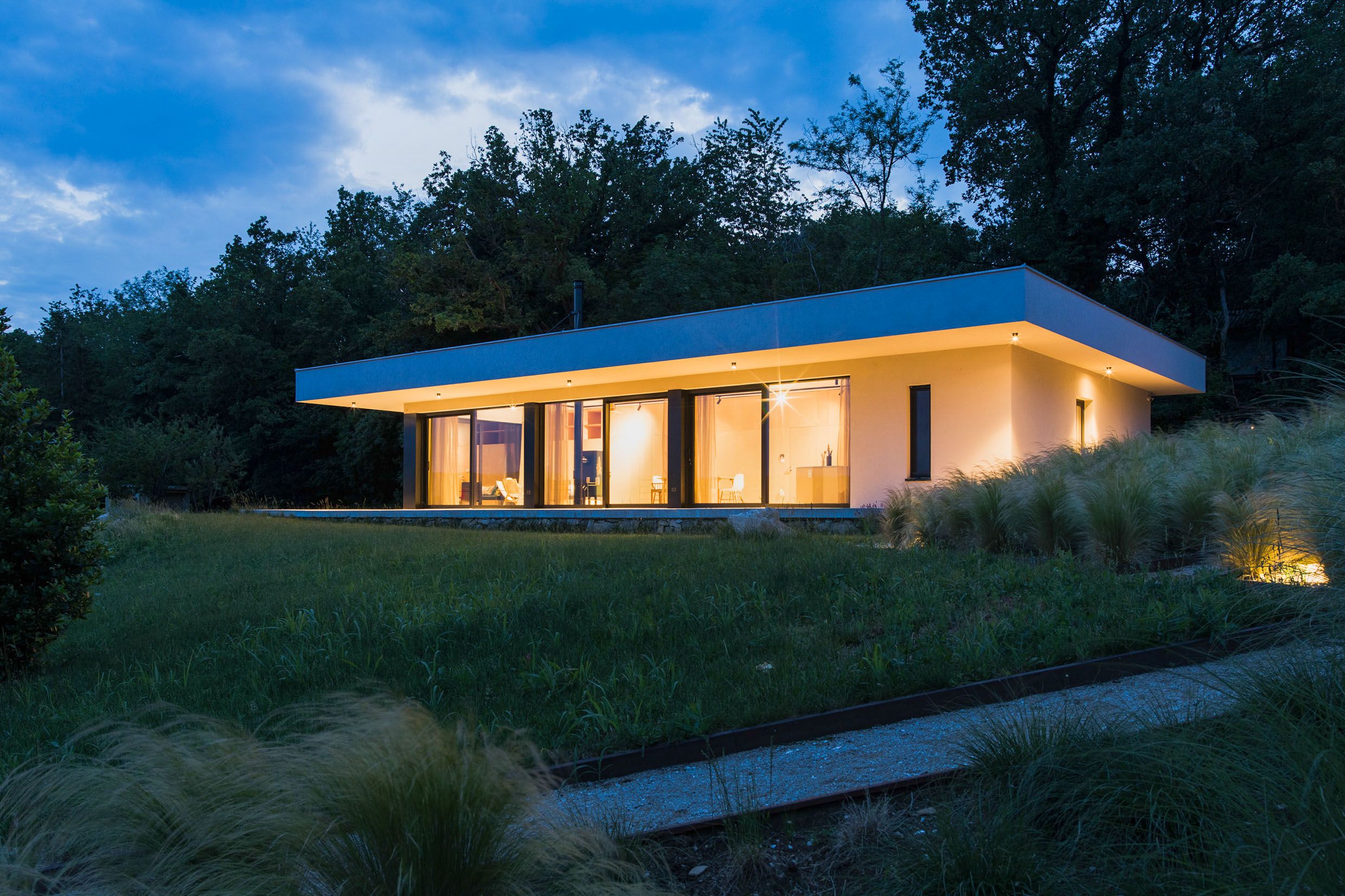
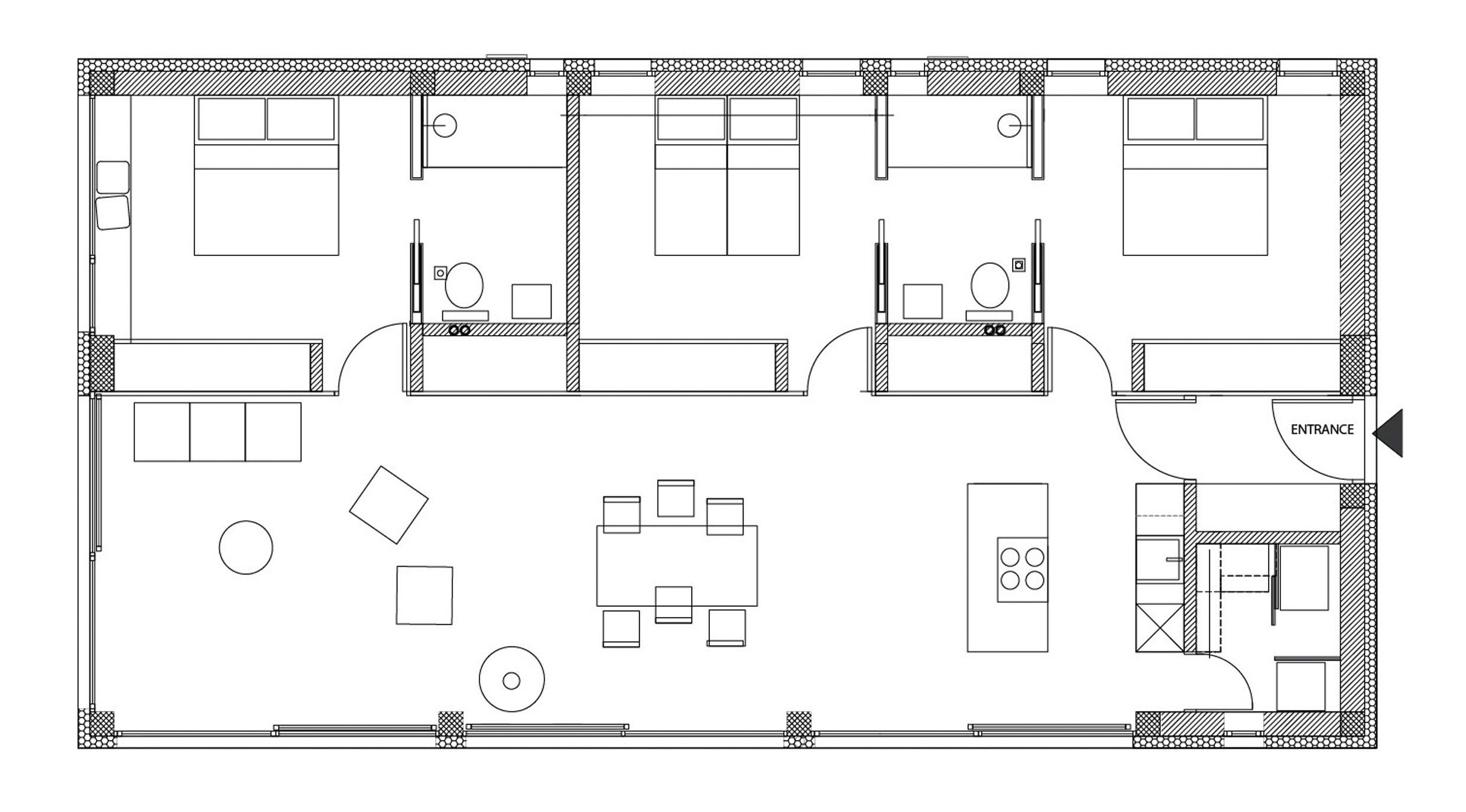
More than ten years later, there is now a plot of land, an elongated one in fact. Browsing through Slovenian architecture magazines and websites, the couple find little that seems suitable and appealing for a holiday home, something that radiates lightness and a holiday atmosphere. With one exception: not far from their property, designed by an architecture firm from the nearest town: Studio Pikaplus. The first contacts are promising, they like and understand each other. The plans are developed quickly and in close collaboration. The architects’ ideas nicely complement their own and are skilfully developed further: the complete opening of the living space to the valley, which places the magnificent view at the centre of the architectural effect. The bedrooms, which face the back of the slope and are therefore cooler, and the bathrooms in between. The long, wooden wall that separates the living room from the bedrooms behind it. The flowing transition between inside and outside through large sliding doors across the entire front. Anticipation.
The hurdles of alternative solutions
Trust us, you’ll need air conditioning.
Marko
The couple agree on one thing: they will never have air conditioning in their home. Not just because of the high energy consumption, but because they don’t just want to see the flowing transition between inside and out and the openness, on the plans, they also want to feel and experience it. They eagerly soak up what they can find out about it, especially about traditional architecture in the tropics, supplemented by their own experiences of travelling to Morocco and the Caribbean, for example. There are three things in particular that count: air circulation, shading and storage capacity thanks to mass. The result: sliding doors that can be opened across corners. A green flat roof that cantilevers towards the south. A heat pump that cools the building overnight in summer mode. Neither the architects nor the construction managers and contractors believe this obvious logic. Again and again, almost stoically, they say: “Believe us, you will need air conditioning.” One afternoon, when they are looking at the cost estimate with the construction manager and architect to see if there is any potential for savings, they learn that one particularly large cost factor is the air conditioning system. The savings potential lies in the green roof and more fixed-glazed windows. They are speechless and stunned. How can they explain their concept to their partners? The compromise: necessary preparations for the air conditioning system are made.
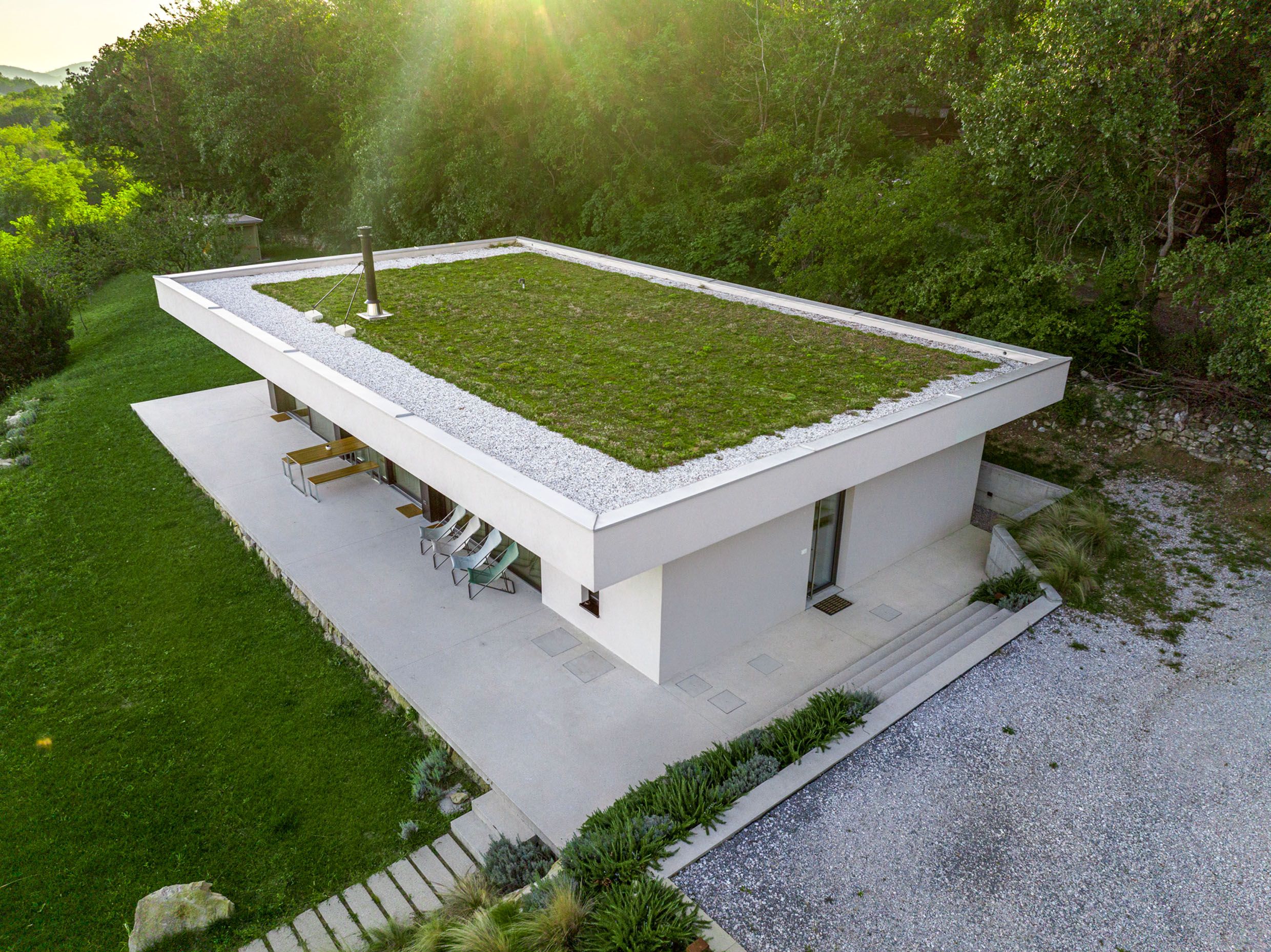
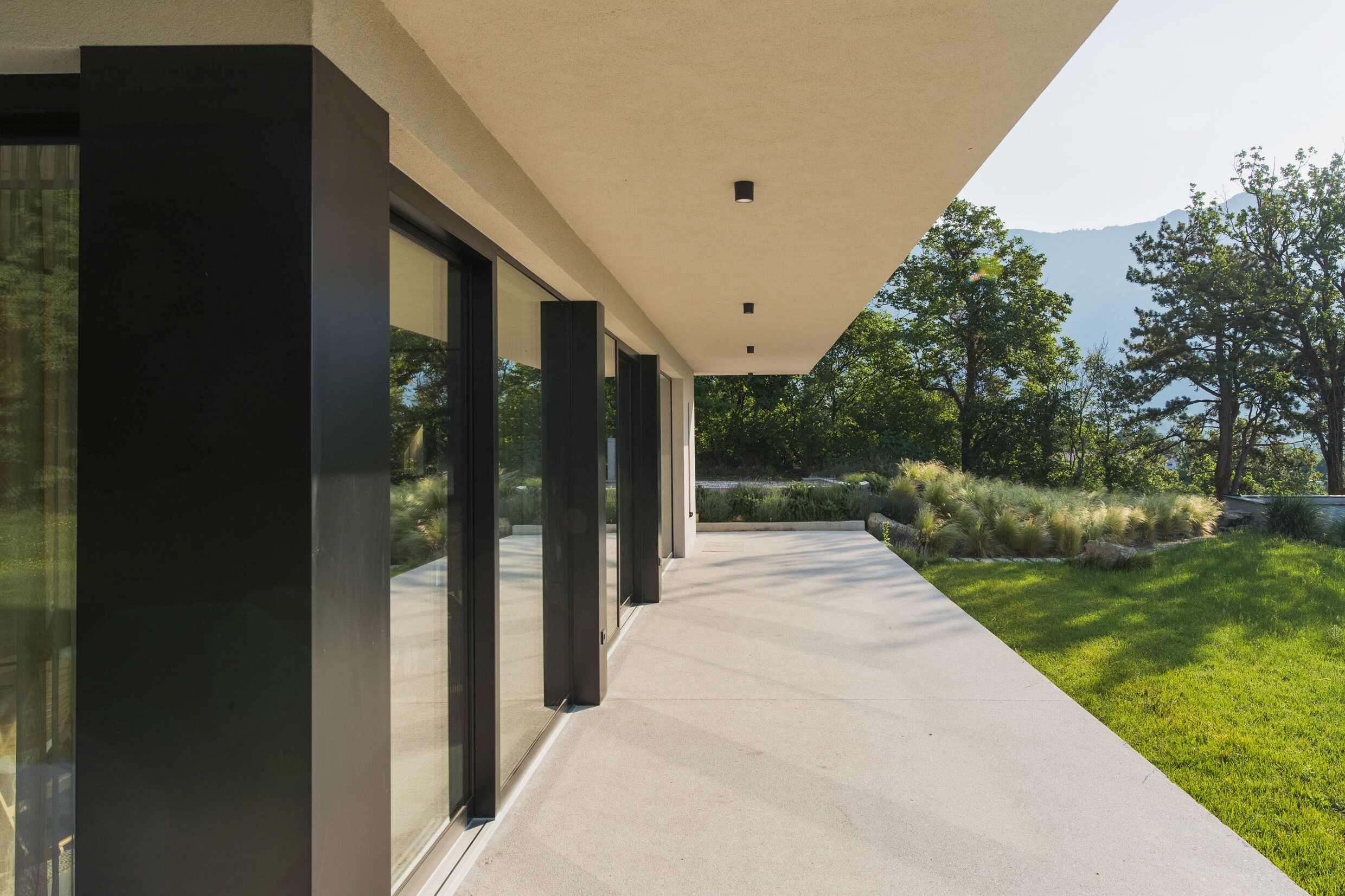
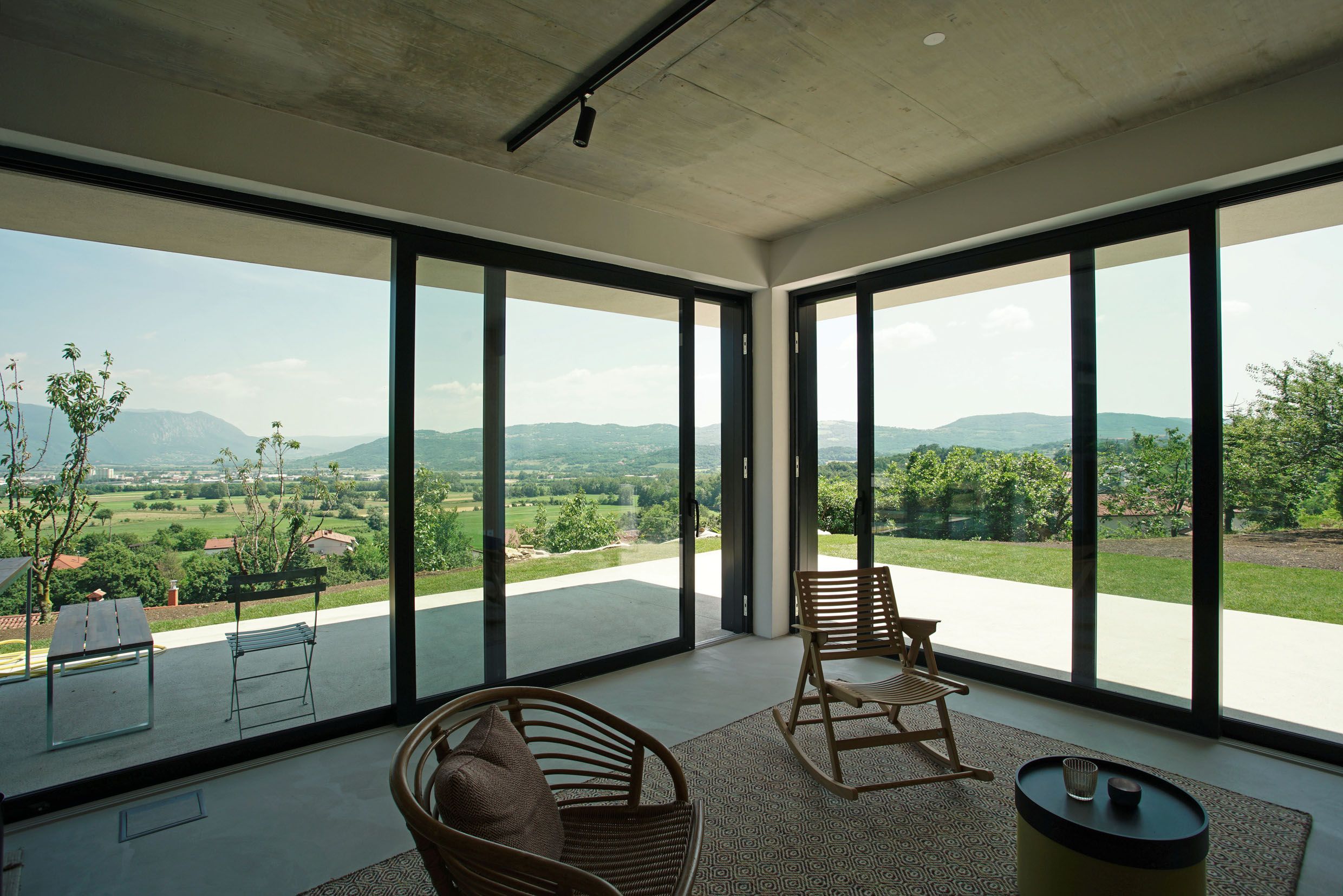
Finally, the house passes the heat test. The concept works even when the temperature stays around 40 degrees: a thin curtain protects against the morning sun. At the hottest times, a large ceiling fan also moves the air. And in the late afternoon, a fresh breeze blows from the wooded slope behind the house.
Design with simplicity and elegance
Don’t you need some more furniture?
Tomaž
The key to the coherence of the house lies in the interaction between professional expertise and the clients’ ideas. According to Heike and Otger, there is no need for corridors that separate living and sleeping areas in a holiday home. After all, holidays mean freedom and holiday home architecture opens up freedom. It doesn’t have to be suitable for everyday use and remains focussed on the sunny side of life. When the architects present the design of the bathrooms between the bedrooms, they are immediately enthusiastic about the intimate space this opens up.
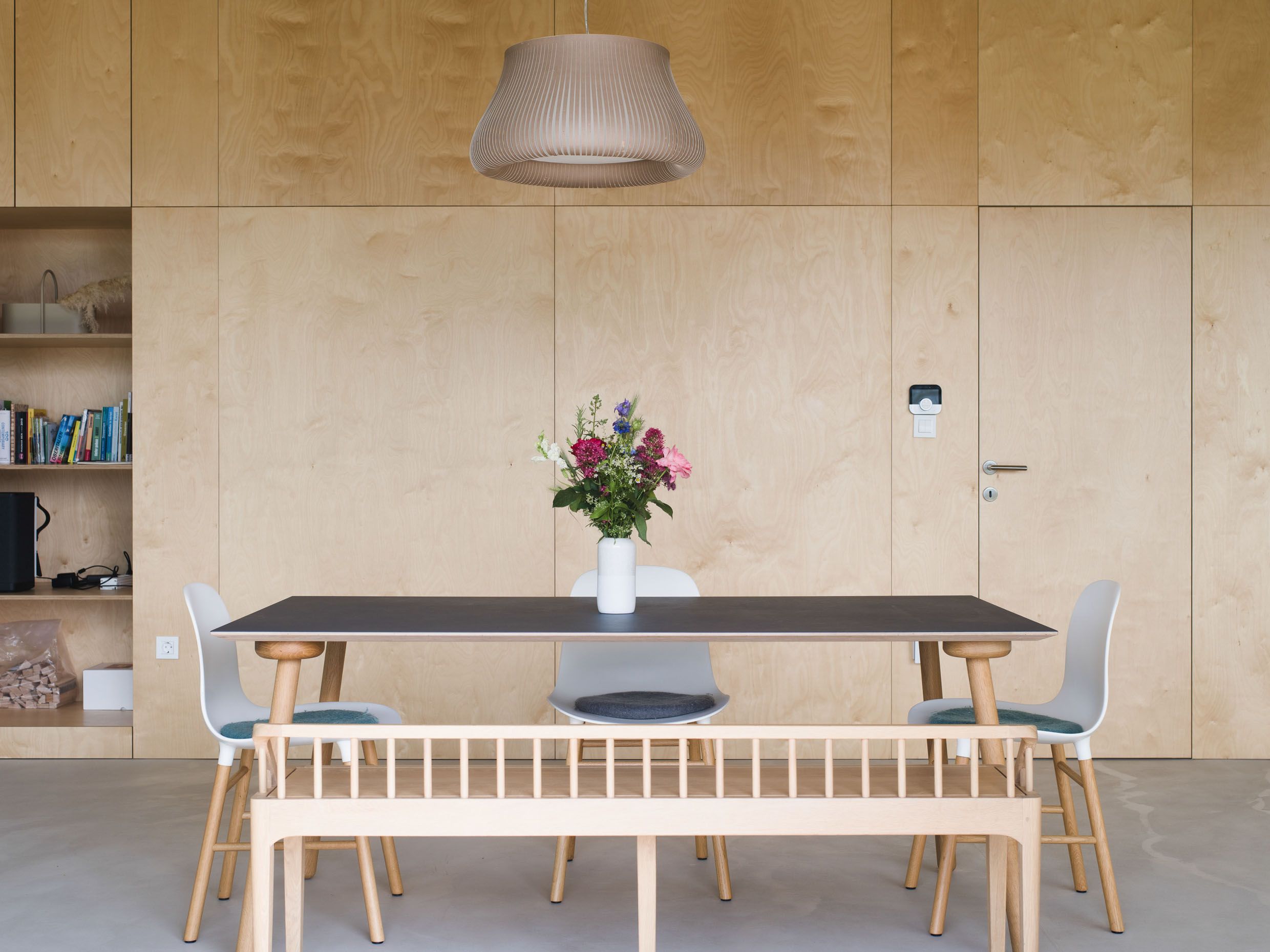
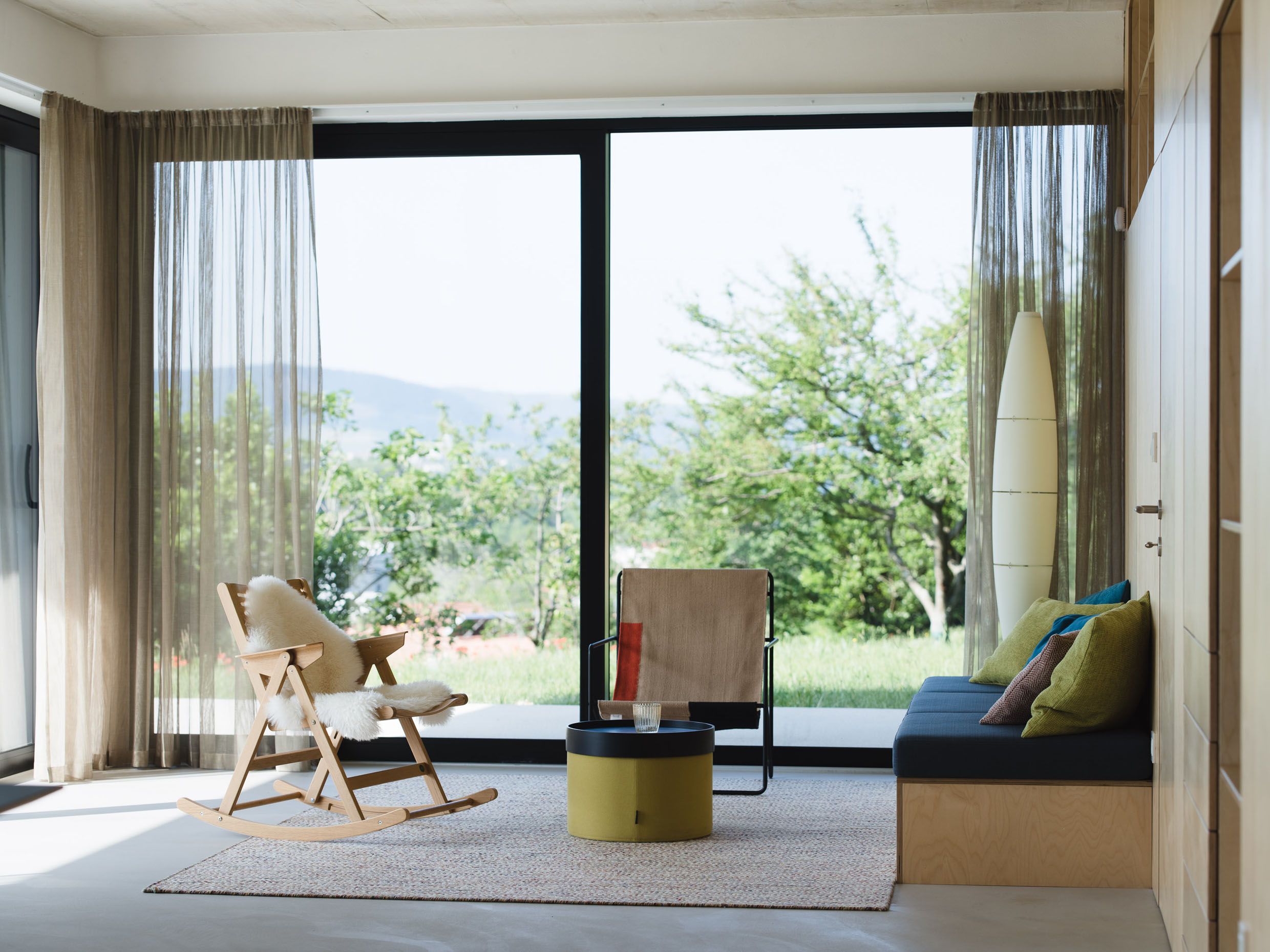
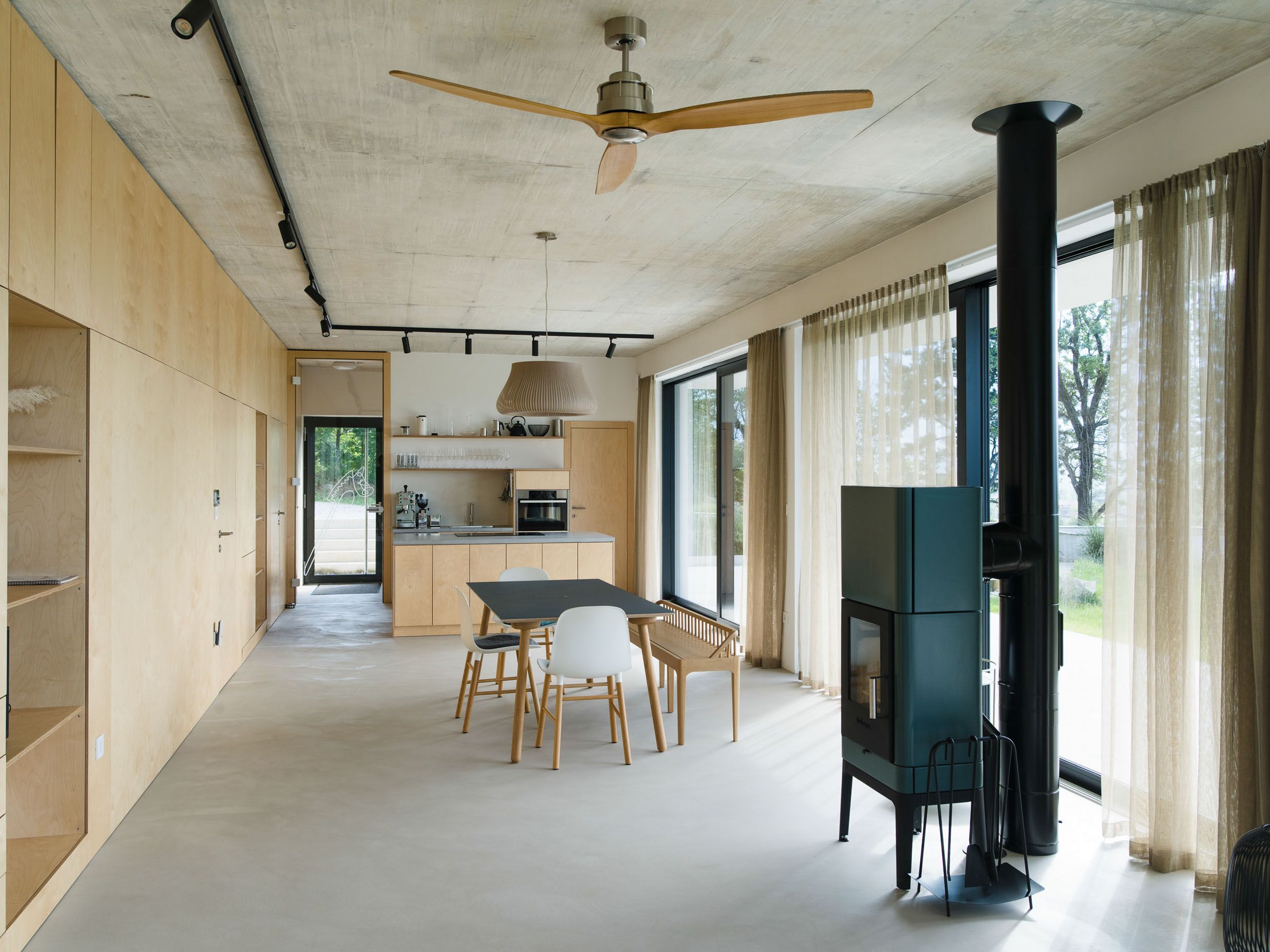
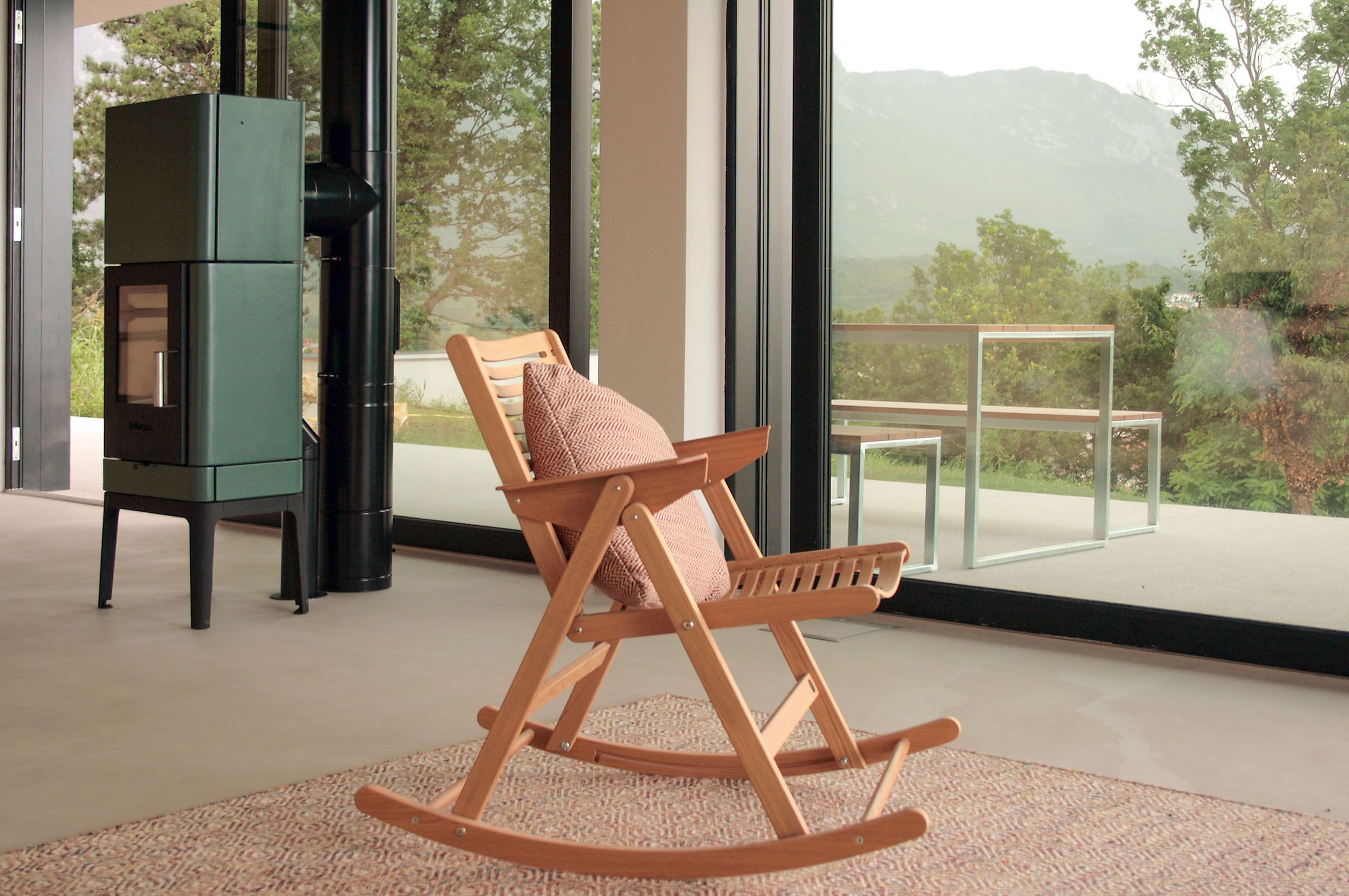
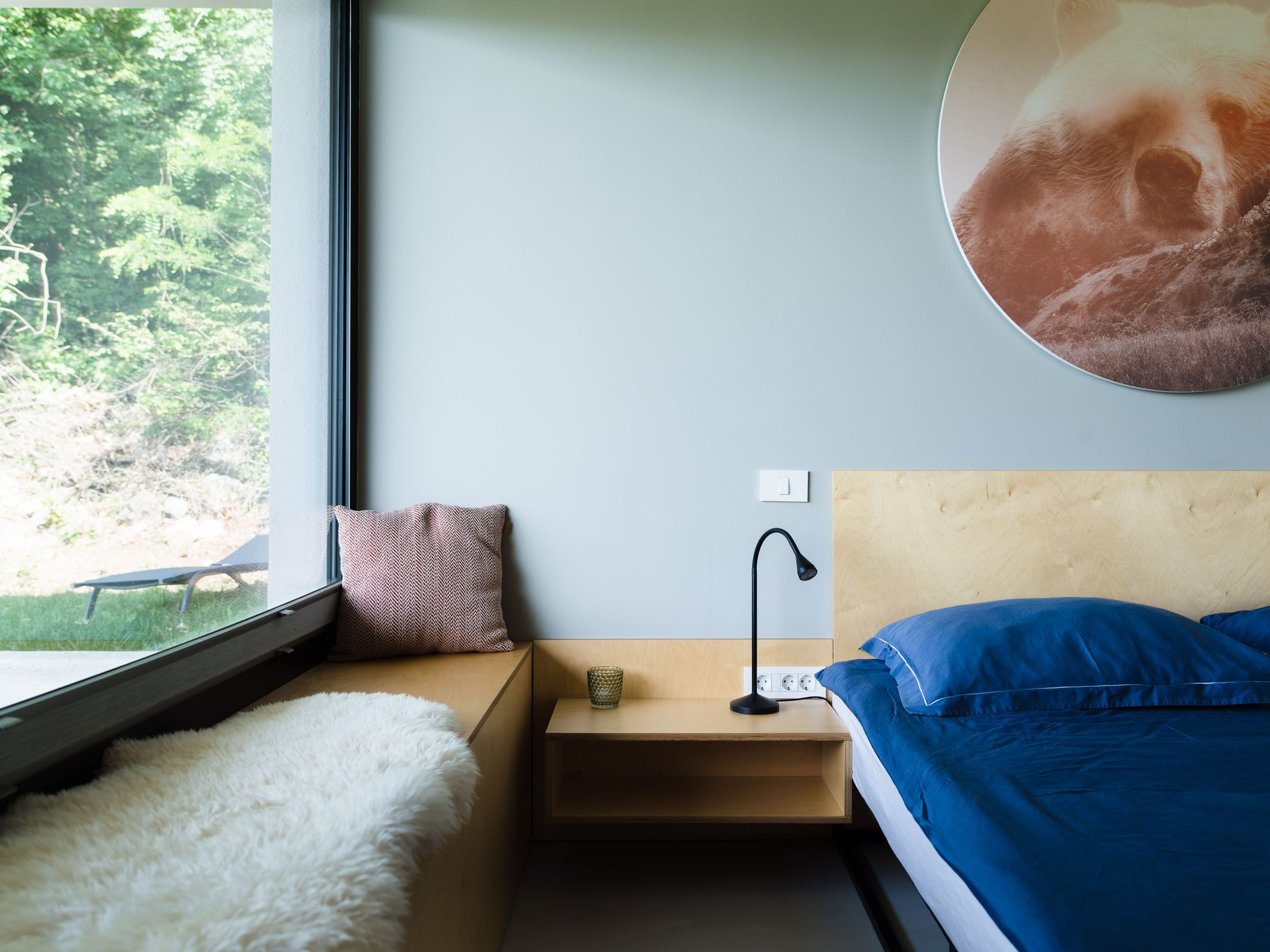
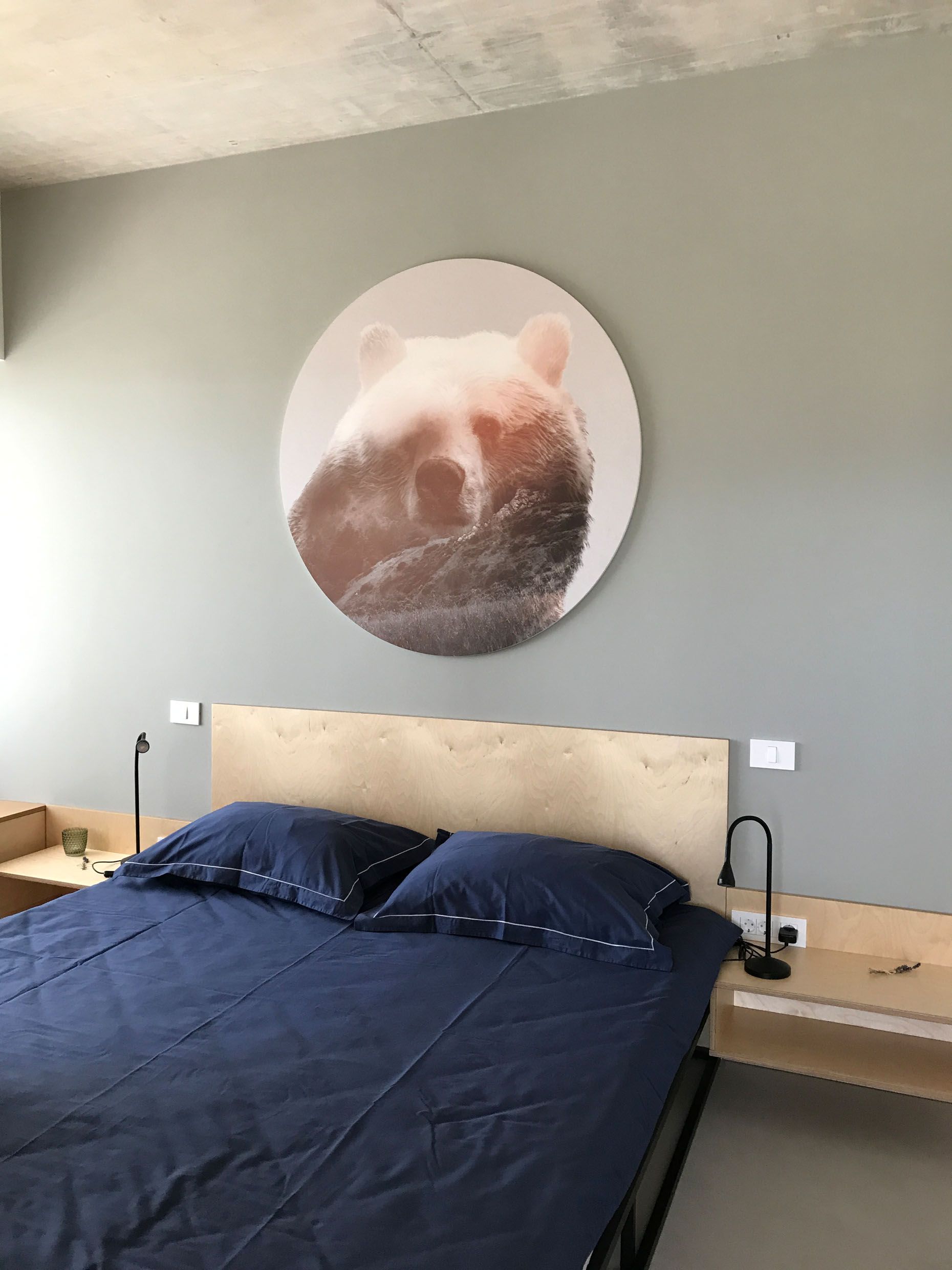
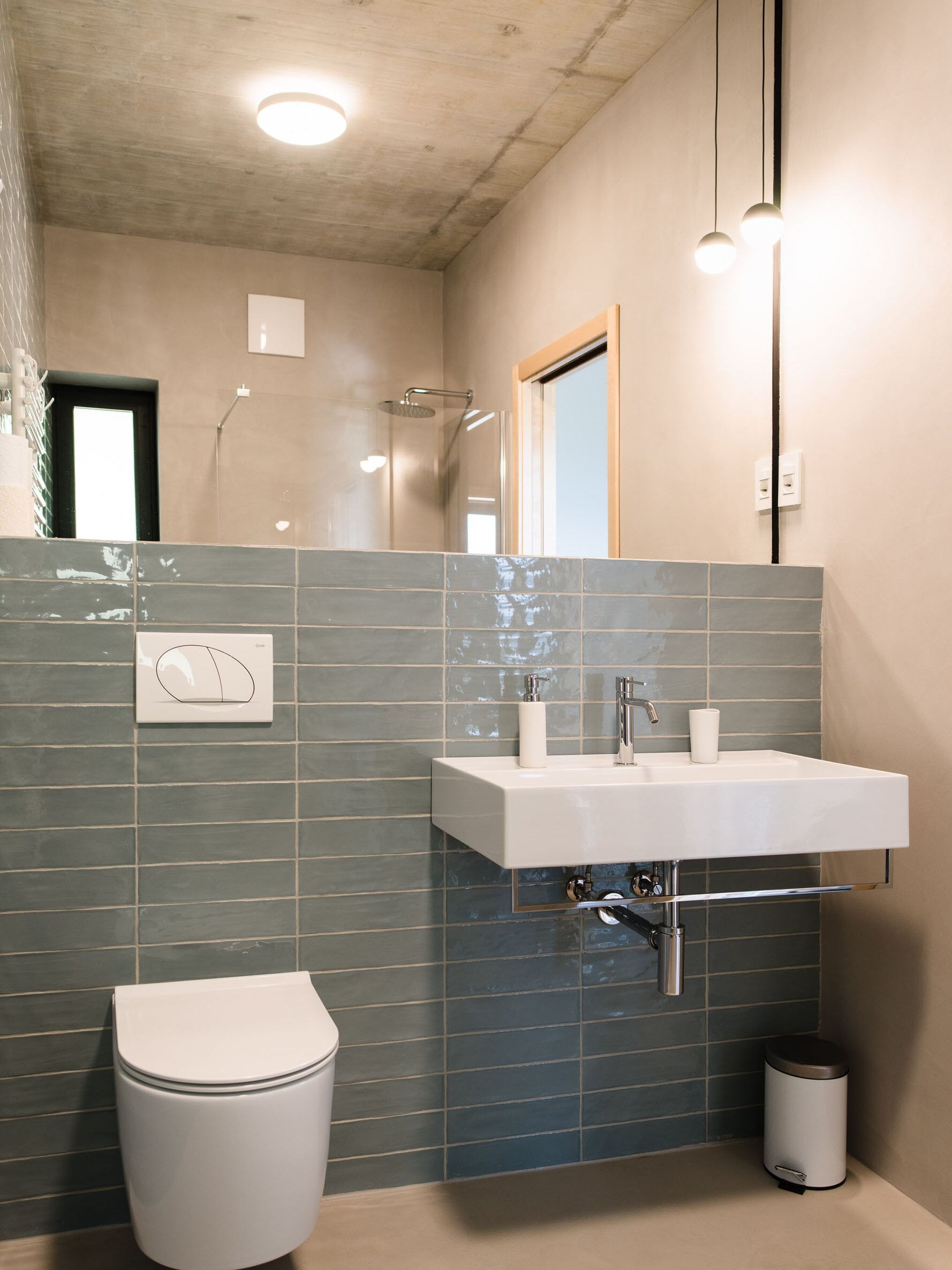
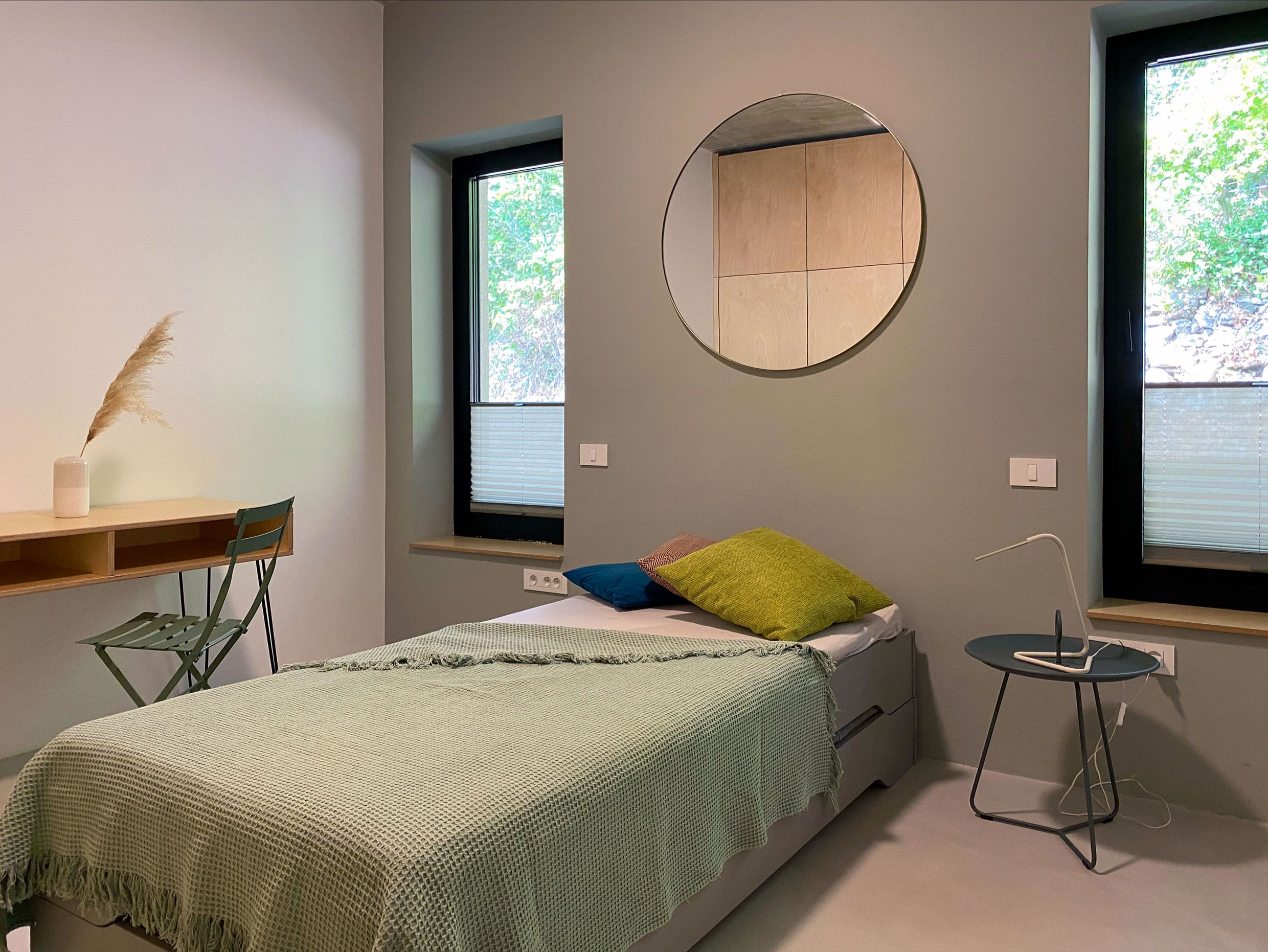
The greatest possible freedom from furniture – especially wardrobes and sofa landscapes – is another of the couple’s maxims. The architects’ suggestion to install a wooden wall between the living and sleeping areas and therefore the recommendation of a local carpenter for its construction suits them very well. The result: a recessed built-in wardrobe thanks to the continuous multiplex surface, which sometimes opens towards the bedroom, sometimes towards the living area, housing wardrobes here, bookshelves and a desk there, as well as forming the backrest of the sofa. A design statement. The minimalist tidiness creates free space. It prompts the site manager to ask whether a few more pieces of furniture might be needed after all. Heike and Otger want to maintain the tranquillity and space that inspire the holiday mood and they add a few cheerful and playful elements: the bathroom tiles, for example, with their shiny, handcrafted uneven surface, bring the colours and shimmer of the surrounding rivers and streams into the house. Or the circles with animal motifs on the bedroom walls, which virtually reference the fauna of the nature reserve behind them.
The value of the view
Why do you always want to do something? It’s enough for me to sit here and look out over the valley and the mountains.
Kornel
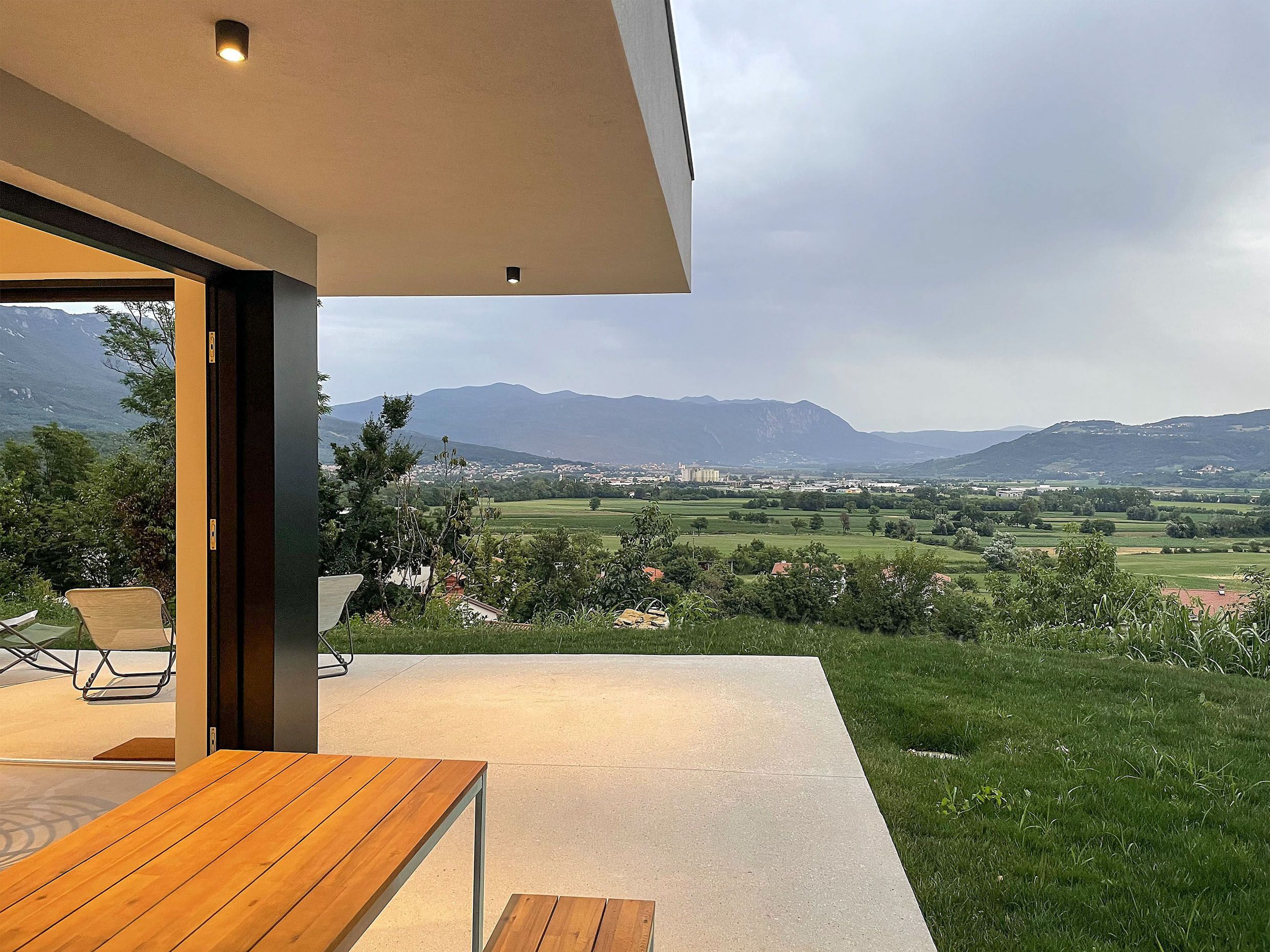
Fortunately, the area not only offers culinary temptations, but also enough attractions to maintain the calorie balance. Whether directly from the house up the 1000 metres in altitude to Mount Čaven. Or from the Hubelj spring to Otliško Okno, where the window in the rock offers a wonderful view. If you add just under an hour, you can stop off in the hamlet of Sinj Vrh with a view of the bays of Grado and Piran, a good 50 kilometres away, and visit their cheese dairy in a cave. Or cycle up to the Nanos mountain ridge. Or to the medieval town of Štanjel and onwards across the Karst plateau. Or along the coast from Koper to Portorož, around 45 minutes away, with a flying visit to olive growers and the salt works.
There is no shortage of options, but time and again they hear their guests as well as their son say things like: “Why do you always want to do something? It’s enough for me to sit here and look out over the valley and the mountains.” In summer and winter alike, this view is the real charm of the holiday home, its architectural integration giving it a feel of being somewhere between a peep box and an eagle’s nest. When it comes to the house above the valley, the property maxim “location, location, location” needs to be modified, at least for holiday properties: “location, location, view”. For Heike and Otger, their konjiček, Slovenian for hobbyhorse and hobby, is and remains the epitome of a retreat for active connoisseurs.
These scenes could go on and on. Because anyone who builds a house can tell a story. Especially in a country whose language they don’t speak and where the necessary pathways and procedures have not already been paved for decades by generations of Germans longing for the south.
Anyone who meets the couple can ask more questions – about the difficulties of finding a stove builder who dares to connect the Bullerjan tiled stove, which is exotic in this country. About mixing concrete on site the old-fashioned way because of the neighbours’ fear of cracks developing in their house when a concrete mixer passes the driveway. After mistrusting the manufacturer’s instructions for installing the garden trampoline because it would be safer if it was set in concrete. And then why they don’t actually have a pool. But that’s another story.
Text: Christian Merten, November 2023
Editor: Ulrich Stefan Knoll
Photos: © Miha Bratina, © Dean Dubokovic, © Stefan Schumacher, © Kornel Wendt, © Studio Pikaplus, © Jan Rustja, © Gregor Wendt, © Boris Pretnar
Christian Merten is a freelance editor who writes mainly about IT, business and technology for well-known German daily newspapers, magazines and online media. Or he travels and writes about it.
The house
0 Comments