Designed by architects for travel enthusiasts: Our curated collection of outstanding holiday accomodations — also via map. Do you already know our new entry?
URLAUBSARCHITEKTUR is Europe’s leading online portal for architecturally outstanding holiday homes. We’ve published a series of award-winning books—available in bookshops or directly in our online shop.
Whether left visible, reinterpreted or carefully exposed, an open roof truss shapes the structure and character of a space. Here we present a selection of holiday homes with current architecture where the roof structure is a defining design feature.
Designed by architects for travel enthusiasts: Our curated collection of outstanding holiday accomodations — also via map. Do you already know our new entry?
Room to Breathe – Architecture Beneath Exposed Roof Trusses
Whether left visible, reinterpreted or carefully exposed, an open roof truss shapes the structure and character of a space. Here we present a selection of holiday homes with current architecture where the roof structure is a defining design feature.
in June 2025
An open interior – with a hay rack as a room divider
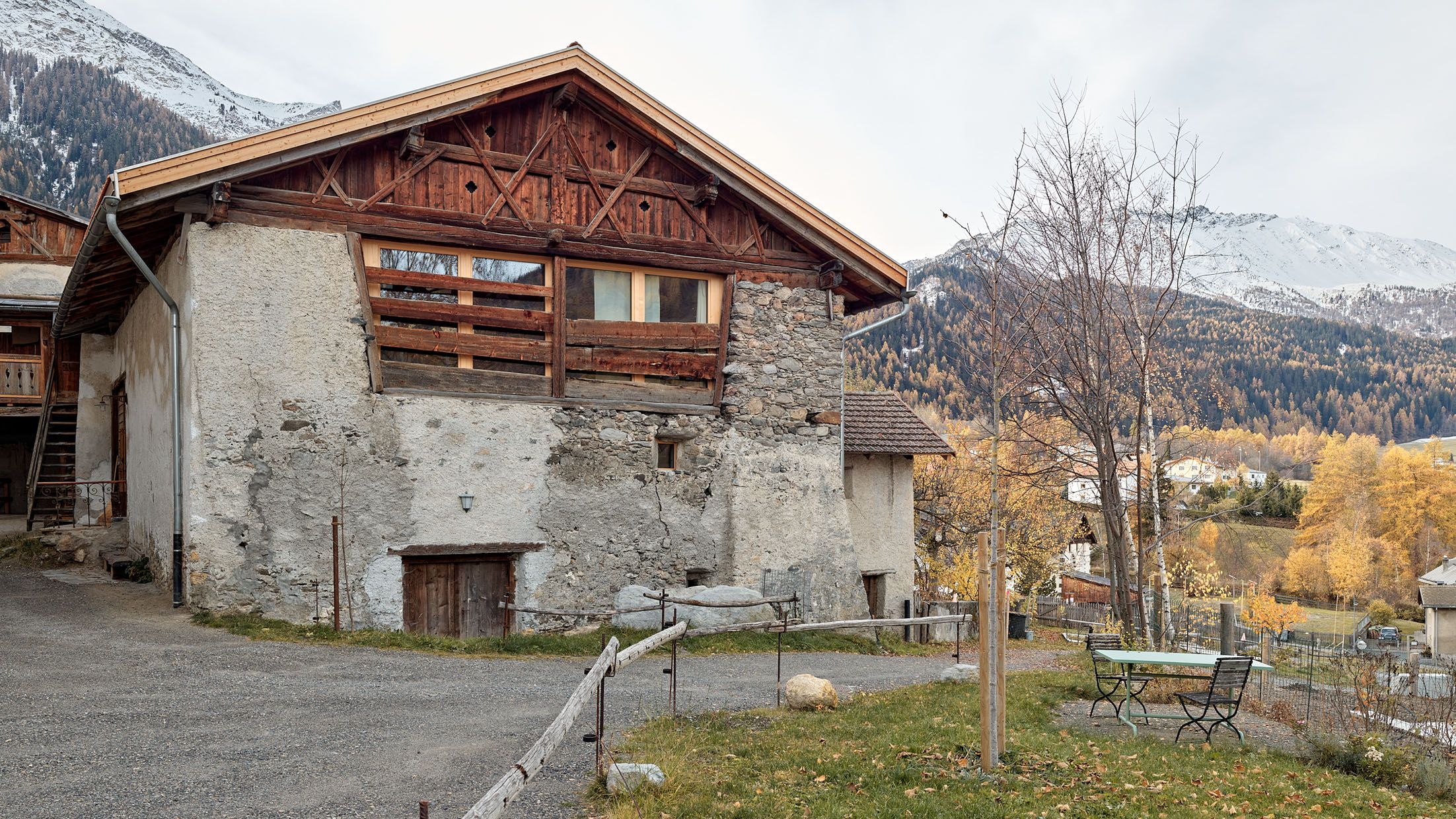
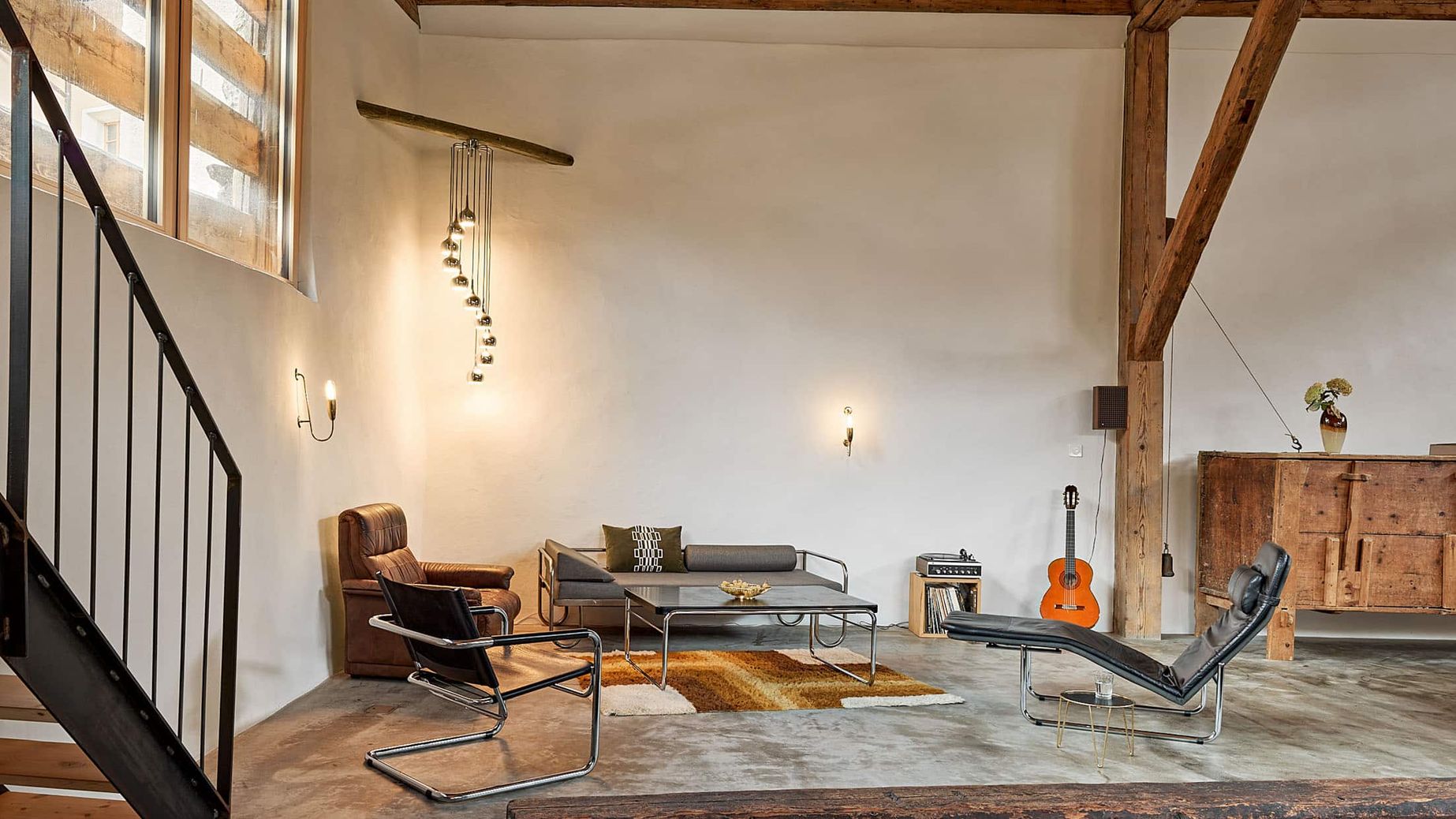
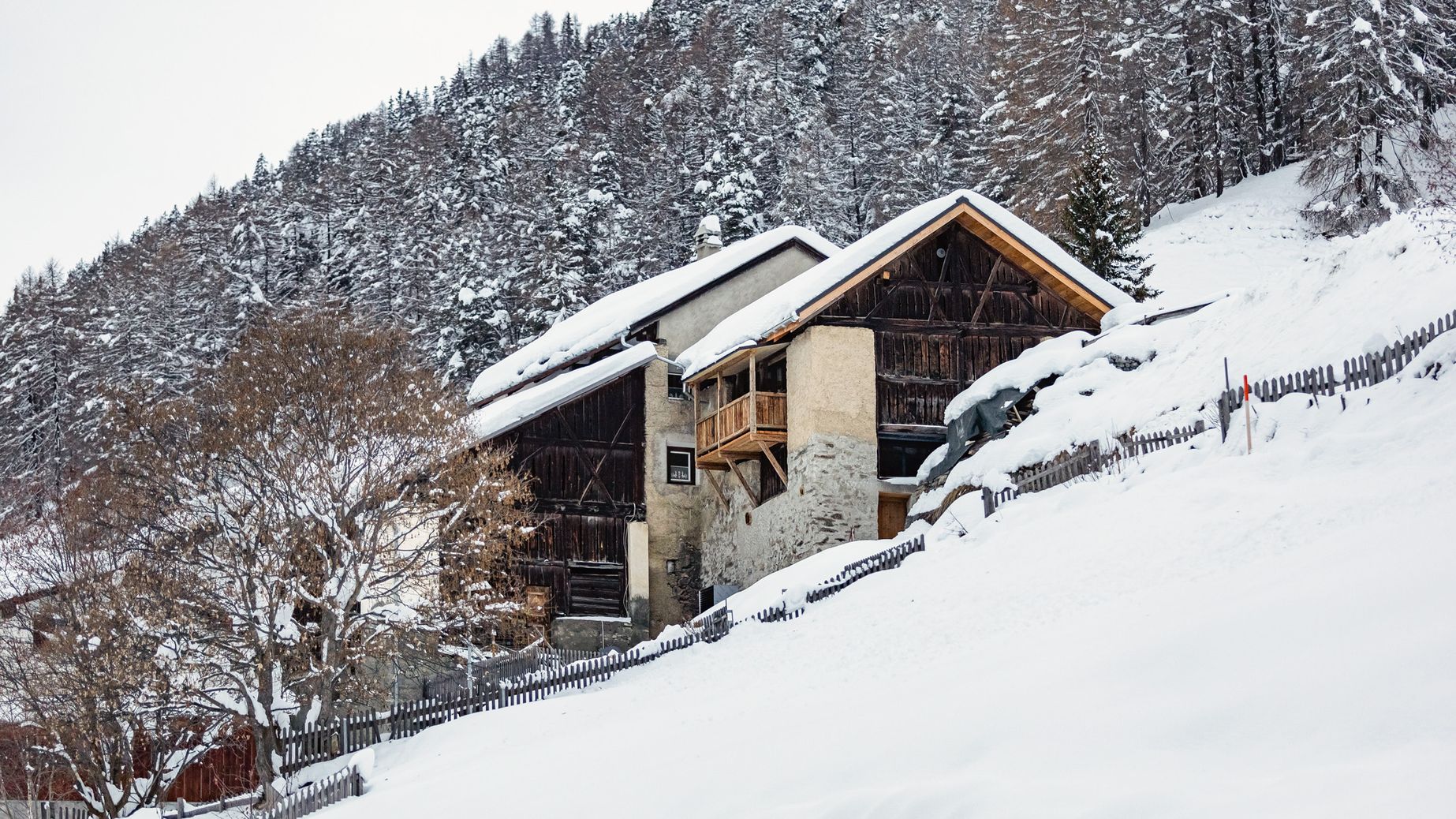
Perched in a small mountain village in the Canton of Grisons at 1,375 metres above sea level, Stalla d’Immez impresses as a sensitively converted 17th-century stable.
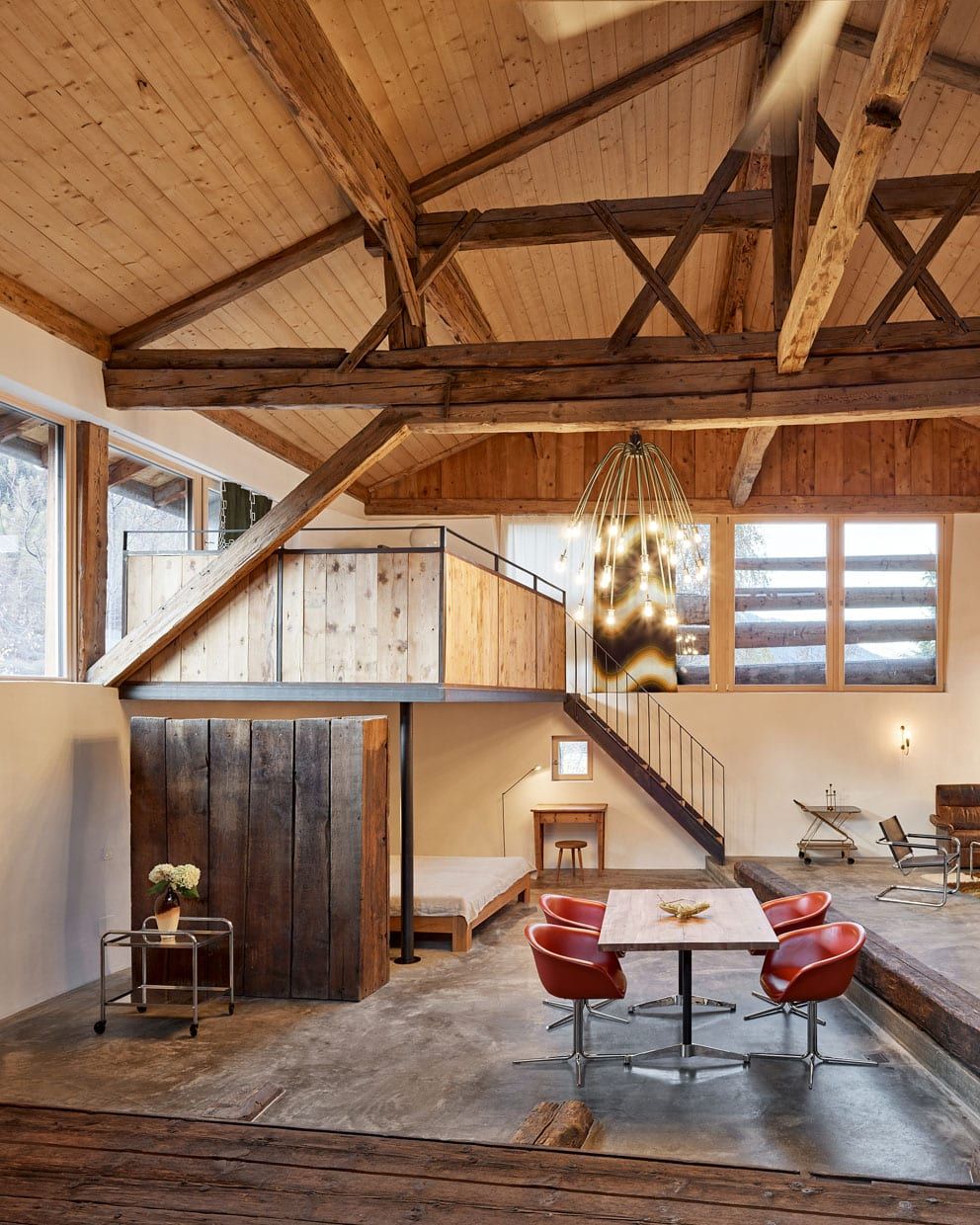
According to one guest review, it is “by far the most beautiful and impressive accommodation we have ever seen.” Once used as a stable for cattle, horses and chickens, the building within the Val Müstair Biosphere Reserve was carefully restored in collaboration with the local heritage conservation authority. The two storeys of the former stable were transformed into a loft-like open space that unites all areas: kitchen, living and dining zone, two sleeping platforms floating one above the other, a lounge area, and a gallery offering views of the breathtaking mountain scenery of Piz Lad and Piz Terza. Only the bathroom and a winter garden are enclosed by inserted walls. By opening up the space, the historical roof truss and the hay rack have been brought impressively to the fore.
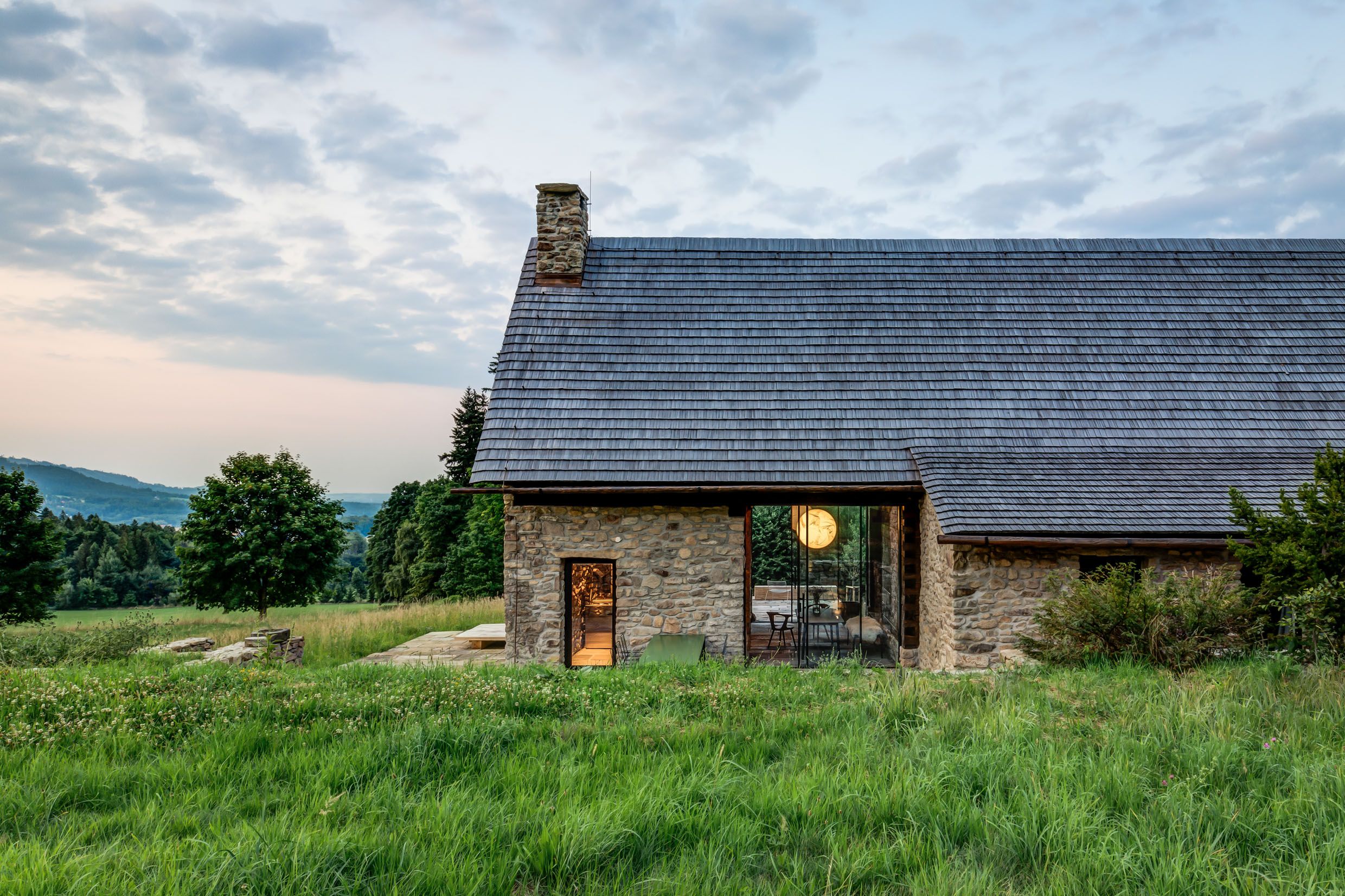
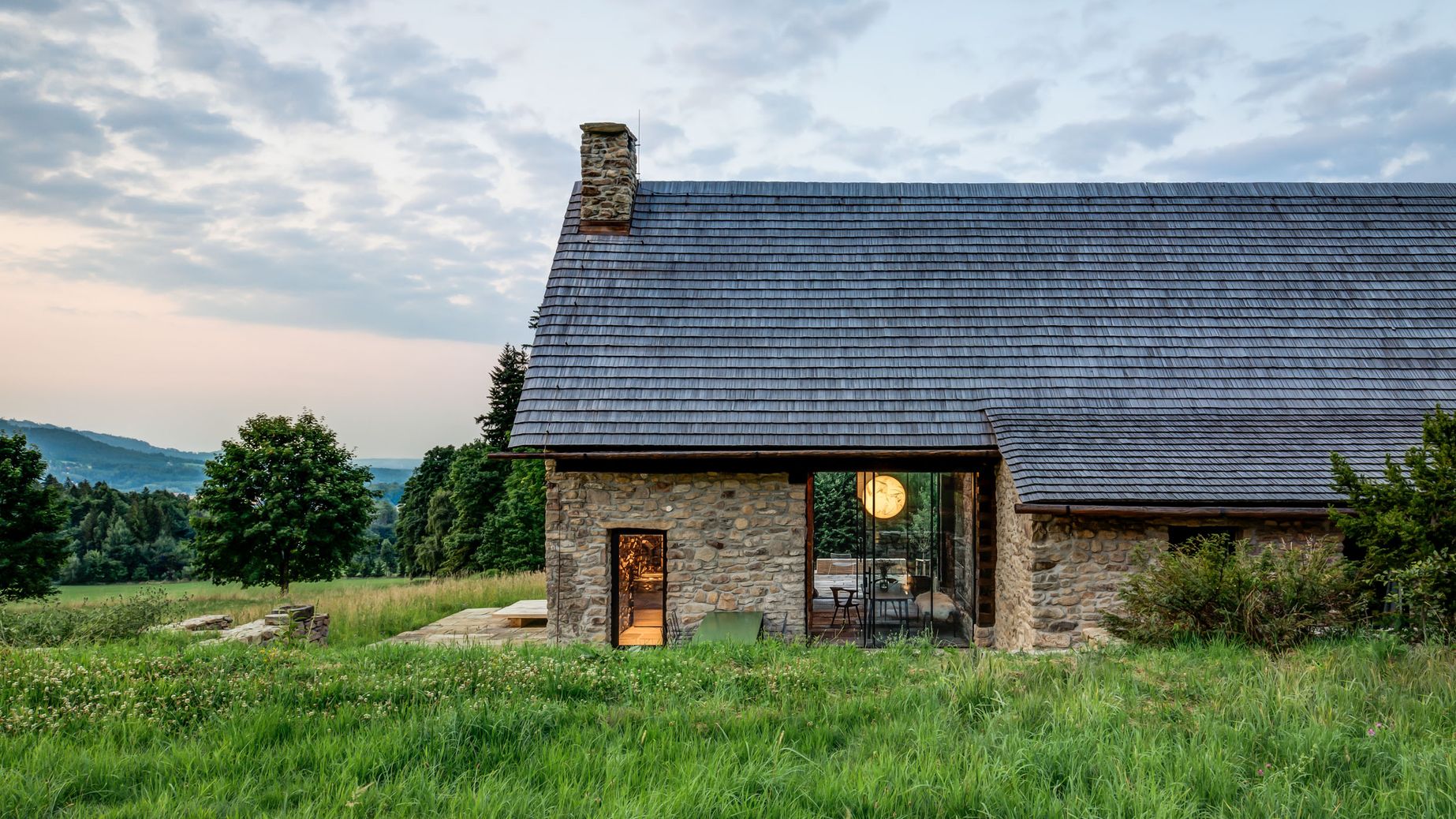
A house of stone and timber, free of distraction – Mezi Lukami at the foot of the Western Carpathians is a visual delight for minimalists.
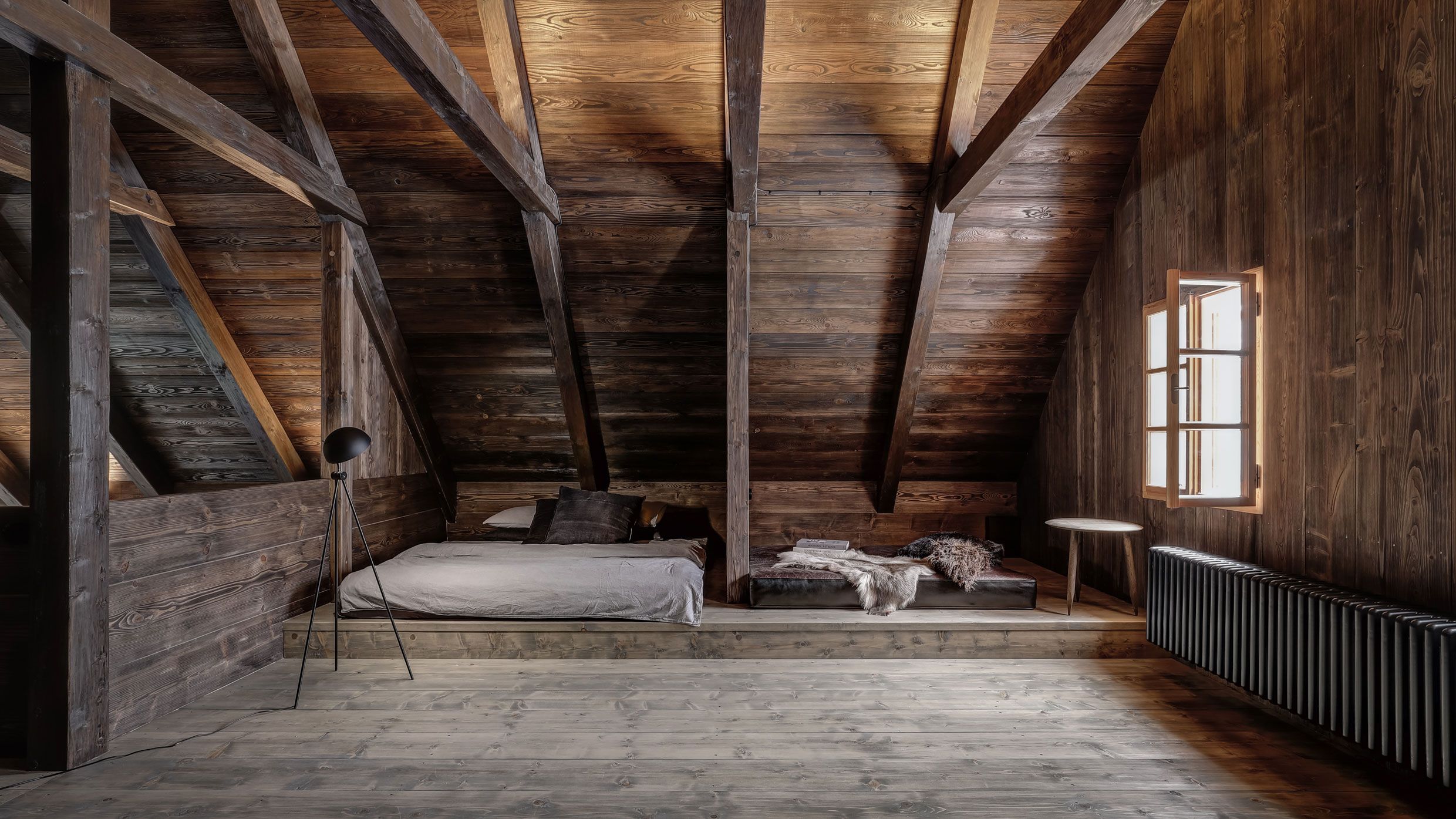
Set in the western foothills of the Carpathians, Mezi Lukami is a simple timber house dating from the early 19th century, built in the traditional style of Moravian Wallachia. Originally, the building was divided into two parts: an entrance hall at its centre separated the living quarters from the agricultural workspace. After falling into ruin, the house was carefully and respectfully restored. Where the entrance hall once stood is now the main living area; the adjoining passageway was glazed on both sides, allowing guests to sit literally ‘mezi lukami’ – ‘between the meadows’ – and gaze out into the surrounding nature. A particular highlight full of atmosphere is the loft space beneath the roof, with dark wooden floors and ceilings, exposed roof beams, a gallery overlooking the dining area and long sightlines across the landscape.
30 Minutes from Munich, 10 Metres from the Lake – the Historical Remise Possenhofen
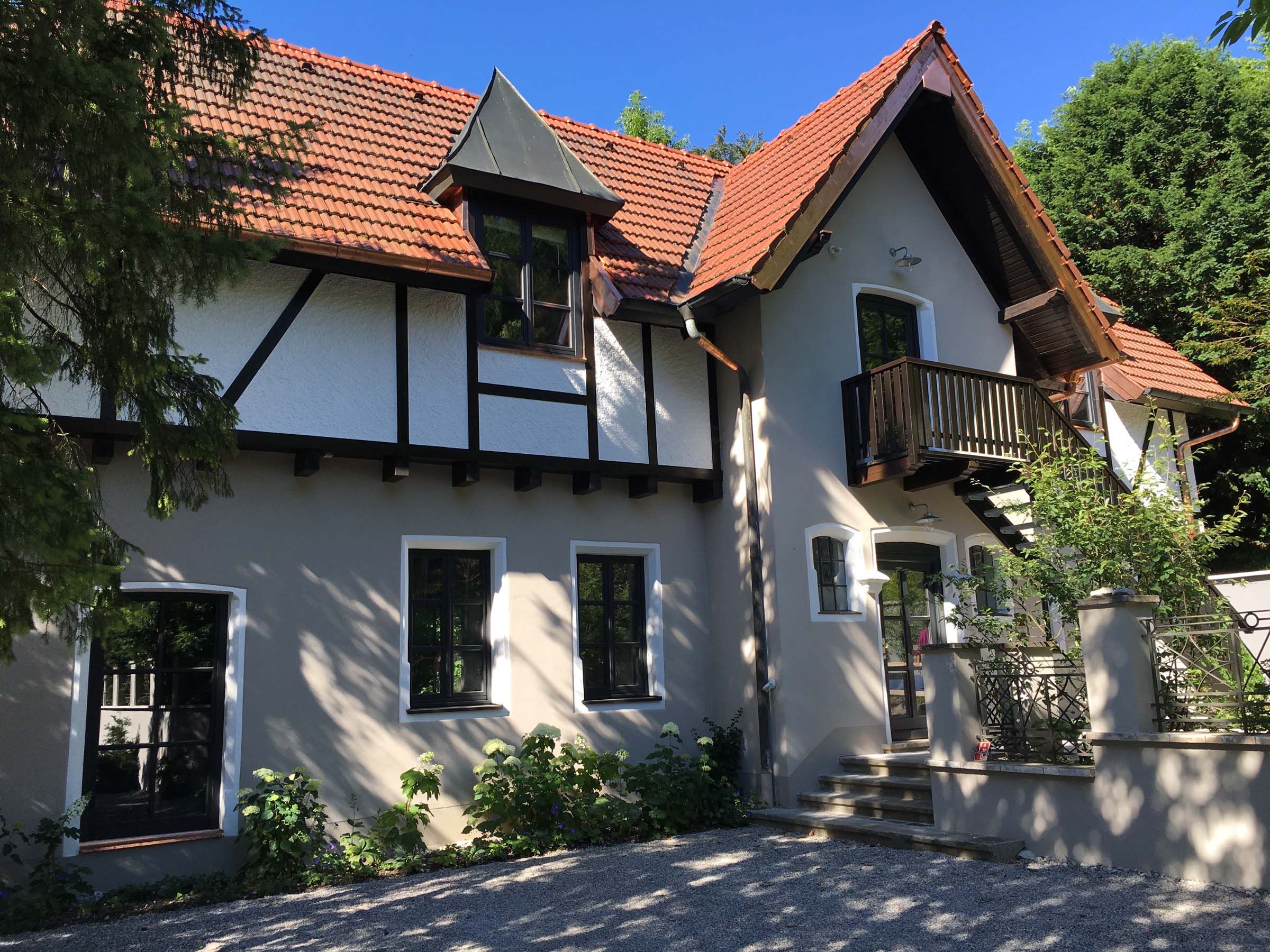
In one of Europe’s most impressive villa colonies, a listed coach house was transformed into a holiday retreat on Lake Starnberg.
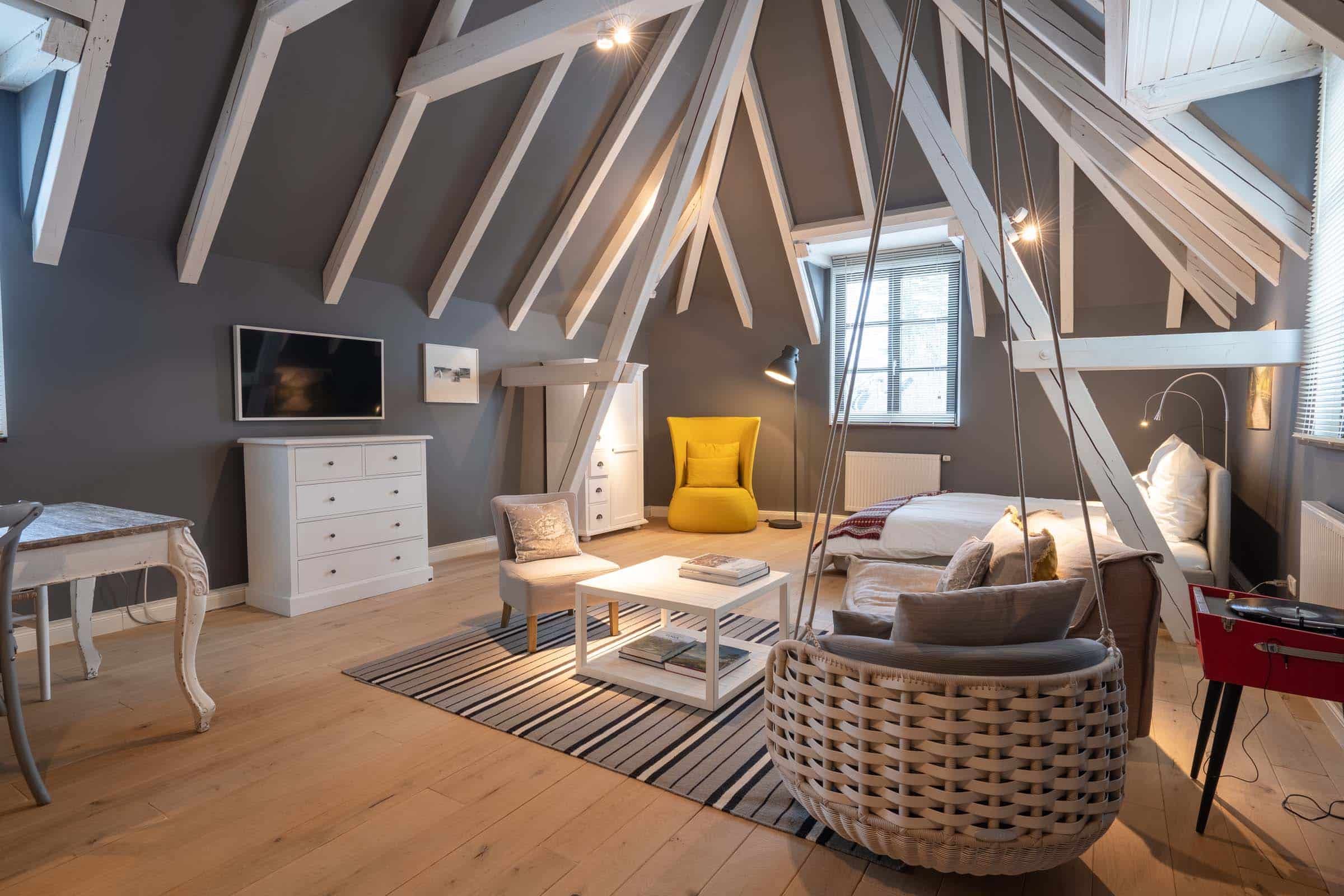
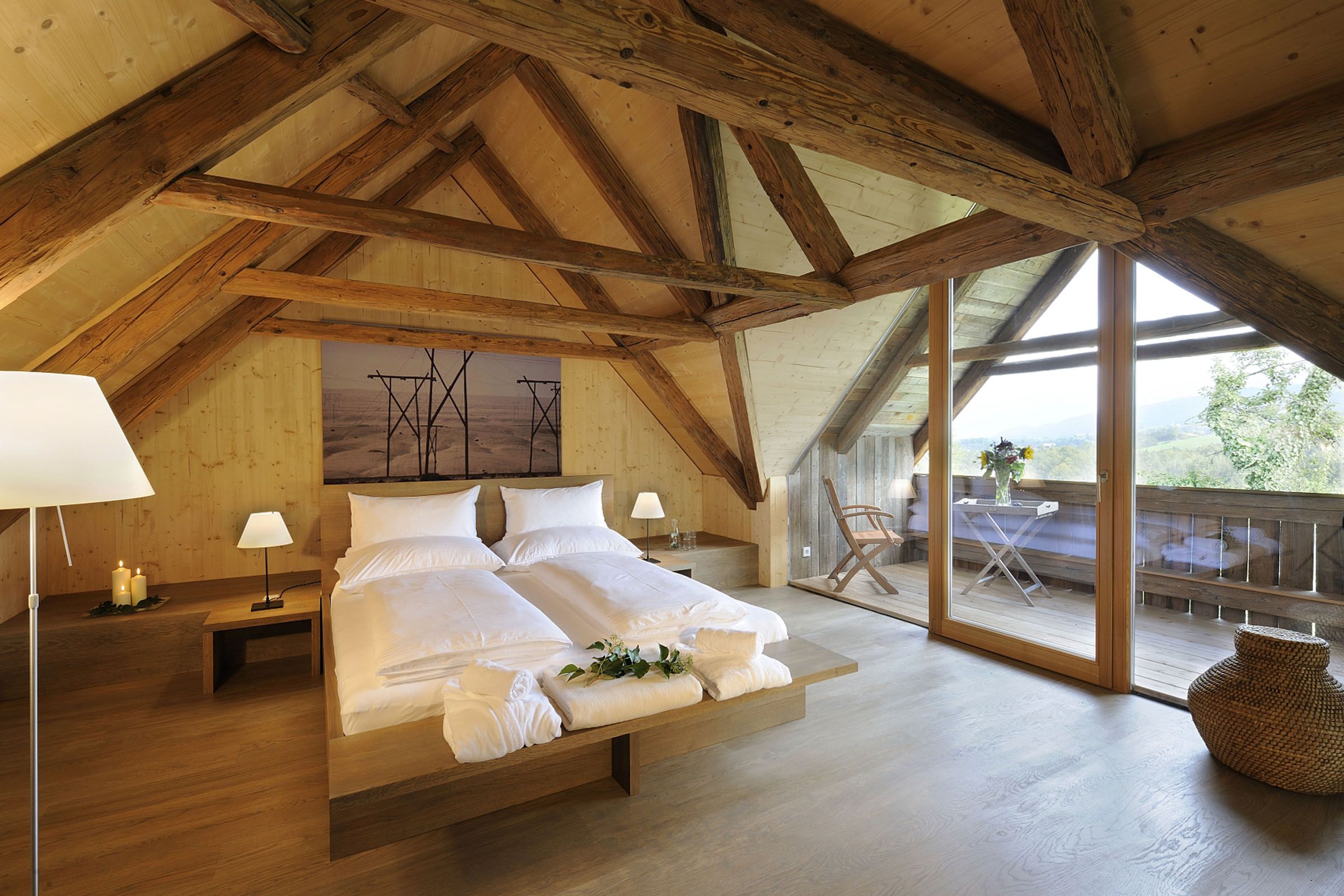
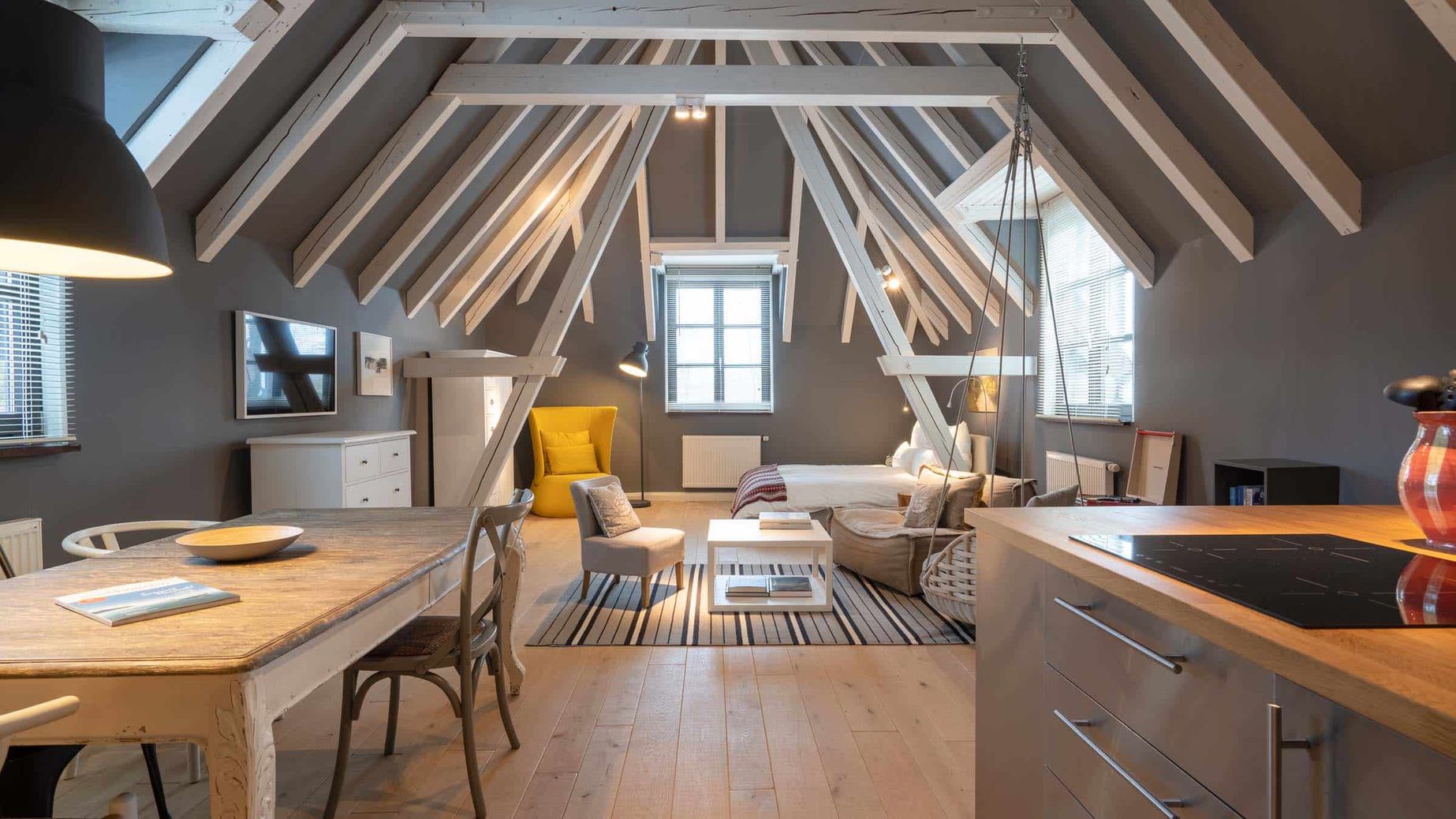
Possenhofen is picturesquely situated on the western shore of Lake Starnberg and is best known as the childhood home of Empress “Sisi”, who spent her happiest years here. The future personal physician to the Empress had Villa Fischer built near the lake, complete with stables and a coach house. Following extensive refurbishment, the stables and coach house have accommodated three holiday apartments since 2016. Those who prefer open and airy spaces will feel most at home in the Bergzimmer or Waldzimmer on the upper floor – or even better, rent both apartments as a unit. Here, beneath the exposed roof structure, you can perfectly unwind in a Dedon Swingrest hanging chair, browse the vinyl record collection or lose yourself in book after book from the shelves.
Charm and Cosiness in a Historical Umgebindehaus
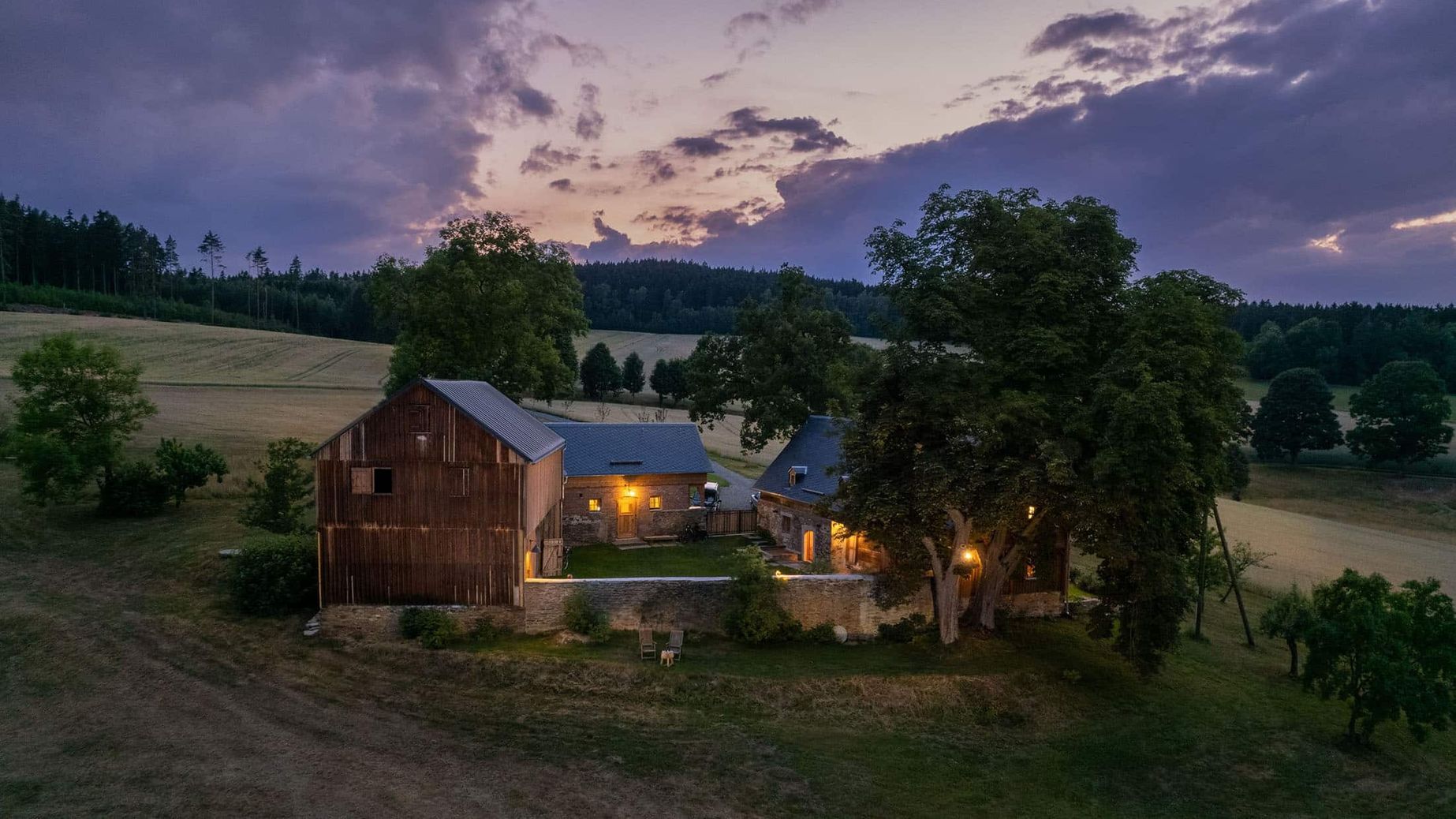
The secluded four-sided farmstead in Saxony’s Vogtland region feels like a place out of time – yet offers every imaginable comfort.
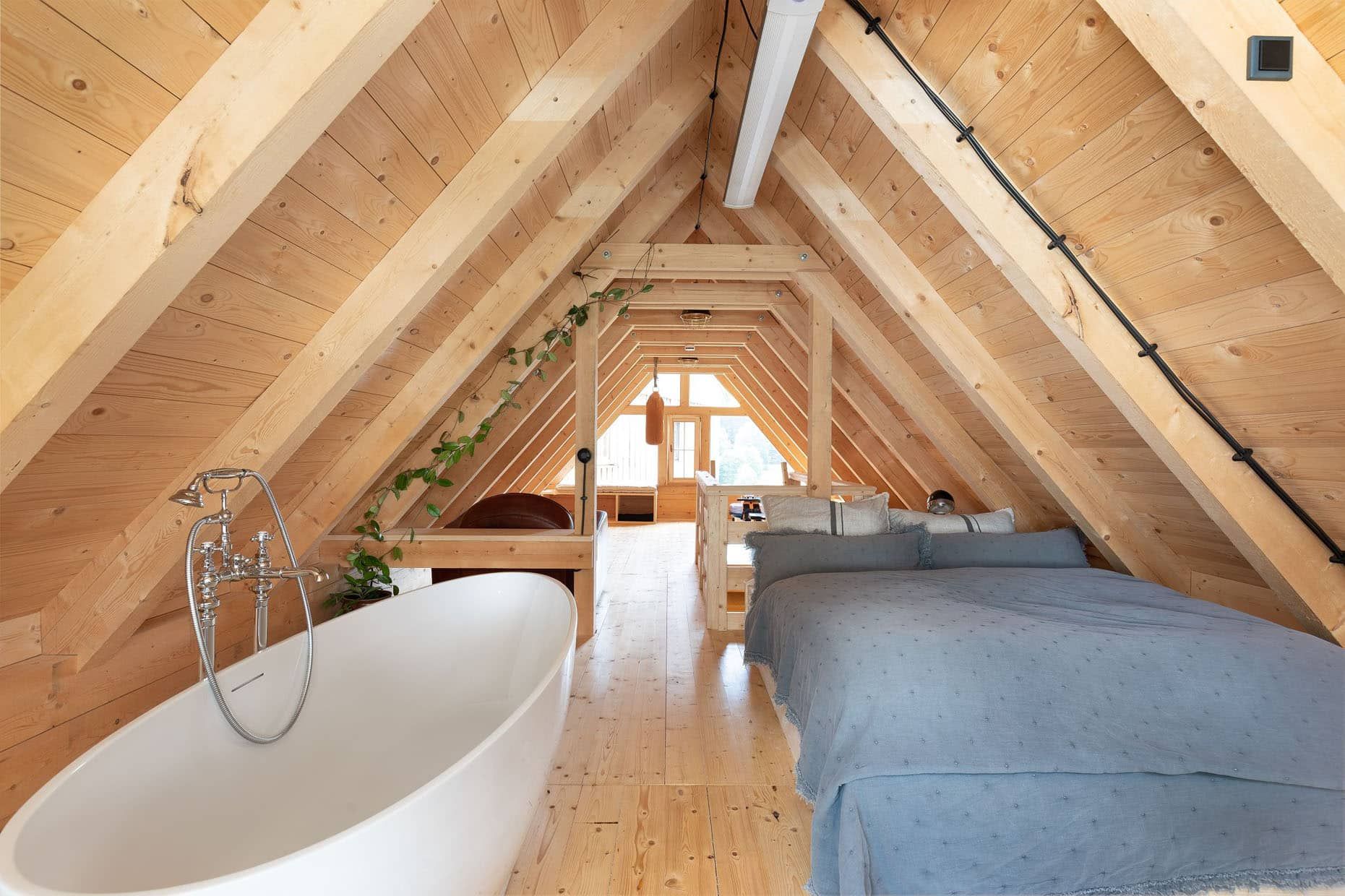
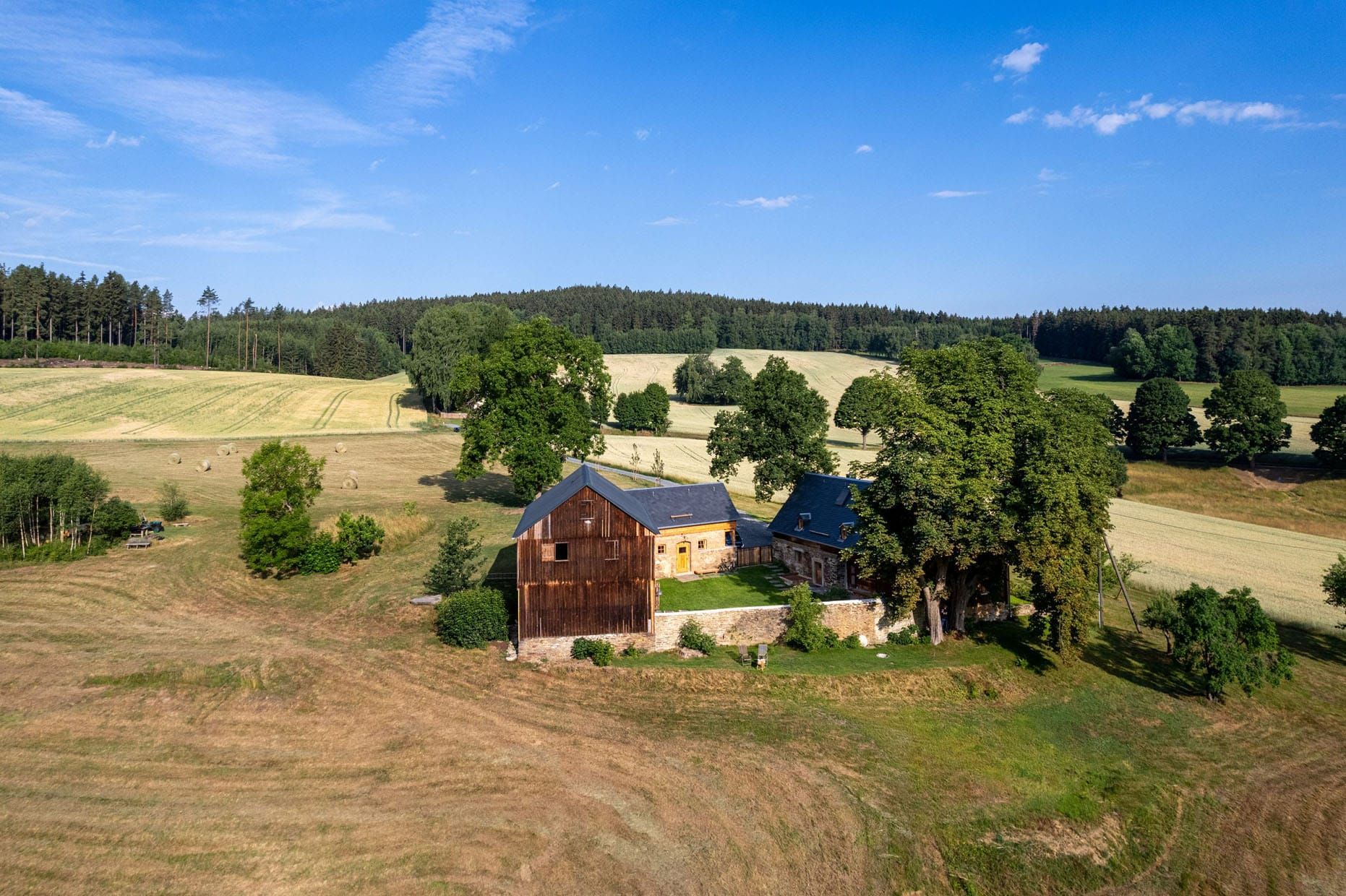
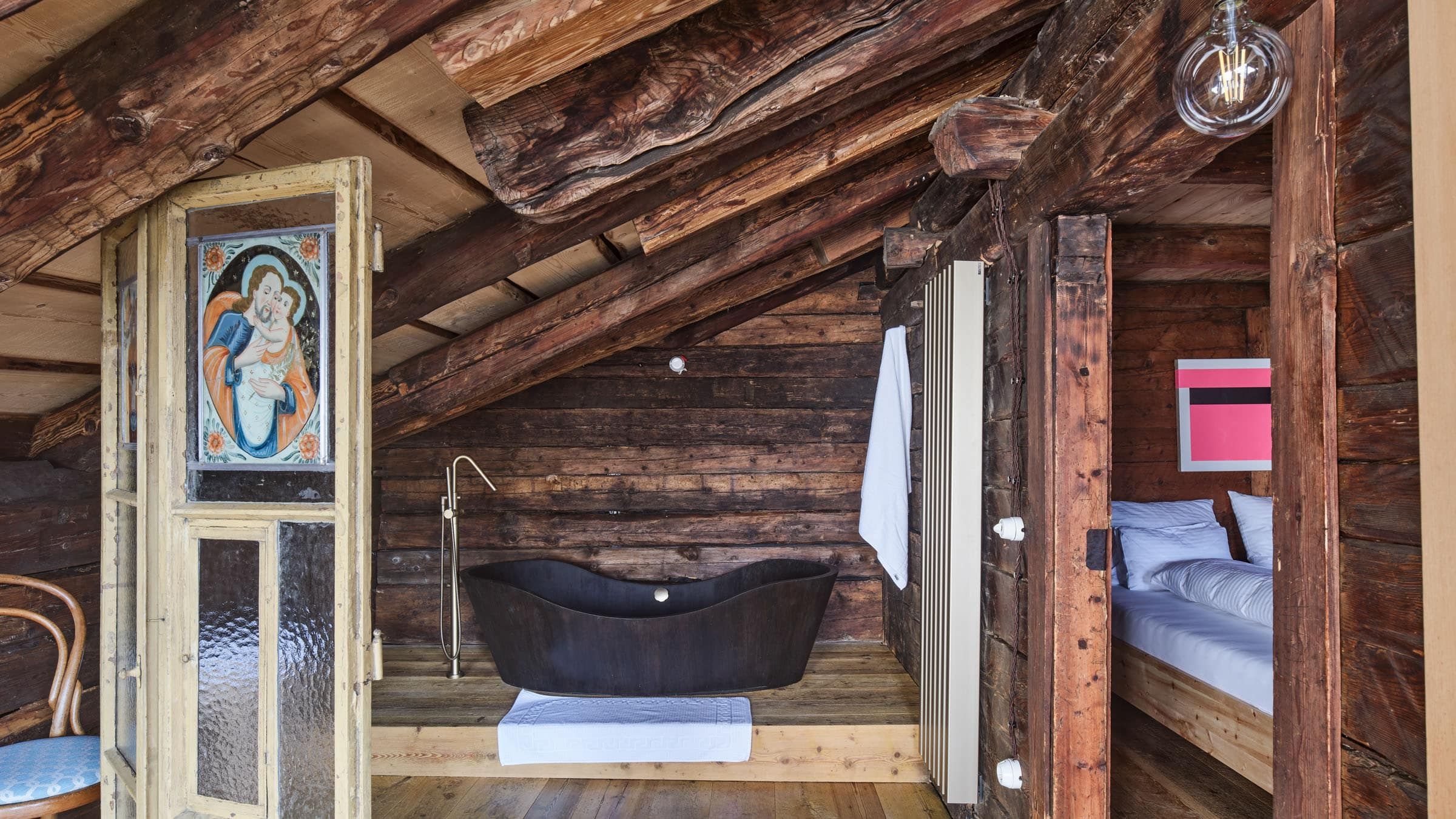
Bauernhof Vogtland is set on the edge of a sleepy village, surrounded by fields, forest and a gently babbling brook. The ensemble comprising a Wohnstallhaus – a byre-dwelling combining living quarters with livestock – barn and remise dates back to 1740 and captivates with its simple beauty. The farmhouse itself is one of the rare surviving Umgebindehäuser of the region – a special type of house that combines log, half-timbered and solid construction methods – featuring original timber beams, natural stone walls and historical wooden shingles. During its restoration, much of the building’s original character was carefully preserved. The spacious Wohnstallhaus not only offers a wonderfully cosy kitchen crafted from old wood, but also two wood-burning stoves and plenty of room for both socialising and retreat. The fully gutted remise was transformed into a two-storey wellness area, complete with a Finnish sauna on the ground floor and a freestanding bathtub beneath the exposed roof truss.
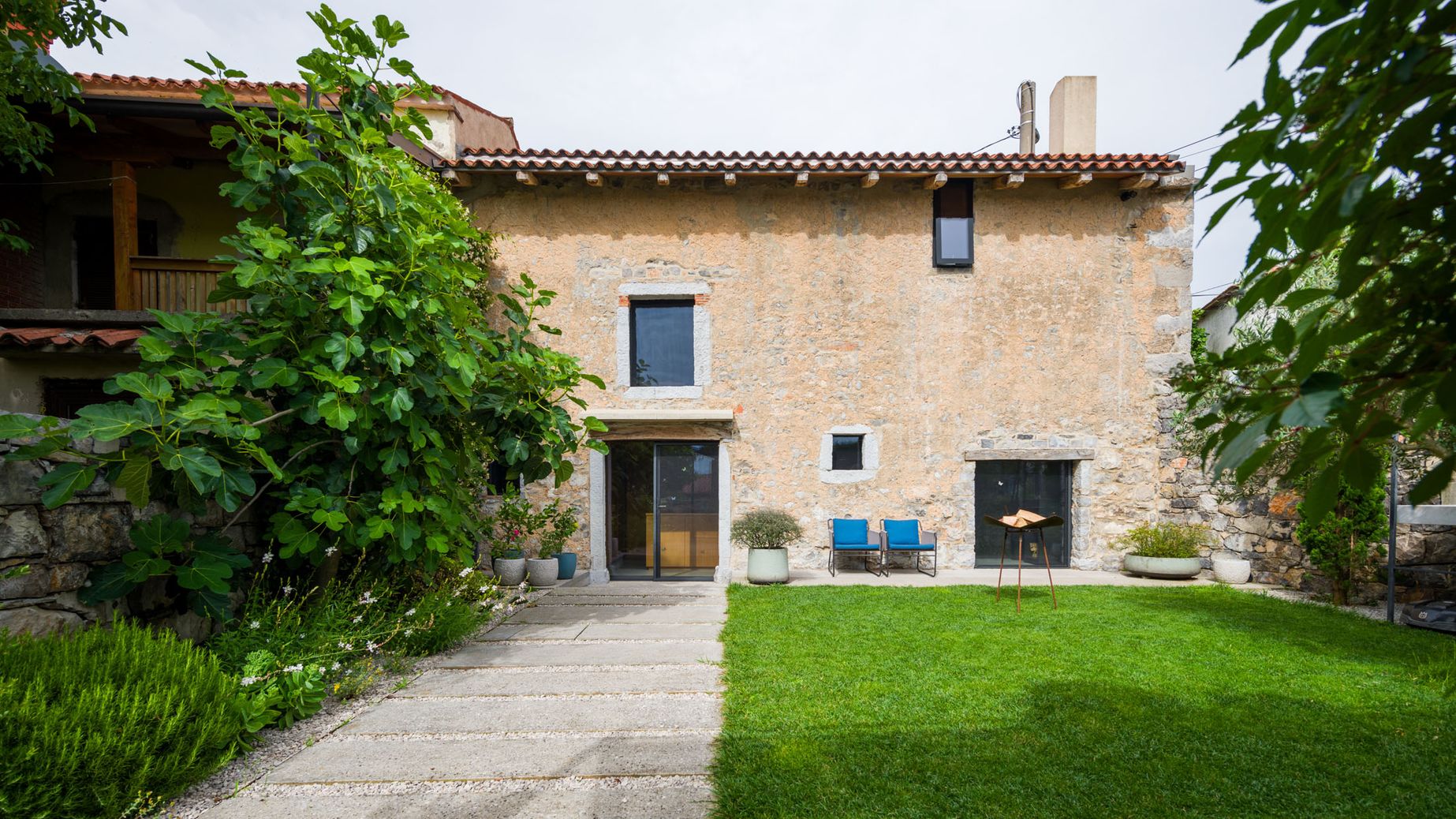
Kambra stands in a small Slovenian village, surrounded by gentle hills and close to the Italian border. Stone defines not only the karst landscape here, but also the old building itself, with its massive natural stone walls.
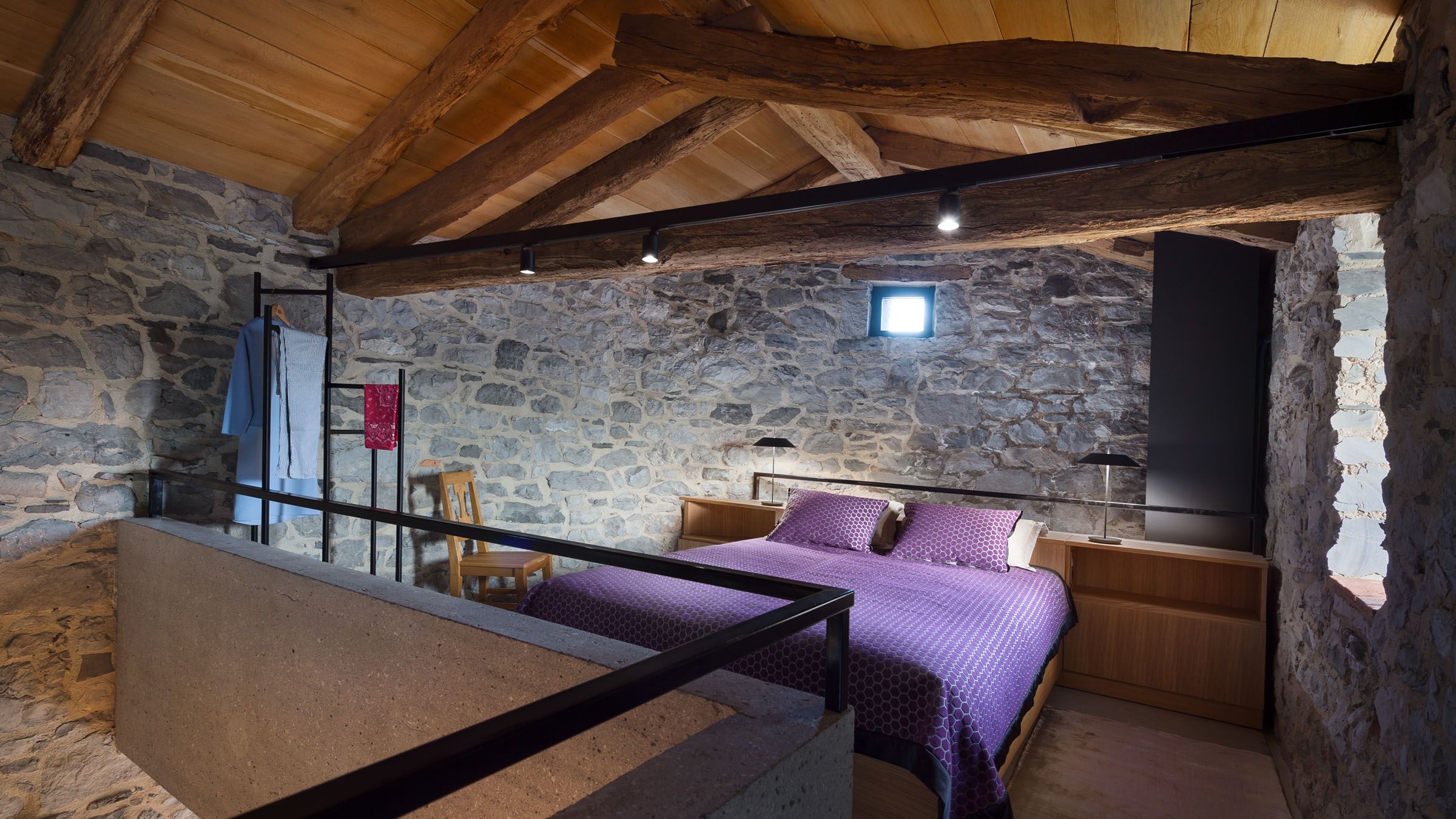
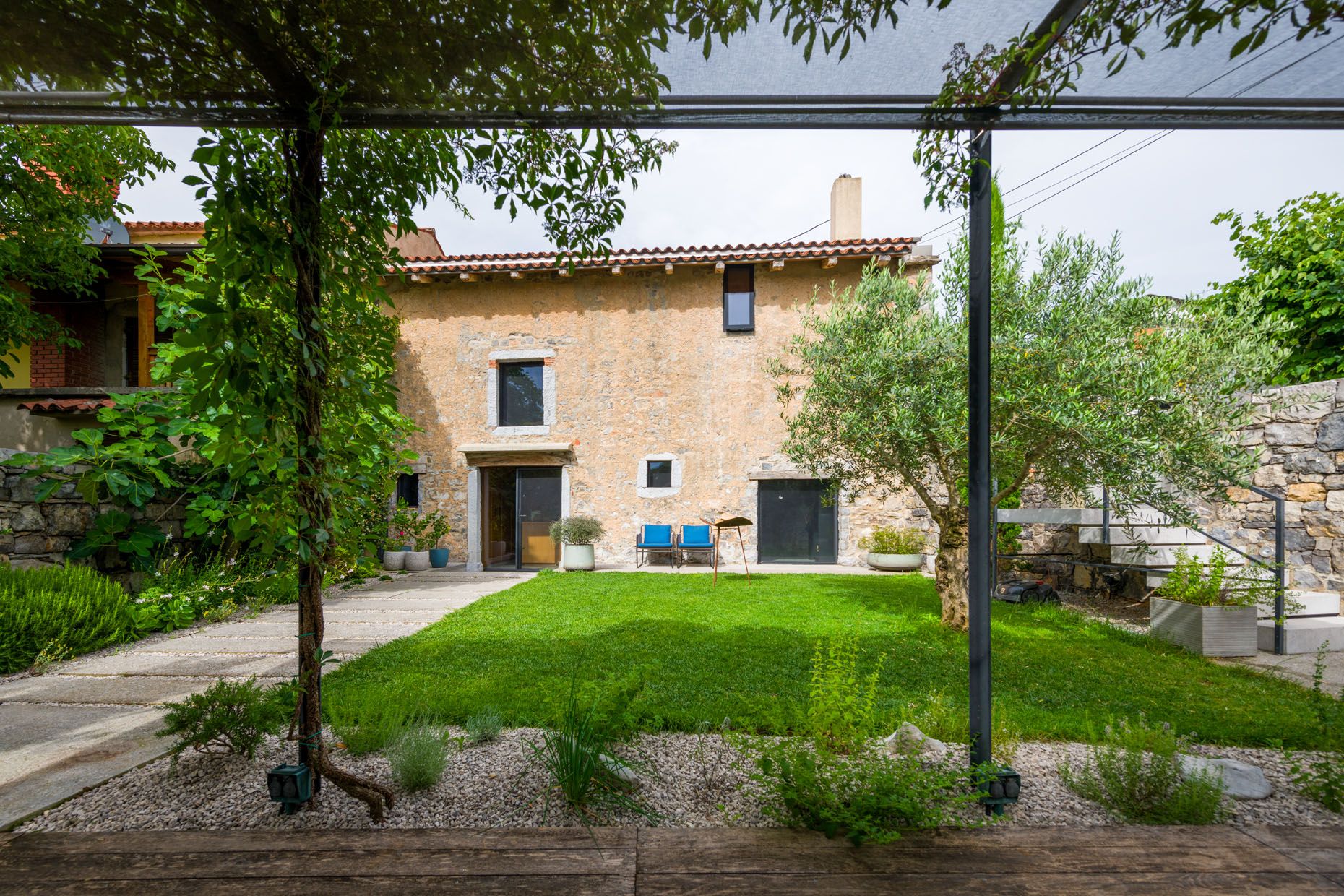
This former stable, 400 years old, was converted into a contemporary holiday home in 2018. Its location in the heart of the village of Pliskovica only adds to its charm. But the real highlight is the house itself – with original stone walls, the old window openings and a preserved oak roof structure. Modern additions of concrete, steel and wood complement the old fabric. The house is designed as an open space extending vertically across three levels: the kitchen and dining area on the ground floor, the living space above and the bedrooms beneath the exposed roof structure at the top. The architects also added a single-storey concrete pavilion, creating a sheltered courtyard with a covered terrace and Mediterranean planting.
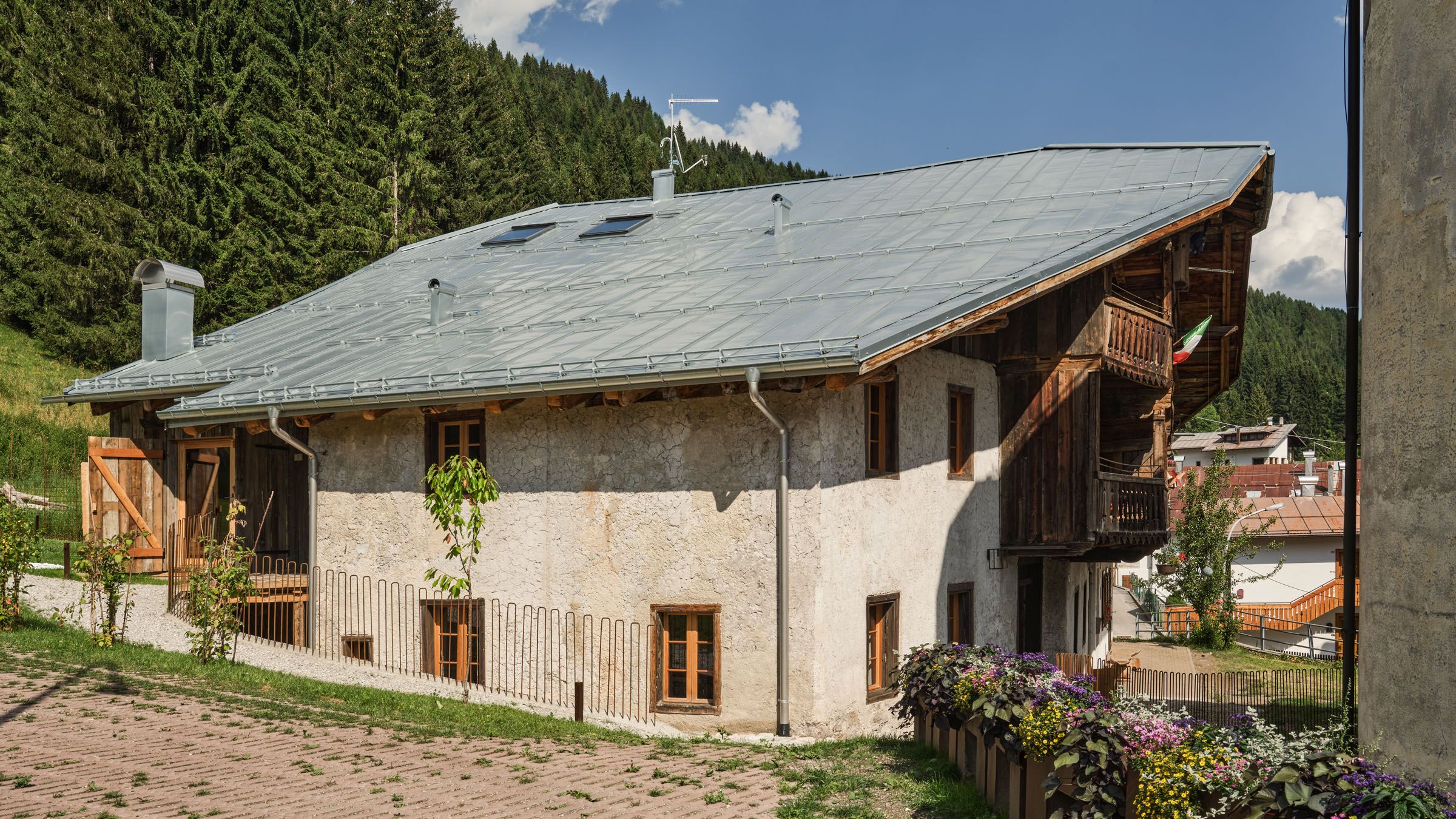
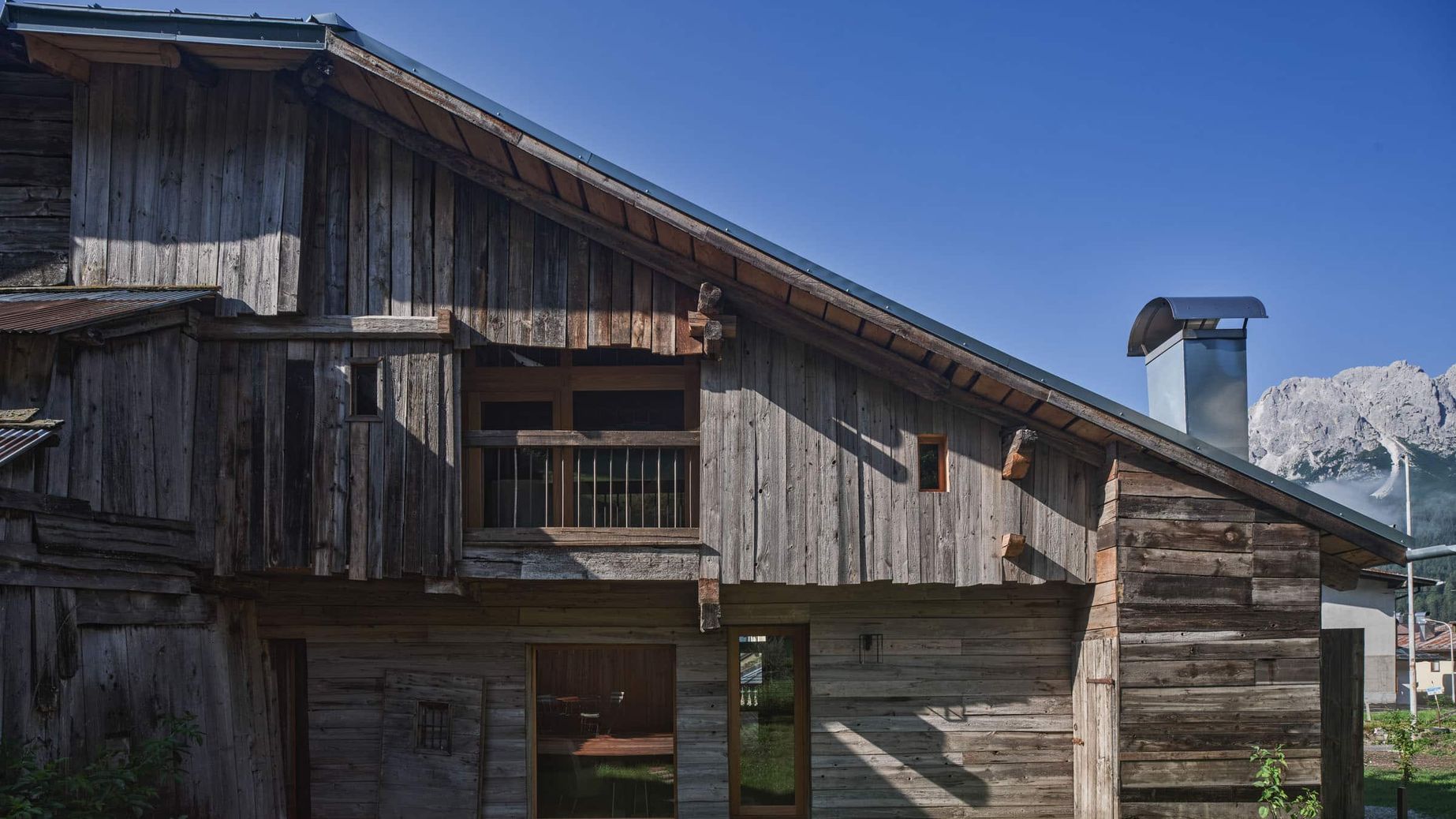
Fresh mountain air, beds made from fragrant Swiss pine and the seclusion of a tiny village in the Comelico Valley: this is Cedä M.
Waking to the sound of church bells. The scent of freshly brewed coffee drifting from the kitchen, warm cornetti from the local bakery steeped in tradition waiting on the table – this is how you can imagine starting a day at Cedä M. From the balcony, the view stretches out over rooftops to wooded hills, lush green alpine meadows and rugged peaks beyond. This old farmhouse in Dosoledo, nestled in the Dolomites, is a historical gem in every sense – from its preserved façade and exposed beams to its traditional Dippelbaum ceiling. Antique furniture from the house and the surrounding rural region maintain a sense of authenticity and the atmosphere of the past. In this special ambience, modern comforts are experienced in a whole new way.
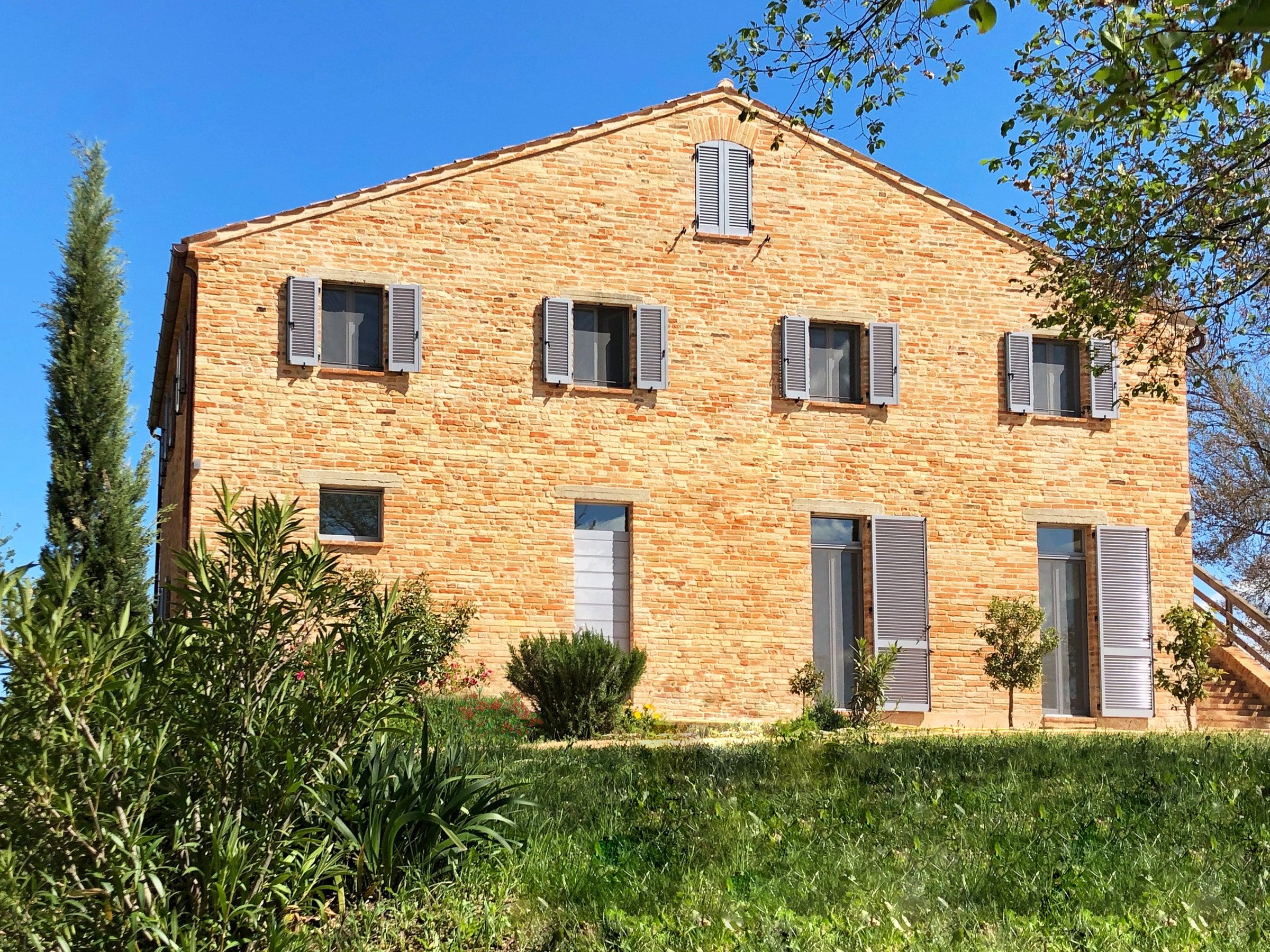
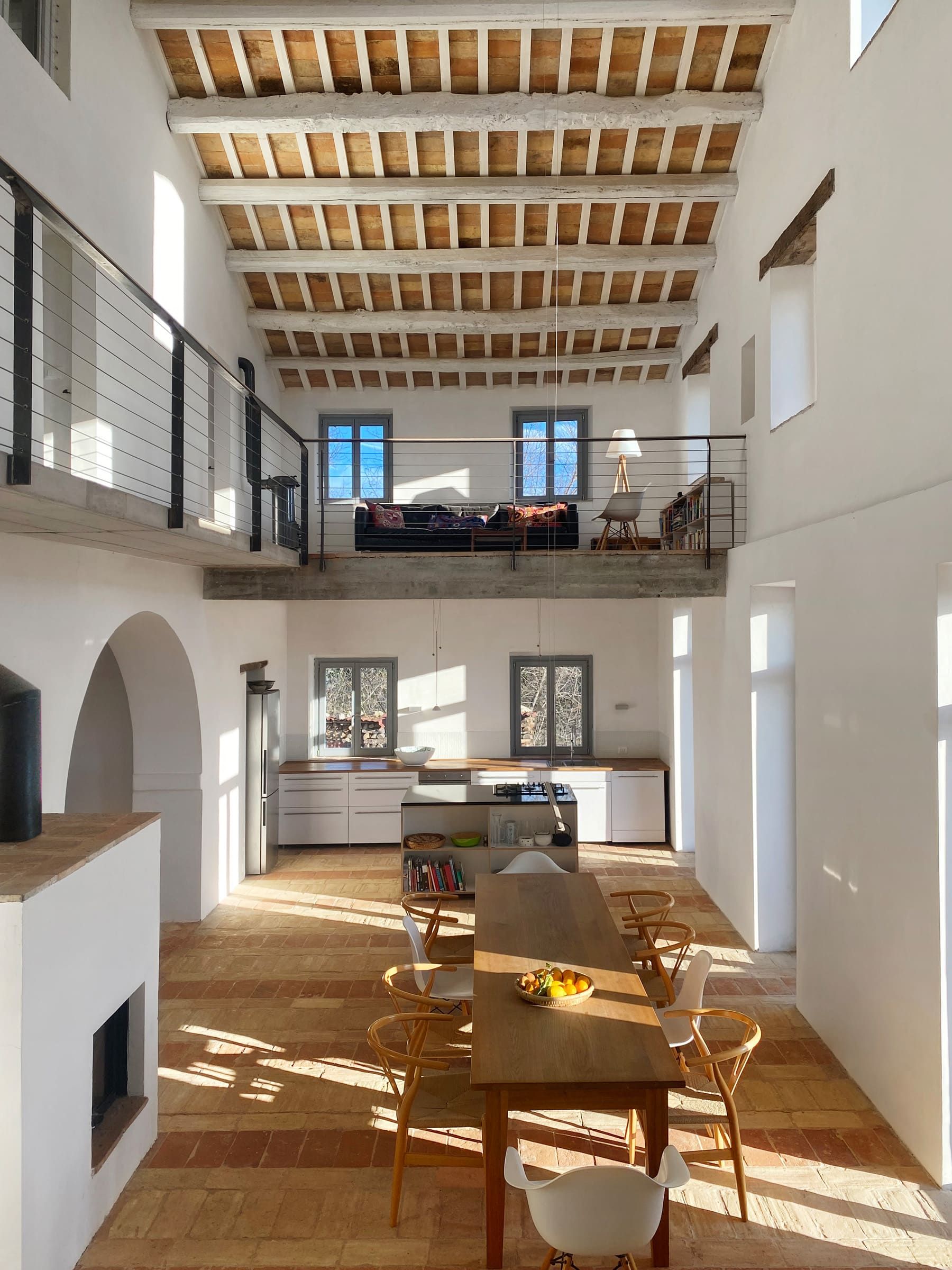
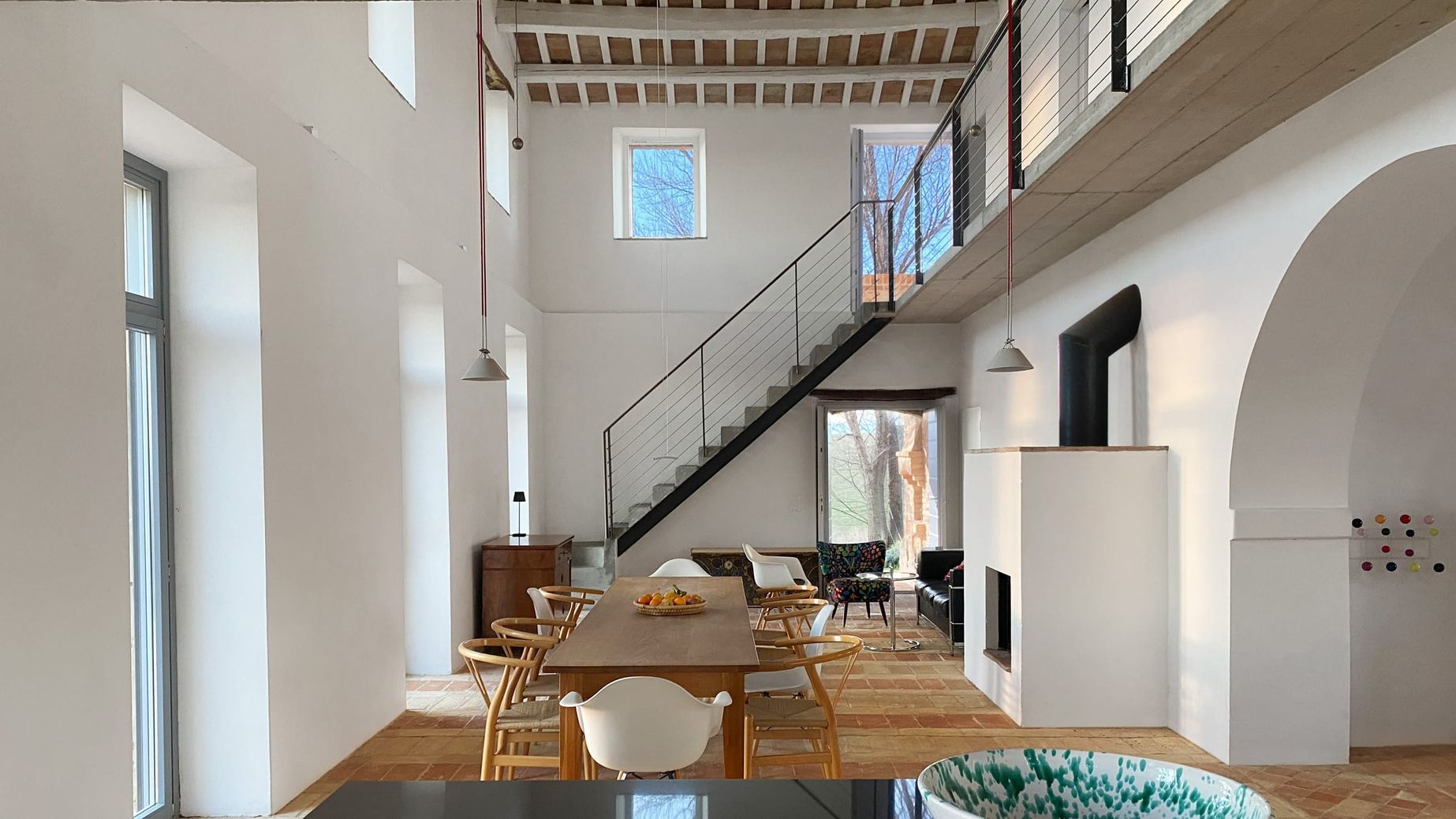
A former farmhouse, now thoughtfully transformed into a holiday home. Its highlight: a vast living hall with exposed beams and spectacular panoramic views.
Casa della Fede stands in complete seclusion just outside the picturesque village of Montefiore dell’Aso in Italy’s Le Marche region. After the final steep ascent to the house, guests are rewarded with breathtaking views – of the Sibillini Mountains, medieval towns, rolling vineyards and the distant sea. Built in 1890, the old farmhouse was carefully restored in 2012/13, retaining its quiet beauty and timeless charm. One half of the house now contains four bedrooms, while the other was converted into an expansive living hall. Following the demolition of the dilapidated stable ceiling and the opening of the small stable windows, the kitchen and dining area now extends all the way up to the roof. Part of the original vaulted stable ceiling was preserved, and all reclaimed building materials were reused throughout the house. Perched on a hilltop, the property features two terraces that extend the living space into the open air.
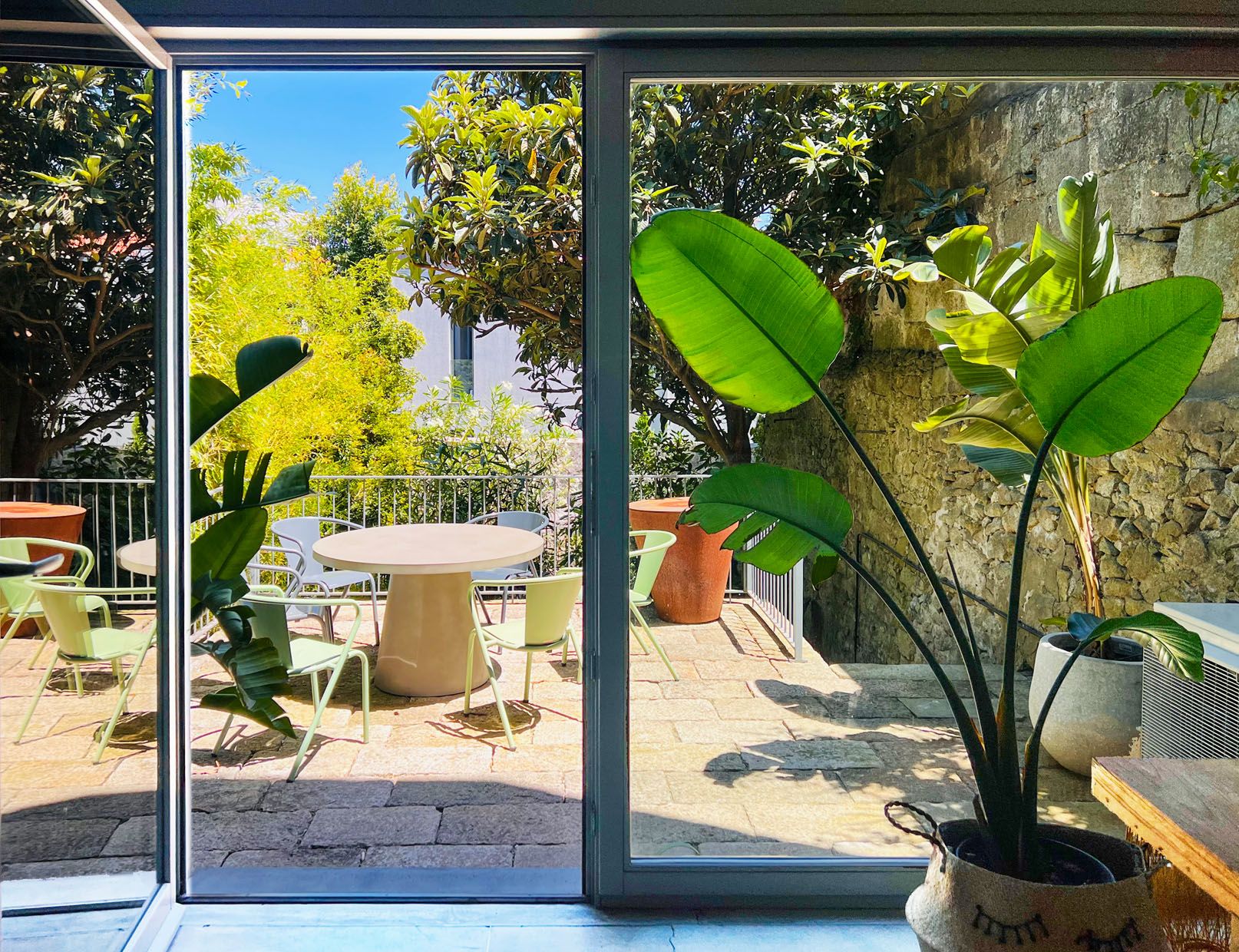
A Factory in the Garden – Right in the Heart of Porto
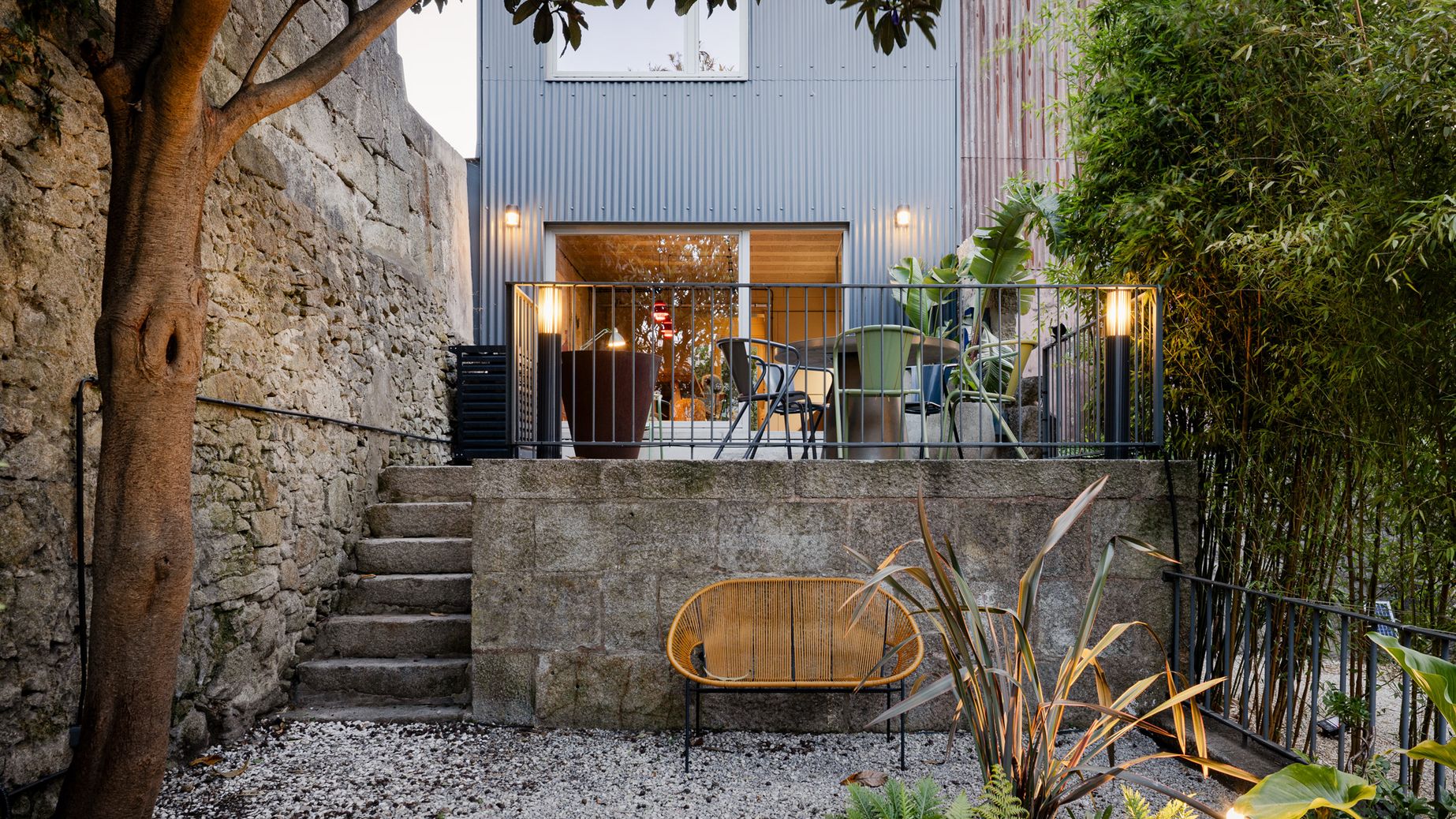
Fábrica no Jardim is a quiet oasis set amid the bustle of a lively, noisy city. From the outside, it resembles an old workshop; inside, it reveals an open-plan living space extending across three levels.
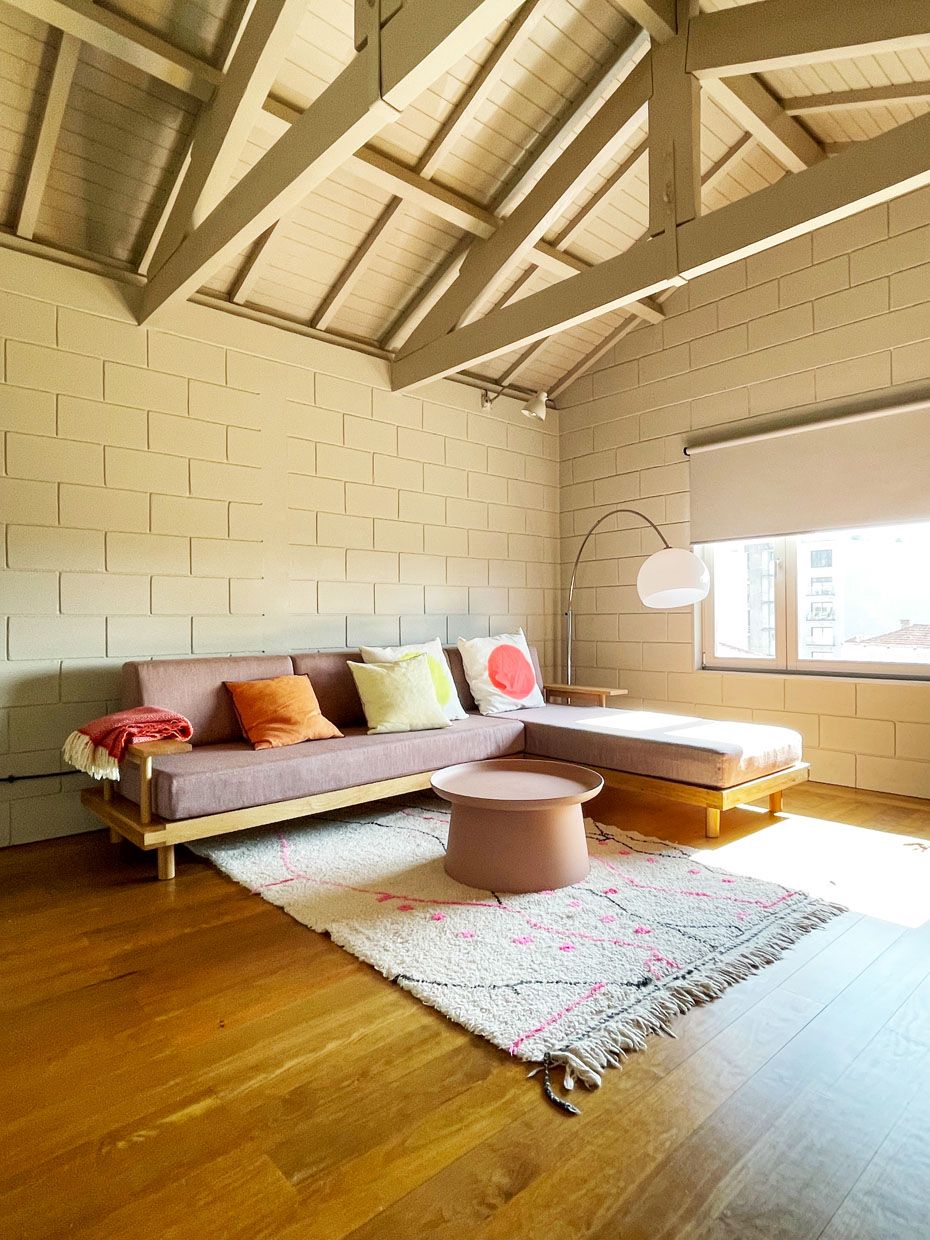
The creative district of Cedofeita was once characterised by factories and workshops. Hidden away here is the Fábrica no Jardim, an understated structure with its corrugated metal façade – a respectful nod to the area’s industrial past. The design aimed to create a form of industrial minimalism, with raw materials, open spaces, large windows and a strong connection to the garden as a tranquil counterpoint to urban life. Two terraces, accessed directly from the open-plan kitchen and dining area, extend the living space outdoors. The top floor opens generously towards the exposed roof structure, making the timber trusses a central design feature. From here, guests enjoy far-reaching views over the city’s rooftops.
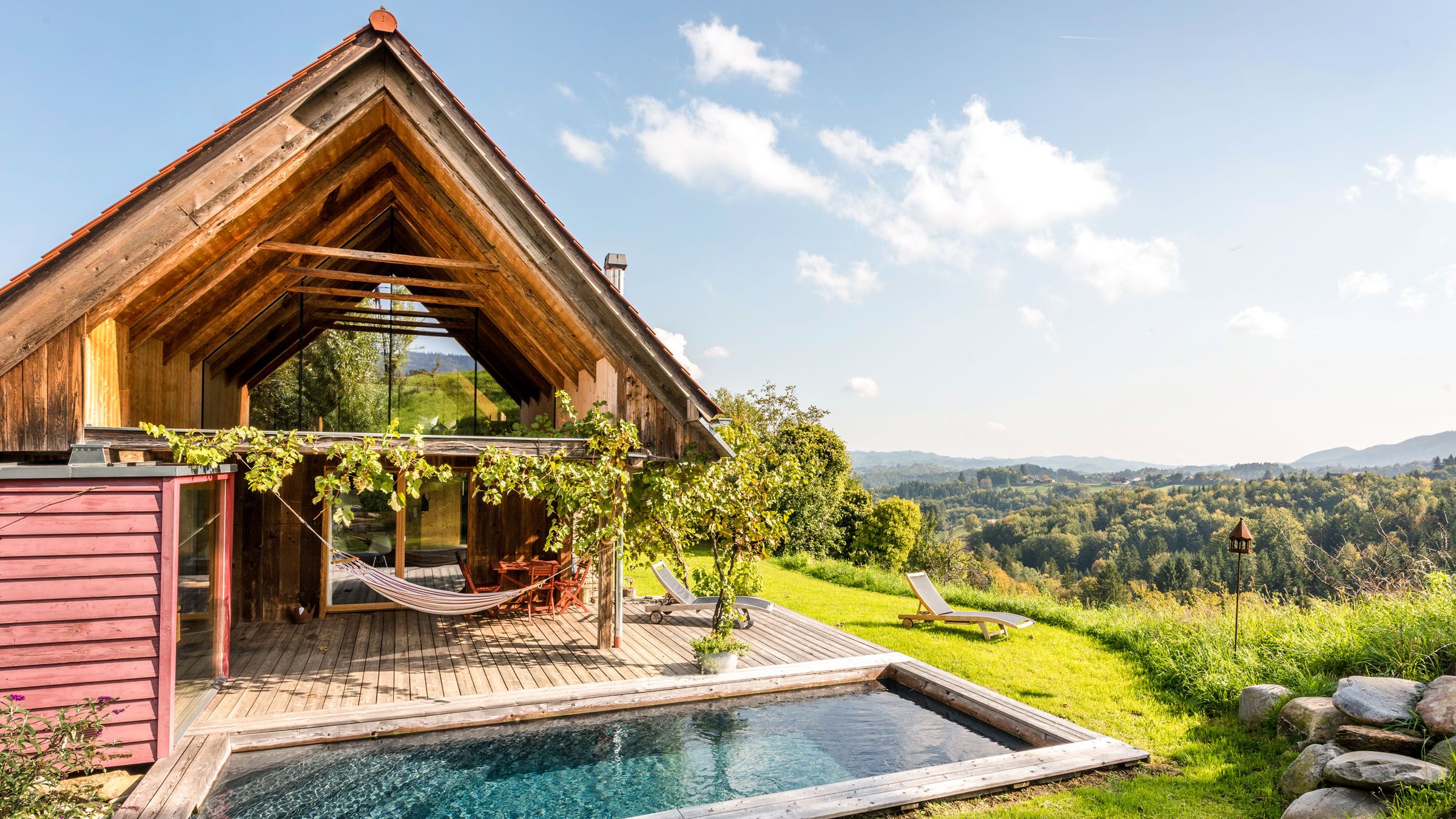
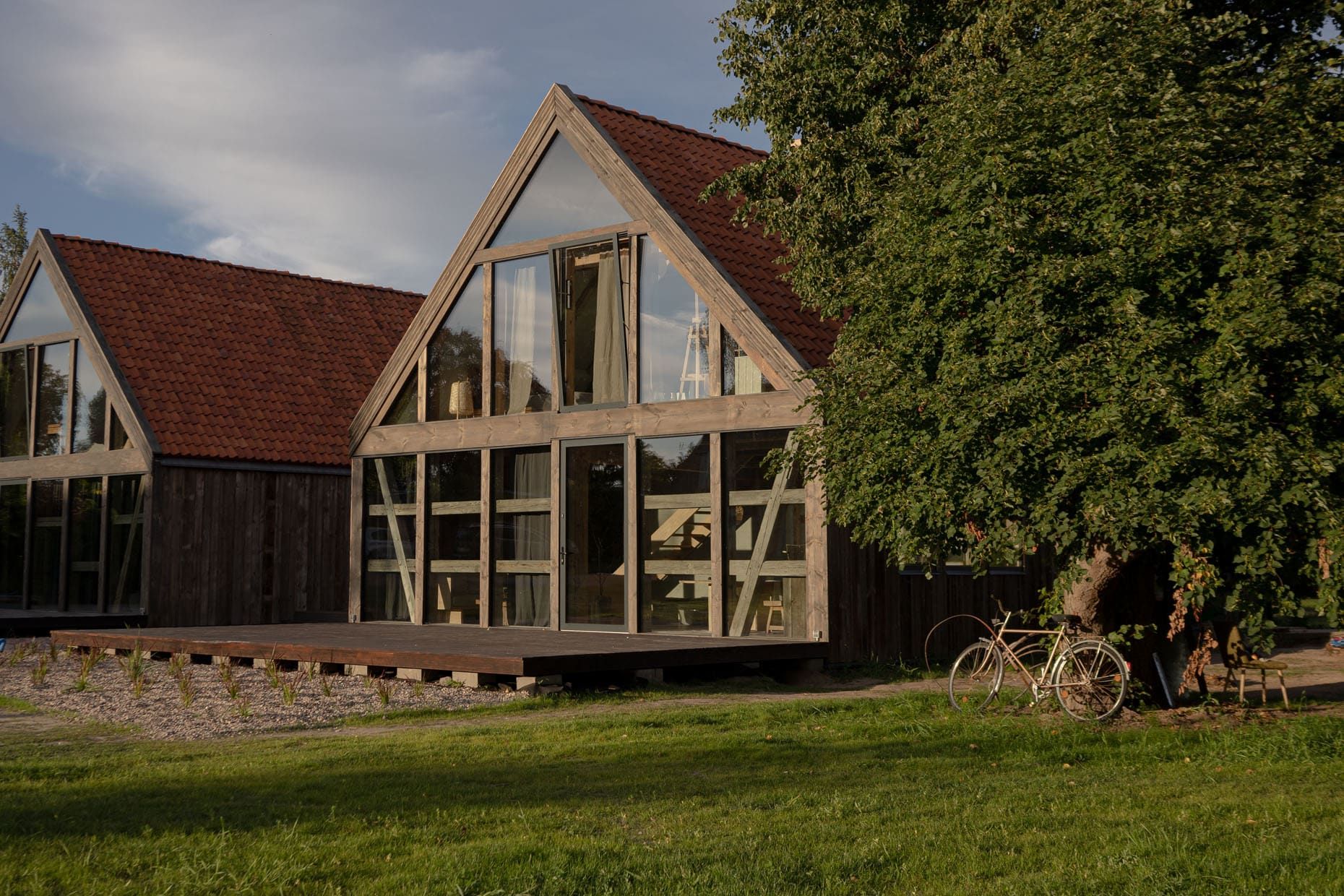
After 150 years of sun, wind, rain and snow, an old barn was transformed into a guesthouse in southern Styria that opens wide towards the surrounding landscape.
Set in glorious seclusion on a hilltop near Oberhaag in southern Styria, the Stadl am Tunauberg immediately impresses with its glazed gable wall and panoramic all-round views. From the outside, the building remains as simple and authentic as it once was. Inside, the heavy wooden beams have been left exposed, giving the rooms a rustic charm. Bright, earthy colours and clean lines enhance the sense of openness. A highlight in the dining area is an antique church pew that once stood in a chapel on the local Wine Road. The bedroom is located on an open gallery, offering sweeping views of the Alpine pastures. A fireplace, panorama sauna outside the house, terrace with hammock and outdoor pool are perfect places to relax.
The Scent of Clay, Wood and Resin: A Guesthouse in Pomerania
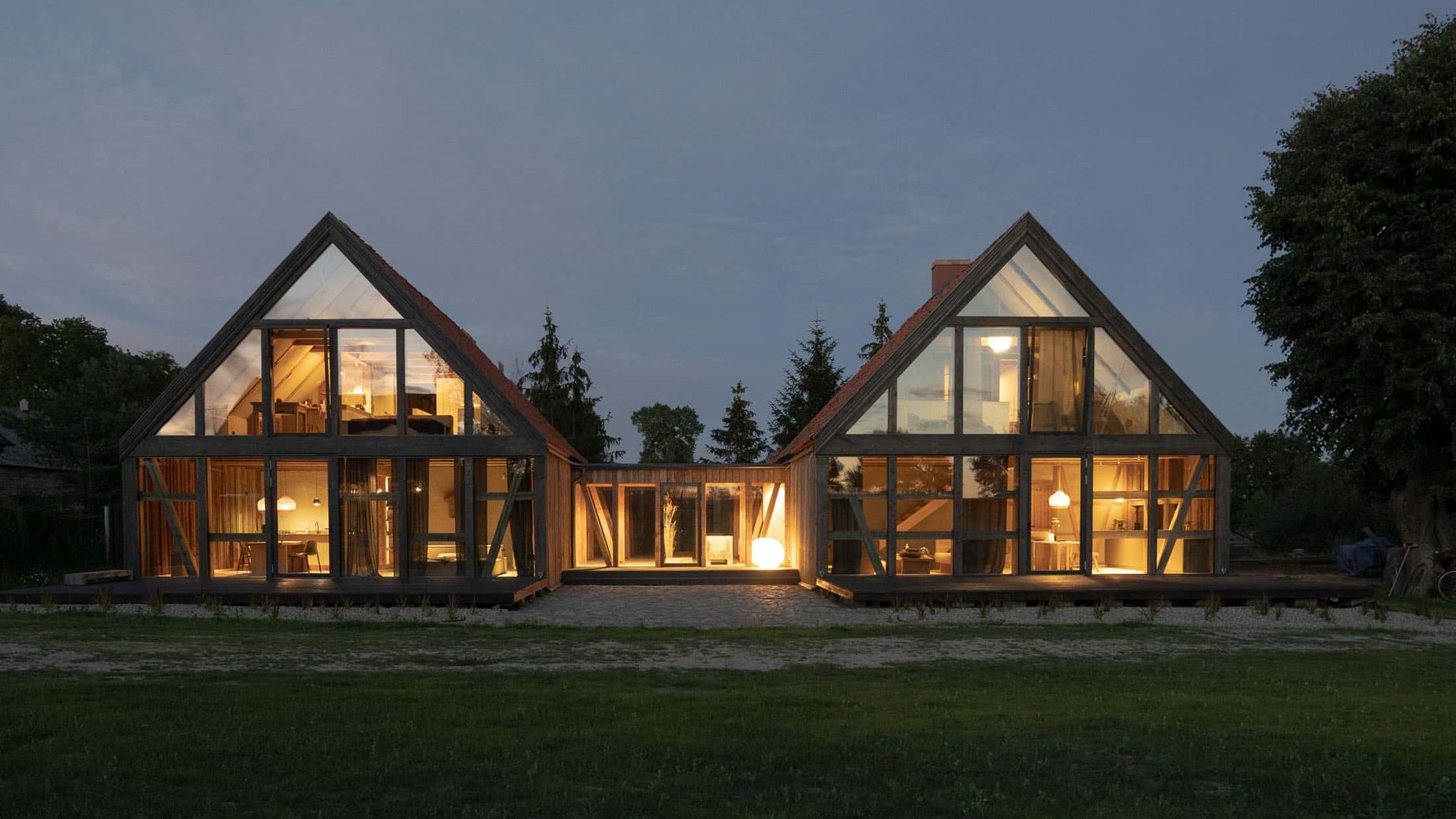
A barn-like twin structure set in spacious gardens – the Tilia Authentic Home offers a healing sense of tranquillity.
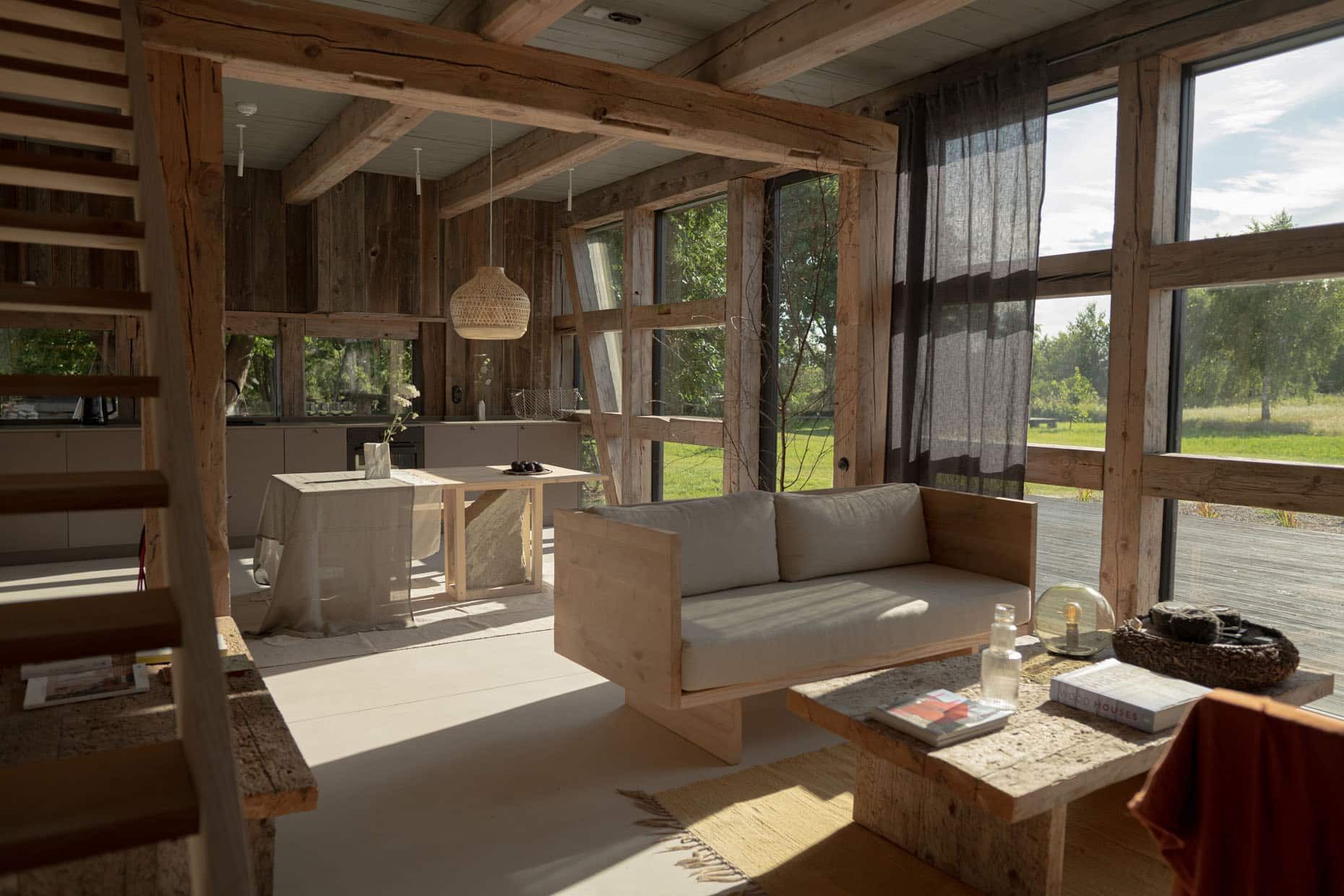
The small village of Mikoszewo is located south of Gdańsk Bay in the river landscape of the Vistula Delta. The Baltic Sea is so close you can smell it. Here, designer and restorer Katarzyna Pielaszkiewicz created a guesthouse with four apartments on a large plot of land with two linden trees that gave the house its name. From the outside, Tilia is reminiscent of two warehouses connected by a covered walkway, with large glazed façades that allow plenty of daylight to fill the interiors. Historical building materials were used for the structure and fit-out, including fragments from a neighbouring 200-year-old arcade house and eleven-metre-long ceiling beams salvaged from a former foundry. The beams inside the house, which were left visible, evoke the half-timbered constructions of centuries past – only more open, airy and translated into present-day architecture.
Text / Compilation: Christiane Weidemann & Anne-Birga Niepelt
Photos: Bernhard via unsplash.com (Coverpicture), Roland Bernath (Stalla d’Immez), Romana Bennet (Mezi Lukami), Liam & Fabian Rudolph (Remise Possenhofen), Dariaya Bender & Frank Schulte (Bauernhof Vogtland), Janez Marolt (Kambra), Franziska Unterholzner & Günter Richard Wett (Cedä M), Andreas Kampik (Casa della Fede), Stefan Bullerkotte & Daniela Eksen (Fábrica no Jardim), Günter Standl (Stadl am Tunauberg), Justyna Szyszka (Tilia Authentic Home)
Anne-Birga Niepelt
Anne-Birga is our online producer. She also coordinates our adverts and manages our Instagram account.
Christiane Weidemann studied literature and ethnology. She never travels to the same place twice, loves good architecture and full bookshelves. When she's not planning her next travel destination, she writes books and texts about art, culture and architecture. She also works as an editor.
Cultural monument in a secluded setting: Surrounded by fields, dense forest and a murmuring stream, the Bauernhof Vogtland is one of the rare half-timbered farmhouses of the region. A historical experience of simple beauty!
Thanks to its secluded location on a hill top in the Marche region, the Casa della Fede offers spectacular panoramic views – on the Sibillini mountains, ancient towns and vineyards up to the sea.
The Cedä M in the heart of the small mountain village of Dosoledo on the edge of the Dolomites tells the story of this memorable place in each of its five holiday rooms. Built in 1807 and shaped by the life of the farmers in the secluded Comelico Valley, the house is a historical gem in every way.
Hidden in a lush garden in the centre of charming Porto is the Fábrica no Jardim - a minimalist factory-style house that quotes the city's history and translates it into the present day.
Surrounded by hills, Kambra house is situated in a small Slovenian village not far from the Italian border and the Adriatic coast. Stones characterise not only the karst landscape, but also the building, which from the inside appears to be growing from the rocks.
The holiday home at the foot of the Western Carpathian Mountains is a sensitive reconstruction of an old wooden house and the virtuoso combination of craftsmanship, traditions and modern design.
The small village of Possenhofen lies directly on Lake Starnberg. A rural idyll with a heavenly swimming beach and a majestic history. After all, Empress Sisi spent her childhood here. The Remise Possenhofen also dates from this time: it was built in 1890 as the coach house of the adjacent Villa Fischer.
An old stable transformed into a light-filled loft: the Stalla d'Immez in the remote Val Müstair opens up a new dimension to its over 300-year-old history. A versatile spatial experience with a view of the impressive mountain backdrop of Piz Lad and Piz Terza.
Weathered timbered cladding, historical beams, reused bricks – the Tilia Authentic Home in the river landscape of the Vistula Delta has not been built on, but rather with the traces of history.
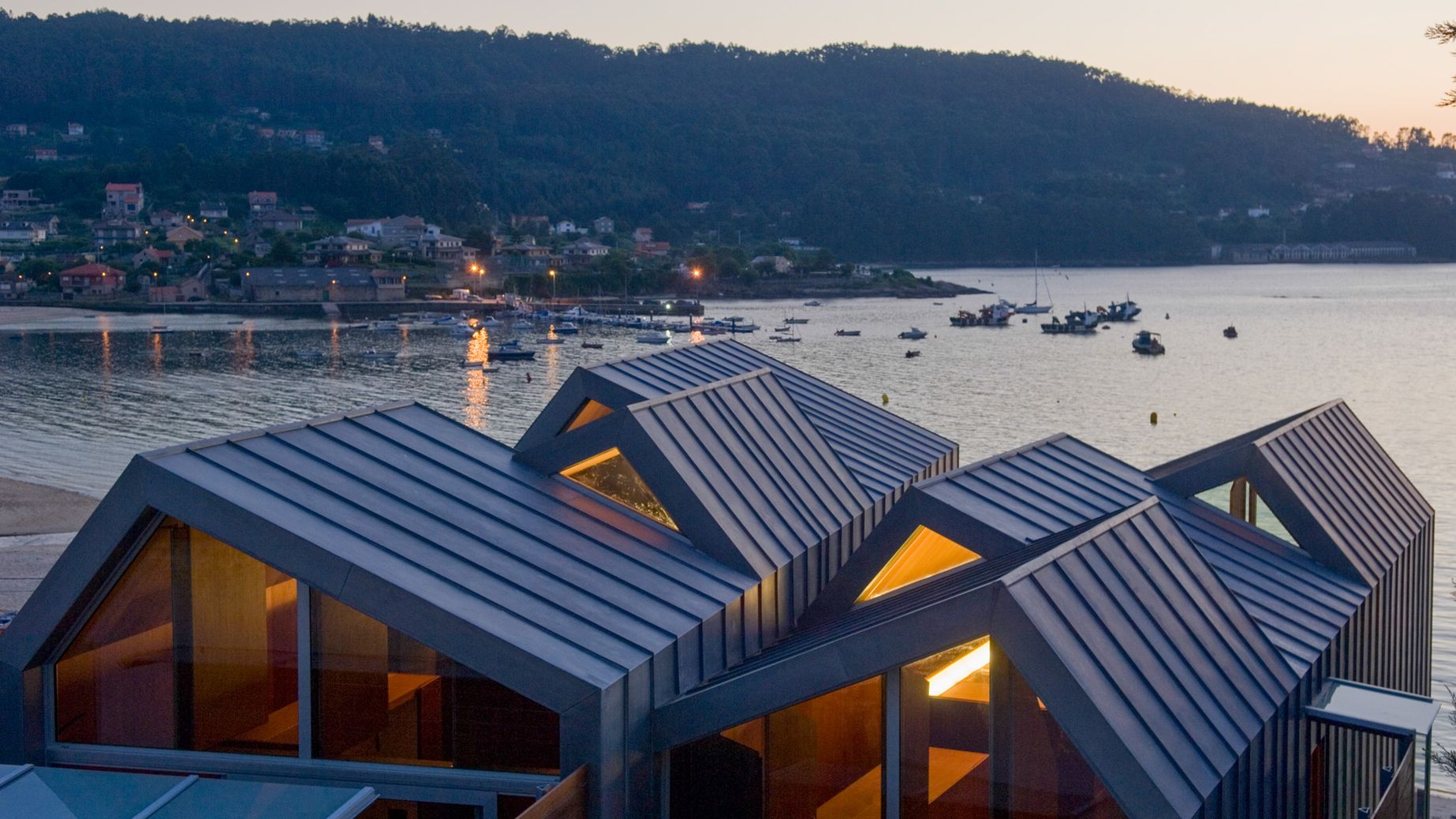
Below deck, overlooking the sea: Ardora is situated on a Galician hillside overlooking the Atlantic – a complex of flats inspired by upturned boat hulls and traditional granaries. A multifaceted revelation.
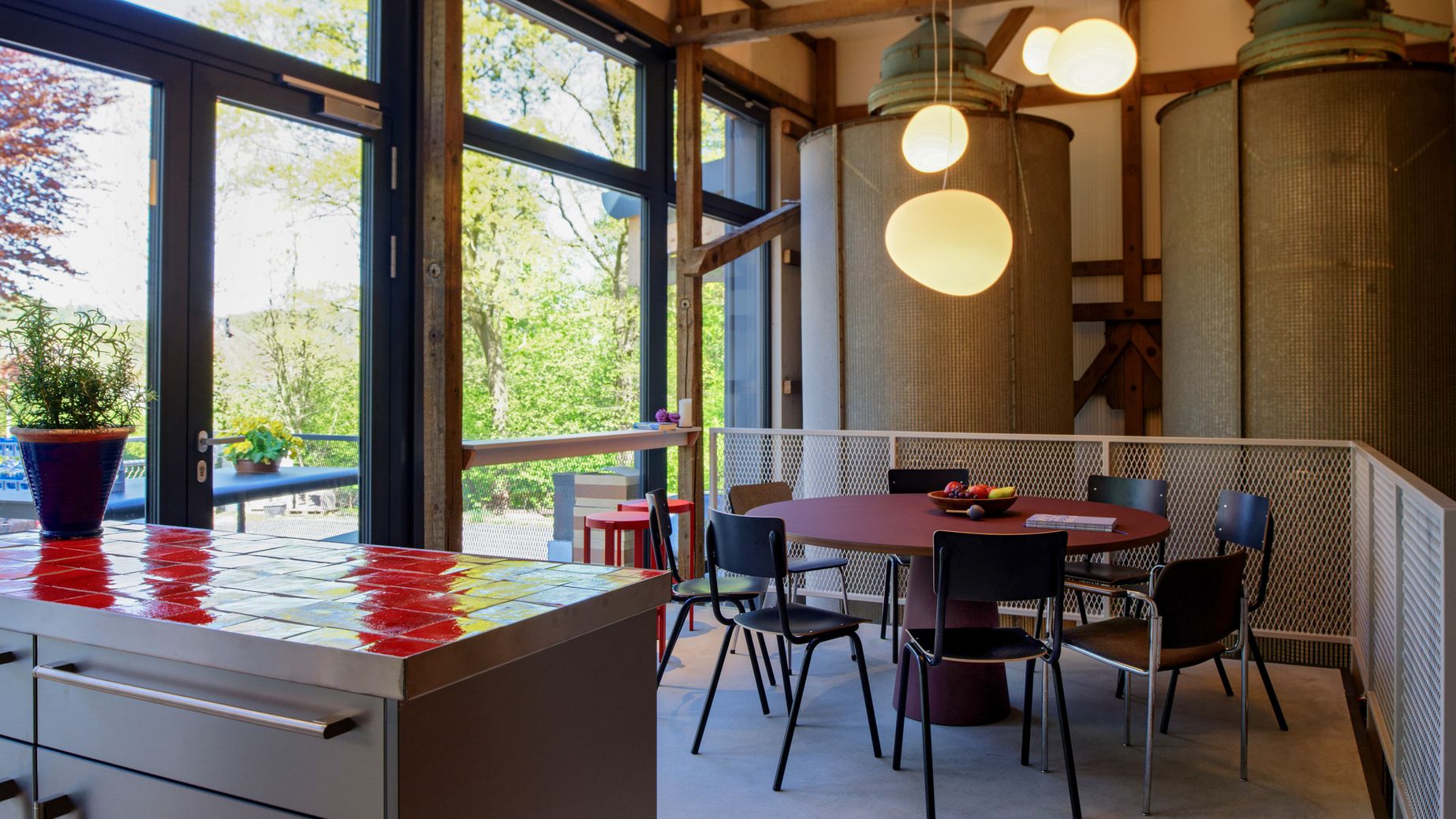
From an agricultural storehouse to a hub for ideas: where grain was once stored, ideas can now be pooled and teams formed. The Silo in Fröndenberg an der Ruhr, near Unna, offers a wide variety of seminar, activity and retreat spaces, blending rural industrial charm with clean lines and vibrant colours.
Travelling alone and following your own instincts without a care in the world: these eight places to stay offer the ideal setting for a solo getaway. For anyone who wants to explore new places on their own or simply do things their own way.
Architect Christof Rösch has transformed a centuries-old barn on the outskirts of the mountain village of Vnà in the Lower Engadine into a bright and airy three-storey holiday home.



0 Comments