
Shades and shapes of Sicily – journey throughout an island of contrasts
Sicily. At the very name, associations and clichés still crowd the mind, lending the island and its inhabitants an enduring aura of the untouchable and of mysterious fascination.
This is an article from our archive. It was published in April 2018, so some details may no longer be up to date.
The American film industry is more than a little responsible for this. But in this way, we remain stuck in Hollywood-style fiction and we risk obscuring the captivating essence of Italy’s largest island and its marvellous culture which dates back millennia. At least to start to understand Sicily, you have to see the island through both, eyes and heart, breathe its air and listen to its sounds. You have to engage with the island, let yourself be beguiled and lured away by it.
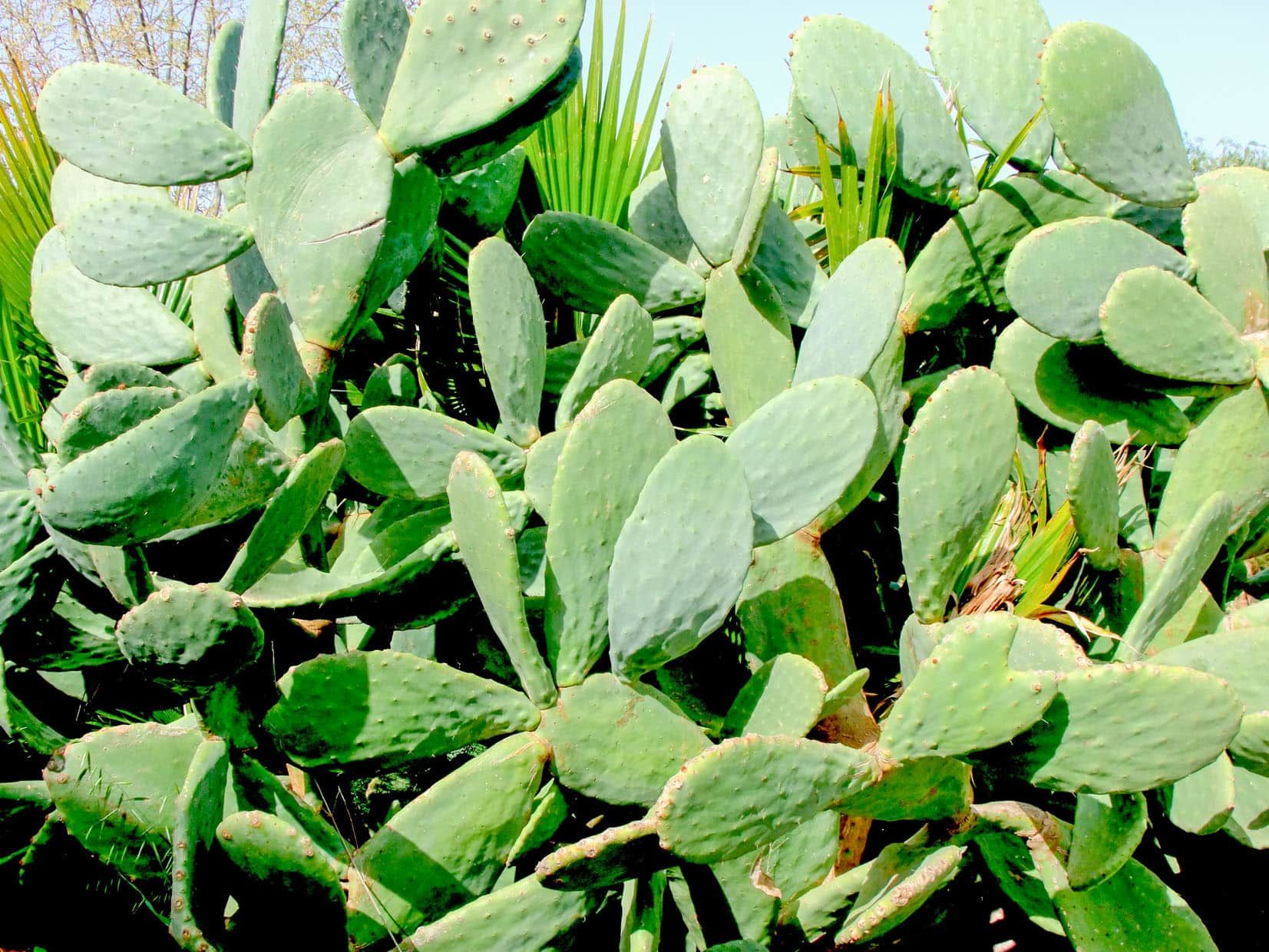
Sicily is magnificent yet unfathomable. Magical and unsettling at the same time. What really makes the island so captivating are its contrasts and the self-assurance with which both, beautiful and ugly, stand side by side, each confident of the same right to exist. The landscape is at one moment harsh and archaic, the next a luxurious Garden of Eden. The scent of sheer, endless orange groves intoxicates the senses, Etna reigns omnipresent over all, bestowing upon the island the eternal fertility of its soils. The wonderful baroque towns stand luminous against a deep blue sky and then, suddenly, there, rising up amidst blossoming prickly pears or on a lonely beach pokes a giant concrete skeleton. Industrial landscapes with their oil tanks and derricks are strewn across long stretches of island coastline. Witnesses to a culture that has endured through millennia are still present beside cast concrete symbols of modern cultural deprivation. Yet there’s no getting away from it. The coexistence of contrasts is a continuum that has to be respected if you take Sicily to your heart, as you inevitably will. Oh yes, you will fall for this island with heart and soul, and there is no going back.
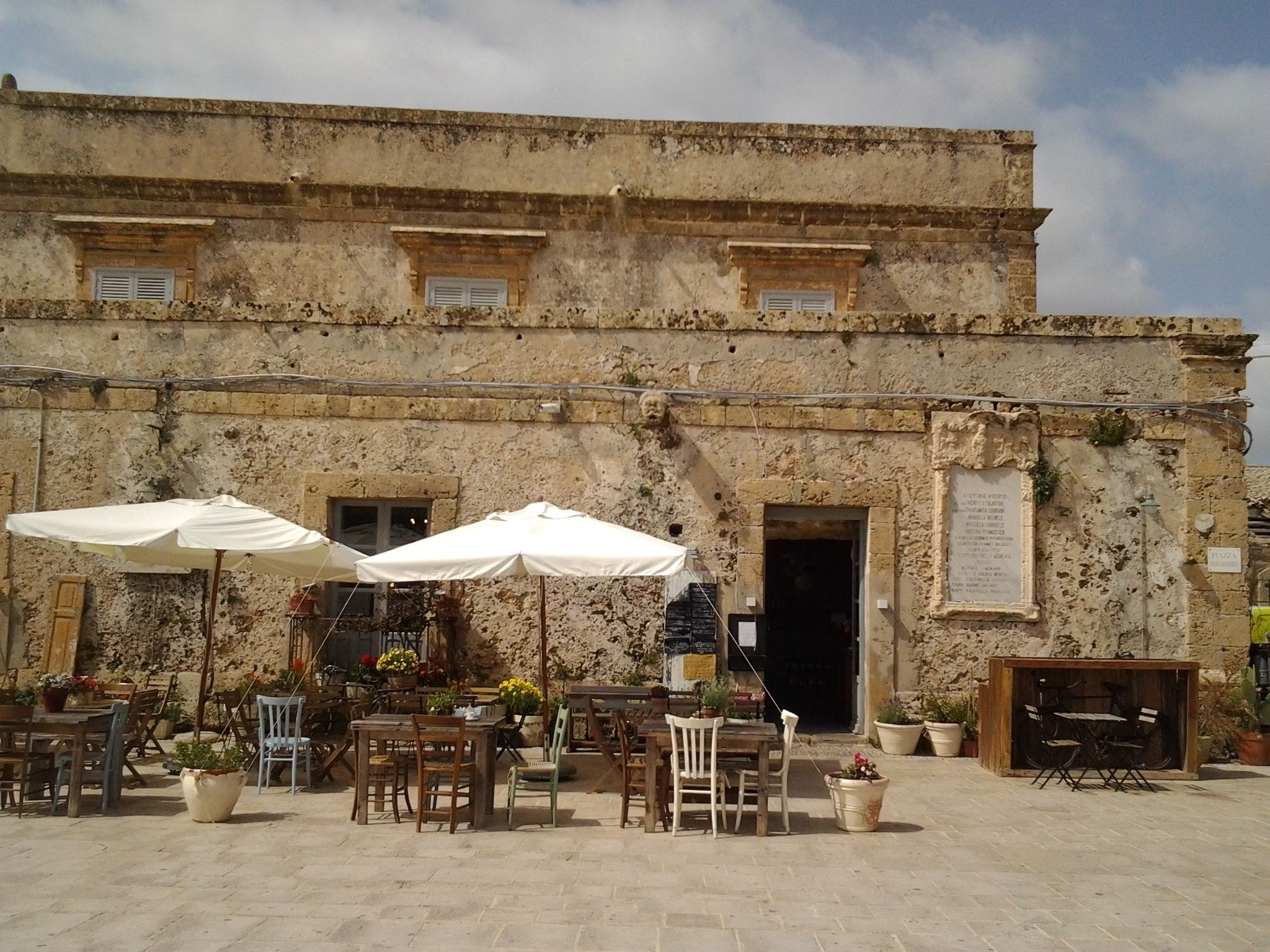
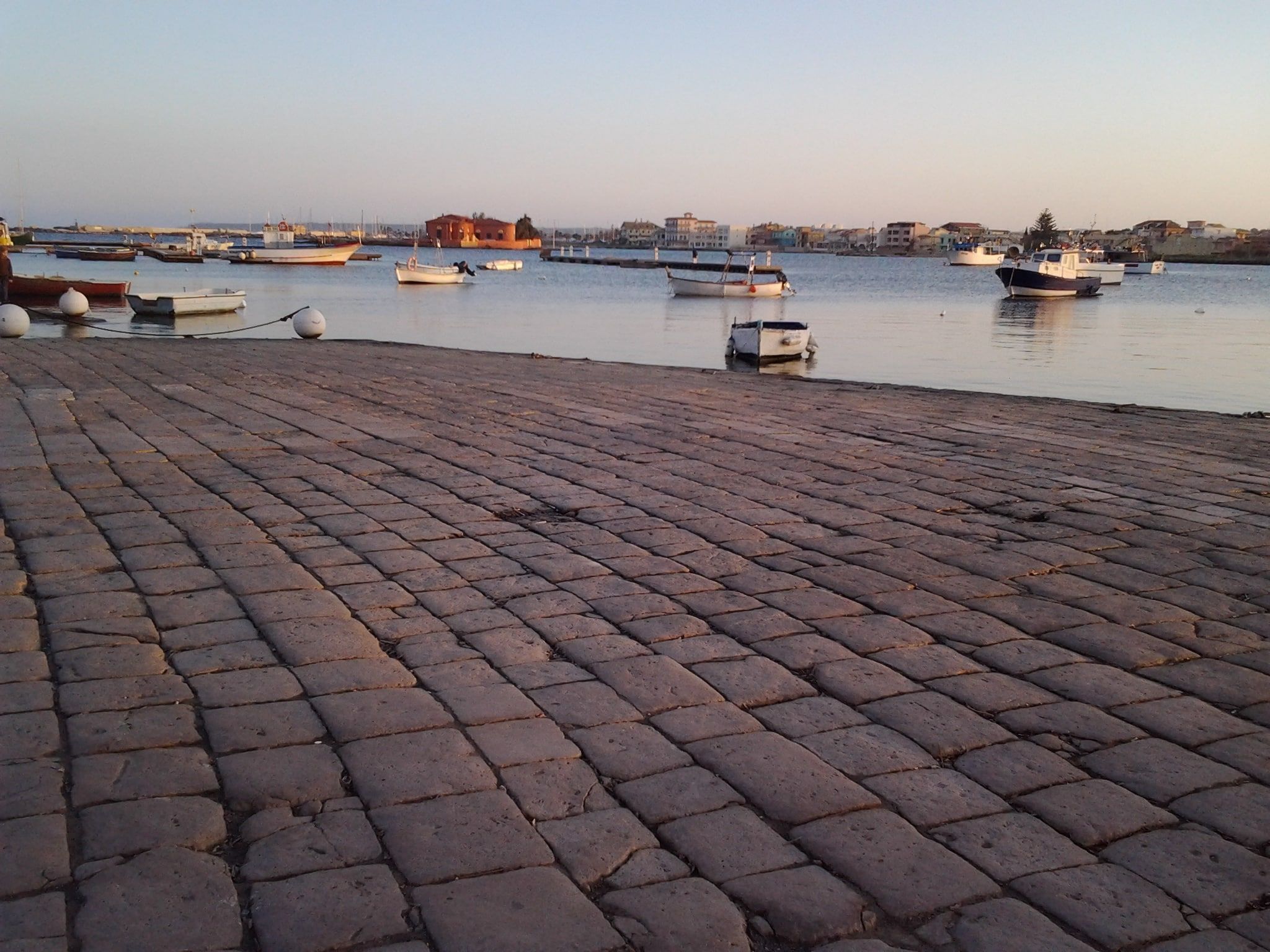
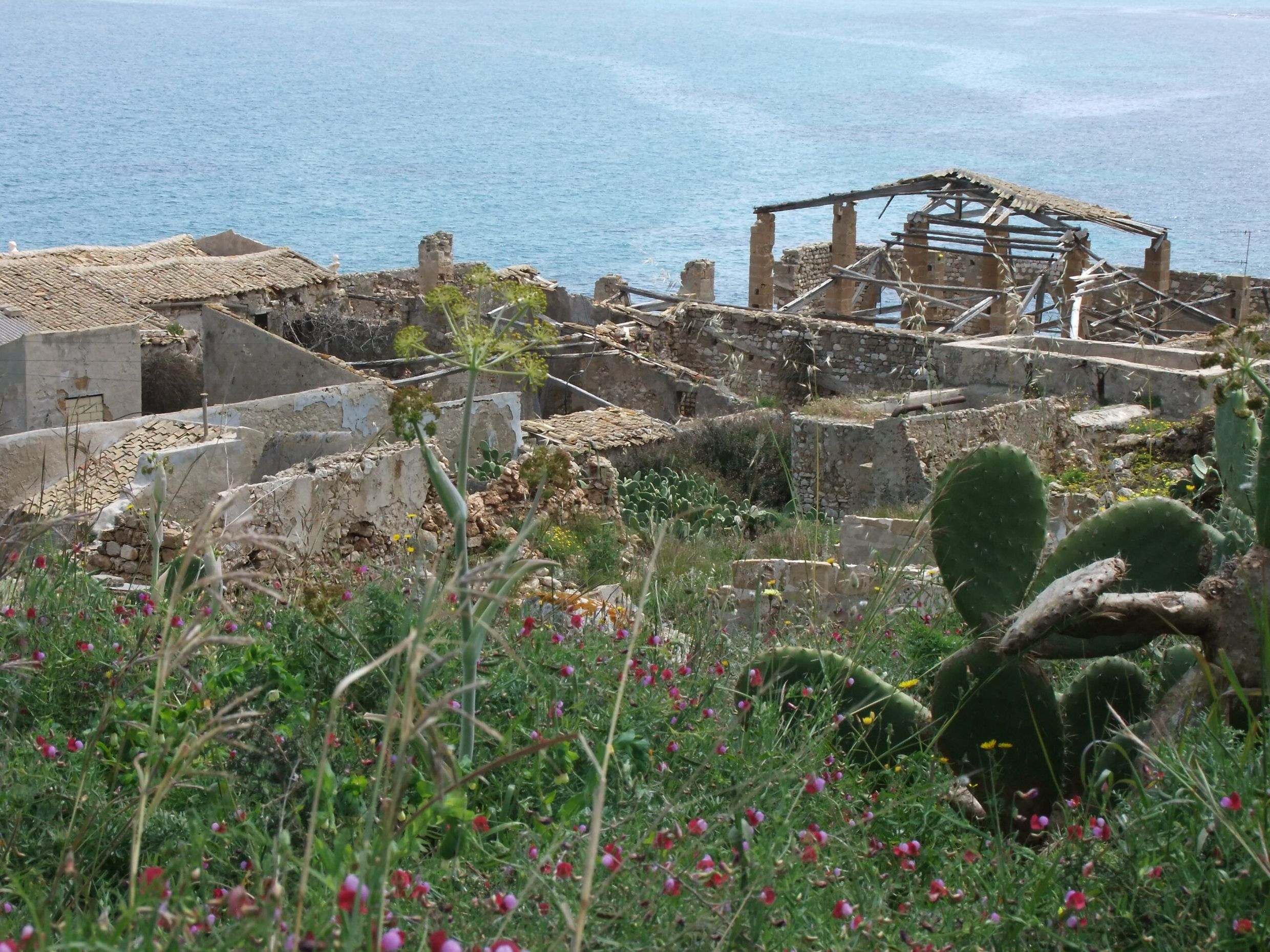
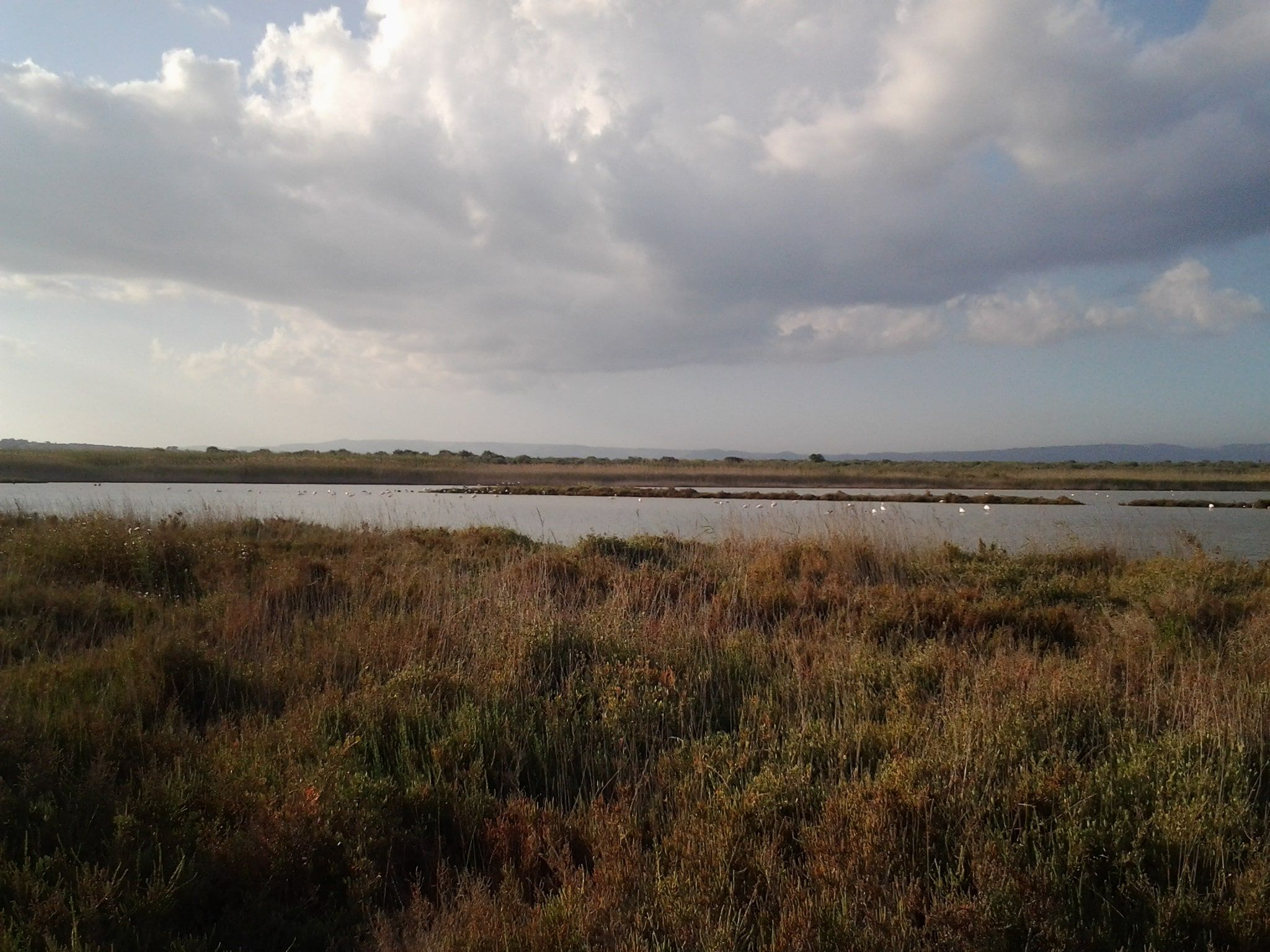
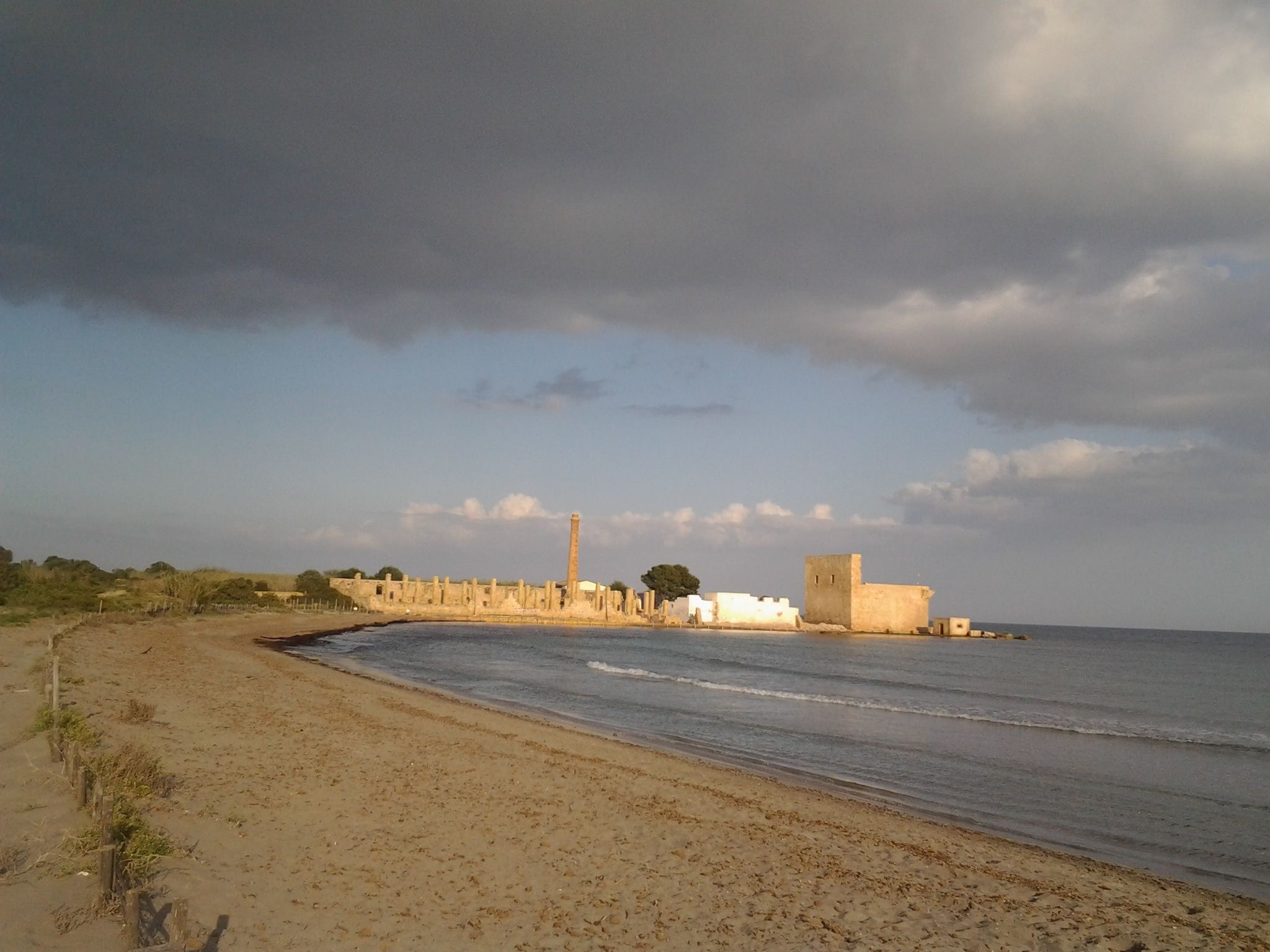
At the southernmost point of Sicily’s eastern coast – between the baroque city of Noto and the evocative fishing village of Marzamemi – lies the Vendicari nature reserve: Lagoons with all their rich diversity, desert-like dune landscapes, craggy stretches of coastline and wild beaches with the finest sands alternate with one another. The scent of wild thyme, rosemary and broom fills the air, and rare species of birds and even tortoises find an oasis here. In the summer, hundreds of flamingos stalk through crystal clear water, enchanting the landscape with a real spectacle of colour. The former tuna fishery – the tonnara di Vendicari – with its delightfully simple enigmatic architecture, its face bravely set towards the seaspray and pointing to the origin of Sicilian culture: the sea.
Not far from the nature reserve – just a few kilometres apart – stand two houses that could not be more different from one another and yet the concept and vision of both pursue the same aim: capturing the essence of a place and translating it into architecture.
Villa Vendicari
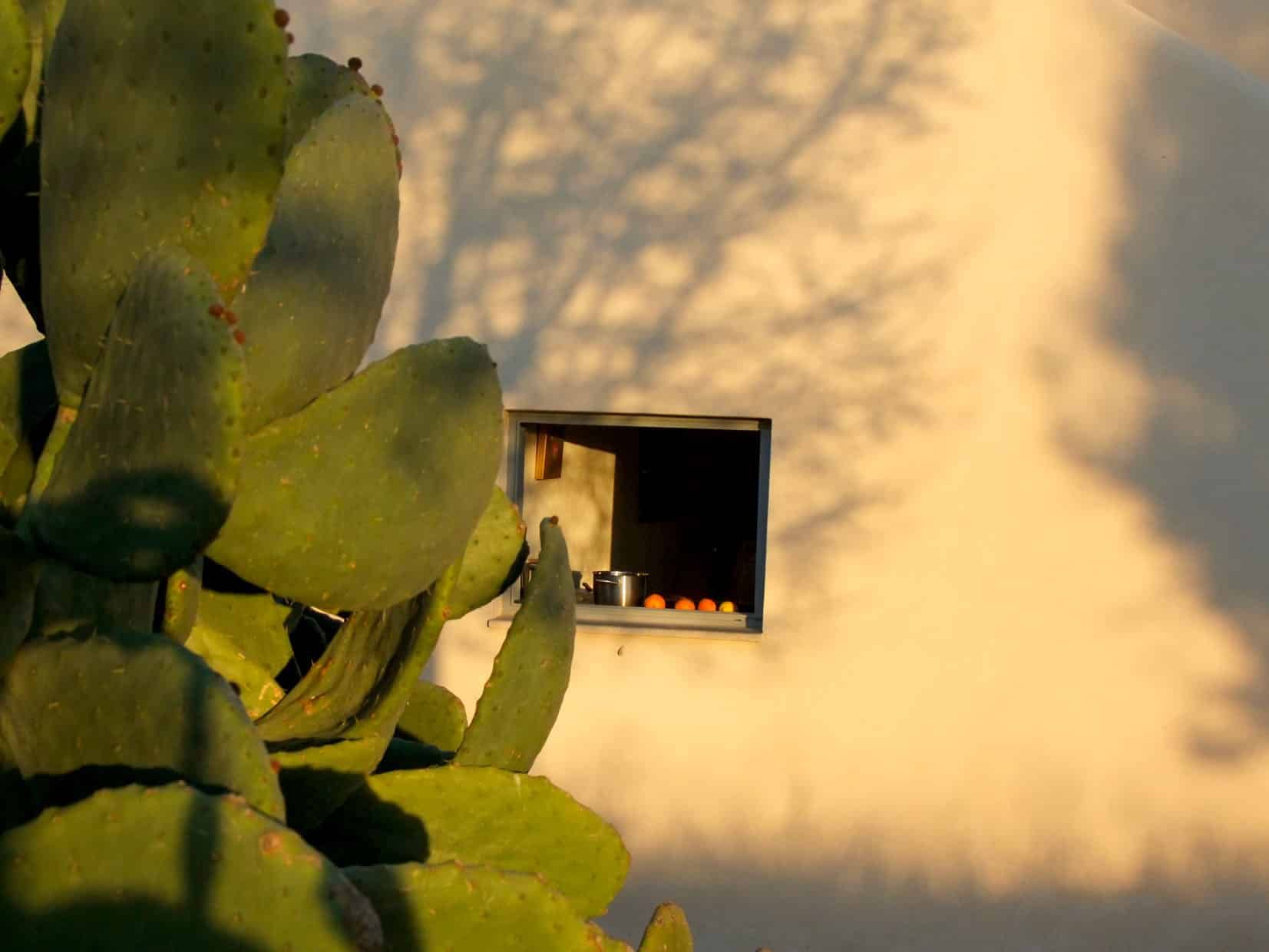
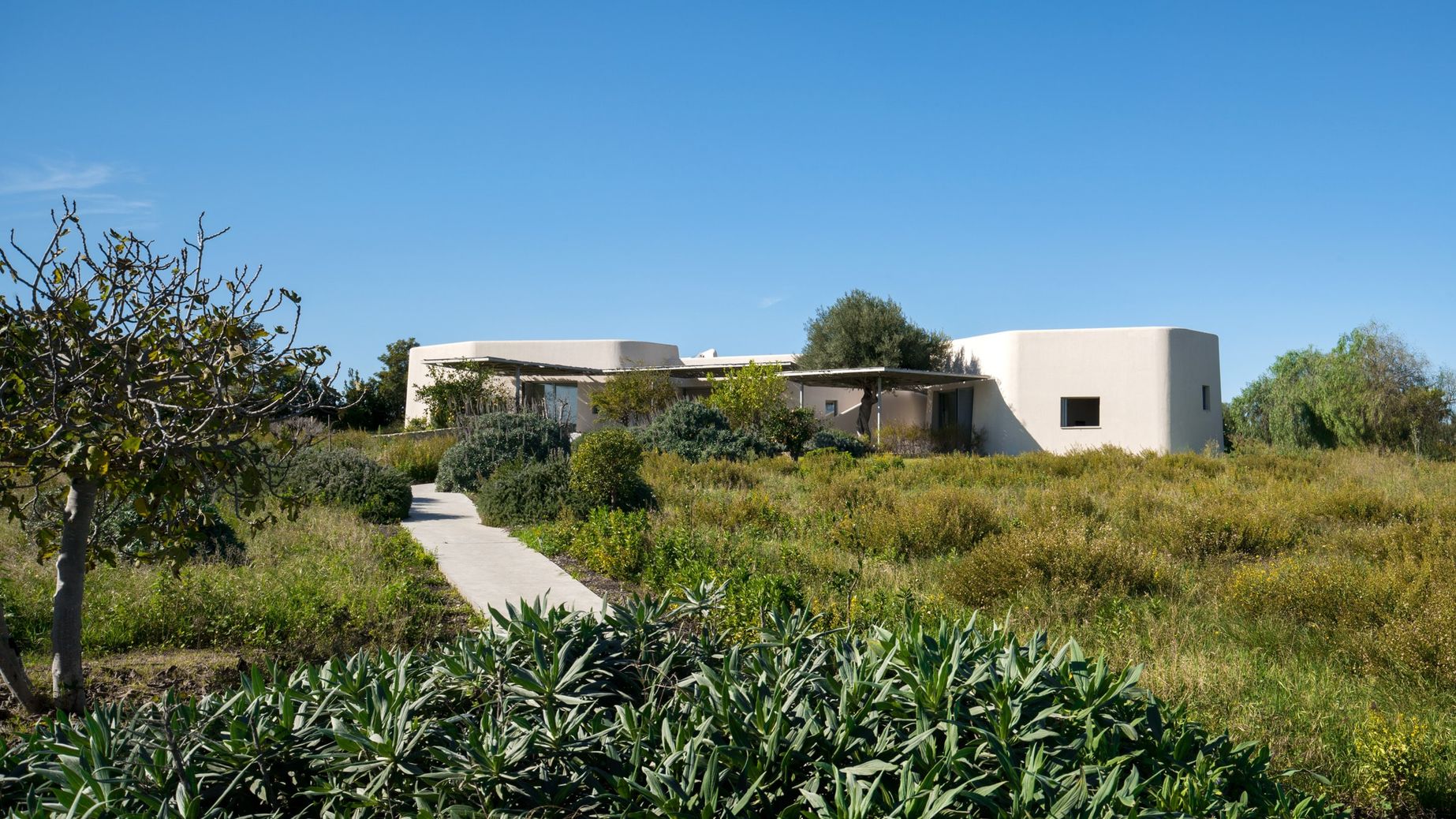
Villa Vendicari sits ensconced in a Mediterranean garden, surrounded by dry stone walls with almonds and citrus trees, wild herbs and prickly pears. Its white walls almost disappear into the lush vegetation and it becomes one with nature. Guglielmo Parasporo and Elena del Drago have created here a place of tranquillity and inspiration, in order to escape the chaos of life in the capital city every so often and to restore their spirits by drinking in the Sicilian light, colours, fragrances and stillness. And it’s true. The entrance door of the property marks a point of transition into another dimension where body and mind undergo a wonderful transformation. A feeling of joyful abandon sets in. All the senses spring to life and focussing on life’s essentials becomes second nature.
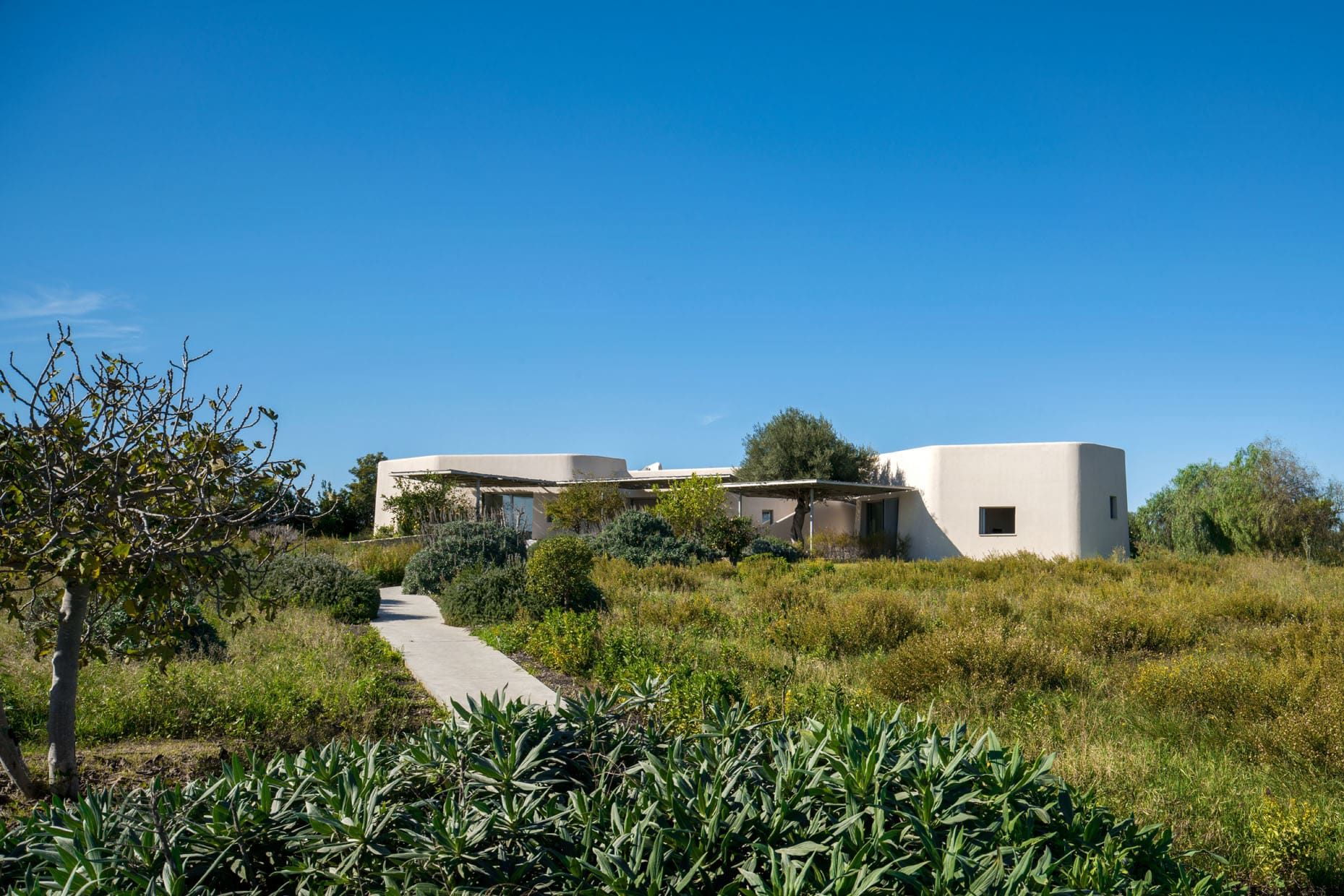
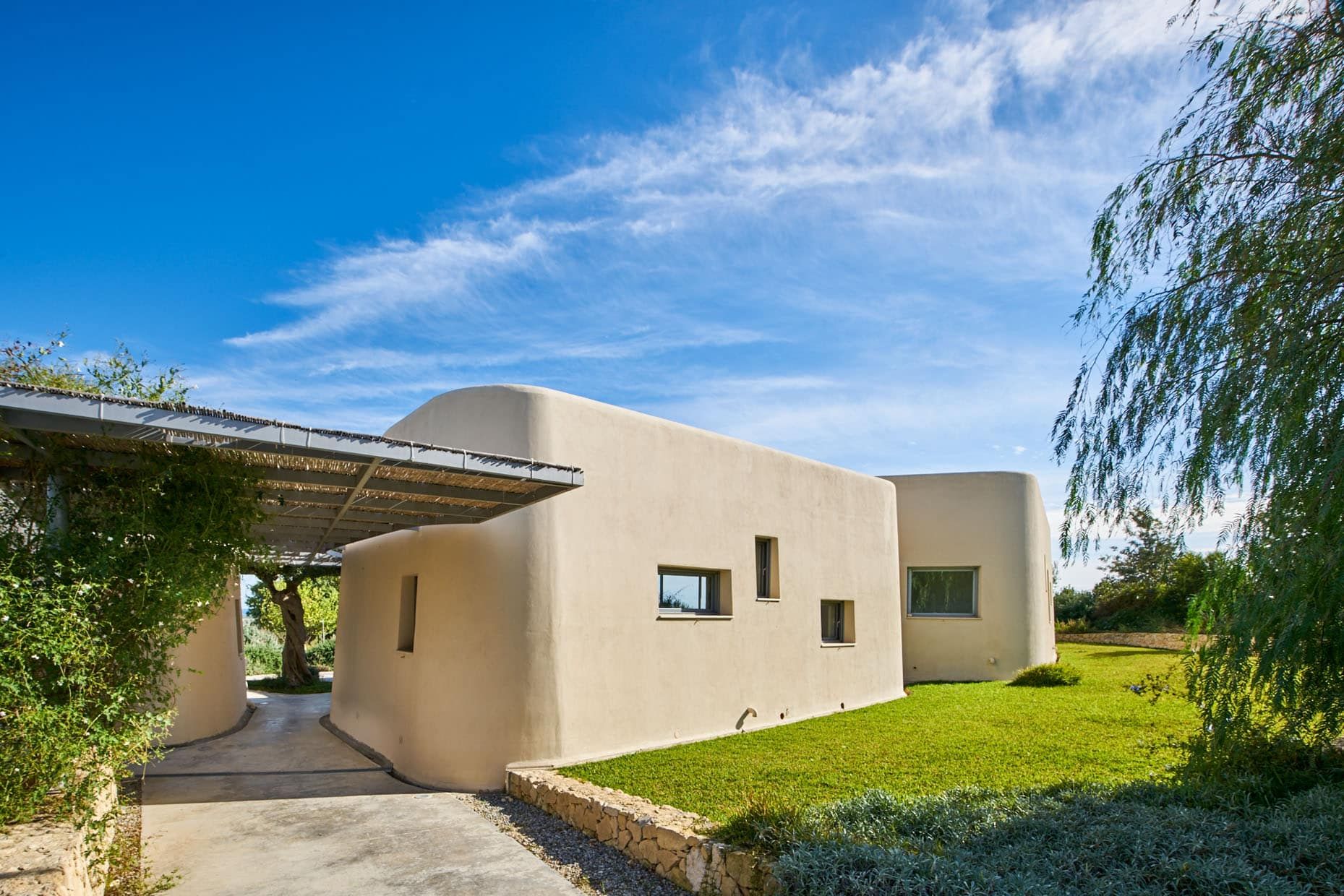
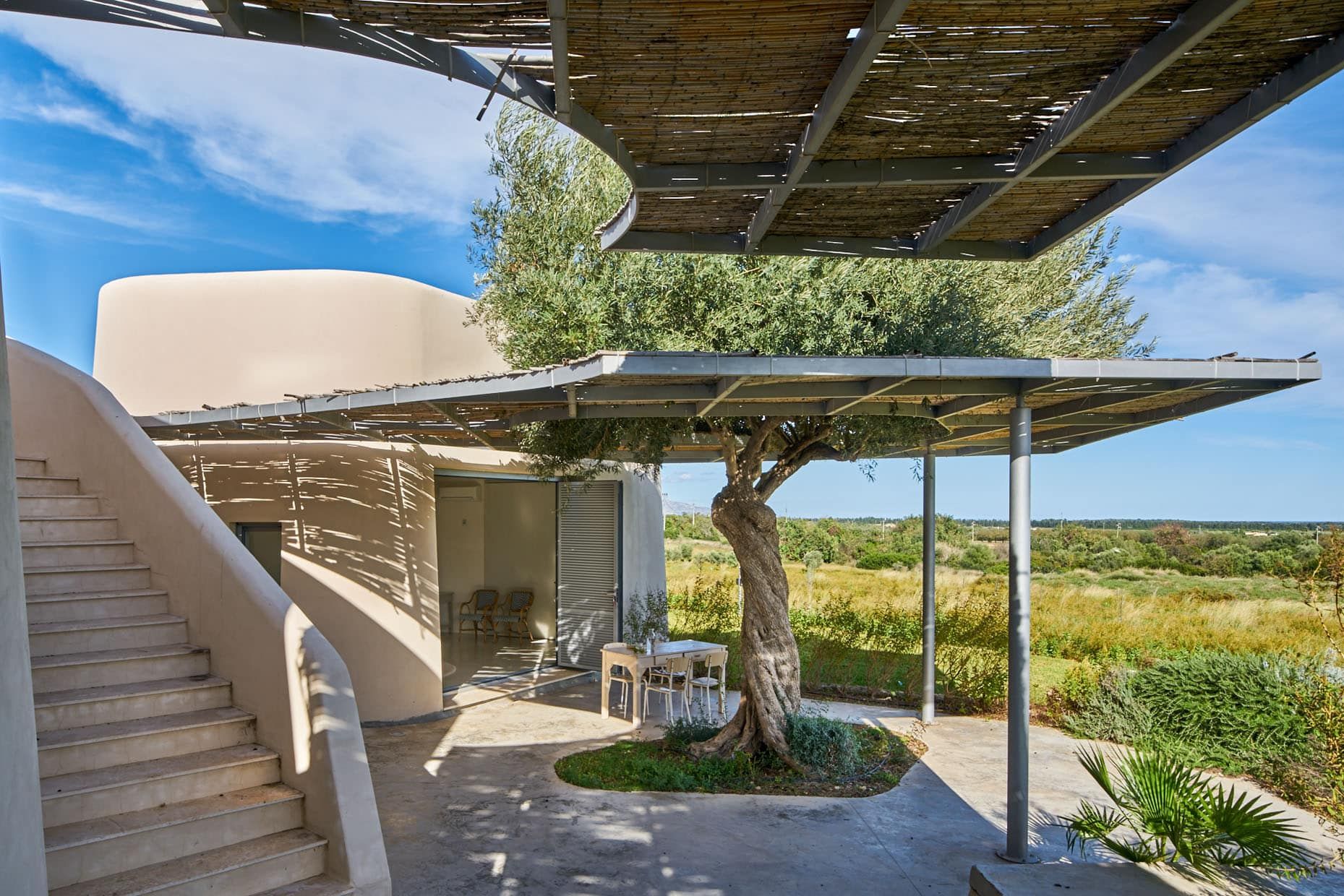
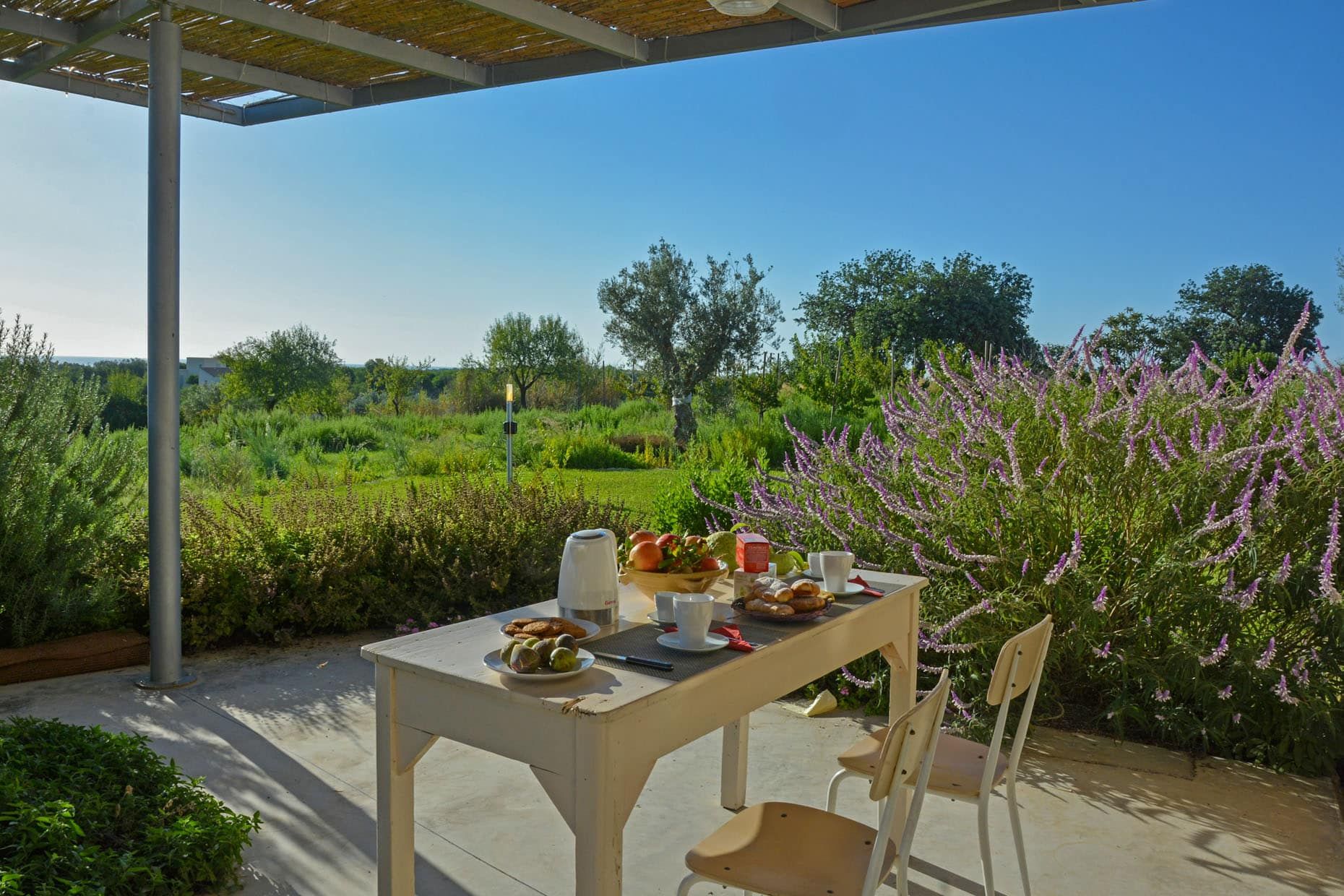
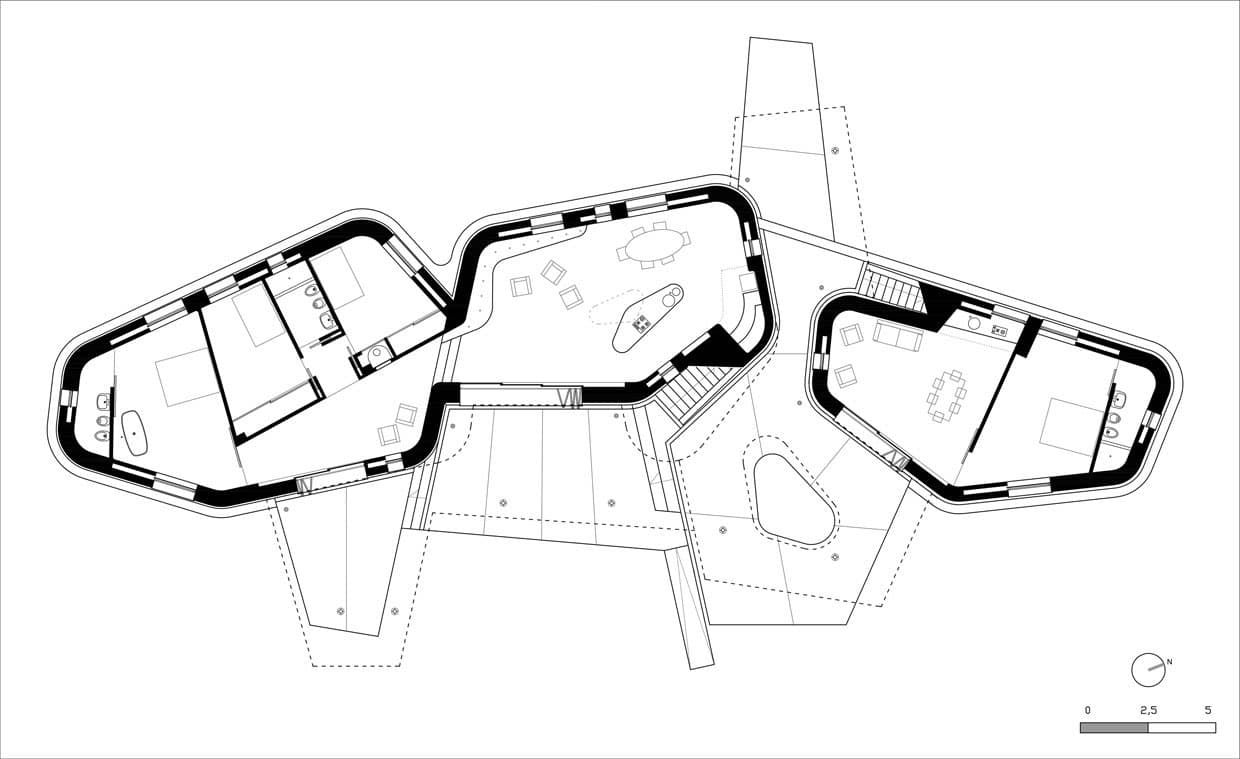
Everything about the building is somehow round and curvaceous. The open-plan living, eating and cooking area, the three bedrooms and the guest annex are divided across three adjacent buildings. Their silhouettes – irregular polygons – together with curving corners and the slight inclination of the outer walls, give the ensemble an organic form that integrates harmoniously into the landscape.
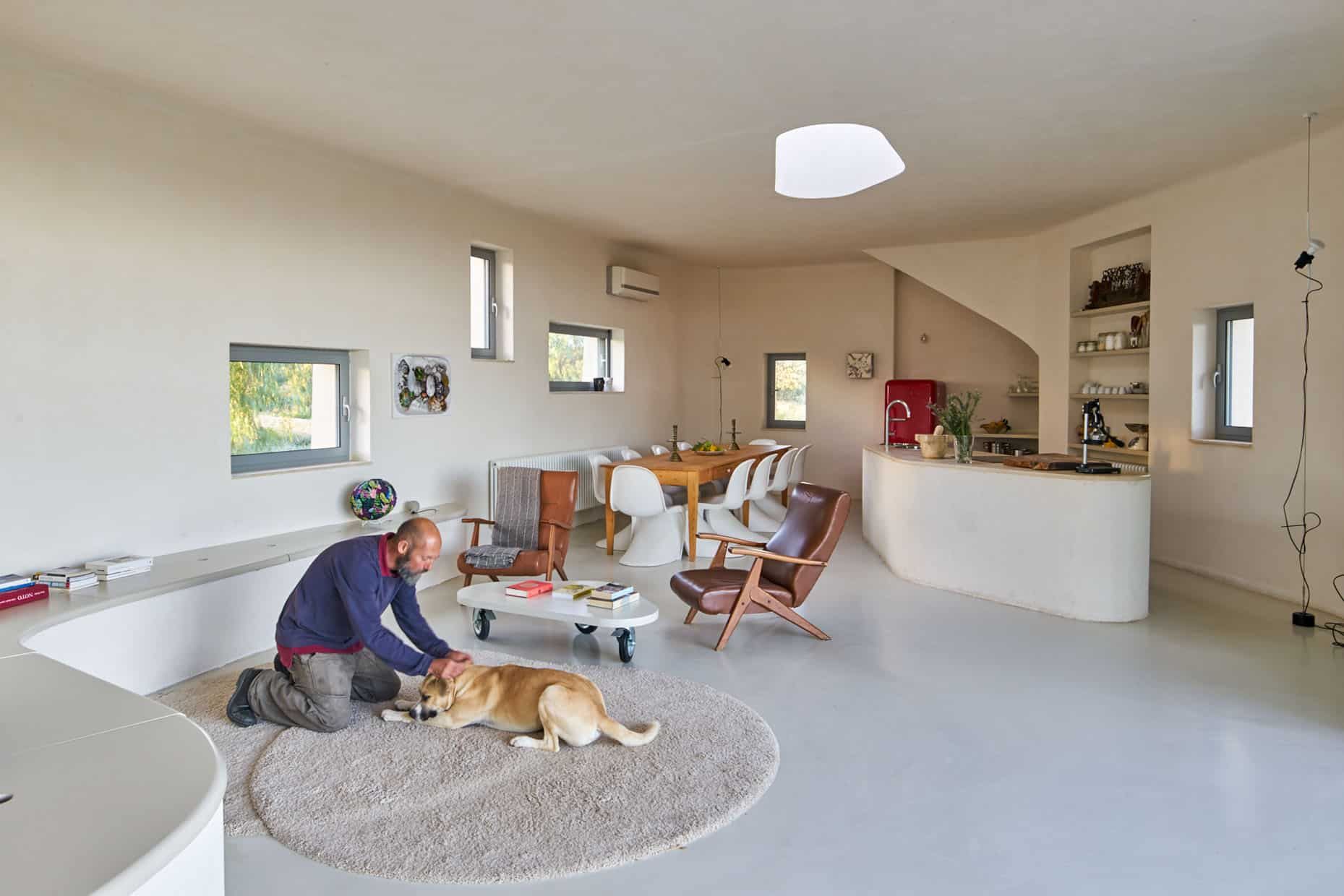
Indoors, white roughcast walls and floors predominate. Colourful accents are provided only by the artworks from Elena’s Rome gallery. Here a whole range of sensory impressions come into play: touch, light, shadow and the sense of security in the cave-like rooms which, due to their big, glass sliding doors and skylights, convey a bright feeling of openness. The communications hub of the villa is the Pergola, which runs the entire length of the buildings. From here, a narrow path winds past giant rosemary bushes to a pool area and a tree house set slightly apart. The roof terraces give the best balcony seats for watching the sun go down!
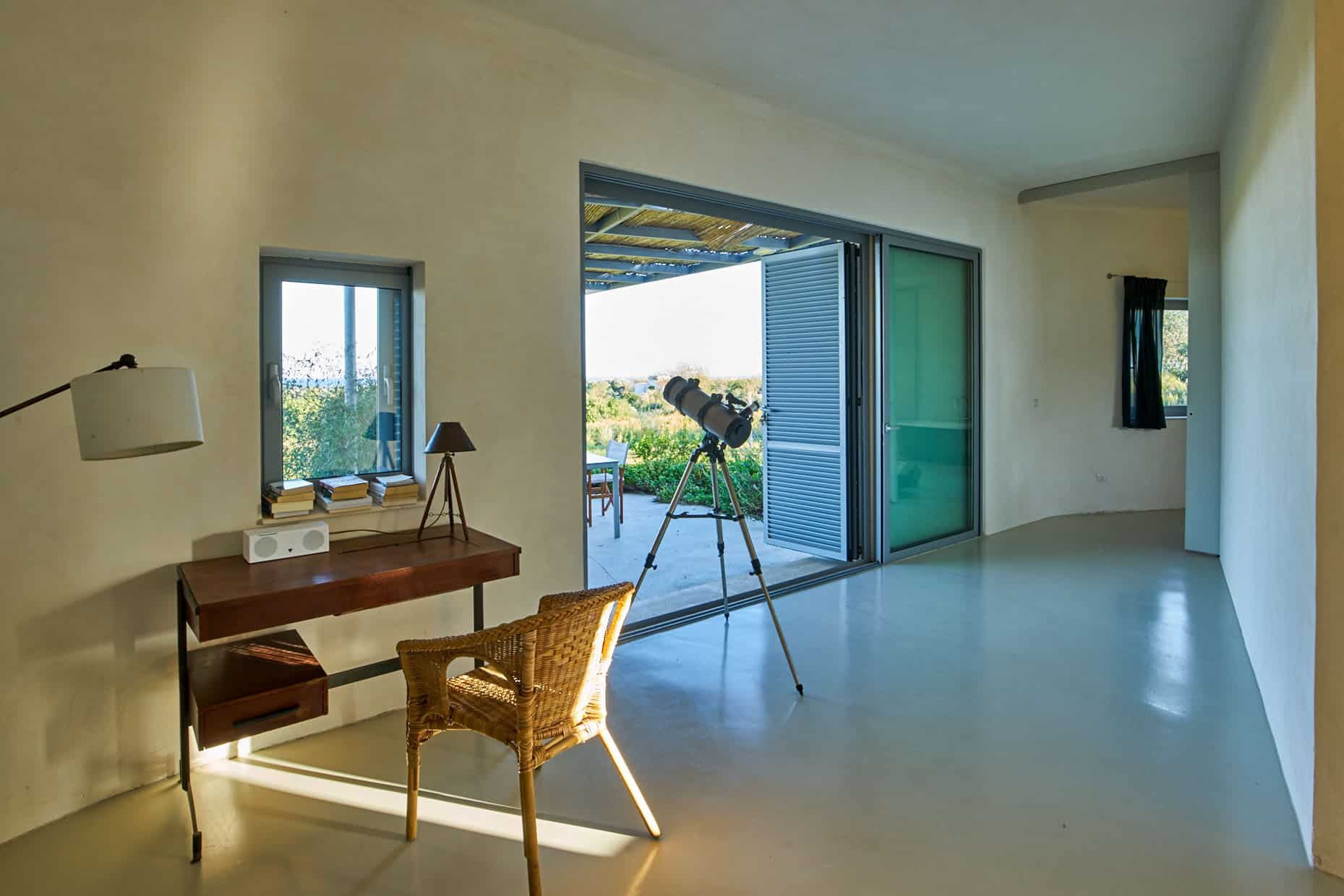
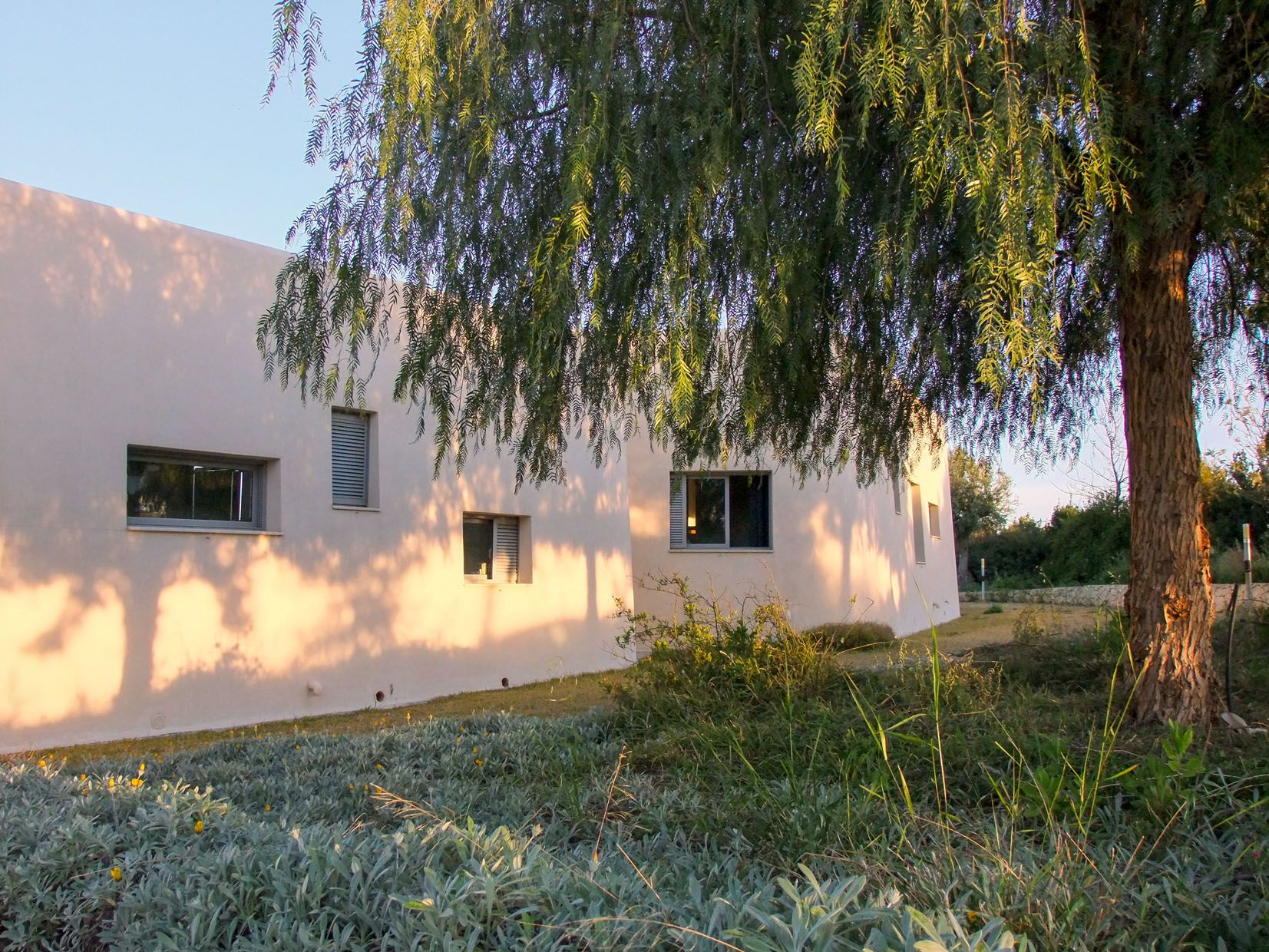
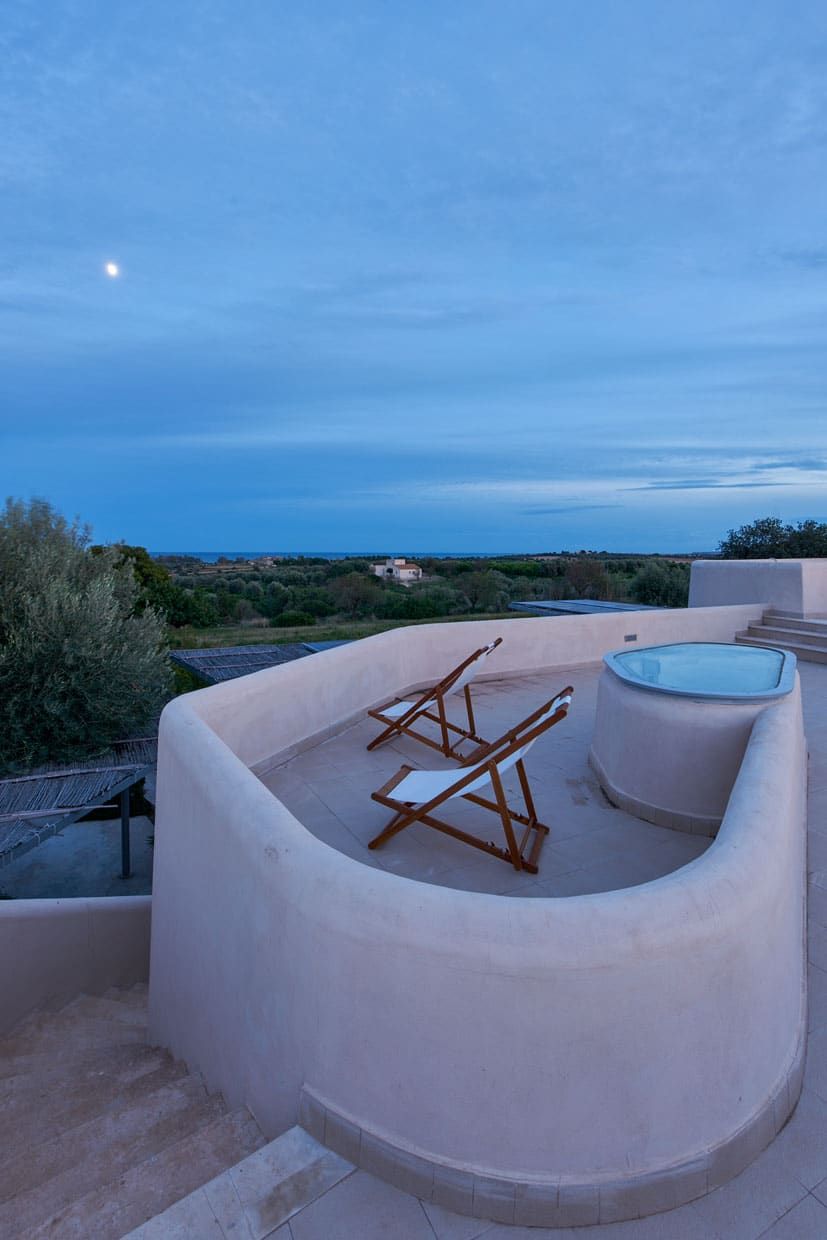
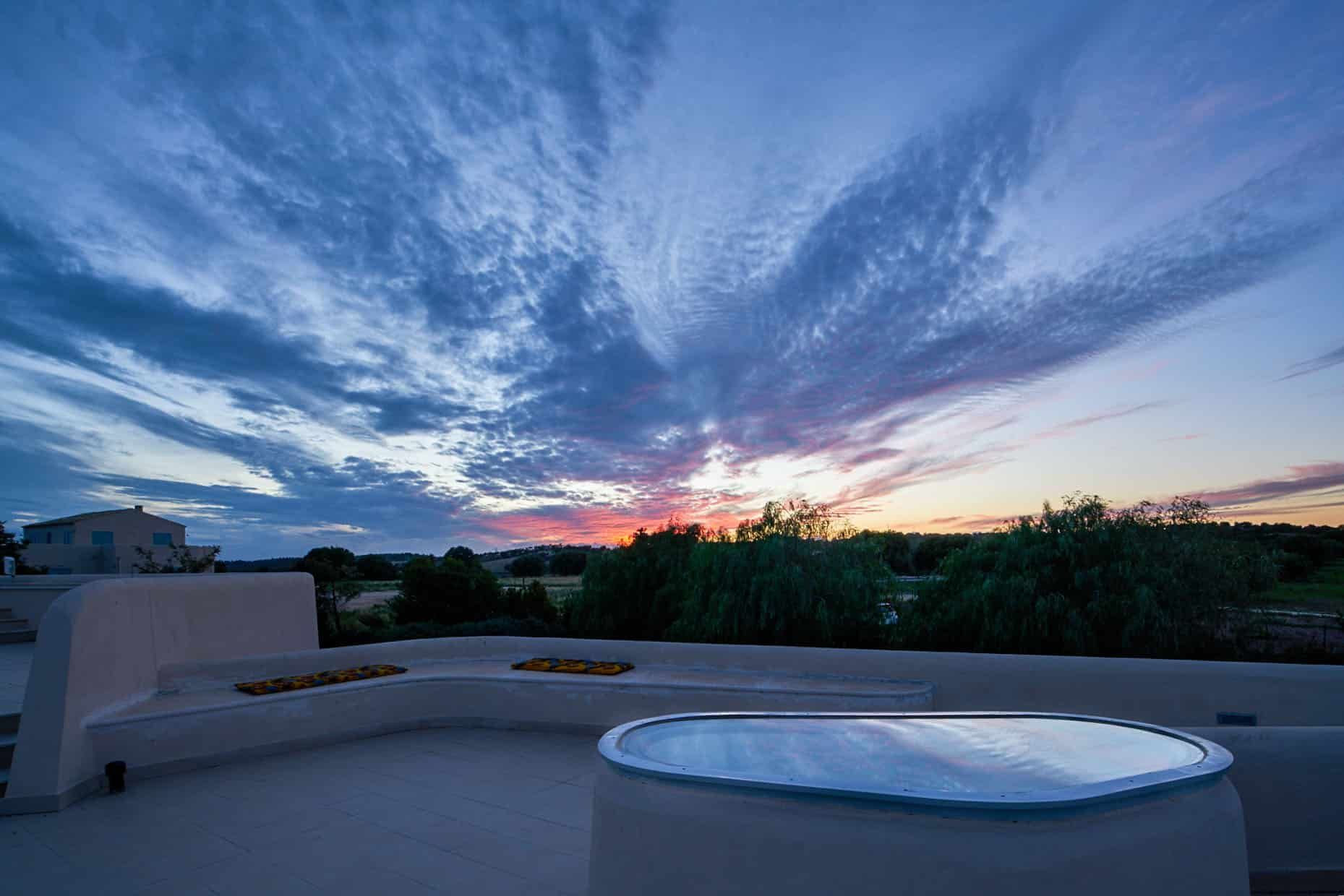
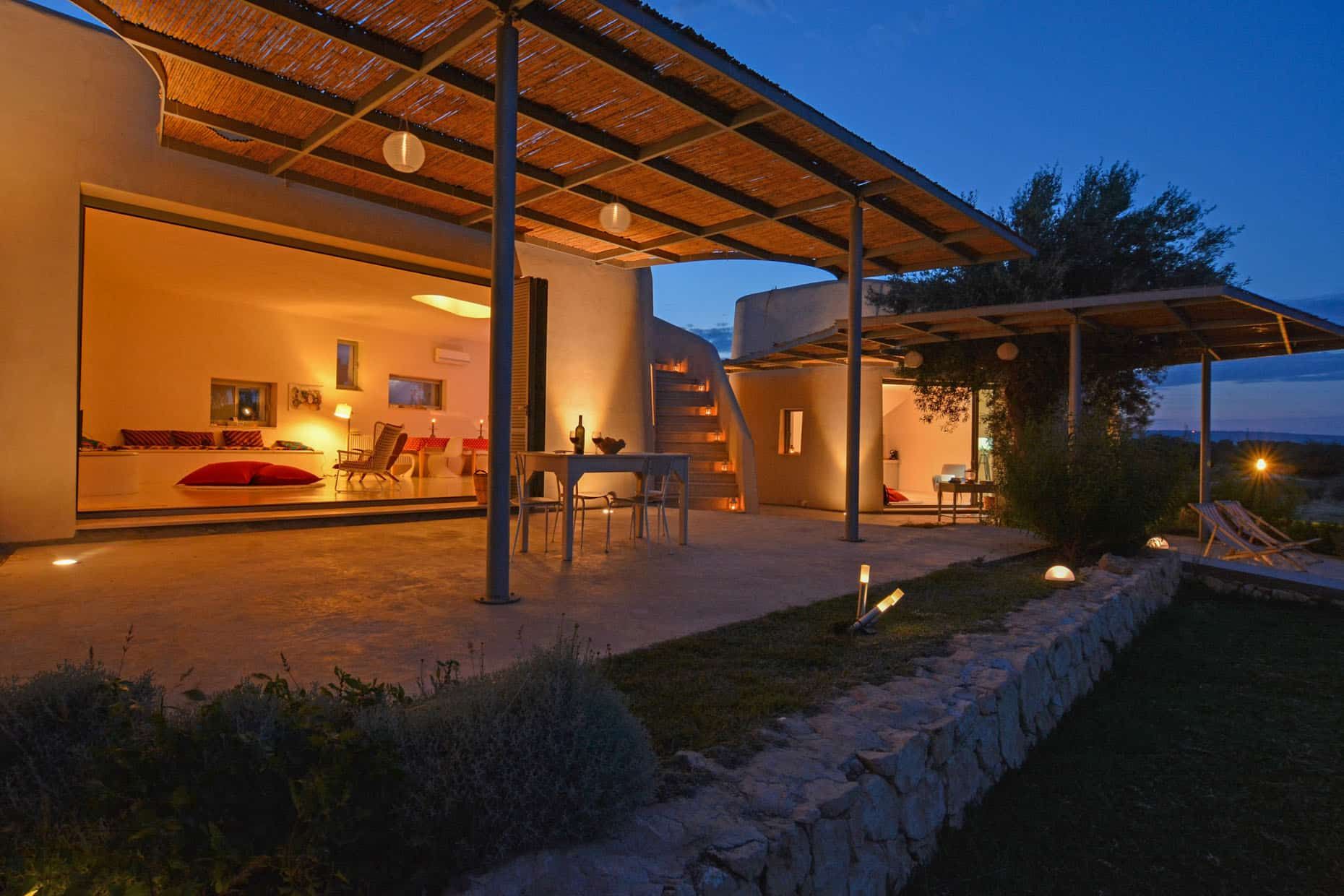
Sicilian architect Mario Cutuli guides the guests of Villa Vendicari through the millennia-long history of the island, quotes Arabian and Norman influences and the architecture of the traditional tuna fisheries. The villa’s architecture mimics Sicilian architecture and reflects the essentials: nature, rural tradition and the original cultures of the Mediterranean world.
Gugliemo at some point would like to leave his elective home of Rome and return to his island. He has already planted a new vineyard. The fruit trees and the vegetable garden are already shedding an abundance of fruit. The property’s own olive oil tastes exquisite and the freshly caught fish that can be purchased straight from the boat at the port of the little village of Portopalo di Capo Passero will not only tantalise the tastebuds, but will also provide a wonderful opportunity to experience human interaction à la Siciliana!
La melagrana
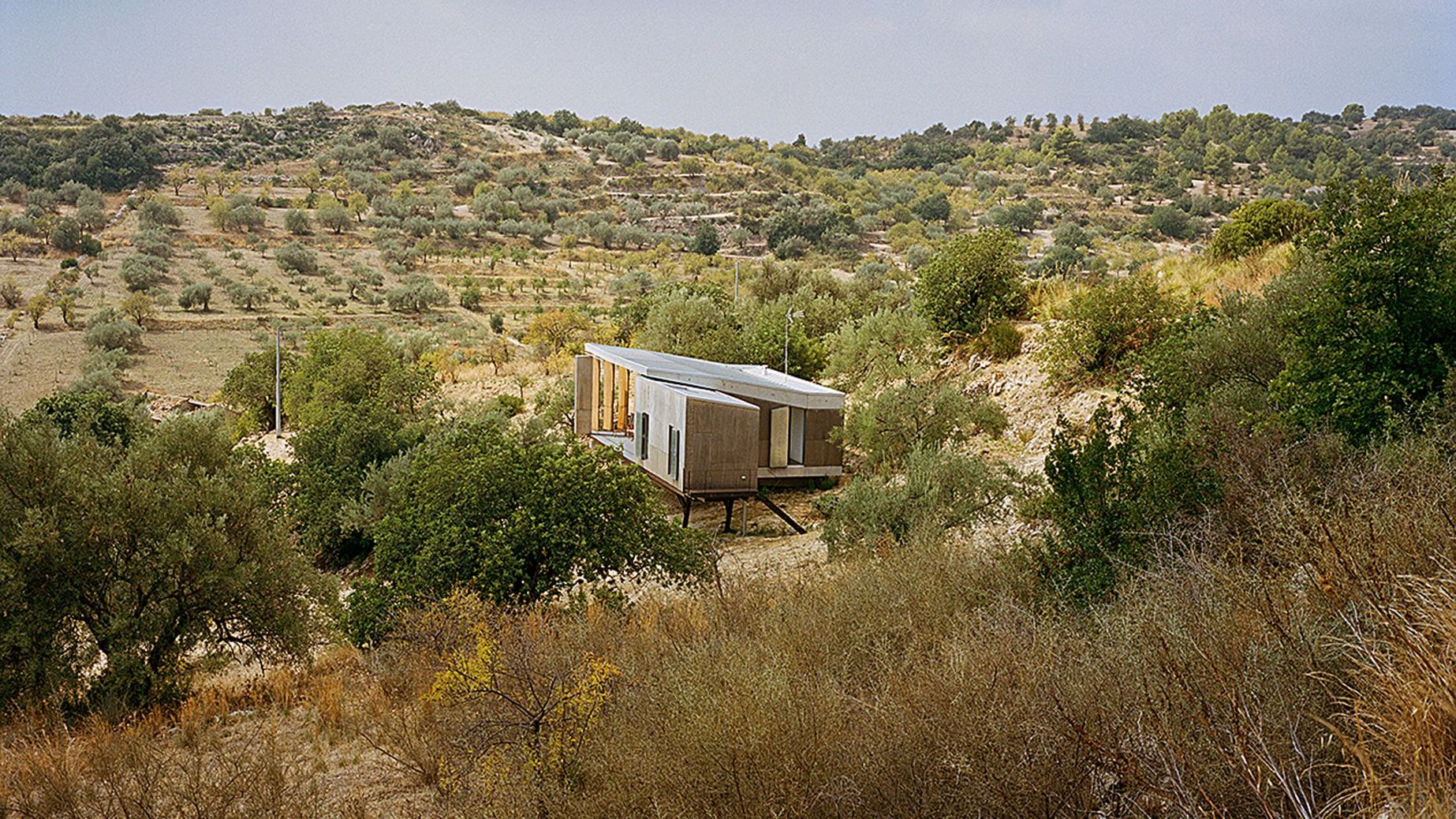
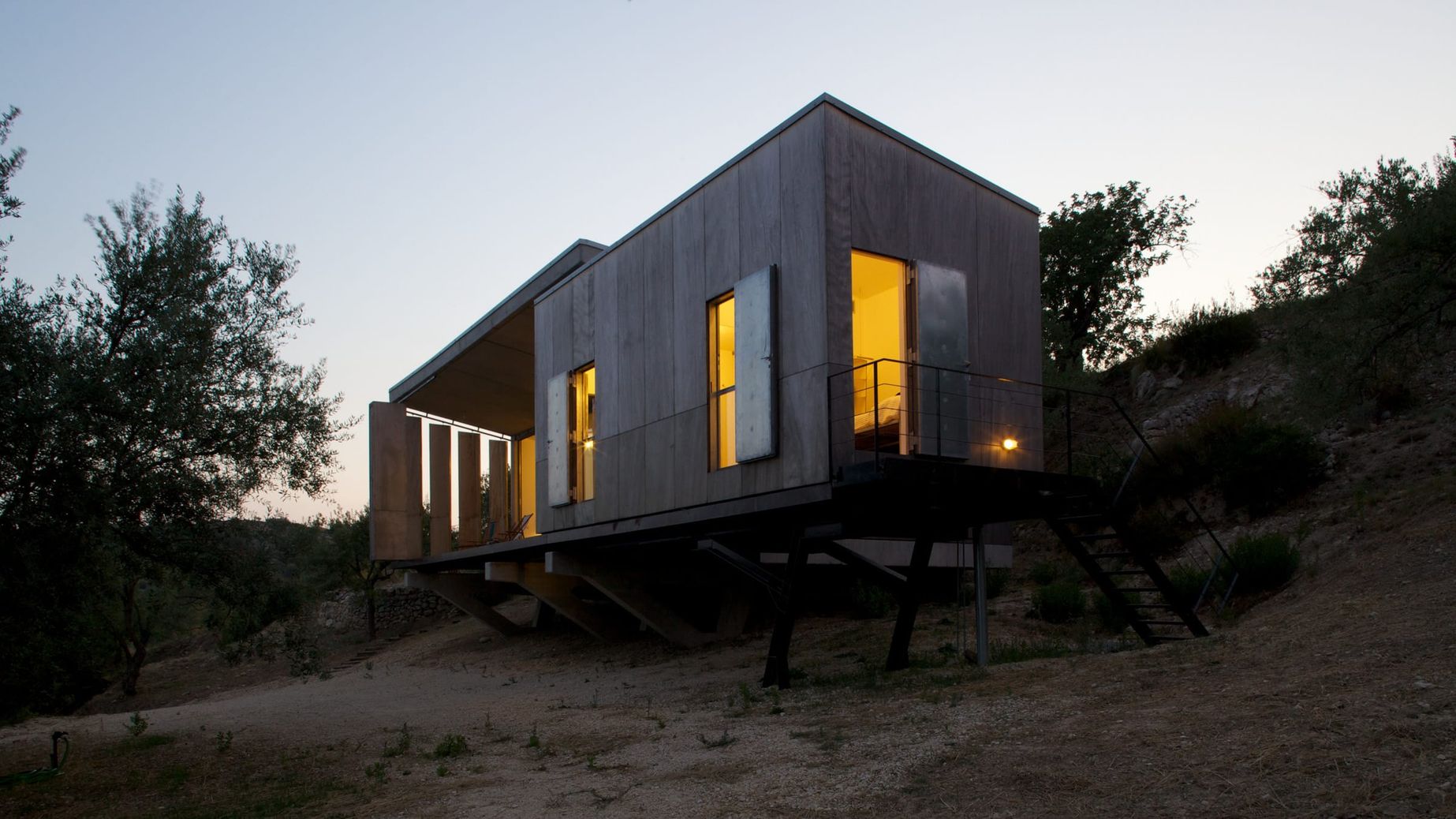
Just a few kilometres further on, in the middle of a wild ancient landscape, stands an ultra-modern house on stilts. Here Milan-based Federica Cimatti has created a tranquil place of refuge for herself when the Lombardian metropolis becomes all too noisy: la melagrana (Italian for pomegranate) is the name of the building. Its concept and character are as unusual and ingenious as its “inventor”, Sicilian architect Maria Giuseppina Grasso Cannizzo. This year she will participate for the third time at the architectural biennale in Venice, and in 2012 she received a gold medal at the Milan Triennale for her life’s work. She has been nominated twice for the Mies van der Rohe prize and she received the “RIBA Award for Architectural Excellence“ for la melagrana.
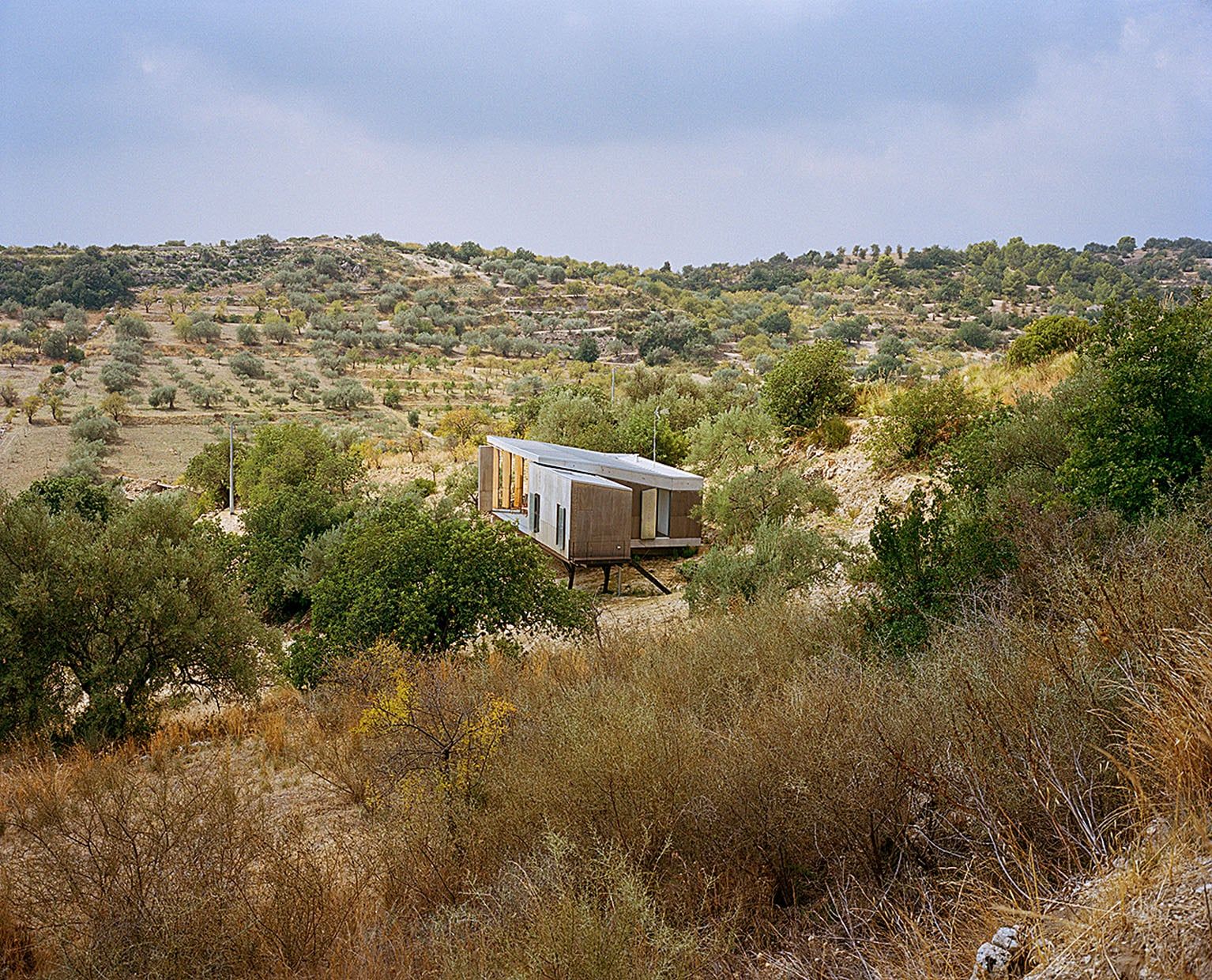
Maria Giuseppina’s projects occupy a zone of tension between strategic planning and bold invention. Her design process rarely takes questions of form as a starting point. Rather, she starts by making a careful analysis of the underlying conditions, the context and the desires and expectations of the client. No matter how rigorous her practice and no matter how radical her projects may often be, her treatment of space, material, light and place, its history and the lifestyle of the residents are always handled with greatest sensitivity.
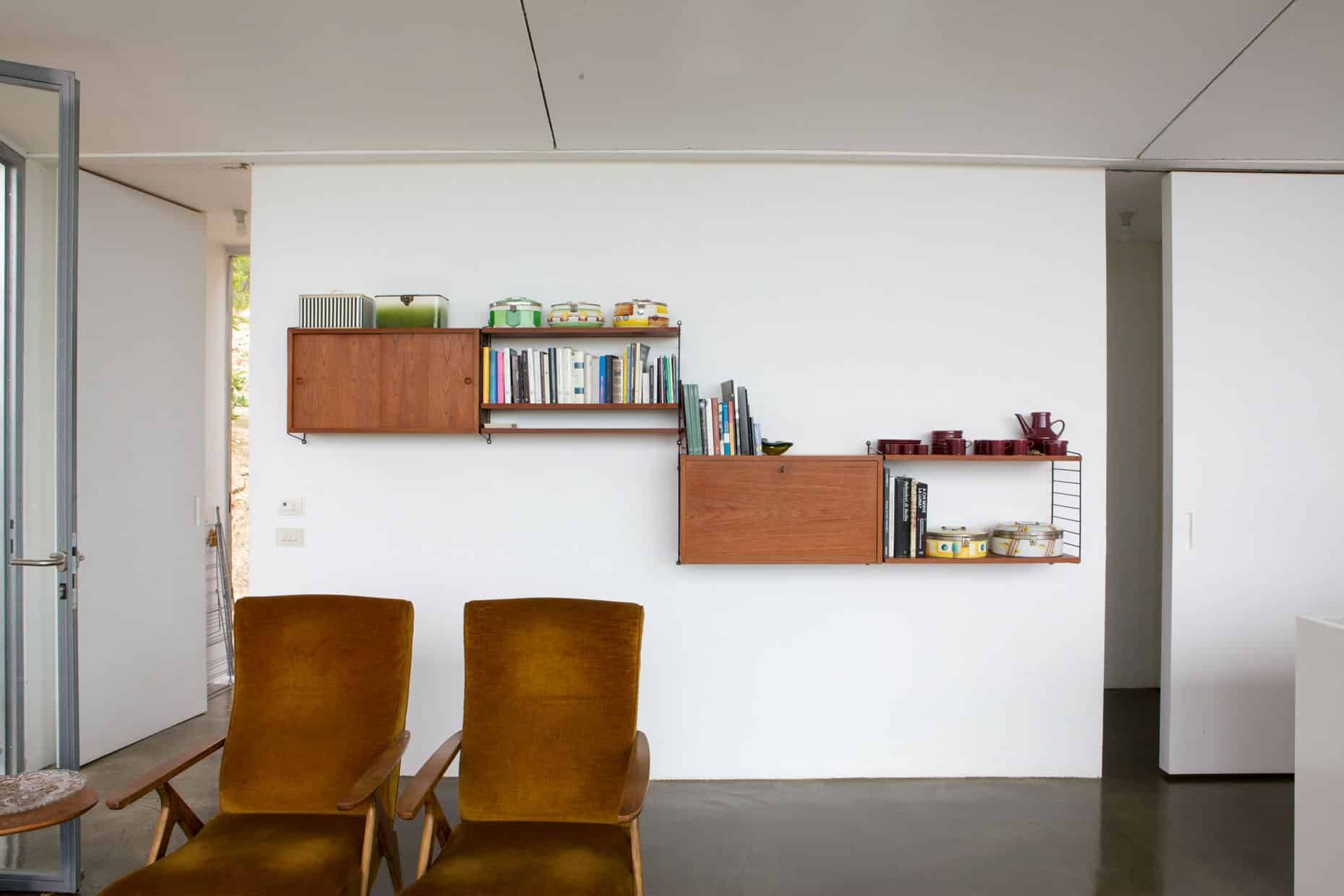
La melagrana is disarming in its simplicity, and at the same time, is a real triumph of variability. When closed, a hermetically sealed wooden box, when opened, an airy holiday home with plenty of space and privacy for six people. The construction consists of two independent yet interacting wings: the main house and a movable structure that serves as the guest wing. The latter, when closed, is like a protective wall in front of the wide glass facade of the main house and can be swivelled sideways. This opens up access to the terrace, from where there is a broad outlook into the natural surroundings. The mobile wing – one of the architect’s genius ideas – moves on rails anchored in the concrete foundations, and changes, with its position, the character and the perspectives of the house. The louvered openings of the terrace provide sufficient air circulation and give ever-changing views over the Mediterranean macchia, the Vendicari nature reserve and the sea.
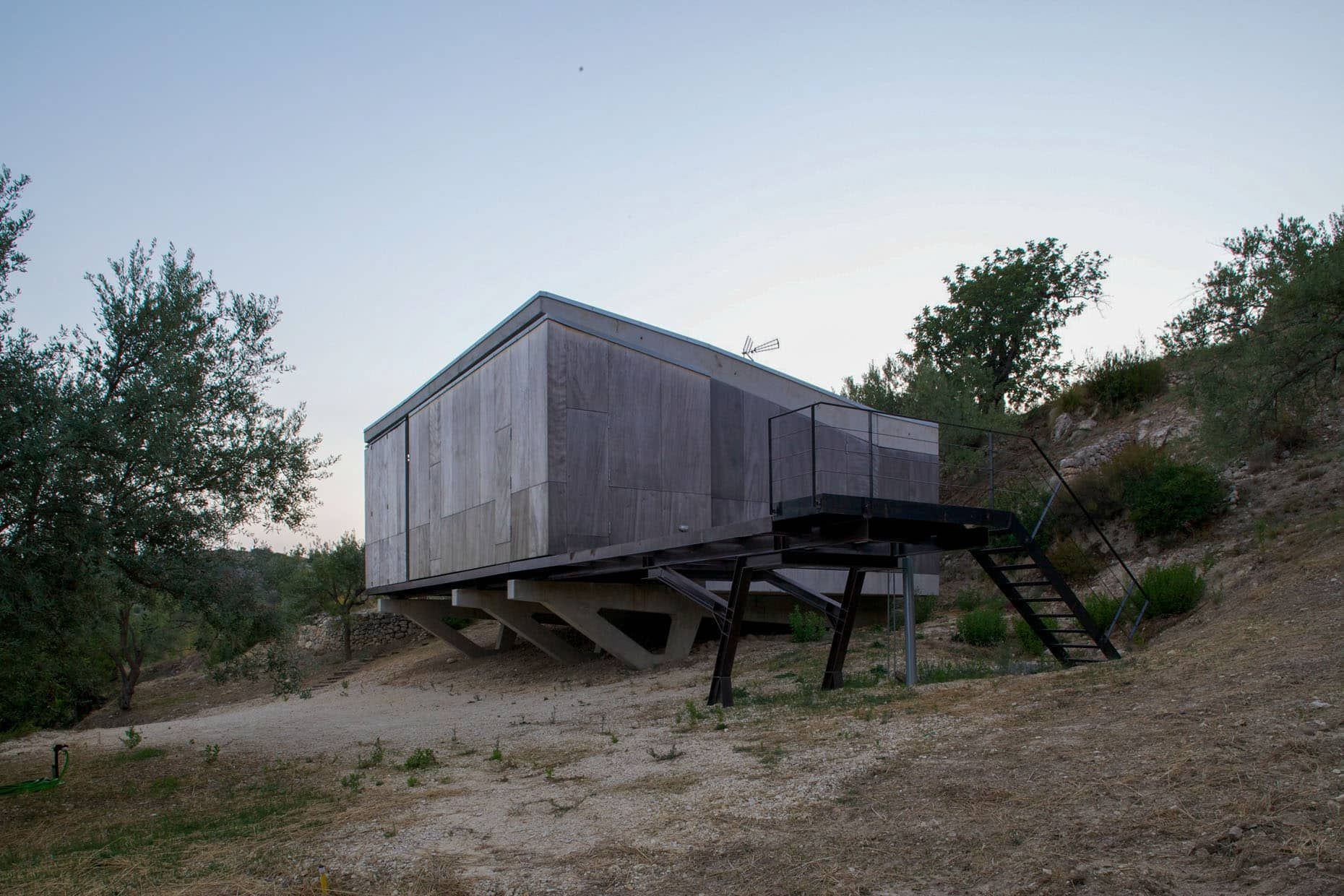
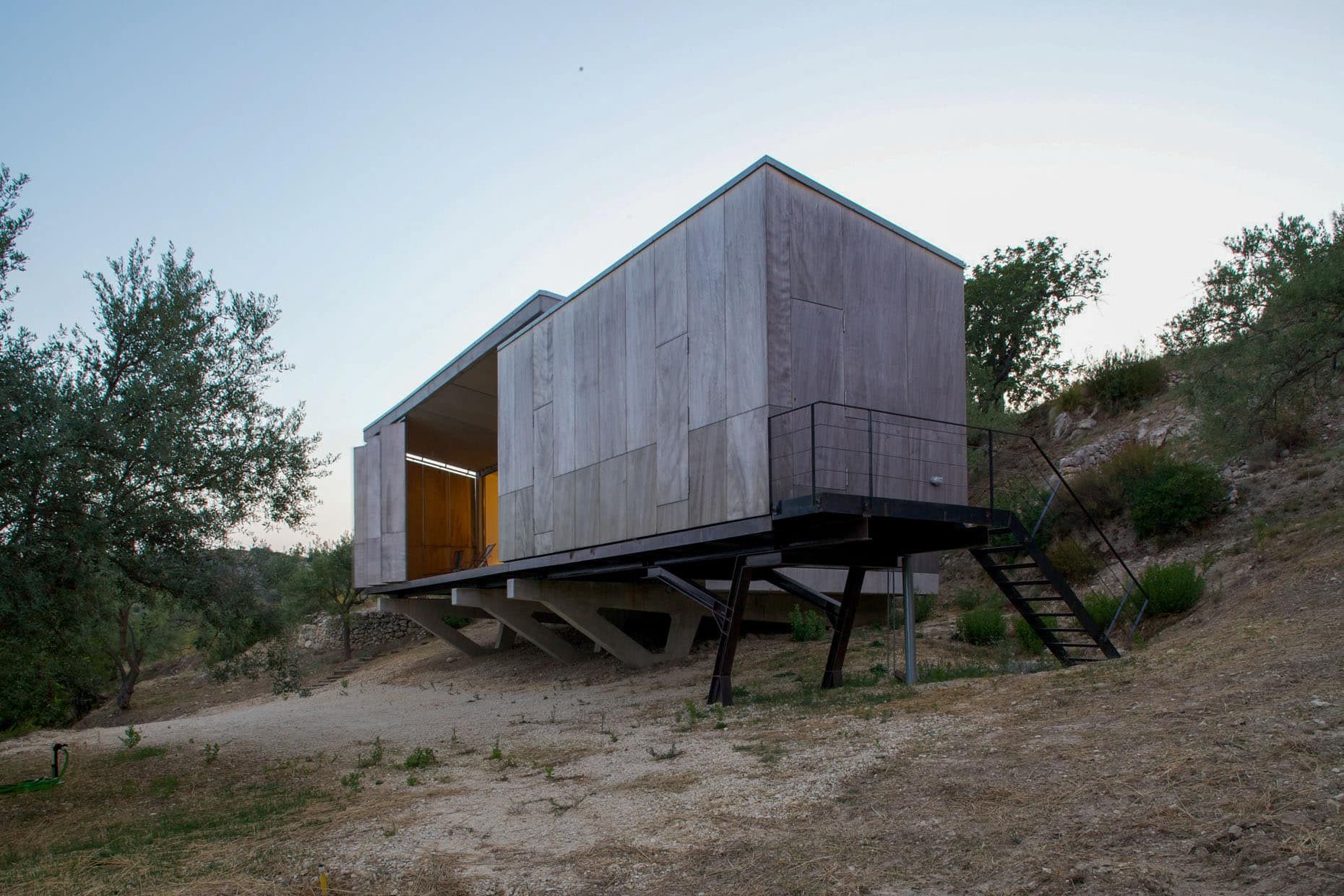
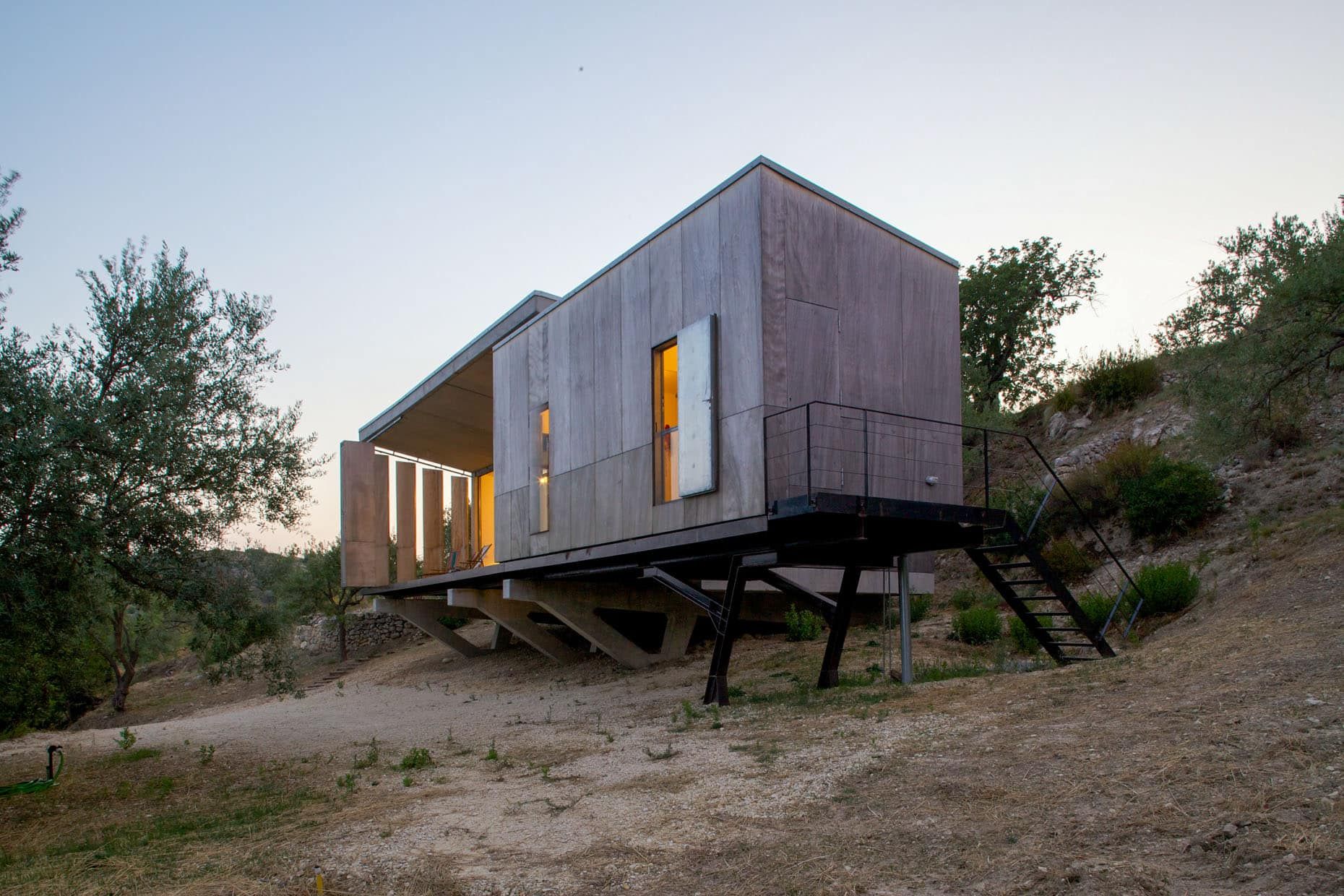
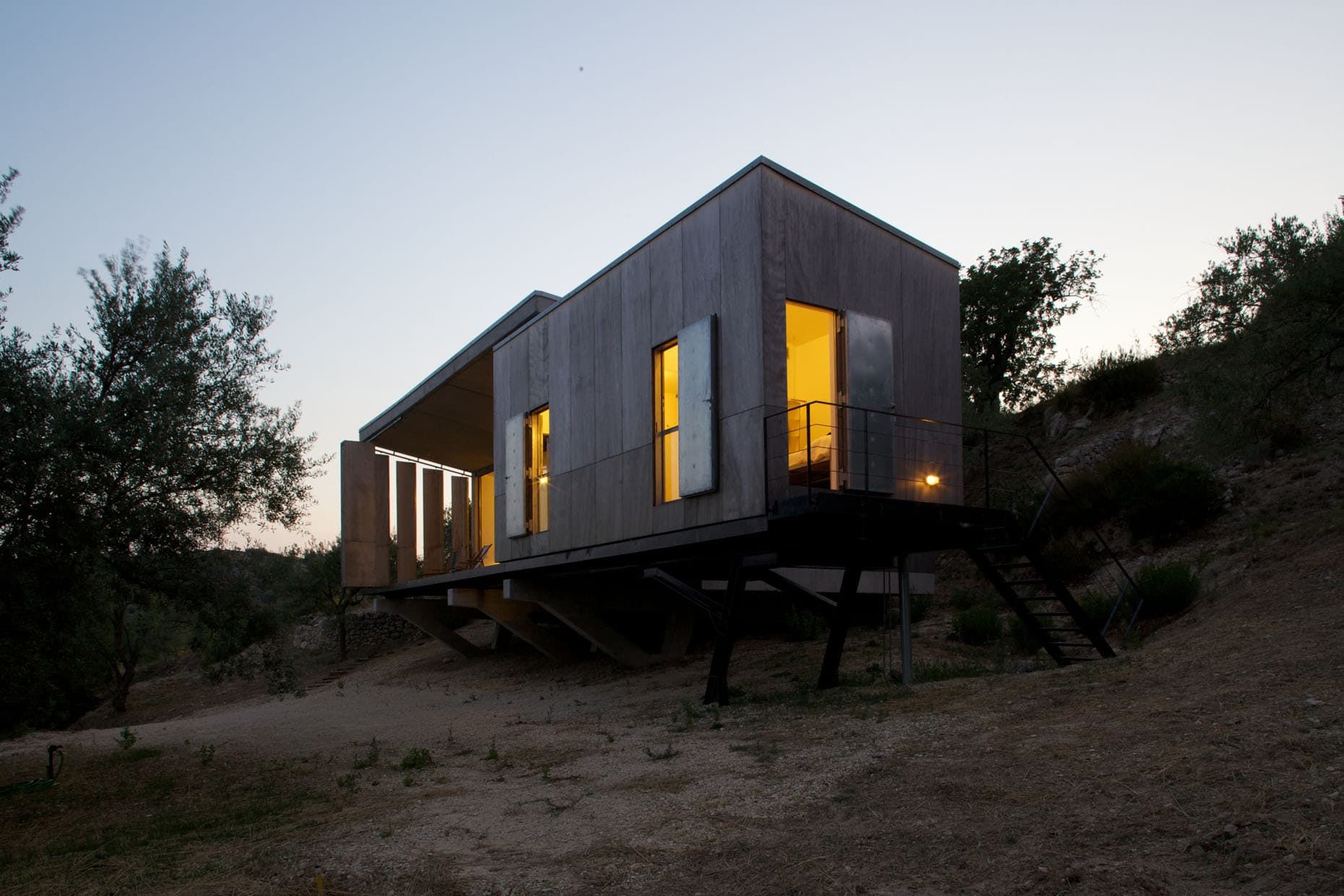
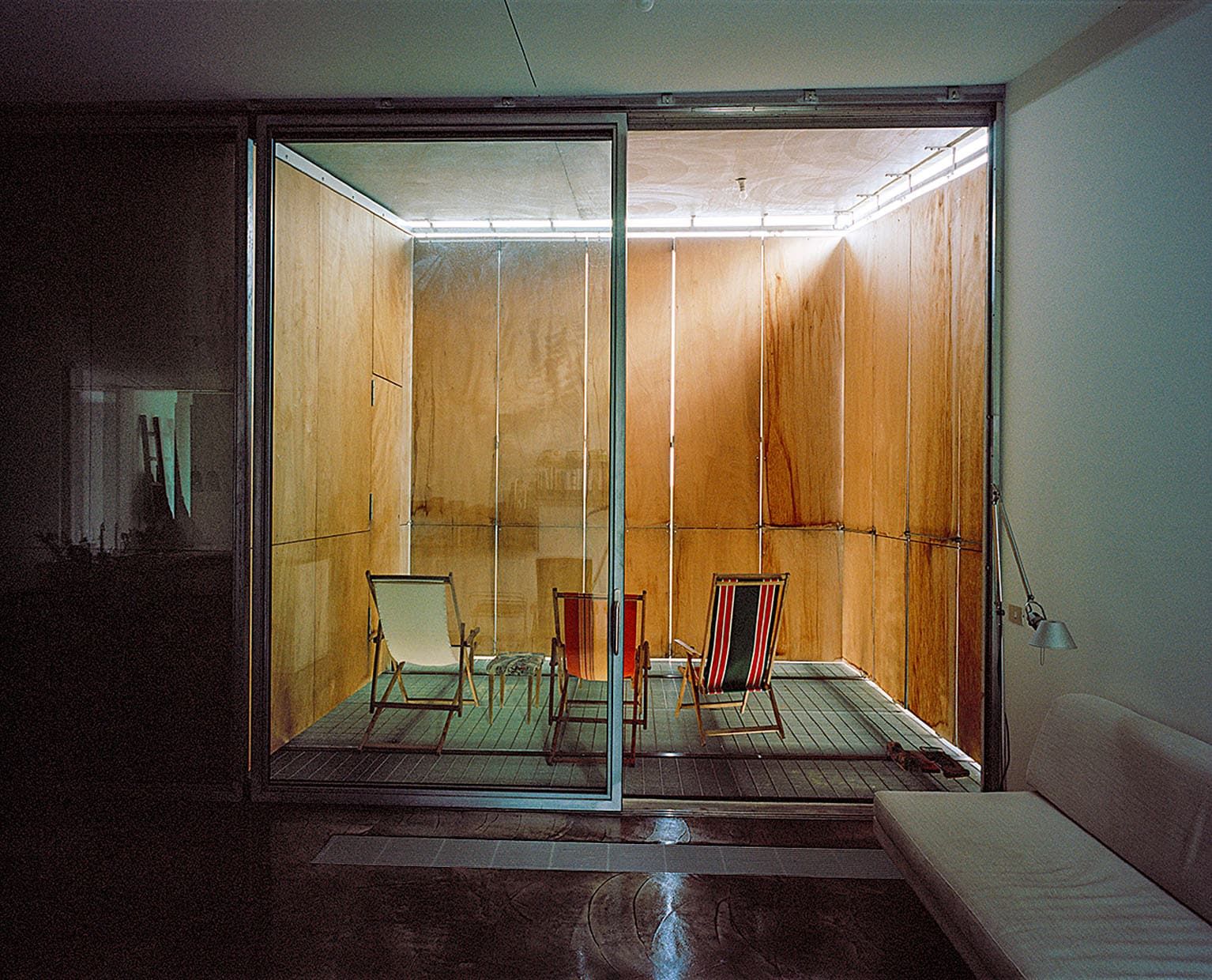
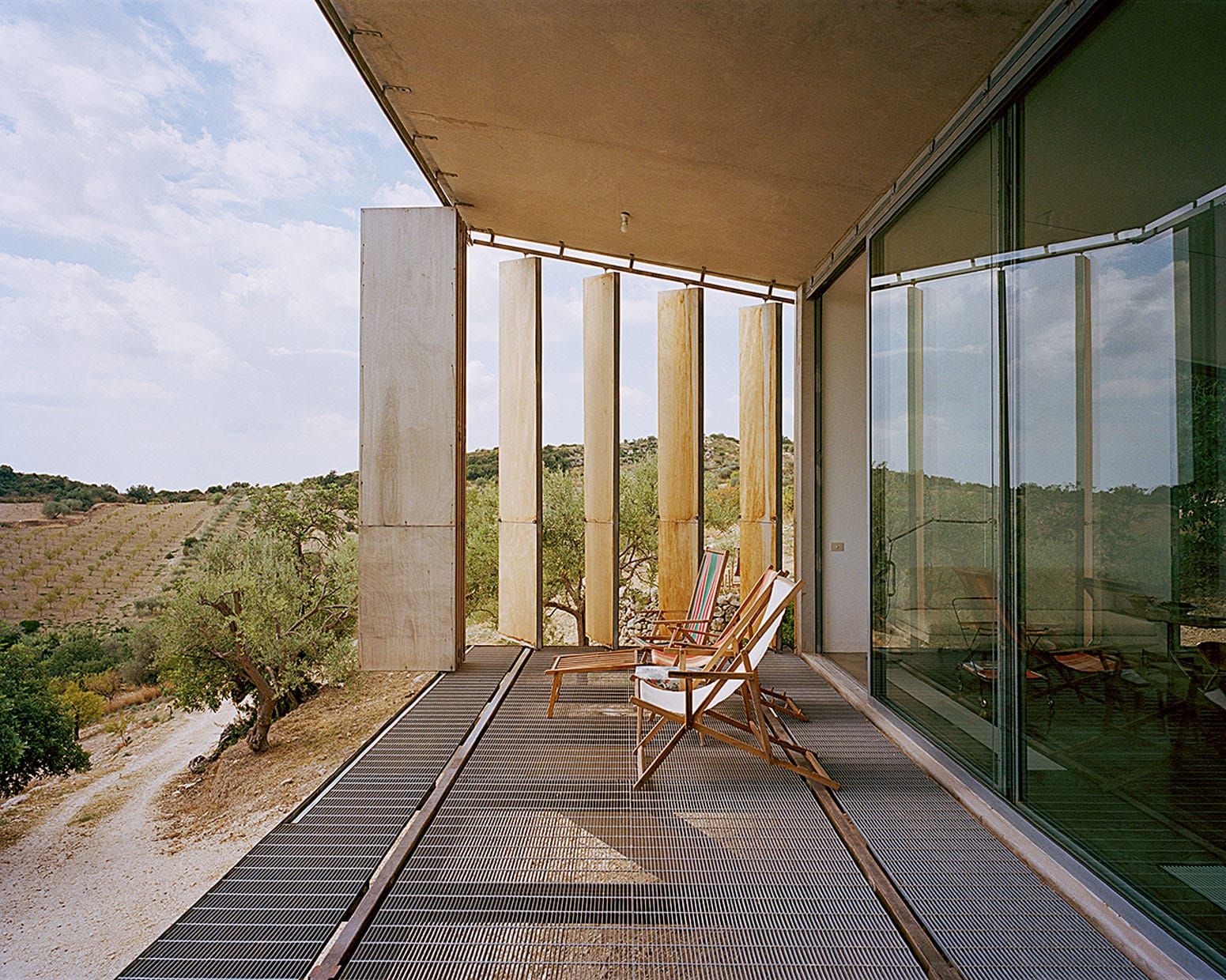
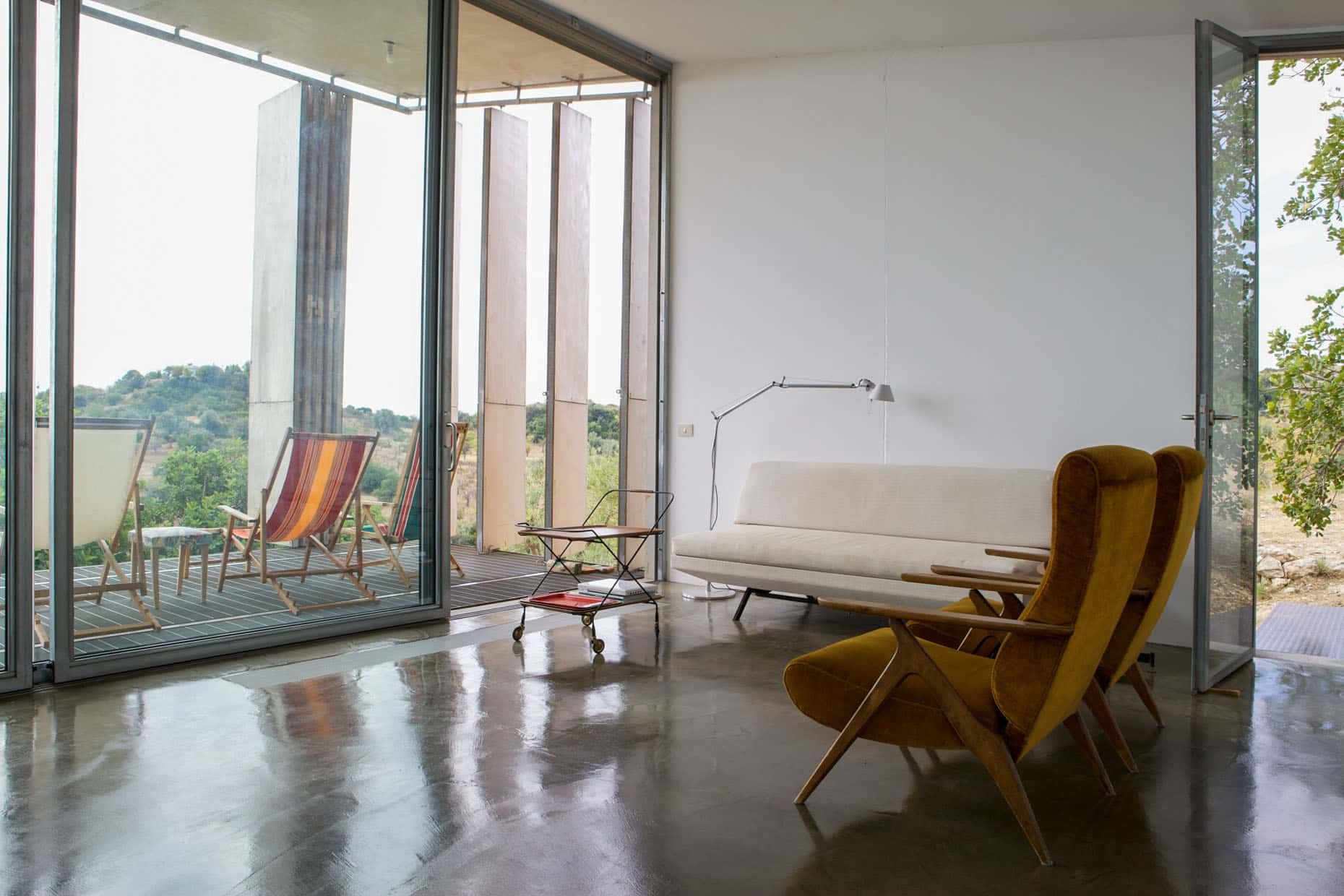
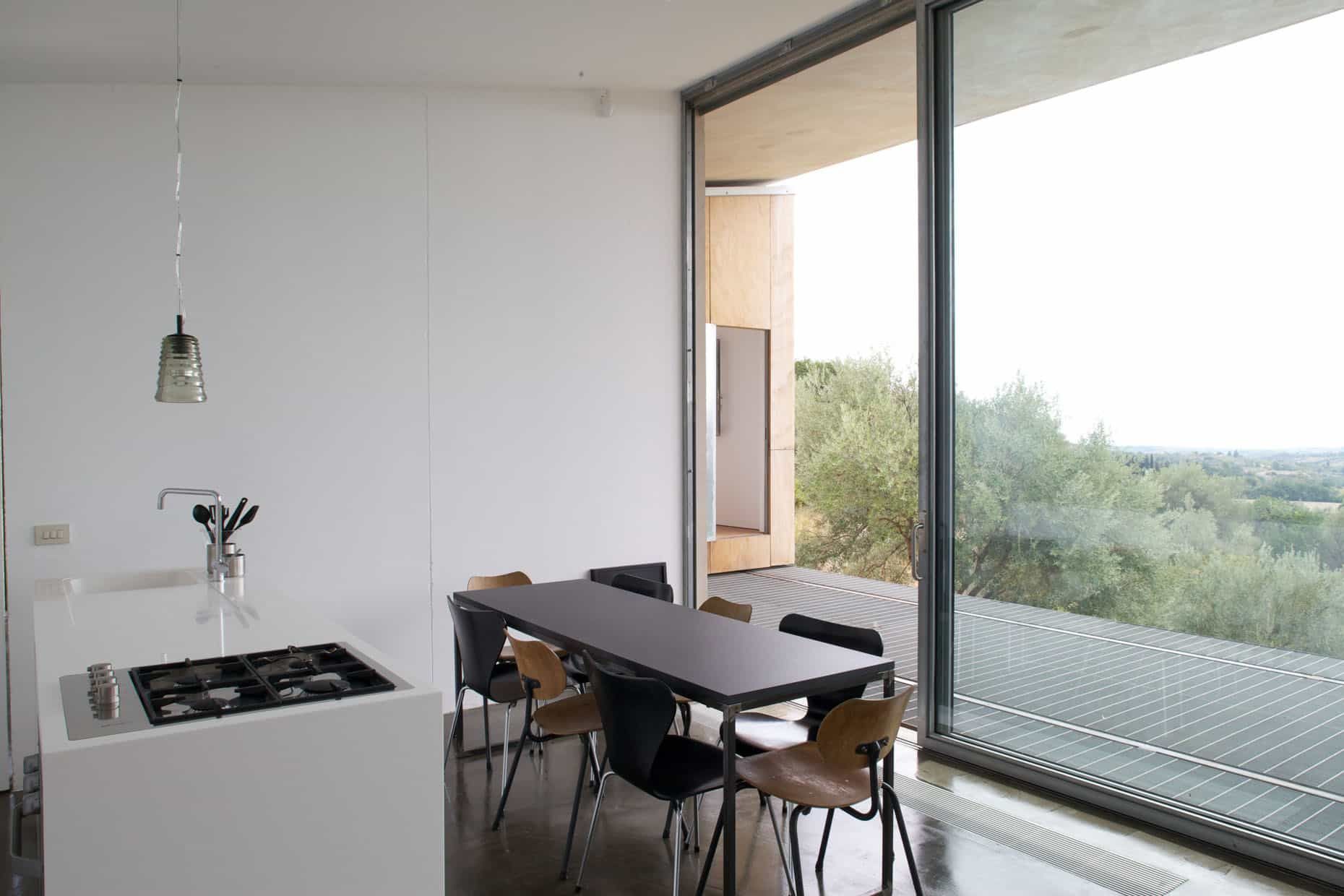
The sea, and beyond it the sea. Since earliest times, Sicily has remained true to the endless blue yonder. It is to the sea that the island owes its livelihood and it is from the sea that Sicilians derive their sense of what is essential in life, their identity and the countless layers that make up their culture. Both our properties, otherwise so different from one another, scan the landscape before them with one and the same objective in their sights – “u mari”.
Le Tamerici
Let’s edge a little closer to the wide blue sea, in fact, let’s go right down to the beach of the little fishing village of Punta Secca, just a few kilometres from the enchanting towns of Ragusa, Modica and Scicli.
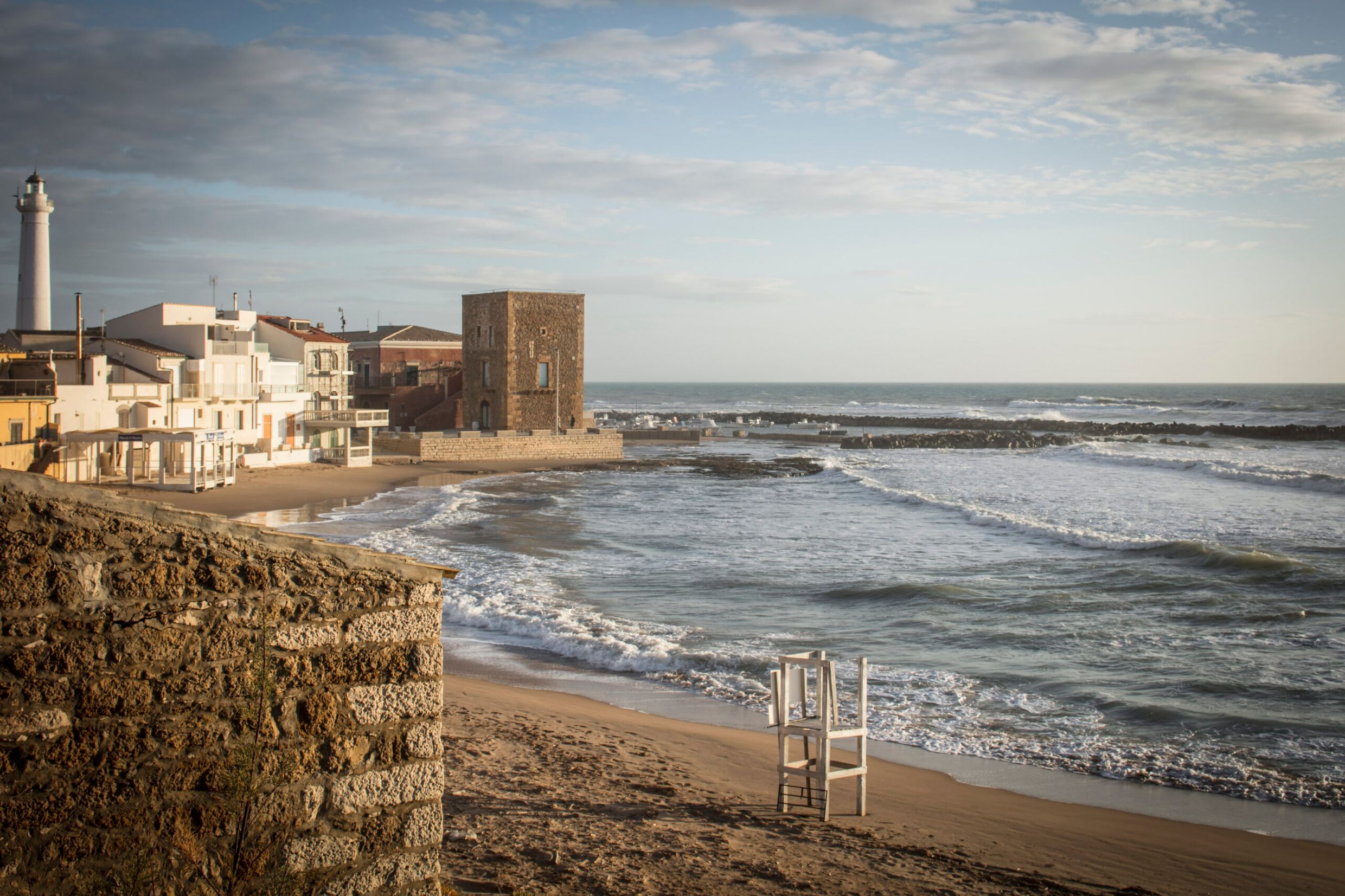
This fishing village can look back over many historical sieges: Greeks, Byzantines, Arabs and Normans alike disembarked on this stretch of coast, not so very far from the shores of Africa. The Arabs named the place ?Ayn al-Qasab’, corrupted, over the course of time, to ?Capo Scalambri?, which is now the official name of Punta Secca on maps and nautical charts and refers to the simple, yet majestic Saracen tower, the ‘torre Scalambri’ overlooking the bay.
In 1766, a row of warehouses were built in Punta Secca for storing the catch from the fishing boats. So that the heavens would bless the fishermen, the little church of Santa Maria di Porto Salvo was built immediately afterwards.
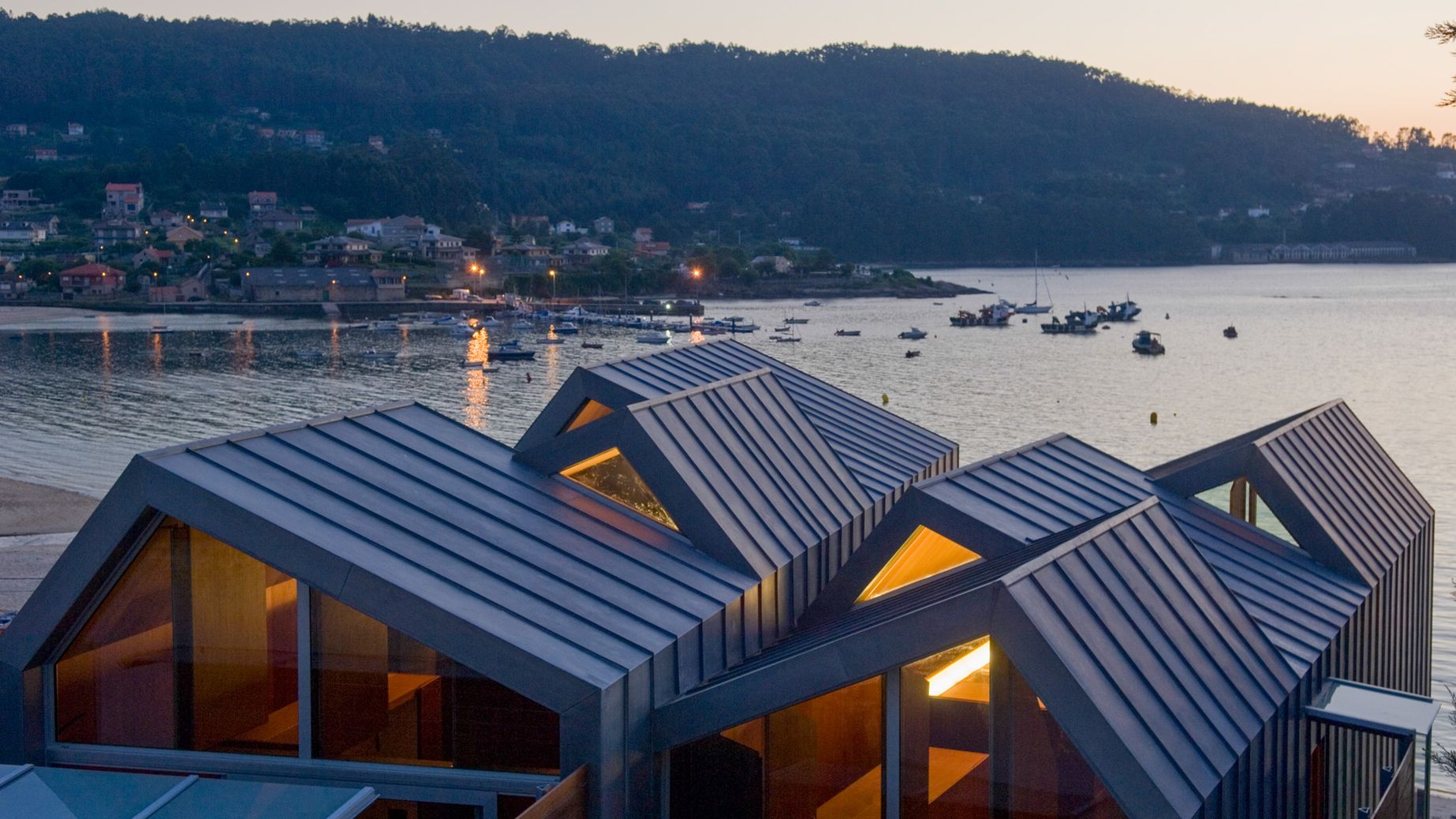
Perhaps the most beautiful and, in its form, the house that has stayed truest to its origins, stands right on the beach at Punta Secca. Le Tamerici used to be part of a set of rustic buildings erected at the end of the 18th century on the estates of Prince Starrabba di Giardinelli: The majority was sold off at the beginning of the 19th century and converted into the summer residence of a well-to-do local family – and it was here that Maria Giuseppina Grasso Cannizzo was born in the 1950s.
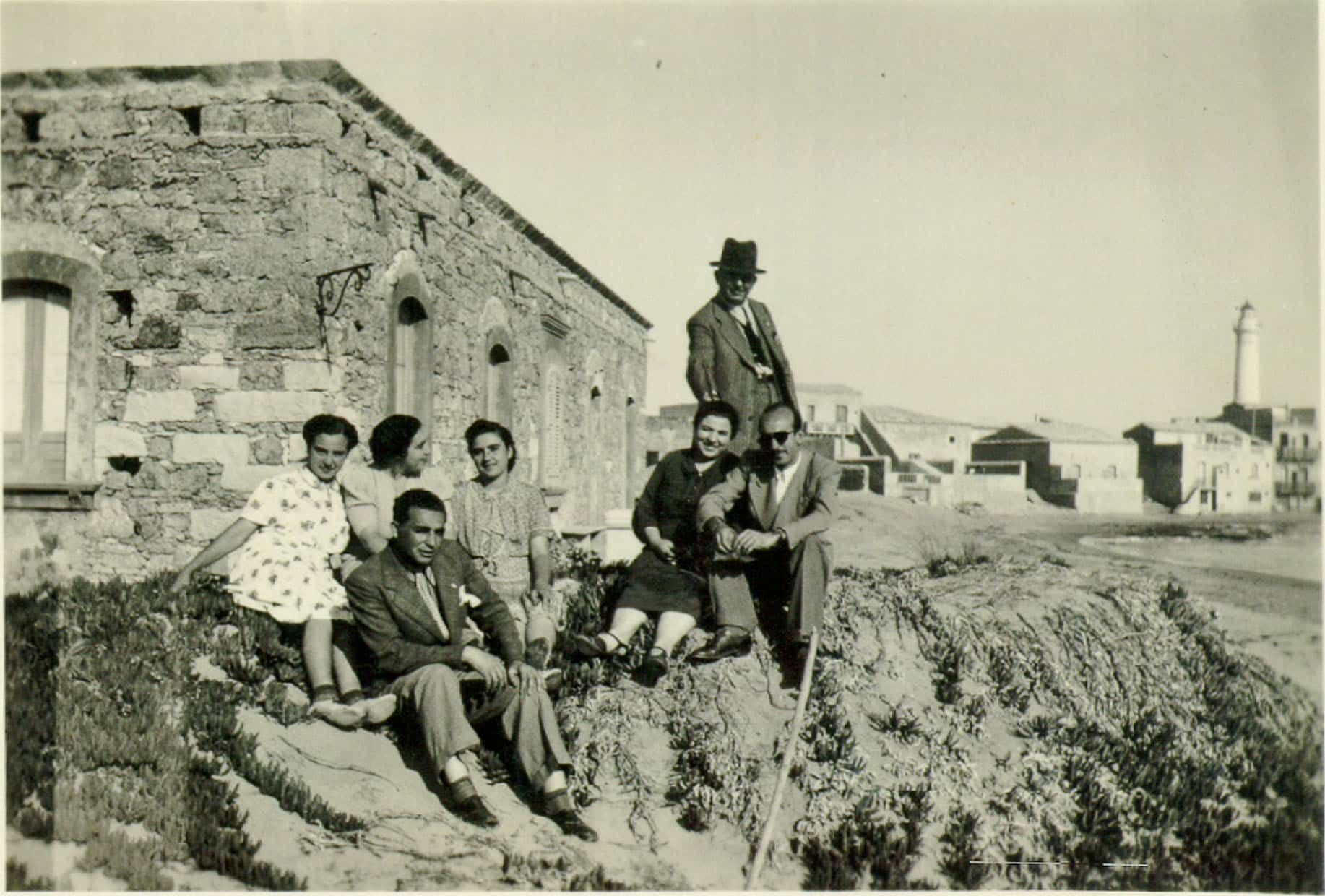
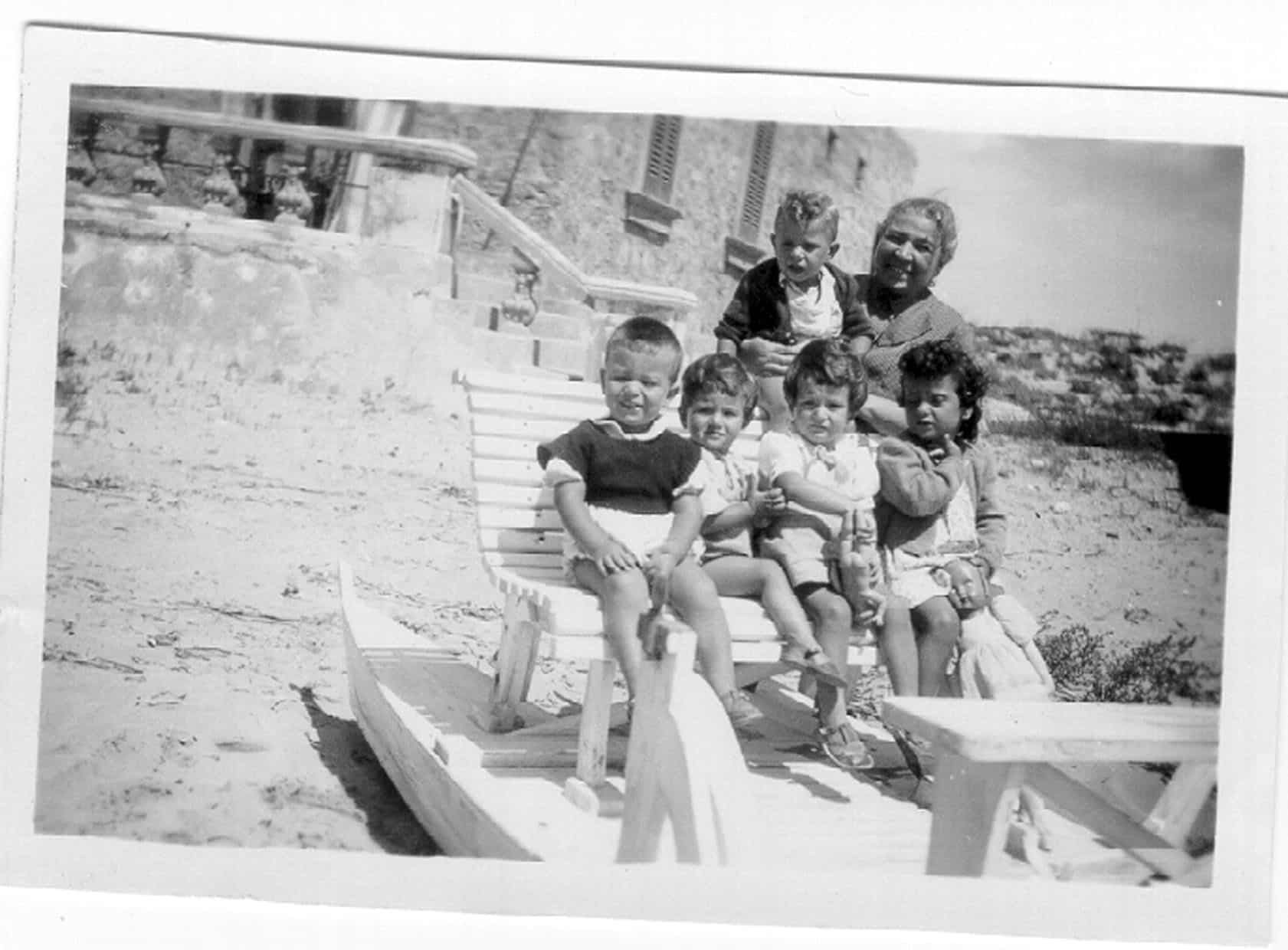
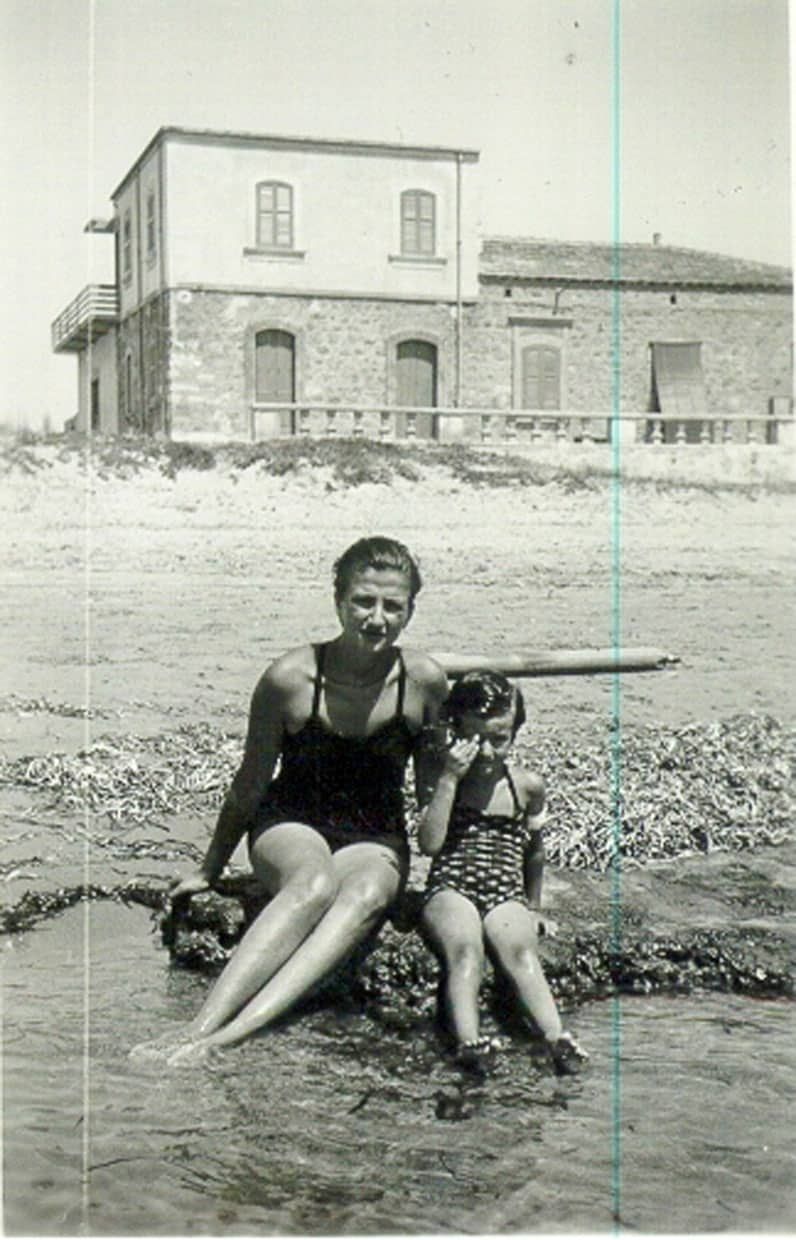
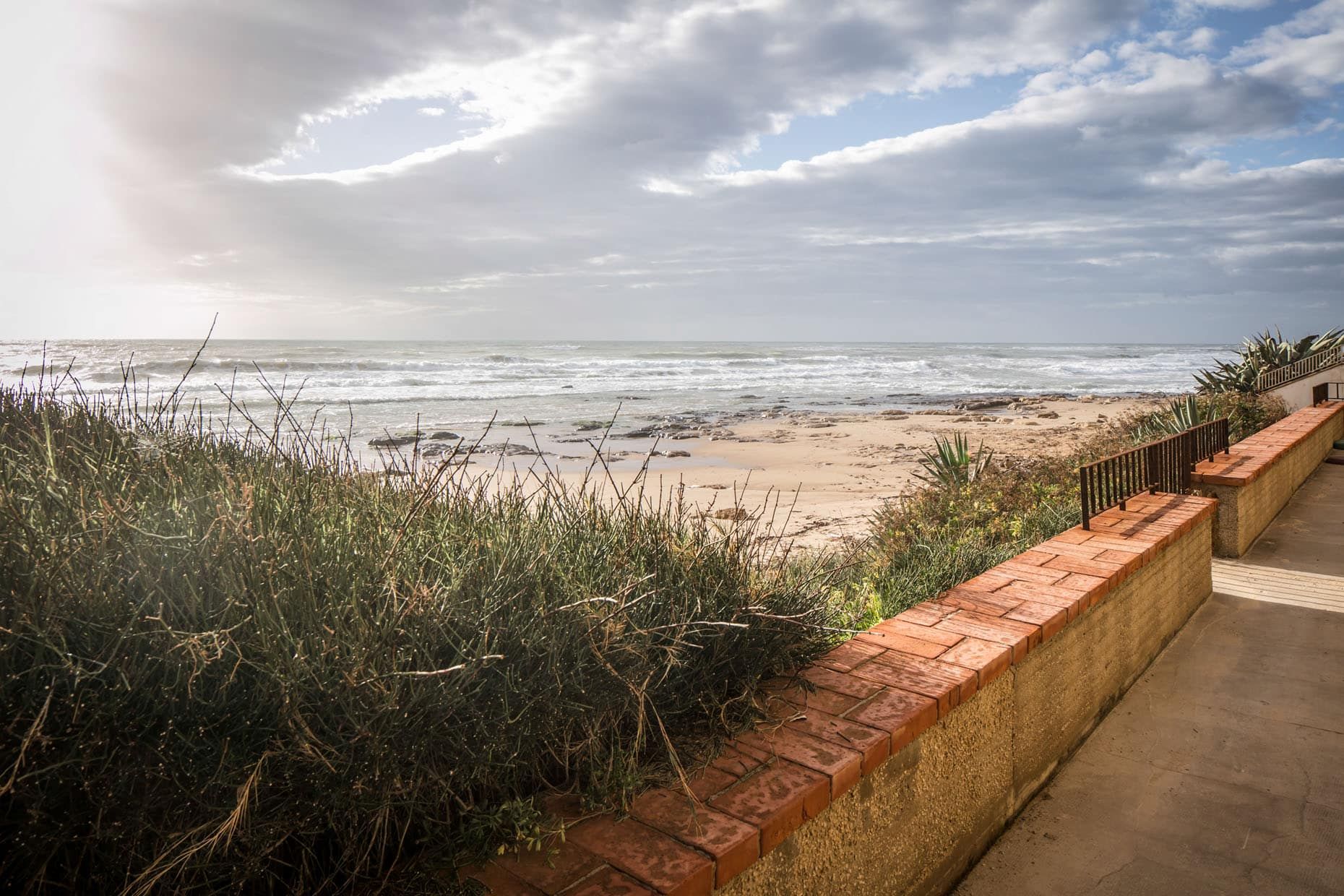
Flanked by tamarisks, Le Tamerici opens out towards the sometimes dark blue, sometimes jade green expanse. Here, sea breezes blow through and the continent of Africa is a tantalising presence beyond the horizon. In its light-drenched rooms, you can breathe in the authentic atmosphere of a Sicilian summer residence dating back to the beginning of the 19th century. The architect has modernised her part of the house with loving care and attention to the old fabric of the building, preserving its original character: high ceilings, rough stone walls, traditional Majolica tiles and a suitable mix of antique furniture and modernist pieces.
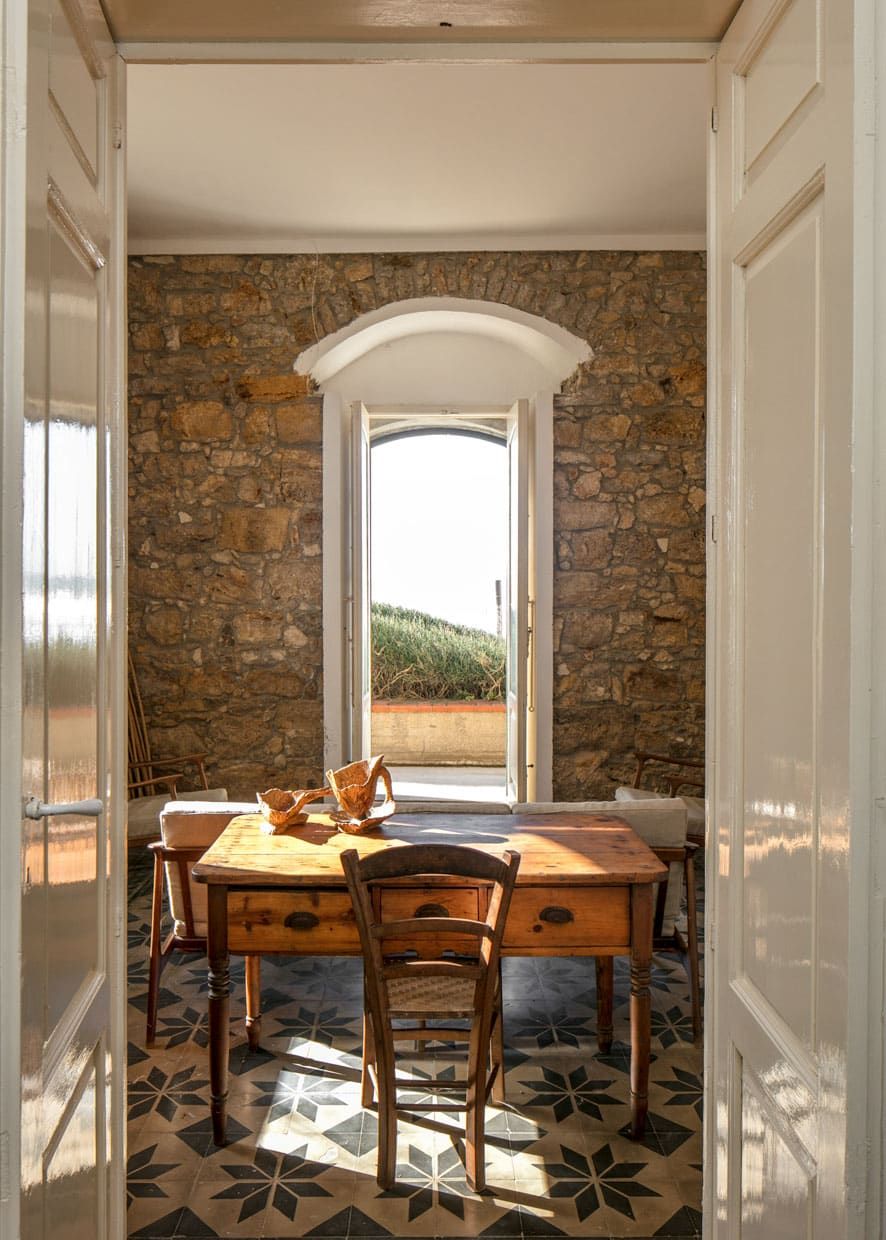
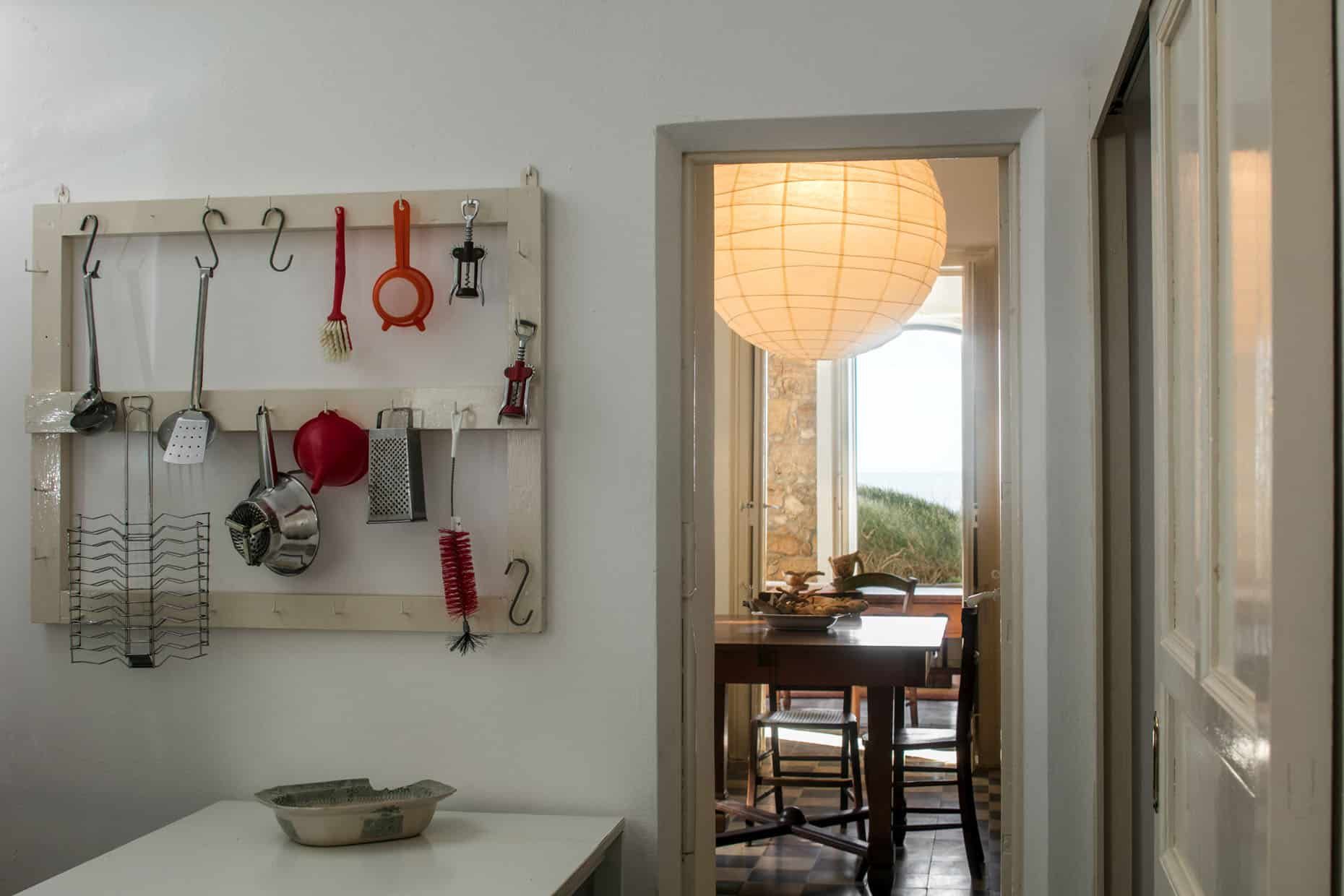
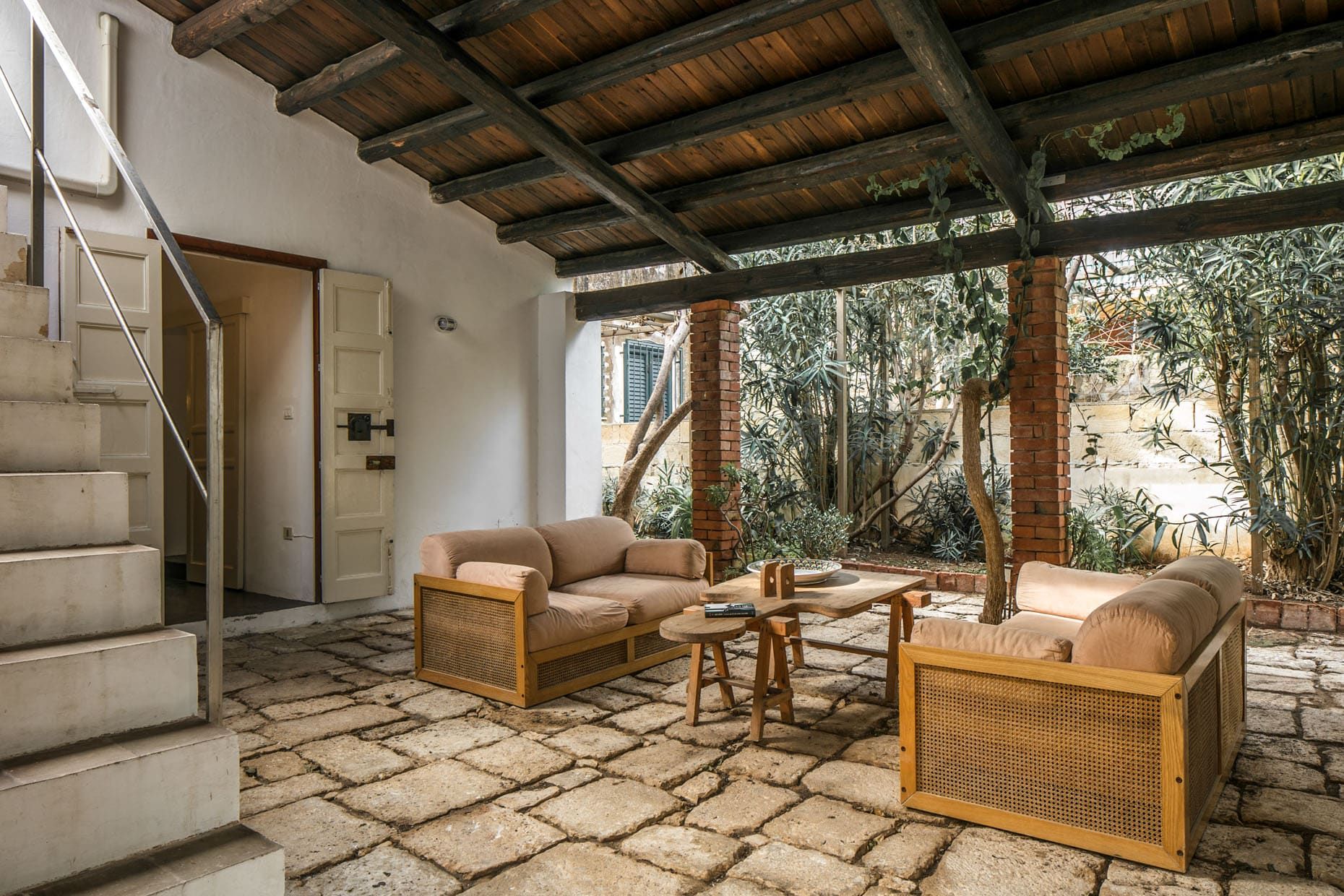
Here too the history of the house and the spirit of place have provided a starting point for extremely sensitive architectural intervention. The quiet living rooms and covered patio bear witness to the Sicilian way of life, striking that fine balance between communication and contemplation. Maria Giuseppina’s house sharpens our awareness and experience of this location and its story, creating a powerful interplay between space, objects and people. Light, colour, air, sound… and the island compels us towards it like a siren song.
To have seen Italy without having seen Sicily is not to have seen Italy at all: Sicily is the key to everything.” (Johann Wolfgang von Goethe, Italian Journey II, 13 April 1787)
Text: Britta Krämer, April 2018
Overview: Here you can find all our HomeStories at a glance! If you want to stay up to date, you can opt-in for our HomeStory-Newsletter here.
The featured Houses

One Comment
Wunderbar geschrieben, mein Kompliment, ich kann mich nur anschließen, Italien ist immer wieder ein Traum