
Much light and in praise of the shadow: Quartier Wieck
Two elaborate holiday homes on the Baltic Sea — reduced, modern and conceived with love for Japan and Scandinavia. Breathe a sigh of relief at the edge of a National Park, contemporary art included.
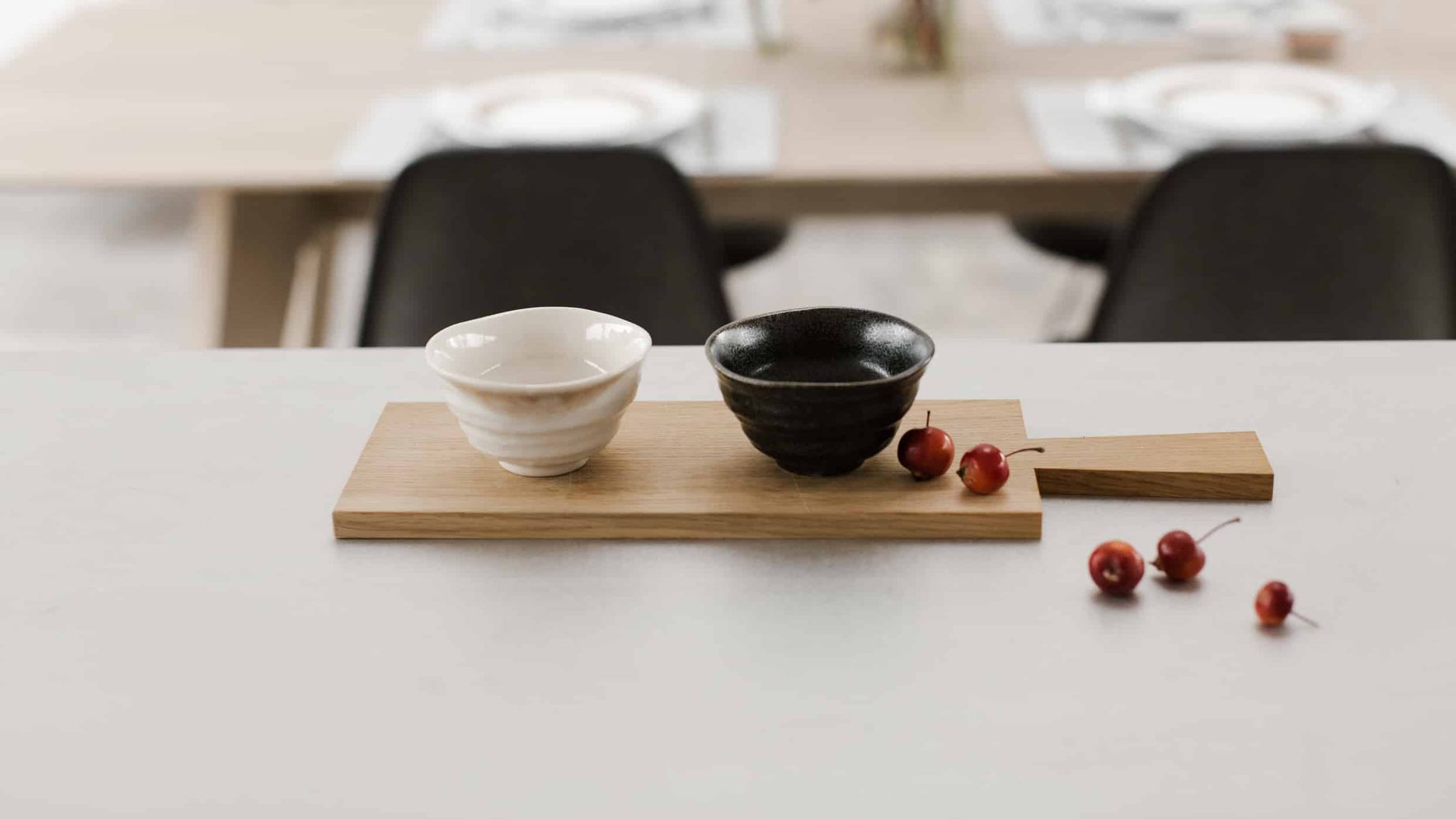
For years, the west beach on the Darss has been regularly listed in national and international magazines as one of the most beautiful beaches in the world. Quite rightly, as the owners of Quartier Wieck can confirm. They fell in love with the beauty of the northern German peninsula a long time ago and know only too well that the attraction of Darss is by no means limited to the pristine, fine-sand beach.
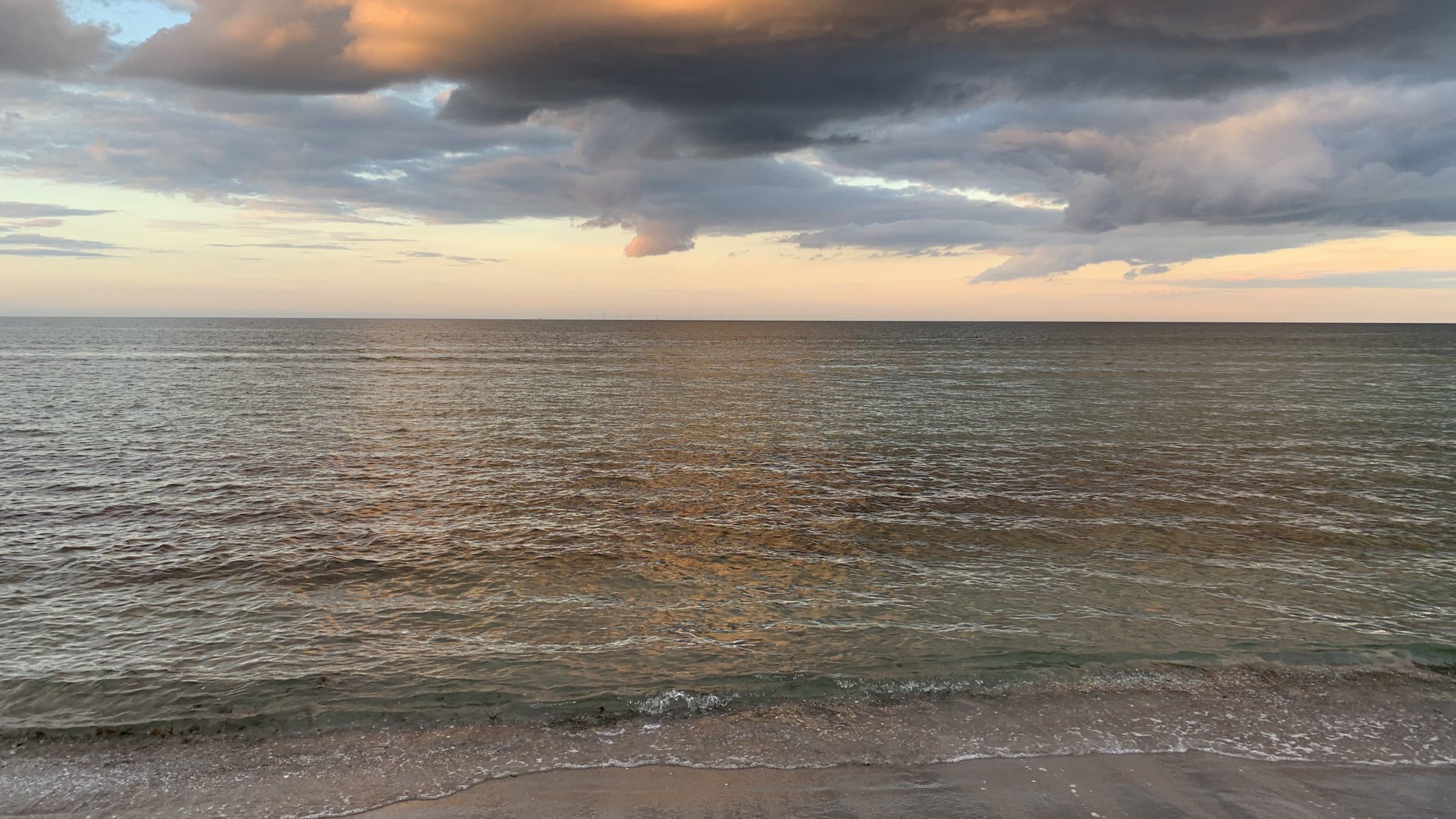
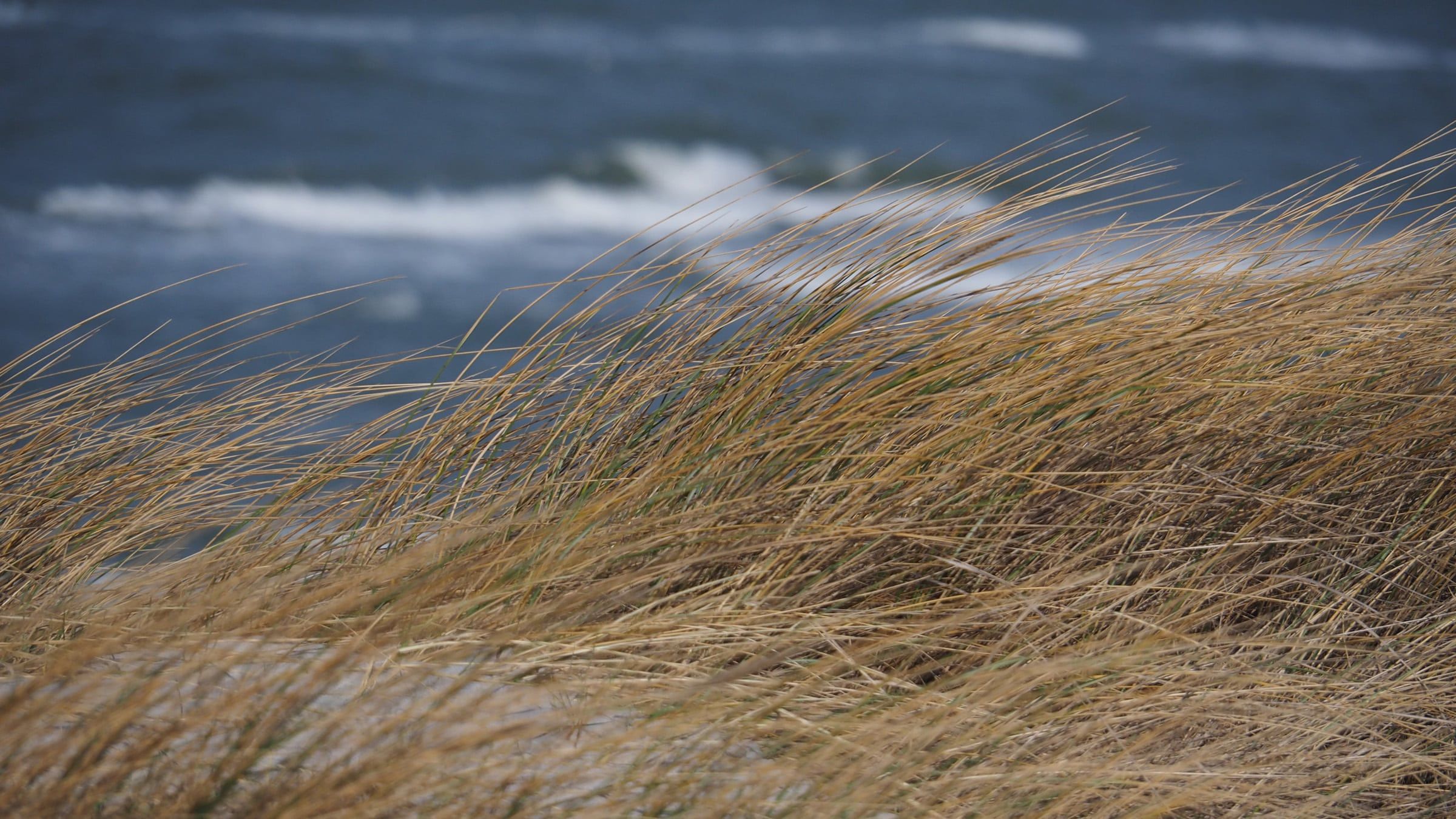
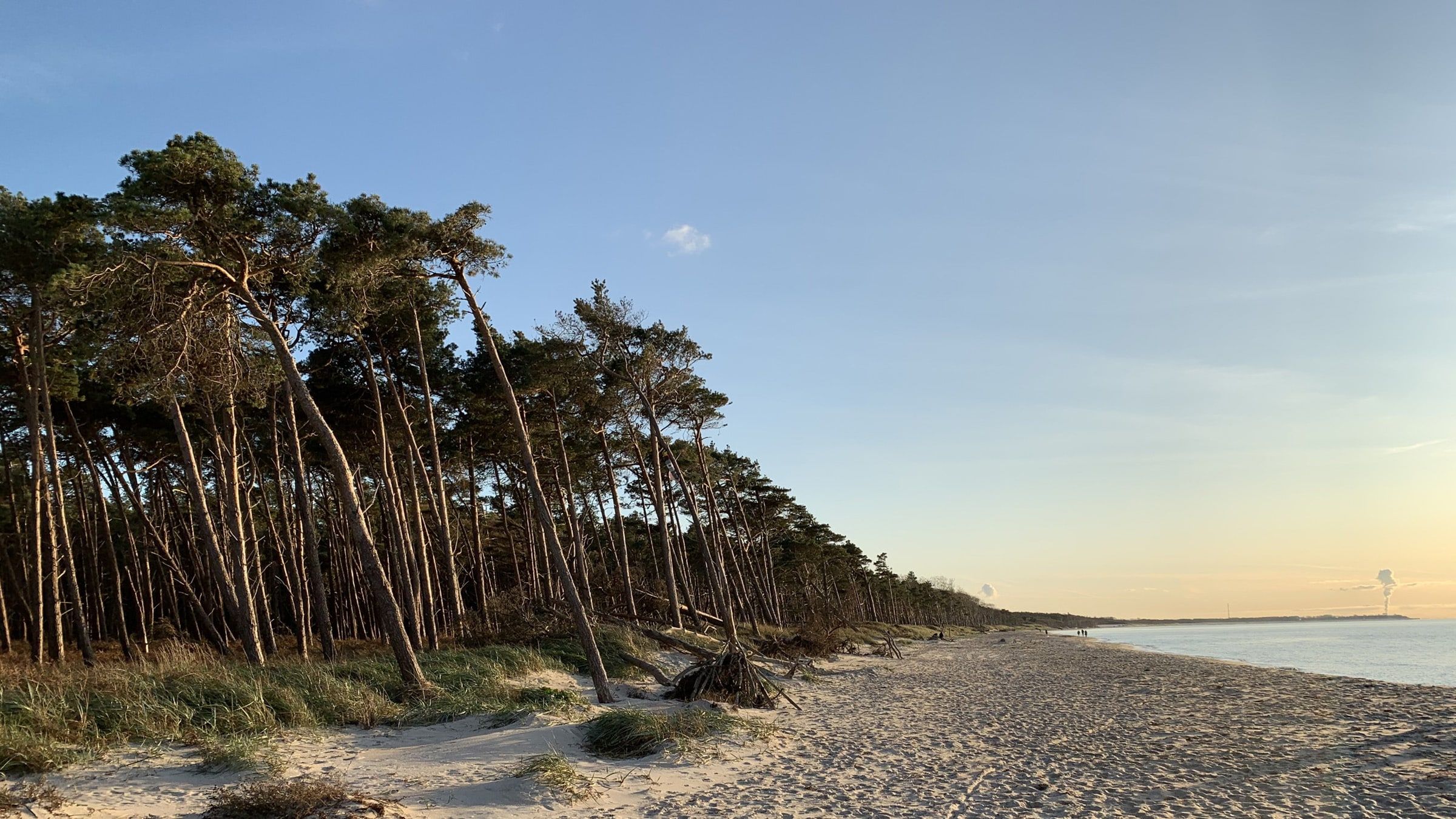
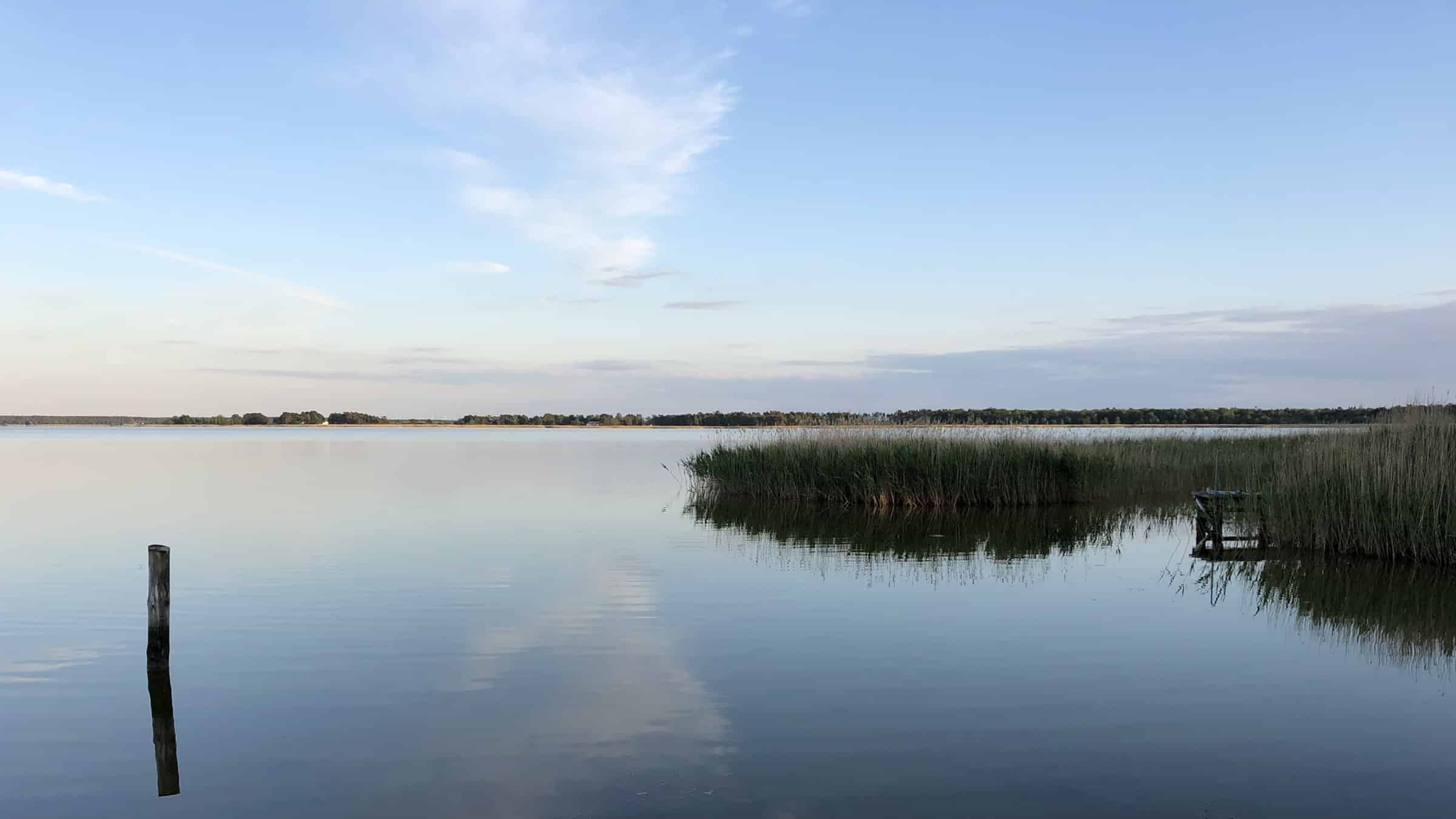
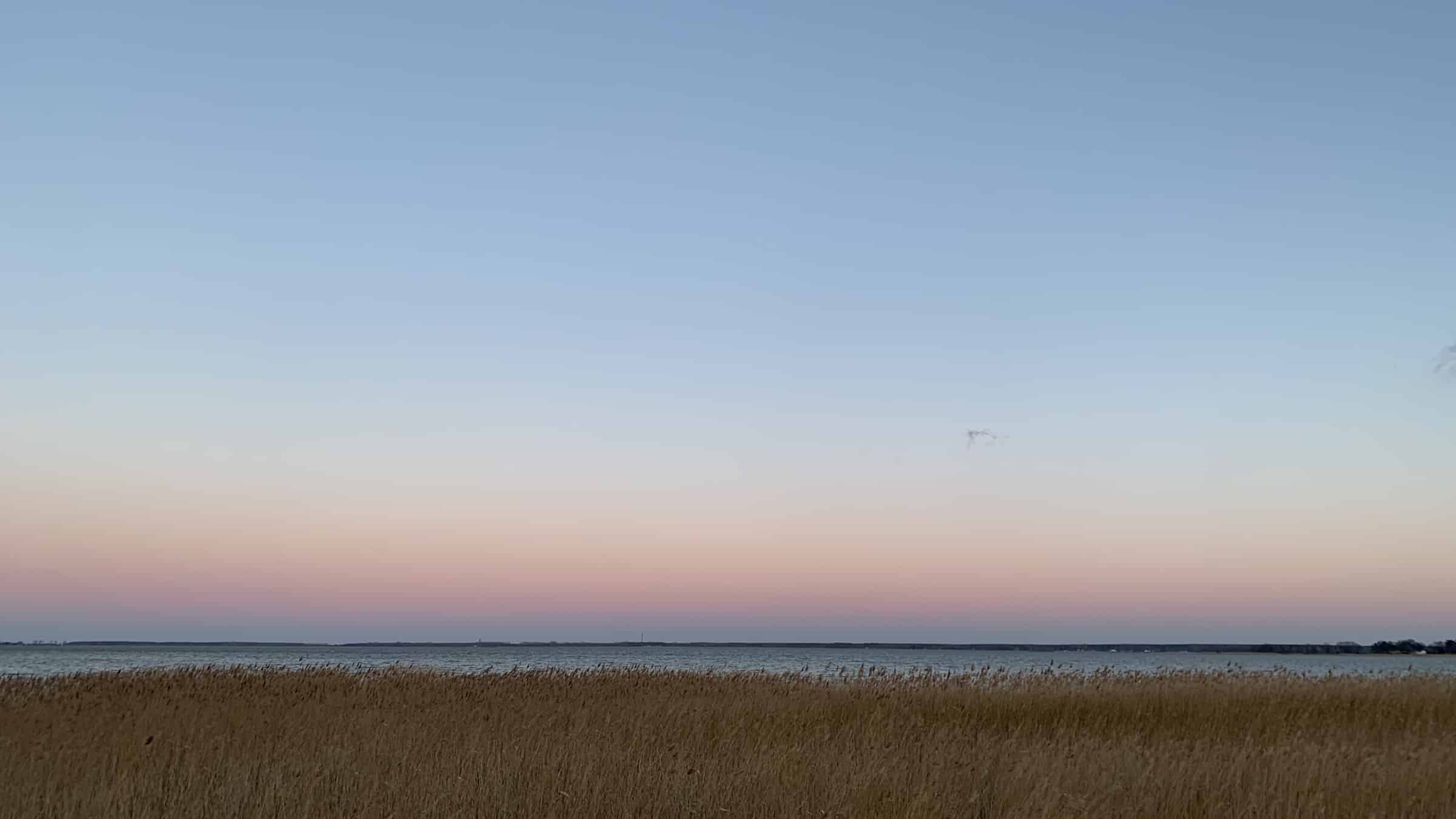
Their enthusiasm for the Baltic Sea has grown over decades: In the 1990s they were both studying in Lübeck, became a couple and together they discovered a fascinating world that had been completely unknown until then. They immediately fell in love with the Fischland-Darss-Zingst peninsula in the Vorpommern Bodden landscape National Park.
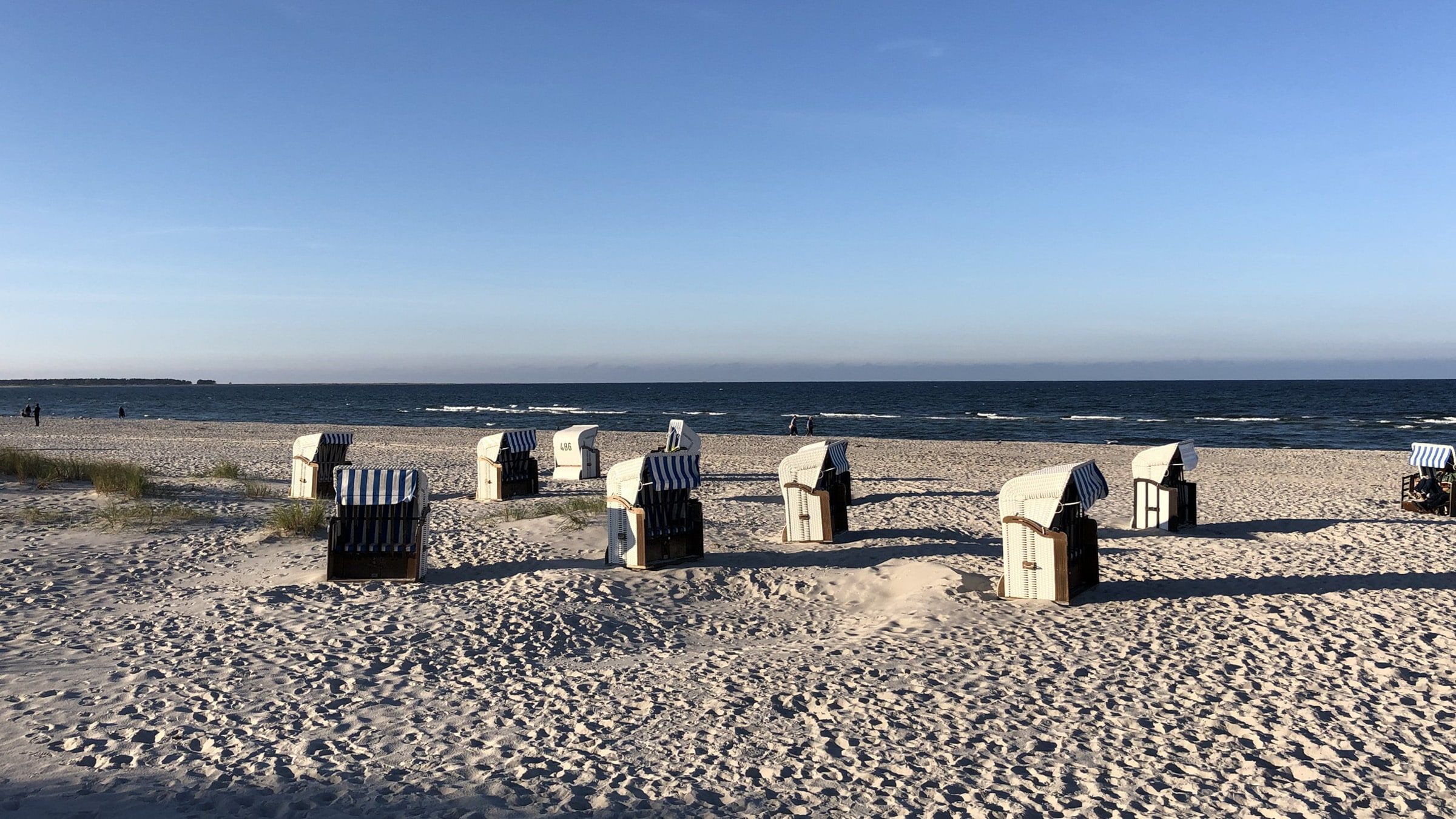
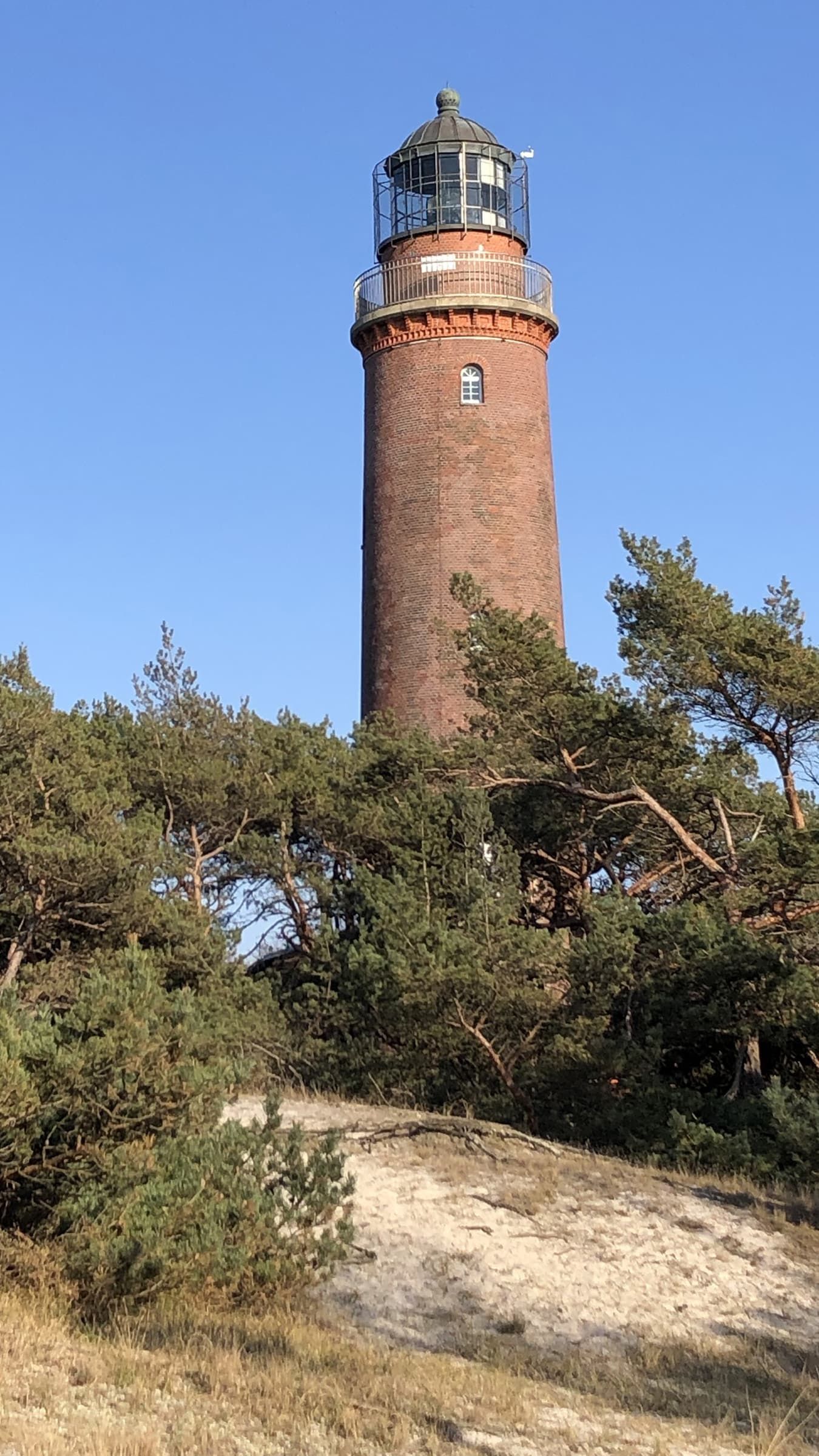
At the time, the young couple fell hopelessly in love with the west beach mentioned at the beginning of this article, many kilometres of which are completely unspoilt and enchanting, with a closeness to nature that is incomparable in Germany. Here they still take hour-long walks along the beach, often as far as the lighthouse at the north-western tip of the peninsula.
Just the walk to the beach through the picturesque Darss forest is always a special experience. As part of the national park, it can only be crossed on foot or by bike; moreover, it reaches right up to the beach, giving it a magical backdrop. Since the beach can only be accessed by motorised vehicles it is never crowded.
If you ask about other highlights, their list of favourites is almost endless: excursions to the Baltic Sea resorts of Prerow or Ahrenshoop with its artists’ colony, cultural events such as the Darss Nature Film Festival, classical concerts directly on the west beach or day trips to the nearby Hanseatic cities of Rostock and Stralsund, canoe tours on the Bodden or the autumn migration of the cranes are just some of their recommendations. In general: Large areas of the Darss belong to the National Park Vorpommern Bodden landscape, the third largest of its kind in Germany. Here, the path is often the true destination.
Having just returned from the Darss, the gleam in their eyes reveals how much they are already looking forward to being back there themselves as soon as possible.
As life sometimes turn out, however, for professional reasons, after university it was many years before they got back to the coast. The longing for sun, waves, space and untouched nature, on the other hand, remained unbroken even at their new domicile in southern Germany. Out of sight, out of mind: no way.
Even many highly inspiring trips around the world did nothing to change the magic. So, they continued to go regularly on holiday to the Darss – at some point with the children too, for whom the peninsula also immediately became their second home.
Over the years, a kind of “on-off” relationship developed. None of the five could get enough of it. When the holiday was over, the question always remained: When will we come back? In 2015, the question of their own holiday home was almost inevitable.
On your mark, get set, Wieck!
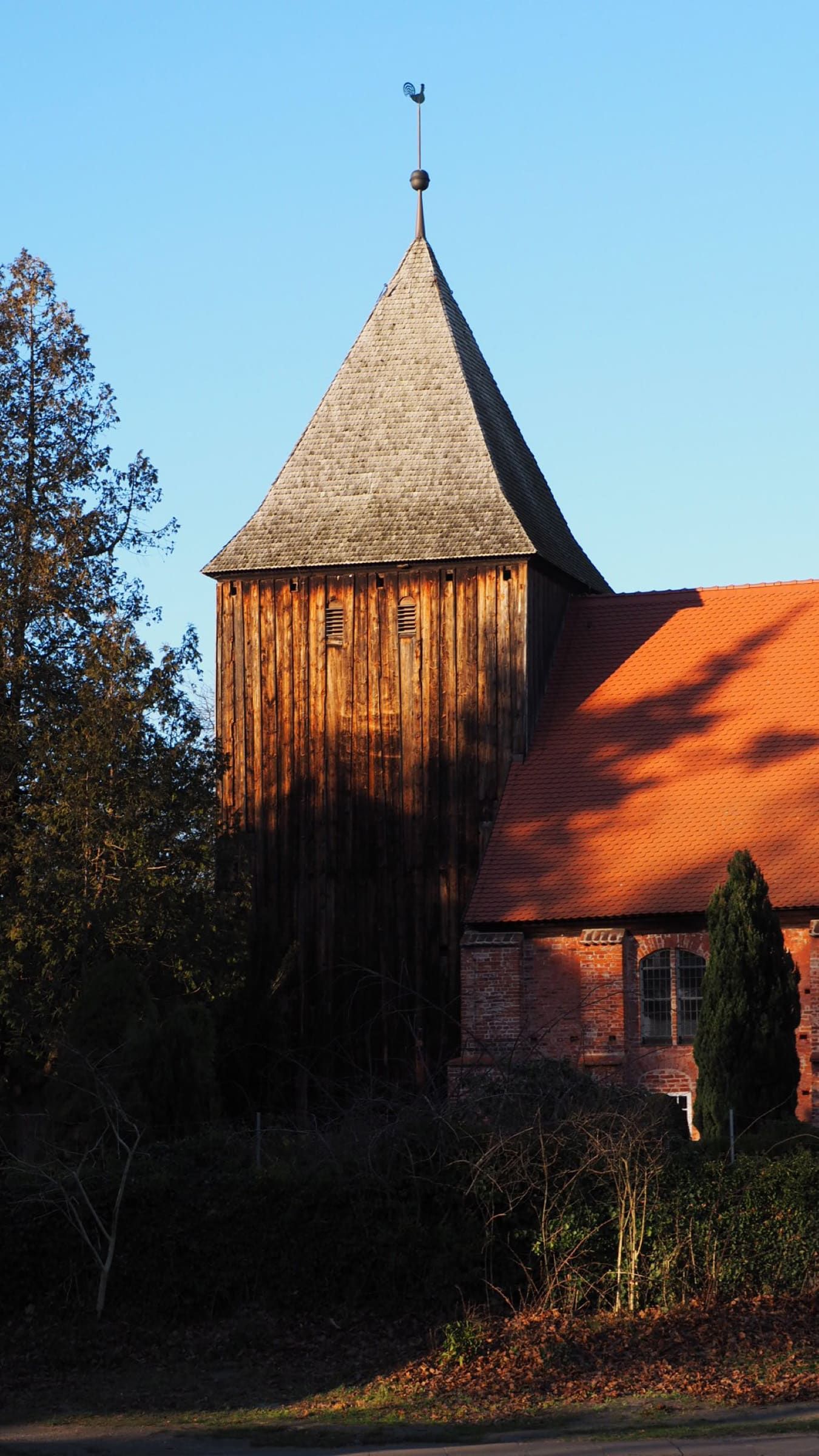
In the search for a suitable location, the former fruit meadow belonging to a captain’s house from 1850 turned out to be a stroke of luck. 300 metres from the lagoon-like Bodstedt Bodden and situated in the centre of the tranquil village of Wieck, a suitable area presented itself – far away from the sometimes rather bustling Baltic Sea resorts.
As a state-recognised resort, Wieck is still not overrun with tourists even in the peak summer months and thus became a family holiday haven in 2018 with the completion of the first house (No. 9). Since then, the house has been a comfortable starting point for them and guests alike for all island destinations far and near, which are often within cycling distance. Great freedom!
If you come to the Darss, you should bring a bike with you, if possible. And you will soon discover that life without motorised vehicle brings with it an incredible sense of lightness. Except perhaps when there is a headwind … then it helps to always plan your tours properly. For a walk on the beach, for example – with the wind on the way to the beach and against the wind back through the neighbouring forest.
Ideally, you should not only give yourself, but also your car a break. Unless you have arrived by public transport anyway, which is not a problem.
You can get a first impression of what is happening on the island directly on site at the Darss Arche National Park Centre. It has an extensive exhibition and an artists’ gallery.
Architecture with a focus on light
The choice of a suitable architect was essential for the realisation of the dream of one’s own house. In line with their ideas of modern architecture, the couple first scouted holiday homes on the Darss, including one or two Holidayarchitecture houses. From there it was was not difficult to find the Berlin architect Norbert Möhring. He has had an office on the Darss for years and had already built one or two stunning houses in the holiday home sector.
Light is law. It is power, force and life. Light is an energy that helps to create the world and define our experiences.
Axel Vervoordt, Living with Light
An important aspect of the philosophy of the architectural office is to derive the design from the interplay of interior and exterior space and to give special importance to the interplay of space and light in finding a shape and its volume that are as timeless as possible.
This coincided with the ideas of the owners, who had been impressed by the aesthetics of Japan and the Scandinavian countries after many journeys there and had studied the various forms of art, architecture and design in depth. Central aspects of their approach to planning were the themes of reduction, architecture with a focus on light, the “praise of the shadow” stemming from Japanese tradition, and the beauty of simple things. Perfection with simultaneous imperfection with the courage for discontinuities and irregularities – mostly known as wabi-sabi – were equally part of the architect’’ wish list.
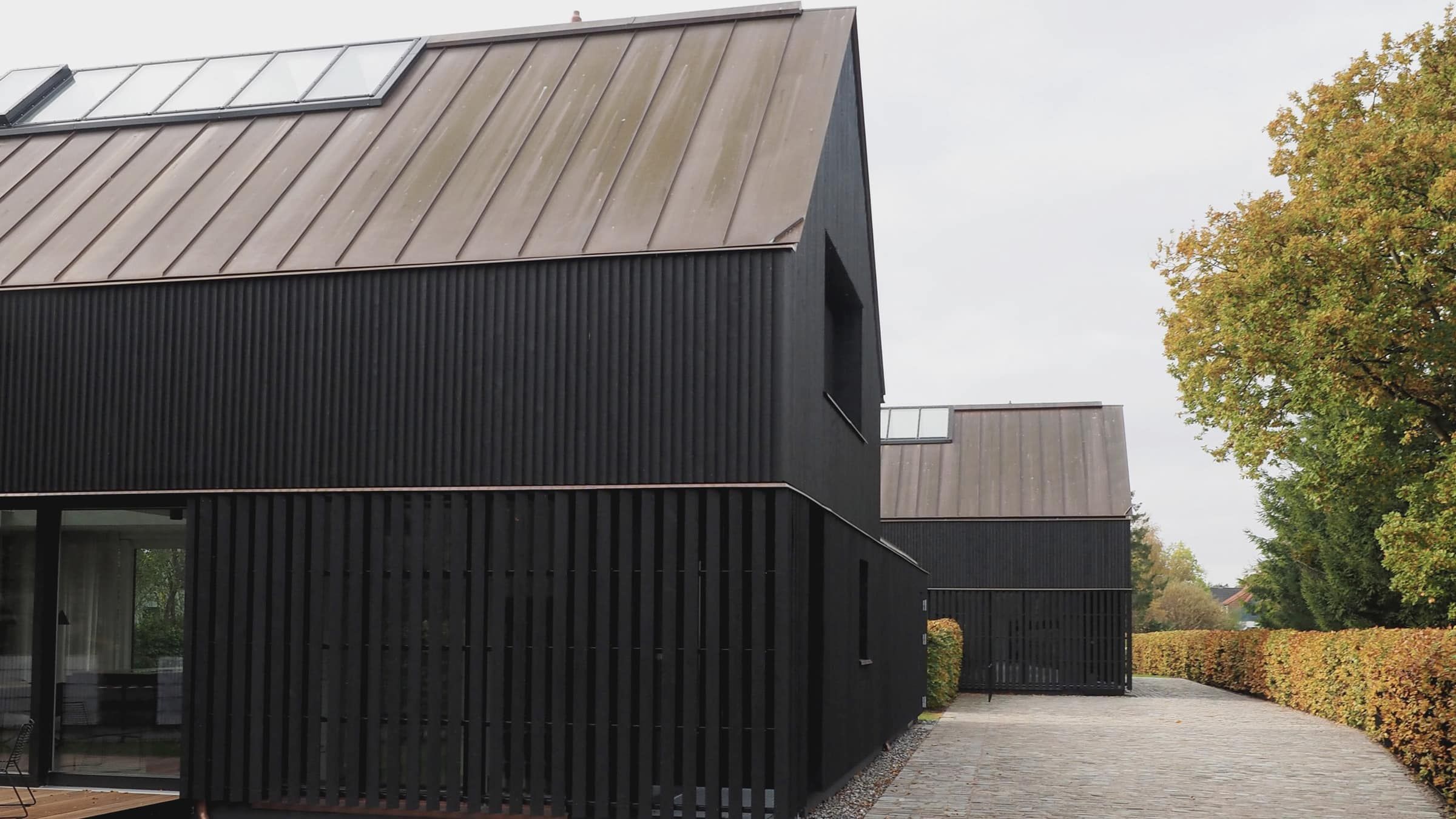
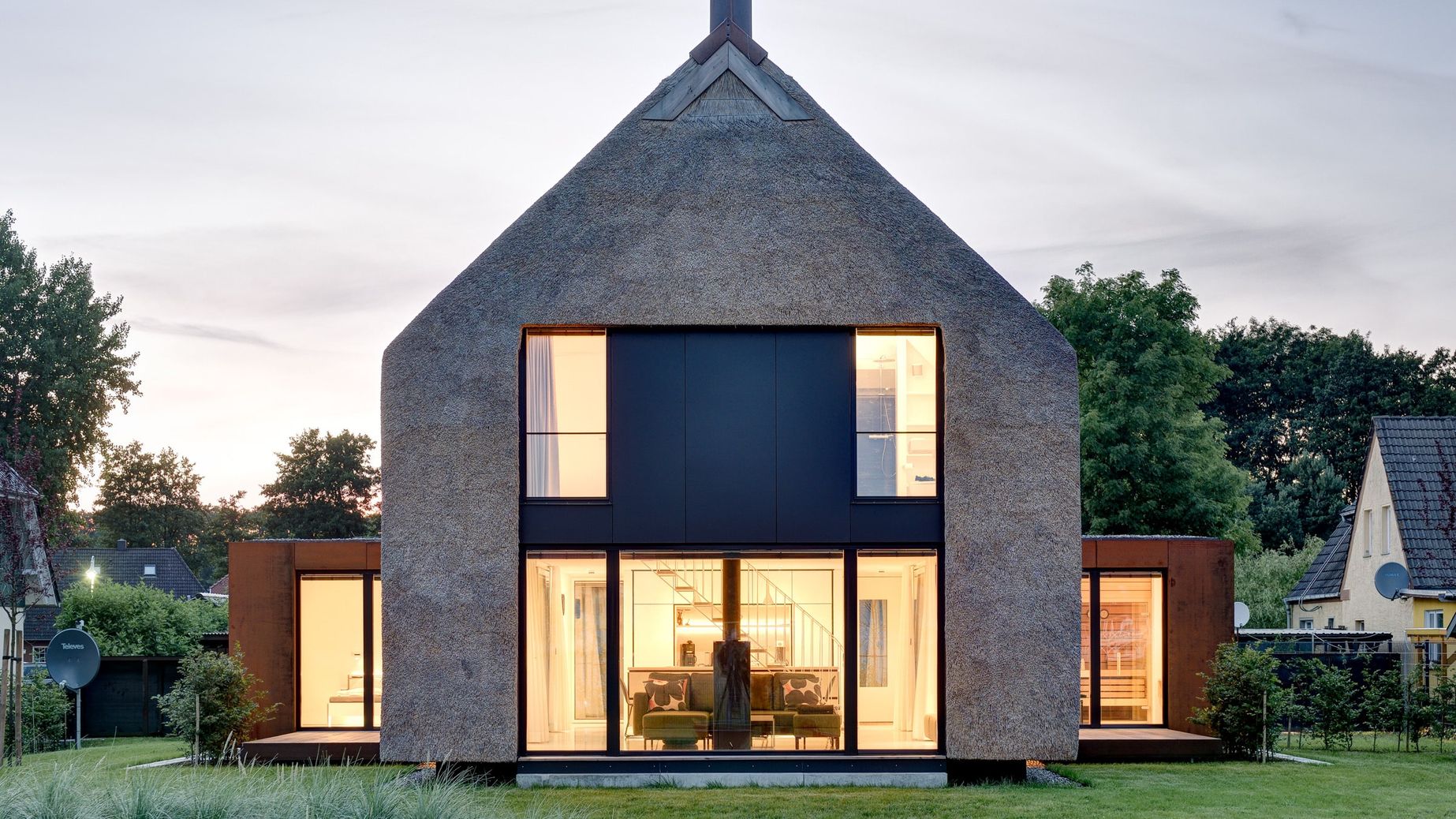
The owners had also emphasised their wish for a modern ensemble of buildings with an independent formal language. The architect resisted any attempt to merely copy local building types such as the historic thatched-roof houses. Nevertheless, the buildings completed in 2018 and October 2021 in the form of gable-roofed and pent-roofed houses fit in perfectly with the traditional form and the surrounding buildings – in addition, the dark façades are based on the appearance of the typical local, often tarred barns.
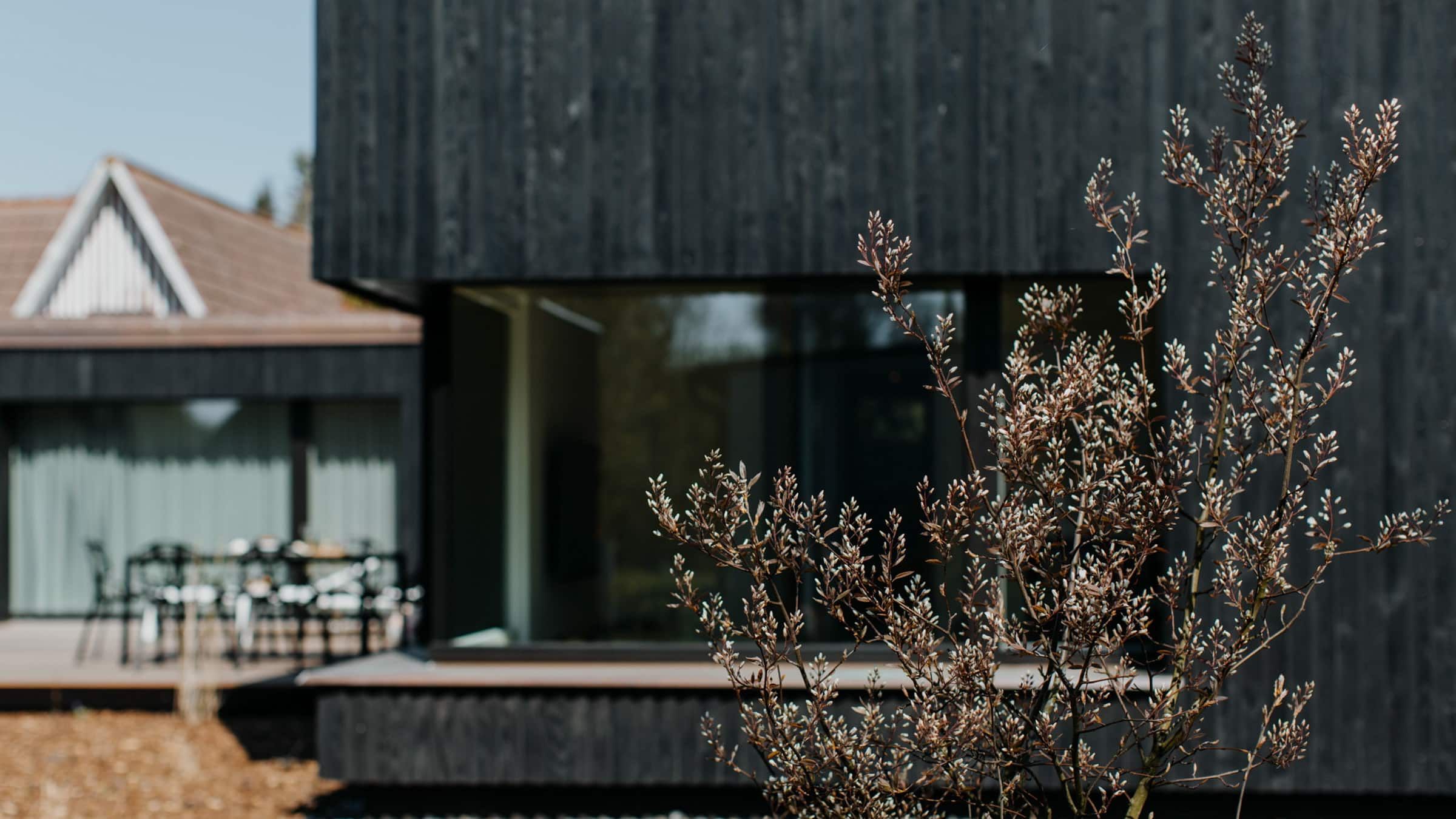
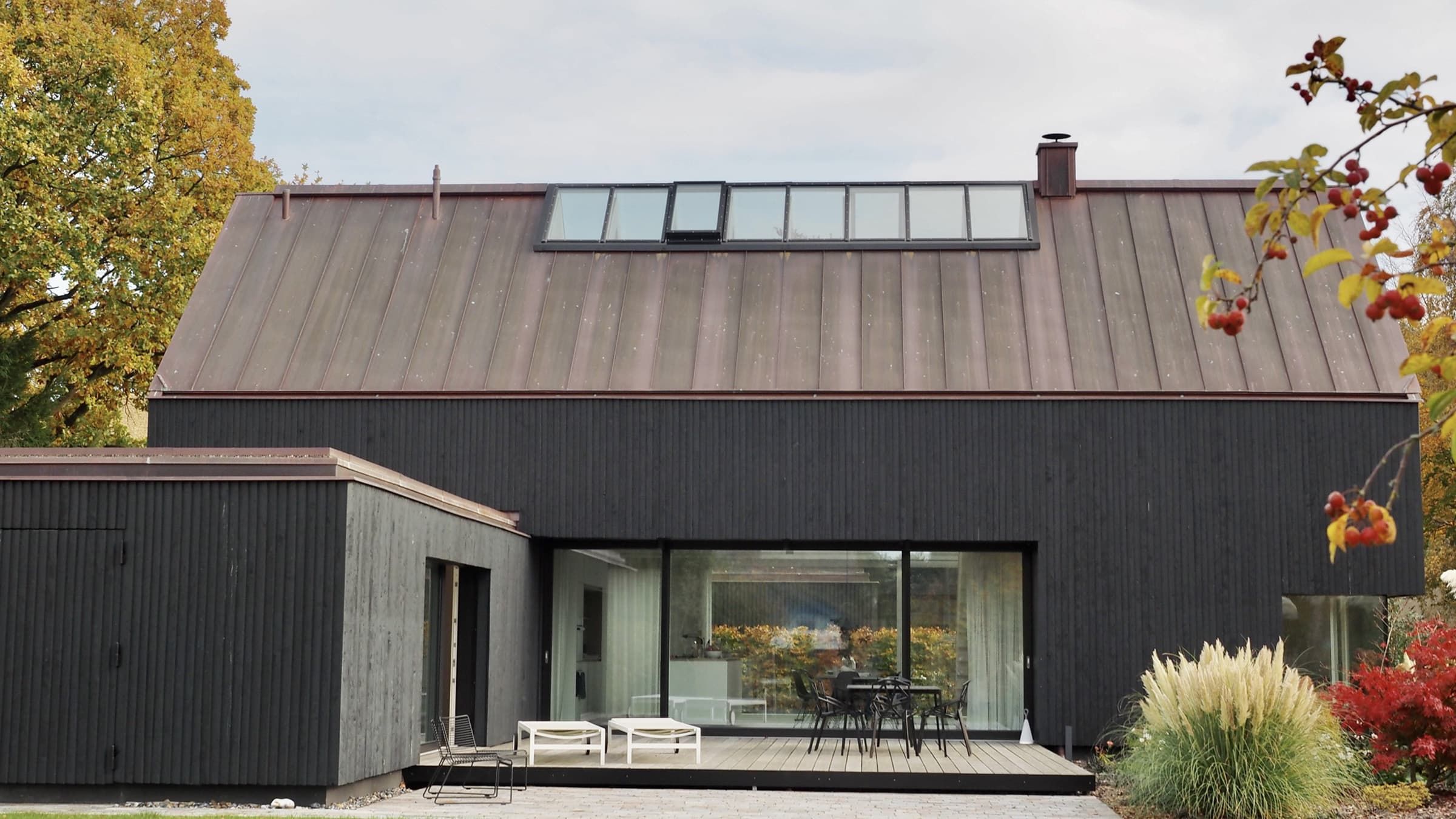
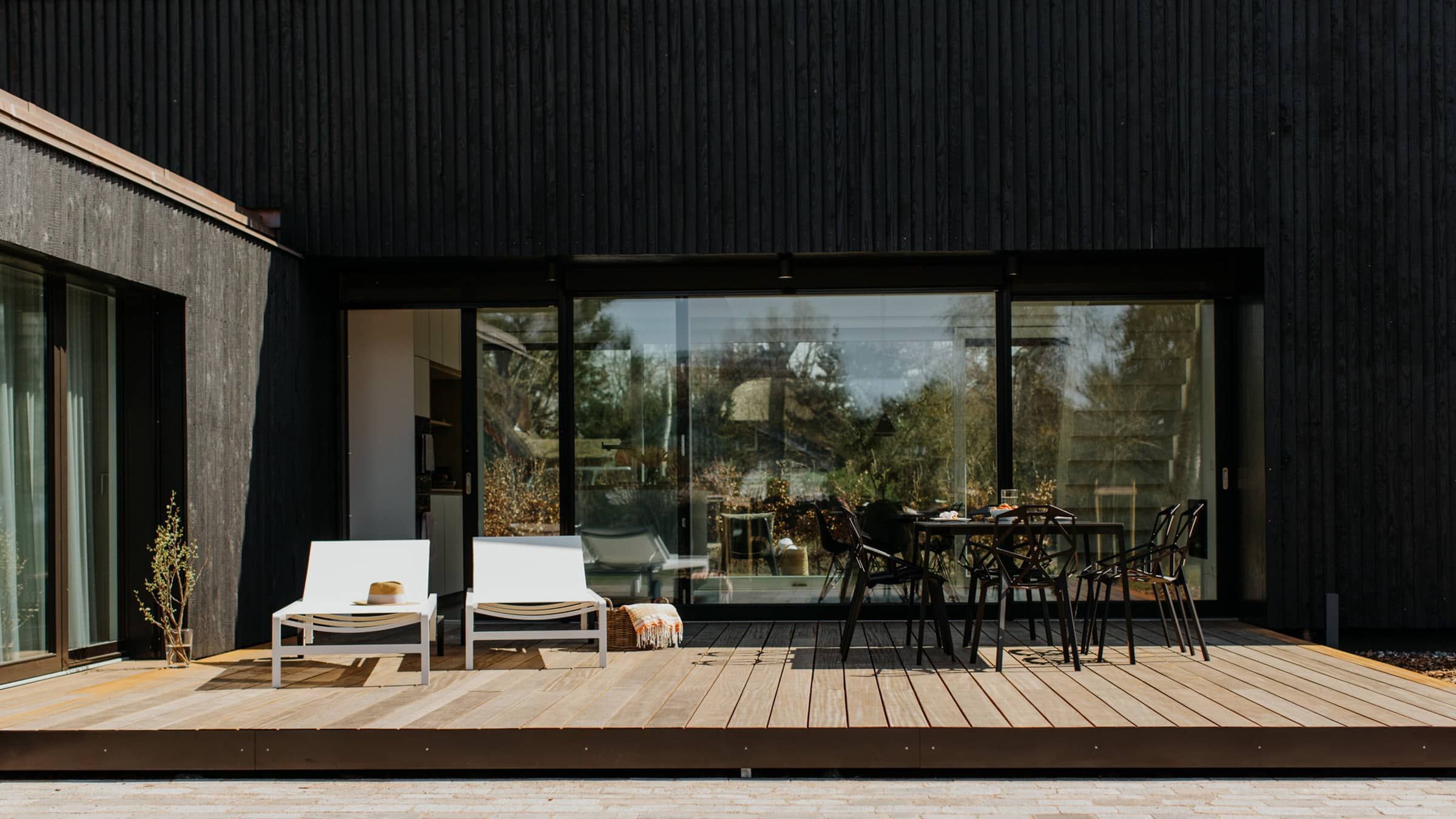
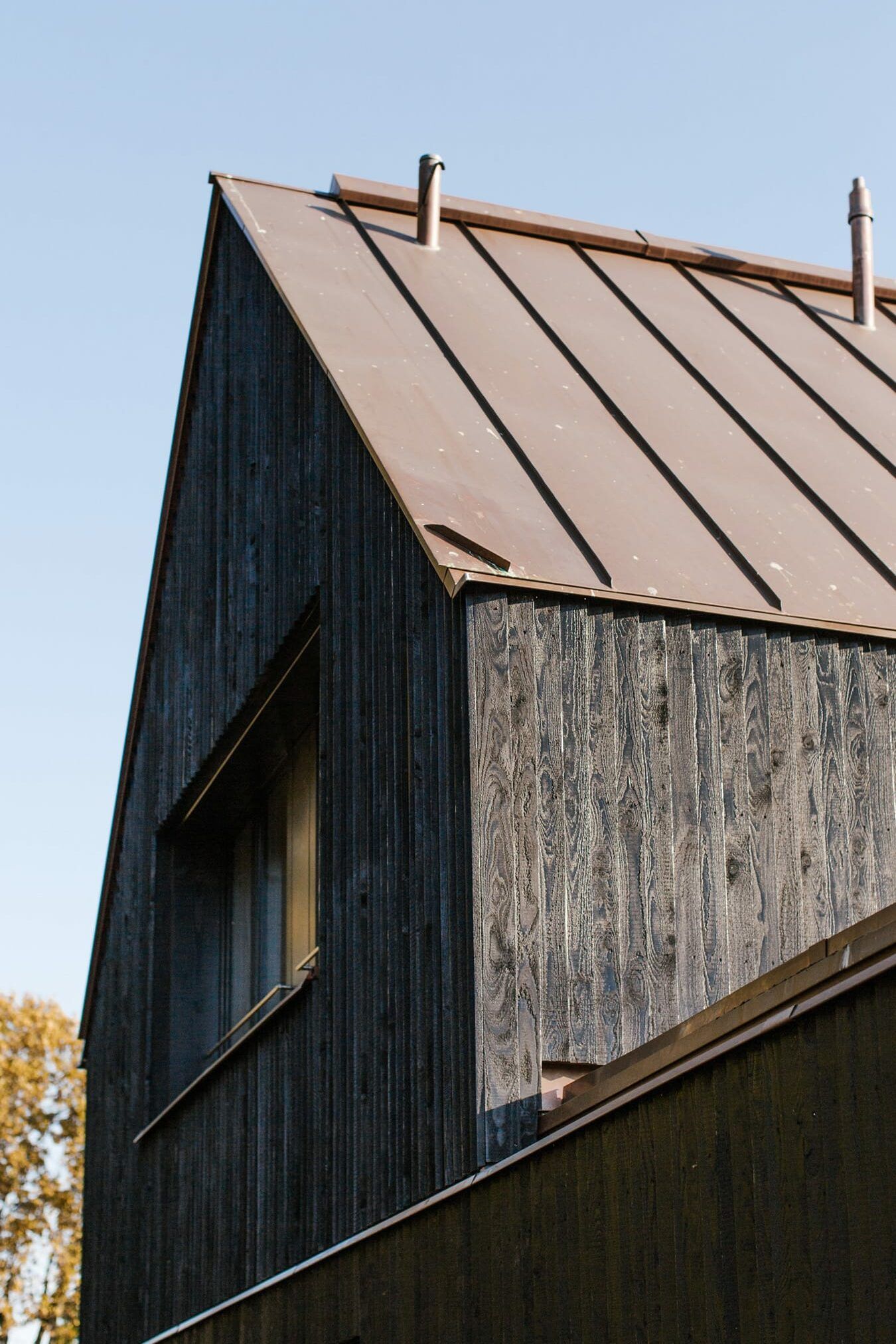
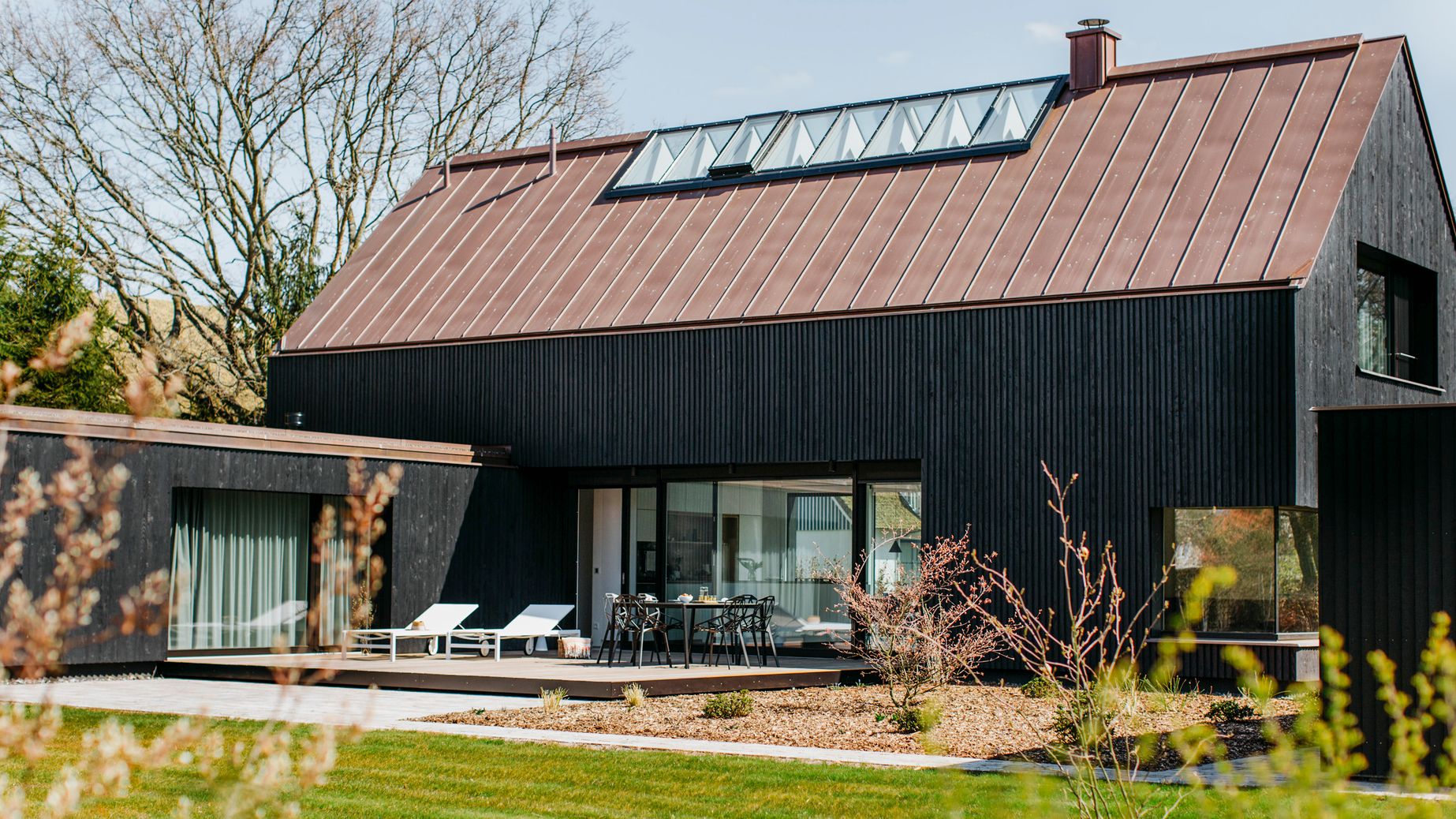
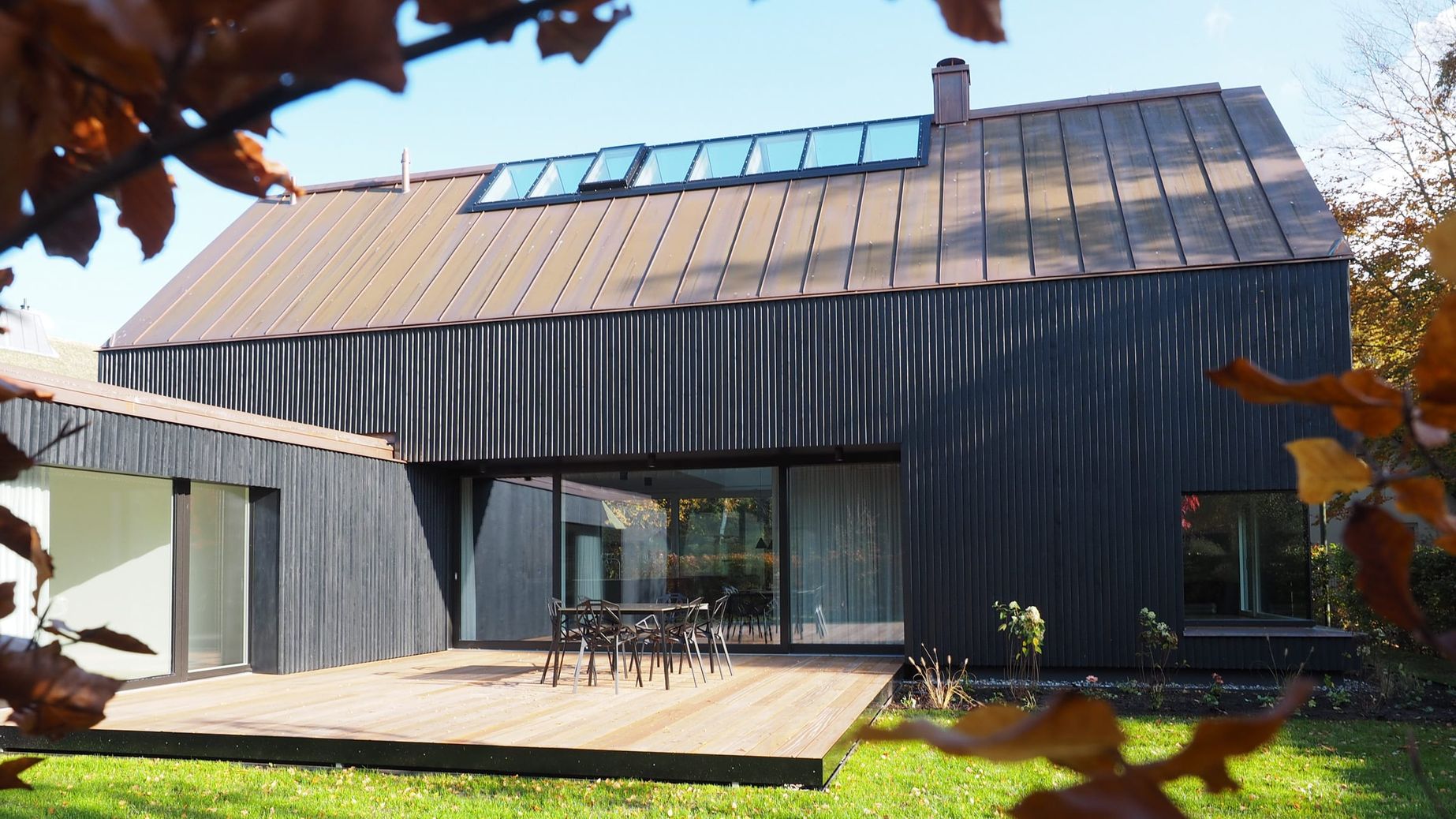
The first thing that new arrivals will probably notice about the external appearance of the two pent-roofed houses are the steeply pitched copper roofs and the rough-sawn black wood cladding that define the courtyard-like grouped cubatures. In this way, the wood cladding absorbs the changing incidence of light during the course of the day and constantly creates new aspects.
The architect Norbert Möhring responded to the desire for plays of light and shadow and a Japanese-reduced impression.
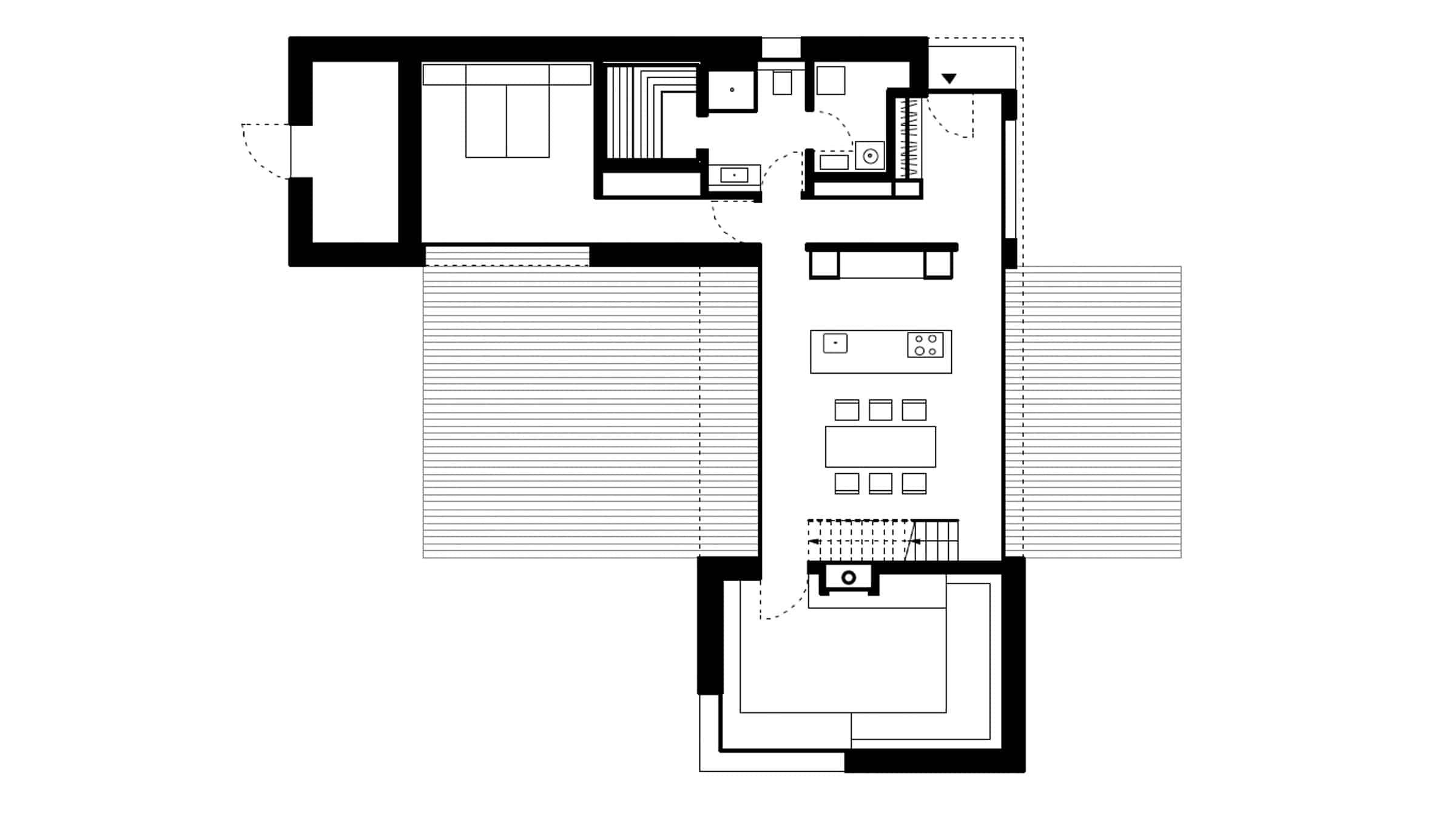
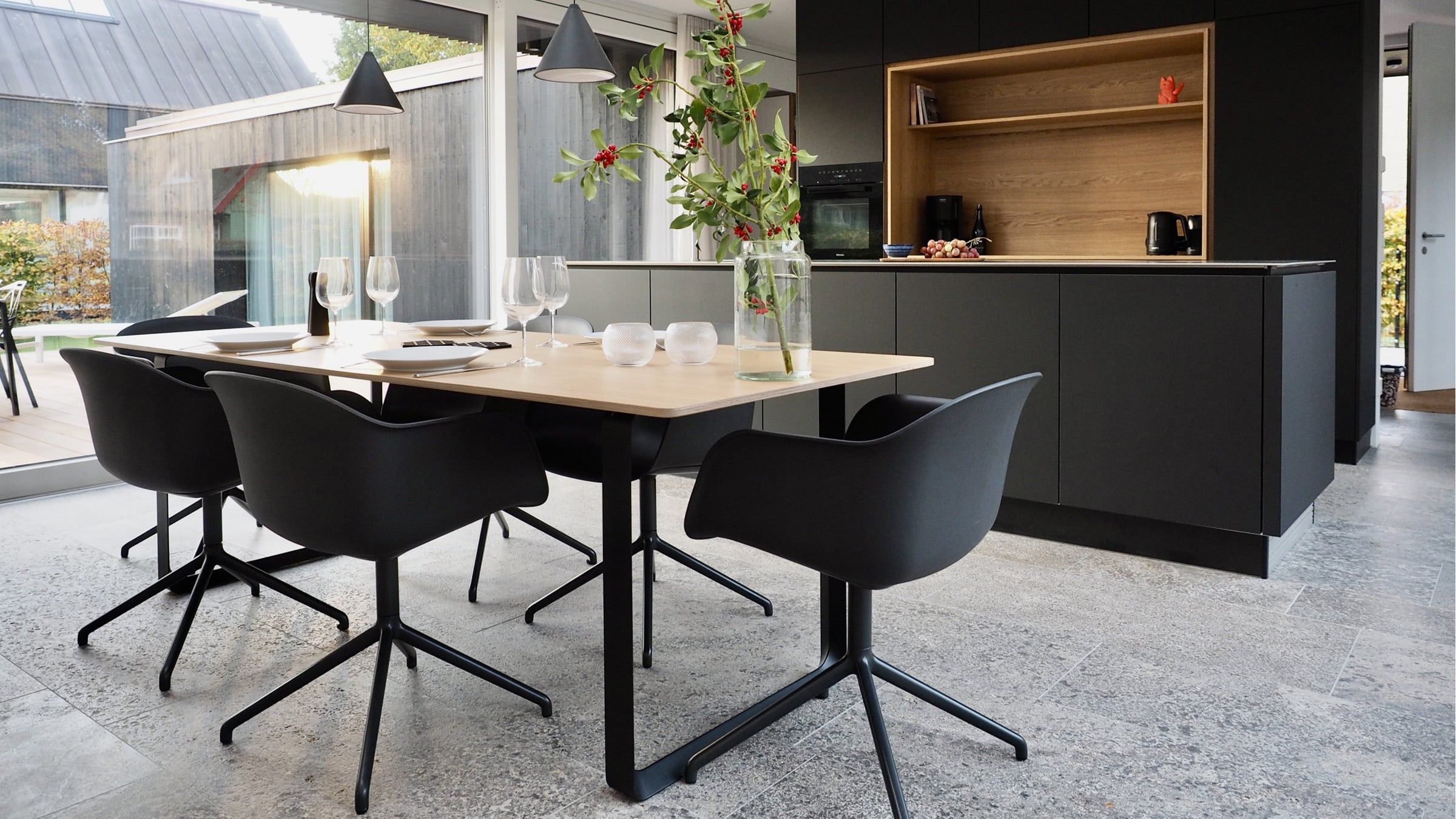
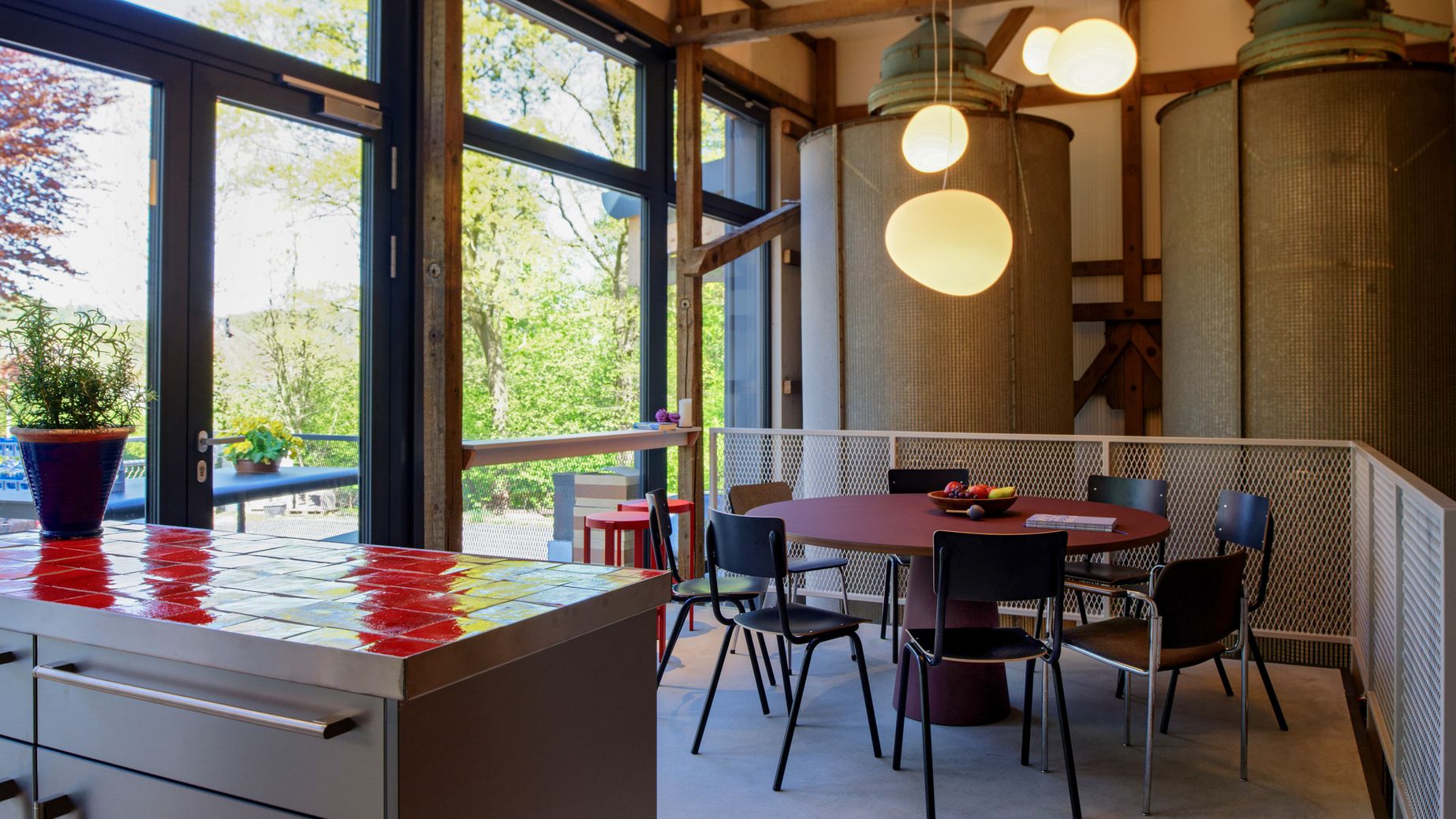
For the facade, we tried to interpret traditional Stülpschalung [inverted formwork] differently. We arranged them vertically instead of horizontally and separated them horizontally in the middle. The upper formwork runs in the opposite direction to the lower formwork, creating an interesting shadow pattern that discreetly divides the building horizontally. Central to the concept of the houses is the kitchen-living room, which is designed as an open hall over two floors, serves as a central hub and is glazed on the east and west sides.
Norbert Möhring
Inside, the first thing you notice is how flooded with light the house is in many areas.
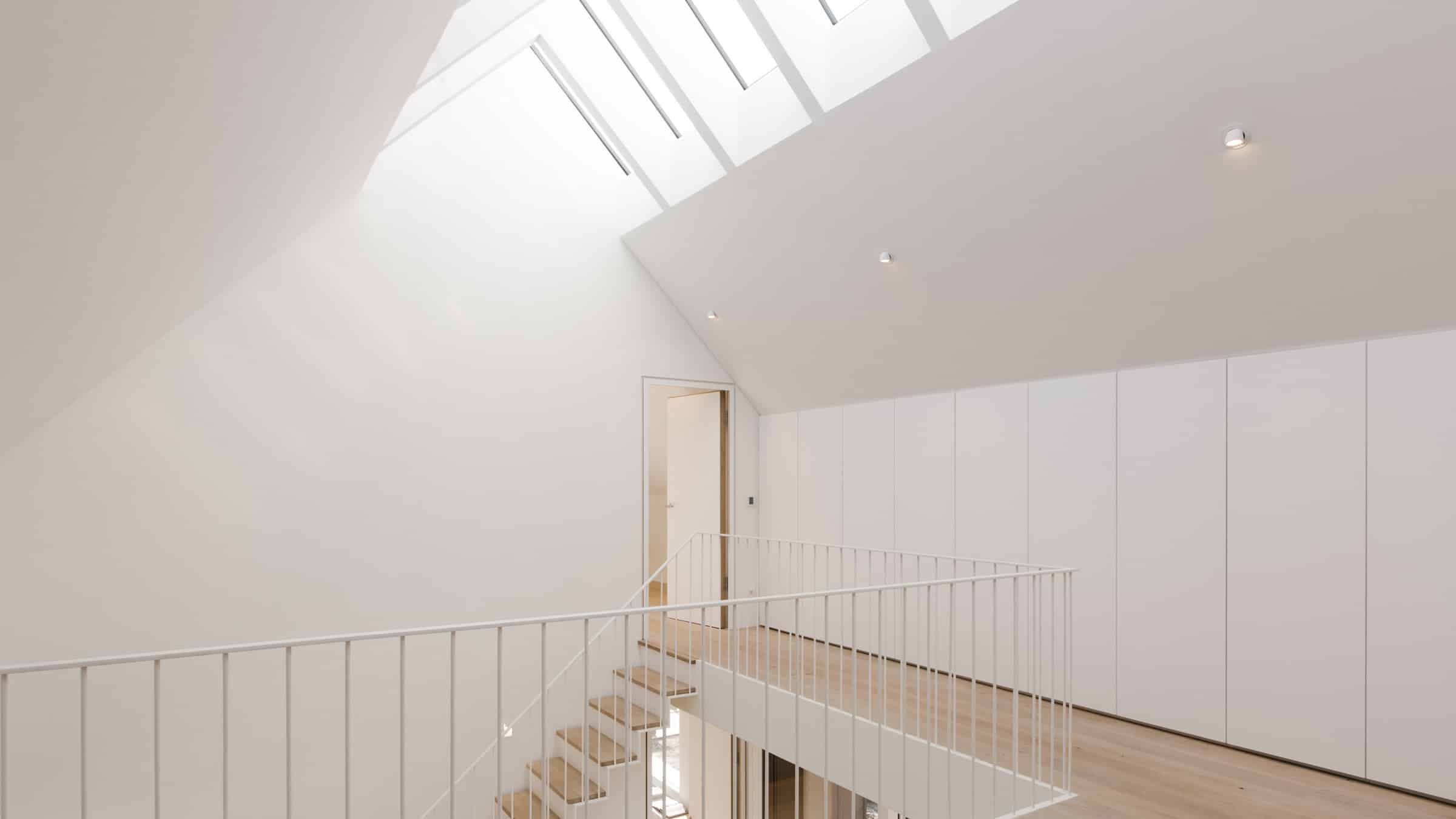
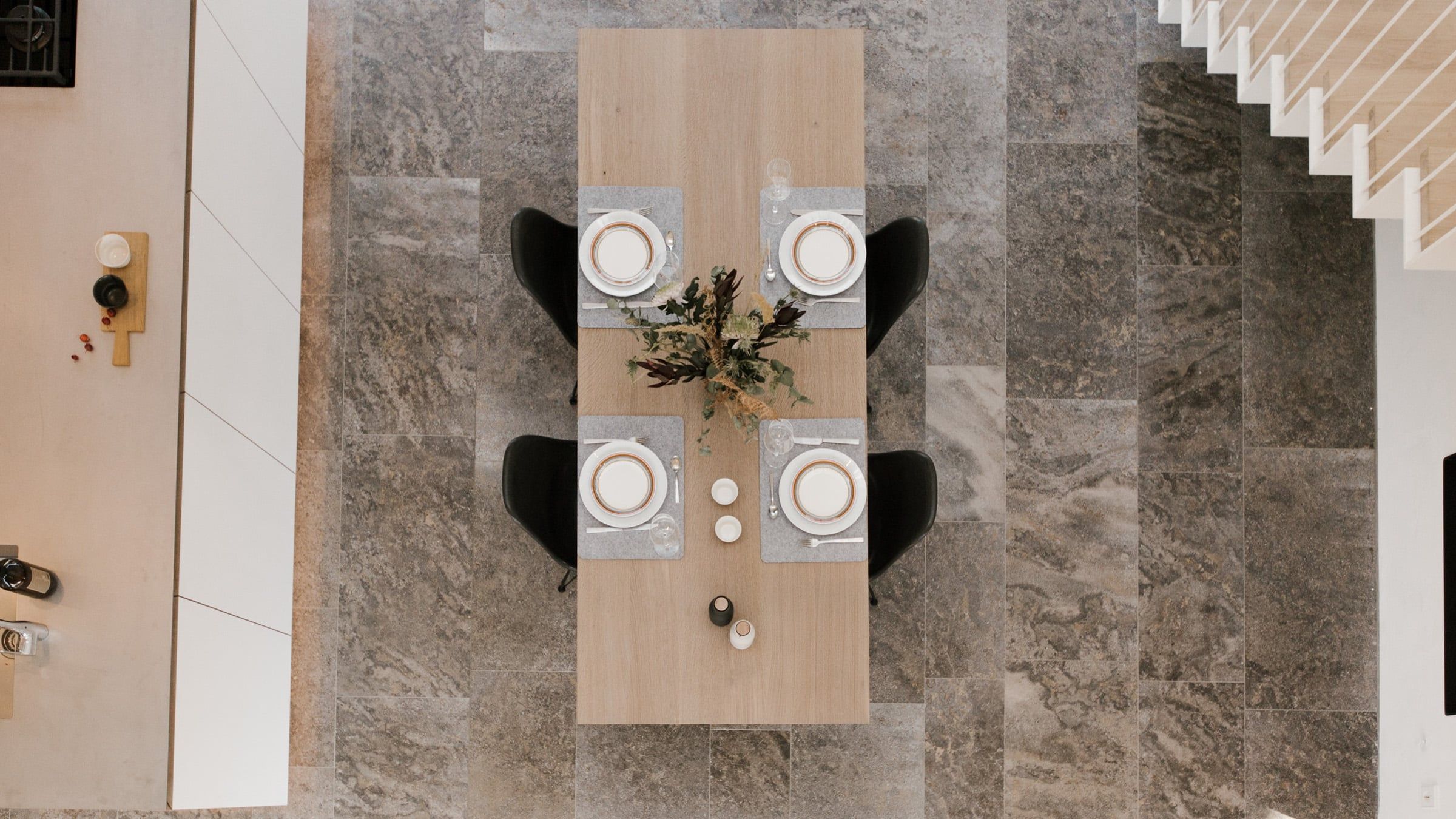
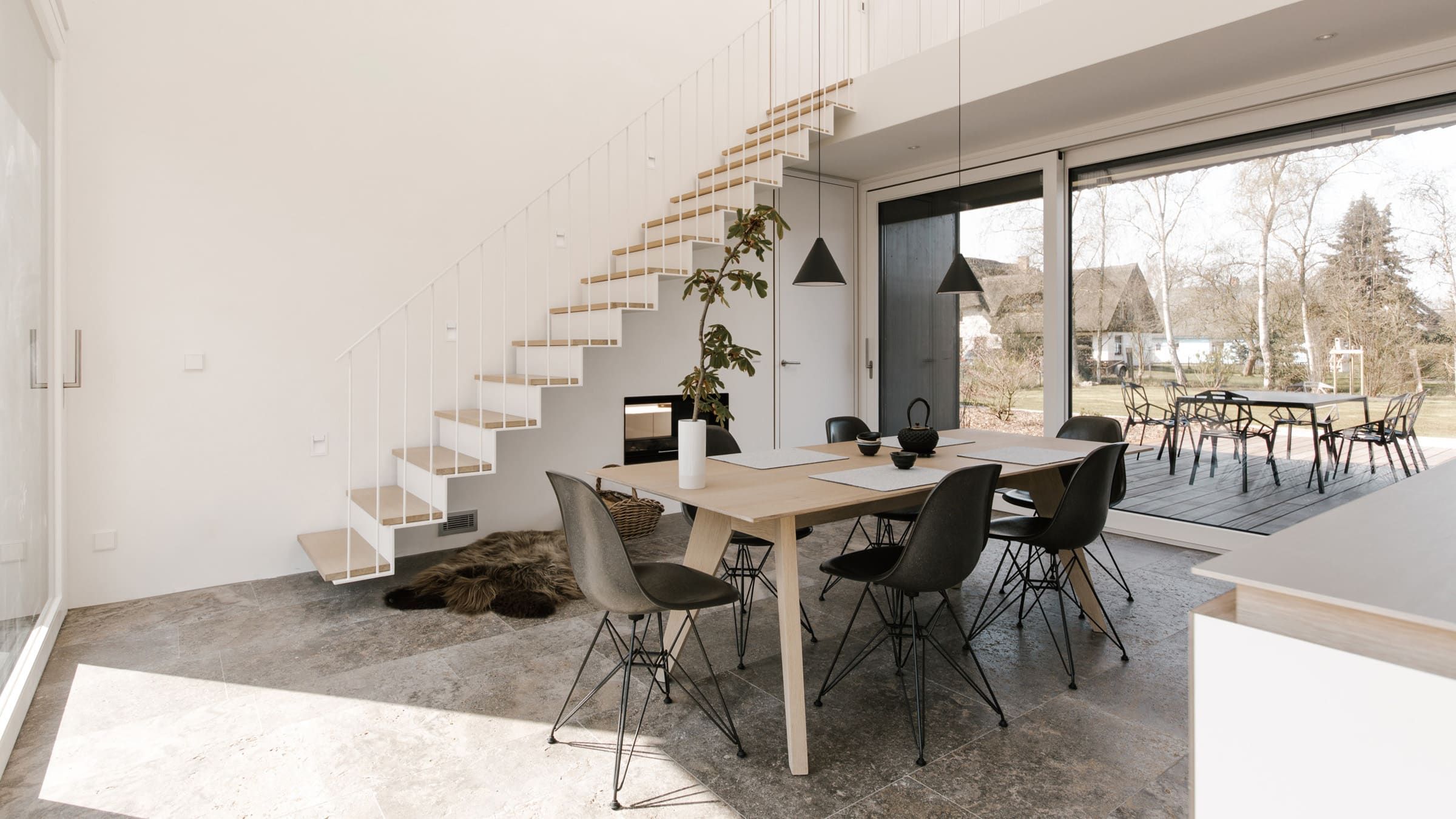
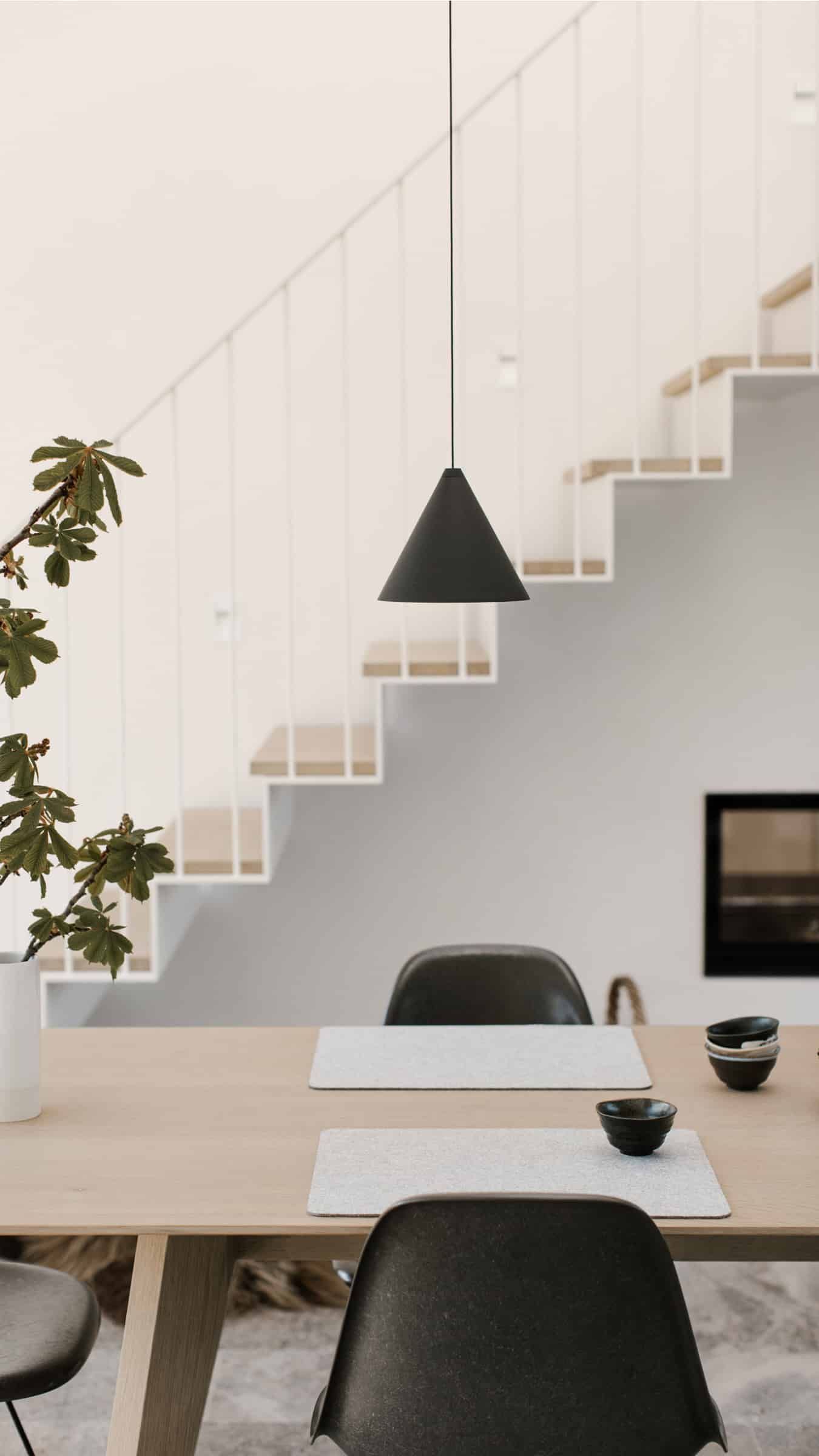
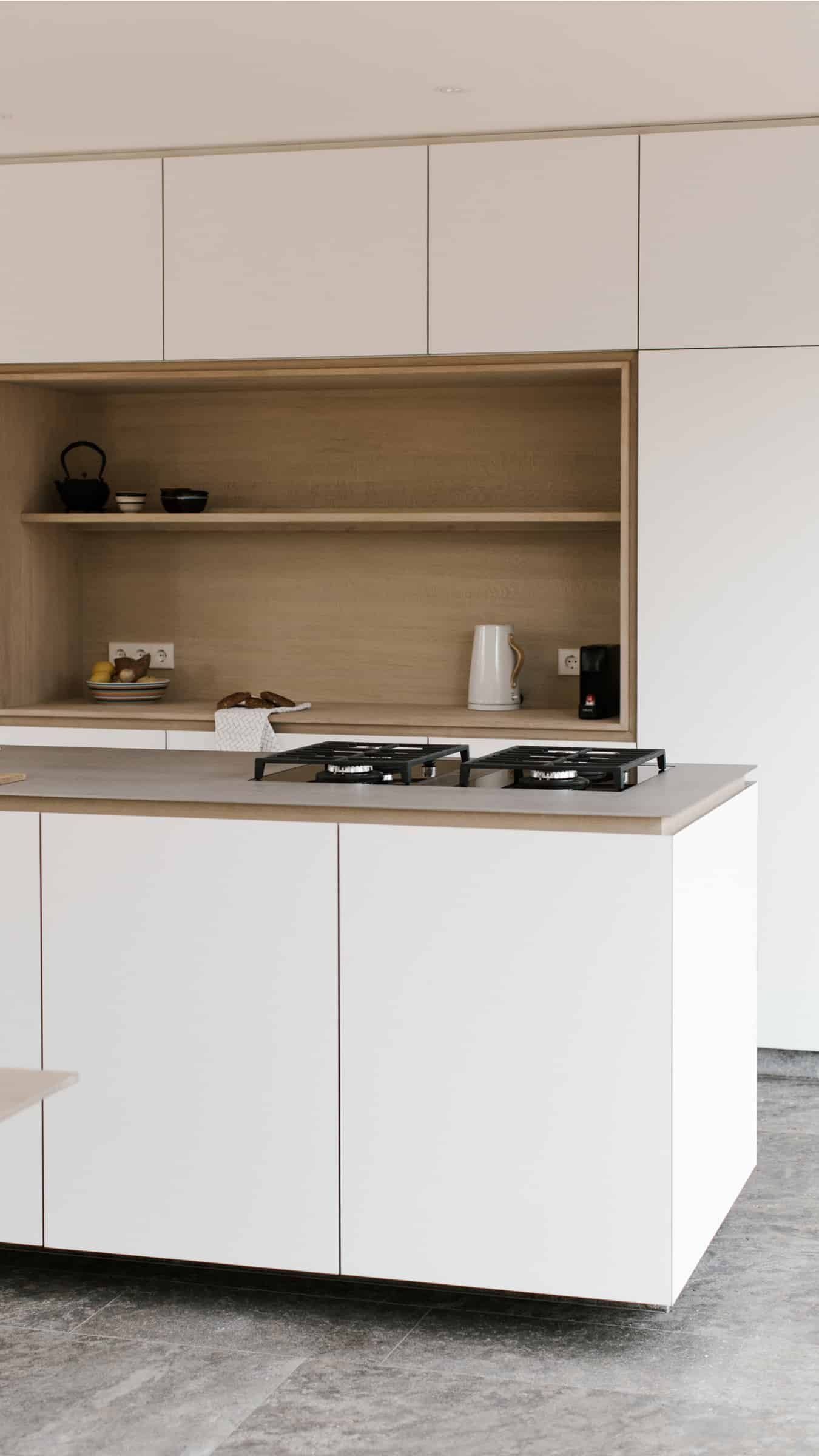
Thanks to large sliding windows and the skylight, the central area of the house is flooded with light even on less pleasant days and is also closely linked to the garden and the changing seasons.
Lightness, whatever the weather
Because even here in the far north of Germany, there are of course those days when it just doesn’t get light properly or the rain pelts down incessantly. All the better that the holiday homes are veritable light collectors.
Even and especially on these days, the houses offer suitable retreats. For reading a good book (finally! – We always take far too many with us on holiday and usually don’t even manage to read them. Do you feel the same way?) Or you do lots of cooking with family or friends, go to the sauna and then settle down in the living room with the aforementioned good book or in a large group with a board game. Finally, time for leisure! Meanwhile, the fire crackles and blazes in the fireplace, which is between the living room and the spacious, central living and kitchen area.
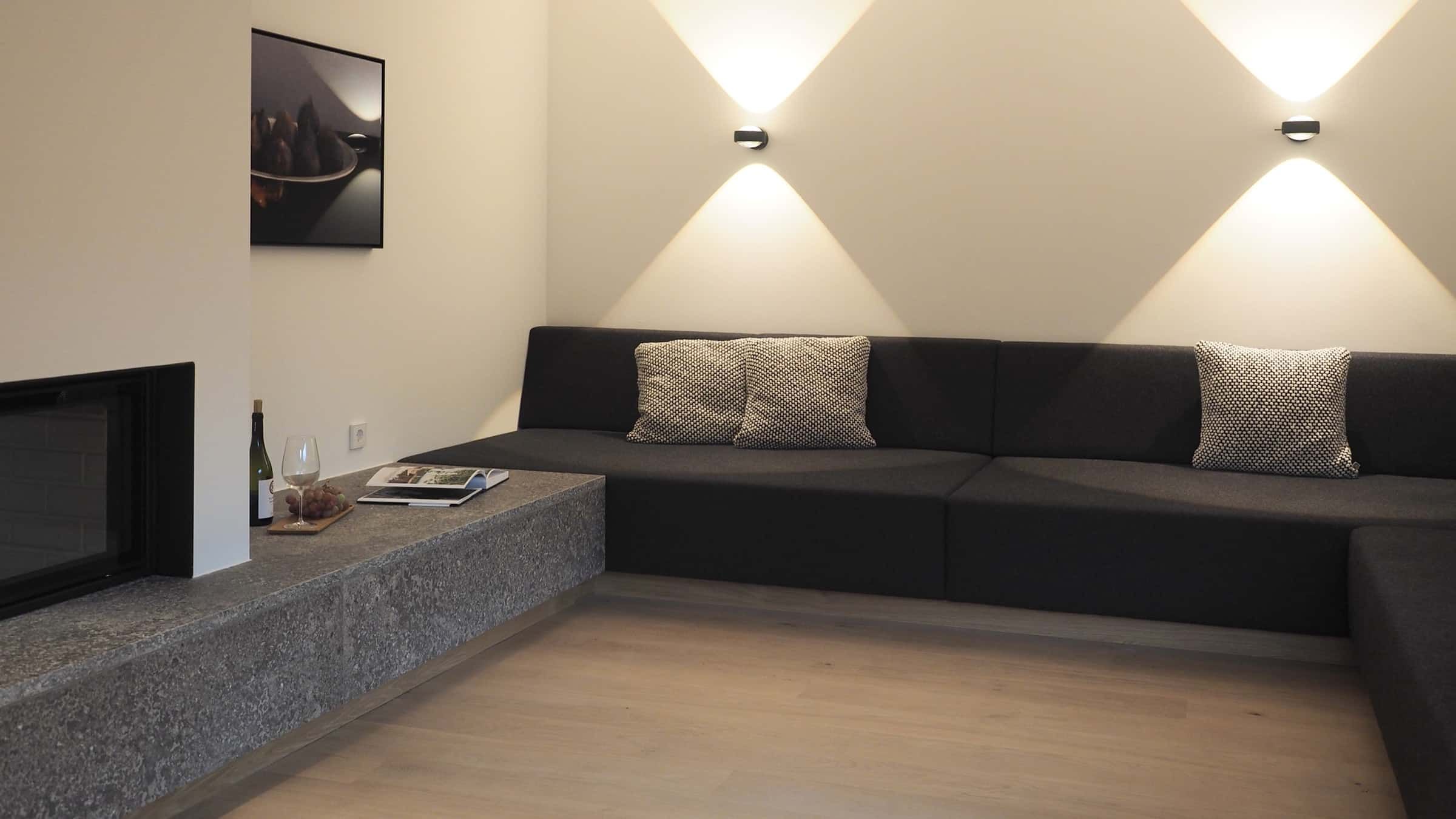
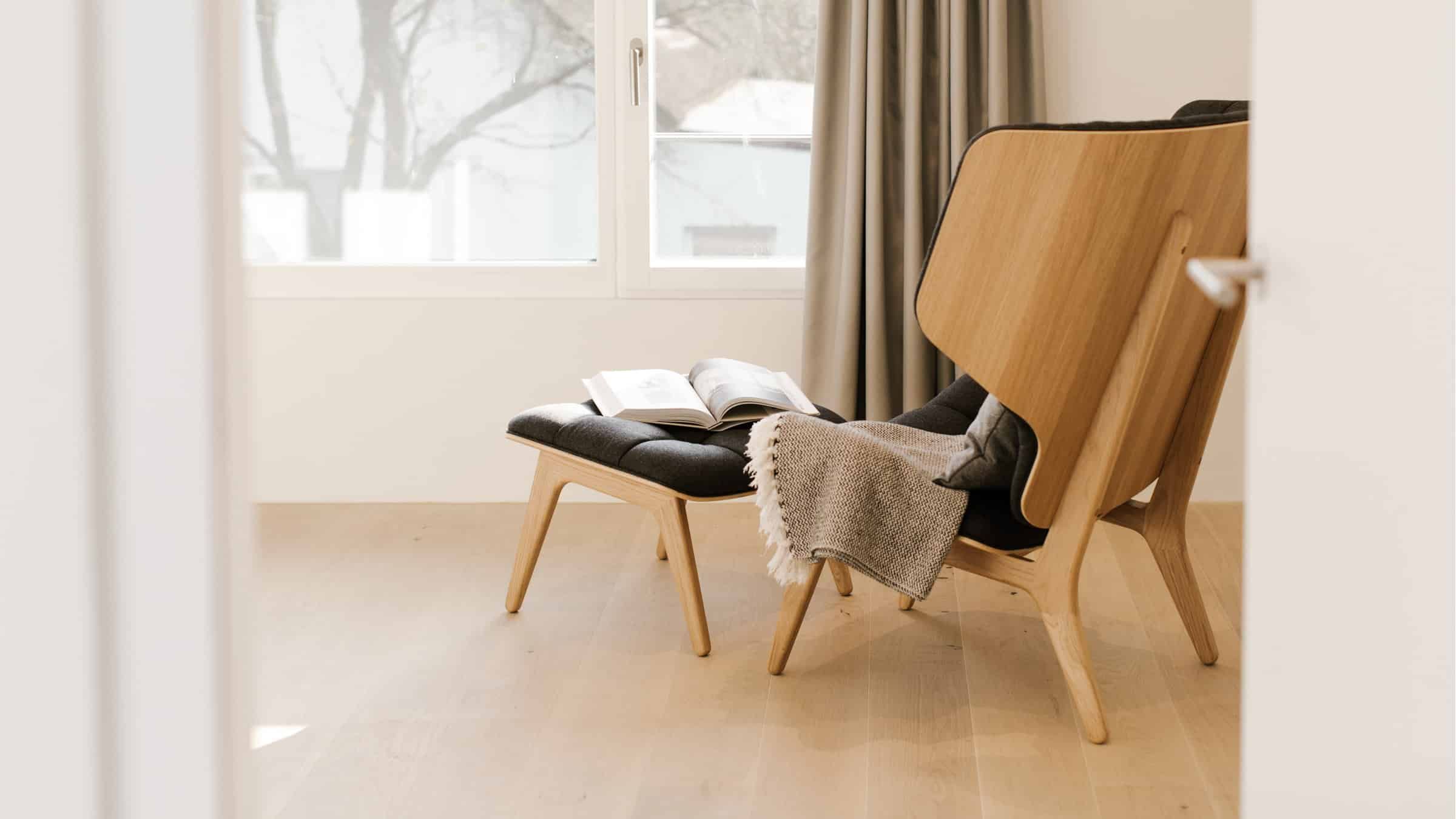
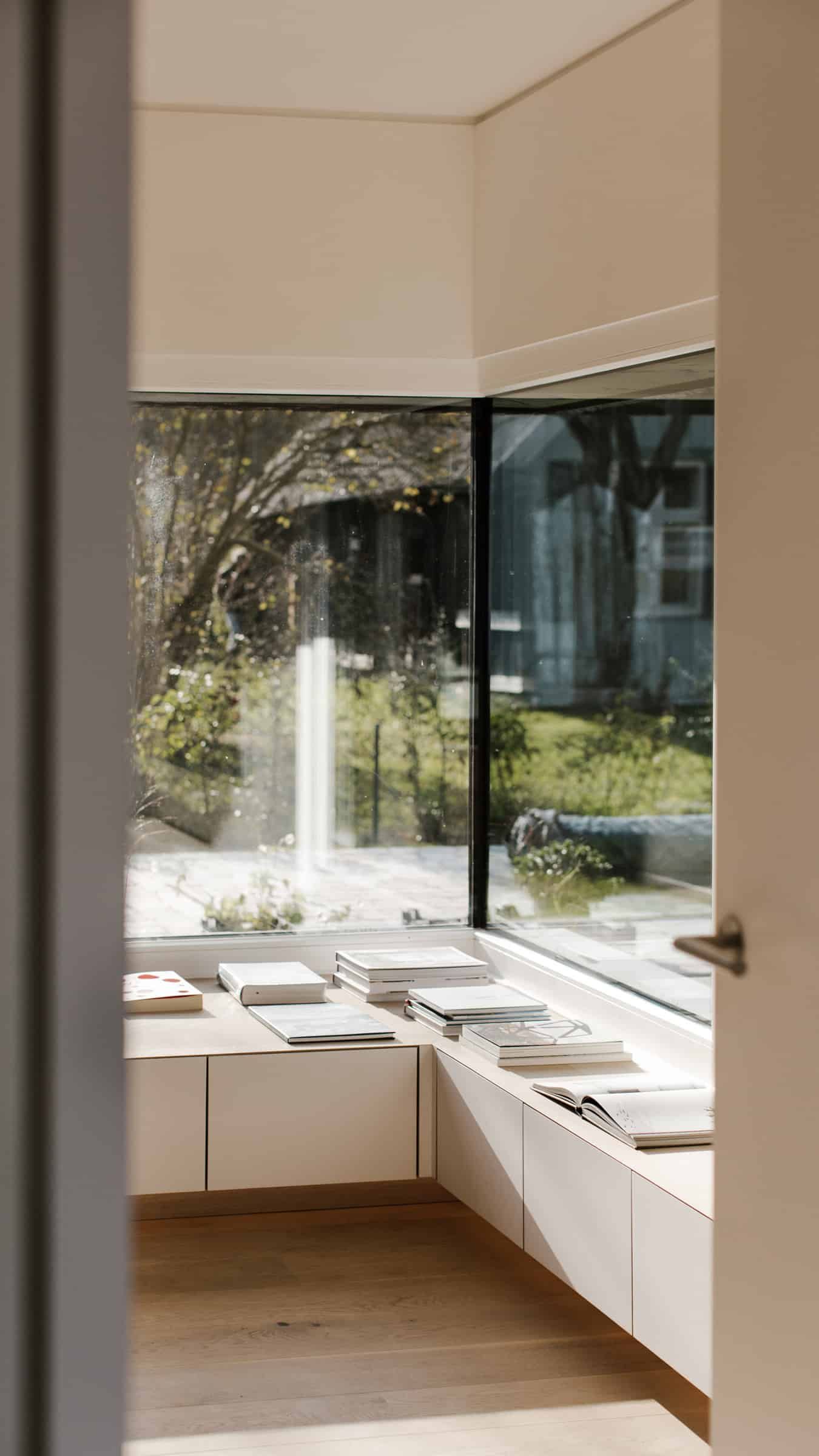
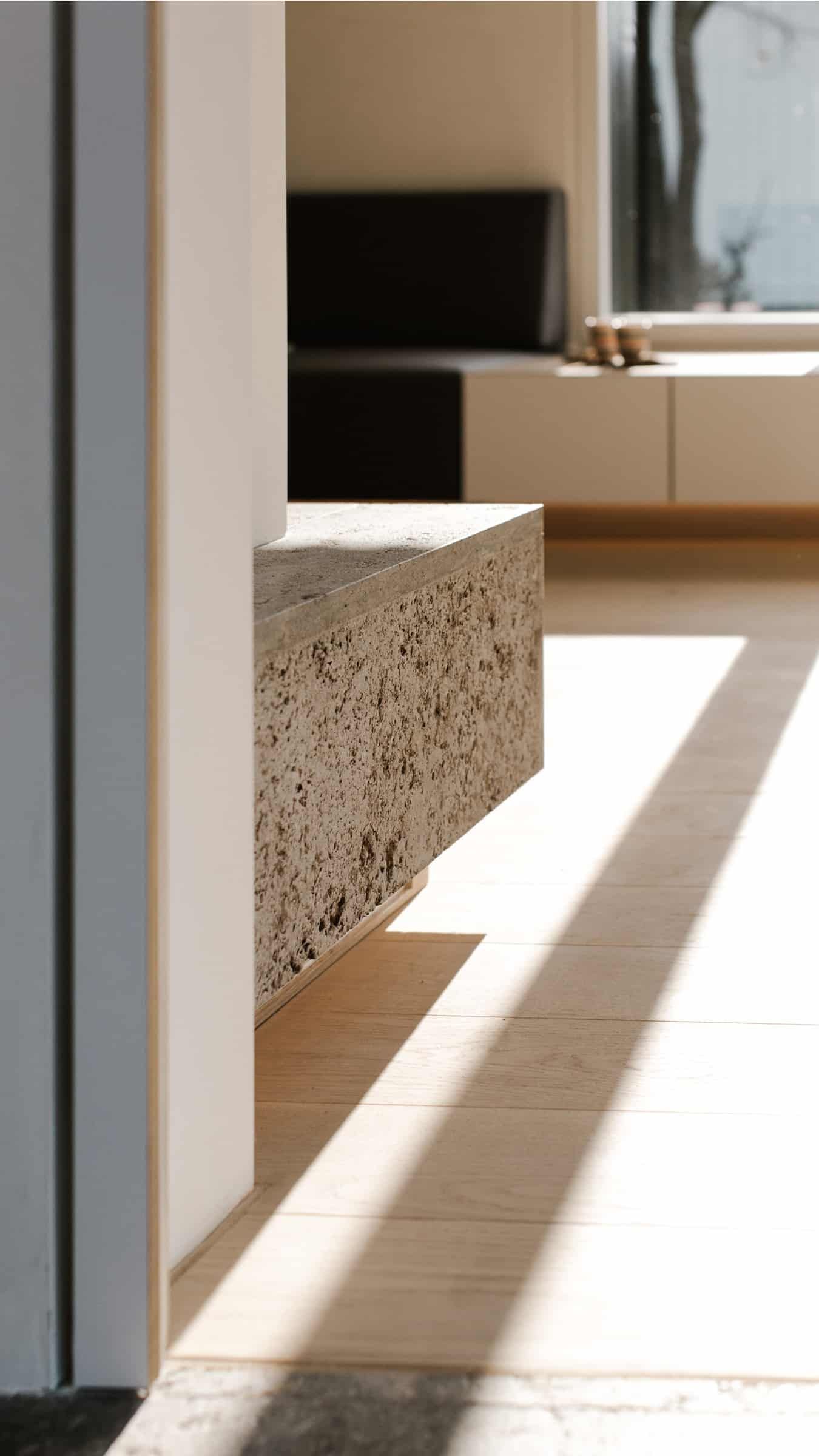
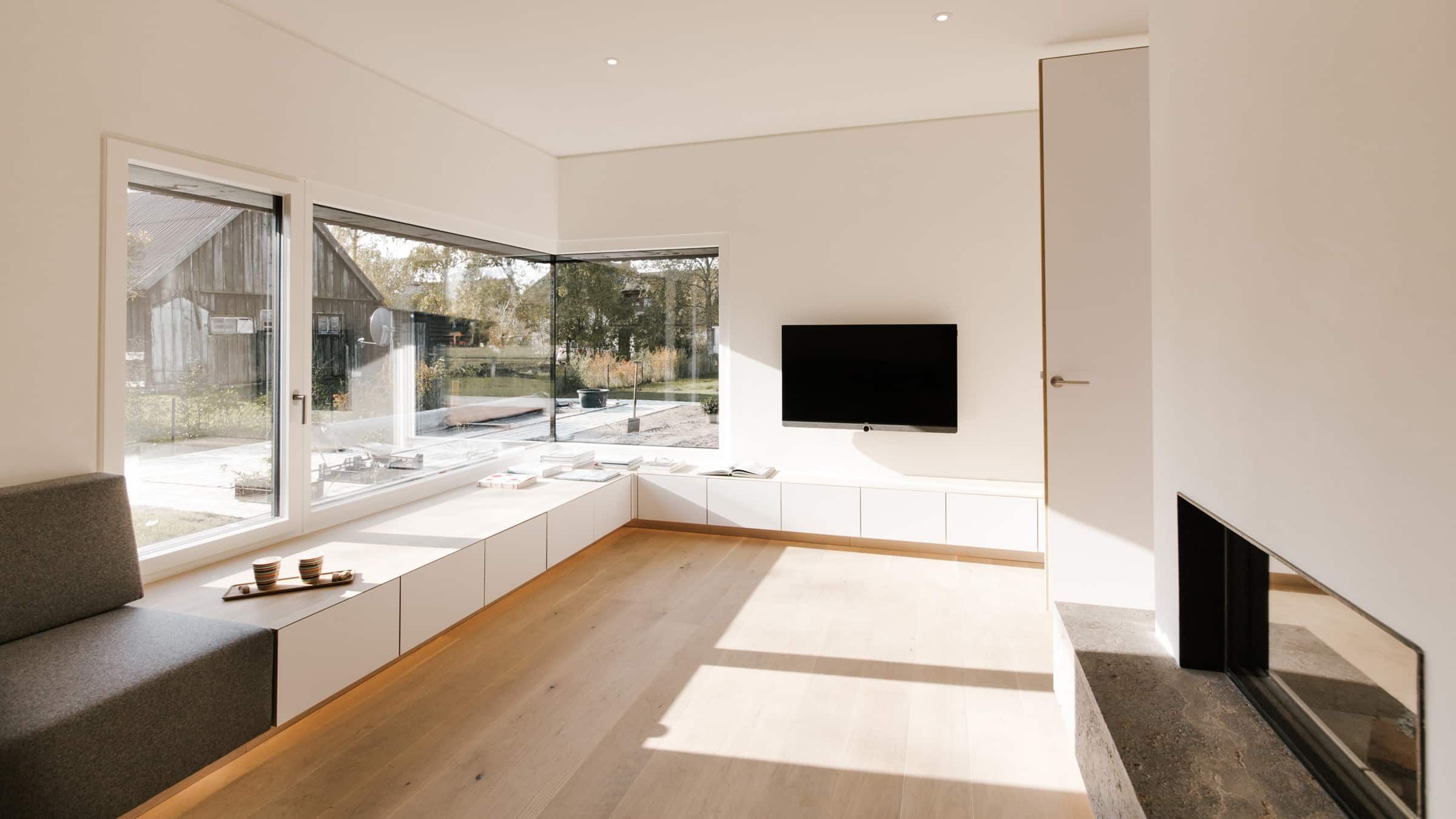
Well cared-for in this way, you are much more relaxed about any kind of inclement weather that may be looming in front of the panoramic windows.
In the warm months, there is a great sense of lightness anyway – the house literally opens seamlessly onto the garden, and the east and west terraces offer suitable places to sit at any time.
Various works of art from the owners’ private collection also provide lightness and inspiration. For example, “The Bathers” by Petri Niemelä. The painting symbolises the aforementioned longing for one’s own holiday home by the sea – it was purchased for the house even before it existed. Works by another Finnish artist, Sami Lukkarinen, can also be admired in House 9.
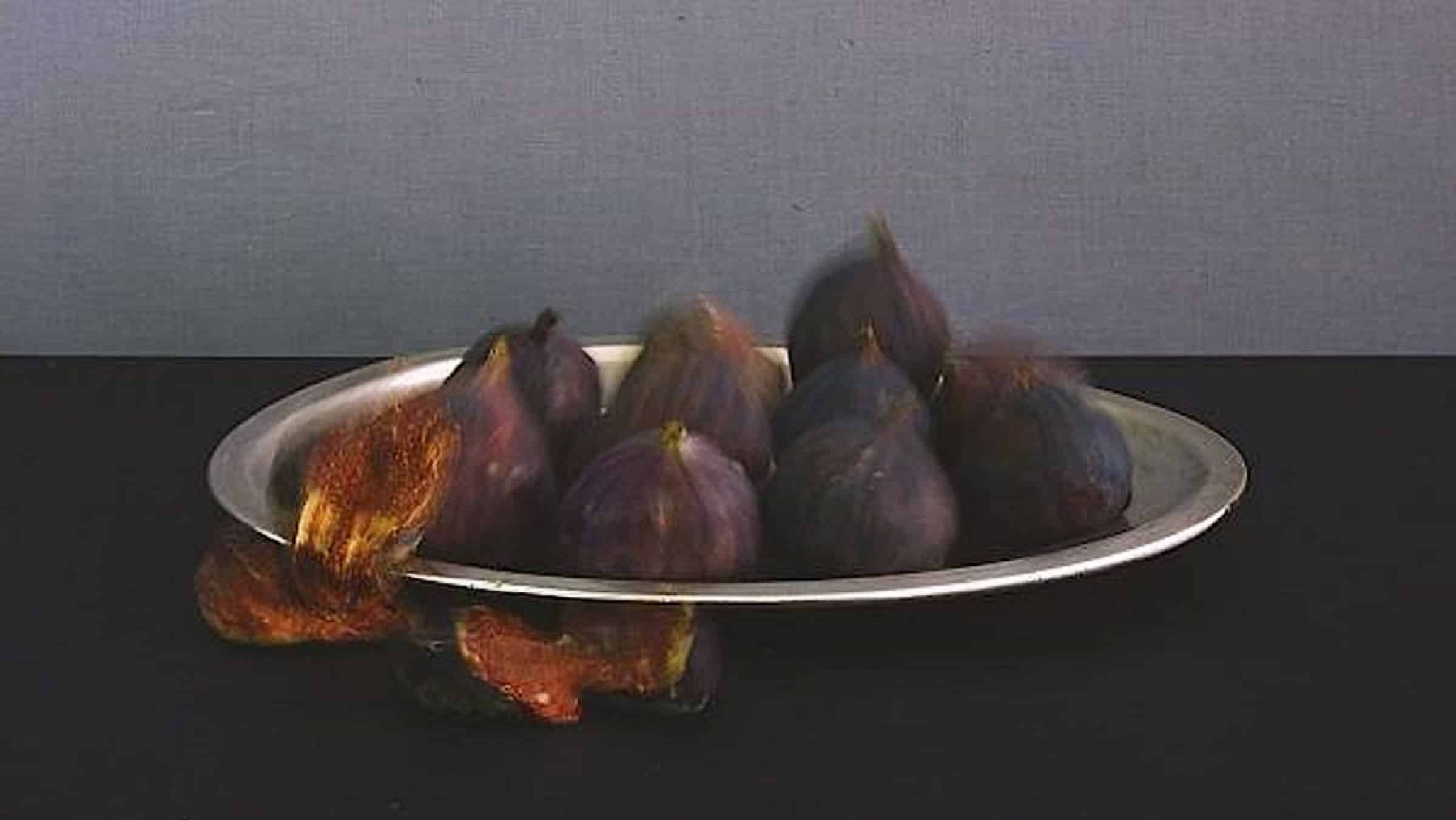
House 11, on the other hand, features two other artists, the German photographer Michael Wesely and the young street artist Fillin Guas, whose works fit more decisively into the colour canon of the younger house.
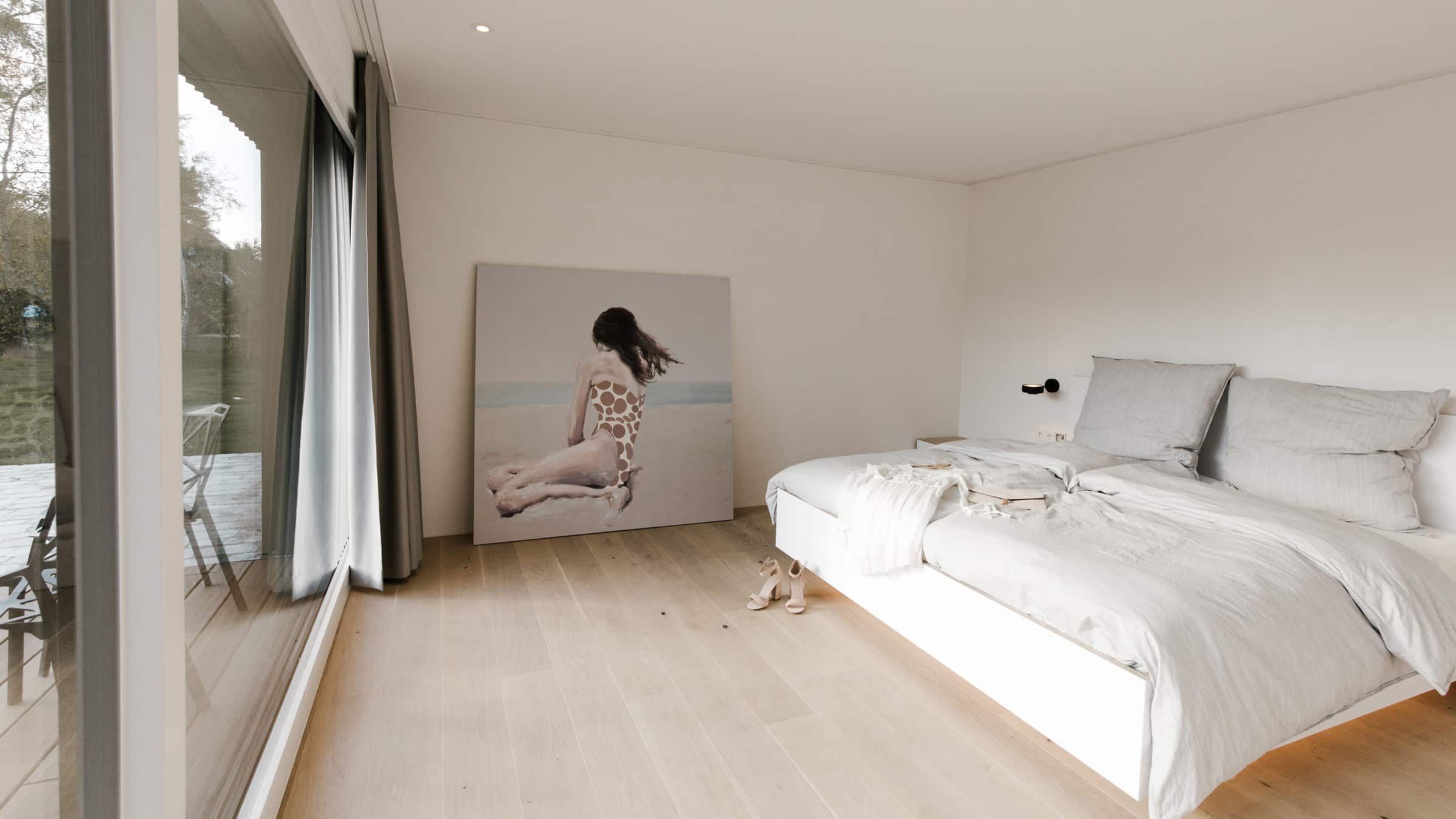
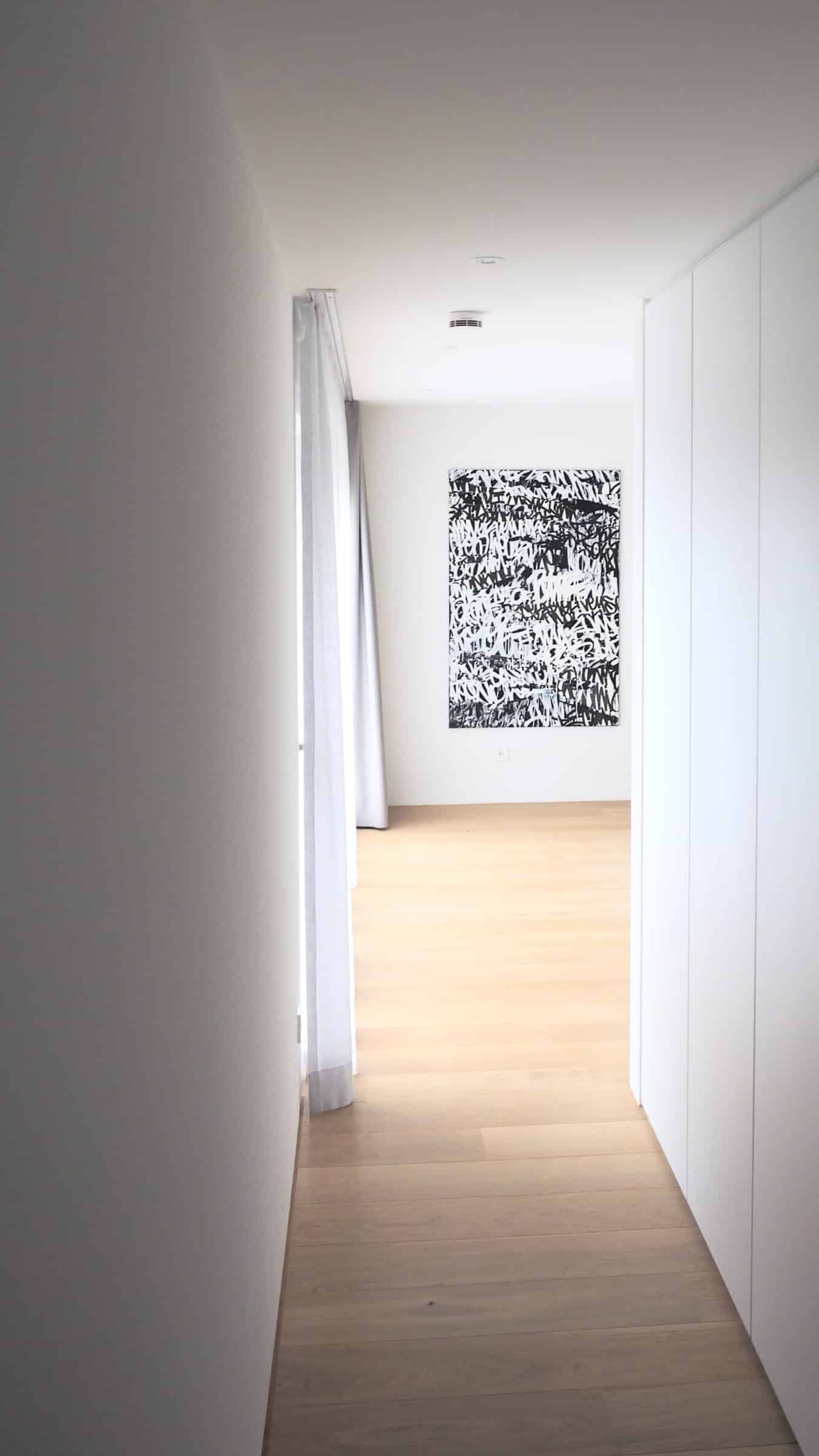
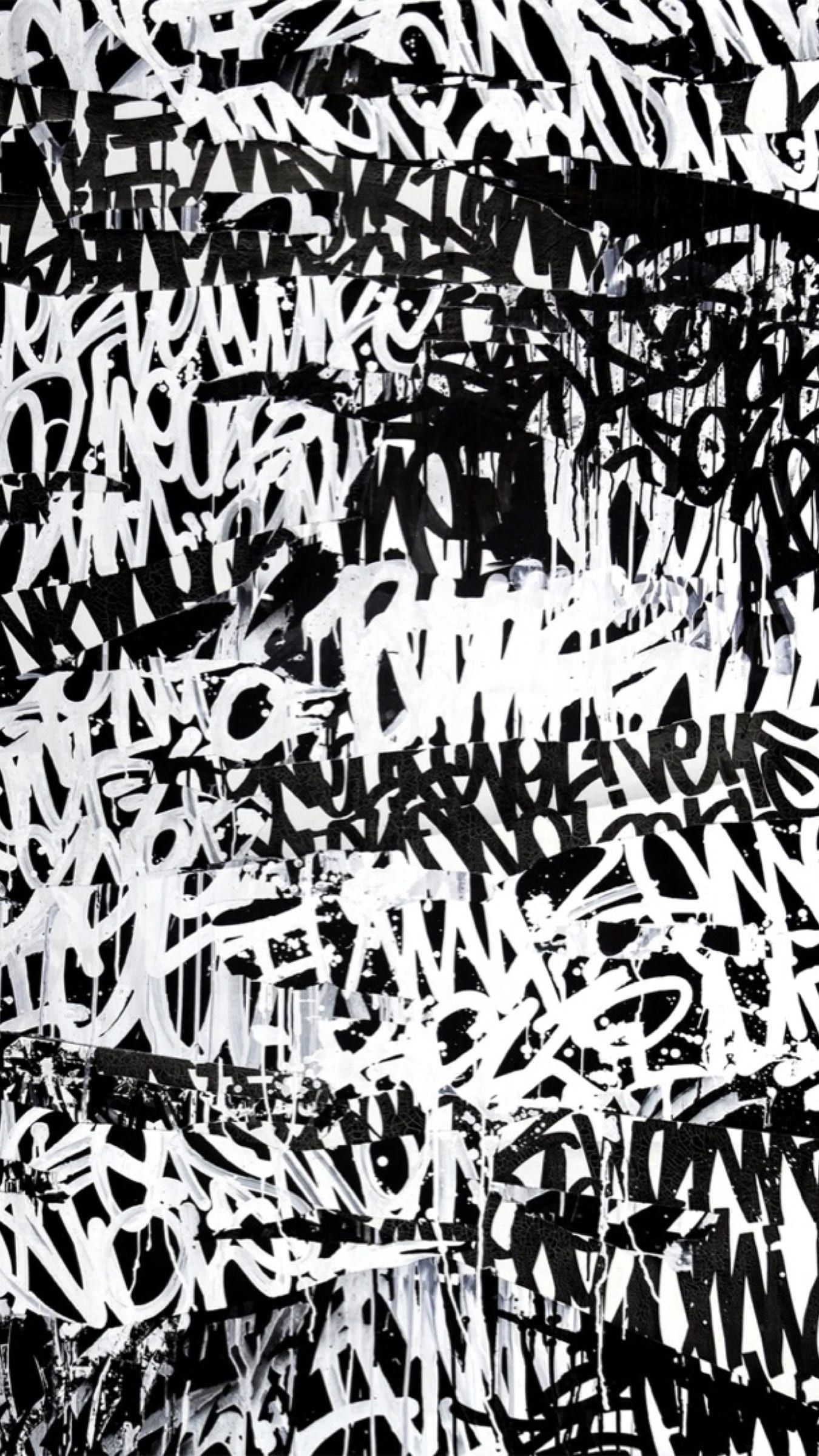
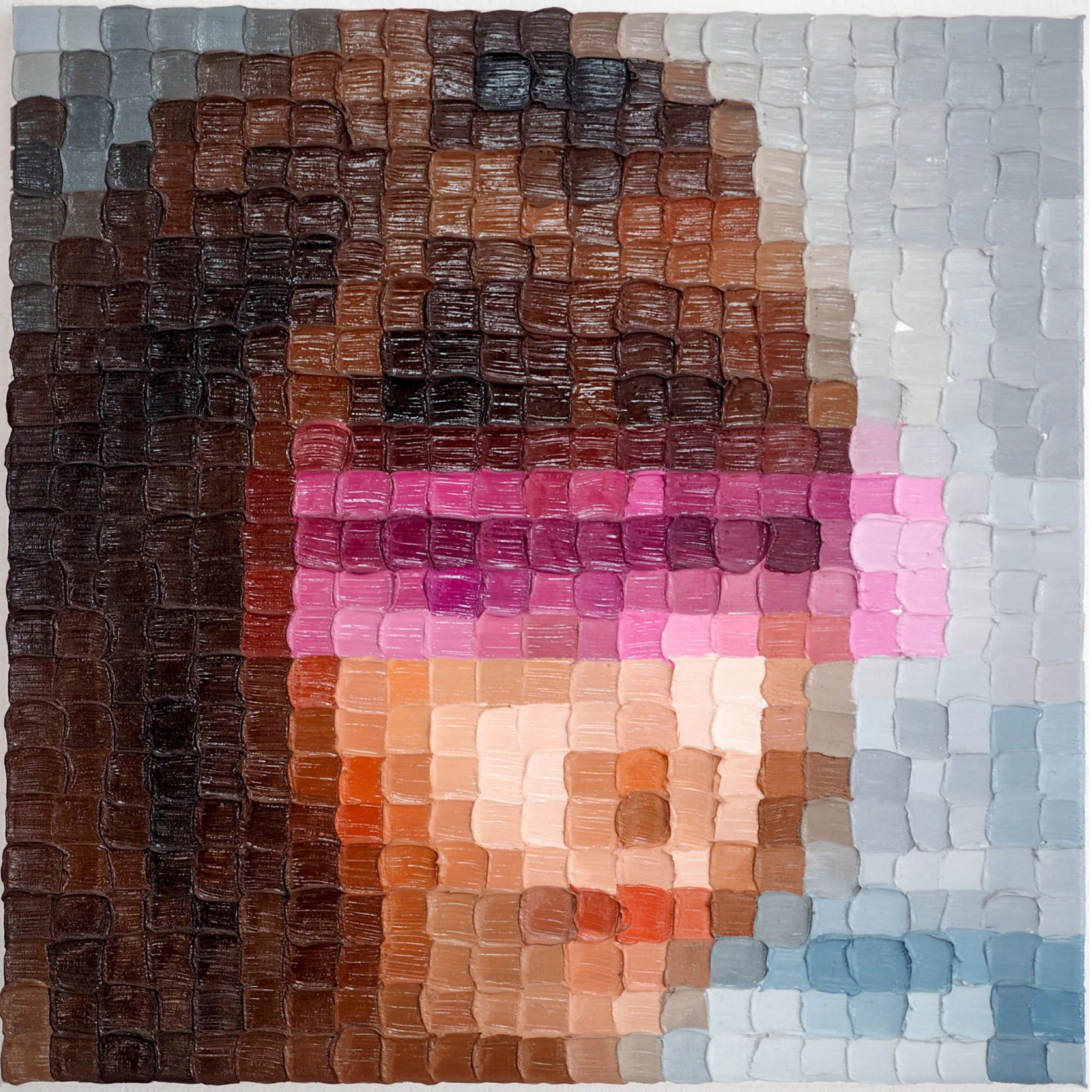
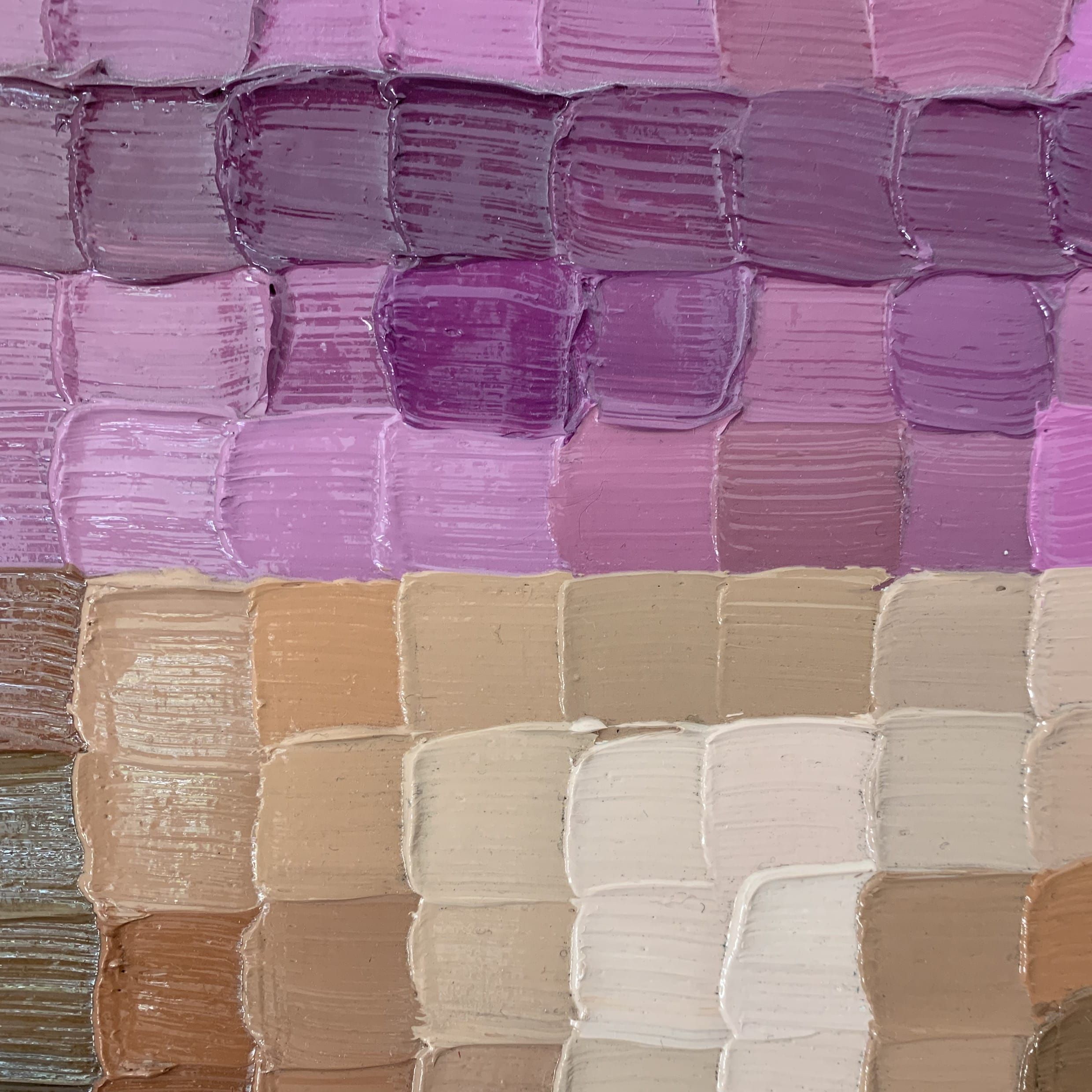
The minute you step inside, you can literally feel that the owners have been actively involved with various representatives of the European art scene for many years and enjoy their treasures – the advantage of an owner-occupied holiday residence! — but are also happy to share them with their 2–12 guests.
Birds are twittering
like the rippling of water
Mountain cherries bloom
at lunchtime between pine trees
in the depth of the forest
Wakayama Bokusui
In der Ferne der Fuji wolkenlos heiter
[In the distance Mount Fuji cloudless radiance]
May 1906 1,35,9
Text: Ulrich Stefan Knoll, December 2021
Overview: Here you will find all HomeStories at a glance!
The house
0 Comments