A material researcher shaping the future of architecture: Prof. Helga Blocksdorf
To build in a way that conserves resources and is climate-friendly in the future, a synthesis of practical experience, fundamental research and teaching is essential. The key discipline for this is building construction.
Nice to be able to speak with you, Professor Blocksdorf. Where are we reaching you today?
At the moment, I’m on my lunch break at the Technical University of Braunschweig, where I have headed the Institute for Construction since 2021. Together with my team, I conduct research and teach there. It is both a wonderful opportunity and a responsibility: on the one hand, to engage with the subject through teaching, that is, through discourse, and on the other, to make our own contributions through research – for example on the subject of “constructive disobedience”.
That sounds fascinating. “Constructive Disobedience” is certainly an intriguing term. What exactly do you mean by it?
Today, we can no longer hand over a 1:100 drawing on a construction site and expect the bricklayer to know exactly what to do, as might have been the case in our grandparents’ day. We are now surrounded by an ever-growing framework of regulations and requirements. The challenge lies in aligning these overlapping demands while at the same time designing high-quality spaces without fundamentally compromising resource-related goals.
Our work is about bringing out Baukultur from the materials that can be responsibly justified. Of course, we cannot achieve this on our own. That is why it is equally important to gather and consolidate experiments from others. At the very start of my professorship, we therefore organised a major international conference together with Matthias Ballestrem, who is now at the Technical University of Dortmund, and Katharina Benjamin from my team. The conference explored how constructive experiments can contribute to the transformation of building practice.
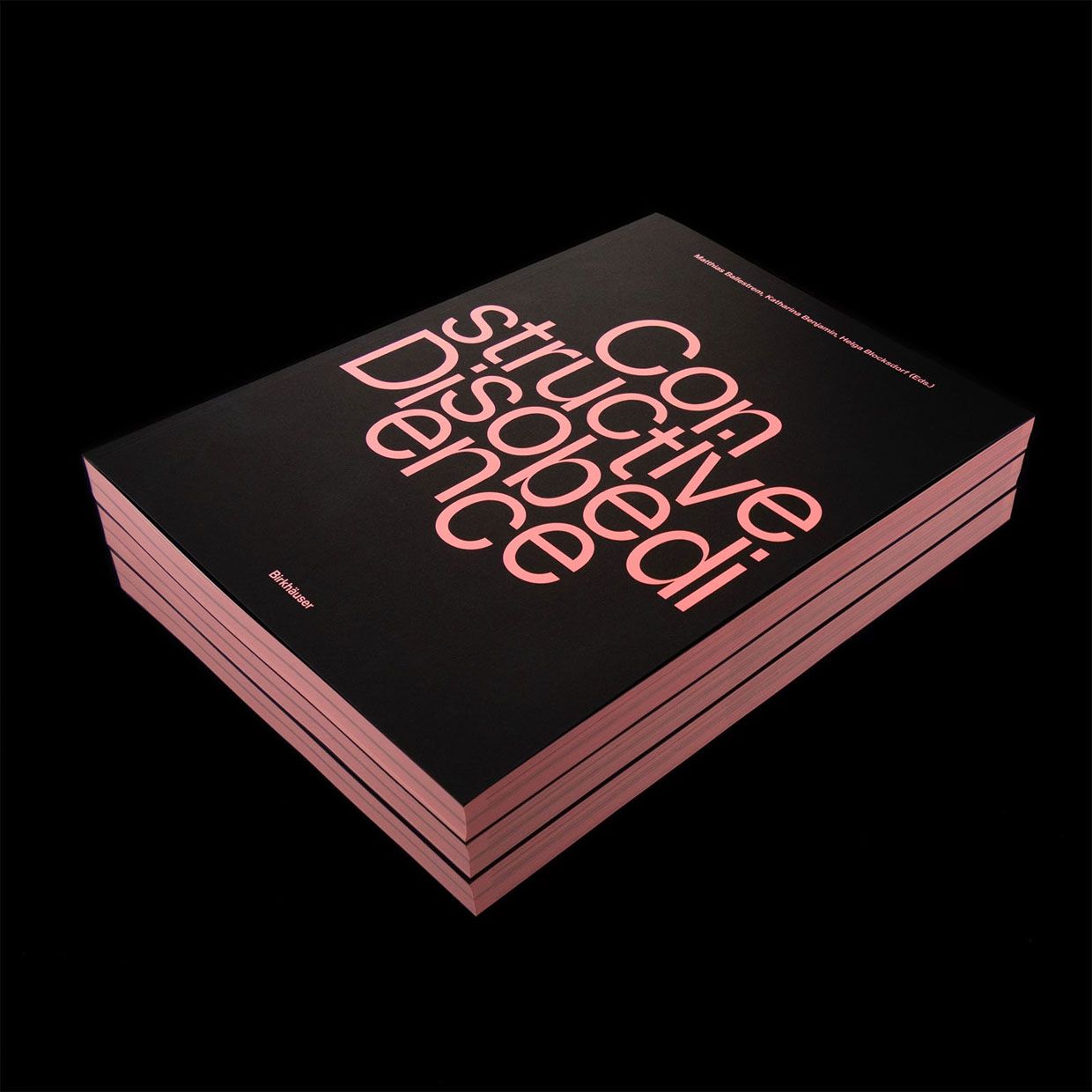
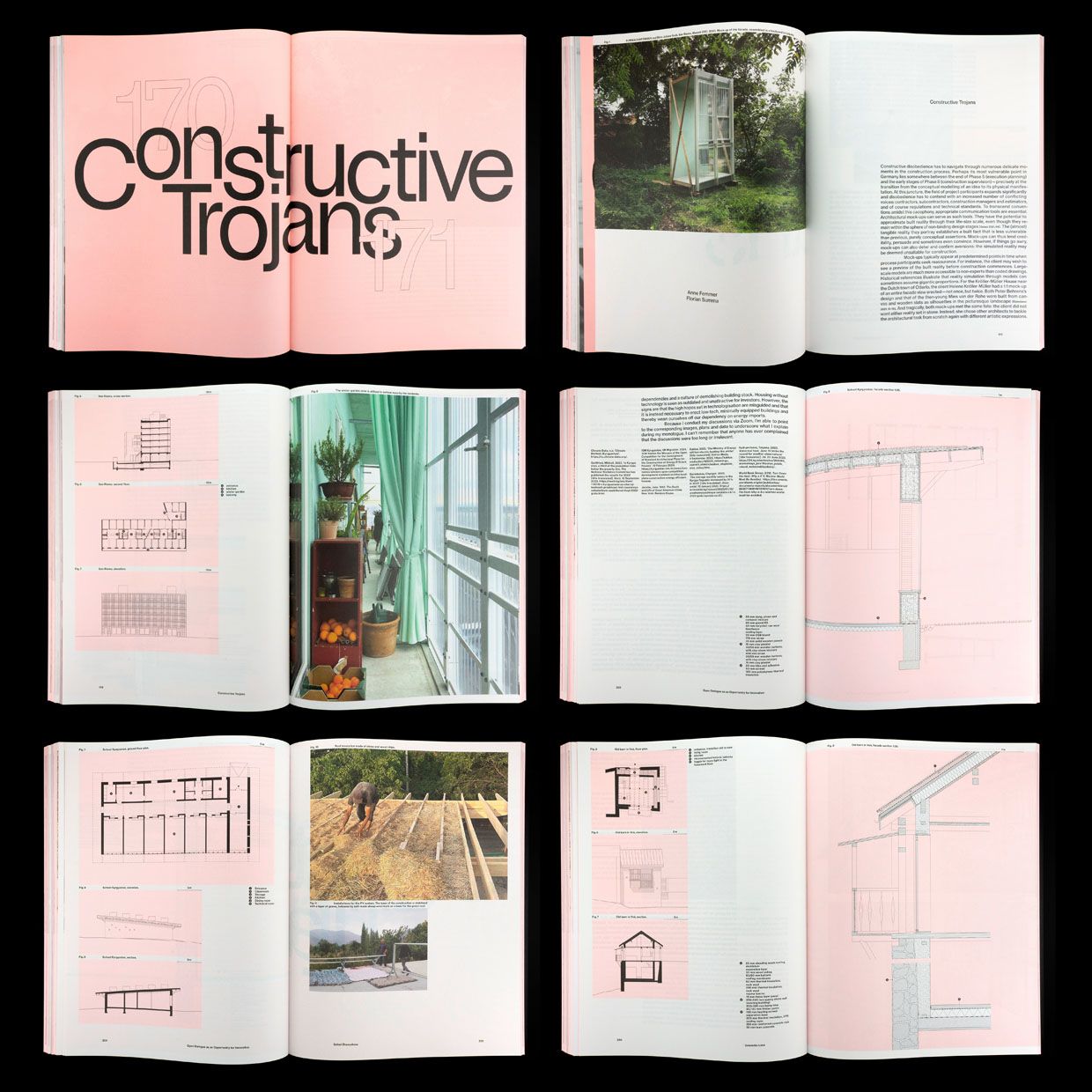
A publication based on the conference was subsequently released. Owing to strong demand and the limited print run, however, it is now available only as an e‑book.
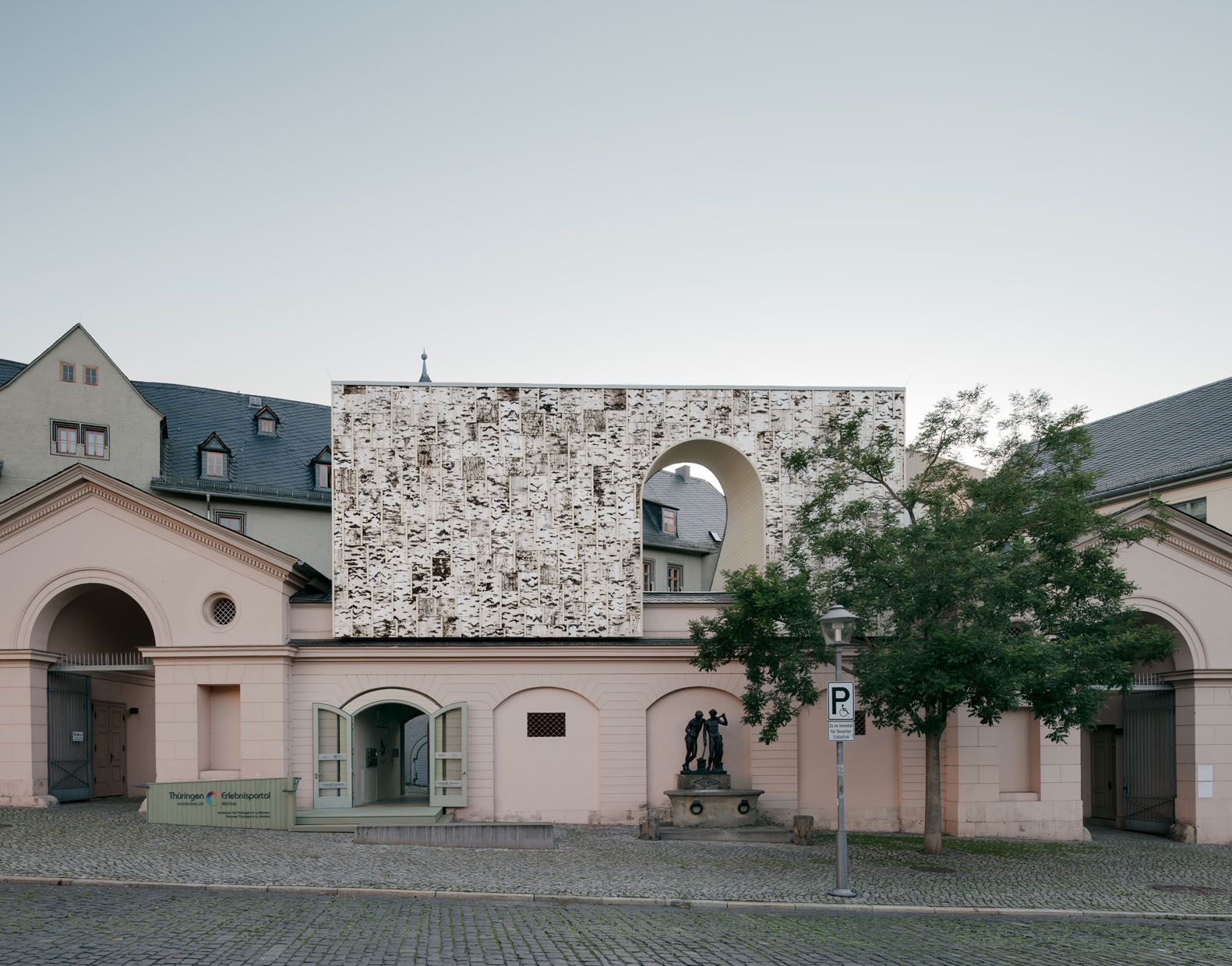
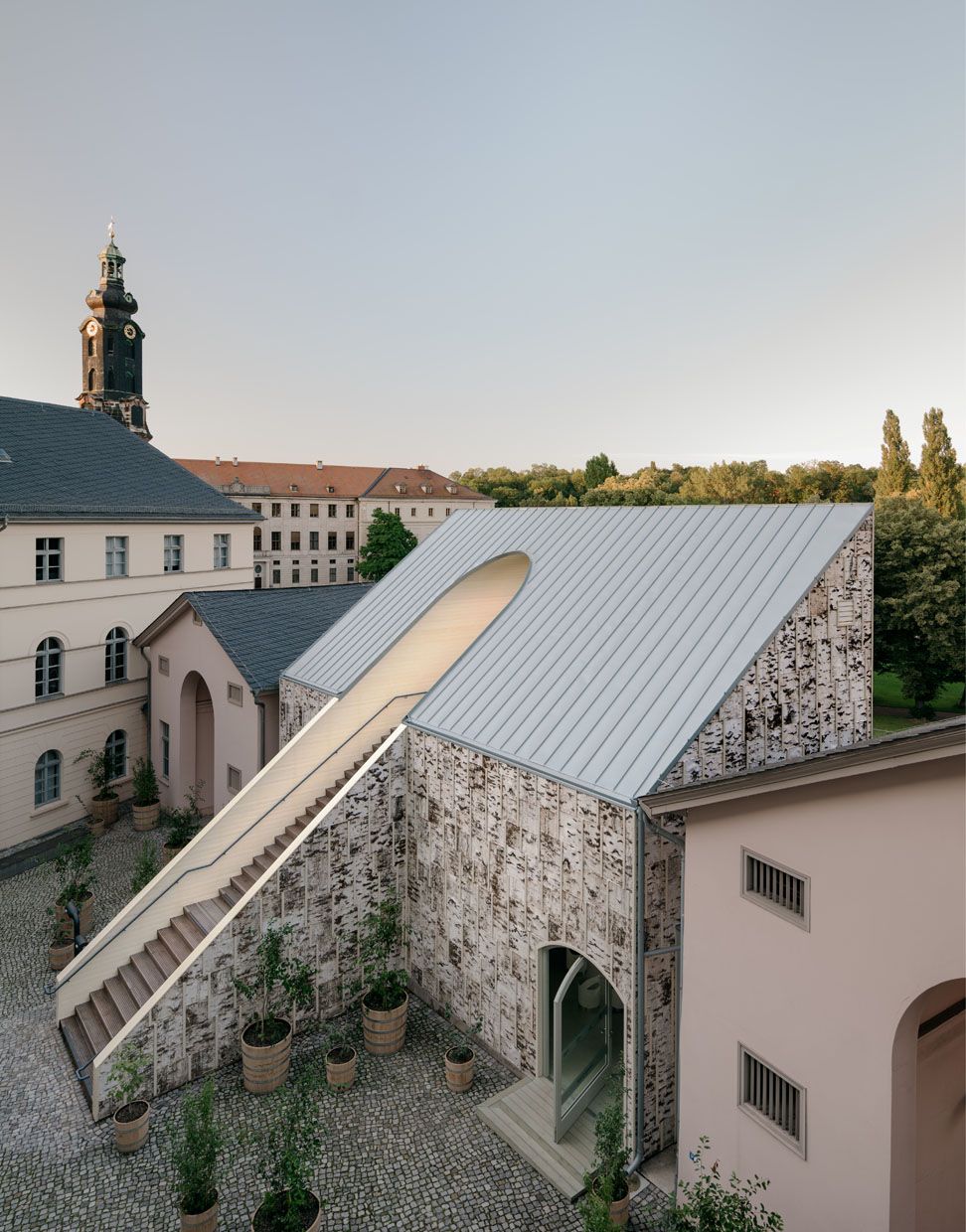
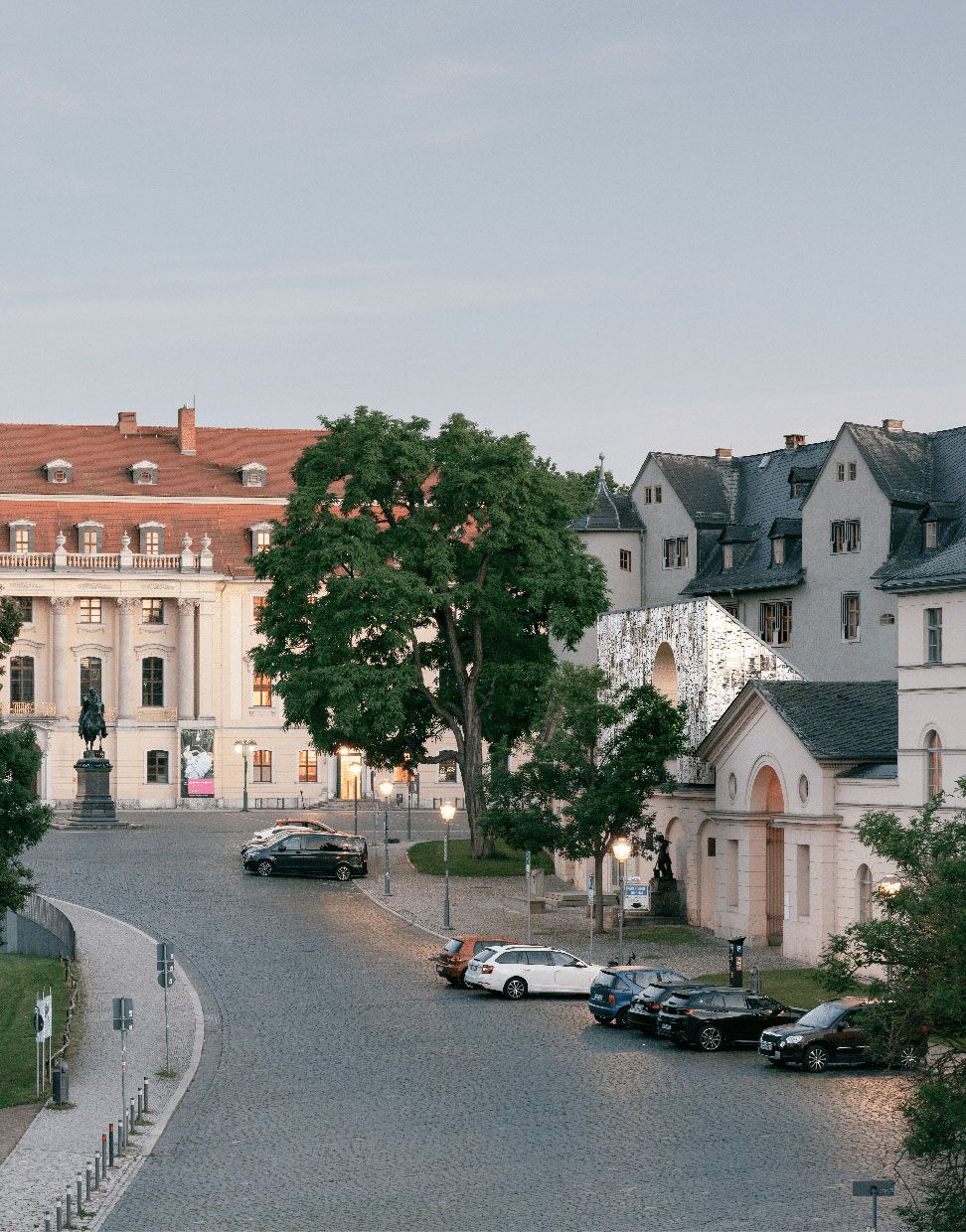
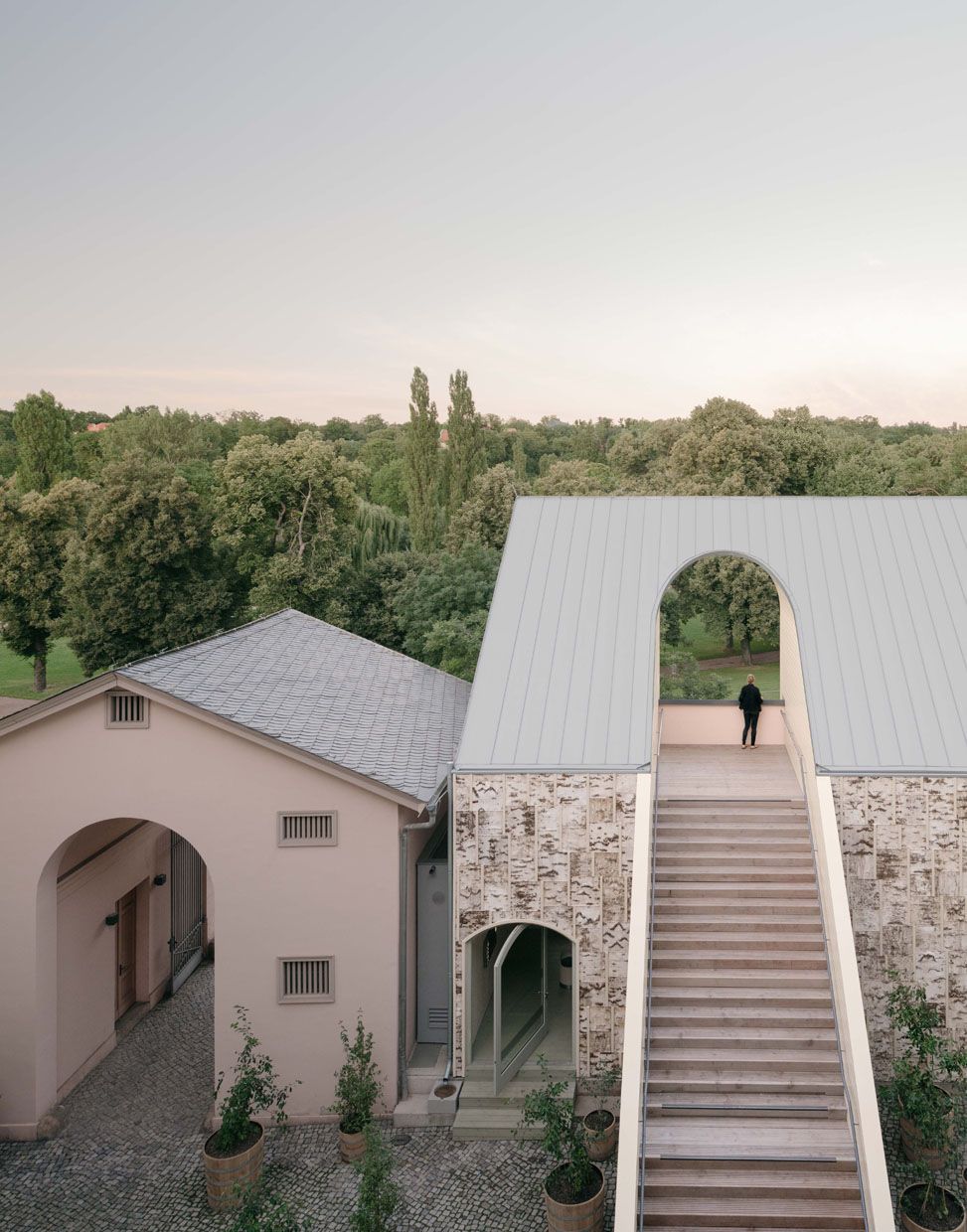
All of this stemmed from the competition for the Erlebnisportal in Weimar, which our practice won. The brief called for a temporary pavilion at a highly frequented tourist location that would provide information about tourist destinations across Thuringia. Since the competition allowed for an experimental building, we proposed birch bark as a façade material. Actually constructing it was quite a feat and only succeeded because the client fully supported the idea – despite all the letters of concern that landed on my desk.
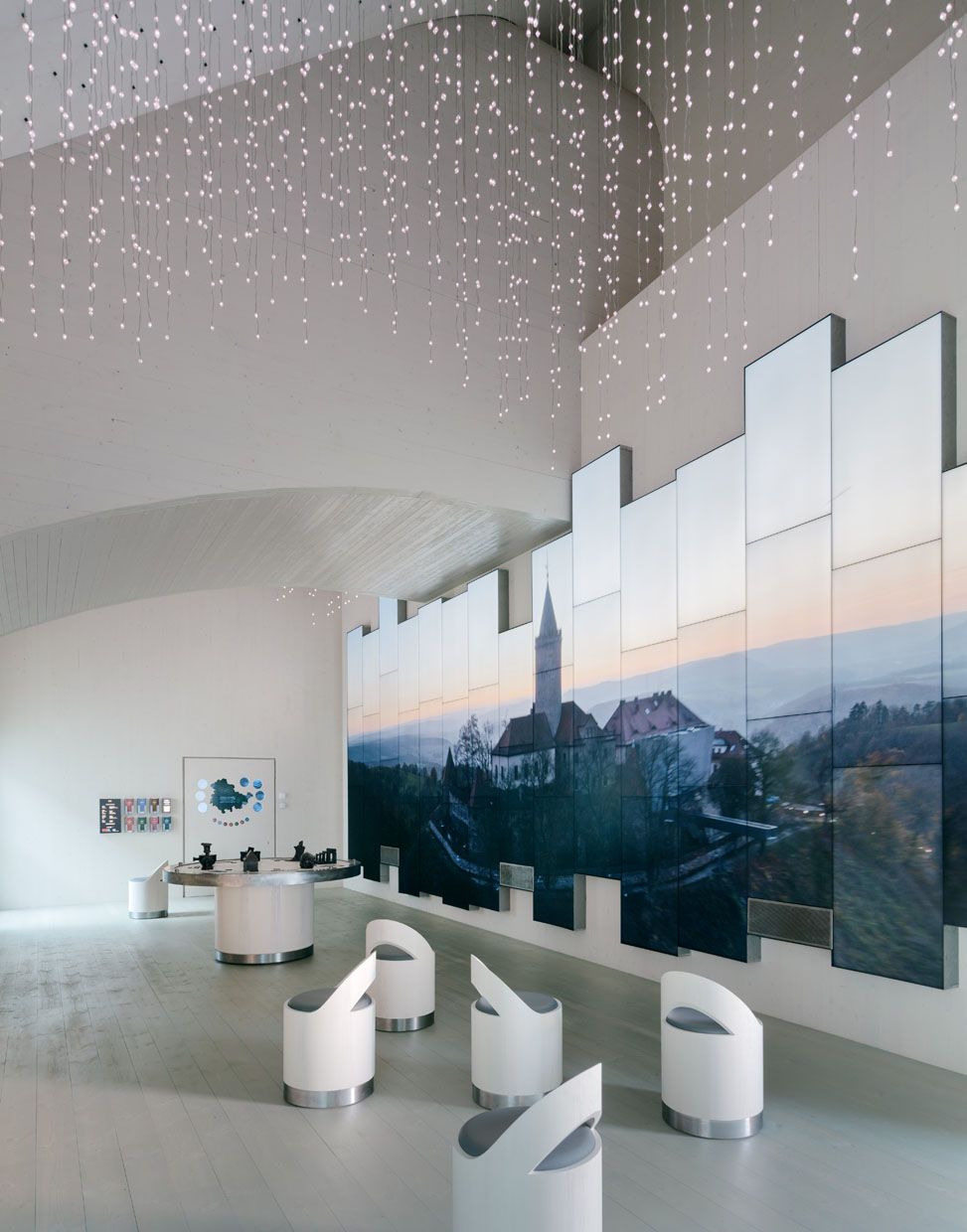
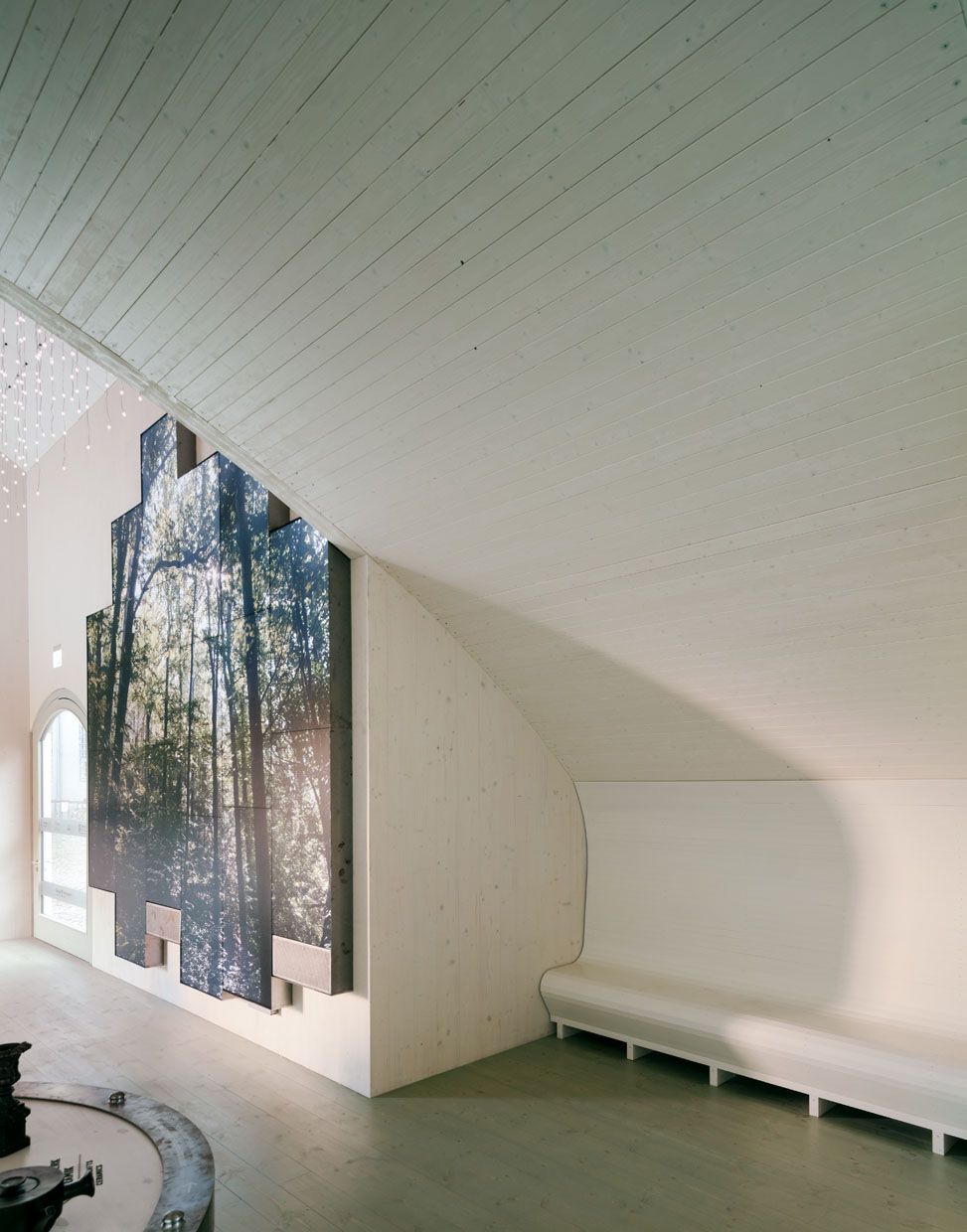
That certainly requires a certain degree of persistence. Although I do not mean that in a defiant sense. Rather, it is about encouraging colleagues to pursue quality with determination while still building responsibly, which, of course, is always a balancing act. For that, we absolutely need university. On the one hand, it allows us to research more marginal topics and bring a greater diversity of approaches into the conversation; on the other, it creates the discourse in the first place.
Persistence is also needed when it comes to timescales. I took up the professorship in 2021, the same year the pavilion was completed. And only now, after five years of preparatory work, have we secured funding from Zukunft Bau to investigate the material’s potential for membrane-free green roofs.
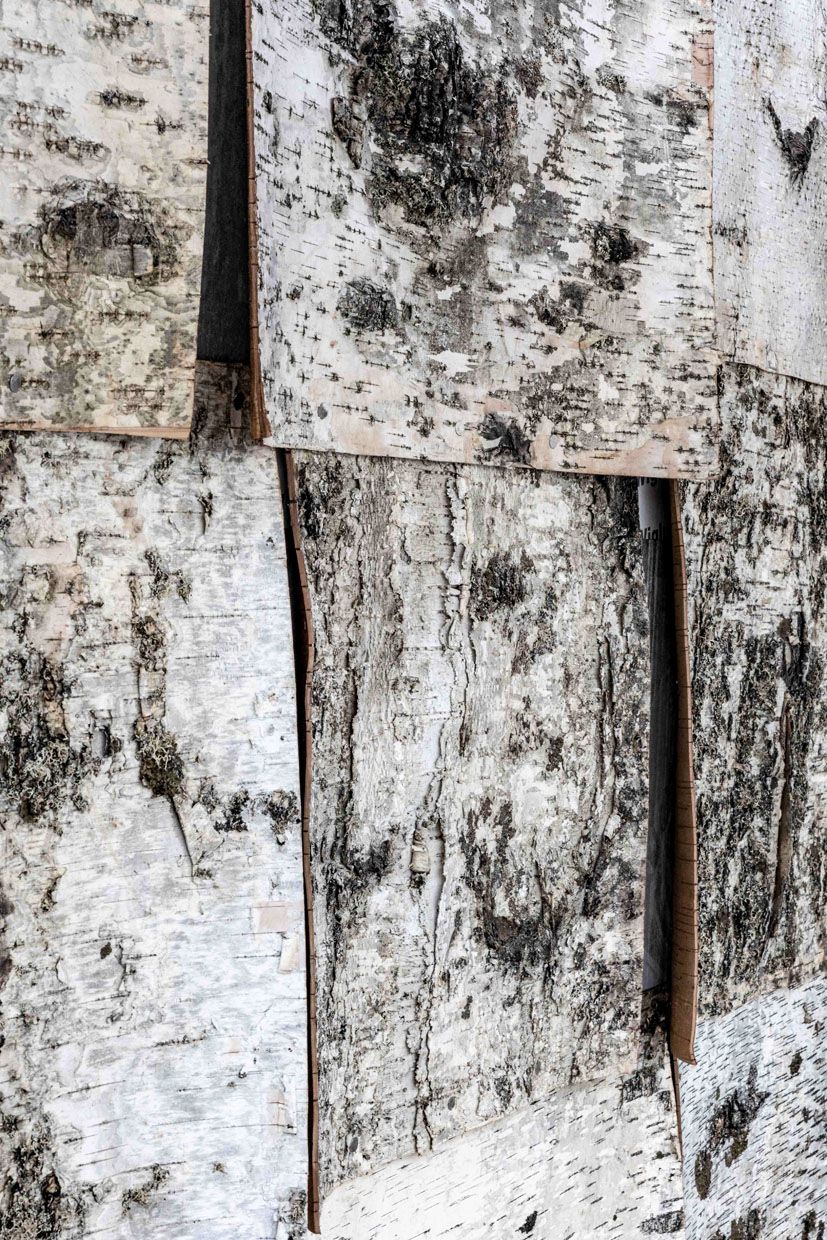
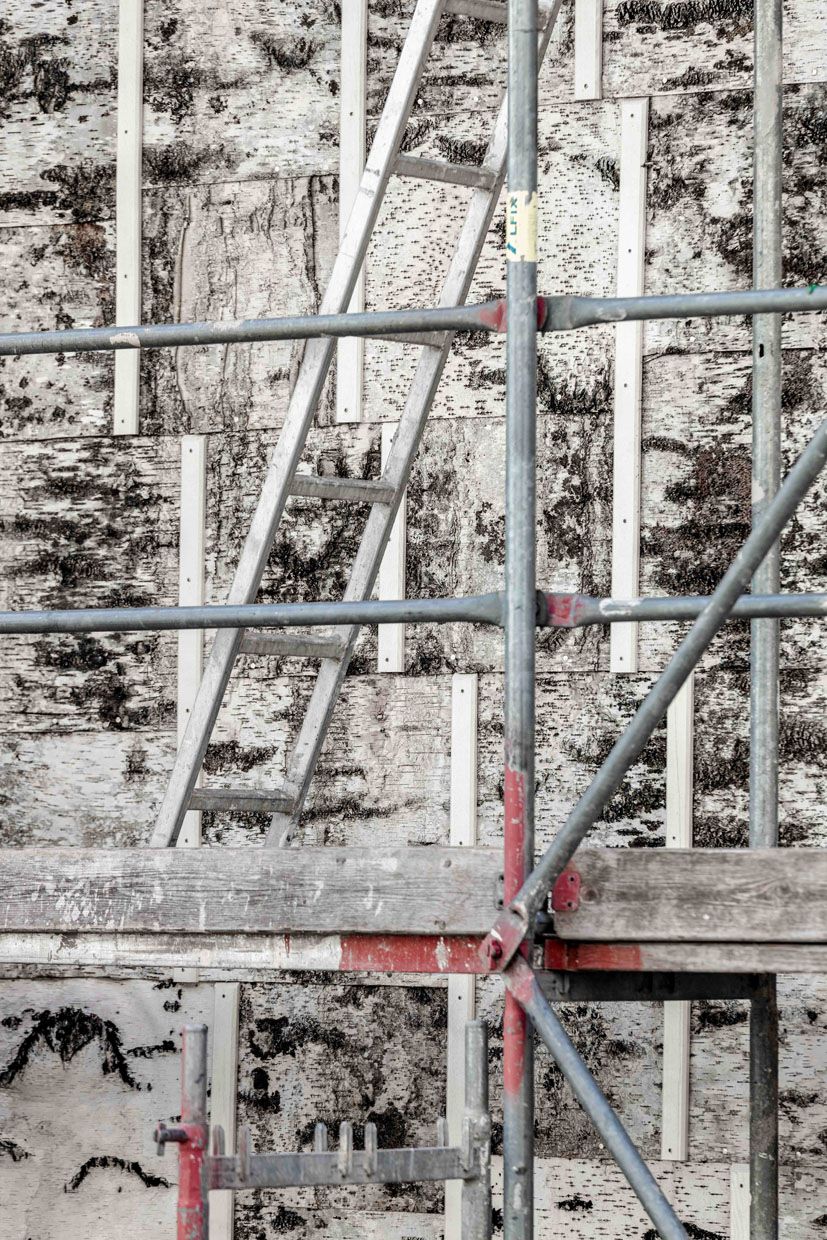
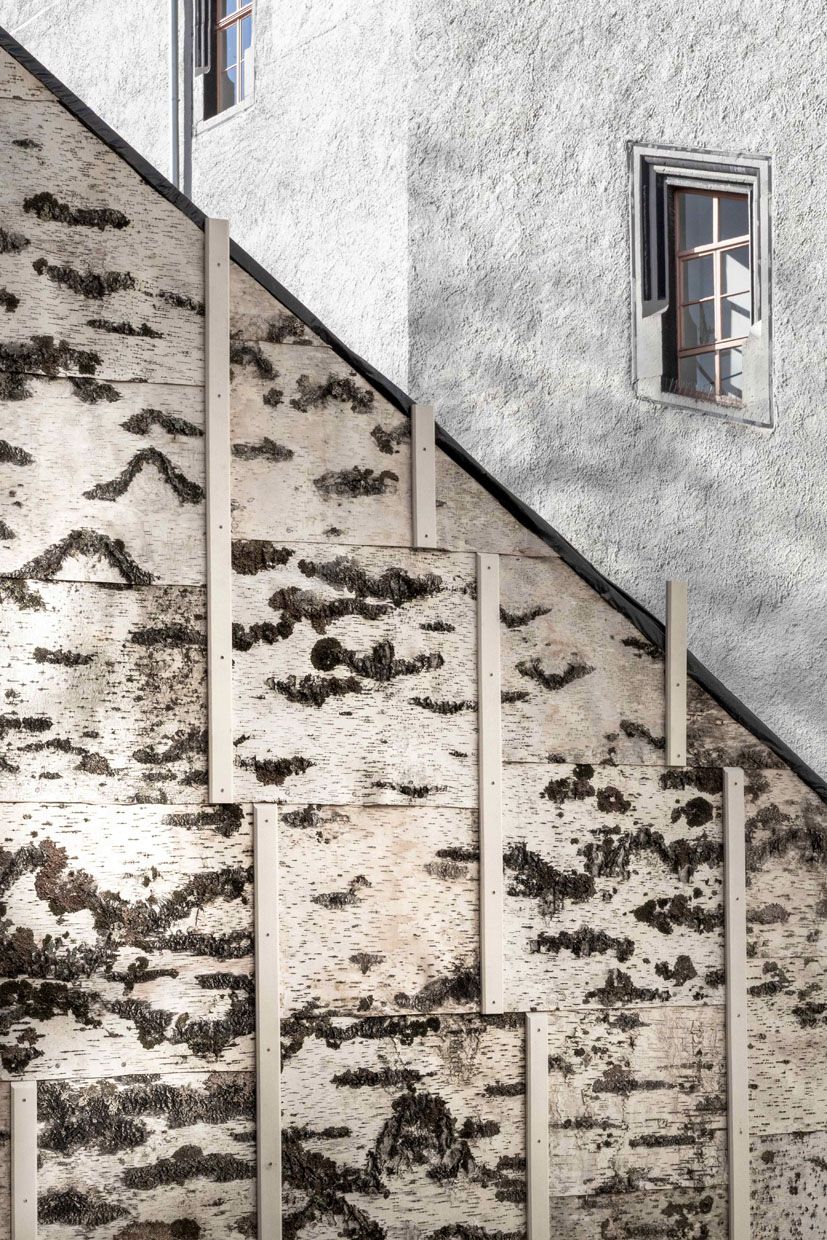
Of course, birch bark can already be used with an easy conscience, but at present you would operate outside the established regulatory framework. That means it is currently only feasible in the private sector, and only with a great deal of goodwill on the part of clients. If we want to bring the material into the canon of recognised building materials, we need research that establishes the necessary fundamentals, for example for its application in membrane-free green roofs.
So one challenge was constructing the temporary building itself; the other is now to make this material genuinely accessible to others.
How is the façade of the visitor pavilion perceived by the public, and how has the material performed over time?
I regularly receive messages from colleagues and friends who send me photographs from the site and share their impressions. Alongside their enthusiasm, they often remark on how well the material has aged. Others say that it feels different in reality from what they had imagined from the photographs – rougher.
Locally, the project continues to divide opinion. Some residents are very fond of it, while others find it rather annoying. The way the pavilion relates to the listed context within the buffer zone of the UNESCO World Heritage Site is still viewed critically by some.
Everyone in our office remains very fond of the project, and the birch bark has performed without problems. There is only one section that now needs replacing. Birch bark – or, more precisely, birch cork – is under tension while attached to the tree and naturally curls when removed. In one area this led to a tear. Apart from that, there have been no difficulties whatsoever, not even on the side facing the city, where the bark was installed to a height of five to six metres.
In a large city one might expect vandalism or graffiti, but nothing of that kind has occurred here so far.
As the client is also very pleased with the project, I have been asked to extend its temporary lifespan beyond the original five years, which expire this year. However, that will once again require the full support of the Thuringian state authorities, so I cannot yet say whether it will happen. We very much hope it does, not least because EU funding was invested in the project. Having to dismantle it after only five years would seem questionable to me in terms of the energy that has already gone into it. Structurally speaking, I believe it could easily last another sixty years.
So will bituminous membranes and other conventional materials become a thing of the past in the medium term?
I do not think the goal is to replace bituminous membranes. Rather, it is to expand the range of available constructive possibilities. If I build a shed solely for storing chopped firewood, for example, I do not need a fibre-cement sheet roof. Instead, I can use a turf roof with several layers of birch bark beneath it, without having to worry about vapour diffusion behaviour. We know from historical precedent that this works. However, if we want such applications to gain official recognition, we need to establish whether birch bark is vapour-permeable or vapour-resistant and determine its Sd value. At present, this knowledge does not exist in a structured form.
And when such research is led by architects, it must also engage with aesthetic questions. In my view, aesthetic experimentation and constructive knowledge belong together when it comes to shaping our Baukultur.
Do clients today still understand the complexity of a design, which arises from the multitude of standards and regulations?
You do not need a university degree to contribute to the discussion as a client. Intuition is perfectly welcome because everyone has experience of living somewhere – or of sleeping badly behind a completely sealed façade with plastic windows. These are all lived experiences that have their place in the discussion and can help us find better solutions.
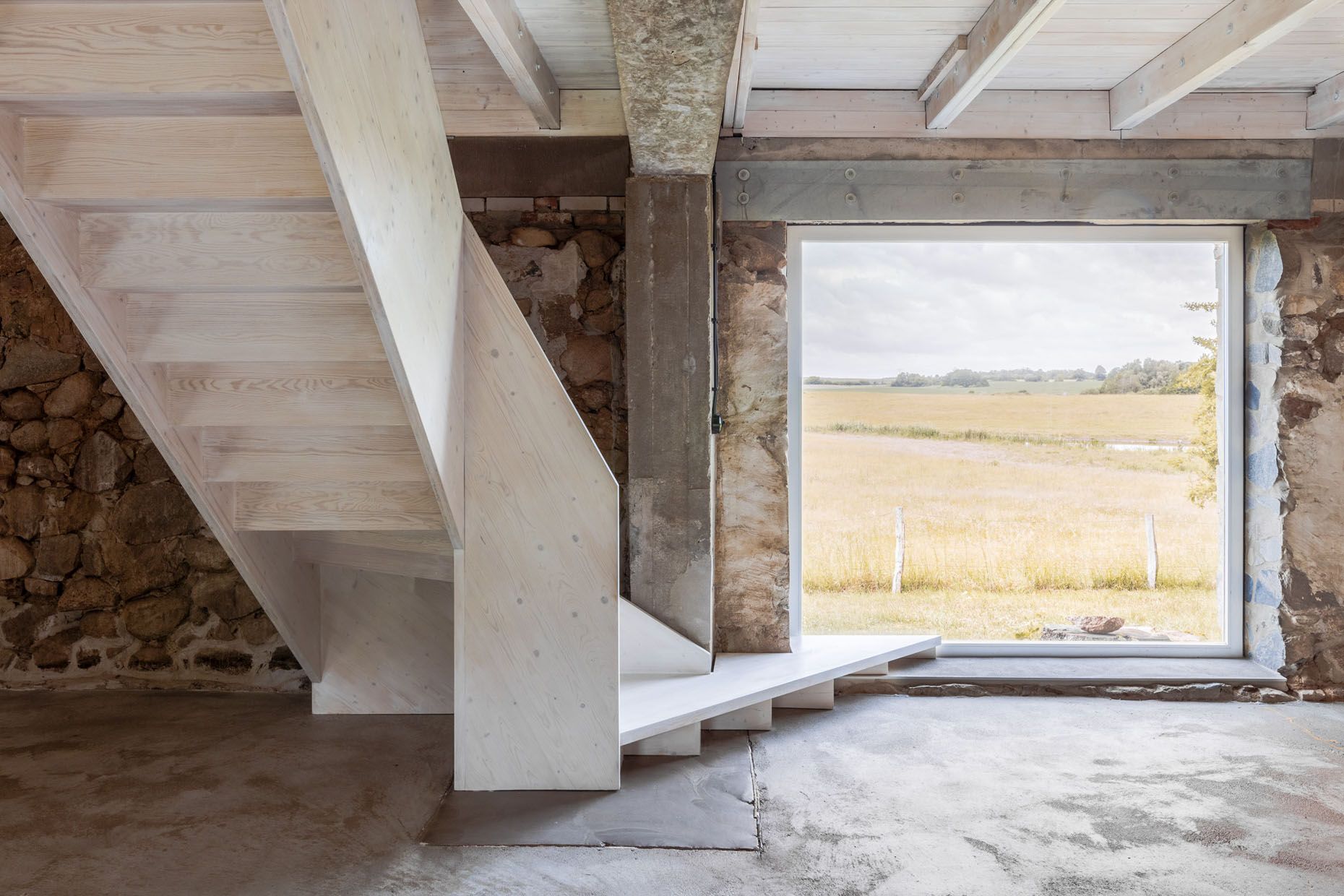
What fascinates us about your work is the strong presence of materiality and the quality of the staging within spaces that are simultaneously reduced to the essentials, as can also be seen in Studio Uckermark. Where does this come from?
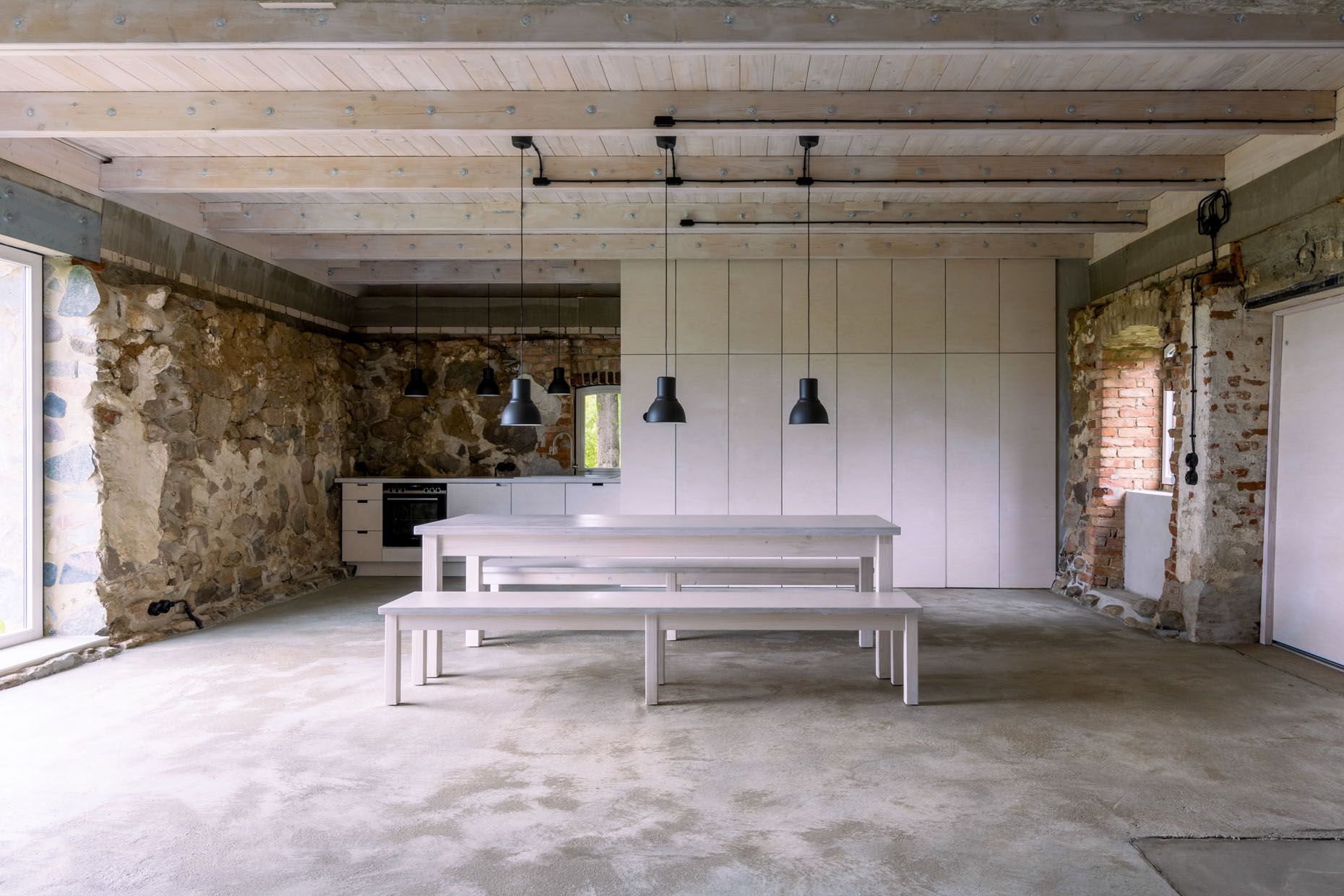
At our practice, we are interested in the relationship between structural composition and expression. In other words, the primary structure may well remain perceptible. We therefore begin with the substance of a building rather than from an interior design perspective. Perhaps that is partly because I have never quite managed to grasp interior design as a subject in its own right. For me, the result has to be like a symphony containing not a single note too many.
Another important factor is the trajectory of the practice itself: over the past twelve years, we have developed only very gradually from small projects to medium-sized commissions. This means that, for most of that time, budgets were so limited that we simply could not afford to think in terms of multiple layers. On top of that, I personally find it more comfortable to surround myself only with the things that are necessary and to leave everything else aside.
You do that very well, we think. Many of your projects have an almost Zen-like atmosphere – clear and pared back, but never cold.
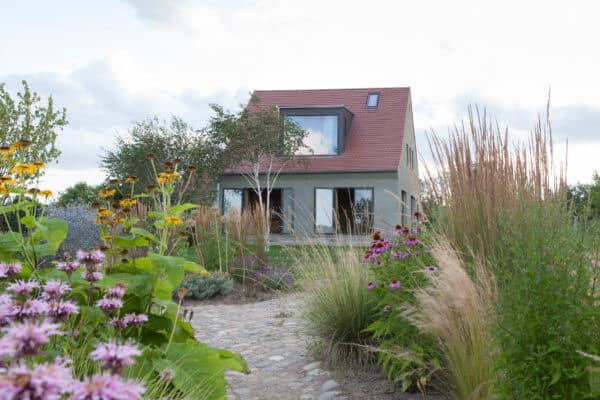
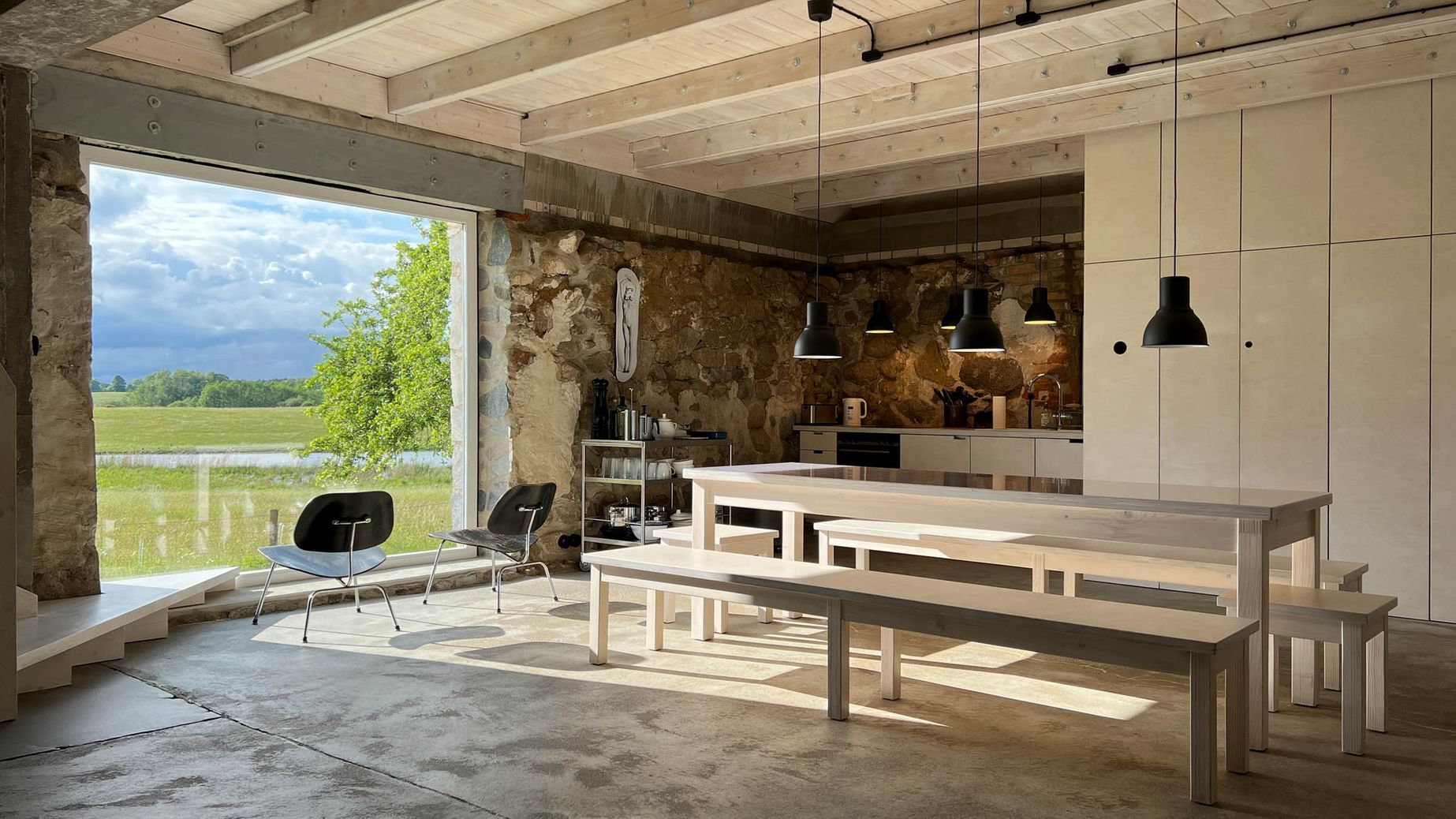
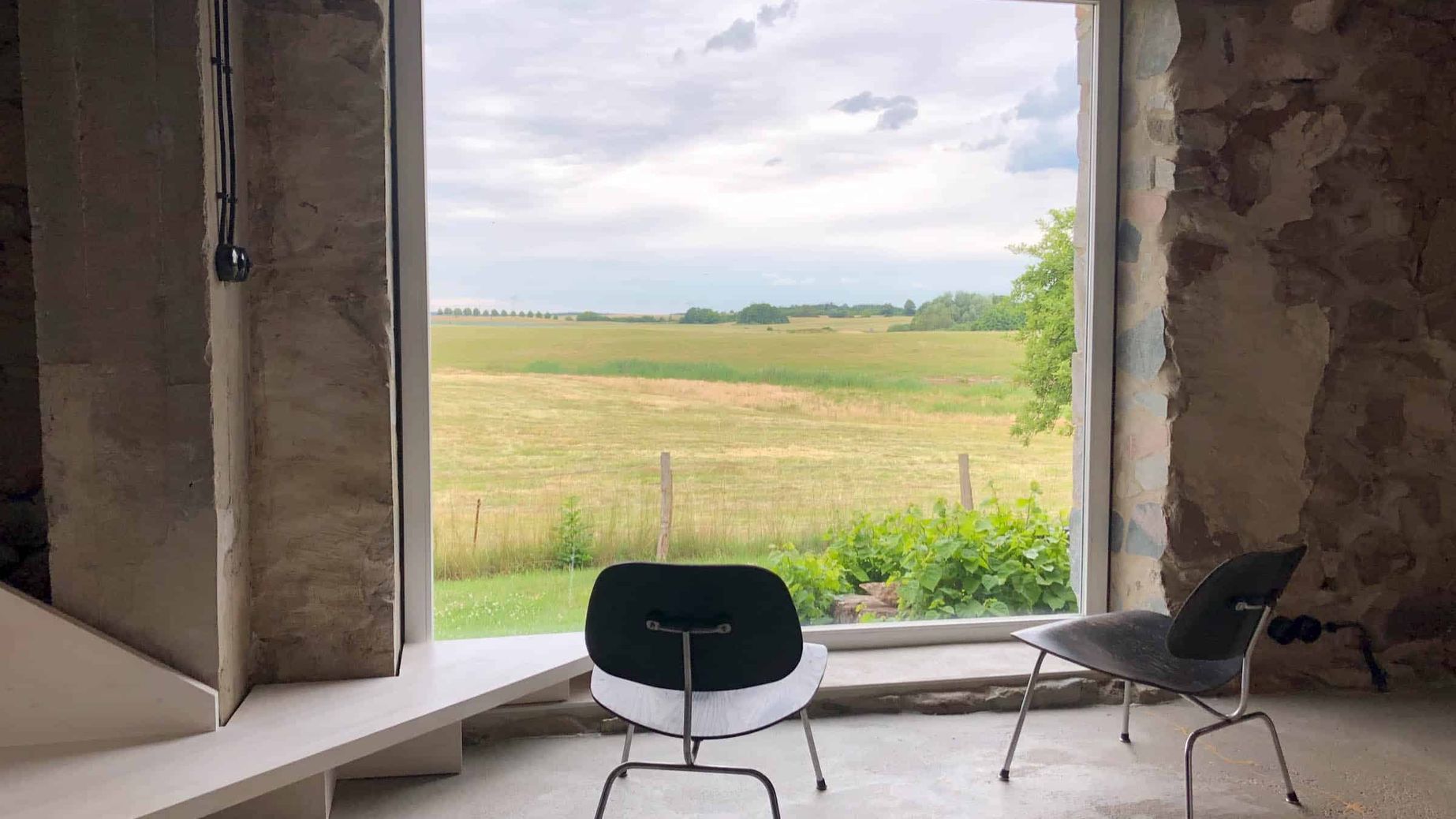
It is interesting that you mention Zen. In fact, that was the central theme of my doctoral thesis. The question was: how do I actually do it? What is my personal design method? Often it begins with a very simple idea, such as the window in Studio Uckermark and the way it stages the view.
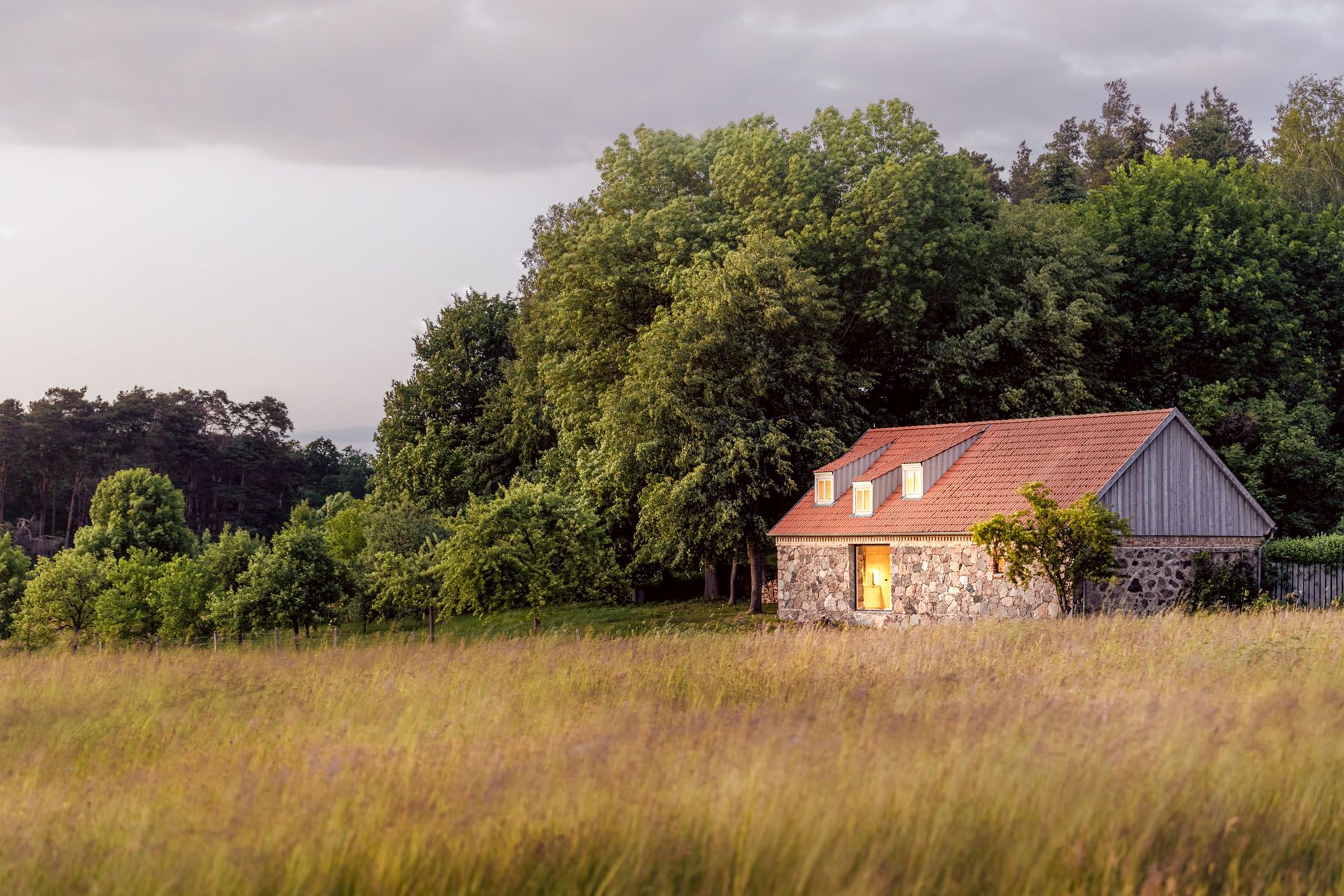
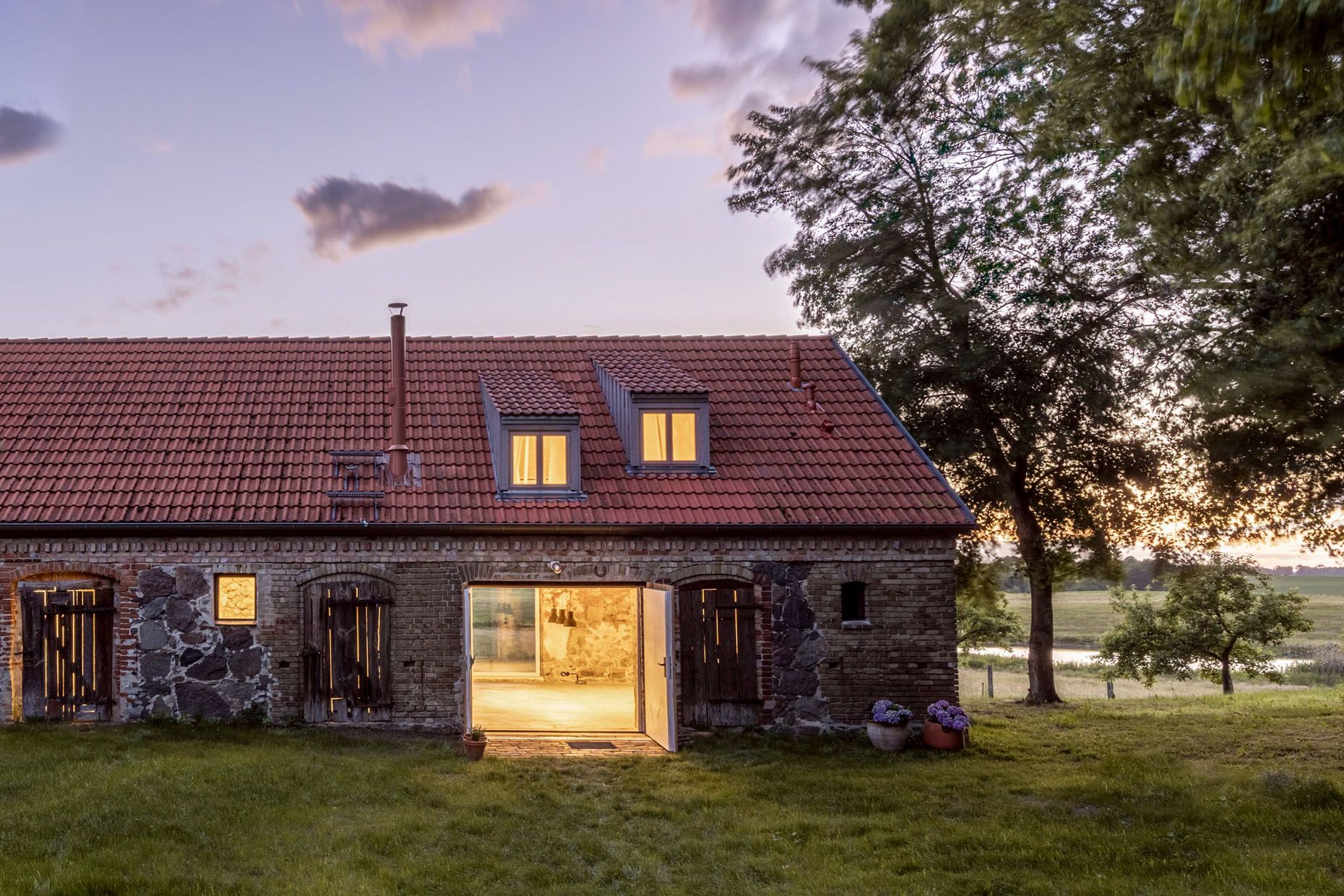
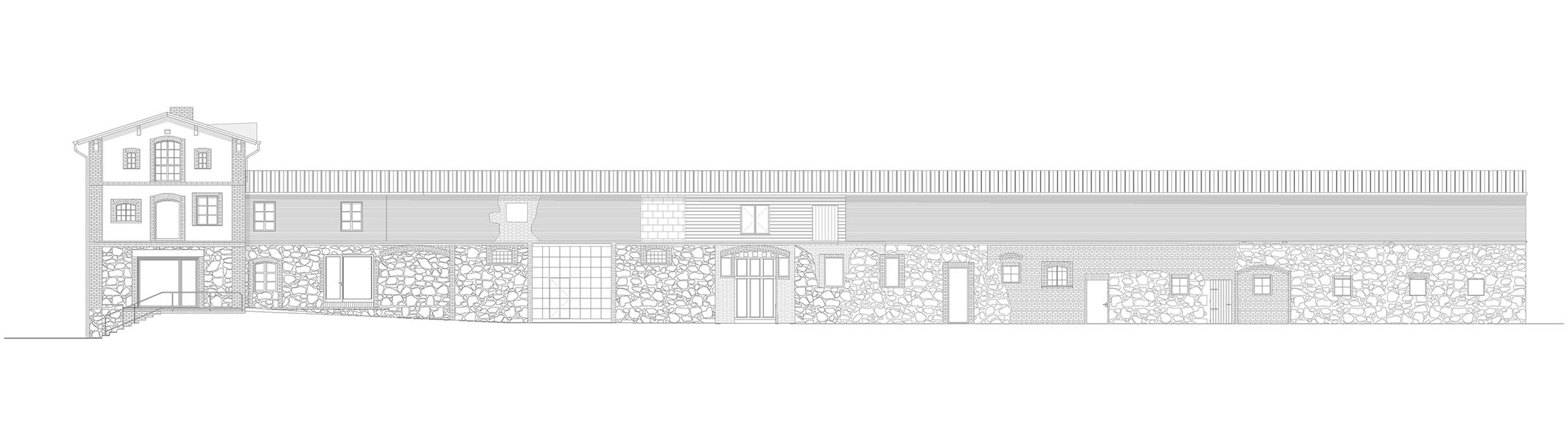
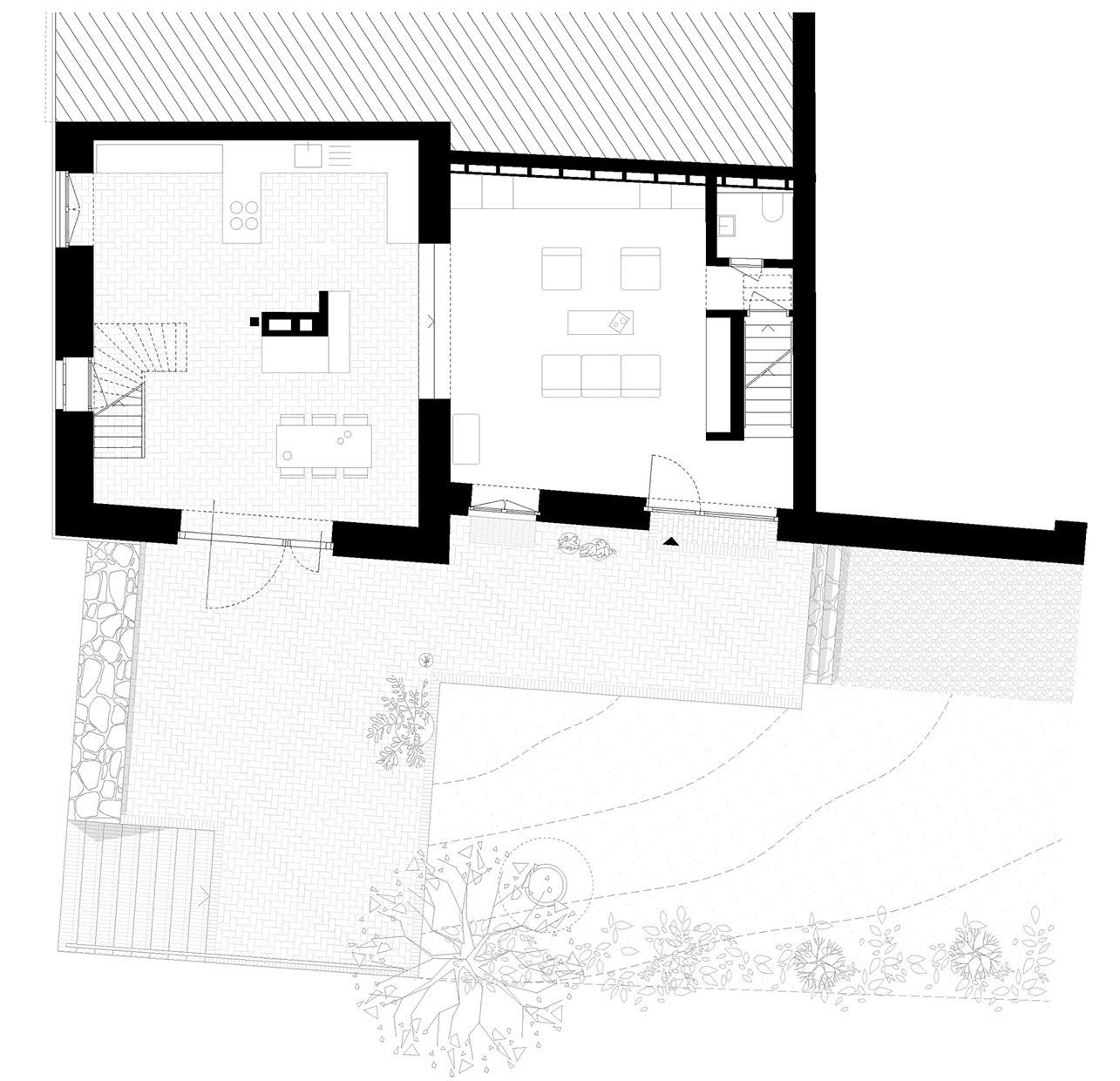
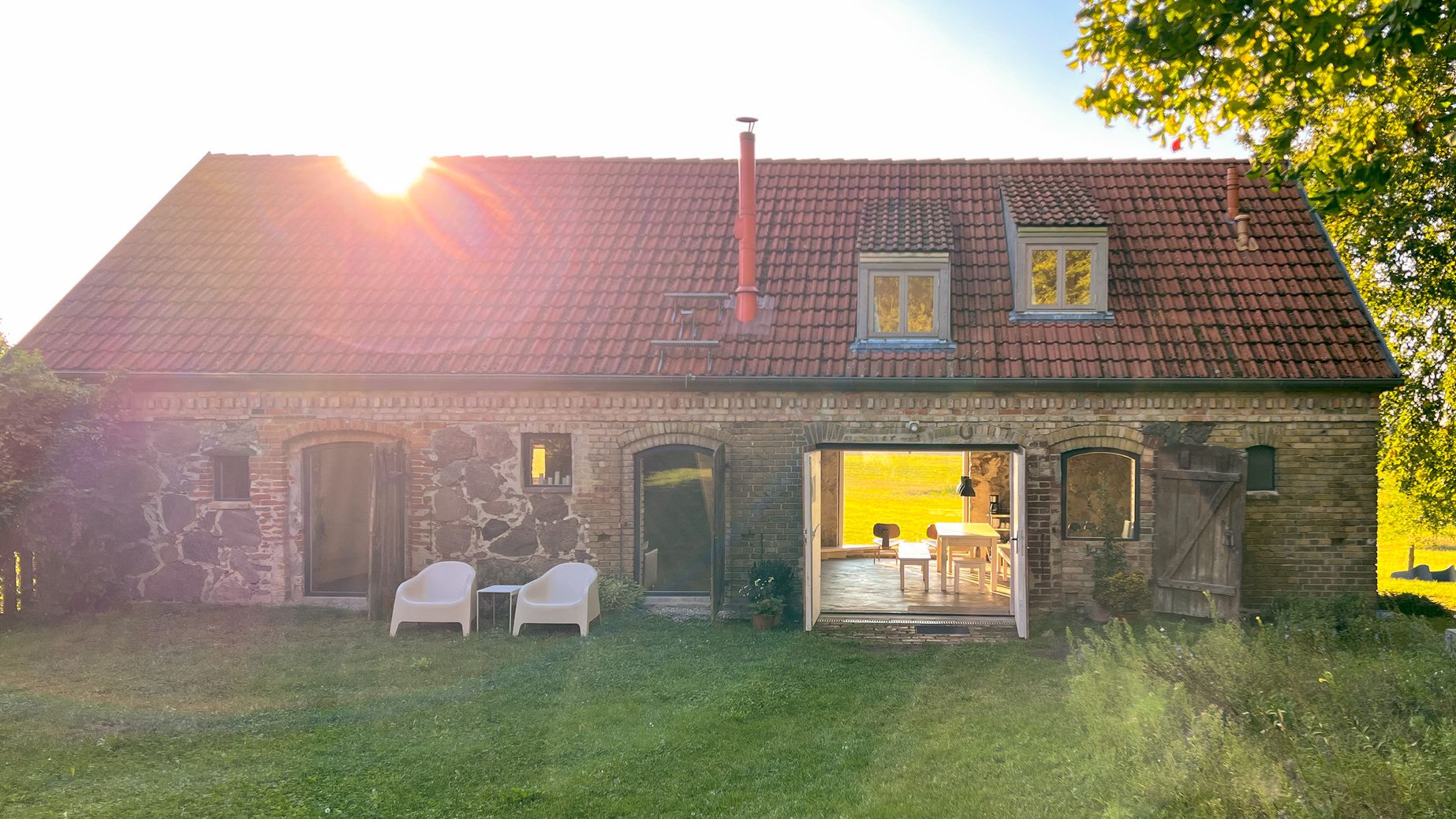
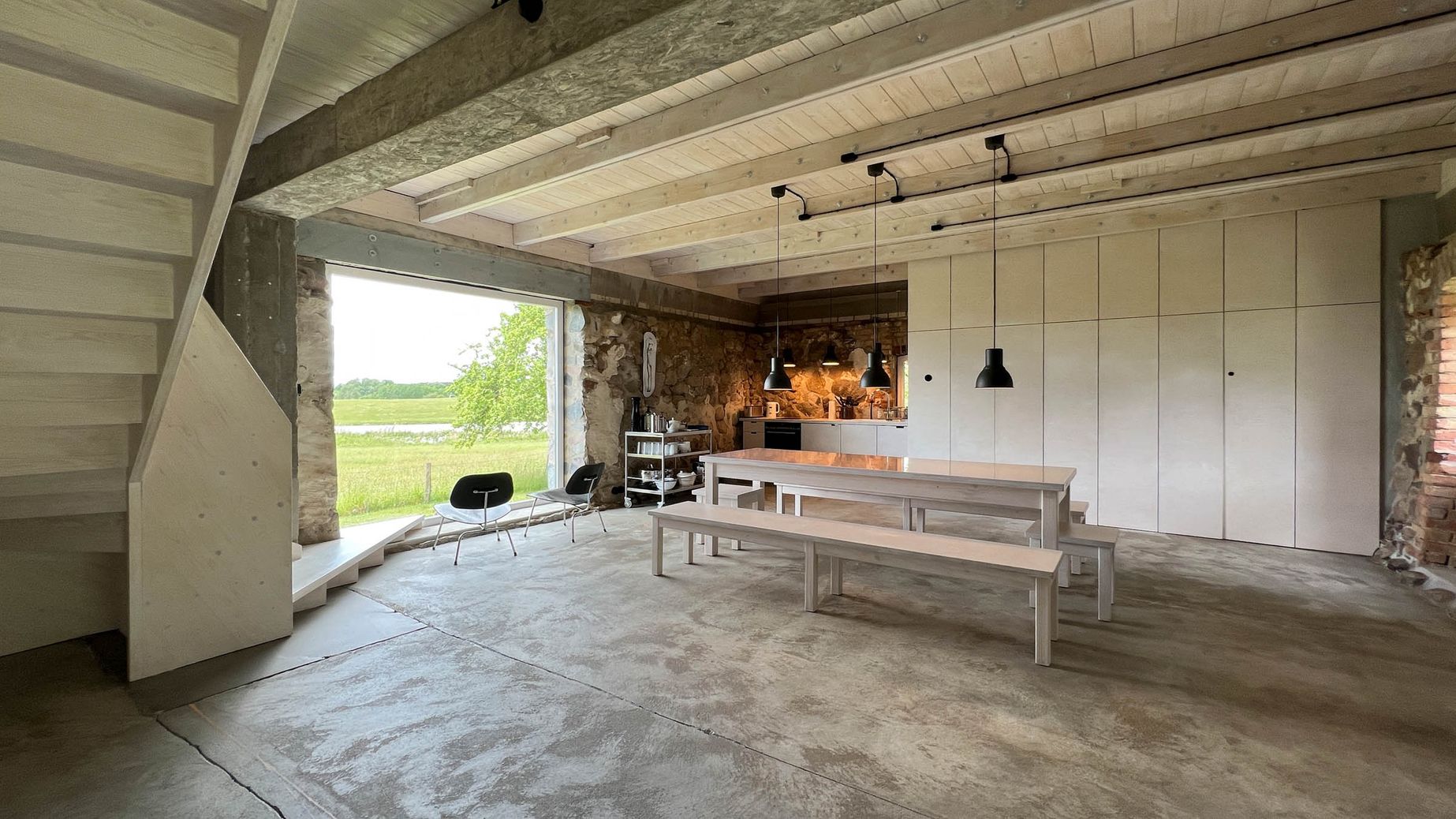
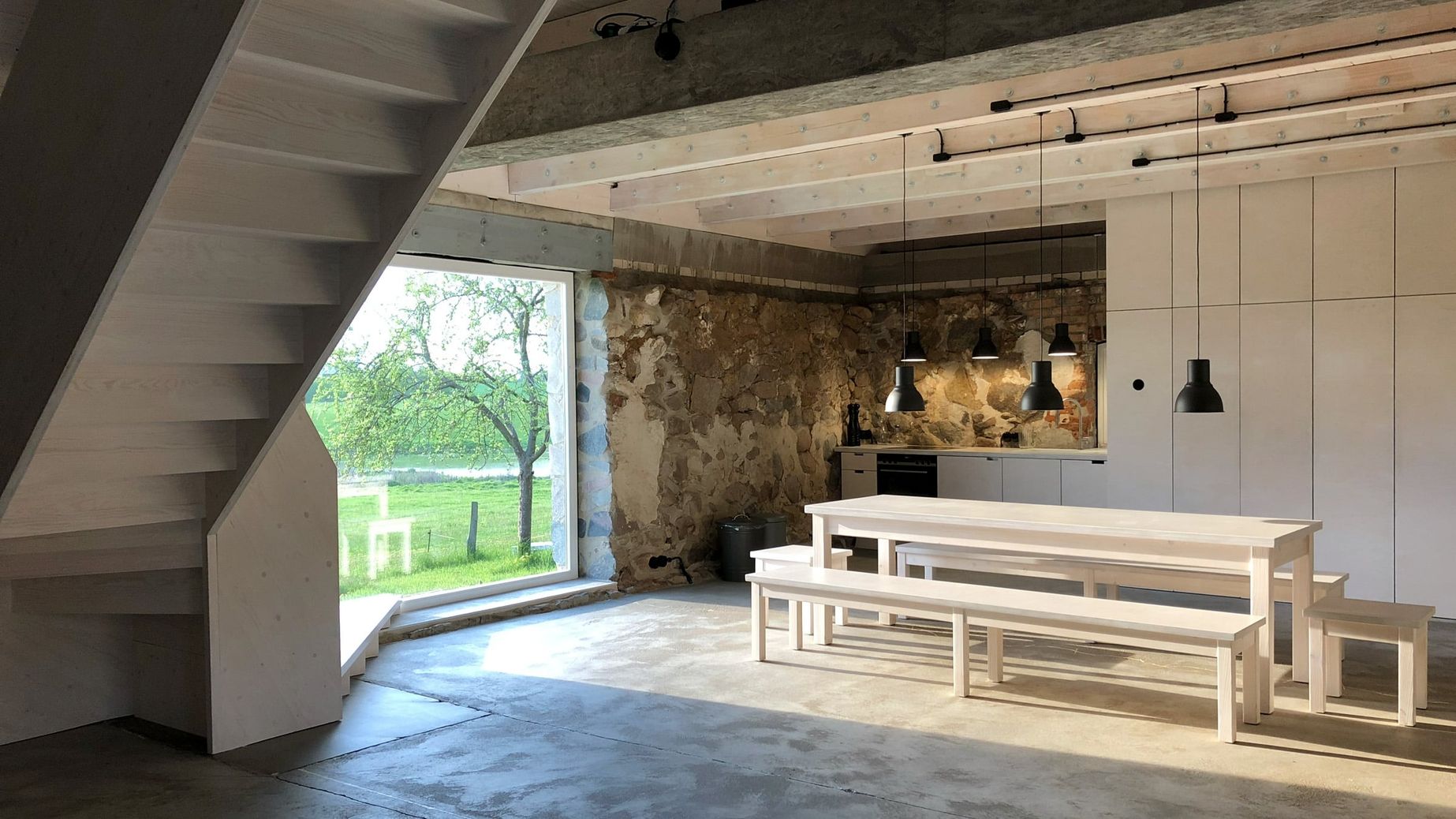
Of course, there is also a reversal of time. In the past, people used to shield themselves from the landscape and the weather inside a four-sided farmstead like this. Today, we have the means to reverse that relationship, even without a large budget. What interests me is understanding exactly where such an opening needs to be in order to achieve a scenographic quality. In this case, it was placed directly opposite the large barn door and in precisely the same dimensions. It is not about creating the largest possible structural intervention, but about achieving the right proportion within a particular site.
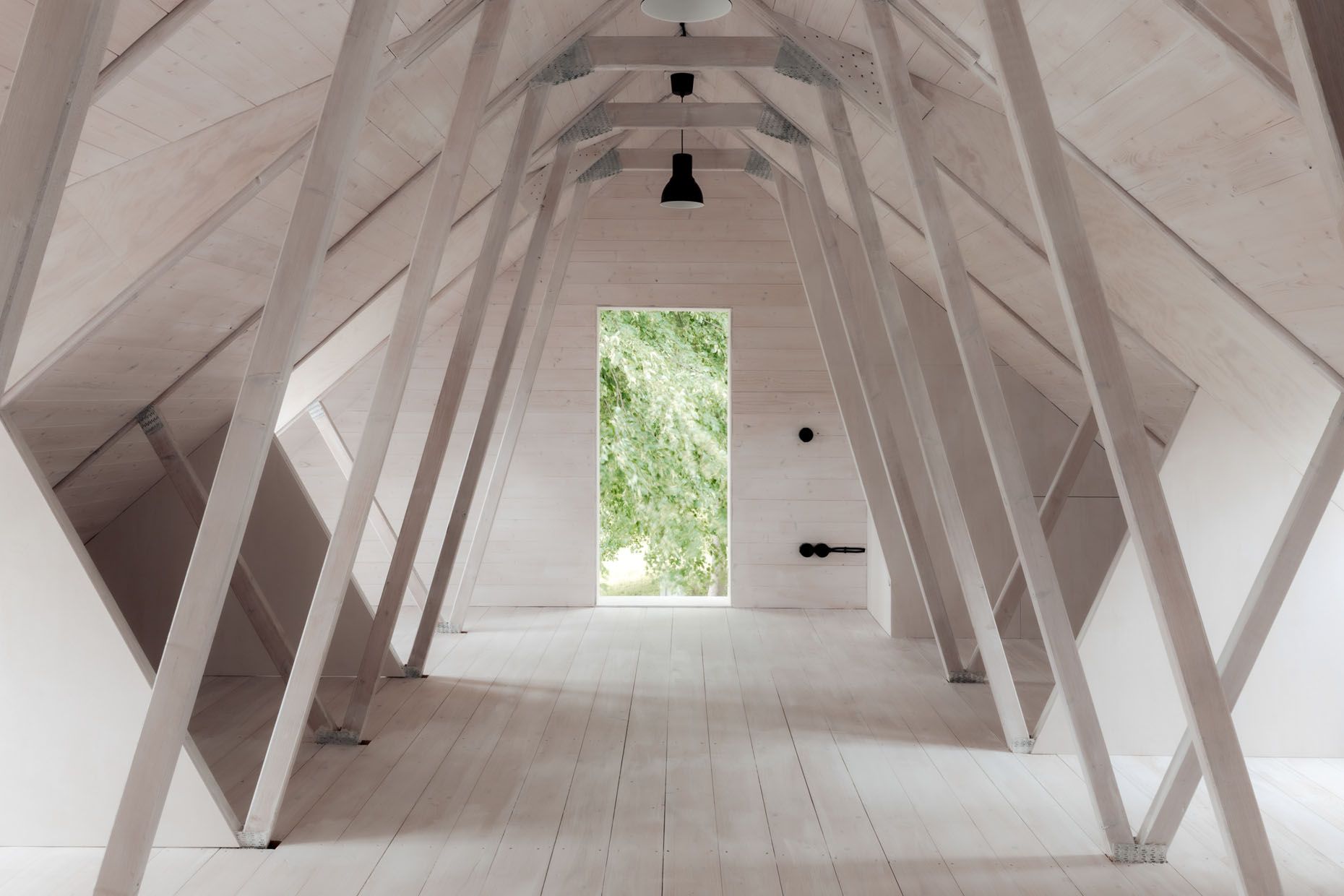
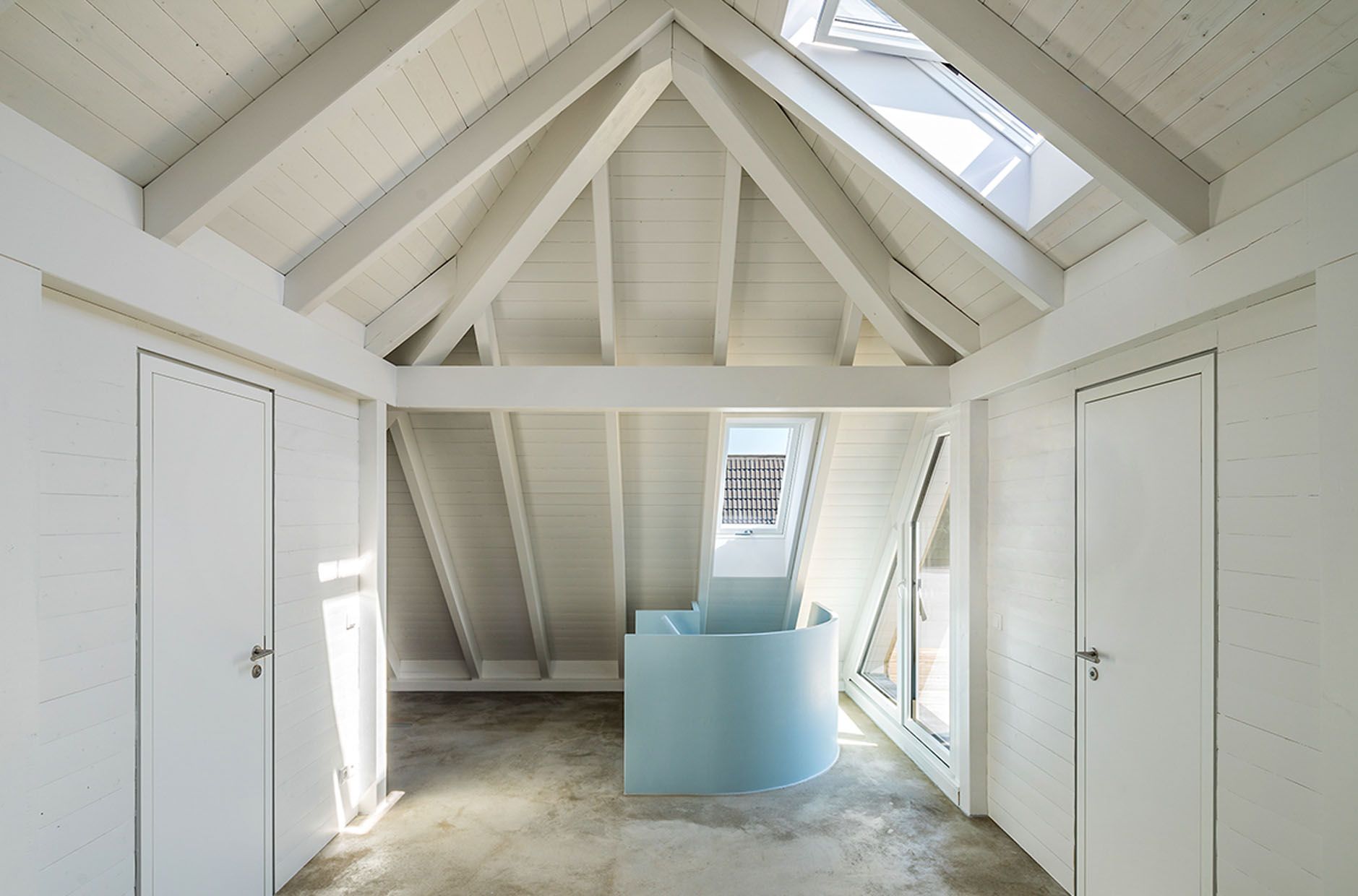
The opening then happened to be precisely where a ring beam and a supporting beam already existed, having been added during roof repairs in 2010-11. We then designed the staircase to be situated at this point, allowing us to stage the act of moving up and down at the most important point in the building. From a construction perspective, this is initially a highly mysterious junction because at the beginning of the project nobody knows whether the geometry will actually work.
At that point, the simple idea becomes complex. Yet if that complexity can be resolved through drawing or model-making, the entire project falls into place and arrives at what I would call the Zen moment.
In our office, these critical points have acquired a metaphorical name: we call them “seismic points” because, like a seismograph, they determine whether a project succeeds or not.
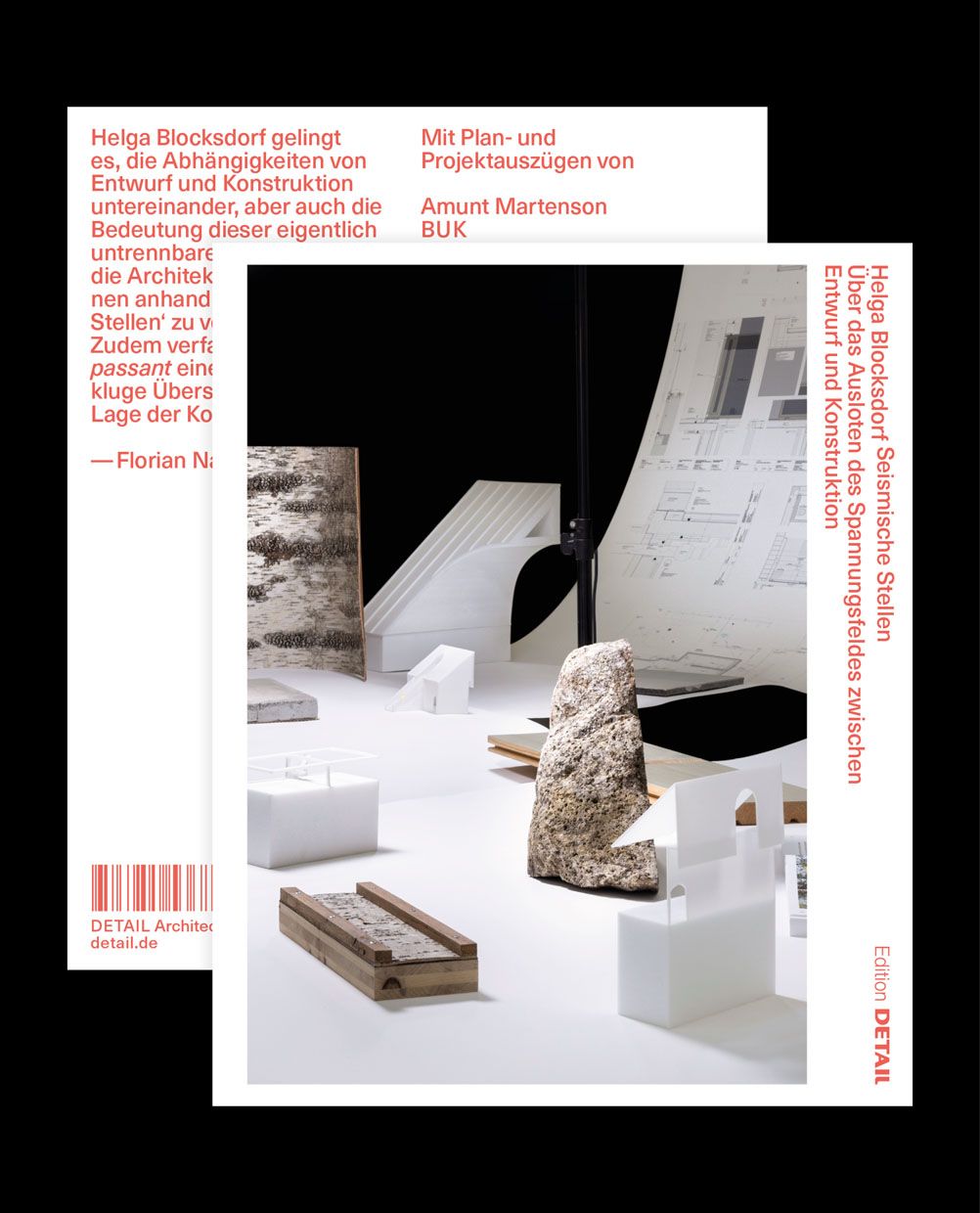
At the end of May, my new book on this subject was published. It examines a range of projects and drawings to illustrate the structural design strategies that architectural practices employ to resolve these challenging constructive intersections.
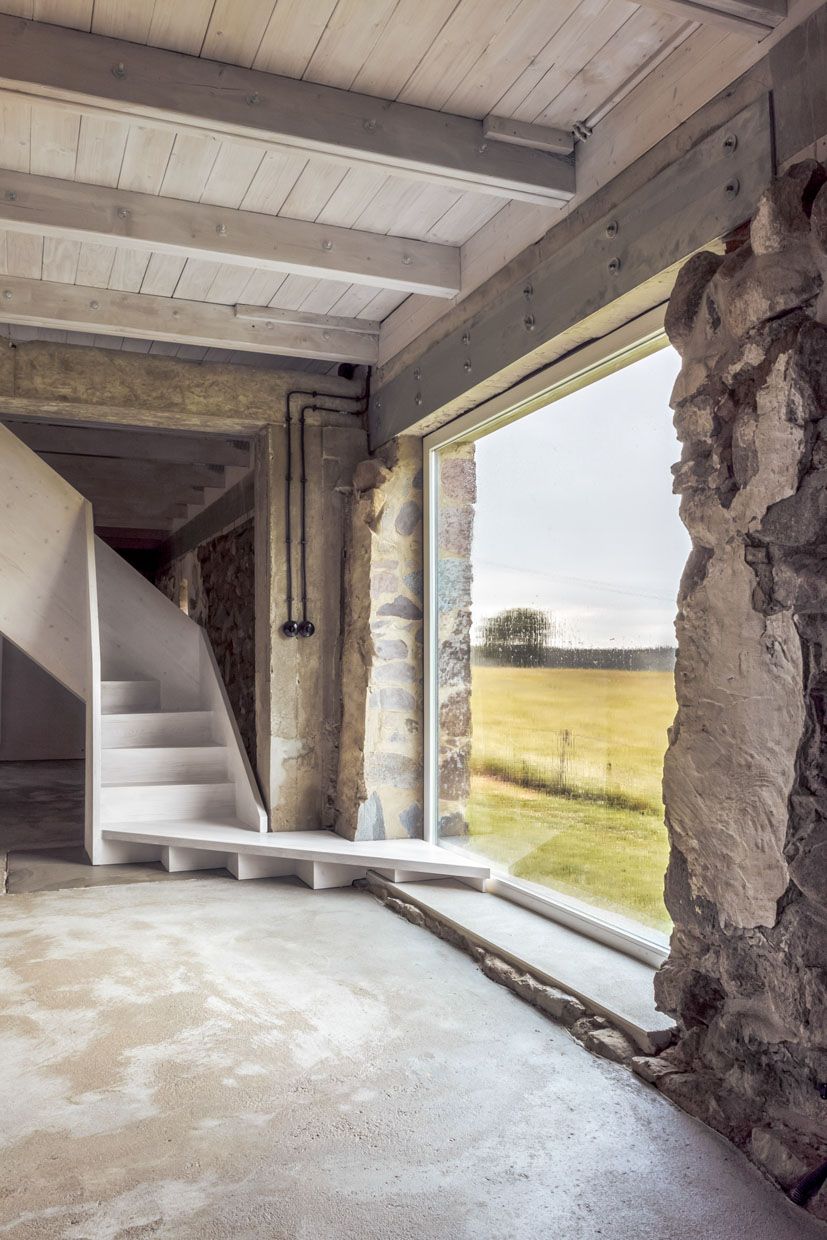
The transition from window to staircase in Studio Uckermark is indeed very beautiful. Was it an expensive solution?
Not at all. The important thing was that we brought the model to the construction site and showed it to the craftspeople. They looked at it, immediately understood it and simply built it – for exactly the same price as any other timber staircase of comparable design quality.
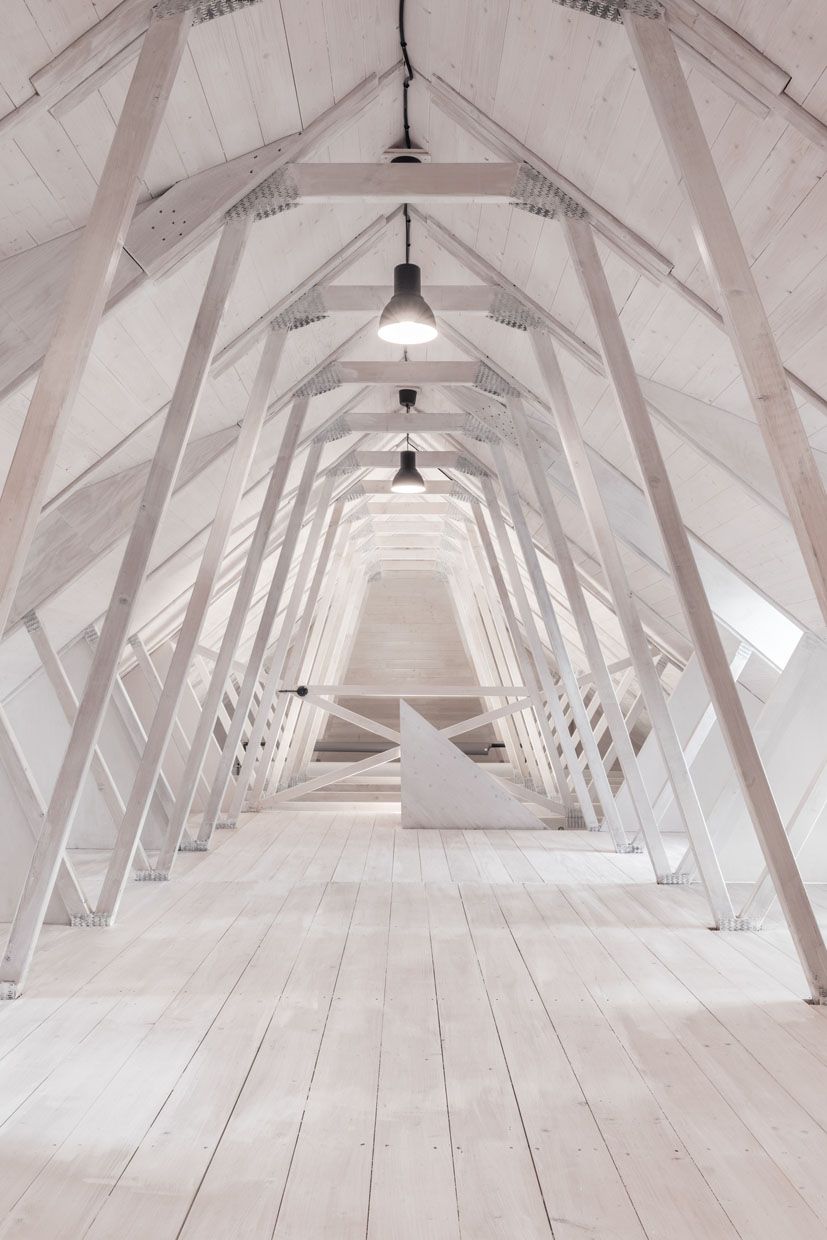
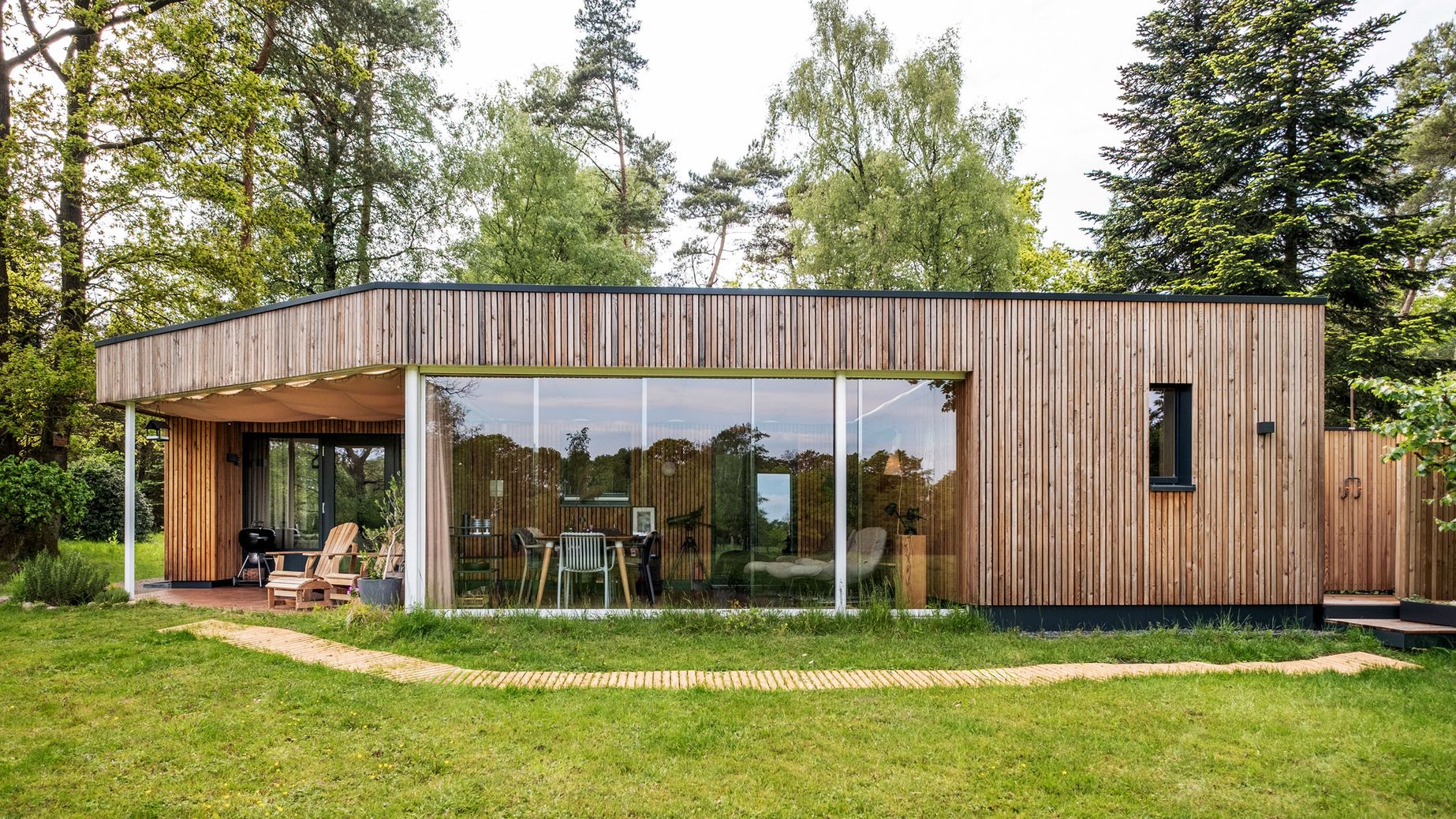
The building was originally conceived as a photography studio. So its current use as holiday accommodation was not part of the original brief?
Correct. The owner is a photographer himself. The idea of creating a temporary retreat only emerged later during the pandemic.
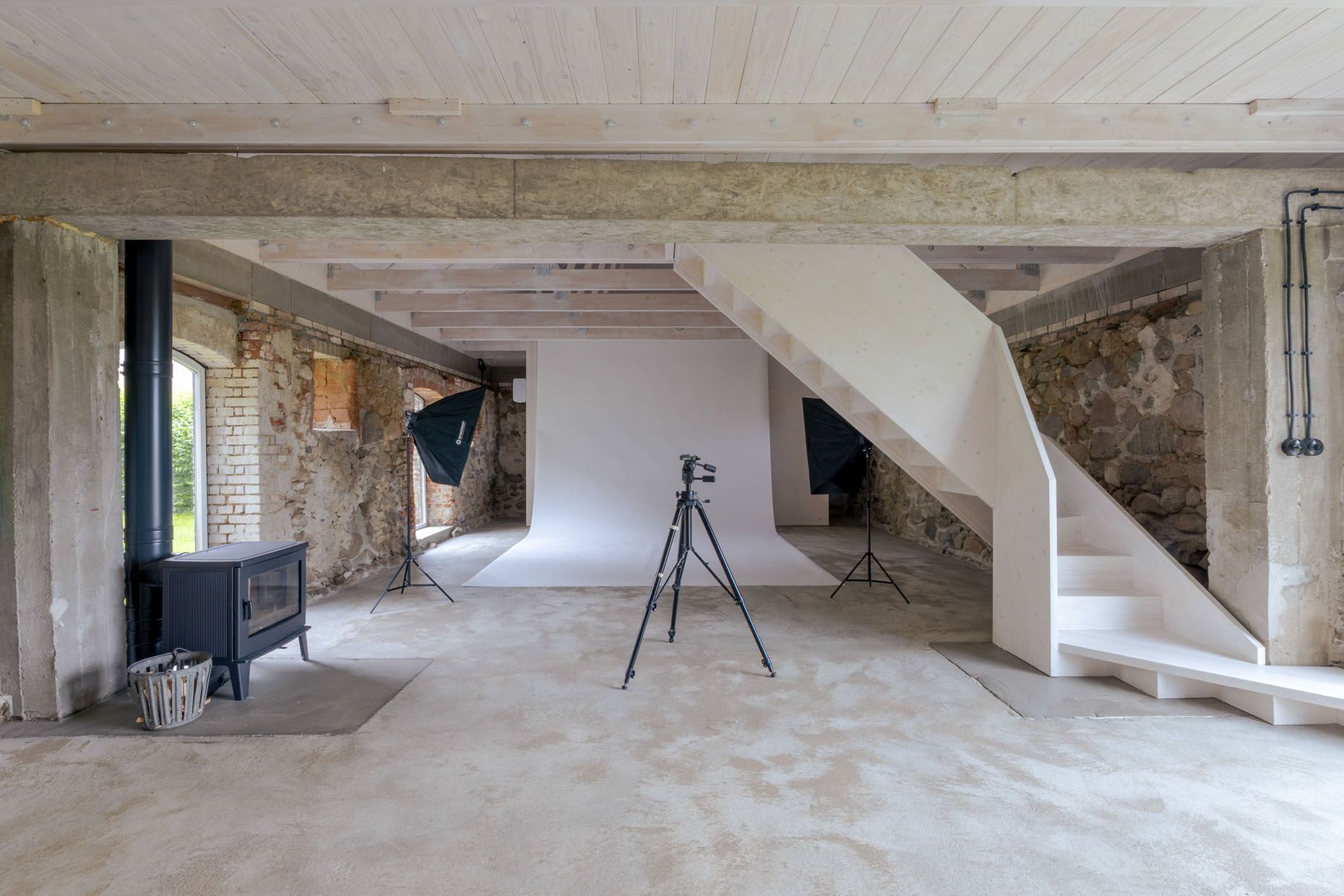
Have you used the house yourself?
I have actually stayed there twice. Once privately with my family and once together with Katharina Benjamin and Matthias Ballestrem for a working retreat. Both occasions were very special.
This is also something I always discuss with clients beforehand: how wonderful it can be, when changing one’s surroundings, to encounter unusual spatial situations and to realise that life can be lived differently, that comfort can take other forms. For example, that you might walk into a wardrobe to take a shower.
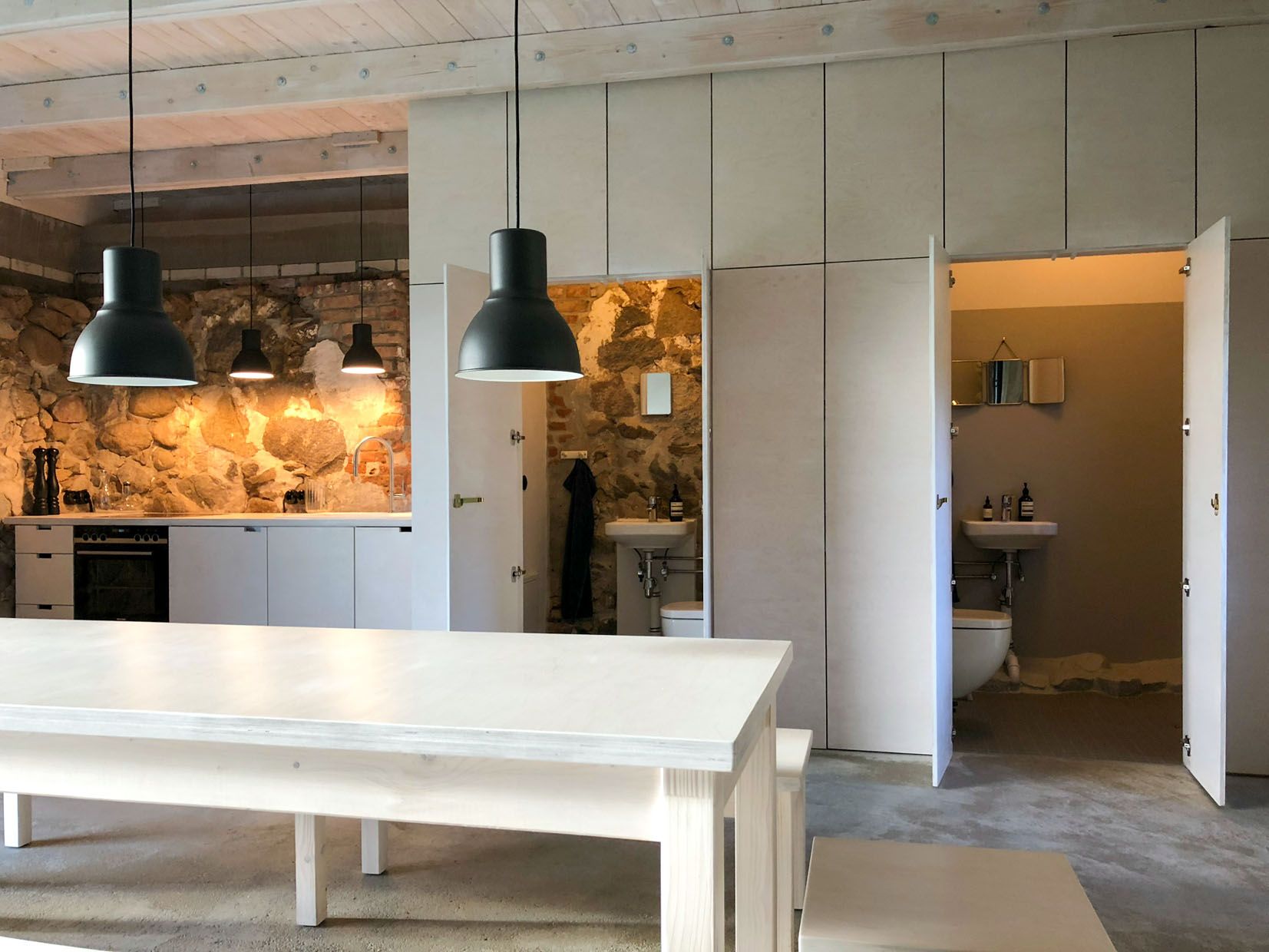
And that, temporarily, there may be only four centimetres of wall unit between you and the rest of the world. In my view, engaging with these comfort zones and allowing oneself to experience them can become a moment of relaxation.
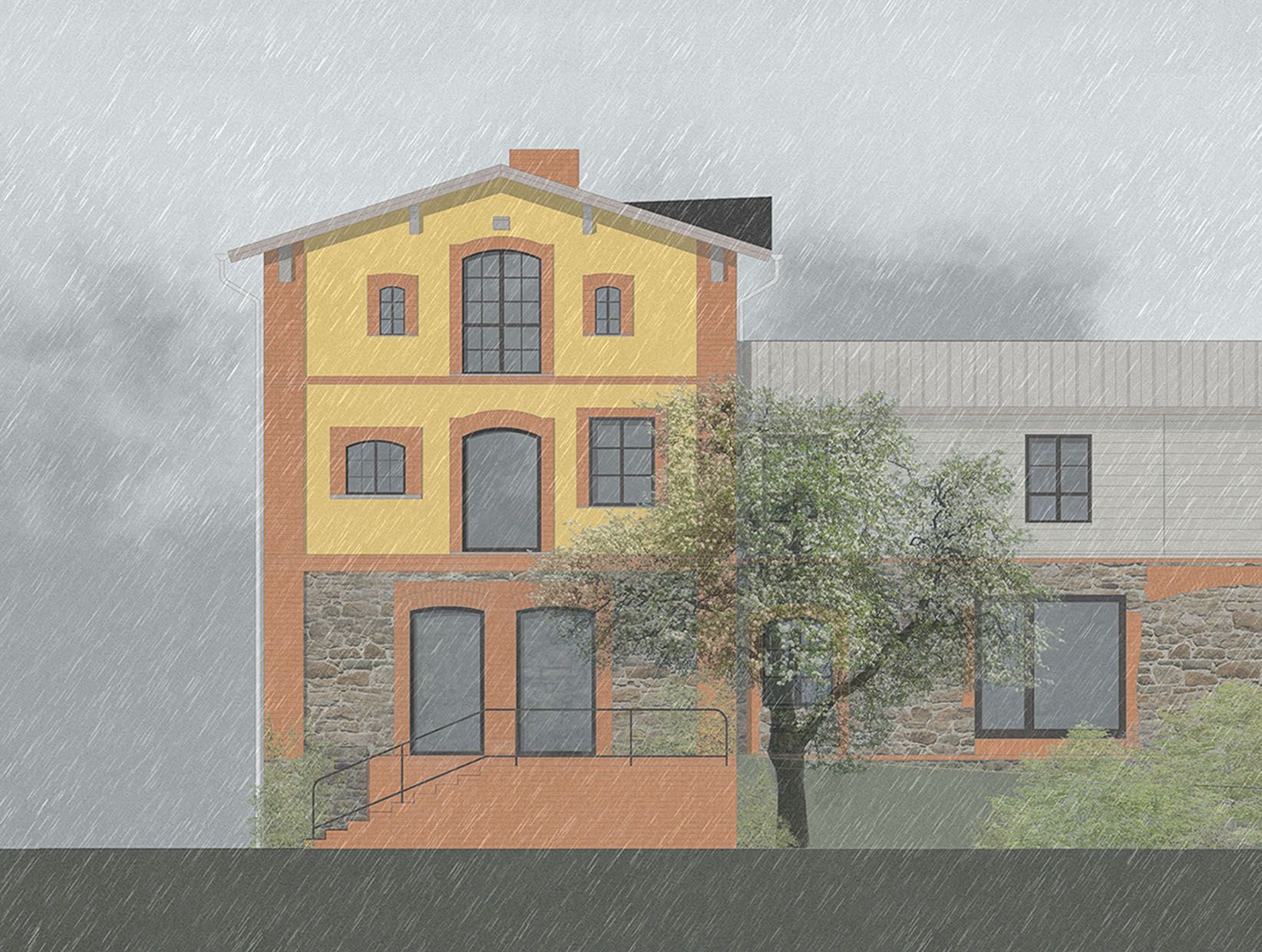
Have you designed other holiday retreats?
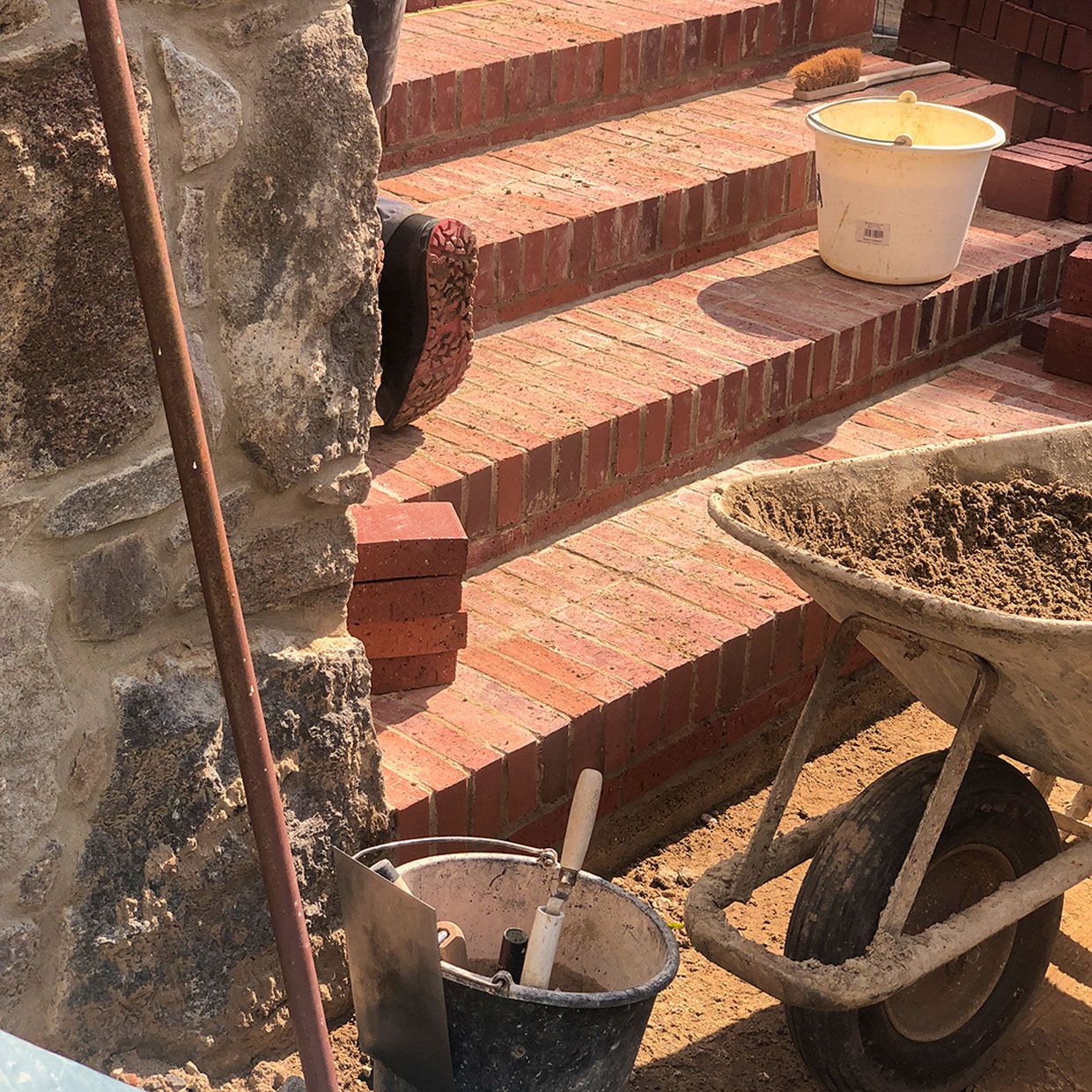
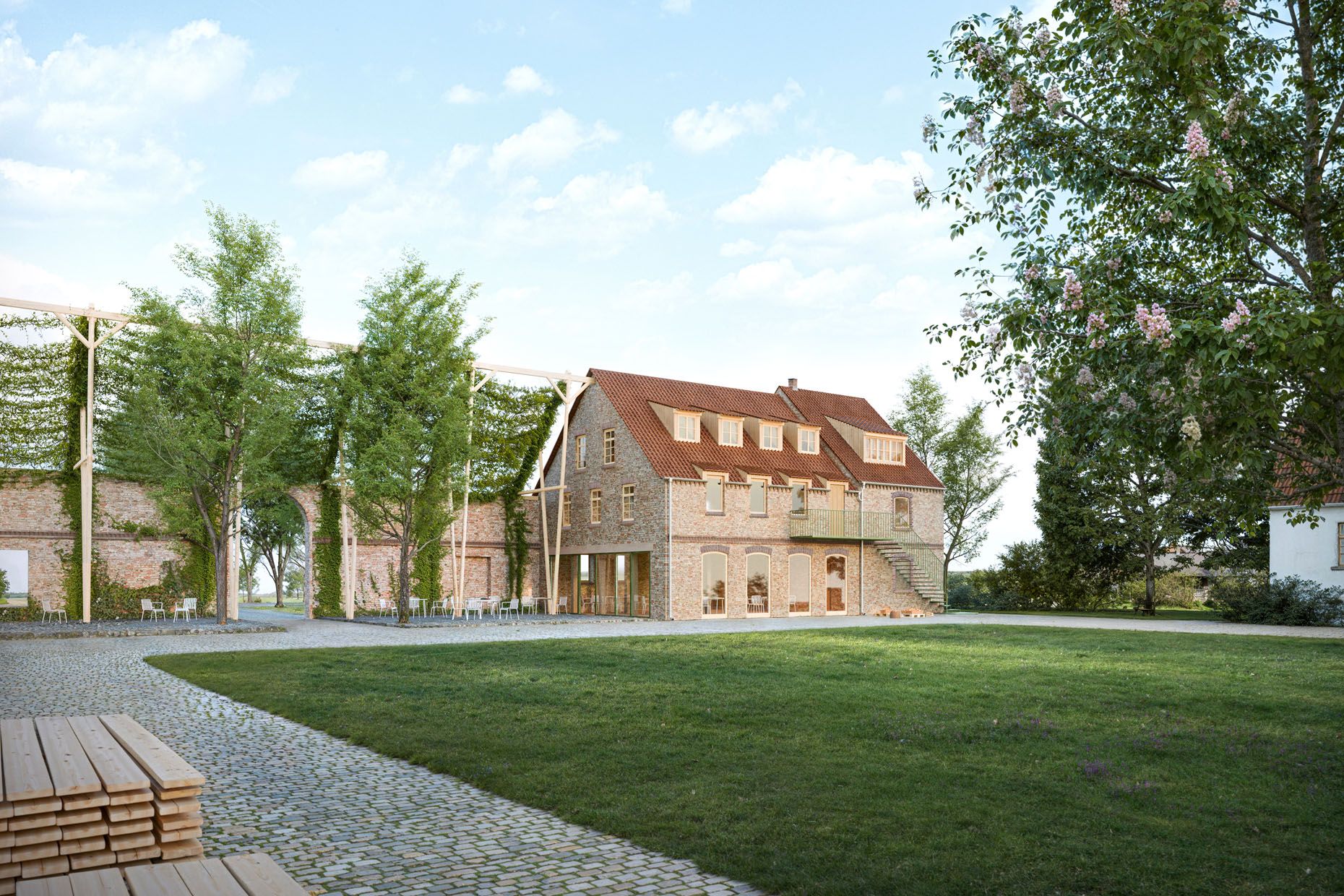
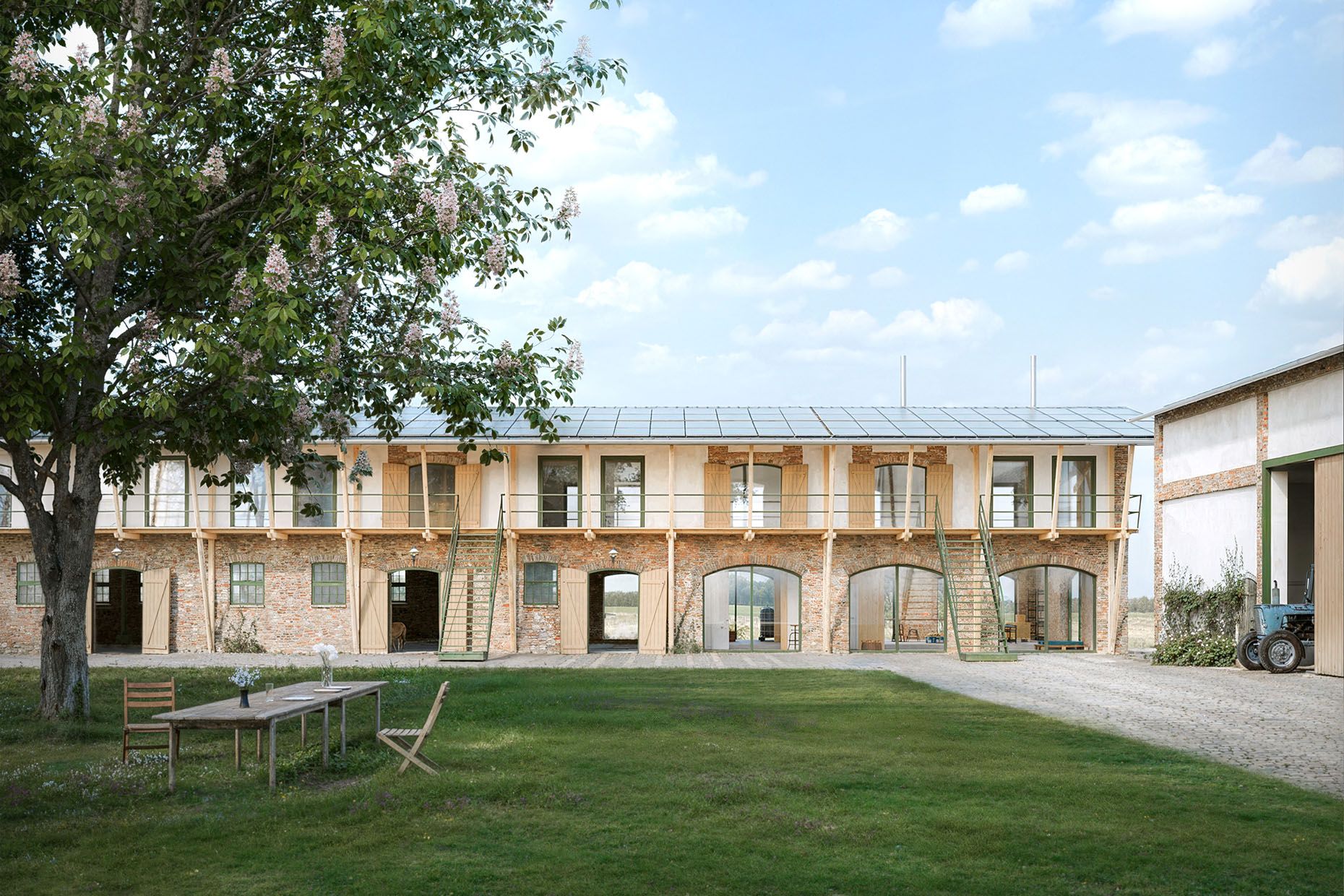
As a matter of fact, the publication of the project on your platform reached an incredible number of people and generated several enquiries for the conversion of existing buildings into holiday homes. One project in Arnimswalde is currently nearing completion, and there are another two or three projects in development.
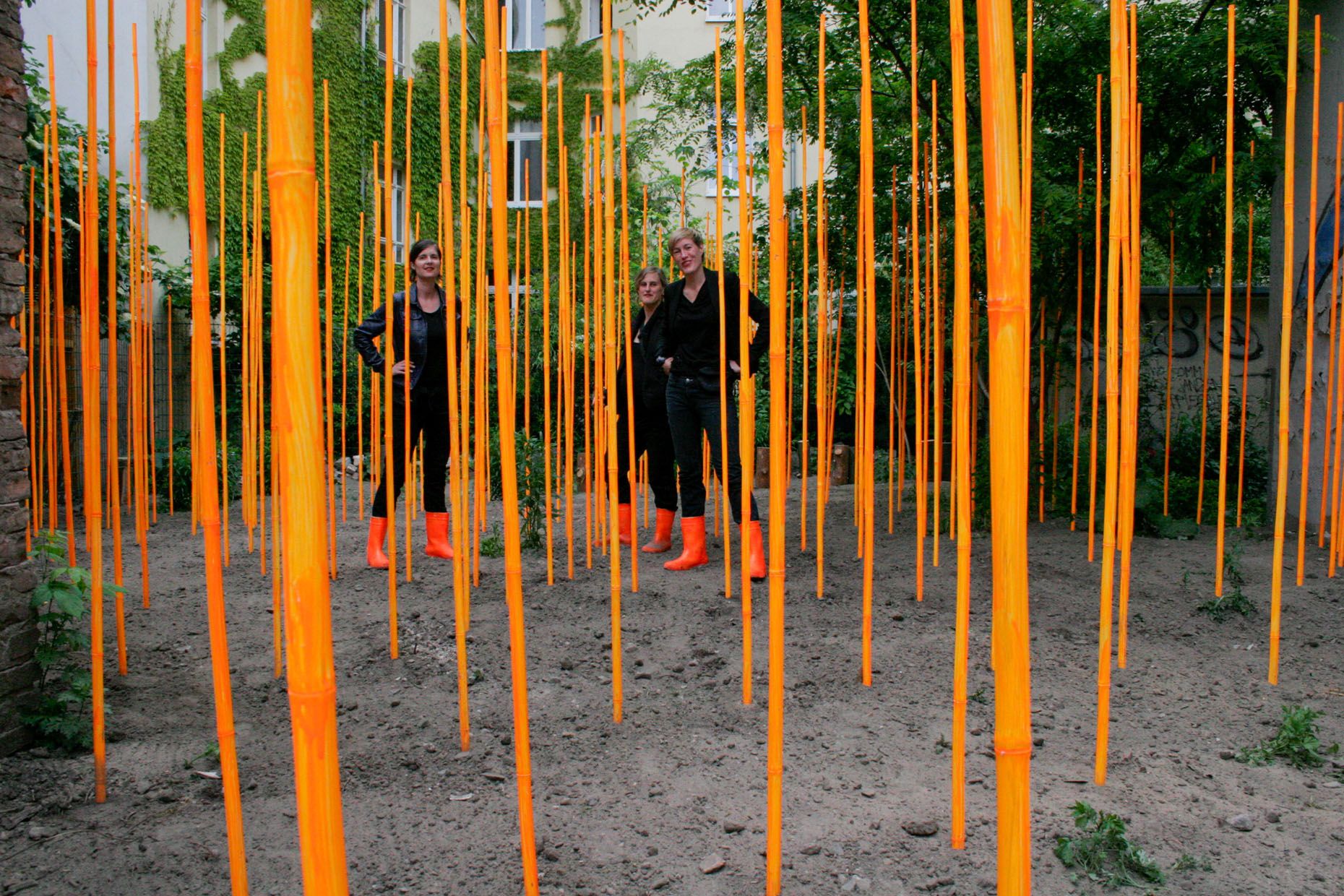
Let’s briefly return to the question of staging: you were once part of the artists’ collective après-nous. Are there parallels between the artistic work you produced then and your architectural approach today? Or perhaps even further developments?
Catharina Förster, Florence Girod and I got to know each other at Berlin University of the Arts. Like many of our fellow students at the time, we were deeply interested in what was happening in other departments, especially among painters and sculptors. Being part of that Berlin scene and participating in the discussions it generated ultimately led to the formation of the artists’ collective – or architectural band, as we called it – towards the end of our studies. At first, this was not a particularly reflective process. More than anything, there was a desire for expression, for moving beyond the A3 sheet of paper that represented the largest printable format available to us as students.
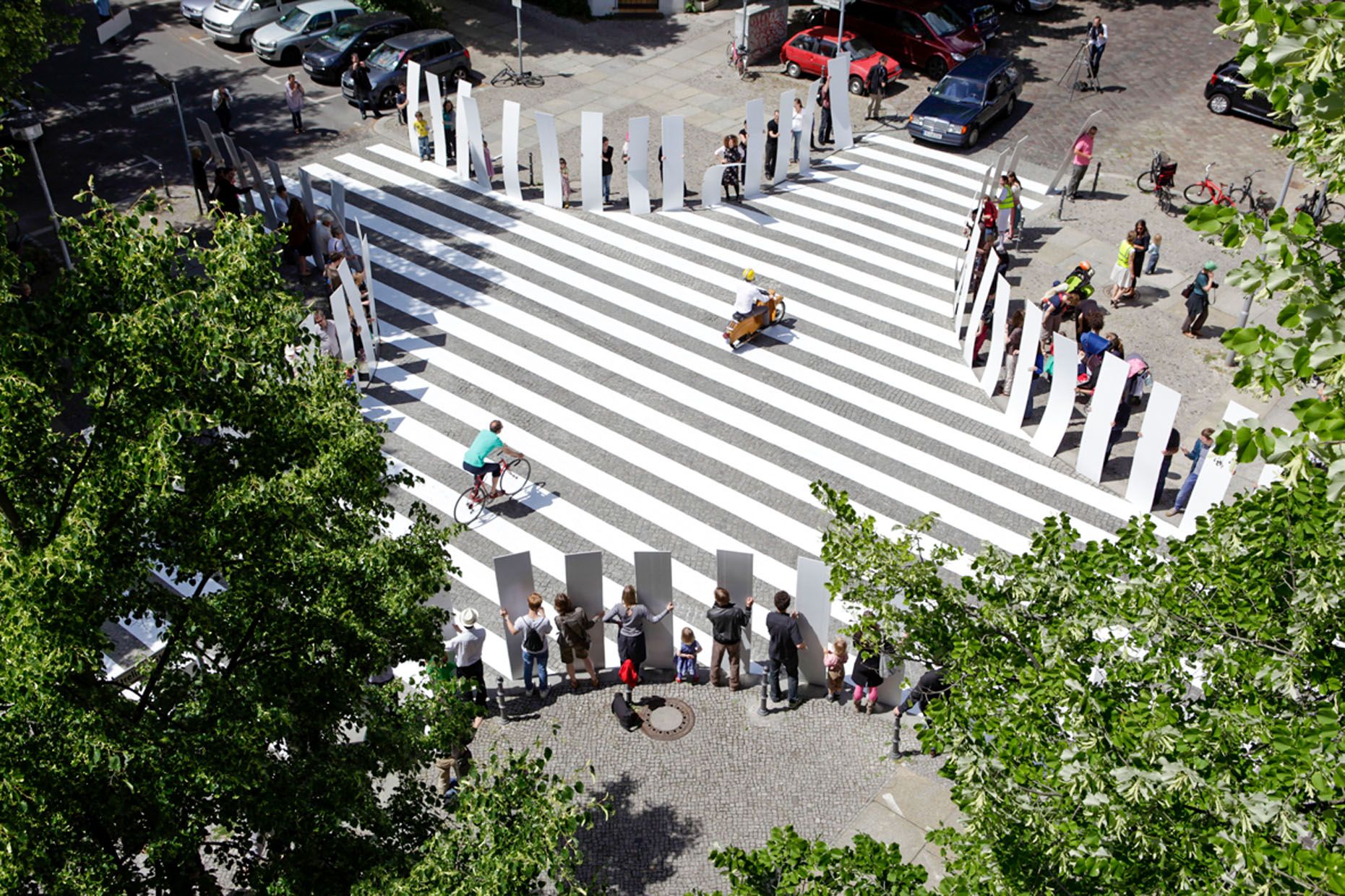
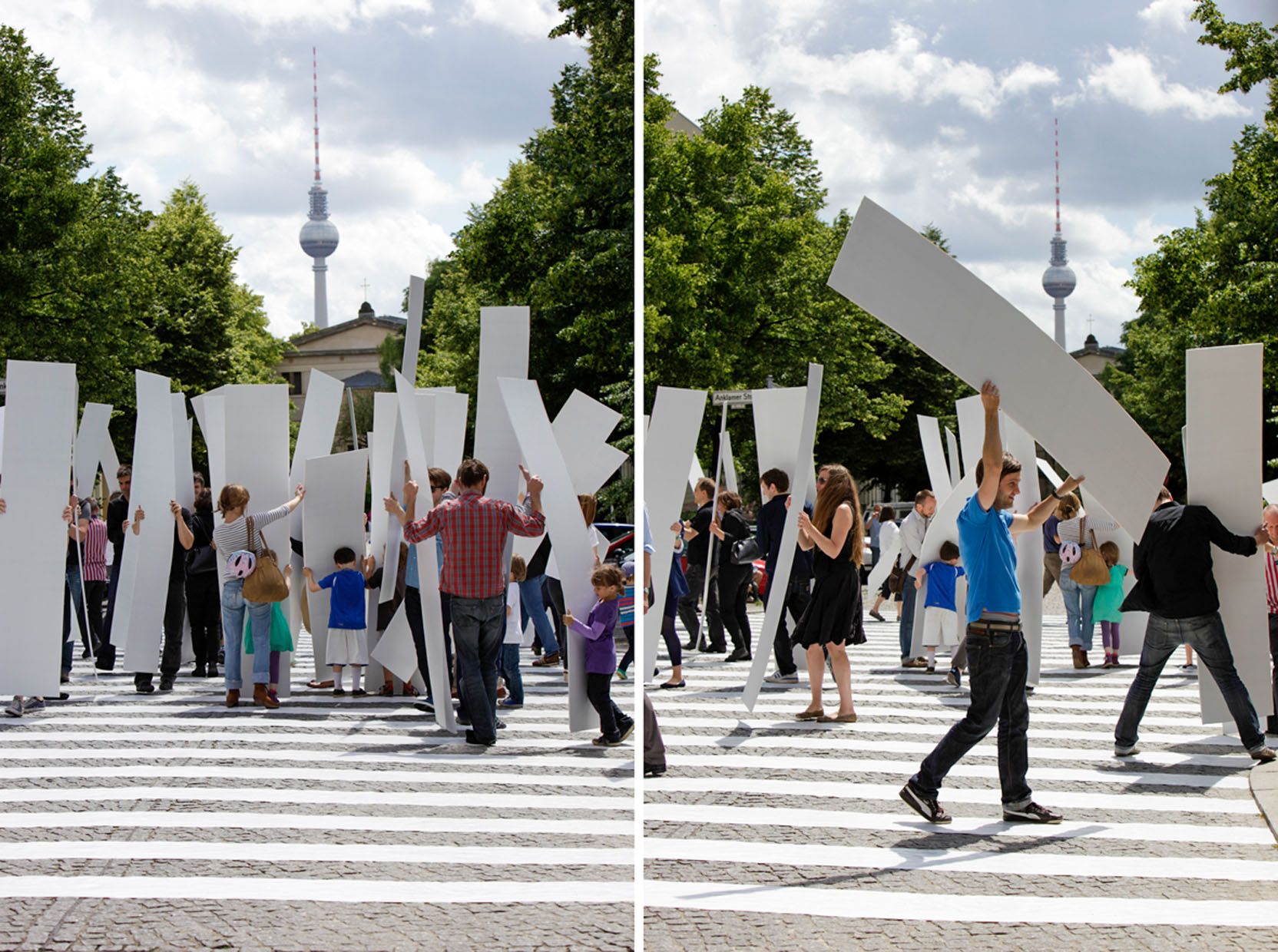
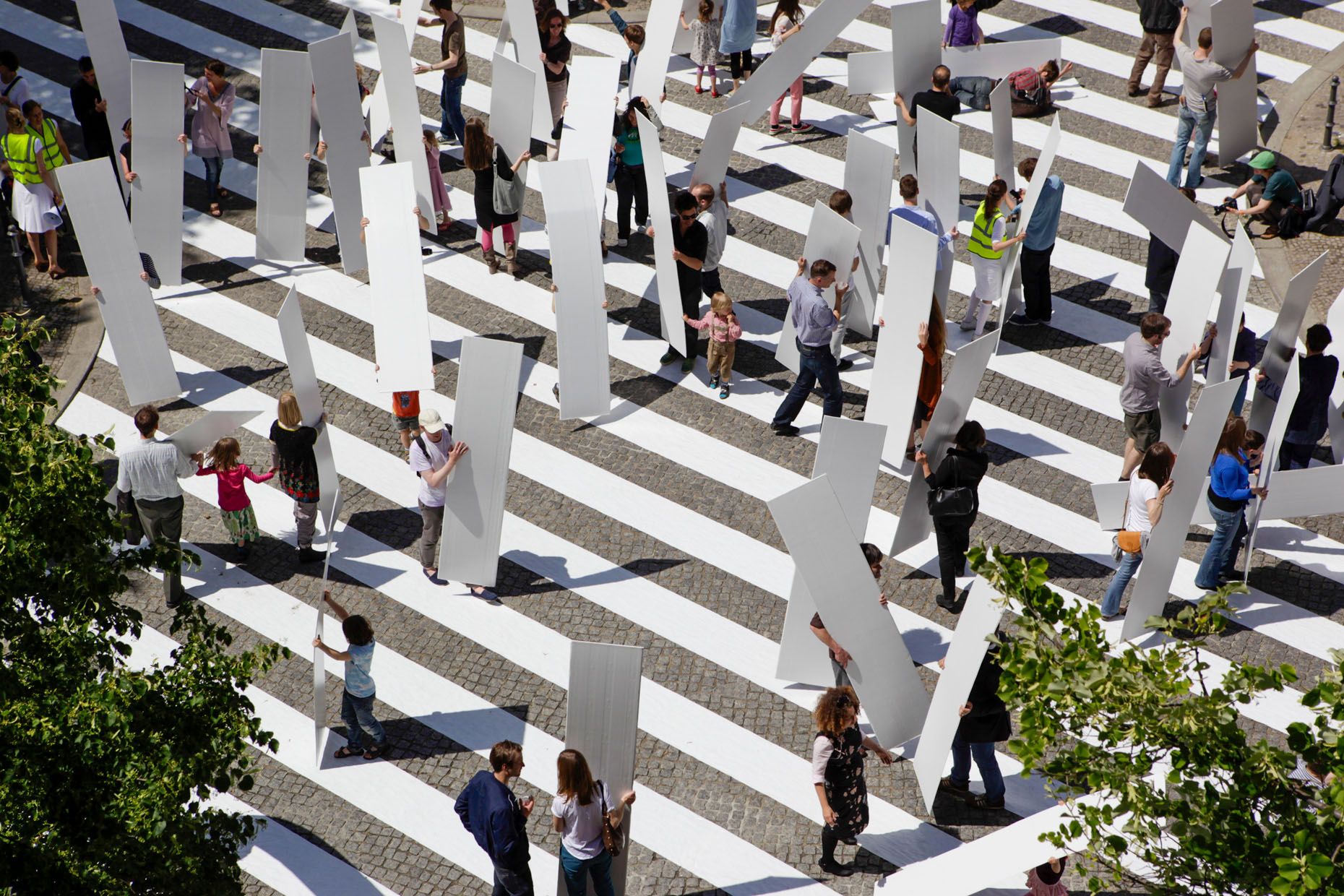
For me, the great continuity lies in precision. That has remained with me to this day and was already present during my time at Staab Architekten, where I worked among other things in site management. Seeing these aesthetic, artistic experiments through to the end – that is, thinking them through right down to the last millimetre – was certainly an important foundation.
At the time, we also spent a great deal of time discussing the artistic subtext that architectural work can convey.
That has always interested me, given the fact that architecture does have a strong craft-based dimension. That said, I do not wish to invoke the myth of the architect as artist. Rather, it is about a conceptual and abstract way of thinking. What spatial effects do particular interventions create? How can such ideas actually be realised?
For all three of us, that way of thinking remains a driving force in everyday practice. We are still close friends and, officially speaking, we never actually ended our collaboration – we’ve just taken a temporary break. (smiles)
Our impression of the art projects was that they, too, created spaces with a distinctive atmosphere – spaces that deliberately interrupted the flow of everyday perception and thereby encouraged reflection. Is that a fair assessment?
Yes. What we staged as après-nous – or perhaps more accurately, presented in the city as a stage – was always about the question: who does this city belong to? It is a question that continues to concern younger generations deeply: who actually owns public space? For us, it was always important that these informal discussions should be enjoyable. The interruption of everyday routines should feel celebratory, almost like a party.
Are there parallels with your built architecture – special spaces that temporarily alter perception?
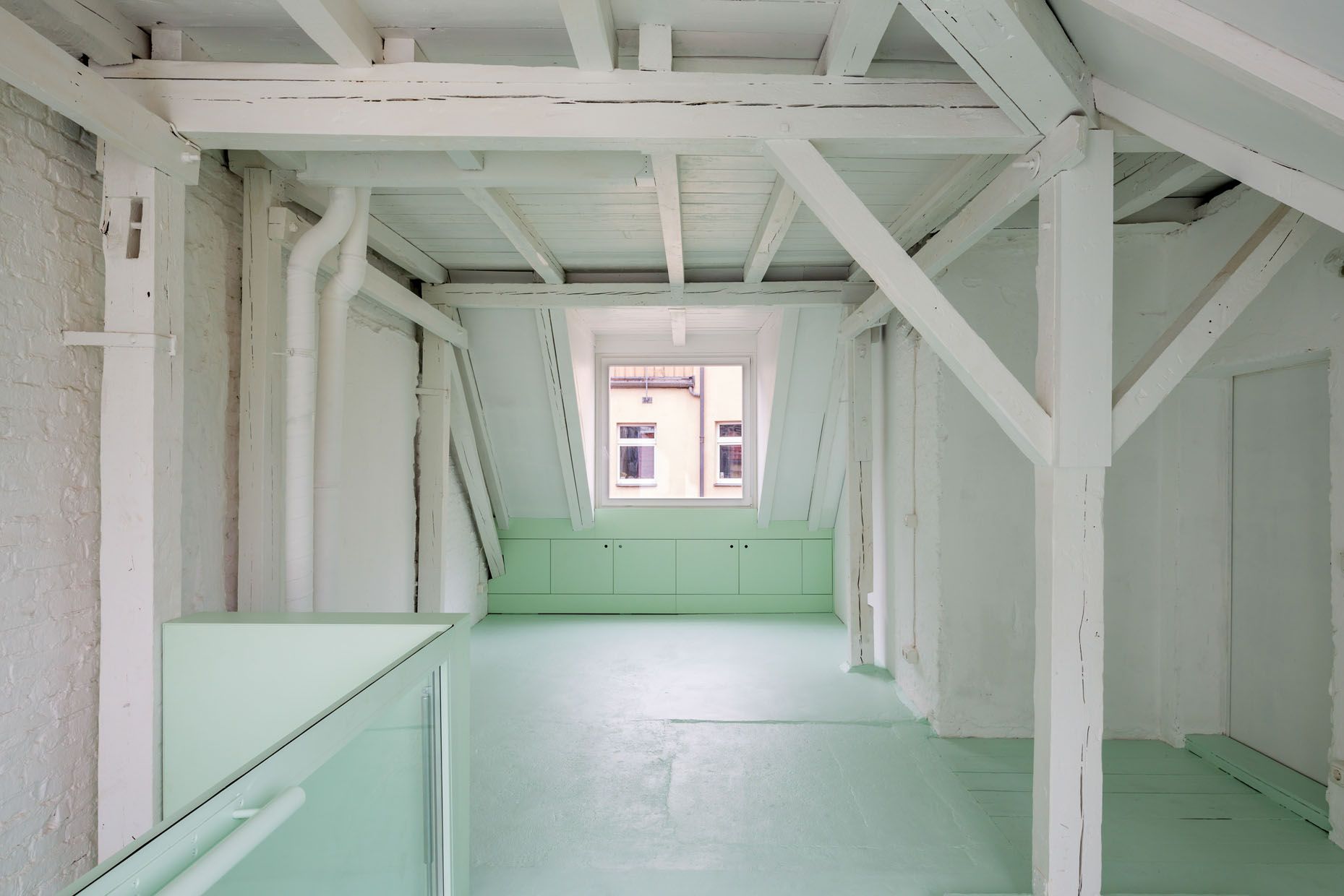
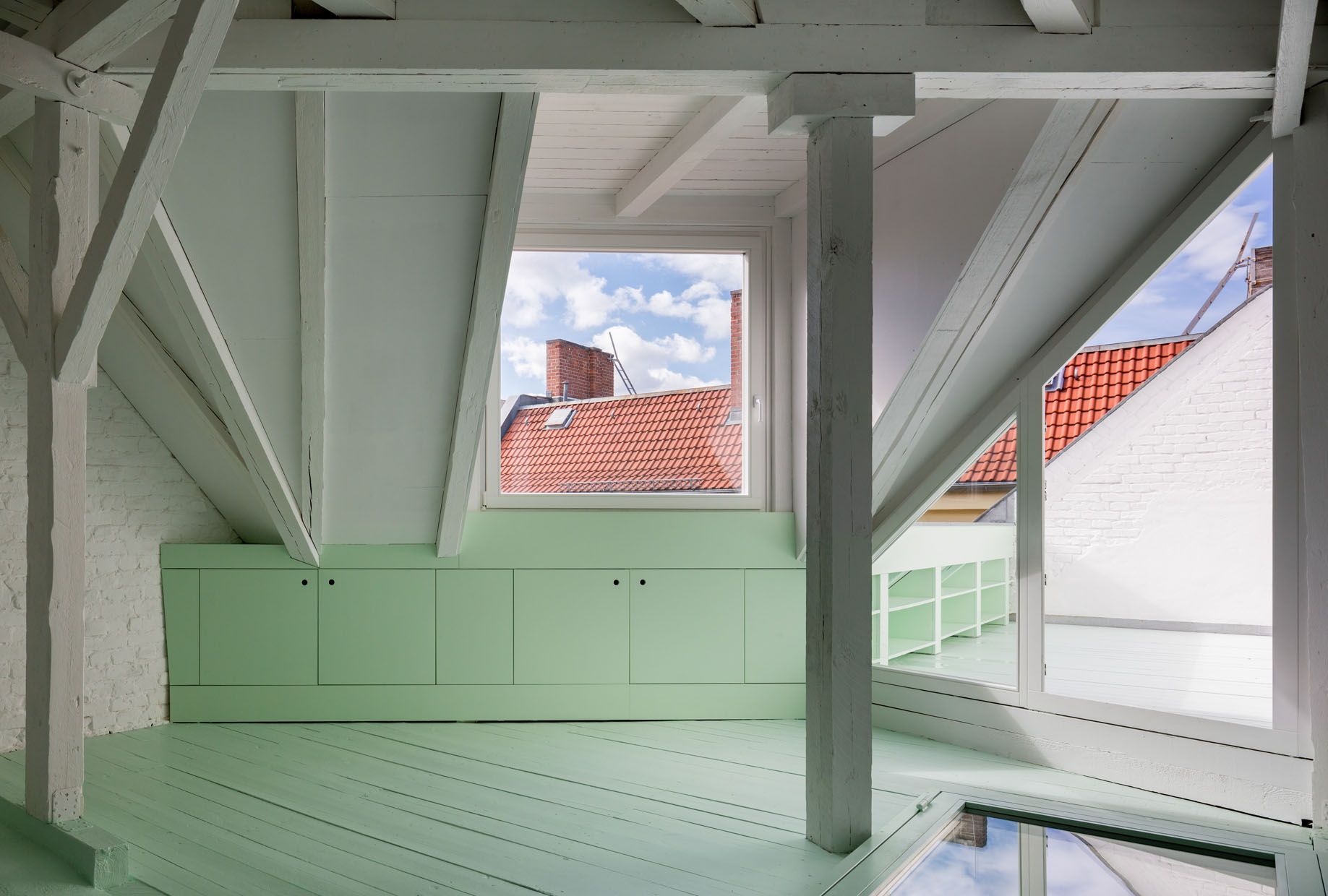
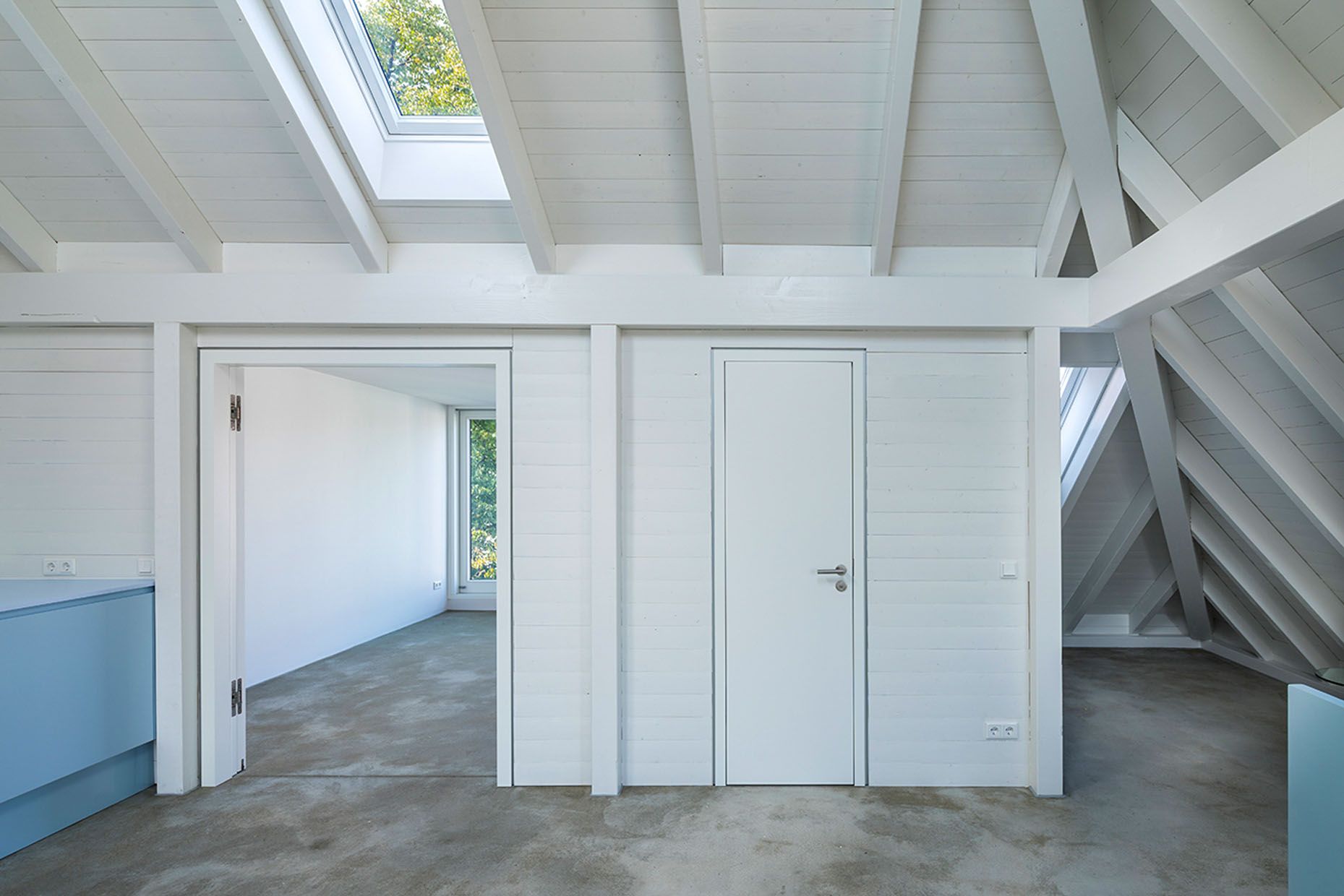
Yes, there is often an overlap between the artistically motivated projects and certain architectural projects, particularly when the latter are also designed as a temporary experience for the visitor or user, as in Weimar or Studio Uckermark.
People who happened to drive past the junction of Strelitzer Strasse and Anklamer Strasse in Berlin, for example, will remember that encounter for years to come: souvenirs.
I think that, as designers, we all carry within us the ability to reveal the particular qualities of places, each in their own way.
What does a project or place – whether public or private – need to have in order to spark your interest and make you want to take on the commission?
I would say that, in the broadest sense, it needs some form of character. That character may even be generic.
With Karel and Jana from Studio Uckermark, the appeal was immediately obvious when we first arrived. We already knew how limited the budget would be and that we would only take on the project because we found the place itself so beautiful.
Of course, there is also a progression over the course of an architect’s life. Today, I would like to work on more projects in the public realm again, although I often find myself blocked by the competition system and public procurement in Berlin frequently appears rather opaque to me.
I’d absolutely love to design a school or a nursery one day, not least so that I could construct a two-storey building using mixed earth-and-brick masonry, the type we are currently researching at TU Braunschweig together with Moritz Scheible, Linda Gehrke, Elisabeth Endres, Evelien Dorresteijn and Thorsten Leussmann.
Beyond pure architecture itself, I am also be interested in such projects so that I can better address the associated social issues. And I would very much like to discover whether seismic points can also be realised at scales beyond those I have worked with so far. It may sound trivial, but I suspect it is not.
How do you manage to balance teaching, research and practice?
Of course, it can sometimes feel like a balancing act. But as Baharak Tajbakhsh from Birkhäuser Verlag once put it so well: if, as an architect, you are working on the major factors influencing climate and resource issues, striking a balance between practice, teaching and research is a prerequisite for developing a deeper understanding of these issues.
You have to bear the challenges constantly in mind if you want to bring about change. In that respect, practical work at the limits of what can be built is a great advantage. Basically, it generates five ideas every day as to what research needs to be carried out.
Thank you very much for this wonderful and insightful conversation, Professor Blocksdorf.
Prof. Helga Blocksdorf studied architecture at the Bauhaus University and the Berlin University of the Arts (UdK). In 2013, she founded her practice, HB/A. She has been Professor of Building construction at the Technical University of Braunschweig since 2021; prior to that, she was a visiting professor at the Bauhaus University in Weimar. In 2025, she was awarded her PhD at the Technical University of Berlin as part of the Design-Based PhD programme.
Interview: The interview was conducted by Britta Krämer and Ulrich Stefan Knoll.
Photos: Prof. Helga Blocksdorf © Helga Blocksdorf / Architektur (Cover photo), Constructive Disobedience © hla.studio (1/2), Kulturportal Weimar © Simon Menges (3–8-) © Ruben Beilby (9–11), Studio Uckermark © Ruben Beilby (12–16, 19/20) © Karel Kuehne (21), Seismische Stellen © Edition Detail, DETAIL Architecture GmbH © Katerina Trakakis, Any Studio (18), Arnimswalde – Plans/Visualisations © Helga Blocksdorf Architektur (22–24) Photo © Lukas Beer (25), après-nous © après-nous (26), Jam Session © Maria del Pilar Garcia Ayensa (27–30), Gut Falkenhain © Matthis Pabst (31/32), Grünes Dach © Marcus Ebener (33/34), Blaues Dach © Marcus Ebener (35/36)
0 Comments