Designed by architects for travel enthusiasts: Our curated collection of outstanding holiday accomodations — also via map. Do you already know our new entry?
URLAUBSARCHITEKTUR is Europe’s leading online portal for architecturally outstanding holiday homes. We’ve published a series of award-winning books—available in bookshops or directly in our online shop.
When former production sites become holiday destinations, it means outwitting the destructive principle of constant activity. Welcome to eight accommodations with industrial flair.
Designed by architects for travel enthusiasts: Our curated collection of outstanding holiday accomodations — also via map. Do you already know our new entry?
When former production sites are turned into places for holidays, it means outwitting the destructive principle of constant activity. Welcome to eight accommodations where once industrious factories have been thoughtfully transformed into relaxed retreats with a distinctive industrial flair.
in March 2026
Beautifully unproductive
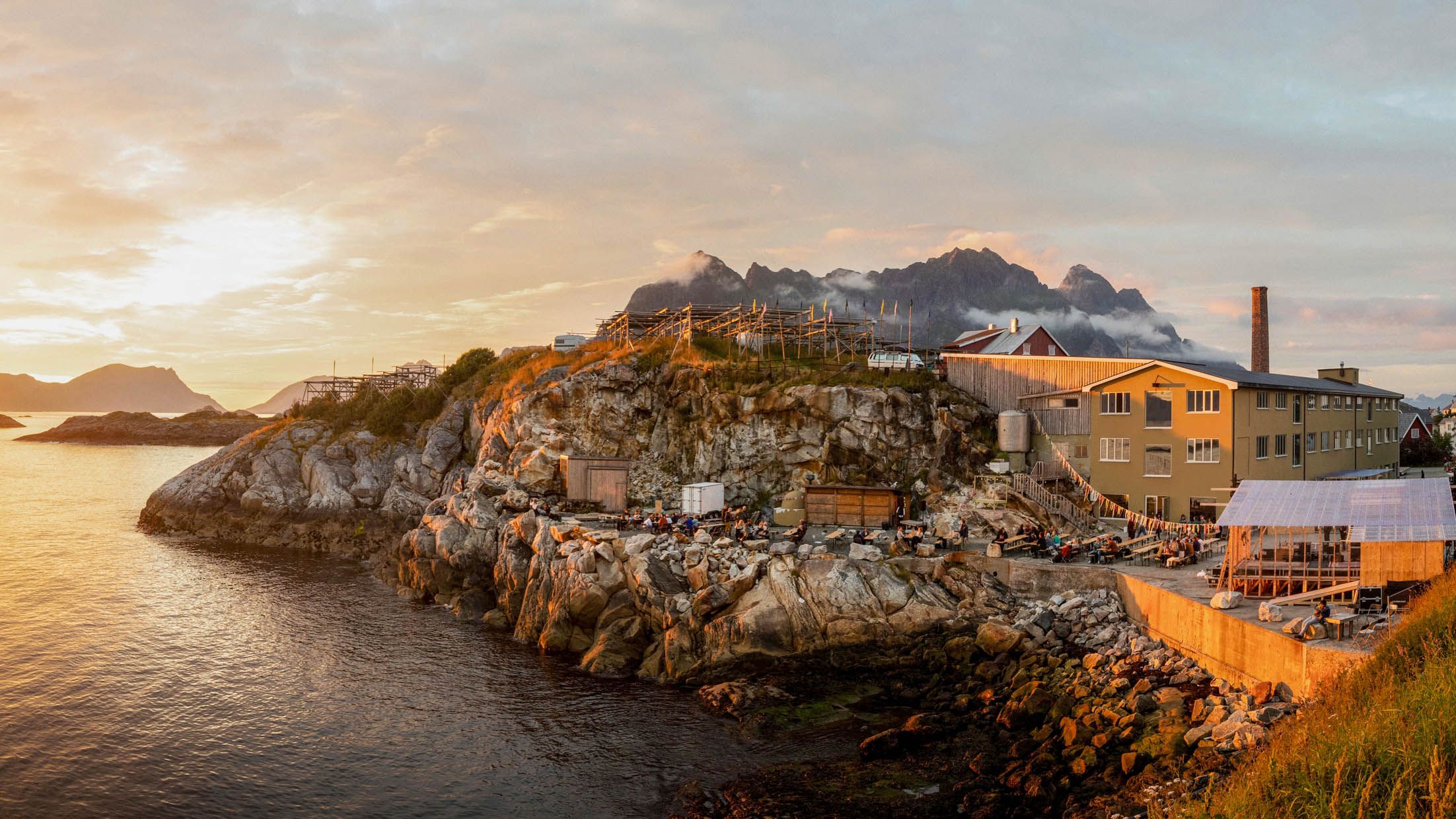
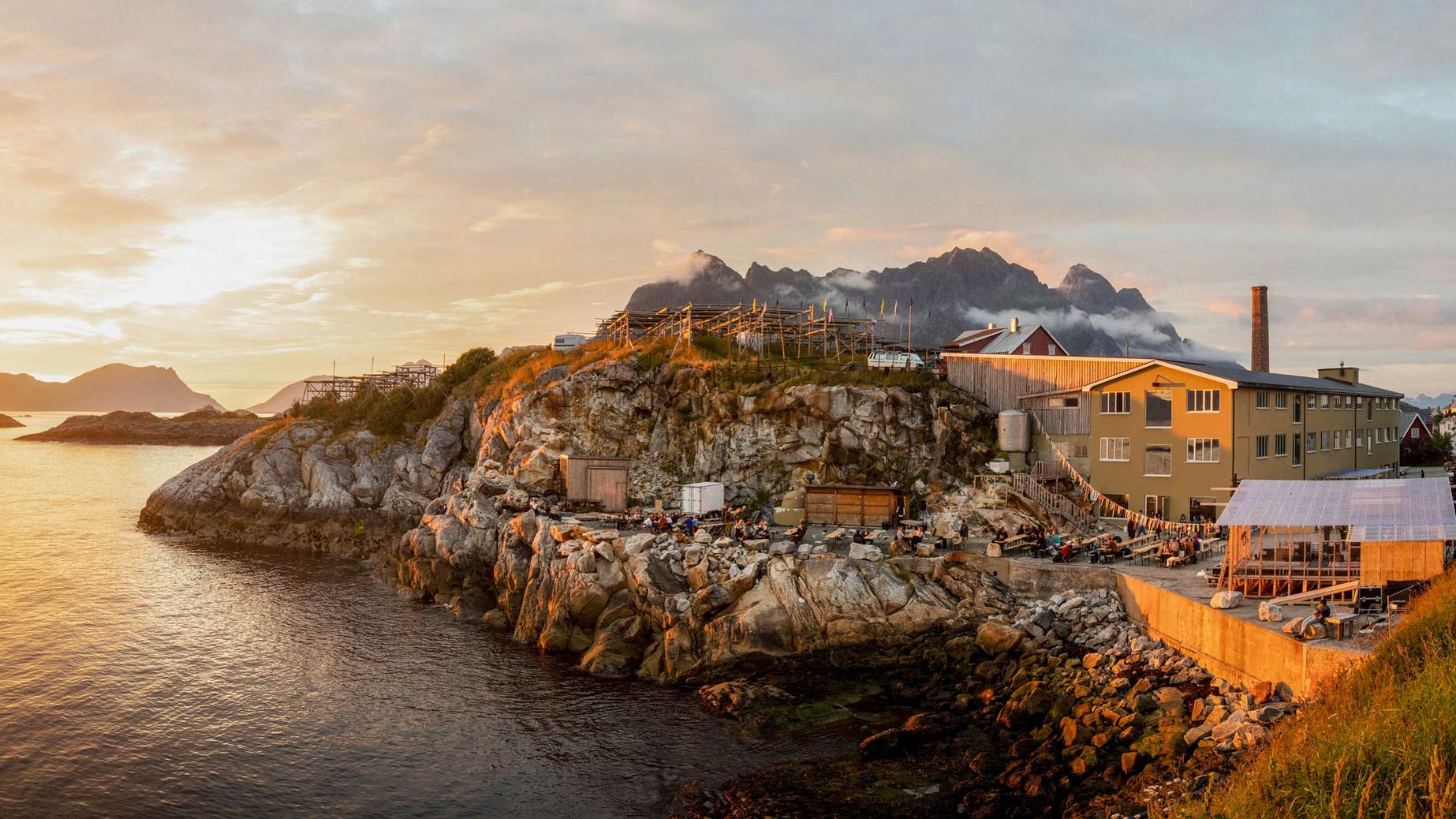
Originally built as a place for producing cod-liver oil. Later converted into a carpentry workshop. Today, Trevarefabrikken on the Lofoten Islands is a place where the solid traces of its working past are still visible – but where it is also wonderfully easy to leave one’s cares behind.
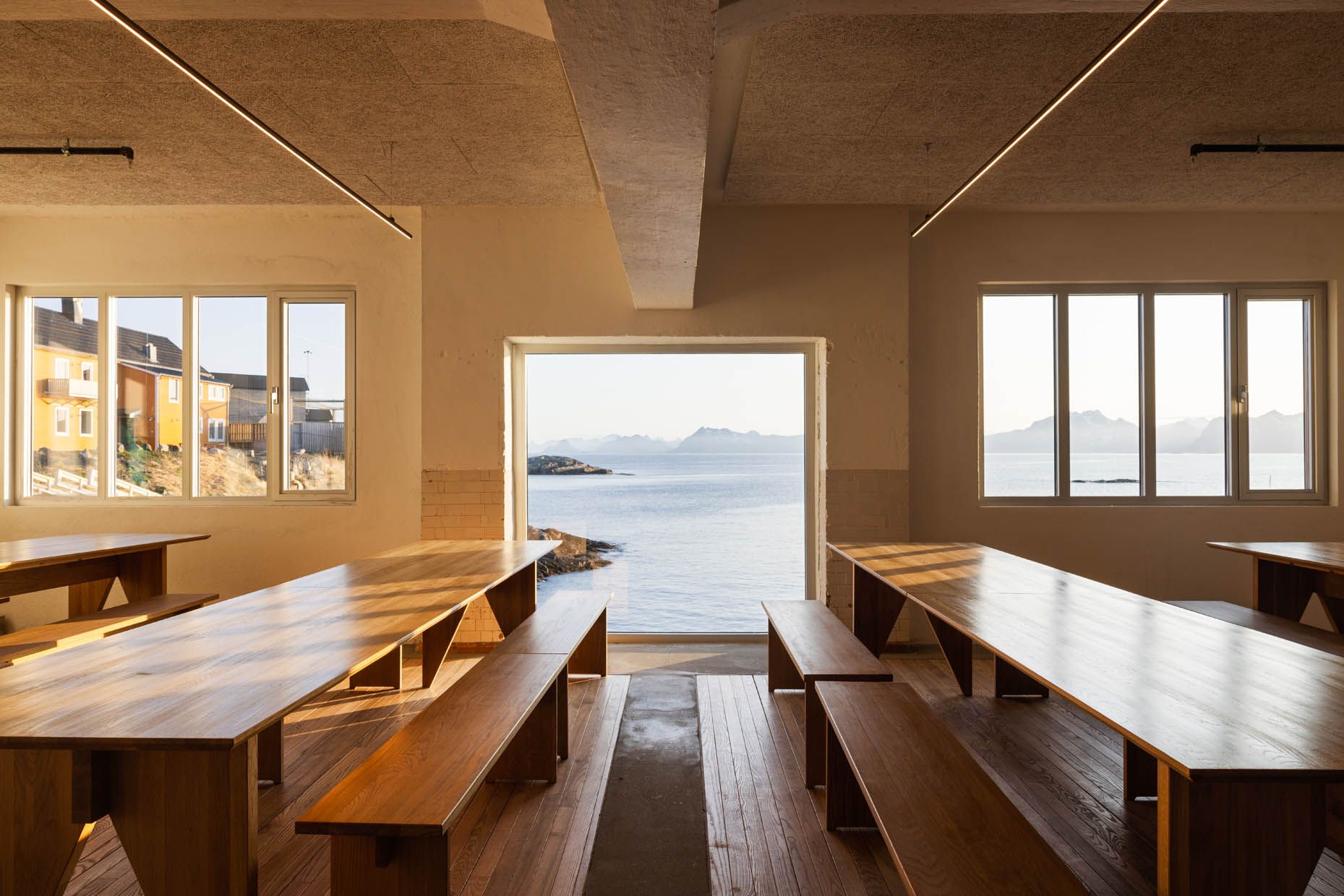
The current owners bought the former manufactory after it had stood empty for many years. Yet the spirit of real, hands-on work still lingered in the cracks of the walls – and it remained after the refurbishment. Steel beams and raw details were left exposed, while new elements recede respectfully into the background. Historical installations were not only preserved but put back to use: beds now stand in former lift shafts, old workbenches serve as tables, and even fittings and castors still tell of the former activities. Concrete surfaces are complemented by timber fixtures – also a nod to the time when planing and sawing took place here. In this way, the house tells a story of how, after a period of productivity, beauty can be found in stillness. The result is the perfect place to recover from work and activity.
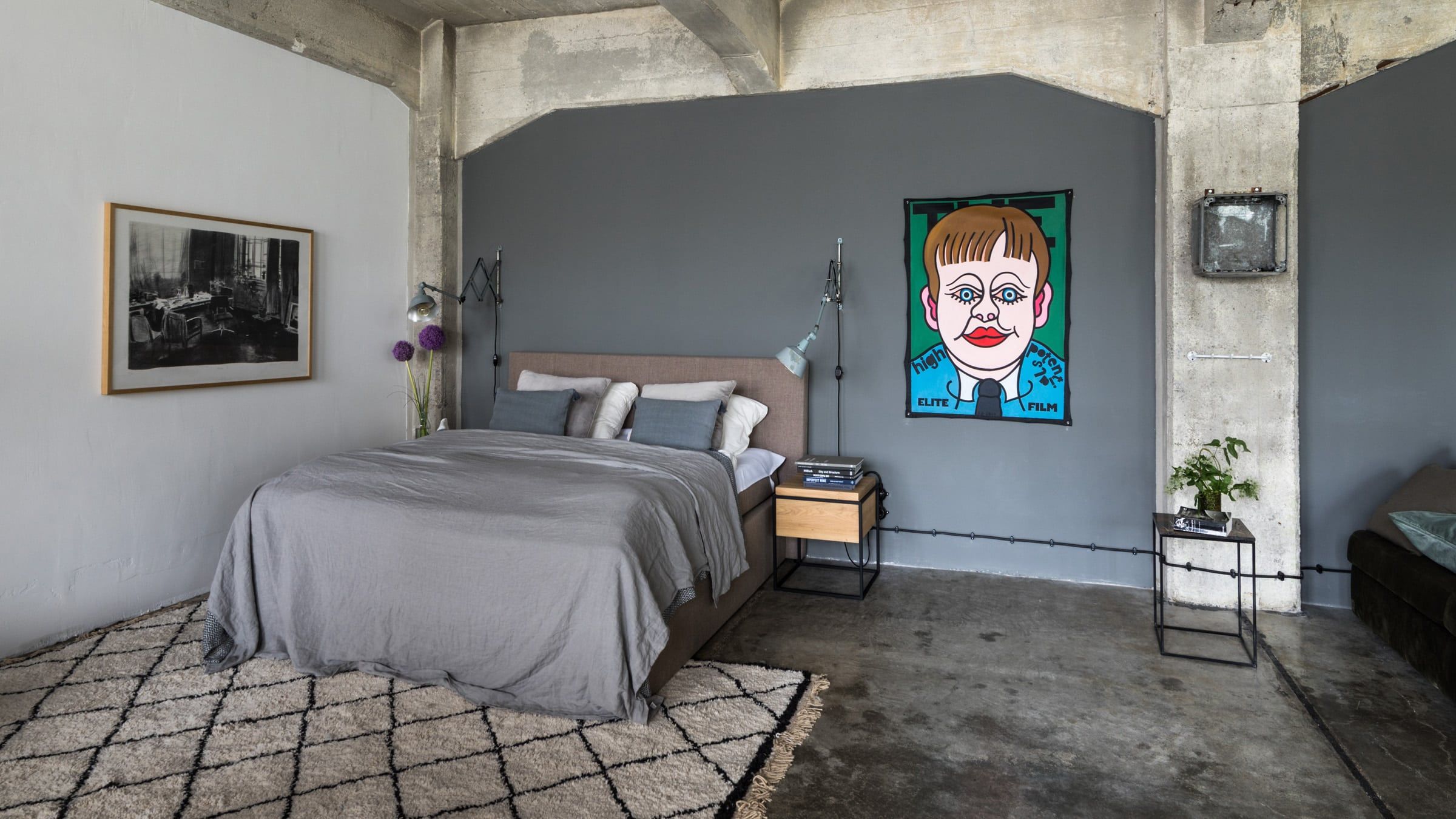
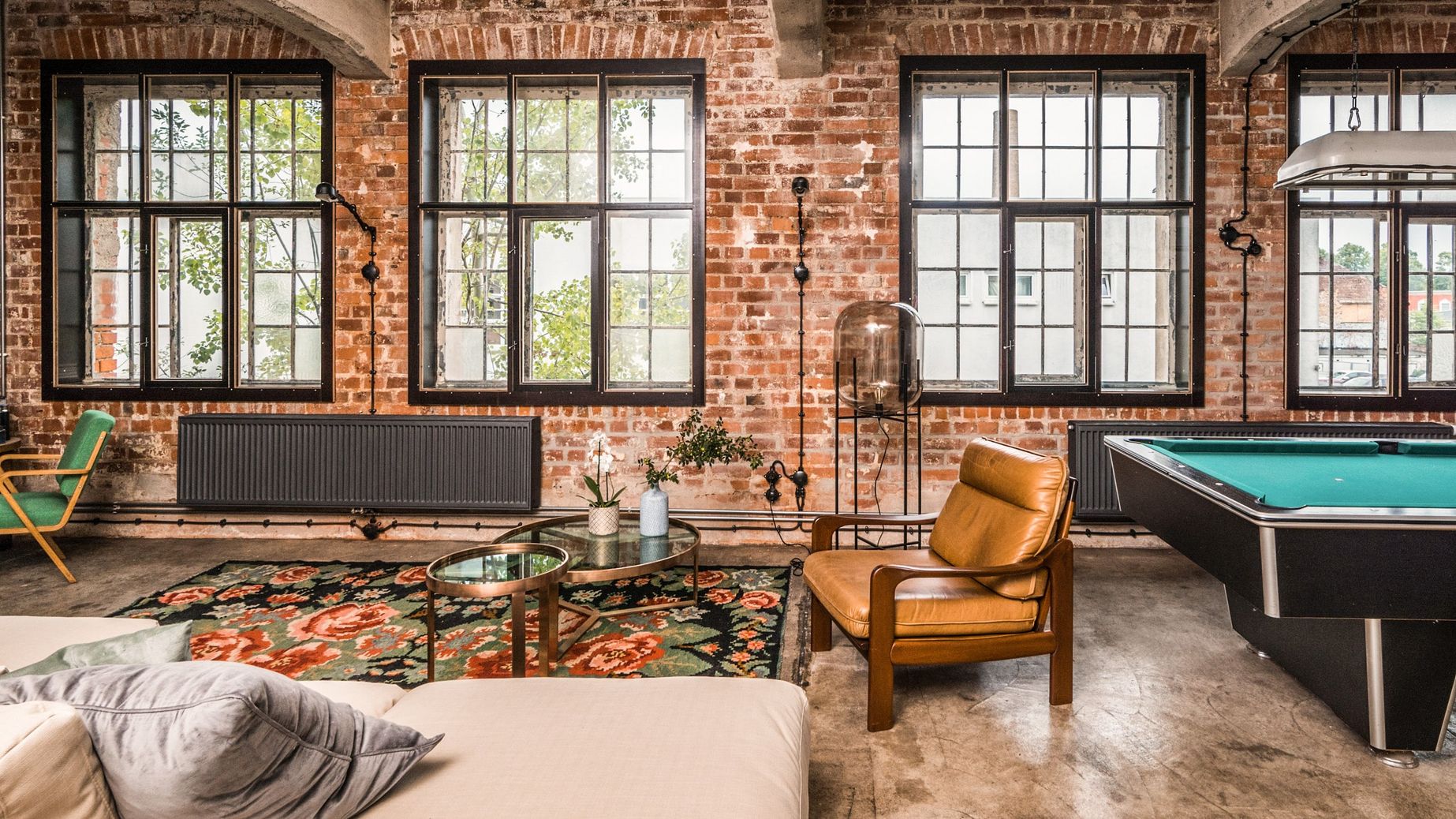
If there is a capital of industrial chic in Germany, it must be Leipzig. Nowhere else have factory ruins and an art scene grown together so closely. The Loft Atelier Dietzold in Leipzig’s western district is a perfect example.
In 1905, Leipzig’s star architect Emil Franz Hänsel designed a metal goods factory in the west of the city – nails, screws and barbed wire were produced here. Later came fur processing, then electrical switchgear, and towards the end of the GDR era even instant soup for the Konsum cooperative and the HO trading organisation. After the reunification of Germany, the building stood empty and in 2010, the roof truss burned down. Then came the second turning point – renovation and a new sheen with a charm that in eastern Germany was once born of scarcity and today has become style. The Dietzold builds on substance: old ceiling beams were turned into furniture, Bakelite switches and industrial coat hooks remain exactly where they always were. A 109-square-metre airy refuge in the city, with original artworks on the walls. That’s my kind of Leipzig. One thing is certain: anyone who sleeps here does so in a space much like Leipzig itself – a little rough, a little colourful, and definitely with multiple layers.
Brick upon brick – standardised, stackable, interchangeable. The first mass-produced building material in history, long before industry existed as such. Industrial chic in a Renaissance edition, so to say.
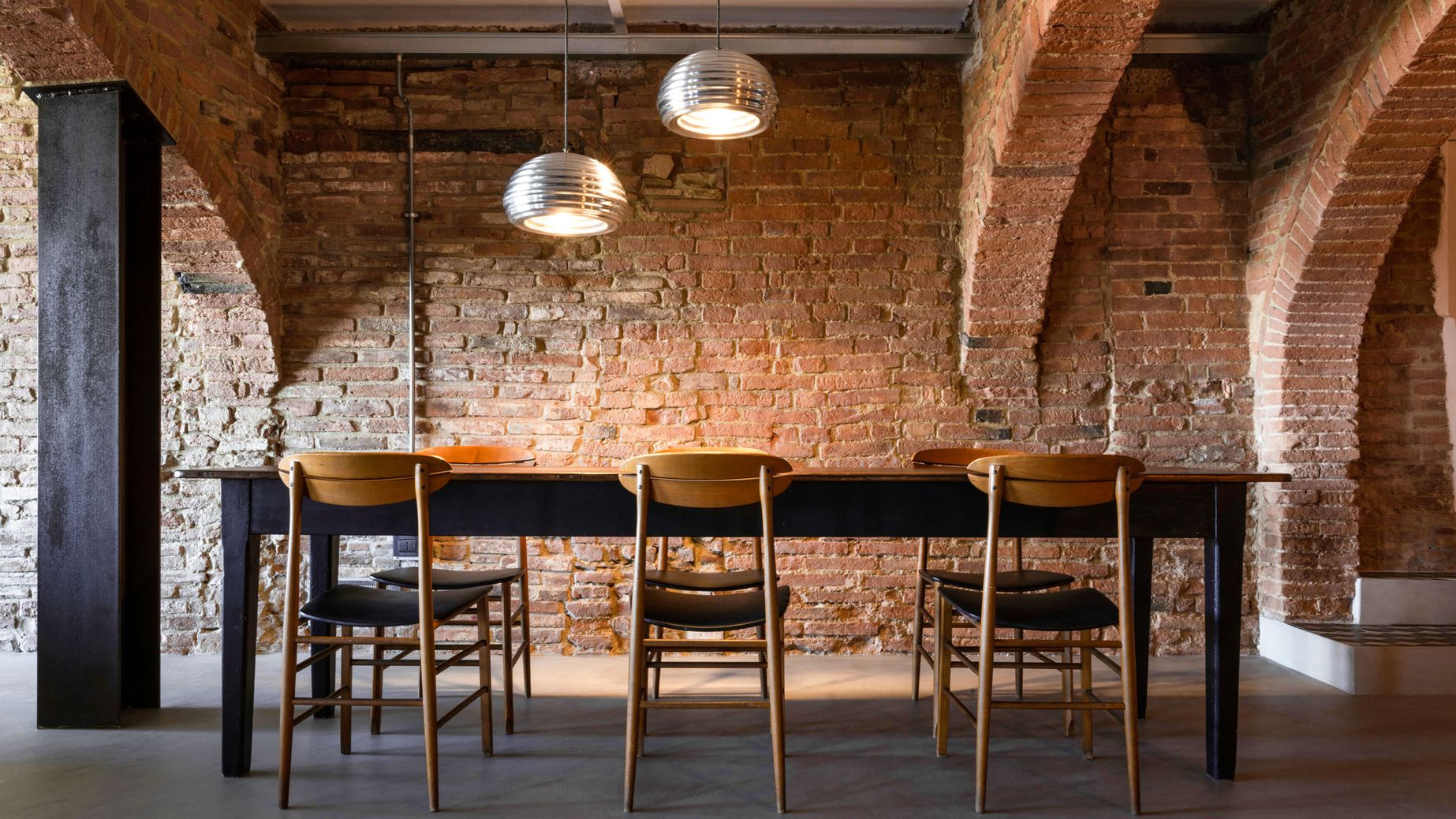
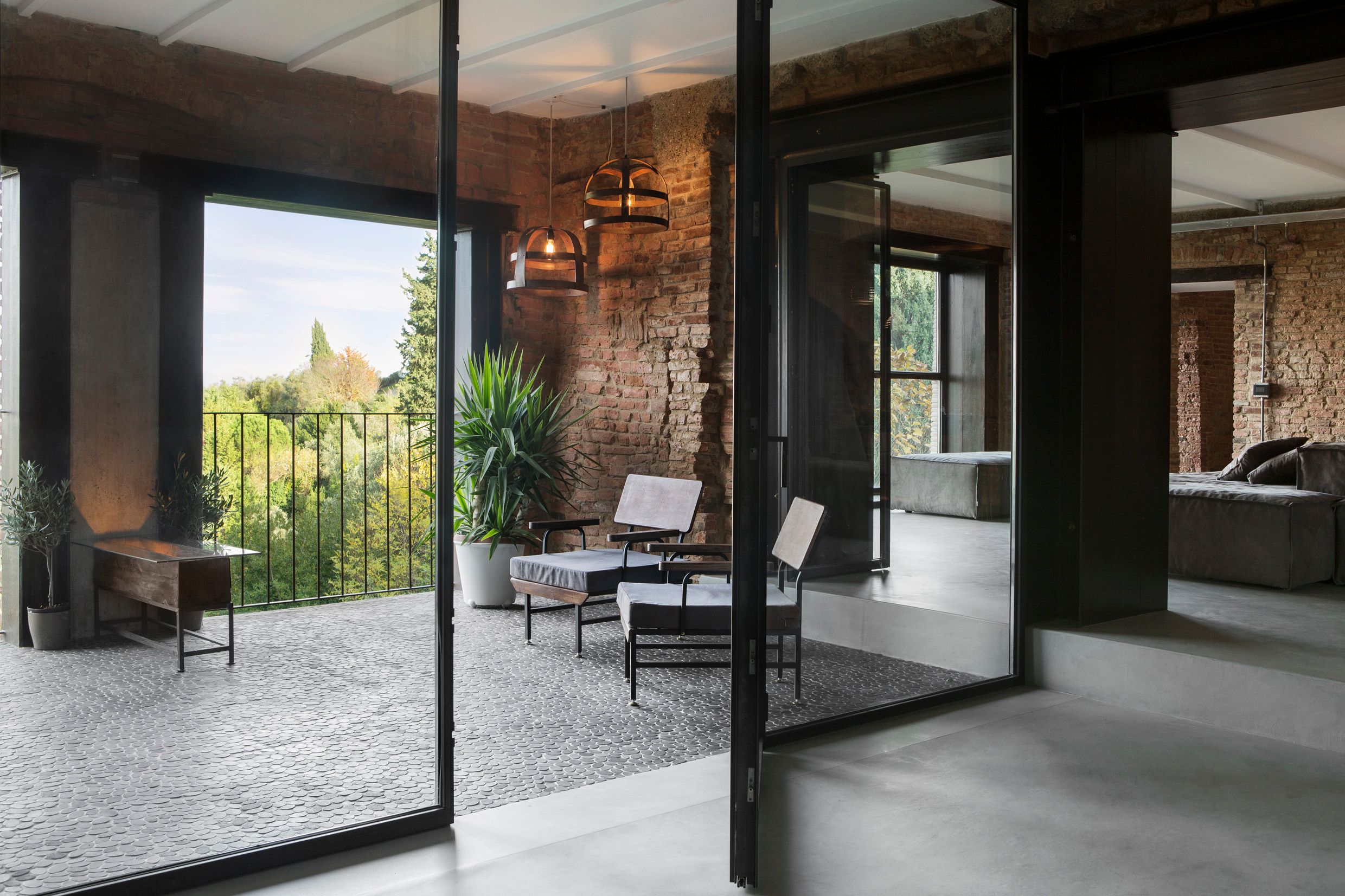
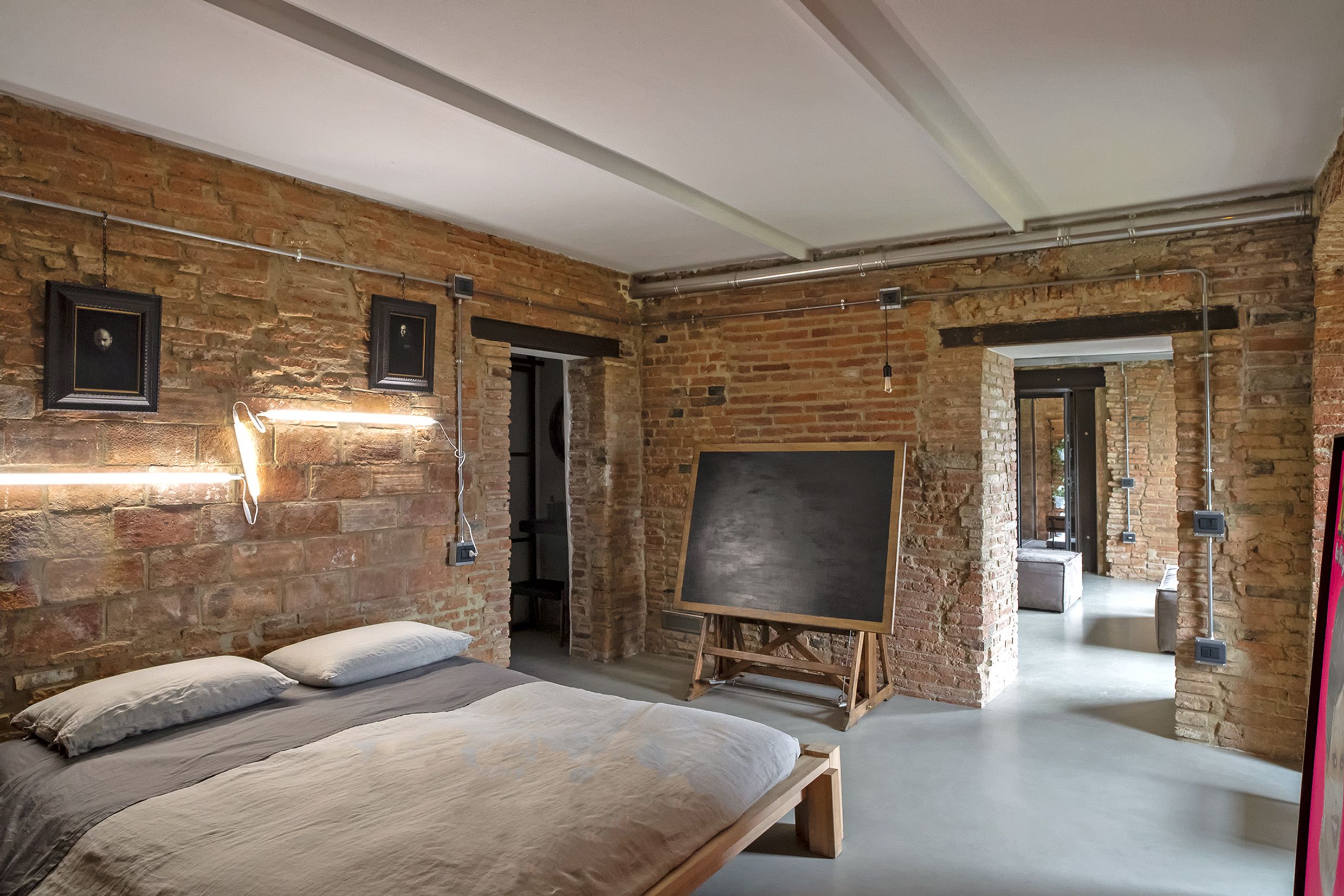
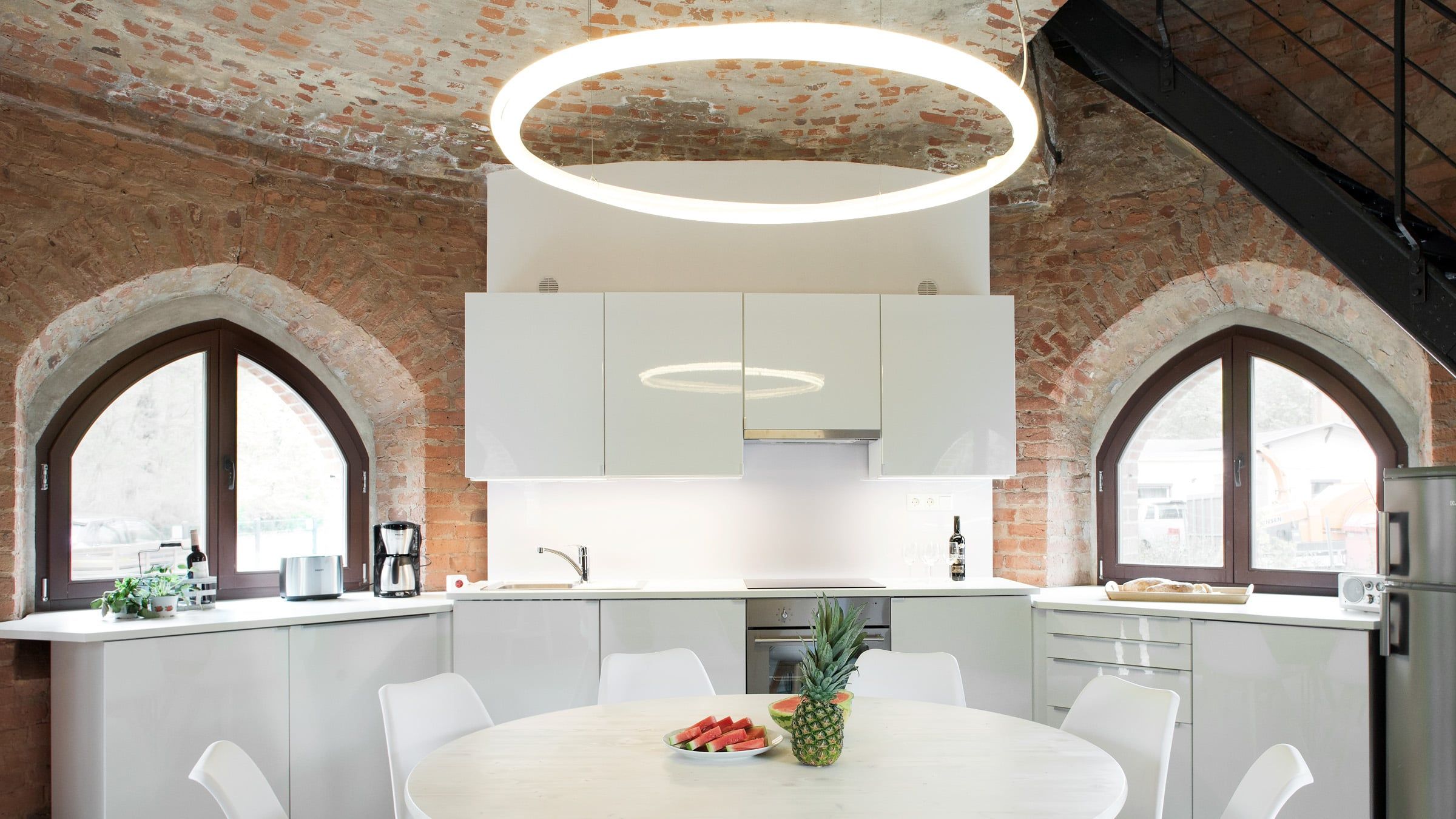
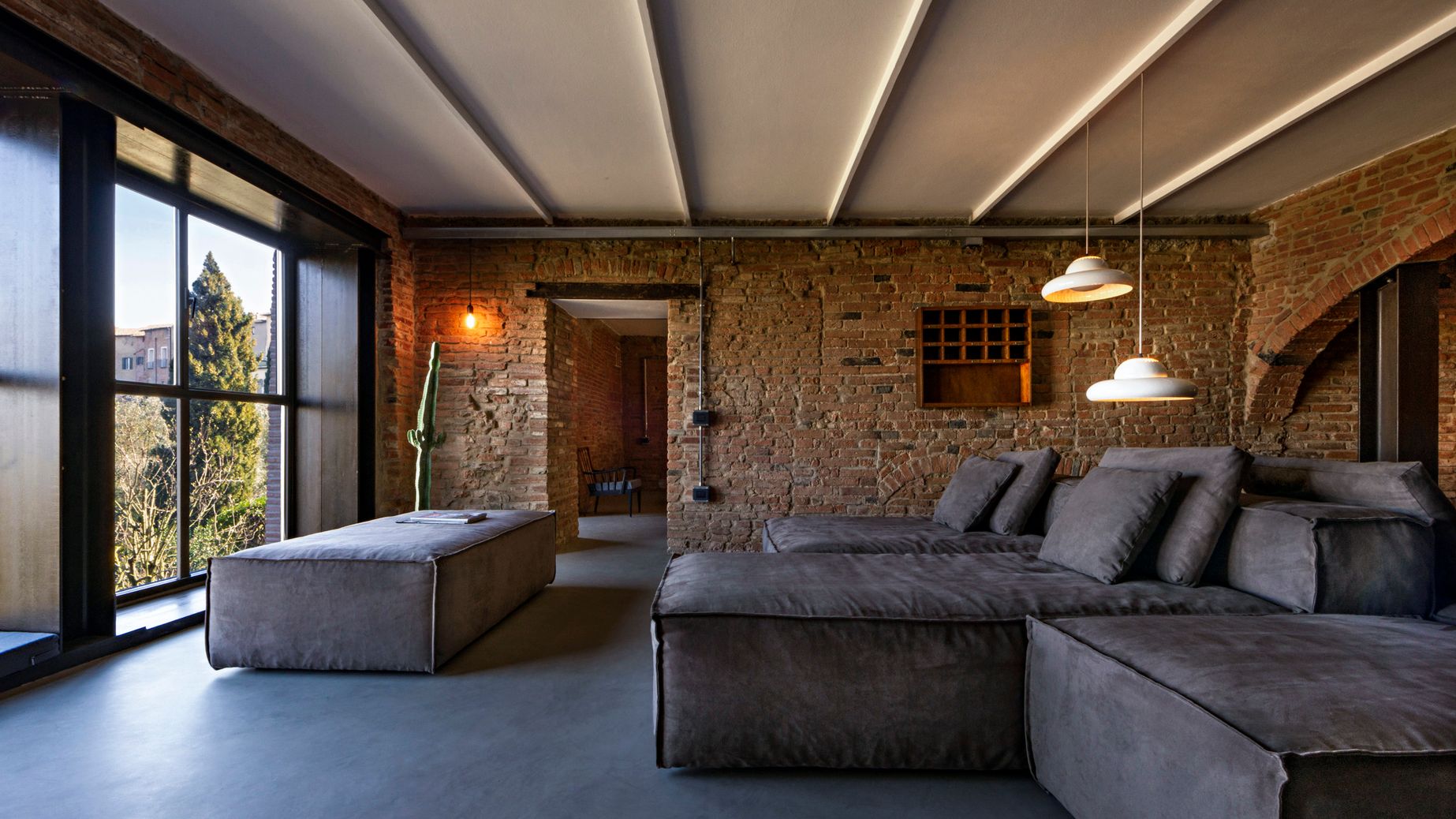
The setting is the ground floor of a palazzo in San Miniato, Tuscany: brick walls from the sixteenth century, up to 1.5 metres thick, exposed and left unplastered. The restoration of Umamma took seven years. The result speaks several dialects of the raw: Renaissance brickwork meets black steel, glass partitions and a dark industrial kitchen – materials that speak the same language, separated by 500 years yet perfectly in tune. The material dialogue reaches its most striking moment beneath a trapdoor in the bedroom. Down a flight of steps lies a 500-year-old vaulted cellar – and within it, a travertine pool. In the warm water, at 34 degrees, you might reflect on what industry has meant for our lives. Or simply let your thought drift away.
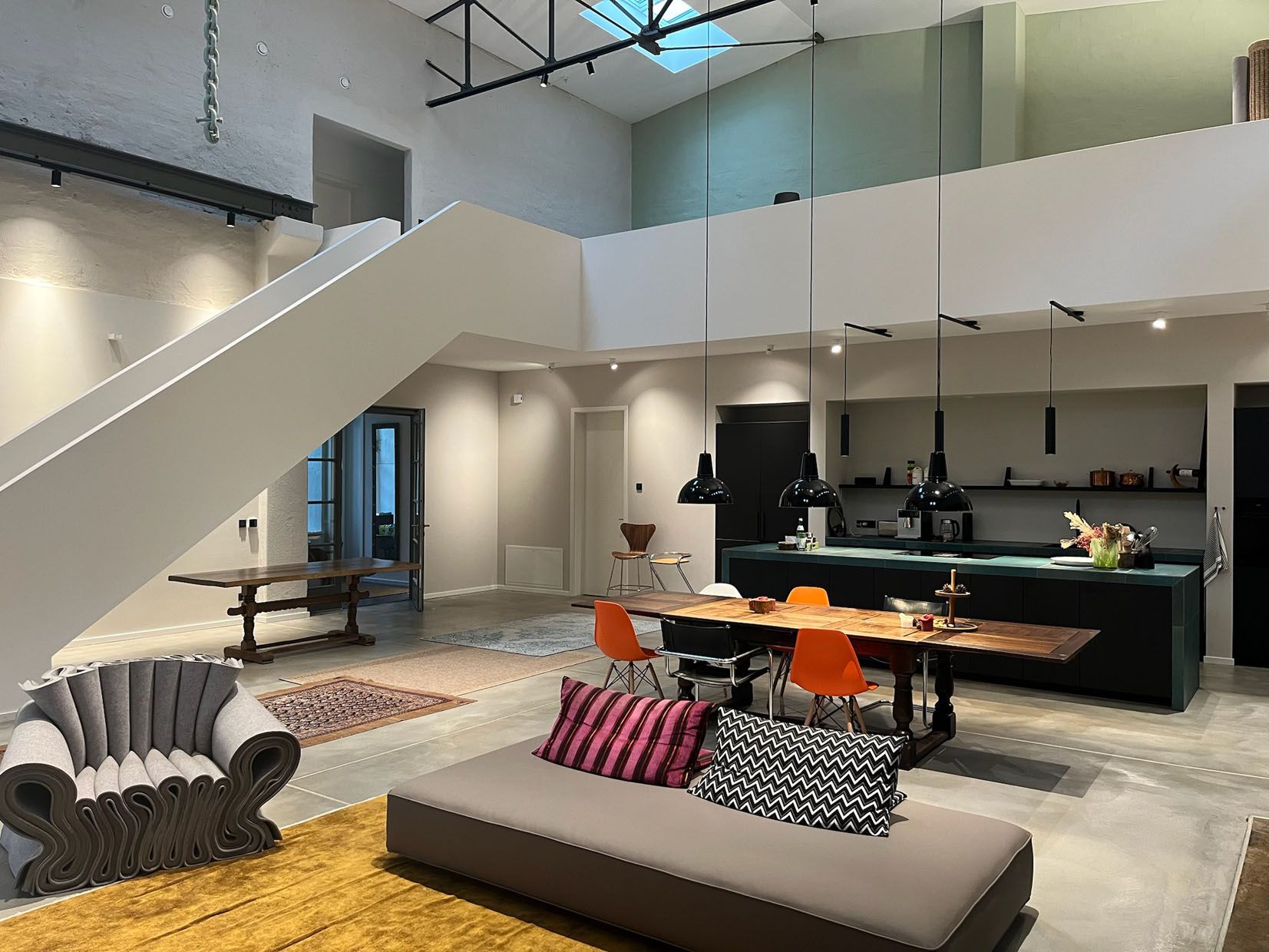
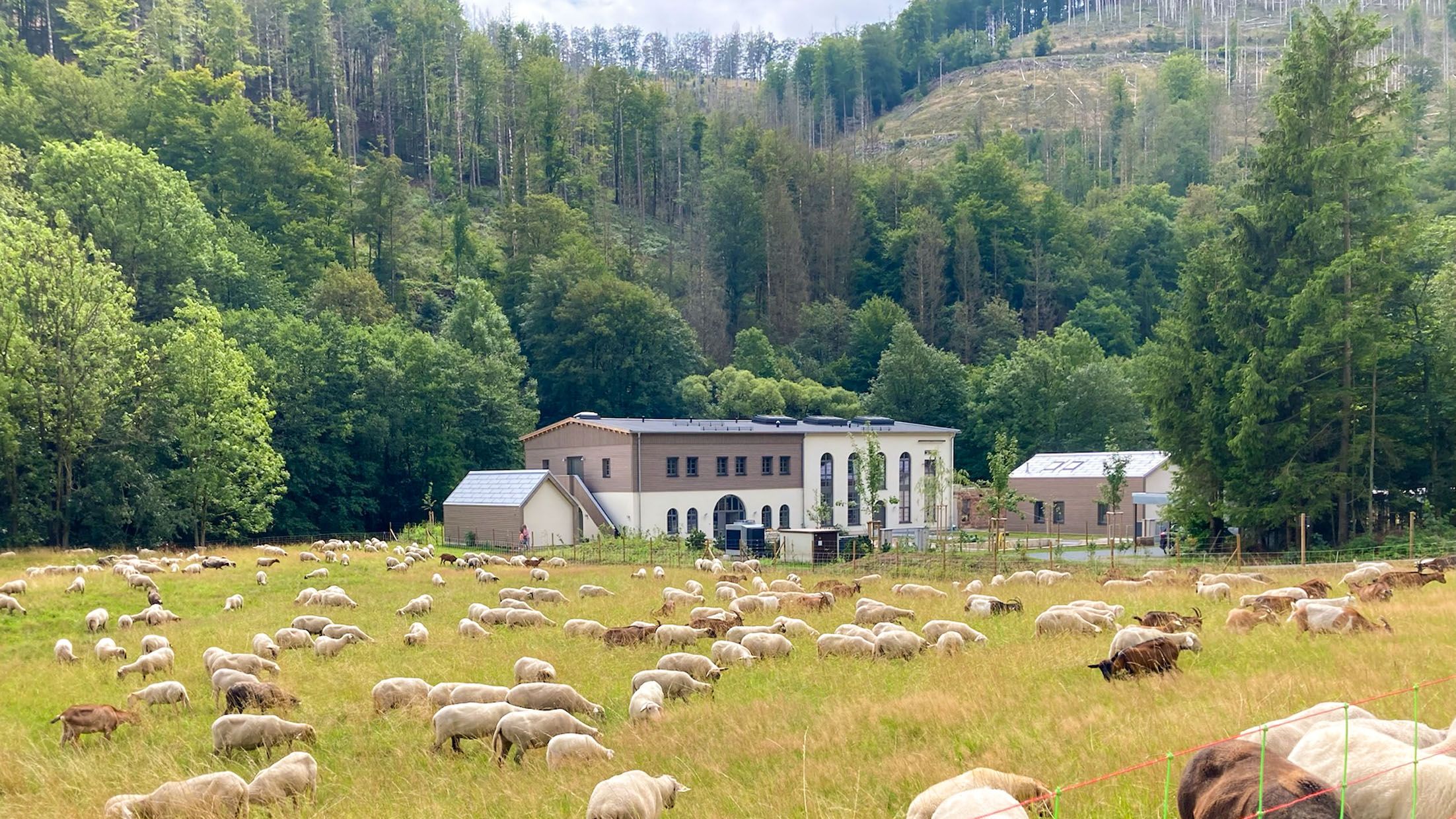
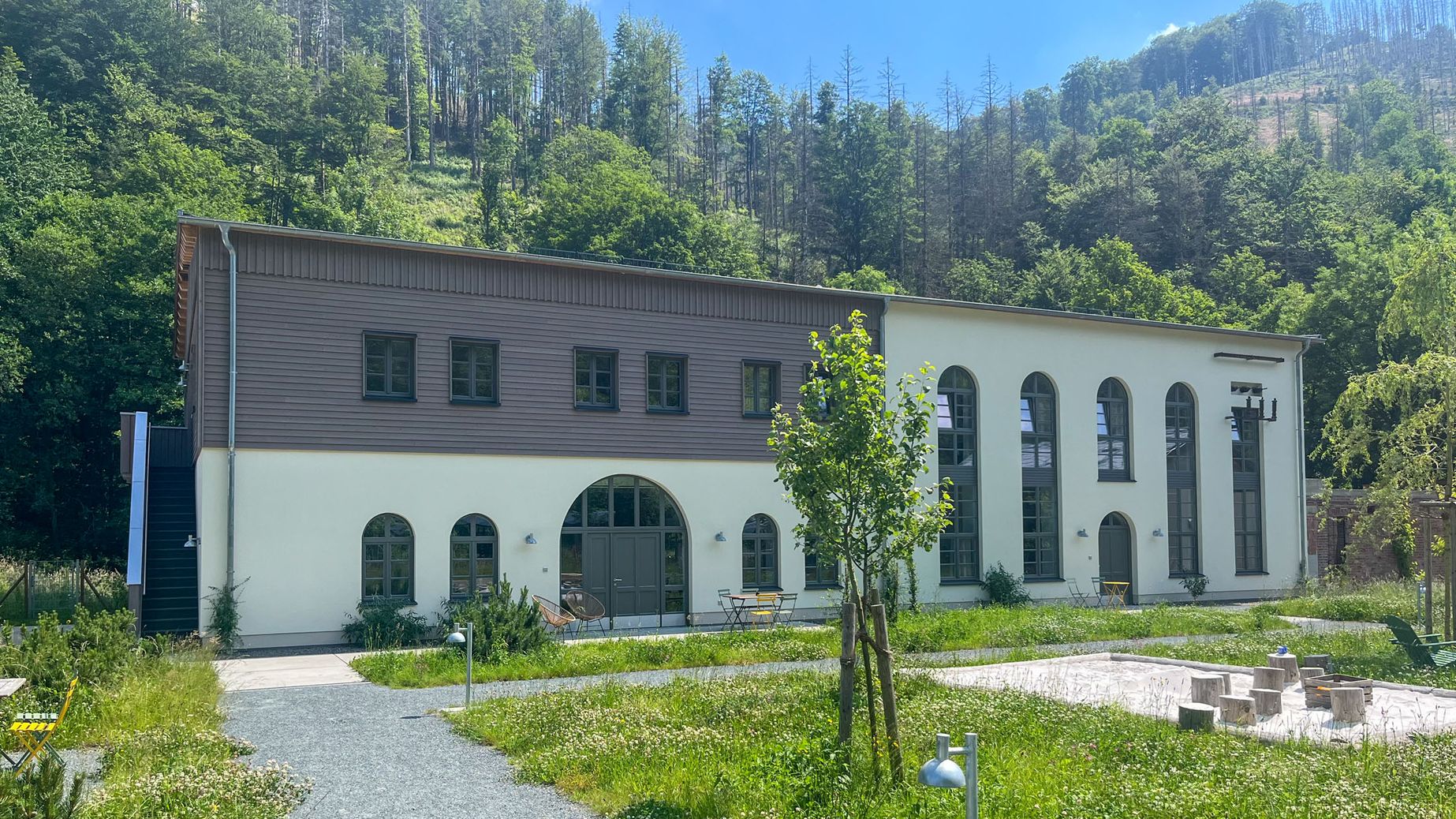
Where materials were once ground down into the finest particles, Schleiferei Zwei in the Harz now restores frayed nerves. Anyone who comes here to rest will almost certainly recover from whatever exhausted them. Why? Because our surroundings shape how we feel – and this house knows exactly how to play its part.
After all, it has experienced rebirth more than once itself. The story goes like this: in 1896, Schleiferei I was built to supply a nearby paper mill with pulp. Tree trunks were boiled, shredded into mash and dried – producing wood fibres as the raw material for paper. During the war, the grinding mill was badly damaged and rebuilt from 1946 onwards. Later it gradually fell into decline. From 2022, the current owners renovated the manufactory and, for its third life, named it Schleiferei II. One thing was deliberately not smoothed away during the renovation and conversion: the signs that time has left on this place. Unplastered walls, exposed screed floors, steel beams. The most spectacular space is undoubtedly the former turbine hall – a loft with eight-metre-high ceilings. So much room to breathe – if that doesn’t open up horizons, what will?
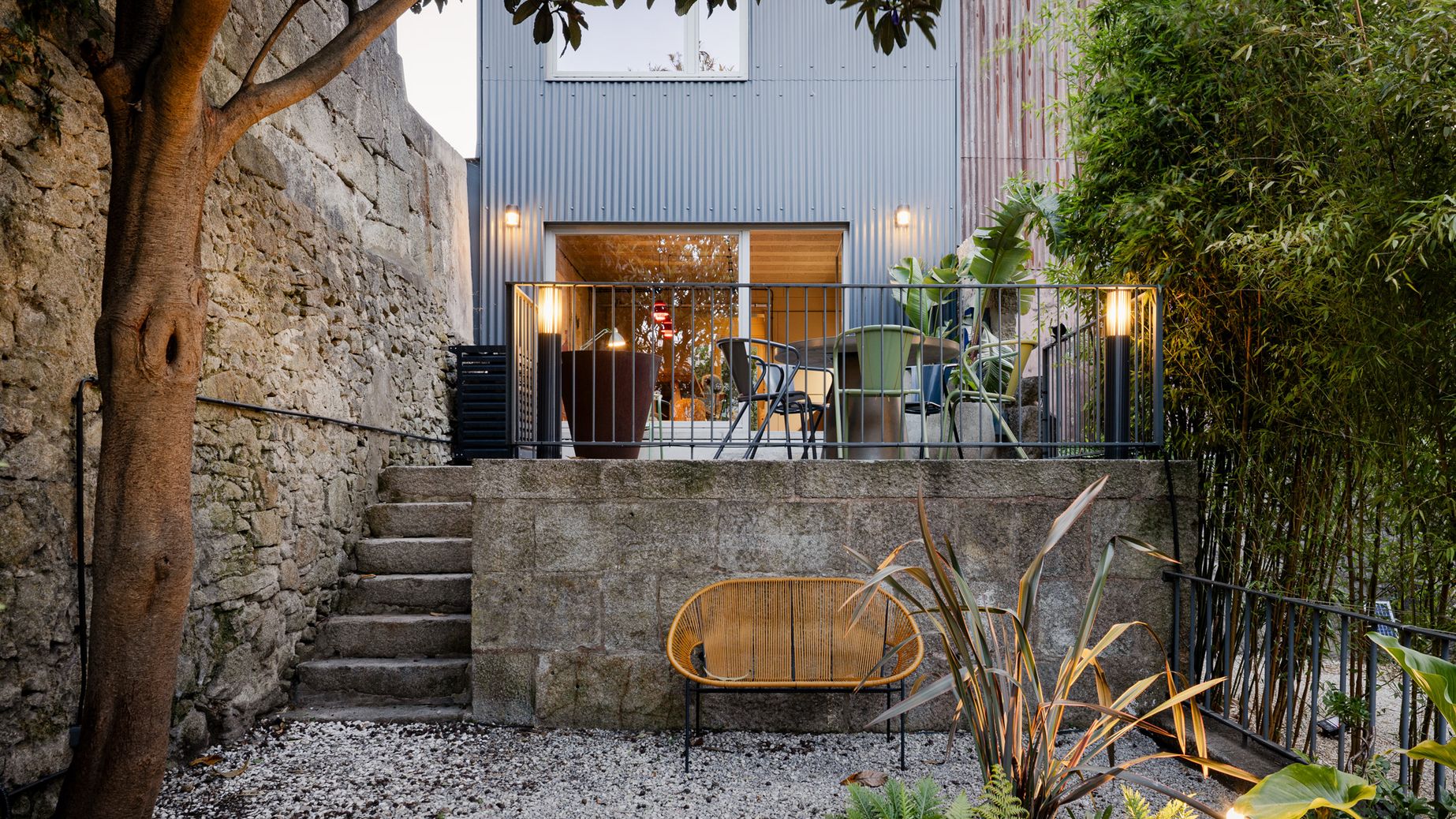
In Cedofeita, Porto’s creative district, cafés and design shops now stand where workshops and small factories once shaped the streetscape. While much around it has forgotten that past, Fábrica no Jardim remembers – in a respectful way.
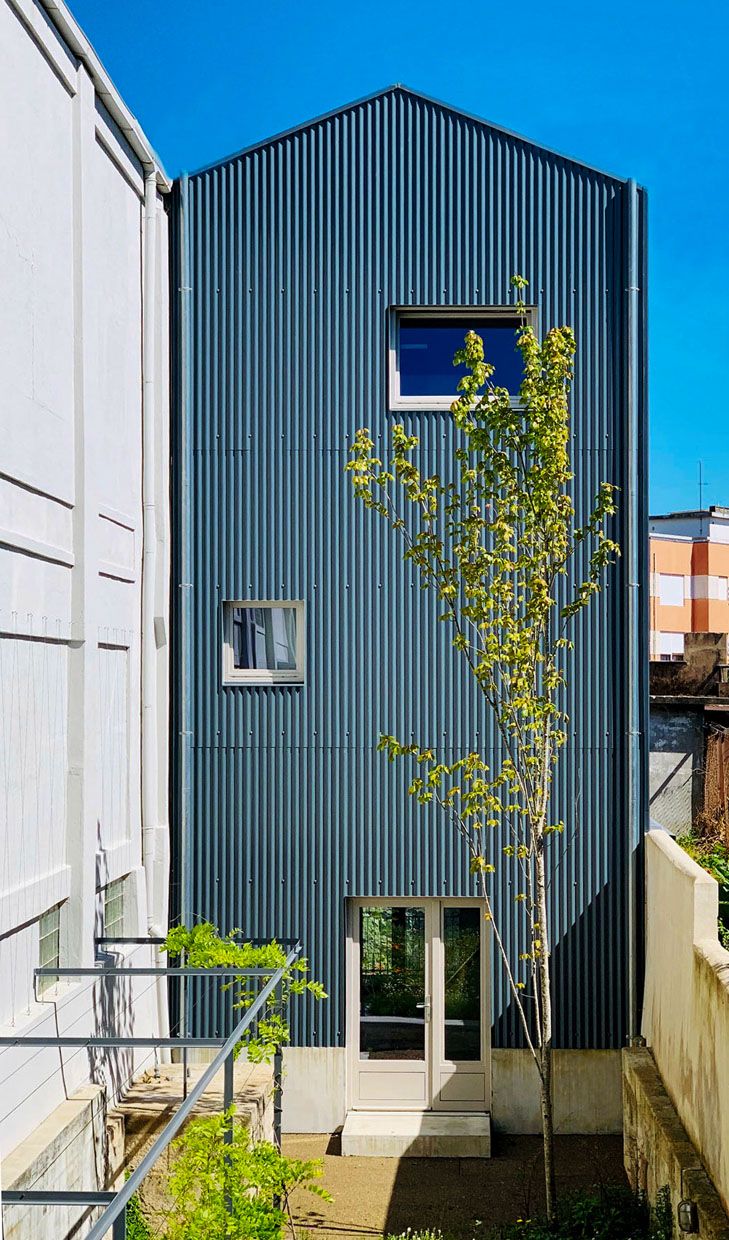
Awarded the João Almada Award for outstanding architecture, the new building is anything but naïve or untouched by history. Corrugated metal façades, raw exposed brickwork and surface-mounted electrical wiring all reference the manufactories and workshops that once defined the neighbourhood – places where people went to work in the morning and returned home in the evening with clothes marked by the day’s labour. The house offers no nostalgic kitsch, but rather a gesture of respect: we still remember what once existed here. Three loft-like floors accommodate up to four guests, with a generous garden hidden behind the façade. Inside, concrete and terrazzo meet warm wooden floors and artworks by local artists. The contrasts reflect Porto – but also what guests experience here: today I am here, and in a few days I will return to my own work. Such is life.
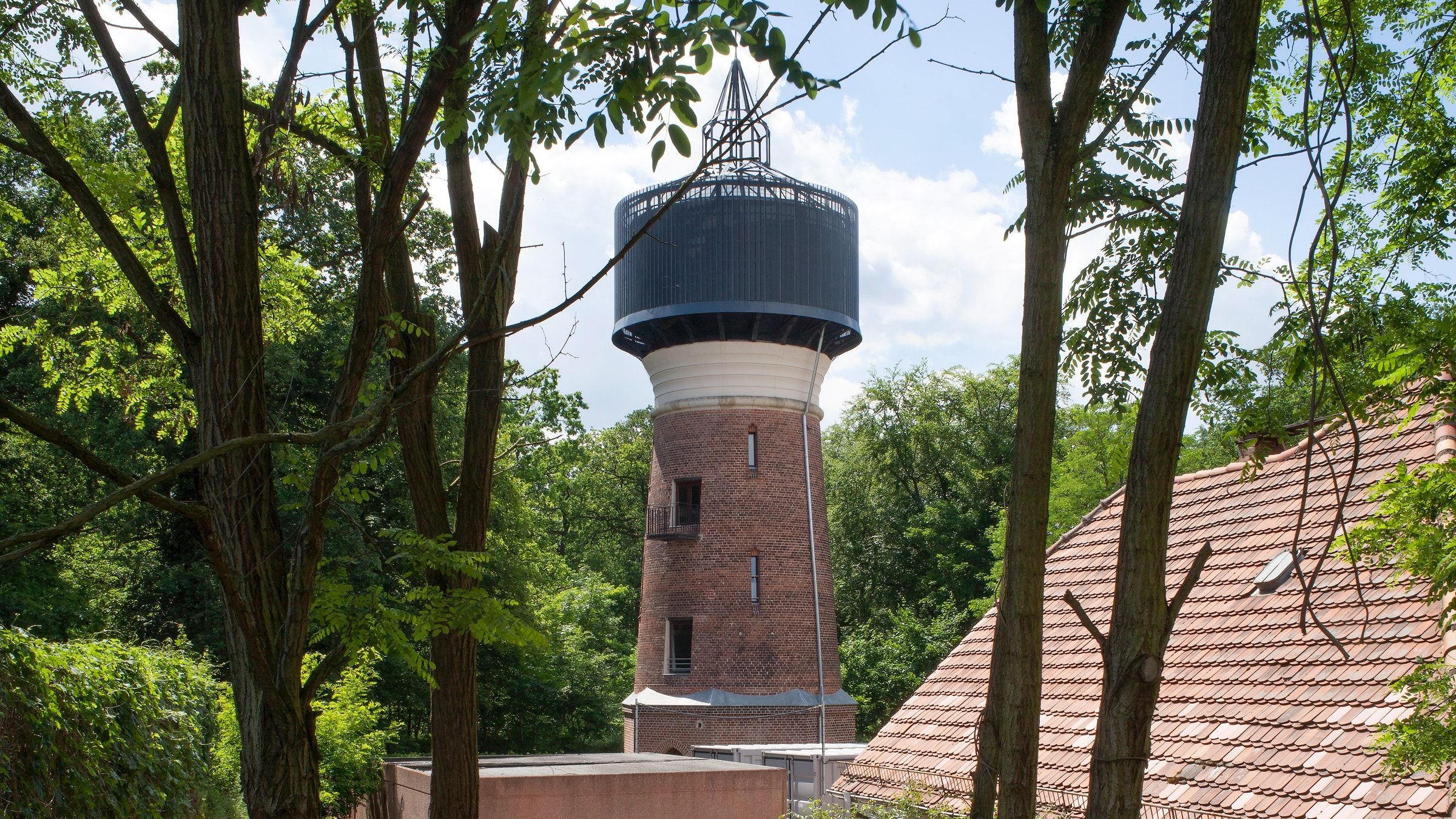
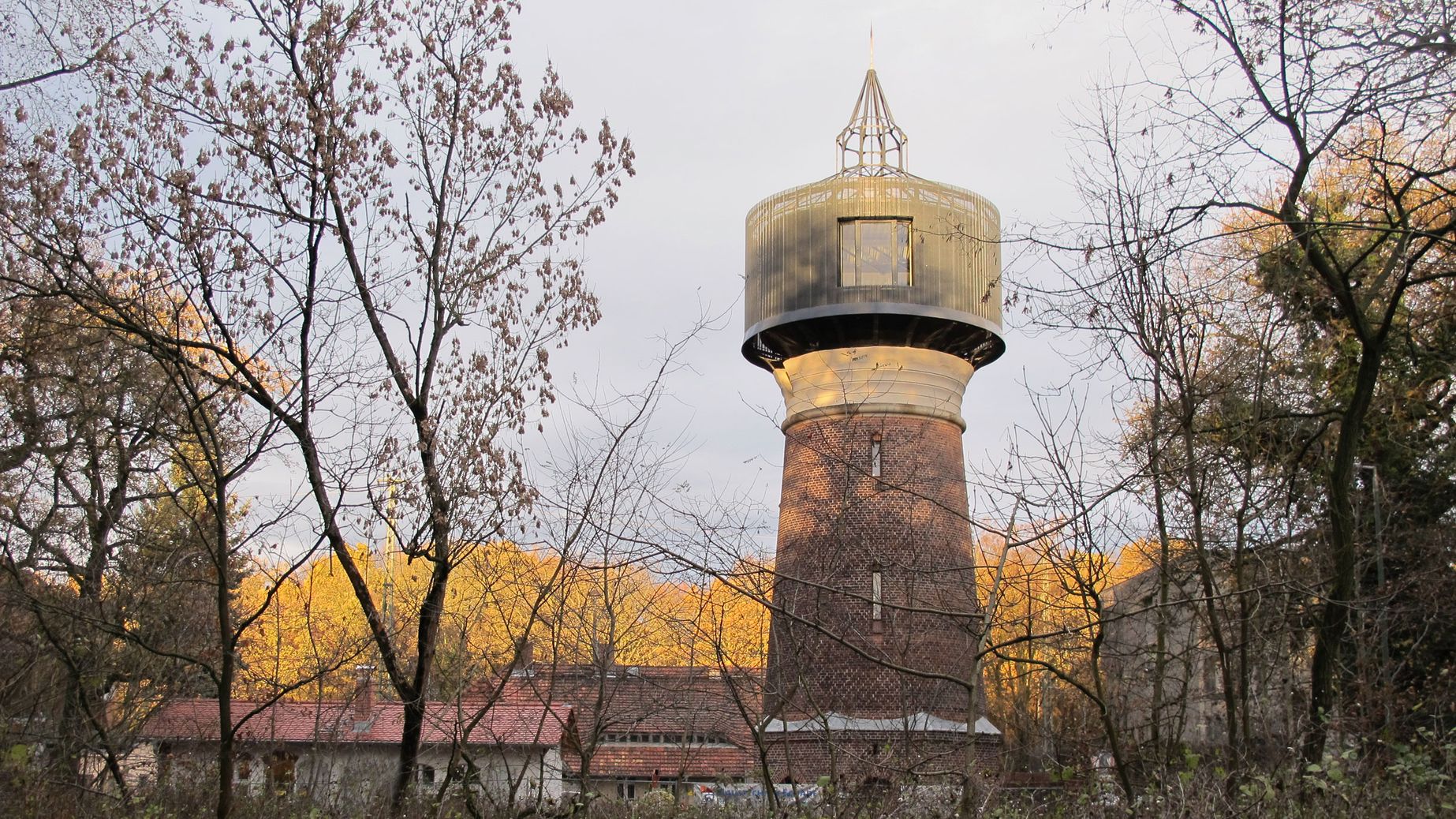
Once, this tower ensured that locomotives had steam in their boilers. Today, it’s the place to come when you want to let off some steam yourself: the Wasserturm am Park Sanssouci has changed sides and become a place for overnight stays.
Built around 1910 beside the Kaiserbahnhof, the tower originally served as a supply station for steam locomotives. When the steam era came to an end, it became redundant and stood empty for decades. Then a German–Spanish architect couple bought it and set to work. The challenge: all the walls are both curved and slanted at the same time. Six floors, 22 metres high, each level with a different geometry. Preserving the building’s industrial character was a matter of principle for the two architects: the staircase was restored, exposed brickwork and steel left visible. The centrepiece is the former water tank with its riveted metal walls – today the living room. Frederick the Great had his palace built next door as a place to leave his worries behind. From the specially created roof terrace, you can even look across to his New Palace. By the time you reach the top, the climb alone has already made you feel like a different person. Honestly – what better place could there be to let off steam of any kind?
Wine was once stored here – in a functional working building designed for barrels, not for people. Today, that has changed – yet the two fit together remarkably well. After all, both need time and calm to reach their best form.
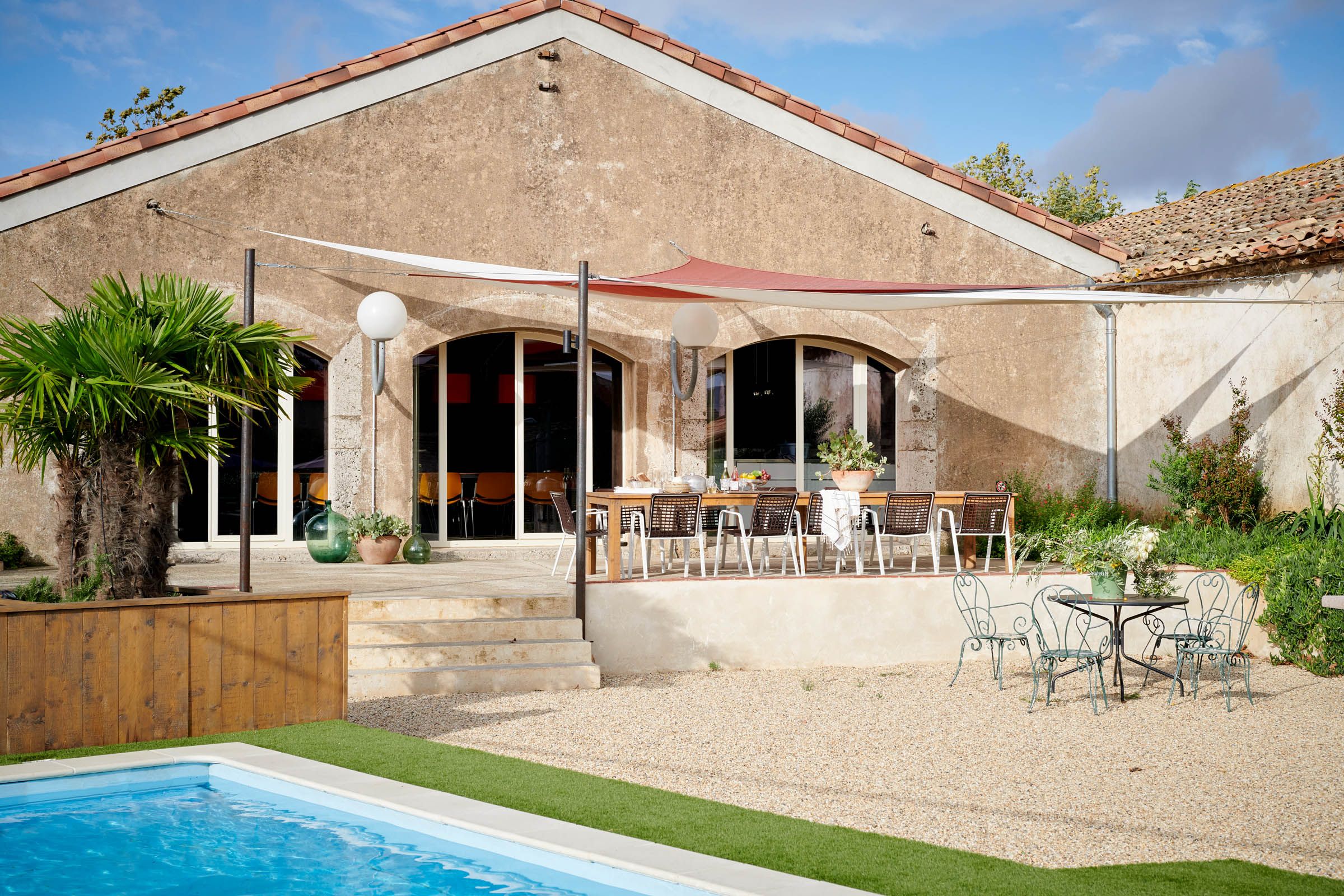
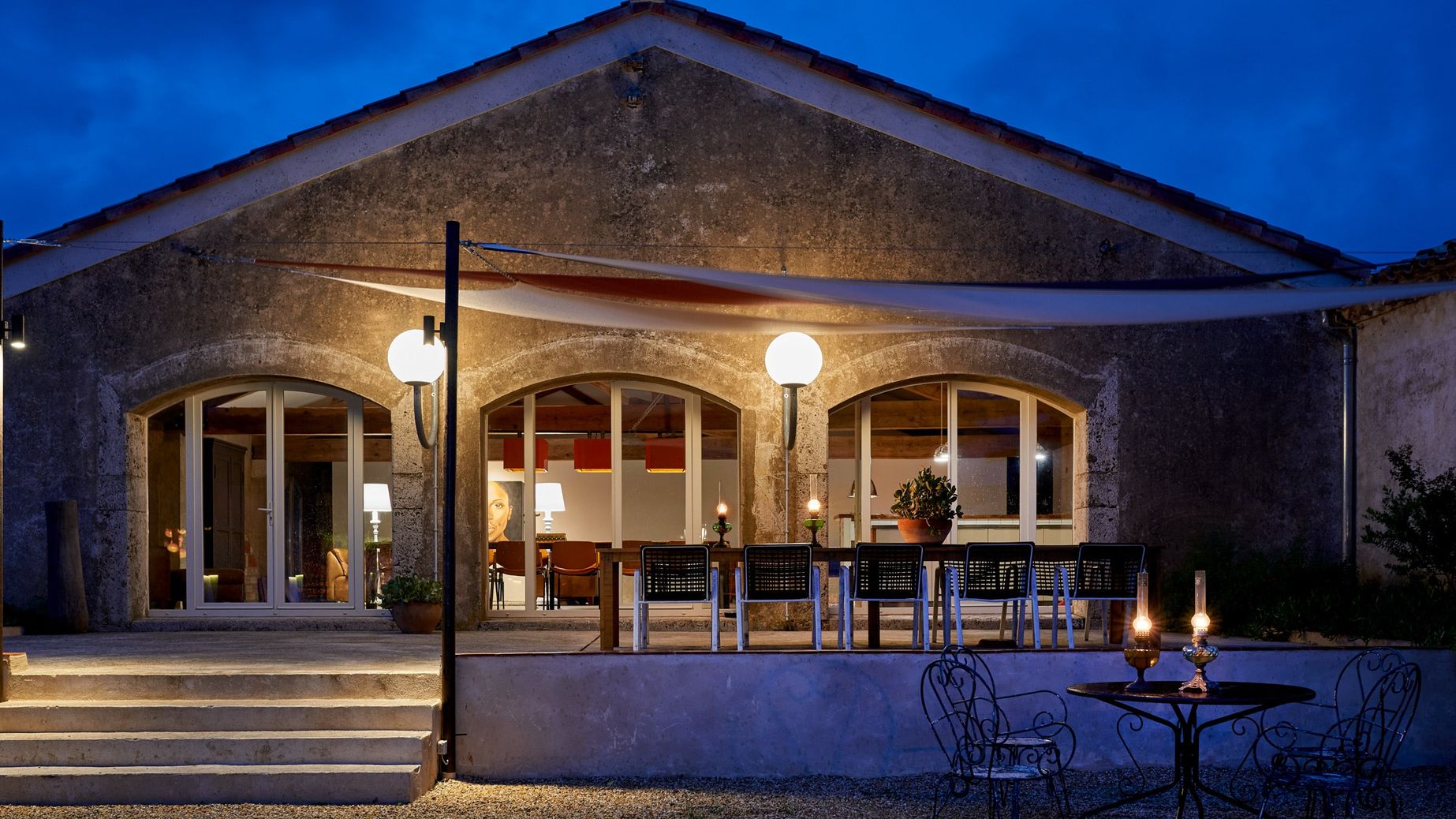
The Loft by LIEU is situated on the edge of Villedaigne, in the heart of the Aude – one of France’s most productive wine regions. You could almost call it a wine industry. What once stood here on the old winegrower’s estate was a solid working building: restrained and purpose-built.
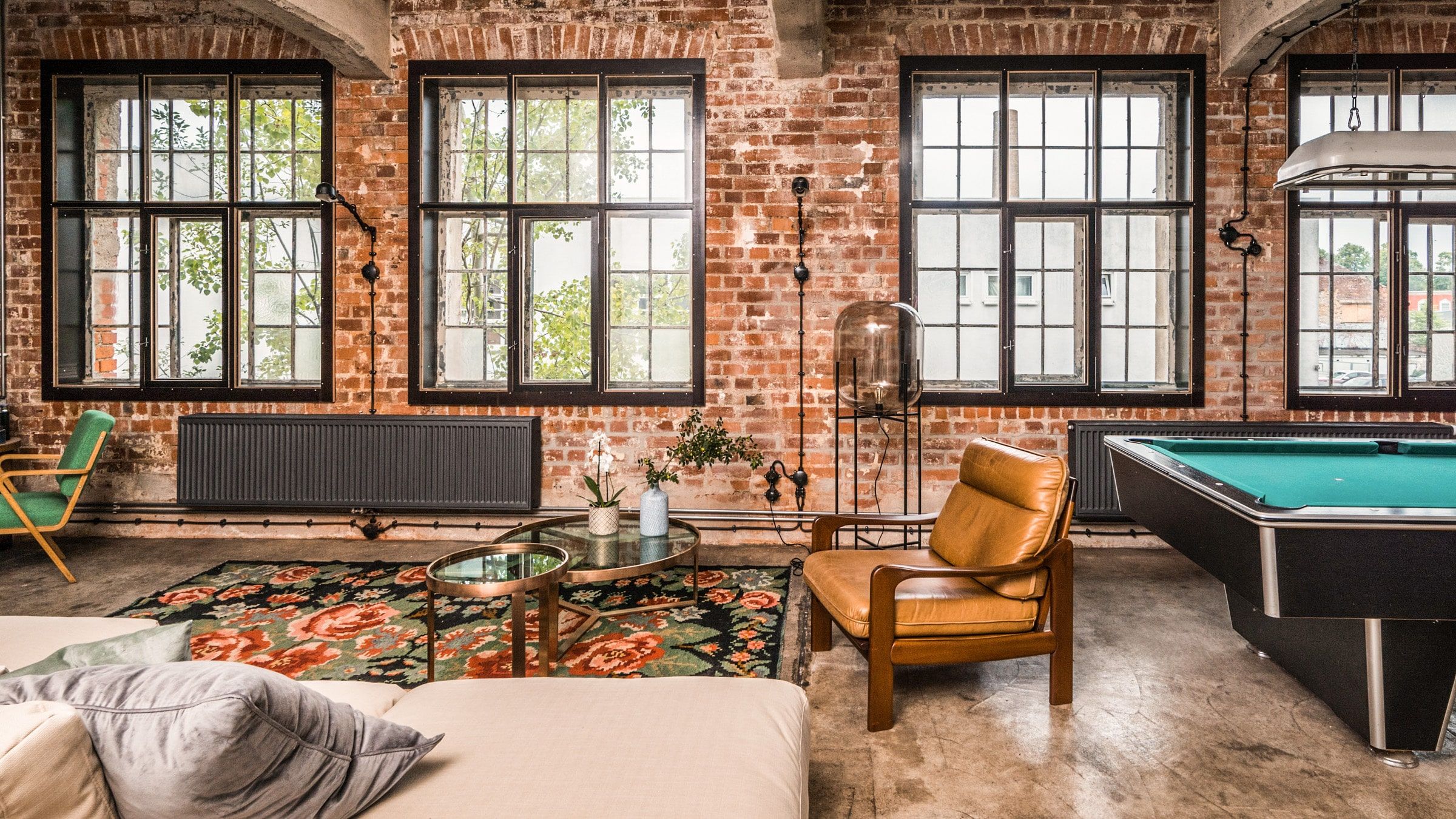
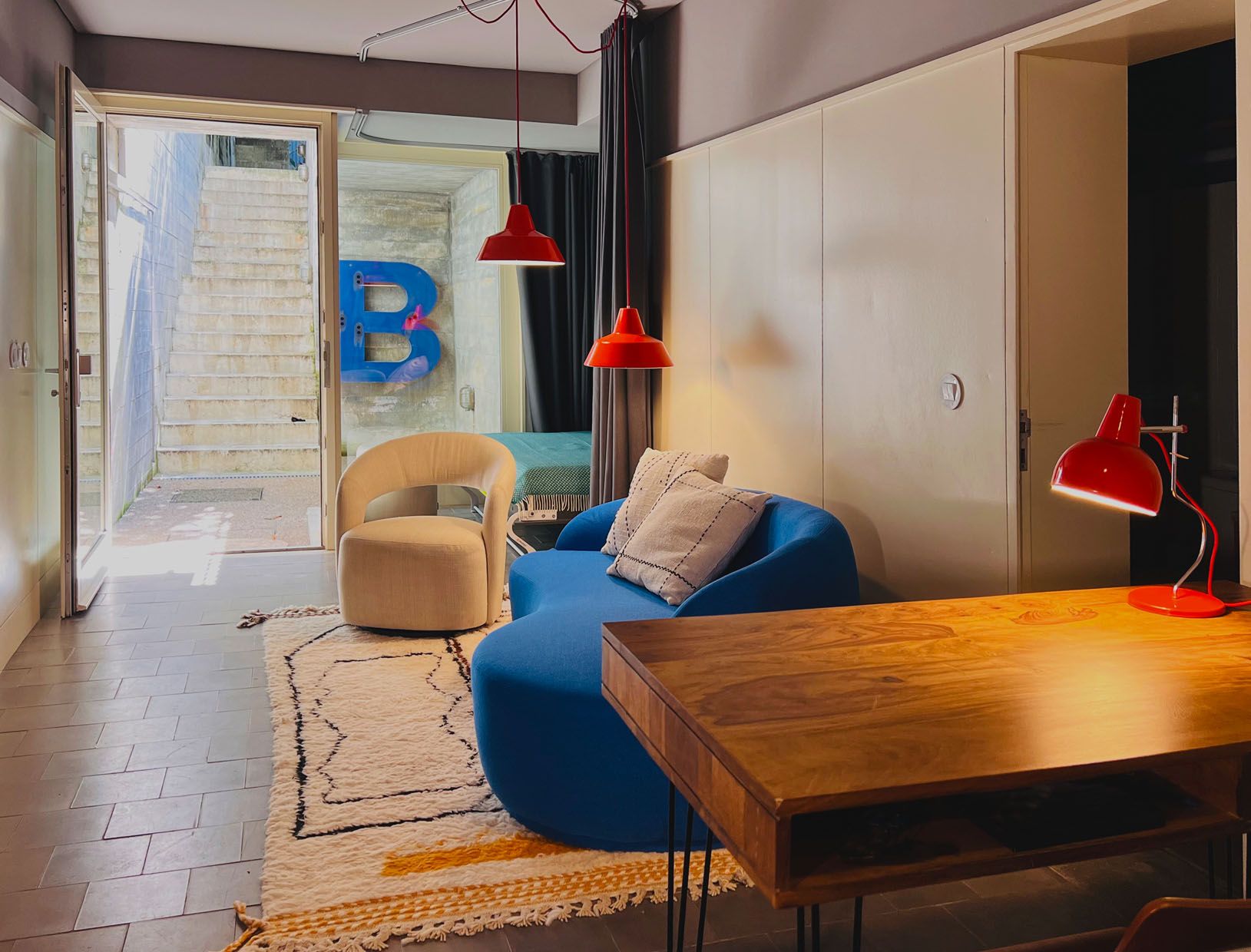
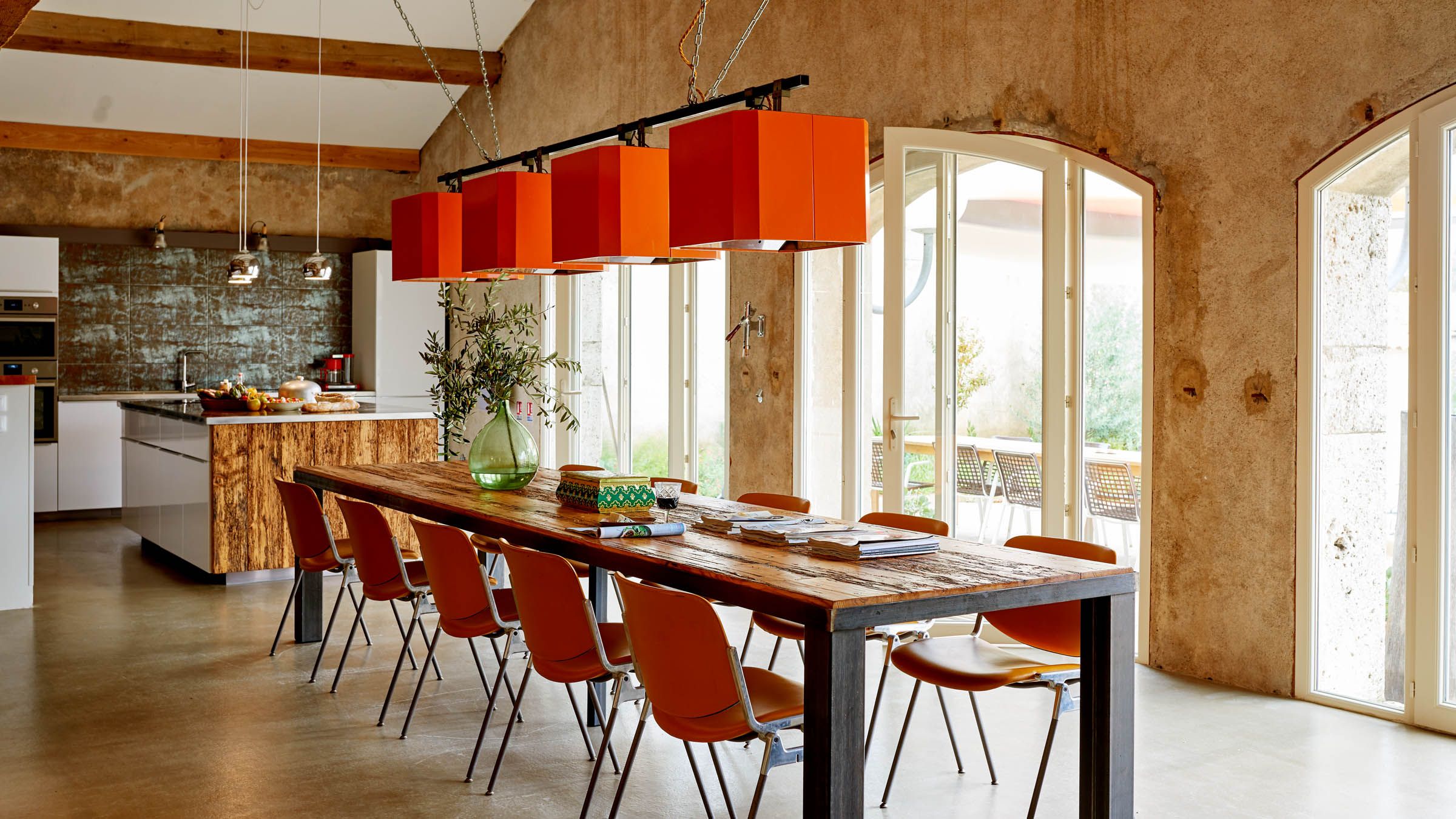
The Dutch owners have transformed it. The heavy gates were replaced by large arched windows that flood the hall-like space with light. Rough walls, polished concrete floors and the old timber beams remain – reminders that this was once a place of work. Surrounding it all is a cheerful mix of vintage furniture, modern design and colourful artworks.
Three hundred square metres, room for twelve guests, a four-metre dining table, pool, sauna and billiards table. And, from time to time, a good glass of wine. That, too, can help bring relaxation to a place where hard work once defined the day.
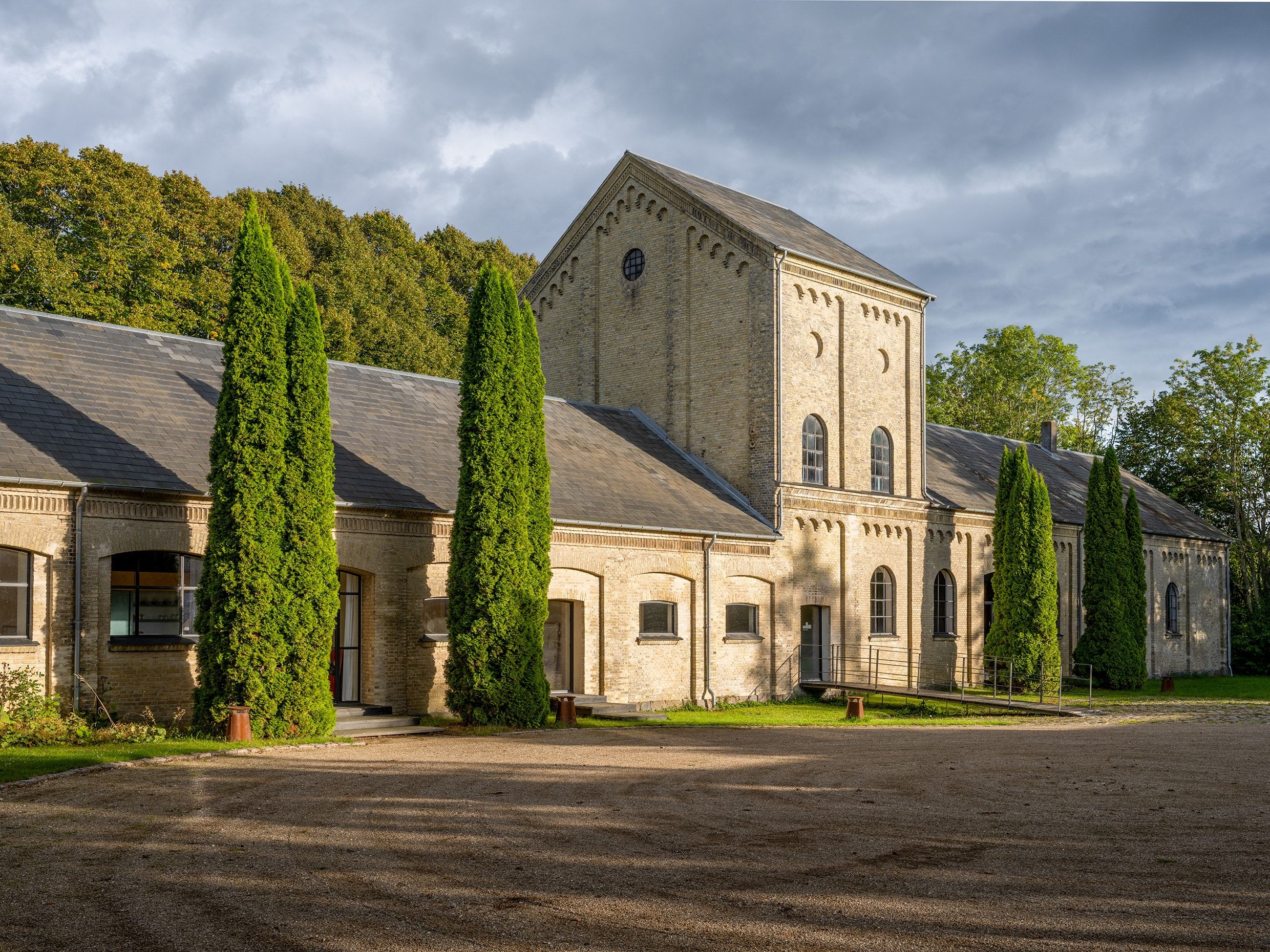
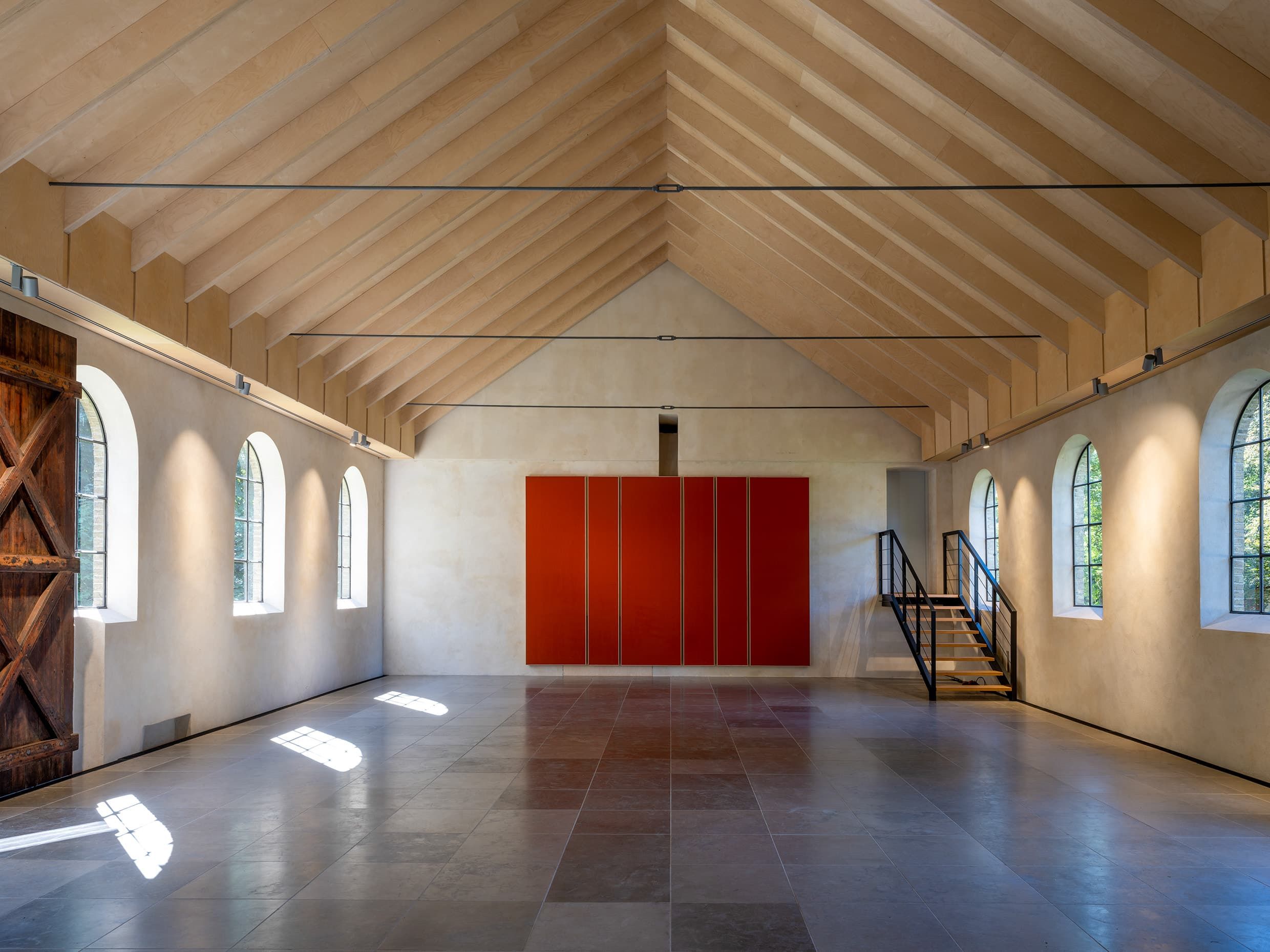
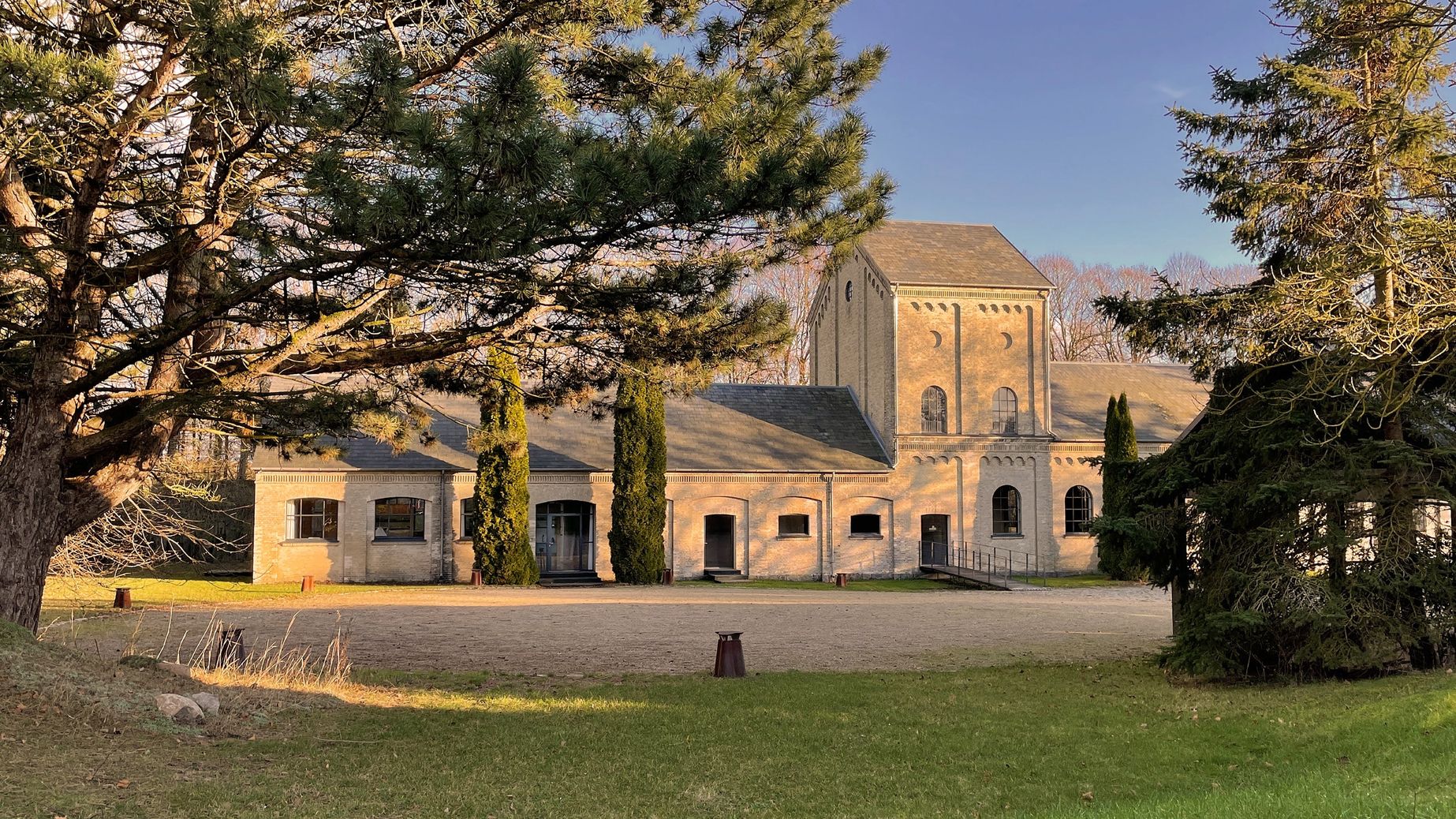
Once, sugar beet was processed into juice here on the island of Møn. The irony: industrial sugar and stress are children of the same era – a time when people believed in the concept of ‘more is better’. Such connections are easy to contemplate during a stay at Saftstationen.
Built in 1884, the Saftstationen (Juice Stations) in Damme is one of the last surviving industrial monuments of its kind. There were once three sugar-beet processing plants on the Baltic island of Møn, intended to spare farmers long transport routes. This single building has survived and was carefully restored in 2021, with the aim of preserving its characteristic details. The result: two apartments for two guests each, furnished with restraint and quality. Here, a distinctly Scandinavian sense of ‘less is more’ prevails. Outside, Møn awaits with its chalk cliffs, burial mounds, medieval churches and antique markets. And anyone seeking more bustle can reach Copenhagen in an hour and a half. But one thing is important: don’t let sightseeing turn into stress. Because this is a place that quietly suggests that the age of ‘more is better’ might well be over.
Photos: Andrea Vierucci (Cover picture), Andrea Gjestvang (Trevarefabrikken), Birgit Mahnke (Loft Atelier Dietzold), Andrea Vierucci & Giovanni Settesoldi (Umamma), Fam. Windels & Dieter Beckert (Schleiferei Zwei), Stefan Bullerkotte & Daniela Eksen (Fábrica no Jardim), Luca Girardini (Wasserturm am Park Sanssouci), Frincus & Co (Loft by LIEU), Charlotte Hauch / Peter Bysted / Egon Gade Photography (Saftstationen)
Barbara Hallmann
Barbara Hallmann studied in Weimar and Lyon and completed a traineeship at ARD. Since 2009, she has dedicated herself to writing about architecture, urban planning and design. She also developed an upscale boutique guest concept and was jointly responsible for the successful identity campaign of a slow travel destination that was previously not very visible. She lives in Germany and France - and likes to be found by stories when travelling.
Hidden in a lush garden in the centre of charming Porto is the Fábrica no Jardim - a minimalist factory-style house that quotes the city's history and translates it into the present day.
The art scene and industrial heritage are closely intertwined in Leipzig – a fact that guests can experience in the loft named Atelier Dietzold. The holiday apartment is located in an old factory building, the former Dietzoldwerke in the west of the city.
Are you dreaming of a holiday that brings the whole family – or all your closest friends – together? In the south of France perhaps? Accommodation with traditional charm and casual flair? In the countryside, but close to the sea and the mountains. Voilà: Loft by LIEU.
The Saftstationen, built in 1884 in the west of the island of Møn, is one of the last industrial landmarks of its kind. Where sugar beet was once processed into sweet juice, you can now spend your holidays, celebrate festivals and experience culture.
Slow down in an industrial monument: Schleiferei Zwei in Siebertal is an atmospheric lost place with authentic charm, airy loft character and a warm, off-the-beaten-track atmosphere.
A visionary place at the end of the world: how two pairs of brothers transformed an old factory in Lofoten into a vibrant hotel and cultural centre where people and nature connect in a truly special way.
In the Umamma apartment in the small Tuscan town of San Miniato, the Middle Ages are combined with industrial style. The apartment is extraordinary and will elicit a "Wow!" from many guests—or "umamma" as they say in Tuscany for something unexpectedly amazing.
Built at the beginning of the 20th century, the water tower at the Kaiserbahnhof in Potsdam once supplied water to steam engines at the station. Luckily two Architects saved the tower from falling into decay and converted into a holiday apartment, which now extends over six levels.
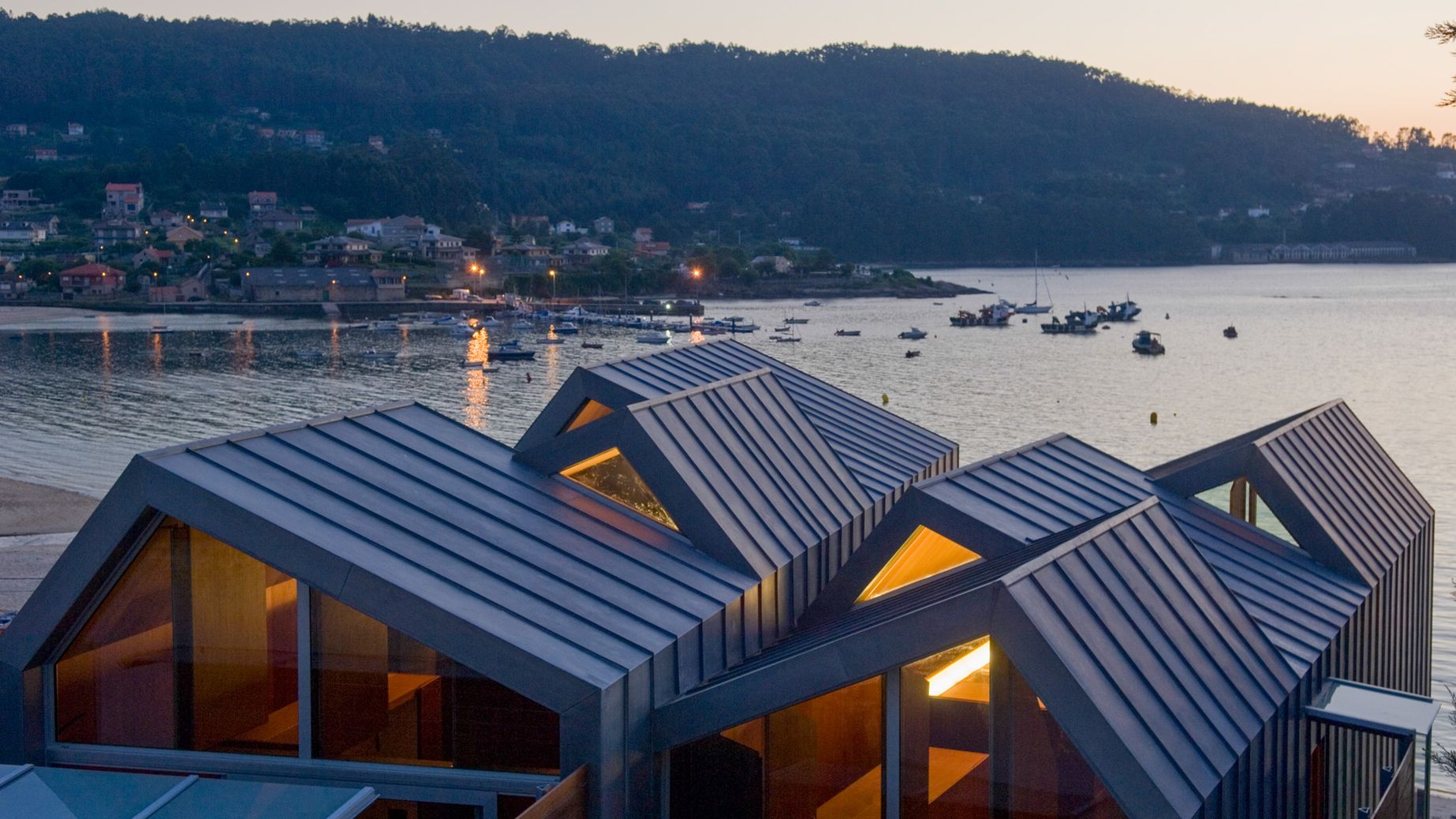
Below deck, overlooking the sea: Ardora is situated on a Galician hillside overlooking the Atlantic – a complex of flats inspired by upturned boat hulls and traditional granaries. A multifaceted revelation.
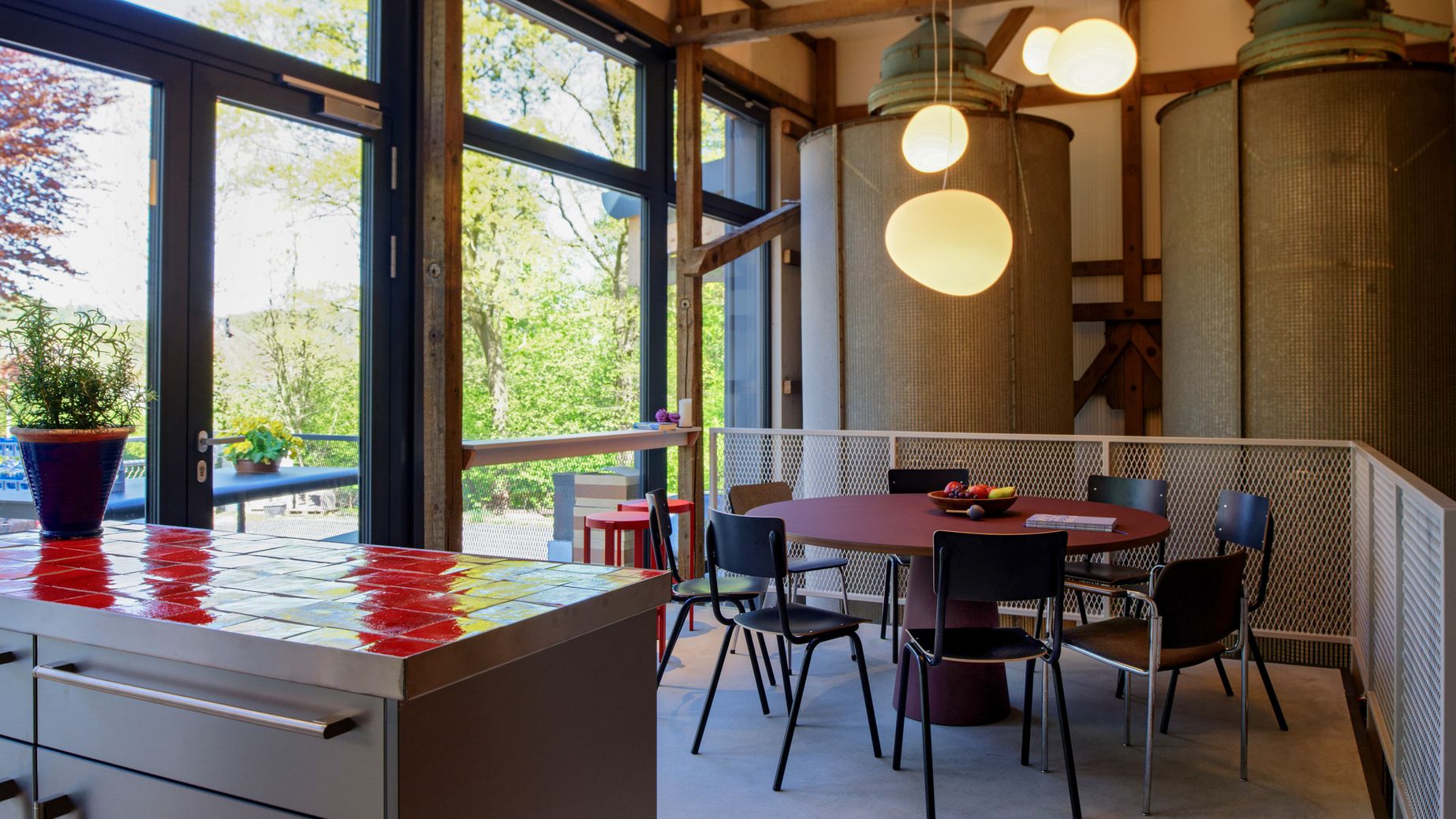
From an agricultural storehouse to a hub for ideas: where grain was once stored, ideas can now be pooled and teams formed. The Silo in Fröndenberg an der Ruhr, near Unna, offers a wide variety of seminar, activity and retreat spaces, blending rural industrial charm with clean lines and vibrant colours.
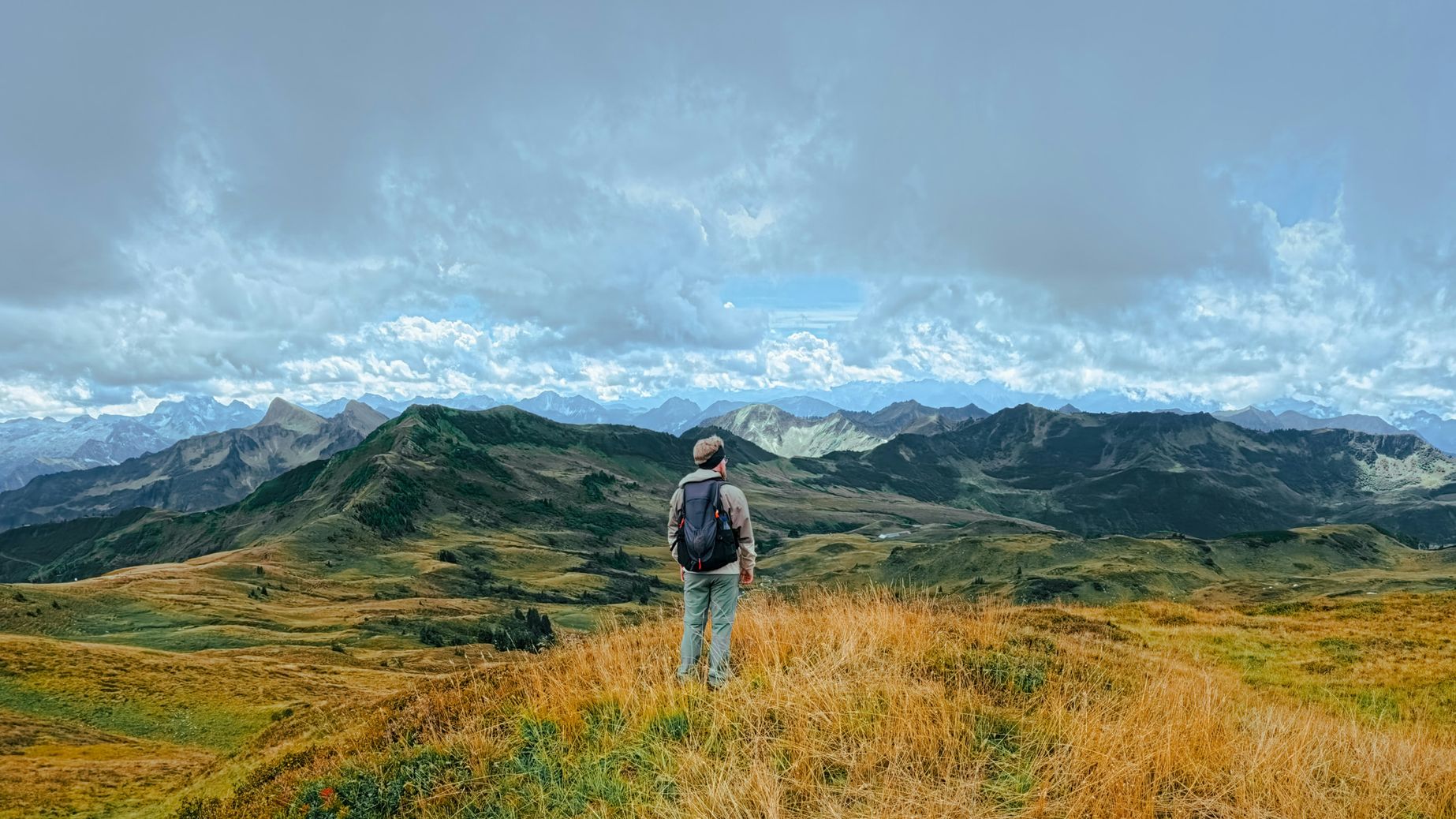
Travelling alone and following your own instincts without a care in the world: these eight places to stay offer the ideal setting for a solo getaway. For anyone who wants to explore new places on their own or simply do things their own way.
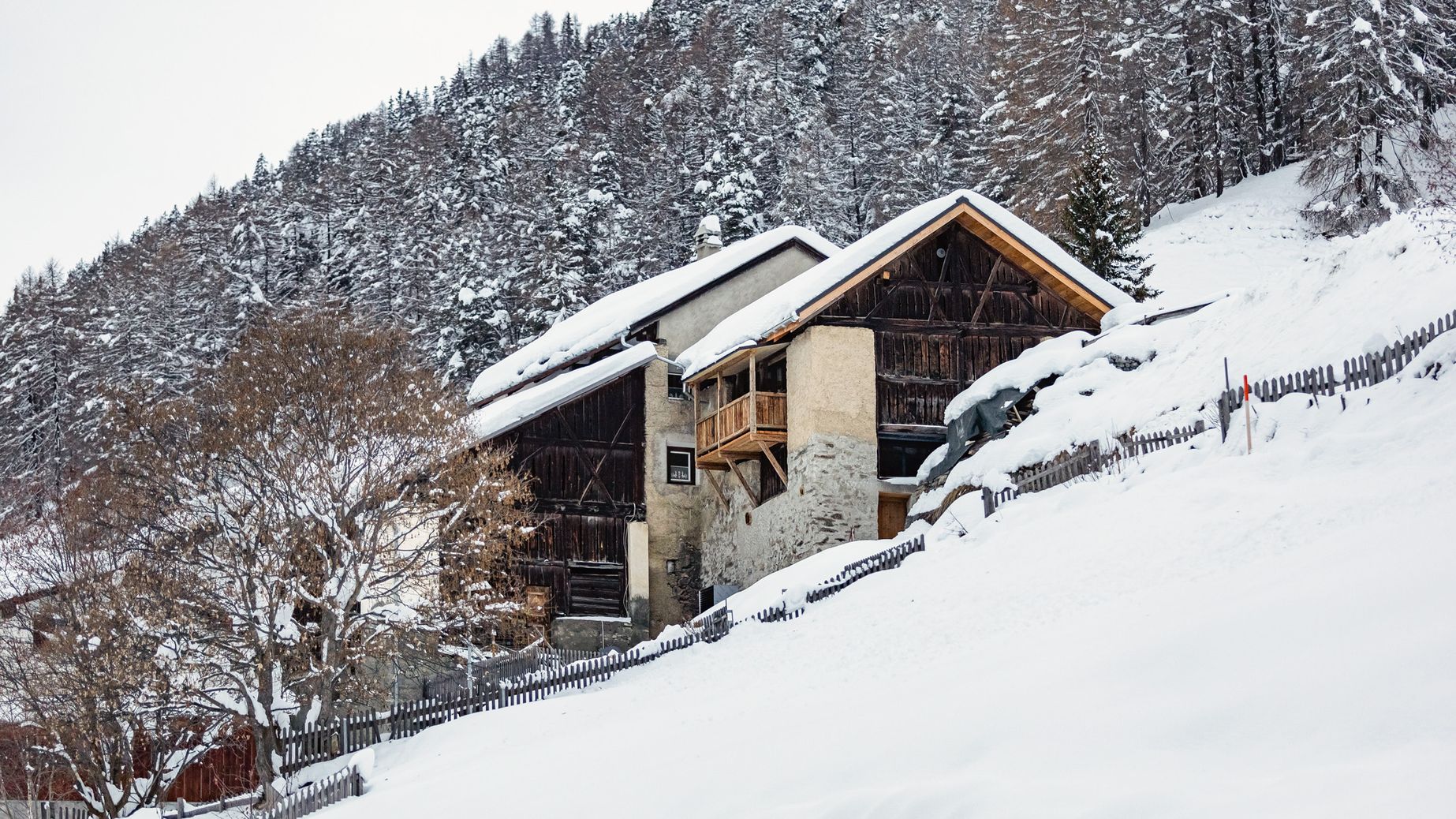
Architect Christof Rösch has transformed a centuries-old barn on the outskirts of the mountain village of Vnà in the Lower Engadine into a bright and airy three-storey holiday home.


0 Comments